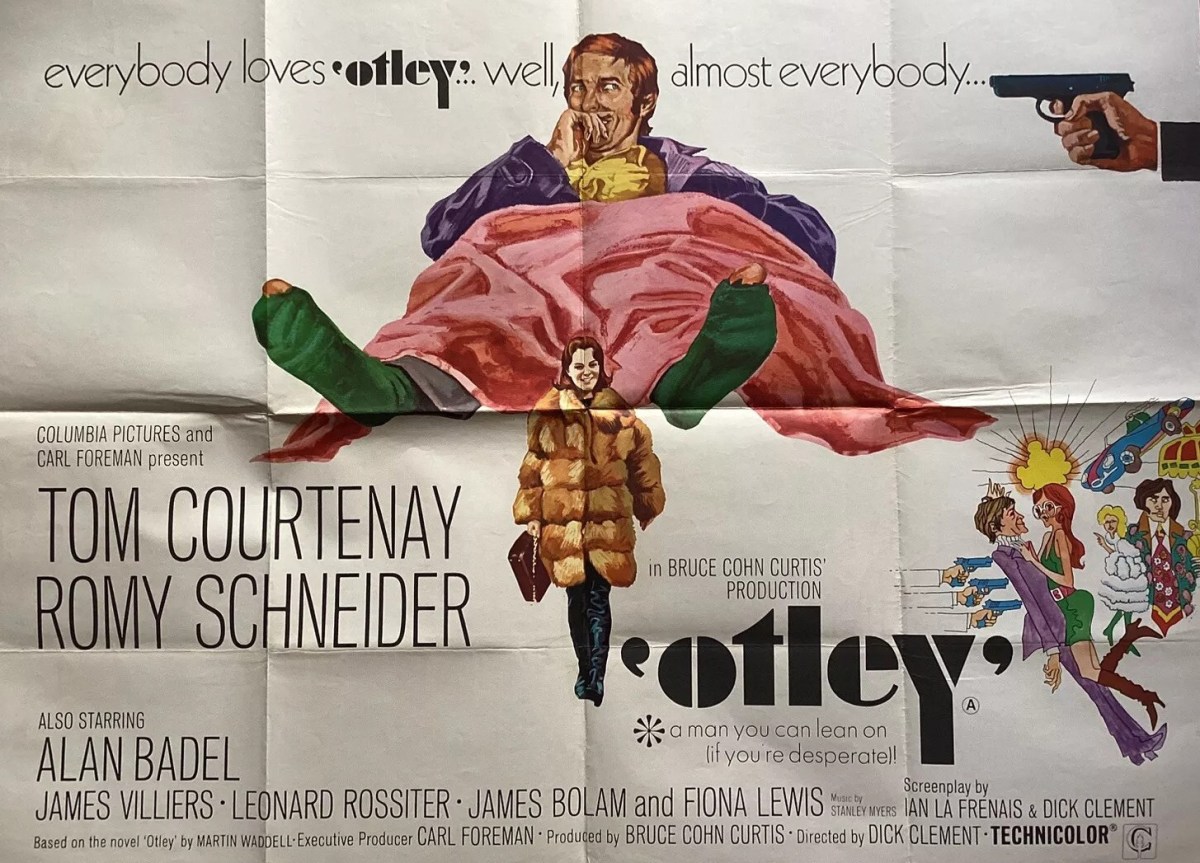
Otley (1969) **

Misguided attempt to play the innocent-caught-up-in-espionage card. And minus the angst on which he had built his screen persona, Tom Courtenay (A Dandy in Aspic, 1968) fails to elicit the spark that would turn himself into a leading man – excepting one other film, this was his last top-billed picture. And anyone hooked by the billing expecting to see a lot of female lead Romy Scheider (The Cardinal, 1963) would equally be in for a surprise.

And that’s a shame because Courtenay can act, not in the Oscar-bait sense, but just in his physical gestures and reactions to whatever else is going on in a scene. Scheider, too, especially in the scene where she more or less laughs in Courtenay’s face when he points a gun at her and in her knowing looks.

But Otley (Tom Courtenay) is such an unappealing character, the movie is on a sticky wicket from the off. Petty thief, largely homeless because of it, his propensity for slipping into his pocket anything that looks valuable in the homes of anyone stupid enough to give him a bed for the night, giving the movie its only sensible piece of narrative drive. Because the rest of the story is a farrago, a series of unconnected episodes dreamed up for their supposed humor, which wants to be pointed and sly but ends up heavy-handed and dreary.

And there’s one of those narrative sleights-of-hand where Otley wakes up on an airport runaway (security impervious to his presence, of course) having misplaced two days of his life. That’s just one of competing narratives – the other being that he’s wanted for the murder of the chap, Lambert (Edward Hardwicke), who was stupid enough to give him a bed for the night. Count in the espionage and there’s a trio of useless narrative hinges that get in each other’s way and largely introduce us to a succession of odd characters.

Pick of these is Johnston (Leonard Rossiter), an assassin who has more lucrative side hustles as a tour coach operator, double-crosser and blackmailer. The only other believable character is the landlady who’s had enough of Otley’s thieving, but only (unbelievable element lurching into view) after she’s bedded him.  

The movie just lurches from one scene to another, a car chase that ends up on a golf course, (“Are they members?” cries one outraged lady), a houseboat, various low-life dives and chunks of tourist tat thrown in, a bustling street market, Carnaby St etc.  I can’t begin to tell you what the espionage element is because that’s so far-fetched and ridiculous you won’t believe me.

This is the kind of low-budget picture that sets scenes, for no particular reason except they’re part of tourist London, in the Underground, but a completely empty Underground, not another person in sight, and not late at night either which would be a saving grace, though clearly it was filmed either late at night or early in the morning when the Underground was closed to ordinary passengers (thus saving on the budget).

Two examples of how heavy-handed the humor is: on a farm having been doused in water by Johnston, Otley remarks that he’s now deep in the proverbial only for the camera to cut to his foot sinking into a cowpat. At the airport, a couple of staff get lovey-dovey behind a counter, the male sneaking a grope, and we cut to a sign “ground handling”. Ouch and urgh!

If you manage to keep going the only reward is to see a handful of familiar names popping up: Alan Badel (Arabesque, 1966), James Villiers (Some Girls Do, 1969), Fiona Lewis (Where’s Jack?, 1969) and British sitcom legends James Bolam (The Likely Lads and sequel) and Leonard Rossiter (The Fall and Rise of Reginal Perrin, 1976-1979).

And where’s Romy Scheider in all this? Looking decidedly classy, but clearly wondering how the hell she got mixed up in it.

Screenwriter Dick Clement (Hannibal Brooks, 1969) made his movie debut on this clunker. He co-wrote the picture with regular writing chum Ian La Fresnais from the novel by Martin Waddell.

What happens when a genre cycle – in this case the espionage boom – gets out of control.

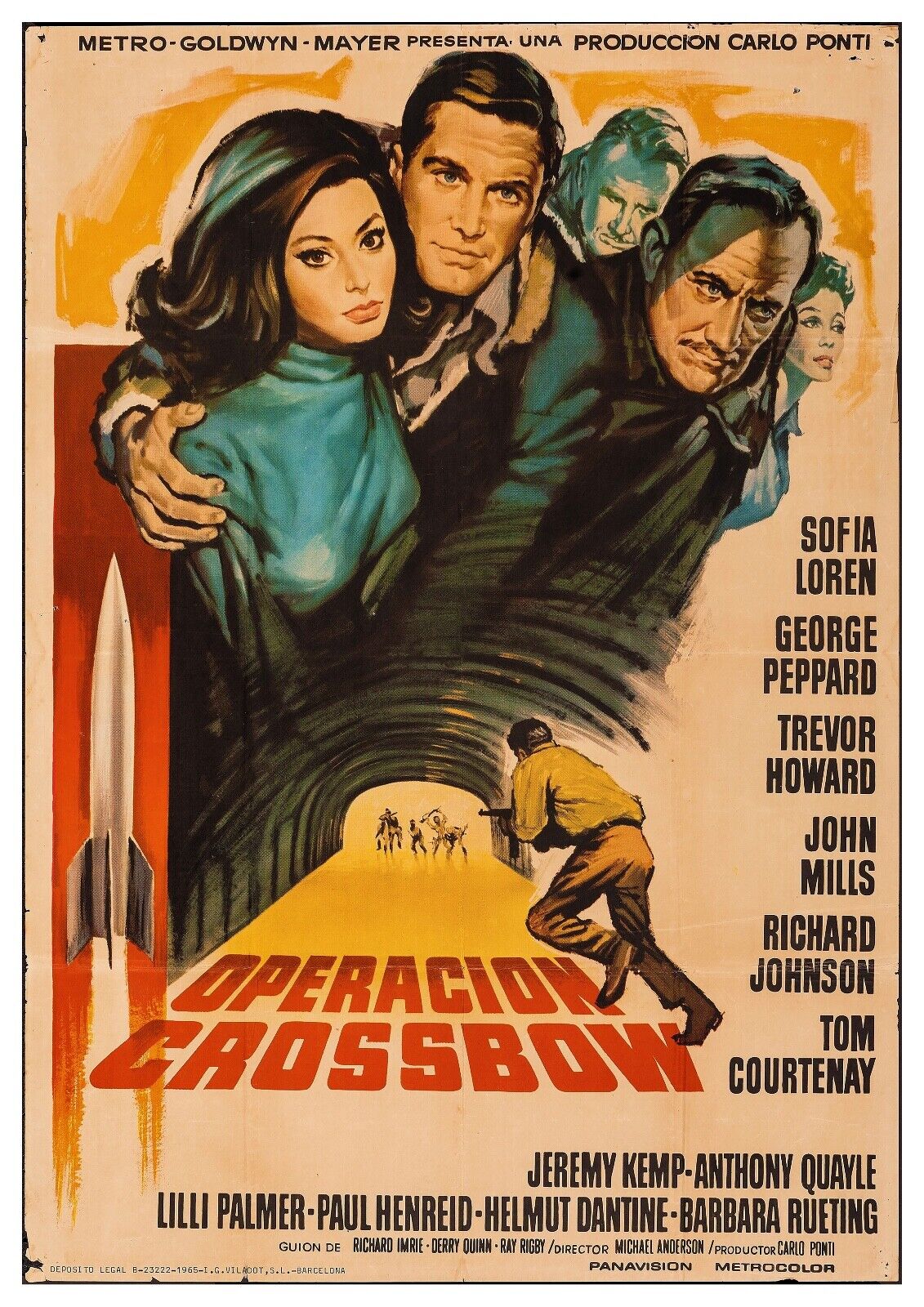
Operation Crossbow (1965) ****

A clever mixture of detail and derring-do, World War Two picture Operation Crossbow (1965) – based on the true story of Allied infiltration of a German rocket factory – was a surprising hit at the British box office. The picture took a risk in keeping star George Peppard hidden from view for the first 28 minutes (top-billed Sophia Loren took nearly another 20 minutes to show up). Prior to their appearances the opening sequences were loaded up with a roll-call of British stars familiar with the genre in the vein of John Mills (Ice Cold in Alex, 1958), Trevor Howard (Cockleshell Heroes, 1955) and Richard Todd (The Dam Busters, 1955). Anthony Quayle, who puts in a later appearance, was also a war movie veteran after turns in Battle of the River Plate (1956), Ice Cold in Alex and The Guns of Navarone (1961).

Most war films relating to destroying a vital enemy base involved bombing  (The Dam Busters633 Squadron, 1964), sinking (Sink the Bismarck!, 1962) or blowing things up  (The Guns of Navarone, 1961). Operation Crossbow falls into the last-named category. The story breaks down into four sections: the discovery towards the end of the war by the British that the Germans are forging ahead with building V1 and V2 rockets; the recruitment and training of spies to parachute into Occupied France; a tense sequence abroad where complications arise; and, finally, attempts to obliterate the rocket plant.  

Director Michael Anderson (The Dam Busters) switches through the genres from docu-drama to spy film to action adventure, further authenticity added by bold use (for a mainstream picture) of subtitles, all characters speaking in their native tongues. Various real-life characters are portrayed, among them photo reconnaissance expert Constance Babington Smith (Sylvia Sims), German aviatrix Hannah Reitsch (Barbara Rutting) and Duncan Sandys (Richard Johnson) who was on the British War Cabinet Committee.

Trevor Howard, at his irascible best, is the scientist pouring scorn on the idea of rockets – until they start raining down on London. Volunteers – Peppard, Tom Courtenay (Billy Liar, 1963) and Jeremy Kemp (who appeared with Peppard the same year in The Blue Max) – trained to spike the new weapon are recruited primarily on their language skills. Character is sketchy, Peppard designated a womaniser because he arrives in a taxi with two women.

But the operation has been assembled in such haste that not enough attention has been paid to the identities assumed by the agents. Courtenay’s character turns out to be wanted for murder. Peppard is accosted by his character’s divorced wife (Loren). So the mission faces immediate exposure. Although Loren’s role in terms of screen time amounts to little more than a cameo, she delivers a powerful emotional performance to a picture that could as easily have got by on tension alone. The harsh realities of war are shown in abundance. Twists come thick and fast in the second half, not least that Peppard’s face has become known, before the movie reaches a thrilling denouement.

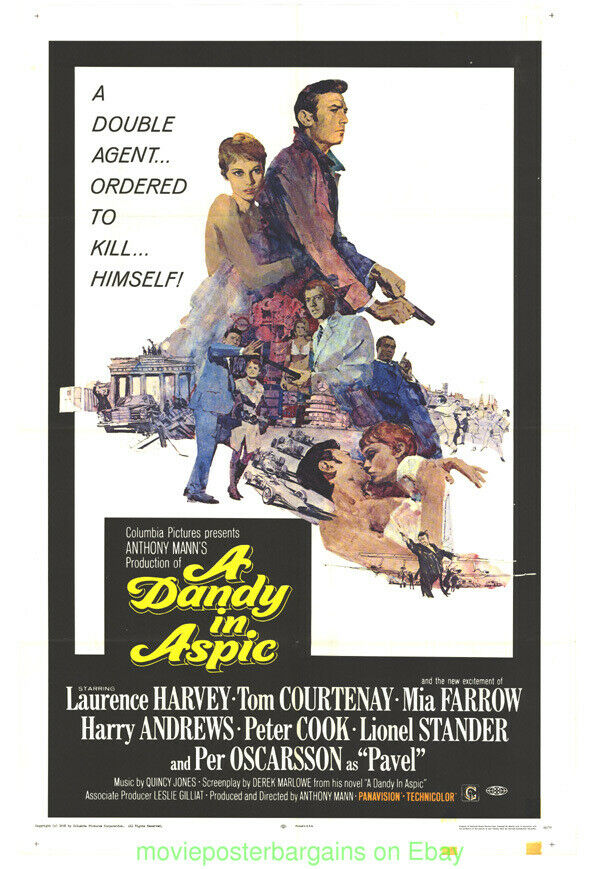
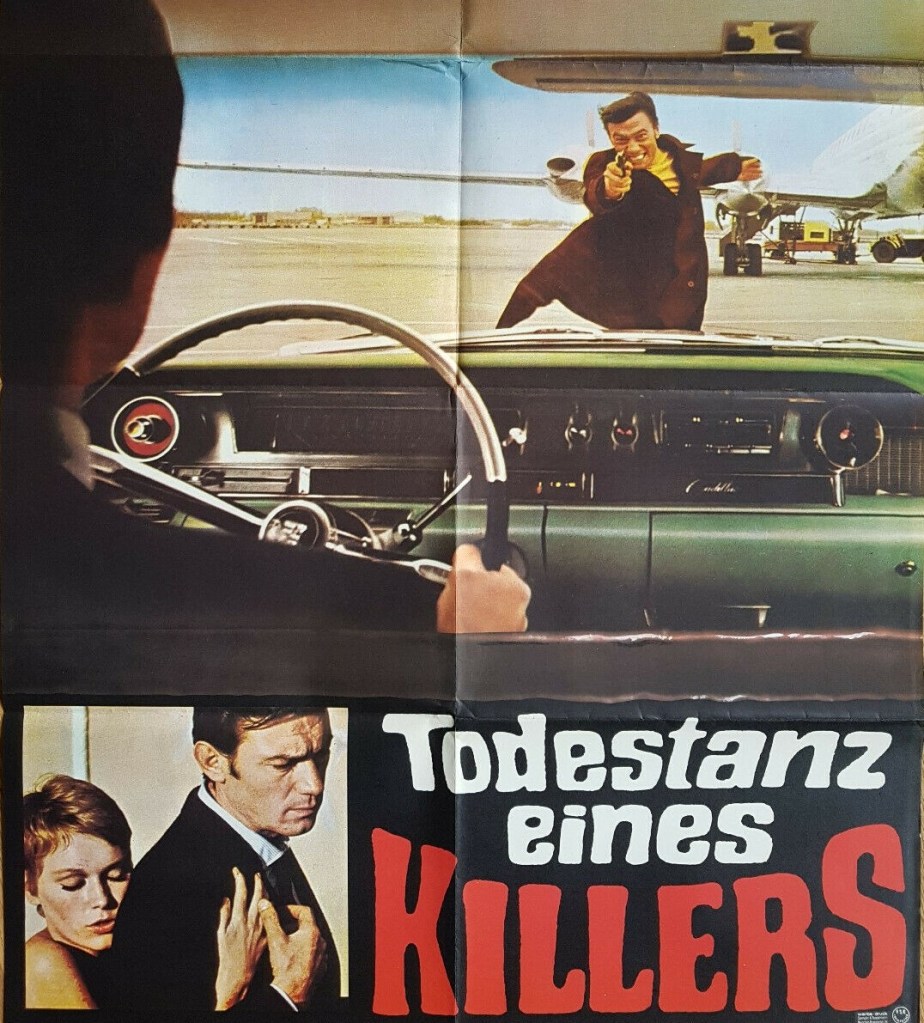
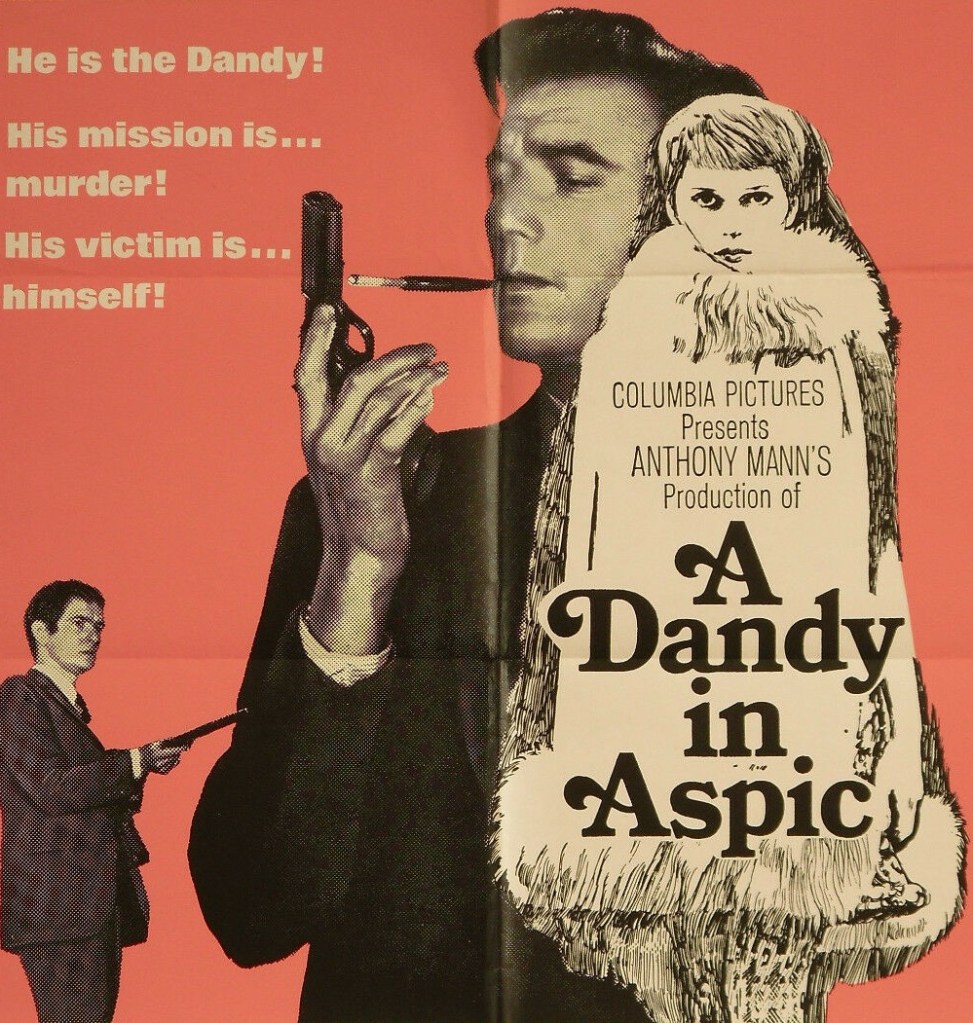
A Dandy In Aspic (1968) ***

Belongs to the “serious spy” genre that exposed the nitty-gritty espionage business, often more concerned with the impact of the job on the spy than on the mission on which they have been sent. The biggest successes came early on – The Spy Who Came in from The Cold (1965), The Ipcress File (1965) and The Quiller Memorandum (1966). A Dandy in Aspic is one of the latest in the series of sad spies and like The Defector (1966) it’s more of a character study than an action picture. The tone is set with the credits, a puppet dangling to the point of being tormented, on a string.

The character in question is Eberlin (Laurence Harvey), a spy who wants to quit and go home. He knows only too well what happens to the burnt-out case, one of his colleagues is a drug addict. Only in this case home is Russia. But the feedback he receives is that nobody back home wants him to quit. His British bosses send him to go to Berlin to assassinate a dangerous Russian spy called Krasnevin. The only problem is, Eberlin is Krasnevin and so begins a game of bluff and double bluff while he fails to uncover the supposed foreign assassin his ruthless British unwanted colleague Gatiss (Tom Courtenay) is helping him locate.

Thrown into the mix is a girl, Caroline (Mia Farrow) a casual pick-up, a photographer he met in London who turned up in Berlin. Happenstance? Perhaps. But there is no such thing for a suspicious spy and to tell the truth even the moviegoer will treat her as just too good to be true even though she is a delightful personality and beautiful to boot. The fact that Eberlin has a girlfriend Miss Vogler (Barbara Murray) doesn’t seem to bother him, spies, as you will know by now, discarding women like old shoes.

If a noose is closing in, it’s a strange one, and feels more like it’s coming from the East rather than the West. He is blocked from taking a trip to East Berlin. Cops are tipped off when he makes contact with someone who could get him over/through the Wall. His Eastern masters seem willing to pay good money to find out the identity of Krasnevin.

It’s all twisted and complex and all sorts of strange characters come out of the woodwork. For no reason at all one sequence is set at a Grand Prix race, one of the drivers paid to cause a distraction to allow someone to be shot. Like The Defector, this is a movie that unravels backwards. Once you get to the end it makes a lot more sense. If you were asked to choose, on the basis of the characters presented, whether the Russians or British had more principles you would be hard put to decide.

Laurence Harvey (The Running Man, 1963) is one of the few actors with the vicious fragility to carry this off. He is coming apart at the seams. He can hold onto his good looks far longer than his mental stability. His rare acts of violence seem petulance. And since we are never allowed inside his head, since he cannot confess his feelings to Caroline, he cannot explain what it’s like to be abandoned by your native country, cast aside like an old lover. It’s left to the audience to work this out for themselves, that a true patriot risking his life for his country is refused sanctuary.

He’s doomed and soon he knows it, nowhere left to run, the sense that the trap is closing and perhaps the few hours spent with Caroline are like a condemned man’s final wishes.

Filmed in bleak London and Berlin, the setting reflects the character’s mindset. There’s a bit too much fancy cinematography and sound effects, but otherwise it’s solid entry into the “more real than reality” subgenre. Director Anthony Mann (The Heroes of Telemark, 1965) died during the making of the film, Laurence Harvey taking the helm for the last two weeks of shooting and post-production so it’s possible this is not quite the film Mann had in mind.

You can see here elements of the documentary style Mann developed in The Heroes of Telemark and it’s possible that when it came to the editing director Harvey accorded himself more prominence than Mann might have, leaving a complex tale more difficult to follow than necessary.

Harvey is very good in the role of the ruthless narcissist, Mia Farrow – she followed this with Rosemary’s Baby (1968) – with a creditable English accent is excellent as the lover though Tom Courtenay (Operation Crossbow, 1965) seems miscast. Excellent support is provided by Lionel Stander (Once Upon a Time in the West, 1968), Harry Andrews (Danger Route, 1967) and Per Oscarsson (Who Saw Him Die?. 1968). Look out for comedian Peter Cook (Bedazzled, 1967) as an unlikely lothario, Barbara Murray (television series The Power Game, 1965-1969) and Calvin Lockhart (Dark of the Sun, 1968).

Book into Film – “Hot Enough for June”/ “Agent 8 3/4” (1964)

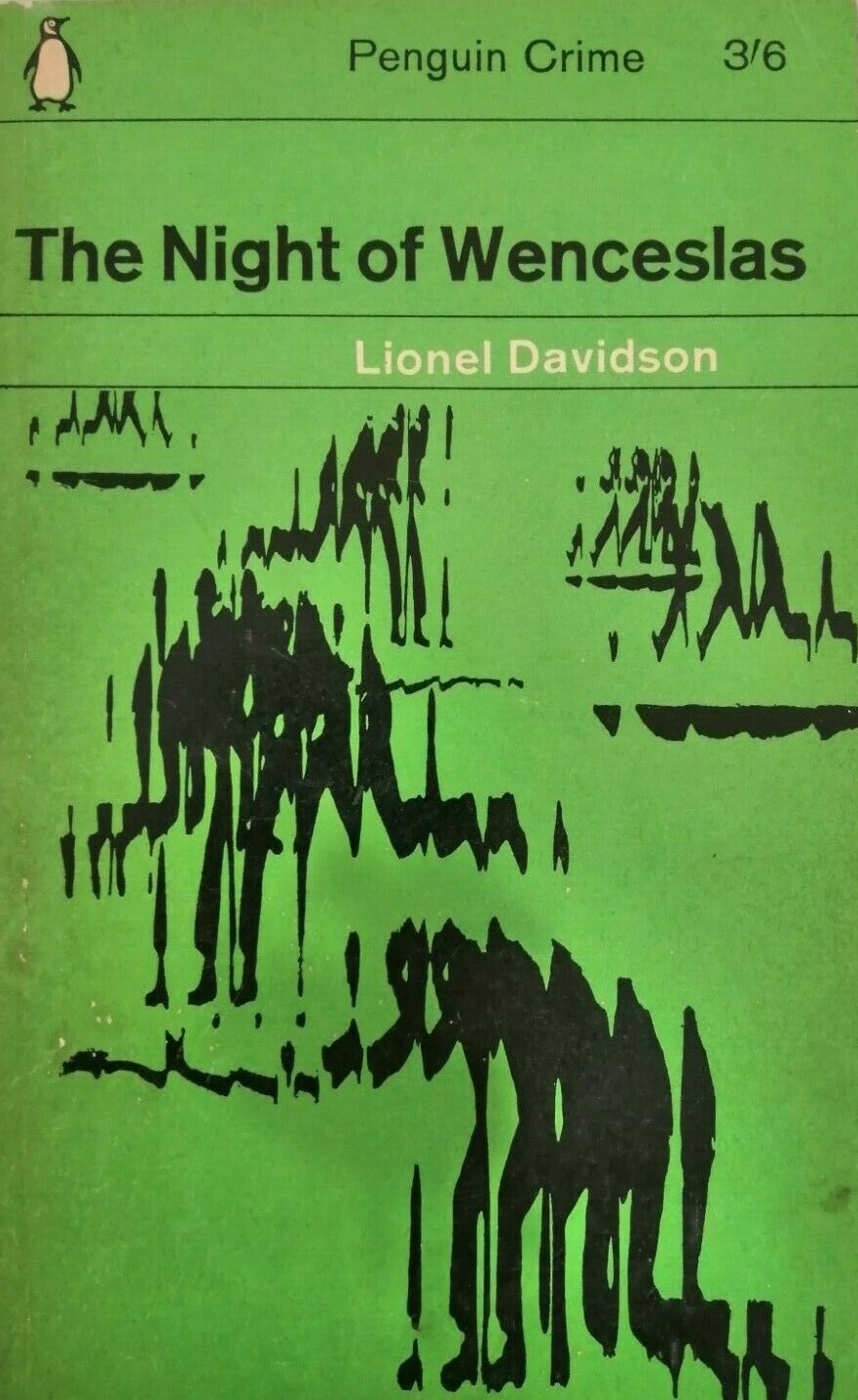
Timing is everything in the movie business. Had British film studio Rank shifted into top gear to adapt the best-selling thriller The Night of Wenceslas by Lionel Davidson soon after its publication in 1960 it would probably have been a completely different film to Hot Enough for June which took four years to reach the screen. Davidson had produced a ground-breaking espionage thriller that had critics reaching for the superlatives and putting him in the same bracket as Graham Greene and Eric Ambler. A film appearing, for example, in 1961 would not have been lost in the box office tsunami, in Britain at least, that greeted Dr No on its movie debut in 1962.

But by the time Hot Enough for June was released a second Bond – From Russia with Love (1963)- had changed public attitudes to spy films and in addition readers were reeling from two blockbuster spy novels, Len Deighton’s The Ipcress File (published in 1962) and John Le Carre’s monumental bestseller The Spy Who Came in from the Cold (published 1963). In preproduction in May 1963, minus any cast, the projected film was still being known as The Night of Wenceslas. Star Dirk Bogarde dithered so much about his involvement that at one point he was replaced by the considerably younger Tom Courtenay (Billy Liar, 1963).

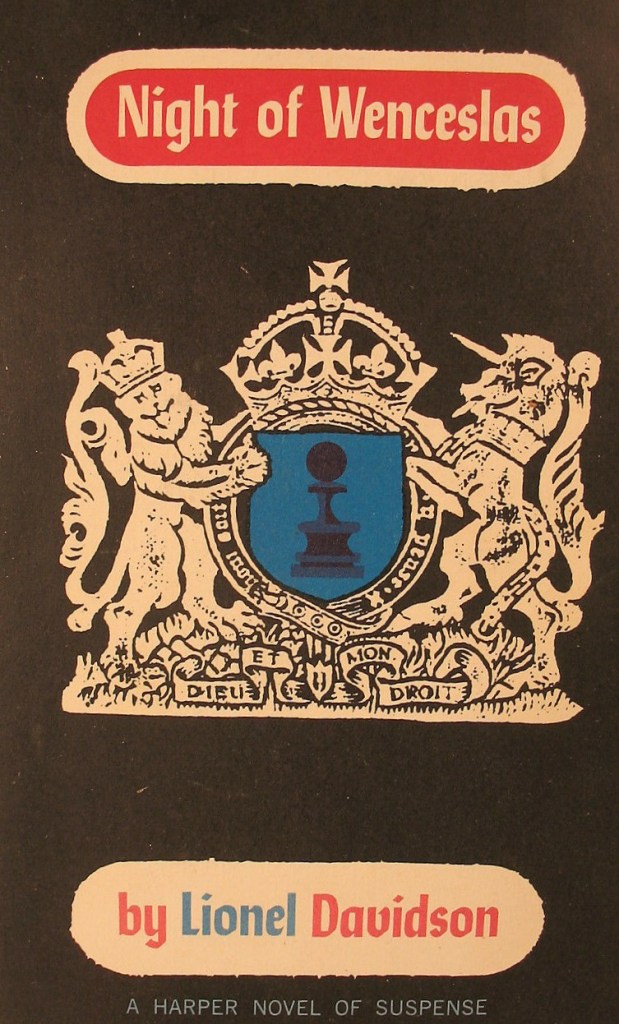
U.S. cover of the Davidson novel.

As was often the case in adaptations of best sellers, the screenwriter, in this instance Lukas Heller (Whatever Happened to Baby Jane, 1962) both added to and subtracted from the original material. For example, the Nicholas of the Lionel Davidson novel was not a particularly attractive character, truculent, snippy, with a bad case of self-entitlement, a bit of a ne’er-do-well, scrounging to pay bills, with expensive tastes and far from charming in his relationship with his girlfriend. He is also employed, rather than unemployed and with hankerings to be a writer as in the film, and comes into the orbit of Cunliffe (Robert Morley in the film) who dupes him into thinking an uncle has left him an inheritance.

Sensibly, Lukas Heller dispenses with Nicholas’s back story which posits him as a Czechoslovakian exile, albeit leaving his native land at the age of six, and various other complications concerning that country. He is sent to collect a formula for unbreakable glass. The “hot enough for June” password is a Heller construct and feels as if belongs to an earlier era of spy pictures. In the book all Nicholas has to do is leave his guide book lying around in the factory for the contact to write there the formula. However, rather than discovering he is working for the British Secret Service, the novelist employs a different twist, that the young man is, unknowingly, in the pay of foreigners plotting against Britain.

Davidson envisaged a different kind of Czech girl, more of a Valkyrie, statuesque (“her breasts stood out like bombs”) rather than the slimmer Sylva Koscina. It is Heller who adds the complication of her father heading up the secret police. In the book, her father is merely a musician and conveniently absent for most of the time, freeing up his house for romantic interludes. And the book has none of the James Bondesque features since the first of the series had not been written when The Night of Wenceslas was published.

However, the film having established the alternative world of rival secret agencies, of the girl being under suspicion and of her father being a senior official in the espionage business, the screenwriter then follows the bulk of the novel’s romance and the thrilling episodes involving Nicholas on the run. The swimming pool, cigarette burn, the parade and the milkman can all be found in the book.

There is one element that had to be changed. In the book, Nicholas makes two trips to Prague. But it is a golden rule of screenwriting that a character visits a location only once. Davidson ends his book with a touch of irony: Nicholas is swapped for Cunliffe.

At whose behest, it was decided to insert the comedy is anybody’s guess. Possibly the feeling that the book as written would be too unsophisticated for audiences accustomed to the rattling action and glamour of a James Bond. The Bond-style connections at the beginning of the film are clunky and the later references to espionage at the highest level also seemed to have been slotted in with no regard to retaining the essence of the book.

Discover WordPress

A daily selection of the best content published on WordPress, collected for you by humans who love to read.

The Atavist Magazine

by Brian Hannan

WordPress.com News

The latest news on WordPress.com and the WordPress community.