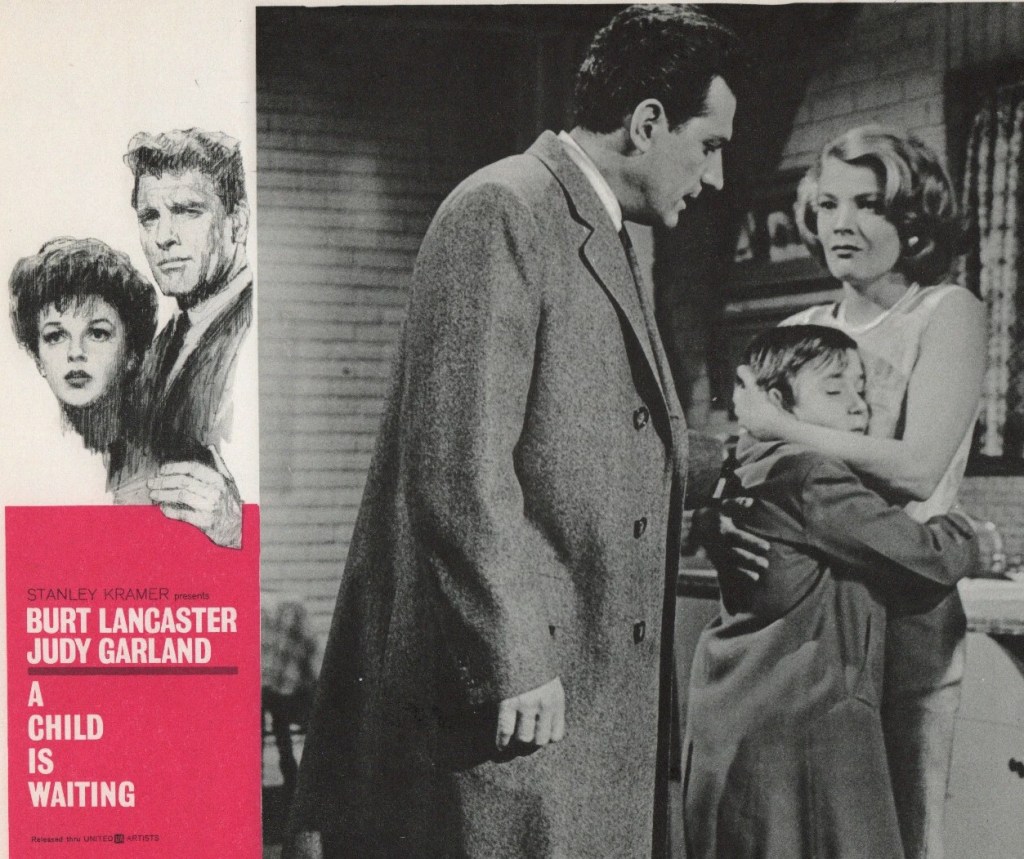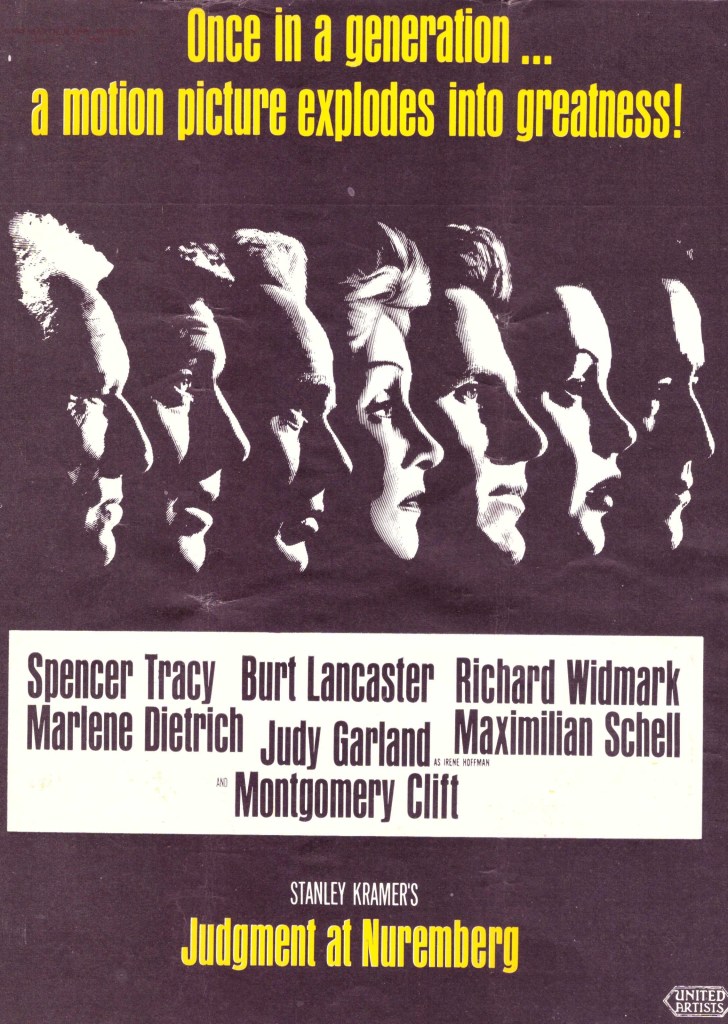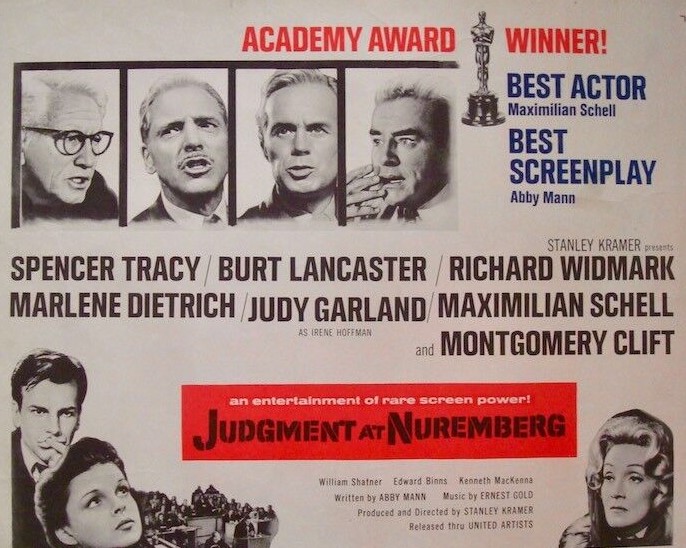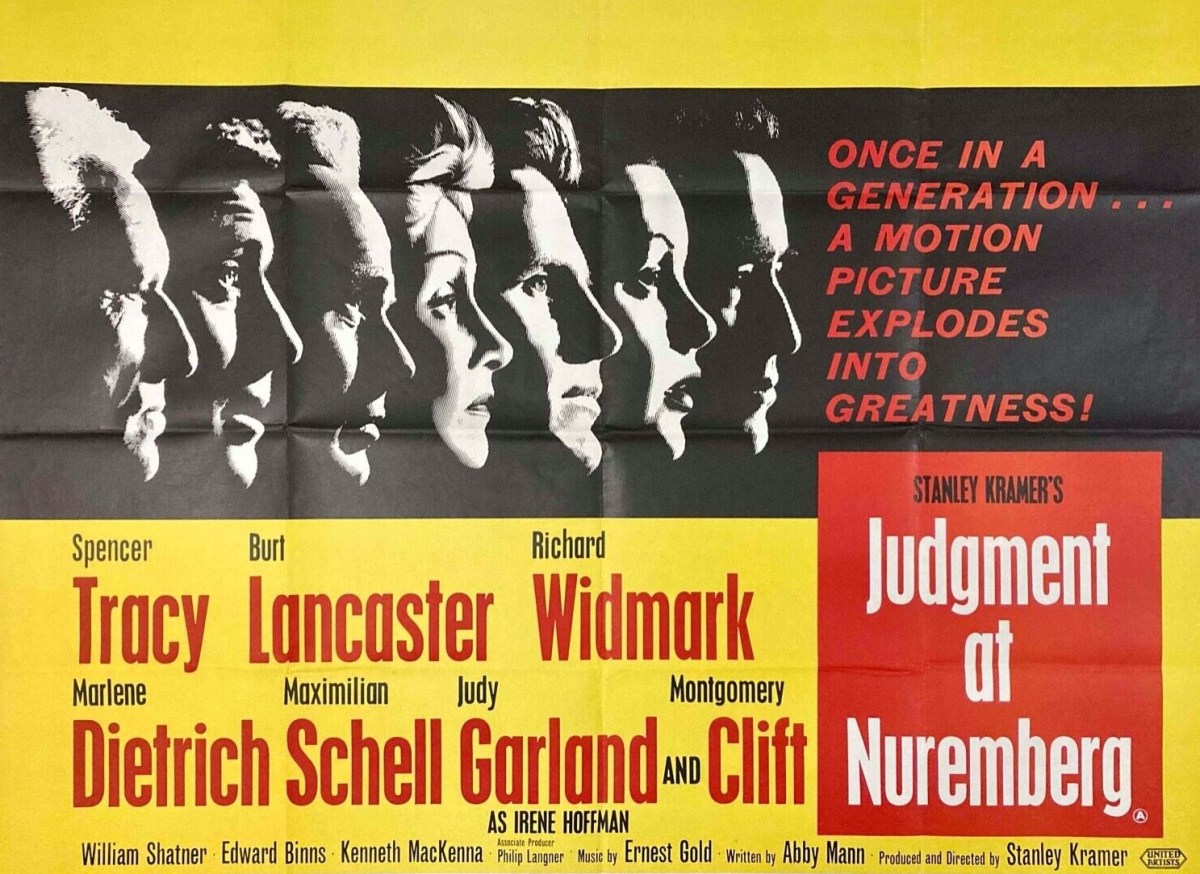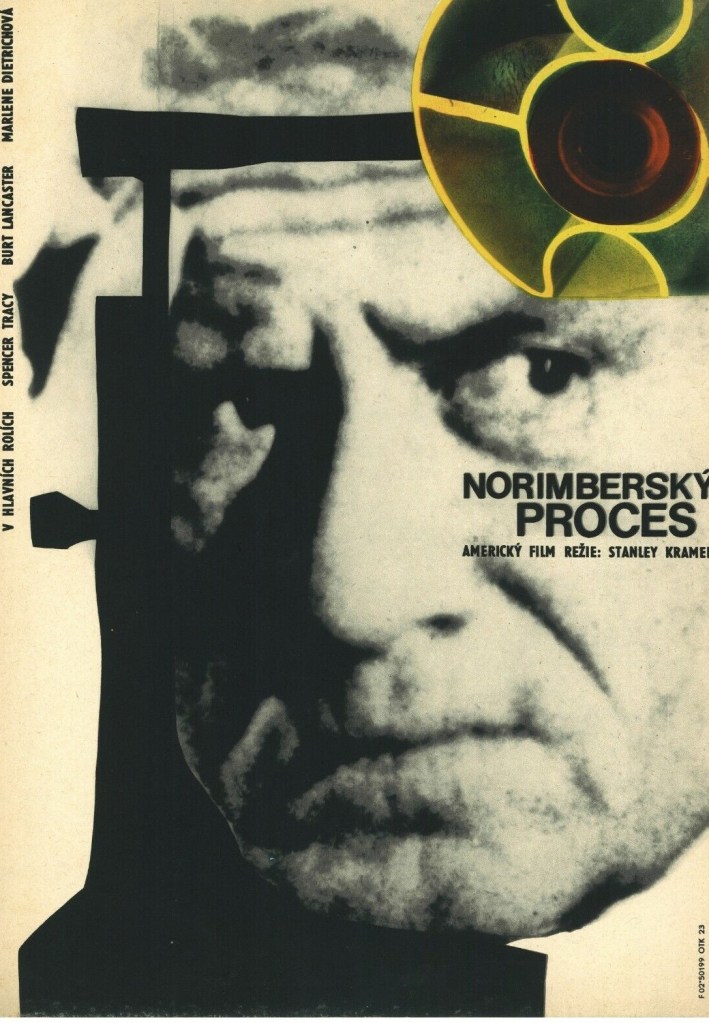
Behind the Scenes: Selling Judy Garland – “A Child Is Waiting” (1963) Pressbook

This proved the impossible sell. And Judy Garland was no help. The star was well past her best and if she wasn’t singing it was difficult to attract audience interest. So beyond her name above the title, United Artists did very ittle to use her presence as a distinct marketing tool.

Just like I Thank a Fool the previous year, the subject matter of A Child is Waiting did not lend itself to cross promotion. That did not prevent marketeers doing their level best. However, it was a rather bold suggestion to assume banks would be a natural port of call even under the guise that every child was waiting for their parents to start a savings account to see them through college. 

The title seemed to incite temporary madness in the marketing department. How about this for a tie-in approach to a toy department? “A child is waiting for the most exciting game ever devised – Monopoly.”

Groups most likely to respond were identified as psychiatrists, teachers and PTA members but cinemas were warned to avoid giving the “impression that the film is a clinical or documentary one.”

By far the easiest avenue for promotion was a book tie-in. Popular Library had issued a paperback novelization by Abby Mann of his original screenplay with stars Burt Lancaster and Judy Garland on the cover and at the very least that would receive window displays in bookstores and on the carousels of drugstores.

Also limited were the number of taglines on a poster. In those days a movie could be advertised with as many as a dozen different taglines appealing to different market sectors. United Artists stuck to three main taglines with two subsidiary ones. Sometimes both subsidiaries were on the same poster, other times only one.

“Burt Lancaster and Judy Garland ignite a motion picture that gives so much…goes so far…looks so deep into the feelings of man and woman.” This alternated with “Burt Lancaster and Judy Garland take an untouched theme – and make it touching and unforgettable” and “Only Burt Lancaster and Judy Garland could take this untold story…and make your heart tell it over and over again.”

The subsidiary taglines ran to: “If this were flesh of your flesh – would you hold it close…Protect it…Love it…Or would you turn your back and run” and “A child can be so many things, warmth…love…laughter…and sometimes a child can be heartbreak!”

Mainly what marketeers were asking of Lancaster and Garland was a miracle, as if their names alone could drag audiences into theaters.

Even though the Pressbook was relatively small – eight pages A3 – two-thirds of the space was allocated to repeating the adverts, just in different sizes.

The section normally aimed at getting editors to carry snippets of news about the movie provided scant material. There was little to catch the journalistic eye, nothing new about either of the stars, just a rehash of careers. Usually, cinema managers would scour this section looking for a titbit to offer to a reporter, an unusual hobby, something odd that occurred during filming, details about the location or an element that went wrong during shooting.

If you were relying on this Pressbook to fuel demand from exhibitors, you would be sorely disappointed.

A Child Is Waiting (1963) ****

While once the main interest in this piece would have come from fans of Judy Garland, lapping up her penultimate movie appearance, the prevalence of mental illness these days especially among the young, in part due to Covid and the scourge of social media, should switch audience attention – especially among contemporary viewers – back to the subject matter.

Garland’s stock had risen somewhat after her performance in Judgement at Nuremberg (1961), her first movie in seven years, but, given the travails of her private life, would most likely have been sympathetic to anything that cast a light on mental illness. The bulk of movies covering this ground tended towards the lurid, as exemplified by Shock Corridor (1963) and Shock Treatment, (1964) rather than the more tragic Lilith (1962). Whatever the approach, they focused on adult conditions. Here it’s the treatment of children.

Appreciation of the social conscience of star Burt Lancaster has largely gone unnoticed but this was the era when his movies touched upon crooked evangelism (Elmer Gantry, 1960), teenage gangs (The Young Savages, 1961), the Holocaust (Judgement at Nuremberg, 1961) and the effects of long-term imprisonment (The Birdman of Alcatraz, 1962). He was even an animal rights protester in The List of Adrian Messenger (1963).

Parental attitude to offspring with mental conditions is encapsulated in the opening sequence. Outside a hospital a young boy is tempted out of an automobile. Once out, the driver (the father) races off so fast the car door is still swinging open. Mentally or emotionally disturbed children were dumped, ostracized or abandoned by society, sometimes shut up in institutions along with adults, with treatment belonging to the Dark Ages.

Drawing on the ground-breaking approach of Vineland Training School in New Jersey and the Pacific Hospital in Pomona, California (pupils from the latter played the students in the film), the movie attempts to cast a light on the forgotten and to show that, with proper care and education, they need not be such victims of their circumstances.

The movie focuses on Dr Clark (Burt Lancaster), head of the Crawthorne State Training School, whose pioneering work combines tender encouragement with firm application, and the new music teacher Jean (Judy Garland) who challenges his approach. Instigating this crisis is 12-year-old Reuben, the child we see offloaded at the start, for whom Jean develops an unhealthy bond. She thinks Dr Clark is too strict and that his methods don’t work with someone as vulnerable as Reuben. Clark’s aim is to make the children so self-sufficient they are not condemned to a life in an adult institution.

Jean’s intervention creates a crisis in the child’s life but also brings home the unwelcome truth of the difficulties parents have of dealing with their children.

And while the tale is essentially confected to make the necessary points and Dr Clark and Jean epitomize opposite attitudes to handling the treatment of children, the story is really a documentary in disguise, bringing to light advances in care, and with the children not played by actors, brings a greater reality to the work.

Burt Lancaster, as ever, is good value and Judy Garland steps up to the plate. Gena Rowlands (Machine Gun McCain, 1969) and John Marley (Istanbul Express, 1968) also feature.

While this fits neatly into Lancaster’s portfolio, it stands out for the wrong reasons in the pantheon of critically-acclaimed actor-turned-director John Cassavetes (Faces, 1968). In fact, what he produced went against what producer Stanley Kramer (better known as a director – Judgment at Nuremberg, for example) wanted and the version we see is the one Kramer recut. Written by Abby Mann (Judgment at Nuremberg) from his original teleplay.

You might expect this to be awash with sentimentality but that’s far from the case.

Pressure Point (1962) ****

Central to this under-rated tale of psychopathy and racism is one extraordinary scene, possibly the most exceptional bar-room sequence ever filmed. In the annals of imaginative repulsion, it ranks alongside the rape committed by Alex and his “droogs” in Stanley Kubrick’s A Clockwork Orange (1971). It begins with mere intimidation as an unnamed young man (Bobby Darin) begins to etch into a bar-counter the lines and symbols of Tic-Tac-Toe (aka Knots & Crosses or Noughts and Crosses). Discovering tins of paint, the man and his gang proceed to cover the entire bar – floor, walls, ceiling, even tables – with the same symbols.

The humiliation is ratcheted up a notch when, after forcing the tavern owner (Howard Caine)  to lie on the floor behind the counter, the bar hostess (Mary Munday), rigid with fear, is tormented. Using lipstick rifled from her handbag, the young man decorates her face in the same fashion before pulling down the back of her dress and doing the same there. Fortunately, the scene – although unlikely the reality – ends at this point.

Other potent scenes show how the man arrived at his crazed state, smothered with affection by a weak mother (Anne Barton) who has taken to bed by choice in order to escape his drunken, raucous father (James Anderson) who taunts his ineffective wife by flaunting to her face his casual pick-ups and making love to them in the same room. Indicative of the lonely child’s disturbed personality is that when he invents an imaginary playmate, it is to have someone to subjugate, making his fictional friend lick his boots.

Imprisoned during the Second World War for sedition, the man, suffering from blackouts and nightmares – in which he imagines himself clinging to the edge of a giant plughole before being swept away by a torrent of water from the taps – becomes a patient of a young, also unnamed, doctor (Sidney Poitier) whom he subjects to racial abuse.  The doctor, physically bigger and more imposing than the patient, would like to simply give him a good thumping, but his profession necessitates that he treats this objectionable person as just another patient. And eventually they come to enough of a concord that the patient accepts treatment although the doctor suspects that his core personality has not changed.

The movie is layered with themes other than psychopathy and psychiatry. While the racist element is to the fore, including the doctor’s need to prove himself in a white man’s world, director Hubert Cornfield also explores the growth of right-wing extremism among the disaffected who see no contradiction in still espousing traditional American values, for example giving the Nazi salute while singing in all sincerity the national anthem. The African American doctor has to come to terms with lack of objectiveness when dealing with such an abhorrent person.

The movie flits between scenes between the two protagonists staged in a stagey manner and  expressionistic almost dreamlike sequences representing the patient’s upbringing such as being menaced by his butcher father among the swinging carcasses of the store. The patient flashbacks are shown without dialog, explanation given in voice-over – far more potent use of this device than in Nothing but the Best (1964) – by either the patient or the doctor.

Reliance on visual dexterity, however, detracts from the tension and director Hubert Cornfield (The 3rd Voice, 1960) is also hampered by an unnecessary framing device which results in the story being told in flashback – and a conflation of flashbacks: of Poitier’s problems as a young doctor dealing with a difficult patent and the patient’s own life story. So the pressure indicated by the title is often undercut and does not build as much as you might expect. Critical reaction in those days pivoted on the racism elements, but a contemporary audience is almost certainly going to be more influenced by sequences involving the patient, so the picture automatically becomes more involved and Cornfield’s visual mastery more appreciated.

You can detect the influence of producer Stanley Kramer. In his capacity as director he had explored psychiatric therapy and antisemitism in Home of the Brave (1949) and racism in The Defiant Ones (1958) also with Poitier. As producer he was responsible not only for selection of the original material, based on a short story The Fifty-Minute Hour by Robert M. Lindner, but also imposing the present-day framing device, which Kramer wrote, on the picture. Those scenes relate to another psychiatrist (Peter Falk) coming to a much older and experienced Poitier for advice after hitting a brick wall with a similarly repugnant patient, Poitier telling the story of his treatment of the Bobby Darin patient as a way of showing that even the worst patients are treatable.

This is quite a different Sidney Poitier than you might be used to. Wearing suit and tie, and spectacles, this is a more restrained, measured performance. Poitier’s taboo-busting Oscar nomination for The Defiant Ones had not progressed his career that much, still restricted to starring roles in low-budget pictures. But Kramer broke another taboo in Poitier’s favor with this one, casting him a role not initially written as an African American.

Bobby Darin (Come September, 1961) had parlayed his status as hit recording artist into a burgeoning movie career but does not quite display the menace necessary for a fully-fledged psycho. Peter Falk (Machine Gun McCain, 1969) has a small one-tone role. The jazz-nuanced music by Ernest Gold (Exodus, 1961) is worth a listen. And if someone can tell me who designed the striking credit sequence, I would be very pleased.

Incidentally, the title of Lindner’s short story is ironic. Patients pay for one hour of a psychiatrist’s time but in reality only receive 50 minutes in order for the professional to achieve a swift turnaround and keep his/her appointment timetable scheduled to the hour.

Tic-Tac-Toe, in case you are unfamiliar with this two-person childhood game, consists of drawing lines to create nine squares and filling those with either a zero or a cross. The object of the exercise is to create a complete line of either symbols.

Still very powerful.

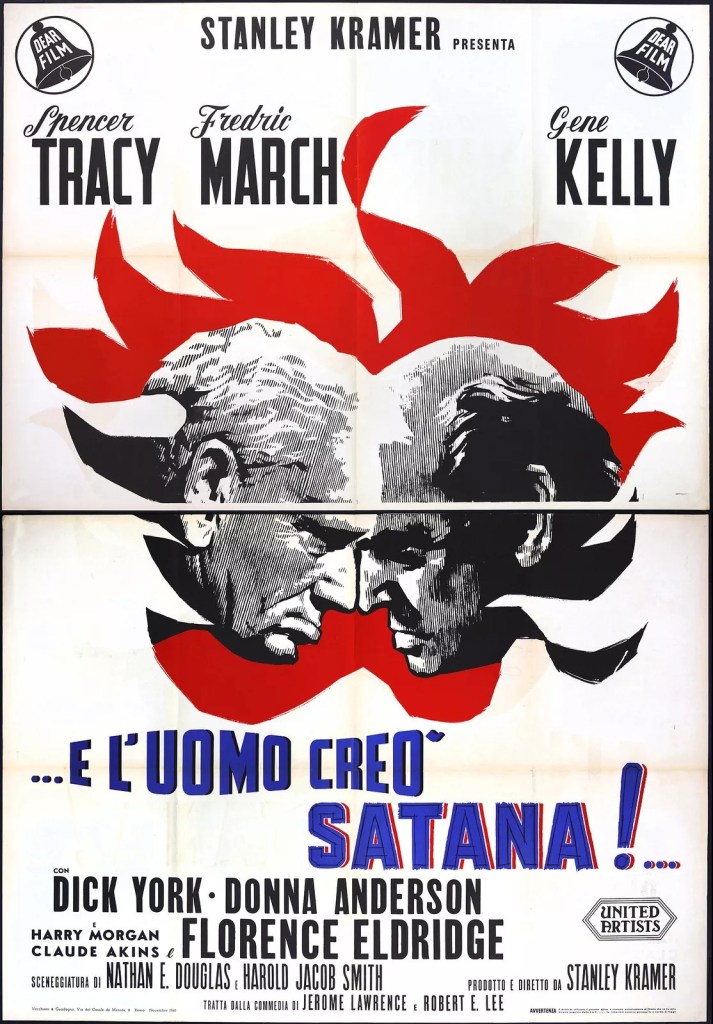
Inherit the Wind (1961) ****

As timely as ever with America seemingly always on the brink of dictating what freedoms people can enjoy. At the time the target was the oppression engndered by McCarthysim, rather than the more basic tale of whether State law could forbid its citizens to talk about evolution. It was set almost a century ago, based on a real-life case, and even now fundamentalists reject Darwin’s theories. Setting aside the context, the principle contested is still the same – not just free speech but the right to be different. You could even argue that scientists and fundamentalists are all agreed these days, that out of nothing came the universe, whether created by a Deity or someone operating a contraption called the Big Bang.

Setting aside the various arguments for and against Darwin’s theory, what we have, nonetheless, is an acting highpoint, a fabulous courtroom battle, of the kind adored by audiences, full of objections sustained, attorneys being warned by the judge, inadmissible evidence, smart remarks and witty rejoinders. This all takes place in a sweltering courtroom, temperature so high that the judge agrees to depart from court procedure and permit the verbal duellists to shed their jackets.

Given further depth because the antagonists, Henry Drummond (Spencer Tracy) and Matthew Harrison Brady (Fredric March), were once the best of pals, political allies, on the same side in the latter’s failed bid for the Presidency, and willing to accept the other’s personal foibles. Probably the first legal drama to accept that outside the courtroom the participants could be friends.

Luckily, most of it isn’t long speeches, but sharp comebacks, plus the detours, twists and turns that come about from concentrating more on the court than on any surrounding action, though there is forbidden romance, pastor’s daughter Rachel (Donna Anderson) defying her father over her love for the accused, schoolteacher Bertram (Dick York) whose teaching is in conflict with the Bible.

The most outraged denizens of the town get into a right tizzy, marches, religious songs, protest, but that’s leavened by commercial interests, a bank manager worrying that the town being ridiculed by those cleverer folks back east will harm his business, hoteliers, sideshow operators licking their lips at the financial bounty of reporters and gawkers descending on the town.

This is as you’d like to see Spencer Tracy, not the silent judge of Judgement at Nuremberg (1961), personality reined in by the weight of his decisions and the need to do right by those accused of even the most heinous of crimes, but the exuberant character, confident, up for battle, able to fend off any criticism and come back to any witticism at his expense with stinging repartee.

Fredric March, too, has a ball with a loudmouth character, convinced of his infallibility (except of course in terms of the Presidential Race), apt to stuff his face at dinner, but still with an intellectual thrust capable of parrying anything Tracy can throw at him. Tucked somewhere in between is weaselly reporter E.K. Hornbeck (Gene Kelly) whose newspaper has hired Drummond to defend Bertram in the hope of filling the front pages for days with the Trial of the Century (taking the prize from Leopold and Loeb the year before – both cases in real-life handled by Clarence Darrow).

Harry Morgan (The Flim-Flam Man/One Born Every Minute, 1967) plays the snipppy judge trying to maintain order while Claude Akins (Claudelle Inglish, 1961) the hellfire preacher. With so many interesting characters on parade, there’s never a dull moment, especially with each actor trying to wring every ounce of drama and/or pathos from their part.

Director Stanley Kramer (Judgment at Nuremberg) looks as if early on he made up his mind to give the actors their sway. There’s no reining in, even in the early scenes, with the populace up in arms and carrying very professionally-made signs and banners (no handwritten scrawls here, no sirree). And once Tracy and March hit their stride, it’s all an audience can do to sit back and admire. Sentiments expressed will still strike a chord, but, mostly it’s a testament to two great actors at the top of their game.

If you only remember March from the likes of The Condemned of Altona (1962) or Seven Days in May (1964) you should know he was a huge marquee attaction in his day, double Oscar-winner (and three nominations besides), as at home in swashbucklers like The Buccaneer (1938) as drama and comedies, leading man who could more than hold his own against top female stars – Greta Garbo (Anna Karenina, 1935), Katharine Hepburn (Mary of Scotland, 1936), Merle Oberon (Dark Angel, 1935) and Janet Gaynor (A Star Is Born, 1937).

Written by Nedrick Young (The Train, 1964) and Harold Jacob Smith (The McMasters, 1970) from the play by Jerome Lawrence and Robert E. Lee.

A terrific watch.

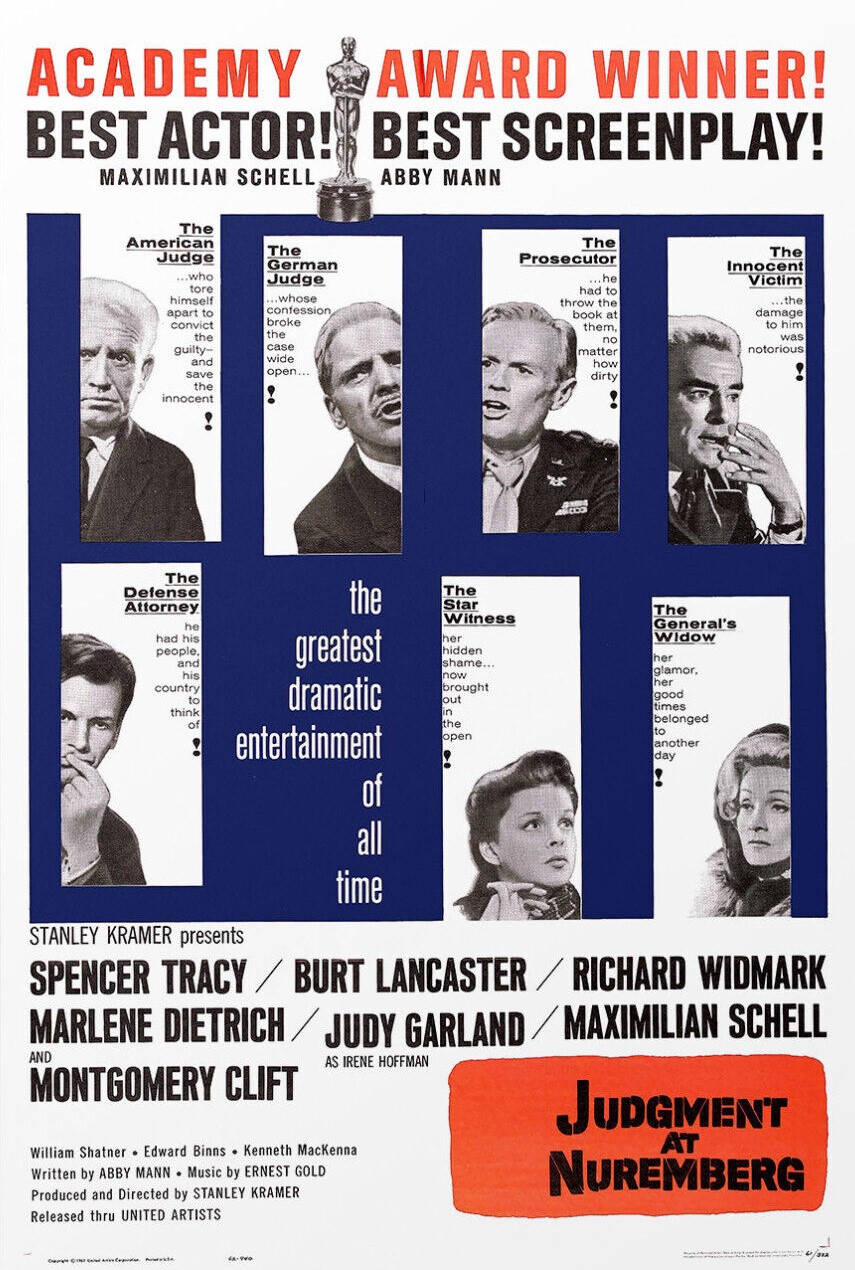
Behind the Scenes: “Judgement at Nuremberg” (1961)

Laurence Olivier could have played a Nazi long before his celebrated villainous turn in Marathon Man (1976). He was producer-director Stanley Kramer’s first choice to play Chief Judge Dr Ernst Janning. He turned the role down in favor of getting married to actress Joan Plowright. Kramer had already decided an all-star cast was required to attract an audience for the grim picture.

The screenplay was an extended version of Abby Mann’s teleplay that had screened on the ABC in 1959. Although Marty (1955) had transitioned with box office and critical success from television to cinemas, that boom was long over.

United Artists, with whom Kramer had a multi-picture deal, were not keen. “I did what looked like a compromise to them, but what I had been planning to do anyway. I promised to fill the cast with stars of such magnitude that their presence would almost guarantee the film wouldn’t lose money.”

There were a couple of other obstacles to overcome. A stage version of the teleplay was being planned for London and Paris and Kramer had to take out an injunction against a documentary with a similar title, Verdict at Nuremberg.

Kramer was known as an issues-driven director, his debut Not As a Stranger (1955) tackling the medical profession, The Defiant Ones (1958) racism and in On the Beach (1959) nuclear war. Along with Otto Preminger, he was viewed as a director of “worthy” pictures, not always a recommendation in the eyes of the critics, but as long as the movies made money and attracted Oscar interest likely to remain attractive to studios. Kramer was just about the only producer (High Noon, 1952, and The Caine Mutiny, 1954, on his calling card) who made a successful career-long transition to direction.

With the exception of Olivier, replaced with Oscar-winner Burt Lancaster (Elmer Gantry, 1960) – not incidentally second choice either, the director preferring to have used a German actor – Kramer hired all his first choices. Spencer Tracy, in fact, was the first recruit. After working with him on Inherit the Wind (1960), Kramer got it into his head when considering a picture to ask himself what part there might be for Tracy.

The actor provided “A depth and candor that would make people notice.” Maximilian Schell (Topkapi, 1964) reprised the role he had essayed on television, a man “living in a complicated gray zone.”

Kramer had a reputation for hiring singers and dancers – Gene Kelly, Fred Astaire, Frank Sinatra –  for dramatic roles and he continued in that vein by hiring Judy Garland. It was a difficult decision. He theorized that “the very disorders that made it difficult to work with her fitted perfectly with the role.”

You could have said the same of Montgomery Clift (Freud, 1962), “reduced almost the level of the unsound person he was portraying.” Given the actor’s problems remembering lines, Kramer allowed Clift to basically ad lib, when attacked on the witness stand permitted to reach “for a word in the script” that appeared the correct emotional response to “convey the confusion in the  character’s mind.”  While Clift did not often adhere to the script, whatever he said worked well enough. Rarely has a director been so sympathetic to a troubled actor. “He needed someone to be terribly kind,” said Kramer, “someone who would consistently bolster his confidence and tell him he was wonderful.

Marlene Dietrich, who had firsthand experience of Nazi Germany at first hand, having fled the country, actually knew the general whose wife she was portraying, which helped to “deepen my understanding of the emotions of Hitler’s victims,” conceded Kramer. Opening up about her experiences and fears allowed Kramer to extend the scope of the character.

While the courtroom where the original trial had taken place was not available for hire – it was in current use – Kramer was permitted to measure and photograph the room to reconstruct it on a soundstage. Only 15 pr cent of the movie was shot in Germany.

The experience of filming Inherit the Wind, another courtroom drama, taught Kramer the need to have fluid camerawork since talk and gesture tends to be static. “I learned to move the camera often to achieve a sense of movement for the viewer.”

Abby Mann was required to open up the teleplay, move the action outside the courtroom – scenes in the judge’s accommodation, on the derelict streets, in restaurants – and avoid cinematic claustrophobia and making it a “pious sermon.” “In my opinion,” argued Kramer, “Judgment at Nuremberg conveys a moral not always honoured, then or now, in the world of politics.”

Kramer had a particular method of pre-production. He built all his sets six weeks before filming began. As part of that process, he sat down with his cinematographer and went through the script scene by scene working out the lighting and camera positions. Then he called in the actors and took them through the sets and roughly his shooting thought-process, taking on board any queries and suggestions.  Film like this “sort of demanded it be shot in sequence with a single camera,” explained cinematographer Ernest Laszlo  (Fantastic Voyage, 1966).

The 360-degree turning of the camera was not as revolutionary as you might imagine – although, according to critics, Michelangelo Antonioni invented it for The Passenger (1975). Laszlo had done if before on The Hitler Gang (1944) for director John Farrow. But this was infinitely more complicated set-up with the revolving camera in constant use to allow Kramer the required fluidity.

“I used two key lights,” said Laszlo. “Shooting this I used one and then as we went round I used the other.” It wasn’t as simple as it sounds, the lights needed to be positioned with mathematical precision so the audience wasn’t aware of any change in the lighting.

“The circling camera saved us photographically,” said Kramer, preventing the picture from seeming “slow and cerebral.” As smooth as it appears on screen it was cumbersome. The entire crew involved had to carry cables and equipment round in a circle. But it permitted Kramer to pick up the judges without cutting to them.

Kramer also used the camera to achieve another transition. As the picture began, German actors spoke in German (with translators offscreen) to show the trial was mostly in German. But for the movie to work, the dialog needed to be in English. “We started the transition scene with Schell addressing the court in German. Laszlo’s camera zoomed in on him, then turned elsewhere, then turned again to Schell so that we were able to switch his speech from German to English in perfect cadence as the camera came in on him the second time. His English picked up from his German so naturally you could almost let it pass without noticing.”

Kramer conceded there might, in fact, be “too much camera movement.” But that was in part dictated by a “very authentic situation, a long courtroom, very wide, and the spacing between the original attorney’s box and the witness box was at least forty feet. That’s a long distance if your try to photograph it.” Also, it wasn’t like a normal Hollywood or American trial, where the lawyers can prowl in front of judge and jury. Here, the attorneys could not move from their box.

“Unless you want to play ping-pong in the cutting room, you have to move the camera…I felt trapped by these three positions – the judges, the attorneys and the witnesses in that big spread. So, the forty feet was compressed to twenty-eight feet. We had to put a lot of light on the far figures to hold the forms in focus,” resulting in the actors “perspiring a lot during these shots.”

The movie, rolled out as a roadshow, did better than expected, the all-star cast proving a major draw, global box office netting a healthy profit. Schell won the Oscar as did Abby Mann, Kramer was nominated in his dual capacity as producer and director.

SOURCES: Stanley Kramer, It’s a Mad, Mad, Mad, Mad World: Life in Hollywood (Harcourt Brace & Company, 1997) p179-197; Donald Spoto, Stanley Kramer Film Maker (Samuel French, 1990)p230-233;  “An AFI Seminar with Ernest Laszlo, American Cinematographer, January 1976, p52; “Judgment at Nuremberg Still Slated for Legit,” Box Office, February 3, 1960, p6; “Kramer Gets Injunction,” Box Office, December 11, 1961, p14.

https://amzn.to/3Mkl7v5

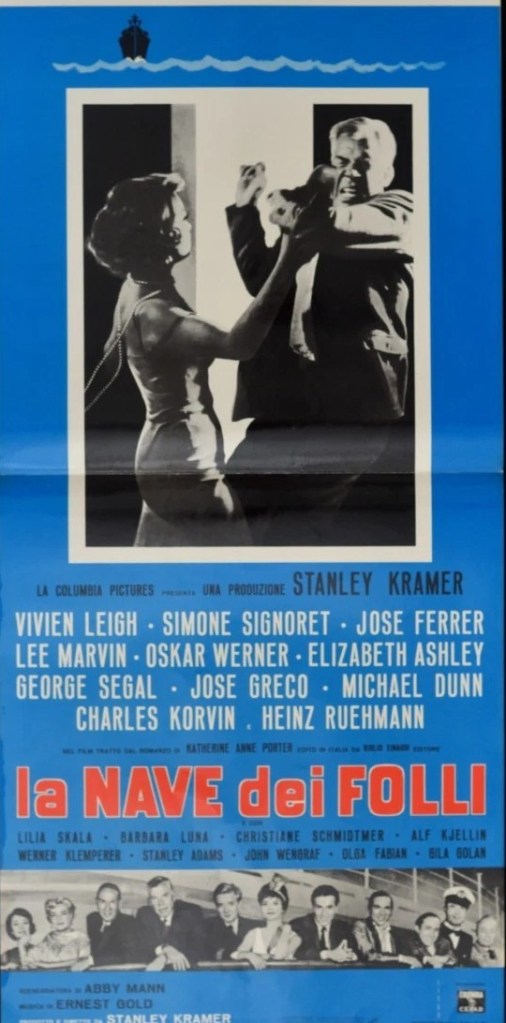
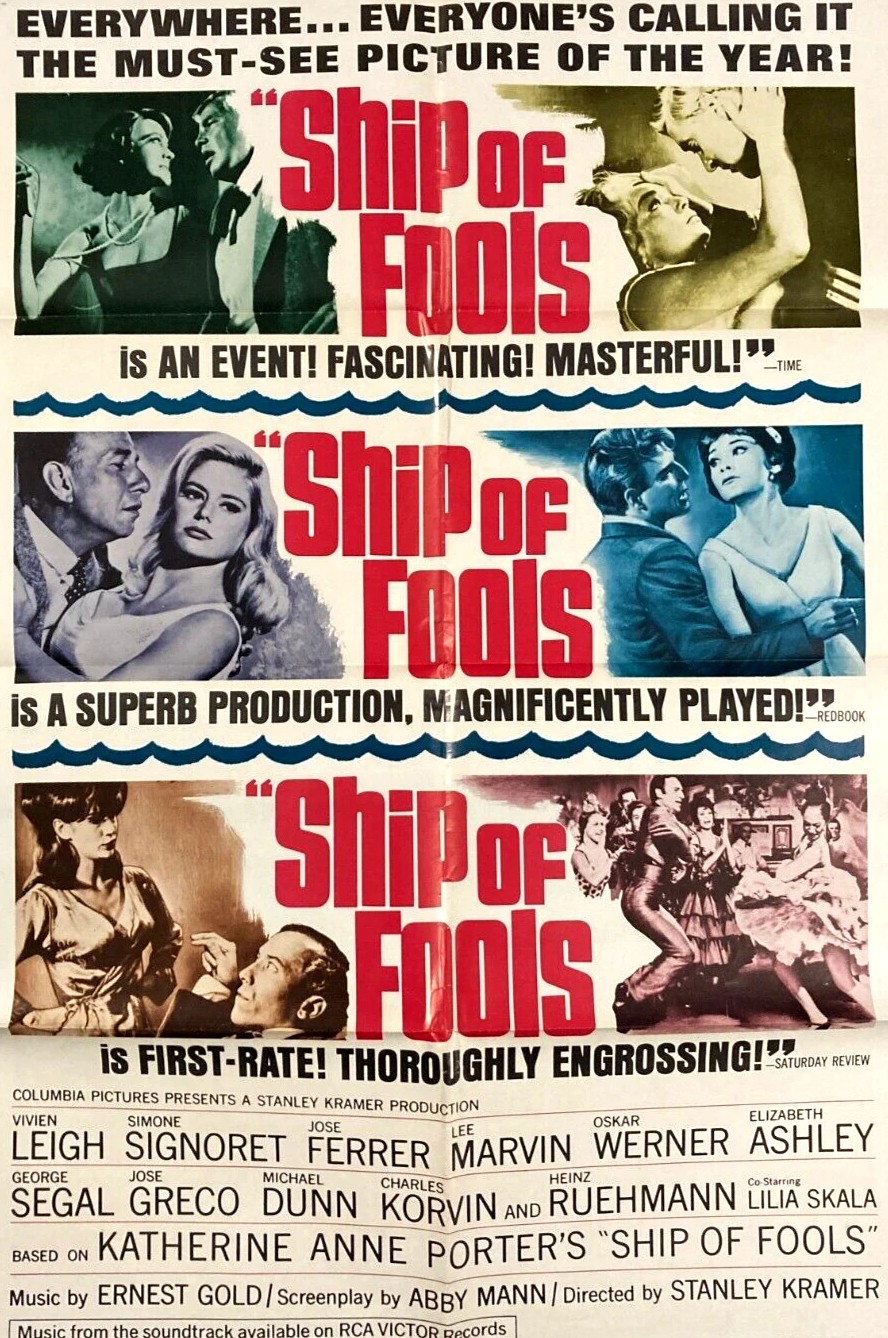
Judgment at Nuremberg (1961) ****

Stanley Kramer never caught a decent academic/critical break. Subject matter worthy, execution poor, was the overall consensus. But Judgement at Nuremberg, with its long tracking shots, sometimes turning 360 degrees around a character, should have changed all that. But the kind of critics who would have appreciated such bravura technique weren’t around at the time and even when Antonioni’s The Passenger (1975) appeared nobody thought to reference Kramer, believing this was a new cinematic invention by the esteemed Italian maestro.

So, Judgement at Nuremberg is remembered, if at all, for the subject matter and elevated by the performances rather than the director’s input. Most people misremember what the movie’s about. The main concern here isn’t the war criminal, the men personally involved in running the ghettos. Instead, it’s about those behind the scenes who could, theoretically, have prevented the camps flourishing, or at least challenged their opening.

Those on trial were freedom fighters of a different sort. As judges, the top tier of the legal system, their job was not just to uphold law and order and individual freedoms, but to take government to task for illegal action. It’s a basic tenet of the democratic world that governments cannot act in autocratic fashion but work within public accord.

Should the legal guardians find fault with government activity, their job is to take the ruling body to task – the European Court of Human Rights was set up with exactly that principal in mind, and various British and American law agencies have over time called a halt or questioned government proposals.

Some of the judges were clearly ill-fit for the task, lick-spittle jobsworths, desperate to hold onto rank and privilege, many sharing the same anti-semitic views as Hitler. But the Allied forces, being democratic, have to proceed along proper lines, taking potential criminals to court and allowing them legal defence.

So the main target is Dr Ernst Janning (Burt Lancaster), German’s pre-eminent legal force, a quiet, dignified man, who refuses to fawn or react to the charges. On the attack is prosecutor Col Tad Lawson (Richard Widmark). Acting for the defence is the wily, emotional, Hans Rolfe (Maximilian Schell) who is not above comparing the Holocaust to the Americans dropping the atom bomb on Hiroshima, indiscriminate terror brought on innocent civilians the result of both actions. He also brings to the court’s attention the distasteful theories that once held sway in high American legal circles as promulgated by Oliver Wendell Holmes, a Supreme Court judge, whose views on eugenics aimed at withholding procreation rights from the mentally handicapped.   

As referee we have Dan Heywood (Spencer Tracy), the American chief judge, who didn’t want the job and was way down the pecking order of those best qualified. And he’s a bit of a detective on the side, trying to discover how much ordinary people –  such as the flirtatious Mrs Bertholdt, widow of an executed German general, as well as the housekeeper and butler looking after him in some style – knew about the atrocities as they were taking place.

In the background is an Allied command not wishing to stir up any more controversy, conscious of the rising power of the Communist bloc, seeing West Germany as a bulwark against Stalin, concerned that forcing the country’s inhabitants to wallow in the past will turn their political minds towards the east rather than the west.

In due course, a variety of witnesses are called, testifying to ill-treatment under the German government including the backward Rudolph Pedersen (Montgomery Clift) and Irene Hoffman (Judy Garland).

What makes this so different is that innocence or guilt is not what’s under scrutiny, but reason. Why did such high-minded legal experts like Dr Janning give in to Hitler. And when? And do they recognise their role in providing Hitler with credence to continue with his massacre of the Jews?

Individual conscience and, conversely, collective guilt, might have been the driving force then but they are more than relevant today when actions in war come under even greater scrutiny and politicians are held to account. Perhaps, it’s ironic how little judgement was passed in the end on those convicted in these trials. Nobody was hanged, nobody received even a life sentence. In fact, by the time the movie was released, all were free men.  

Stanely Kramer, the Scorsese or Nolan of his era regarding running time  (it clocks in a just shy of three hours), does a superb job with his even-handed approach. While his technical skills were perhaps under-appreciated, he certainly knows how to command an audience’s attention and draws terrific performances from his actors.

Maximilian Schell, who won the Oscar, is perceived as the standout, but for me the highpoints were Burt Lancaster (The Swimmer, 1968) and Montgomery Clift (Freud, 1962). Abby Mann’s (The Detective, 1968) screenplay was an expanded version of his teleplay of two years before.

Has more than enough humanity to keep you riveted.

https://amzn.to/3Mh4v7c

Pressure Point (1962) ****

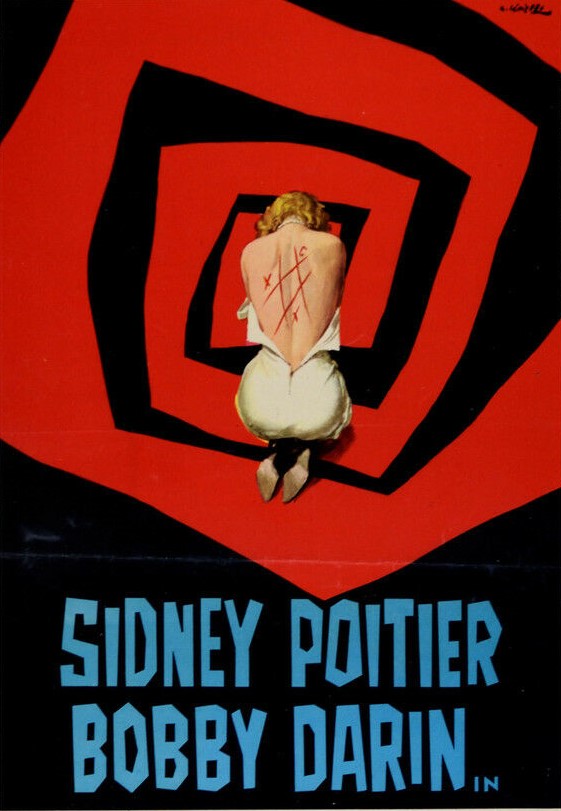
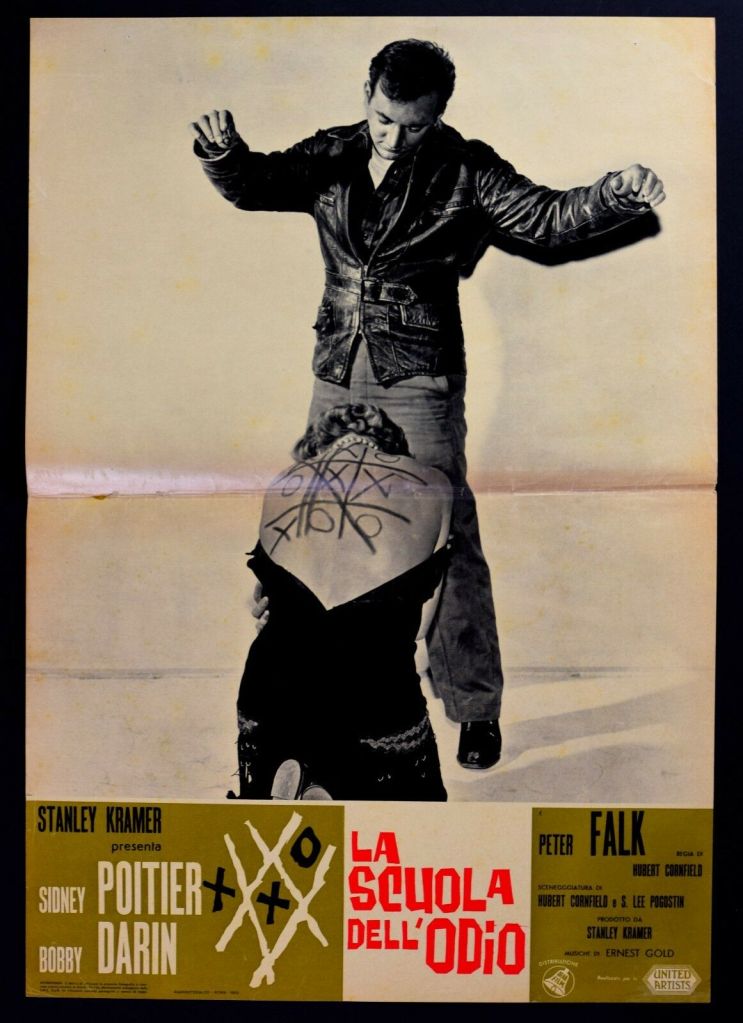
Central to this under-rated tale of psychopathy and racism is one extraordinary scene, possibly the most exceptional bar-room sequence ever filmed. In the annals of imaginative repulsion, it ranks alongside the rape committed by Alex and his “droogs” in Stanley Kubrick’s A Clockwork Orange (1971). It begins with mere intimidation as an unnamed young man (Bobby Darin) begins to etch into a bar counter the lines and symbols of Tic-Tac-Toe (a.k.a. Knots & Crosses or Noughts and Crosses). Discovering tins of paint, the man and his gang proceed to cover the entire bar – floor, walls, ceiling, even tables – with the same symbols.

The humiliation is ratcheted up a notch when the gang leader forces tavern owner (Howard Caine)  to lie on the floor behind the counter where he cannot see the bar hostess (Mary Munday), rigid with fear, being tormented. Using lipstick rifled from her handbag, the man decorates her face in the same fashion before pulling down the back of her dress and doing the same there. Fortunately, the rest of the scene, presumably ending in rape, is left to our imagination.

Italian poster showing image from the Tic-Tac-Toe scene. A variation of this was shown in the main image which removed the domineering man and concentrated on the humiliated woman.

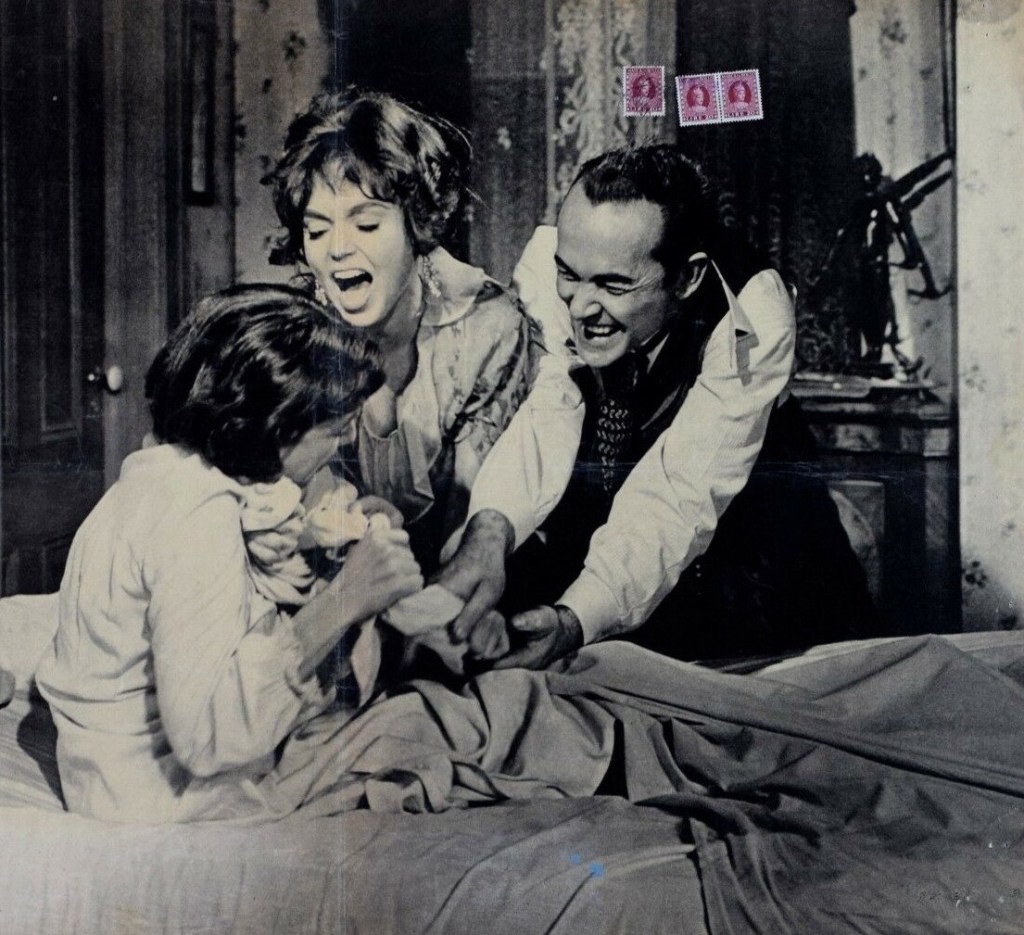
Other potent scenes show how the man arrived at his crazed state, smothered with affection by a weak mother (Anne Barton) who has taken to bed in order to escape his drunken, raucous father (James Anderson) who taunts his ineffective wife by flaunting in her face his casual pick-ups and making love to them in the same room. Indicative of the lonely child’s disturbed personality is that when he invents an imaginary playmate, it is to have someone to subjugate, making his fictional friend lick his boots.

Imprisoned during the Second World War for sedition, the man, suffering from blackouts and nightmares – in which he imagines himself clinging to the edge of a giant plughole before being swept away by a torrent of water from the taps – becomes a patient of a young, also unnamed, doctor (Sidney Poitier) whom he subjects to racial abuse.  The doctor, physically bigger and more imposing than the patient, would like to simply give him a good thumping, but his profession necessitates that he treats this objectionable person as just another patient. And eventually they come to enough of a concord that the patient accepts treatment although the doctor suspects that his core personality has not changed.

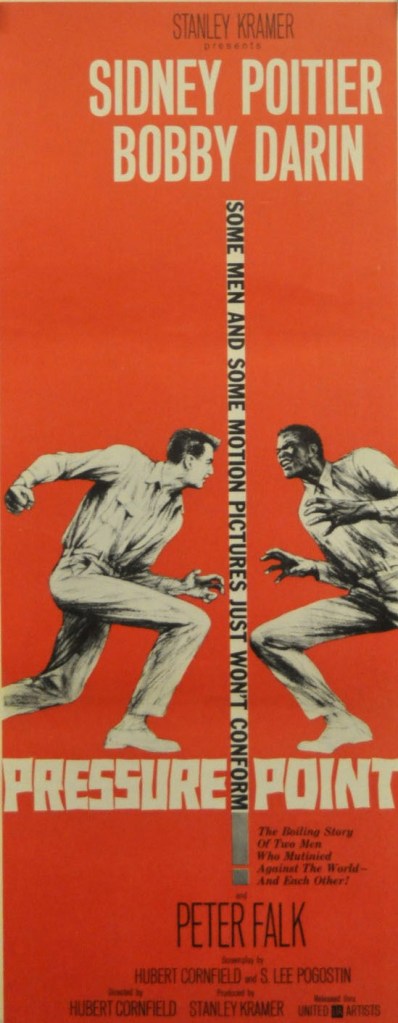
The U.S. poster was different to that used in Italy. This is pretty much a straight rip-off of “The Defiant Ones” (1958).

The movie is layered with themes other than psychopathy and psychiatry. While the racist element is to the fore, including the doctor’s need to prove himself in a white man’s world, and the lack of diversity in this particular medical field at that time, director Hubert Cornfield also explores the growth of right-wing extremism among the disaffected who see no contradiction in still espousing traditional American values, for example giving the Nazi salute while singing in all sincerity the national anthem. The African American doctor has to come to terms with lack of objectiveness when dealing with such an abhorrent person.

The movie flits between scenes between the two protagonists staged in a stagey manner and  expressionistic almost dreamlike sequences representing the patient’s upbringing such as being menaced by his butcher father among the swinging carcasses of the store. The patient flashbacks are shown without dialogue, explanation given in voice-over by either the patient or the doctor.

The father torments the mother by bringing a casual pick-up to their bedroom.

Reliance on visual dexterity, however, detracts from the tension and director Hubert Cornfield (The 3rd Voice, 1960) is also hampered by an unnecessary framing device which results in the story being told in flashback – leading to a conflation of flashbacks: the older Poitier explaining his earlier problems dealing with a difficult patent and listening in turn to the patient’s own life story. So the pressure indicated by the title is often undercut and does not build as much as you might expect. Critical reaction in those days pivoted on the racism elements, but a contemporary audience is almost certainly going to be as influenced by sequences involving the patient, so the picture automatically becomes more involved and Cornfield’s visual mastery more appreciated.

You can detect the influence of producer Stanley Kramer. In his capacity as director he had explored psychiatric therapy and anti-semitism in Home of the Brave (1949) and racism in The Defiant Ones (1958) also with Poitier. As producer he was responsible not only for selection of the original material, based on a short story The Fifty-Minute Hour by Robert M. Lindner, but also imposed the framing device, which Kramer wrote. Those scenes relate to another psychiatrist (Peter Falk) coming to a much older and experienced Poitier for advice after hitting a brick wall with a similarly repugnant patient, Poitier telling the story of his treatment of the Bobby Darin patient as a way of showing that even the worst patients are treatable.

This is quite a different Sidney Poitier than you might be used to. Wearing suit and tie, and spectacles, this is a more restrained, measured performance. Poitier’s taboo-busting Oscar nomination for The Defiant Ones had not progressed his career that much, still restricted to starring roles in low-budget pictures. But Kramer broke another taboo in Poitier’s favor with this one, casting him a role not initially written as an African American.

Bobby Darin (Come September, 1961) had parlayed his status as hit recording artist into a burgeoning movie career but does not quite display the menace necessary for a fully-fledged psycho. The likes of Richard Widmark would have been a more convincing adversary. Peter Falk (Machine Gun McCain, 1969) has a small one-tone role. The jazz-nuanced music by Ernest Gold (Exodus, 1961) is worth a listen. And if someone can tell me who designed the striking credit sequence I would be very pleased.

Incidentally, the title of Lindner’s short story is ironic. Patients pay for one hour of a psychiatrist’s time but in reality only receive 50 minutes in order for the professional to achieve a swift turnaround and keep his/her appointment timetable scheduled to the hour. Tic-Tac-Toe, in case you are unfamiliar with this two-person childhood game, consists of drawing lines to create nine squares and filling those with either a zero or a cross. The object of the exercise is to create a complete line of either symbols.

Catch-Up: Sidney Poitier films previously reviewed in the Blog are The Long Ships (1964), The Bedford Incident (1965) and Duel at Diablo (1966).

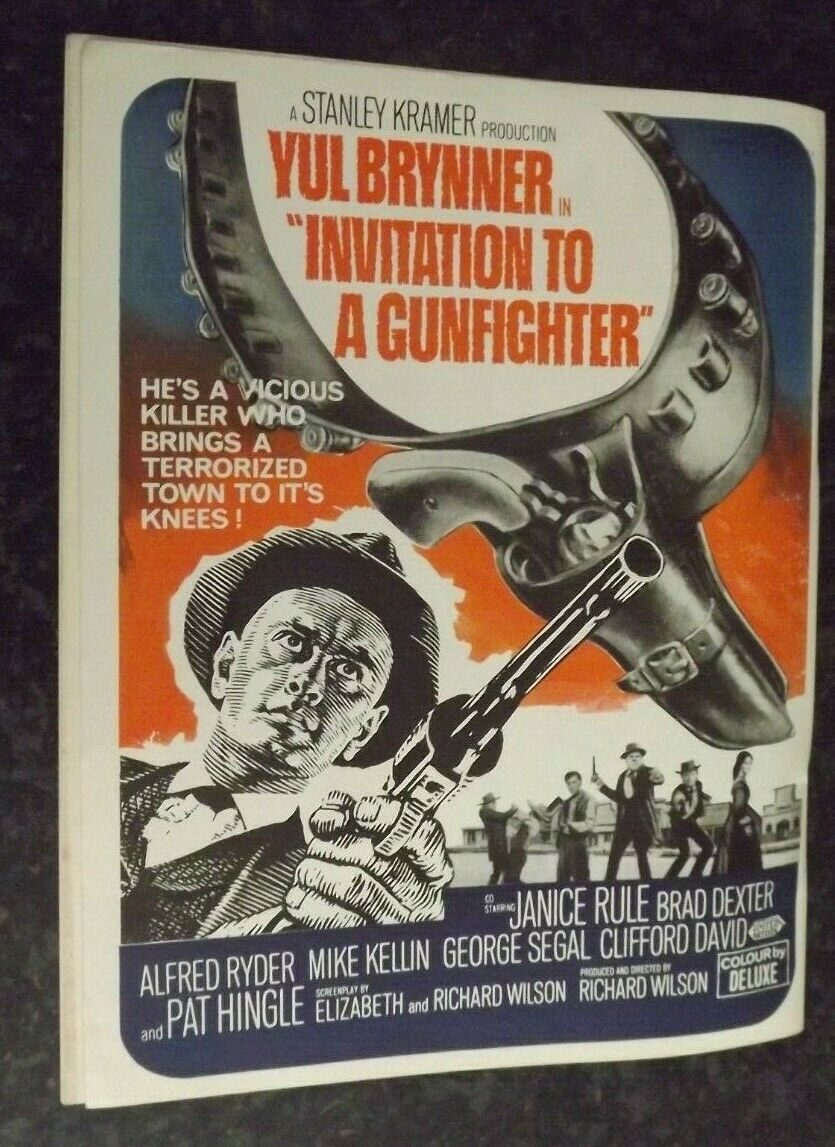
Invitation to a Gunfighter (1964) ****

If ever a movie was in sore need of reappraisal it’s Richard Wilson’s western, which encountered both audience and critical indifference on initial release. If you’ve heard of Wilson at all it will, hopefully, either be down to his connection with Orson Welles or from his crime duo Capone (1959) with Rod Steiger and Pay or Die (1960) with Ernest Borgnine.  On the other hand, you may be more familiar with the name from the Ma and Pa Kettle series in the 1950s or perhaps raunchy comedy Three in the Attic (1968). Or because he was an unlikely contender for the triple-hyphenate position (writer-producer-director) held on the Hollywood scene by the likes of Billy Wilder and less-heralded figures such as John Lemont on the recently-reviewed The Frightened City (1961).

Wilson was not first choice to direct since the western had been on the Stanley Kramer company slate since 1957 when it was planned for Paul Stanley before it moved in 1961 into Hubert Cornfield’s orbit with a script by James Lee Barratt and then repossessed by Kramer when Rod Steiger was briefly attached. The film, backed financially by Kramer, barely rates a paragraph in the director’s autobiography in which he describes the picture as “an adult western with a somewhat complicated plot.” There’s no getting past the fact that the plot is complicated, but it’s not the plot but the characters that held me in thrall. Kramer thought the film contained elements of High Noon (1952). But for me the starting point was surely The Magnificent Seven (1960) and not just because Yul Brynner played a gunfighter complete with black outfit and cigar. It wasn’t Brynner’s look in the previous western that brought me to that conclusion, but the scene where the gunfighters sit around talking about where their career has taken them – to precisely nowhere: no wives, no family, no home.

Invitation to a Gunfighter makes more sense as an adult sequel to The Magnificent Seven than any of that movie’s other retreads. Imagine that Brynner, despite the boost to his esteem from beating the Mexican bandits, had not shaken off what we would most likely classify these days as a malaise or a depression. He is trying to make sense of a life that has proved unfulfilled. His options are salvation or suicide. At some point he will come up against a quicker gun, so it is suicide to continue in this profession.

But this Brynner is also close kin to Clint Eastwood’s man with no name, the mercenary who takes full advantage of his power in lawless towns, and especially to the later embodiment of such a character in High Plains Drifter (1973). (Perhaps Eastwood got the idea of renaming the town ‘Hell’ and painting it red from the scene where Brynner, fed up with the hypocrisy of the righteous townspeople, goes on a drunken wrecking spree.) However, Brynner is far from anonymous. His name is so rich – Jules Gaspard D’Estaing – that the locals curtail it to the more peremptory Jewel. And this Brynner is cultured. He plays the spinet (a kind of harpsichord) and the guitar, sings, quotes poetry and cleans up at poker. He is sweet to old ladies, but that is in the guise of righting wrongs. And he is defender of the under-privileged, in this case  downtrodden Mexicans. He was himself the son of a slave. The most compelling aspect of this picture is that despite knowing so much about him he remains mysterious.

Brynner wasn’t the two-fisted kind of action hero, but more the guy who could disarm the opposition with a mean stare, and charm women with his brooding good looks. As mentioned, the plot is complicated so to get the best out of the picture you need to kind of set that to one side. Simply put, Confederate soldier George Segal, returning from the Civil War, finds his farm has been appropriated and his sweetheart Ruth Adams (Janice Rule) has married someone else, the one-armed Crane Adams (Clifford David). Brynner is brought in to get rid of Segal who is causing a nuisance to the town’s immoral hierarchy.

So the story, rather than the plot, is the interaction between these four. Crane Adams clearly wants any opportunity to kill off his rival. Equally, Segal wants to win Rule back. And Brynner finds himself unexpectedly drawn to the sad, pensive Rule, abandoning the Santa Fe stagecoach on catching a glimpse of her, only hired when the townsfolk discover his occupation. Brynner has a fantasy of taking her away from all this, the pair of them riding off together, and there is no doubt Rule is tempted as he implants himself in their household and shows himself to have everything her husband, or Segal for that matter, lacks. Perhaps the best thing about the movie is that nothing is clear cut. Our sympathy shifts from Brynner to Segal to Rule. Even when Brynner brings the town’s hierarchy to heel, there is no guarantee that will be enough to win over Rule. And if he cannot have her, what does he have? The Eastwood loner never seems to care about emotional involvement, he just takes what he wants, but the Brynner character is more sensitive and does not want a one-sided relationship based solely on power.

For the movie to work at all, Rule needs to engage our sympathies. Having clearly been somewhat mercenary herself in discarding Segal in favor of Crane Adams (presumably not originally disabled), she needs to portray a woman who is not just going to jump at the next best thing.  Rule is especially good, far better than in more showy roles in Alvarez Kelly (1966) and The Chase (1966). Never given the opportunity to verbalize her emotions, nonetheless in scene after scene her quiet anguish is shown on her face. Magnificent Seven alumni Brad Dexter and John Alonzo (later the famed cinematographer) have small parts.

I certainly saw a different picture to the “offbeat but confusing western” viewed by Variety’s critic and possibly, for once, because the passage of time has allowed this film to be seen in a new light. Rather than a morality play in the vein of High Noon, I saw it as a character study of a gunfighter knocking on heaven’s door.

Many of the films made in the 1960s are now available free-to-view on a variety of television channels and on Youtube but if you’ve got no luck there, then here’s the DVD.

Discover WordPress

A daily selection of the best content published on WordPress, collected for you by humans who love to read.

The Atavist Magazine

by Brian Hannan

WordPress.com News

The latest news on WordPress.com and the WordPress community.