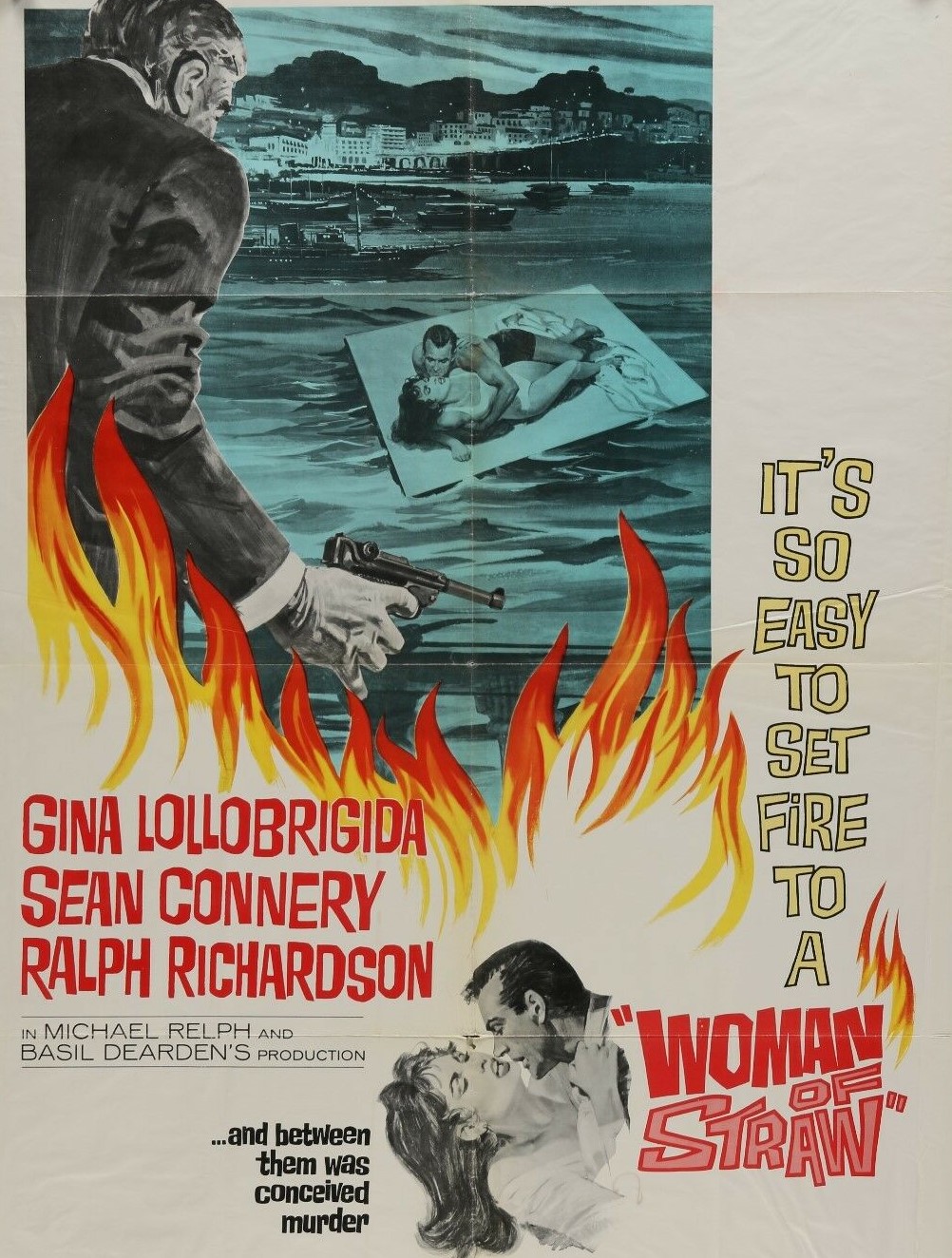
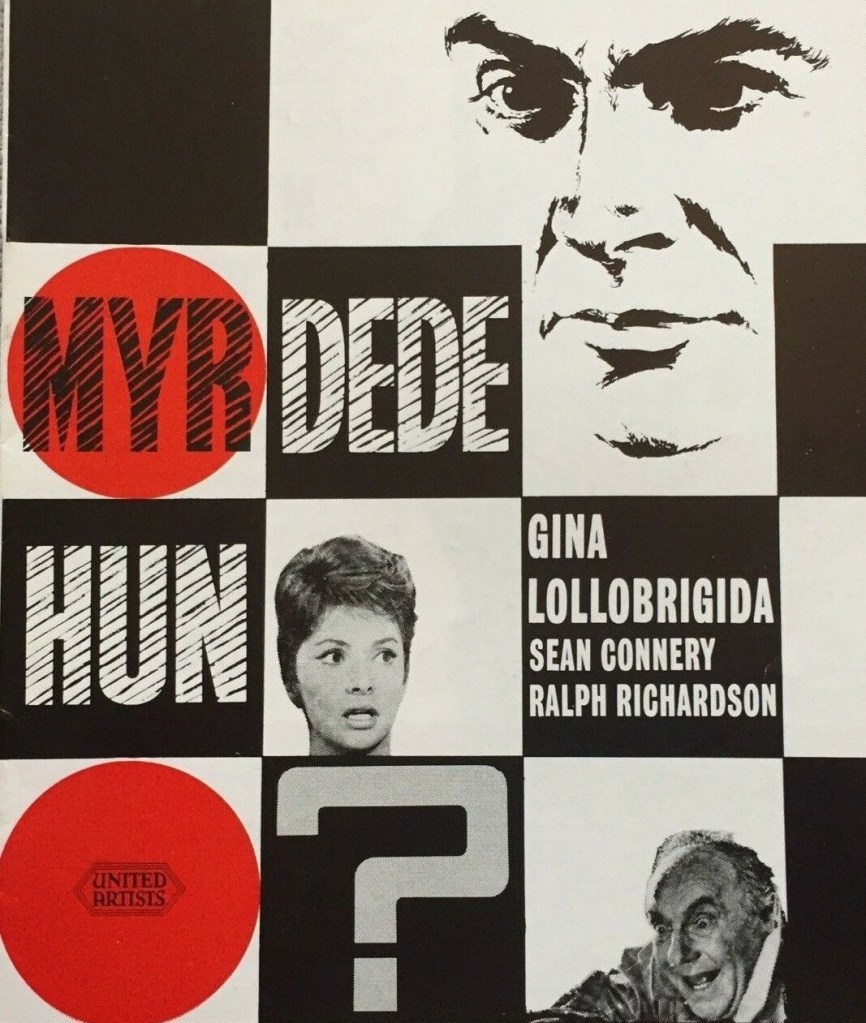
Woman of Straw (1964) ***

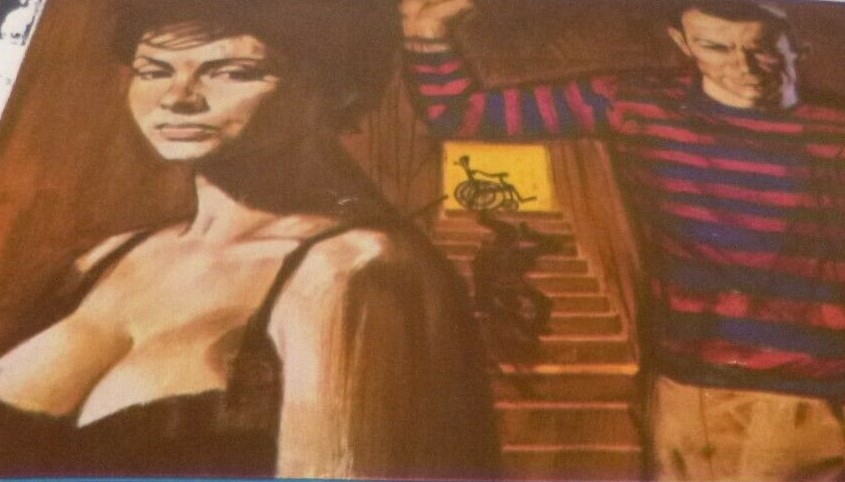
In a plot worthy of Hitchcock without that director’s sly malice, rich playboy Tony (Sean Connery) conspires with not-so-innocent nurse Maria (Gina Lollobrigida) to rid himself of  heinous upper-class racist misogynistic bully Charles (Ralph Richardson), his uncle. Beyond  a savage case of entitlement, Tony has good reason to hate the wheelchair-bound multi-millionaire, blaming him for his father’s suicide and for seducing his widowed mother, now dead. Tony’s ploy, in part by opposing the very idea, is to get Maria to marry Charles, inherit his fortune and provide himself a £1 million finder’s fee when the seriously ill old man dies.

Maria’s refusal to kowtow to the old man and her initial resistance to Tony make her all the more desirable to both. When Maria saves the old man from a potential heart attack, he is moved enough to marry her and draw up exactly the will the pair want. But when he suddenly dies, Maria surprises herself by the depth of emotion she feels.

But that soon changes when she comes under suspicion. A bundle of complications swiftly change the expected outcome. A police inspector (Alexander Knox) doubts cause and place of death.

The first half is the set-up, the various figures being moved into place, not quite as easily as might have been anticipated, which adds another element of tension. Charles is such a hideous person nobody could lament his passing, but still his vulnerability, not just his wheelchair confinement but his love of music, his better qualities coming to the fore as the result of Maria’s presence, accord him greater sympathy than you would imagine.

That the otherwise gallant Tony’s entitled life depends entirely on his uncle’s good wishes lends him an appealing frailty. The nurse’s principles safeguard her against being taken in by riches alone, but there is a sense that she has used her physical attraction in the past to her advantage.

After the first two James Bond pictures, this was Sean Connery’s first attempt to move away from the secret agent stereotype and in large part he is successful. As amoral as Bond, he could as easily be a Bond villain, smooth and charming and larger than life and superbly gifted in the art of manipulation, the kind of putting all the pieces in place that Bond villains excelled in.

It will come as a surprise to contemporary viewers that he is merely the leading man, not the star. Gina Lollobrigida (Go Naked in the World, 1961) receives top-billing because she carries the emotional weight, initially perhaps as cold as Tony, but her attitude to Charles changing after marriage, meeting a need that Tony would not consider his to fulfill, and beginning to regret going along with any devious plan. That she then discovers she may merely be a pawn rather than a partner creates the dilemma on which the final section of the film depends for tension.

Both actors are excellent, exuding star wattage, the screen charisma between them evident, and audiences craving the pairing of Connery with an European female superstar will be well satisfied. Lollobrigida has the better role, requiring greater depth, but it is romance as duel most of the way. Ralph Richardson (Khartoum,1966) has never been better as one of the worst human beings ever to grace a screen. Johnny Sekka (The Southern Star, 1969) brings dignity to the maligned servant and Alexander Knox (Khartoum) is a crusty cop. 

A slick offering from Basil Dearden (The Mind Benders, 1963), with one proviso – see seaparate article for the racism in this film. Written by Robert Muller (The Beauty Jungle, 1964) and Stanley Mann (The Collector, 1965) based on the novel by Catherine Arley.

Could have done with expending less time on the set-up and getting to the meat of the thriller quicker.

The Great Train Robbery / The First Great Train Robbery (1978) ****

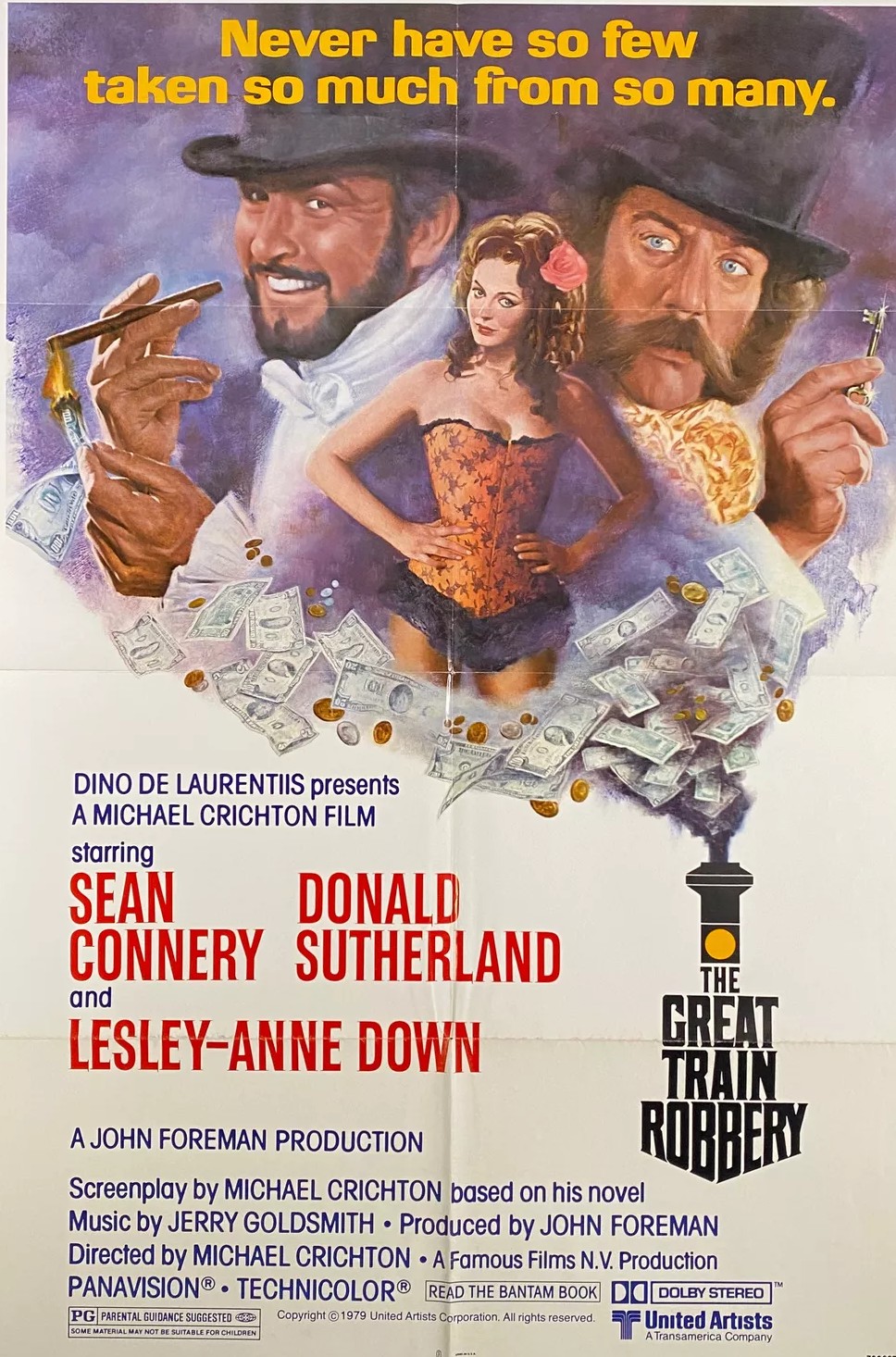
Back in the day your IP was the star. And here Sean Connery (The Hill, 1965) is the essence of that belief. The camera homes in on him. He steals every scene with an effortlessness that takes your breath away even as co-star Donald Sutherland (Don’t Look Now, 1973), complete with bizarre sideburns and winks to the audience, is huffing and puffing to compete.

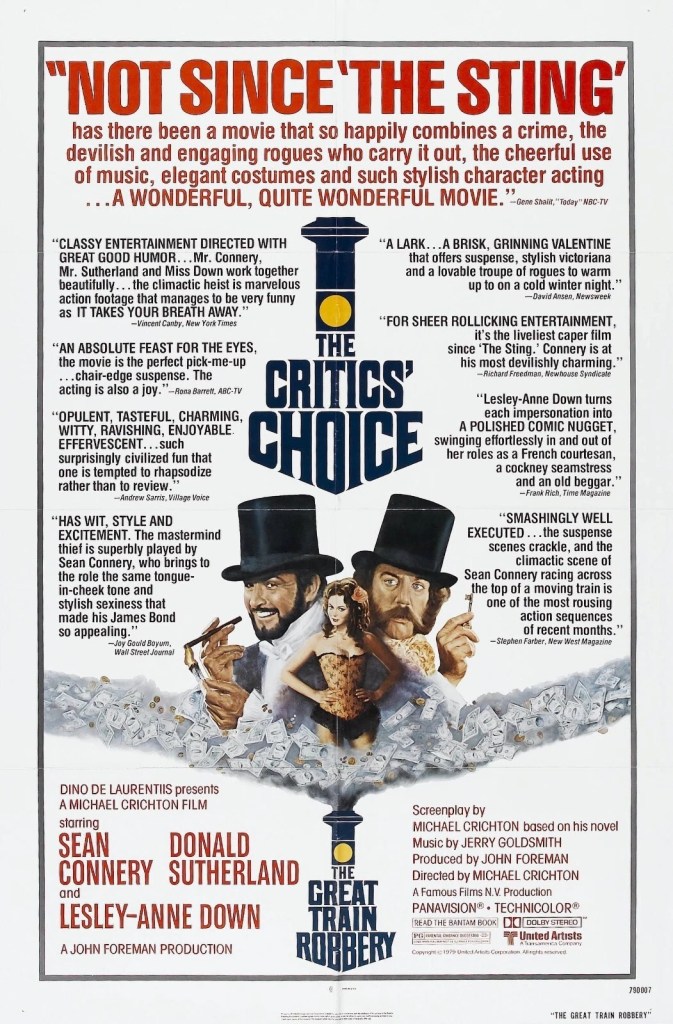
Come at it as the standard heist movie and you will struggle to enjoy it because it is made up of too many different components. But approach it from a different perspective, that of The Sting (1973) as one critic suggests, and it takes on a different complexion and the getting there becomes a whole lot of fun. The background, Victorian England of the 1850s, doesn’t help so much as the sets look like they’ve been plundered from Oliver! (1968) and dirtied up a bit.

It’s worth remembering that in an era when the Mission Impossible series has been constantly sold on Tom Cruise undertaking his own stunts that Sean Connery did something much more dangerous than anything attempted by Cruise which was to race along the top of a train travelling at 55 miles an hour.  

And if you need some contemporary analogy, look no further than the rich get richer and mostly through plundering. The ending presents the notion of a Robin Hood outwitting the forces of law and order to the acclaim of the public. But that would be to overlook the fact that chief thief Pierce (Sean Connery) is already so wealthy from previous nefarious dealings that he hobnobs with the rich, so accepted in their world of male clubs and high society that, like a financial trader, he is able to pick their pockets of vital information.

Though it’s not quite that easy. The target is a trainload of gold bullion heading for the Crimean War. And the two safes containing the dosh require four keys, each under the control of a different high-up official, requiring several separate audacious thefts. This involves some play-acting from the principals, dressing up in the main from female accomplice Miriam (Lesley Anne Down), clever duping by Pierce and old-fashioned burglary from pickpocket Agar (Donald Sutherland) who waves his fingers around like a demented Fagin, and whose main job is make wax impressions of stolen keys.

So Pierce pretends to be the ardent wooer of the daughter of one of the key holders, and Miriam essays a prostitute to relieve a key holder of the precious possession he wears around his neck. But the other two keys require a more professional approach which involves first of all the springing from prison of cat burglar Clean Willy (Wayne Sleep) to break into the guarded railway premises in a time-dependent operation.

But the cops get wind of the plan and increase security on the train, including adding a new padlock to the outer door. “Find me a dead cat!”, while not quite in the league of “The name’s Bond, James Bond” might well count as one of the best lines ever uttered by Sean Connery.      

Said deceased animal is brought in to supply the necessary stink for a corpse should the cops consider opening the casket containing Agar which is to travel on the train, providing the team with the necessary inside man. But Agar and Miriam as the weeping widow of the supposed dead man have very little to do compared to Pierce who has to climb on top of the train, racing along the speeding top, drop down the side in an improvised harness and pick the padlock, then do the whole thing in reverse.

I may be wrong, and I’m sure someone will correct me if I am, but if this wasn’t the first time running along the top of a moving train was employed in a movie it certainly set a new standard, especially in the willingness of the actor to carry out his own stunts.

Pretty much all that remains after that is the twists that see Pierce captured and then escape. You could pick a few holes in it if you wish. The fact that after Pierce swapping coats (the one that had lain beside a dead cat for hours and provided sufficient stink to convince the lawmen) with Agar, nobody noticed the smell seems unlikely. The same would apply to bank manager Fowler (Malcolm Terris) who fails to spot that the widow he shares a compartment with for the entire journey is the prostitute who duped him, though that prospect does increase the tension.

If you’re expecting a standard heist movie then this takes way too long to come to the boil, but if you go along with the conceit and enjoy the playing especially of Sean Connery and ignore the mugging of Donald Sutherland it is in the forefront of the best robbery pictures.

And it’s worth noting the little gems in Connery’s acting. There’s a scene where Lesley Anne Down is berating him for making her become a prostitute (implicit is her fear she might actually need to have sex with the client). He’s eating an orange. Ignoring her complaints as just part of the job, he offers her some of his fruit as if his main worry is being seen to be rude hogging the fruit to himself.

Connery proves exactly why you hire a star. He carries the picture. There’s a lightness to his overall performance, notwithstanding the few times he needs to take a tougher line, that makes the film a joy. Whereas Donald Sutherland is either too heavy-handed or overacting. This proved a breakthrough role for Lesley Anne Down (British television’s Upstairs, Downstairs, 1973-1975).

Director Michael Crichton (Westworld, 1973) cuts himself too much slack in the first half of the picture which could have been considerably tightened up but comes into his own with the tension and twists of the heist and he has the good sense to rely on Connery’s interpretation of Pierce. He also wrote the script based on his own novel, a fictionalization of the actual original robbery attempt.

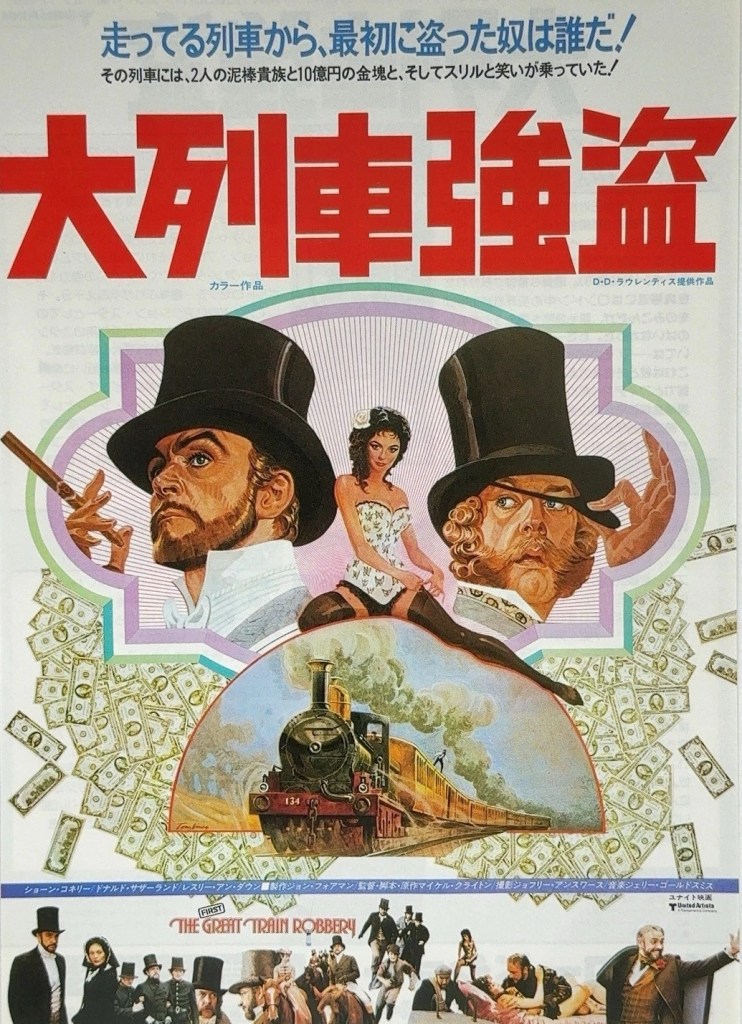
There already had been an incredibly famous Great Train Robbery in Britain in 1963, hence the need to differentiate this from that by inserting the prefix “First” to the advertising in Britain.

Great fun and worth a watch.

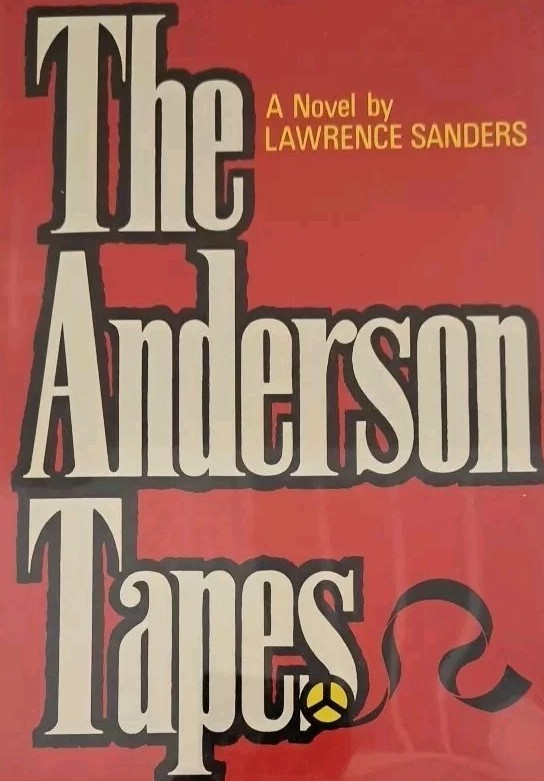
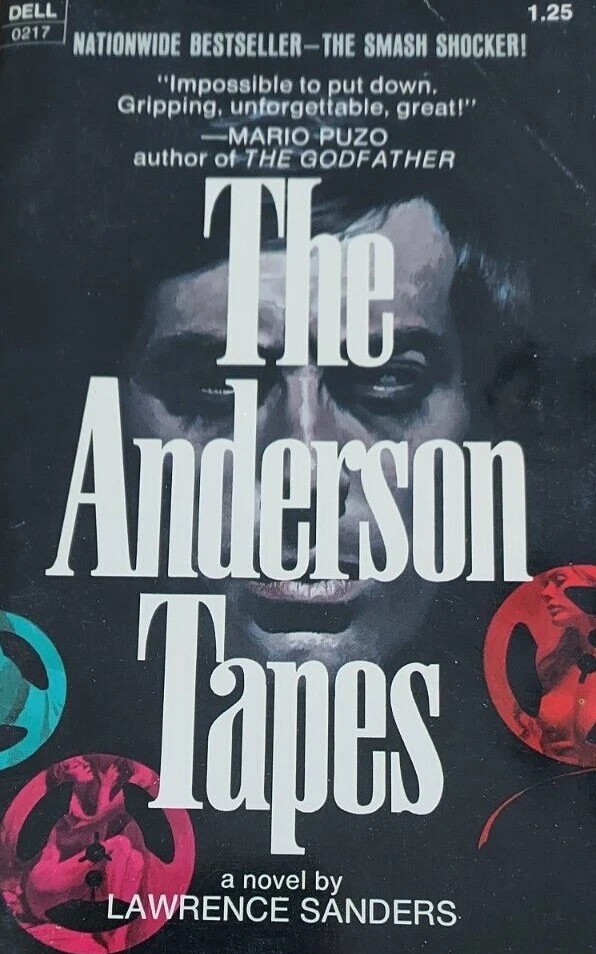
Behind the Scenes: “The Anderson Tapes” (1971) – From Book To Film

Had Sean Connery played the character of Duke Anderson as written, rather than reigniting his career it would have risked killing it off. It was already a significant ask for a star to shift from portraying good guys – even if James Bond had an immoral streak – to essaying a bad guy, though here was precedent – Paul Newman in Cool Hand Luke (1967) and Steve McQueen in some style in The Thomas Crown Affair (1968).

However, it would be difficult enough for audiences to accept a star who is two-timing his girlfriend, never mind one who in turn exhibits sadistic and masochistic streaks.

So that was the first problem for Oscar nominated screenwriter Frank Pierson (Cool Hand Luke) and not surprisingly he settles on the elimination route. The character’s sexual tendences are never mentioned. Theoretically, Pierson gets round the two-timing issue by merging the two girlfriends, Ingrid Macht and Agnes Everleigh, into one, Ingrid Everly (Dyan Cannon).

But Ingrid Everly has little connection to Agnes beyond that she lives in a luxury apartment. In the book, Agnes is a casual pickup,  a woman he meets in a bar. She was separated from her husband and retained possession of the apartment, which was in his name. In order to find the legal grounds on which he could regain the apartment, her husband had bugged the apartment.

In the film, the apartment is still bugged, but by her rich jealous boyfriend Werner (Richard B Shull) so, technically, it’s Ingrid who’s doing the two-timing. Whereas in the book Agnes’s husband is perfectly happy for her to be entertaining other men as he hopes this will enhance his chances in the divorce settlement, in the film Werner is the opposite, and does not embrace the notion of what he views as his “property” being involved with anyone else. Ingrid, who was genuinely Anderson’s ex-girlfriend, in the film comes to realize a sugar daddy is a better bet than a criminal no matter how handsome. The only oddity in the picture that when Anderson is confronted and Werner explains that, via his surveillance, he knows Anderson is planning a robbery, that he doesn’t give two hoots about that.

Other changes are equally sensible. In the book, the robbery is intended to take place in the middle of the night. The ploy the thieves planned to use to get the apartment residents to open their doors was that the building was on fire. This wasn’t by triggering the fire alarm but by running from door to door, shouting “Fire! Fire!”.  Pierson gets rid of that cumbersome device.

He also knocks into touch the notion that Tommy (Martin Balsam) would find supposedly legitimate reason to gain access to apartments to scout the premises in advance by pretending to be doing a survey for a civic group. In the book Tommy is a two-bit low-level hood and not involved in the actual robbery but with some knowledge of art and expensive items.  In the film he transforms into a smooth-talking  antiques dealer and Frank Pierson comes up with the idea that the management of the building is planning a refurbishment and wants to ensure that residents have the opportunity to align their interior décor with what is being planned.

In the book as well as eight luxury apartments, there are, on the ground floor two businesses, a doctor and a psychiatrist, but these are also thrown on the scrap heap, although in the book the doctor turns out to have $10,000 hidden away from the taxman as well as medicines that could be sold on the black market.

The pompous Capt. Delaney (Ralph Meeker) who organizes the offensive on the robbers, is drawn virtually word for word from the book. But there’s not room to incorporate all the criminal slang. I was especially intrigued to discover that what I always believed was called “a big job” was known to the criminal fraternity as “a campaign.” Nor the details of organizing such a robbery.

And there are a couple of interesting snippets in the book that Pierson had no room for in the movie. Firstly, author Lawrence Sanders includes verbatim a newspaper report dated 2nd July, 1968, to the effect that a new electronic communications office has been opened by the police to help cut down, initially, response times. The report included another fascinating fact. Prior to this date to report a crime the American public had to call a seven-digit number. That was reduced to the ”911” emergency number that operates today.

The second element is the call to unite all the different operations running criminal surveillance. Here, including Werner, there were four separate surveillance teams, none in contact with any of the others.

The book is a terrific read. I devoured it in one sitting. It is Sanders who introduces the flash forwards, interviews or somesuch with victims, while in real time the robbery is under way.

But the screenplay is an ideal example of how to trim a book to the bone without removing any of the essentials.

Sanders was also the author of The First Deadly Sin which was filmed with Frank Sinatra in 1980 and reviewed here earlier.

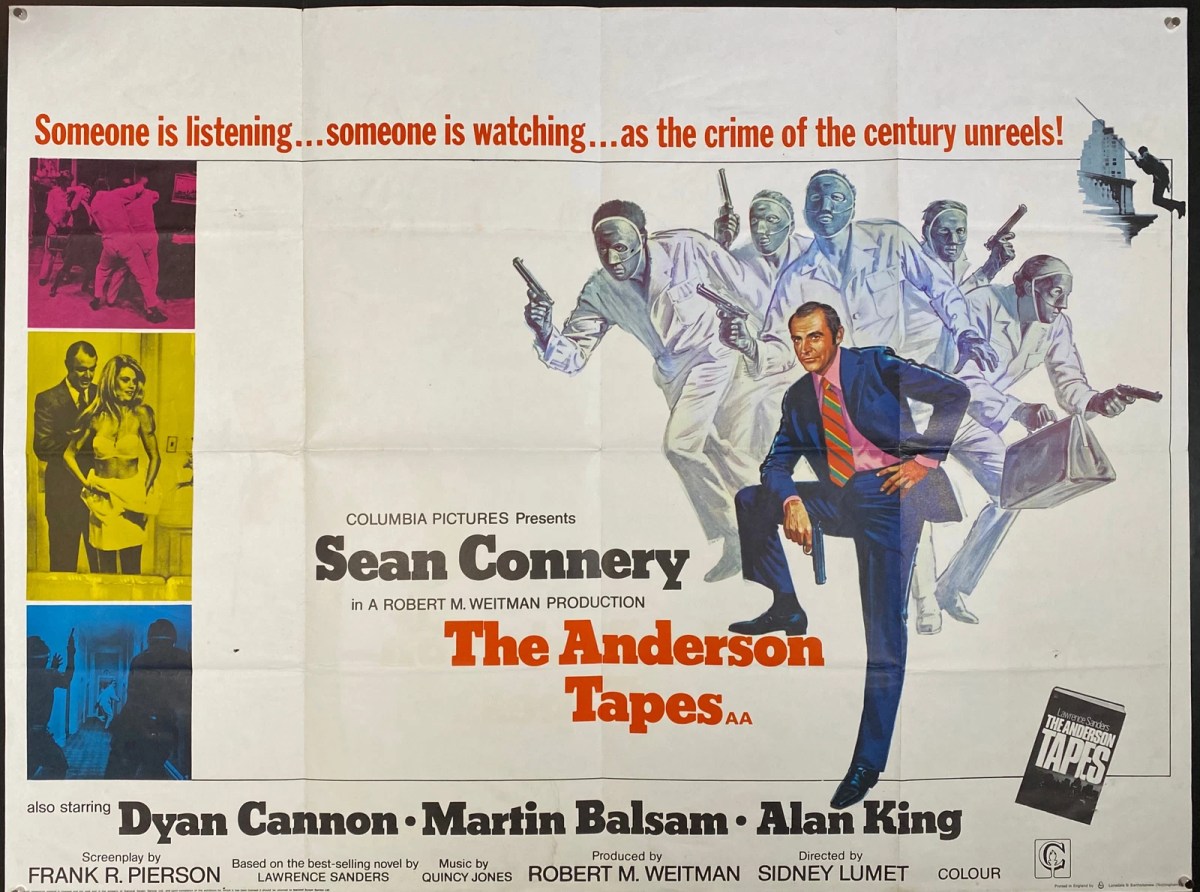
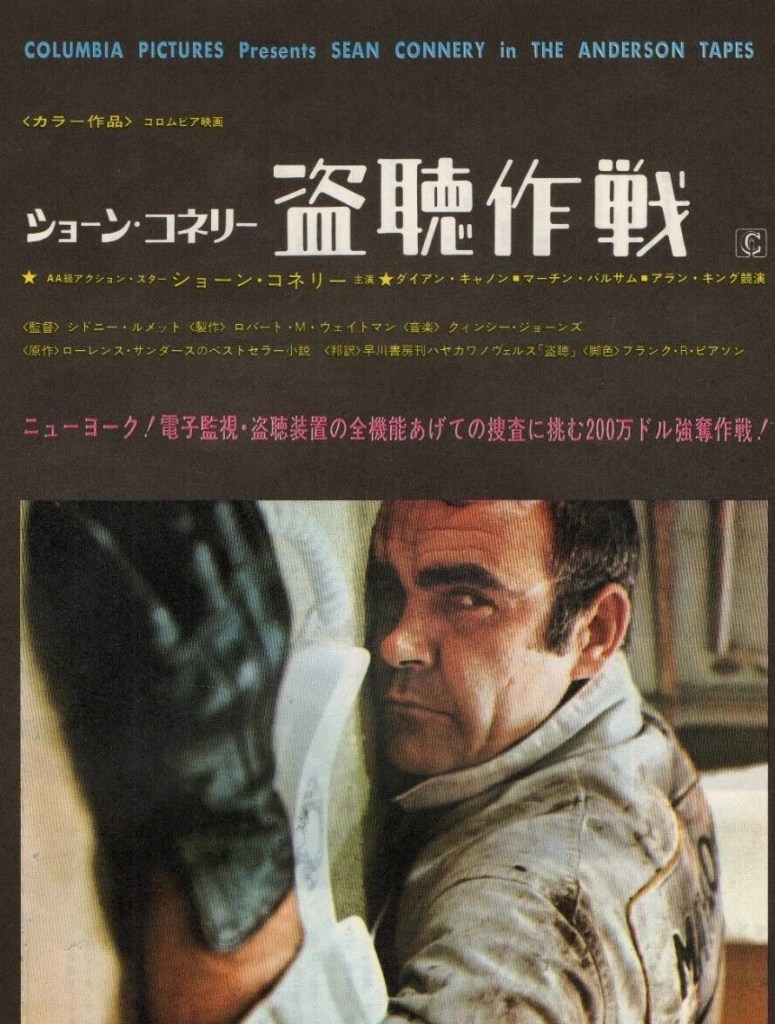
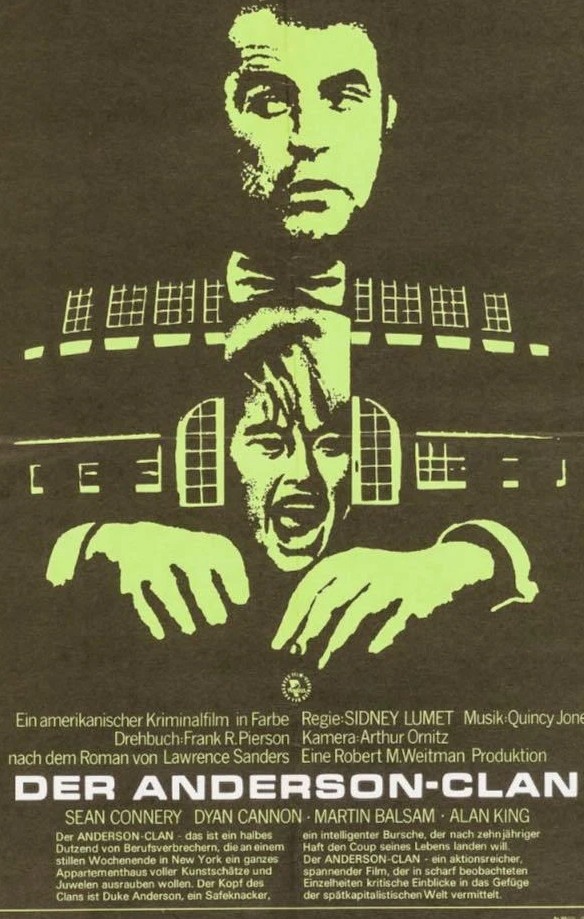
The Anderson Tapes (1971) ****

Director Sidney Lumet has made more critically acclaimed crime pictures – Serpico (1973) and Dog Day Afternoon (1975) earned eight Oscar nominations between them – but none have been as thrillingly entertaining as this mash-up of the heist and surveillance subgenres.  Francis Ford Coppola’s The Conversation (1974) has unfairly dominated the conversation regarding surveillance pictures, in large part down to Gene Hackman’s repressed performance, and because it made the ever-popular suggestion that Big Brother ruled the roost and there was nothing anyone could do about it.

These days The Anderson Tapes would hardly get out of the starting gate before everyone was whimpering about civil liberties and the fact that surveillance did the very job the public wanted it to do, which was to prevent crime and catch wrongdoers, would have been largely overlooked in the welter of lawsuits. A very clever device here prevents anyone getting trapped in that moral maze, so that what we’re left with is the inside gen on a superbly-organized and audacious robbery.

There’s a Thomas Crown Affair (1968) feel to this but where Norman Jewison employed split screen to get his various interlinked narratives across, here Lumet relies on speedy flash forwards intercutting the ongoing story.

The incipient danger of star Sean Connery was kept under wraps in the 007 outings, but here audiences get a blast of the full macho man, the take-charge kind of guy, and no bureaucratic buffoons getting in the way, and with no gadgets to rely upon it comes down to the sheer physicality of a magnetic screen personality.

Duke Anderson (Sean Connery) is no sooner out of prison after serving a ten-year stretch than he’s planning an audacious robbery, cleaning out an entire upmarket apartment block in the Manhattan Upper East Side, in which former girlfriend Ingrid (Dyan Cannon) lives in considerable luxury, over the Labor Day Holiday Weekend. After winning initial funding from the Mafia, he enrols, among others, camp antiques dealer Tommy (Martin Balsam), getaway driver Edward (Dick Williams), and “The Kid” (Christopher Walken), a young expert in alarms and electronics. As part of the deal he agrees to bump off another recruit, Rocco (Val Avery), who has fallen foul of the Mafia.

Everything that occurs is being recorded one way or another. Setting aside the building’s closed circuit television, Ingrid’s sugar daddy Werner (Richard B. Shull) has bugged her apartment and the cops have wiretaps on the Mafia and various others. This being a heist picture headed up by the world’s most popular star, as much as you want the criminals caught you want them to get away with it, Sean Connery having a self-justification scene at the outset to set liberal minds at rest.

So this is part docu-drama and part a whole bunch of cameos from the victims of the robbery as their, often heinous, personalities come into sharp perspective: siblings who rat each other out, the husband willing to allow his wife to be abused rather than give up a single dollar of his vast fortune. Even wealthy Werner couldn’t care less about a robbery as long as Ingrid knows her place, she’s his “property,” and has to choose him rather than Duke Anderson because, as feisty as she is, she relies on his dough for the good things in life.

But it’s driven by the hardnosed Anderson who’s not going to let the fact he’s never killed a man before get in the way of doing so now as the alternative would be the loss of the gig. Despite his macho demeanor and being able to run his gang efficiently, he’s aware he’s a small cog in the organized crime wheel.  

When the cops get wind of the robbery, that triggers some superb stunt work as cops abseil across buildings.

After the disappointing box office of Shalako (1968), The Red Tent (1969) and The Molly Maguires (1970), Sean Connery roared back to form here, as the likeable hood while adding more edge to his screen persona. Martin Balsam (Hombre, 1967) is otherwise the pick of the supporting cast, though Christopher Walken, on his debut, makes his mark and you can’t ignore Dyan Cannon (Bob & Carol & Ted & Alice, 1969).

But this is just terrific stuff from Lumet, who was apt in his more critically-acclaimed pieces to drift into the overly serious, and while he makes a point – at a very early stage, please note – of the ubiquitous power of surveillance, he lets that speak for itself while he concentrates on the more thrilling and more human aspects of the story. Screenplay by Frank Pierson (Cool Hand Luke, 1967) from the best seller by Lawrence Sanders (The First Deadly Sin, 1980). As a bonus, a first class score from Quincy Jones (Bob & Carol & Ted & Alice).

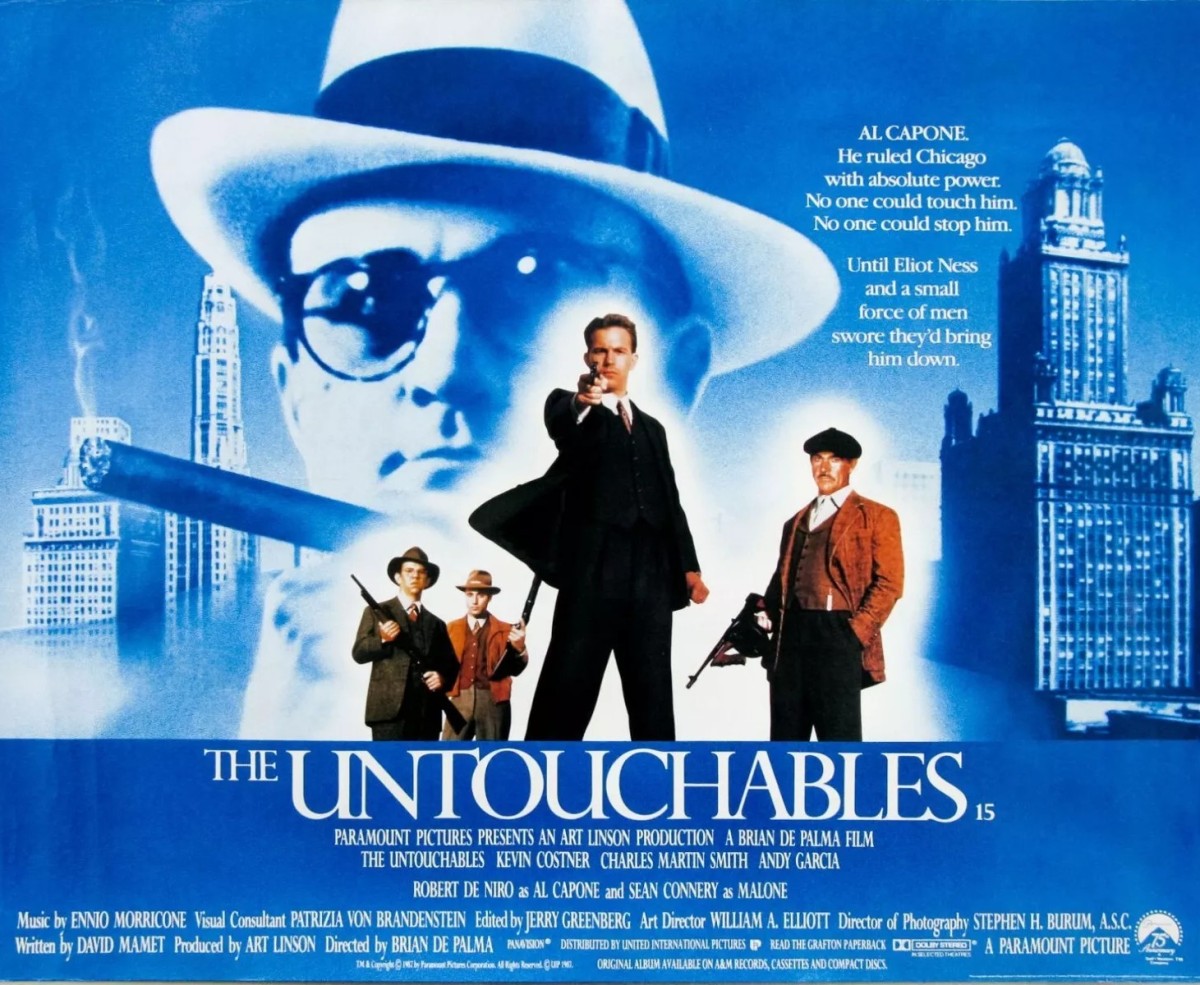
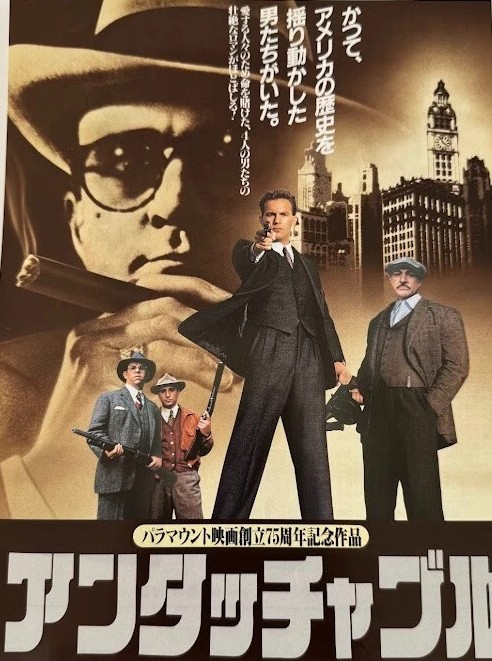
The Untouchables (1987) *****

The greatest crime picture ever made, outside of The Godfather Parts I and II (1972/1974). A sledgehammer of a narrative that moves like an express train, only slowing down for a number of bravura sequences. Riddled with fabulous lines, built on great performances, and seeded early on with subsidiary characters who will later play significant roles. In any analysis it reads like a greatest hits.

The bloodied finger of Al Capone (Robert DeNiro) holding court to fawning journalists; the little girl’s plaintive cry of “Mister” before she’s blown to kingdom come; the love note included in the lunch of Elliot Ness (Kevin Costner); “poor butterfly” as the first raid goes wrong; the introduction of Malone (Sean Connery) “here endeth the lesson”; the trading of racist insults with recruit George Stone (Andy Garcia); Capone bludgeoning an associate to death with a baseball bat; in the safety of a church, Malone explaining “the Chicago way”; the first big cinematic sequence – the shootout at the border with meek accountant Oscar Wallace (Charles Martin Smith) making his bones and sneaking a drink of beer; Malone “killing” the dead man; “touchables” smeared in blood in the lift; Malone’s fistfight with crooked boss Dorsett (Richard Bradford); Malone’s murder by hitman Frank Nitti (Billy Drago); the second, and greater, bravura sequence – the shootout on the steps of the railway station; Ness pushing Nitti off the rooftop; the disbelieving Capone sentenced.

And those are just the broad strokes. Peppered throughout is the issue of Capone’s tax evasion, the crime that brings him down, with virtually all Wallace’s contribution being reading from documents relating to this. Nitti appears in the second scene, leaving the bomb that will blow the little girl to kingdom come, and again at Ness’s house.

And this is so old-fashioned that not only are we rooting for the good guys but none of those involved has marital or alcohol problems. Cops like Malone may be disillusioned but they don’t take their disenchantment out on the bottle. Anyone who talks about marriage agrees it is a good thing.

Character introduction doesn’t go down the iconic route of The Magnificent Seven (1960) or The Dirty Dozen (1967). Chicago’s Finest sneer at Ness behind his back. Another director would have been tempted into a bolder entrance for Malone. But he’s a loser, still a beat cop in middle age, and on the late shift at that. He doesn’t just know his job, detects Ness is packing a gun, but he’s capable of a sardonic quip or two. Who’d claim to be working for the humiliated Treasure Dept is they weren’t? And he’s not so stand-up as he appears, playing with a key chain like worry beads, keeps a sawn-off shotgun in his record player.

And that’s before we go into the dialog. Screenwriter David Mamet (Glengarry Glen Ross, 1992), revered as America’s greatest living playwright, turns on the style. “You can get further with a kind word and a gun than with just a kind word”;  “They pull a knife, you pull a gun”; “do you know what a blood oath is?”; “team!”; “brings a knife to a gun fight”; “all right, enough of this running shit;” “can’t you talk with a gun in your mouth?” “his name wasn’t in the ledger,”  “did he sound anything like that?”

And that’s before we get to the score by Ennio Morricone, his best in terms of the consistency of theme (rather than just one standout tune) since Once Upon a Time in the West (1969). Or the rocking title sequence.

Turned Kevin Costner (Horizon, An American Saga – Chapter 1, 2024) into a star, a position, with dips here and there, he’s maintained for half a century. Andy Garcia (Black Rain, 1989), too, though for a shorter duration. Not everyone was impressed by Robert DeNiro’s (The Alto Knights, 2025) florid interpretation, but I wasn’t one of them. Brought Sean Connery (The Russia House, 1990) long overdue recognition for his acting, though it’s worth remembering that the Oscar voters who gave him a standing ovation could have handed him the gong a good time before for any number of excellent portrayals.

Director Brian DePalam (Carrie, 1977) was an Oscar shut-out. And when I look at the films that took precedence in the Best Film nominations, there’s only one, Moonstruck, that I’d seek out.

This is a thunderous achievement, and I can’t wait for 2027 when Paramount surely will bring it back to the big screen for a 40th anniversary celebration.

Unmissable.

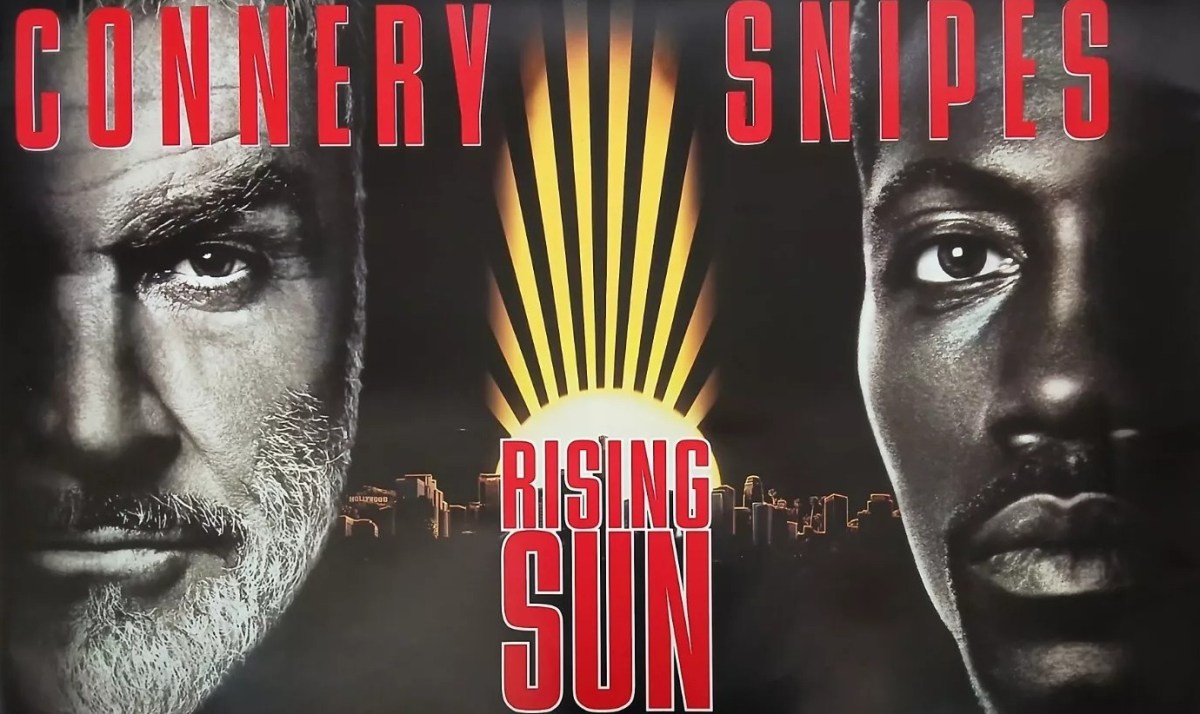
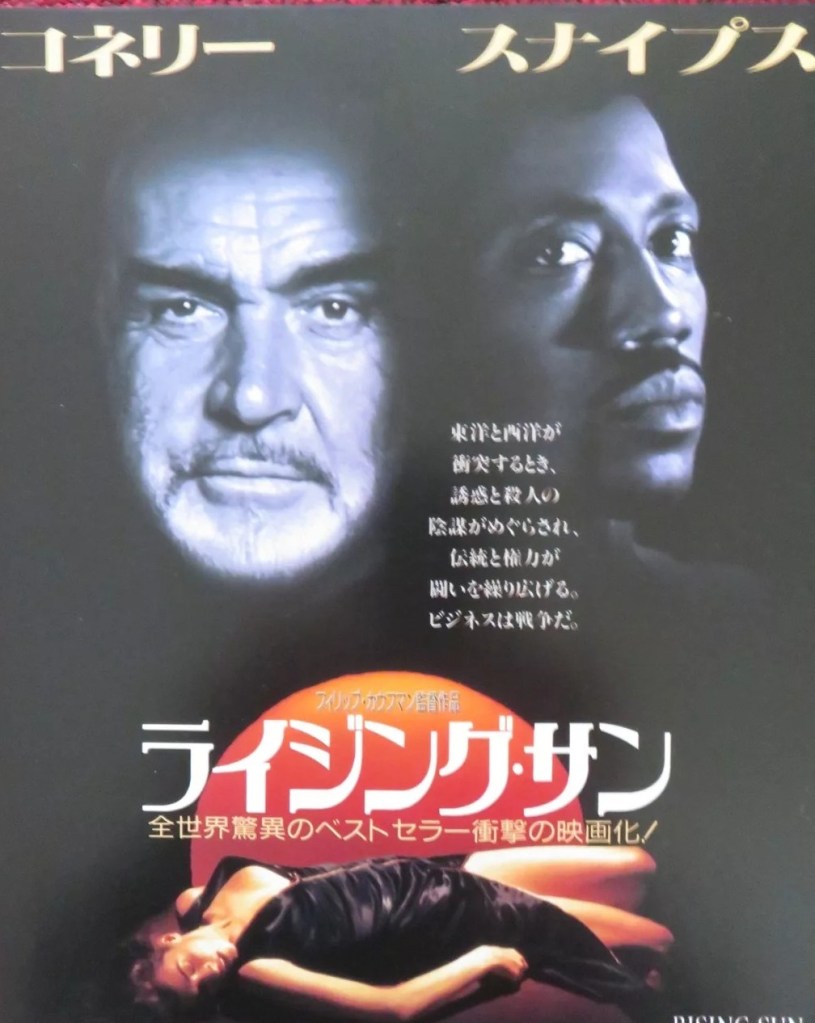
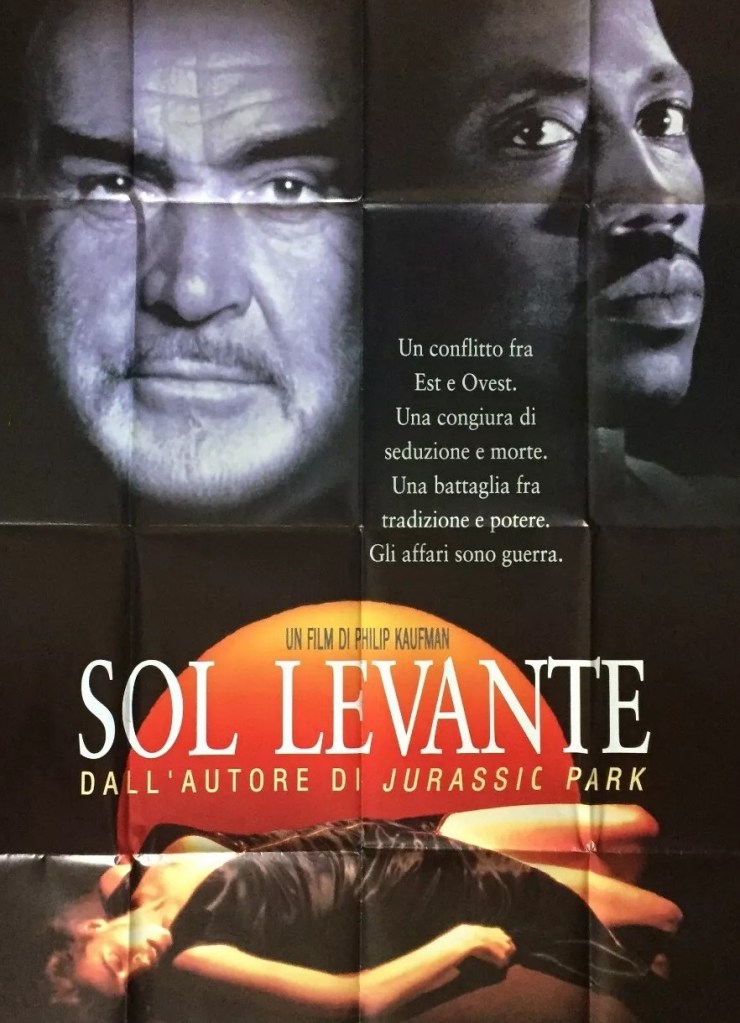
Rising Sun (1993) ****

Will instantly connect with the contemporary audiences for two unusual reasons. First off, it’s the initial depiction of deepfake. Secondly, a major plot point concerns an aspect of the roughest kind of sex, erotic asphyxiation. These days you’ll find many women complaining that a partner’s addiction to porn has forced them into such dangerous experiment. Here, lending fire to the idea that it’s nothing but fun, is the notion that it’s the woman who’s desperate for such.

There used to be a standard Hollywood ploy of sticking a younger rising star alongside an established bigger name. After Top Gun (1986) Tom Cruise proved the best exponent of this, working with Paul Newman in The Color of Money (1986) and Dustin Hoffman in Rain Man (1988). The idea is that the younger fella will learn from the older (Newman and Hoffman proved top-class tutors, both winning Oscars).

And in fact the narrative here actually takes up such an idea. Semi-retired cop Capt. John Connor (Sean Connery) plays mentor to Lt. Webster Smith (Wesley Snipes) when both are called out to act as liaison between investigator Tom Graham (Harvey Keitel) and the top brass of Japanese corporation Nakamoto where a murder has been committed. The death was initially dismissed as a sex game that went too far and as scarcely worth anyone’s time given the victim was a sex worker, Cheryl (Tatjana Patitz), sometime girlfriend of Japanese playboy and fixer Eddie Sakamura (Cary-Hiroyuki Tagawa).

Matters are complicated because Nakamoto is bidding to take over a key American computer manufacturer and because Senator John Morton (Ray Wise), who initially opposed the deal, is now in favor of a merger. Connor begins to suspect the Japanese have manipulated video recordings of the murder. Single father Smith, objecting to Connor’s involvement, is compromised by a secret past, exposure of which could potentially stop the investigation in its tracks. Slippery American fixer Bob Richmond (Kevin Anderson) is desperate to get a deal over the line.

While the intricate investigation is engrossing in itself, what really makes this fly, beyond another excellent performance by Connery, are the business machinations and the insights into Japanese culture. On the face of it, you might think this is an attack on the Japanese business machine, rampant at the time, but, in reality, my guess is the Japanese would love it for the way it shows American companies in their thrall.

In Japan “business is war” and companies gird themselves for battle by forming alliances that would be outlawed in America. An adept screenplay manages to seed a rich background, featuring elements of Japanese society that are both positive (criminals are generally caught plus caring for employees and “fixing the problem, not the blame”) and negative (racism is widespread). Connor, steeped in Japanese culture, able to move in the highest business circles, calling in favors, is our guide, but that’s never to the detriment of the overall picture, and instead adds welcome depth.

There’s a certain subtlety at work, too, the introduction of the single dad (treated seriously rather than for comic effect) a bit of a thematic coup for the times and Connor’s relationship with Jingo (Tia Carrere) is more fluid than you might expect, the older man leaving the “cage door open” should his younger lover find someone of her own age.

Three decades on from the cultural appropriation of A Majority of One (1961) when Hollywood elected Alec Guinness to play a Japanese man, there’s no shortage of players of Japanese descent  to supply the movie with more authenticity. Mako had been Oscar-nominated for The Sand Pebbles (1966) while Stan Egi (Come See the Paradise, 1990), Clyde Kusatsu (In the Line of Fire, 1993) and Nelson Mashita (Darkman, 1990) flesh out the ranks.

Beard aficionados will welcome Connery’s stylish cut which, once again, serves as a shortcut to character – this is a confident, fashionable man. Sean Connery (The Man Who Would Be King, 1975) drives the movie, he’s always one step ahead even when the bad guys think they have him beat. Another top-notch performance from Sean Connery. Wesley Snipes (Passenger 57, 1992) wasn’t paying much attention to the free acting lessons handed out by Connery, not learning to rein it in, and, presumably to maintain his action cojones, is permitted some unlikely karate kicking. That last wasn’t in the book. There were only two other major changes from the book – adding a couple of early scenes with the victim and giving Connors a relationship with  Jingo. Some of the book is heavily truncated for obvious reasons – you’ll wonder just what the heck is the purpose of Willy the Weasel (Steve Buscemi).

The screenplay by author Michael Crichton (Jurassic Park, 1993), director Philip Kaufman and Michael Backes in his debut, manages to fully convey the novel at the same time as squeezing in as many bon mots as possible without losing sight of the drama.

Philip Kaufman (Fearless Frank, 1967) makes the most of the rich material.

Connery scores once again.

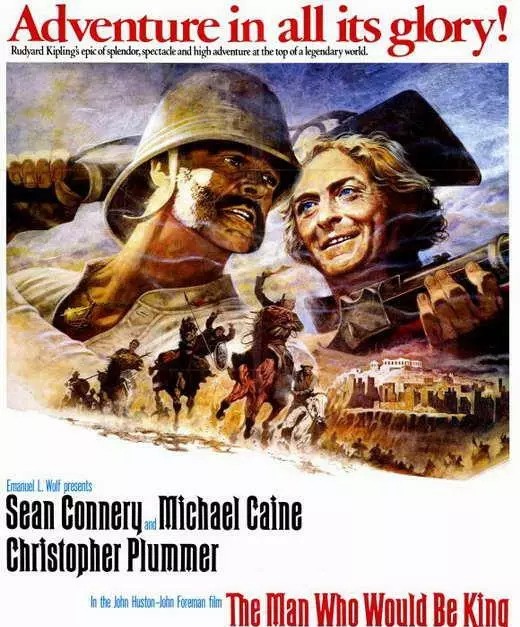
The Man Who Would Be King (1975) ****

Variation on the director’s earlier The Treasure of the Sierra Madre as a pair of British ex-military cheekie chappies whose reach exceeds their grasp come unstuck when confronted by powerful religious elements. Enticingly presents a marvellously ironic puzzle – you can have everything your heart desires except anything that would make you human. And elevated less by John Huston’s cinematic achievement than by terrific performances by the two stalwarts of the British film industry at the time, Sean Connery and Michael Caine, the former taking the acting kudos by a nose as the less intelligent of the duo. Given Connery’s standing at the time, this was somewhat playing against type. Yes, he exudes screen charisma and is a macho as ever, but nonetheless not quite as quick on the uptake as the more calculating Caine.

Story is told in flashback after a maimed Peachy Carnehan (Michael Caine) turns up as the offices of journalist Rudyard Kipling (Christopher Plummer). They originally met when Peachy had stolen the writer’s watch, returning it on realizing they were fellow freemasons. With buddy Daniel Dravot (Sean Connery), they attempt to enlist Kipling in a blackmail scheme and in due course the soldiers set off to make their fortunes in the forbidding land of Kafiristan, at the top of the Indian sub-continent, where no white man has set foot since Alexander the Great.

Their scheme is simple – to hire themselves out as mercenaries to various tribes, bringing modern warfare skills and weaponry to primitive society and ascending the ranks of power. When Daniel appears unhurt after plucking an arrow out of his chest, the natives confer on him the status of god, and so he is elevated to kingshippery and all the gold he could want. But in this Garden of Eden there is a humdinger of a Catch 22, the apple he must not touch.

He can’t take a wife.

You can see the logic. As a god you should be above base earthly desires. A god could not possibly wish such intimacy with a human. Otherwise he would lose his otherworldly sensibilities, not to mention that the chosen woman would expect to physically explode. While the more sensible Peachy has been all the time calculating just how he’s going make a getaway with as much gold as he can carry, Daniel becomes trapped in the notion that he can have his cake and eat it.

The religious hierarchy says otherwise and it doesn’t end well.

Audiences may well have been disappointed at the lack of action. There’s only one battle and it’s over in a minute, albeit that there’s a timeout to make the point about the power of religion. And although our boys endure a momentous trek it’s fairly standard stuff and Huston lacks the vision of a David Lean to turn the journey into anything more dramatically or visually memorable. A whole bunch of indigenous background material – including the ancient version of polo where the ball is a human head – doesn’t make up.

What does transform this relatively slight tale is the playing. Connery and Caine are a delight, the kind of top-of-the-range double act on a par with the cinemagical pairing of Paul Newman and Robert Redford in Butch Cassidy and the Sundance Kid (1969) and The Sting (1973). They spark each other off just a treat. Caine, surprisingly, is the one in charge, Connery adrift in  matters of arithmetic, strategy and, when it comes down to it, common sense even though when called up to judge on civil matters proves himself relatively astute and fair.

The writing, too, seems to understand implicitly how to get the best out of the characters. When they fall out, it is so subtle you would hardly notice. Caine scarcely bristles when Connery explains that Caine really should be falling in line with the rest of his subjects and bowing his head, but if you are astute reader of an acting face you can see the chasm that has opened up in their relationship.

To employ a Scottish phrase, Connery gives it “laldy” – acts with gusto – when playing the part of a madman, whirling around like a demented dervish, but mostly reins it in.

The intricacies of freemasonry would wait a few decades before called to the cinematic altar in The Da Vinci Code (2006) but here the mumbo-jumbo proves less important than, as with the Dan Brown epic, a symbol, and, again with the lightest of narrative strokes, we are left considering its mystic origins.

John Huston (Sinful Davey, 1969) back on top form but he’s more than helped by exceptional acting by Sean Connery (The Hill, 1965) and Michael Caine (Play Dirty, 1968) with Christopher Plummer (Nobody Runs Forever / The High Commissioner, 1968) in unusually subtle form as well. Gladys Hill (Reflections in a Golden Eye, 1967) and Huston were Oscar-nominated for the  the screenplay based on the Kipling short story.

Impressed by this performance I should warn you I feel a Sean Connery binge coming on.

The Russia House (1990) ****

The amateur spy – the innocent caught up in espionage malarkey – had scarcely graced the screen for a couple of decades, Hot Enough for June/Agent 8¾ (1964) or Masquerade (1965) possibly the highpoints of that subgenre. That it turns up at all is probably due to spymaster John le Carre’s Cold War comfort zone evaporating following glasnost and perestroika in Russia in the late 1980s. Of course, the West didn’t entirely trust the Soviets to reform, and had no intention of pensioning off its battalions of secret agents.

The plotline is largely irrelevant here, acting more as a MacGuffin than anything else, because audiences will have long forgotten what was sacred to the West three decades ago. And the picture is devoid of the usual car chase and there’s not even the kind of foot-race that became de rigeur to prove our ageing superstars could still physically hack it – Clint Eastwood in In the Line of Fire (1993) or Liam Neeson in Taken (2008).

So what we’re left with is probably what le Carre was hoping for in the first place – a character study. It may have passed your notice that among the highest ranks of the superstars only Sean Connery could match Tom Hanks in actually changing his appearance – different hairstyle, different beard (yep, you didn’t think that could define character, did you) – to depict character. Of course, nobody was expecting Stallone or Schwarzenegger to alter their look; Harrison Ford got a buzzcut once; but Paul Newman, Burt Lancaster, Kirk Douglas, even going further back to James Stewart, Gary Cooper, their hairstyle remained untouched, and until Connery made it part of his persona Hollywood believed that moustaches were box office disaster.

Barley (Sean Connery) is an upmarket publisher whose business is on the slide, so much so that he doesn’t attend an annual book fair in Moscow. So when Russian single mother Katya (Michelle Pfeiffer) turns up looking for him, she ends up handing a manuscript to Penguin’s representative who, naturally, turns it over to MI6.

Takes a while what with interrogation and flashback to work out why Barley has been selected. Unwittingly, on a previous sojourn to Russia, he had made the acquaintance, over a drunken dinner, with Dante (Klaus Maria Brandauer) who turns out to be Katya’s long-ago first love and, more importantly, a nuclear scientist with secrets to sell or give away. Barley is hooked into returning to Russia to gain the confidence of both Katya and Dante and provide access to secrets  the British Secret Service and their Yank counterparts desire.  

That it doesn’t go the way the high-ups want is because Barley is a “decent human being” and when he realizes he has compromised Katya, and endangered the lives of her two young children, he turns traitor and trades their safety for secrets.

Given the plot and counter-plot thesis, and the various axes that need to be ground over nuclear weapons accumulation and inherent corruption, this cinematic enterprise could have proved way too unwieldy for a contemporary audience. Instead, the very fact that much of the background is now meaningless clears the way for the movie to stand on its own two feet, as yet another wonderful character study in the largely unheralded Sean Connery (The Hill, 1965) portfolio. And with Michelle Pfeiffer turning in a Golden Globe-winning performance, the  movie hinges more on the characters than the espionage.

There’s a fabulous scene where the initial narrative is just turned on its head. You’re already thinking MI6 must be hard put to be even thinking of employing Barley, given he’s a bit of a boozer, the kind of guy who knocks one whisky straight down before sipping the next. Katya, attempting to establish his bona fides and suspicious that he’s actually a spy, asks him, “Are you alone?” Meaning, has he come alone, is he acting independently?

Barley takes a different meaning from the question. “Never been more alone,” he replies, barely concealing the despair in his eyes. “I let people down,” he confesses at another point.

His life is headed in all the wrong directions. He’s fluffed too many lines and no guarantee he’s even capable of looking for redemption. And Katya’s way too wary. He’s like an enthusiastic schoolboy when he falls in love with her. When he dives in for a kiss, she tilts her head so he can only kiss her cheek in the Russian fashion.

His romancing comes unstuck when instead of responding to his ardor she recounts her experiences with Dante. It’s her scene and yet Connery steals it with his slow-burn despair. Her wariness shows in her face. The purported new freedoms her country promotes mean little more than citizens can more freely complain.

While you might not go along with his self-deprecating description of himself as a “large unmade bed” – his physical grace always going to make this unlikely – nonetheless he is a shambles of a man. Even Connery can’t make fashionable the duffel coat, his perennial outfit of choice, an item of clothing that to generations epitomized the unfashionable, a garment worn by those who couldn’t care less about their appearance.

Connoisseurs of Connery’s hair and beard will notice a certain rumpled element compared to the stylish beard he wore in Rising Sun (1993) or the confident full version of The Hunt for Red October (1990).

Outside of the Connery-Pfieffer axis, although the narrative stumbles in accommodating their manoeuvring, the movie boasts a phalanx of interesting supporting actors, some fallen from the marquee heights like Roy Scheider (Jaws, 1975) and James Fox (Thoroughly Modern Millie, 1967), others who would make their mark in television like John Mahoney (Frasier, 1993-2004), Martin Clunes (Men Behaving Badly, 1992-2014), David Threlfall (Shameless, 2004-2013) and Michael Kitchen (Foyle’s War, 2002-2015) and topped up with a wild-eyed indulgent performance from director Ken Russell (Billion Dollar Brain, 1967).

Rather devoid of screenwriter Tom Stoppard’s (Shakespeare in Love, 1998) trademark humor except in a couple of aural jokes about odd sounds emanating from hidden microphones. The first movie to be filmed in Russia after glasnost so a bit more authentic location work than usual. To his credit director Fred Schepisi (The Chant of Jimmie Blacksmith, 1978) allows Connery and Pfeiffer full rein rather than getting bogged down in the inescapable politics and office backstabbing.

Watch it for Connery and Pfeiffer.

Be warned: I feel a Connery binge coming on.

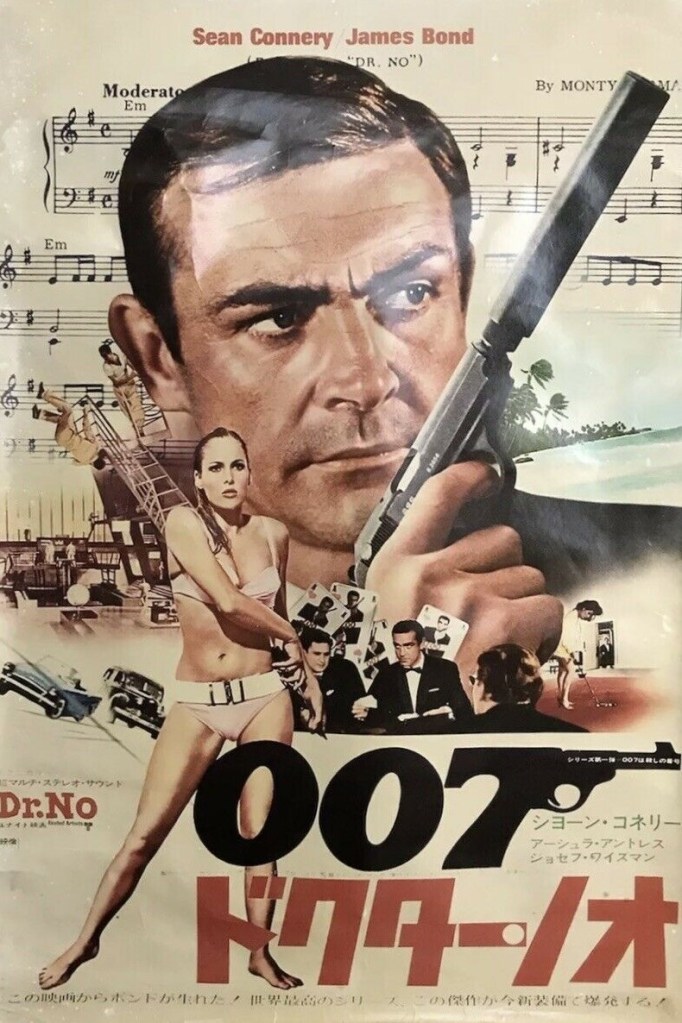
Dr No (1962) *****

Minus the gadgets and the more outlandish plots, the James Bond formula in embryo. With two of the greatest entrances in movie history – and a third if you count the creepy presence of Dr No himself at the beds of his captives – all the main supporting characters in place except Q, plenty of sex and action, plus the credit sequence and the theme tune, this is the spy genre reinvented.

Most previous espionage pictures usually involved a character quickly out of their depth or an innocent caught up in nefarious shenanigans, not a man close to a semi-thug, totally in command, automatically suspicious, and happy to knock off anyone who gets in his way, in fact given government clearance to commit murder should the occasion arise. That this killer comes complete with charm and charisma and oozes sexuality changes all the rules and ups the stakes in the spy thriller.

 Three men disguised as beggars break into the house of British secret service agent Strangeways (Tim Moxon) and kill him and his secretary and steal the file on Dr No (Joseph Wiseman). A glamorous woman in a red dress Sylvia Trench (Eunice Gayson) catches the eye of our handsome devil “Bond, James Bond” (Sean Connery) at a casino before he is interrupted by an urgent message, potential assignation thwarted.

We are briefly introduced to Miss Moneypenny (Lois Maxwell) before Bond is briefed by M (Bernard Lee) and posted out immediately – or “almost immediately” as it transpires – to Jamaica, but not before his beloved Beretta is changed to his signature Walther PPK and mention made that he is recovering from a previous mission. But in what would also become a series signature, liberated women indulging in sexual freedom, and often making the first move, Ms Trench is lying in wait at his flat.

Another change to the espionage trope, this man does not walk into the unknown. Suspicion is his watchword. In other words, he is the consummate professional. On arrival at Jamaica airport he checks out the waiting chauffeur and later the journalist who takes his picture. The first action sequence also sets a new tone. Bond is not easily duped. Three times he outwits the chauffeur. Finally, at the stand-off, Bond employs karate before the man takes cyanide, undercutting the danger with the mordant quip, on delivering the corpse to Government house, “see that he doesn’t get away.” 

Initially, it’s more a detective story as Bond follows up on various clues that lead him to Quarrel (John Kitzmiller), initially appearing as an adversary, and C.I.A. agent Felix Leiter (Jack Lord) before the finger of suspicion points to the mysterious Dr No and the question of why rocks from his island should be radioactive. Certainly, Dr No pulls out all the stops, sending hoods, a tarantula, sexy secretary Miss Taro (Zena Marshall) and the traitor Professor Dent (Anthony Dawson) to waylay or kill Bond.

But it’s only when our hero lands on the island and the bikini-clad Honey Rider (Ursula Andress) emerges from the sea as the epitome of the stunning “Bond Girl” that the series formula truly kicks in: formidable sadistic opponent, shady organization Spectre, amazing  sets, space age plot, a race against time. 

It’s hard not to overstate how novel this entire picture was. For a start, it toyed with the universal perception of the British as the ultimate arbiters of fair play. Yet, here was an anointed killer. Equally, the previous incarnation of the British spy had been the bumbling Alec Guinness in Our Man in Havana (1959). That the British should endorse wanton killing and blatant immorality – remember this was some years before the Swinging Sixties got underway – went against the grain.

Although critics have maligned the sexism of the series, they have generally overlooked the female reaction to a male hunk, or the freedom with which women appeared to enjoy sexual trysts with no fear of moral complication. Bond is not just macho, he is playful with the opposite sex, flirting with Miss Moneypenny, and with a fine line in throwaway quips.

Director Terence Young is rarely more than a few minutes away from a spot of action or sex, exposition is kept to a minimum, so the story zings along, although there is time to flesh out the characters, Bond’s vulnerability after his previous mission mentioned, his attention to detail, and Honey Rider’s backstory, her father disappearing on the island and her own ruthlessness. The insistently repetitive theme tunes – from Monty Norman and John Barry – was an innovation. The special effects mostly worked, testament to the genius of production designer Ken Adam rather than the miserable budget.

Most impressive of all was the director’s command of mood and pace. For all the fast action, he certainly knew how to frame a scene, Bond initially shown from the back, Dr No introduced from the waist downwards, Honey Rider in contrast revealed in all her glory from the outset. The brutal brief interrogation of photographer Annabel Chung (Marguerite LeWars), the unexpected seduction of the enemy Miss Taro and the opulence of the interior of Dr No’s stronghold would have come as surprises. Young was responsible for creating the prototype Bond picture, the lightness of touch in constant contrast to flurries of violence, amorality while blatant delivered with cinematic elan, not least the treatment of willing not to say predatory females, the shot through the bare legs of Ms Trench as Bond returns to his apartment, soon to become par for the course.

Future episodes of course would lavish greater funds on the project, but with what was a B-film budget at best by Hollywood standards, the producers worked wonders. Sean Connery (The Frightened City, 1961) strides into a role that was almost made-to-measure, another unknown Ursula Andress (The Southern Star, 1969) speeded up every male pulse on the planet, Joseph Wiseman (The Happy Thieves, 1961) provided an ideal template for a future string of maniacs and Bernard Lee (The Secret Partner, 1961) grounded the entire operation with a distinctly British headmaster of a boss.

Masterpiece of popular cinema.

The Red Tent (1969) ***

If you’re unfamiliar with the abortive Italian airship expedition to the North Pole led by General Umberto Nobilo (Peter Finch) in 1928, you’ll find this an absorbing tale. If you are familiar then you will probably appreciate the film-makers’ attempts, via an unusual framing device, to carry out a post-mortem and to apportion blame for the disaster. If you know your history, you’ll also be aware both poles had been conquered, American Robert Peary first to the North Pole in 1909, Norwegian Roald Amundsen (Sean Connery) claiming South Pole bragging rights two years later.

So you’re also probably wondering what was the point nearly two decades later of the Nobilo operation? But the sled-led efforts of Peary and Amundsen were feats of endurance i.e. man vs.  nature. This was science vs. nature. The dirigible was the apex of aviation advancement and nations still battled for exploration glory. So to travel in some comfort and fly over the North Pole in a few days would be a demonstration of scientific supremacy. Conquest of one of the most inhospitable places on earth was almost a PR exercise. With no intention of landing it was also a glorified tourist trip.

However, the science was flawed. Nobody had counted on the build-up of ice. The airship crashed and since this was a joyride nobody was equipped to walk their way out. Just surviving would be difficult enough. Loss of radio transmission (science) indicated a problem so rescue airplanes were deployed. But without a location to pinpoint the survivors, searchers had about two million sq km to cover. Luckily, a brilliant scientific deduction by expedition member Finn Malmgreen (Eduard Martsevich) saves the day and a ham radio user (amateur science) picks up the location. Game on!

Except airplanes are too easily thwarted by blizzards, fog and the inhospitable. Home base, set up simply to welcome home a successful jaunt, is not capable of organizing a proper rescue. A Russian ice-breaker joins the rescue attempt. Taking greater risks is aviator Einar Lundborg (Hardy Kruger), fired up by the promise of sex with desperate nurse Valeria (Claudia Cardinale), who happens to be Malmgreen’s girlfriend, and a bounty from Nobilo’s insurers. The redoubtable Valeria does not have to sell her body to persuade the more highly-principled Amundsen to join the rescue effort.

So it’s gripping clock-ticking-down stuff, action shown in considerable detail, almost over-populated in one sense as director Mikhail Kalatozov (The Cranes Are Flying, 1957) covers multiple storylines, the various disjointed rescue efforts, the survivors weakening by the day, imperiled by marauding polar bears and the ice cracking up beneath their feet.

In the main it’s a true story, Valeria the only fictional element, inserted for genuine cinematic purpose, to give the audience someone to emotionally root for back on land and for her character to guide us in an almost contemporary touch through the ghoulish carnival onshore as thousands gather to witness first-hand news of disaster.

What’s obviously patently untrue is the framing device, given that it shows the still-living Nobilo summoning up the ghosts of others involved in the event for a post-mortem, in which his guilt drives him into the position of sacrificial lamb. Although on first encounter it appears a bizarre idea, that, too, soon achieves dramatic purpose. Clearly there was intense discussion at the time and in the immediate aftermath by those who survived the disaster and there must have been high-level talks behind closed doors that usually excluded the main characters of the kind that was played out in a host of historic pictures made during the decade. Lawrence of Arabia (1963) and Khartoum (1965) had many such set-pieces where reputations were shredded.

This approach permits opportunity for all the principals to come together for confrontational purposes in the one room. Not all of that discussion follows the expected path and there is an interesting argument between Nobilo and Amundsen about leadership. From an audience perspective, it is, of course, quite satisfying to see Sean Connery (The Hill, 1965) facing off against Peter Finch (The Sins of Rachel Cade, 1961) with Hardy Kruger and Claudia Cardinale (The Professionals, 1966) embroiled in the debate.

There is the bonus of fabulous cinematography of the majestic Arctic, the icy waste, and breaking up of ice floes and collapsing icebergs has never been captured in such widescreen glory. Further pluses are in the performances, especially Connery as an aged Amundsen, Finch as the glorious pioneer bewildered the sudden turn of events and Cardinale as a woman willing to go to any lengths to save her lover. Ennio Morricone provided the score.

However, you are best going into this aware that while Finch has a goodly amount of time onscreen, Connery and Cardinale (the ostensible stars judging by the credits) are not seen so frequently. That said, the movie works well as an account of the disaster. The version I saw was just a shade over two hours – cut by about 30 minutes from original release.

Streaming channel Sweet TV has the longer version but I couldn’t find a workable link.

Discover WordPress

A daily selection of the best content published on WordPress, collected for you by humans who love to read.

The Atavist Magazine

by Brian Hannan

WordPress.com News

The latest news on WordPress.com and the WordPress community.