Siege of the Saxons (1963) ***

King Arthur (plus Excalibur) meets Robin Hood (minus Merrie Men). I wouldn’t have been surprised to see Billy the Kid put in an appearance in this kind of history-defying picture. In case you were unaware, or less of a pedant than myself, there were at least two centuries (possibly eight, depending on your sources) between monarch and outlaw. There’s a princess, but going by the more prosaic name of Katherine, rather than the legendary Guinevere, and for that matter Lancelot and Galahad are excused duty, though the wizard Merlin pops up.

I hate to break it to you, but there is no siege. But there is, as if this more than makes up for that omission, marauding Vikings. Or at least marauders pretending to be Vikings, or that might just be my fault, assuming that those helmets with the rounded pointy bits were the preserve of the Norsemen.

And, presumably, for legal reasons (“passing off” in the jargon and there being a British television series and Hammer film to contend with) Robin Hood isn’t called Robin Hood even though he’s an outlaw in a forest who robs the rich to give to the poor. His moniker is Robert Marshall. You’d need to be well up on your history to work out why the Saxons would be considered bad guys when England was populated by Anglo-Saxons.

But when I explain this is made by the same duo that plundered a stock footage hypermarket for East of Sudan (1964) you’ll probably agree that accuracy was not their strong suit. Which is a shame, because it’s a half-decent tale of treachery and revenge and gives the underrated Janette Scott (Paranoiac, 1963) a strong role.

They couldn’t be bothered with all that Saxon confusion in France and just hyped it as a King Arthur gig, even though far from having an adventure he dies.

Anyways, Edmund (Ronald Howard), dastardly lover of Katherine (Janette Scott), daughter of an infirm King Arthur (Mark Dignam), sets up Robert (Ronald Lewis) to take the fall for his murder of the sovereign via his anonymous henchman known as The Limping Man (Jerome Willis). Katherine is reluctant, naturally, to head off into the unknown with the outlaw, especially when he insists on disguising her (none too cleverly it has to be said) as a boy while they seek out Merlin (John Laurie) in the hope that his wizardry can muck things up for the imposter.

It’s a wasted journey, not because he’s not filled with the requisite wisdom, but if they’d just left things to Excalibur in the first place all would be sorted. You see, the villain hasn’t worked out there was a good reason that Arthur managed to yank said sword out of the stone in the first place. Edmund can pull at the sword until he’s blue in the face but it’s not going to shift out of its scabbard, because, well, he ain’t Arthur. Just as well Edmund deprived Arthur of the bedside dying scene beside the lake where the king could chuck it in to ensure nobody of the dastardly persuasion could take advantage of its magical powers.

But, aha, genetics enter the equation. You could have made an entire new film out of chasing down the King Arthur Code, but luckily we are too many decades away from that kind of malarkey. So – feminist alert – it’s Katherine who’s inherited the genes. And – woke alert – who should ascend to the throne alongside her but the outlaw.

So it’s fairly straightforward stuff, swordfights, chases, a battle or two, bad guys and good guys and resolutely old-fashioned except for the feminist climax. Just a shame that nobody can match Janette Scott’s screen charisma, so though Ronald Lewis (Nurse on Wheels, 1963) can deliver a one-liner with aplomb and cut a swathe through bad guys, he’s not in her league. This is B-picture stuff without the redemptive features of noir or general nastiness or maybe a future star director making an impact.

Nathan Juran (First Men in the Moon, 1964) directed from a script by Jud Kinberg (East of Sudan) and John Kohn (The Collector, 1965) loosely based on the work of Thomas Malory who dreamed up the Camelot repertoire.

Undemanding.
Robin Hood Double Bill: Sword for Sherwood Forest *** (1960) and A Challenge for Robin Hood ***(1967)

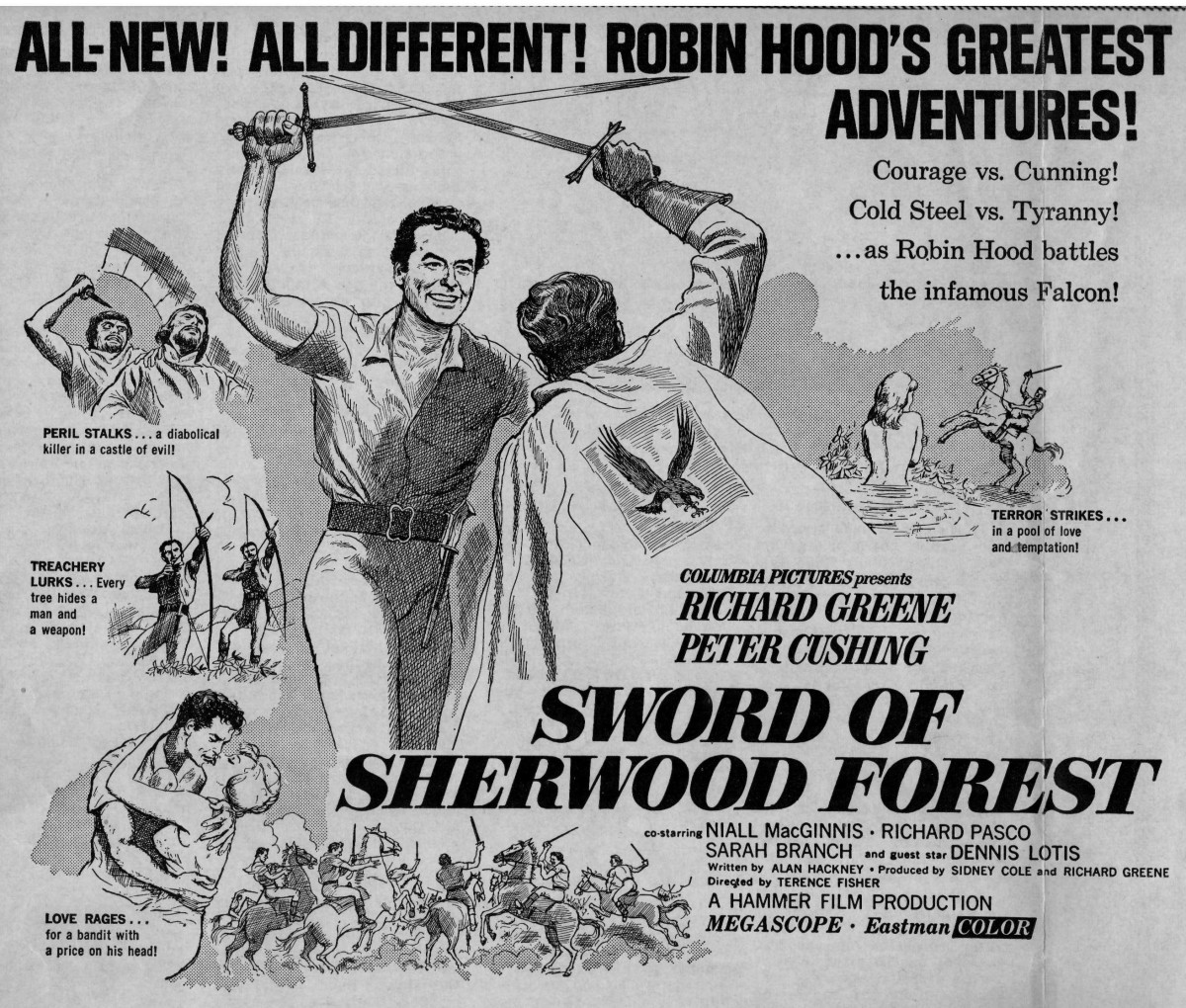
The last swashbuckler to cut a genuine dash was The Crimson Pirate (1952) with an athletic Burt Lancaster romancing Virginia Mayo in a big-budget Hollywood spectacular. The chance of Hollywood ponying up for further offerings of this caliber was remote once television began to cut the swashbuckler genre down to small-screen size. Britain’s ITV network churned out series based on Sir Lancelot, William Tell and The Count of Monte Cristo and 30-minute episodes (143 in all) of The Adventures of Robin Hood. So when Hammer decided to rework the series as Sword of Sherwood Forest their first port-of-call was series star Richard Greene.

And to encourage television viewers to follow the adventures of their hero on the big screen, Hammer sensibly dumped the small screen’s black-and-white photography in favour of widescreen color and then lit up the canvas at the outset with aerial tracking shots of the glorious bucolic greenery of the English countryside. Further temptation for staid television viewers came in the form of Maid Marian (Sarah Branch) bathing naked in a lake. Robin Hood is soon hooked. 

Two main plots run side-by-side. The first is obvious. The Sheriff of Nottingham (Peter Cushing) is quietly defrauding people through legal means. The second takes a while to come to fruition. Robin Hood is hired by for his archery skills by the Earl of Newark (Richard Pasco) – he shoots a pumpkin through a spinning wheel, a moving bell and a bullseye through a slit – before it becomes apparent he is being recruited as an assassin. Oliver Reed and Derren Nesbitt put in uncredited appearances and the usual suspects are played by Niall MacGinnis (as Friar Tuck) and Nigel Green (as Little John).

There is sufficient swordfighting to satisfy. Director Terence Fisher (The Gorgon, 1964), more at home with the Hammer horror portfolio, demonstrates a facility with action. Richard Greene (The Blood of Fu Manchu, 1968) makes a breezy hero and Peter Cushing (The Gorgon) resists the tmeptation to camp it up. Screenplay honors went to Alan Hackney (You Must Be Joking! 1965).

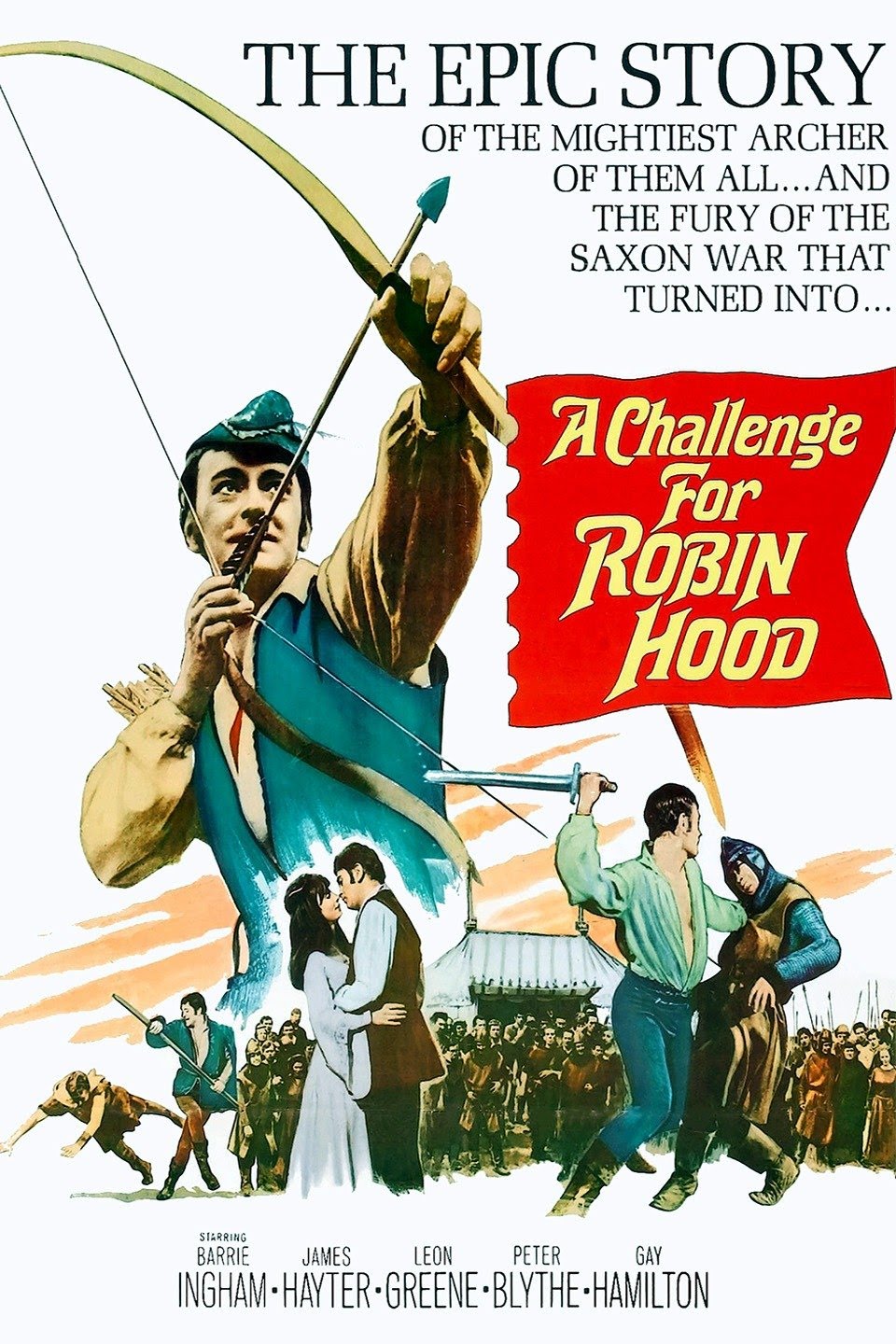
Six years on from Sword of Sherwood Forest, the challenge of reviving a moribund genre proved too much for A Challenge for Robin Hood but this second Hammer swashbuckler is a valiant and enjoyable attempt. More in the way of an origin story, this explains how a nobleman turned into an outlaw and how the merry band was formed. For in this tale Robin Hood (Barry Ingham) is a Norman nobleman framed for murder, Will Scarlet (Douglas Mitchell) and Little John (Leon Greene) are castle servants – also Normans – while Maid Marian (Gay Hamilton) is in disguise. Some liberties are taken with the traditional version – there is no fight with Little John, instead, as noted above, they are already acquainted.

There are a couple of excellent set pieces and although the swordfights are not in the athletic league of Errol Flynn they are more inventive than the previous Hammer outing and there is enough derring-do to keep the plot ticking along. Robin’s cousin Roger de Courtenay (Peter Blythe) is the prime villain this time round, the sheriff (John Arnatt), although involved up to the hilt at the end, content to offer acerbic comment from the sidelines.  

When Robin and Friar Tuck escape the castle by jumping into the moat, Will Scarlet is caught and later used as bait. Meanwhile Robin’s archery prowess and leadership skills have impressed the Saxon outlaws hiding in the forest and he takes over as their head. But there are clever ruses, jousting, Robin disguised as a masked monk, torture, and a pie fight.

Director C. M. Pennington-Richards had some swashbuckling form having helmed several episodes of The Buccaneers and Ivanhoe television series but his big screen experience was limited to routine films like Ladies Who Do (1963) with Peggy Mount. This was a departure for scriptwriter Peter Bryan, more used to churning out horror films like The Brides of Dracula (1960) and The Plague of the Zombies (1966), and he has invested the picture with more wittier lines and humorous situations than you might expect.

It’s certainly an escapist holiday treat and unless compared to the likes of the Pirates of the Caribbean or the classic Errol Flynn adventure it stands up very well on its own.

https://amzn.to/3MqhwLO

A Challenge for Robin Hood (1967) ***

British studio Hammer made a second valiant attempt at reviving the moribund swashbuckler – six years on from Sword of Sherwood Forest. More in the way of an origin story, this explains how a nobleman turned into an outlaw and how the merry band was formed. For in this tale Robin Hood (Barrie Ingham) is a Norman nobleman framed for murder, Will Scarlet (Douglas Mitchell) and Little John (Leon Greene) are castle servants (also Normans) while Maid Marian (Gay Hamilton) is in disguise. Some liberties are taken with the traditional version – there is no fight with Little John, instead, as noted above, they are already acquainted.

There are a couple of excellent set pieces and although the swordfights are not in the athletic league of Errol Flynn they are more inventive than the previous Hammer outing and there is enough derring-do to keep the plot ticking along. Robin’s cousin Roger de Courtenay (Peter Blythe) is the prime villain this time round, the sheriff (John Arnatt), although involved up to the hilt at the end, content to offer acerbic comment from the sidelines.  

When Robin and Friar Tuck escape the castle by jumping into the moat, Will Scarlet is caught and later used as bait. Meanwhile Robin’s archery prowess and leadership skills have impressed the Saxon outlaws hiding in the forest and he takes over as their head. The picture follows the swashbuckler template with clever ruses, jousting, Robin disguised as a masked monk, torture, and a pie fight.

Being plucked from obscurity and turned into a star was a standard Hollywood publicity story from the 1930s and 1940s, but the notion survived well into the 1960s – and “A Challenge for Robin Hood” was proof for one lady. Liverpool-born Sheila Forrest had won the “Girl in a Million” competition organized by the ABC cinema chain as a promotional gimmick for “One Million Years B.C.” Fifteen regional finalists had been judged at Elstree film studios by a panel including Martine Beswick, a supporting actress in “One Million Years B.C.,” West Ham footballer and World Cup winner Geoff Hurst, and “ABC Film Review” editor Peter Haigh. As well as the £1,000 first prize, Sheila won a role in a forthcoming Hammer film, which turned out to be the Robin Hood picture, known at that time as “Legend of Robin Hood,” and she appeared in a photoshoot for “ABC Film Review” (August 1967, p12) dressed as a lady-in-waiting and pictured with star Barrie Ingham (mispelt as Barry Langham in the fan magazine) and James Hayter. Unfortunately, the role was not large enough to receive a credit and as far as I am aware that was her only film..

Director C. M. Pennington-Richards had some swashbuckling form having helmed several episodes of The Buccaneers and Ivanhoe television series but his big screen experience was limited to routine films like Ladies Who Do (1963) with Peggy Mount. This was a departure for scriptwriter Peter Bryan, more used to churning out horror films like The Brides of Dracula (1960) and The Plague of the Zombies (1966), and he has invested the picture with more wittier lines and humorous situations than you might expect. It’s certainly Saturday afternoon matinee material and unless compared to the likes of The Pirates of the Caribbean or the classic Errol Flynn adventure it stands up very well on its own.

 Many of the films from the 1960s are to be found free of charge on TCM and Sony Movies and the British Talking Pictures as well as mainstream television channels. Films tend to be licensed to any of the above for a specific period of time so you might find access has disappeared. But if this film is not available through these routes, then here is the link to the DVD and/or streaming service.

Sword of Sherwood Forest (1961) ***

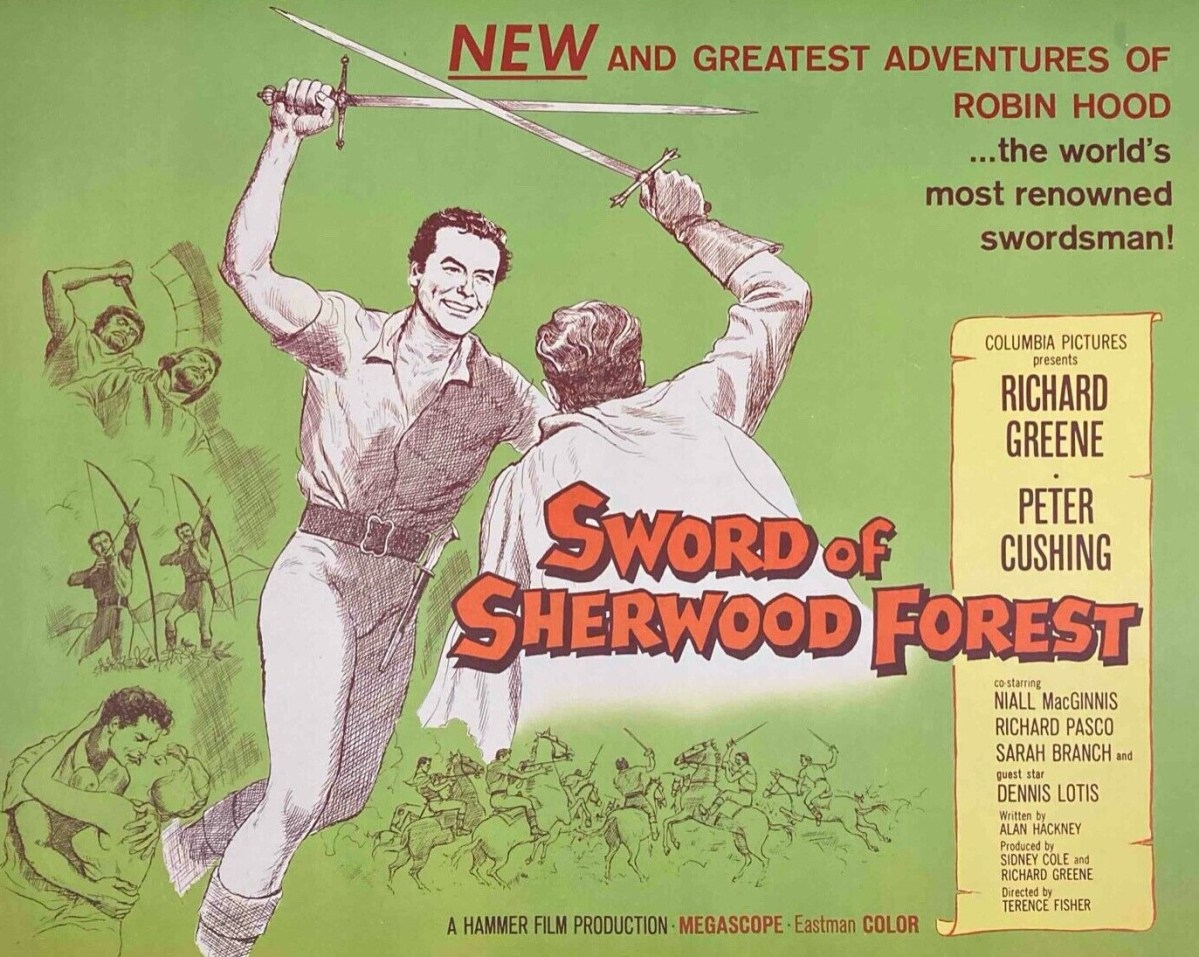
The last swashbuckler to cut a genuine dash was The Crimson Pirate (1952) with an athletic Burt Lancaster romancing Virginia Mayo in a big-budget Hollywood spectacular. The chance of Hollywood ponying up for further offerings of this caliber was remote once television began to cut the swashbuckler genre down to small-screen size. Britain’s ITV network churned out series based on Sir Lancelot, William Tell and The Count of Monte Cristo and 30-minute episodes (143 in all) of The Adventures of Robin Hood. So when Hammer decided to rework the series as a movie, their first port-of-call was series star Richard Greene.

And to encourage television viewers to follow the adventures of their hero on the big screen, Hammer sensibly dumped the small screen’s black-and-white photography in favour of widescreen color and then lit up the canvas at the outset with aerial tracking shots of the glorious bucolic greenery of the English countryside (actually Ireland). Further temptation for staid television viewers came in the form of Maid Marian (Sarah Branch) bathing naked in a lake. Robin Hood is soon hooked.  

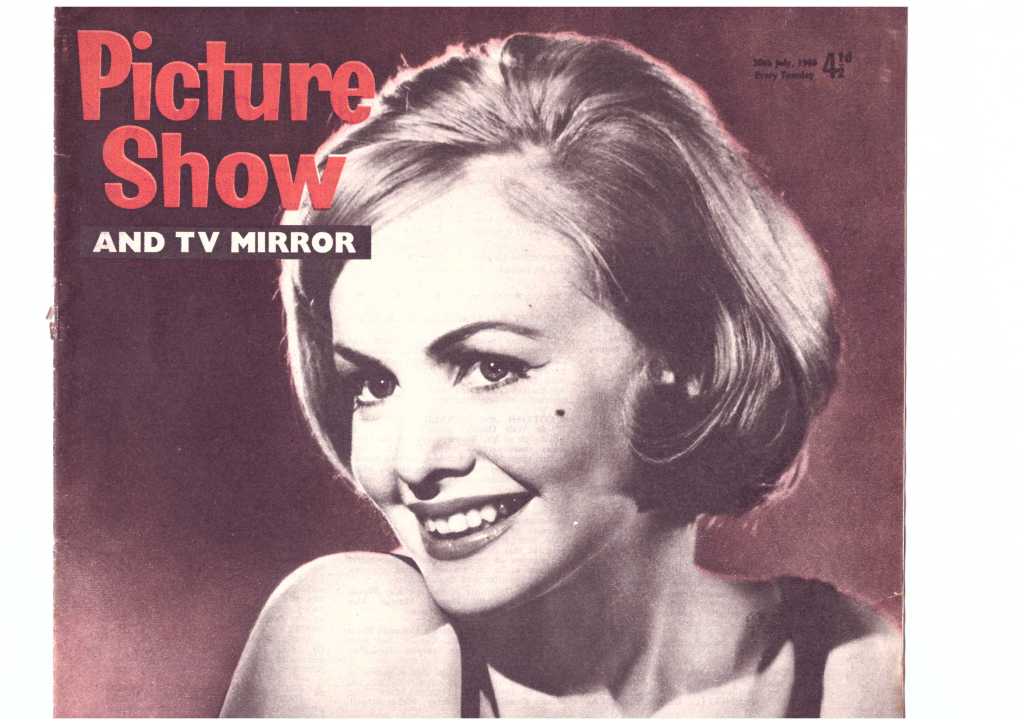
Sarah Branch was given the cover girl treatment in British fan magazine “Picture Show and TV Mirror” but this preceded “Sword of Sherwood Forest” and instead was for “Sands of the Desert” (1960), a Charlie Drake comedy in which she plays a travel agent kidnapped by a sheik. Branch only made four pictures, with Maid Marian her final film role.

Two main plots run side-by-side. The first is obvious. The Sheriff of Nottingham (Peter Cushing) is quietly defrauding people through legal means. The second takes a while to come to fruition. Robin Hood is hired by for his archery skills by the Earl of Newark (Richard Pasco) – he shoots a pumpkin through a spinning wheel, a moving bell and a bullseye through a slit – before it becomes apparent he is being recruited as an assassin. Oliver Reed and Derren Nesbitt put in uncredited appearances and the usual suspects are played by Niall MacGinnis (as Friar Tuck) and Nigel Green (as Little John).

There is sufficient swordfighting to satisfy. Director Terence Fisher, more at home with the Hammer horror portfolio, demonstrates a facility with action. Richard Greene makes a breezy hero and the picture is ideal matinee entertainment.

Many of the films from the 1960s are to be found free of charge on TCM and Sony Movies and the British Talking Pictures as well as mainstream television channels. Films tend to be licensed to any of the above for a specific period of time so you might find access has disappeared. But if this film is not available through these routes, then here is the link to the DVD and/or streaming service.

Discover WordPress

A daily selection of the best content published on WordPress, collected for you by humans who love to read.

The Atavist Magazine

by Brian Hannan

WordPress.com News

The latest news on WordPress.com and the WordPress community.