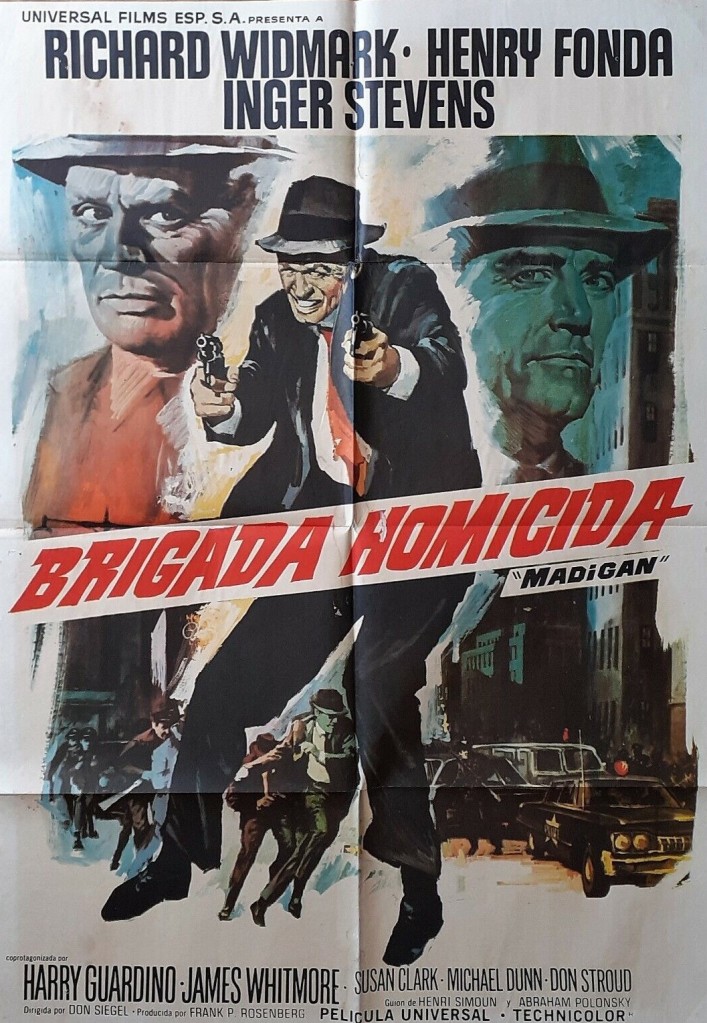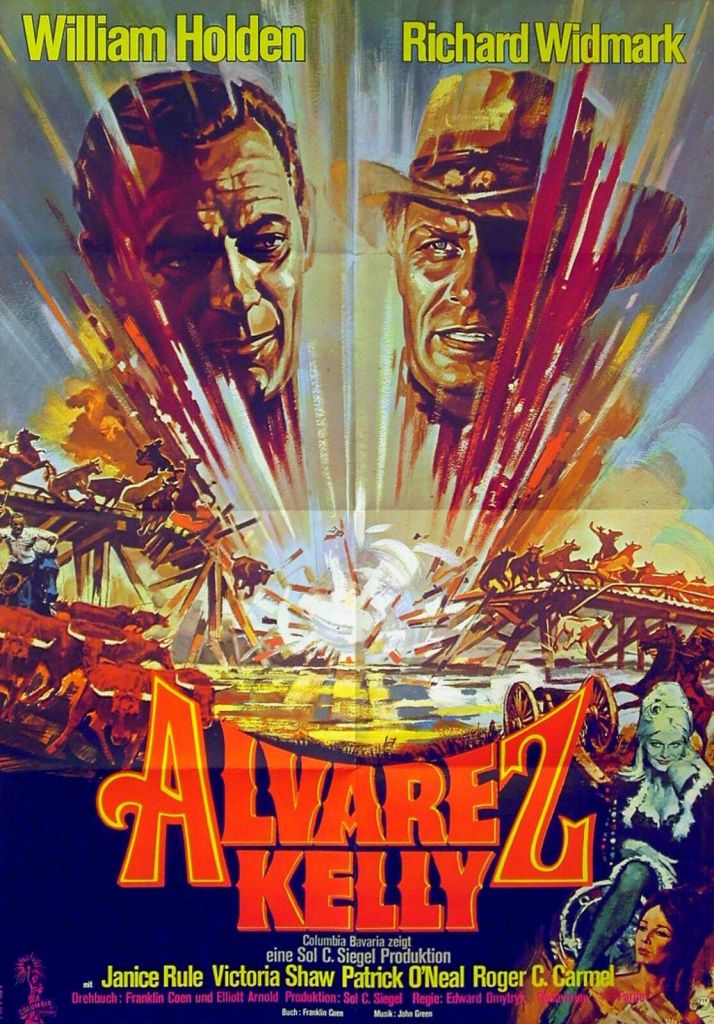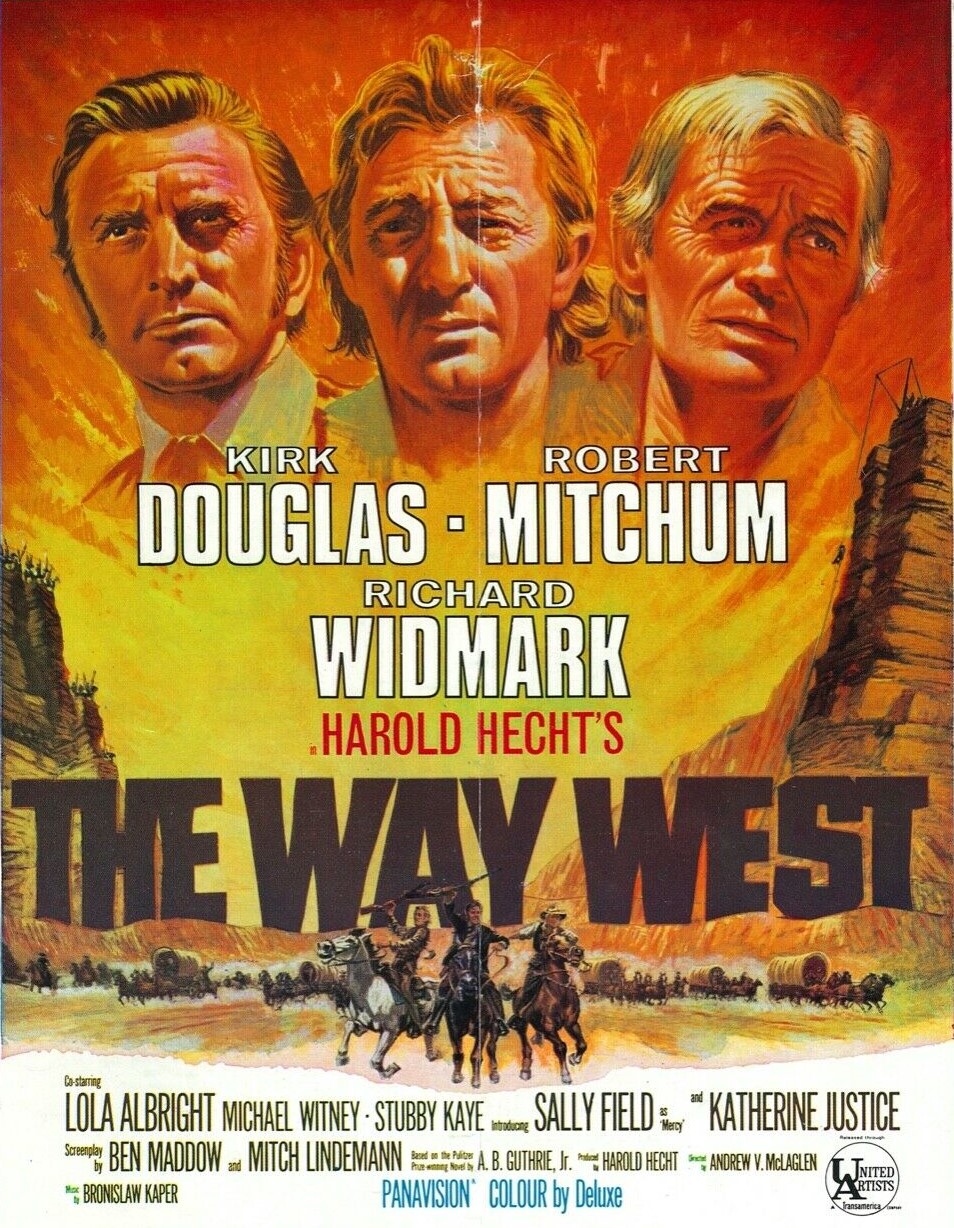
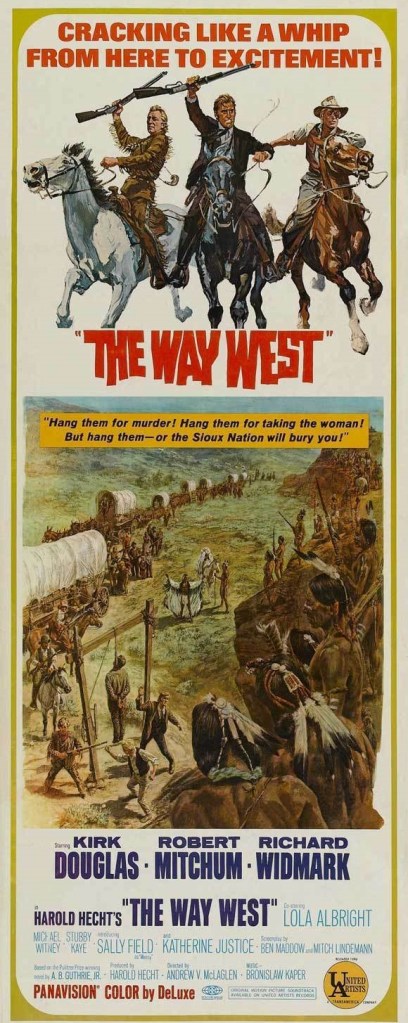
The Way West (1967) ****

How this crispy-told beautifully-mounted character-driven western ever languished among the also-rans is beyond me. I suspect the specter of John Ford hung heavily over it in the eyes of critics at the time but it more correctly belongs to the cycle of Cecil B. DeMille westerns that told stories with a true historical bent. Often detrimentally compared to How the West Was Won (1963), which told a similar tale of endeavor, this movie deliberately lacks that movie’s inflated drama in which every incident was built up, not least influenced by the need for Cinerama effect, rather than seeking an authentic truth.

Plainly put, the difference is here there are no charges, no races, no fording of rivers in the wrong places. Native Americans are treated with respect. Above all, an epic crossing of the continent with fully-loaded wagons is necessarily going to be slow, risk avoided at all costs, and yet this is not without incident or character arc. In fact, the script is terrific, not just dialog that rings true, but among the elements brought into play are male rivalry, clash with authority, guilt, young love, revenge, vision, justice, America in embryo. That the movie maintains a stately pace, no fistfights descending into brawls, and a shock ending indicate a director in charge of his material.

Based on A.B. Guthrie’s Pulitzer Prize-winning novel set in 1843, the first wagon train heads for Oregon under the iron rule of Senator William Tadlock (Kirk Douglas) and guided by a scout with failing eyesight in Dick Summers (Robert Mitchum), both men widowed and in emotional limbo, and in the cantankerous company of Lije Evans (Richard Widmark) and his glamorous wife Rebecca (Lola Albright). There’s a stowaway (Jack Elam), a preacher who can’t afford the price of transportation, an illicit love affair between the vibrant and lusty Mercy (Sally Field) who “hankers after any three-legged boy” but makes eyes at married man Johnnie Mack (Michael Witney), and enough obstacles to keep less determined settlers from reaching their promised land.

Tadlock is the visionary, a politician suffering from an overblown estimation of his self-worth,  who “might have been President except for a woman,” ruthless, valuing only his own ideas. “Point the way,” he tells Summers, “don’t gall me with opinions.” For fear it might interfere with his role as commander, he hides his vulnerability. There’s a plaintive moment when he shares his vision of a city with Rebecca, on the one hand full of his own importance, on the other clearly needing the pat on the back. Later, an occasion of death sees him falling prostate with grief on a grave and on breaking his own laws demands to whipped. The over confident blustering individual is by the end almost suicidal. What is a leader if there is no one to lead?
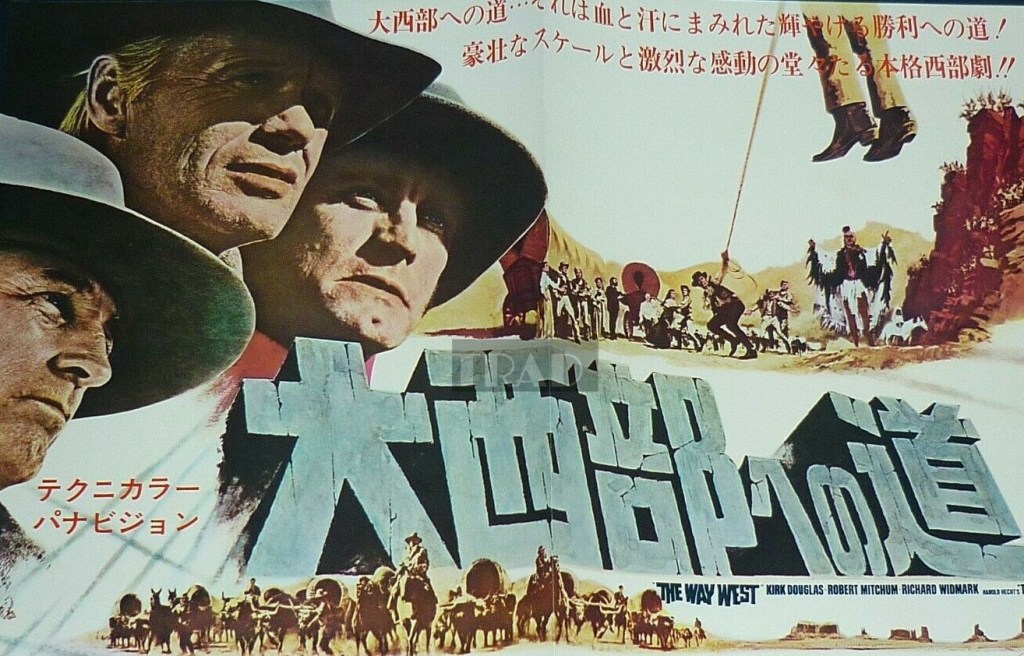
Summers stoically accepts his infirmity, constantly dropping his head so his eyes are hidden from sight under his hat as if his ailment could be easily detected, mourning the loss of his Native American wife, and while full of Western lore as easily passing on gentle wisdom about love, and his “lucky necklace” to an unrequited lover, but still accused of unworldliness, “for a smart man you ain’t got a lick of sense.”  Evans bristles at any authority, believing independence means he goes his own way, especially if that permits the freedom to get drunk at a time of his choosing, and especially once he realizes such lack of inhibition riles the repressed Tadlock. But his fondness for alcohol triggers an incident that almost costs his son his life.

Celebrations he started catch the attention of the nearby Sioux and in the communal drunkenness a Native American child is accidentally killed. In the best scene in the film battle Sioux seeking justice and intent on attack are thwarted only by the “sacrifice” of the killer.

The picture is packed full of incident, many characters coming alive in a single shot or with one line of dialog. A woman tramps on her husband’s foot to prevent him challenging Tadlock’s authority. A woman with a baby retorts that she is afraid when bolder settlers facing potential Native American attack assert the opposite. The bravest man in the camp, the first volunteer to be lowered down a canyon, dies when his rope snaps.  

There are any number of reversals. Buffalo, instead of being a danger and prone to stampede, create a dust cloud to hide behind. Rivers are crossed at sensible points, rapids avoided. An African American whips a white man. A boy becomes a man through honor rather than violence. Stories, large and small, play out in a succinct script.  
Kirk Douglas (The Arrangement, 1969) is superb as a man whose iron core deserts him. Robert Mitchum (Secret Ceremony, 1969), in almost a supporting role, excellent in full awareness that the sight on which his reputation and job depend will vanish, brings a subtlety to his performance that would be recognized as ideal for Ryan’s Daughter (1970). Richard Widmark (The Bedford Incident, 1965), who is generally simmering, gets to mix in a bit of fun in with the simmering.

Lola Albright (A Cold Wind in August, 1961) swaps seductiveness for sense. In her debut Sally Field (Smokey and the Bandit, 1977), filled with zip and zest, sparkles as the lusty young woman and it’s astonishing to realize she would not make another movie for nearly a decade while another debutante Katherine Justice (Five Card Stud, 1968) finds her inner fire when it’s too late.  There’s supporting talent a plenty – Jack Elam (Once Upon a Time in the West, 1968), Stubby Kaye (Cat Ballou, 1965), Harry Carey Jr. (The Undefeated, 1969) and William Lundigan (The Underwater City, 1962) in only his second film of the decade.

Director Andrew V. McLaglen (The Rare Breed, 1966) captures the correct tone for the film, making up for the essential slow pace with brilliant use of widescreen, coaxing great performances from all concerned. Screenwriters Ben Maddow (The Chairman, 1969) and Mitch Lindemann (The Careless Years, 1957) compress Guthrie’s tome with considerable skill.  

Woefully underrated at the time and since, this deserves reassessment. This is a truer version of how the west was won. And I surely can’t be alone in demanding that McLaglen’s talent be more properly recognized.

You might be interested to know there are two other articles on this film – a “Behind the Scenes” and a “Book into Film.”

Flight from Ashiya (1964) ***

A post-WW2 operation to save a handful of Japanese adrift at sea in a storm is endangered when three members of the U.S. Air Force Air Rescue Service confront conflicts from their past. Despite tense rescue action, this is basically a three-hander about guilt and how men deal – or fail to deal – with emotions. Extended flashbacks illuminate the tangled relationships between Sgt Takashima (Yul Brynner), Lt Col Stevenson (Richard Widmark) and Second Lieut Gregg (George Chakiris). Unusually, for the period, tough guys actually emote.

So really it’s like one of those portmanteau films that are occasionally popular – like Trio (1950) made up of Somerset Maugham short stories or similar to something like the Oscar-winning  Crash (2004) where characters interconnect after an accident. While each of the episodes stands up in its own right, the thrust of the narrative revolves around actions taken in the past having a direct bearing on the present situation.

Gregg is haunted by causing an avalanche after flying his helicopter too close to a mountain and, as a result, by having to leave behind many of the victims, due to restricted capacity on board, and now he is terrified of flying solo.  As a consequence Stevenson has no faith in abilities as a pilot.

Stevenson also has an abiding hatred of Japanese – colleague Takashima of Japanese ancestry also bears his wrath – because his ill wife Caroline (Shirley Knight) and child died in a Japanese prisoner-of-war camp because medical supplies were reserved only for the Japanese. Faced with rescuing Japanese, he is enraged.

For his part, Takashima, a paratrooper during the war, inadvertently caused  the death of his Algerian girlfriend Leila (Daniele Gaubert). It’s not so much an examination of tough guys under pressure as about their inability to deal with the consequences of action. There’s certainly a sense that the only way men like these have of dealing with trauma is to throw themselves into dangerous action.

Yul Brynner (The Double Man, 1967) gives a more thoughtful performance than you might expect while Richard Widmark (The Secret Ways, 1961), himself dabbling in production elsewhere, was good value. Goerge Chakiris (The Young Girls of Rochefort, 1967) was a weaker link. The presence of Suzy Parker (Circle of Deception, 1960) and especially Daniele Gaubert (The Golden Claws of the Cat Girl, 1968) strengthen the film.

Unusually, at a time when product was in short supply and for a film boasting a strong cast, the picture was shelved for two years after completion. Presumably explained by the demise of Harold Hecht’s production company after he split with Burt Lancaster. Michael Anderson (The Shoes of the Fisherman, 1968) directed from a screenplay by Waldo Salt (Midnight Cowboy, 1969) based on the novel by Elliot Arnold (Kings of the Sun, 1963).

The title’s a bit of a misnomer, suggesting someone is trying to escape from Ashiya when, in fact, that is just the name of the air base where the rescue team are located.

Critics complained it was neither one thing nor the other, but in fact I found it a perfectly satisfactory combination of action and drama, especially as it dealt with rarely-recognized male emotions.

https://amzn.to/47p3xP6

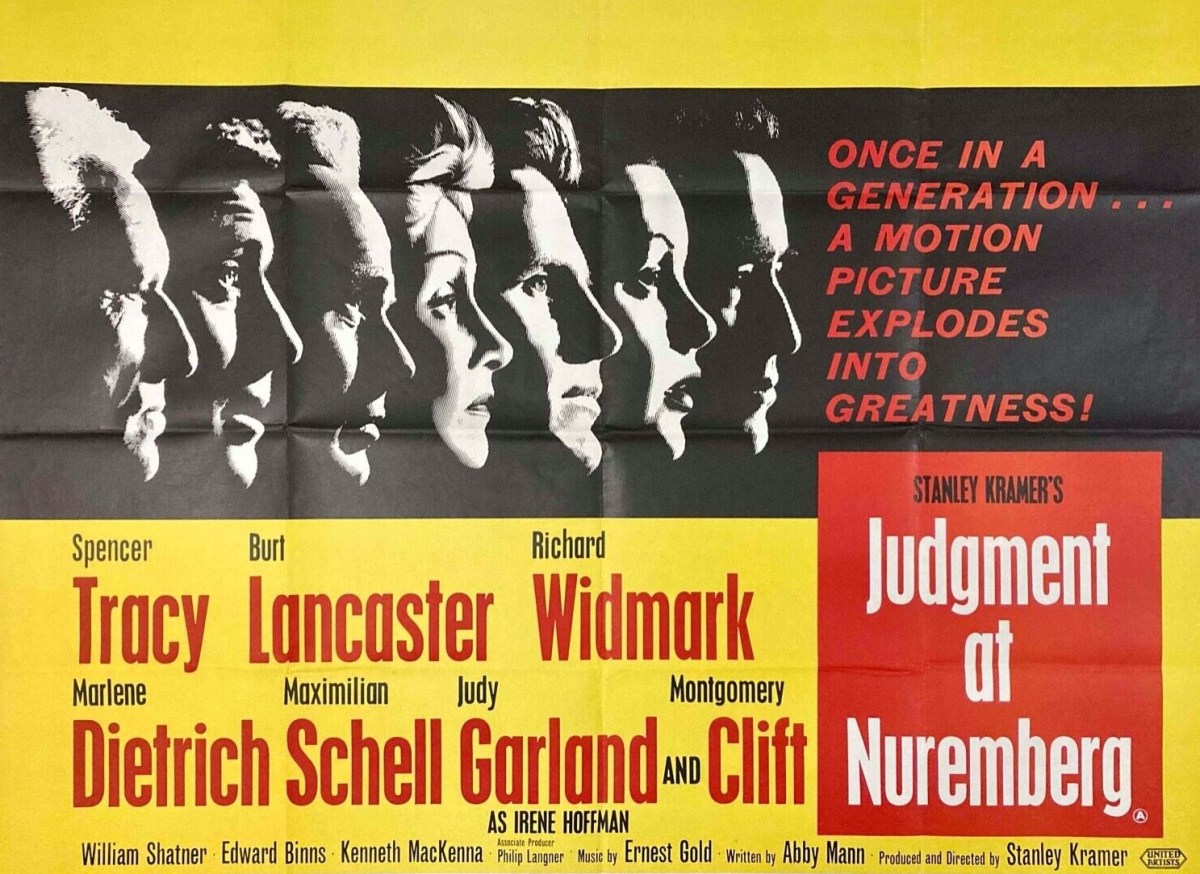
Judgment at Nuremberg (1961) ****

Stanley Kramer never caught a decent academic/critical break. Subject matter worthy, execution poor, was the overall consensus. But Judgement at Nuremberg, with its long tracking shots, sometimes turning 360 degrees around a character, should have changed all that. But the kind of critics who would have appreciated such bravura technique weren’t around at the time and even when Antonioni’s The Passenger (1975) appeared nobody thought to reference Kramer, believing this was a new cinematic invention by the esteemed Italian maestro.

So, Judgement at Nuremberg is remembered, if at all, for the subject matter and elevated by the performances rather than the director’s input. Most people misremember what the movie’s about. The main concern here isn’t the war criminal, the men personally involved in running the ghettos. Instead, it’s about those behind the scenes who could, theoretically, have prevented the camps flourishing, or at least challenged their opening.

Those on trial were freedom fighters of a different sort. As judges, the top tier of the legal system, their job was not just to uphold law and order and individual freedoms, but to take government to task for illegal action. It’s a basic tenet of the democratic world that governments cannot act in autocratic fashion but work within public accord.

Should the legal guardians find fault with government activity, their job is to take the ruling body to task – the European Court of Human Rights was set up with exactly that principal in mind, and various British and American law agencies have over time called a halt or questioned government proposals.

Some of the judges were clearly ill-fit for the task, lick-spittle jobsworths, desperate to hold onto rank and privilege, many sharing the same anti-semitic views as Hitler. But the Allied forces, being democratic, have to proceed along proper lines, taking potential criminals to court and allowing them legal defence.

So the main target is Dr Ernst Janning (Burt Lancaster), German’s pre-eminent legal force, a quiet, dignified man, who refuses to fawn or react to the charges. On the attack is prosecutor Col Tad Lawson (Richard Widmark). Acting for the defence is the wily, emotional, Hans Rolfe (Maximilian Schell) who is not above comparing the Holocaust to the Americans dropping the atom bomb on Hiroshima, indiscriminate terror brought on innocent civilians the result of both actions. He also brings to the court’s attention the distasteful theories that once held sway in high American legal circles as promulgated by Oliver Wendell Holmes, a Supreme Court judge, whose views on eugenics aimed at withholding procreation rights from the mentally handicapped.   

As referee we have Dan Heywood (Spencer Tracy), the American chief judge, who didn’t want the job and was way down the pecking order of those best qualified. And he’s a bit of a detective on the side, trying to discover how much ordinary people –  such as the flirtatious Mrs Bertholdt, widow of an executed German general, as well as the housekeeper and butler looking after him in some style – knew about the atrocities as they were taking place.

In the background is an Allied command not wishing to stir up any more controversy, conscious of the rising power of the Communist bloc, seeing West Germany as a bulwark against Stalin, concerned that forcing the country’s inhabitants to wallow in the past will turn their political minds towards the east rather than the west.

In due course, a variety of witnesses are called, testifying to ill-treatment under the German government including the backward Rudolph Pedersen (Montgomery Clift) and Irene Hoffman (Judy Garland).

What makes this so different is that innocence or guilt is not what’s under scrutiny, but reason. Why did such high-minded legal experts like Dr Janning give in to Hitler. And when? And do they recognise their role in providing Hitler with credence to continue with his massacre of the Jews?

Individual conscience and, conversely, collective guilt, might have been the driving force then but they are more than relevant today when actions in war come under even greater scrutiny and politicians are held to account. Perhaps, it’s ironic how little judgement was passed in the end on those convicted in these trials. Nobody was hanged, nobody received even a life sentence. In fact, by the time the movie was released, all were free men.  

Stanely Kramer, the Scorsese or Nolan of his era regarding running time  (it clocks in a just shy of three hours), does a superb job with his even-handed approach. While his technical skills were perhaps under-appreciated, he certainly knows how to command an audience’s attention and draws terrific performances from his actors.

Maximilian Schell, who won the Oscar, is perceived as the standout, but for me the highpoints were Burt Lancaster (The Swimmer, 1968) and Montgomery Clift (Freud, 1962). Abby Mann’s (The Detective, 1968) screenplay was an expanded version of his teleplay of two years before.

Has more than enough humanity to keep you riveted.

https://amzn.to/3Mh4v7c

The Long Ships (1964) ***

Decent hokum sees Vikings ally with Moors to seek a mythical giant bell made of gold, “the mother of voices.” There are stunning set-pieces: a majestic long ship coming into port, superior battles, the Mare of Steel, the discovery of the bell itself, while a clever ruse triggers the climactic fight. There’s even a “Spartacus” moment – when the Vikings declare themselves willing to die should their leader be executed.

Rolfe (Richard Widmark) is the wily Viking, second cousin to a con man, demonstrating his physical prowess although he does appear to spend an inordinate amount of time swept up ashore after shipwreck. Moorish king Aly Mansuh (Sidney Poitier) is his rival for the legendary bell.  The diminutive Orm (Russ Tamblyn), Rolfe’s sidekick, appears to be in a constant athletic duel with the Viking.

Although handy with a sword, both are equally adept at employing seduction, Aly Mansuh making eyes at Viking princess Beba Loncar (in her Hollywood debut) while Rolfe targets Poitier’s neglected wife Rosanna Schiafffino (Two Weeks in Another Town, 1962). The story is occasionally put on hold to permit the Viking horde to pursue their two favorite pastimes – sex and violence – and they make the most of the opportunity to frolic with a harem.

One of the marks of the better historical films is the intelligence of the battle scenes. Here, faced with Muslim cavalry, the Vikings steal a trick from The 300 Spartans by lying down to let the horses pass then rising up to slaughter their riders. But there is also an unusual piece of intelligent thinking. Realising, as the battle wears on, that they are substantially outnumbered and have their backs to the sea, Widmark takes the sensible option of surrendering.

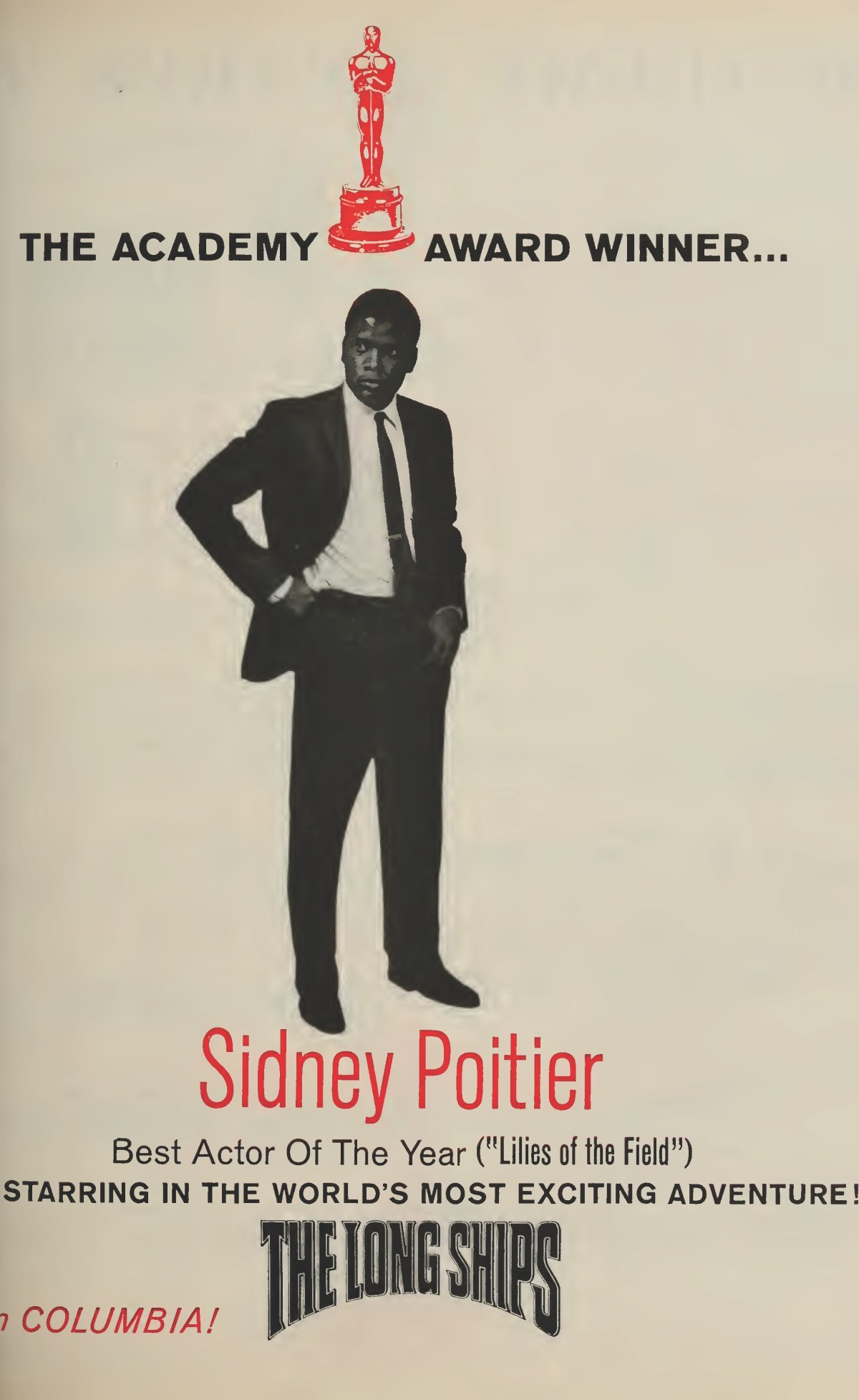
Richard Widmark (The Secret Ways, 1961) makes the most of an expansive role. Instead of seething with discontent or intent on harm as seemed to be his lot in most pictures, he heads for swashbuckler central, with a side helping of Valentino, gaily leaping from high windows and engaging in swordfights. Sidney Poitier (Duel at Diablo, 1966), laden down with pomp and circumstance rather than immersed in poverty as would he his norm, is less comfortable as the Islamic ruler. (Widmark and Poitier re-teamed in The Bedford Incident, 1965, also reviewed in the blog.)

The puckish Tamblyn (The Wonderful World of the Brothers Grimm, 1962) almost steals the show. Both Loncar and Schiaffino have decent parts.

Director Jack Cardiff, Oscar-nominated for Sons and Lovers (1960), brings to bear his experience of working on The Vikings (1958) for which he was cinematographer. He is clearly at home with the action and equally there is some fine composition. However, the story in places is over-complicated, and he fails to rein in the mugging of one of the industry’s great muggers Oscar Homolka (Joy in the Morning, 1965) and there is a complete disregard for accent discipline.  Edward Judd (The Day the Earth Caught Fire, 1961), Scotsman Gordon Jackson (The Great Escape, 1963) and Colin Blakely (The Private Life of Sherlock Holmes, 1970) have supporting roles.

Berkely Mather (Dr No, 1962), Beverly Cross (Jason and the Argonauts, 1963) and, in his sole movie credit, Frans G Bengtsson, collaborated on the screenplay.

Good fun and great to see Widmark and Poitier turning their screen personas upside down.

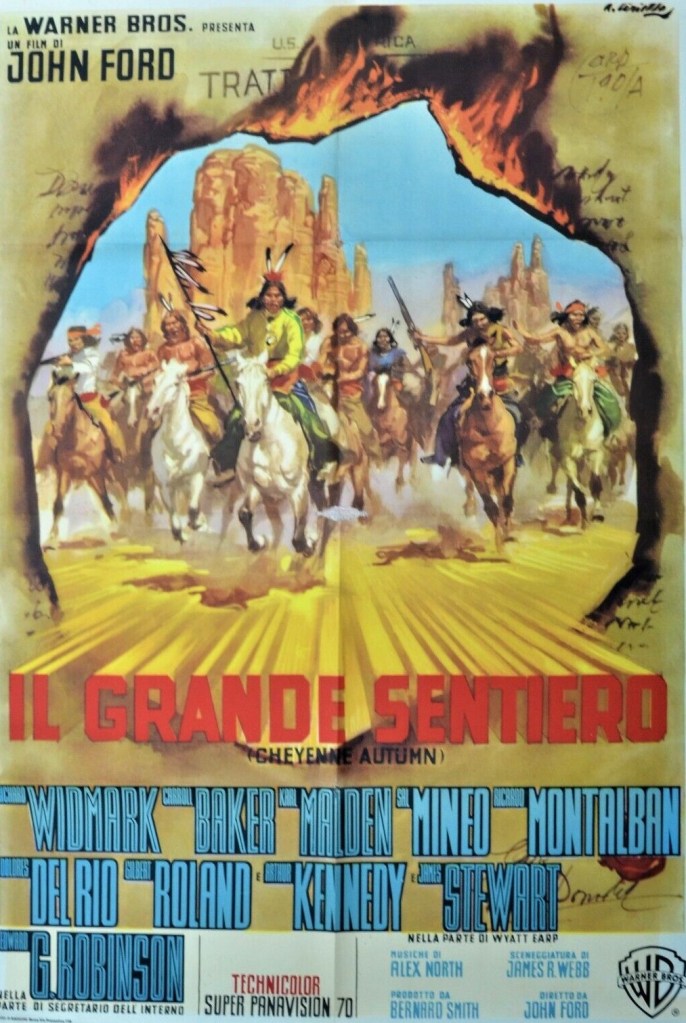
Cheyenne Autumn (1964) ***

Lack of narrative energy and focus sabotages well-meaning atonement epic. John Ford’s final western, made half a decade before Dee Brown’s seminal Bury My Heart at Wounded Knee was published, is not the epitaph he might have envisioned. For a start, it’s just not rigorous enough. You might accept there’s no mention of the word “genocide” since until Vietnam the United States was hardly capable of mea culpa.    

But that we learn very little about the Native Americans trekking 1500 miles from their Oklahoma reservation to their Wyoming homeland beyond that it’s an exhausting trek. Although the Native Americans are treated in a positive manner, and the U.S. Cavalry and Government are seen as inefficient and corrupt, little has been invested in the Native American characters.

The crux of their story is that the two brothers – Dull Knife (Gilbert Roland) and Little Wolf (Ricardo Montalban) leading the journey – eventually go their separate ways, and that a younger headstrong Native American steals one of the brother’s wives. Instead, more attention is paid to a young do-gooding Quaker teacher Deborah Wright (Carroll Baker) who opts to join them on their quest in order to look after the children attending her classes.

Caustic Captain Archer (Richard Widmark), either in person or through voice-over, is the most notable character, fighting his superiors to allow the wanderers unrestricted passage and eventually winning over Secretary of the Interior Carl Schurz (Edward G. Robinson) to ease the last stages of their journey.

The plot diverges from the Exodus-style mission for a totally irrelevant sequence set in Dodge City featuring a gambling Wyatt Earp (James Stewart) and Doc Holliday (Arthur Kennedy) and a spurious bunch of townspeople getting over-excited at the prospect of being attacked. More to the point, when Little Wolf splits from Dull Knife and heads for the sanctuary of Fort Robinson in Nebraska they are imprisoned by authoritative Captain Wessels (Karl Malden), gunning for promotion and in an echo of German apology for the Holocaust “only obeying orders,” with savage consequence.

The couple of action sequences show the fighting skills and tactical ability of the Native Americans but this is undermined by also showing them as sly and cunning, hiding weaponry under campfires and in baby’s clothing.

You might also be asking just how big is Monument Valley for it seems to be the location for about half the picture.  Sure, it’s a terrific backdrop and possibly never been better utilized but it’s an example of the creative lethargy not to follow in more authentic manner the actual route of the Cheyenne. Adding to that disgruntlement you might also note the omission of any Native Americans in the leading roles, those parts being taken by Mexicans or dark-skinned Americans.

While John Ford clearly had his heart in the right place, his fans weren’t ready for this kind of revisionist approach – the movie, a 70mm roadshow, was a big flop at the box office – and the result just doesn’t do the subject justice. And in fact a corrective correlative to How the West Was Won (1962) perhaps entitled How the West Was Stolen has yet to be made.

For a long time Bury my Heart at Wounded Knee was considered the landmark historical work depicting the ruthless conquering of the Native Americans but the more recent The Earth Is Weeping by Peter Cozzens, which I read a couple of months back, offers a more authoritative look at the sorry saga, but, without, I hasten to add, a mention of the scary word “genocide.”

I wouldn’t normally be in favor of editing the work of a director as legendary as John Ford but the omission of the Dodge City sequence would have considerably shortened the movie and retained the focus and perhaps improved the picture.

As it stands, a valiant effort. None of the stars is provided with sufficient narrative to make their acting stand out and it feels like they have all stumbled into a documentary.

Two Rode Together (1961) *****

Never quite considered top drawer John Ford, yet it should rank alongside Stagecoach (1939), The Searchers (1956) and The Man Who Shot Liberty Valance (1962). I’ve been talking recently about a movie completed in a single take (Grenfell, 2023) and the power of a single scene (The Manchurian Candidate, 1962), and now I’m touching upon another piece of cinematic dexterity – the fixed-camera seqeunce.

This is a beauty and it lasts four minutes. Yep, for a four-minute medium-shot scene featuring the  two major characters the camera doesn’t move. Lawman Guthrie McCabe (James Stewart) and Cavalry officer Jim Gary (Richard Widmark) take a break from the 40-mile journey back to the fort. You think this is where Gary is going to spring upon McCabe exactly why his presence is so necessary for Army business. But instead, the scene, driven by Gary, is set up to discover why McCabe is so agreeable to taking a temporary leave of absence from an exceptionally comfortable lifestyle back in his small town.

Sure, this scene boasts a bit of business, the waving about of cigars and some pointing and McCabe’s head bobbing around, but otherwise the camera just observes. First of all we discover that McCabe earns $20 a month more than the soldier – that is, when the officer is paid at all, three months since he saw any money – and that McCabe is on the mean side and sarcastic with it. McCabe starts puffing on a long cigar and has to be nudged to offer Gary one. “You can afford matches,” he notes when Gary produces a packet.

McCabe has temporarily upped sticks it transpires because he’s getting unwelcome heat from his hotel owning lover Belle (Annelle Hayes),  on the sticky subject of marriage. The subject was brought up with a woman’s “animal cunning” when Belle asked why he was content with just taking 10 per cent of her income when, through entering into a partnership via marriage, he could receive 50 per cent. Gary is taken aback that his old pal is getting a slice off the top. And then somewhat shocked to learn that McCabe takes the same percentage from every business in town. McCabe is surprised to learn this comes as news to Gary. How else could the marshal support his lifestyle.

This mild interrogation is interrupted by a nugget about Belle. She has a stiletto strapped to her leg. That’s not news to Gary. McCabe is perturbed. How did he know. You just told me is the speedy retort. That takes a moment to sink in before McCabe’s suspicions are aroused and then allayed.

In other hands, this scene could have lasted a minute. Some speedy dialog would have got to the point faster. But that’s not the point. You can’t attempt this length of fixed camera scene unless you have two wonderful actors. It might appear indulgent but the director wants us to be sucked in by the affable McCabe.

Not sure where they got the image of the women in red being hanged – must be from another movie.

Because until now it has been all economy. The movie opens with a well-heeled fella dozing on a hotel veranda being woken up by a waiter bringing him beer and a cigar, candle at the ready to light the tobacco. The stage arrives. Two cowboys approach asking where they can get a decent drink. The man pulls back his jacket to reveal his badge. The mention of his name, Guthrie McCabe, is enough to make the pair reconsider staying.

A cavalry troop arrives with Gary at the head. Gary’s uniform is covered in dust, so thick you can hardly beat it off, so thick that unless accompanied by McCabe he would have been forbidden entry to the hotel by the owner. There’s snippy dialog here but it’s all delivered by Belle as she provides a series of sharp observations about men. Uninvited, she joins the pair as they sit down, Gary somewhat vague about his mission. Outside, we encounter McCabe’s dumb deputy, escorting a bunch of prisoners back to the jail because the judge was too drunk to appear in the courtroom – it’s that kind of town. McCabe, seeking re-election shortly for his position, sets them free and buys them a drink. Then we’re off on the 40-mile trip.

Still, we don’t know why McCabe’s presence at the fort is so important. John Ford doesn’t usually fall back on mystery as a narrative device unless it’s some personal secret hidden by a character. So McCabe is astonished to be hailed as a conquering hero, cheered by the people inhabiting an encampment outside the fort. One woman even says she can see his halo. What the…

Inside, it transpires Gary is merely doing his superior’s dirty work. And it’s cynical stuff at that. Major Frazer (John McIntyre) wants rid of the rabble who are giving him grief over their sons and daughters long ago kidnapped by the Commanche. Due to the current treaty, the Cavalry can’t just wade in and collect the kids, grown-up by now some of them. So he needs someone who is on nodding terms with the tribal chief (Henry Brandon) and negotiate their release.

McCabe’s first thought is how much he would be paid, given a cavalry officer’s salary would hardly keep him in cigars, reckoning it would be worth $500 a skull. “Whatever the market can bear,” insists McCabe. Both officers are appalled and even more so when McCabe reckons he’ll screw the money out of the distraught families. And that’s what he does. Affable has suddenly turned callous. The camera in this next scene focuses on Gary’s face, until he can take no more of his old buddy’s blatant greed.

Sucker punch number two. McCabe is as mercenary as the later Man With No Name. but he’s not the only one displaying cynicism. To appease his second wife Henry J. Ringle (Willis Bouchey) will cough up $1,000 if McCabe can bring back any child, not the actual one lost, because the kid was so young when kidnapped that his wife won’t know the difference and he has to get her off his back because it’s interfering with his business.

But there’s more sucker punches to come. McCabe won’t accept Gary’s leadership and won’t even agree to work out their approach together. But when it comes to action, it’s soon pretty clear that McCabe is the tougher character, can anticipate the enemy reaction. And he’s right to be cynical because when Elena (Linda Cristal) is returned to the fold, she is despised, all the fort wives want to know is how many Native American braves she slept with, and why she didn’t commit suicide instead.

There’s a sting in the tale for McCabe when he returns home and finds Belle has taken decisive action in his absence.

McCabe is a superb creation, none of that risking your life for nothing in his game plan, possibly the most realistic character in the Ford oeuvre, who doesn’t care a whit what people think about him, as long as he is paid what he feels is his due. Sure, he puts his life on the line, but you can be guaranteed that’s not much of a gamble, he is so accomplished with the gun and can outwit any foe. As corrupt as he is, he’s a lot more straightforward than the apparently high-principled wives and officers who treat Elena so abominably.

There’s a good bit more to this picture than I’ve described. I’ll pass over the usual punch-up to which Ford appears addicted. Gary’s romance with civilian Marty (Shirley Jones) is well done, she carrying the burden of surviving Indian attack when her younger brother was taken, and she is an accomplished pioneer, in another superb scene Gary congratulates her on pitching her tent out of the wind, far enough for the creek to escape mosquitoes and near a dead tree to get firewood.

And there’s another brilliant scene, revolving around a music box, that could have been a cliché but in another sucker punch takes a different, quite awful, direction.

This is so beautifully written and directed I’m just astonished it wasn’t met with acclaim at the time or since. The typical western has ever been so undercut nor typical action met with such dire consequence, the soft underbelly of life at the fort never so cruelly exposed.

You might think James Stewart was taking a chance in assuming the mantle of the man who killed Liberty Valance in order to advance his political career when in reality he did no such thing. But this character is light years away from that simple theft. His character in that Ford picture was exactly the high-principled guy you had come to expect from Stewart, even if, at the last instant, succumbing to a lie.

In the hands of another director McCabe would have been played by a sleazy Lee Marvin or another actor who could not rise above his bad-guy persona. This must be James Stewart’s finest hour, making an unattractive character appealing, so much so you almost appreciate his point of view in relation to the corruption and his antipathy to matrimony, and taking pains to conceal not the goodness underneath but his understanding of the harsher realities of Western life, at which he is more than adept at dealing.

Richard Widmark (The Secret Ways, 1961) also discards his normal screen persona, his job to act as observer to the Stewart character, to lead audience disapproval, and to be hoodwinked as much as McCabe by the cynical Major while enjoying none of the reward. He is gentler than usual, more resigned to his job, expecting little. Good supporting cast including Oscar-winner Shirley Jones (Bedtime Story, 1964), Linda Cristel (The Alamo, 1960) and especially, in her only movie, Annelle Hayes, as an extremely savvy character who gets the better of her slippery lover.

Brilliant film. And if like me you come to the four-minute scene you might just rewind once or twice to enjoy what Ford, Widmark and Stewart achieve. I was so taken with the entire film, which I’d never seen before, that I watched it again the next night.  

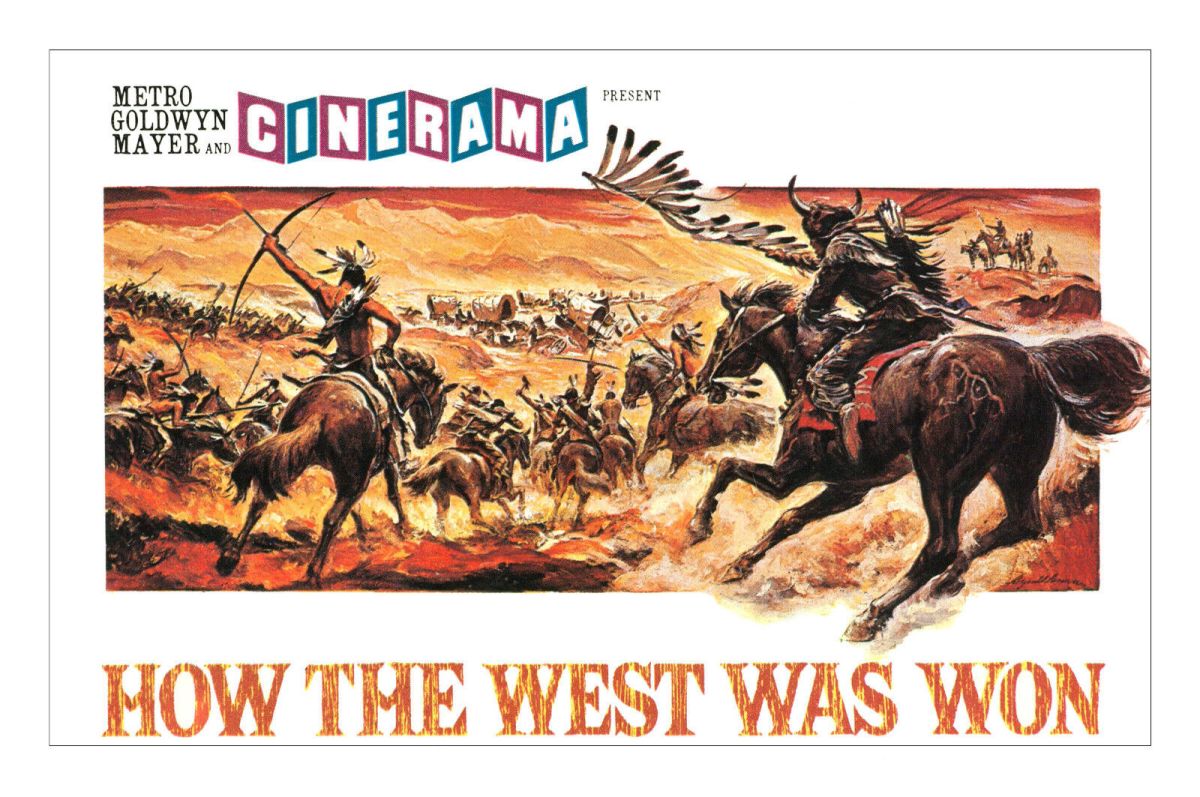
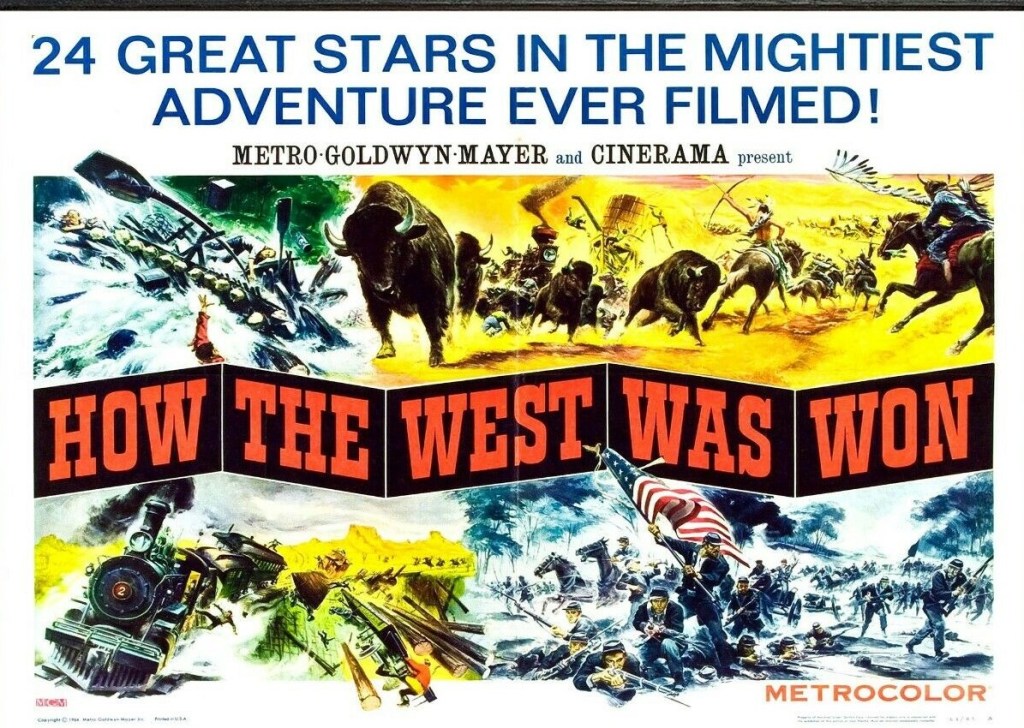
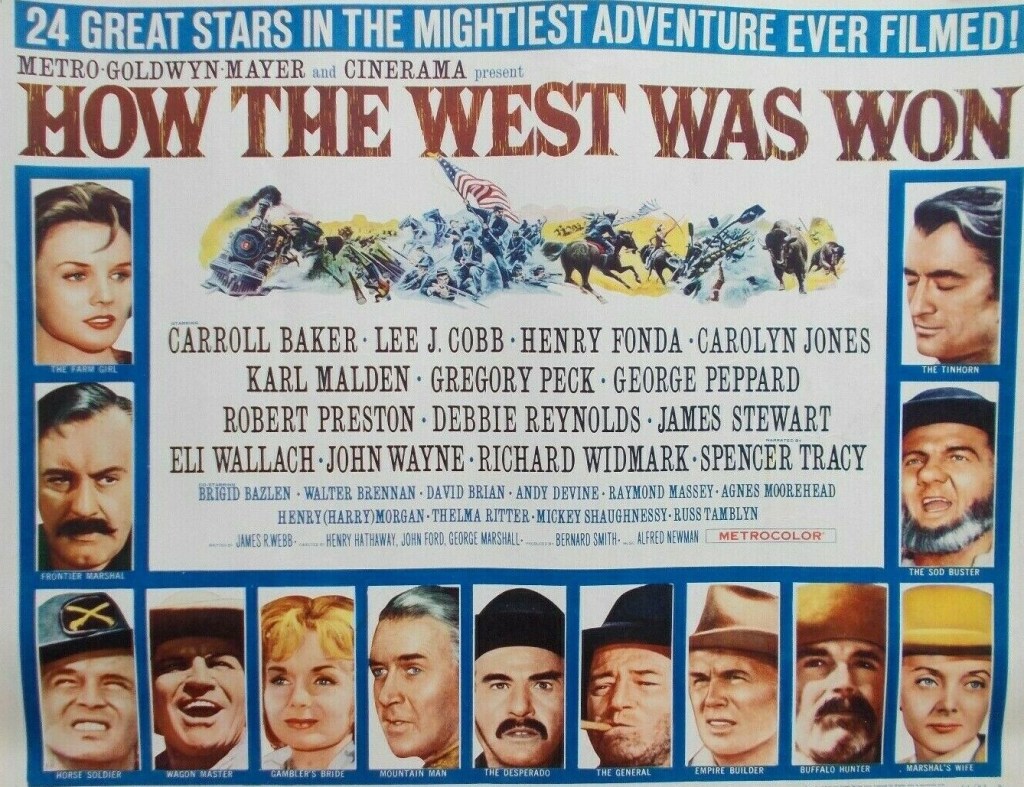
How the West Was Won (1962) ***** – Seen at the Cinerama

I’ve got Alfred Newman’s toe-tapping theme music in my head. In fact, every time I think of this music I get an earworm full of it. Not that I’m complaining. The score – almost a greatest hits of spiritual and traditional songs – is one of the best things about it. But then you’re struggling to find anything that isn’t good about it. But, for some reason, this western never seems to be given its due among the very best westerns.

Not only is it a rip-roaring picture featuring the all-star cast to end all-star casts it’s a very satisfying drama to boot and it follows an arc that goes from enterprise to consequence, pretty much the definition of all exploration.

Given it covers virtually a half-century – from 1839 to 1889 – and could easily have been a sprawling mess dotted by cameos, it is astonishingly clever in knowing when to drop characters and when to take them up again, and there’s very little of the maudlin. For every pioneer there’s a predator or hustler whether river pirates, gamblers or outlaws and even a country as big as the United States can’t get any peace with itself, the Civil War coming plumb in the middle of the narrative.

Some enterprising character has built the Erie Canal, making it much easier for families to head west by river. Mountain man fur trader Linus Rawlings (James Stewart) on meeting prospective pioneers the Prescotts has a hankering after the young Eve (Carroll Baker) but as a self-confessed sinner and valuing his freedom has no intention of settling down. But he is bushwhacked by river pirates headed by Jeb Hawkins (Walter Brennan) and left for dead, but after saving the Prescotts from the gang changes his mind about settling down and sets up a homesteading with Eve.

We have already been introduced to Eve’s sister Lilith (Debbie Reynolds) who has attracted the attention of huckster Cleve Van Valen (Gregory Peck) and they meet again in St Louis where she is a music hall turn and widow. Her physical attraction pales in comparison with the fact she has inherited a gold mine. He follows her, unwelcome, in a wagon train which survives attack by Cheyenne, but still she resists him, not falling for him until a third meeting on a riverboat.

Zeb Rawlings (George Peppard) wants to follow his father to fight in the Civil War. Linus dies there, but there’s no great drama about it, he’s just another casualty, and the death is in the passing. In probably the only section that feels squeezed in, following the Battle of Shiloh a disillusioned Zeb saves General Sherman (John Wayne) and Ulysses S. Grant (Harry Morgan) from an assassin.

Returning home to find Eve dead, Zeb hands over his share of the farm to his brother and heads west to join the U.S. Cavalry at a time when the Army is required to keep the peace with Native Americans enraged by railroad expansion. Zeb links up with buffalo hunter Jethro Stuart (Henry Fonda), who appeared at the beginning as a friend of his father.

Eve, a widow again, meets up in Arizona with family man and lawman Zeb who uncovers a plot by outlaw Charlie Gant (Eli Wallach) to hijack a train. Zeb turns rancher once again, looking after her farm.

But the drama is peppered throughout by the kind of vivid action required of the Cinerama format, all such sections filmed from the audience point-of-view. So the Prescotts are caught in thundering rapids, there’s a wagon train attack and buffalo stampede, and a speeding train heading to spectacular wreck. There’s plenty other conflict and not so many winsome moments.

Interestingly, in the first half it’s the women who drive the narrative, Eve taming Linus, Lilith constantly fending off Cleve. And there’s no shortage of exposing the weaknesses and greed of the explorers, the railroad barons and buffalo hunters and outlaws, and few of the characters are aloof from some version of that greed, whether it be to own land or a gold mine or even in an incipient version of the rampaging buffalo hunters to pick off enough to make a healthy living.

And here’s the kicker. Virtually all the all-star cast play against type. John Wayne (Circus World, 1964) reveals tremendous insecurity, Gregory Peck (Mirage, 1965) is an unscrupulous though charming renegade, the otherwise sassy Debbie Reynolds (My Six Loves, 1963) is as dumb as they come to fall for him, and for all the glimpses of the aw-shucks persona James Stewart (Shenandoah, 1965) plays a much meaner hard-drinking hard-whoring version of his mean cowboy. Carroll Baker (Station Six Sahara, 1963) is an innocent not her usual temptress while George Peppard (The Blue Max, 1966) who usually depends on charm gets no opportunity to use it. .

Also worth mentioning: Henry Fonda (Madigan, 1968), Lee J. Cobb (Coogan’s Bluff, 1968), Carolyn Jones (Morticia in The Addams Family, 1964-1966), Eli Wallach (The Moon-Spinners, 1964), Richard Widmark (Madigan), Karl Malden (Nevada Smith, 1966) and Robert Preston (The Music Man, 1962).  

Though John Ford (The Man Who Shot Liberty Valance, 1962) had a hand in directing the picture, it was a small one (the short Civil War episode), and virtually all the credit belongs to Henry Hathaway (Circus World) who helmed three of the five sections with George Marshall (The Sheepman, 1958) taking up the slack for the railroad section.

And though you might balk at the idea of trying to cover such a lengthy period, there’s no doubting the skill of screenwriter James R. Webb (Alfred the Great, 1969) to mesh together so many strands, bring so many characters alive and write such good dialog. Bear in mind this was based on a series of non-fiction articles in Life magazine, not a novel, so events not characters had been to the forefront. Webb populated this with interesting people and built an excellent structure.

I’m still tapping my toe as I write this and I was tapping my toe big-style to be able to see this courtesy of the Bradford Widescreen Weekend on the giant Cinerama screen with an old print where the vertical lines occasionally showed up. Superlatives are superfluous.

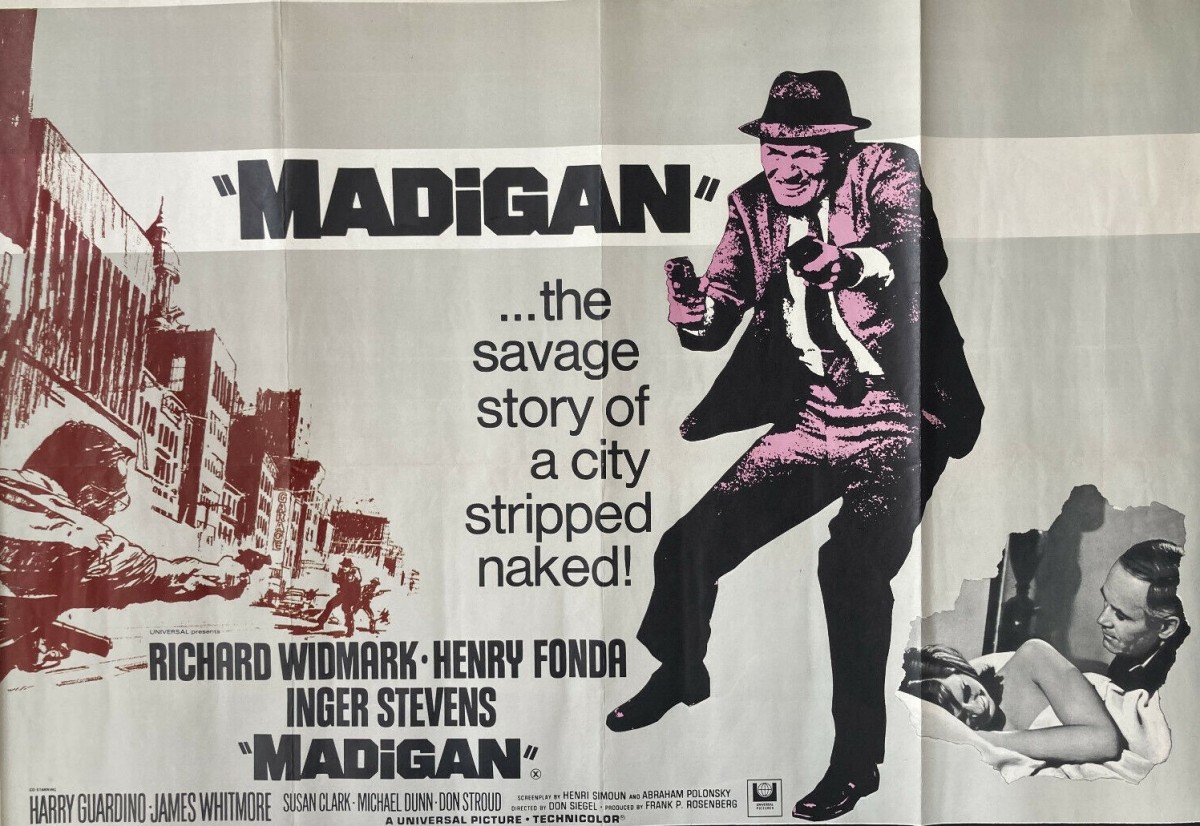
Madigan (1968) ****

Reignited the careers of director Don Siegel (no Hollywood traction since Hell Is For Heroes in 1962), Richard Widmark (reduced to supporting roles) and Henry Fonda (no longer first name on the team sheet for the biggest pictures) and reinvented the cop thriller as a gritty urban affair. The plot – chasing down a suspect – is a MacGuffin to explore tough police methods, corruption, and the harm the job does to the domestic lives of the police.

Detective Dan Madigan (Richard Widmark) and partner Rocco Bonero (Harry Guardino) come woefully and embarrassingly unstuck when hood Benesch (Steve Ihnat) evades capture and steals their guns. They have 72 hours to bring him back or be suspended. So, basically, they spend most of the time following a bunch of leads, intimidating anyone who gets in their way, including a helpless secretary. And while Bonero is happily domesticated, Madigan’s lonely wife Julia (Inger Stevens) is fed up with late nights and broken promises to the extent of considering a one-night stand when hubby stands her up once too often.  

Commissioner Russell (Henry Fonda) has his hands full dealing with the errant detectives  without the ramifications of corruption involving his best friend, long-time cop Chief Inspector Kane (James Whitmore). The widowed Russell would be a poster-boy for the principled cop except he’s having an affair with married woman Tricia (Susan Clark).

While Madigan is kicking and snarling his way through the underworld, Russell is trying to work out how to save his friendship and his affair. And while they might appear opposites, the classy top officer and the street cop, the uptight Russell envies Madigan’s way with people. Madigan is comped drinks and even a suite at the Sherry-Netherland hotel not merely because he’s a cop but because his charm goes a long way.

And while Russell dithers over helping out a friend, Madigan has no qualms about being taking for a ride by an old pal down on his luck and in need of an excuse to be bought a drink. When it comes down to it, Madigan is the better advert for humanity.

The soap opera elements don’t intrude too much on the thriller. Madigan and Bonero go in with fists blazing and work their way through a menagerie of skunks including Castiglione (Michael Dunn) and stool pigeon Hughie (Don Stroud). Benesch is a piece of work, not just clever enough to use his lover’s nudity to distract the attention of cops, but sufficiently hard-boiled to shoot a cop dead in the street and have little hesitation in opening fire on anyone who comes too close.

There’s some fascinating internal cop politics as Kane locks horns with Chief of Detectives Lynch (Bert Freed) over the latter’s insistence on suspending Madigan. And Russell has to finagle his way through the problems a well-heeled son is causing a rich doctor (Raymond Jacques).

Every time the pace slackens, the movie falls back on the old Chandler routine, have someone come through the door with a gun (a fist would suffice). Madigan is a driven cop, struggling to hold onto his marriage, Julia too often the sacrificial lamb. And for all his outward bravado, there’s a superb scene when unexpectedly encountering Russell he turns into a stammering ball of nerves, like a schoolkid anticipating a roasting from a headmaster.

Richard Widmark (The Bedford Incident, 1964) has a hell of a part, tough guy, check, but with a side helping of kindness, and pretty assured on the loving front, investing what could have been a fairly cliched character with a good deal of complexity. Henry Fonda (Firecreek, 1968) does a lot of pacing as his self-esteem implodes; how can he be a good guy if he’s running around with another man’s wife and how can he stick to his principles if he’s going to let a pal away with corruption?

Inger Stevens (Firecreek, 1968) is impressive as the disappointed wife trying to keep disappointment at bay. Harry Guardino (Hell Is For Heroes) always makes a good sidekick, but James Whitmore (The Split, 1968) digs into a sack of guilt as he attempts to avoid the oncoming storm. Don Stroud was almost auditioning for Don Siegel – he would turn up again in Coogan’s Bluff (1968) and Joe Kidd (1973); Susan Clark, too, Eastwood’s squeeze in Coogan’s Bluff. In smaller parts are Sheree North (Lawman, 1971) and Raymond St Jacques (Uptight, 1968).

But the show belongs to Don Seigel. There can be few directors so out-of-favor that they are able on their return to kick start a new cop cycle that culminated in Dirty Harry (1971). While this pulls no punches on the action front, it’s the quieter behind-the-scenes domesticity that almost as much catches the eye, the way he gives the characters time to breathe, opens them up to reveal more intricate inner workings.

It also spelled rebirth for blacklisted screenwriter Abraham Polonsky (Tell Them Willie Boy Is Here, 1969) in his first credit under his own name for 17 years. He didn’t do it all himself, though, Howard Rodman (Coogan’s Bluff) sharing the chores, the pair working from the novel The Commissioner by Richard Dougherty.

Alvarez Kelly (1966) ***

True stories do not always make good films. It says a lot about stardom that Oscar-winner William Holden virtually single-handedly redeems Edward Dmytryk’s Civil War western. And this was at a time when the actor’s career was in freefall, not having had a hit since The World of Suzie Wong (1960). Although his good looks personified him as a matinee idol, many of his best performances came when he was playing against type, as a shady character, such as in this instance

The essential narrative is that Holden has driven a couple thousand head of cattle from Mexico to deliver to Union troops. Holden plays an “Irish senor” (as defined in the title song) whose Mexican origins provide an excuse to consider the United States an enemy, positioning him as a neutral in the conflict, allowing him to justify his profiteering. Confederate colonel Richard Widmark plans to steal the herd.  Had Holden been a patriot the story would have knuckled down to him trying to thwart such plans, but since he’s a free agent with no allegiance except to himself the film has to take another route. So this involves Holden being captured by Widmark in a bid to turn the Confederate soldiers into cowboys capable of driving the stolen herd.

That would set the film down a fairly standard narrative route of training raw recruits such as Holden would follow in The Devil’s Brigade (1968). But this film evades such a simple format. All we ever learn about the intricacies of handling cattle is that you need a hat and have to be able to sing. Instead, this is a more thoughtful picture about honor versus self-interest, about the human casualties of war. Unlike most westerns it’s not about shoot-outs and fairly obvious good guys and bad guys. In the main it’s a drama about conflicting interests and often how good guys will do bad things in the name their beliefs.

The film doesn’t take sides. Do we root for the Union soldiers fighting to free slaves or the romantic version of the Confederacy? Do we root for the immoral selfish Holden because he’s had a finger shot off as a way of bringing him to heel or do our sympathies lie with the upstanding one-eyed Widmark who has given so much for his cause? 

Dmytryk whose career encompassed The Caine Mutiny (1954) and The Young Lions (1958) was on an opposite career trajectory to Holden after box office hits The Carpetbaggers (1964) and Gregory Peck thriller Mirage (1965). Between them, Holden and Dmytryk just about save what was a misconceived project, an original screenplay by Franklin Coen (The Train, 1964). That it was based on a true story did not make it any better an idea.

Holden is excellent, easing into the world-weary character he would project more fully in The Wild Bunch (1969). And I like his delivery, the pauses between words as if they are occurring to him for the first time rather than rattling them off as is the way of so many stars. Janice Rule (The Chase, 1966) is good as the errant girlfriend who feels let down by Widmark’s honor – and who is open to seduction by Holden – and has her own ideas about what she deserves from the war.  Although it’s tempting to say we’ve seen this craggy Widmark (The Secret Ways, 1961) characterization too many times before, here he adds a further emotional layer as a man who eventually faces up to the personal sacrifices he has been forced to make.    

A man convinced he is doing the right thing versus a guy who couldn’t care less about principle turns out to be an interesting concept though perhaps weighed in favor of the latter by the casting.

Had Widmark played the profiteer I doubt if we would have had such a balanced notion of right and wrong. Holden has the screen charm to get away with playing complicated characters, sometimes (The Counterfeit Traitor, for example) eventually tuning heroic. The idea that, in westerns, it’s not all black-and-white, and that bad guys could provide a moral core would be central to the genre a few years later when Butch Cassidy and the Sundance Kid (1969) and The Wild Bunch (1969) made heroes of outlaws and the lawman in True Grit (1969) sailed close to the wind.  

Action fans will be amply rewarded by the ending as Holden attempts to outwit Widmark.

CATCH-UP: William Holden films reviewed so far are The Counterfeit Traitor (1962), The 7th Dawn (1964) and The Devil’s Brigade (1968); Richard Widmark films featured so far are The Secret Ways (1961) – the Blog’s top-ranked film according to our readers – The Long Ships (1964), Flight from Ashiya (1964) and The Way West (1967).

The Bedford Incident (1965) ****

A belated entry into the Cold War thriller genre that appeared to have peaked with Dr Strangelove (1964), Fail Safe (1964) and Seven Days in May (1964). The Bedford Incident, filmed in black-and-white with a less-than-stellar cast nonetheless holds its own as an examination of men under pressure, a cat-and-mouse actioner, as well as a stark warning of the dangers of nuclear war. Perhaps you could not find a more contemporary theme,

Capt Eric Finlander (Richard Widmark) is a maverick U.S. Navy destroyer commander hunting down Russian submarines should they stray into territorial waters. He has been passed over for promotion, despite having previously successfully forced a Russian sub to the surface. Into his meticulously-run ship are dropped photo journalist Ben Munceford (Sidney Poitier) – re-teamed with Widmark after The Long Ships – and Lt. Commander Chester Potter (Martin Balsam),  a ship’s doctor. In effect, their presence is a simple device to put Widmark under the spotlight, in some respects to  challenge his operational methods, and, as a narrative device, to provide an excuse to tell the audience everything they need to know.  Among the ship’s crew are young ensign Ralston (James MacArthur) and former  German former U-boat commander Commodore Wolfgang Schrepke (Eric Portman) who acts as an advisor.

The newcomers are afforded insight into how this ship is run and into its hunting methods, for example, dredging up waste from the sea in order to examine it for evidence of a Russian presence. There is a bundle of interesting technical data – a submarine has to surface for air, as another example – and the soundtrack mostly consists of endless sonar. Apart from the German, who appears to subsist on Schnapps, the crew is unusually top-quality, the sick bay deserted, the enterprise run under wartime conditions, every person on board dedicated to fulfilling the captain’s every wish.

The tension is in triplicate. First of all, there is the obsessive captain who could at any time just explode; secondly, there is the hunt for the submarine replete with tactical maneuvers and hunches; and finally, always in the background, there is the nuclear element and the fear that untoward action could trigger a holocaust. And there’s also time to take down a peg or two the holier-than-thou visitors, Dr Potter revealed as a civilian medic returning to the service as a refuge, Munceford as a rather spoiled individual who complains when dangerous maneuvers interrupt his shower. Schrepke has the unenviable task of trying to rein in his boss, Ralston one of the few on board finding the pressure hard to handle.  

But Widmark steals the show. His over-acting often stole the show when he had a supporting role, but this is a finely nuanced performance. An admirable, instinctive commander, he is loved by his men (such adoration not easily won) with a gift for battle and outfoxing an opponent, often barely containing his own tension. It would have been easy to ramp up the pressures he felt in the way of Humphrey Bogart as Captain Queeg in The Caine Mutiny (1954) but there’s a big difference between a man about to crack and one who loves battle and is desperate to score victory. 

Sidney Poitier (Duel at Diablo, 1966) is excellent in a more relaxed role, combative only in matters of intelligence, and probably benefitting from not having to carry the picture. James MacArthur (The Truth about Spring, 1964) shows acting maturity is moving away from the easier Disney roles in which he came to prominence.  Character actor Martin Balsam (Harlow, 1965) excels as always in this kind of role, a man with hidden weakness. Eric Portman (The Man Who Finally Died, 1963), somewhat typecast as a German officer, is given a deeper role where villainy is not his only ace.  If you keep your eyes peeled you might spot a fleeting glimpse of The Dirty Dozen (1967) alumni Donald Sutherland, as part of the medical crew, and Colin Maitland as a seaman.

The top-billed Richard Widmark turned producer on this one, as he had done for The Secret Ways (1961), not so much as to greenlight a pet project but to keep a place at Hollywood’s high table just when that seemed to be slipping out of his grasp after the commercially disastrous John Ford roadshow Cheyenne Autumn (1964). In truth, Widmark’s position as an outright star appeared questionable. He seemed to transition all too easily between top billing (Warlock, 1959, The Long Ships, 1964) and second billing (Two Rode Together, 1961,  Judgement at Nuremberg, 1961, and Flight from Ashiya 1964).   

But the billing oddity from today’s perspective if to find Sidney Poitier – coming off an Oscar win for Lilies of the Field (1963) and later a box office smash in his annus mirabilis of To Sir, With Love (1967), Guess Who’s Coming to Dinner (1967) and In the Heat of the Night (1967) – subordinate to Widmark in the credits department.  The Long Ships featured the same billing arrangement.

Also putting his neck on the line was James B. Harris who was making the jump to director from producer of Stanley Kubrick’s The Killing (1956), Paths of Glory (1957) and Lolita (1962). Screenplay honors go to James Poe (They Shoot Horses, Don’t They, 1969) who adapted the bestseller by Mark Rascovich.

Harris makes a sound debut, the decision to film in black-and-white paying off, and enough going on through personality clash and the sub hunt to keep the pace taut. Authenticity was added by filming aboard naval vessels (although British in this case) and what little model work there is does not look out of place. A bigger budget would have made better use of the actual hunt (as The Hunt for Red October, 1990, later proved) but sound effects rather than visual effects suffice. I had not at all expected the shock ending. Another point in this film’s favor is that the threat of nuclear apocalypse has not gone away and the fact remains that the world as we know could disappear at the touch of a button.

Discover WordPress

A daily selection of the best content published on WordPress, collected for you by humans who love to read.

The Atavist Magazine

by Brian Hannan

WordPress.com News

The latest news on WordPress.com and the WordPress community.