Paris When It Sizzles (1964) ***

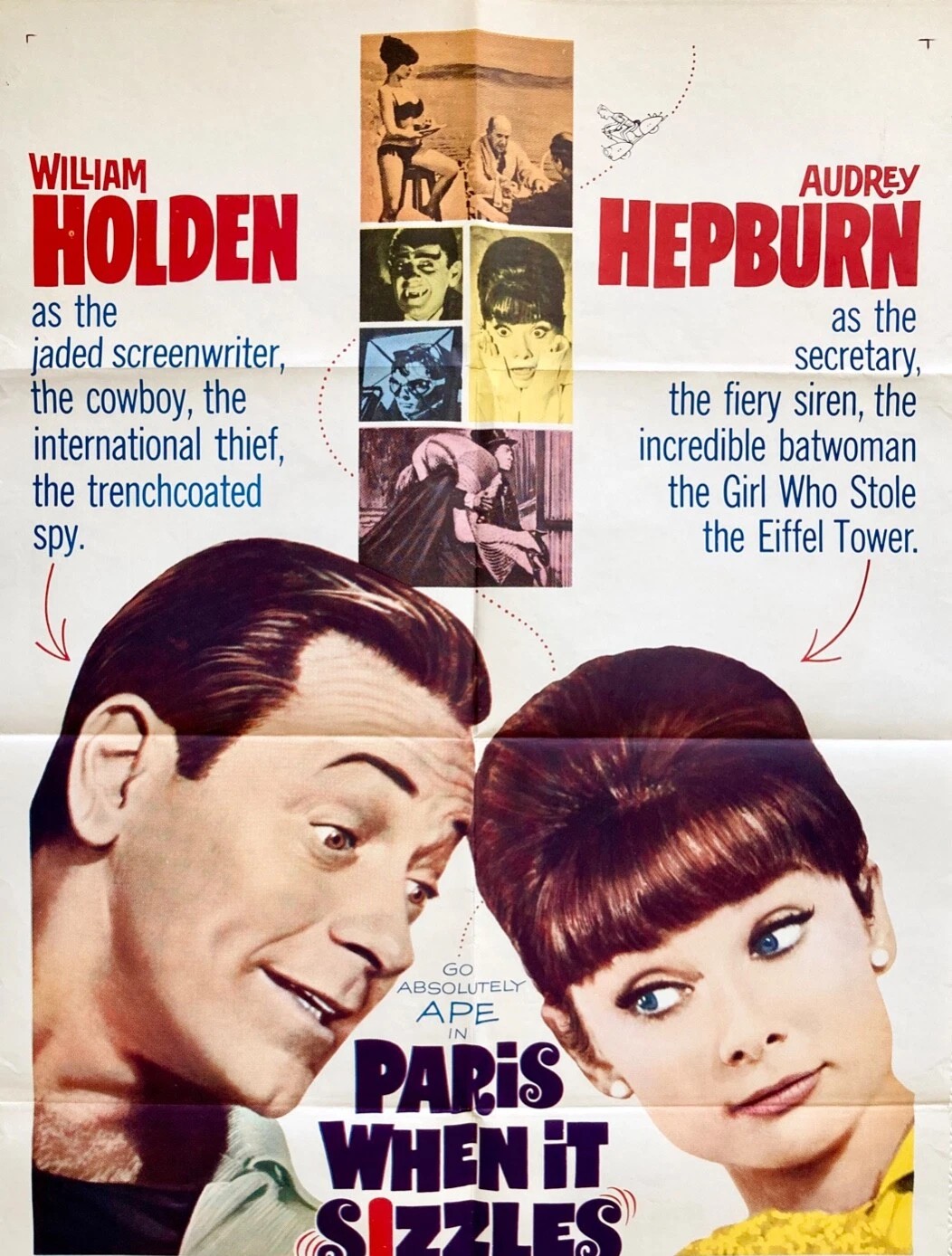
Screen charisma can only get you so far. The pairing of William Holden and Audrey Hepburn must have seemed certain to create a box office tsunami given they had worked together before on the hit Sabrina (1954) and were coming off hits, the former in The World of Suzie Wong (1960) and the latter having reinvented herself as a ditzy fashion icon in Breakfast at Tiffanys (1961). But clearly studio Paramount knew something about the outcome of this production that it was keeping to itself, otherwise how to explain that a movie completed in 1962 languished on the shelves for nearly 18 months.

By the time it appeared Hepburn was still a big box office noise after Hitchcockian thriller Charade (1963) but Holden’s flame was dying out following three successive flops, The Devil Never Sleeps, The Counterfeit Traitor and The Lion all released in 1962. Had the studio played an even longer waiting game and held off release until the end of 1964 when Hepburn was enjoying sensational success with My Fair Lady, audiences might have been more likely to be suckered in to this romantic comedy. Although whether they’d be any more appreciative is doubtful.
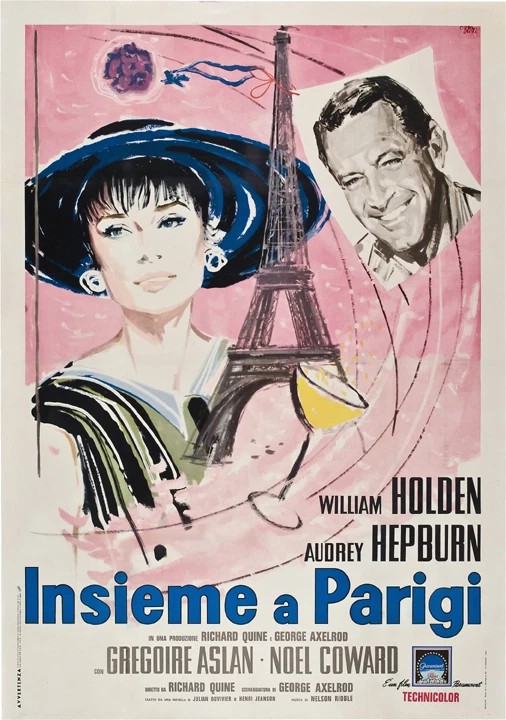
Problem is, the narrative hardly exists. And what remains is too clever by half. It might have appealed as an insight into how Hollywood works, but it lacks backbone and is more of a series of spoofs as we wait inevitably for the two stars to fall in love.

Alcoholic Richard Benson (William Holden) has writer’s block and having frittered away his time drinking, traveling and romancing, now has two days to deliver a screenplay for producer Meyerheim (Noel Coward) – who incidentally seems to spend his time in the sunshine drinking and surrounded by beautiful women. Benson hires typist Gabrielle (Audrey Hepburn) both to speed up the process and have someone to bounce ideas off.

Primarily a two-hander and virtually contained on a single set, his swanky apartment in Paris, it only ventures out to assist his imagination by playing out various concepts in which the pair act out various scenes in what turns into a relatively ham-fisted satire of the movie business. The only really interesting Hollywood expose is when Benson explains the tricks of the screenwriting trade, the various reversals (they were called “switches” in those days) and conflicts to keep the audience on their toes and prevent the potential lovers getting to the actual loving stage too quickly.
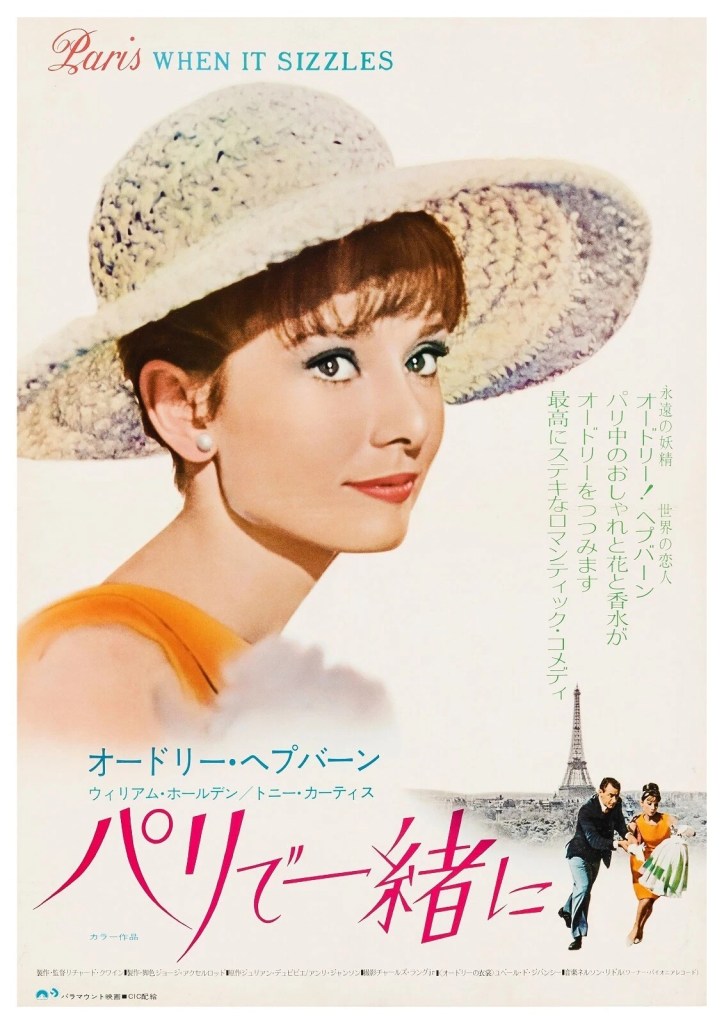
So we watch Gabrielle initially fending off his moves before becoming entranced and ridding herself of a carapace of dustiness before transforming into a flighty fun lass. But when the dialog often centers on arguments over the meanings of words there’s not a great deal for the audience to get its teeth into.

The concept, such as it is, allows Richard and Gabrielle to act out various scenarios, rattling through the genres – spies, musical, the jungle, horror, whodunit and western – while they manage to find a way to turn his title The Girl Who Stole the Eiffel Tower into a movie.

Even though the last thing this needs is further levity – any more froth and it would disintegrate – Tony Curtis (The Boston Strangler, 1968) has a recurrent role in a variety of cameos and you can spot an uncredited Marlene Dietrich (Judgement at Nuremberg, 1961) and Mel Ferrer (Brannigan, 1975). Perhaps the most unusual angle was that it was a remake of the French La Fete a Henriette (1952) directed by Julien Duvivier. Or that it was the first screen credit for Givenchy, who devised Hepburn’s clothes.

While both Holden and Hepburn are very easy on the eye, the actor often topless, and Hepburn  going through the fashions, it only works if you want to see screen chemistry at work and are not remotely interested in narrative or if you are so unaware – and of course genuinely interested – in the screenwriter’s craft that you are  find out how words on paper are translated into images on the screen. It might well be an audience’s first encounter with such gems as “Exterior:Day.”

Oddly, both Holden and Hepburn are good and it’s solidly directed by Richard Quine (The World of Suzie Wong) from a script by George Axelrod (Breakfast at Tiffany’s) adapting the previous film.

A harmless trifle, you might say, but just too bad that with the talents involved it doesn’t even rise to a soufflé.
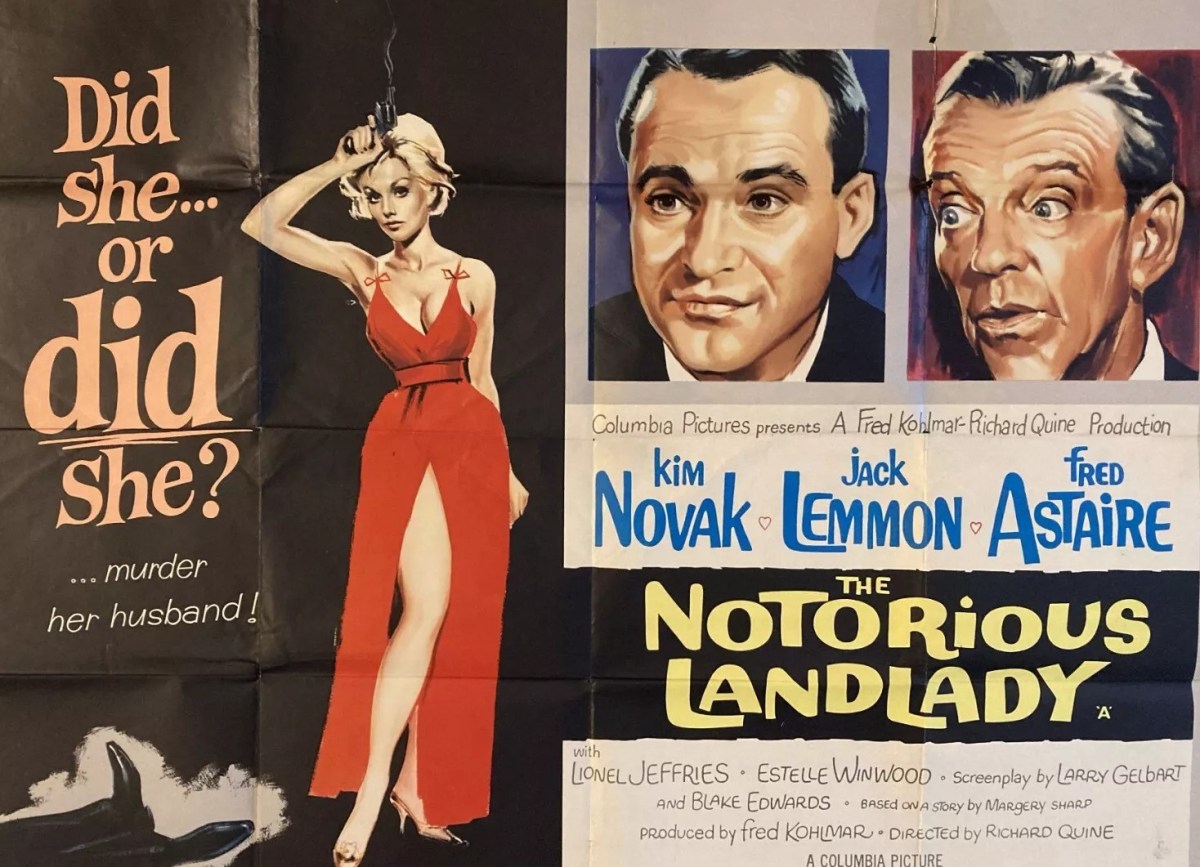
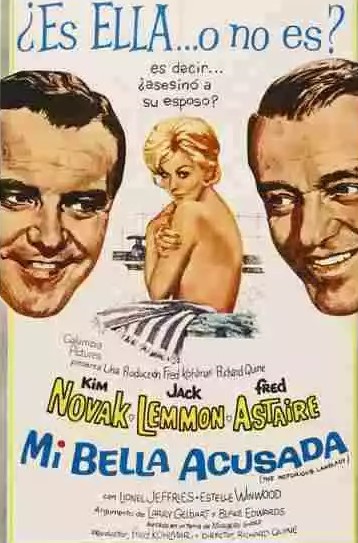
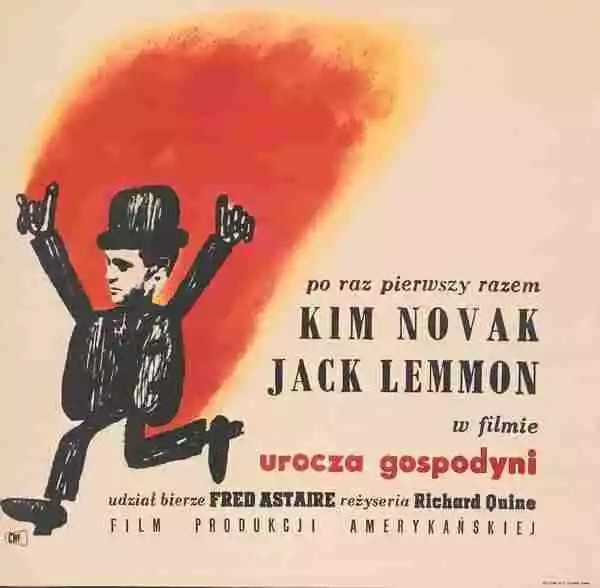
The Notorious Landlady (1962) **

Botched job. Not an all-out stinker. Something that should easily have worked – and didn’t. Thanks to the principals involved. Biggest finger of blame points at Jack Lemmon (How To Murder Your Wife, 1965), who jitters and jabbers, arms waving, eyeballs swivelling, classic example of over-mugging the pudding.

But Kim Novak (Strangers When We Meet, 1960) is as bad for the opposite reason. She’s completely insipid. Sure, she’s meant to be playing someone frightened out of her wits but she could as easily be worrying about how to lay the table for all the energy we get.

Director Richard Quine (Strangers When We Meet)  hardly gets off scot-free for allowing this to happen as well as quite bizarre shifts in tone from a fog-wreathed London straight out of Sherlock Holmes, to a denouement with Novak naked in the bath – Lemmon averts his eyes but the camera and hence the audience doesn’t – and a climax straight out of the Keystone Cops. I know Quine had a fling with Novak but it looks like he’s trying to share her physical charms with all and sundry, scarcely a scene goes by where’s she’s not in her underwear, night-time apparel, soaking wet one way or another or wearing revealing outfits. The “Notorious Cleavage” might have been a better title.

As I say, this should have worked. The story is straightforward enough, a mystery, red herrings aplenty, mysterious lurking figures, enough twists to give it edge.

Diplomat William Gridley (Jack Lemmon), newly arrived from the States, comes to view an apartment to rent in Mayfair only to find landlady Mrs Hardwicke (Kim Novak) most unwelcoming. Unfortunately for her, it’s love at first sight for him, so she can do no wrong. Which is unfortunate for him, for she is suspected of murdering her husband. That doesn’t sit well with Gridley’s boss Ambruster (Fred Astaire) who feels staff should be completely above board and not risk the good name of the U.S. by consorting with film noir style damsels.

Ambruster is already in cahoots with Inspector Oliphant (Lionel Jeffries) and it’s not long before Gridley is enrolled to act in an undercover capacity, sneaking into her bedroom, finding a gun in a drawer and overhearing suspicious phone calls all the while continuing to romance her. Meanwhile, he’s woken up in the middle of the night with her playing an organ. He’s such a clumsy clot he manages to set fire to a garage, which attracts front page headlines and puts his career in jeopardy.

Anyway, various red herrings later and Ambruster somewhat mollified after falling for Hardwicke’s charms himself, we discover that her husband isn’t missing after all, but when he turns up, she shoots him dead and so ends up in court charged with his murder. His death, while convenient, is treated as accidental.

But the fun’s only just beginning. What could have been a shade close to film noir or the kind of romantic thriller Hitchcock turned out in his sleep, now takes a quite bizarre turn. It transpires that her husband, a thief, has hidden stolen jewels in a candelabra which, because she’s short of cash, she has sold to a pawnshop. This emerges in the aforementioned bathtub contretemps. But Hardwicke is being blackmailed by the witness whose evidence cleared her. Said witness has made off with the jewels and now plans to kill off the real witness. So they all end up at a retirement village in, where else, Penzance. Gridley has to save the real witness from being run off the edge of a cliff in a wheelchair while Hardwicke and the fake witness would have had a real old catfight if either of them could have managed to land a punch, instead of hitting the ground or falling backwards into bushes, so the entire climax suddenly takes a distinct comedic turn.

There’s not even a decent performance from Fred Astaire (The Midas Run, 1969) or Lionel Jeffries (First Men in the Moon, 1964) to lift proceedings. In fact, the best performance comes from villain Miles Hardwicke (Maxwell Reed) who rejoices in lines like, “ I like you better when you’re frightened.”   

Written by Larry Gelbart (The Wrong Box, 1966) and Blake Edwards (The Great Race, 1965), which would make you think comedy, and that this was a spoof in the wrong directorial hands, except that Edwards was responsible for Experiment in Terror / Grip of Fear (1962) so knew how to extract thrills.

Coulda been, shoulda been – wasn’t.

Behind the Scenes: “The Chairman / The Most Dangerous Man in the World” (1969)

Had things run according to the original plan, we could have seen Frank Sinatra return to a Communist country for the first time since The Manchurian Candidate (1962). But if you had wanted to write a script about the guy who wrote The Chairman, you couldn’t have invented a more interesting character than Samuel Richard Solomonick. He was one of those guy who held every job under the sun before reinventing himself as an anticommunist going by the name of Jay Richard Kennedy and subsequently entering the fields of real estate, radio and brokerage, then landing a gig managing Harry Belafonte and writing the screenplay for I’ll Cry Tomorrow (1955).

By the time he ended up as an executive at Sinatra Enterprises he had a couple of ideas to sell. Forming Jade Productions in 1966 with director Richard Quine (How To Murder Your Wife, 1965), the pair hooked Sinatra’s interest in two projects, Follow the Runner (which would have co-starred Sammy Davis Jr) and The Chairman plus William Holden eyeing the lead in The Wordlings about the population explosion.

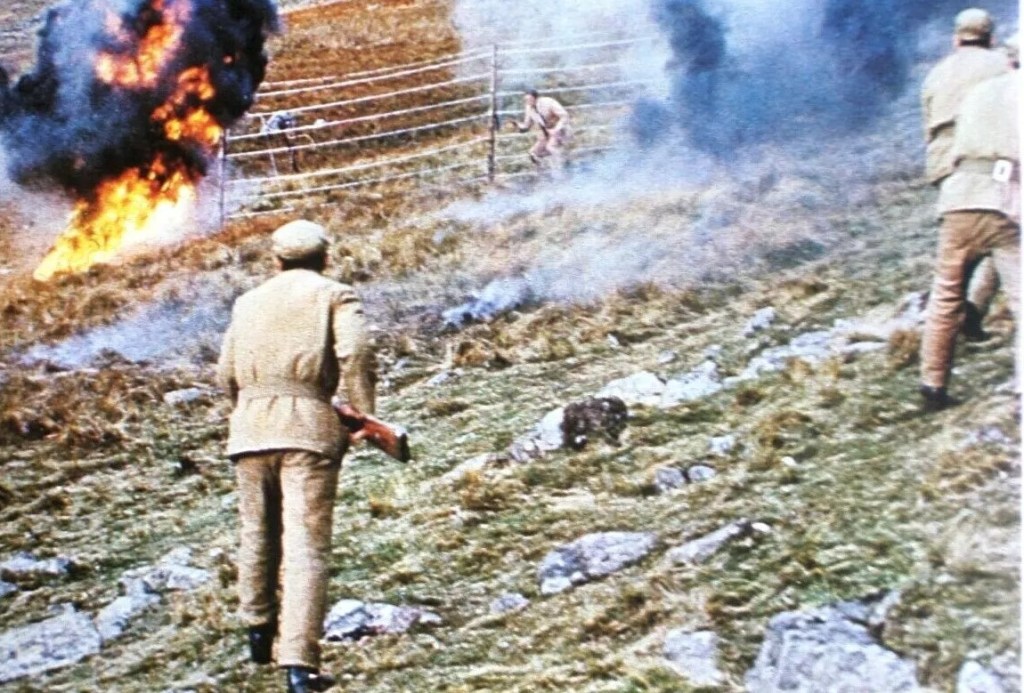
That’s Gregory Peck trapped on the wrong side of the Russian border with Chinese soldiers closing in.

Sinatra was known for falling out with directors, shunting Mark Robson off The Detective (1968), so whether Quine would have lasted the pace is anybody’s guess. After success with Tony Rome (1967), Twentieth Century Fox briefly toyed with the prospect of pairing Sinatra and new wife Mia Farrow in The Chairman. Originally scheduled to begin shooting on January 1967, that later shifted to early 1968. The notion that the movie also had parts for Spencer Tracy and Yul Brynner was one of those puff pieces that some journalists swallowed.

Despite some enticing projects – he was first name down to direct Catch 22, after Columbia had spent $150,000 buying the novel, and to helm the screen translation of Broadway hit The Owl and the Pussycat – Richard Quine’s career teetered after the flop of Hotel (1967). Making no headway with Sinatra he made instead another flop, Oh Dad Poor Dad (1967) and was effectively put on furlough for three years after failing to finance a movie to star Alex Guinness and Lee Radziwill.

Quine exited The Chairman in May 1967 when former PR bigwig Arthur P. Jacobs took over the production and with Sinatra in absentia turned to British director  J. Lee Thompson who had helmed the producer’s debut picture What a Way to Go (1964).  And that proved a lucky break for Thompson who had yet to match the success of The Guns of Navarone (1961).  

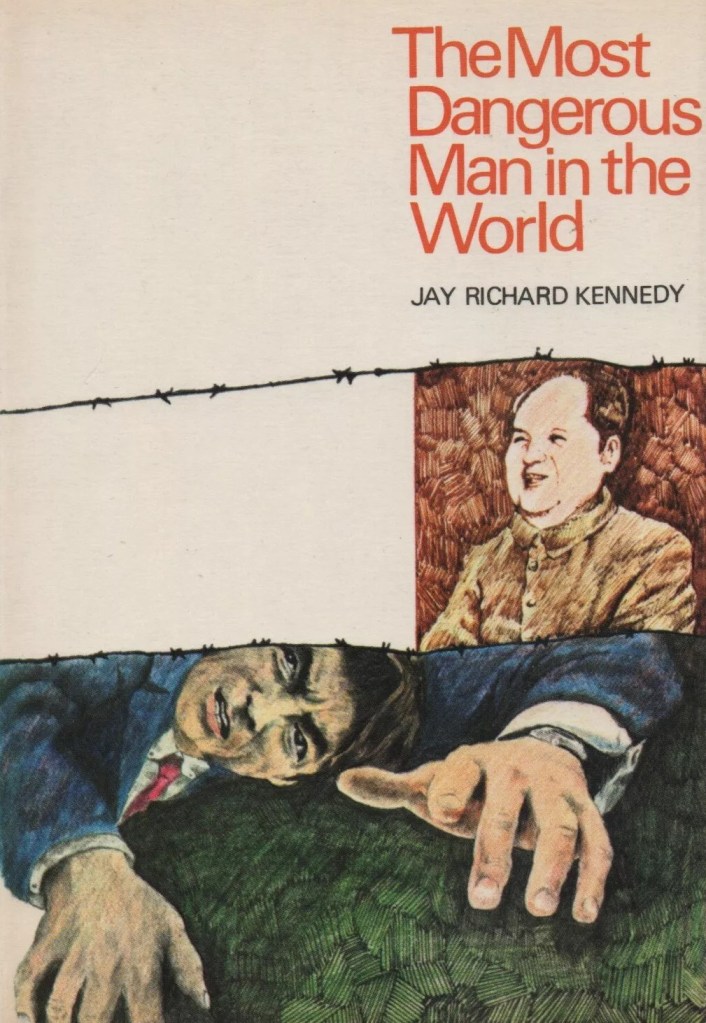
The book cover.

After successive flops – Return from the Ashes (1965) and Eye of the Devil (1966) – Thompson had plenty projects on the boil including a musical remake of Alexander Korda’s The Private Life of Henry VIII (1933) with a score by Richard Rodgers and Peter Ustinov playing the lead. Also on his slate was High Citadel based on the Desmond Bagley bestseller; The Harp That Once for Columbia; an adaptation of James Clavell bestseller Tai Pan; a sequel to The Guns of Navarone called After Navarone that would reunite the director with star Gregory Peck and writer-producer Carl Foreman; and Planet of the Apes (1968) to which he and Jacobs held the rights.

While none of these projects – except Planet of the Apes and minus Thompson – came to fruition, the Navarone connection would lead to Mackenna’s Gold for Foreman. In the meantime he had helmed a modest drama, Before Winter Comes (1968) starring Broadway star Topol. When Arthur P. Jacobs greenlit The Chairman, he hired Thompson who looked no further than Peck, connection re-established via the Navarone sequel.  They were a four-time pairing – Cape Fear (1962) and Mackenna’s Gold and The Guns of Navarone. Peck was a controversial choice from the Twentieth Century Fox perpsective given he had broken a contract with the studio in 1960 to star in Let’s Make Love. But Jacobs smoothed ruffled studio feathers and paid his star $500,000 plus a percentage. With Jacobs on hands-on duty with Planet of the Apes (1968) –  Mort Abrahams oversaw the production of The Chairman  and immediately engaged in a budget dispute with the director. Jacobs had initially stipulated $4 million, Thompson believed he required another million. They didn’t quite split the difference, Fox had the film come in at $4.9 million.

Thompson recognized the problems of the script, pointing out that “the hardest thing for Americans about the film’s concept is accepting that China has some competent scientists.” Rather ingenuously, he averred that the movie would have “no political overtones,” while Abrahams retorted that it might have “some political overtones.” It would been obvious to anyone that a picture featuring Mao was bound to have political repercussions, his Little Red Book a massive bestseller on the campus, an album cut of recitations from the book and Edward Albee in 1968 premiering a play called Quotations from Chairman Mao Tse-Tung.

Denied access to China, the production team spent four months “reading everything we could get our hands on.” At one point they considered dropping the scene featuring Chairman Mao and lengthening the sequence relating to Peck’s arrival in Hong Kong. In any case, different versions of the Hong Kong environs were shot, some with nude shots of girls in a house of pleasure.

The British Colonial Office in Hong Kong blocked filming there after fears of riots due to the production daring to portray Mao Tse-Tung on screen. Taiwan substituted for China although the locals there were also incensed, so much so they burned an effigy of Peck. Wales, funnily enough, was another location as was London University. Filming began on August 28 and finished on December 3.

Although it might appear that Ben Maddow (The Way West, 1967) wrote his script based on Jay Richard Kennedy’s novel, in fact the novel appeared after the screenplay with Kennedy writing the novelizaton, and it’s more likely that what Maddow adapted was the original Kennedy screenplay. Interestingly enough, around this time Maddow had first crack at the Edward Naughton western novel that became McCabe and Mrs Miller (1971).

It wasn’t the first time Variety got a prediction wrong: “powerful box office attaction” fell far short of the actual results. This proved an annus miserabilis for Gregory Peck. In fact, he had four films, not three, released in 1969. By release date The Stalking Moon technically belonged to the previous year, but it only played a handful of cinemas in 1968, its general release taking place in 1969.

Despite pocketing a total of over $2 million, Peck’s marquee value was in clear decline. Of the Peck quartet, Marooned did best, placing 33rd on the annual box office chart, with $4.1 million. Mackenna’s Gold (31st) took $3.1 million in rentals (the amount returned from the gross once a cinema has taken its cut), The Stalking Moon (38th) on $2.6 million, and The Chairman (41st) with $2.5 million.

SOURCES: Gary Fishgall, Gregory Peck (Scribners, 2002) p267; James Caplan, Sinatra: The Chairman, (Doubleday, 2015), p724;  “7 from 7 Arts,” Variety, March 3, 1965, p4; “Richard Quine,” Variety, July 7, 1965, p20; “Return of Advances,” Variety, October 6, 1965, p7; “Form Jade Prods,” Variety, December 15, 1965, p4; “J Lee Thompson Nearly Finished on 13,” Variety, February 2, 1966, p28; “Catch As Catch 22 Can,” Variety, February 23, 1966, p4; “Rodgers and Hammerstein’s Musical Henry VIII,” Variety, Mar 16, 1966, p1; “Inside Stuff – Pictures,” Variety, March 30, 1966, p22; “Lee Thompson Busily Blueprints His Musical Version of Henry VIII,” Variety, April 27, 1966, p17; “Jay Kennedy Script,” Variety, July 6, 1966, p5; “After Navarone,” Variety, April 19, 1967, p14; “Scripting Red Chinese,” Variety, May 21, 1967, p4; “”Personality Chemistry,” Variety, May 24, 1967, p4; New York Soundtrack,” Variety, Sep 20, 1967, p27; “Pat Hall Noel to Col,” Variety, December 27, 1967, p5; “N.Y. Indie Label Grooves Chairman Mao’s Thoughts,” Variety, April 10, 1968, p56; “Man About Town,” Variety, July 17, 1968, p68; “Jas Clavell to Roll Siege,” Variety, August 21, 1968, p7; “Thompson Wraps Up,” Variety, August 28, 1968, p29; “New York Soundtrack,” Variety, October 23, 1968, p18; “British Bar Fox’s Chairman,” Variety, December 4, 1968, p17; Big Rental Films of 1969,” Variety, January 7, 1970, p15; “Big Rental Films of 1970,” Variety, January 6, 1971, p11.

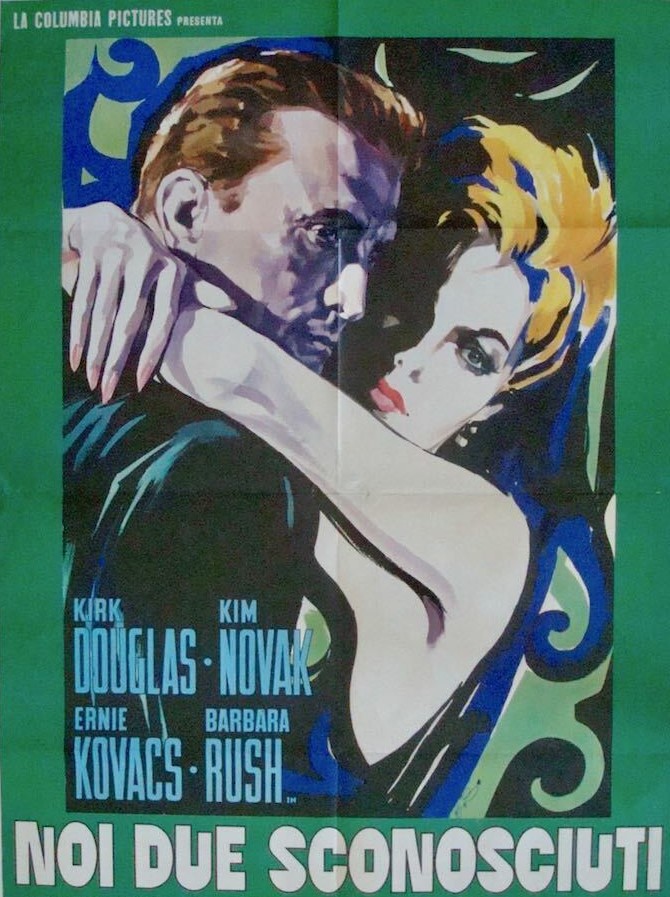
Strangers When We Meet (1960) ****

Something of a gamble for Kirk Douglas. Unlike son Michael – sexually voracious on screen (and in real life, apparently) in hits like Fatal Attraction (1987) and Basic Instinct (1992) – Douglas Snr had spent the Fifties primarily as an action star. Should romance feature, it was generally incidental. In several of his most successful movies – 20,000 Leagues under the Sea (1954) and Paths of Glory (1957), there’s either nary a female in sight or, Lust for Life (1956),  he’s useless with the opposite sex.   

In pictures where passion was core, The Bad and the Beautiful (1952) and The Secret Affair (1957), he was the leading man – to Lana Turner in the former and Susan Hayward in the latter – as opposed to the top-billed star. So he had a good deal of catching up to do. It’s generally forgotten, also, that Burt Lancaster took top billing in Gunfight at the OK Corral (1957) and The Devil’s Disciple (1959) and that Douglas had received top billing more recently usually when his company was helping foot the bill, as in Paths of Glory and The Vikings (1958).

Kim Novak, on the other hand, was the sex symbol du jour, second only to Marilyn Monroe in the provocative stakes, molten on screen, leading astray the likes of William Holden (Picnic, 1954), Frank Sinatra (Pal Joey,1957) and James Stewart (Vertigo, 1958).  

That Douglas and Novak strike sparks off each other in this classy well-written tale of illicit love is largely because as much as Douglas emotes passion Novak plays down her inherent sexiness. But it’s unusual for a number of reasons. Female equality, for one, creativity, artistic fulfilment, for another.   

Architect Larry (Kirk Douglas) feels trapped in building routine houses until he persuades unhappy novelist Roger (Ernie Kovacs), imprisoned in the restricted world of bestsellers and lacking critical approval, to invest in an avant-garde house. You couldn’t say Larry is in an unhappy marriage but hard-headed wife Eve (Barbara Rush) tends to trample on his dreams in her pursuit of money. Eve believes their marriage is a partnership in every sense, demanding an equality unusual for the era, a situation hammered home by Roger’s misogynistic treatment of his girlfriend.

Maggie’s (Kim Novak) marriage is arid, husband Ken (John Bryant) lacking passion. Although beautiful, Maggie is insecure and shy. Cold, too, according to her mother Mrs Wagner (Virginia Bruce),  who has been condemned for having an affair. But there’s an early hint that Maggie has taken a similar route, being pestered on the phone.

Larry does all the running after catching Eve’s eye on the school run. Larry, who works from home, can use the excuse of meeting potential clients to slip out at night. Ken is so uninvolved in his wife’s life he doesn’t care if she pops out of an evening, disinterested when she dons revealing nightwear, unable to countenance that she might be meeting another man. Both Larry and Maggie are liberated by their affair, especially as she gives more credence to his artistic abilities than his wife.

We’re pretty much in Douglas Sirk territory, the wealthy suburbs and a simplified color palette with every housewife capable of turning into a hostess at the drop of an invitation to cocktails. You can imagine how this is going to end, but it doesn’t go that route, not even when the affair is rumbled by unlikely lothario Felix (Walter Matthau). There’s Larry’s ambition to take into account, and whether the prospect of building an entire town can match up to the excitement of an affair.

Director Richard Quine (who was Novak’s lover at the time) was on a roll – Bell, Book and Candle (1958), also with Novak, It Happened to Jane (1959) starring Doris Day and The World of Suzie Wong (1960) on the horizon. His direction is mostly spot-on, especially in keeping Novak’s overt sexiness under wraps, and a couple of times scenes really spark.

Felix’s failed seduction of Eve – male arrogance leading him to believe she will enter into adultery to square things up – ends in a stunning composition, the man standing dominant over the female as if rape is the next thing. The crisis scene between husband and wife is played by Eve walking away from the camera.

Solid melodrama with excellent performances all round. Judging from the box office, audiences agreed that Douglas and Novak clicked. Evan Hunter (The Birds, 1963) wrote the screenplay based on his bestseller.

Worth a look for the complexity brought to a standard tale.

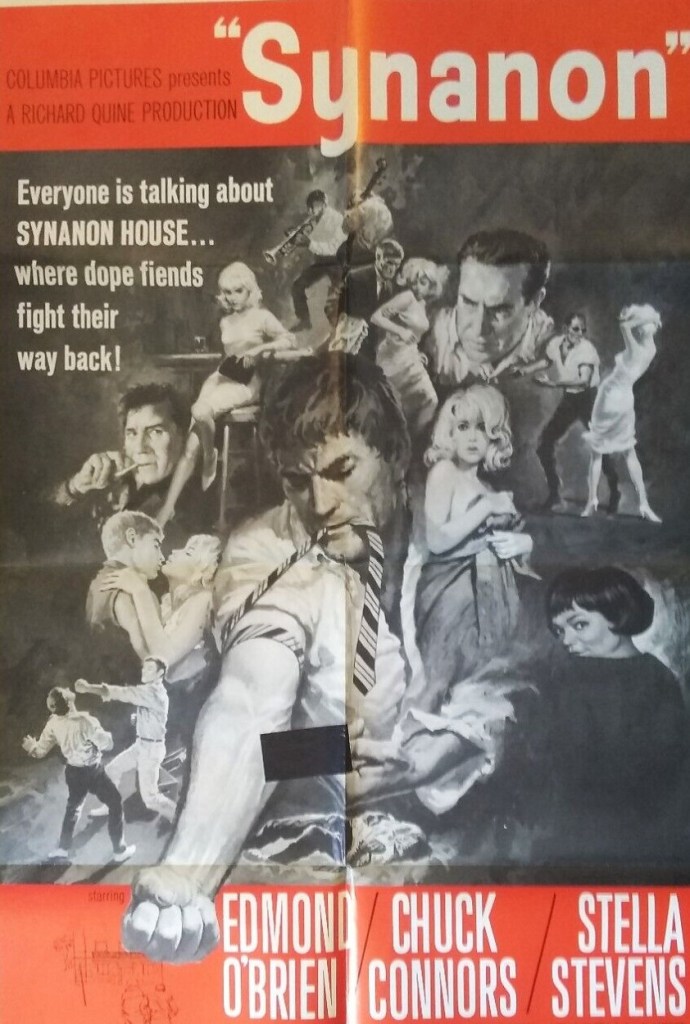
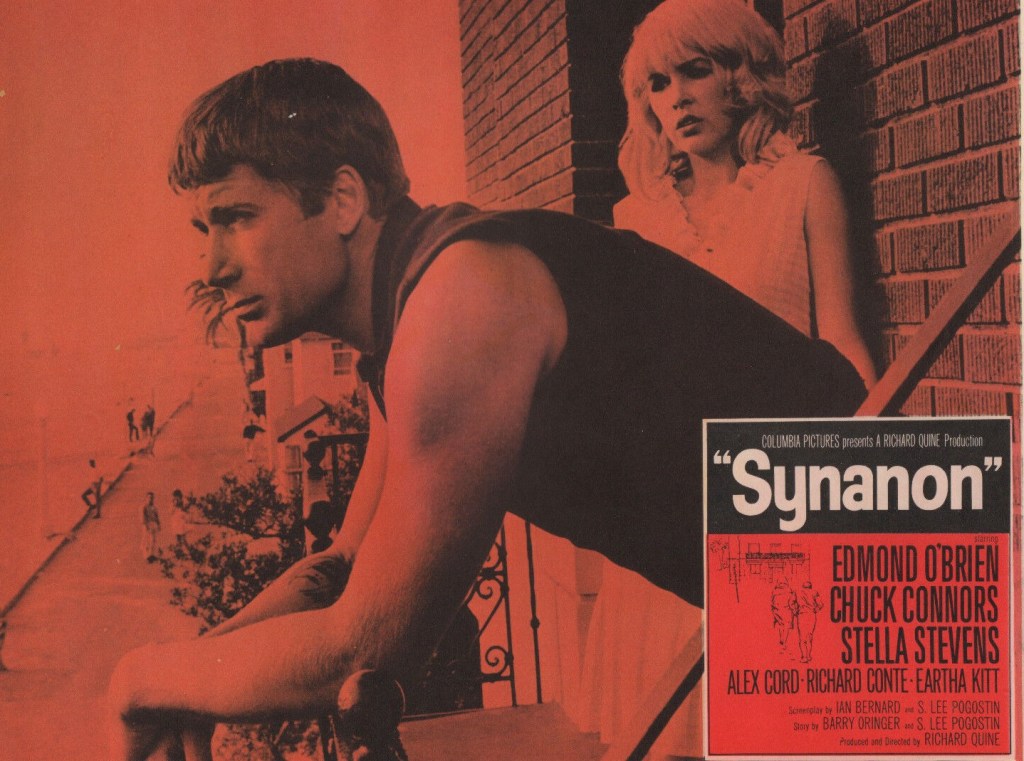
Synanon (1965) ***

Pre-dating Hollywood’s love affair with drugs, before sub-culture transformed into counter culture, before smoking a joint marked a generational divide, before marijuana symbolized freedom and was, well, the epitome of cool, before all that heroin was still seen as a scourge.

Addiction had rarely been viewed as persuasive audience fodder with the odd exception of The Man with the Golden Arm (1953) or the less-starry Monkey on My Back (1957). And this was also before Synanon became a byword for cult excess and was eventually closed down for committing the cardinal sin of employing tax exemption to get stinking rich.

At the time it was a byword for something else – rehabilitation. Its methods might have been controversial given leader Chuck (Edmond O’Brien) had no psychiatric training and was simply an ex-addict looking to find a way back. The main weapon in the community’s arsenal was confrontation. What became known as attack therapy. Rather than being permitted to stew in self-pity, inmates, all voluntary, had their weaknesses spelled out by others until they were ready to acknowledge them for themselves. The key to recovery was talking. Anyone not talking was hiding from their problems. (I’m not so well up on addiction therapy to know whether Synanon invented that kind of counselling of talking out problems in groups that then became the norm.)  If patients took to the scheme they were soon addicted to smoking and coffee; sex being considered too dangerous to contemplate.

Anyways, heroin addict Zankie (Alex Cord) is a newcomer helped along an entrant’s path by Joaney (Stella Stevens), a single mum so out of kilter with responsibility she kidnaps her son, and confronted by hardass Ben (Chuck Connors), so consumed with guilt over the death of his dope-fiend wife that he spurns all women. There’s a sub-plot of sorts. Chuck is being charged with various minor violations, including permitting convicted criminals out on parole to enter the establishment. But Chuck’s main job is to be sarcastic, challenging anyone’s notions that they could be cured, but occasionally analytically correct. “You put yourself in a position where you could lose control,” he tells Ben.

It’s a hothouse of emotions for sure. Zankie and Ben come to blows over Joaney. Zankie sees little wrong in knocking back some cough medicine. Eventually, Zankie skips out, pursued by Joaney, who goes back to turning tricks to fund her habit. There’s a surprising scene – for the time (likely excised from the British version and possibly the original) – of Chuck going through the whole candle, spoon, injection routine.

Set up as a sanitised public relations package promoting Synanon ideals with overmuch detail on the establishment’s background and conflict with authority, nonetheless it touches far better than most addiction movies on the lack of self-awareness that afflicts users, their creation of fantasy worlds where whatever they do is deemed right. The tension that comes from an entire house of jumpy characters, their dependence on a higher power (Chuck in this case) is well-drawn. Even the incessant smoking and the constant reliance on coffee suggests those with an addictive personality are only too likely to switch to something else.

You might question the casting. Alex Cord (Stagecoach, 1966), Stella Stevens (Rage, 1966) and Chuck Connors (Move Over Darling, 1963) are far too well-groomed to pass for skanky addicts even if on the road to recovery. And Edmond O’Brien (The Man Who Shot Liberty Valance, 1962) and his sidekick (Richard Conte, Lady in Cement, 1968)) come across like tougher versions of the tough priests tackling delinquency that used to be played by the likes of Spencer Tracy.

But Cord and Stevens do suggest the vulnerability of the delusional addict, Stevens little-girl-lost persona at odds with her glamor, actions devoid of the concept of consequence. Although boasting a six-pack, Cord’s portrayal of a man destroyed by weakness did not suggest he would segue from this screen debut into tough-guy leading roles. Better actors might have suggested a greater degree of internal conflict but externally, in the looks department, might have looked like this was always going to be their destination. So the casting works both ways, more surface, less depth, but a warning that even the prom king and queen are not immune from addiction.

Soberly directed by Richard Quine (How To Murder Your Wife, 1965) from a screenplay by Ian Bernard, in his debut, but feels it owes too much from input by the original Chuck Dederich.

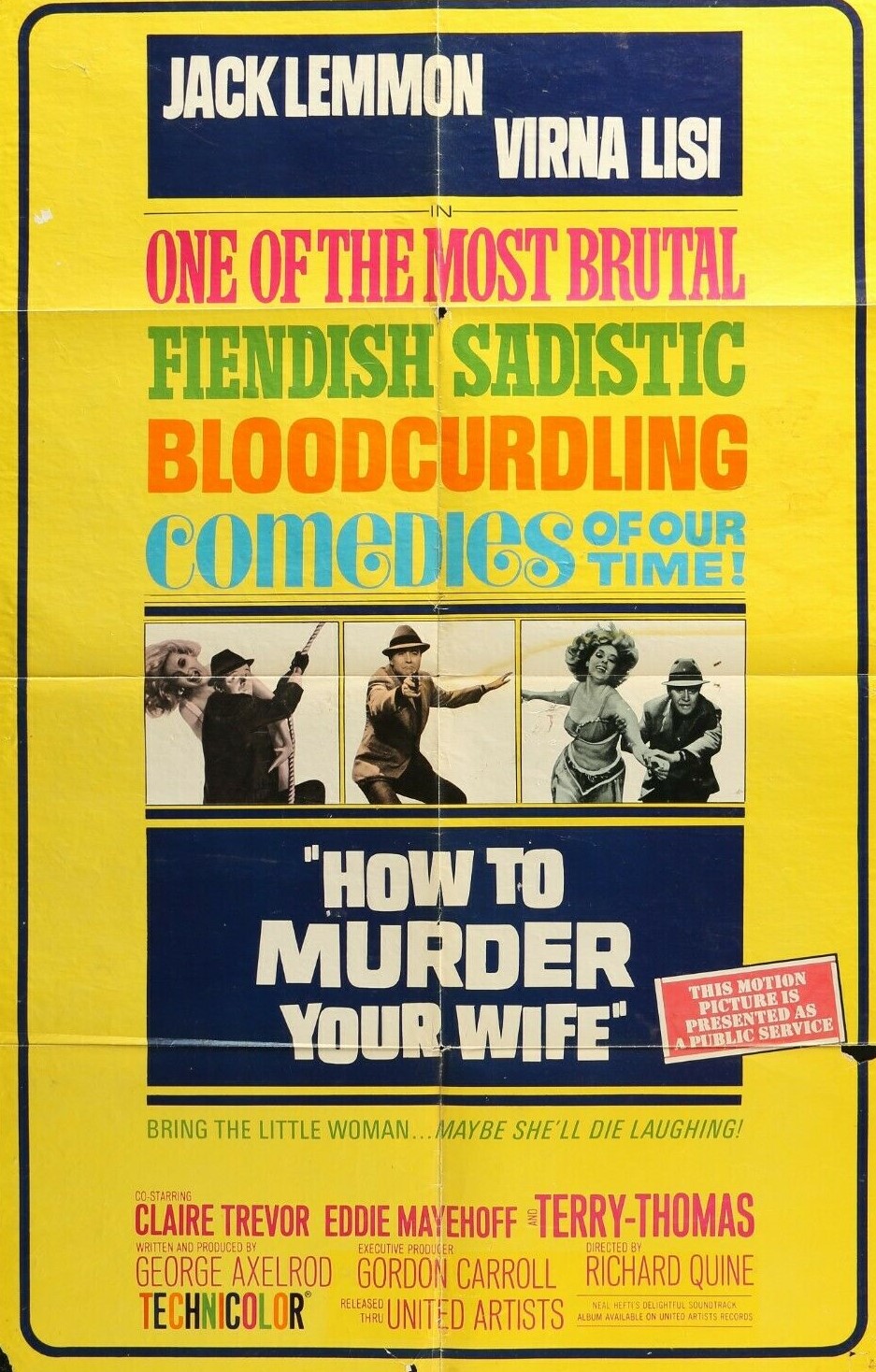
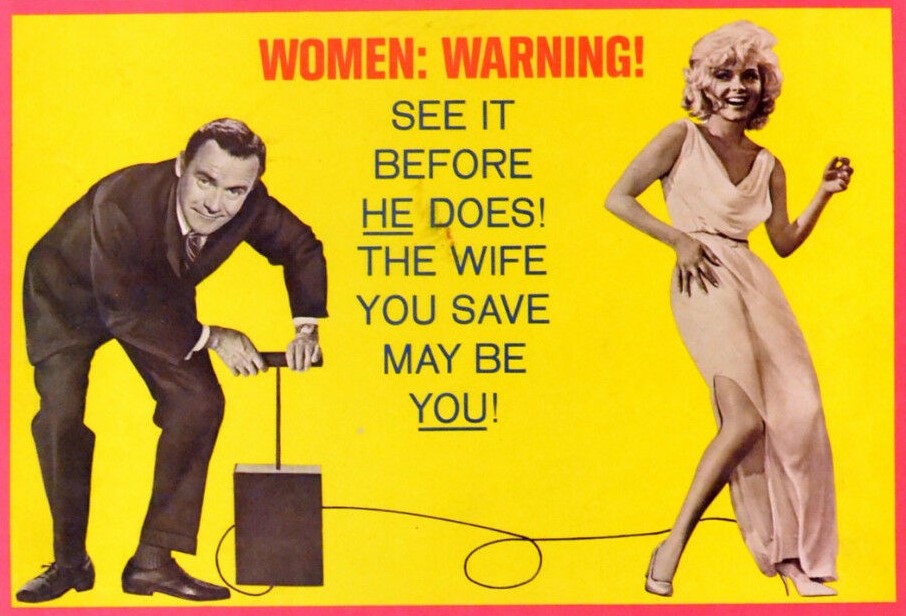
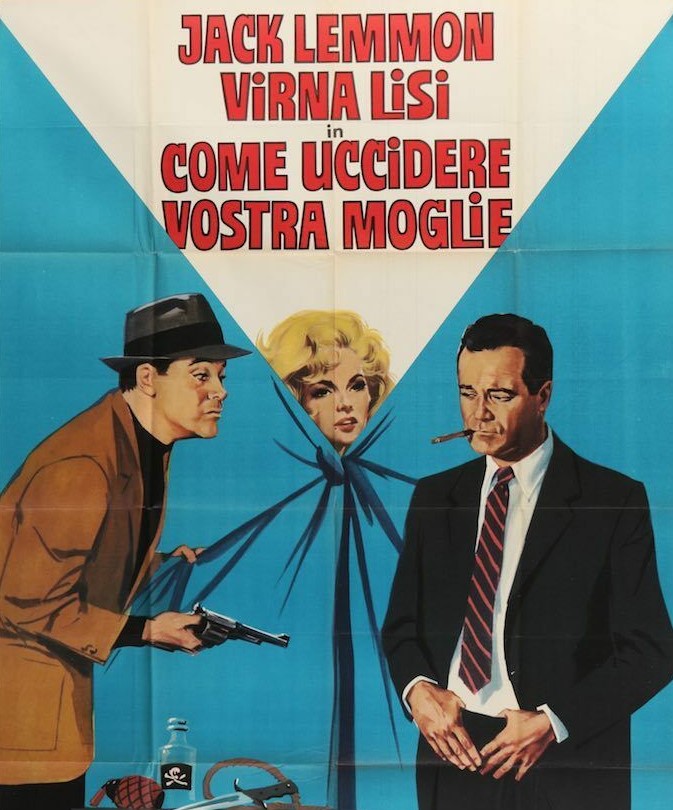
How To Murder Your Wife (1965) ***

Men had a hell of a time in the 1960s to judge from this riff on marital strife that starts off like Walter Mitty meets The Odd Couple. It’s one of those daft comedies that only work on their own terms – and for the most part this works very well.

Dedicated bachelor Stanley Ford (Jack Lemmon), enjoying a host of one-night stands, ensconced in almost a bromance with butler and kindred spirit, the very English Charles (Terry-Thomas), makes the mistake of getting hammered at a drunken party and ends up married to a beauty queen (Virna Lisi). Although she is gorgeous and very loving – most scenes end on a fade as she devours him in kisses – and a good cook (though a bit lax by the high housekeeping standards of Charles), Stanley resents being burdened with a wife, especially when it costs him the services of his butler. 

The biggest casualty is his self-image. He has fashioned his persona after his Bash Brannigan comic strip, syndicated to hundreds of newspapers, that permitted him the fantasy of being secret agent/adventurer/detective, fighting off bad guys and rescuing damsels in distress. Marriage inflicts a devastating change in his mental state, and he transforms from hero into hen-pecked booby.

In a bid to restore his self-esteem, and provide a fictional glimpse of freedom, he plans to murder his wife, if only in the comic strip. It has been Stanley’s working practice to act out and have photographed all the elements of his stories so Charles records the whole episode, from getting advice on how to drug Mrs Ford to (using a dummy) incarcerating her in cement. Unfortunately, Mrs Ford, outraged on discovering the illustrations for this particular comic strip episode, vanishes, leaving no explanation for her disappearance, except that various people witnessed him carrying out the supposed murder. He is arrested and put on trial.

You couldn’t make this up, but strangely enough, it is all very believable. The opening section where Stanley enacts the part of his action man Bash Brannigan in “The Case of the Faberge Navel” is just a delight. When the future Mrs Ford comes to explain exactly why she came to be jumping out of a birthday cake in a bikini, it is as daft as everything else.

However, the picture’s overall theme, the war between men and women, where men feel controlled, is somewhat dated. You might expect such a war to go nuclear when Mrs Ford dares to infringe on the sanctuary of a men-only enclave. The trial scene is particularly laborious in trying to determine that men are victims of controlling women. Despite that, there are some very funny lines that hit the nail on the head – men “are always guilty about something” declares Mrs Ford’s confidante Edna (Claire Trevor) whose strategy is always to keep men off-balance.

Jack Lemmon (The Apartment, 1960) has ploughed this path before, conspirator to the illicit,  although generally to be found in the loser camp rather than, as, effectively here, despite his complaints to the contrary, in the winner’s circle with an enviable lifestyle and willing girlfriends to hand. There’s a gleefulness in his performance, the little boy getting away with everything, that turns into a small boy’s sullenness when it is all apparently taken away.

Italian star Virna Lisi (Assault on a Queen, 1966), in her Hollywood debut, is a delight.  Her frothy sexuality goes down a treat but she is far from a dumb blonde, learning English from television, excellent cook, and wise enough not to go down Edna’s route of dealing with men. Terry-Thomas (Bang! Bang! You’re Dead!, 1966) delivers just as interesting a confection, a touch of ruthlessness to the stiff upper lip, high chieftain of the Male Protection League, reveling in the prospect of ridding the world of insidious influences like Mrs Ford. And there’s a welcome role for Claire Trevor (Stagecoach, 1966), especially when, in a party scene, she really lets go.

The other males, ranging from dumb and dumber to dumbest,  totally lacking in Jack Lemmon’s charm, perfectly illustrate the need for a woman’s firm hand, among them Eddie Mayehoff (Luv, 1967), Sidney Blackmer (A Covenant with Death, 1967) and Harold Wendell (My Blood Runs Cold, 1965).

Richard Quine (The World of Suzie Wong, 1960) directed from an original screenplay by George Axelrod (The Secret Life of an American Wife, 1968).

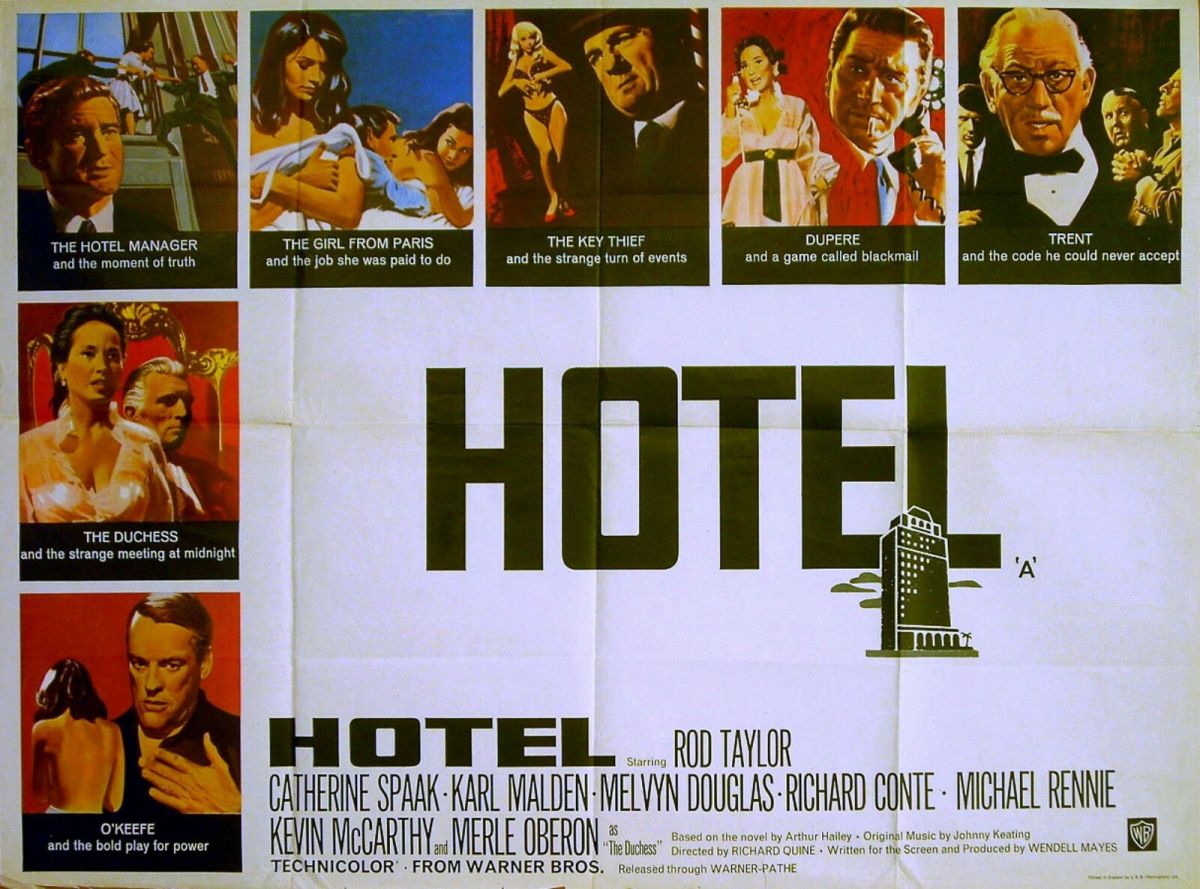
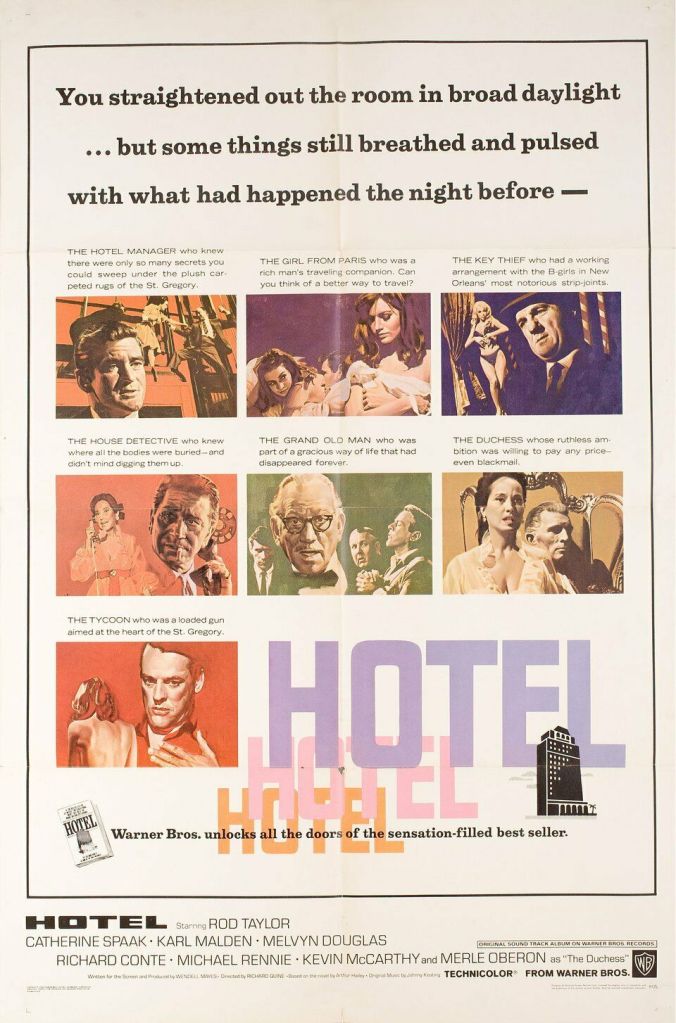
Hotel (1967) ***

The cardinal rule of the grand hotel picture was that it featured major stars. That is not so much the case here although the portmanteau of stories is up to scratch. Traditional hotel manager Peter McDermott (Rod Taylor) and boss Warren Trent (Melvyn Douglas) battle ruthless financiers, aristocrats Geoffrey (Michael Rennie) and Caroline (Merle Oberon) are involved in a fatal car accident, hypocritical God-fearing businessman Curtis O’Keefe (Kevin McCarthy) has a mistress Jeanne Rochefot (Catherine Spaak) on the side. Added into the mix are hotel thief Keycase Milne (Karl Malden) and hotel detective Dupere (Richard Conte). Not forgetting a dodgy elevator (you know where that’s headed!).

None of the stars mentioned comes up to the marquee standard set by the original in the subgenre – Grand Hotel (1932) boasted Jean Harlow, Greta Garbo, Joan Crawford and Wallace Beery – while an offshoot of the same idea The VIPs (1963) had Elizabeth Taylor, Richard Burton Orson Welles and the later Airport (1970) would rustle up top attractions Burt Lancaster, Dean Martin and Jean Seberg.

Top British film critic Alexander Walker espoused the movie.

It’s a fair bet that Warner Brothers felt audiences would be satisfied that the storylines were augmented by the behind-the-scenes insider information promised by the Arthur Hailey bestseller on which the film was based, such as how B-girls stole hotel keys, the tricks employed by a hotel thief and the various corrupt opportunities open to hotel staff. But it’s a major miscalculation to assume an audience cares that much who owns a particular hotel. And in the year in which In the Heat of the Night and Guess Who’s Coming to Dinner dealt with racism head-on, it was odd to see desegregation parlayed as a device to lower the asking price for the business or introduced out of economic necessity rather than high-minded principle.

Such gripes aside, this is movie comfort food, a picture that moves at a leisurely pace among its interwoven tales. Kevin McCarthy’s ruthless arrogant businessman steals the show, closely followed by Merle Oberon’s scheming duchess. To use a soccer analogy Rod Taylor is more like an old-fashioned center half rather than a midfield maestro, holding the picture together rather than setting it alight and his romance with McCarthy’s mistress (half his age) is an unlikely diversion, although the soft-spoken French actress, confronted by conscience, is particularly good. Melvyn Douglas as the aging owner mixes curmudgeon with affection and it’s hard not to feel sorry for Conte, outwitted by an older woman, and especially for Malden as the thief finding out how much the credit card has cut into the larceny business.

This was the last big-budget production for director Richard Quine whose career had been on the slide since box office highs The World of Suzie Wong (1960) and Sex and the Single Girl (1964). But he may have been somewhat restrained by having screenwriter Wendell Mayes (Von Ryan’s Express, 1965) as his producer. While well-crafted affair and glossy it lacks the inherent tension of an Airport.

Discover WordPress

A daily selection of the best content published on WordPress, collected for you by humans who love to read.

The Atavist Magazine

by Brian Hannan

WordPress.com News

The latest news on WordPress.com and the WordPress community.