Night of the Following Day (1969) ***

As his popularity in the 1960s faded, Marlon Brando was often called upon to save, or greenlight, a picture unworthy of his talent. Except that director Hubert Cornfield failed to extract enough tension from a kidnap thriller with an inbuilt deadline and a double-crossing sub-plot this might have been one to rise out of the mediocrity.

It’s not unknown for strangers working together on a robbery to adopt pseudonyms, colors in the case of Reservoir Dogs (1992) or cities as in Spanish television hit The Money Heist. Here they are known by their designated tasks, which seemed a nod towards artistic pretension at the time. Even so, the gang have too many frailties for taking on a caper like this, the pressure of a deadline and the publicity their crime attracts exacerbating the situation. So kidnapping a millionaire’s daughter (Pamela Franklin) are: Chauffeur (Marlon Brando), in on the job because he owes a favour to Friendly (Jess Hahn), whose sister Blonde (Rita Moreno) is also the chauffeur’s drug-addict girlfriend, the psychopathic Leer (Richard Boone) and a pilot (Al Lettieri).

All except the pilot are holed up in a remote beach house in France. The first signs of cracks show when Blonde is so drugged up she fails to collect her colleagues from a small local airport and, when suspecting the chauffeur of having sex with the girl, she explodes in a tantrum. And because she can’t get her story straight she attracts the attention of a local cop (Gerard Buhr). Despite making a good job of calming down the terrified girl, Leer has other plans for her which the Chauffeur is constantly trying to thwart. At various points various people try to quit. At various points romantic and family ties are pulled tight.

The details of the cash hand-over are well done as is the unexpected double-cross and the diversion allowing them to escape but about ten minutes of the running time is people driving around in cars, only at the later stages to any useful dramatic purpose, time that would been better spent filling us in on the characters. Most of the tension derives from a gang with two loose cannons and certainly the wait for the confrontation between Chauffeur and Leer is worthwhile.

The biggest plus point is Marlon Brando (The Chase, 1966) and even – perhaps because of – sporting a blonde wig and black tee-shirt remains a compelling screen presence. He might have been slumming it but he is certainly believable as the minor criminal way out of his depth. It’s a mistake to think of him as intended to exude menace along the line of Quint in The Nightcomers (1971) because this is actually a complicated role. On the one hand he clearly never wanted to be involved, participation triggered by a sense of honor, trying to keep his girlfriend and the kidnappee safe while at the same time happy to resort to considerable violence to achieve his ends.

The malevolent Boone (The Arrangement, 1969) almost steals the show, beginning as the voice of reason and gradually succumbing to his inner vices. The love interest benefits from Brando and Moreno (West Side Story, 1961), also in blonde wig, being ex-lovers in real life and it takes little to ignite the anger in Moreno. But her portrayal of the addict who cannot stay off her chosen poison long enough to carry out a simple task is excellent. Pamela Franklin (The Prime of Miss Jean Brodie, 1968) has little to do except look scared and she has one revealing scene when in attempting to seduce the Chauffeur sets up the prospect of a different kind of liaison with Leer.

Hubert Cornfield had not directed a picture since Pressure Point (1962) which acted as a decent calling-card and showed how good he was at creating tension between opposing individuals. Instead of focusing here on the characters, Cornfield seems more interested in the visuals, none of which as it turns out are particular arresting and in one instance virtually impossible to see what is going on.

Not so much a curiosity as a masterclass in how to blow a once-in-a-lifetime gig with Marlon Brando and what not to do with a thriller.
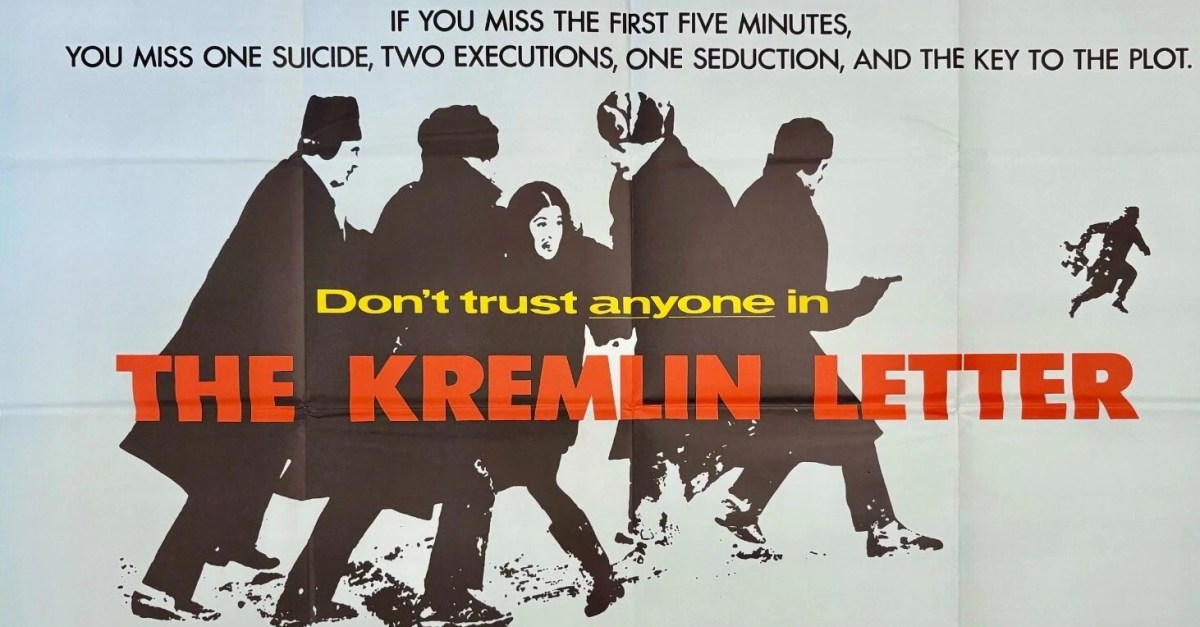
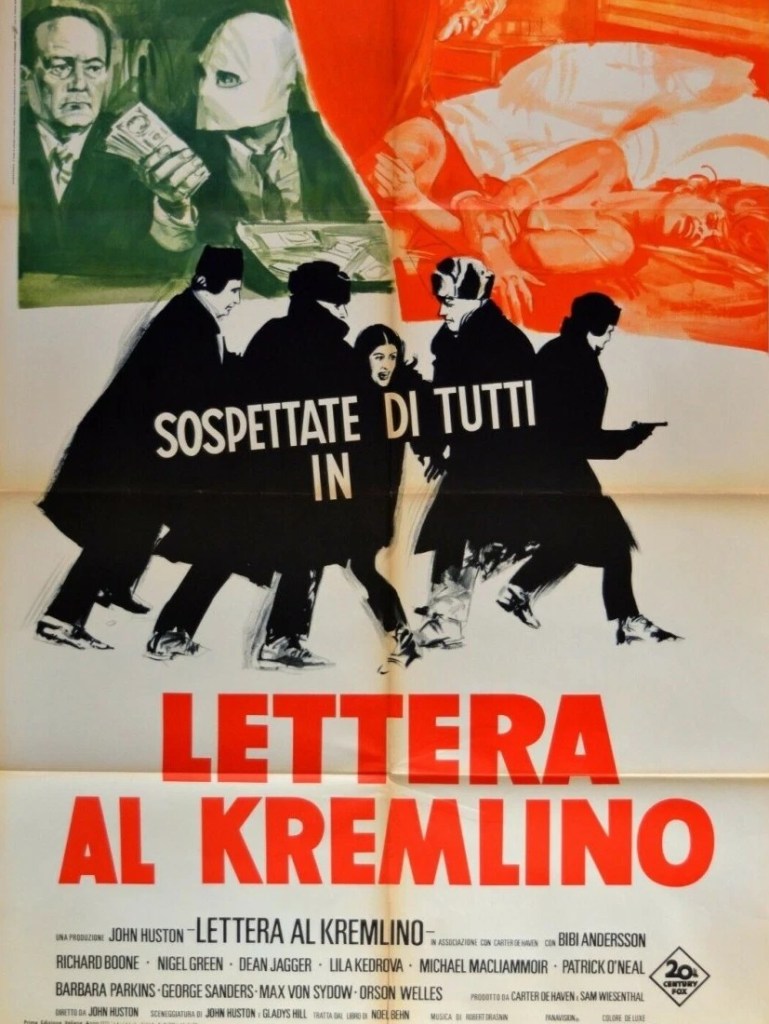
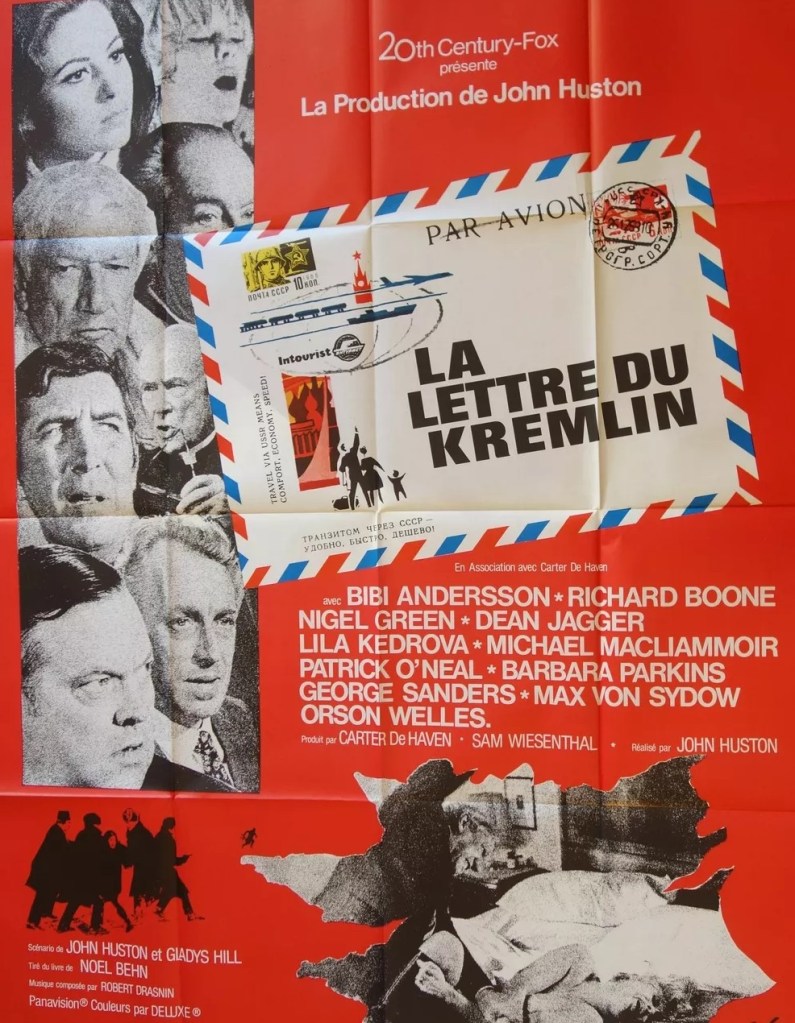
The Kremlin Letter (1970) ****

Audiences weaned on glossy spies surrounded by pretty girls and generally their own country taking a straight moral path turned up their noses at this more realistic portrayal of the espionage business where dirty infighting was the stock in trade. The Spy Who Came in from the Cold (1965) was saintly by comparison.  

Complaints about a complicated plot were led by critics who rarely had had to work their way through a tricky narrative, unless it was from the likes of Alfred Hitchcock who was apt to add twists to his stories. The fact that the bulk of the characters went by strange monikers –  The Highwayman, Sweet Alice, The Warlock etc – also seemed to upset critics. (In the book by Noel Behn, the author points out that these spies were constantly adopting new identities, it made it easier for others to keep tabs on them if they were always referred to by nicknames which were constant.)

A contemporary audience, accustomed to things never being what they seem and all sorts of double-dealing, would be more at home here.

None of the characters, even the supposed good guys/gals, get off lightly. Personal unsavory sacrifice is unavoidable. Charles Rone (Patrick O’Neal) and B.A. (Barbara Parkins), who have fallen in love with each other, both have to prostitute themselves for the cause. And when the going gets too tough, suicide is the only way out. There’s hefty financial reward for those who survive the mission, but the substantial pot will be split between the survivors and not the dependents of those who don’t come home.

At the crux of the story is recovering a letter which promises that the USA and Russia will conspire against China and destroy its atomic weaponry. Espionage expert The Highwayman (Dean Jagger) recruits a team to infiltrate Moscow consisting of Rone, burglar and safe cracker B.A., drug dealer The Whore (Nigel Green), Ward (Richard Boone) and ageing homosexual The Warlock (George Sanders) who is a dab hand at knitting.

More than a few have a dodgy past, Ward an art dealer of ill repute, The Whore a pimp, even Col Kosnov (Max von Sydow), the target of the US operation, betraying his own countrymen. B.A. has to learn how to use sex to trap the enemy and, to get past the starting gate, loses her virginity to the obliging Rone.

The Whore sets up in the brothel business with Madame Sophie (Lila Kedrova), keeping the sex workers docile by filling them up with heroin, which he imports. As instructed, B.A. shares out her favors with the enemy while Rone seduces the wife, Erika (Bibi Andersson), of Col Kosnov.

You always go into a spy picture expecting double cross and this is no different. B.A., The Whore and The Warlock have their covers blown, the latter committing suicide, the girl failing to do so but paralyzed as a result. Ward kills Kosnov. But his motive seems odd – blaming the Russian for betraying his countrymen – and his action only becomes clear at the climactic double cross when Ward is revealed as a double agent in the pay of the enemy. For which, it has to be said, he doesn’t suffer. If anything, with B.A. in his hands, he has Rone over a barrel.

While this was never going to be a by-the-book espionage number, it’s elevated by exploring the emotional price that has to be paid, both in hiding some feelings and feigning others.

While possibly it made sense to present the stars in alphabetical order, suggesting nobody took precedence in the billing, most have the opportunity to play against type. Barbara Parkins (Valley of the Dolls, 1967) is excellent as the girl embarking on a career for which she has, emotionally, little aptitude. Bibi Andersson (Duel at Diablo, 1966), usually cast in repressed roles, has a ball as woman giving in to impulse. Tough guy Patrick O’Neal (Stiletto, 1969) must knowingly betray his true love. Richard Boone (The Night of the Following Day, 1969) is already playing a secret role and effortlessly dupes his colleagues.

There’s not much of the John Huston (Sinful Davey, 1969) visual magic but he makes up for that by allowing the actors to delve deeper into their characters. But he doesn’t attempt to spin a happy ending and the downbeat climax suggests that the USA lost this battle. The one memorable image is a ball of red wool rolling across the ground, indicating that The Warlock is dead.  Written by Huston and Gladys Hill (The Man Who Would Be King, 1975) from the bestseller by Noel Behn (The Brink’s Job, 1978).

While the themes didn’t appeal then, they resound now.

Has aged very well.  

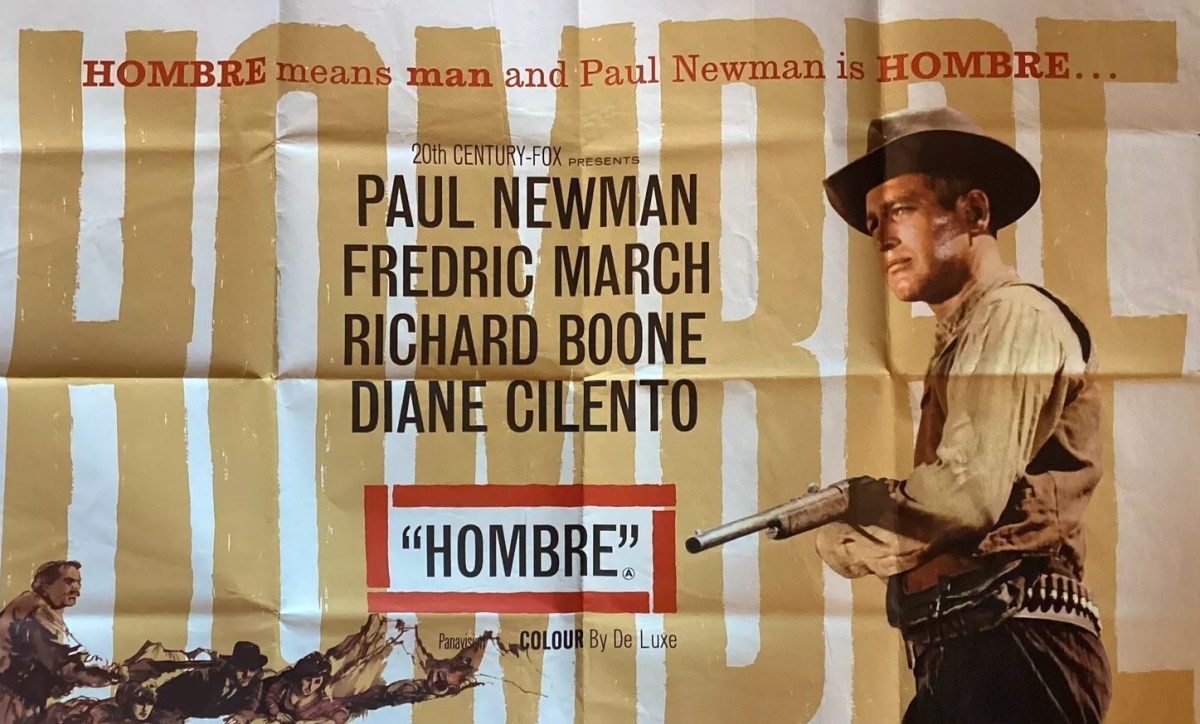
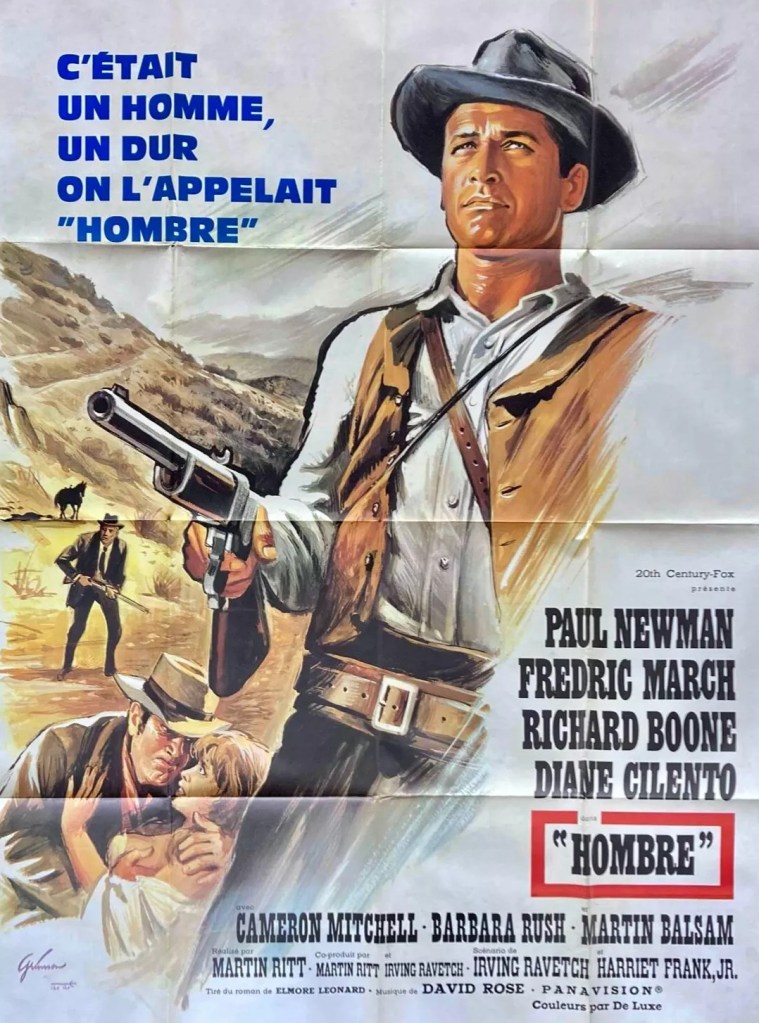
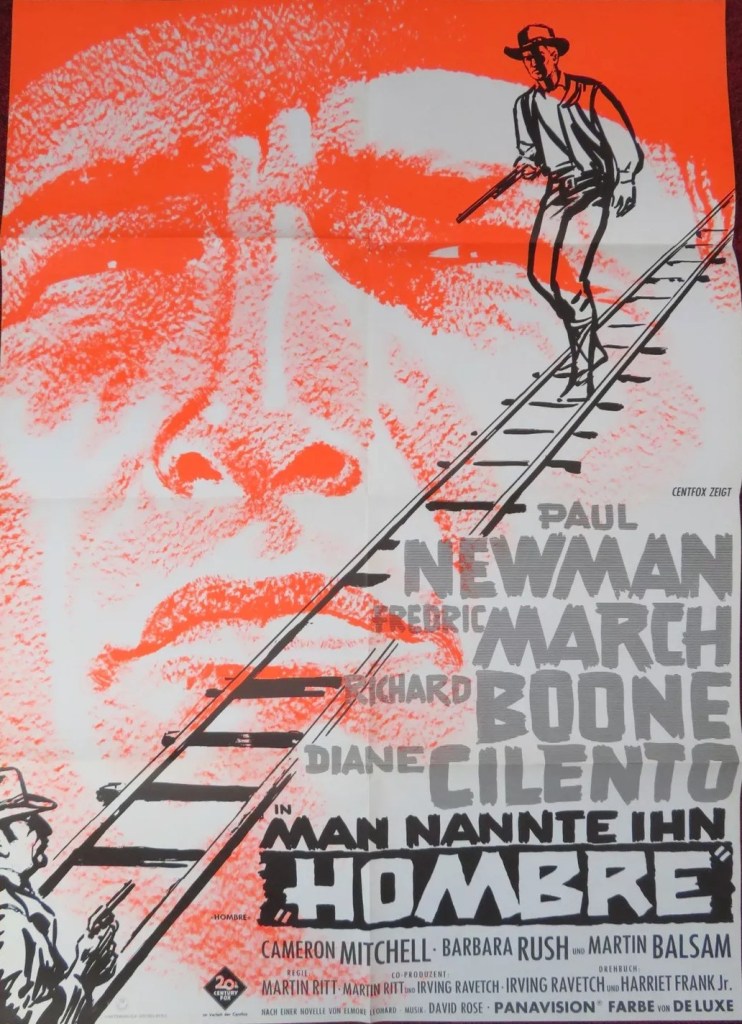
Hombre (1967) ****

Shock beginning, shock ending. In between, while a rift on Stagecoach (1939/1966) – disparate bunch of passengers threatened by renegades – takes a revisionist slant on the western, with a tougher look at the corruption and flaws of the American Government’s policy to Native Americans. Helps, of course, if you have an actor as sensitive as Paul Newman making all your points.

The theme of the adopted or indigenous child raised by Native Americans peaked early on with John Ford’s The Searchers (1956) but John Huston made a play for similar territory in The Unforgiven (1960) and, somewhat unexpectedly, Andrew V. McLaglen makes it an  important element of The Undefeated (1969).

This begins with a close-up of a very tanned (think George Hamilton) Paul Newman complete with long hair and bedecked in Native American costume. Apache-raised John Russell (Paul Newman) returns to his roots to claim an inheritance – a boarding house –  after the death of his white father. That Russell is a pretty smart dude is shown in the opening sequence where he traps a herd of wild horses after tempting them to drink at a pool. He decides to sell the boarding house to buy more wild horses.

That puts him on a stagecoach with six other passengers – Jessie (Diane Cilento), the now out-of-work manager of the boarding house, retired Indian Agent Professor Favor (Fredric March) and haughty wife Audra (Barbara Rush), unhappily married youngsters Billy Lee (Peter Lazer) and Doris (Margaret Blye), and loud-mouthed cowboy Cicero (Richard Boone). Driving the coach is Mexican Henry (Martin Balsam).

Getting wind that outlaws might be on their trail, Henry takes a different route. But the cowboys still catch up and turns out Cicero is their leader. He takes Audra hostage, though she appears quite willing having tired of her much older husband, steals the thousands of dollars that the corrupt Favor has stolen from the Native Americans, and, also taking much of the available water, leaves the stranded passengers to die in the wilderness.

The passengers might have lucked out given Russell is acquainted with the terrain but they’ve upset the Apache by their overt racism, insisting he ride up with the driver rather than contaminate the coach interior. And the outlaws, having snatched the loot, and Cicero his female prize, should have galloped off into the distance and left it to lawmen to chase after them.

But Russell, faster on the uptake than anyone expects, manages to separate the gangsters from the money, forcing them to come after it. Russell wants the cash to alleviate the plight of starving Native Americans as was originally intended, but he has little interest in doing the “decent thing” and shepherding the others to safety. Ruthless to the point of callous, he nonetheless takes time out from surviving to educate the entitled passengers to the plight of his adopted people.

A fair chunk of the dialog is devoted to Russell explaining why he’s not going to do the decent thing and giving chapter and verse on the indignities inflicted on his people, and that alone would have given the picture narrative heft, especially as the corrupt Favor is more interesting in retrieving the money than his wife.

But in true western fashion, Russell is also a natural tactician and manages to pick off the outlaws when they come calling, impervious to the cries of Audra staked out in the blazing sun as bait. Eventually, against his better judgement, Russell gives in to the entreaties of Jessie and attempts to rescue the stricken women only to be cut down by the gunmen. I certainly didn’t expect that.

So, it’s both action and character-led drama. Paul Newman (The Prize, 1963) is superb (though not favored by an Oscar nod), especially his clipped diction, and oozing contempt with every glance, and the whiplash of his actions which is countered by shrewd judgement of circumstances. But Diane Cilento (Negatives, 1968) is also better than I’ve seen her, playing the foil to Newman, sassy enough to deal with him on a male-female level, but with sufficient depth to challenge his philosophy. Strike one, too, for Martin Balsam (Tora! Tora! Tora!, 1970) in a lower-keyed performance than was his norm. Richard Boone (Rio Conchos, 1964) and the oily Fredric March (Inherit the Wind, 1960) are too obvious as the bad guys. Representing the more calculating side of the female are Barbara Rush (The Bramble Bush, 1960) and movie debutant Margaret Blye.

The solid acting is matched by the direction of Martin Ritt (The Spy Who Came in from the Cold, 1965). Prone to preferring to make picture that make a point, he has his hands full here. But the intelligent screenplay by Irving Ravetch and Harriet Frank Jr. (Hud, 1963), adapting the Elmore Leonard novel, make the task easier, offsetting the potentially heavy tone with some salty dialog about sex and married life.

Thought-provoking without skimping on the action.    

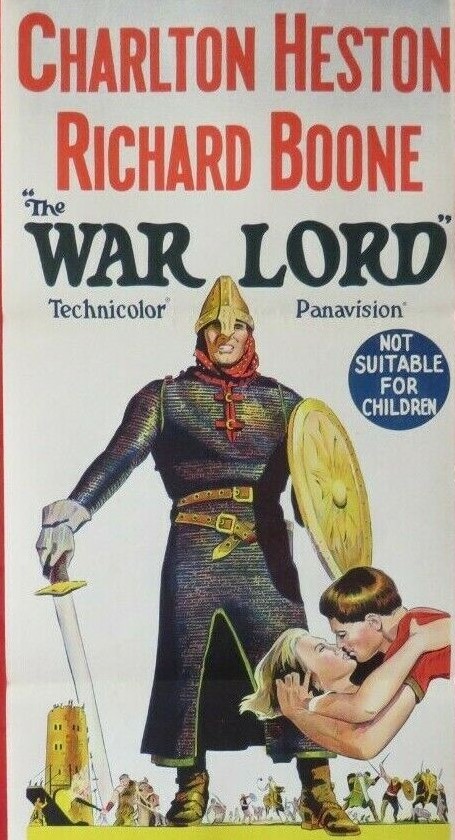
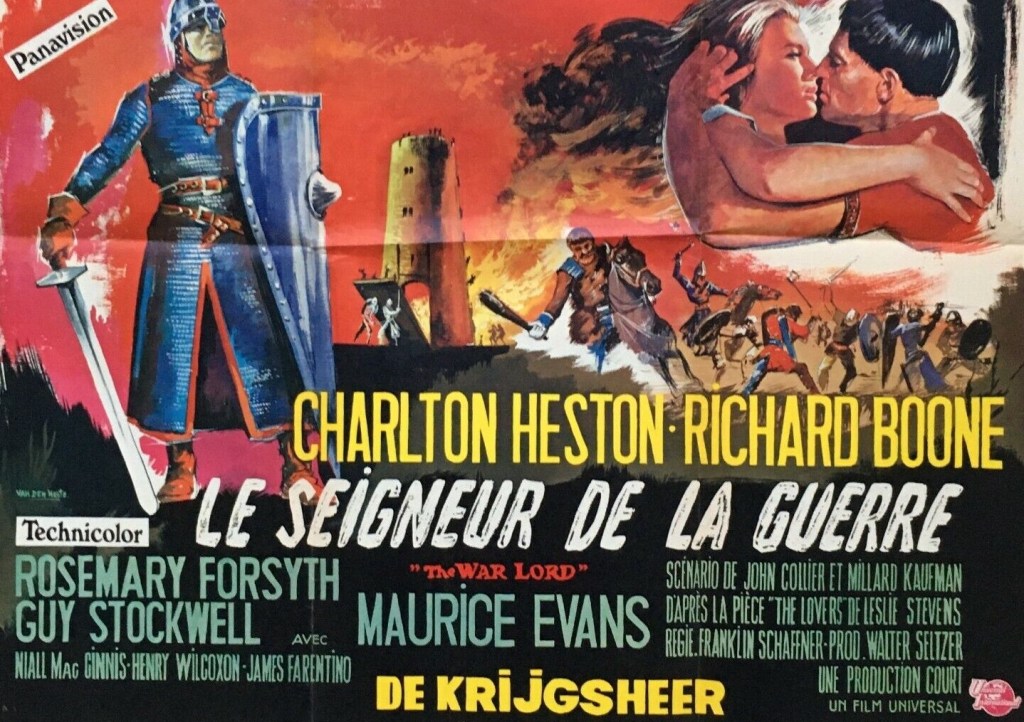
The War Lord (1965) ***

Contemporary audiences will gib at a narrative that relies on legalised rape. Audiences at the time had the same response but since then it has picked up considerable critical acclaim on account of its down-and-dirty portrayal of a medieval era far removed from the knight in shining armour. But it still pivots on the distasteful notion of “droit de seigneur”, the right of any noble to take the virginity of any female underling on their wedding night – it was motivation for William Wallace’s rebellion in Braveheart (1995).

The idea that this was pervasive or even occurred at all has been proven to be historically inaccurate. Logic tells you that any ruler wanting to keep his subjects in check would scarcely resort to wholesale rape that could spark disloyalty among his subjects. Or that any no one would be unaware of the dangers of inbreeding should the nobleman’s seed result in pregnancy.

What of course the movie does get right is that women were treated as chattels – “she’s mine” / “you’re mine” a recurrent refrain – or were makeweights in deals uniting the vested interests of kings or dukes.

As reward for years of service to the Duke of Ghent, Chrysagon (Charlton Heston) is handed a fiefdom in Normandy, prone to attack by Frisian raiders from the neighbouring Netherlands. In interrupting such an assault, Chrysagon captures the enemy chief’s son without being aware of it, prompting a later battle.

While the area boasts vestiges of normality, a priest and a strong tower, the inhabitants are inclined to the pagan rather than Christianity with rites (reminiscent of Game of Thrones) involving stone and trees while anyone using herbs for medicinal purposes is likely to be accused of witchcraft. Chrysagon takes a fancy to Bronwen (Rosemary Forsyth) already bethrothed to Marc (James Farentino). Egged on by his brother Draco (Guy Stockwell), Chrysagon decides to take up the option of droit de seigneur, but refuses to return the bride after the allotted time period (before dawn), incurring the wrath of the villagers who recruit the Frisians to their cause.

So it’s siege time although it seems unlikely that the attackers would be capable of producing such dangerous siege weapons in such a short time or that they wouldn’t simply resort to starving out the beseiged. Chrysagon’s  troops engage the attackers in time-honoured fashion from the top of the tower by arrow, boulders and boiling oil. Chysagon slides down a rope like Errol Flynn to prevent the raised drawbridge being lowered and uses a boat anchor to dislodge the siege tower. Battering rams and catapults soon enter the equation.

The only question-mark (unspoken) against Chrysagon’s employment of the “droit” privilege comes when the Duke demotes him and appoints Draco in his stead, prompting various endgame twists.

The battle is interesting enough, threat repeatedly countered, but there’s only so many times a director can cut to a soldier tumbling to his death. The ending is an anomaly, Chrysagon showing more respect to the son of his enemy than the wife of his villagers, and it seems odd that Draco is suddenly revealed as a bad guy, despite not being the one who triggered the conflict.

Chrysagon might have easily have fallen into the Martin Scorsese category of characters with “no redeeming features” – who are exempt apparently from the need for decency because of war – and it’s hard to summon up the necessary audience sympathy to make this picture work, especially given its starting point. Had Chrysagon merely fallen in love with Bronwen who reciprocated his feelings and that caused enmity among the villagers it would have been one thing but to start out from an historically inaccurate base is another.

One of the problems is that Bronwen doesn’t evolve. Her transition is from interesting to  passive. She has actually gone through a marriage ritual (of the Druid kind, but still binding as far as the villagers are concerned) and is therefore embarking on an adulterous relationship once the cock crows. It seems ludicrous, without allowing the woman dialog to express her feelings and acknowledge the peril of her actions, that she would believably take this route.  

So, if you like, accepting the droit de seigneur, in some ways it becomes a bolder picture, a major Hollywood star risking his reputation by playing a rapist, and in the way of all rapists justifying his action. And, like the characters in the recently-reviewed Play Dirty (1969) or Judith (1966), it becomes a question of individuals as pawns, the powerful taking advantage of position to abuse the weak. And it wouldn’t be the first time the innocent have suffered through a superior taking an indefensible approach.

Franklin Schaffner (Planet of the Apes, 1968) directed. Charlton Heston (Diamond Head) performs as if he’s the French equivalent of a Brit constantly biting on that stiff upper lip. Richard Boone (Rio Conchos, 1964) is wasted. Guy Stockwell (Tobruk, 1967) essays another weasel. It’s a picture of two halves for Rosemary Forsyth (Where It’s At, 1969) – while being wooed she’s good but then she’s pretty much dumped as far as the narrative goes.

Screenwriter John Collier, who later wrote the even creepier Some Call It Loving (1973) – an early Zalman King production – and Millard Kaufman (Raintree County, 1957) adapted the screenplay from an unusual source, a Broadway play by Leslie Stevens (Incubus, 1966) called The Lovers. The play had a different perspective, the bride ultimately committing suicide, while the War Lord and husband killed each other in a duel. Needless to say, there are no Frisians, so no siege, and no brother.

Before the arrival of Ridley Scott, this would been viewed as the best depiction of genuine medieval siege, so that part certainly still holds up. But the rest of it will only stand the test of time if you are willing to view it as an expression of the corruption of power.

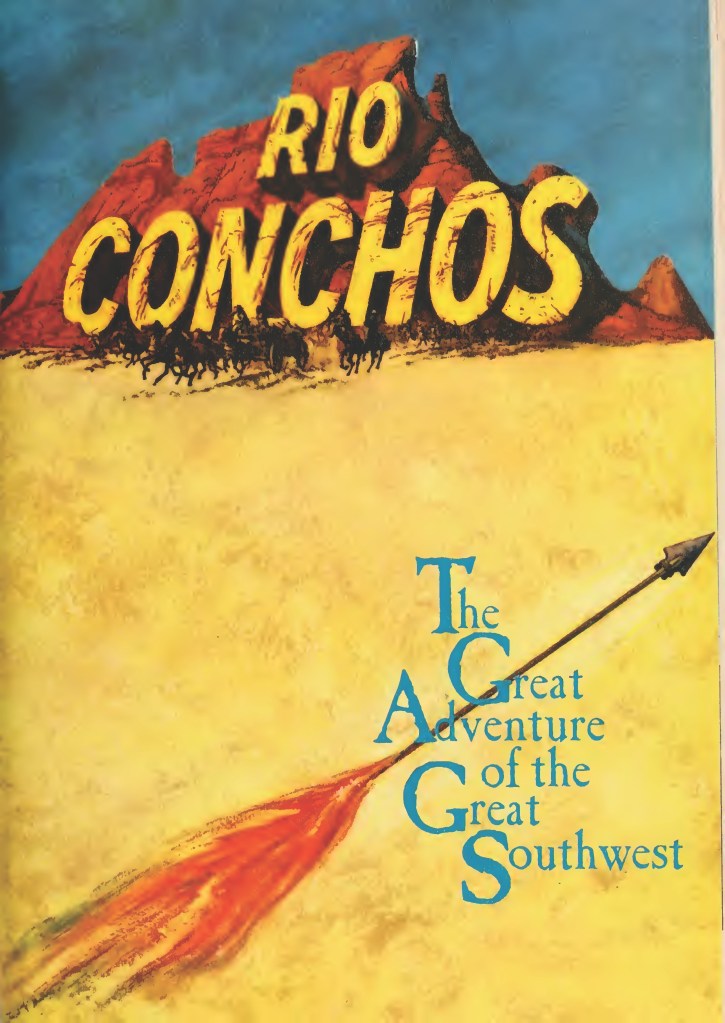
Rio Conchos (1964) ***

Starts and ends as a rootin’-tootin’ western but sags badly in between. The chance of turning it into The Magnificent Four or even The Dirty Pair go a-begging and it’s both revenge- and redemption-driven without either taking enough precedent. And there’s a curious dynamic in that the murderers are clearly smarter than the soldiers. Set in the aftermath of the Civil War, it’s engaging enough but too episodic and far short of a classic.

Lassiter (Richard Boone) kills Apaches with brutal efficiency in revenge for losing wife and child to them. But there’s no law against murdering Native Americans, not even when they form a harmless burial party, and when arrested by Captain Haven (Stuart Whitman) it’s for buying a stolen rifle, part of a consignment of 2,000 feared to be heading into the hands of the Apaches and a rogue Confederate Col Pardee (Edmond O’Brien), under whom Lassiter once served.

Charged with going undercover to get the weapons back is Haven, who lost the cargo in the first place, and another soldier Franklyn (Jim Brown), posing as gunpowder salesmen. Lassiter is freed from jail along with exceptionally vain murderer Rodriguez (Anthony Franciosca). From captured Apache Sally (Wende Wagner) they discover the Apaches are hooking up three days hence with Pardee in Rio Conchos in Mexico.

Mostly, it’s tension between the soldiers and their captives-turned-colleagues. There’s an incident with a dead baby at a house attacked by Apaches, Lassiter shooting the tortured mother. Lassiter attacks a saloon keeper for refusing to serve Franklyn. Pardee is building an army to re-start the war. There’s a brutal scene of the men being dragged behind horses. While Haven plans to use the gunpowder to blow up the Apaches and/or the rifles, Lassiter and Rodriguez nurture plans to steal the cargo.

Lassiter is pretty smart, twice outwitting the Apaches by using fire as a distracting device, easily getting the better of Haven and more than a match for the duplicitous Rodriguez. But there’s a powder keg waiting to explode in more ways than one, the chances of Lassiter toadying along to Apaches seeming remote.

Richard Boone (Night of the Following Day, 1969) coming off Have Gun –Will Travel (1957-9163) and The Richard Boone Show (1963-1964) is impressive as the wily renegade. Here’s one of those actors you never quite know what he’s going to do and that unpredictability adds continuous tension, but it would probably have helped if the audience was fully filled in on his intentions, rather than being surprised all the time. Given he was the star here, he was allotted time to be seen making up his mind in various situations, something he would be denied as a later supporting actor. So when there’s not really much going, he creates tension.

Stuart Whitman (Sands of the Kalahari, 1965) doesn’t really have enough to do what with Boone’s character always being one step ahead and clearly more attuned to danger. Anthony Franciosca (A Man Could Get Killed, 1966) has a gem of role, adding to his characterization withlittle bits of scene-stealing business, sharpening a knife on a wagon wheel, recovering a knife from the stomach of a victim being dragged away by a horse, snaffling a packet of cigarettes, and never ceasing to admire his attraction to women.

Jim Brown (The Split, 1968) makes a solid movie debut, offering more by his presence than in action terms since for the most part he is just the sidekick. Wende Wagner (Guns of the Magnificent Seven, 1969) has more screen time but mostly just smolders or looks sullen apart from a nice scene mourning the baby and another defying her tribe. Look out for Edmond O’Brien (The Man Who Shot Liberty Valance, 1962) and silent child actor Warner Anderson.

The action sequences are well done and director Gordon Douglas (Robin and the Seven Hoods, 1964) also deserves credit for allowing Boone such scope while the opening scene and the death of the unseen woman are exceptional. He has a great gift for the widescreen, but the movie could have done with more clarity. It’s not his fault the poster was misleading and led me into the picture with different expectations. The screenplay by Joseph Landon (Von Ryan’s Express, 1965) and Clair Huffaker (The War Wagon, 1967).was based on the latter’s book.

The Arrangement (1969) ***

It might have been better if director Elia Kazan had handed over the screenwriting chores for this adaptation of his bestseller about the midlife crisis of advertising man Eddie Anderson (Kirk Douglas). Anderson’s attempts to juggle wife Florence (Deborah Kerr) and mistress Gwen (Faye Dunaway) coupled with growing disgust at selling a new brand of cigarettes, Zephyr (“The Clean One”), in a way that pointedly avoids their cancer potential, leads to a suicide attempt.  

During convalescence he determines to quit the advertising world and go back to his first love, writing, but in fact he ends up sabotaging his career. Florence represents impossible seduction and conscience. Slinky, in dark glasses, hot-tempered rather than submissive or demure, she accuses him of self-deception in his job. The picture flits back and forth between his various choices – different job, return to wife, settle down with mistress, or what seems his ideal world, cossetted by both Gwen and Florence.

Gwen is an excellent study of the modern woman (of that fast-changing period, I hasten to add), who needs a man for sex but not necessarily love, and can use the opposite gender as ruthlessly as any man. What she actually requires in her real life is quite different to what she seeks in the fantasy love she enjoyed with Anderson, sex on the beach, the buzz of controlling a high-powered man. Florence could be seen as an old-fashioned portrait of the adoring wife except for capturing so well the bewilderment of betrayal.

Kazan conjures up some wonderful images: the tension before the suicide attempt as Anderson plays chicken between two trucks, Gwen emerging wet from the pool to eat dangling grapes or with her legs up on Anderson’s desk, Anderson’s mother lighting votive candles in her house before using the same match for her cigarette, Kerr’s futile attempts to win back her fallen husband, Anderson flying solo.

In parts well-observed and directorially savvy, quick cuts between the present and the past, however it sinks beneath its own self-indulgence. My guess is that author Kazan could not bear to kill off a single one of the characters he had created for his acclaimed novel and the upshot is a vastly over-populated picture, few of whom cast any real light on Anderson’s predicament. So we are not only introduced to mother, dying father, brother, sister-in-law and  analyst but priest and a bucket of clients and guys from the office. And there are some plot oddities – Anderson gets time off apparently to write journalistic pieces – and what is clearly intended as hard-hitting satire of the advertising world does not come off.

Dunaway (Bonnie and Clyde, 1967) is the standout as Gwen, living life according to her own rules, and with an unexpected vision of domesticity but Deborah Kerr (Prudence and the Pill, 1968) does pain like nobody else and is extremely convincing. Strangely enough, I didn’t go much for Douglas (Seven Days in May, 1964). He could have been leading a cavalry charge for all the range of emotions he exhibited. Douglas is no Montgomery Clift (Wild River, 1960), James Dean (East of Eden, 1955) or Marlon Brando (On the Waterfront, 1954) who was Kazan’s first choice. Kazan had not made a picture in six years and it had been eight years since his last hit Splendor in the Grass (1961). Not quite out-of-touch in concept and delivery, nonetheless it was shunned by the Oscar fraternity.

Discover WordPress

A daily selection of the best content published on WordPress, collected for you by humans who love to read.

The Atavist Magazine

by Brian Hannan

WordPress.com News

The latest news on WordPress.com and the WordPress community.