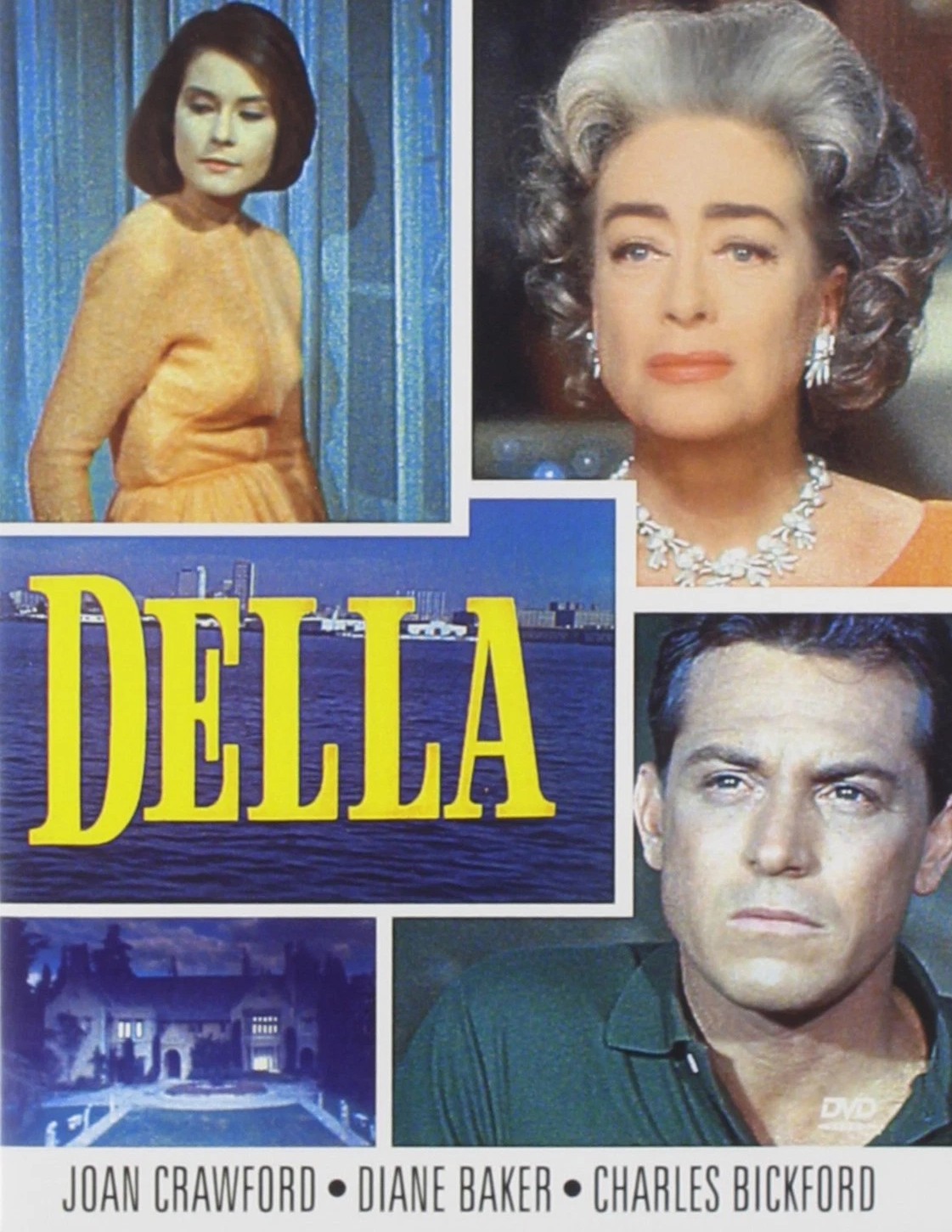
At this point in her career Joan Crawford was more of a holy terror than a femme fatale. So audiences came at her movies expecting the worst even when she was still dolled up to the nines, hair coiffed within an inch of its life, outfits immaculate or someone would pay the price. Oddly enough, unlike most actresses of her generation, she had embraced age. Her hair was a solid grey, not an ounce of original color. So, given her propensity to tweaking her screen persona, expectation might be that on initial appearance she could still be more femme than fatale, only to later trap an unsuspecting victim.
The convoluted opening to this one is explained by it being a pilot for a television series that was never aired so the producers just pitched it out onto the cinema screen. It’s surprising it wasn’t picked up by a television network because the theme was one – family conflict in big business – that later made television studios absolute fortunes (Dallas etc) and retains a hold on the small screen today, witness Succession.
Once the narrative settles down it’s a twist on Wild River (1960), the titular Della (Joan Crawford) appearing immoveable in the face on necessary community progress, and a hint of Mildred Pierce (1945) with an over-protective mother guarding daughter Jenny (Diane Baker) from potential suitor Barney Stafford (Paul Burke), an attorney. Jenny must be the only person in the annals of Hollywood who, shunning daylight, does not have a vampiric tendency.
Rich recluse Della owns most of the local town, but developers want to shake things up. In the past she had a fling with Barney’s father Hugh (Charles Bickford). At first she resists all moves by Barney who’s working for the developers but changes her tune when she notices how much Barney brings her daughter out of her shell. Eventually, we realize Jenny’s daylight intolerance is due to a rare skin condition.
The twin elements, the clash of big businesses and the nascent romance, would be enough fuel for this particular fire but given the movie did not originate as a feature film but as the first episode in a television series – to be called Royal Bay after the name of the town – it was duty bound to rope in a lot of other characters, ignite various personality clashes, and feed the audience on other issues that would resolved further down the line.
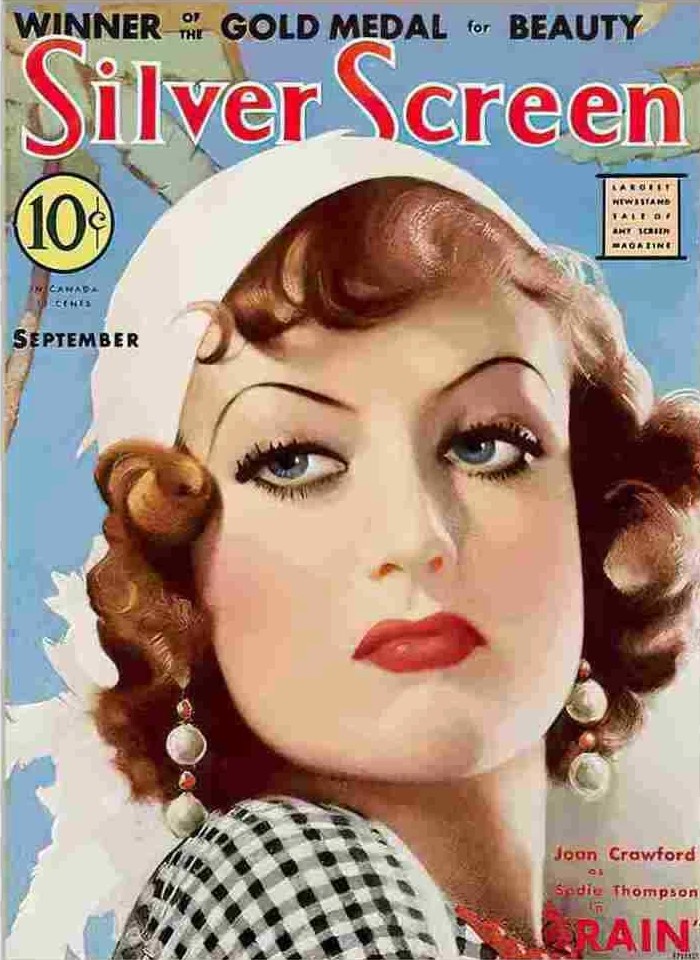
So, quickly, we learn that, tough as she is, Della is exceptionally vulnerable when it comes to her daughter and tough as Barney would like to be his business snse goes haywire after touching base with Jenny. Della’s skirmishes with Barney are old-school, but the holy terror part is kept to a minimum, while if the femme fatale appears at all it’s only to hook Barney to care for her daughter.
Naturally, not much goes to plan. Della can’t control her daughter once romance enters her head, nor can she put the squeeze on Barney. But, for his part, the attorney thinks he’s smarter than he is and miscalculates just how right the mother is in protecting the daughter from herself. Once Jenny rebels, there’s tragic consequence.
Top Hollywood female stars hadn’t imposed themselves on television yet. Barbara Stanwyck’s sojourn as the matriarch in The Big Valley was still a year off and although Lucille Ball turned into a television entrepreneur of considerable note (producing a bunch of major series apart from I Love Lucy) she did not have the movie marquee stature of Crawford. How much Crawford would have featured in further episodes is unclear but a running battle between herself and Barney, who she was likely to blame for her daughter’s death, would be standard material for such soaps.
Joan Crawford (Whatever Happened to Baby Jane, 1962) is in her element, serving up a ruthless operator with a softer side. Paul Burke (Daddy’s Gone A-Hunting, 1969) lacks the screen persona to take her on while veteran Charles Bickford (A Big Hand for the Little Lady, 1966) doesn’t get to tangle with her often enough. Hitchcock protege Diane Baker (Mirage, 1965) continues to show promise.
Directed by Robert Gist (An American Dream / See You in Hell, Darling, 1966) does better with Crawford than the rest of the cast. Written by Richard Alan Simmons (Juggernaut, 1974).
It’s lean on the running time but Crawford is worth it.
 The Magnificent 60s