Is Paris Burning (1966) ****

Politics didn’t usually play a part in war films in the 1960s but’s it’s an essential ingredient to Rene Clement’s underrated documentary-style picture. Paris had no strategic importance and after the Normandy landings the Allies intended to bypass the French capital and head  straight for Berlin.

Meanwhile, Hitler, in particular vengeful mood after the attempt on his life, ordered the city destroyed. Resistance groups were splintered, out-numbered and lacking the weaponry to achieve an uprising. Followers of General De Gaulle, the French leader in exile, wanted to wait until the Allies sent in the troops, the Communists planned to seize control before British and American soldiers could arrive. 

When the Communists begin the fight, seizing public buildings, the Germans plant explosives on the Eiffel Tower, the Louvre, and other famous buildings and all the bridges across the River Seine.  The German commandant Von Choltitz (Gert Frobe), no stranger to slaughter having overseen the destruction of Rotterdam, holds off obeying his orders because he believes Hitler is insane and the war already lost.

The Gaullists despatch a messenger to persuade General Omar Bradley (Glenn Ford) to change his mind and send troops to relieve the city. Sorry for the plot-spoiler but as everyone knows the Germans did not destroy the city and the liberation of Paris provided famous newsreel and photographic footage.

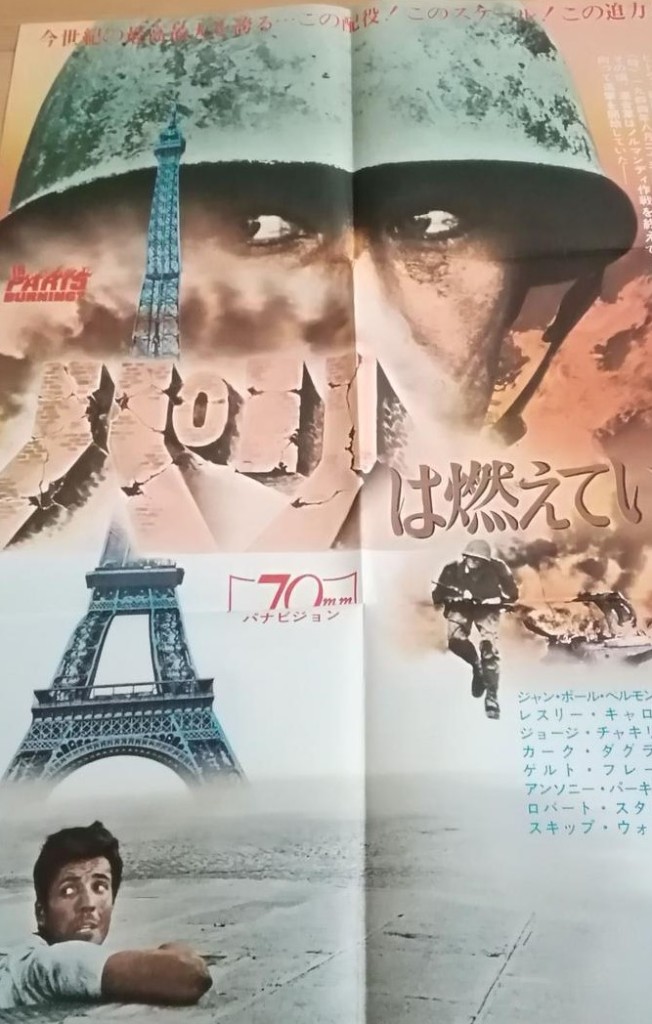
Director Clement (Rider on the Rain, 1970) was also aware he could not extract much tension from the question of whether von Choltitz will press the destruct button, so he takes another route and documents in meticulous detail the political in-fighting and the actual street battles that ensued, German tanks and artillery against Molotov cocktails and mostly old-fashioned weaponry. The wide Parisian boulevards provide a fabulous backdrop for the fighting.

Shooting much of the action from above allows Clement to capture the action in vivid cinematic strokes. Like The Longest Day (1962), the film does not follow one individual but is in essence a vast tapestry. Scenes of the utmost brutality – resistance fighters thrown out of a lorry to be machine-gunned, the public are strafed when they venture out to welcome the Americans – contrast with moments of such gentleness they could almost be parody: a shepherd taking a herd through the fighting, an old lady covered in falling plaster watching as soldiers drop home-made bombs on tanks.

This is not a film about heroism but the sheer raw energy required to carry out dangerous duty and many times a character we just saw winning one sally against the enemy is shot the next. The French have to fight street-by-street, enemy-emplacement-by-enemy-emplacement, tank-by-tank.

And Clement allows as much time for humanity. Francophile Sgt Warren (Anthony Perkins), as an American grunt, spends all his time in the middle of the battle trying to determine the location of the sights he longs to see – before he is abruptly killed.  An unnamed café owner (Simone Signoret) helps soldiers phone their loved ones.

Like The Longest Day and In Harm’s Way (1965), the film was shot in black-and-white, but not, as with those movies for the simple reason of incorporating newsreel footage, but because De Gaulle, now the French president, objected to the sight of red swastika. Even so, it permitted the inclusion of newsreel footage, which on the small screen (where most people these days will watch it) appears seamless.

By Hollywood standards this was not an all-star cast, Glenn Ford (as Bradley), Kirk Douglas (General Patton) and Robert Stack (General Sibert) making fleeting glimpses.

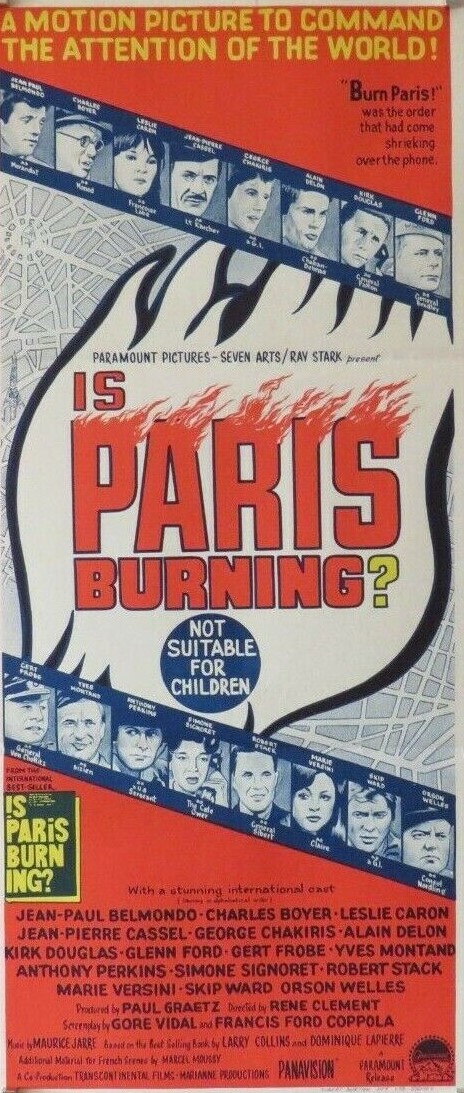
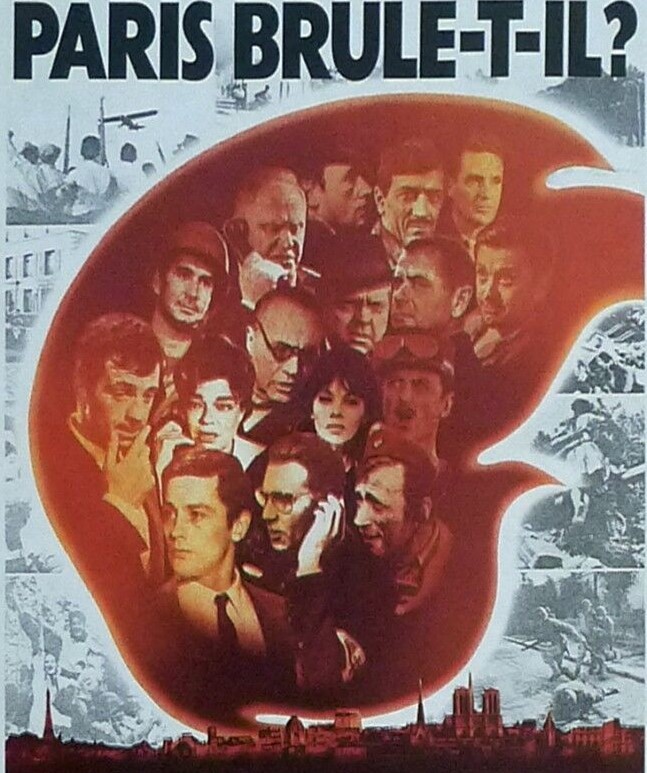
But by French standards it was the all-star cast to beat all-star casts – Jean-Paul Belmondo (Breathless, 1960), Alain Delon (Lost Command, 1966), Yves Montand (Grand Prix, 1966), Charles Boyer (Gaslight, 1944), Leslie Caron (Gigi, 1958), Michel Piccoli (Masquerade, 1965), Simone Signoret (Room at the Top, 1959) and Jean-Louis Trintignant (A Man and a Woman, 1966).  Orson Welles, in subdued form, appeared as the Swedish ambassador.

Gore Vidal (The Best Man, 1964) and Francis Coppola (The Godfather, 1962) devised the screenplay based on the bestseller by Larry Collins and Dominic Lapierre

At $6 million, it was the most expensive French film ever made. It had a six-month shooting schedule and was shot on the streets of the city including famous locations like Etoile, Madeleine and the Louvre. It was a big hit in France but flopped in the United States, its box office so poor that Paramount refused to disclose it.

Gripping.

Rider on the Rain (1970) ****

This is not the Charles Bronson you think you know, the mean, truculent, monosyllabic persona who turned into a box office powerhouse later in the decade. It took the French to recognize the leading man qualities Hollywood determinedly ignored. God forbid, he is actually pretty charming, although his methods for squeezing information out of a suspect are, well, suspect. And he turns up pretty late in the picture, just when you think the focus is going to be on the suspect, Mellie (Marlene Jobert) and it’s going to be one of those pictures where an innocent woman is suspected of a crime and the man has to clear her name.

Except Mellie isn’t innocent. She’s killed a rapist who broke into her house and then dumped his body over the cliff. And she isn’t, officially at least, a suspect, local cop Inspector Toussaint (Jean Gaven) more interested in getting a loan from her husband, pilot Tony (Gabriele Tinti), to pay off gambling debts. Needless to say, any time the cop does knock on her door, she jumps out of her skin.

And she would have got away with the murder, except for the arrival of Dobbs (Charles Bronson). He turns up at a wedding, ensures she gets to see a newspaper headline of the murder, insinuates his way into her life, not too difficult once her husband heads off on another flight. She runs a bowling alley with her mother Juliette (Annie Cordy) who scarcely has a maternal bone in her body.

Rather than helping the cops solve the case, Dobbs is more interested in the red bag the rapist was carrying. But when she hands over the bag, it doesn’t contain the $60,000 Dobbs wants.  We never see what Dobbs gets up to when he’s not with Mellie. But we hear it. His investigations may be carried out off screen but he’s tailing her – knows she bought a ton of newspapers – and tells her what he’s found out by speaking to cops and neighbors. Even though she’s replaced the cartridges in the shotgun she used to kill the rapist, he knows the gun has been fired. When she claims she was aiming at rats in the cellar, he points to the marks on the wall, too high for even the most acrobatic rat.

Mellie is trapped in a claustrophobic world, assailed by her own guilt and a jealous husband with too much unexplained loose cash (drug smuggling is the implication), turns against her best friend, boutique owner Nicole (Jill) who had an affair with her husband, and against her mother whom as a child she caught in bed with another man, causing her father to dump the mother.

They started to get tricky with double bills in the 1970s, trying to suggest
the films were equally attractive, ignoring the fact that if they had been
such hits they wouldn’t have been paired in the first place.

Most of the tension is self-inflicted but Dobbs has thing about nuts and soon is whizzing shells across rooms, some trick where they break on impact with a window, but the noise is like a shot, too close to the blast of the shotgun.

Every twist ratchets up the tension. And by concentrating on the suspect the police are ignoring and making Dobbs, by default, the chief investigator, and nobody to turn to, Mellie is turned inside out by his mere presence, never mind, when exasperated, he employs his own interrogation method, akin to waterboarding, except the liquid is alcohol, forced down her throat until her lungs are full to bursting.

The last act is a bit murky, as the locale shifts to Paris, involving a brothel owner and a set of gangsters who are even more intent on humiliating Mellie. With echoes of Charade (1963) and Moment to Moment (1966), it’s superbly directed by Rene Clement (Is Paris Burning? 1965), who doles out clues and twists like he’s playing a hand at cards.

In spite of the concentration on tension, he takes the time to build up his characters. A series of emotional flashbacks show the fault-lines in Mellie’s character, no matter that she initially appears confident with fashionable short hairstyle and white outfits bound to attract attention. Dobbs’ obsession with suddenly chucking nut shells around maintains the tension and his cavalier tone, especially his jocular use of a nickname, suggests an interesting personality behind the tough guy pose.

Like his script for The Sleeping Car Murder (1965), screenwriter Sebastian Japrisot is as concerned with ordinary life as with the thriller elements.

Charles Bronson (Farewell, Friend / Adieu L’Ami, 1968)  delivers the best performance of his entire career, tough guy with a charming underbelly, kind of Cary Grant with muscle. Marlene Jobert (Catch Me a Spy, 1971) is excellent as the victim turned suspect, and even Jill Ireland, for whom a part was always found in husband Charlie’s movies, shows a different side to her screen persona.

A riveting watch.

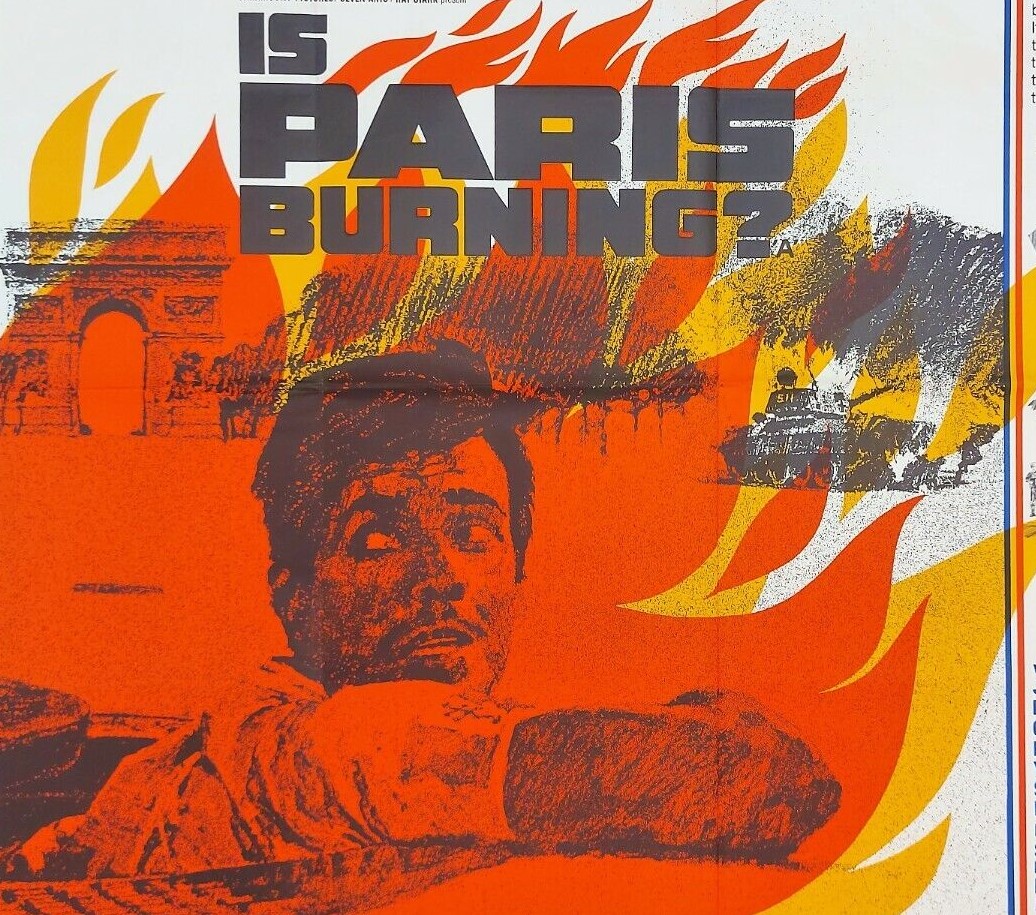
Is Paris Burning (1965) ****

Politics don’t usually play a part in war films of the 1960s but’s it’s an essential ingredient to Rene Clement’s underrated documentary-style picture. Paris has no strategic importance and after the Normandy landings in 1944 the Allies intend to bypass the German-occupied French capital and head straight for Berlin.

Meanwhile, Hitler, in particular vengeful mood after an attempt on his life, orders the city destroyed. Resistance groups are splintered, outnumbered and lacking the weaponry to achieve an uprising. Followers of General De Gaulle, the French leader in exile, want to wait until the Allies send in the troops while the Communists plan to seize control before British and American soldiers can arrive. 

When the Communists begin the fight by seizing public buildings, the Germans retaliate by planting explosives on the Eiffel Tower, the Louvre, and other famous buildings and all the bridges across the River Seine. German commandant Von Choltitz (Gert Frobe), no stranger to slaughter having overseen the destruction of Rotterdam, holds off obeying his orders because he believes Hitler is insane and the war already lost.

The Gaullists dispatch a messenger to persuade General Omar Bradley to change his mind and send troops to relieve the city. Director Clement, aware how little tension he can extract from the question of whether von Clowitz will press the destruct button (history tells us he did not) so he takes another route and documents in meticulous detail the political in-fighting and the actual street battles that ensued, German tanks and artillery against Molotov cocktails and mostly old-fashioned weaponry.

The wide Parisian boulevards provide a fabulous backdrop for the fighting. Shooting much of the action from above allows Clement to capture the action in vivid cinematic strokes. Like The Longest Day (1962) the film does not follow one individual but is in essence a vast tapestry. Scenes of the utmost brutality – resistance fighters thrown out of a lorry to be machine-gunned, the public strafed when they venture out to welcome the Americans – contrast with moments of such gentleness they could almost be parody: a shepherd taking his flock  through the fighting, an old lady covered in falling plaster watching as soldiers drop home-made bombs on tanks.

This is not a film about heroism but the sheer raw energy required to carry out dangerous duty and many times a character we just saw winning one sally against the enemy is shot the next. The French have to fight street-by-street,  corner-by-corner, bridge-by-bridge,   enemy-emplacement-by-enemy-emplacement, tank-by-tank.

And Clement allows as much time for humanity. Francophile Sgt Warren (Anthony Perkins), an American grunt, spends all his time in the middle of the battle trying to determine the location of the sights he longs to see. Bar owner Simone Signoret helps soldiers phone their loved ones.

Like The Longest Day and In Harm’s Way (1965), the film was shot in black-and-white, but not, as with those movies for the simple reason of incorporating newsreel footage, but because De Gaulle, now the French president, objected to the sight of a red swastika.

Even so, it permitted the inclusion of newsreel footage, which on the small screen (where most people these days will watch it) appears seamless. By Hollywood standards this was not an all-star cast, only fleeting glimpses of Glenn Ford (Fate Is the Hunter, 1964), Kirk Douglas (A Lovely Way To Die, 1968), Robert Stack (The Corrupt Ones / The Peking Medallion, 1967), Orson Welles (House of Cards, 1968) and George Chakiris (West Side Story, 1961).

But by French standards it was the all-star cast to beat all-star casts – Jean-Paul Belmondo (Breathless, 1960), Alain Delon (Lost Command, 1966), Yves Montand (Grand Prix, 1966), Charles Boyer (Gaslight, 1944), Leslie Caron (Gigi, 1958), Michel Piccoli (Masquerade, 1965), Simone Signoret (Room at the Top, 1959) and Jean-Louis Trintignant (A Man and a Woman, 1966).  Director Rene Clement was best known for Purple Noon (1960), an adaptation of Patricia Highsmith’s The Talented Mr Ripley starring Alain Delon

At $6 million, it was the most expensive French film ever made, a six-month shooting schedule, shot on the streets of the city including famous locations like Etoile, Madeleine and the Louvre. Big hit in France, it flopped in the United States, its box office so poor that Paramount refused to disclose it.

Bronson Unwanted

That Farewell, Friend / Adieu L’Ami (1968) was a smash hit in France did nothing for Charles Bronson’s Hollywood career. Hollywood had form in disregarding U.S.-born stars that Europe had taken to its box office bosom. Example number one of course was Clint Eastwood, ignored by the big American studios until four years after his movies had cut a commercial swathe through foreign territories. Charles Bronson took about the same length of time for his box office grosses abroad to make an impact back home.

While we tend to look upon The Dirty Dozen (1967) as a career-making vehicle for many of the supporting stars, that wasn’t actually the case. Jim Brown was quickest out of the blocks, a full-blown top-billed star a year later in The Split (1968). Otherwise, John Cassavetes had the biggest crack at stardom after landing the male lead in box office smash Rosemary’s Baby (1968). But the rest of the gang – Telly Savalas, Donald Sutherland, Charles Bronson, Richard Jaeckal et al – remained at least for the time being strictly supporting players.

For Charles Bronson, the year of The Dirty Dozen produced nothing more than television guest spots in Dundee and the Culhane, The Fugitive and The Virginian. Beyond that he had a berth in two flop westerns Villa Rides (1968) and Guns for San Sebstian (1968) and no guarantee his career was moving in an upward direction. But the latter picture was primarily a French-Mexican co-production, the Gallic end set up by top French producer Jacques Bar under the aegis of Cipra which had previously been responsible for Alain Delon vehicles Any Number Can Win (1963), Joy House (1964) and Once a Thief (1965).

There was another, as vital, French connection. Henri Verneuil directed both Any Number Can Win and Guns for San Sebastian so could attest to Bronson’s screen presence. And another legendary French producer, the Polish-born Serge Silberman, best known for Luis Bunuel’s Diary of a Chambermaid (1964), had taken note of Bronson, whose screen persona was similar to that of French stars Lino Ventura and Jean Gabin. Silberman’s Greenwich Films production shingle was in the process of setting up Farewell Friend / Adieu L’Ami.

Like The Girl on a Motorcycle (1968), Farewell Friend was part of a new trend to make French productions in English as well as French, in this case the English version viewed as “the working one.” But that ploy failed to convince U.S. distributors to take a chance and the film sat on the shelf for five years. And little that Bronson did in the meantime increased his chances of a serious stab at the Hollywood big time.
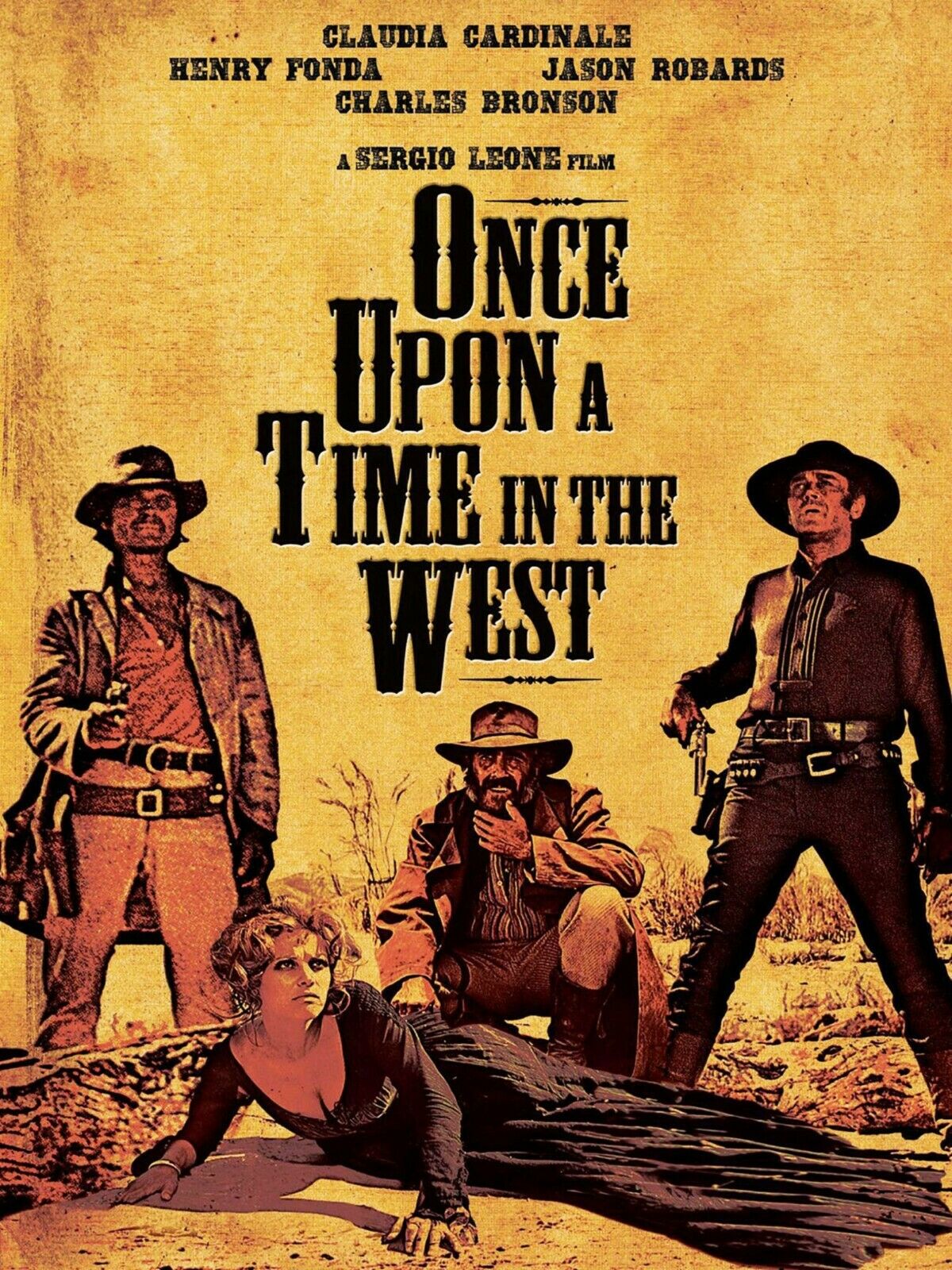
Although Paramount had piled cash into the Italian-made Once upon a Time in the West (1968) it was counting on Henry Fonda – undergoing a career renaissance after Madigan (1968), The Boston Strangler (1968) and Yours, Mine and Ours (1968) – to provide the box office momentum. Bronson was billed fourth after Claudia Cardinale, Fonda and Jason Robards, so still in Hollywood’s eyes a supporting player.

And while the Sergio Leone picture flopped Stateside, the success of Farewell, Friend in France turned Bronson into a star and was instrumental in the western breaking box office records in Paris (where it ran for a year) and throughout the country.

Fortunately for Bronson, European producers recognized his potential. His next picture should have been an Italian-French-German co-production of Michael Strogoff, for which he was announced as the top billed star (Advert, Variety, May 8, 1968, p136-137).  When that fell through, Italian company Euro International, bidding to become the top foreign studio outside Hollywood, gave him top-billing in Richard Donner drama Twinky (aka Lola, aka London Affair, 1970) and Serge Silberman tapped him for Rene Clement thriller Rider on the Rain (1970), another French hit.

British director Peter Collinson (The Italian Job, 1969) was responsible for recruiting him for You Can’t Win ‘Em All (aka The Dubious Patriots, 1970), but with Tony Curtis taking top billing. Again, though funded by an American studio, this time Columbia, it was another big flop, mostly because the studio did not know how to market the picture, Curtis in a box office slump and Bronson considered to have little appeal.

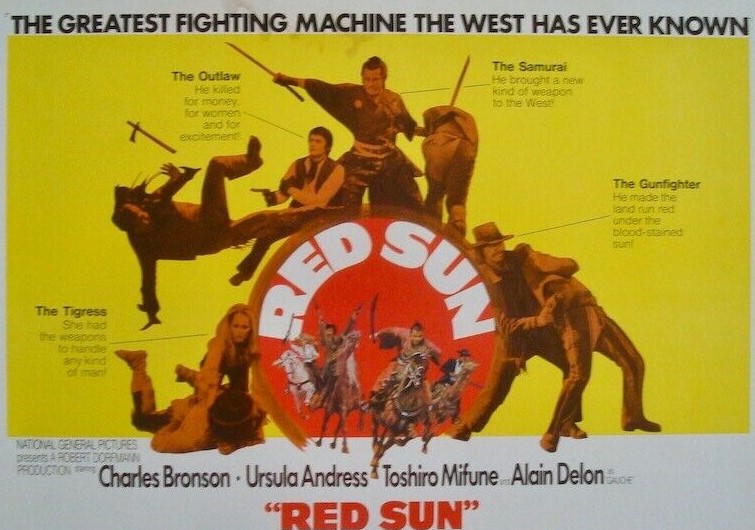
But still the Europeans kept the faith. Another French-Italian co-production Sergio Sollima’s Violent City (1970) gave him top billing over exiles Telly Savalas and Jill Ireland, Bronson’s wife. That was also the case with Cold Sweat (1970), helmed by British director Terence Young (Dr No, 1962).  He had another French-made hit with Someone Behind the Door (1971) and Terence Young hired him again, along with Farewell, Friend co-star Alain Delon, Japanese star Toshiro Mifune (Seven Samurai, 1954) and Dr No alumni Ursula Andress for international co-production Red Sun. While this western sent box office tills whirring all over the world, it only made a fair impression in the U.S., ranking 53rd in the annual box office chase.
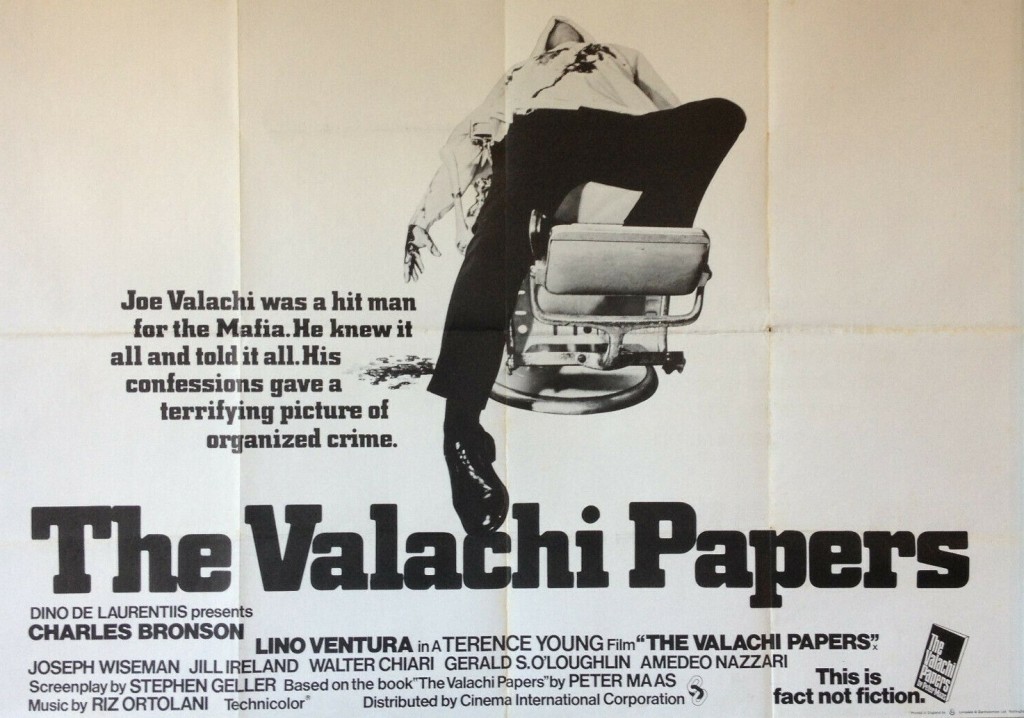
Riding on the back of The Godfather phenomenon, Italian producer Dino De Laurentiis chose Bronson for Mafia thriller The Valachi Papers (1972), again directed by Terence Young, which produced something of a box office breakthrough in the U.S., ending the year just outside the Top 20. But it took another British director, Michael Winner, to help solidify the Bronson screen persona and boost his global appeal. Four – and all of the hits – out of the star’s next six pictures were directed by Winner.  These were the western Chato’s Land (1972), The Mechanic (1972), The Stone Killer (1973) and Death Wish (1975). The Mechanic was such a big hit Stateside it did better in its second year of release than the first and Columbia redeemed itself by giving prison escape thriller Breakout (1975) the widest release – up to that point – of all time.

That America had little interest in developing Bronson as a breakout star could be judged by the distribution treatment of his pictures. As mentioned above, Farewell, Friend had to wait until 1973 for its U.S. debut and then renamed Honor among Thieves. Twinky was denied a cinema release in the U.S. and went straight to television in 1972. Violent City had to wait until 1973 for a distribution deal, Cold Sweat until 1974 and even Red Sun took nine months before it hit American shores.  Until The Valachi Papers did the business, Bronson was not considered the kind of star who could open a picture in the U.S.

By then, of course, Bronson had reversed the normal box office rules. Usually, for films starring American actors, foreign revenues were the icing on the cake. For Bronson it was the other way round. Along with Clint Eastwood he was the first of the global superstars, whose name resonated around the world, and whose pictures made huge amounts of money regardless of American acceptance or interest. But had it been left to Hollywood, Bronson would never have made the grade.

Discover WordPress

A daily selection of the best content published on WordPress, collected for you by humans who love to read.

The Atavist Magazine

by Brian Hannan

WordPress.com News

The latest news on WordPress.com and the WordPress community.