I should point out before we go any further there’s a Raquel Welch connection. Husband Patrick Curtis was a producer and La Welch is down as an assistant producer, at a time when the pair were setting up their own production company Curtwel. Hard to see where Raquel would have fitted in but wouldn’t it have been sensational to have her as the devious mastermind?
The concept is better than the execution. There is an inconvenient truth about science. Successful experiments often require guinea pigs. Brain-washing was one such scientific notion, generally seen as an invention of those dastardly Communists a la The Manchurian Candidate (1962) although The Mind Benders (1963) suggested it was as common in the British halls of academe. As indicated by the title here brain washing could be termed modern-day witchcraft.
But where government scientists could hide behind the greater good, personal advantage is the notion here. And it did make me wonder how many scientists took vicarious pleasure in seeing guinea pigs doing their bidding, enjoying the power to inflict change on the potentially unwilling.
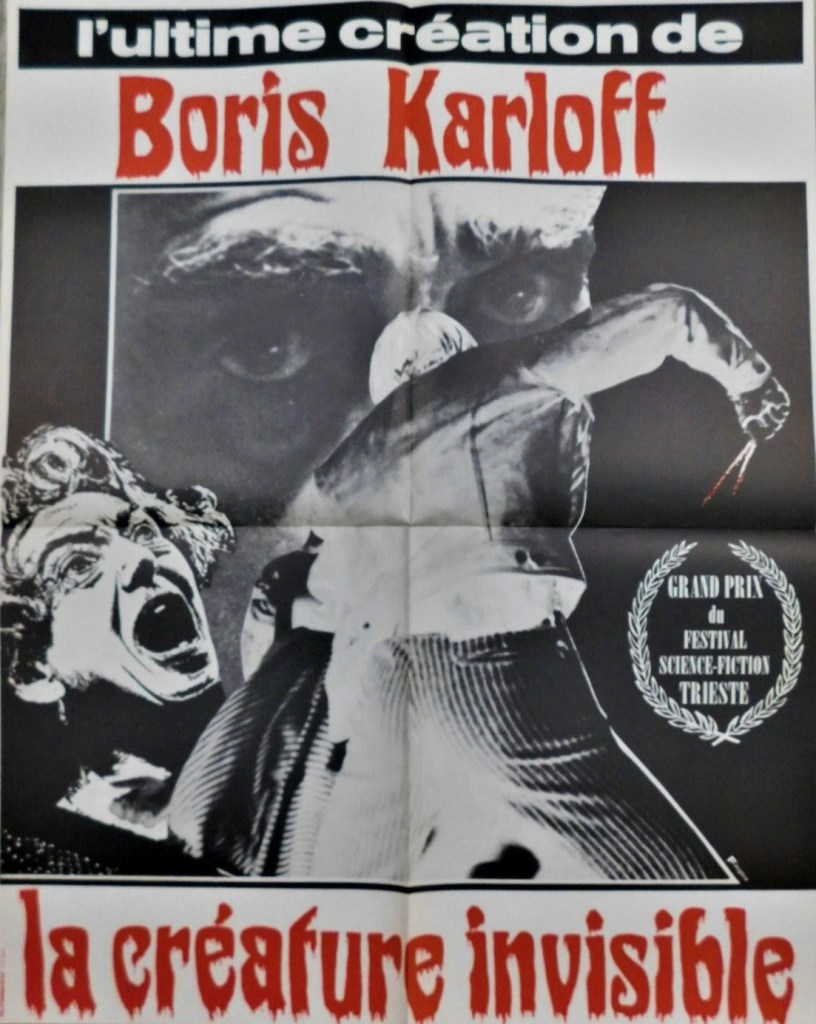
Professor Monserrat (Boris Karloff) and wife Estelle (Catherine Lacey) have invented a machine that through hypnotism can alter a subject’s mind in the longer term, make them prone to acts of savagery. Their chosen target is young man-about-town Mike (Ian Ogilvy). Bored with gorgeous girlfriend Nicole (Elizabeth Ercy) and ripe for adventure he is despatched on an orgy of violence, rape and murder.
What makes this potentially fascinating is that while the Professor draws back from the experiment, Estelle wants to continue. The sadistic female was coming into her own during this decade, Elke Sommer and Sylva Koscina as a deadly tag-team in Deadlier than the Male (1967), Suzanna Leigh in Subterfuge (1968), but these were sidekicks, pawns in the control of devious men.
Estelle wins a battle of wills against her husband and his weak opposition fails to deter her from authorizing ever more despicable acts, as if she is unleashing her own pent-up aggression. Not only can she control her husband but she is in command of the virile young Mike. Sensibly, the film stops short of setting her up as a James Bond-style megalomaniac, but there is something more infernal in committing these acts from a small run-down apartment rather than some underground space-age cavern.
Turning Boris Karloff into a bad guy tripped up by conscience is a neat casting trick. But making him prey to his initially subservient wife is a masterstroke. Her violence is gender-neutral, as happy to force Mike into battering a work colleague as attempting to rape a young woman.
And there is also a sense of the old taking revenge on the young. The old have been left behind in a Swinging London awash with discos and barely-existing morals. Why shouldn’t old people tap into base desire, and better still, not have to lift a finger, their victim carrying the can for every deed.
It’s stone cold creepy. And would been a much tighter – and scarier – picture if director Michael Reeves (Witchfinder General, 1968) had not wasted so much time with the dull youngsters, complete with pop groups performing in a nightclub. Ian Ogilvy (Witchfinder General) doesn’t bring much to the party, no more than your standard good-looking young fellow.
Boris Karloff (The Crimson Cult, 1968) is much better value especially when excitement at his new discovery wears off and he realizes he is playing second fiddle to his wife. For once, there’s nothing inherently evil in him. But Catherine Lacey (The Servant, 1963) is easily the pick, delivering a well-judged performance, assisting her husband in his endeavors until the time is right to take over. You might spot Susan George (The Straw Dogs, 1971) and Sally Sheridan, both a Fu Manchu and Bond girl. Tom Baker (Witchfinder General) co-wrote the script with Reeves.
Provides more to ponder than actually appears on the screen.
Intellect can present as powerful a sexual magnetism as wealth. And for young women, unlikely to come into the orbit of powerful movie magnates or wealthy businessmen, they are most likely to experience abuse of power in academia, especially in top-notch universities like Oxford and Cambridge or Harvard and the Sorbonne.
Young students, unsure of their place in the world, depend on praise for their self-esteem. To be on the receiving end of flattery from a renowned scholar, a young person (males included) might be willing to overlook other unwanted attention. For young women and men accustomed to being assessed on looks alone this might be a drug too powerful to ignore.
The British system ensured that potential prey was delivered to potential predators. As well as attending lectures, each student was allocated a tutor and could spend a considerable amount of time with them in private in congenial surroundings behind closed doors. And since essays marked by tutors played a considerable element in an overall mark, there was plenty of opportunity for transactional sex.
And it was easy for women to think they wielded the sexual power. I once employed a woman who boasted that she had seduced her university tutor, little imagining that that took any opposition on his part, and that, in reality, she was just another easy conquest.
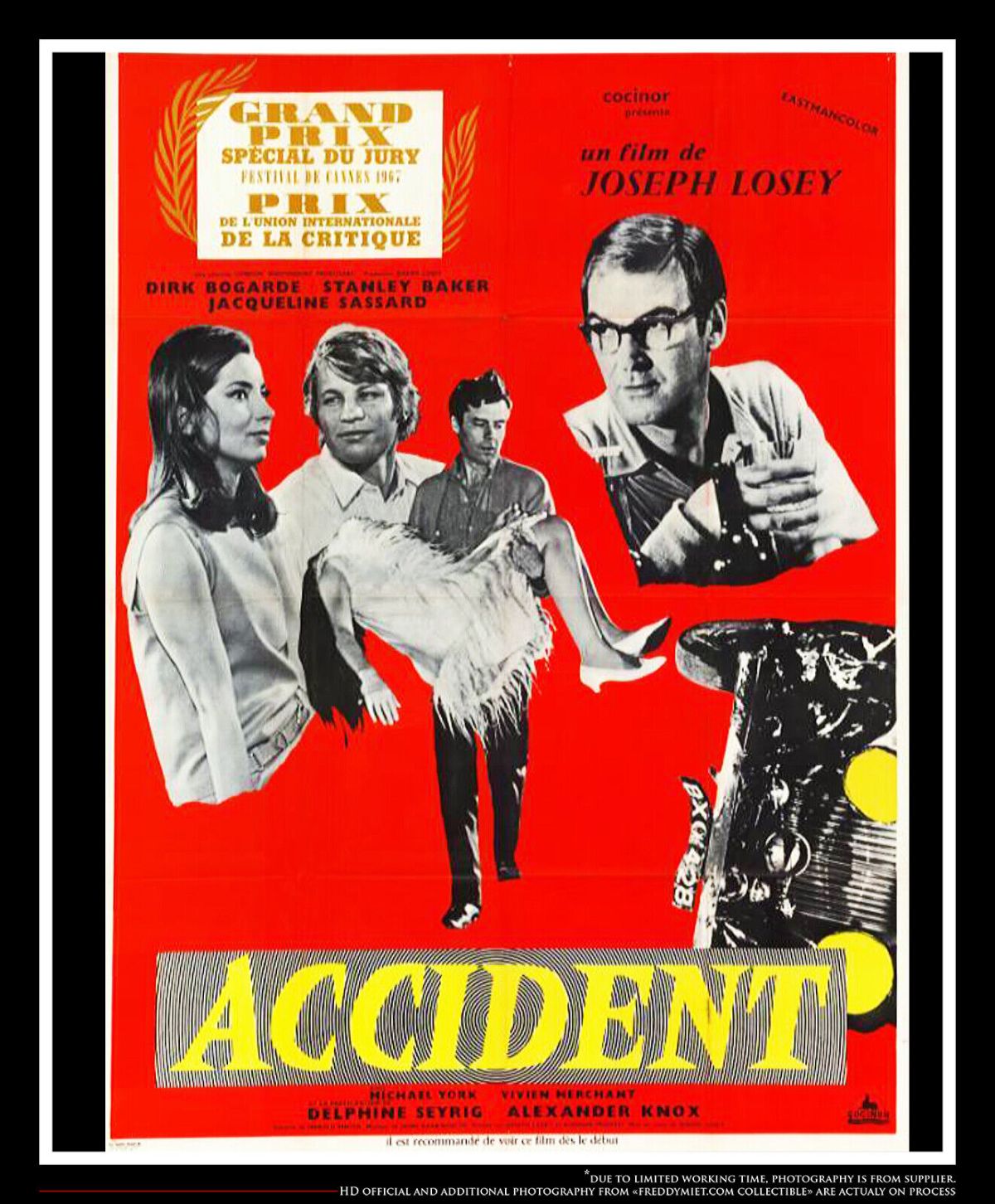
So you might be surprised to learn that when this movie about inappropriate behavior in a university of the caliber of Oxford appeared, nobody gave a hoot about the grooming and exploitation of young Austrian Anna (Jacqueline Sassard) by two professors, Stephen (Dirk Bogarde) and Charley (Stanley Baker).
The story is told in flashback in leisurely fashion. Hearing a car crash outside his substantial house in the country, Stephen finds inside the vehicle an injured Anna and her dead boyfriend William (Michael York). Then we backtrack to Anna’s arrival in Oxford, and how the love quadrangle is created. The presence of William suggests Anna has predatory instincts, but there is no sign of sex in their relationship, rather that he is forever frustrated at being kept on a leash and clearly suspecting he is losing out to others.
Stephen, a professor of philosophy, no higher calling in academe, endless discussion on the meaning of life manna to every student, has a purported happy home life, wife Rosalind (Vivien Merchant) pregnant with their third child. He’s no stranger to infidelity, reviving an affair with the estranged daughter Francesca (Delphine Seyrig) of a college bigwig (Alexander Knox).
But he can’t quite make his move on Anna, despite idyllic walks in the fields and their hands almost touching on a fence. The uber-confident Charley, novelist and television pundit in addition to academic celebrity, has no such qualms and seduces her under the nose of his friend and sometime competitor.
When opportunity does arise for Stephen it does so in the most horrific fashion and, that he takes advantage of the situation, exposes the levels of immorality to which the powerful will stoop without batting an eyelid.
The web Stephen is trying to weave around his potential victim is disrupted by William and Charley and if any anguish shows on Stephen’s face it’s not guilt at the grief he may cause or about his own errant behavior but at the prospect of losing a prize.
Director Joseph Losey (Secret Ceremony, 1968) sets the tale in an idyllic world of dreaming spires, glasses of sherry, tea on the lawn, glorious weather, punting on the river, old Etonian games, the potential meeting of minds and the flowering of young intellect. The action, like illicit desire, is surreptitious, a slow-burn so laggardly you could imagine the spark of narrative had almost gone out.
Stephen is almost defeated by his own uncontrolled desire, taking advantage of his wife entering hospital for childbirth, the children packed off elsewhere, to have sex with Francesca, not imagining that Charley will take advantage of an empty house.
And the young woman as sexual pawn is given further credence by the fact that at no point do we see the events from her perspective.
Anguish had always been a Dirk Bogarde (Justine, 1969) hallmark and usually it served to invite the moviegoer to share his torment. So it’s kind of a mean trick to play on the audience to discover that this actor generally given to playing worthy characters is in fact a sleekit devious dangerous man. Of course, the persona reversal works very well, as we do sympathise with him, especially when relegated to second fiddle in the celebrity stakes to Charley and humiliated in his own attempts to gain television exposure.
Stanley Baker (Sands of the Kalahari, 1965) was the revelation. Gone was the tough guy of previous movies. In its place a charming confident winning personality with a mischievous streak, a far more attractive persona when up against the more introspective Bogarde.
Jacqueline Sassard (Les Biches, 1968) is, unfortunately, left with little to do but be the plaything. There’s an ambivalence about her which might have been acceptable then, but not now, as if somehow she is, with her own sexual powers, pulling three men on a string. In his debut Michael York (Justine, 1969) shows his potential as a future leading man.
You might wonder if Vivien Merchant (Alfred the Great, 1969) was cast, in an underwritten part I might add, because husband Harold Pinter (The Quiller Memorandum, 1966) wrote the script and Nicholas Mosley, who had never acted before, put in an appearance because he wrote the original novel.
Losey, a critical fave, found it hard to attract a popular audience until The Go-Between (1971) and you can see why this picture flopped at the time despite the presence of Bogarde and Baker. And although it is slow to the point of infinite discretion, it’s not just a beautifully rendered examination of middle class mores, and a hermetically sealed society, but, way ahead of its time, and possibly not even aware of the issues raised, in exploring abuse of power, a “Me Too” expose of the academic world.
The acting and direction are first class and it will only appear self-indulgent if you don’t appreciate slow-burning pictures.
Darkest – and possibly the most under-rated – western of the decade featuring a top-class cast playing against type, down-and-dirty in its depiction of the itinerant cowboy, an ending you won’t see coming and if it’s not a heretical notion close cousin to the later The Wild Bunch (1969).
Gang of outlaws led by Dee (Dean Martin), condemned to death for robbing a bank, is rescued by his brother Mace (James Stewart) posing as a hangman. While a posse led by Sheriff Johnson (George Kennedy) is in hot pursuit and the outlaws kidnap as potential hostage recently widowed Maria (Raquel Welch), Mace, sauntering through the deserted town, indulges in a bit of larceny himself.
All head for Mexico, a pitiless region, where the posse are picked off by bandits, the outlaws directed by the native Maria towards a small town which turns out to offer no safety at all. While there’s plenty action, this is more character-based. Mace and Dee are on the Civil War divide, the former (still sporting his Union uniform) riding with General Sherman, the latter with the Confederate Quantrill’s Raiders, despised by Mace as nothing more than glorified killers.
And while they are both outlaws, Mace blaming his situation on the Civil War, they are divided too by a sense of honor, Mace making it a point of principle never to harm women or children, Dee, far removed from any sense of himself, guilt-ridden, past caring, and lonely, can’t remember the last time he was with a woman he respected.
Sheriff Johnson is in pursuit in part due to unrequited love for Maria. Quick to action in a professional capacity, he is tongue-tied in her presence. Nor has the newly-wealthy Maria much need of a male protector. A whore since the age of 13 to provide for her extended family, sold into marriage nd acceptance that for security not love, she has been, ironically, set free by violent robbery. Dee’s gang views Maria as plunder, rape imminent should the brothers turn their backs. While Maria has little interest in another male protector she finds herself attracted to Dee.
Mace is mostly peacemaker, prodding his weaker sibling into responsibility, trying to instil into him the kind of code by which the likes of The Wild Bunch swore, but, still on the shifty side himself, concealing from the others the loot from his own robbery. But where The Wild Bunch are essentially sanctified by Peckinpah, especially with their hypocritical codes of honor and their unlikely redemption, the lives of Dee and Mace are unfulfilled, lawful or lawless drifters enjoying little of life.
There’s an ambivalence to Mace, theoretically a law-abiding rancher, but apparently turning outlaw on a whim. We are introduced to an impoverished Mace being ripped off for food and accommodation, spending the night in an overcrowded bunkhouse, his Unionist uniform doing him no favors two years after the end of the Civil War in Confederate Texas. He appears less prone to violence but we are not privy to how he persuaded a hangman to part with his outfit. And he’s a mean hand with a rifle, helping his brother escape his pursuers.
You might wonder just how Mace came to be an outlaw when he witters on so often about his God-fearing mother and his upbringing on a farm and you always have the sense he’s part of that woeful Hollywood creation, the “good” outlaw, as if there was such a thing, certainly no sign of him dispersing ill-gotten gains to the poor. He might just be as deluded as his brother.
Of the three, Maria is the most clear-sighted, no qualms about her behaviour, and, provided with weaponry, perfectly capable of defending herself. Mexican bandits offer her no clemency either, assuming that, escorted by gringos, she has abandoned the land of her birth, or just because any woman is prey.
So it’s a perfect onion of a western, layers upon layers, the pursued needing to defend themselves not just against the pursuers, but bandits lying in wait, and within their supposed close-knit community the brothers guarding against fellow outlaws and protecting the woman.
James Stewart (Shenandoah, 1965) played many a tough guy at the reinvention of his career in the early 1950s in Anthony Mann westerns, and while his characters often displayed venal qualities they were not outlaws. Career-wise this was a dicey role for an established western hero. That he brings the common touch that was the hallmark of his original screen persona to this characterisation of an outlaw with a code of honor does not disguise the fact that he is still an outlaw.
Dean Martin had essayed a really mean bad guy in Rough Night in Jericho (1967) but again this was his debut as an outlaw, and a conflicted one at that, enjoying the boost to his self-esteem that leadership brings, but finding himself enmeshed with the dregs of society, and certainly not on the look-out for any acts of kindness or redemption. This is a beautifully nuanced performance especially when he realizes Maria is responding to him.
Raquel Welch (Fathom, 1967) in what amounts to her first major film opposite two Hollywood legends more than holds her own. Not able to rely upon her overt sex appeal as in her previous outings, she portrays an upstanding women, abused by men in the past, determined not to take that route in the future. Alone of all the characters, having accepted her fate at an early age, she has developed a self-esteem not sacrificed to circumstance. The whore and the outlaw might be the oldest trope in the book but it works very well here as two characters find solace in each other.
George Kennedy (Cool Hand Luke, 1967), more accustomed to playing tough guys, leavens his portrayal by appearing idiotic with women. This, too, is a departure for Andrew V. McLaglen. Anyone aware of Shenandoah or The Undefeated (1969) will be familiar with his dexterity for widescreen composition, but here he tamps down on that stylistic device, concentrating more on group reaction and interaction. James Lee Barrett (Shenandoah) wrote the biting script based on a story by producer Stanley Hough.
While there’s plenty action it’s not a rip-roaring western, too much character involvement for that, but certainly ranks as one of the top westerns of the decade.
Apologies again for the premature appearance of the blog “Behind the Scenes: Bandolero!” but that will definitely appear tomorrow.
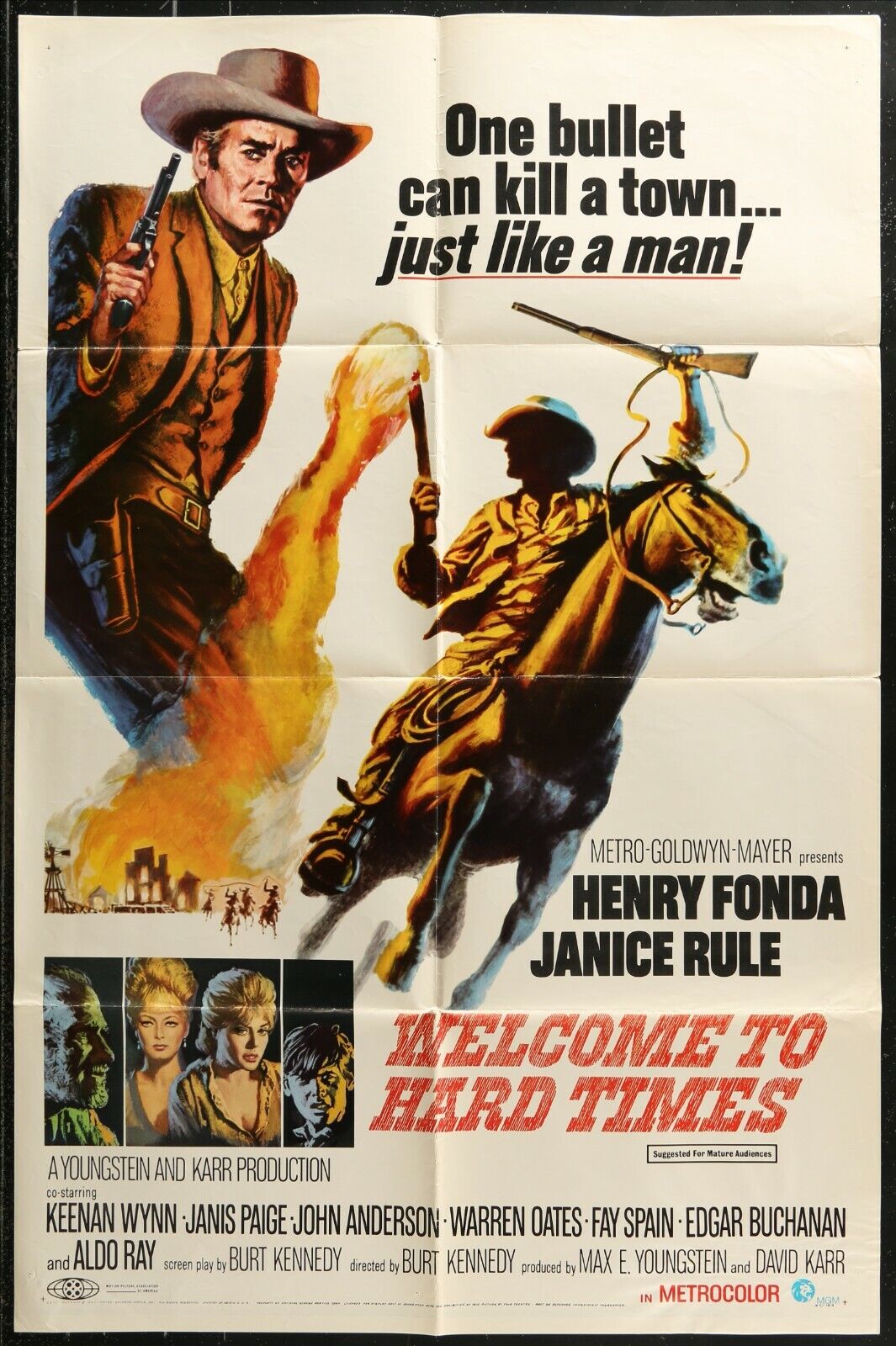
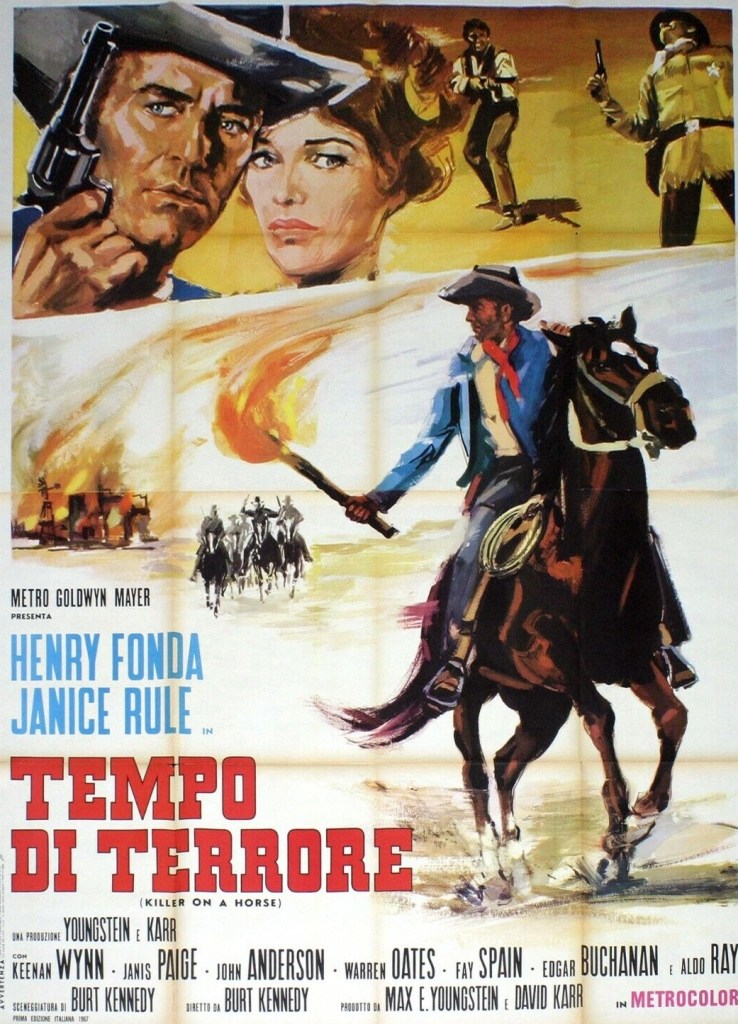
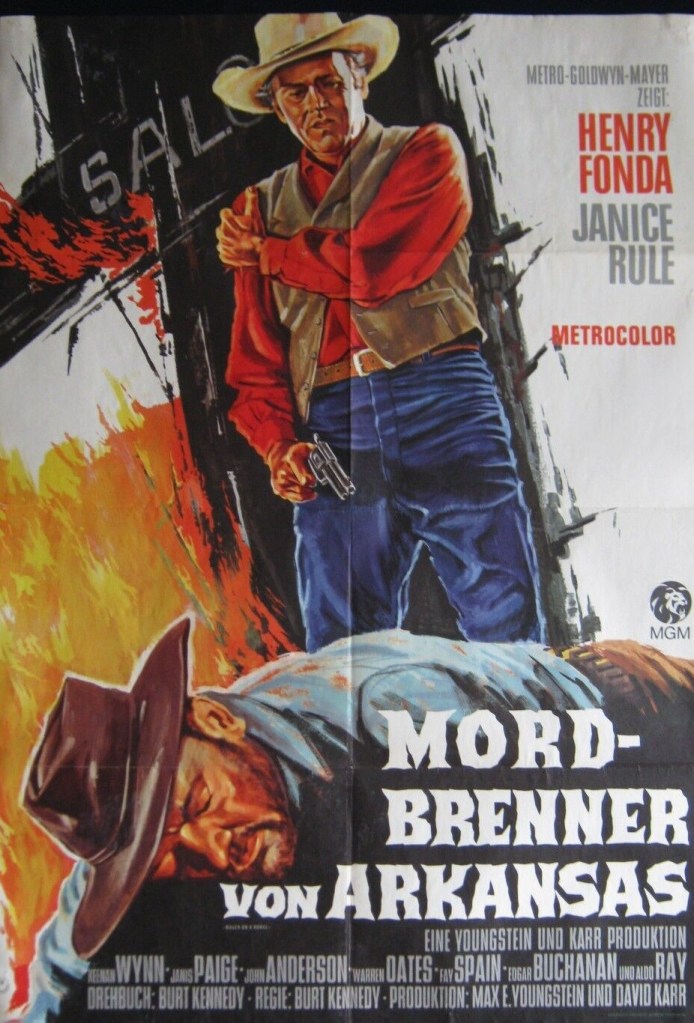
Director Burt Kennedy’s record with westerns was very much hit or miss. This revisionist effort is one of the former though it could as easily tipped into the latter, beginning with a shrill soundtrack that telegraphs every incident and the no-name villain. And you might also wonder if irony had taken such a hold of settlers that they would actually name their town “Hard Times” when there was a gold strike over the hills.
Anyway, this is certainly a town that lives up to its name. Can’t have been more than a dozen houses, a saloon of course, but it’s the muddiest place west of No Name City (Paint Your Wagon, 1969) and the meanest to hove into view since High Noon, with the townspeople in thrall not to an entire gang, but one nameless stranger (where have we seen that before).
The Man from Bodie (Aldo Ray), as he is known, is the bad guy from Hell. He shoots anyone who stands up to him like Fee (Paul Birch) or shows the slightest dissent like undertaker Hanson (Elisha Cook Jr) and rapes Fee’s girlfriend Flo (Ann McCrea) before dumping her corpse on the saloon stairs.
Will Blue (Henry Fonda), lawyer not lawman, hasn’t the guts to stand up to him, but comes the closest of the cowardly bunch. When The Man has done as much rampaging as a tiny town will allow he burns it to the ground. Most people leave, but Blue, having done too much running in his life, decides to stay to look after Fee’s orphaned son Jimmy (Michael Shea).
If Blue’s vengeful Oirish girlfriend Molly (Janice Rule) also remains it’s mostly to hate him for abandoning her to the madman – Blue had used her to distract the Man but then retreated when the going got tough leaving her to be raped at will. She sets up her own League of Desperadoes, recruiting new arrival Jenks (Warren Oates) and the orphan, to tackle the bad guy on his inevitable return.
Meanwhile, a mobile unit of sex workers, complete with tent, turns up to service the nearby gold workers. Their entrepreneurial boss Zar (Keenan Wynn) spots opportunity and helps Blue rebuild the town. Of course, everyone’s just waiting for Bodie Man to return.
Anyone that’s likeable or got anything approaching character is killed off at the start, so we’re left with an unlikeable, ambivalent, but realistic, crew. For all his later hi-falutin’ principles and pioneer spirit, Blue is still a coward who, to save his own skin, sacrificed Molly. Hoping to redeem himself by acting as surrogate father to Jimmy doesn’t result in him winning any respect from Molly.
This is one raped woman who found out the man on whom she was depending was no protector. Why should she ever love him again? And she’d be crazy to put her life in his hands once more. Of course, she could have got herself her own shotgun or pistol and ambushed Brodie Man when he took another shine to her, but instead she plays pretty please with Jenks, which is understandable, and the young Jimmy, which is deplorable.
That the sex worker magnate becomes one of the town’s foremost citizens might cleave closer to the bone than many viewers would like, but corruption was as endemic in America then as it presumably is now.
And it begs the question when all those pioneers headed out West how many of them were scum like Bodie Man? And how did the settlers think law-and-order was going to work out?
On the downside we have a villain, who, not content with killing and raping, demonstrates just how mean he is by smashing whisky bottlenecks because he hasn’t the patience to extract the cork with his teeth. Fee is dumb enough to take on the bad guy with a bit of log. Molly’s Irish accent is all over the place. And we could do with less music. And there’s a climactic twist that belonged to a horror film and is not only completely out of place but undoes the realistic tone by providing a somewhat sanctimonious ending.
But if you are expecting a movie along High Noon lines, with the good guy beating the bad, and winning the town’s respect, then you will be disappointed. On the other hand if you come prepared for one of the darkest westerns of the decade where the terrorizing outlaw exerts such fear that the townspeople, in defending themselves, pull down the shades between good and evil, then you will be amply rewarded.
The boldness of director Kennedy (The War Wagon, 1967) in reimagining the West as a place of venal proportions should be applauded. The direction might take a wrong turn here and there but the aim is effective. Henry Fonda (Firecreek, 1968) is good as ever and although I could do without the awful accent Janice Rule (Alvarez Kelly, 1966) is superb as the vengeful woman refusing Blue forgiveness and willing to use a youngster as a weapon.
A sound supporting cast includes Keenan Wynn (Warning Shot, 1967), Edgar Buchanan (Move Over, Darling, 1963), Janis Paige in her final movie outing, John Anderson (5 Card Stud, 1968) in a double role, Aldo Ray (The Power, 1968) and Warren Oates (The Wild Bunch, 1969).
Kennedy wrote the screenplay form the book by E.L. Doctorow.
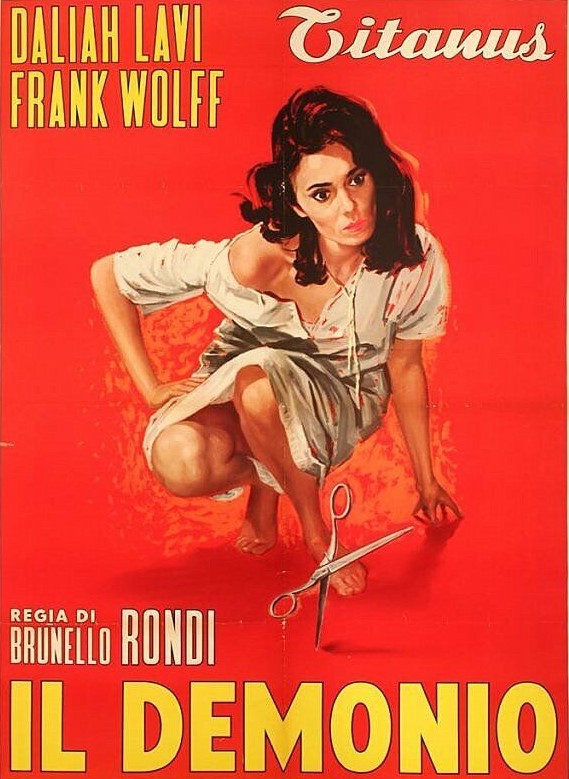
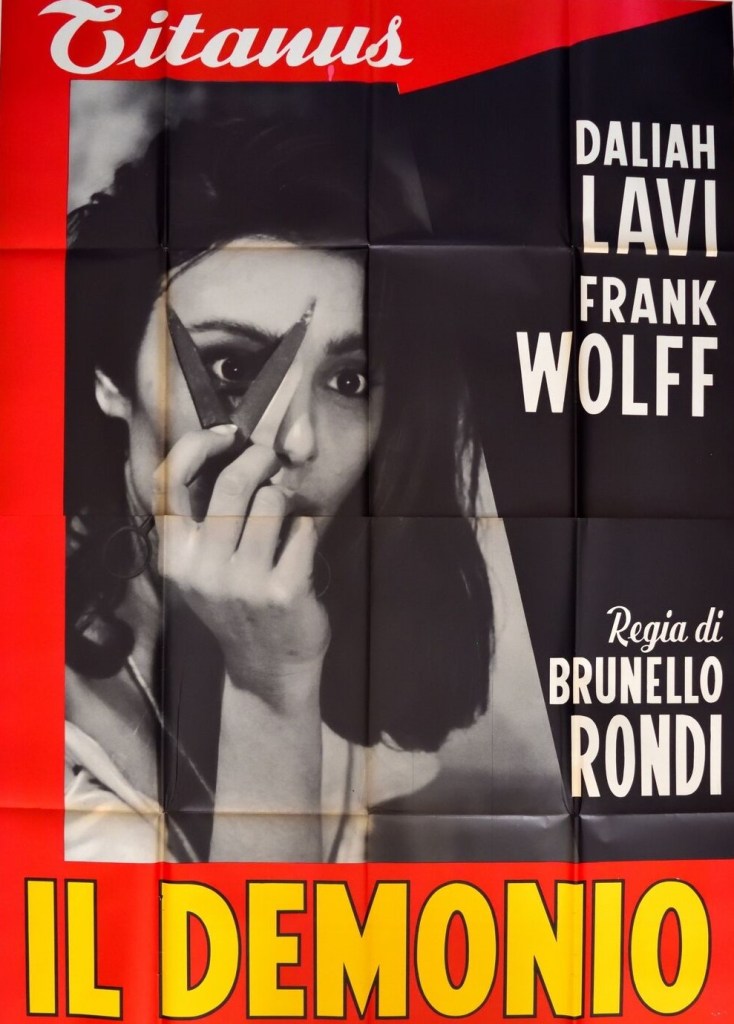
I was riveted. This is one of the most extraordinary films I have ever seen. Highly under-rated and largely dismissed for not conforming to audience expectation that horror pictures should involve full moons, castles, darkness, fog, costumes, nubile cleavage-exposing female victims, graveyards, a male leading character, shocks to make a viewer gasp, and the current trend for full-on gore.
So if that’s what you’re looking for, give this a miss. Even arthouse critics, spoiled by striking pictures by the Italian triumvirate of Fellini, Visconti and Antonioni, were equally scornful. For the most part the action takes place in broad daylight, rather than the twilight and darkness beloved of Hollywood (and British) horror.
It is set in an impoverished town in the Italian mountains, where farming is so primitive the soil is tilled with horse and plough and water is collected in buckets from the river.
One of the most striking aspects of the picture is that it creates its own unique universe. The townspeople are both highly religious and deeply superstitious, every traditional Catholic ceremony matched by old-fashioned ritual. Even some of the formal traditions seem steeped in ancient belief, sinners marching up a steep hill with people being scourged or carrying a heavy rock, in a convent the tree of a suicide covered in barbed wire.
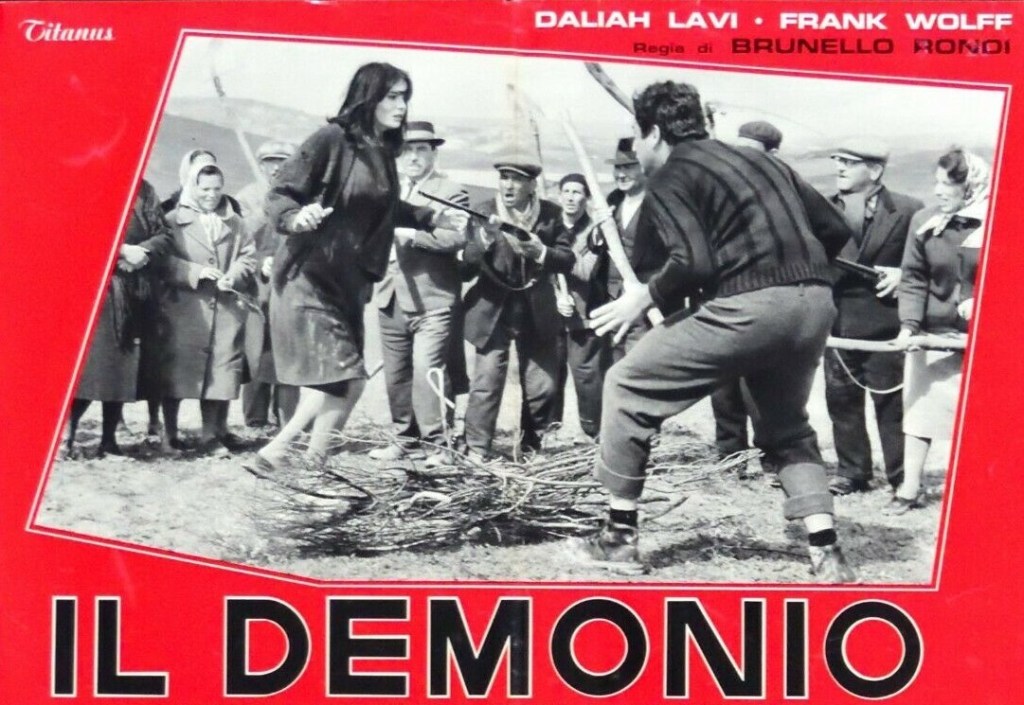
Less conformist notions include a wedding night rite involving shoving a scythe under the bed to cut short Death’s legs with the bedspread covered in grapes to soak up evil and discord arranged in the form of a cross to act as bait for bad thoughts and poison them before they can cause the couple harm. When the people run through the town brandishing torches it is not, as would be genre tradition, to set fire to a castle but to vanquish evil from the air.
It is filmed in austere black-and-white. In the Hollywood Golden Era of black-and-white movies, lighting and make-up transformed heroines, rich costumes enhanced background. Here, if the heroine is wearing make-up it’s not obvious and the only clothes worth mentioning are a priest’s robes or a plain wedding dress. Otherwise the most arresting feature is the stark brightness against which the black-dressed figure of the heroine Puri (Daliah Lavi) scuttles about.
And although there are no jump-out-of-your-seat shocks, there are moments that will linger on in your mind, not least the heroine enduring a vicious extended beating from her father, an exorcism that turns into rape and the sight, Exorcist-fans take note, of a spider-walk, the young woman’s torso thrust up high on elongated arms and legs. Virtually the entire success of the picture relies on atmosphere and in places it is exquisitely subtle, the audience only realizes she has been raped, for example, by the look on her face.
The picture opens with a dialogue-free scene of stunning audacity, foreshadowing the idea from the start that image is everything. Puri pierces her chest with a needle, cuts off a chunk of her hair to mop up the blood, throws the hair into the oven and rams the crisp remains into a loaf of bread. Not to be consumed as you might imagine, but as a tool of transport.
Shortly after, having failed to seduce Antonio (Frank Wolff), she tricks him into drinking wine infused with the ashes of her bloodied hair, bewitching him, so she believes, to abandon his betrothed. In an echo of a Catholic sacrament she shouts, “You have drunk my blood and now you will love me, whether you want to or not.”
The next morning when collecting water at the river she has a conversation with a boy Salvatore only to discover he has just died, his death blamed on her because his last words were a request for water, which she is judged to have denied him. She is beaten by women. She is feared by everyone in the village, her family tainted with the same brush, wooden crosses nailed to their door. She is not a ghostly figure, flitting in and out of the townspeople’s lives, an apparition tending towards the invisible, but fully formed, highly visible in her black dress and anguished expression, doomed by often vengeful action and forceful word.
Much of the film involves Puri being beaten or chased or captured, at one point trussed up like a hog. Attempts to exorcise her, whether by pagan or Catholic means, focus on getting the demon to speak his name. The ritual performed by heathen priest Giuseppe involves blowing on a mirror before taking on sexual aspects which culminate in rape. The Catholic version in a church in front of her family is primarily, as it would be in TheExorcist, a duel between the priest and whatever possesses her.
Movie producers who took one look at the beauty of Palestinian-born Daliah Lavi (Blazing Sand, 1960) and thought she would be put to better use in bigger-budgeted pictures made in color that took full advantage of her face and figure and that stuck her in a series of hardly momentous movies such as The Silencers (1966) and Some Girls Do (1969) should be ashamed of themselves for ignoring her astonishing acting ability.
And much as I have enjoyed such films, I doubt if I could watch them again without thinking what a waste of a glorious talent. This is without doubt a tour de force, as she alternatively resists possession and adores the being who has taken hold of her mind. She dominates the screen.
The rest of the mostly male cast is dimmed in comparison, as if overawed by the power of her personality. Future spaghetti western veteran Frank Wolff (Once Upon a Time in the West, 1969) comes off best. Director Brunello Rondi (Run, Psycho, Run, 1968) is better known as a screenwriter for Federico Fellini. He made few films, none matching this in scope or imagination, perhaps as a result of the picture not receiving the praise it deserved. Even now it does not have a single critical review on Rotten Tomatoes.
One other point: you may have noticed that in general the proclivities of male horror characters are never in need of psychological explanation. Nobody considers that the Wolfman must have suffered from childhood trauma or that a vampire drinks blood because he was a rejected suitor. Strangely enough, as would be the case in The Exorcist and other instances of female possession, psychiatry is usually the first port of call and here all reviews I have read implicitly see Puri’s actions as based on sexual inhibition and rejection by Antonio.
You would need to chase up a secondhand copy to find this, I’m afraid.
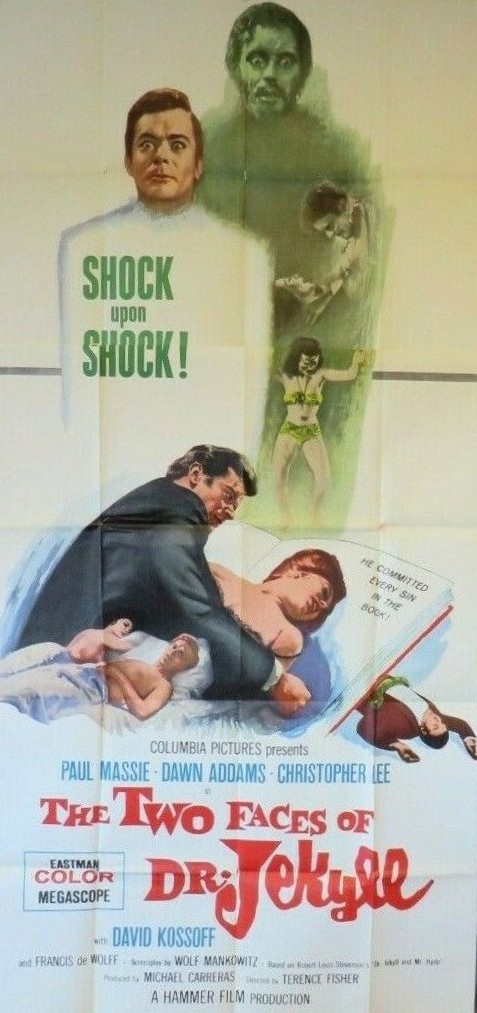
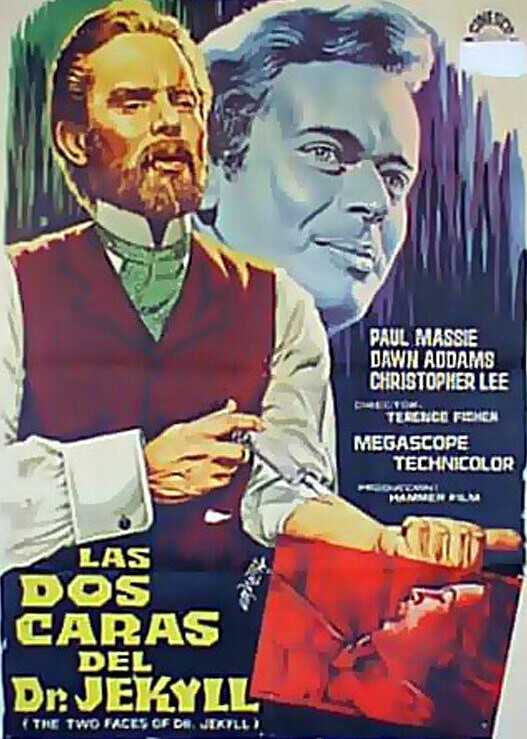
One of the most shocking films of its day with its unusual focus on sex and violence, this takes the famed Robert Louis Stevenson tale down a different direction in that Dr Jekyll enjoys the base animal instincts he has unleashed with his experiments rather than expressing remorse or guilt. Evil has never been more demonstrably enjoyed.
Dr Jekyll (Paul Massie) is a shy cuckolded scientist when he takes the magic elixir that diverts his dull personality towards a more dynamic, if ultimately perverted, destination. From being fearful of life, he begins to sample its more exotic pleasures under the guidance of louche best friend Paul (Christopher Lee) who is carrying on an affair with the good doctor’s wife Kitty (Dawn Addams).
Not only does the reincarnation of Jekyll as the lusty Hyde consort with prostitutes and manage to snare exotic dancer Maria (Norma Marla), a beautiful woman who would normally be way out of his league, he develops a fetish for violence, almost beating to death a hooligan (Oliver Reed) in a dodgy club, only prevented from committing his first murder by the intervention of his friend.
Sure, there’s some philosophising about the nature of good and evil and whether violence is inborn or nurtured and there are moments when guilt rears its ugly head, but these are pretty fleeting to be honest, and most of the time he can hardly wait for another draught of his poison in order to shake off his insipid persona and revel in the new creation.
But magic will only take you so far. Believing he is now irresistible to women he fancies his chances with Paul’s amour, who is of course none other than his wife, but she will have none of it, finding him a poor alternative to the charming Paul. In one of the most controversial scenes of the day, and perhaps only ironically acceptable at the time, Hyde proceeds to rape the resisting Kitty. This skirts so close to the edge of taste, not just the worst type of domestic abuse (though husband assaulting wife would be no less unusual in Victorian times than it is now), but almost the neanderthal man taking what he wants, that it makes for uncomfortable viewing, especially as it is presented as a come-uppance for the adulterous hoity-toity Kitty.
Perhaps more interesting is that having won over the cold Maria, a trophy lover on a par with the higher-born Kitty, that’s not enough for Hyde.
Also, for the time, is an extremely risqué scene involving Maria and her snake, especially when having completed the usual survey of her curves, the reptile ends up down her throat. That the Victorians were masters of the art of hypocrisy comes as little surprise, but the extent of it takes the viewer aback.
There’s another twist. When it becomes apparent that his crimes are about to catch up with him the cunning Jekyll attempts to blame Hyde.
Sumptuously mounted by Terence Fisher (Dracula, Prince of Darkness, 1966) and with nary an attractive character in sight – none of the innocent victims of the vampire sagas, for example – to leaven the sight of such unmitigated wickedness, the director offers an unique vision of how easy human beings will degenerate given the chance. At the outset Paul appears the most obvious villain, leeching on his friend to pay his gambling debts, while at the same time making hay with his wife. But initial audience sympathy for a wife, presented as a beautiful woman who for the sake of security has made a bad marriage and who needs an outlet for passion, soon dissipates as her true character is revealed.
The refusal to temper the ongoing degeneracy with one good character is a bold choice. Budgetary restrictions eliminated the usual transformation scene but that was probably for the best, since Hyde merges as though from a chrysalis into a stronger personality rather than undergoing some body-wracking physical change. It’s almost as if the director is determined to show how easy, given opportunity, a good but essentially weak man will embrace the dark side.
Accusations that Fisher has failed to bring sufficient suspense to the film I find unfair. Certainly, there’s not the tension of the will-he-be-found-out vein, but since the story is so well-known that appears a redundant course sensibly avoided. The director replaces that with ongoing friction between Jekyll and his friend on the one hand and his wife on the other, both of whom are unaware that the man they know as Jekyll is aware of just what a fool has been made of his alter-ego.
The emphasis instead falls on how and when the cuckold will take his revenge. And although the rape scene is unwelcome, there’s a certain ironic sadness for Jekyll to discover that his new persona is no more attractive to his wife than his old one.
Paul Massie (Call Me Genius, 1961) is of course far removed from an actor like Spencer Tracy (Dr Jekyll and Mr Hyde, 1941) and he relies overmuch on rolling the eyes but even so this is a decent performance. Christopher Lee (Dracula, Prince of Darkness) is the revelation, creating a very believable insidiously charming man who never quite approaches outright villainy. Dawn Addams is excellent as the spoiled entitled wife.
One of the unusual aspects of the picture is that where Hammer had been and would remain a breeding ground for new stars – Christopher Lee a most obvious example – everyone else featured here came to, in cinematic terms only I assure you, an untimely end.
This turned out to be Paul Massie’s only starring role – he only made another three films during the entire decade – and was soon relegated to television. Dawn Addams only managed another nine and, apart from House of Sin/The Liars (1961), spy flick Where the Bullets Fly (1966) might be counted the peak.
David Kossof only made another four, and none beyond 1964. And this was the final film in an extremely brief two-picture career for Norma Marla. Only the uncredited Oliver Reed (Women in Love, 1969) and of course Christopher Lee (Dracula, Prince of Darkness, 1966) went on to bigger and better things.
As did Terence Fisher who helmed most of the best Hammer pictures of the decade. Wolf Mankowitz (The Day the Earth Caught Fire, 1961) wrote the script.
Generally dismissed at the time, this has for good reasons acquired a substantial following and is well worth a look.
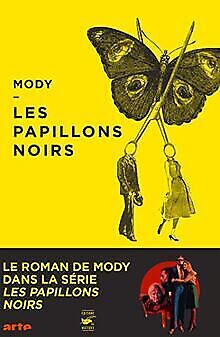
Not since Basic Instinct (1992) has there been such an obvious connection between sex and murder. Slow-burn French film noir throwback, every twist, unusually, is matched by emotional resonance. Over six episodes this turns into an absolute cracker with several shocking scenes and, for once, a post-credits scene in the final episode worth waiting for.
You do however need to give this time. The first episode is mostly confusing as it sets up the three main strands. But episode two contains such a revelatory twist thereafter you’re on a rollercoaster.
In the present day ex-con acclaimed but impoverished novelist Adrien (Nicholas Duvauchelle) takes up a not particularly well-paid ghost-writing job listening to grizzled old fella Albert (Niels Arestrup) recount his memoirs. Adrien, on the jealous side, has a tangled relationship with partner Nora (Alice Belaidi). Also in the present day a couple of cops, Carrell (Sami Bouajila) and Mathilde (Marie Denarnaud), are working on a cold case, the death of renowned photographer Steven Powell.
Running parallel with these two tales we go delving into the romantic past of Albert and in particular his relationship with Solange (Alyzee Costez) back in the 1970s when the entire world was on a massive experimental binge. A couple of other elements pop up from time to time, a small boy and his mother, Adrien and his stepfather, and an artist/tattoo artist Catherine (Lola Creton).
Eventually, it all comes together and when it does it packs an incredible punch, a real emotional wallop, as the lives of all concerned are turned upside down.
And while there is most definitely twist upon twist upon twist, what raises this above most movies/programs that rely just on twists, is the emotional impact of such changes, and above all, characters seeking identity, trying to work not just who they are but whether they like or are repelled by the characters they have become.
Chock-full of atmosphere, this will have you hooked from the incredible second episode which tumbles full-tilt boogie into a dazzling mysterious past. Mostly, it takes place in France but just for the hell of it we race to Brussels and Genoa, and timewise, there’s an important element that takes place at the conclusion of the Second World War.
Everyone is damaged one way or the other and as the series progresses you realize just how damaged. And one of the best parts of the series is that lives that should collapse under the weight of such heavy emotions find themselves taking an alternative route that occasionally provides solace and occasionally dodges the issues enough to keep them steady. But, of course, nobody can escape the past.
While this is definitely on the raunchy side, it does set out to show the part sex plays in the lives of the characters, whether emotional crutch, expressing the full joy of falling in love, or desperate measure.
The characters are well-drawn, and as new personality details emerge, they take the story in different directions. In some respects it’s grounded by Albert, the kind of old guy who really knows how to smoke, slipping the cigarette into his mouth old-style, sucking the life out of it, and for all his obvious dodginess a genuine human being seeking respite and redemption.
What Adrien discovers relates only too well to what he suspects about his own instincts and so he is as much disgusted as revelling in each new discovery. An ex-kick boxer, one of the running motifs is not so much being up for the fight, or in true private eye mode being able to hold your own in the fisticuffs department, but willing to accept physical punishment. That is matched by an understanding of the toll emotions can take on your life, especially if you lack the mental capacity to defend yourself against such intrusions.
And at the heart of the story is the mysterious, seductive, beautiful Solange, a different kind of femme fatale, perched atop beguiling innocence, at times unaware of the passions she unleashes, and yet, trying to find a way out of her own spiralling emotions, internal conflict typified by undergoing various abortions while so desperately wanting a child that she plays interminably with a doll’s house, her own reaction to the sexual act buried deep in her past.
I’ll admit the first episode is at timse heavy-going as writer-directors Olivier Abbou (Get In, 2019) and Bruno Merle (The Lost Prince, 2020) set out their complex stall, but the second episode is such a humdinger it more than makes up for it. The contrast between the free-wheeling free-spirited 1970s and the grungy contemporary look where responsibility brings an edge to everything is very well done. But while the violence would do Tarantino proud, contemplation of the creative process is as considered.
It probably helps that I’m unfamiliar with any of the actors because for me they carry no screen baggage. Nicholas Duvauchelle (Lost Bullet, 2020) carries off his first top-billed role superbly, making a terrific transition from a character almost playing a part to one who wishes he had done a better job of remaining an ordinary guy. On the basis of this, Hollywood should come calling for veteran Niels Arestrup (A Prophet, 2009) any time they’re looking for a crusty supporting actor.
Alyzee Costee, in her biggest role to date, certainly announces her presence, presenting the most complicated character of the lot, daughter, lover, mother, possibly the most intriguing female character of all time, beauty matched with fragility matched with toughness matched with an agility to switch persona at dizzying speed. This is what Netflix is best at, investing in foreign television programs, or just sticking their name on them, to bring them to global attention. This is definitely worth a wider audience
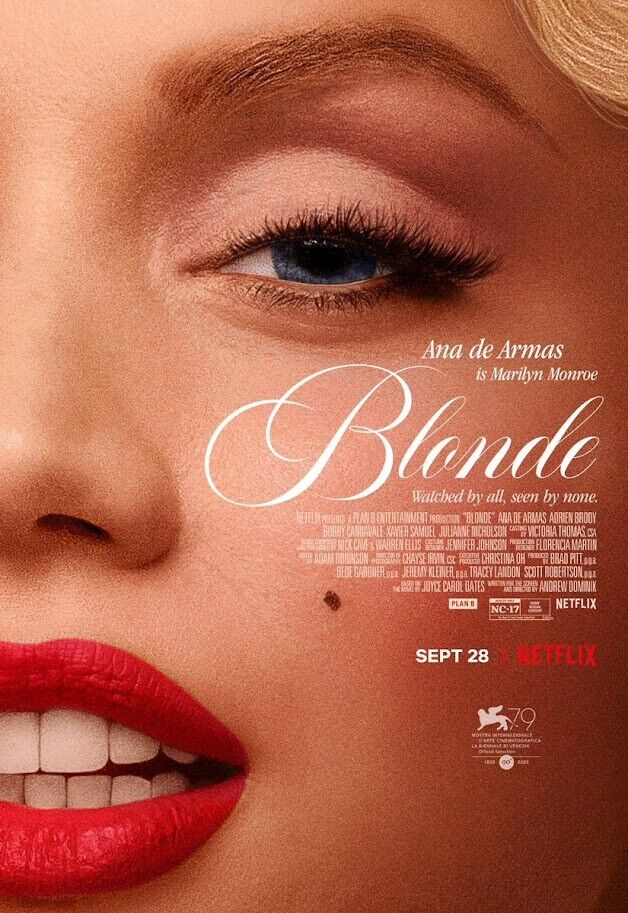
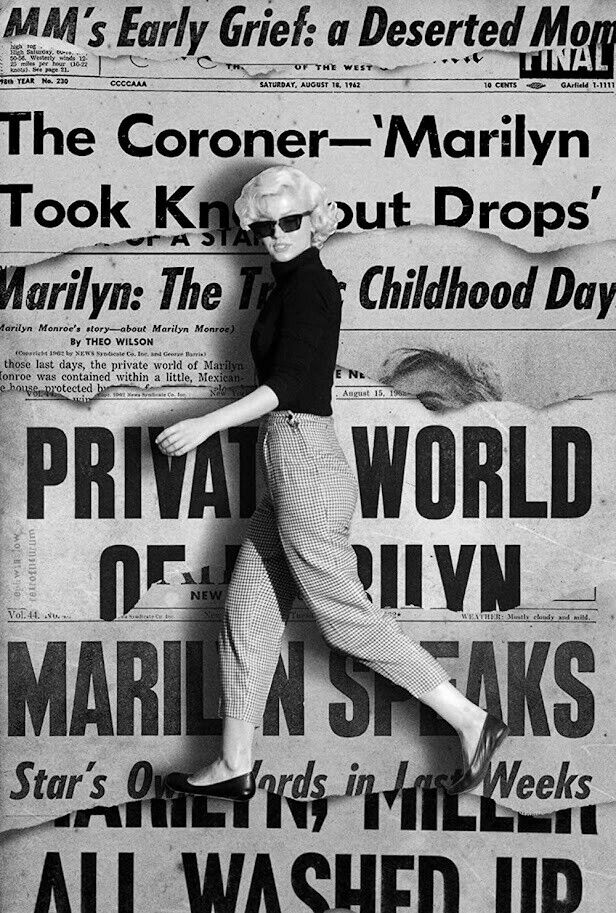
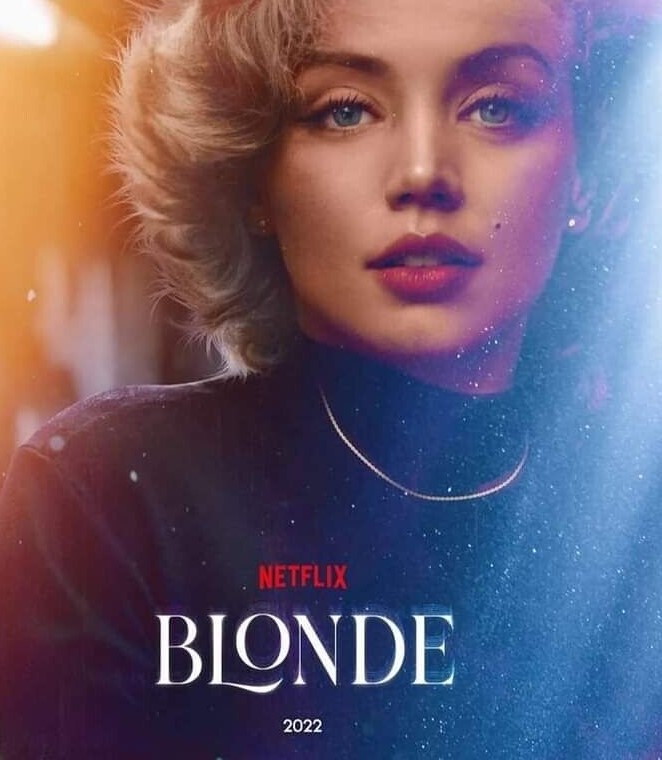
Stream of consciousness reimagining of Marilyn Monroe’s life mainlining on celebrity, identity, mental illness and vulnerability and held together by a mesmerizing performance by Ana de Armas. Director Andrew Dominik’s slicing and dicing of screen shape, occasional dips into black-and-white and a special effects foetus won’t work at all as well on the small screen. Monroe’s insistence on calling husbands “daddy” and letters from a never-seen potential father that turns into a cruel sucker punch, threaten to tip the picture into an over-obvious direction.
A very selective narrative based on a work of fiction by novelist Joyce Carol Oates leaves you wondering how much of it is true, and also how much worse was the stuff left out. As you might expect, the power mongers (Hollywood especially) don’t come out of it well, and her story is bookended by abuse, rape as an ingenue by a movie mogul and being dragged “like a piece of meat” along White House corridors to be abused by the President.
A mentally ill mother who tries to drown her in the bath and later disowns sets up a lifetime of instability. Eliminated entirely is her first husband, but the scenes with second husband (Bobby Canavale) and especially the third (Adrien Brody) are touchingly done, Marilyn’s desire for an ordinary home life at odds with her lack of domesticity, and each relationship begins with a spark that soon fades as she grapples with a personality heading out of control.
That she can’t come to grips with “Marilyn,” perceived almost as an alien construct, a larger-than-life screen personality that bewitches men, is central to the celebrity dichotomy, how to set aside the identity on which you rely for a living. It’s hardly a new idea, but celebrity has its most celebrated victim in Monroe.
According to this scenario, she enjoyed a threesome with Charlie Chaplin Jr (Xavier Samuel) and Edward G. Robinson Jr. (Evan Williams) but otherwise her sexuality, except as it radiated on screen, was muted. The only real problem with Dominik’s take on her life that there is no clear indication of when her life began to spiral out of control beyond the repetition of the same problems. She remains a little girl lost most of the time.
I had no problems with the length (164 minutes) or with the selectivity. Several scenes were cinematically electrifying – her mother driving through a raging inferno – or emotionally heart-breaking (being dumped at the orphanage) and despite the constant emotional turbulence it never felt like too heavy a ride. But you wished for more occasions when she just stood up for herself as when arguing for a bigger salary for Gentlemen Prefer Blondes.
I wondered too if the NC-17 controversy was a publicity ploy because the rape scene is nothing like as brutal as, for example, The Straw Dogs (1971) or Irreversible (2002), and the nudity is not particular abundant nor often sexual. That’s not to say there is much tasteful about the picture, and you couldn’t help but flinch at the rawness of her emotions, her inability to find any peace, the constant gnaw of insecurity, and her abuse by men in power.
Ana de Armas (No Time to Die, 2021) is quite superb. I can’t offer any opinion on how well she captured the actress’s intonations or personality, but her depiction of a woman falling apart and her various stabs at holding herself together is immense. The early scenes by Adrien Brody (See How They Run, 2022) as the playwright smitten by her understanding of his characters are exceptional as is the work of Julianne Nicholson (I, Tonya, 2017) as her demented mother. Worth a mention too are the sexually adventurous entitled self-aware bad boys Xavier Samuel (Elvis, 2022) and Evan Williams (Escape Room, 2017).
While there are no great individual revelations, what we’ve not witnessed before is the depth of her emotional tumult. Apart from an occasional piece of self-indulgence, Andrew Dominik, whose career has been spotty to say the least, delivers a completely absorbing with an actress in the form of her life. Try and catch this on the big screen, as I suspect its power will diminish on a small screen.
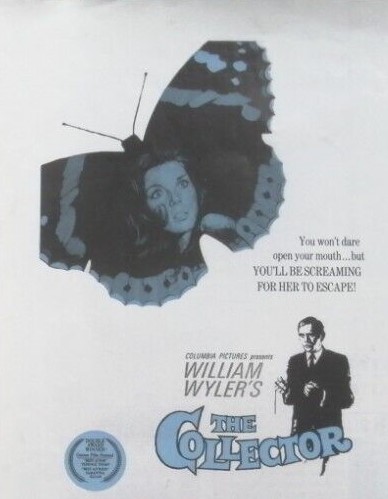
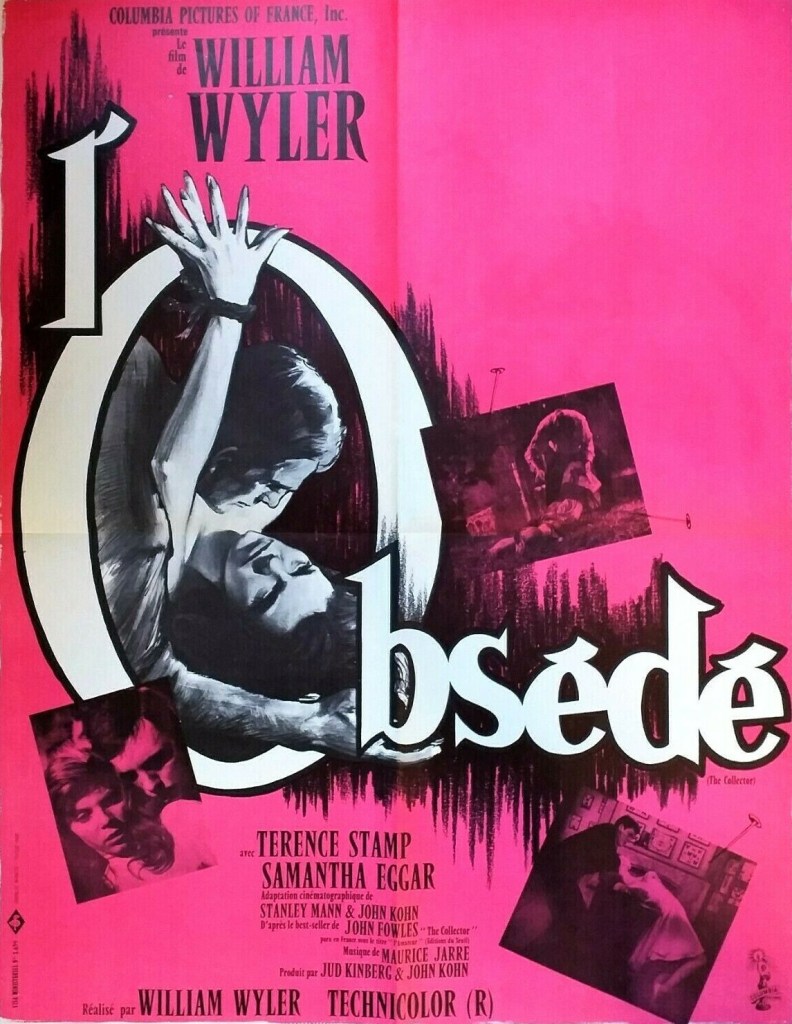
William Wyler’s paean to Incels strike such a contemporary note it’s hard to believe it was made over 60 years ago. An insightful study of male entitlement, female submission and novice serial killer that showcased two emerging British stars, this is as much about the psychological make-up of the victim as the captor.
Following a lottery win (see Note), lonely bank clerk Freddie (Terence Stamp) kidnaps the woman of his dreams, flame-haired art student Miranda (Samantha Eggar) in the hope that once she gets to know him she will fall in love. He has found a large cellar beside the secluded mansion he bought with his winnings. But this is no dank dungeon with a prisoner chained to the walls, but a comfortable abode with lighting, heating, clothing, food, and art materials. However, it is locked.
In turn angry, puzzled and submissive, Miranda tries to work out what she needs to do to achieve her liberty without realising that no matter what she does she will never fulfil his dreams. Despite his shyness, it wouldn’t be hard in other circumstances to fall for a guy as good-looking as this, if only for an affair. She is sexually experienced, but has just been rejected by an older man (Kenneth More), and love on the rebound is hardly uncommon.
Unfortunately, Freddie lives such a soulless, empty, existence, no interests beyond an obsession with butterflies, of which he has amassed a collection large enough to supply a complete museum, that the chances of finding common ground are remote and the circumstances of their meeting pretty much douse the potential for any spark.
At first, once she has expended her anger at her incarceration, she is grateful not to be murdered or raped – even pleads that if he is going to take her by force sexually not to drug her – and soon her mind turns to ways of escape, especially once he invites her into the big house, allows her to bathe, cooks her a meal and shows the world she could enjoy as his willing partner.
With every step, Freddie dares to dream more, that his insane idea will come to fruition, that a beautiful princess will love the lowly commoner. And as much as this focuses on male domination, it is also an examination of female independence, Miranda being in the foreground of that generation to espouse personal freedom, not viewing marriage as an ultimate destination, but seeking a fulfilling career with love almost a perk on the side.
Even without going to extent of kidnapping a woman, males of the period still expected a female to cater to their every whim, wife-beating hardly considered a crime, and, ironically, it would be a rare woman who would not enjoy the worship a more ordinary Freddie planned to bestow on his beloved.
It being set in the England of a particular period, Freddie blames the gulf between them on “class,” that where or to whom you are born creating an unattainable barrier between young men and young women, despite considerable evidence to the contrary. But, of course, to the thwarted, there is always someone to blame.
You will be very familiar with the cinematic tale of the imprisoned female attempting to escape by wiles and ingenuity, but even so, this will take you by surprise, in part because the idea of being forcibly detained was a rare event back then, so Miranda does not spend her time trying to chisel through loose cement using a stolen fork or other ideas along the same lines. That she has even managed to negotiate the length of her prison term makes her initial custody tolerable, especially as, in terms of material things, she wants for nothing.
Unfortunately, although Freddie is immune to normal feelings, he is alert to the slightest nuance, and would feel it an insult to his intelligence should she just play along and pretend to fall in love with as a means of engineering her escape. That the audience is probably more aware of this than Miranda makes the tension virtually unbearable.
This is a duel of the highest caliber between captor and detainee. At several moments it looks as if the tide will turn. A terrific scene with overflowing bath water fails to make a nosy neighbor suspicious. She even at one point manages to whack her assailant over the head with a shovel and attempt a genuine escape. You are left to wonder if making a sexual sacrifice, even taking the initiative with a virgin, will make the necessary difference. But one look into those implacable eyes would have told you exactly where you stood without having to wait until you were dragged by the hair across the lawn in a rainstorm.
Audiences more familiar with the director through late-career roadshows like Ben-Hur (1959) and Funny Girl (1967) or the earlier rom-com Roman Holiday (1953) would be forgiven for forgetting how adept Wyler was at racking up the tension from his early thrillers or dealing with unattainable love (Wuthering Heights, 1939) or entitlement (Jezebel, 1938). He evokes such a claustrophobic atmosphere, ingrained with pure Englishness, and plays with ironies of character beauty – Freddie’s eyes and cheekbones, that should have attracted women by the score, instead lending him devilish menace while Miranda’s sensational looks that would have most men begging for just a minute of her company prove insufficient to enslave this particular creature.
That there is genuine sexual tension, not just whether he will end up raping her, but whether she might see his more attractive version of himself and come to give him what he wants without being repulsed, brings a surprising sexual tension. You wouldn’t say there was chemistry between the characters in the normal sense, but the situation is electrifying.
This was a career high for Terence Stamp (Term of Trial, 1962), minus many of the acting foibles and vocal tics that peppered his later work, and the same went for Samantha Eggar (Walk, Don’t Run, 1966). But the performances are of such a high quality, especially when you think she has breached his defences sufficiently, that at times it is an unbearable watch. John Kohn (Caprice, 1967) and Stanley Mann (The Naked Runner, 1967) based their screenplay on the bestselling – and highly praised – novel by John Fowles, author of later cult work The Magus.
This would have stood the test of time anyway as a pure thriller but since it digs into what has now become a counter-culture it carries even greater significance today.
NOTE: He didn’t win the lottery. That didn’t exist then. Instead he won on the “Football Pools,” but that concept – it began in 1923 – is so hard to explain to non-British people that I took the easy way out. However, the “pools” was a gambling phenomenon of the times, the entry fee so low, at its peak played by 14 million people in the UK every week in the hope of winning a jackpot akin to lottery cash. In essence, you had to guess out of all the soccer games being played on a Saturday (all games in those days kicked off at 3pm on a Saturday) how many would end in draws.
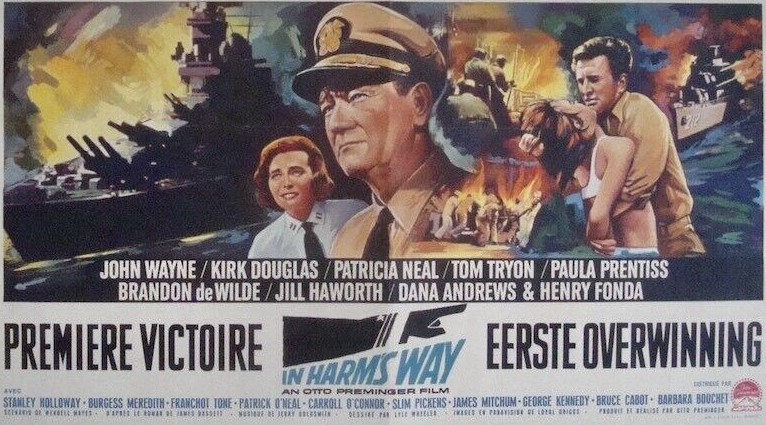
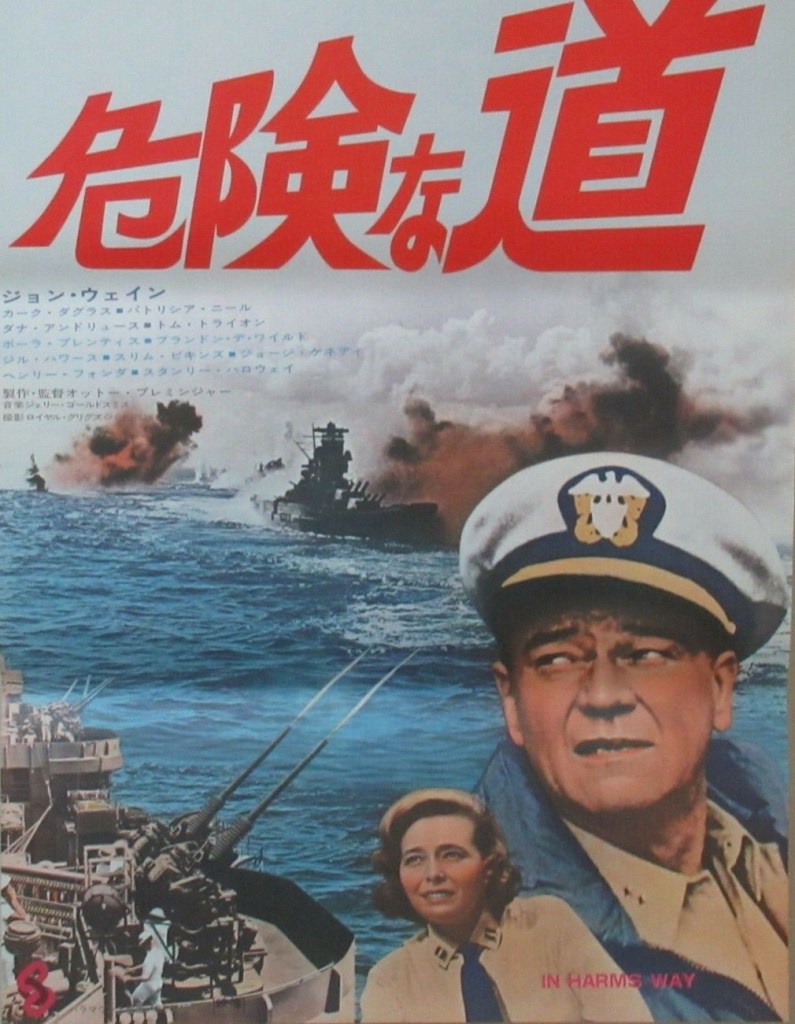
Preminger at a peak, the more I watch this picture, not just the more impressed I become but the more I want to watch it again – three times, as it happens, for this review. A tale of heroism populated by morally wounded heroes, the undertone of critique for the Naval establishment dealt with in brilliant narrative fashion, terrific pacing, one of John Wayne’s very best performances, Kirk Douglas not far behind, great action scenes, and one of the few movies to fulfil this director’s original intent.
You can, of course, argue that it’s the height of political PR. Just as the Americans managed with The Alamo and the British with Dunkirk, the aim was to turn defeat into victory, so this moves beyond the humiliation of Pearl Harbor to the victories beyond. But in some sense Pearl Harbor is just the prologue to a stiffer examination of men at war, rather than sailors taken to task over the complacency that left them so open to cataclysmic attack.
And while there’s a number of sub-plots, these are more expertly handled than I can recall in many another lengthy big-budget picture, no endless cutting between major and minor characters, but the minor characters only entering the frame when they have a dramatic part to play.
Captain “Rock” Rockwell (John Wayne) falls foul of his superiors for basically being in command of a ship sunk by a torpedo. On a technical point, he’s stripped of command, and reduced to a desk job, a casualty of the peace-time hierarchy determined to find someone to blame, only returning to active duty – and promoted to Admiral – when more war-oriented figures are put in charge.
The desk job gives him time to romance feisty nurse Lt. Maggie Haines (Patricia Haines) who has the cojones to take charge of the budding relationship. She happens to share an apartment with another nurse, the much younger Ensign Annalee Dorne (Jill Dorne) who is dating entitled Ensign Jeremiah Torrey (Brandon de Wilde), Rock’s estranged son.
Jeremiah works for slimy glory-hunter Commander Neal Owynn (Patrick O’Neal), a former U.S. Congressman using his political skills to worm his way into the office of by-the-book Vice Admiral Brodick (Dana Andrews). Rock shares his apartment with Commander Egan Powell (Burgess Meredith), a thrice-married playboy, high up in Navy intelligence.
Rock’s second-in-command is Commander – junior to a captain in case you don’t understand the U.S. Navy ranking system – Paul Eddington, a hothead whose mourning for dead wife Liz (Barbara Bouchet) results in him also being reduced to a desk job and exiled to the Pacific. On the fringes of the story are Lt. Commander “Mac” MacConnell (Tom Tryon) and pregnant wife Beverley (Paula Prentiss).
How all these characters enmesh is the consequence of a quite brilliant screenplay by Wendell Hayes (Advise and Consent, 1962). Rockwell and Eddington both seek redemption, the former to prove his Naval worth and regain the affection of his son, the latter to absolve himself for his terrible actions.
You can always tell the hero in war films because they are so rarely a physical casualty of war, all the others are killed and wounded but hardly ever the hero, so it takes something for the Hollywood Hero of the Century to play a character who is wounded not once but twice, and for the early part of the picture walks around with his arm in his sling (not quite an echo of the way he holds his arm in The Searchers, but evoking the same internal conflict).
The only supposed out-and-out hero is MacConnell, but his inaction at the beginning of the movie fails to prevent the death of Eddington’s wife. And his heroism largely takes place off-screen and it’s worth noting that Rock doesn’t raise a rifle or pistol in anger (or even get into a punch-up as was the actor’s wont in other films). Being in charge he’s removed from the core action even if suffering the consequences of battle. In a marvellous touch of irony, Rockwell is the most passive hero to hit the screen. It’s an incredibly bold and self-confident director who would even think of luring audiences into an action picture starring the Hero of the Century and then denying him a single moment of screen glory.
Much has been written about the cinematic arc John Ford took in the beginning and ending of The Searchers, the symbolic opening and closing of doors, but since Preminger is long out of critical favor nobody’s has bothered to notice how much of this film concerns cinematic echo.
To take the most obvious example, the first witnesses of the airborne Japanese attack on Pearl Harbor are illicit pair Liz Eddington and her paramour (Hugh O’Brian) and towards the end it’s her husband Paul, by this point guilty of horrendous behaviour, who leads the airborne fightback against the enemy.
A beach – where Liz and escort make love – is how the director initially pushes the audience towards sympathising with the drunken Eddington. A beach is where we later learn to despise him, as he brutally rapes Ensign Dorne. And it doesn’t take much to work out that his wife’s exuberant wildness explains Eddington’s initial attraction to her, not realising that psychologically it provides him with an excuse for his own darker wildness, initially restricted to self-destruction but when it truly emerges it’s to the detriment of an innocent.
And that’s before we get on to Rockwell as the messenger of death, delivering the bad news to wives, and then being on the receiving end after his son dies in battle. And finally, the political peace-time high-ups get their come-uppance in actual war.
It’s insulting – as some have suggested – that the performance of John Wayne (The Hellfighters, 1968) is the result of undiagnosed cancer when in fact this is a finely nuanced role of a high-ranking figure living out in his life in regret, at times quite shamefaced about abandoning his son at a very early age. Preminger cracked down on Wayne’s habit of splitting his lines in two, so those typical pauses we have come to expect are in large part gone, and it helps the movie’s pacing. For most of the movie the character is saddled with consequence. That passivity that the director saw as essential to the role is virtually present all the time.
Preminger wrings a different performance, too, from Kirk Douglas (A Lovely Way to Die, 1968), equally laden with regret, but not enough to prevent him lashing out and the actor is accorded two quite stunning scenes, the first as he broods in silence over his wife, but for the second, prior to raping Ensign Dorne, the stone-cold look on his face suggests a serial killer held at bay for too long and now about to explode.
Burgess Meredith (Hurry Sundown, 1967) is another brought to directorial heel, his more common scene-stealing and vowel-stretching also eliminated, but in exchange given a larger-than-life character on which to expend screen energy. The entire cast is good-to-excellent and it’s jam-packed: Patricia Neal (Hud, 1962), Tom Tryon (The Cardinal, 1964), Paula Prentiss (Man’s Favorite Sport, 1963), Brandon De Wilde (Shane, 1953), Jill Haworth (Exodus, 1960), Dana Andrews (The Satan Bug, 1965), Franchot Tone (Advise and Consent, 1962), Patrick O’Neal (Stiletto, 1969), George Kennedy (Cool Hand Luke, 1967), Henry Fonda (Battle of the Bulge, 1965), Barbara Bouchet (Danger Route, 1967) and Stanley Holloway (My Fair Lady, 1964) Many of the supporting cast were also playing against type – Prentiss as the young wife falling to pieces, Andrews and O’Neal as slippery political types, Holloway a guerrilla, and perhaps most interesting off Neal, not the typical woman left behind when the man goes off to war but, in her role as nurse, entering harm’s way herself.
And despite criticism of the miniatures used in sea scenes while that might have been obvious on the big screen you don’t notice it on the small screen. The action scenes are very well-done for the time, and quite unusual in that by and large it’s the Americans who appear shell-shocked not the enemy.
Cramming this much narrative into the overall arch of Pearl Harbor and retaliation against the Japanese, while bringing so many different characters to the fore with clear dramatic purpose is an amazing achievement, screenwriter Wendell Mayes (Advise and Consent) doing the heavy lifting in this department.
But Preminger the director is very much to the fore, in his composition and use of the camera for long tracking shots (a particular favorite of mine) such as at the beginning. A riveting watch full of splendid acting. Shooting it in black-and-white might have at one time appeared to date the picture but instead it has rendered it ageless. Five stars without a doubt.








 The Magnificent 60s