Bob & Carol & Ted & Alice (1969) ****

The one with the wife-swapping. Like Easy Rider released earlier the same year, a hymn to freedom, only this time of the sexual kind. Responsible thirtysomethings, well-to-do, married with children, jealous of the younger generation’s counter culture, seek guilt-free irresponsibility. They feel they’ve missed out, despite knocking back cocktails in their heyday, probably remained virgins until marriage. Like the recently-reviewed The Battle of the Villa Fiorita (1965), the problems incurred in marriage appear eternal, and decades later this holds up superbly, not just for taking a measure of its times, but for a screenplay setting up a bold series of reversals, character reaction you would never expect, that will have you in stitches even as it dissects universal truths.

Documentary film-maker Bob (Robert Culp) and housewife Carol (Natalie Wood) “find” themselves at a weekend retreat espousing naked yoga, primal screams, group therapy and emotional intimacy. Carol admits she finds her husband controlling. They return in evangelistic mode, desperate to pass on their new-found knowledge to their stuffier friends, Ted (Elliott Gould) and Alice (Dyan Cannon).
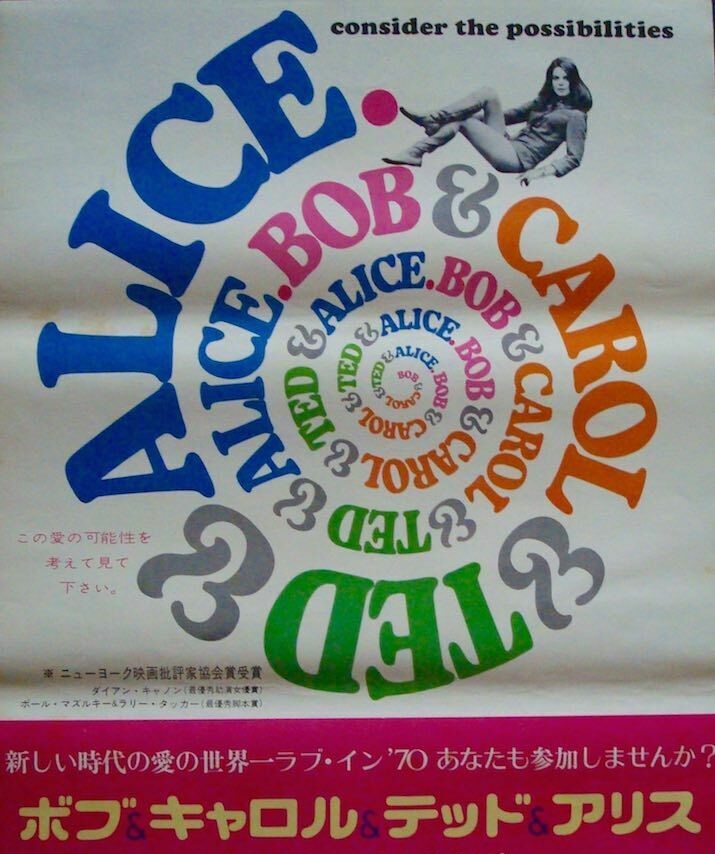
The advertising campaign focused on the tease of wife-swapping.

The film unfolds in a series of long sequences, each sparked by external incident. Bob confesses to his wife that while away on business he had an affair. To his astonishment she forgives him. Expecting this to be a prelude to some new way of tormenting an unfaithful husband, Bob remains skeptical until Carol convinces him that her world-view has changed following the retreat.

But Ted and Alice find it harder to accept. In a brilliant scene that exposes basic gender differences, he sees the problem as his revelation, she as the act of infidelity itself. High after meeting the other couple, Ted wants sex, but Alice, shocked by what she has heard, cannot contemplate it. He exerts so much pressure that she, deeply insecure, is almost on the verge of giving in. The dialogue not just marvelously encapsulates their marriage but sets out opposing views that, I am sorry to say, would probably be as prevalent today.

But the best scene, a superb reversal, occurs when Bob, spurning another night of illicit passion, returns home from a trip early to find his wife in bed with the tennis coach. Gender equality et al. The sequence turns completely on its head when, according to the couple’s new philosophy, Bob should not only accept and forgive, but help the tennis coach out of his predicament, calming his fears of facing an angry husband, in effect consoling his bedroom rival.

Bob and Carol and the Tennis Coach.

What appears to have been just a Ted fantasy, hooking up with a woman he met on an airplane, turns out to be true, creating a crisis in that marriage and when Alice is pacified, acknowledging a new truth, it is she who calls for an orgy. Now this is a revolution for Alice is by far the most repressed, although attractive almost matronly, and still using a childish word to describe her private parts. Her confessions to a psychiatrist reveal a tormented individual.

It’s a stunning debut from Paul Mazursky (An Unmarried Woman, 1978) who also had a hand in the screenplay with Larry Tucker (I Love You, Alice B. Toklas, 1968). He takes a story of endorsed immorality and stamps it as a morality tale. A movie that depended so much on dialogue concludes with a fabulous series of shots where the look on the faces of the characters tells you all you need to know.

Elliott Gould (The Night They Raided Minsky’s, 1968) and Dyan Cannon (The Murder Game, 1965) are the pick of the actors, both stepping up to the plate after less than stand-out performances previously. Both were Oscar-nominated but more importantly here created  screen personas that would define their futures. Natalie Wood (This Property Is Condemned, 1966), in her first picture in three years, revitalized her career after a string of flops. Robert Culp, in a step-up from the I Spy television series (1965-1968), initially takes center stage but cedes ground to the superior acting of the others.  

Where a whole bundle of films by new directors flopped that year and the next by targeting the younger generation, this was a success by painting a wry picture of a slightly older generation, not yet tipping into middle age, but terrified they might be missing out on something.

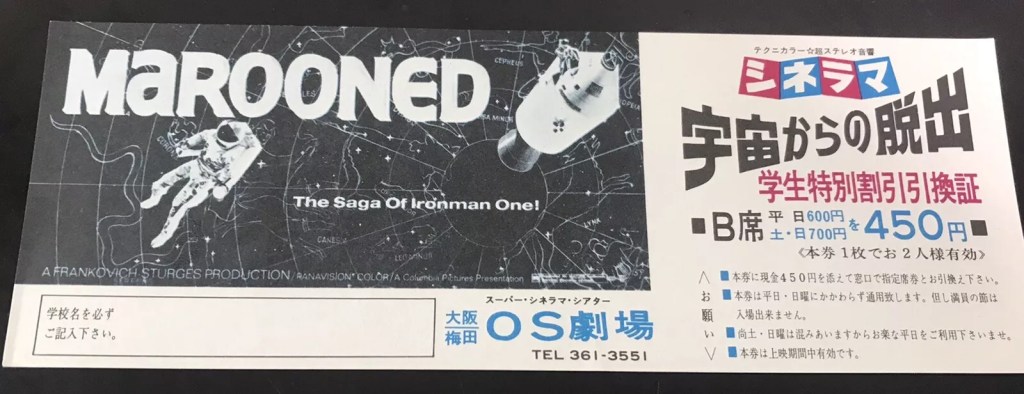
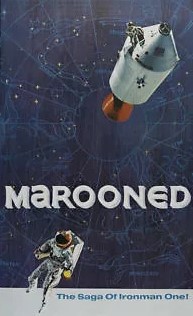
Behind the Scenes: Selling Jeopardy in Space – Pressbook for “Marooned” (1969)

You could come away from the Pressbook/Exhibitors Manual wondering if some of the actors were in the wrong profession, given the number of accomplished pilots on the roster.  James Franciscus held a commercial license for multi-engine planes and had logged three thousand flying hours in three years. Gene Hackman not only had a private flying license but was in the process of building his own biplane.

Producer Mike Frankovich had flown with the US Air Force during World War Two, clocking up 7,000 hours flying time and ending up a colonel. Technical expert George Smith had ejected at 6,000 feet from a plane flying at 800 mph.

Another less well-known fact, Natalie Wood (who was appearing in producer Mike Frankovich’s Bob and Carol and Ted and Alice, 1969) was fluent in Russian and was brought in to translate for a showing of the movie to visiting Russian spacemen. Nancy Kovack, by the way, was equally talented, speaking Persian and other languages.

As much as the main function of the Pressbook was to provide exhibitors with a range of adverts in every conceivable size that they could cut out and take along to their local newspaper, its secondary function was to provide cinema owners with promotional ideas and to provide snippets and articles that could be passed on to a local friendly reporter.  But pickings were slim for jouranlists. Not surprisingly, Gregory Peck didn’t have much say, since whatever he did have to say he’d said already as promotion work for the two other features preceding Marooned this year. And nobody’s spilling the beans on the special effects.

Due to the bulkiness of their space suits, the three actors playing astronauts couldn’t sit down between takes and instead the production employed “the slanted boards usually leaned against by elaborately-gowned female stars to protect their costumes.” (You learn something new about the business every day!). Never mind the bulkiness, the actors spent a chunk of their time in the air and the one day James Franciscus expected to meet acting hero Gregory Peck (they had no scenes together) it proved impossible as when the star visited the capsule set Franciscus was 60 ft in the air.

Richard Crenna got a better response from his young son, who had little concept of what an actor did. But after seeing his dad floating around in space high above him, he reckoned his father was actually a hero

For such a male-oriented picture, Columbia made a big play for the female audience. “The Ladies Love Marooned,” boasted one advert in the 16-page A2 Pressbook/Campaign Manual aimed at exhibitors. Pulling on quotes from critics nobody had really heard of, it managed to present the notion that the picture was as exciting, fascinating, “ingeniously-devised,” and suspenseful for women as much as men, at the same time as focusing on the feminine aspects of the movie – “Lee Grant is a knockout.”

The Pressbook itself allocated editorial space to the three female stars. For Lee Grant the slant was that her talent had been recognized by a host of awards – Emmy, Obie, Best Actress at Cannes plus an Oscar nomination (she would later win an Oscar for Shampoo, 1975). But you have to wonder how an actress would respond to be called, in print, “an egg-head with sex” as was the case with Nancy Kovack. In between turning out such pictures as Tarzan and the Valley of Gold (1966) and this, Kovack had been resident in Iran where she made Diamond 33 (1967) and Night of the Angels (1968). By comparison, Mariette Hartley got off lightly, thanks to her Shakespearian training.

A separate 4-page A2 insert promoted the three Oscar nominations for cinematography, sound and visual effects. “Nominated for 3 Academy Awards,” was the slug accompanying the ads. Never mind the reviews from female critics, much bigger space was devoted here to a rave review form Rex Reed, one of the most famous critics of the day (and star, if that’s the right word, of Myra Breckenridge, 1970), who claimed Marooned was “as exciting, spirited and suspenseful as any spy movie or any cops-and-robbers movie ever made.”

As you might expect, the bulk of the promotional ideas were science-based. Exhibitors were told to target the country’s 2,500 science clubs, the armed forces, the industries that supported the space program and, of course, schools and colleges. Tie-ins had been achieved with 4,500 A&P stores, Jane Parker Donuts, and Philco-Ford dealers.

From a contemporary marketing standpoint, the surprising tie-in was with Omega watches, tagged “the first watch on the moon,” the company’s Speedmaster brand not just worn by the astronauts who did land on the moon in July 1969 but seen in the picture on the wrists of Gregory Peck, Richard Crenna, David Janssen, Gene Hackman and James Franciscus. Over 4,000 dealers were backing the movie.

Model kit manufacturer Revell was offering space suits as prizes in a competition. It distributed more than 42,000 standees and posters and printed five million entry forms. Bantam books was promoting the original novel by Martin Caidin.  That exhibitors would be eager to equip a staff member with an astronaut’s garb and have him/her parade through the streets went without saying. Using lift-off sound effects in a cinema lobby was another idea or turning the entire lobby into a space set.

Rather disconcertingly, the marketing bigwigs thought it would be a clever idea to propose a discussion program on radio or local television on the subject of what would happen if spacemen were marooned, a rather tetchy subject when that became reality.

Unusually, but not surprisingly, the posters stuck with the one tag line: “Three marooned astronauts. And only 55 minutes left to rescue them. While the whole world watches and waits…” and buttressed by some thumbs-up quotes from the likes of reviewers from the New York Times, Redbook, Los Angeles Times and Los Angeles Herald Examiner. In fact, the advertising department took such a shine to Charles Champlin of the LA Times that they cut up his review and stuck snippets of it in three separate ads.

You’ll have seen from the variety of adverts I’ve used to support the review and the Behind the Scenes article earlier in the Blog, that there was a wider range, initially, of adverts, some showing the capsule stuck out in the middle of space. By the time it came to printing this Pressbook, the one for the picture’s general release, all of those were jettisoned in favor of the insipid “thumbs-up” poster with faces to the foreground and the launch in the background, attendant quotes and the “3 Academy award Nominations” slug.

The Great Race (1964) **** – Seen at the Cinema

And not just any old cinema, but the 87-year-old Fine Arts in Los Angeles, I guess the second oldest movie house still standing there, with admission a princely 50 cents and the whole place done out in a gaudy red. I was taking time out from a research mission to the Academy of Motion Pictures Arts and Sciences’ (the Oscar people) equally famous Margaret Herrick Library, where I was digging up stuff for my next book about the films of Alistair MacLean.

And where I discovered to my unimaginable delight they they had my books on their shelves. I’ll never win an Oscar and bestsellerdom will continue to evade me, but for a writer of books on movies, there can be no greater honor than to have your works on the shelves of Hollywood’s most important library. Since data protection will prevent me from discovering who has checked out my books, I can safely imagine that it was bound to be Harrison Ford, Greta Gerwig, Christopher Nolan and/or Steven Spielberg.

Anyway, enough of that self-congratulatory nonsense and on with the show. If you’ve any memory of this picture – jaunty jalopies battling it out at the start of the 20th century when suffragettes were raising hell – it’ll be for the slapstick. The upfront feminism most likely  passed you by. A savvier female you would be hard put to find, especially one that susses out exactly that when a male falls in with her views it’s just to get her into bed. So, from the contemporary perspective, this is a far harder-nosed picture than the fluffy narrative suggests.

Setting aside the famous pie-throwing homage to silent film pie-throwing (and every circus clown act since Doomsday) and a couple of sequences that outlive their welcome and the odd decision to find a plotline that can accommodate Jack Lemmon going down the (almost) identical twin route, this is pretty much sheer delight.

Characters could not be more black-and-white – in visual terms as well – than rival mechanical whizzes The Great Leslie (Tony Curtis) and Professor Fate (Jack Lemmon) except for the much more rounded (in character terms) interloper Maggie Dubois (Natalie Wood) as a reporter. Not content with being a legend in his own lunctime, the mad professor follows the Gore Vidal tack of being upset by any rival’s successes. However, he’s such an incompetent saboteur he doesn’t realize he’s merely the feed for a number of superb visual gags.

The Great Leslie, smile resounding with the Colgate audible zing, doesn’t have much to do except expound the principles of fair play and occasionally demonstrate his fencing skills when the plot turns sideways. Maggie is the ace inveigler, and when that doesn’t work resorts to handcuffs to ensure she will not be moved or someone else will be stuck fast. Standard bearer for female equality, she manages to put all the arguments without sounding dull, especially as, verbally, she is dealing with a keen dueller. And when she’s not switching sides, she’s rooting for the good guy.

The plot could have come out of a dishwasher but roughly equates to a round-the-world road race with most countries conveniently missed out, ending up in Paris with a stop-off somewhere in Germany. The deliberately cartoonish feel shouldn’t work at all, especially for a contemporary audience, but then we all laughed at Dumb and Dumber and plenty comedies with even less of a one-note touch. Thankfully, there was no such thing as deconstructed comedy in those days so everyone enters the spirit of the thing. And it’s quite refreshing to watch stuff being blown up and falling apart not for overblown thriller or comicbook reasons.  

I wasn’t taken with the overlong sequence in the saloon – extended singing and brawl (heck, what else are saloons for) – and wasn’t so hot on the legendary pie section either and certainly the notion that Professor Fate could be such a doppelganger for a dumb German prince that the powers behind the throne plan to substitute one for the other seems to belong in the furthest reaches of the Far Fetched Highway.

But there are so many gags and the characters, no matter how cartoonish at times, seem true to themselves, and with Maggie on hand to constantly upset the misogynistic applecart it seems a tad picky to be so picky. I was astonished that the audience I watched it with, primarily much younger than I, were so tickled.

Tony Curtis (The Boston Strangler, 1968) and Jack Lemmon (How to Murder Your Wife, 1965) repeat the magic of Some Like it Hot (1959) thanks to the strong directorial hand of Blake Edwards (The Pink Panther, 1963). Natalie Wood (Bob and Carol and Ted and Alice, 1969) shines. Rare comedy role from Peter Falk (Penelope, 1966). Excellent support from Keenan Wynn (Warning Shot, 1966). Edwards co-wrote the script with Arthur A. Ross (Brubaker, 1980).

Certainly more than stands the test of time.

Inside Daisy Clover (1965) ***

Exploitation Hollywood. Cautionary tale of young singer in the 1930s seduced by the movies only to discover she is regarded as a plaything and a profit center rather than a human being. Not highly regarded at the time despite being directed by Oscar-nominated Robert Mulligan (To Kill A Mockingbird, 1962), gained greater traction since #Me Too!

At the time the central performance by Natalie Wood (Cash McCall, 1960) seemed too much one-note, but on reflection, despite the endless popping and swivelling of her eyes (you can always see the whites, often to her detriment in acting terms), it appears a much truer reflection of a teenager caught in the headlights of the fame- and money-making machine. Christopher Plummer (Lock Up Your Daughters, 1969) delivers a devilishly restrained performance and there’s the bonus of an over-the-top turn by Robert Redford (The Chase, 1966), named Most Promising Newcomer in some parts.

The odds are stacked against Daisy Clover (Natalie Wood) from the start, living in a shack on a beachfront with an insane mother (Ruth Gordon), earning a living forging signatures on movie star portraits, but with a secret yen to become a singer. After sending a demo disk, cut in a fairground booth, to Swan Studios she finds doors opening. Raymond Swan (Christopher Plummer) turns her into a star. Having committed her mother to an institution, and for public consumption announced her dead, greedy Aunt Gloria (Betty Harford), now her legal guardian, signs her niece’s life away.

It’s almost docu-style in the telling, very few close-ups, most long shots, even in groupings the camera seems awfully far away, and the Hollywood we are shown is mostly the giant empty barns of shooting stages and the never-seen elements, like post-synching in a booth. Daisy never seems to be enjoying herself, except when, although underage, is seduced by movie idol Wade Lewis (Robert Redford) who abandons her the morning after their wedding and can’t resist a “charming boy.”

Mostly, she is the puppet, dressed in glamorous outfits, her life re-invented for the fan magazines, freedom curtailed, living in a suite in the grand mansion of Swan and wife Melora (Katharine Baird), who, it transpires, is an alcoholic and at one point cut her wrists. Most of the time Daisy just seems frozen, locked into a character she doesn’t recognize, kept at one remove from her mother, turned into a money-making machine.

She’s too young to be a Marilyn Monroe and too old to be a Shirley Temple. The most likely template in Deanna Durbin (Mad About Music, 1938), who after being rejected by MGM, struck gold with Paramount as a 15-year-old, but, ironically, in terms of this picture, proved as hard as nails, not only negotiating contracts that turned her into the highest-earning star in Hollywood but quitting the business before it ate her up.

Except she doesn’t put anyone down. She’s nobody’s idea of a winner despite this clever piece of publicity.

Daisy shifts from being able to fend off unwelcome attention from an erstwhile boyfriend while poor to being seduced, while rich and theoretically more powerful, by anyone who shows her the slightest kindness, including her boss after she’s dumped by Wade. Swan bears a close resemblance to Cash McCall, making no bones about his money-making intentions and viewing every employee in terms of profit, but using charm to mask his ruthlessness. When the façade breaks, it’s one of the best scenes.

The odds are also stacked against anyone looking good. This is a parade of the venal, everyone destroyer or destroyed. The fact that actors with no other talent earned vast fortunes from a business that was willing to underwrite their flops (Natalie Wood, herself, a classic example) and must have enjoyed some aspect of their wealth, if not in just being rescued from abject poverty, doesn’t enter the equation.

Although there is no doubt there is a Hollywood publicity machine, a lot less attention is paid to the power of the Actors PR which has managed to convince the public that no matter how much the stars earn ($20 million a picture for some) they are still poor wee souls at the mercy of terrible studios  willing to gamble enormous sums ($295 million on the latest Harrison Ford, more for Fast X) on their box office potential.

But let’s not digress.

While the picture-making style is unusual, it’s worth appreciating the deliberate effort Robert Mulligan has put in to de-glamorize the star system. Brit Gavin Lambert (Sons and Lovers, 1960) wrote the screenplay from his own, more brutal, bestseller.

This cold-hearted expose is just what Hollywood deserves. That Daisy is a minor when taken advantage by Wade is mentioned just in passing, and from the actor’s perspective (it could damage his career). That vulnerable women are kept in that position was no more heinous then than it is now.

Cash McCall (1960) ***

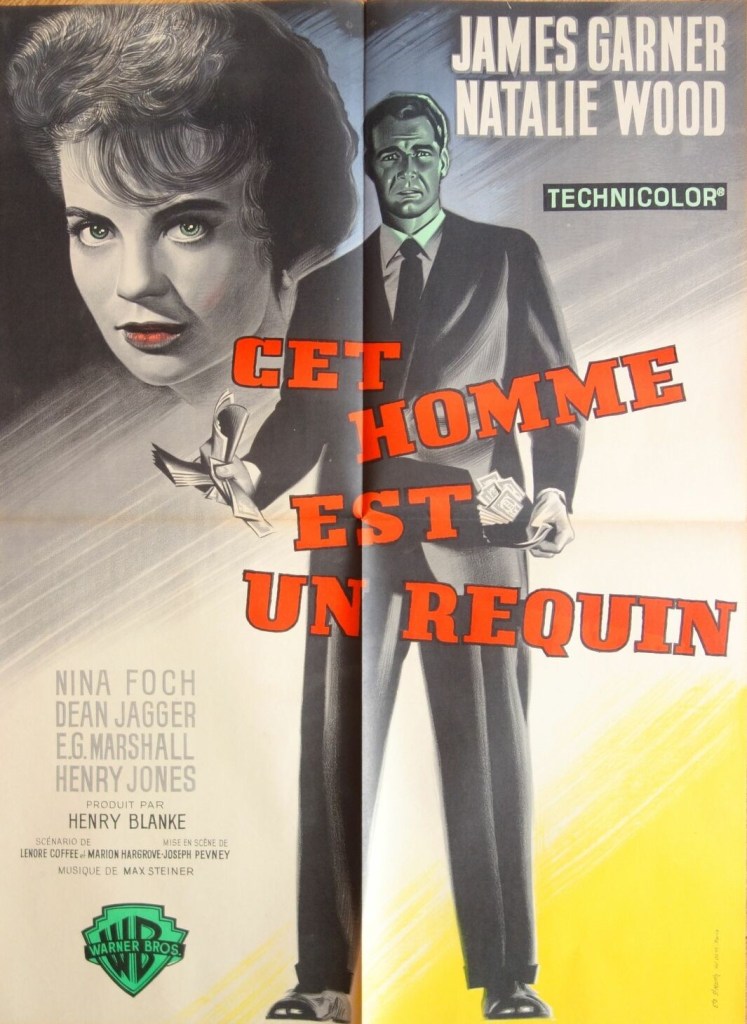
As time wore on and attitudes to corporate skull-duggery hardened – Wall Street (1987), Other People’s Money (1991), The Big Short (2015)  – it was no longer necessary to soften a venal character with romance. And I guess the ruthless Cash McCall (James Garner) falling in love with Lory (Natalie Wood), daughter of takeover target Grant (Dean Jagger), provides the movie with a soft underbelly, intended presumably to show the inhuman businessman’s more human side, but instead diverting the picture away from delivering a massive punch against the asset-stripping proliferating too fast in American business.

Otherwise, it is a good assessment of the double-dealing and pitiless behavior of business sharks preying on weaker businesses. Then complaining when the tables are turned. Anti-Trust investigators would have a field day, but I’m not sure if the U.S. Securities & Exchanges Commission, set up in the wake of the 1929 Wall St Crash, was as powerless as today, usually turning up when the damage is done rather than stepping into prevent it.

Grant decides to sell up when his biggest customer Schofield Industries, run by retired Army General Danvers (Roland Winters), holds him to ransom. Cash McCall swoops in but, after finding a flaw in Schofield Industries, determines through clever maneuver to add that to his mountain of companies and make an immediate $1 million profit on Grant’s company which he purchased for $2 million.

The romance resistance that is standard for such pictures pivots on Lory having been rejected (on a stormy night) by Cash the previous summer. Ironically (though I doubt if the makers noticed the irony), Lory is viewed as a bonus in the deal, Cash’s wealth making him an ideal catch in the eyes of her parents, despite the abhorrence he inspires.

A contemporary audience might expect her to be the fly in the ointment, especially as she owns ten per cent of her father’s company, offering an opportunity to stand up to Cash on  principle. But that’s not envisaged here. And you can’t expect her, in those sexist times, of complaining that her father is depriving her of her inheritance and the chance to run a big company.

It’s at its best in the financial chicanery. Danvers comes unstuck when Cash discovers that Grant holds an unexpected ace and can run his company into the ground. Every time anyone tries to get the drop on Cash it turns out he owns their company or nullifies their intent by knowing what they’re up to. He recruits or increases the salary of anyone who stands in his way. Money not only talks it minimises and even forgives or elevates heinous action.

The only person who bests him is a hotel assistant manager Maude (Nina Foch) who, misreading the signals, believes herself to be his love interest. In revenge, she scuppers his  burgeoning romance with Lory.

In fairness, Cash is as upfront about his intentions as Gordon Gekko in Wall Street. He describes himself as a “thoroughly vulgar character – I enjoy making money” while confessing he doesn’t buy businesses to run them but to sell them or break them up into more viable smaller pieces.

But the James Garner (The Americanization of Emily, 1964) charm gets in the way. He wants to have his cake eat it. Move into serious roles without falling foul of the public. Romance is seen as the tool.

Garner evolved a sneaky screen persona, attempting to be rascal who got away with it thanks to his charm, best personified in The Great Escape (1963) and The Americanization of Emily, in both films his escapades endorsed by the authorities. But it would be hard to find any redeeming qualities in a ruthless business buccaneer who exalted in the chaos he caused, little regard for the wrecked lives left in his wake.

The film attempts to get by this via the romance – a beautiful woman couldn’t possibly end up with a scoundrel, could she – and by setting up virtually every other character excepting Grant as dodgy (and even Grant ends up congratulating him on his clever schemes).

As an insight into corporate malfeasance, it’s interesting enough, and bold for the times, and certainly gets points for not falling back on the old trope of the little guy fighting big business. This features grown-ups knowing exactly what they are letting themselves in for.

A couple of sections jar – the flashback and a labored explanation that “Cash” is not a nickname but a Christian name. On the other hand, it could as easily be perceived as a romance that just happened to take place against the unusual backdrop of the boardroom.

It’s worth noting that Garner himself was not above unscrupulous dealing. Having convinced Warner Brothers to fund his first three movies, he then proceeded to sue the studio over his contract, leaving them with the bill for his flops.

Nina Foch (Spartacus, 1960) and Dean Jagger (Firecreek, 1968) are the pick of the supporting actors. The most interesting aspect of Joseph Pevney (The Plunderers, 1960) was that he directed a quartet of films in this single year and then not another for the rest of the decade.

The final screenplay from celebrated writer Lenore Coffee, whose career spanned forty years, an astonishing feat for a female in Hollywood, and was at one time the highest-paid screenwriter in the industry. It was co-written by Marion Hargrove (40 Pounds of Trouble, 1962) from the bestseller by Cameron Hawley.

Would have been a better picture if it had stuck to the knitting and not wandered into romance, so good in parts rather than a major success.

Widescreen Weekend 2022

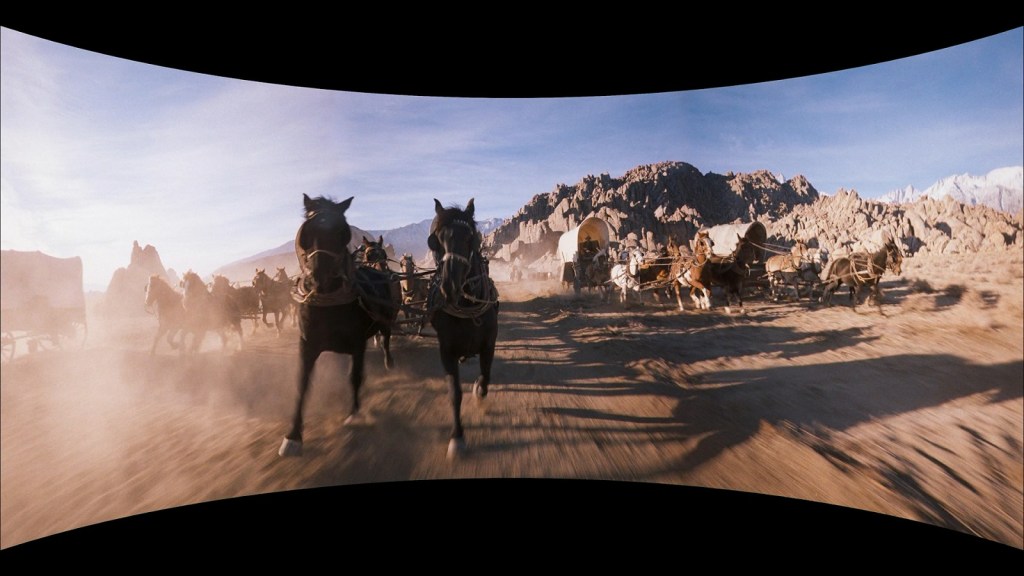
We are so conditioned to watching old movies on tiny screens it comes as something of a primal shock to see them in all their original glory. Most festivals lean towards the arthouse end of the cinema business so it’s all the more delightful to find an event that without apology concentrates on the mainstream. Widescreen Weekend takes place at the National Science and Media Museum in Bradford, England, and mostly in its Pictureville Cinema, the only venue in the country equipped to show Cinerama pictures in the original three-strip version which requires three projectors.

Wagons race to escape attack in “How the West Was Won.”

And while most other film festivals attract general movie lovers, this one appears to appeal in large part to those who have had something to do with the movie-making business or its technical side. Speakers might include, for example, Cinerama restoration specialist Dave Strohmaier or Kevin Brownlow, editor turned director, and among the audience you might find people like Keith Stevens from Australia, a former operations executive with Village Roadshow there, but who started out as a projectionist and regaled me with tales of projecting The Sound of Music (1965) in its original roadshow run.

There’s a limited number of movies that were made, mostly in the 1960s, either in Cinerama or 70mm, so the event has expanded to take in the earlier Cinemascope and the other versions of widescreen technology on which Hollywood depended as the marketing hook to bring back audiences from the all-encompassing maw of television in the 1950s. Later films whose directors understood the cinematic impact of 70mm are also added to the mix.

You are transported back to a time when screens were just enormous – this one is 51ft wide – and were curtained, and those curtains would not open (to the sides) until in typical roadshow fashion, a lengthy musical Overture, highlighting aspects of the movie’s music, had run its course. There is something quite sumptuous about sitting in a movie theatre staring at huge red curtains and waiting for the house lights to dim and the music to begin.

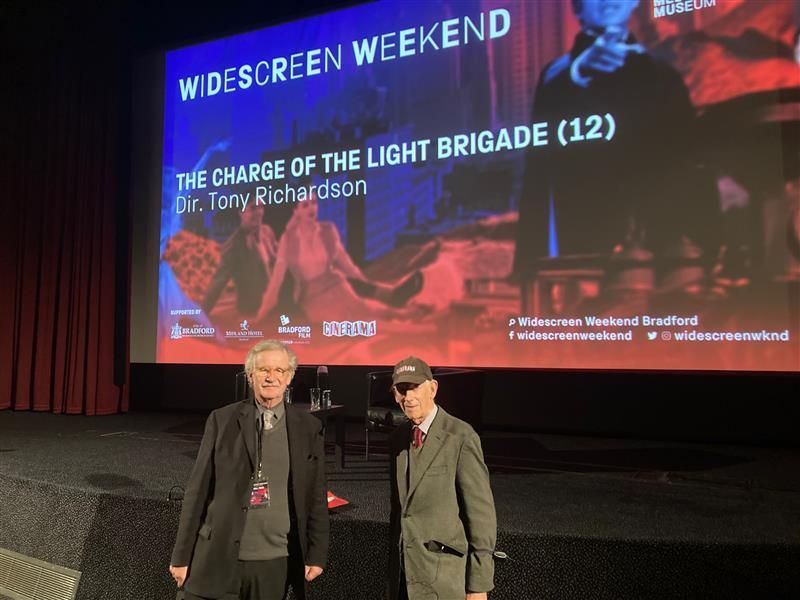
Christopher Frayling and Kevin Brownlow getting ready to introduce “The Charge of the Light Brigade.”

Roughly half-way through the movie itself, the curtains would close for an intermission, and before the picture restarted there would be more music, what was termed the Entr’Acte. Some DVDS of roadshows contain both Overture and Entr’Acte but there is a lightyear of difference between hearing them in your lounge and being exposed to them in a picture house built to bring out their best sound.

This is a homage not just to old movies but the old way of seeing a movie.

In previous years the programs have included Ice Station Zebra (1968), West Side Story (1961), 2001: A Space Odyssey (1968), the David Lean trilogy of Lawrence of Arabia (1962), Doctor Zhivago (1965) and Ryan’s Daughter (1970),a pair from William Wyler that could not have been more diverse – Ben-Hur (1959) and Funny Girl (1968) – This Is Cinerama (1952), Carol Reed’s  The Agony and the Ecstasy (1965), John Frankenheimer’s split-screen Formula One epic Grand Prix (1966) and of course the mother of all roadshows The Sound of Music (1965). Throw in a healthy helping of 1950s Cinemascope features and more contemporary pictures which embraced 70mm and you have the makings of an always satisfying weekend.

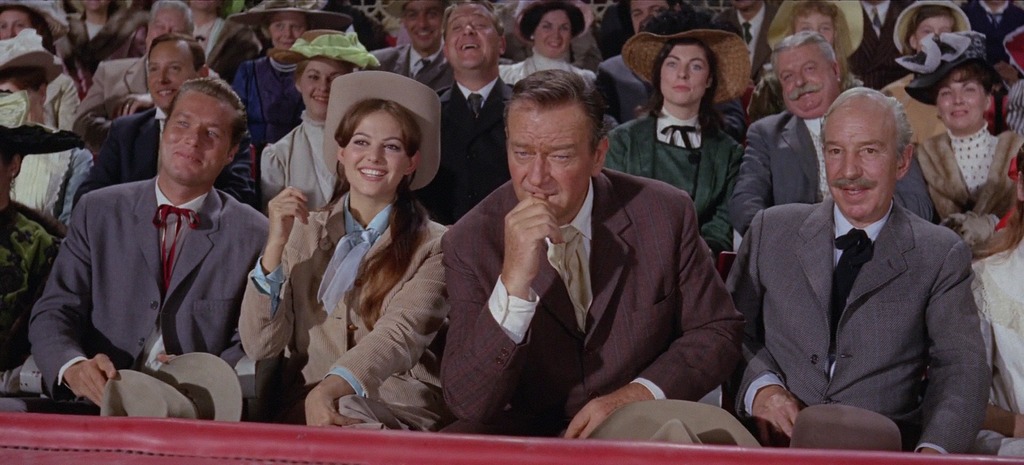
A thoughtful John Wayne next to Claudia Cardinale in “Circus World.”

So one of the highlights is to see old favorites. This year we were treated to the three-strip version of How the West Was Won (1962), your feet tapping immediately at the sound of the driving Alfred Newman score, and a restored The Wonderful World of the Brothers Grimm (1962), the first two movies made in the Cinerama process that had dramatic purpose and were not mere travelogs.

But there was also an opportunity to watch old movies that have never been screened in their original version since their initial release, such as Circus World / The Magnificent Showman (1964) shown in Super Technirama 70. Also on the program was Carol Reed’s Oscar-winning Oliver! (1968), Bob Fosse debut Sweet Charity (1969), The Charge of the Light Brigade (1968) and Douglas Trumbull’s Brainstorm (1983), Natalie Wood’s last picture and one that experiments with screen size. Extending the program into non-70mm widescreen there was a screening of Dracula, Prince of Darkness (1966) and A Star Is Born (1954). Every screening was introduced by an expert and there were occasional surprise guests like Kevin Brownlow, the editor of The Charge of the Light Brigade.

The event takes place in October every year and I’m already looking forward to the next. Kathryn Penny, who has organized the event these past few years, is moving onto a post in academia, and she will be sorely missed.  

“Penelope” (1966) ***

Comedic twist on the heist movie with Natalie Wood (This Property Is Condemned, 1966) as a kleptomaniac. Given its origins in a tight little thriller by E.V. Cunningham, pseudonym of Howard Fast (Mirage, 1965), it’s an awful loose construction that seems to run around with little idea of where it wants to go. Wood, of course, is a delightfully kooky heroine who takes revenge on anyone who has ignored or slighted her by stealing their possessions.

The picture begins with her boldest coup. Cleverly disguised as an old woman, she robs the newest Park Avenue bank owned by overbearing husband James (Ian Bannen). This prompts the best comedy in the movie, a man with a violin case (Lewis Charles) being apprehended by police, the doors automatically locking after a clerk falls on the alarm button, James trapped in the revolving doors losing his trousers in the process.

In flashback, we learn that she turned to thievery after a rape attempt by Professor Klobb (Jonathan Winter), her college tutor, and while half-naked managed to make off with his watch fob. She stole a set of earrings from Mildred (Norma Crane) after suspecting she is having an affair with James. “Stealing makes me cheerful,” she tells her psychiatrist, Dr Mannix (Dick Shawn) and while admitting to dishonesty denies being a compulsive thief. After the bank robbery she even manages to relieve investigating officer Lt Bixby (Peter Falk) of his wallet.

Nobody suspects her, certainly not her husband who could not conceive of his wife having the brains to carry out such an audacious plan. Bixby is a bit more on the ball, but not much. Clues that would have snared her in seconds if seen by any half-decent cop are missed by this bunch. And generally that is the problem, the outcome is so weighted in Penelope’s favor. The plot then goes all around the houses to include as many oddballs as possible – boutique owners Sadaba (Lila Kedrova) and Ducky (Lou Jacobi), Major Higgins (Arthur Malet) and suspect Honeysuckle Rose (Arlene Golonka). Naturally, when she does confess – to save the innocent Honeysuckle – nobody believes her in part because everyone has fallen in love with her. Bixby, just as smitten, nonetheless makes a decent stab at the investigation.

Howard Fast under the pseudonym of E.V. Cunningham wrote a series of thrillers with a woman’s name as the title. He was on a roll in the 1960s providing the source material for Spartacus (1960), The Man in the Middle (1964), Cheyenne Autumn (1964), Sylvia (1965), Mirage (1965) and Jigsaw (1968).

Taken as pure confection it has its attractions. It’s certainly frothy at the edges and there are a number of funny lines especially with her psychiatrist and the slapstick approach does hit the target every now and then. The icing on the cake is top class while the cake itself has little of substance. It strikes a satirical note on occasion especially with the Greenwich Village cellar sequence. It doesn’t go anywhere near what might be driving this woman towards such potential calamity – that she gets away with it is only down to her charm. There has probably never been such a pair of rose-tinted spectacles as worn by Penelope, even though her every action is driven by revenge.

Without Natalie Wood it would have sunk without trace but her vivacious screen persona is imminently watchable and the constant wardrobe changes (courtesy of Edith Head) and glossy treatment gets it over the finishing line. It’s one of those star-driven vehicles at which Golden Age Hollywood was once so adept but which fails to translate so well to a later era. Ian Bannen (Station Six Sahara, 1963) is in his element as a grumpy husband, though you would wonder what initially she saw in him, and Peter Falk (Robin and the 7 Hoods, 1965) delivers another memorable performance.  Dick Shawn (A Very Special Favor, 1965) is the pick of the supporting cast though screen personalities like Lila Kedrova (Torn Curtain, 1966), Jonathan Winters (The Loved One, 1965) and Lou Jacobi (Irma la Douce, 1963) are not easily ignored.  Johnny Williams a.k.a John Williams wrote the score.

Arthur Hiller (Tobruk, 1967) delivers as much of the goods as are possible within the zany framework. Veteran Oscar-winner George Wells (Three Bites of the Apple, 1967) wrote the screenplay and it’s a far cry from the far more interesting source material and I would have to wonder what kind of sensibility – even at that time – could invent a comedy rape (not in the book, I hasten to add).

Box Office Poison 1960s Style

The success in 1968 of such disparate movies as The Graduate (1967), Valley of the Dolls (1968) and 2001: A Space Odyssey (1968) with no discernible stars got Hollywood thinking whether they needed stars anymore. Stars were viewed as insurance. Their names were attached to pictures in the hope that they would bring a sizeable audience.

But for some time that had proved not to be the case. Certainly actors with the box office clout of Paul Newman, Julie Andrews, Elizabeth Taylor, Lee Marvin, John Wayne, Richard Burton and Elvis Presley justified their extravagant salaries. But exhibitors had begun to complain that studios were forcing them to carry the cost of stars who did not deliver, the salaries inflating “the terms that theatres must pay for films.”

Big names viewed as box office poison in 1968 included Marlon Brando, Tony Curtis, William Holden and Natalie Wood. An investigation by trade magazine Variety uncovered the fact that in each case the last four pictures of each star – who earned $250,000 or more per movie – had flopped. Average movie budgets by now had climbed to $3-$4 million not counting marketing costs so most movies had to bring in over $10 million at the global box office to break even

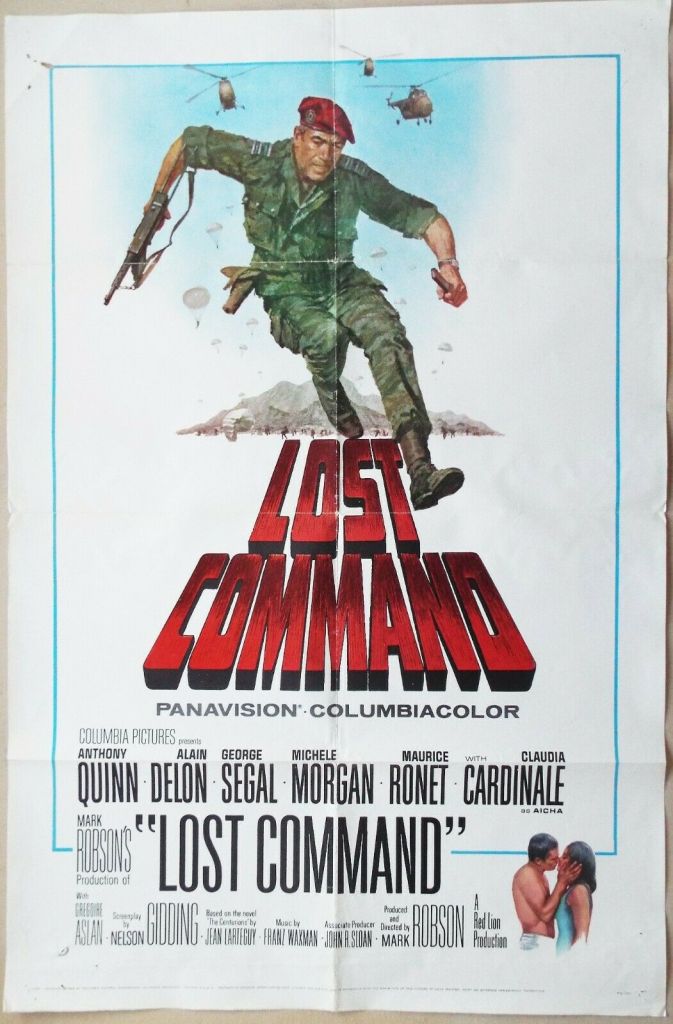
The star with the worst track record was Anthony Quinn. Average rental for his past four pictures – $800,000. While Zorba the Greek (1964) had been an unexpected hit, what followed was anything but. Discounting a cameo in Marco the Magnificent (1965), the box office duds comprised adventure A High Wind in Jamaica (1965), Lost Command (1965), war film The 25th Hour and misconceived hippie comedy The Happening (1967).

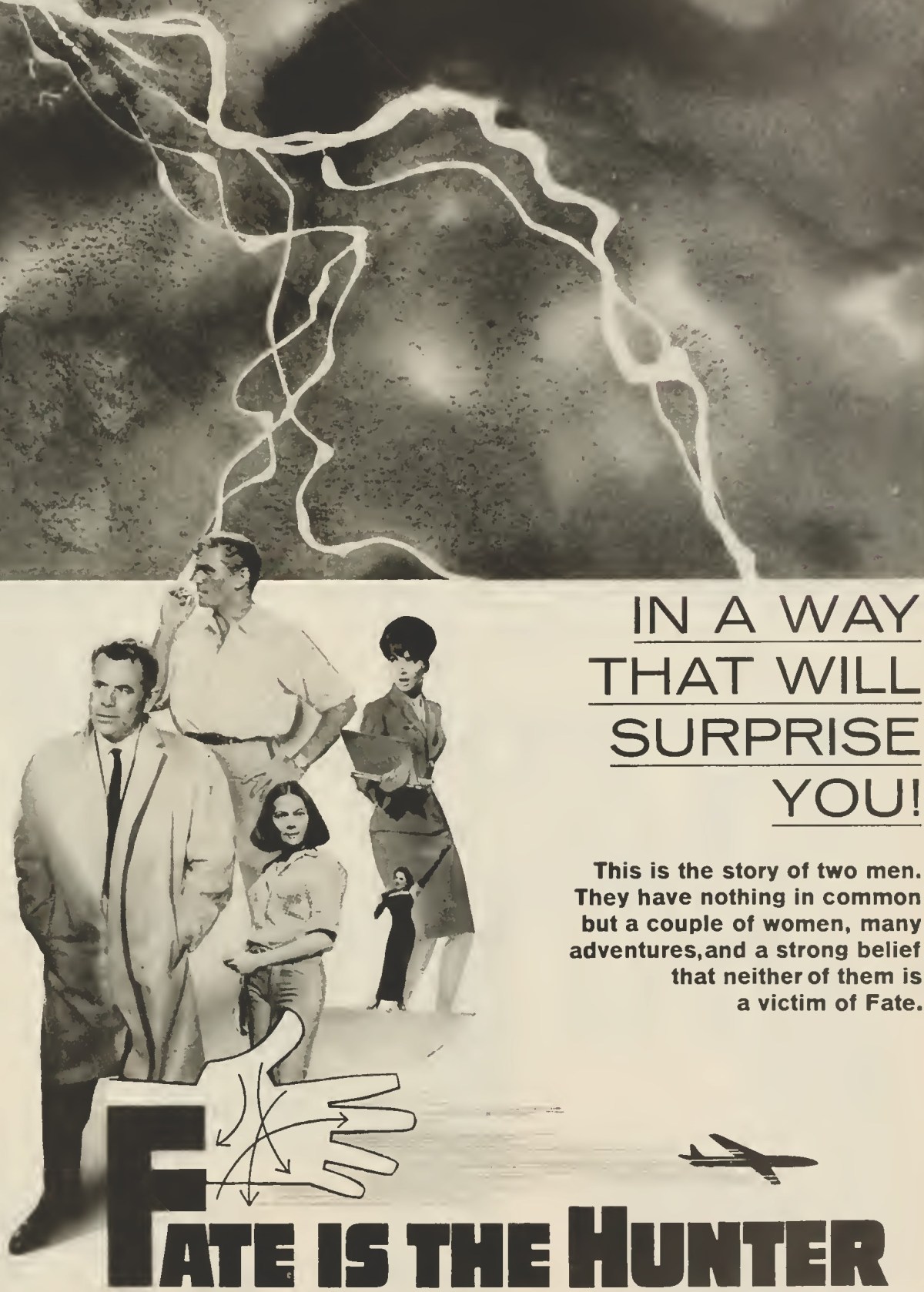
Not far behind was Glenn Ford, a star from the days of Gilda (1946), The Blackboard Jungle  (1955) and The Sheepman (1958). He had begun the current decade badly with big-budget losers Cimarron (1960) and The Four Horsemen of the Apocalypse (1962) and his career never recovered. His last eight pictures brought in an average of less than $1 million apiece in rentals. The sad bunch were: comedy western Advance to the Rear, Dear Heart and aerial drama Fate Is the Hunter (all 1964) followed by western The Rounders and thriller The Money Trap (both 1965) as well big budget war epic Is Paris Burning? (1966), rabies drama Rage (1966) and western The Long Ride Home (1967).

Scarcely any better was William Holden, star of David Lean Oscar-winner Bridge on the River Kwai (1957), John Ford western The Horse Soldiers (1959) and The World of Suzie Wong (1960). His last four efforts – The Lion (1962), romantic comedy Paris When It Sizzles (1964), war drama The 7th Dawn (1964) and Civil War western Alvarez Kelly (1966) – returned an average of $1.05 million in rentals. Variety reckoned he was struggling with the problem of how to “gracefully mature his screen image.”

James Garner, once seen as the natural successor to Clark Gable, had failed to capitalize on the success of John Sturges’ The Great Escape (1963). Five of his last seven films had dredged up a mere $1.3 million average. Making up the awful quintet were thriller 36 Hours (1964), comedy thriller A Man Could Get Killed (1966), western pair Duel at Diablo (1966) and Hour of the Gun (1967) plus drama Mister Buddwing (1966). Quite why comedy The Art of Love (1965) had done better – $3.5 million in rentals – nobody could ascertain and even though roadshow Grand Prix (1966) was a hit Garner, who was billed below the title, was not considered a reason for it, with some insiders claiming his name had held it back and it would have done much better with someone else in his role.

Morituri (1965), Cast a Giant Shadow (1966), The Poppy Is Also a Flower (1966), western sequel Return of the Seven (1966), Triple Cross (1966) and The Long Duel (1967) had mustered an average of $1.4 million leaving observers to the conclusion that Yul Brynner’s “brand of sex appeal” no longer attracted audiences in America.

Marlon Brando had generated just $8.4 million in total rentals – an average of $1.6 million – for his previous six films. No matter what he did, regardless of genre, he had lost his box office spark whether it was comedies like Bedtime Story (1964) and The Countess from Hong Kong (1966), dramas like The Chase (1966) and Reflections in a Golden Eye (1967), western The Appaloosa (1966) or thriller Morituri (1965). From the industry perspective he was by far the worst performer since his movies cost so much in directors (Charlie Chaplin, John Huston), co-stars (Elizabeth Taylor. Sophia Loren) and sets.

A string of comedies had sounded the box office death knell for Tony Curtis. Boeing, Boeing (1964), Not with My Wife You Don’t (1966), Arrivederci, Baby! (1966) and Don’t Make Waves (1967) delivered a lamentable $1.77 million on average.

Rock Hudson had fallen far from the pedestal of being the country’s top male star in the early 1960s. Two romantic comedies Strange Bedfellows (1965) and A Very Special Favor (1965), a brace of thrillers Blindfold (1966) and Seconds (1965) plus war film Tobruk (1967) did nothing to restore his standing with just $1.86 million in average rental.

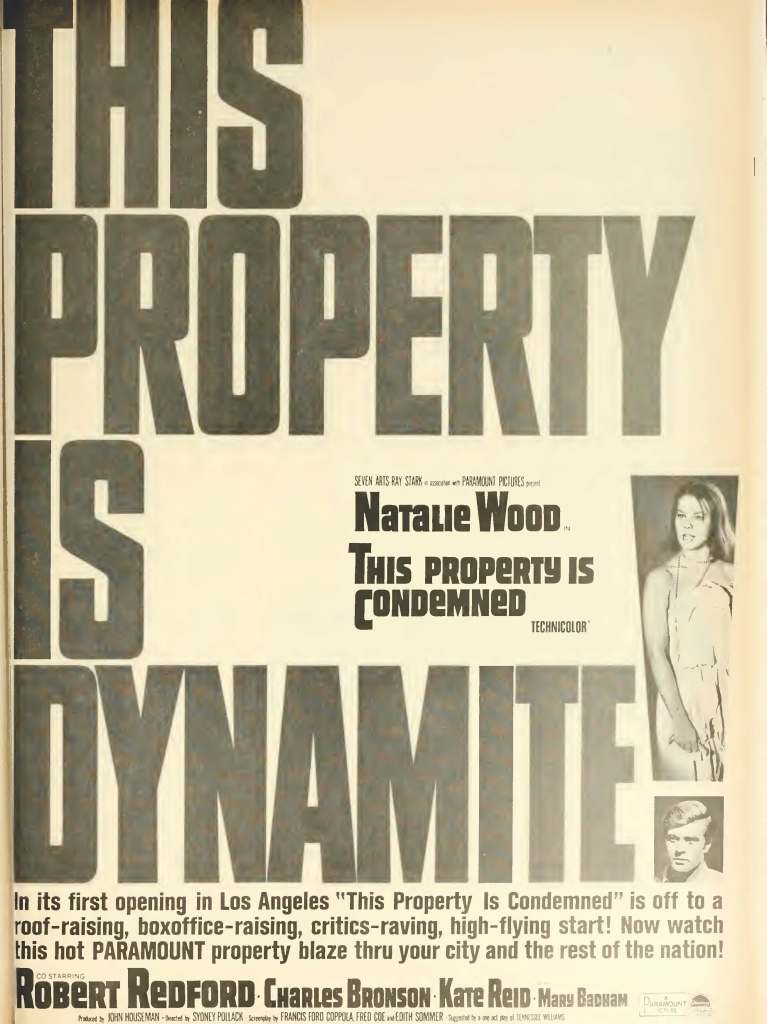
Added to the list of dubious stars was Natalie Wood whose career was considered to be in such jeopardy that she had not made picture in two years. Small wonder after dramas Inside Daisy Clover (1965) and This Property Is Condemned (1966) and crime caper Penelope (1966) which averaged $2.2 million.

Whether anybody’s career could be resuscitated after these disasters was anybody’s guess.

Strangely enough, some did regain at least a measure of their former glory, Marlon Brando the obvious example after The Godfather (1972). James Garner had his biggest-ever hit with Support Your Local Sheriff (1969). Tony Curtis revived his fanbase with The Boston Strangler (1968). William Holden returned to favor after the double whammy of The Devil’s Brigade (1968) and The Wild Bunch (1969). Natalie Wood hit the spot in Bob and Carol and Ted and Alice (1969) and Yul Brynner as a robotic gunslinger turned his career around in Westworld (1973).

But Glenn Ford’s career was coming to an end and Anthony Quinn followed up this bunch of flops with two more of the same ilk in the Shoes of the Fisherman (1968) and The Magus (1968) although he would still be offered starring roles for more than a decade.

Of course, luckily, decades on, we are not so much guided by the box office various films had and many pictures that were once dubbed flops are now being re-evaluated by a new generation of film fans.

SOURCE: Lee Beaupre, “Rising Skepticism on Stars,” Variety, May 15, 1968, p1

Discover WordPress

A daily selection of the best content published on WordPress, collected for you by humans who love to read.

The Atavist Magazine

by Brian Hannan

WordPress.com News

The latest news on WordPress.com and the WordPress community.