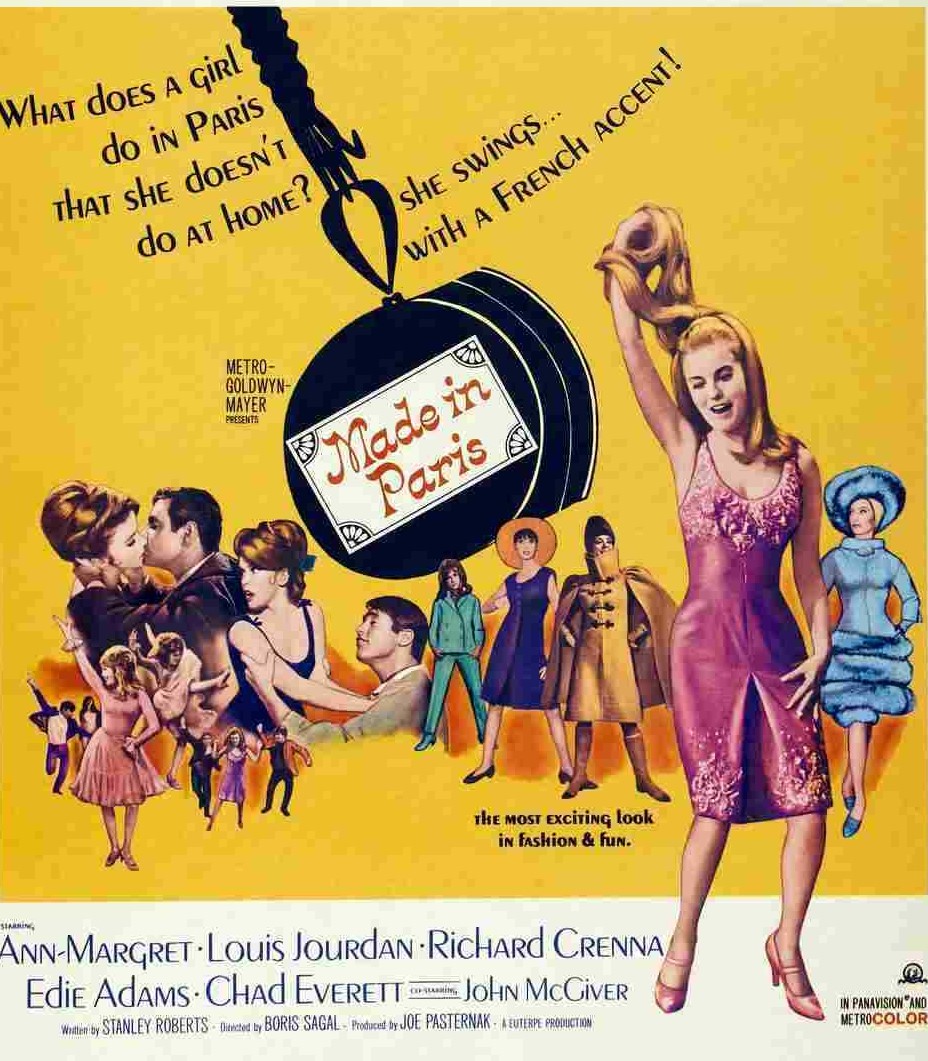
Made in Paris (1966) ***

She sings, she dances, she shakes her booty. What else would you expect from Ann-Margret in light comedic mode (i.e. The Swinger, 1966) rather than serious drama (i.e. Stagecoach, 1966). While appearing as free-and-easy as in The Swinger, she’s actually a dedicated virgin, as was par for the course before the Swinging Sixties kicked in. But the way she lets it all hang out, you’d be forgiven (if you were a predatory male) for guessing the opposite.

Maggie (Ann-Margret) is a career girl, assistant fashion buyer in a New York store, having come up the hard way, small-town-girl then model then salesperson. When the Paris buyer Irene (Edie Adams) quits her job to get married, Maggie is shipped out as her replacement, not as a reward for all her hard work but as punishment because she refuses to sleep with the boss’s cocky son Ted (Chad Everett). The idea is she’ll be so out of her depth, she’ll return humiliated and only too happy to jump into bed.
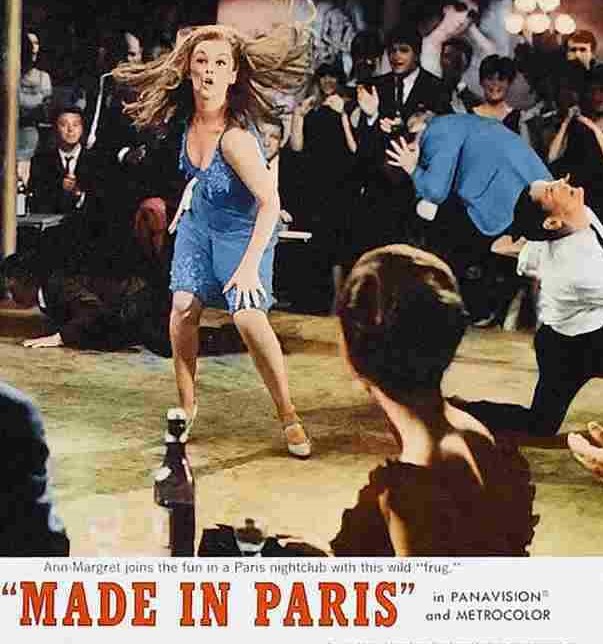
What do poster designes have against certain colors?
In the movie Ann-Margret dances in blue. In the poster, the dress turns red.

Turns out Irene quit so fast she didn’t have time to tell her Parisian boyfriend and fashion designer Marc (Louis Jourdan) so on Maggie’s first night in the company’s luxurious apartment he turns up. Naturally, he expects a bit of the old-fashioned quid pro quo, je ne sais quoi, whatever they call sex when they are being coy about it, and when she refuses to play ball he cables New York to demand her dismissal. Even when the New York boss (John McGiver) relents, she is banned from Marc’s fashion shows, meaning she can’t buy clothes she is forbidden to view.

Enter Ted’s buddy Herb (Richard Crenna), from the same lothario mold. Just to even things up or add further complication, Ted realizes he is actually in love with a girl who said no after a thousand boring girls who said yes. Trying to win her way back into Marc’s good books, with Herb as her guide she tracks the designer through the night clubs, eventually putting on the kind of sexy wild impromptu dance exhibition that the more staid Maggie could only have achieved if she’d taken lessons from Ann-Margret.

That does the trick and they share an impromptu number (“Paris Lullaby”) on the banks of the Seine although Marc still insists she shed her inhibitions before marriage if she wants to be considered a true Parisienne. The arrival of Mark and then Irene, abandoning her husband on their honeymoon when called in to retrieve the situation, adds fuel to the fire and then it’s one mishap after another, especially when Maggie discovers the pleasures of absinthe and ends up in Herb’s bed (yep, she has a hell of a time wondering not just how she got there but if, Heavens to Murgatroyd as Snagglepuss would say, she committed the terrible deed).

Unbelievably, and just as well perhaps from the narrative perspective, Herb isn’t a love rival. Maggie isn’t his type, its transpires. Shoot that man on sight – doesn’t fancy Ann-Margret?  Lock him up!

You won’t be surprised to learn that it all sorts itself out in the end but you might be a bit taken aback how quickly a dedicated career girl throws away her career once a marriage proposal comes her way.

You might have expected from the title that Maggie would be a model, the best excuse you could find for the actress to cavort in a series of skimpy costumes, as she does in the pre-credit sequence, an exquisite dialogue-free montage with a clever pay-off  that makes you think this is going to be much more stylish – excluding the fashion show of course – than it is.

Ann-Margret has such a dazzling screen persona she makes light work of even the lightest of confections. She does all that her most fervent fans would want but it’s not her fault she’s been cast in a Doris Day comedy that ensures she can only properly express her character by acts of exhibition. Louis Jourdan (Can-Can, 1960) keeps creepy entitlement at bay with lashings of Gallic charm. Despite his character’s playboy tag, Chad Everett (The Impossible Years, 1968) is the squarest of squares.

Richard Crenna (The Midas Run, 1969) spins his normal hard-ass screen persona into something a bit more sympathetic. Edie Adams (The Honey Pot, 1967) and John McGiver (Fitzwilly/Fitzwilly Strikes Back, 1967) add a bit of dash in support.

You’d never guess the director was Boris Sagal of The Omega Man (1971) fame. Stanley Roberts (Come September, 1961) wrote the screenplay.

Ann-Margret at her zingiest. What more could you ask?

Ukryta Siec /Hidden Web (2023) *** – Seen at the Cinema

What appears a routine conspiracy thriller fleshed out with contemporary hooks about body shaming, victim shaming and the dark web suddenly explodes in the third act as consequence gets personal. If you’re of an arthouse bent you’ll equate Polish cinema with Andrzej Wadja (Man of Marble, 1977), Roman Polanski (Knife in the Water, 1962), Jerzy Kawalerowicz (Pharaoh, 1966) Krysztof Kieslowski (Three Colours Trilogy, 1993-1994) or Pawel Pawlikowski (Ida, 2013) and you’ve probably turned a blind eye to the boom in commercial Polish cinema of recent years, mostly concentrating on corrupt cops, gangsters, the Mafia, and strong-minded women.

Luckily, my local multiplex, which lacks arthouse inclination, has been running the biggest hits from Poland on a regular basis. The latest arrival lacks the bombast and outlandish narrative of previous entries and while following a standard investigative narrative eventually twists into a more personal reflection on crime.

Adapted from this Polish bestseller.

Journalist Julita (Magdalena Kolesnik) investigating the suicide of well-known television presenter Gustaw  (Mariusz Czajka) finds evidence of a murder plot. After publishing her story, she becomes an even bigger story when her sex video is made public. Her outraged editor demands she apologise for embarrassing the news website. When she refuses, she is fired. Widowed father Henryk (Andrzej Sweeryn) – wife committed suicide way back – disowns her, older sister Magda (Wiktoria Gordecka) chucks her out of her flat.

The journalist ploughs on, but hunting down her own hacker puts her back on target to uncover a man who could conceivably possess the computing skills – that once upon a time could have only existed in the fictional James Bond/Fast and Furious universe but now with the driverless car upon us less a figment of the imagination – to force the television presenter’s vehicle over a bridge. She’s more determined than resourceful, tempting a security guard out of his office by setting off a smoke alarm, escaping from another security guard by ramming his hands with a car door.

She is assisted by Chinese chef Emil (Piotr Trojan), a part-time computer whiz, whose Army background makes him a suspect. Eventually, with more digging and a good deal of luck, she finds the hacker. Instead of turning him in, she agrees to give him a stay of execution.

For why? He has evidence Gustaw was part of a child sex abuse ring of which the hacker was an early victim.  He wants to employ more computer wizardry vigilante style to knock off another member of the abuse ring. He promises to stop after that, leaving it to Julita to make a decision on whether to go to the police.

I’m going to have to issue a spoiler otherwise this will just seem too routine a thriller. This is where it gets emotionally harrowing and spins completely on its axis, away from standard investigative journalism and into another realm entirely. The twist is that the hacker’s next victim, murdered by tampering with a dialysis machine, is her father. He was another legendary television figure.  Now her mother’s suicide makes sense as does her sister’s reluctance to let her son anywhere near her grandfather.

Now what? Not enough to be the already humiliated daughter of a sex offender, but to realize the hidden role this has played in her family, and to decide whether further exposure would be in anybody’s interest.

Despite a car chase and being hounded, this doesn’t quite get to the boil in terms of conspiracy thriller as though director Piotr Adamski (Eastern, 2019) knew that the final act would blow everything that went before out of the water. But given this is the director’s sophomore outing and he didn’t want to go the all-out violence-ridden crime route, it’s tense enough and with some interesting news-room background, sniping colleagues, an editor pumping breast-milk at her desk, electronic scorecard ranking journos by the minute. Surprised, to be honest, some of the images that the censor passed.

But Magdalena Kolesnik (Sweat, 2020) plays this just right. Too self-reliant to be out of her box with fear, too independent to let her emotions get the better of her, meaning that when the big reveal hits she can dive into all that repressed emotion.

If you’ve not dipped into modern commercial Polish cinema, this is as good a place to start as any. If you’re already a fan, you’ll know what to expect, and come up somewhat shaken at how this pans out.

Worth a look.

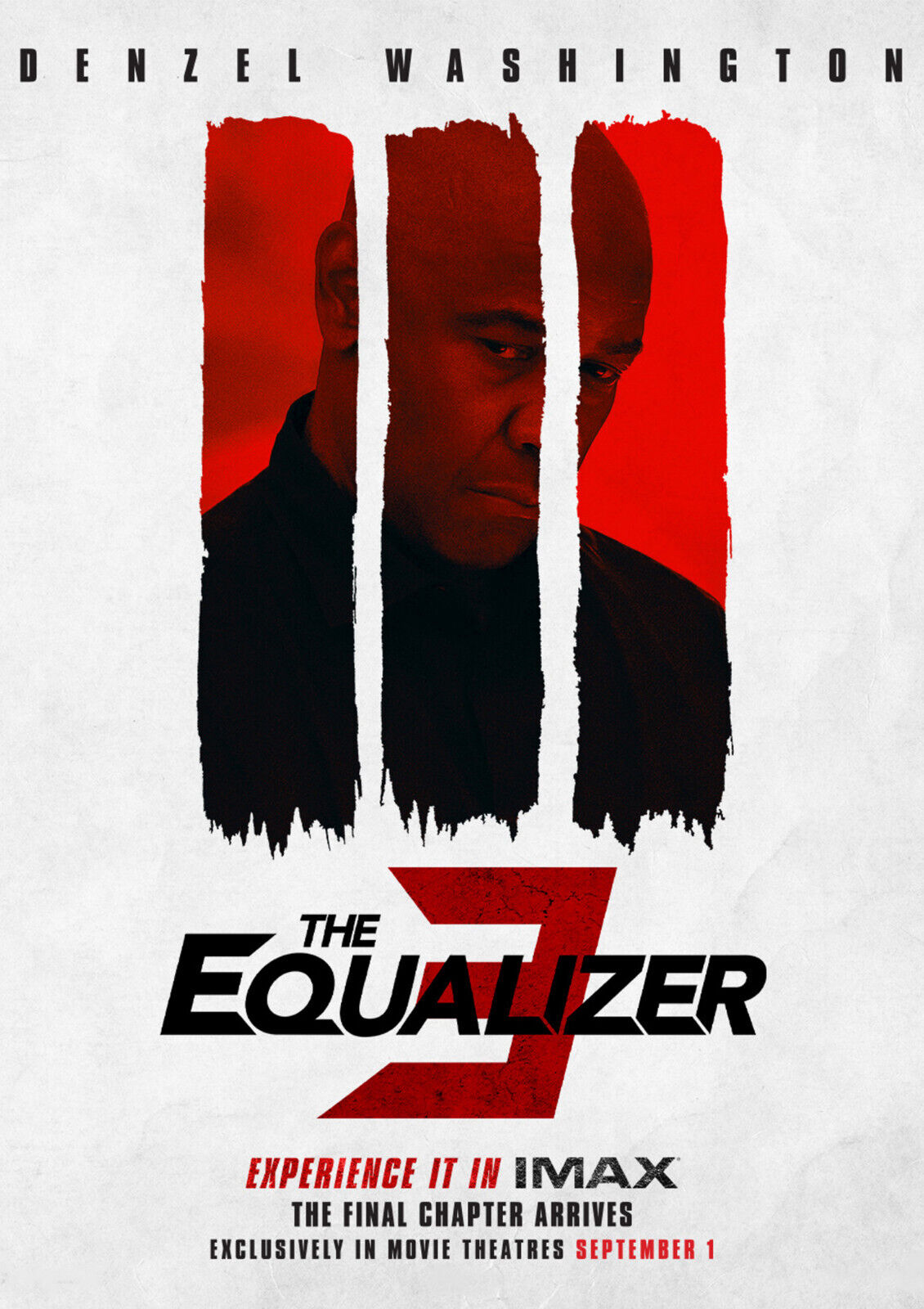
The Equalizer 3 (2023) **** – Seen at the Cinema (three times)

Stylish, triumphant, conclusion to a vigilante series that stands comparison with John Wick as the best of the new century. Oddly enough, the pair share some motifs, not least a mountainous stairway to a medieval church. And there are nods to The Godfather, killings against the backdrop of a religious procession and fruit spilling onto a corpse, a dagger pinning a hand to a table. And you might find shades of Apocalypse Now in the brooding remorseful figure of Robert McCall (Denzel Washington) convalescing in a remote fishing village in southern Italy. And it’s fully contemporary with a nod to the power of the mobile phone in depicting live events.

For an actioner it’s chockful of mystery. To begin with, you think we’re at the end, the aftermath of some gun battle, but, in fact, it’s just the start. Quite why McCall has ended up in a Mafia fiefdom in Sicily is held back till the end as is explanation regarding helping young C.I.A. agent Emma (Dakota Fanning) track down Mafia drug dealers, both narrative hooks adding to the subtlety and nuance that filters through this reflective actioner. Sure, there’s brutality, when is there not with McCall around, but there’s also reality, marvellously evocative scenes of village life, the vigilante sipping his trademark tea in a café, buying fresh-caught fish, joining exuberant locals celebrating a famous win at soccer.

Assisted by local physician Enzo (Remo Arisio) and local cop Gio (Eugenio Mastandrea) in recovering from a life-threatening bullet-wound, it’s all McCall can do to hobble down the steps with the aid of a walking stick. No Rocky-style reinvention dynamics here, no weight-training or running regime, no taking to the target range. When McCall struggles up a flight of steps your heart is in your mouth.

Meanwhile, a story unfolds of a power grab, legitimate and illegitimate, by Mafia chief Vincent (Andrea Scarduzio). But when the gangster’s younger brother Marco (Andrea Dodero) pushes his weight around once too often in McCall’s presence the rumbling volcano starts to erupt. But in temperate fashion to begin with, McCall relying on being able to locate a particular nerve (a physical one) enough to send the young thug scarpering.

Worth noting that the movie avoids two obvious traps. Agent Emma isn’t fighting a gender war, she’s no feminist battling for approval from male counterparts; in fact, if anything, she’s accorded full praise for her work and makes sure that she never acknowledges McCall’s input to her superiors, which seems even more realistic.

You might expect by now that widower McCall would be ripe for romance but though waitress Aminah (Gaia Scodellaro) takes a shine to him that goes little further than a pleasant walk along the beach sampling local delicacies. So you might also expect that, sticking to the core, this would be just a lean rip-off sequel. Instead, it’s rich in composition and detail. Many scenes play out in what appears to be atmospheric black-and-white. While not in the operatic league of John Wick 4, it’s a joy to watch.

Plenty bang for your buck but an interesting storyline that meshes drugs, terrorism and the Mafia. Deceptively subtle performance from Denzel Washington (The Magnificent Seven, 2016). He could have coasted home with his brooding persona. Instead, he walks like a man half-dead, reacts as if bewildered to still be alive, and finds he is no longer an outsider. Dakota Fanning (Once Upon a Time in Hollywood, 2019) plays down her role, there are no dramatic fireworks, she’s a confident individual, not giving an inch in her quiet duel with McCall, but no histrionics either.

Long-lasting director-actor teamings generally bring richer rewards as the partnership grows. This is the fifth film for Washington and Antoine Fuqua, beginning with Training Day  (2001) and incorporating The Magnificent Seven and the two previous Equalizer outings. It has the feel of a famous partnership along the lines of John Wayne-John Ford, James Stewart-Anthony Mann and Gregory Peck-Henry King.

Nod to Richard Wenk, third time in the writer’s chair, for the screenplay and espcially to Marcelo Zarvos (Emancipation, 2022) for a score that combines haunting theme tune and screeching guitar for the action.

I was so taken with this I’ve already seen it three times. Might well head back a fourth time next week for more nuance – and more bang.

The Loved One (1965) ***

If only British director Tony Richardson had seen fit to add some meat to the bones, this satirical look at the American funeral business might have emulated the dramatic impact of Elmer Gantry (1960). As it is, the director is so preoccupied with the funereal inanities that it doesn’t so much lose sight of the plot as pretty much ignore it.

So, yes, the burying of a loved is big business and just like weddings some of the trimmings would make your toe curl. But even when reality intrudes, feet swell after death so require larger shoes and the only way to fit a suit on a corpse is to slit open the back, these are treated in humorous fashion.

And that would all be fine if this was the laff-fest Richardson intended but even with a puffed-out roster of cameos – Liberace as a salesman and James Coburn (Hard Contract, 1969) as a truculent customs officer the pick – this ends up as more documentary than movie. And that’s it’s main attraction for a contemporary audience who might be less concerned about the director’s almighty fall from grace after the stunning critical and commercial success of Tom Jones (1963).

In fact, it’s a shame the story goes anywhere near internment because the initial section concentrating on Hollywood is more successful in achieving a modicum of gentle satire. Wannabe poet Dennis (Robert Morse) has won a trip to America as a prize and lands on upper crust uncle Sir Francis, a Hollywood veteran, tasked with improving the elocution of cowboy Dusty (Robert Easton) so that he can play a British spy akin to James Bond.

That section entails gorillas turning up outside telephone booths, all sorts of monsters dawdling through the studio canteen, and head honcho (Roddy McDowell) running his father’s studio by the seat of his pants until he comes unstuck, resulting in Sir Francis being fired after 31 years. There’s some interesting, almost British, issue-dodging and Sir Francis in true British style, unable to deal the embarrassment of being sacked, commits suicide, leading the nephew into the arms of Whispering Glades funeral operative Aimee (Anjanette Comer). She’s in love with the creepy Joyboy (Rod Steiger) leaving Dennis to woo her using other people’s poems.

There’s another nutcase dropping out of the woodwork every two minutes, and occasionally there’s a mild piece of slapstick or physical comedy. Of course, using rampant sex as the basis for comedy, as with Tom Jones, works far better than death. In the absence of a decent narrative or interesting characters, once the initial heavy-handed points have been made there’s nowhere else to go except be more heavy-handed.   

Until Brideshead Revisited (1981) was turned into a triumphant mini-series, the works of British author Evelyn Waugh had difficulty being transferred to the screen. In part, this was due to his idiosyncratic style and in part that, even at his most serious, he was viewed as a comedy writer.

Screenwriter Terry Southern (Candy, 1968) wouldn’t have been my first choice to translate the Waugh essence for the big screen, but co-writer Christopher Isherwood (Cabaret, 1968) was no more successful.

Robert Morse (Guide for the Married Man, 1967) offers little beyond mild buffoonery. While Anjanette Comer (Guns for San Sebastian, 1968) is surprisingly good as the angelic ditzy object of his affections, she can’t carry the entire picture. Robert Morley (Genghis Khan, 1965) manages to keep a straight face while delivering his lines.

Without doubt hits the immediate target but somehow misses the bulls-eye.

Even so, there’s one element of the picture that would have contemporary Hollywood salivating. And that is a producer not frightened of taking risks, willing to go outside the envelope in a bid to deliver the different kind of movie that audiences obsessed over with Barbie and Oppenheimer.

Martin Ransohoff had an enviable track record in the 1960s. For MGM, he was the mastermind behind movies as offbeat as The Americanization of Emily (1964), The Cincinnati Kid (1965) Eye of the Devil (1966) and Castle Keep (1969) as well as big-budget offerings The Sandpiper (1965) and Ice Station Zebra (1968). His name was on such later diverse titles as The Wanderers (1979) and Jagged Edge (1985). As you can see from this random selection, his movies didn’t always come off, but at least they were different.

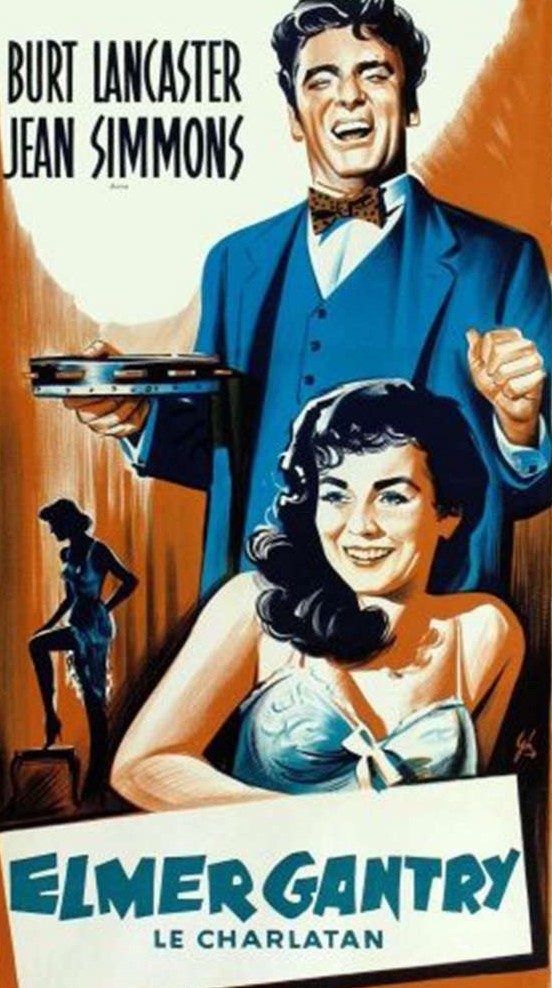
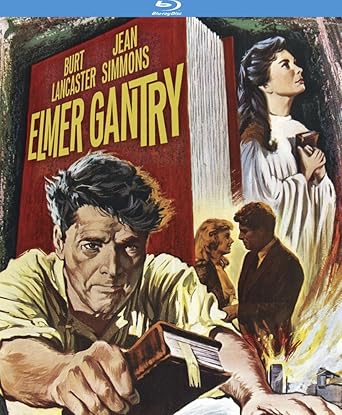
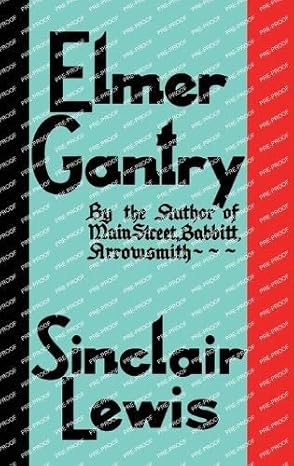
Elmer Gantry (1960) *****

Burt Lancaster gives the performance of his life as the eponymous burnt-out salesman finding financial redemption in the salvation business in Richard Brooks’  riveting examination of the revivalist boom. While replete with hypocrisy, old-style religion brought succour to the rural poor, but the director takes such an even-handed approach to the subject matter, carefully nurturing a marvellous parade of characters, that you are totally sucked in.

Brooks made his name adapting famous novels but only here and In Cold Blood (1967) does he exhibit complete mastery of the material.  In fact, he pulls out a cinematic plum in having the audience, who might initially have mocked the obvious manipulation of the poor, suddenly taking the side of the itinerant preachers when they come up against the more sophisticated religious operators in the big towns.

Elmer Gantry (Burt Lancaster) has some previous in the preaching business, but only for as long as it took for him to be chucked out of divinity school for seducing the principal’s daughter, so when by accident he comes upon a touring revivalist meeting he discovers his metier as a fast-talking brazen preacher. He doesn’t quite usurp the star of the show, Sister Sharon (Jean Simmons), and in fact their styles complement one another, he preaching hell and damnation, she the love of God.

Beneath the demure guise, Sharon is anything but a push-over. Not only does she see through him right away and consistently knock him back but she is quite the businessperson, though her methods of keeping civic officials in line often rely on blackmail. But then who are the hypocritical, allowing speakeasies and prostitution to run rampant, to attempt to rein in revivalists who need account to no one for how they spend their revenue?

Eventually, of course, Elmer’s ardent wooing wins over the virgin Sharon who easily forgives his dalliance with her doe-eyed follower Sister Rachel (Patti Paige). Burgeoning romance is scuppered by a chance encounter with prostitute Lulu (Shirley Jones), the principal’s daughter. That’s just the spark needed for anti-religious fervor to take over and the enterprise ends in disaster.

But what’s so good about a film that could as easily just relied on taking pot-shots at religion is that Brooks gives equal space to the good and bad in each character. Sure, Elmer’s confession of his sins might be construed as a seduction device, but that’s tempered by a genuine ruefulness and remorse over his previous actions. And while his grand-standing in front of an audience could be interpreted as merely an actor revelling in a role, you can see that religion has as easily taken over him and provided him with an identity that he finds rewarding. He might still be a salesman but he’s selling the hell out of the product.

Sharon’s uncanny hold over a congregation may be a true skill, and she’s definitely a believer, but that is borne out of fiction. She has reinvented herself, given herself a new name and identity, that furnished her with business opportunity in a male-dominated world, but love of God has come at the expense of love of man.

Perhaps what’s best about the picture’s construction is the array of supporting characters. Journalist Jim (Arthur Kennedy) might appear the pick, ingratiating himself with the touring company only to write a searing expose, but drawing the line, and incurring the wrath of his editor, at writing the kind of tawdry tale he believes is a fabrication. While still holding a torch for Elmer, Lulu has none of the cliché prostitute’s heart of gold. Initially rejected by Elmer, she goes along with a scheme to bring him down, only to change her mind and change it again, left only with remorse.

And Brooks manages to weave in a ton of detail, sometimes in dramatic fashion, such as the church elders in big city Zenith debating the value of backing the revivalists (the touring operation usually signs up hundreds of people to local parishes), and sometimes just as background, such as when Jim dictates his front-page lead in the newspaper office, whipping it off a page at a time to throw in front of the editor.

There’s also a little-commented-upon affinity between Shirley and Elmer. She, too, is coming to the end of the line. She is approaching burn-out. The endless travel, the responsibility for her payroll, financing accommodation, dealing with officials, seeing all the people she has returned to the fold being handed over to local churches, is taking its toll. And she wants the stability of her own church, where she can soothe her congregation on a weekly basis and live a more temperate life.

If ever a movie suited Burt Lancaster’s physicality, this is it. Allowed to channel his inner dominance, every gesture overpowers and by the same token makes him more potent when at his most abject. Lancaster (The Swimmer, 1968) was in a rich vein of form that would see him deliver a series of majestic performances throughout the decade. He deservedly won the Oscar.

Jean Simmons (Rough Night in Jericho, 1967) is, effectively, both a villain, duping everyone by her creation of Sister Sharon, and the epitome of the American Dream, a girl from shantytown who makes her way bigtime. Shirley Jones (Two Rode Together, 1961) is afforded more dramatic beats and hers is a sure-footed performance, leading you to believe she will react one way and then go another. Oddly, Arthur Kennedy (Joy in the Morning, 1965) missed out on adding to his five Oscar nominations for supporting actor.

Nothing in this movie has aged. If anything, this was way ahead of its time in daring to pick holes in organized religion (The Cardinal and The Shoes of the Fisherman were a good few years away and in The Night of the Hunter a few years before Robert Mitchum only posed as a preacher).  

Extraordinary movie by Richard Brooks at the top of his form.

The Frightened City (1961) ***

Sean Connery in an early role as a gangster is not the only reason for watching this brisk British thriller about a London protection racket. Primarily told from the point-of-view of the bad guys, this explores how a ruthless Mr Big builds up a criminal empire. Waldo (Herbert Lom), a bent accountant, brings together the six major gangs involved in extorting money from pubs and stores into a democratically-run syndicate.  He then moves on to demanding bigger sums from bigger enterprises such as construction businesses. However, when the gangsters fall out they go to war.  

This film is way ahead of the game in presenting gangsters as displaying any intelligence. Generally, they were depicted as brutes who ruled by force. But criminality at the top level demanded as much organization as in a legitimate business. Personalities had to be harnessed to work together rather than shoot each other on sight. Such skills had to exist in order for gangsters to operate on any scale. This picture examines how this was done.

The cops led by Det Insp Sayers (John Gregson) are almost a sub-plot and the story would have adequately run its course without their involvement. Sayers sails close to the wind in hoping to “tilt the scale of justice in our direction for a change.” Paddy (Sean Connery) doesn’t appear until about 20 minutes as a karate-expert cat-burglar turned enforcer. Paddy’s involvement with the syndicate ends when his code of honor is breached and he turns on his employers. His code is not so sacrosanct that it prevents him cheating on girlfriend Sadie (Olive McFarland). But he does display the virility to fill James Bond’s shoes.

There’s far more violence that would be expected in a British crime picture of the era. Night clubs, shops and pubs are wrecked and there’s plenty of fisticuffs and when the gangsters go head-to-head they upgrade to grenades. There’s a bit more plot than the running time can deal with so director (and producer and co-writer, along with Leigh Vance of Crossplot, 1969, fame) John Lemont occasionally resorts to cliché devices like newspaper headlines. Canadian Lemont – most famous for writing the first serial on ITV, Sixpenny Corner – was an auteur of the old-fashioned (and unheralded) kind, and previously writer-director of The Shakedown (1960). 

Top billing was a step up for Herbert Lom (Gambit, 1966) and he made the most of it, delivering a suave villain among the thugs. John Gregson (Night of the Generals, 1967) Table, 1959) was a solid British star and ideal cop material (he was later British television’s Gideon). Yvonne Romaine, as Connery’s new squeeze, a nightclub singer exploited by Lom more for her looks than her voice, was known to audiences after Curse of the Werewolf (1961). This was a sophomore outing for Scottish television actress Olive McFarland (So Evil So Young, 1961). Unusually, for a British picture at this time, the theme tune written by Norrie Paramour was covered by The Shadows and turned into a hit.

At this point in his career, Connery had already had two bites of the cherry without much success – romancing Lana Turner in Another Time, Another Place (1958) and Disney’s Darby O’Gill and the Little People (1959). He would make another three films before his breakthrough with Dr No (1962) but the Pressbook showed signs that he was headed for the heights.  Co-star Yvonne Romaine (and her distinctive body measurements) were accorded three separate stories in the Pressbook, compared to one each for Lom and Alfred Marks, at that point better known as a comedian. While no articles about Connery were featured, when it came to the advertising campaign Connery (and Romaine) outshone their co-stars.  

Producers were contractually bound in relation to the size of credits that appeared on any advertising. But there were no such regulations regarding the visuals of an advert. Although top-billed, Lom is not shown on any of the adverts. Given greatest prominence was Yvonne Romaine. There were thirteen different ads and she appeared in them all. Although Connery was third-billed and she was two rungs below in the credit stakes, he was the junior partner when it came to the artwork. While, Connery appeared in eleven in only one did he overshadow Romaine and in another they were visually-speaking accorded roughly the same status. But otherwise, she hogged the adverts.  

The Pressbook was small by American standards, consisting of six A3 pages, the bulk of which was given over to adverts. But what it lacked in pages it made up for in taglines – of which there were six main types.

The picture was not seen much in the United States, sent out in first run as the lower half of a double bill in only a handful of big cities, so there’s a fair chance it’s completely unknown except to Connery completists. It later appeared on the reissue circuit when Connery was a bigger name.

Worth a look as an example of the British crime movie trying to break out of the confines of the genre, and even more so as an early example of the Connery screen charisma.

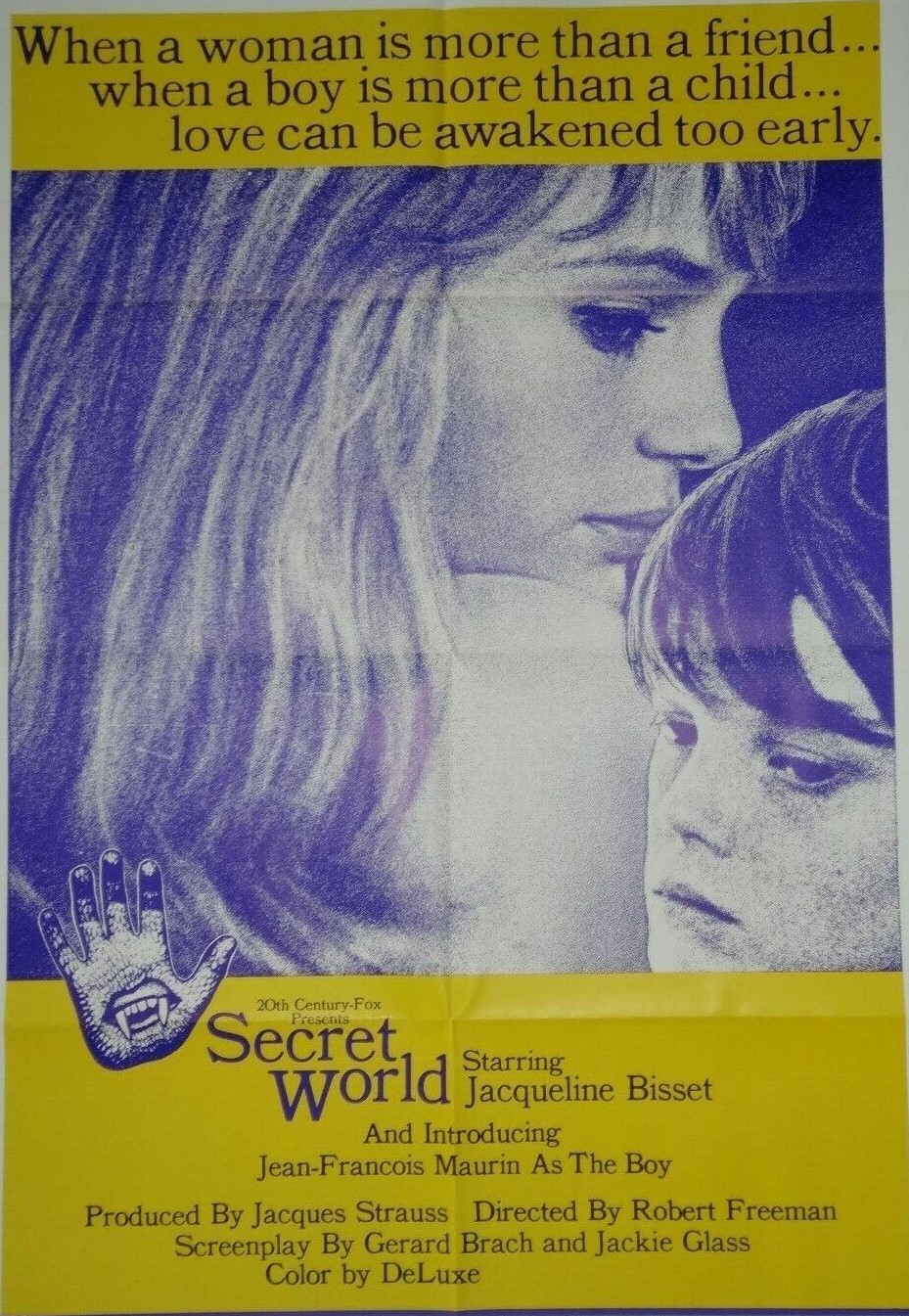
Secret World (1969) ****

Jacqueline Bisset is the big draw here. After breaking into the Hollywood bigtime with female leads in The Detective (1968) and Bullitt (1968) she put her newfound marquee weight behind a low-budget French arthouse picture.  But ignore the marketeers best efforts to present this as malevolent in the style of The Innocents (1961) or the illicit template of The Nightcomers (1971) or Malena (2000).

No children were corrupted in the making of this picture. Instead, it’s a slow-burn thoughtful exposition of a child coming to terms with loss and a young woman discovering she is more than a mere sexual plaything. Any explosive drama comes from father-son rivalry but mostly it’s a reflective, absorbing movie that follows twin narratives, the attraction of the orphaned introspective 11-year-old Francois (Jean-Francois Vireick) to the English mistress of his uncle Philippe (Pierre Zimmer) and the damage her arrival causes to a fractured household.

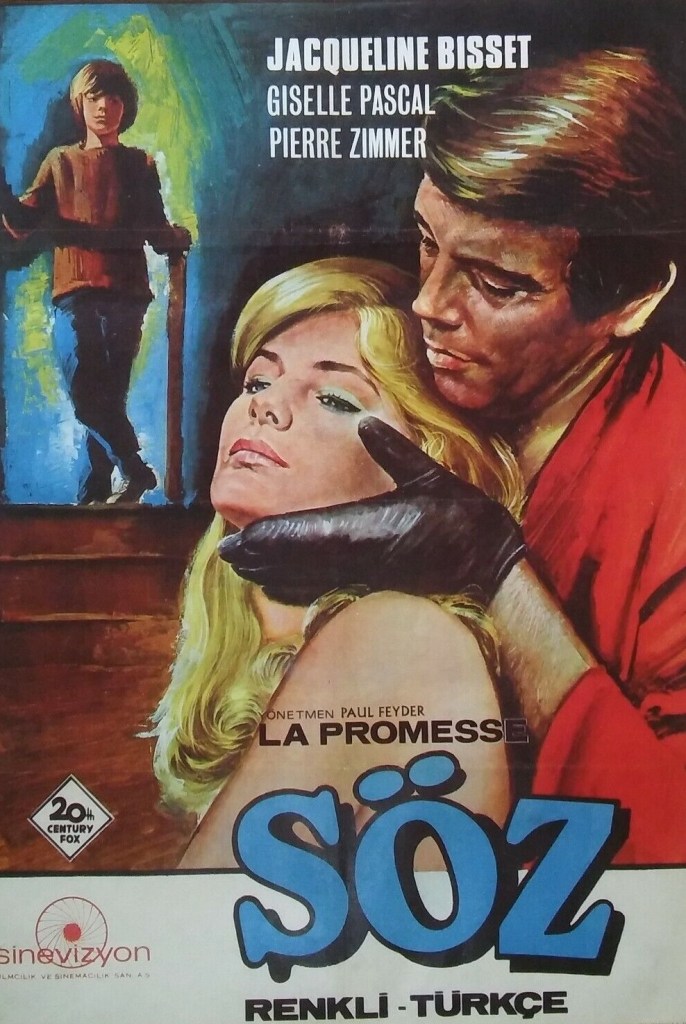
The leather glove oveprlays its hand in the poster, suggesting a great deal more sexuality
than is actually the case, but nonetheless – and take this as subtle – creates
an element of ambiquity about the demure Wendy.

Astonishingly, given its arthouse credentials – long takes, glorious cinematography, brooding close-ups – this was the final film for both directors (no idea why there were two) Paul Feyder (in his debut) and a sophomore effort from Robert Freeman (The Touchables, 1968). Given a screenplay by regular Polanski collaborator Gerard Brach (Wonderwall, 1968) and an intrusive heavy-handed score, you get the impression of two separate movies struggling to fit a single canvas.

On the one hand, you’ve got a perfectly acceptable romantic intrigue, Philippe and son Olivier (Marc Porel) fighting, sometimes metaphorically (games of chess etc), sometimes physically (a punch-up), over the woman, passed off as the daughter of a wartime colleague, and a wife Monique (Chantal Goya) refusing to stand on the sidelines, switching hairstyle to blonde and employing various wiles to prevent the affair. While the male rivalry is overt, the wife’s manipulations are more subtle.

On the other hand, you’ve got the lonely boy, who indulges his imagination, spinning tales of monsters in a lake and spies in the vicinity, mostly ignored by his relatives, hiding out with a pet rabbit in a treehouse, occasionally filching small items, creating a crown out of a stolen brooch and pieces of tree bark. There’s a lot that’s presented without explanation. For example, a couple of months after his parents died in a car crash that he alone survived, he mopes around in a jumper full of holes, either a sign how little his adoptive parents care for him, or perhaps the item of clothing he was wearing the day his mother died.

You can view his behavior – creeping into Wendy’s room at night when she’s asleep – as creepy or just the hankering of a small boy after a substitute mother. But mostly, he lives a life of wistfulness, longing for what he once had, unable to fit into a household split by various emotions. When he snips a lock of Wendy’s hair, or snaffles a bottle of her perfume, it’s to add to his little box of mementoes rather than from any underlying sexual motive. And it’s hard to view his growing feelings for Wendy as early stirrings of sexual attraction. When at one point he falls asleep on her bosom, you couldn’t interpret that as anything more than maternal instinct.

That’s not to say there isn’t tension. But that’s almost entirely played out in the context of father, son and wife. Francois is a welcome gooseberry defusing the unwelcome attentions of Olivier, whose overtures Wendy constantly thwarts. Olivier, well aware of the role Wendy plays in her father’s life, mocks his mother’s attempts to hold onto her errant husband. Wendy, meanwhile, abhors the role she is forced to play, the trophy mistress, and reacts in maternal fashion to the lonely child.

Excepting the intensity of the father-son relationship, the screenplay underplays while still developing character more fully than you might expect.. The child is as manipulative as his aunt in finding ways to spend time with the object of his affection.

Mostly, this has been dismissed as a poor example of the French arthouse picture or as a Bisset vanity number or for illicit elements than never catch fire. But, in reality, it’s a superb character study set in an unromanticised French countryside – rats need shooting, for example, massive tray of cheese served up for dessert rather than the grand wine cellar you might imagine a chateau to contain, or clothes or other ostentatious examples of wealth.

There is so much that is incisively ordinary. Philippe insists on measuring the boy’s height.  Monique drops her chilly façade to help the newcomer get rid of a wasp. The arrogant Olivier loses all credibility when he runs away from a gang. The children play out childish rituals. Francois douses the rabbit in Wendy’s perfume so he can keep the smell of her close.  

The secret world here is four-fold, the one Philippe foolishly and brazenly attempts to maintain, the one Olivier hopes to possess, the one Francois enjoys and the idyll from which Wendy is shaken out of.

The direction is very confident, none more so, oddly enough, than in the only sex scene, which takes place primarily off-screen, although with the lascivious involvement of a leather-gloved hand.

Rich in detail, supremely atmospheric, well worth a look.    

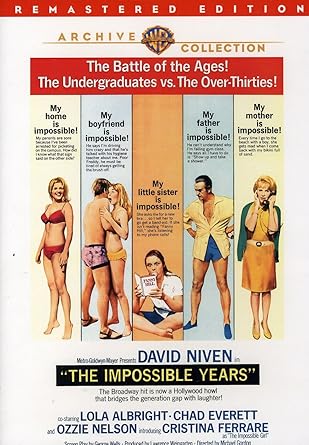
The Impossible Years (1968) ***

Generation gap comedy driven by unmentionables and the prospect of perplexed father getting more pop-eyed by the minute. By default, probably the last bastion of morality before censorship walls – the U.S. Production Code eliminated the following year – came tumbling down and Hollywood was engulfed in an anything goes mentality. Denial enters its final phase, quite astonishing the mileage achieved by not letting the audience in on what’s actually going on.  

Psychiatrist lecturer Jonathan (David Niven) finds his chances of promotion potentially scuppered after lissom teenage daughter Linda (Christine Ferrare) is arrested at a demonstration carrying a banner bearing an unmentionable word. That brings to the boil the notion that Linda may not be quite so sweet as she appears, Jonathan previously willing to overlook minor misdemeanors like smoking and speeding. But it turns out Linda may also have lost her virginity, that word also verboten, and may even be, worse, illegally married.

So the question, beyond just how manic her parents can be driven, is which male is her lover: the main candidates being a trumpet-blowing teenage neighbor and let) or laid-back artist hippie who has painted her in the nude.

Innuendo used to be the copyright of the Brits, in the endlessly smutty Carry On, series, but here the number of words or phrases that can be substituted for “sex” or “virgin” must be approaching a world record, but delivered with gentle obfuscation far removed from the leering approach of the Brits.

It’s a shame this movie appeared in the wake of bolder The Graduate (1967) because it was certainly set in a gentler period and its tone has more in common with Father of the Bride (1950). Setting aside that most of the adults, for fear of offending each other, can’t ever say what they mean, the actual business of a young woman growing up and demanding freedom without ostracising her parents is well done, Linda stuck in the quandary of either being too young or too old to move on in her life.

The scenes where that issue is confronted provide more dramatic and comedic meat than those where everyone is grasping, or gasping like fish, for words that mean the same as the other words they refuse to utter.

Parental issues are complicated in that Jonathan has set himself up as an expert on dealing with the problems growing children present. He views himself as hip when, as you can imagine, to  younger eyes, he’s actually square. And he’s also worried his younger daughter Abbey (Darlene Carr) will start to emulate her sibling.

Compared to today, of course, it’s all very innocent and I’m sure contemporary older viewers might pine for those more carefree times. It doesn’t work as social commentary either, given the rebellion that was in the air although it probably does accurately reflect how adults felt at confronted by children growing up too fast in a more liberal age.

David Niven (Prudence and the Pill, 1968) brings a high degree of polish to a movie that would otherwise splutter. He’s playing the equivalent of the stuffy Rock Hudson/Cary Grant role in the Doris Day comedies who always get their comeuppance from the flighty, feisty female. That fact that it’s father-and-daughter rather than mismatched lovers only adds to the fun. And there were few top-ranked Hollywood actors, outside perhaps of Spencer Tracy (Guess Who’s Coming to Dinner, 1967) who audiences would be interested in seeing play a father.

The unmentionable conceit wears thin at times but Niven and Cristina Ferrare (later better known as the wife of John DeLorean) do nudge it towards a truthful relationship. Former movie hellion Lola Albright (A Cold Wind in August, 1961) is considerably more demure as the Jonathan’s wife. Chad Everett (Claudelle Inglish, 1961) breezes in and out.

Although at times giving off a “beach party” vibe, it manages to examine the mores of the  time.

Director Michael Gordon has moved from outwitted controlling mother (For Love or Money, 1963) to undone controlling father without dropping the ball. It’s based on the Broadway play of the same name by Robert Fisher and Arthur Marx.

Lightweight for sure but worth it for David Niven and the sultry Ferrare.

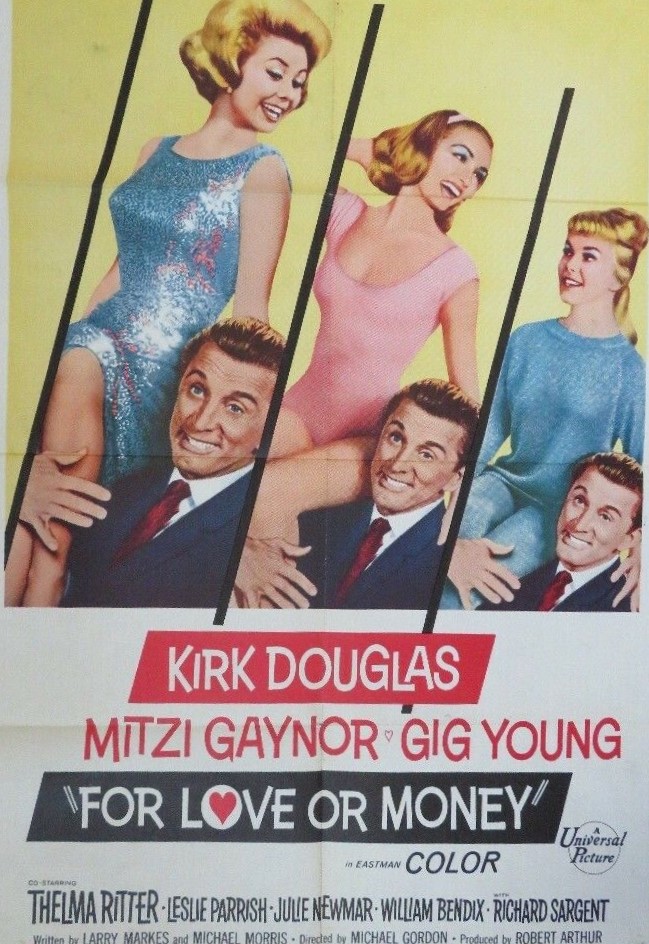
For Love or Money (1963) ***

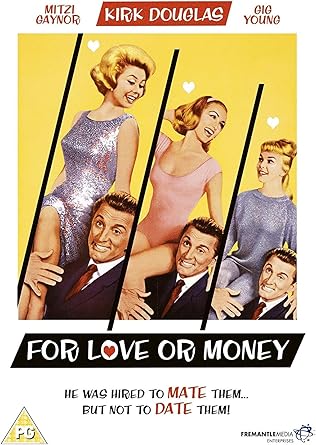
Kirk Douglas (The Brotherhood, 1968) had been so intent on establishing his dramatic credentials as a Hollywood high flier that he hadn’t appeared in a comedy in six years when he was second-billed to Susan Hayward in Top Secret Affair (1957).  

So after all the sturm und drang of heavyweight numbers like Strangers When We Meet (1960), Spartacus (1961), and Lonely Are the Brave (1962) it was always going to be interesting to see if he could drop the commanding persona long enough to hit the laugh button. He’s helped by a screenplay that while suggesting he is in control shows him run ragged by a quartet of females.

Millionaire widowed mother Chloe (Thelma Ritter) hires singleton lawyer Deke (Kirk Douglas) for $100,000 – enough to pay off his debts –  as some kind of matchmaker, not given the task of finding suitable husbands for her daughters, but to make sure that trio of spoiled women get hitched to men chosen by her.

The plan is for the Kate (Mitzi Gaynor), the most organized, to marry rich playboy Sonny (Gig Young), health nut Bonnie (Julie Newmar) to take up with child love Harvey (Richard Sargent) and hippie art lover Jan (Leslie Parrish) to be landed with dull taxman Sam (William Windom). Sonny is Deke’s best friend, they share a yacht.

Nothing tuns out the way it should in part because Deke is more attractive than any of the other males on offer and in part because the heiresses are disinclined to do what anyone tells them. Deke spends all his time getting into hot water, dashing into another room to take phone calls that inevitably create further confusion, while manfully trying to ensure that the male suitors present their most attractive sides to their potential brides.

There’s not a great deal to it. It’s not exactly farce, but given the daughters live on top of each other, quite easy for Deke to race from one apartment to another, and say the wrong thing at the wrong time. The juggling act is never going to work out, especially as Kate is love struck by Deke, though if she could see how easily he flirts with her siblings she might be less keen. There’s finale on a boat or, should I say, in falling off a boat.

I wouldn’t say it’s a hoot but it’s an excellent lightweight concoction that comes to life by inspired casting. None of the women is your typical Hollywood fluff, all present interesting characters, leaders in their own ways, and with a lifetime of standing up to their domineering mother unlikely to fall over at the sight of any decent male.

Thelma Ritter (Boeing, Boeing, 1965) is easily the pick. The six-time Oscar nominee, generally seen in dowdy parts as a maid or similar, is dressed to the heavens, all glammed up as the millionairess without losing any of her trademark snippiness or drollery. Mitzi Gaynor (South Pacific, 1958), in her final screen role, has a well-written part as an efficient businesswoman and proves more than a match for Deke.

Julie Newmar (The Maltese Bippy, 1969) is a delight as the health nut whose physical demeanor is proof of her regime while Leslie Parrish (The Manchurian Candidate, 1962) bounces along with a coterie of artists.  Gig Young (Strange Bedfellows, 1965) can do this kind of role in his sleep but he’s no less effective for having acquired that skill of the guy who never gets the girl. And there’s a rare sighting of Hollywood tough guy William Bendix (The Blue Dahlia, 1946) in a comedy.

But none of this would work without Kirk Douglas. And it works because he plays it straight. He doesn’t give in to the temptation of mugging to the camera, eye-rolling and pratfalls. You could easily get the idea the actor thought he was in a drama, especially as he’s the one in the kind of quandary that we’ve seen him ignore before, when ambition trumps morality or romance, as with Ace in the Hole (1951) or Strangers When We Meet. In some senses, the casting relies on audiences being aware of that sneaky side of his screen persona, the one where he doesn’t always do the right thing. And here, you could easily see him opting for the loot over the girl.  

Director Michael Gordon (Texas Across the River, 1966) is adept at winkling out the comedic moments in stories that are played straight. The team of Larry Markes and Michael Morris (Wild and Wonderful, 1964) wrote the screenplay with the emphasis on situation comedy rather than farce.

Good, clean fun and great performances.

A Fine Madness (1966) **

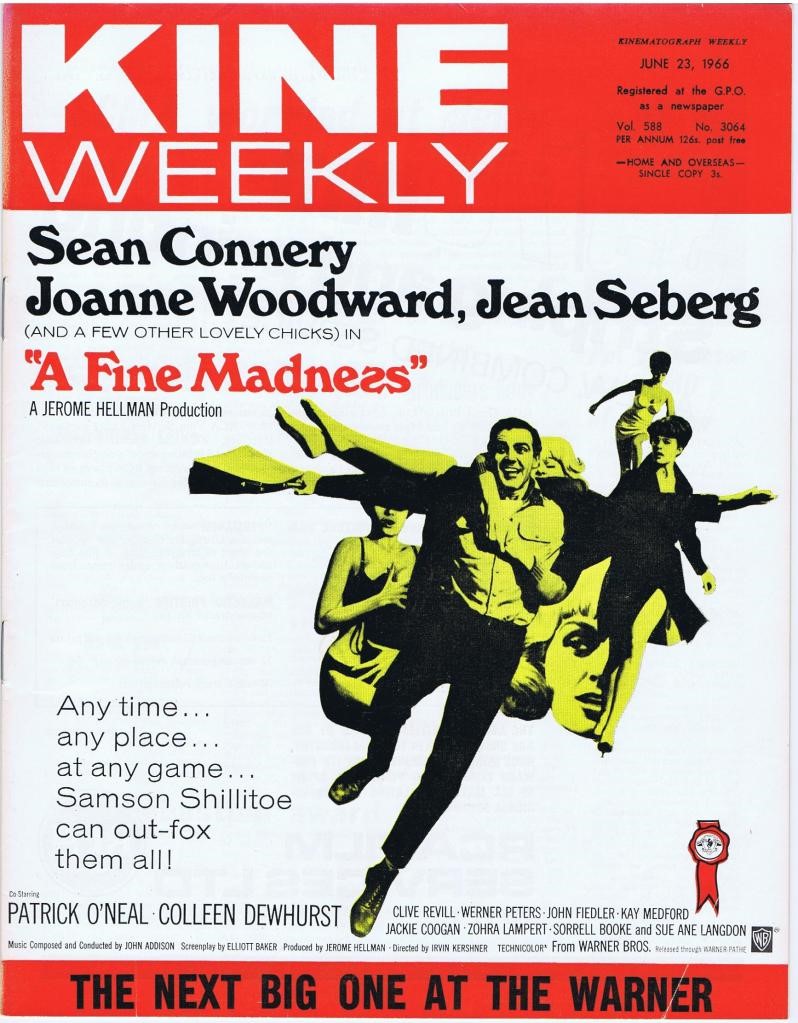
Let’s start with the Hollywood happy ending. Poet Samson (Sean Connery) slugs pregnant second wife (Joanne Woodward). He’d have punched her lights out before if only she hadn’t been so good at diving out of the way. As it is he manages to throw her down the stairs. The film kicks off with him ill-temperedly whacking her over the head with a pillow.

This is the kind of film where violence against women is treated as a running gag.

Let’s try to sell it as a wacky comedy.

Lydia (Jean Seberg), wife of psychiatrist Dr West (Patrick O’Neal) treating Samson for writer’s block, doesn’t have the courage to make it plain to his creepy colleague Dr Vorbeck (Werner Peters) that she doesn’t fancy him when he endlessly paws her and slaps her rear so he takes this as the green light to attempt to rape her. That’s another running gag.

Surly loud-mouthed bully Samson gets a free pass because he’s an artist, a poet with one poor-selling volume of poetry, and unable to find the time or space to complete his masterpiece. He would have more time if he didn’t spend so much of it chasing women.

At my count, he gets through at least four – Lydia, office secretary Miss Walnicki (Sue Ann Lngdon), a client (he cleans carpets for a living) Evelyn (Zohra Lampert), and Dr Kropotkin (Collen Dewhurst), another colleague of Dr West, not to mention the current wife he drives demented and the previous wife for whom he is being aggressively pursued for alimony.

You can see how director Irvin Kershner was a shoo-in for The Flim-Flam Man/One Born Every Minute (1967) because at every opportunity he tries to turn simple dramatic confrontation that enhance the story into needless chases that divert it and extract slapstick from material that in no way suggests it’s ripe for such an approach.

Trivia lovers note: The John “Redcap” Thaw in the supporting feature “Dead Man’s Chest” is the same John Thaw from “The Sweeney” and “Morse“.

There’s a story in here somewhere and a pretty barmy one at that if you set aside the poor poet’s endless battle against a world that fails to understand his genius and his dodging of the alimony. Rightfully diagnosed as some kind of sociopath by yet another of Dr West’s colleagues, the needle-happy Dr Menken (Clive Revill), he is admitted to a psychiatric hospital initially as a way of dodging his creditors and providing him with space and time to write.

Again, his most creative use of his time is to make out with Lydia and Krokoptin. But since he is spotted in a hydro-bath/ripple bath with  naked Lydia, the vengeful husband gives the go-ahead to perform some kind of lobotomy on the poet, on the assumption it will dull his violent tendencies. (It doesn’t work.) The opportunity to satirise the psychiatric profession takes second place to another opportunity for a chase.

Anomalies abound. Samson’s character is clearly drawn on Welsh poet Dylan Thomas who exploited his fame and made his money on recital tours. Performing is against the broke Samson’s principles and he turns viciously on his audience of appreciative women. Despite demanding center stage, when offered it he turns it down. He lambasts middle-aged women but has little against those younger members of the species more susceptible to his charms. He only has to tell Miss Walnicki she has “pouty lips” and she falls into his arms.

All this has going for it are the performances. Sean Connery (Marnie, 1964), it has to be said, certainly exhibits screen charisma though this is not as far removed as he would like from the macho James Bond. Joanne Woodward (From the Terrace, 1960) – switching from her normal brunette to blonde – is excellent as the downtrodden waitress wife, but on the occasions when she is spiky enough to put him in his place soon regrets her temerity.

Jean Seberg (Pendulum, 1969) – switching from blonde to brunette and paid more ($125,000 to Woodward’s $100,000) – is good as the sexually frustrated rich housewife. And Patrick O’Neal (Stiletto, 1969) looks as if he is desperate to throw a punch. Elliott Baker (Luv, 1967) wrote the screenplay based on his own novel.

You do sometimes wonder at the knuckle-headedness of stars. Was this all that was offered to Connery at his James Bond peak? Or was it a pet project? I doubt if it would have been made with another big star – you couldn’t see even the macho Steve McQueen entering this territory and the likes of Paul Newman wouldn’t go near it.

Theoretically, studio head honcho Jack Warner gets the blame for this. He didn’t like Kershner’s cut and ordered it re-edited but I’d be hard put to see how his hand could be any less heavy than that of the director.

That’s two stinkers in a week. If you want proof of just how rampant sexism was in Hollywood check out a double bill of this and A Guide to a Married Man (1967).

An insult.

Discover WordPress

A daily selection of the best content published on WordPress, collected for you by humans who love to read.

The Atavist Magazine

by Brian Hannan

WordPress.com News

The latest news on WordPress.com and the WordPress community.