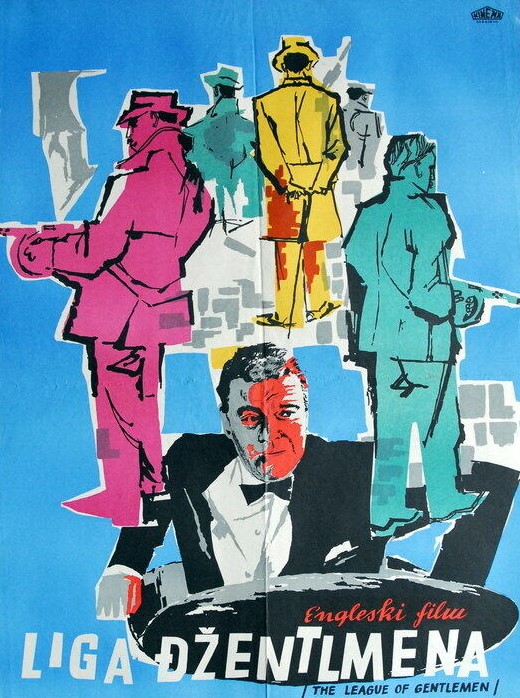
The League of Gentlemen (1960) ****

Cracking British heist film prefiguring titles as disparate as The Dirty Dozen (1967) and Heat (1995). Superb opening scene shows the lid coming off a manhole cover and after a short pause to avoid being drenched by a municipal street cleaner a man in a dinner suit emerges and makes his way to his Rolls Royce. Say hello to Lt-Col Hyde (Jack Hawkins).

Don’t be fooled by early reviews that tabbed this this an “action-comedy,” the humor is only incidental, while serving the important purpose of cutting the grandiose down to size, and not in the vein of, for example, Beverly Hills Cop (1984).

A group of ex-WW2 officers receive a mysterious parcel containing a pulp novel and £50 in notes torn in two, the other halves redeemed if they turn up for a meeting at the Café Royal in London. The opening section is almost a riposte to the recruitment sequence of The Magnificent Seven, out the same year, which strived for effect, and zipped along with one-liners.

This gang are all down-on-their-luck, any courage or leadership displayed during the conflict counting for nothing in peacetime. The sequence is surprisingly risqué for the period, virtually all the characters engaged with disreputable women. So, we have Major Race (Nigel Patrick) running some gambling scam with easy-come-easy-go confederate Peggy (Melissa Stribling), Lt Lexy (Richard Attenborough) a garage mechanic with a sideline in fixing the odds on one-arm bandits and inclined to steal other men’s girlfriends, and Captain Porthill (Bryan Forbes) a pianist playing in seedy dives and living off a middle-aged woman whom he cheats on.

Barely getting by emotionally or financially are Major Rutland-Smith (Terence Alexander) whose glamorous wife (Nanette Newman) takes a string of lovers while ritually humiliating him and Captain Mycroft (Roger Livesey) running a chaplain racket and selling erotic magazines. Hyde lives on his own in a mansion, his absent wife described as “the bitch.”
There’s an undercurrent here that’s barely explored of soldiers who have lost their way, but at the time it could remain underutilized because audiences would be filled with men whose post-war experiences chimed with these characters. Hyde has come up with a stunning plan to relieve a bank of close on a million pounds, the cash split equally, using the various skills his team had acquired through war service.

It’s a bold and, even if carried out with military precision, frankly terrifying exercise that intends to use machine guns and smoke bombs to scare the living daylights out of anyone who dares intervene, bringing New York-style gangsters to the streets of peaceful London. First stop is an army training where, in a ruse similar to that of the later The Dirty Dozen, Mycroft impersonates a commanding officer, inspects troops and deals out humiliation at the drop of a hat. Without doubt, this is an amusing sequence, especially when his superiors in the enterprise, Hyde and Race, are forced to eat disgusting Army slop, but it fulfils the same role as in the Robert Aldrich picture, the least likely soldier allowed to strut his stuff, tension undercut.

The heist itself follows the normal template of planning and execution and it’s brilliantly done, although the crooks are undone by a minor flaw in the procedure. Except for the opening section, and when Hyde exposes, as perhaps community therapy, the criminality of his gang, we learn little more about them, except, as if revisiting the past, how they respond (or not) to the discipline and hierarchy of the Army model on which the group operates. Scoring points off each other, or rebelling, or meting out punishment for misdemeanors, it’s like being back in the Army.

Nobody’s seeking redemption as in The Magnificent Seven or The Dirty Dozen, but it’s still easy to sympathize with an odd bunch whose expectations have been dashed. The scene where Race witnesses Hyde’s stark living conditions, and then offers to wash up the plates piled up in the sink, tells you a lot about how lost some of these men are.

Excellent acting all round from, by British standards, an all-star cast. At one time the number one British star, Jack Hawkins was an occasional Hollywood pick, leading role in Howard Hawks’ Land of the Pharaohs (1955), major supporting roles in Bridge on the River Kwai (1957) and Ben-Hur (1959). Richard Attenborough (The Angry Silence, 1960) had been a top name for over a decade, Nigel Patrick top-billed in director Basil Dearden’s previous outing Sapphire (1959). Kieron Moore (Day of the Triffids, 1963), Bryan Forbes (better known as a writer and director) and Nanette Newman (The Wrong Box, 1966) were rising stars, and you might want to include Oliver Reed (Hannibal Brooks, 1969) in that roster as he makes a camp entrance in a bit part.

Basil Dearden (Khartoum, 1966) is in top form with a script by Forbes from the John Boland bestseller.  

Worth seeing.
Les Biches (1968) *****

Innocence and experience alike are corrupted by the destructive power of love in this elegant and compelling early masterpiece from French director Claude Chabrol. Although he owed much of his later fame to slow-burning thrillers, this is more of a three-hander drama with a twist and it says much for his skill that we sympathize in turn with each of these amoral characters.

Wealthy stylish Frederique (Stephane Audran), in an iconic hat, picks up younger pavement artist Why (Jacqueline Sassard) in Paris. They decamp to St Tropez where Frederique keeps a rather discordant house, indulging in the antics of two avant-garde house-guests. Why loses her virginity to architect Paul Thomas (Jean-Louis Trintignant) who soon abandons her in favor of the older woman. Each is guilty of betrayal and although a menage a trois might have been one solution instead the lovers dance from one to another with Frederique  apparently in control, in one scene stroking Why’s hair with her hand and caressing Paul’s  face with her foot. In an attempt to win the man back, Why dresses like her rival down to hairstyle, make-up and even the older woman’s beauty spot.   

At no point is there angry confrontation, nor does Frederique simply dismiss Why from the household, but the story works out in more subtle insinuation, Frederique clearly expecting either that Why make herself scarce or, alternatively, make herself available for whenever Frederique tires of male companionship. The movie’s focus is the baffled Why. When the older pair disappear to Paris, the camera follows Why through off-season St Tropez, chilly weather replacing glorious sunshine. Frederique and Paul are the sophisticates who expect Why  to know how to play the game. The younger woman has wiles enough to see off the avant-garde irritants.

It looks for a while as if it might be a coming-of-age tale or of young love thwarted but every time Frederique enters the picture her dominance is such that proceedings, no matter how deftly controlled, have an edge and so it becomes a study of something else entirely. At one point, each has power over the other. If Why has learned anything it is restraint, so the movie never descends to tempestuous passion. She also learns, in a sense, to submit, since the impoverished can never compete with the rich. In the end her revolt takes the only other option available, against which the wealthy have no defence.     

Excellent performances from Stephane Audran (The Champagne Murders, 1967), Jean Louis Trintignant (A Man and a Woman, 1966) and Jacqueline Sassard (Accident, 1966) but Chabrol keeps all under control, twisting them round his little finger.

Superb.       

The Burglars (1971) ****

First half pure Walter Hill of The Driver vintage – virtually silent heist, blistering car chase – second half rachets up tension with corrupt cop, femme fatale, getaway stymied and a payoff you won’t see coming.

French jewel thieves led by Azad (Jean-Paul Belmondo) using electronic wizardry crack open a safe in Athens full of emeralds while the owner is away. Passing cop Abel (Omar Sharif) happens by but after conversing with Azad, who claims his car has broken down, seems to be satisfied nothing untoward is going on inside the house. But getaway plans are momentarily foiled when the ship they are due to leave on is unexpectedly berthed for repairs, leaving them with five days on their hands.

Azed’s disappointed girlfriend Helene (Nicole Coffen), who acts as watch for the gang, lolling about a swimming pool with too much time on her hands, attracts unwanted male gaze. Azad, followed by the cop, decides to outrun him, fast car style, and soon they are hurtling through the streets of Athens. Thinking that he’s shaken off his pursuer, and seeking a bit of relaxation himself, Azad chats up glamor model and night-club stripper Lena (Dyan Cannon) without realizing she is in cahoots with Abel.  The cop wants in on the action and is willing to trade by letting Azad off scot-free while dumping the crime onto his confederate Ralph (Robert Hosein).

So, mostly, it’s cat-and-mouse stuff between Azad and Abel, as the latter closes the doors, and the former is unaware of just how cunning a corrupt cop can be. There’s some hair-raising action as Azad has to jump between two buses, and a pursuit in a fairground, Abel naturally on horseback, and as if this was one of those cheap films that always had a shoot-out in a quarry, Azad ends up in one, though, thankfully, not for climactic reasons. The climax takes place in a wheat warehouse (I guess the makers of the later Witness, 1985, took a few clues from this.)

Mostly, it’s the character interplay. Two big stars in one film often results in scenes involving  both kept to a minimum – think Paul Newman and Steve McQueen in The Towering Inferno (1974) or Robert De Niro and Al Pacino in Heat (1995) –  but here’s it’s the opposite and watching Belmondo and Sharif dancing around each other, one or other always in the ascendancy or with a neat trick in the back pocket or a get-out-of-jail-free card for later, works a treat.

Sharif, especially, had widened his scope, running away from the matinee idol tag and this came at the end of an impressive stint that included the villain in Mackenna’s Gold (1969), The Appointment (1969), The Last Valley (1971) and The Horsemen (1971). As shabby as Columbo, but with a bit more chic, he knows he’s got to keep one step ahead of Azad, though he could indulge in a few smirks, since he’s so far ahead of the criminal, Abel won’t know what hit him when he realizes he’s been played for a dupe by Lena.

Dyan Cannon (Bob and Carol and Ted and Alice, 1969) plays her role to perfection, hints of sadness that her life is not as glamorous as she might want, possibly considering betraying her real partner, but as seductive as all-get-out. This was a bold career choice, because she had mostly been allotted wife/girlfriend parts rather than, as here, central to the machinations.

Jean-Paul Belmondo (Breathless, 1960) never appealed as much to the American audience as countryman Alain Delon, mostly because he refused to take the Hollywood coin, preferring to do his own thing in France, but he is excellent here and he would have been ideal in plenty mainstream U.S. pictures.

Hats off once again to Henri Verneuil (Guns for San Sebastian, 1968). The heist is deftly done, running a full 24 minutes, give or take a few moments for tense  conversation with the nosey cop. The second unit filmed the chase, of course, but Verneuil is a master at this particular tune. He co-wrote the script with Vahe Katcha (Two Weeks in September, 1967) from the novel by David Goodis (Shoot the Piano Player, 1960). Bonus of an Ennio Morricone score.

Sizzling set pieces, cracking characters.

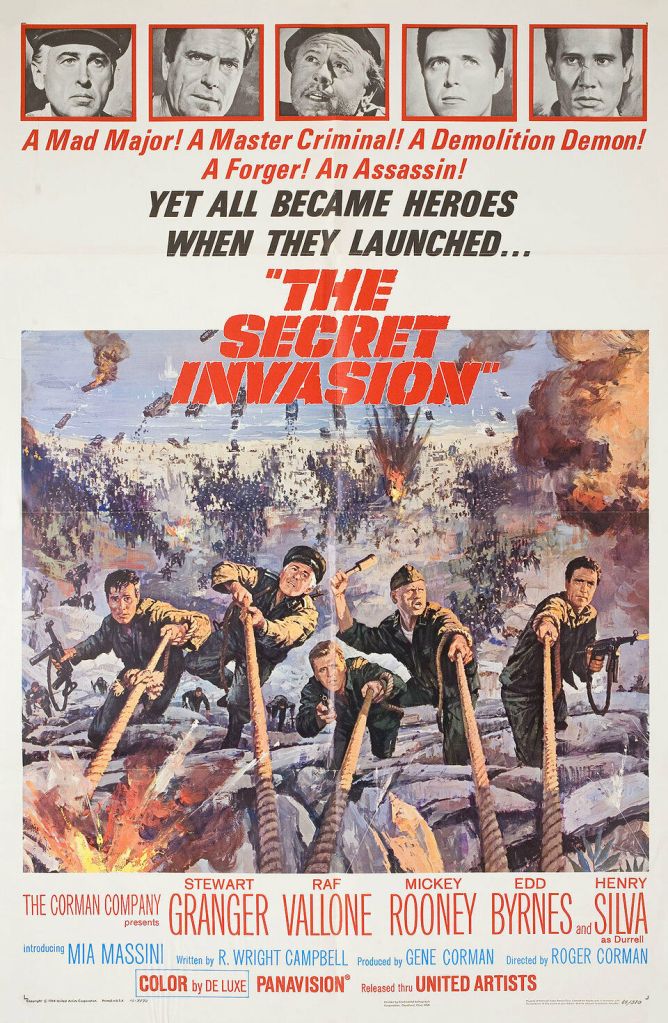
Secret Invasion (1964) ****

Dirty Half-Dozen – cashiered British major, five hardened criminals with particular sets of skills – on a mission to rescue an Italian general and start a second front in the north of Italy just as the Americans are invading the south. Throw in a grand theft of ideas from The Guns of Navarone (shoot-out with German gunboat, scaling a cliff) and The Great Escape (tunneling, although in not out) and the usual bickering and rebellion and a top-class B-list cast bringing their A-game and you have the basis of a very solid actioner.

The classy Raf Vallone (Sidney Lumet’s A View from the Bridge, 1962) is the standout here, not least because he chooses crime, pitting his wits against the authorities, rather than exploiting his university degree in philosophy. But he’s ably supported by Mickey Rooney as an unlikely IRA terrorist and various inmates from Leavenworth and Alcatraz including Henry Silva (Johnny Cool, 1963), of the fashion model cheekbones, Edd Byrnes (77 Sunset Strip), William Campbell (Dementia 13, 1963), and top-billed Stewart Granger. That any appeared in this Corman brothers (Gene directing, Roger producing) spread  suggested careers on the slide.

Still, that’s to the movie’s gain. Forget the occasional dodgy process shots and enjoy the Dubrovnik location complete with ancient fortress, cobbled streets, and tiled roofs, each of which is put to violent use, with shoot-outs in each area, not to mention a cemetery where tombs provide the perfect cover for digging into the citadel. At times, the script is snappy enough that some one-liners stick in the memory and when the characters aren’t acting up they’re doing a lot of brooding, especially Silva, the hired assassin.

This doesn’t go quite the way you would expect, especially the double twist at the end, and a couple of places where the plot gets bogged down, but there’s enough invention, interesting characters and story to see us through and one genuinely heartbreaking moment that could have been the starting point or revelatory denouement of a film all on its own.  Granger lacks Lee Marvin’s icy demeanour but delivers enough leadership in typically British style when it matters.

Silva’s icy demeanour softens enough to allow romance to peak through with local girl Spela Rozia (who you will remember from Hercules the Invincible, 1964). While trying to steal every scene, Rooney, nonetheless adds a couple of imaginative bits of business to his character. Edd Byrnes is nobody’s idea of a forger, nor would his notions, nor equipment, pass muster with the experts of The Great Escape. Vallone is terrific as the imperturbable mastermind.

This is a more hard-edged, realistic endeavor than The Dirty Dozen. In that picture every scheme goes according to plan. Here nothing does and the crew are constantly thrown back on their wits, finding what they require from the most improbable resources, and carrying out a schemed timed to the second, finger-snapping to the beat in the absence of watches. The labored and overlong interrogation sequence slows the plot down until you think it will never get back on its feet, but that complaint aside, it is full of action.

Little gem.

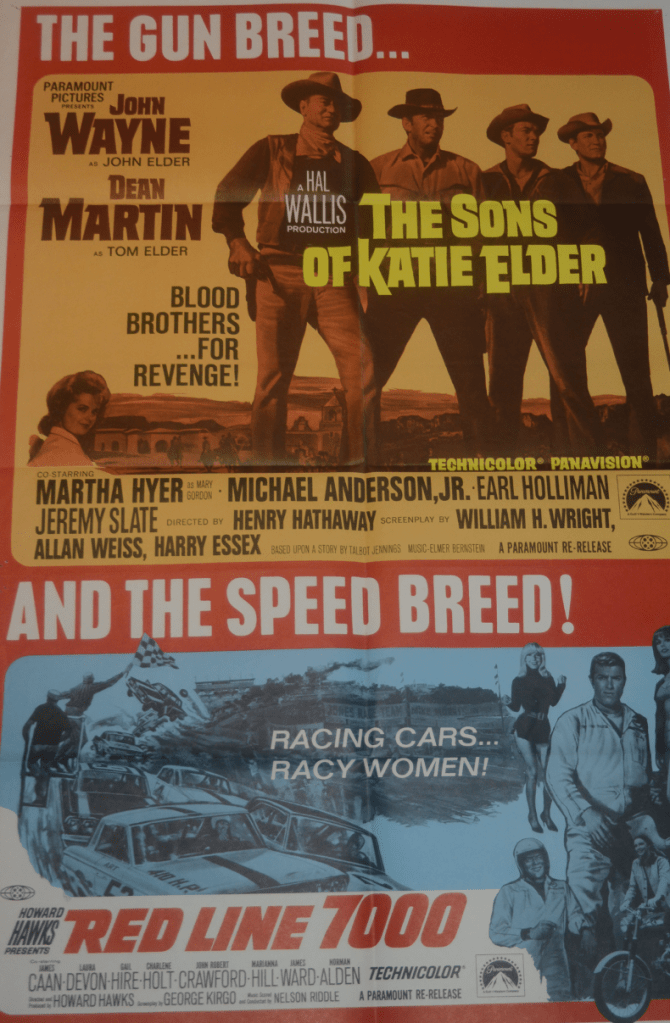
Red Line 7000 (1965) **

Quentin Tarantino is probably alone in preferring this movie mishap to John Frankenheimer’s Grand Prix (1966) – or I have somehow missed a “cult” picture. There was no doubt director Howard Hawks could handle speed. Check out the action in Hatari! (1962) as jeeps battle across tougher terrain than NASCAR racing circuits. But for some reason, he thought he would get away with interspersing footage of races and spectacular crashes with shots of actors behind the wheel. Any time something exciting is about to happen we’re alerted by the commentator saying “oh oh” or “wait a minute” or “hold it.” There’s none of the feverish excitement or authenticity of Grand Prix.

Hawks hired a no-name cast in a bid a) to become a star-maker, b) to prove he did require the marquee wattage of the likes of John Wayne and c) to show he could make a movie cheaply. He failed on all three counts. He probably didn’t think he was taking any kind of gamble at all, as a man approaching 70, in trying to depict the lives of people around 50 years younger. James Caan, in his sophomore outing, comes out best, but that’s not saying much since he has very little to do except growl and look broody. Marianna Hill (El Condor, 1970) is also believable.

While the racing footage has dated in a way that Grand Prix has not, the main problem is just a jumble of characters getting lost in a jumble of stories. No sooner has one character been introduced than we are onto another. There’s none of the cohesive story-telling that marked out The Big Sleep (1946) or Rio Bravo (1959) and, frankly, none of the characters are particularly interesting. And what possessed him to stick in a song sung by a character (Holly, played by Gail Hire) who cannot sing – she talks the lyrics – with a backing group made up of waitresses, I can’t begin to guess.

The most fun to be had is spotting in bit parts people famous for other reasons. Carol Connors, for example, who co-wrote the lyrics to “Gone Fly Now” (Rocky, 1976) appears as a waitress. As does Cissy Wellman, daughter of veteran director William Wellman. Comedian Jerry Lewis has a cameo. It says much for Hawk’s star-spotting abilities that of two female leads, Laura Devon only made five pictures and Gail Hire just two.

Henry Hathaway and Howard Hawks…Together!

Of the main supporting males, this was the beginning and end of John Robert Crawford’s movie career while Skip Hire made a bigger splash as a producer of television series The Dukes of Hazzard. Co-written by the director, George Kirgo (Spinout, 1966) and Steve McNeil (Man’s Favorite Sport, 1964)..

However, the French had a word for it – “genius.” Despite being dismissed as a rare misstep by the bulk of critics worldwide, Cahiers du Cinema decided it was one of the year’s Top Ten pictures. So what do I know?

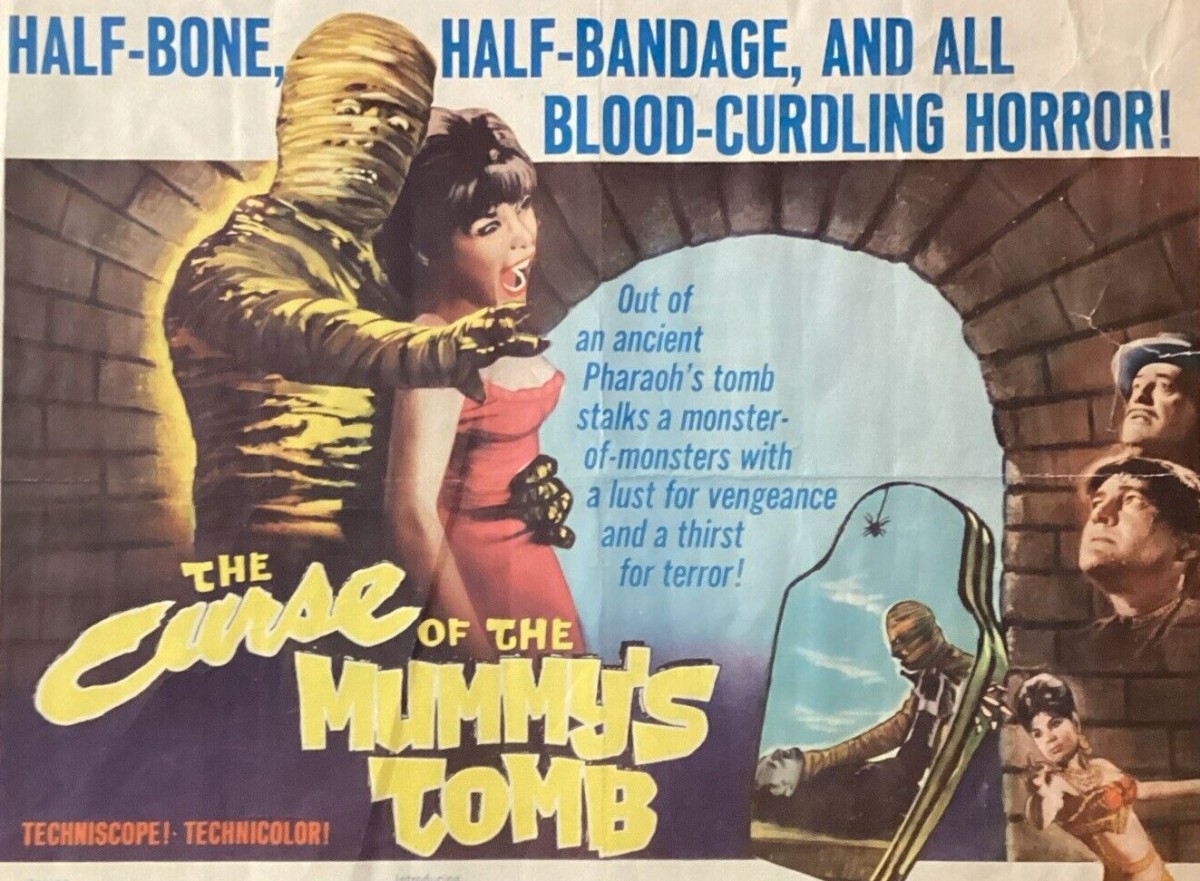
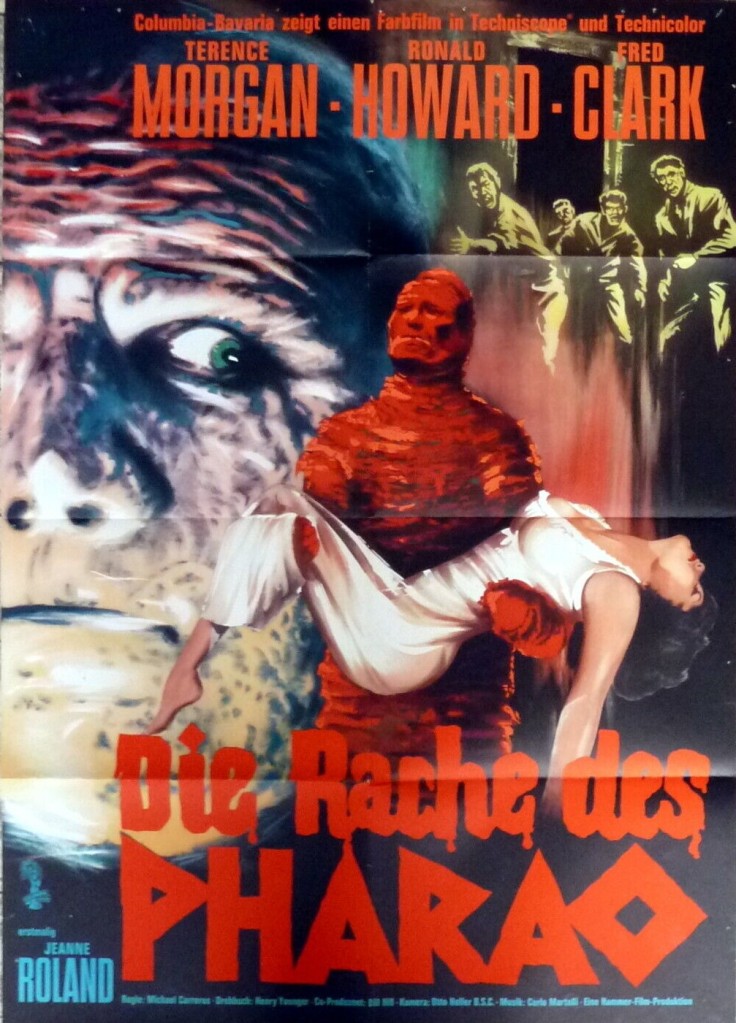
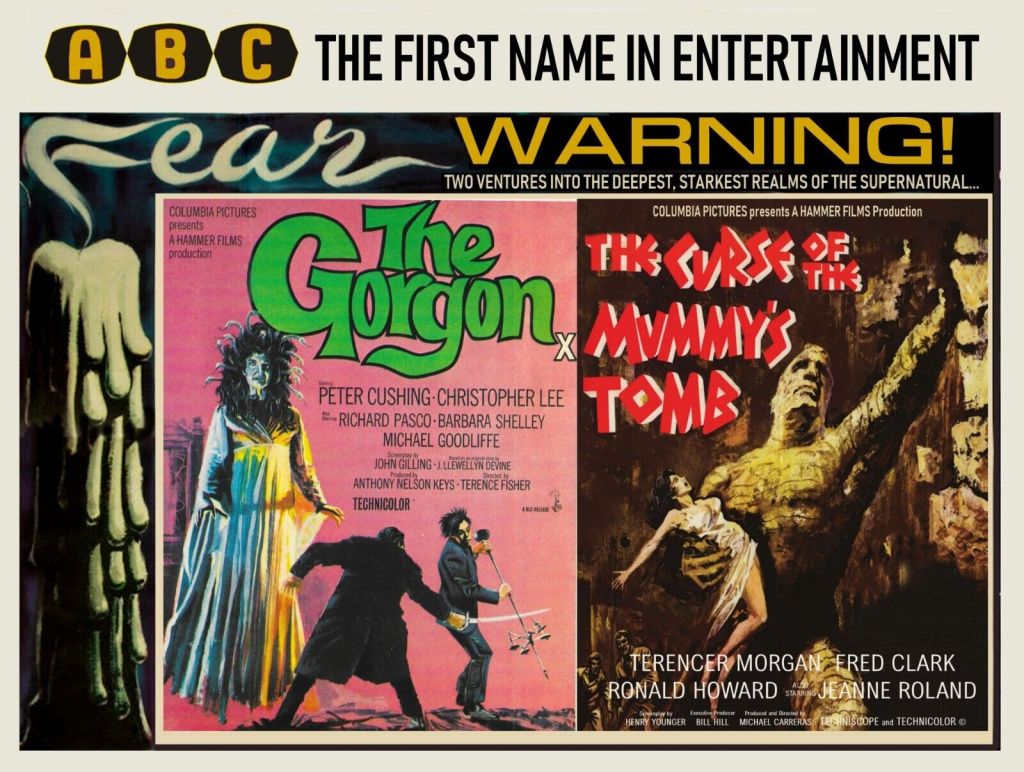
The Curse of the Mummy’s Tomb (1964) ***

Approach with affection and you will be rewarded. This is third tier Hammer, way down the pecking order behind Dracula and Frankenstein and after attracting studio stalwarts Christopher Lee and Peter Cushing for its first venture into this territory (The Mummy, 1959) dumps them for the sequel. And in the absence of the CGI that transformed the Stephen Sommers version in 1999 – and triggered the misguided Universal Monsterverse – struggles these days to prevent audiences laughing at the special effects. The titular beast was little more than a bandaged version of the lurching creature created by Dr Frankenstein so chills were always going to be in short supply, especially minus the plague of scarabs that dominated the later proceedings.

More interesting is the backstory that drives the narrative, warring siblings in ancient Egypt, the death of the rightful monarch and a reincarnation curse that travels down the centuries. Throw in bombastic King Kong-style showman Alexander King (Fred Clark) determined to monetize an archaeological find, shift the story to London, bring in a damsel Annette (Jeanne Roland) infatuated with the villain, and you have the makings of a decent tale. Alternatively, if you’re of a different mind, that could all be to cover up shortcomings in the plot and the wrong reasons for delaying the appearance of said monster.

People tampering with Egyptian graves tend to get their hands chopped off, but that’s as much warning we get of evil afoot although there are hints of malignancy in the flashback that shows the murder of Ra-Antef, son of Rameses VIII. But triumphant returning Egyptologists John Bray (Ronald Howard), Sir Giles Dalrymple (Jack Gwillim) and Annette, daughter of famed Professor Dubois who died in the line of duty, are inclined to take no precautions.

Poetic license – the mummy just ain’t that big in the movie.

Until the mummy is let loose, much of the tale centres around the ruthless grasping King and a love triangle developing between Annette, her fiancé John and the newcomer Adam (Terence Morgan) she met on the voyage home. While John is kept busy by King arranging for the grand public opening of the tomb, Adam slips in to romance Annette, not letting on of course that he possesses the amulet that can revive the sleeping monster. The setting – sophisticated London rather than remote Transylvania – and the delay of the murderous onslaught ensures that most of the picture survives on intelligent conversation, motivations and characters set out in non-cliché manner, and no squads of villagers set up for a marauding.

The monster is pretty effective when he does deign to appear, bursting through windows, picking up the damsel in a pose that I’m convinced Oliver Stone snaffled for Platoon (1986), and making his way to the nearest sewer, unlikely locale for a climax. There’s a propensity for lopping off hands and when that loses its impact stomping on heads.

But it’s not camp, is well-acted and the storyline makes sense. It probably helps that it’s free of Cushing and Lee because with unfamiliar actors the audience has to work harder. Terence Morgan (The Penthouse, 1967) is the pick of the stars because he carries most of the mystery. But Fred Clark (Move Over, Darling, 1963) steals the show by making a meal out of his outrageously greedy businessman. Top marks to Hammer for making Burmese-born Jeanne Roland (You Only Live Twice, 1965 and Casino Royale, 1967) a professional – she is an archaeologist – rather than a cleavage-ridden damsel in distress. And for those of a nervous disposition you will be pleased to know that the monkey is not present just to nibble poison intended for one of the principals.

However, from the outset it was destined for the lower half of a Hammer horror double bill, so the kind of budget that could do it justice was never in evidence. Studio boss Michael Carreras (Prehistoric Women, 1967) always gave the impression of over-extending himself but here  as writer-producer-director he manages to keep the picture on an even keel long enough for the monster to do its worst.

Scoop (2024) ***

Except for the interviewee being an obliging idiot, this could as easily have turned into an own goal by a BBC desperately trumpeting its values to an indifferent nation that has been wooed away by the streamers. When the top dog is indulged by having her own top dog, a whippet, sitting at her feet everywhere she goes in BBC HQ and the supposed news bosses believe a scoop is snatching someone else’s scoop you’re on a very sticky wicket indeed.

And it’s worth bearing in mind that this show only came about because the person who set up the interview Sam McAlister (Billie Piper) had a severe case of schadenfreude and believing she hadn’t been sufficiently well rewarded wrote a book about the episode and nabs a writing credit here.

There’s not really a sympathetic character in the whole feature, unless you count the 450 journalists being shown the door because the Government won’t let the BBC raise the licence fee to cover its running costs and the BBC refuses to lower the fees it pays its top presenters (who only stay out of the goodness of their hearts because of course they would get richer pickings on commercial channels) to achieve the same end.

The only person who comes close is the sad-eyed Royal PR guru Amanda Thirsk (Keeley Hawes), heart roasted by looking after spoiled man-child Prince Andrew (Rufus Sewell in an ill-fitting face mask) – inclined to throw a tantrum should some housekeeper fail to arrange his battalion of teddy bears in the correct order – and clearly desperate to believe the prince could not possibly be at fault. However, the idea that you would let such a dope loose on Newsnight, facing one of the world’s toughest interviewers in whippet-lover Emily Maitlis (Gillian Anderson), shows remarkably poor judgement, especially when the prince just can’t see what all the fuss was about when he was doing the right thing by standing by his old pal, a convicted paedophile.

Anyone expecting proper investigative journalism or a thrilling narrative up to standards of All the Presidents Men (1976) or Spotlight (2015) – where the journalists actually do the hard work of the digging rather than just regurgitating a story that’s already out there, albeit with a bit more gloss, and the luxury of a one-hour time slot – would be looking in the wrong place.

Wouldn’t it be nice if we had discovered just a little bit more about Bernstein and Woodward’s personal lives, whether they owned dogs or had girlfriends or maybe a sick mother, just to fluff out the story a bit, but luckily Alan J. Pakula had more to worry about than what clothes his Woodward and Bernstein had to wear when confronting their subjects.

The BBC high-ups, when not toddling off to sit in boxes at the opera, come across as up their own backsides. Sam is shown to be an outsider, who, unfortunately, dresses like she’s going clubbing, which gets everyone’s back up, but, red card here, seems surprisingly ignorant of the juicier details of the story she’s investigating.

Netflix has been on a roll with The Crown so presumably thought any story with a royal connection would be equally a ratings winner, not realizing that you still need interesting characters to snaffle the viewers and no number of angst-ridden people is going to cut it.

I can’t vouch for the truth of the impersonations of real characters, but while Gillian Anderson seems to catch the essence of Emily Maitlis, Rufus Sewell’s intonations are very much the actor’s own while the face mask seems to wobble from time to time. Billie Piper got the thumbs-up from Sam. I doubt if Amanda Thirsk would care for her worst PR moment to be dramatized but Keeley Hawes at least lends her gravitas. 

Suicide by television is the best way to describe the prince, locked into a self-serving version of himself as charming war hero best suited to modelling Army uniforms glittering with medals. However, it struck me at the time and I was reminded of this omission here, that none of the investigative journalists have sought to investigate the small matter of the Pizza Express alibi. I would have thought it would be relatively easy to establish if Andrew was there on the night in question. Directed by Philip Martin.

This only goes to prove that not only can you lead a horse to water but without much encouragement you can get it to drown itself.

The original interview is better value than this. But we should perhaps thank Netflix for allowing its rival a moment in the sun.

Godzilla x Kong: The New Empire (2024) ****

Monster mash-up that delivers. Hollow Earth hits the target, a better parallel universe/ multiverse/monsterverse than all the other verses put together, not to mention it’s also of the versus inclination with any number of big beasties (I lost count to be honest) going head-to-head and super bonkers malarkey of giant apes riding prehistoric monsters. Plus, if you’re of a sentimental nature, and given that this week I’ve been hit from all side by tales of a maternal bent, whose heart would not give a whimper to see big bad Godzilla all curled up for the night in the Colosseum in Rome. Or for that matter Kong taking a paternal interest in a bad wee mini-Kong. Compared to the emotions stirred by these giants, boffin Ilene (Rebecca Hall) struggling with her maternal issues comes over as rammed-in and wishy-washy.

Having taken Mother’s Instinct to ruthless task for its illogical plotlines, I am happy to do a complete somersault and let the monster punch-up off scot-free for all its inconsistencies and coincidences because, heck you know it, fun always triumphs. Plus we’ve got a hippie vet Trapper (Dan Stevens) who, despite awkward accent and Hawaiian shirt, is loose enough to chill out straight-laced Ilene with podcaster du jour Bernie (Bryan Tyree Henry) on hand to add humor.

Throw in some Aztec/Inca-style ancient civilisation, the revival of another Japanese kaiju in Mothra, people who communicate with telepathy, all sorts of daft exposition, Godzilla snorting up radiation like it was coke, pyramids of various kinds, more rabbit holes than you could shake a bunny at, an ape that goes all Raiders of the Lost Ark with a whip made out of bones and full-on Planet of the Apes knockdown.

I’m not even going to bother with the plot, what I can remember of it, except to say Ilene and Trapper need to get Godzilla and Kong together to take on the giant ape villain and the monster he rode in on otherwise (guess what) (I think) the world as we know it (or at last this invented world) will cease to exist.

The humans do their best not to get in the way of the fun. Trapper is smart and glib and occasionally a genius and Ilene is smart but weighted down with maternity while the object of her affection is stuck with the where-do-I-belong trope and mostly stares off soulfully into the distance. It’s the monsters that bring the humanity. That little scamp of a baby giant ape takes some handling, always ready (literally) to bite the hand that feeds him while you gotta feel sorry for Godzilla having to tramp through all those cities that someone stuck in his way when all he wants is a nice nest close by a nuclear plant.

Plus we get ice ice baby. The bad ape’s chained prisoner blasts out ice instead of fire, like he’s an exile from the Night King, but at least he’s not like the latest Ghostbusters iteration that’s been heavily trumpeted in the trailer only not to appear till what seems like the last five minutes in order to give Bill Murray a weak punchline.

This was easily the best part of this week’s Quadruple Bill. I’m not even going to review Ghostbusters – it seems to have got lost in the family nonsense that’s infecting virtually every decent series, meaning we’ve now got to accommodate the size of casts that used to be an attraction in pictures like Lawrence of Arabia, but now feels like an overstuffed very threadbare cushion, and could we care less.

Adam Wingard (Godzilla vs Kong, 2021) directs though spare a nod for the CGI team.

Let’s hear it for these mean mothers.

Immaculate (2024) ***

As you know we live in a Big Brother pampered society and even going to the movies comes with a health warning. But, I have to tell you, Dear British Censor, “strong bloody violence” doesn’t cut it. Now, I’m as happy to be scared out of my wits as the next guy, jump-out-of-your-seat shocks are part of the fun of horror pictures. But having to close your eyes to plain sadistic action – tongues cut off, feet branded, bellies of pregant women cut open, babies stoned to death – sorry that’s a bit more than “strong.” Maybe torture porn should have a category of its own.

Which is a shame because this is a clever twist on the old trope of the demonic child as proferred by Rosemary’s Baby (1968) and The Omen (1976) – possibly no coincidence either that’s beaten the Omen remake to the punch. Instead of satanic satanists it’s satanic priests and nuns mainlining on some kind of more scientific genetic Da Vinci Code.

And thanks to the runaway success of last year’s Anybody But You, there’s another element at play here, the breakout star’s follow-up picture to gauge if breakout picture was fluke or welcoming a new star into the firmament. Julia Roberts followed up massive hit Pretty Women (1990) with tepid thriller Sleeping with the Enemy (1991) and the soppy Dying Young (1991) but nobody cared how indifferent the follow-ups were and both turned into big hits and wow a star is born. Sandra Bullock arrives out of nowhere in Speed (1994) and follows up with ropey romance While You Were Sleeping (1995) and tepid thriller The Net (1995) and bingo a star is born.

So this is breakout star Sydney Sweeney’s follow-up – excluding Madame Web of course – and I’m not sure if it will sweep up that many of her newfound followers in its wake. Not because it doesn’t deliver the horror goods because outside of the torture porn it’s pretty creepy and with effective twists and if you want to see a bloodied Sydney creep out of a hole in the ground and give birth and then, as if confounding her newfound bubbly screen personality, beat the baby to death then this one is for you.

Anyway, let’s backtrack. Cecilia (Sydney Sweeney), a young American who had a near-death experience, hives off to an Italian convent filled mostly with the devout, the lost and the broken. It’s not Nun of Monza, and it’s not terribly strict either and even though she couldn’t be bothered learning Italian (don’t these nuns speak English?) there’s always someone on hand to help translate. She makes one friend and one enemy, but, hey, like any boarding school that’d be par for the course.

So, here she is settling in, becoming a bride of Christ, taking vows of chastity, obedience and poverty when suddenly charming Fr Tedeschi  (Alvaro Monte) comes over all nasty, questioning whether she is a vigin or not. Just when that is established to everyone’s content comes the zinger – she’s pregnant by what is known in Catholic Church parlance as immaculate conception. Quite how this occurred is never explained, except the convent has an artefact claimed to be one of the nails that stuck Jesus to the cross and therefore containing remants of blood (we’re going Jurassic Park here) and thus his genetic code.

You won’t be surprised to learn that she’s not the first victim of this kind of conception. Things start to get fairly nasty after this – someone tries to drown here and then we’re in for the tongue-cutting, branding etc – and Cecilia goes from docile to vengeful. She comes up with a clever trick to escape and when that doesn’t work has to find another way out of her dilemma and if that involves strangling someone with rosary beads that seems nicely ironic in the circumstances.

It was certainly a day of mean mothers in my Quadruple Bill on Monday, this being the last of my quartet. It was certainly well done and the concept no more barmy than any of the demonic baby tropes, if a bit more up-to-date medically, and there was enough of the claustrophic creepiness that comes with the convent territory and the throwback barbarity of the Church (Spanish Inquisition, anyone?). Apart from the torture porn, a good entry into the genre but, despite Sweeney’s performance, this would not have put her in the break-out league. So I think this will just be put behind her as she charts a new rom-com course. Incidentally, like Anna Hathaway and Jessica Chastain in Mother’s Instinct, she was the producer.

Worth seeing for Sweeney, though, and the clever plot ploy.

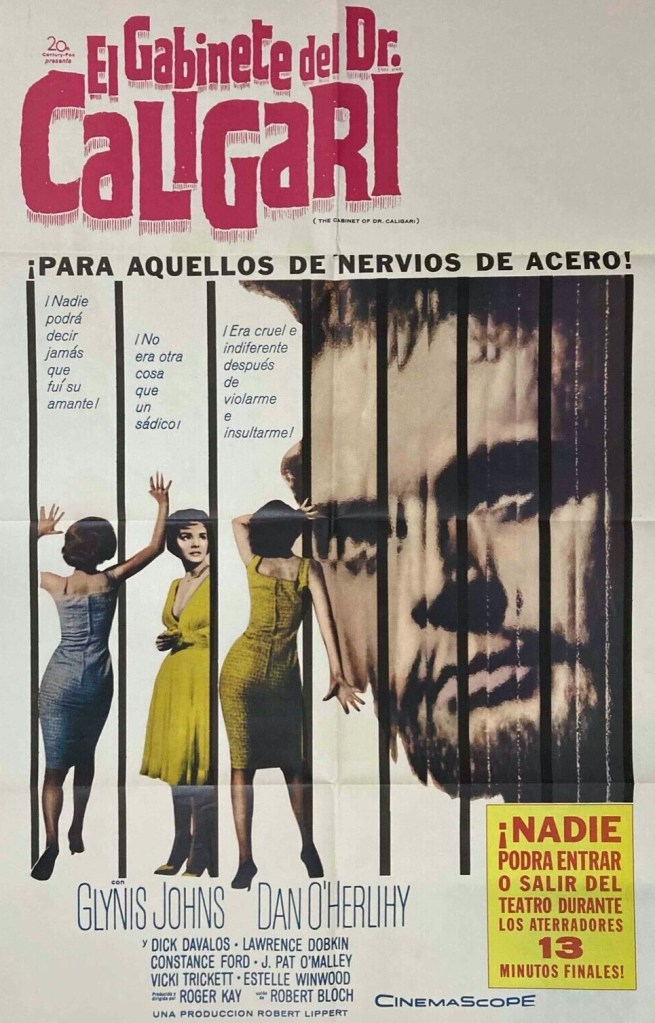
The Cabinet of Caligari (1962) ***

If you’re going to put an English rose through the mill who better than husky-voiced Glynis Johns and except for the giveaway title you might expect from her previous screen ventures that when her car breaks down in a foreign country we’re all set for romance. But you’re probably on the alert anyway after realizing Robert Bloch (Psycho, 1960) wrote the script. The narrative engine runs on twists and the chances would be poor of audiences comprehending the psychiatric devices involved so it’s pretty much a contemporary haunted house mystery with our heroine trapped in an ever-worsening situation and most of the terror emanating from her own mind.

After her tire blowout, and exhausted from trudging along country roads, Jane (Glynis Johns) seeks help from Swede Caligari (Dan O’Herlihy) who owns a large estate in the country. But when she wakes up in the morning, she is unable to leave or telephone for help. There follows a series of disturbing events including (a la Psycho) a peeping tom (bath not shower), being presented with pornographic photographs, interrogated, witnessing torture and being chased by revolving glass. Other images are terrifying, babies baked in ovens, people buried up to their necks, a torture rack. Nothing and nobody are what they seem.

The twist is that she’s in a mental asylum, the car breakdown a fiction to make acceptable to herself her presence there, the other incidents all explained as various versions of psychiatric treatment including electric shock. The central conceit, that she’s trapped, is well-maintained what with other guests dressing in glamorous fashion for dinner and none behaving like inmates. But when Jane tries to make friends with them in order to organize a breakout or escape, she doesn’t know who to trust, and even attempts seduction.

It kind of works and kind of doesn’t. When the camera explains seconds later the reality behind her crazy visions, it ruins the effect. The expressionistic approach helps in presenting the visuals but can’t provide proper insight into her state of mind. The images are odd rather than helping the story. There’s a disjointed feel to the whole thing, as if director and star were on different planets. And there’s a major plot flaw suggesting Jane must be truly out of her mind if she can’t recognize that Caligari and inmate Paul are the same person, give or take a false beard.

It was a bold career choice for Glynis Johns (Dear Brigitte, 1965), generally the sassiest of heroines, to be so out of control. In his only movie, television director Roger Kay makes a bid for the big time with his visuals but too often loses sight of the characters. Of course, it was always going to be a tough ask to match the original German The Cabinet of Dr Caligari (1920) though I doubt many who saw the loose remake would be aware of its existence.

Interesting for the visuals and Glynis Johns losing the rag.

Discover WordPress

A daily selection of the best content published on WordPress, collected for you by humans who love to read.

The Atavist Magazine

by Brian Hannan

WordPress.com News

The latest news on WordPress.com and the WordPress community.