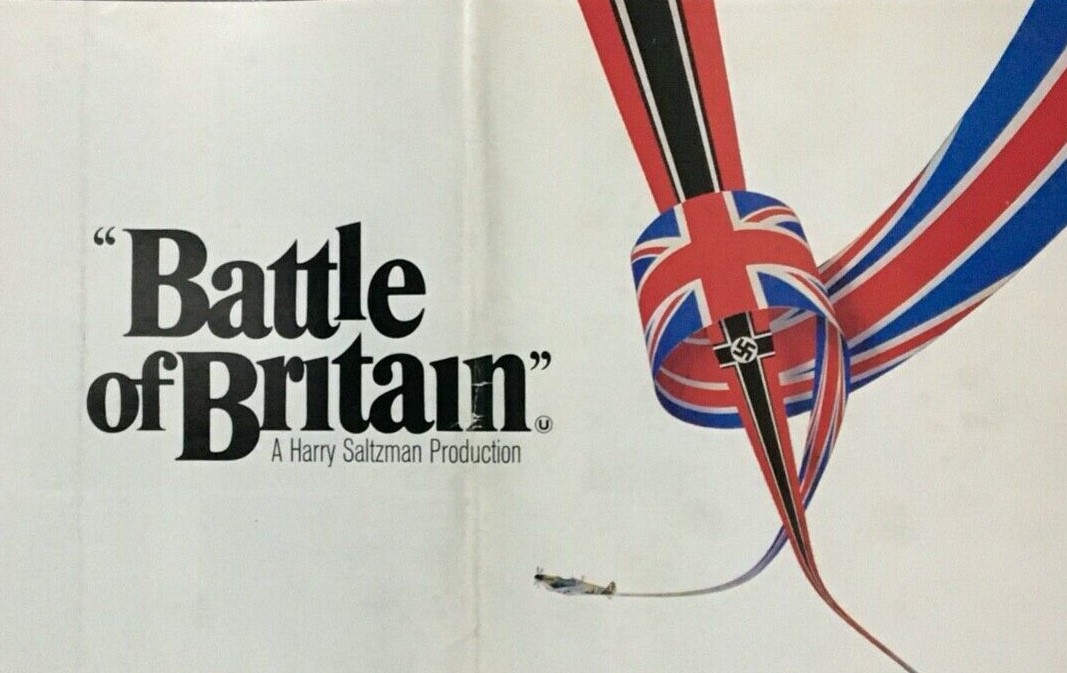
Fabulous aerial sequences countered by grim reality. Like The Longest Day (1962) and Battle of the Bulge (1965) even-handedly doesn’t treat the Germans as the evil enemy, but unlike those films victory is somewhat obscure, no rattling of spears as in Zulu (1964) to announce opposition departure, just clear skies indicating an absence of foe. Anyone going into this – persuaded by Dunkirk (2017) that this retreat was a triumph – and with little knowledge that after Hitler had overrun Europe invasion was imminent might be surprised to discover that this was a campaign lasting over three months rather than one conclusive battle.
That’s to the benefit of the movie, allowing it space to breathe, for characters to develop, rather than everything crammed in pell-mell. Given the situation changed from day-to-day, the one constant, which we’re scarcely allowed to forget, is that the British are heavily outnumbered in the sky. It’s a war of attrition. The Germans can lose hundreds of planes, the British nary a one.
But it’s far from gung-ho, the British coming in for criticism for their unpreparedness, surprised when the Germans bomb airfields, even more astonished when the opponent starts dropping bombs on London. Perhaps, given the relatively short running time for an epic – 46 minutes shorter than The Longest Day, 35 minutes down on Battle of the Bulge – it might have been better to avoid slipping in a section on the impact of the Blitz on Londoners, though that is counteracted by panic in Berlin when that city is also bombed.
But, by and large, it’s an engrossing tale. And bold, too, in the version I saw no subtitles for German dialog, leaving audience reliant on facial and body expressions. To slow down the action, I guess, and add some class, several scenes involve people walking down long corridors.
All the salient points are covered, pilots thrown into battle with barely a few hours experience of flying a Spitfire, the lack of pilots, in-fighting at the top, checkers moved across the board at mission control indicating German aerial advance, the inability of getting aircraft up quick enough or repaired quick enough. Above all, the reality of death is shown in astonishing detail; once the pilot was shot or the airplane destabilized, there was almost no escape, fire enveloped anyone inside, hatches failed to open, planes burst into flame or crashed into the sea. And it was the same death, regardless of nationality. And there were no scenes of callous Germans shooting down a British pilot parachuting to safety.
The aerial sequences are quite astonishing. I’ve seen this on big screen and small, but even on a small screen, the camerawork is quite extraordinary, even getting this number of workable planes in the air must have been some feat, then flying in formation and peeling off in attack. It is kind of hard from time to time to work out who is shooting at who since the planes are all the same grey color and only distinguished when the camera is close enough to identify them by RAF roundel or Nazi swastika. But the overall effect is a sense of sorrow rather than triumphalism, young lives of any nationality brought to a brutal close. There is no scene, as in Battle of the Bulge, of the over-zealous Nazi, the singing that made them appear such an implacable foe. Here, there’s no need to play up implacable. Unless they abandon the fight, the Germans, courtesy of superior numbers, will inevitably win. All the British can do is stave off defeat for as long as possible.
The all-star cast is only an all-star cast if you’re British. Without a Hollywood star in the vein of John Wayne, Robert Mitchum and Henry Fonda, and in the absence of British superstars like Sean Connery and Peter O’Toole, it’s an all-star cast by default. The biggest name, Michael Caine (Deadfall, 1968), has one of the smallest parts. But the equality of the cast works in its favor, there’s none of the rubbernecking that got in the way of The Longest Day.
Christopher Plummer (The High Commissioner/Nobody Runs Forever, 1968) has the biggest role as a squadron leader determined to force his wife out of the front line working on the airfields and into a safer position. But the best acting comes from Laurence Olivier as the dry Air Chief Marshal Sir Hugh Dowding who has no truck with interfering politicians. Accused of inflating figures of German casualties he replies that if he is wrong the Germans will be in London in a week.
But it’s a close-run thing between him and Susannah York (They Shoot Horses, Don’t They, 1969) as the aforesaid wife with a growing streak of independence and Ian McShane (The Pleasure Girls, 1965) as a lowly pilot called upon to express grief more than most. There’s certainly a sense of solidarity among the cast, no show-boating from the usual scene-stealing culprits like Trevor Howard (Von Ryan’s Express, 1965) and Robert Shaw (Battle of the Bulge) whose normal determination to bristle at the slightest opportunity is dropped for the good of the cause.
The great and the good appeared to be happy with the slightest role just to take part. The roll-call includes Ralph Richardson (Khartoum, 1966), Michael Redgrave (The Hill, 1965), Kenneth More (Dark of the Sun/The Mercenaries, 1968) and a hatful more.
Guy Hamilton (Goldfinger, 1964) directs with some distinction, his biggest achievement to concentrate on fact rather than flag-waving, no better demonstrated than by my realization that the stirring theme tune that I remembered so well by Ron Goodwin (Where Eagles Dare, 1968) does not make an appearance until the very end. The screenplay by James Kennaway (Tunes of Glory, 1960), Wilfred Greatorex (The High Commissioner) and, in his only movie work, Derek Dempster, displays more finesse than you might expect.
No one would have invited journalist John Gregory Dunne to observe the inner workings of Twentieth Century Fox in 1967 had they know how badly the project was going to backfire. The studio was enjoying a commercial peak, The Sound of Music (1965) continuing to set records, the public turning out in droves for the critically-lambasted Valley of the Dolls (1967). Fattening up studio coffers were Von Ryan’s Express (1965), The Blue Max (1966) and spy franchise Our Man Flint (1966) and In Like Flint (1967). By the time Dunne’s book, The Studio, was published however, in 1969, the studio was in financial meltdown.
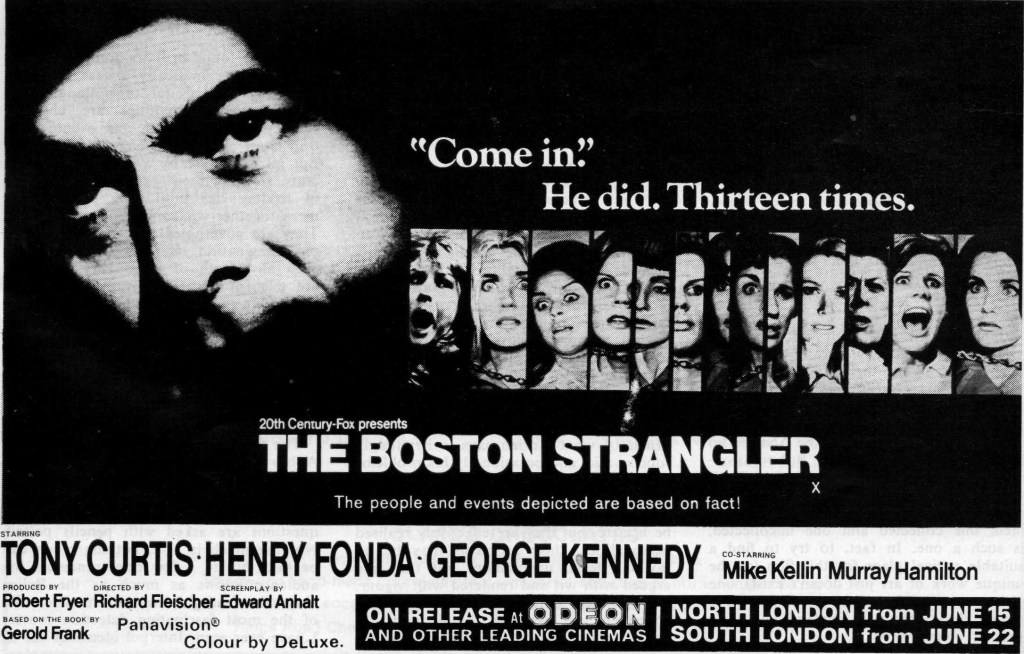
On a hubris high was studio chief Darryl F. Zanuck, who a few years before had saved Fox from bankruptcy. Dunne (later a screenwriter, most notably of A Star Is Born, 1976) had carte blanche to sit in on all sorts of meetings. The studio was going for broke with big-budget musicals, $18 million on Doctor Dolittle starring Rex Harrison (My Fair Lady, 1964) , $12 million for Star! with Julie Andrews (The Sound of Music), both actors considered bankers for their previous work in musicals. There was even $4.5 million allocated to The Boston Strangler which lacked any star commitment.
There were actually two Zanucks. Father Darryl and whizz-kid son Richard who was in charge of production and with whom Dunne had most of his dealings. Dunne observed first-hand how the younger Zanuck whittled down director Martin Ritt’s salary from $350,000 to $200,000 by threat of legal action.
Script problems had pushed back production on The Boston Strangler, a first attempt by English playwright Terence Rattigan (The VIPs, 1963) rejected and the project now in the hands of Edward Anhalt (Becket, 1964). And it lacked a star.
Robert Shaw was one possibility. He was being paid $300,000 for a picture that would never be made, The Nine Tiger Man, to be directed by George Cukor, deemed too expensive at $7.2 million. Zanuck could save money if Shaw accepted The Boston Strangler as an alternative. He didn’t. Or another, cheaper, project A Severed Head. He didn’t. Instead, Zanuck dumped A Severed Head (released by Columbia in 1971).
Christopher Plummer also walked away without doing any work. When Rex Harrison quit Doctor Dolittle, Plummer (The Sound of Music) signed up as his replacement for $300,000, Harrison said he hadn’t meant to quit. That wasn’t the only issue Harrison caused. He refused to pre-record his numbers and then mouth the lyrics to a playback. The Harrison, more expensive, method was to be recorded live. As if producer Arthur P. Jacobs (Planet of the Apes, 1968) hadn’t already been through the mill. Alan Jay Lerner (My Fair Lady) was contracted to do the music. But after 15 months: nada. Jacobs turned to Leslie Bricusse. The budget had risen by 50 per cent, from $12 million to $18 million.
It was hoped the 50-plus companies involving in licensing and contributing $12 million in overall marketing spend would bring in the public. Over 300 items would be sold on the back of the picture, resulting in 45,000 displays in retail stores. This was a picture you couldn’t miss. Expecting a soundtrack bonanza, the initial print run was set at half a million copies – bigger than that for The Sound of Music. Jacobs was perturbed to learn he would have to pay for window space – retailers paid with free copies.
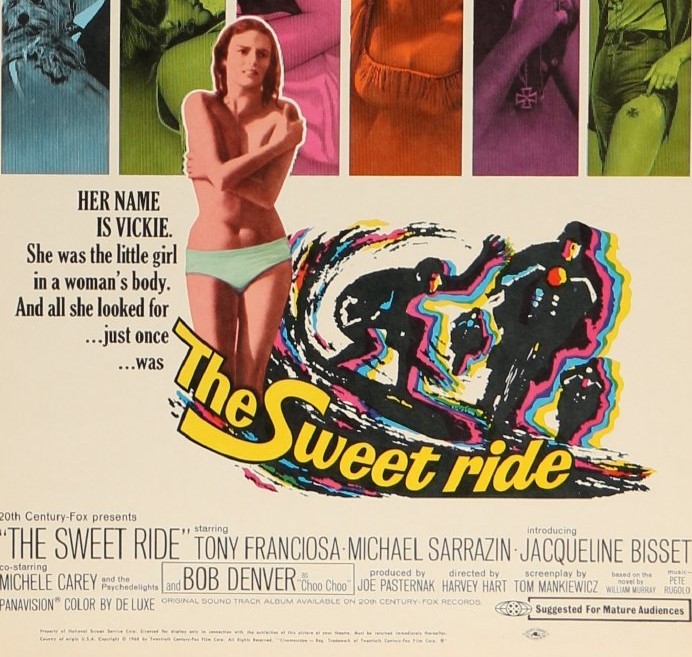
Legendary producer Joe Pasternak was making his 100th movie The Sweet Ride. One of his concerns was that Jacqueline Bisset’s bikini didn’t look tight enough. “It looked baggy in the rushes,” complained Pasternak. Bisset countered, “It fits when it’s dry. It just got a terrible pounding when I was in the water.” She mentions the scene where it got such a pounding in fact that the sea whipped the top off. She reckons that crossing her arms to protect her modesty prevented her tugging the pants on tighter. Once that picture was finished so was Pasternak – he never made another picture.
Another legendary producer Pandro S. Berman was trying to interest English directors John Schlesinger or Lindsay Anderson in Justine (directed by George Cukor in 1969) and on that basis wanted to hire a writer Laurence Marcus (Petulia, 1968) to rewrite the existing Ivan Moffat script in order to entice them. Zanuck’s take: he expected a director to make script changes but couldn’t see the point of altering a script to suit a director you didn’t know would be interested. Nonetheless, Marcus got signed.
All the time agents and directors were pitching movies. Agent Phil Gersh pushed a comedy version of Candy – screenplay by English writing duo Keith Waterhouse and Willis Hall (it ends up minus the Englishmen at Cinerama Releasing). Veteran director Henry Koster’s idea for a musical was nixed. As was the original trailer for Tony Rome, Zanuck hating the voice-over.
On Deadfall (1968), the Michael Caine heist movie directed by Bryan Forbes, actress Giovanni Ralli was having trouble with her English and her contract prevented her being dubbed. It would mean the actress having to lip-synch in post-production. The solution – “tell her she’s got 500 loops and when she hears that maybe she’ll get discouraged and let someone else dub her.” The studio had come up with 14 alternative titles to The Magus (1968) including Seduced by Fate and The Goddess and the Demon.
Fred Zinnemann was priming a $10 million western about Custer. He thought he might save $3 million by shooting in Mexico. The picture was to have no big stars. The only actor who could pull it off was John Wayne and he hated Custer. So Zinnemann planned to go with big names in cameo roles and Toshiro Mifune as Crazy Horse. That picture, too, would be dumped.
Also in the wings, Hello, Dolly! which would get made and Tom Swift, which would be canned despite advance work on building his aeroship, which would not. Nor would another Berman project John Brown’s Body.
Apart from insights into the way movies are made, marketed and released, Dunne’s book captures the extraordinary Hollywood mix – cynicism and greed coupled with fervor and bone-headed optimism.
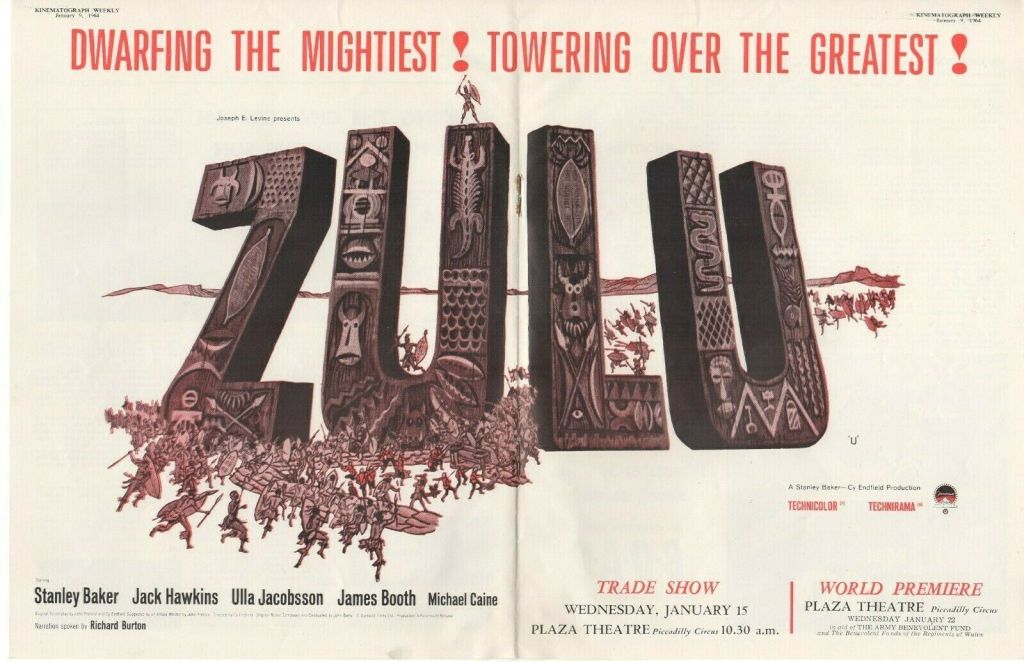
Producer Joseph E. Levine was so carried away by the sensational performance of Zulu (1964) in Britain that he earmarked a million-dollar marketing budget for its U.S. launch. Levine was already doing the rounds of U.S. exhibitors in January 1964 and it was reviewed that same month in Variety – which predicted it would be a “sturdy box office prospect” – leading observers to believe its launch was imminent. That it was held back till the summer suggested interest from the trade, not as fascinated by an obscure war in Africa as the British, was not as high as the producer would have liked. Even then Box Office magazine reckoned it “should be a box office smash” to emulate the $589,000 it had taken in nine weeks in the first run Plaza in London’s West End coupled with two weeks in 29 houses on the British ABC circuit.
But somewhere along the line Levine had lost heart and promoted it as if was Hercules all over again, 500 simultaneous bookings in a month, little time to build on the decent box office it attracted in New York in two weeks at the first run Palace. The drubbing Zulu (1964) received at the American box office – it did not even attract the $1 million in rentals needed to place it in the Variety annual box office chart – made trade journalists, while recognizing Michael Caine’s initial promise, reserve judgement on his future, observing that he “still has some ground to cover before he becomes as familiar to filmgoers as Sean Connery.”
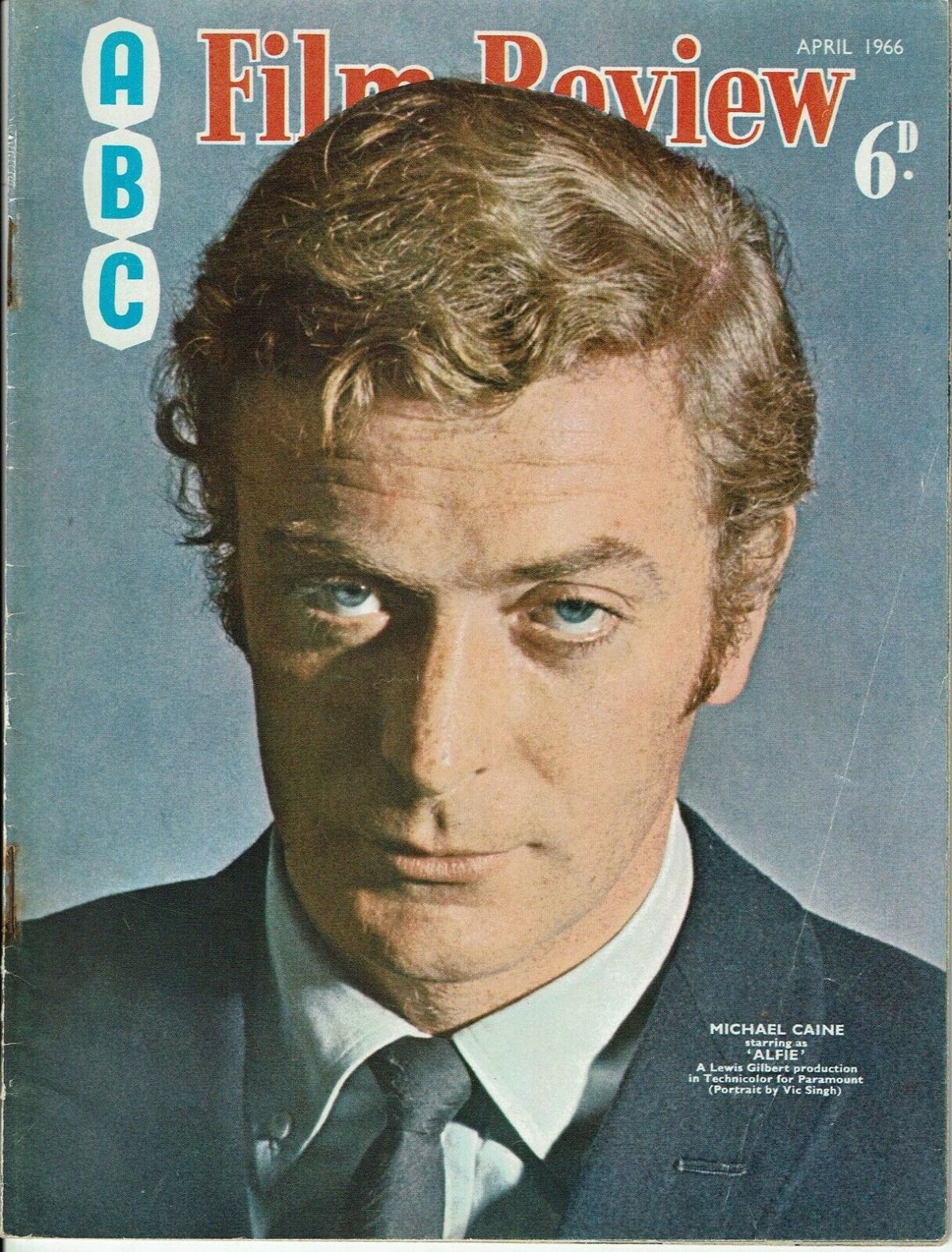
Michael Caine is way down the cast list.
Despite Zulu’s failure, Variety predicted that Caine’s performance had “won this blond young man a swift passport to potential stardom” and even while The Ipcress File (1965) divided critics, the trade paper reported “there’s no disputing Caine’s personal impact…the sky’s the limit.”
To justify his deal with Harry Saltzman, Caine was committed to appearing in ten films in five years, although the producer was not only happy to loan him out to other studios but share the spoils. That was an unusual trait, given that stars as varied as Sandra Dee, Carroll Baker and Rock Hudson bristled at what they saw as exploitation, when their paymaster retained the entire amount gained from loaning their services to other studios, often pocketing a hefty profit in the process. Caine, on the other hand, “kept the major share of any loan-out loot.”
After The Ipcress File, Caine would have five films released in the U.S. in the space of eight months from July 1966 to February 1967, an output that could make or break him. In order of U.S. launch these were: black comedy The Wrong Box (1966), ribald sex drama Alfie (1966), caper movie Gambit (1966), a second outing for Harry Palmer in Funeral in Berlin (1966) and big-budget steamy Otto Preminger drama Hurry Sundown (1967) not to mention a reissue in 1967 of Zulu to capitalize on his growing fame.
The breadth of acting skills Caine brought to these diverse movies caught the attention, by and large, of the critics as well as the industry. The National Association of Theater Owners, proclaimed him their Future Star of the Year in September 1966 with the ringing endorsement of “never has a newcomer to films so fully and immediately captured the imagination of the world audience.”
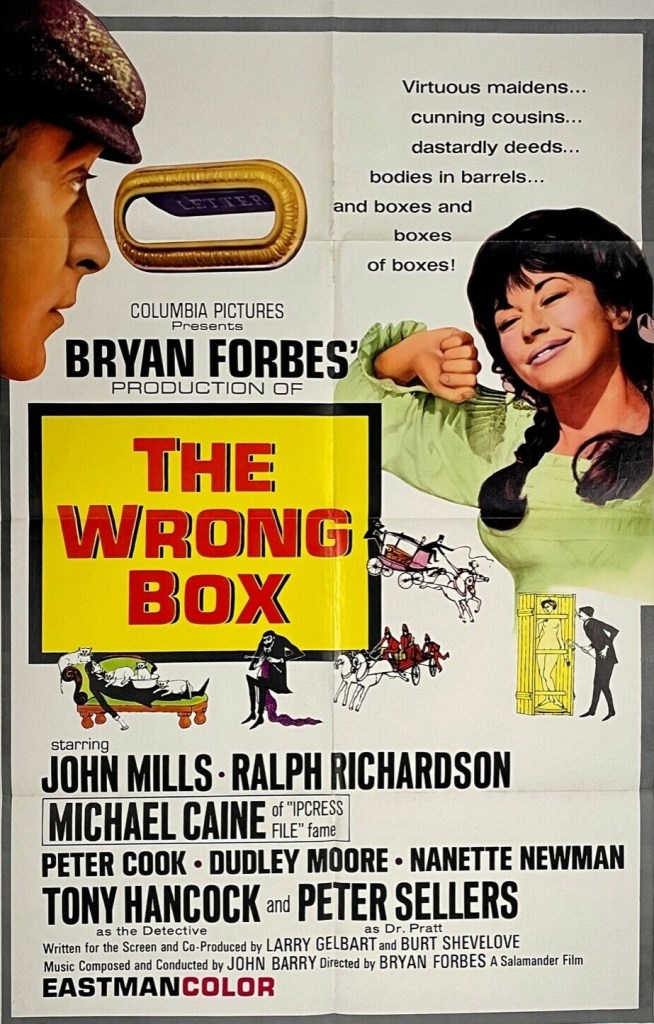
Oddly enough, there was no better follow-up as far as America was concerned to The Ipcress File than The Wrong Box in which he was a last-minute replacement for American actor George Hamilton. The Wrong Box (1966) presented Caine as the timid romantic opposite of the lothario of Alfie and the accomplished seducer of The Ipcress File (1965) but it was the kind of role to make critics sit up and wonder what else he had in his acting box of tricks.
But the release strategies employed by the various distributors, Columbia for The Wrong Box, Universal for Gambit and Paramount for the other three, ensured that the movies did not go down the Levine saturation-release route that had done for Zulu. Limited openings in prestigious arthouse-style cinemas allowed for slow build. In fact, it was almost tantamount to creating ‘sleepers’ out of every film. A film that remained for months at a time in one or two cinemas in a major city was the best way of driving up word of mouth. And during this hectic period whenever Caine was promoting one film, he was also being asked about all the rest.
It was almost inevitable that when a new picture opened, all the others were still playing. As a measure of how well this unplanned strategy worked, at Xmas 1966 his films were playing in six first run cinemas in New York, far more than any other star, and far more than any other star in the history of Hollywood. Each new opening boosted the box office of all the rest and when Oscar consideration or Year-End Best Awards entered the equation they served notice that, through his other films, this was an actor with a wide range of skills.
What had become quickly apparent to studios was that they had no idea how to assess Caine’s box office appeal. Such reticence proved invaluable. The limitations imposed on his film launches ensured that audience demand would dictate the release pattern. Only after Universal had opened The Ipcress File to sensational business at the Coronet in New York at the start of August 1965 did it consider widening the movie out. Audience response gave the studio the confidence to book it towards the end of the following month into Grauman’s Chinese in Los Angeles for an “unprecedented booking.” The two cinemas could not have been more opposite – the New York house seating just 590, the Los Angeles venue nearly three times as much with 1,517 seats. The studio was “evidently convinced to go commercial with the picture nationwide as booking into Grauman’s indicates.”
Columbia almost copied that campaign to the letter. The Wrong Box opened in early July 1966 to an “amazing” $35,000 at the 700-seat Cinema One. What was just as astonishing was that it was pulling in $28,500 in its seventh week by which time it had begun first run engagements across the country – a “socko” $25,000 in Chicago, “wham” $25,000 in Philadelphia, “boffola” $20,000 in Boston, “boffo” $18,000 in Washington D.C.
Although distributed by a different studio, Alfie followed a similar pattern, opening in New York again at the Coronet and also at the 500-seat New Embassy, breaking all-time records at both cinemas. Alfie, however,was less of a risk. On the financial front, it had already recouped its $750,000 costs solely from its London run. On the critical front, the film had won the Special Jury Prize at Cannes.
Just as important was Paramount’s marketing backing. A 16-page A3 Pressbook began by detailing both the critical acclaim enjoyed by the picture on its New York opening and its subsequent commercial success. Every advertisement was garnished with critical quotes: “Alfie bubbles with impudent humor and ripe modern wit” (Bosley Crowther, New York Times), “delightful comedy” (Judith Crist, NBC Today Show), “you are going to enjoy Alfie very much” (Life). “There’s no question about it,” crowed the Pressbook, “Alfie has completely conquered New York…(and) is the new champ of the press.” The New York Times had run four separate articles on the film, major magazines lined up to profile the star, on publicity duties Caine had come across as charming and personable, and the movie’s theme song topped the charts.
Three pages of the Pressbook were devoted to Michael Caine, calling him “multi-talented” and setting out the proposition, “Will Alfie’s Michael Caine Become the Newest Teenage Idol?” Caine predicted, “I believe it takes at least five movies to make a star of anyone,” counting Zulu as his first, plus The Wrong Box and Alfie. Given Funeral in Berlin and Gambit were still to come, he was already well on the way to proving himself correct.
Alfie launched in New York a few weeks after The Wrong Box had already whetted appetites. The Coronet delivered a $43,000 opener and the New Embassy $33,400, both all-time non-holiday records. Second weeks were equally potent, $40,000 at the Coronet, $33,000 at the New Embassy.
So Paramount “nursed” the sleeper. It didn’t properly expand until Thanksgiving and even then was limited to 56 theaters which had to commit to 14-week runs that would see it safely past Xmas and New Year so as to be “in active exhibition” during Oscar season. Before the first Oscar nomination was in, Paramount had pulled in $3m million in U.S. rentals (the studio’s share of the box office gross) and about the same again overseas (including Britain). Winning five Oscar nominations – including Best Picture and Best Actor – boosted takings.
The Xmas 1966 unofficial “Michael Caine Season” saw a three-cinema New York opening for Funeral in Berlin (budgeted at $2.6 million) and one house for Gambit while Alfie was still playing in two houses. The Harry Palmer sequel rocked up with a “wow” $40,000 – equivalent to $356,000 today – opening week at the 813-seat Forum, an “amazing” $21,000 ($187,000 equivalent) at the 450-seat Guild (extra shows to cope with the demand) and $37,000 ($330,000 equivalent) at the 568-seat Tower East. Gambit knocked up a “smash” $20,000 at the 561-seat Sutton with Alfie bringing in a “wham” £21,000 in its 18th week at the New Embassy plus $14,000 in its first week at the 430-seat Baronet. The capacities of all these cinemas showed that, in reality, they were glorified arthouses rather than the bigger 1,000-plus-seaters where the big-budget pictures resided.
In Britain, a top box office draw, in America king of the arthouses.
How well his movies did outside that limitation depended on popularity and accessibility. Pairings with top female stars like Shirley MacLaine (Gambit) and Jane Fonda (Hurry Sundown) ensured that the actor’s transition into the Hollywood elite was painless. His career has had many ups and downs, and many fans know him only from his appearance in Christopher Nolan films, but in celebrating a career that encompasses nearly 70 years as a star, no one should forget the eight months that turned him into one.
SOURCES: “Levine Heads Zulu showmanship Meets,” Box Office, January 13, 1964, p8; “Big Zulu Whoop,” Variety, January 15, 1964, p3; Review of Zulu, Variety, January 29, 1964, p6; “Levine Sells His Theatres,” Box Office, February 10, 1964, pNE2; Advert for Zulu, Variety, April 29, p26-27; “Britain Bubbles with Talent,” Variety, April 29, 1964, p58; Review of Zulu, Box Office, June 22, 1964, pA11; Review of The Other Man, Variety, September 16, 1964, p41; Review of The Ipcress File, Variety, March 1965, p6; “Newcomer Talent in British Pix,” Variety, May 12, 1965, p57; Advertisement for Zulu, Box Office, Jun 15, 1964, p3; “Ipcress File Pre-Release in NY Aug 2,” Box Office, July 26, 1965, pE4; “Michael Caine No Bottled-In Bond,” Variety, September 15, 1965, p30; “Grauman’s Sets Extended Run of Ipcress File,” Box Office, September 20, 1965, pNC1; “Preminger Signs Caine,” Box Office, April 11, 1966, pE1; “Funeral in Berlin Budget $2,600,000,” Variety, April 27, 1966, p29; “Caine Is Able at B.O. with Five Star Roles in 33 Months since Zulu,” Variety, August 31, 1966, p2; “Michael Caine Named NATO Future Star,” Box Office, September 19, 1966, p3; “Par Nurses Its Alfie with Limited Playoff Through Holidays,” Variety, October 12, 1966, p21; “Michael Caine On Tour for Funeral in Berlin,” Box Office, November 21, 1966, pE2; “Embassy Reissues Three Caine, Belmondo Films,” Box Office, January 9, 1967, p10; “Alfie Could Be Par’s Tom Jones,” Variety, February 1, 1967, p3. Box office figures taken from the “Picture Grosses” section of Variety: July 20, 1966-September 24, 1966 and December 28, 1966.
Producer Joseph E. Levine (The Graduate, 1967) would be cancelled these days for his treatment of Michael Caine back in 1964. Levine had stumped up (along with Paramount) the $1.7 million budget for what was assumed to be the actor’s breakout picture, Zulu (1964), and signed him up to a seven-year contract. Caine would receive $75,000 – his fee for Zulu had been just $10,000 – in his first year, with increments every following year.* But before the film was released Levine rescinded the contract on the basis that Caine “looked like a queer on screen.”
While Zulu was a box office smash in Britain, in the United States it was a big flop despite the marketing dollars thrown at it by Levine. And nobody needed a younger version of the British stiff- upper-lip. And despite the buzz before the film opened, producers were not clamouring at Caine’s door, the only options on the table a small part in a television production of Hamlet at Elsinore (1964) and the leading role in The Other Man (1964), a television drama about Britain succumbing to the Nazis in 1940.
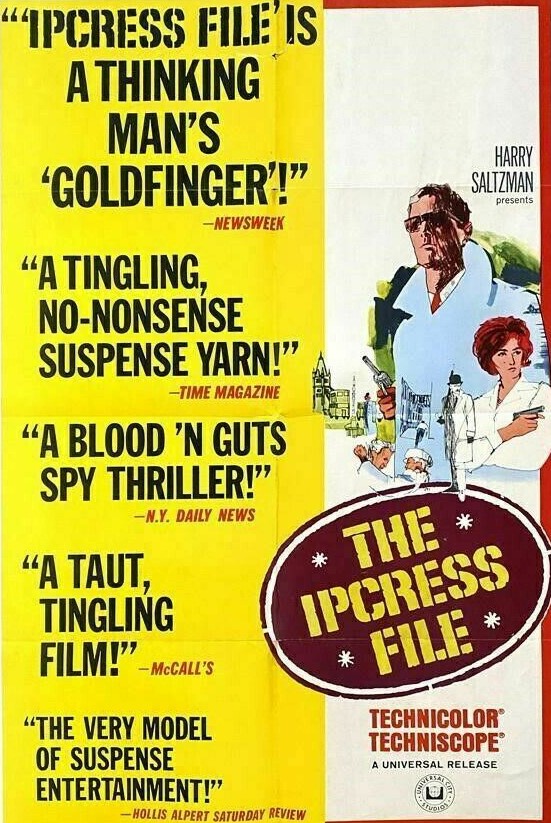
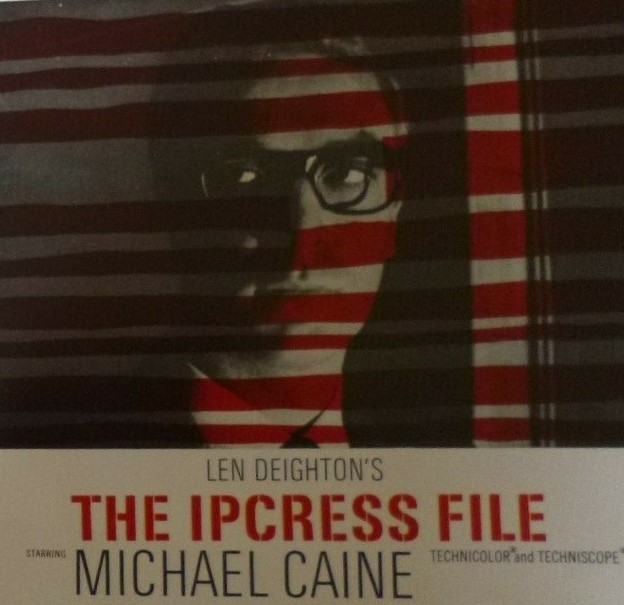
That is, until Bond producer Harry Saltzman summoned him to his table in a restaurant and in a conversation that lasted all of two minutes offered him The Ipcress File and a seven-year contract. Aged 32 at this point, Caine was mature enough to be ranked a proper rising star, the casualty rate among the twenty-somethings accorded that status alarmingly high mostly due to their screen immaturity.
However, Saltzman owed his involvement in the picture to another chance meeting. He had been in the United Artists offices in New York when hair product entrepreneur Charles D. Kasher arrived to pitch Len Deighton’s novel The Ipcress File as a potential movie. Saltzman was looking for an alternative to James Bond that would appeal to international audiences with the emphasis on low-cost. He put together the picture on a budget of only $460,000. But the project looked dead in the water when original Hollywood backers Columbia pulled out shorlty before shooting was due to star. Universal saved the day.
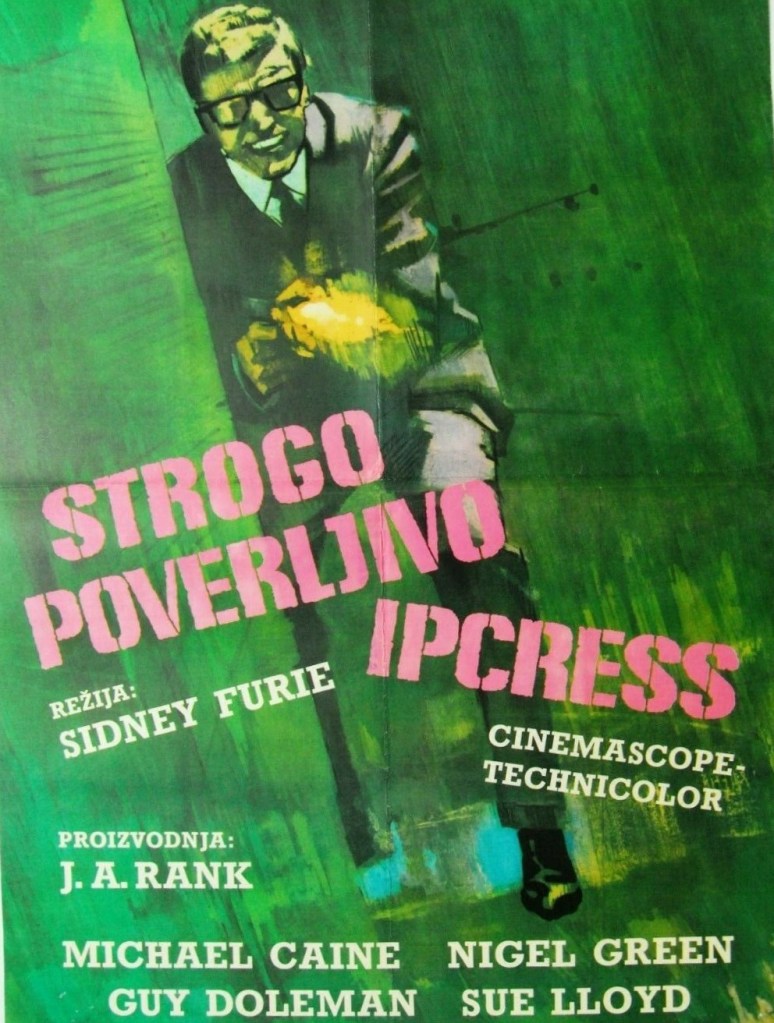
Hammer director Jimmy Sangster recommended Canadian director Sidney J. Furie (Wonderful Life/Swingers’ Paradise, 1964) who had just turned down A Hard Day’s Night (1964) and just signed up to do indie horror movie Devil Doll (1964) before managing to ease himself out of that contract.
Caine was far from first choice. Christopher Plummer had chosen The Sound of Music (1965) instead and Richard Harris, a bigger name in Hollywood after MGM roadshow Mutiny on the Bounty (1962) and a critical success after This Sporting Life (1963) turned it down in favour of Sam Peckinpah western Major Dundee (1965). In a bid to give the character the ordinariness he required Harry H. Corbett (Rattle of a Simple Man, 1964) was also considered. Caine had been sharing a flat with Terence Stamp (The Collector, 1963) but when Stamp decamped to America moved in with composer John Barry and was thus the first to hear the music Barry had dreamed up for Goldfinger (1964).
Aware how easily contracts could be dissolved Caine “stuck to him (Saltzman) like a drowning man to a straw.” Thus, he was present when discussions arose over naming the spy – anonymous in the book which was written in the first person. It was decided the character should have a dull name. “Harry” was chosen before everyone present realized the producer might just take offence. However, Saltzman’s real first name was Herschel, so he laughed it off.
Saltzman also came up with idea of the character wearing glasses to make him look more ordinary. Caine was short-sighted in real life and always wore glasses and Saltzman noticed how comfortable he was with them, knowing how to handle them properly, unlike clear-sighted actors given spectacles for roles without having any idea what to do with them. It was surprising how fragile the spectacles were, though, Caine getting through the allocated three pairs and new supplies having to be commandeered. Saltzman took the ordinariness too far, suggesting a duel with supermarket trolleys as one of the big fight scenes.
Even though Furie had never met Caine, he disliked him, having come across the actor and his friend Terence Stamp at the White Elephant Club in London. “I’d see Terence Stamp always there with this other blonde guy who wore glasses,” recollected Furie, “and they were rather chummy and always had these pretty girls at their table, and they were always laughing. And I sort of hated him at the time. Sometimes, I would get a bit drunk and tell whomever I was with, ‘I want to punch that guy in the face.’ I guess I was jealous.”
Joan Collins, completely out of favour in Hollywood and with no roles since The Road to Hong Kong (1962), auditioned – as did the unknown Carol White (Poor Cow, 1967) – for the part of Jean that went to Sue Lyons, in her first featured role. Otherwise, the main roles went to established British character actors including Nigel Green (Zulu), Gordon Jackson (The Great Escape, 1963) and Guy Doleman (Thunderball, 1965)
Interestingly, laughable though it is now, a character who cooked was considered to be gay, even though Palmer clearly used his cooking skills for female seduction. Unfortunately, no great cook himself, Caine was unable to crack two eggs with one hand and the movie used the hands of author Len Deighton, so excellent a cook he had written a cookbook. That explains why the hands that picked up the eggs on screen had blond hairs but the hands that cracked them had black hairs. The cooking scene remained the cause of macho concern, with one U.S. studio executive demanding the scene be re-shot with the woman cooking the meal.
Director Sidney J. Furie (Wonderful Life/Swingers’ Paradise, 1964) hated the script and demonstrated his loathing by gathering cast and crew together on the first morning of filming and burning the script on the studio floor. While sticking to the basis of the screenplay, characters were encouraged to improvise. The poor script – Kasher had called it “garbage” – was the reason for introducing this kind of style, the script being rewritten as production proceeded.
Furie recalled, “All day there were two writers writing our scenes for the next day…We knew where we had to get to because Harry Saltzman, the producer, had ordered the set for the climax built, so we were stuck with it.” If the pages didn’t turn up, Furie found ways to instigate delay, getting the cameramen spending an inordinate amount of time lighting a scene. Furie sipped whisky in his Scotch all day, not enough to be inebriated but “it would help me go with my gut.” The full complement of writers involved in the script were James Doran and W. H. Canaway plus uncredited contributions from Lukas Heller (The Dirty Dozen, 1967) , Lionel Davidson (source author for Agent 8 ¾, 1964) , Ken Hughes (The Trials of Oscar Wilde, 1960) and Johanna Harwood (Dr No, 1962).
Furie’s style on The Ipcress File was very distinctive – “scenes where you had someone’s shoulder blocking the screen and you could only see three quarters of the screen…If you try to use the screen the way a painter uses a canvas, somehow it’s not considered acceptable.”
Furie and Saltzman did not get on, the producer loathing what he saw as the director’s stylistic excesses and was convinced he required editor Peter Hunt to rescue the project once shooting was complete. For his part, Furie’s definition of producers was “the people who tried to wreck the movie.” Explained the director, “I was very depressed always when we started shooting, thinking that it was going to be really lousy and I didn’t know what to do, so I told myself I would come up with a style of shooting that is different. I put shoulders across the screen, I shot up at things, I shot down, just to make it different, to give it ambiance. It was done out of insecurity.”
At one point the director quit the set, resulting in a chase through London with the producer’s Rolls Royce in pursuit of the London bus on which the director had escaped. However, Furie conceded, “The movie would not have gotten made without him (Saltzman) and his devotion to seeing it through, considering the problems with Universal, no matter how much I fought with him during the making of it.
To Saltzman’s astonishment when Peter Hunt arrived and examined the dailies he told the producer “this is the most brilliant footage I’ve ever seen” In order to convince the producer that it was all going to work, Hunt edited together the sequence where, with a marching band in the background, Nigel Green marches in step to the tempo followed by “dialogue between Green and Guy Doleman, carefully intercut with their closed umbrellas stepping with them in motion…Once I assured him (Saltzman) it would be a good film, he started getting confident.”
While British critics lauded the picture, its reception Stateside was mixed, “though the public weighed in heavily with its money” – Variety noting not just that it was “short on thrills,” over-stylised, and could do with being a “a trifle more lively,” the overall verdict being that it was “so soft-pedalled that the audience will be screaming for more kicks” of the Bond kind.
*NOTE: In his autobiography Caine stated his $75,000 annual salary would double every year. That doesn’t sound right. A second year of $150,000 and even a third of $300,000 might be acceptable for a rising star. But if you were looking at $600,000 for his fourth year and $1.2 million for his fifth up to $4.8 million for the final year, that would make him by the end of the decade easily the highest-paid star in Hollywood. Caine would need to be working like a Trojan, four or five films a year, to come anywhere close to earning such sums and his movies would all have to be big hits. Of course, to cover his costs, Levine could farm him out to other studios, but even so, it was a disproportionate amount for any actor to earn. Even John Wayne and Steve McQueen would not pull in such a salary by 1971.
SOURCES: Daniel J. Kremer, Sidney J. Furie: Life and Films (University of Kentucky Press, 2015), p74-84; Michael Caine, What’s It All About? (Arrow Books, 1993) p189-190, 195-210; Michael Caine, The Elephant to Hollywood (Hodder and Stoughton, 2010), p85-90; Paul Rowlands, Interview with Sidney J. Furie, Money into Light website, 2017.
It’s a been a fabulous year for watching the movies and my pictures of the year (the first full year of the Blog running from July to June, I hasten to add) make up an eclectic collection ranging from historical epics, dramas and westerns to horror, thrillers and comedy. Although this is my chosen decade, many of the films I was seeing for the first time so it was interesting to sometimes come at a film that had not necessarily received kind reviews and discover for one reason or another cinematic gems. There was no single reason why these pictures were chosen. Sometimes it was the performance, sometimes the direction, sometimes a combination of both.
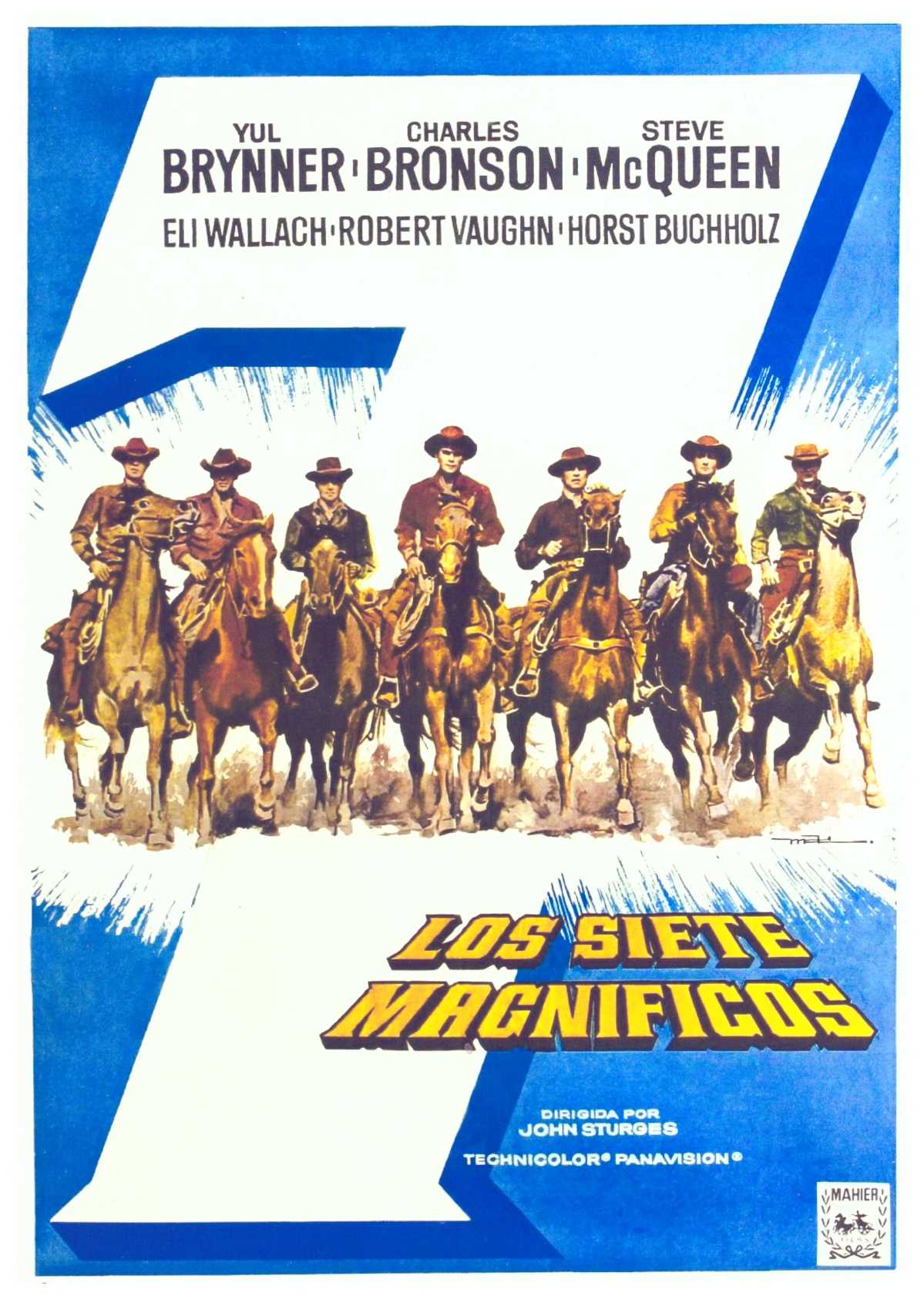
The westerns I most enjoyed came from either ends of the decade – John Wayne and Rock Hudson in magnificent widescreen spectacle The Undefeated (1969) and Yul Brynner, Steve McQueen, Charles Bronson, James Coburn and the team in The Magnificent Seven (1960).
There was another ensemble all-star cast in J. Lee Thompson war film The Guns of Navarone (1961) one of the biggest hits of the decade with Gregory Peck, Anthony Quinn, David Niven, Stanley Baker et al.
Horror brought a couple of surprises in the shape of Daliah Lavi as the Italian peasant succumbing to The Demon (1963) and Peter Cushing menaced by The Skull (1965).
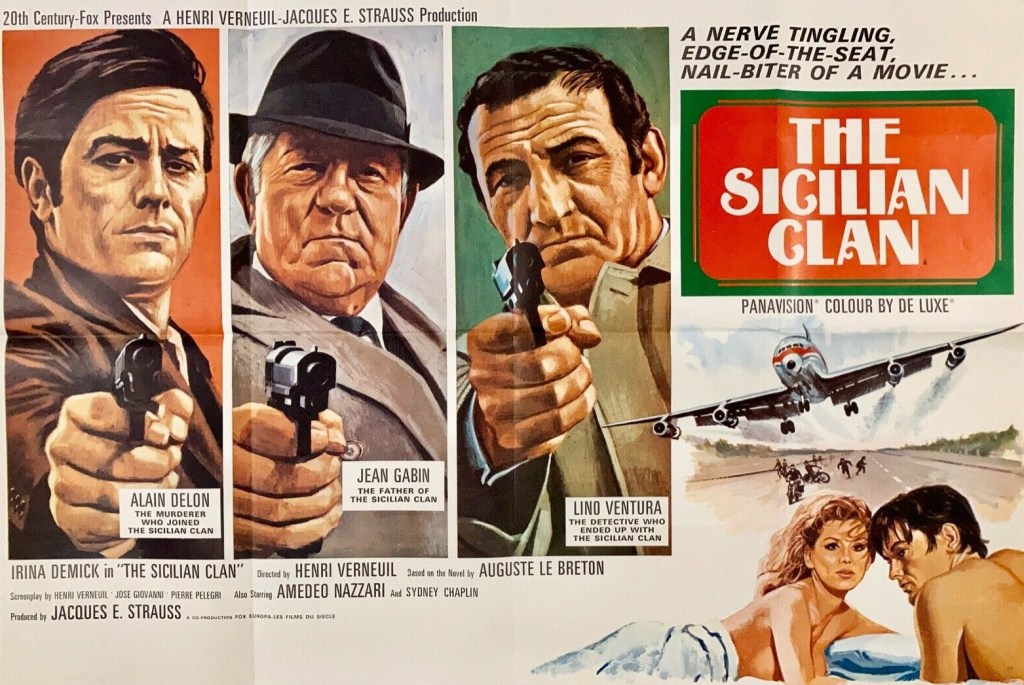
Not surprisingly perhaps Alfred Hitchcock headed the ranks of the five-star thrillers, but surprisingly to some, this was in the shape of Marnie (1964) with Sean Connery and Tippi Hedren rather than some of his decade’s more famous / infamous productions. Heading the romantic thrillers was the terrifically twisty Blindfold (1965) with Rock Hudson and Claudia Cardinale teaming up to find a missing scientist. The Sicilian Clan (1969) proved to be a fine heist picture in its own right as well as a precursor to The Godfather with a topline French cast in Alain Delon, Lino Ventura and Jean Gabin.
Only one comedy made the five-star grade and what else would you expect from Billy Wilder’s Some Like It Hot (1959), slightly outside my chosen remit of films from the 1960s, but impossible to ignore the chance to see Marilyn Monroe, Tony Curtis and Jack Lemmon strutting their stuff on the big screen. For the same reason I had the opportunity to re-evaluate Ridley Scott’s Oscar-winning historical epic The Gladiator (2000) that gave Hollywood a new action hero in Russell Crowe. Stylish contemporary sci-fi chiller Possessor (2000), from Brandon Cronenberg, was another one seen on the big screen, one of the few in this year of the pandemic.
Most people would certainly put Paul Newman as prisoner Cool Hand Luke (1967) in this elevated category but, to my surprise, I found several other dramas fitted the bill. The clever sexy love triangle Les Biches (1968) from French director Claude Chabrol made his name. Burt Lancaster turned in a superlative and under-rated performance in the heart-breaking The Swimmer (1968) about the loss of the American Dream. Rod Steiger, on the other hand, was a hair’s-breadth away from picking up an Oscar for his repressed turn as The Pawnbroker (1964).
Two films set in the Deep South also made the list – Marlon Brando in Arthur Penn’s depiction of racism in small-town America in The Chase (1966) with an amazing cast also featuring Jane Fonda and Robert Redford, and Michael Caine as a more than passable arrogant southerner in Otto Preminger’s Hurry Sundown (1967) opposite rising star Faye Dunaway. Dennis Hopper and Peter Fonda’s hymn to the freedom of the motorbike in Easy Rider (1969) turned into a tragic study of attitudes to non-conformity.
For only eighteen films out of a possible two hundred to make the cut indicates the high standards set, and I am looking forward to as many, if not more, brilliant films in the year to come.
The heist movie – as epitomised by The Asphalt Jungle (1950), The Killing (1958) and Jules Dassin’s Rififi (1955) and Topkapi (1954) – had tended to be a relatively low-budget affair. Top-ranking stars steered clear because complicated plot often got in the way of character development In the highly polished and entertaining Gambit British director Ronald Neame’s riff on the genre involved a narrative shift worthy of Christopher Nolan, Quentin Tarantino and, of course, Akira Kurosawa who had with Rashomon (1950) single-handedly invented the complex point-of-view.
Neame brought another couple of other aces out of the deck. First of all, there was the fun of watching over-confident thief Michael Caine’s apparently foolproof plans come unstuck. Secondly, in a romantic dynamic in the vein of It Happened One Night (1934) the less accomplished female (Shirley MacLaine) proves more accomplished than the male.
Gambit was also a clear demonstration of the power of the female star not just in the plot complications but from the fact that Caine owed his big Hollywood break to MacLaine, the actress having the power of veto over the male lead and, equally, contractual right to choose her co-star. The movie went through an interesting development phase. The original script by director Bryan Forbes (King Rat, 1965) had Cary Grant in the central (i.e MacLaine) role. Rewritten by Jack Davies (Those Magnificent Men in Their Flying Machines, 1965) and in his movie debut Alvin Sargent (The Stalking Moon, 1968) the main character underwent a gender shift.
After Psycho (1960) audiences had become used to being messed around. Stars could be killed off halfway through or not appear (Operation Crossbow a classic example) until well into the movie. Neame was not quite so bold but what audiences made of the usually garrulous MacLaine being rendered mute during the early part of the picture was anybody’s guess, perhaps the dumb show was a joke in itself. But lack of dialogue did not prevent MacLaine from stealing the show and proving what an adept comedienne she was, a barrage of submissive looks enough to send an audience into hysterics.
In essence, Caine plays two characters. In the opening segment he is the brash, cocky English gentleman-thief at the top of his game, bossing MacLaine around, gulling his mark (Herbert Lom) with an audacious plan to steal an expensive sculpture. In his version of events his plan goes off without a hitch. But when we switch to the MacLaine perspective, in which nothing goes according to plan, his cool demeanour is sorely tested and he turns into a frustrated idiot. Watching the movie now, you can almost imagine that the MacLaine character, with a host of useless facts at her fingertips, was making fun of Caine’s well-known love of trivia, but that predated the actor’s acknowledgement of this aspect of his real-life character.
What makes the movie so much fun is that both parts of the film work and for the same reasons: believable characters, exciting heists and plenty of twists. The initial premise is that Caine recruits Hong Kong dancer MacLaine due to her startling resemblance to the late wife of Arab billionaire Herbert Lom as part of a ploy to relieve him of a priceless artefact. While Lom is falling for MacLaine, Caine moves in for the kill with an ingenious heist. Mission accomplished he pays her off. But in the real version of the story, as seen through her eyes, Lom does not fall for the ridiculous scam, Caine’s plan fails to work until MacLaine comes to the rescue. Meanwhile, MacLaine has fallen for Caine, but does not want to be in love with a criminal. Although Caine initially resists his own emotions, he, too, takes the romantic plunge except that to win her he may have to lose what he prizes more.
As I mentioned it is awash with twists and the heists themselves are exceptionally well done but the screen chemistry between the two leads is terrific. Caine, who had otherwise been in control in his previous starring roles as the upper-class officer in Zulu (1963), spy Harry Palmer in The Ipcress File (1965) and the womanising Alfie (1966) – The Wrong Box (1966) was an ensemble item – was taking a chance in playing a character who would effectively play second fiddle to the star and in terms of the thief often appears out-of-control. MacLaine was more obviously in her safety zone. Hollywood spent a lot of time investing in screen partnerships, mostly failing, but this pairing certainly succeeded.
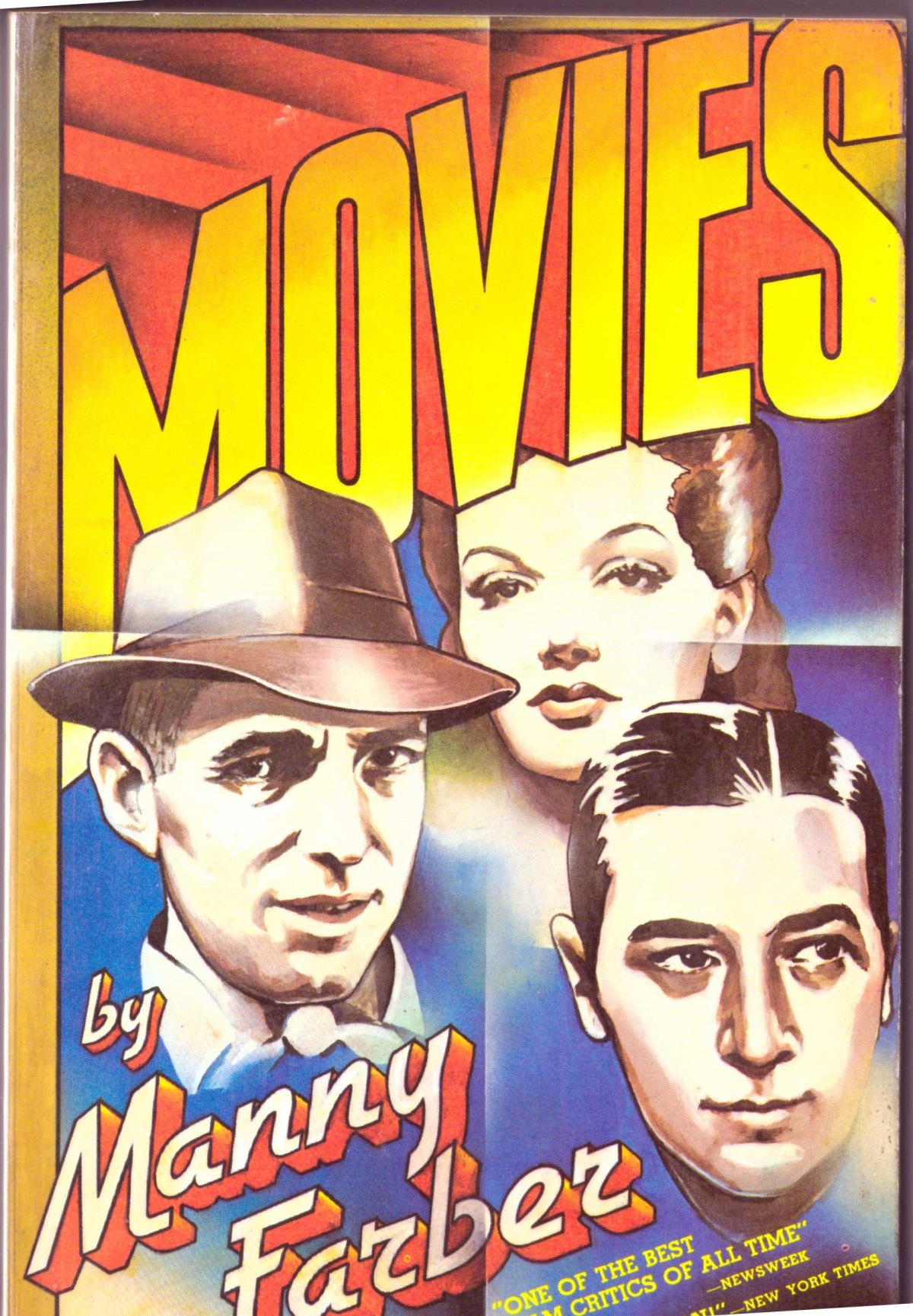
You wouldn’t want to pick a fight with Manny Farber, generally considered along with Andrew Sarris, the godfather of serious film criticism. “Visceral” was the word most commonly associated with his writings.
He came to movies from an unusual perspective. He was a painter, one of the most celebrated still life artists of his generation. He never worked for a big paper like the New York Times or a stylish magazine like the New Yorker. Instead, his work appeared in Film Culture, Artforum, The Nation and men’s magazine Cavalier.
An early advocate of the work of Howard Hawks, Anthony Mann and Raoul Walsh, he was also inclined towards lean B-films over more profligate big-budget pictures.
Chances are you will disagree with everything he said, especially when he was slicing-and-dicing one of your favorites, but it is equally guaranteed that you will marvel at his prose. His work had punch and clarity and it might just make you laugh.
Here are some of his musings on the 1960s movie scene:
Easy Rider (1969): “Dennis Hopper’s lyrical, quirky film is better than good in its handling of death…The death scenes, much more heartbreaking, much less programmed than Peckinpah’s (The Wild Bunch), come out of nowhere…The finality and present-tense quality of the killings are remarkable: the beauty issues from the quiet, the damp green countryside and a spectacular last shot zooming up from a curving road and a burning cycle.”
Lawrence of Arabia (1962): “The most troublesome aspect of Peter O’Toole’s Lawrence is that the story moves faster and further than the actor who is not unlike the Tin Woodsman of Oz (O’Toole starts with a springing outward movement, to walk over the world, then turns into a pair of stilts walking in quick, short strides.)”
On Albert Finney: “The Big Eat is a growing factor in films, in effect probably invented by Finney in his Saturday Night. In his case, it was a combination effect, involving a big chomp, heavy breathing, slashes of braggadocio, a side swivel, and baring of teeth. This emphasized eating has been fined and slowed down in his latest work, but within the timespan of four Finneyfilms it has taken hold, cementing a new convention for giving an underside, the animalistic traits, to character.”
The Ipcress File (1965): “This is a Chandleresque thriller that has no thrills, with an antihero who is more like a sugary flavor than an actor doing a Philip Marlowe…the only suspense is how slowly a knight (non-played ‘superbly’ by Michael Caine) can put dimes in a parking meter, crack eggs in a skillet or flatfoot his way through a library.”
The Rounders (1965): “Fonda’s entry into a scene is of a man walking backward, slating himself away from the public eye. Once in a scene, the heavy jaw freezes, becomes like a concrete abutment, and he affects a clothes-hanger stance, no motion in either arm.”
Who’s Afraid of Virginia Woolf (1966): “The most famous scene is an erotic nondancer, which is neither erotic nor dancelike, in which Elizabeth Taylor suggests a gyrating milk-bottling mechanism.”
The New York Film Festival 1968: “In the category called Bloody Bores, the Festival offered Capricious Summer, Hugo and Josefin and Twenty Four Hours in a Woman’s Life…Hugo and Josefin is life as seen through the eyes of a Kodak camera ad.”
On Rita Tushingham: “An even worse example of megalomaniac star who can make the simplest action have as many syllables as her name. The myth that a director makes or breaks a film is regularly disproved by this actress who…carries on a war of nerves against the other actors.”
The Graduate (1968): “Benjy…leads a split life on screen; half the time he’s hung up between Mrs. and Miss Robinson; the other half he’s at half mast; a flattened silhouette…Dustin Hoffman is laid out like an improbably menu. People are always darting into his periphery to point him out as a boy wonder…Benjamin, as it turns out, is Bill Bradley crossed with Denny Dimwit.”
It is unlikely you’ll get hold of this book Movies at a decent price since it is long out-of-print and a collector’s item but you can easily find Farber on Film, a whopping 800-page tome which covers his compete writings.
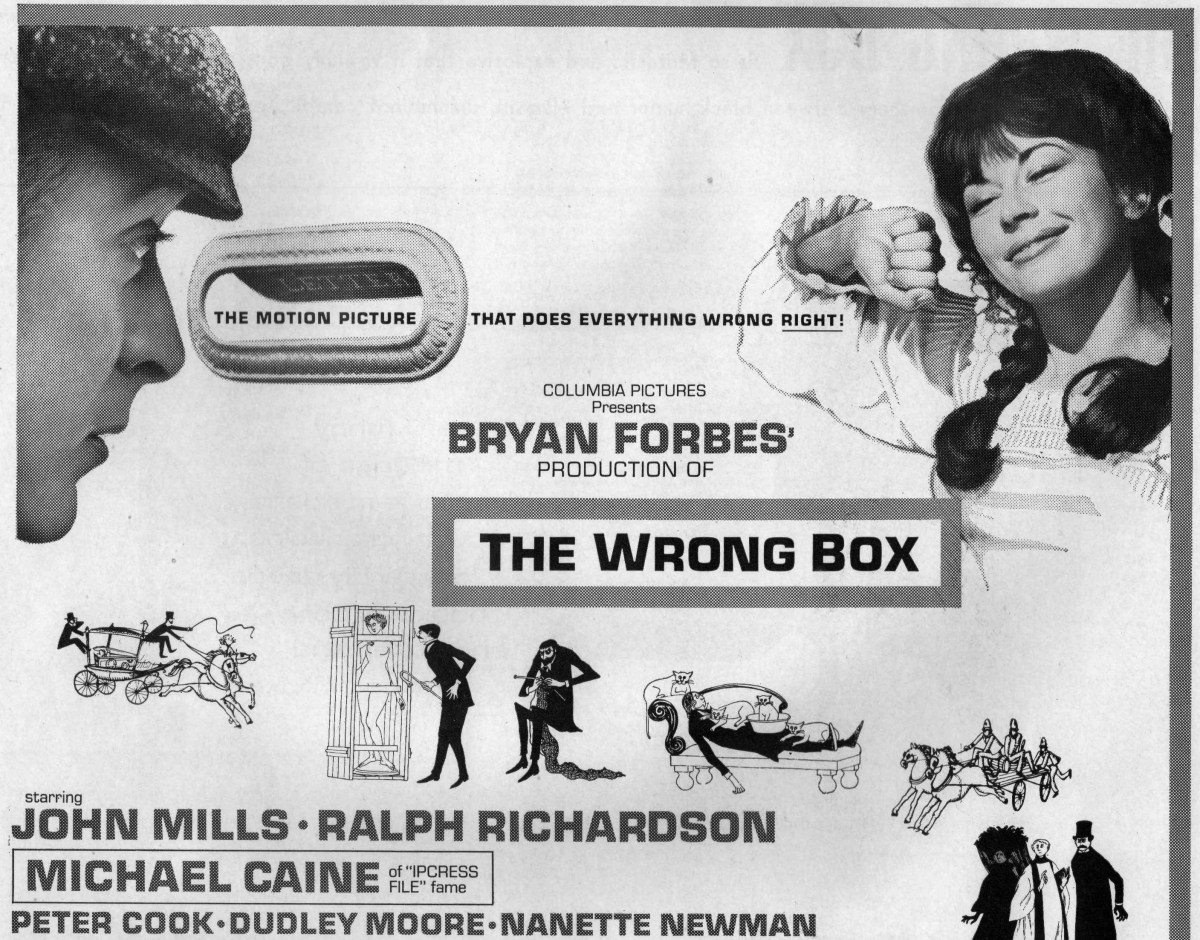
Somewhere between SBIG (So Bad It’s Good) and WAL (Worth a Look), The Wrong Box is a black comedy in the wrong directorial hands.
Better known for thriller Seance on a Wet Afternoon (1964) and POW drama King Rat (1965) Bryan Forbes struggles to bring enough comedy into the proceedings or to wring sufficient laughs out of what he has. Neither the wit nor the slapstick is sharp enough. But it does exhibit a certain charm.
Essentially an inheritance story, it pivots on the notion that the two potential inheritors are on their last legs and putting one (Ralph Richardson) out of action will benefit the dastardly nephews (Peter Cook and Dudley Moore) of the sole survivor (John Mills). It turns out Richardson is not dead. That does not cue as much hilarity as it should.
Surprisingly, the film relies on affecting performances from Michael Caine, playing against type as a gentle soul, and Nanette Newman as a young woman terrified of being murdered, who enjoy a very innocent romance. Hitherto, I had been rather sniffy about Ms Newman, but here she is delightful. Ralph Richardson steals the movie as a dotty pedant, weighted down with erudition and a knack, equally, for boring the pants off anyone within earshot and for escaping from the jaws of death including a massive train pile-up and several murderous attempts by Mills.
Cook and Moore let the show down by being so obviously just themselves but there is a nice cameo from Peter Sellers as an inebriated doctor.
Michael Caine got it spot-on when pointing out in his autobiography that it was a “gentle success in most places except Britain” precisely because to foreigners it represented an acceptably stereotypical view of a country full of eccentrics while to Brits it was all too stereotypical. So if you’re from America or other points global you might like it and if you are British you might not. On the other hand, the score by John Barry is one of his best with a wonderful theme tune.
POSTCRIPT. Just to back up Caine’s assertion, I pulled out the Pressbook from my stack and it goes heavy on critical praise. Newsweek said: “As funny and sunny a movie as any audience could ask for.” From the New York Times came: “so fantastic and explosive it virtually pops right out of the screen! A crazy, merry tale that tumbles somewhere between black humor and elegant, uninhibited camp.” The New York Post thought it was “a beautifully designed elaborate spoof,” while as far as the New York Daily Post was concerned it was “a laugh a minute.”