When the Cannes Film Festival in 1969 gave The Appointment the honor of being the first film invited to compete it looked like an exercise in kudos. Quite how that turned into a humiliation that would deny the Sidney Lumet picture a U.S. release was one of the oddest stories of the decade.
Lumet, it has to be said, was not exactly flying high. After the double whammy in 1964 of The Pawnbroker and Fail Safe, his career had stalled, The Group (1966) not delivering the expected box office, fired from Funny Girl (1967) and The Deadly Affair (1967), Bye Bye Braverman (1968) and The Seagull (1968) all misfires. So it probably seemed like the ideal career fillip to recharge his creative batteries in Italy, with a movie starring Omar Sharif and Anouk Aimee, both Oscar-nominated and still bathing in the warm afterglow of worldwide successes via Doctor Zhivago (1965) and A Man and a Woman (1966), respectively.
Aimee had made the list of female stars dominating the box office along with the likes of Barbra Streisand, Faye Dunaway, Jane Fonda, Catherine Deneuve, Julie Christie, Mia Farrow, Julie Andrews and Joanne Woodward. Although producer Martin Poll had a spotty record – just rom-com Love Is a Ball (1963) and thriller Sylvia (1965) on his dance card – that would change with his most ambitious project to date, The Lion in Winter (1968) pairing Peter O’Toole and Katharine Hepburn.
In truth, Lumet thought the original screenplay by the distinctively offbeat James Salter – undergoing a highly productive period, Three (1969) and Downhill Racer (1969) also on the launch ramp – “a silly story” but one that “could be salvaged with careful creation of mood, texture and dialog.” But he was virtually the only American on the project, Sharif Egyptian, Aimee French while the rest of the cast (excepting Austrian Lotte Lenya) and crew was Italian.
Shooting began at the end of February 1968. Martin Poll had been already working for seven months on the project ensuring it didn’t suffer from the production mishaps that had blighted another, bigger, MGM production, The Shoes of the Fisherman (1968). Interiors were shot at the Palatino studios (now fully soundproofed) in Rome, with a key sequence filmed at Lake Bolsena 100km to the north, and Poll had gained permission to shoot in key locations in the capital including Via Condotti leading to the Spanish Steps.
But the lake proved a trial. High in the mountains, located in a crater, it was prone to sudden squalls. First day of shooting coincided with “maverick” winds on the lake. The 40ft boat hired to transport the crew three kilometres across the lake to the tiny island was wrecked. A helicopter flew in two smaller replacements, and helped ferry passengers across, but only if they signed disclaimers absolving Poll of any redress should there be an accident.
Contract never fulfilled although it formed part of Avco embassy’s 20-page advert in Box Office magazine in November 1968.
Poll had also granted the director a week’s rehearsal time with the full cast, the movie was filmed with direct sound, rather than the traditional Italian post-production synching. And he had been hard at work on a fashion promotion campaign, highlighting the 40 haute couture designs that designer Ghelardi had created for one sequence.
A fashion show was being programmed as part of the world premiere in Rome on April 2, 1969, with the expectation that newspaper and television coverage would drive up global media interest. Poll had also set up 26 openings worldwide as the first wave of an ambitious release program to start a few days later to capitalize on the Easter break. It was all looking good – the movie had even come in under budget and a week ahead of schedule.
But the world premiere and the global release pattern were cancelled when, out of the blue, the movie was invited to compete at Cannes. The showing there would constitute the world premiere. The existing strategy was shelved in the hope that victory at the festival would provide a bigger marketing hook. Cannes had already suffered controversy that year after Carl Foreman quit the jury following censorship in France of his big-budget Cinerama roadshow western Mackenna’s Gold (1969), incidentally also starring Sharif.
Nothing went according to plan at Cannes. Festival audiences booed and whistled and waved white handkerchiefs in a sign of their disapproval. Variety called it a “flimsy love story” while condemning Sharif’s performance as “laughable.” What should have been a triumph turned into a disaster. MGM pushed back release a year until further work was done on the film.
But even as MGM was considering what to do to produce a version that might satisfy U.S. exhibitors, audiences in other parts of the world had decided there wasn’t much wrong with the version shown at Cannes. In fall 1969, the movie registered “sensational grosses.” In Japan rentals topped $1 million, in Manila there was an “unusually long run” and it broke records in Buenos Aires. Even so, Stateside executives were dismissive, “abroad, speed doesn’t mean that much,” they declared and set about changing the movie.
Under the terms of Lumet’s contract his right to final cut should have prevented any tampering with the picture. Unfortunately, he had gone along with the general consensus that the Michel Legrand score, minimalist though it was, required changing. But substituting John Barry music took the movie past its agreed completion date, thus negating Lumet’s contract and allowing MGM free rein.
At first, following a “disappointing” sneak preview in the U.S. in 1969, Lumet was involved in the editing but the studio found it easier to move forward if the original director was not looking over its shoulder. A new editor, Margaret Booth, was called in. She sliced 25 per cent out of the picture and added stock Italian footage to give the movie what MGM guessed would pass for “authenticity”, a more sun-kissed version of the country. MGM’s assessment was that the new version was “much better, much faster, playable.”
Lumet disagreed, “The MGM version now makes no sense. Characters appear and disappear, plot elements emerge and then are dropped. It’s ridiculous.” Being enraged was as close as the director came to affecting the outcome. It wasn’t the only box office disappointment facing MGM at the time. Much of the $20 million invested in four pictures – The Appointment, Goodbye Mr Chips (1969), Zabriskie Point (1970) and Captain Nemo and the Underwater City (1969) – was lost.
A “disappointing” test date in April 1970 in San Francisco confirmed what the studio feared. The movie was unreleasable. It might have been a different story if the two stars had unassailable box office track records. But Omar Sharif’s career had dipped. Mayerling (1968) though a success abroad barely hit the million-dollar mark in the U.S., while Mackenna’s Gold , Che! (1969), The Last Valley (1970) and The Horsemen (1971) were all expensive flops.
Anouk Aimee had done little better, pulling out of The Mandarins with James Coburn, Fox’s big-budget Justine (1969) a spectacular flop, Jacques Demy’s The Model Shop (1969) – “a really bad movie” according to Vincent Canby of the New York Times – also tanking and Columbia failing to find a release slot for One Night A Train (1968).
Lumet remained in a commercial wilderness. He was touted in a two-page advertisement as lining up two features for Avco Embassy, but they never appeared, nor did The Confessions of Nat Turner and We Bombed in New Haven, based on the Joseph Heller play, while Last of the Mobile Hot Shots (1970) with James Coburn flopped. He only managed an unexpected return to form with hit crime caper The Anderson Tapes (1971).
The 100 prints made by MGM – half in the original version, half the recut version – sat on the shelf as new studio management pondered whether the film was worth any further investment in the advertising and marketing required to shape a launch or even worth wasting any more time. In the end, it took the easier option, and without permitting any more cinematic screenings, sold it to CBS for its Late Movie slot – “the film buff graveyard” – which played host to such other lost pictures as The Picasso Summer starring Albert Finney and John Frankenheimer’s The Extraordinary Seaman (1969) with Faye Dunaway.
Beyond the abortive sneak preview and the test showing, the first anyone in America caught glimpse of The Appointment was on July 20, 1972 – three years after its Cannes disaster – on the small-screen on CBS.
SOURCES: “Roman Settings for Appointment,” Variety, February 28, 1968, p25; “Appointment Has Quick Dates with Squall,” Variety, March 20, 1968, p28; “Elated Poll Completes Appointment,” Variety, June 2, 1968, p22; Advertisement, Variety, November 13, 1968, p54-55; Shelagh Graham, “Film Industry in New Garbo Epoch as Femme Stars Dominate B.O,” Variety, January 8, 1969, p1; “Anouk of the Scram,” Variety, January 29, 1969, p26; “Holdbacks Explained,” Variety, February 26, 1969, p21; “Set Appointment Preem in Rome,” Variety, February 26, 1969, p38; “MGM Cancels Italo Appointment So As To Qualify at Cannes,” Variety, March 19, 1969, p5; “Appointment in Cannes,” Variety, April 16, 1969, p13; “Booing of Metro’s Appointment,” Variety, May 28, 1969, p28; Review, Variety, May 28, 1969, p34; “Re-edit Appointment After Cannes Booing,” Variety, July 9, 1969, p5; “Lumet Ponders Slave Revolt,” Variety, September 3, 1969, p6; “Capsized in Cannes,” Variety, September 19, 1969, p5; “Appointment Does Big Biz O’Seas,” Variety, October 8, 1969, p5; “MGM Delayed Appointment Pic,” Variety, January 20, 1970, p5; “MGM Write-Downs,” Variety, April 22, 1970, p5; “Cannes-Jeered Pic,” Variety, July 19, 1972, p7.
Purportedly, Frenchman Abel Gance got the idea for his film while walking down Broadway in New York in 1921. At that point he envisaged what we would these days term a “Napoleon Universe,” a series of six interlinked films (although early U.S. reports promised eight films) tracking the Emperor from his student days to exile in St Helena. Gance was a successful director, from La Droit a la Vie in 1917 to J’Accuse two years later each successive film had out-grossed the last. His La Roue / The Wheel (1923) was so lauded that French critics put it on a par with the later Citizen Kane.
He conceived each film to run about 5,500 feet for domestic release with a reduced version for the United States market. Unfortunately – or fortunately, depending – he could not contain his ambition. The film, eventually restricted to just the early part of Napoleon’s career, took two years to make, beginning in 1925. But his innovations included dolly shots, handheld camera, overhead camera, footage shot from the back of a horse, tracking, rapid editing and split screen. It’s worth remembering just why cameras were so static during that period – moving them was extremely laborious and time-consuming, which meant it cost too much money to do. And when it did move, the unsteady camera attracted too much attention. Gance wanted movement to be discreet, not just for its own sake.
He also invented an extremely wide-angle lens and then the camera employed for the triptych. Anticipating the arrival of sound, and although they could not be heard, he made his actors speak dialog, which facilitated later dubbing. And if that wasn’t enough, he conducted tests in 3D – used in the battle scenes it was discarded for distracting the eye. Rock salt substituted for hail and filming proved so dangerous there were 220 insurance claims.
Gance took another swipe at the legend in 1960 with an all-star cast but no better results at the box office.
It cost $500,000 – equivalent to $8.7 million today – a hefty sum for those days but nothing compared to MGM’s Ben-Hur which cost eight times as much. However, Gance had anticipated box office returns of $4.4 million. As well as his technical skills, Gance was a whiz at salesmanship and eventually secured the bulk of his funding from Russian entrepreneur Vladimir Wengeroff who had previously invested in German films. Wengeroff had earmarked Gance as a potential director for a projected movie version of War and Peace.
But with little finance from the major French studios, Gance retained control. Initially, he promised the first part would be completed by the end of 1924 with the rest two years later. In the end, part one was as far as he got. Initially, he planned to use four actors to play the Emperor at different stages of his life. Oddly perhaps from the modern perspective, he placed more emphasis on physical resemblance to Napoleon than acting ability and screen-tested over a dozen actors. In fact, the actor who won the part of the adult Napoleon was a “rank outsider,” considered too old and too fat. When tested Albert Dieudonne “looked rather like an old woman.” But when Gance’s original choice rejected the role, he returned to Dieudonne who had transformed himself into a slimmer person after undertaking an extreme diet.
The first of the innovative multi-screen images – nine in total – occurs early in the picture, in the snowball fight. Later, as many as 16 images would be superimposed. All this was achieved through technical drudgery, repeating shots endlessly until they fitted into a pattern, and Gance likened the effect to listening to an orchestra, not necessarily taking in each instrument but enjoying the accumulated effect. The snowballs were actually made from cotton wool so didn’t fly far. To achieve authenticity, the sequence took place in winter, parents outraged that their children in the conditions risked flu or bronchitis.
The chase scene filmed in Corsica employed camera cars, with other shots from cameras placed in pits, while extreme long shots over the hills and the use of wide angle lens enhanced the experience. But there were three cameras on the one car, one facing back, one sideways and another fixed to the running board. He also filmed from the back of a horse devising his own means of working the camera.
Ambition cost money. And soon the movie was in financial trouble, filming put on hold while the director sought new backers. Eventually, funding came from a new source. Despite its name, the Societe Generale du Films, originally set up to develop film itself, was actually owned by a Russian. The SGF funding came with a proviso – that if necessary it was entitled to edit the film to bring it down to the contractual length.
Gance’s boldest innovation was without doubt the triptych (more easily explained as film projected on three screens simultaneously in the manner, a quarter of a century later, of Cinerama). “I felt in certain scenes I lacked space,” he said, “That the picture was too small for me. Even a big picture was too small…I had the idea of stretching the screen. I didn’t know how. I vaguely thought if I put one camera on the right, one in front and one on the left I would have an enormous panorama.” To achieve this effect – his name is on the patent – he intended to mount three cameras on top of each other, in a pyramid linked by a motor.
There was no time to test the new equipment, manufactured by Debrie. It was completed just in time for the filming of the battle scene on 11 August 1926. When shooting ended in October 26 (though editing and post-production would continue into the following year), the producers had cause for celebration, the signing of a distribution deal with MGM, which promoted it in Variety as a “celebrated world epic.”
The version that premiered in Paris ran for 210 minutes although the following month the trade press were treated to a longer version. But it proved a flop. Even in France where audiences had been reared on the myth of Napoleon, and revered him, it was too long. Though MGM purchased it for American consumption, and some critics enthused (Variety deemed it an “extremely impressive job”) they cut it down (Variety was in agreement – noting “it would have to be sliced” while conceding “no picture producer can picture Napoleon in 70 minutes”) and it was given a very restricted number of showings. It was expected to attract most attention from the “sure-seaters” (i.e. arthouses).
Response was poor. Although shown in New York, it didn’t warrant information on the box office, suggesting it had been such a disappointment the figures were not revealed. At the 600-seat Arcadia in Philadelphia box office was “very bad.” However, returns at the 3,200-seat Loews in Montreal the returns were “above average.” That could possibly explained by Canadian affinity with France except that in Toronto the 2,300-seat Loews “took one in the jaw” at the box office. In Baltimore audiences “let it alone.” In Havana, exhibitors complained of Napoleon overload, this being the third film on the subject in as many months.
Although most U.S. exhibitors contended that interest from “the horde” in Napoleon was extremely limited that didn’t stop studios from churning out rivals. Films that may have got in its way included Frank Lloyd’s The Eagle of the Sea (1926), Napoleon (1927) with Lionel Atwill, Glorious Betsy (1928) with Dolores Costello, the German Queen Louise and Napoleon (1928) and Napoleon’s Barber (1928), one of the first talkie shorts.
In Britain, while critics doubted the effect of the triple screen, it was shown to “great success” at the Tivoli in London’s West End. But the promised general release failed to materialize.
The cost of creating “a new alphabet for the cinema” proved excessive. That the film sank into the vaults, quickly forgotten, ensured that when critics came to assess foreign silent pictures inevitably they alighted instead on Battleship Potemkin (1925) and Metropolis (1927). To all intents and purposes, Abel Gance’s Napoleon was gone – but it turned out not to be quite so forgotten and its resurrection ushered in a new experience in cinema-going.
SOURCES: Kevin Brownlow, Napoleon, Abel Gance’s Classic Film (Threefold Music, 2009); “French Napoleon,” Billboard, March 21, 1925, p85; Review, Variety, April 27, 1927, p20; Advertisement, Variety, October 26, 1927, p14; “Napoleon,” Kinematograph Weekly, December 15, 1927, p59; “Napoleon,” Variety, March 7, 1928, p50; Review, Kinematograph Weekly, July 5, 1928, p41; “Scenes From,” Kinematograph Weekly, July 26, 1928, p4; “Theatre Atmosphere,” Kinematograph Weekly, August 2, 1928, p50; “Too Many Napoleons,” Variety, October 24, 1928, p2; “Picture Grosses,” Variety, November 14, 1928, p9; “Picture Grosses,” Variety, December 5, 1928, p10; “Picture Grosses,” Variety, January 9, 1929, p7; “The Empire 13,” Kinematograph Weekly, January 17, 1929, p34; “Advertising Cost Biz for Stanleys,” Variety, February 6, 1929, p9.
Behind the Scenes: Napoleon (1927)
Purportedly, Frenchman Abel Gance got the idea for his film while walking down Broadway in New York in 1921. At that point he envisaged what we would these days term a “Napoleon Universe,” a series of six interlinked films (although early U.S. reports promised eight films) tracking the Emperor from his student days to exile in St Helena. Gance was a successful director, from La Droit a la Vie in 1917 to J’Accuse two years later each successive film had out-grossed the last. His La Roue / The Wheel (1923) was so lauded that French critics put it on a par with the later Citizen Kane.
He conceived each film to run about 5,500 feet for domestic release with a reduced version for the United States market. Unfortunately – or fortunately, depending – he could not contain his ambition. The film, eventually restricted to just the early part of Napoleon’s career, took two years to make, beginning in 1925. But his innovations included dolly shots, handheld camera, overhead camera, footage shot from the back of a horse, tracking, rapid editing and split screen. It’s worth remembering just why cameras were so static during that period – moving them was extremely laborious and time-consuming, which meant it cost too much money to do. And when it did move, the unsteady camera attracted too much attention. Gance wanted movement to be discreet, not just for its own sake.
He also invented an extremely wide-angle lens and then the camera employed for the triptych. Anticipating the arrival of sound, and although they could not be heard, he made his actors speak dialog, which facilitated later dubbing. And if that wasn’t enough, he conducted tests in 3D – used in the battle scenes it was discarded for distracting the eye. Rock salt substituted for hail and filming proved so dangerous there were 220 insurance claims.
It cost $500,000 – equivalent to $8.7 million today – a hefty sum for those days but nothing compared to MGM’s Ben-Hur which cost eight times as much. However, Gance had anticipated box office returns of $4.4 million. As well as his technical skills, Gance was a whiz at salesmanship and eventually secured the bulk of his funding from Russian entrepreneur Vladimir Wengeroff who had previously invested in German films. Wengeroff had earmarked Gance as a potential director for a projected movie version of War and Peace.
But with little finance from the major French studios, Gance retained control. Initially, he promised the first part would be completed by the end of 1924 with the rest two years later. In the end, part one was as far as he got. Initially, he planned to use four actors to play the Emperor at different stages of his life. Oddly perhaps from the modern perspective, he placed more emphasis on physical resemblance to Napoleon than acting ability and screen-tested over a dozen actors. In fact, the actor who won the part of the adult Napoleon was a “rank outsider,” considered too old and too fat. When tested Albert Dieudonne “looked rather like an old woman.” But when Gance’s original choice rejected the role, he returned to Dieudonne who had transformed himself into a slimmer person after undertaking an extreme diet.
The first of the innovative multi-screen images – nine in total – occurs early in the picture, in the snowball fight. Later, as many as 16 images would be superimposed. All this was achieved through technical drudgery, repeating shots endlessly until they fitted into a pattern, and Gance likened the effect to listening to an orchestra, not necessarily taking in each instrument but enjoying the accumulated effect. The snowballs were actually made from cotton wool so didn’t fly far. To achieve authenticity, the sequence took place in winter, parents outraged that their children in the conditions risked flu or bronchitis.
The chase scene filmed in Corsica employed camera cars, with other shots from cameras placed in pits, while extreme long shots over the hills and the use of wide angle lens enhanced the experience. But there were three cameras on the one car, one facing back, one sideways and another fixed to the running board. He also filmed from the back of a horse devising his own means of working the camera.
Ambition cost money. And soon the movie was in financial trouble, filming put on hold while the director sought new backers. Eventually, funding came from a new source. Despite its name, the Societe Generale du Films, originally set up to develop film itself, was actually owned by a Russian. The SGF funding came with a proviso – that if necessary it was entitled to edit the film to bring it down to the contractual length.
Gance’s boldest innovation was without doubt the triptych (more easily explained as film projected on three screens simultaneously in the manner, a quarter of a century later, of Cinerama). “I felt in certain scenes I lacked space,” he said, “That the picture was too small for me. Even a big picture was too small…I had the idea of stretching the screen. I didn’t know how. I vaguely thought if I put one camera on the right, one in front and one on the left I would have an enormous panorama.” To achieve this effect – his name is on the patent – he intended to mount three cameras on top of each other, in a pyramid linked by a motor.
There was no time to test the new equipment, manufactured by Debrie. It was completed just in time for the filming of the battle scene on 11 August 1926. When shooting ended in October 26 (though editing and post-production would continue into the following year), the producers had cause for celebration, the signing of a distribution deal with MGM, which promoted it in Variety as a “celebrated world epic.”
The version that premiered in Paris ran for 210 minutes although the following month the trade press were treated to a longer version. But it proved a flop. Even in France where audiences had been reared on the myth of Napoleon, and revered him, it was too long. Though MGM purchased it for American consumption, and some critics enthused (Variety deemed it an “extremely impressive job”) they cut it down (Variety was in agreement – noting “it would have to be sliced” while conceding “no picture producer can picture Napoleon in 70 minutes”) and it was given a very restricted number of showings. It was expected to attract most attention from the “sure-seaters” (i.e. arthouses).
Response was poor. Although shown in New York, it didn’t warrant information on the box office, suggesting it had been such a disappointment the figures were not revealed. At the 600-seat Arcadia in Philadelphia box office was “very bad.” However, returns at the 3,200-seat Loews in Montreal the returns were “above average.” That could possibly explained by Canadian affinity with France except that in Toronto the 2,300-seat Loews “took one in the jaw” at the box office. In Baltimore audiences “let it alone.” In Havana, exhibitors complained of Napoleon overload, this being the third film on the subject in as many months.
Although most U.S. exhibitors contended that interest from “the horde” in Napoleon was extremely limited that didn’t stop studios from churning out rivals. Films that may have got in its way included Frank Lloyd’s The Eagle of the Sea (1926), Napoleon (1927) with Lionel Atwill, Glorious Betsy (1928) with Dolores Costello, the German Queen Louise and Napoleon (1928) and Napoleon’s Barber (1928), one of the first talkie shorts.
In Britain, while critics doubted the effect of the triple screen, it was shown to “great success” at the Tivoli in London’s West End. But the promised general release failed to materialize.
The cost of creating “a new alphabet for the cinema” proved excessive. That the film sank into the vaults, quickly forgotten, ensured that when critics came to assess foreign silent pictures inevitably they alighted instead on Battleship Potemkin (1925) and Metropolis (1927). To all intents and purposes, Abel Gance’s Napoleon was gone – but it turned out not to be quite so forgotten and its resurrection ushered in a new experience in cinema-going.
SOURCES: Kevin Brownlow, Napoleon, Abel Gance’s Classic Film (Threefold Music, 2009); “French Napoleon,” Billboard, March 21, 1925, p85; Review, Variety, April 27, 1927, p20; Advertisement, Variety, October 26, 1927, p14; “Napoleon,” Kinematograph Weekly, December 15, 1927, p59; “Napoleon,” Variety, March 7, 1928, p50; Review, Kinematograph Weekly, July 5, 1928, p41; “Scenes From,” Kinematograph Weekly, July 26, 1928, p4; “Theatre Atmosphere,” Kinematograph Weekly, August 2, 1928, p50; “Too Many Napoleons,” Variety, October 24, 1928, p2; “Picture Grosses,” Variety, November 14, 1928, p9; “Picture Grosses,” Variety, December 5, 1928, p10; “Picture Grosses,” Variety, January 9, 1929, p7; “The Empire 13,” Kinematograph Weekly, January 17, 1929, p34; “Advertising Cost Biz for Stanleys,” Variety, February 6, 1929, p9.
Behind the Scenes: Napoleon (1927)
Purportedly, Frenchman Abel Gance got the idea for his film while walking down Broadway in New York in 1921. At that point he envisaged what we would these days term a “Napoleon Universe,” a series of six interlinked films (although early U.S. reports promised eight films) tracking the Emperor from his student days to exile in St Helena. Gance was a successful director, from La Droit a la Vie in 1917 to J’Accuse two years later each successive film had out-grossed the last. His La Roue / The Wheel (1923) was so lauded that French critics put it on a par with the later Citizen Kane.
He conceived each film to run about 5,500 feet for domestic release with a reduced version for the United States market. Unfortunately – or fortunately, depending – he could not contain his ambition. The film, eventually restricted to just the early part of Napoleon’s career, took two years to make, beginning in 1925. But his innovations included dolly shots, handheld camera, overhead camera, footage shot from the back of a horse, tracking, rapid editing and split screen. It’s worth remembering just why cameras were so static during that period – moving them was extremely laborious and time-consuming, which meant it cost too much money to do. And when it did move, the unsteady camera attracted too much attention. Gance wanted movement to be discreet, not just for its own sake.
He also invented an extremely wide-angle lens and then the camera employed for the triptych. Anticipating the arrival of sound, and although they could not be heard, he made his actors speak dialog, which facilitated later dubbing. And if that wasn’t enough, he conducted tests in 3D – used in the battle scenes it was discarded for distracting the eye. Rock salt substituted for hail and filming proved so dangerous there were 220 insurance claims.
It cost $500,000 – equivalent to $8.7 million today – a hefty sum for those days but nothing compared to MGM’s Ben-Hur which cost eight times as much. However, Gance had anticipated box office returns of $4.4 million. As well as his technical skills, Gance was a whiz at salesmanship and eventually secured the bulk of his funding from Russian entrepreneur Vladimir Wengeroff who had previously invested in German films. Wengeroff had earmarked Gance as a potential director for a projected movie version of War and Peace.
But with little finance from the major French studios, Gance retained control. Initially, he promised the first part would be completed by the end of 1924 with the rest two years later. In the end, part one was as far as he got. Initially, he planned to use four actors to play the Emperor at different stages of his life. Oddly perhaps from the modern perspective, he placed more emphasis on physical resemblance to Napoleon than acting ability and screen-tested over a dozen actors. In fact, the actor who won the part of the adult Napoleon was a “rank outsider,” considered too old and too fat. When tested Albert Dieudonne “looked rather like an old woman.” But when Gance’s original choice rejected the role, he returned to Dieudonne who had transformed himself into a slimmer person after undertaking an extreme diet.
The first of the innovative multi-screen images – nine in total – occurs early in the picture, in the snowball fight. Later, as many as 16 images would be superimposed. All this was achieved through technical drudgery, repeating shots endlessly until they fitted into a pattern, and Gance likened the effect to listening to an orchestra, not necessarily taking in each instrument but enjoying the accumulated effect. The snowballs were actually made from cotton wool so didn’t fly far. To achieve authenticity, the sequence took place in winter, parents outraged that their children in the conditions risked flu or bronchitis.
The chase scene filmed in Corsica employed camera cars, with other shots from cameras placed in pits, while extreme long shots over the hills and the use of wide angle lens enhanced the experience. But there were three cameras on the one car, one facing back, one sideways and another fixed to the running board. He also filmed from the back of a horse devising his own means of working the camera.
Ambition cost money. And soon the movie was in financial trouble, filming put on hold while the director sought new backers. Eventually, funding came from a new source. Despite its name, the Societe Generale du Films, originally set up to develop film itself, was actually owned by a Russian. The SGF funding came with a proviso – that if necessary it was entitled to edit the film to bring it down to the contractual length.
Gance’s boldest innovation was without doubt the triptych (more easily explained as film projected on three screens simultaneously in the manner, a quarter of a century later, of Cinerama). “I felt in certain scenes I lacked space,” he said, “That the picture was too small for me. Even a big picture was too small…I had the idea of stretching the screen. I didn’t know how. I vaguely thought if I put one camera on the right, one in front and one on the left I would have an enormous panorama.” To achieve this effect – his name is on the patent – he intended to mount three cameras on top of each other, in a pyramid linked by a motor.
There was no time to test the new equipment, manufactured by Debrie. It was completed just in time for the filming of the battle scene on 11 August 1926. When shooting ended in October 26 (though editing and post-production would continue into the following year), the producers had cause for celebration, the signing of a distribution deal with MGM, which promoted it in Variety as a “celebrated world epic.”
The version that premiered in Paris ran for 210 minutes although the following month the trade press were treated to a longer version. But it proved a flop. Even in France where audiences had been reared on the myth of Napoleon, and revered him, it was too long. Though MGM purchased it for American consumption, and some critics enthused (Variety deemed it an “extremely impressive job”) they cut it down (Variety was in agreement – noting “it would have to be sliced” while conceding “no picture producer can picture Napoleon in 70 minutes”) and it was given a very restricted number of showings. It was expected to attract most attention from the “sure-seaters” (i.e. arthouses).
Response was poor. Although shown in New York, it didn’t warrant information on the box office, suggesting it had been such a disappointment the figures were not revealed. At the 600-seat Arcadia in Philadelphia box office was “very bad.” However, returns at the 3,200-seat Loews in Montreal the returns were “above average.” That could possibly explained by Canadian affinity with France except that in Toronto the 2,300-seat Loews “took one in the jaw” at the box office. In Baltimore audiences “let it alone.” In Havana, exhibitors complained of Napoleon overload, this being the third film on the subject in as many months.
Although most U.S. exhibitors contended that interest from “the horde” in Napoleon was extremely limited that didn’t stop studios from churning out rivals. Films that may have got in its way included Frank Lloyd’s The Eagle of the Sea (1926), Napoleon (1927) with Lionel Atwill, Glorious Betsy (1928) with Dolores Costello, the German Queen Louise and Napoleon (1928) and Napoleon’s Barber (1928), one of the first talkie shorts.
In Britain, while critics doubted the effect of the triple screen, it was shown to “great success” at the Tivoli in London’s West End. But the promised general release failed to materialize.
The cost of creating “a new alphabet for the cinema” proved excessive. That the film sank into the vaults, quickly forgotten, ensured that when critics came to assess foreign silent pictures inevitably they alighted instead on Battleship Potemkin (1925) and Metropolis (1927). To all intents and purposes, Abel Gance’s Napoleon was gone – but it turned out not to be quite so forgotten and its resurrection ushered in a new experience in cinema-going.
SOURCES: Kevin Brownlow, Napoleon, Abel Gance’s Classic Film (Threefold Music, 2009); “French Napoleon,” Billboard, March 21, 1925, p85; Review, Variety, April 27, 1927, p20; Advertisement, Variety, October 26, 1927, p14; “Napoleon,” Kinematograph Weekly, December 15, 1927, p59; “Napoleon,” Variety, March 7, 1928, p50; Review, Kinematograph Weekly, July 5, 1928, p41; “Scenes From,” Kinematograph Weekly, July 26, 1928, p4; “Theatre Atmosphere,” Kinematograph Weekly, August 2, 1928, p50; “Too Many Napoleons,” Variety, October 24, 1928, p2; “Picture Grosses,” Variety, November 14, 1928, p9; “Picture Grosses,” Variety, December 5, 1928, p10; “Picture Grosses,” Variety, January 9, 1929, p7; “The Empire 13,” Kinematograph Weekly, January 17, 1929, p34; “Advertising Cost Biz for Stanleys,” Variety, February 6, 1929, p9.
More than two decades after Greta Garbo abandoned acting she was the Queen of London’s West End in one of the most astonishing comebacks in Hollywood history.
Although her Hollywood career was relatively short-lived, lasting only 15 years and ending voluntarily in 1941, and at one point the highest-paid actor (male or female) in Hollywood, the London experience made her a big star all over again in the 1960s – and later in the 1970s – when reissues of her most famous films filled holes in a global release system starved of product.
“Masterpiece Reprint” was cleaver ad-speak for getting round exhibitor phobia regarding the words “reissue” or “revival.”And it also suggested a new print since reissues were infamous for re-using long over-used old prints.
She’d first made an impact in the revival business in the U.S. reissue boom of 1948 in a double bill of San Francisco (1936) and Ninotchka (1939), a program so successful that shortly afterwards both were reissued again separately. The box office draw of pictures like these was such that some cinemas, for example, the State in Lubbock, Texas, re-launched themselves as “first run reissue” houses, the beginnings of the boom in repertory theaters.
But it wasn’t all gravy. Distribution didn’t just rely on old prints. Ninotchka, for example, not only had new prints but a new advertising campaign, campaign manual and accessories. However, apart from the first flush of revival, Ninotchka stumbled at the box office, too ambitious a level of release, quickly withdrawn after costing the studio $150,000.
The impetus for the 1960s Garbo Revival came from abroad. In the U.S., Garbo films had by this point been viewed as arthouse fare, running, as in the 1950s, on a repertory basis, rented out for a flat fee, cinemas cramming in as many as a dozen films over one week. While they were available to anyone who wanted them, they came without attendant publicity. Given, they had all been screened on U.S. television they were considered a poor bet for a more commercial revival campaign.
But British television companies, of which there were only two – BBC and ITV – were more niggardly in buying Hollywood pictures so the major studios simply refuse to sell pictures, such as those starring Garbo, at what they saw as, compared to U.S. networks, cut-price rates.
Even so, it was an act of incredible boldness for the Empire cinema in London’s West End, one of the top two theaters (the other being the Odeon Leicester Square) in Britain for movie launches, outside of roadshows, to decide to take a gamble on reviving her movies following audience response to a brief showing at the Royalty. It was the first time a major commercial house in such a heavily-competitive environment had devoted any time to what was in effect a retrospective, setting aside two months for a succession of Garbo pictures.
Two-Faced Woman (1941) – Garbo’s last picture – shored up $14,000 – equivalent to $140,000 now – in its first week. Queen Christina (1937) made a debut of $9,000 and Camille (1936) $11,000. In all, over this opening stint and a further season later on, the Empire screened eleven pictures – the others being Grand Hotel (1932), Anna Christie (1930), Mata Hari (1931), Ninotchka, AnnaKarenina (1935), Marie Walewska (aka Conquest, 1937), As You Desire Me (1932) and The Painted Veil (1934)
And there was more to come. The Empire was the release showcase for the entire ABC circuit, so anything screening there would be rolled out in the country’s biggest chain. Since ABC was decidedly not in the arthouse business, sending the movies out into the general mainstream seemed an even bigger risk. But such fears proved unfounded.
Garbo pictures were distributed throughout the country, and not just on the ABC circuit. In Glasgow, for example, the La Scala (owned by Caledonian Associated Cinemas) first-run house – rather than the city’s denoted arthouse the Cosmo – launched a three-week season comprising Ninochka, Queen Christina and Camille, two of the three going out as single bills.
Meanwhile, in the U.S. Garbo movies were being unfurled via the MGM Perpetual Product Plan, whereby classics (rented on a percentage basis) were screened for one day a week for a period of eight-to-ten weeks with audiences able to book a discounted ticket for the entire season. Abroad, there was more opportunity. Like Britain, countries like France revered the star and the movies were continually revived in Europe during the 1960s at commercial venues.
But by the end of the decade, the book should have been closed on Garbo. Because, in 1969, MGM, with the exception of perennials like Gone with the Wind (1939) and Doctor Zhivago (1965), pulled out of the reissue business. The studio withdrew from release its core library of around 100 vintage pictures because the operation was now losing money. Flat fee rentals of $100 (as opposed to the earlier percentage deals) for a three-day engagement failed to cover the costs of prints, distribution and advertising. The novelty of the one-day-a-week scheme had worn off.
MGM intended to try out the old “creating demand” tactic by keeping its oldies out of circulation for at least four years. But the studio was in severe financial straits at the start of the new decade and not in a position to resist an offer in 1970 from Erwin Lesser of Entertainment Events who proposed taking out a two-year lease on 65 pictures that had “made film buffs out of two generations.” Lesser drew up a package of 26 “Movie Incomparables.” Garbo was the main attraction. Included in the list were As You Desire Me, not seen for 30 years. Lesser returned to rentals based on percentages rather than a flat fee.
While Lesser made the movies available as single features and double bills and as support to new features, the main thrust of his marketing campaign was the “Garbo Festival,” an idea stolen from television which had taken to rewrapping old pictures as week-long events as a means of enticing viewers.
Although the Museum of Modern Arts in New York agreed to run a Garbo retrospective, that hardly produced the kind of box office juice that was required to kickstart a major revival. So Lesser bided his time, and in the end accepted a nine-day “filler engagement” in March 1971 for the 565-seat Murray Hill arthouse in New York. A “rousing” first week delivered $15,000 – $113,000 in today’s money – while the remaining two days hit a colossal $7,800.
Garbo was back – and in some style. Two months later the Garbo package returned to Murray Hill for a socko one-week $11,000 followed by a move-over to the 533-seat Paramount. And then it was game on.
One of the major elements of the Festival was its flexibility. It became an umbrella term. Exhibitors could decide whether to create a program out of single showings or double bills that could run for consecutive weeks or for an on-off event of single weeks interspersed over a longer period with other features.
In Chicago the double bill of Grand Hotel / Anna Christie romped home at the 505-seat Cinema with $8,500 in the first week and $7,500 – an amazingly low drop-off at the box office considering 40%-50% tumbles in the second week are the norm today – followed by Mata Hari / Ninotchka also on $7,500. In the same city Camille / Anna Karenina racked up $4,800 at the 598-seat Carnegie.
In Philadelphia a four-film package hoisted $19,000 running simultaneously at the 500-seat World and the 855-seat Bryn Mawr. The second week take dropped by just $1,500. Two more packages running each for a week brought in a total of $15,000. In Pittsburgh and Detroit the seasons also ran for three weeks.
But showings were not restricted to arthouses. In Cleveland the package played the 1,500-seat Beachcliff, in Dayton the 1,000-seat Cinema East and in Kansas City the 1,291-seat Midland.
Garbo’s name was kept alive all through the 1970s as revivals, either in one-week festivals, or shorter bookings, continued to bring in revenue across the USA and around the world, proving the continued box office potency of one of the industry’s greatest stars.
We’re still a few years away from the centenary of her Hollywood debut in MGM’s Torrent in 1926 so expect major reassessment then. Whether she breaks out of the arthouse confines and fuels new demand in the multiplexes might not be such a long shot. Release patterns for revivals have markedly changed, many now being promoted as “one-day-only” events (miss out at your own peril) rather than running over a week or longer. A major publicity campaign and the assistance of social media could change public perception of a star whose films embraced both the silent era and Hollywood’s Golden Age and who was never short of publicity.
In my opinion it’s always worth watching a Garbo film for one technical reason – the difference between male and female close-ups. Watch a Garbo picture and a close-up could last for minutes, the end of Queen Christina for example, as her eyes move through a variety of emotions. Male close-ups by comparison are over in a flash. With few exceptions the soul of a male actor is rarely revealed in close-up and even rarer is for expression to so dramatically change.
SOURCES: Brian Hannan, Coming Back to a Theater Near You, A History of Hollywood Reissues 1914-2014 (McFarland, 2016) pp 33, 55, 56, 58, 75, 128, 130, 133, 212, 223-225, 232 “Test Garbo Retrospective at Royalty in London,” Variety, June 23, 1963, p11; “Garbo Pic Sets London Record,” Variety, August 15, 1963, p2; “Click of Metro’s Garbo Pix in London’s Empire Cues More Runs,” Variety, August 21, 1963, p19; “British Provinces May Get Metro Garbo Films,” Variety, August 28, 1963, p23; “Metro Classic (Garbo, Marx Bros, Tuners) Withdrawn from Market,” Variety, August 27, 1969, p3; “MGM Leases 65 Pictures for Re-Releasing,” Variety, August 10, 1970, p3; “Picture Grosses,” Variety 1971 – March 31, April 7, May 11, May 25, June 9, June 23, June 30, August 18, November 22, December 8.
These days fact-based magazine articles commonly spark movies – The Fast and the Furious (2001) was inspired by a piece in Vibe, A Beautiful Day in the Neighborhood (2019) started life in Esquire – but it was rare in the 1960s (see Note below).
However, a series of seven lengthy historical articles in the multi-million-selling Life magazine in 1959 about the Wild West, extensively illustrated with material from the time, captured the attention of the nation. Bing Crosby acquired the rights, not as a potential movie, but for a double album recorded in July 1959 on a new label Project Records set up specifically for the purpose – two months after the series ended – and a proposed television special.
When the latter proved too expensive, the rights were sold to MGM which then linked up in a four-film pact with Cinerama to create the first dramatic picture in that format, the three-screen concept that had taken the public by storm in 1952 with This Is Cinerama. Since then, Cinerama had focused exclusively on travelogs and coined $115 million in grosses from just 47 theaters, including $9 million in seven years at the Hollywood theater in Los Angeles. Eight years in its sole London location had yielded $9.4 million gross from a quartet of pictures, Cinerama Holiday (1955) leading the way with (including reissue) a 120-week run, followed by 101 weeks of Seven Wonders of the World (1956), 86 for This Is Cinerama and 80 weeks for South Seas Adventure (1958).
Box office was supplemented with rentals of the projection equipment. But the novelty had worn off, lack of product denting consumer and industry interest, many of the theaters set up for the project returning the equipment, so that by the time of this venture there were only 15 U.S. theaters still showing Cinerama. The company went from surviving primarily on equipment royalties to becoming a producer-distributor-exhibitor. Ambitiously, the company believed it could generate $5,000 a week profit for each theater, and, assuming growth to 60 houses, that could bring in $15 million a year.
Crosby initially remained involved – crooning songs to connect various episodes – but that idea was soon abandoned. Director Henry Hathaway (North to Alaska, 1960), claimed he came up with the movie’s structure. “The original concept was mine,” he said, “The first step in the winning of the West was the opening of the canal, then came the covered wagon, next the Civil War which opened up Missouri and the mid-West then the railroads, and finally the West was won when the Law conquered it instead of the outlaw gangs; which was the theme I worked out for the picture.
“So I conceived the whole idea and then got writers to work on the five episodes. Each episode was about a song originally. Then I travelled all over the country to find locations.”
For once this was a genuine all-star cast headed up by actors with more than a passing acquaintance with the western: John Wayne (The Man Who Shot Liberty Valance, 1962), Oscar-winner Gregory Peck (The Big Country, 1958), James Stewart (Winchester ’73, 1950), Richard Widmark (The Alamo, 1960) and Henry Fonda (Fort Apache, 1948) with Spencer Tracy (Broken Lance, 1954) as narrator plus George Peppard (Breakfast at Tiffany’s, 1961) in his first western.
The two strongest female roles were given to actresses playing against type, Carroll Baker (Baby Doll, 1956), who normally essayed sexpots, as a homely pioneer and Debbie Reynolds (The Tender Trap, 1955), more at home in musicals and comedies, as her tough sister. The impressive supporting cast included Lee J. Cobb, Eli Wallach, Walter Brennan, Robert Preston, Carolyn Jones and Karl Malden.
Glenn Ford and Burt Lancaster were unavailable. Frank Sinatra entered initial negotiations but ultimately turned it down. Gary Cooper, also initially considered, died before the film got underway.
Initially under the title of The Winning of the West screenwriter James R. Webb (The Big Country, 1958) was entrusted with knocking the unwieldy non-fiction story into a coherent fictional narrative. In effect, it was an original screenplay at a time when Hollywood was turning its back on bestsellers, “the pre-sold theory less compelling.” His first draft accommodated various montages covering the journey from the Pilgrim Fathers to the building of the Erie Canal and the Civil War and it was only in subsequent drafts that the tale of Linus Rawlings (James Stewart) emerged with surprising focus on female pioneers.
Webb’s initial ending had involved a father-son conflict, presumably a fall-out between the Rawlings played by James Stewart and George Peppard, but that was rejected in order not to finish on a “note of bitterness” out of keeping with the spirit of the movie. Although he did not receive a credit, John Gay (The Happy Thieves, 1961) also contributed to the screenplay.
Given the film’s episodic structure it is amazing how well the various sequences fit together and the narrative thrust maintained. The story covers a 50-year stretch beginning in 1839 with the river sequence bringing together James Stewart and Carroll Baker. After Stewart is bushwhacked by river pirates, he marries Baker and they set up a homestead. The next section pairs singer Debbie Reynolds with gambler Gregory Peck whose wagon train is attacked by Indians on the way to San Francisco. Later, Stewart and son George Peppard enlist in the Civil War (featuring John Wayne as an unkempt General Sherman).
Stewart dies at the Battle of Shiloh. Peppard joins the cavalry and later as a marshal in Arizona meets Reynolds and prevents a robbery that results in a spectacular train wreck. It took a superb piece of screenwriting to pull the elements together, ensure the characters had just cause to meet and to create solid pace with a high drama and action quotient.
The undertaking was too much for one director. Initially, it was expected five would be required but this was truncated to three – John Ford (The Searchers, 1956), Henry Hathaway and George Marshall (The Sheepman, 1958) although Hathaway carried the biggest share of the burden and Richard Thorpe (Ivanhoe, 1952) handled some transitional historical sequences.
The directors broke new ground, technically. The Cinerama camera was actually three cameras in one, each set at a 48 degree to the next and when projected provided a 146-degree angle view. Each panel had its own vanishing point so the camera could, uniquely, see down both sides of a building.
But there were drawbacks. The cumbersome cameras required peculiar skills to achieve common shots. Directors lay on top of the camera to judge what a close-up looked like. Sets were built to take account of the way dimensions appeared through the lens, camera remaining static to prevent distortion. When projected, the picture was twice the size of 65mm and before the invention of the single-camera lens led to vertical lines running down the screen. Trees were built into compositions to hide these lines.
“You couldn’t move the camera much,” recalled Hathaway, “or the picture would distort. You have to shove everything right up to the camera. Actors worked two- and three-feet away from the camera. The opening dolly down the street to the wharf was the first time it had ever been done.
He added, “Over 50 per cent of the stuff on the train was made on the stage (i.e. a studio set) and 60 per cent of the stuff coming down the rapids. I never took a principal up north to the river, the principals never worked off the stage. We never photographed the scenes with transparencies in three cameras with Cinerama – we photographed them with one camera in 70mm and then split the negative.
“I wouldn’t shoot close-ups in Cinerama – I shot the close-ups in 70(mm) and then separated the negative because in Cinerama it distorted their arms. When (George) Stevens shot The Greatest Story Ever Told he used only 70mm and split it all. So from then on they never used the three cameras again. Now they’re actually shooting it in 35(mm).”
Rui Nogueira, “Henry Hathaway Interview,” Focus on Film, No 7, 1971, p19.
After a year spent in pre-production, an eight-month schedule due to start on May 28, 1961, and a completion date of Xmas 1961, MGM anticipated a 1962 launch, Independence Day pencilled in for the world premiere. The original $7 million budget mushroomed to $12 million and then to £14.4 million, $1 million of that ascribed to adverse weather conditions, hardly surprising given the extent of the location work. A total of $2.2 million went on the 10 stars and 13 co-stars, virtually talent on the cheap given the salaries many could command, transport cost $1 million and the same again in props including an 1840 vintage Erie canal boat.
Rain and overcast skies added $145,000 to the cost of shooting the rapids sequence in Oregon and another $218,000 was required when early snowfall scuppered one location and required traveling 1,000 miles distant. Nearly 13,000 extras were involved as well as 875 horses, 1,200 buffalo, 50 oxen and 160 mules. Thousands of period props were dispersed among the 77 sets. Over 2,000 pairs of period shoes and 1500 pairs of moccasins were fashioned as well as 107 wagons, many designed to break on cue.
Virtually 90 per cent of the picture was shot on location to satisfy Cinerama customers accustomed to seeing new vistas and to bring alive the illustrations from the original Life magazine articles. Backdrops included Ohio River Valley, Monument Valley, Cave-in-Rock State Park, Colorado Rockies, Black Hills of Dakota, Custer State Park and Mackenzie River in Oregon.
The picture, including narration, took over a year to make. Cinerama sensation was achieved by shooting the rapids, runaway locomotive, buffalo stampede, Indian attack, Civil War battle and cattle drive. Motion was central to Cinerama so journeys were undertaken by raft, wagon, pony express, railroad and boat, anything that could get up a head of steam.
Initially, too, the production team had been adamant – “rigid plans for running time will be met” – that the movie would clock in at 150-155 minutes (final running time was 165 minutes) and there was some doubt, at least initially, on the value of going down the roadshow route in the United States. Roadshow was definitely set for Europe, a 15-minute intermission being included in those prints, for a continent where both roadshow and westerns were more popular than in the States.
Big screen westerns in particular in Europe had not been affected by the advent of the small-screen variety. Some films received substantial boosts abroad. “The Magnificent Seven and Cimarron (both 1960) took giants steps forward once they made the transatlantic crossing.” British distributors also reported “striking” success with The Last Sunset (1961) and One-Eyed Jacks (1962) which had toiled to make a similar impression in the U.S.
In the end the decision was made to hold back the release in the U.S. in favor of another Cinerama project The Wonderful World of the Brothers Grimm, which had begun shooting later and ultimately cost $6 million, double its original budget. Rather than bunch up the release of both pictures, MGM opted to kick off its Cinerama U.S. launch with Grimm in 1962 and shifted How the West Was Won to the following year. MGM adopted the anticipation approach, holding the world premiere in London on November 1, 1962, and unleashing the picture in roadshow in Europe.
A record advance of $500,000 was banked for the London showing at the 1,155-seat Casino Cinerama (prices $1.20-$2.15) on roadshow separate performance release. Before the advertising campaign even began in October, a full month prior to the world premiere, over 62,000 reservations had been made via group bookings. Critics were enamored and audiences riveted. The cinema made “unusually large profits” and after two years had grossed $2.25 million from 1722 showings.
Dmitri Tiomkin (The Alamo, 1960) was hired to compose the music, but an eye condition prevented his participation though he later sued for $2.63 million after claiming he was fired before the assignment began. Alfred Newman (Nevada Smith, 1966) wrote the thundering score but uniquely for the time MGM shared the publishing rights with Bing Crosby. In the U.S. Bantam printed half a million copies of a paperback tie-in, sales of the soundtrack were huge and there was a massive rush to become involved by retailers and museums with educational establishments an easy target.
Audience response was overwhelming, a million customers in the first month, two million by the first 10 weeks at just 36 houses, some of which had only been showing it for half that time. But it failed to hit ambitious targets – predictions that it would regularly run for three years in some situations “based on the star roster and the fact the pic offers more natural U.S. vistas than anything yet done on the screen” proving wildly over-optimistic. Still, it had enjoyed 80 roadshow engagements including eight months at the Cinerama in New York and grossed $2.3 million in 92 weeks in L.A, $1.14 million after 88 weeks in Minneapolis and $1.5 million after one week fewer in Denver.
By 1965, as it began a general release 35mm roll-out with 3,000 bookings already taken, it had already passed the $9 million mark in rentals including a limited number of showcase breaks the previous year.
Nominated for a Best Picture Oscar, it won for screenplay, sound and editing. The movie became MGM’s biggest hit after Gone with the Wind and Ben-Hur. In my recent book The Magnificent ‘60s, The 100 Most Popular Films of a Revolutionary Decade I placed it twelfth on the chart of the decade’s top box office films.
It provided a popularity fillip for most of the big stars involved, none more so than James Stewart who, prior to shooting, had been on the verge of retirement. Box office appeal diminishing, work on his next picture Take Her, She’sMine postponed by the Actor’s Strike, after the death of his father he had “quietly begun to make plans to get out of his Fox contract, retire, and move his family out of Beverly Hills.” He had spent $500,000 on a 1,100-acre ranch and was already well set to quit acting having accumulated a large real estate portfolio in addition to oil well investments.
NOTE: Robert J. Landry (“Magazines a Prime Screen Source,” Variety, May 30, 1962, 11) pointed to Cosmopolitan as the original publication vehicle for To Catch a Thief (1955) by David Dodge in 1951 and Fannie Hurst’s Back Street (1932), serialized over six months from September 1930. Frank Rooney’s The Cyclist’s Raid – later filmed as The Wild One (1953) – first appeared in Harpers magazine. Movies as varied as Edna Ferber’s Ice Palace (1960) and The Executioners by John D. MacDonald, later filmed as Cape Fear (1962), were initially published in Ladies Home Journal. The Saturday EveningPost published Alan Le May’s The Avenging Texan, renamed The Searchers (1956), and Donald Hamilton’s Ambush at Blanco Canyon, renamed The Big Country (1958) as well as Christopher Landon’s Escape in the Desert which was picturized under the more imaginative Ice Cold in Alex (1958).
SOURCES: Brian Hannan, The Magnificent ‘60s, The 100 Most Popular Films of a Revolutionary Decade (McFarland, 2022) p168-170; Marc Eliot, James Stewart A Biography (Aurum Press, paperback, 2007) p350-351; Rui Nogueira, “Henry Hathaway Interview,” Focus on Film, No 7, 1971, p19; Sir Christopher Frayling, How the West Was Won, Cinema Retro, Vol 8, Issue 22, p25-29; Greg Kimble, “How the West Was Won – in Cinerama,” in70mm.com, October 1983; “Reisini Envisions Cinerama Leaving Travelog for Fiction Pix,” Variety, December 14, 1960, p17; “Metro in 4-Film Deal with Cinerama,” Variety, March 1, 1961, p22; “Cinerama Action Awaits Plot Tales,” Variety, March 8, 1961, p10; “Fat Bankroll for How West Was Won,” Variety, May 24, 1961, p3; “Return to Original Scripts,” Variety, June 28, 1961, p5;“MGM-Cinerama Set 3-Hour Limit For West Was Won,” Variety, August 23, 1961, p7; “Hoss Operas in O’Seas Gallop,” Variety, August 23, 1961, p7; “Coin Potential As To Cinerama,” Variety, September 20, 1961, p15; “Changing Economics on Cinerama,” Variety, October 11, 1961, p13; “Bantam’s 22 Paperback Tie-Ups in Hollywood,” Variety, October 25, 1961, p22; “How West Was Won for July 4 Premiere,” Box Office, December 11, 1961, p14; “Crosby Enterprises Holds West Cinerama Songs,” Variety, January 24, 1962, p1; “Grimm First in U.S. for Cinerama but Abroad West Gets Priority,” Variety, April 4, 1962, p13; “Cinerama Fiscalities,” Variety, April 11, 1962, p3; “Cinerama Story Pair Burst Budgets,” Variety, May 16, 1962, p3; “Tiomkin’s $2,630,000 Suit Vs MGM et al,” Variety, June 27, 1962, p39; “Hathaway a Pioneer,” Variety, July 25, 1962, p12; “Bernard Smith Clarifies Fiscal Facts,” Variety, August 8, 1962, p3; Review, Variety, November 7, 1962, p6; “London Critics Rave Over West,” Variety, November 7, 1962, p19; “Brilliant World Premiere in London for West,” Box Office, November 12, 1962, p12; “West in Cinerama the Big Ace,” Variety, November 14, 1962, p16; Feature Reviews, Box Office, November 26, 1962; Bosley Crowther, “Western Cliches; How West Was Won Opens in New York,” New York Times, March 28, 1963; “Big Book Aid for West,” Box Office, April 1, 1963, pA3; “West Was Won Seen By 2,000,000 in 10 Weeks,” Box Office, June 3, 1963, p15; “How West Was Won for 19 Showcase Theaters,” Box Office, June 15, 1964, pE1; “West End,” Variety, November 11, 1964, p27; “How West Was Won Ends Roadshowing,” December 9, 1964, p16; “3,000 Bookings Expected for How the West Was Won,” Box Office, May 3, 1965.
By the start of the 1960s the classic retrospective was nothing new – a dozen Greta Garbo pictures split into double-bills each playing for a couple of days could fill an arthouse for a fortnight. Charlie Chaplin was in a class of his own, single bills of his own movies running for weeks in arthouses.
But these revivals of older movies had a noted common denominator. They were arthouse fodder. The ordinary picture house owners, bereft of a steady stream of movies when the industry hit the buffers at the start of the decade and when roadshows started to clog the food chain, would not find many takers among their ordinary clientele for such pictures.
Fred Schwartz of MGM came up with the solution. He was in the unusual position of knowing exactly how difficult life was for the exhibitor. He had been one in Long Island. There was nothing particularly new about his plan to launch a more popular version of the old movie revival. What was revolutionary was how he planned to do it, an idea that only an exhibitor could dream up.
Because what every ordinary exhibitor, running a small operation far away from the august city center outfits that could hold on to new pictures for weeks, sometimes months, on end, dreaded was the midweek lull. Most small theaters ran on split-week programs. A new double bill at the start of the week, another one at the end. The very fact that the first one was running when demand was at its lowest invariably meant that by the Wednesday the movies were showing to virtually empty houses.
So in 1962 Schwartz decided to revive the Jeanette MacDonald-Nelson Eddy series of operettas and play them only on a Wednesday. And they would be rationed. Exhibitors could not just arrange their own program, decide which of the six on offer to show on which date, or only take some and not others. Schwartz decided on the running order. And you had to take them all or none at all. And they were playing on percentages rather than the normal flat rate for an oldie. And these were all films that had already been shown on television.
This was a series of adverts, with the main picture switiching by the week with an arrow pointing to its position in the program.
Which was a stiff call for an exhibitor. But the innovative Schwartz promised new prints and new artwork promoting all six pictures all at once. Not just that, he had a dream of a wheeze. Audiences would pay in advance. Just as with roadshows. They would buy a season ticket to see all six movies. Since the movies would only be screened once with no guarantee they would ever return, that did not seem too onerous a commitment. And who was so busy on a Wednesday night that they couldn’t spare the time to relive the Hollywood Golden Age?
The linked series of films with new advertising campaigns and prints was promoted as “a smart playoff pattern fashioned to reintroduce older fans to best-remembered hits and attract new audiences that never saw them.” And also, unstated, was the notion it would bring back to the cinema those fans who had long given up going due to the excess of sex and violence.
Equally, unstated, the program’s overall title “The MGM Perpetual Product Plan” pandered to exhibitor fear of there being no guarantees – of when a new movie would arrive, if it would come at all, and if in the next few months the entire distribution set-up would grind to a halt. Studios were so busy taking care of the palaces in the big cinema centers that they had plain forgot about the role played by the small cinemas.
The Jukebox approach in action. A sidebar lists all the famous songs the cinemagoer will hear again.
The introductory half-dozen tabbed “The Golden Operettas” were: Rose Marie (1936), The Merry Widow (1934), The Great Waltz (1938), The Student Prince (1954), Girl of the Golden West (1938) and The Chocolate Solder (1941). The program poster was issued well in advance allowing customers to mark the dates off in their diaries.
Schwartz hit the bulls-eye. Cinemas whose normal takings amounted to little more than $60 found themselves sitting on five times as much, often much more, receipts running in the region of $300-$500 a night. The Chocolate Soldier was the top earner, hitting highs of $2,200 a night, followed by The Student Prince on $1,900 a night. Schwartz expected 2,500 cinemas to sign up – he beat his target by over 1,000.
Schwarz followed up with an eight-week “World Heritage Film and Book Program” which included Little Women (1949) starring the now-huge-star Elizabeth Taylor, Captains Courageous (1937) with Hollywood perennial Spencer Tracy in Oscar-winning form, Errol Flynn in Kim (1950) and W,C. Fields in David Copperfield (1935). This particular mix, programmed during the school term, had the added advantage of being able to be sold to schools for matinees, winning the endorsement of national educators and helped on its marketing way by a tie-up with Scholastic publishers.
With a vast vault to be plundered, MGM created a third package entitled “World Famous Musical Hits.” This comprised Gene Kelly in Singin’ in the Rain (1952), Mario Lanza in Because You’re Mine (1952), Fred Astaire in The Bandwagon (1953) and Three Little Words (1948) plus Till the Clouds Roll By (1946) and Words and Music (1948). The latter three fell into what we would call today the “jukebox” category since they were biopics of the country’s greatest Broadway composers Jerome Kern, Rodgers & Hart and Kalmar & Ruby.
MGM branched out into other mixed seasons that might bring together Garbo and the Marx Brothers and another including more modern operettas and musicals. Once the one-day-a-week concept had run its course, the movies were repackaged as double bills in split weeks. MGM also permitted local managers to experiment with their own programs, one such, the double bill of Ivanhoe (1952) and Knights of the Round Table (1953), proving so popular the studio spun it out on its own national reissue. Eventually, exhibitors were permitted the option of running the seasons on Mondays, thus getting the week off to a flying start, instead of Wednesdays and some cinemas began offering the season tickets as Xmas gifts.
Schwartz knew ordinary cinemas would lack the instinctive knowledge of how sell this unusual program so he spent a lot of money and expended a huge amount of effort showing exactly how it should be sold. Where other studios took cinema circuit owners and key exhibitors away to shindigs to introduce them to new movies, Schwartz did the same for his old pictures. He devised a lobby campaign that would not only include all the films being shown, but their specific dates, the advertisement itself designed to highlight that week’s film while also promoting the ones still to appear.
The fact that operators could actually market a movie scheduled to be shown in four or six weeks time was in itself revolutionary because the distribution rules of the time forbade theaters from advertising movies beyond the one being shown the next week. That was to get round the possibility that a moviegoer would put off trekking into the city center to see a new big picture if he knew it would turn up in his neighborhood house a couple of months later.
The strategy of appealing to a core of older movie fans who would then bring in through word-of-mouth the younger generation was behind the marketing of later reissues featuring such iconic stars as Humphrey Bogart. And it’s also interesting to note that these days most revivals of older pictures are restricted to a one-day showing. In almost a homage to the Fred Schwartz plan, the James Bond 60th Anniversary revival, for example, is currently showing in Cineworld houses in the U.K. on a Monday for 25 consecutive weeks, beginning mid-April and due to end in October.
If you’re interested in the whole subject of why old movies keep on popping up – Jaws 3D the latest example – you could do worse than take a look at the book I’ve written on the subject, which turned out to be the gold standard on reissues/revivals. It took me forever to write and no wonder as it clocks in at a mammoth 250,000 words (including notes which contain a mine of extra information). I’m not an academic, as you might have gathered, so had no way of plugging the book into the academic pipeline when it first appeared several years back. But now I’m pleased to say it has found its niche.
SOURCES: Brian Hannan, Coming Back to a Theater Near You, A History of Hollywood Reissues, 1914-2014 (McFarland, 2016), p127-131; “MGM’s Perpetual Product Plan,” Independent Exhibitor Bulletin, October 1, 1962, p11; “MGM Older Product to Regional Outlets,” Box Office, November 20, 1961, p7; “2,500 Bookings for MGM’s Operetta Predicted by Fred Schwartz,” Box Office, September 17, 1962, 5; “Operetta Series Ducats Sold as Xmas Gifts,” Box Office, January 14, 1963, 69; “MGM Offering $100 Prize for Perpetual Product,” Box Office, January 21, 1963, 5.“Heritage and Operetta Films Yield Well When Promotion Centered on School,” Box Office, February 11, 1963, 66; “MGM Reissues in Black,” Variety, February 27, 1963, 13; “MGM Policy on Reissues Is Open Ended,” Independent Film Bulletin, April 3, 1963, 10; “If Handpicked, Reissues Can Tint Mondays Golden,” Variety, September 18, 1963, 13; “Metro Rally for Reissues,” Variety, October 9, 1963, 15.
MGM wasn’t the first studio to hit upon the idea of re-editing episodes of a television series into a movie for cinema release. Small-screen The Lone Ranger had spawned The Legend of the Lone Ranger (1952) and Disney had stitched together episodes from its Davy Crockett franchise to create Davy Crockett, King of the Wild Frontier (1955) and Davy Crockett and the River Pirates (1955). The Challenge for Rin Tin Tin (1957) derived from The Adventures of Rin Tin Tin, Frontier Rangers (1959) born out of Northwest Passage, the Texas John Slaughter series the basis for five movies shown between 1960 and 1962, Crimebusters (1962) originated from Cain’s Hundred and Lassie’s Great Adventure (1963) from five episodes of the eponymous series.
But all these movies had one major disadvantage. Like their source material, they appeared in black-and-white. The Disney pair mined some box office gold, but primarily as matinee material. The rest were fillers, scheduled for the bottom half of a double bill and aimed at suburban and small-town cinemas and drive-ins desperate for anything to fill out a program. And all were nothing cruder than editing two or more episodes together to make a feature film.
MGM took a different approach. Instead of merging two different episodes, albeit starring the same stars, the studio decided to take one episode and expand it, filling out the story with subplots and extra characters and spicing up proceedings with levels of sex and violence that would not be tolerated on mainstream television. As important, it would be shot in color to make it stand out from the television series being shown in black-and-white.
First picture in the trial scheme was To Trap a Spy (changed form the initial To Catch a Spy), an expanded version of the television pilot known as The Vulcan Affair, and as well as series leads Robert Vaughn (The Magnificent Seven, 1960) and David McCallum (The Great Escape, 1963) toplined future Bond femme fatale Luciana Paluzzi (Thunderball, 1965). A second movie was culled from The Double Affair which had been screened on November 17, 1964, with an European star with a considerable pedigree in Senta Berger (Major Dundee, 1965).
Since MGM had no idea whether the spy series, launched in the U.S. on NBC on 22 September 1964, would catch on abroad, where in any case stations paid comparatively little to screen top American shows, its initial idea was to release films only for the foreign market.
In fact, the studio didn’t wait to see if the BBC could make a hit out of the debuting The Man from U.N.C.L.E. series and shunted out To Trap a Spy before the series even screened in Britain. And lacking momentum from television, it went out as the support on the ABC circuit in Britain to The Americanization of Emily (1965) starring Julie Andrews and James Garner.
At that time, the ABC chain was not beholden to the double bill idea. In fact, more than half the annual weekly releases went out as solo affairs. A double bill was more likely to suggest that there were doubts over the pulling power of the main film. There was no way of judging the box office appeal of any film put out in the lower half of a double bill.
The odd thing was that if MGM had held off pressing the button on the circuit release, To Trap a Spy would have demonstrated box office success. At the same time as the double bill was simultaneously released at nationwide first run theaters, To Trap a Spy opened in London’s West End in May 1965 at the 529-seat Ritz and delivered the best business MGM had enjoyed there for two years. It returned to the 556-seat Studio One, also in the West end, in October that year as the top attraction in a double bill that included Glenn Ford-Henry Ford western The Rounders (1965) and in its fifth week took in an excellent $5,600 and a few weeks later shifted back to the Ritz.
Between released the first and second Uncle pictures, MGM had launched a major marketing campaign on the back of the launch of the series on BBC. One marketing gimmick, inviting the audience to write in for The Man from U.N.C.L.E. certificates, brought in over half a million applications. MGM splashed out $85,000 marketing The Spy with My Face (1965). Again, the movie went out in an ABC circuit release – in July 1965 – as part of a double bill, with Son of a Gunfighter (1965), but this time the Uncle film topped the bill. Launched in the West End at the much larger 1,330-seat Empire it took $22,000 in its opening week. Nationally, “it was far and away above average for a top-grossing picture in the UK.”
To Trap A Spy and The Spy with My Face each grossed $2 million in the UK market. By January 1996, a third Uncle film had launched in the British market, One Spy Too Many, based on the two-episode Alexander the Great Affair which had screened in America in September 1965. This time MGM held off from ABC circuit release until mid-February until One Spy Too Many had cleaned up in January in the West End, $25,000 at the Empire, helped along by a Xmas merchandizing bonanza that saw the country flooded with memorabilia, paperbacks, three singles and an album. It broke studio records in 91 of the 125 situations it first played.
The success of the first pair pointed up the potential U.S. box office from these featurized episodes and MGM put together the double bill The Spy with My Face/To Trap a Spy on the assumption that the films at the very least would pick up business outside first run venues where bigger-budgeted pictures dominated and provide respite for showcase (wide release) theaters, drive-ins and small cinemas suffering from product shortage. The bigger a hit a movie became, whether roadshow or not, the longer it took to move down the food chain.
MGM was also inspired by the merchandizing boom generated by the television. A toy gun was well on its way to notching up sales of two million, and there were in addition, games, puzzles, trading cards, costumes and masks and chewing gum.
The MGM was entering a very crowded espionage market. Not only had Thunderball taken the top off the box office with an explosive debut in Xmas 1965, but any new entrant into the field in 1966 would come up against such spy behemoths as Columbia’s Our Man Flint (1966) and The Silencers (1966) from Twentieth Century Fox as well as more offbeat spy numbers like Paramount’s The Spy Who Came in from the Cold (1965) and other pictures aiming for a slice of the cake like Where the Spies Are (1966) with David Niven and That Man in Istanbul (1965).
Variety magazine was sniffy about the double bill’s prospects – “for the least discriminating audiences” was its take on To Trap a Spy although Box Office deemed it “far better story-wise” than The Spy with My Face.
Advert in “Variety” (May 27, 1964, p41) announcing the new series.
The Spy with My Face/To Trap a Spy gained surprising traction in first run, even though MGM was demanding a 50 per cent share of the box office. In some cities it ran smack bang into the openings of one or other of the biggies while Thunderball played for months on end. Even so, the results were surprisingly good. Leading the single cinema first run bows was $24,000 – equivalent to $214,000 now – in Chicago (and a second week of $18,000). Boston audiences delivered $16,000 (plus $11,000 second week), Detroit $18,000 (and $12,000). It ran for three weeks in Washington D.C., Philadelphia and Providence and two weeks in St Louis, Buffalo, St Louis, San Francisco and Cleveland.
There were one-week bookings at other major cities like Seattle, Pittsburgh, Minneapolis and Cincinnati. Except in Portland (“drab” first week and “dull” the second) and Seattle (“okay”) the box office verdict varied from “potent,” “virile” and “sock” to “nice,” “fine,” and “pleasant.” Box Office magazine reckoned that in Hartford the duo produced revenues over three times the average and in Memphis twice the average.
Following first run, it would go into wider breaks in these various cities. Some cities ignored first run and opted for a straight “showcase” (wide release) bow, New York leading the way with $104,000 – $928,000 equivalent today – from 25 cinemas, Kansas City bringing in $35,000 from 10 in week one and $25,000 from 10 in week two, and Baltimore good for $40,000 from 18. In new England cinemas and drive-ins united for a multiple run release hat “rang up some of the briskest business of the winter months despite the adverse weather conditions.” The only downside was the Pacific chain of drive-ins refusing to show the double bill on the grounds that previous experience of showing movies adapted from television series had “brought patron beefs” and that its own tests had not worked.
Even when The Man from U.N.C.L.E. series ended after three-and-a-half seasons, MGM continued bringing out movies, eventually totalling eight in all. The others were: One of Our Spies Is Missing (1966), The Spy in the Green Hat (1966), The Karate Killers (1967), The Helicopter Spies (1968) and How to Steal the World (1968).
Towards the end of the decade the Easy Rider (1969) phenomenon prompted a brief vogue for box office analysts to point to low-budget pictures generating the biggest profit. Nobody tended to include the first three Uncle films in this equation regardless of the fact that, costing an original $200,000 per episode plus extra for reshoots and editing, they were, on a profit-to-cost basis, extraordinarily successful, easily bringing home revenues in the region to 10-15 times their budgets.
SOURCES: Allen Eyles, ABC: The First Name in Entertainment (CTA, 1993), p123; “Another Uncle Sequel As O’Seas Theatrical,” Variety, September 23, 1964, p79; “Uncle Gets 3rd Whirl As O’seas Feature,” Variety, January 27, 1965, p26; “International Soundtrack,” Variety, May 26, 1965, p26; “Toys from Uncle,” Variety, June 30, 1965, p42; “Uncle Stunt in London Is Metro Hit,” Variety, December 8, 1965, p23; “Metro Sees Uncle TV Stanzas As B.O. Kin to James Bond in Theaters,” Variety, February 2, 1966, p1; Review, Variety, February 16, 1966, p18; Review, Box Office, February 21, 1966, pB11; “Box Office Barometer,” Box Office, March 14, 1966, p22; “One Spy Looms MGM Leader in Britain,” Variety, March 20, 1966, p29; “Drive-Ins in New England Preparing To Solve Springtime Problems,” Box Office, March 21, 1966, pNE4; “Pacific Prefers Not To Follow Video,” Variety, April 20, 1966, p24; “Box Office Barometer,” Box Office, June 20, 1966, p14; “How Uncle in Great Britain Clicked Via Tie-Ups with Tele,” Variety, June 22, 1966, p17; “Uncle TV Conversions Boffo at B.O. Theatrically O’Seas,” Variety, March 20, 1968, p4; Box Office figures taken from the weekly edition of Variety in the “Picture Grosses” section on the following dates: in 1965 on November 10 and December 8, in 1966 from February 2 until June 1; and August 18, 1966.


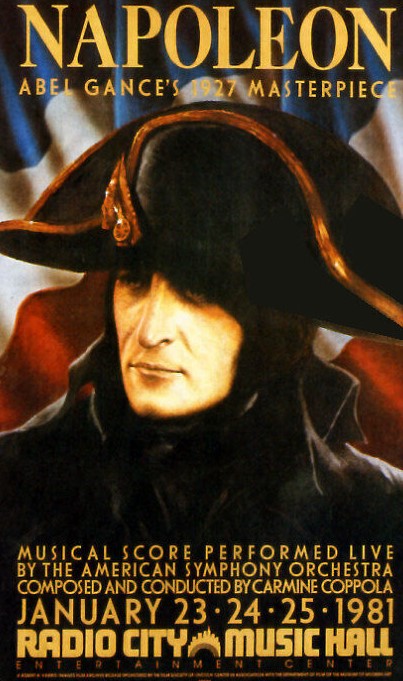


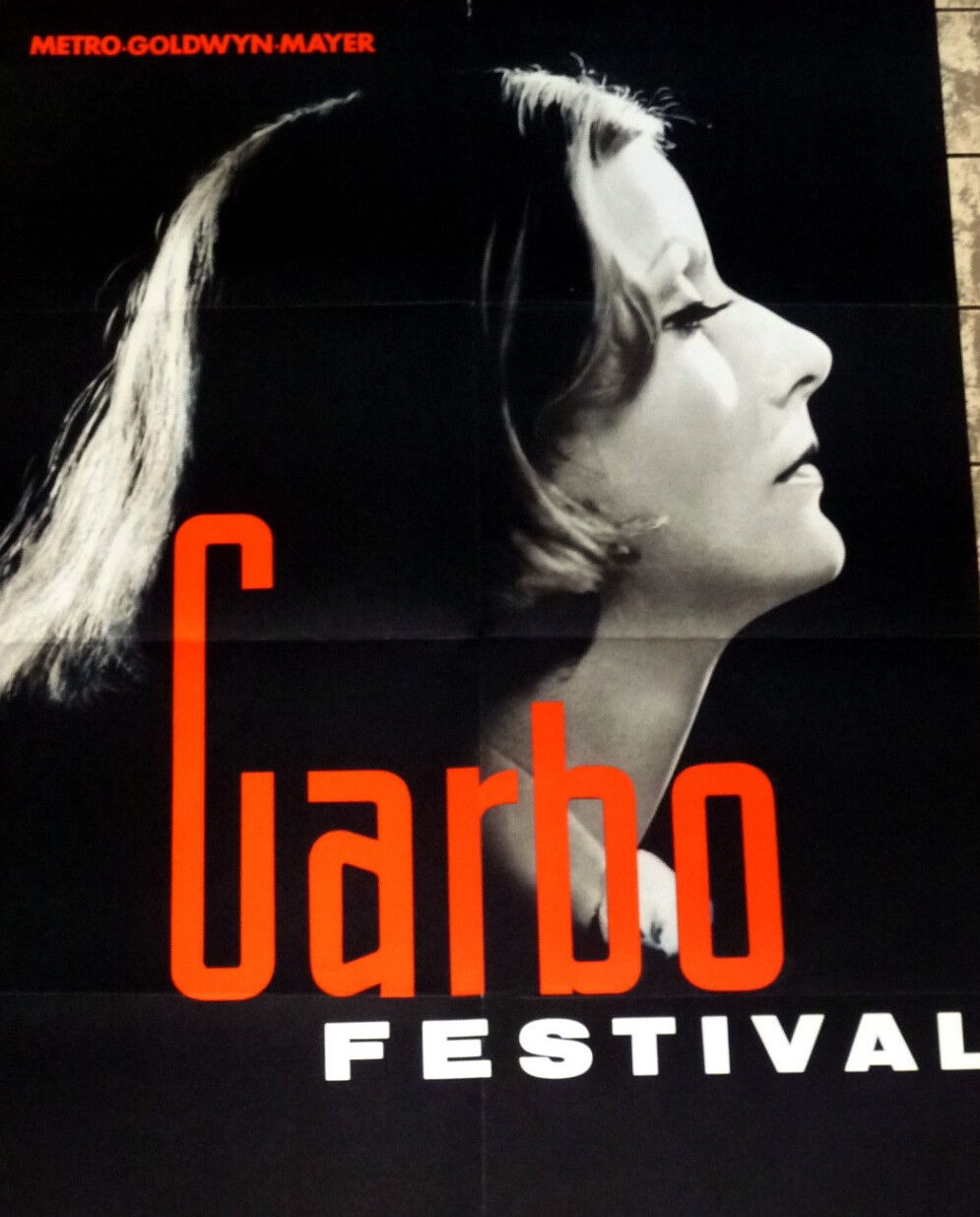
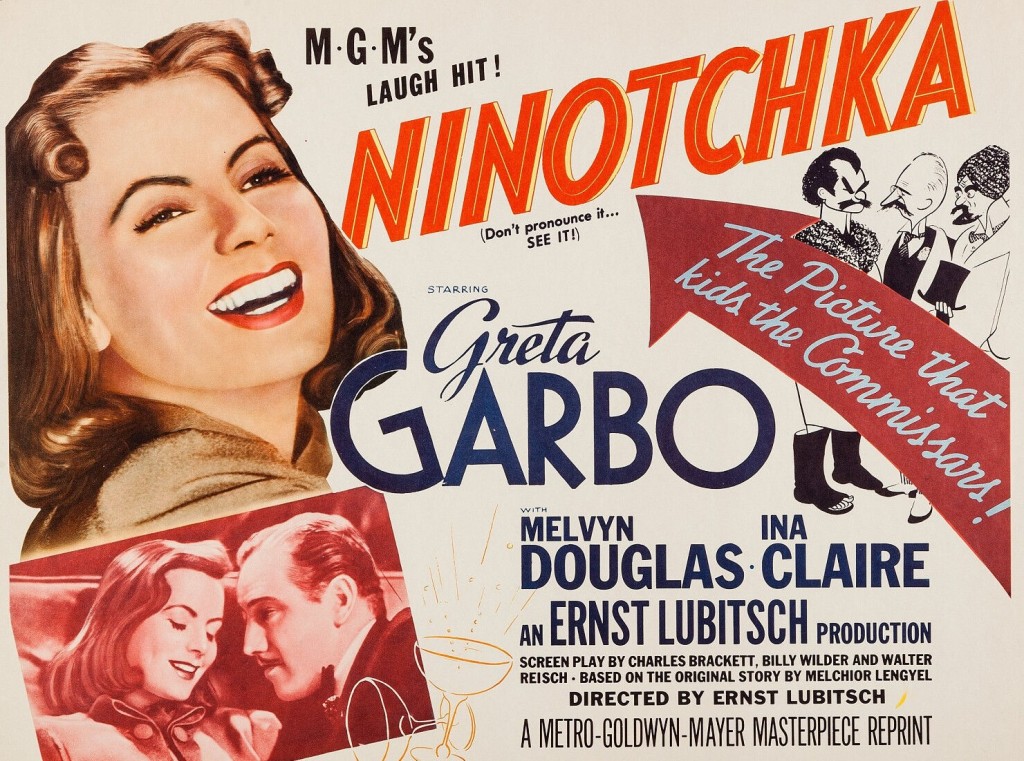

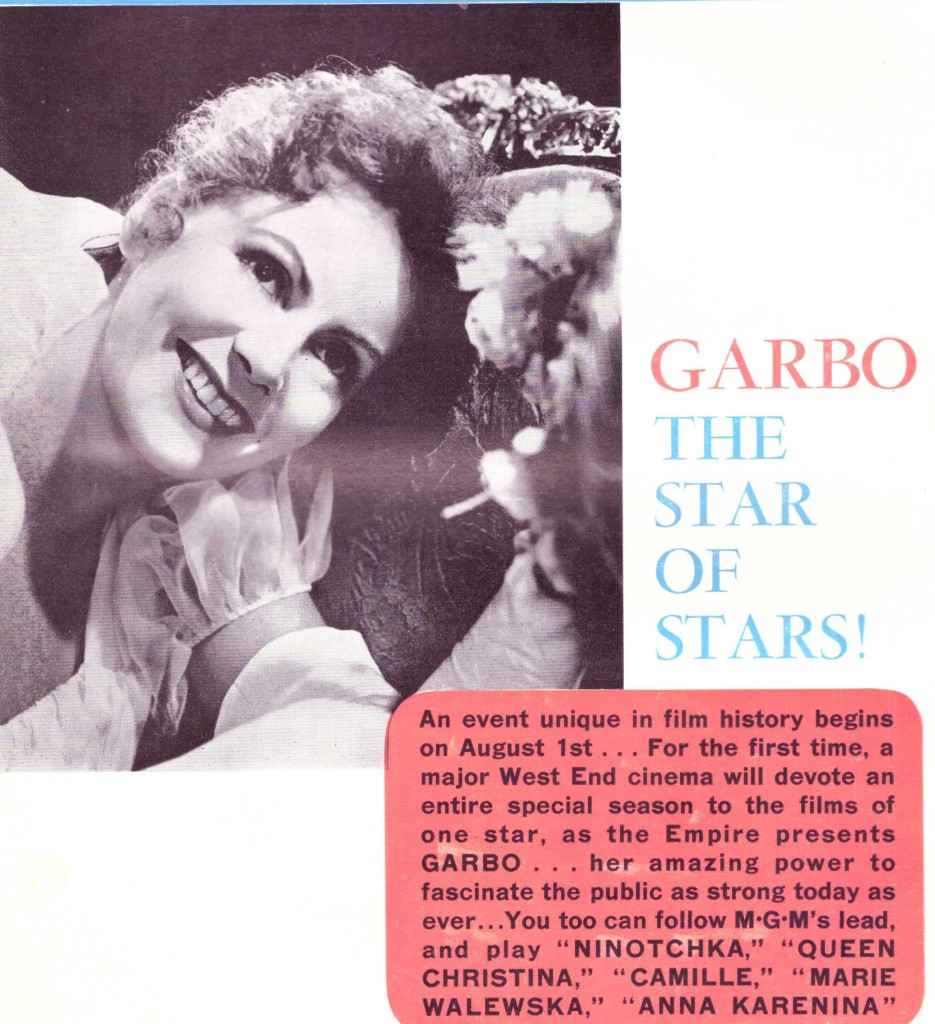
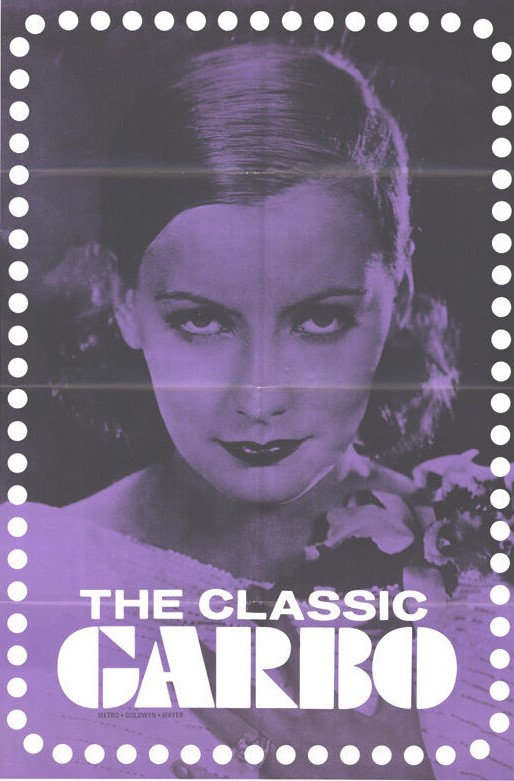
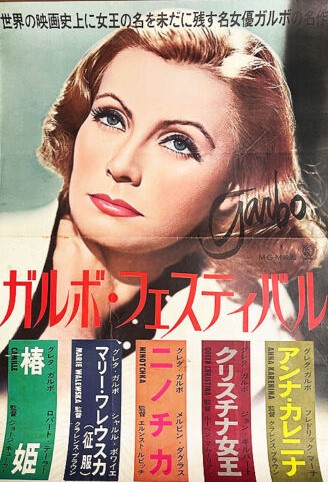


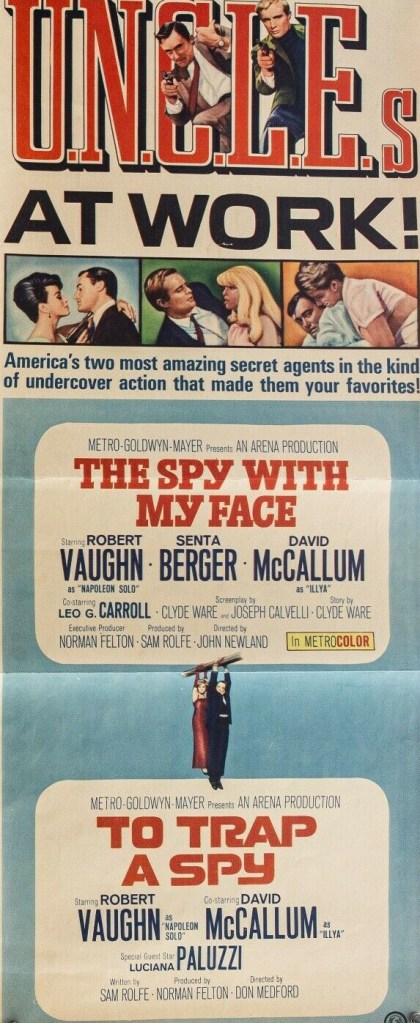

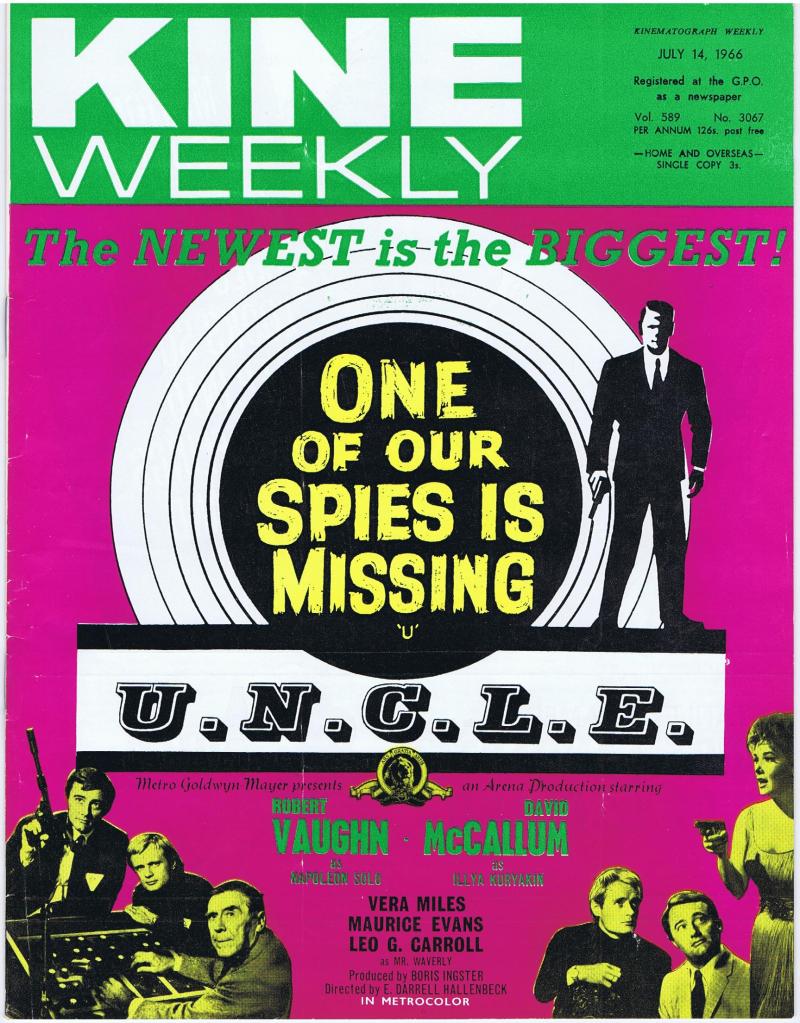

 The Magnificent 60s