As demonstrated in Madison Avenue (1961), the “big build-up” was code for inflicting on an unsuspecting public an unlikely candidate for acclaim. Of course, for decades, Hollywood hacks had been bombarding fan magazines, weeklies, glossy monthlies and dailies with beefcake and cheesecake photos of promising new talent. But the hook was that these actors were shortly appearing, albeit in a bit part, in a few months’ time in a forthcoming movie.
Modelling was another device to attract the attention necessary to generate a screen career. Sometimes, these (predominantly female) models would be making their first throw of the dice, hoping that some producer in an idle moment might catch a glimpse. Or, they could be women who made a living from selling such snaps to such media.
But, usually, it was one thing or the other: gratis photos handed out by grateful studio marketing teams or photos that an editor paid for in the hope they would increase circulation (in the days when there was no such thing as a giveaway magazine). La Welch appears to have fallen into the latter category.
But it was a heck of a long-term build-up given that with the exception of the virtually unseen Swingin’ Summer (1965), in which she has a bit part, Raquel Welch did not appear in a movie until September 1966. By that point, modelling a skintight number in Fantastic Voyage – it was December before that iconic fur bikini in One Million Years B.C. set male hearts pumping – it seems that magazine editors the world over were prone to giving her space in the years prior covering 1964-1966 when she was effectively an unknown.
Esquire splash.
Which would go some way to explaining why by the time her first movies hit the screen she was already a familiar face (and body, it has to be said) to many (and not exclusively male) in the audience. The promotional push was supplied by Twentieth Century Fox which had signed her to a five-picture contract, making her, perhaps in their own words, one of the most sought-after actresses in Hollywood.
But deals with studios for new talent were ten a penny, no guarantee the studio would keep its side of the bargain, nor that the contract would run to term, nor that the actress would be handed anything but bit parts. Still, it probably cost relatively little to start pumping out promotional photos with “new rising talent” as the lure. Magazines seemed happy to accept on face value that she was a rising star even though there was no proof that she had the talent to match.
Life magazine proved something of a stepping stone. She was featured in a bikini in its Oct 2, 1964, issue. But you could just as easily have caught her in a leopard-skin dress draped across a cocktail stool, one of several cheesecake pictures taken to promote the starlet. Parade magazine, in Britain, something of a lower-grade male magazine, far removed from the likes of the glossier Playboy, was among the first to take the bait, in December 1964 (see above) handing the young potential star its front cover. (Her surname was misspelled as Welsh – and her Christian name was misspelled as Rachel when she featured again in March 13, 1965.)
Five of the 10 chosen Deb Stars of Tomorrow. See if you can spot our gal.
But the real boost came at the end of December 1964. That month she was one of ten potential female stars featured in the Dec 27 issue of New York Journal-American under the title “TV’s Magic Wand Taps Girls As Stars of Tomorrow.” She had been chosen to appear on ABC TV’s “Debs Stars of 1965” programme. This show claimed an 85 per cent success rate in picking potential stars, with Kim Novak, Tuesday Weld and Yvette Mimieux among previous winners.*
In April 1965, the distinctly more upmarket – and not male-appealing – McCalls in the U.S. came calling, but that front cover dispensed with the sexy look, presenting her wearing spectacles. By September 1965, the Fox marketeers had been hard at work and won for her – a full year before Fantastic Voyage opened – the front cover and an inside spread in the British edition of movie fan magazine Photoplay. The next month brought another iconic photograph, the “nude” spread in U.S. upmarket monthly Esquire, accompanied by a full-page interview that treated her as the next big thing, again on the word of Fox, nobody having as yet seen so much as an inch of the footage of the sci-fi picture.
The same month in trademark bikini she was on the front cover of U.S. Camera and Travel magazine (surname again misspelled), photographed by Don Ornitz and described as “a rising young actress with many screen and TV credits to her name” without specifying that in fact these were mostly uncredited or in bit parts. Also during 1965 she featured in Turkish magazine SES and Portuguese magazine Plateia.
But there was also the grind. She advertised Wate-On slimming in Screen Stories in 1965, was the cover model for True Love in September 1965 while for Midnight magazine – and surely this was a story dreamed up by a publicity hound – her front cover picture was accompanied by the heading “Adultery Can Save Your Marriage” and inside she was quoted as saying “A Wife Should Let Her Husband Cheat.”
The big build-up went into overdrive in 1966. She modelled bikinis in two more front covers in Parade (all name errors corrected) in January and July. Australians preferred a more demure – or at least non-bikini – look. In Australian Post (June front cover) she was photographed wearing a “dress of ten thousand beads” from her unnamed next picture (neither Fantastic Voyage nor One Million Years B.C. obviously). There was a slinky pink number for the Australian edition of Photoplay (August, front cover and full-page photo inside) and a quote “I think its important for a girl to exploit her physical attractions – but with restraint.”
She also graced Hungarian magazine Filmvilag and Showtime, both in August. Perhaps the most prescient feature ran in Woman’s Mirror in April 1966. For once she was not granted the cover, but featured on a two-page spread inside under the heading “A Star Nobody Has Seen But Everybody Is Looking For.”
Most of her figure was hidden on the front cover of Pageant (July). SES had something of a scoop in its April edition with some behind-the-scenes photos of Welch in her fur bikini for One Million Years B.C. and she made the cover of German magazine Bunte (June).
Exactly how busy and successful Welch – and her promoters – had been could be gauged from the photo that appeared in the Aug 26, 1966, issue of Life, in which she was pictured in front of a wall of over 40 of front covers she had adorned in the previous two years. Pictorial proof that she was in demand and that magazine editors, long before the public had the chance to witness her screen performance, could recognize a certain kind of charisma. (She was featured in Life again in Dec 1966, in a bikini, but seen sideways, bent over and with her hair in pigtails – and on the cover of its Spanish edition on Nov 21.)
And there was another kind of accolade coming her way in Britain. She was chosen as the first cover model for the first issue of men’s magazine Mayfair in August 1966, the same month as she was positioned in the same prominent spot on Adam, another men’s magazine, and in the more sedate British magazine Weekend, in which she was promoting Fantastic Voyage.
But she would soon be forever associated with the fur bikini, posters of which were soon plastered over the walls of teenage boys. The fur bikini more than anything else broke the mold in the presentation of a new star, and luckily for Welch, the ground work had been done courtesy of the long-range big build-up.
*The other nine Deb Stars of Tomorrow were Barbara Parkins (Valley of the Dolls, 1967), Mary Ann Mobley (Istanbul Express, 1968), Margaret Mason (no movies but some television), Wendy Stuart (couple of bit parts), Beverley Washburn (Pit Stop, 1969), Tracy McHale (nothing), Laurie Sibbald ( a few television episodes), Janet Landgard (The Swimmer, 1968) and Donna Loren (a few television episodes). No prizes for guessing who won that particular Deb Star competition.
Until a technological invention first used in Once a Thief (1965) it was impossible to shoot “day for night” without it appearing very obvious. So when director Vincente Minnelli aimed for as much verisimilitude as possible for the Rome-set drama it meant half the shoot took place at night. “Minnelli could sleep easily during the day,” recalled star Kirk Douglas (The Arrangement, 1969), “sometimes till six o’clock in the evening, but I couldn’t so there were three unpleasant weeks of night shooting and not much sleep.”
But the movie suffered, Douglas later complained, by studio interference at the editing stage. When the movie fell foul of the Production Code, change of MGM management vetoed the more salacious aspects of the movie – the worst aspects of “La Dolce Vita” including a sequence in a nightclub where guests watched an unseen sexual act. Fifteen minutes were cut including a scene that showed Cyd Charisse’s character in a more sympathetic light. In an ironic reflection of the film’s narrative, Minnelli played no part in the editing, not due to production deadlines as in the movie, but out of choice.
The actual producer John Houseman – producer of Douglas starrers The Bad and the Beautiful (1952) and Lust for Life (1956) though later best known as an actor in Rollerball (1975) etc – backed out of any tussle with MGM head honcho Joseph Vogel. Douglas implored Vogel and editor Margaret Booth, to no avail. Consequently, in Douglas’s opinion, the film was “emasculated.” He argued MGM had turned an “adult” picture into a “family” film. Quite how this could be squared with marketing that promised a “shocking intimate view of Rome’s international film set” (see below) was not mentioned.
Following the commercial and artistic success of Spartacus (1960), Douglas was at the peak of his career, though his last three pictures had been flops. After nabbing an Oscar for Gigi (1959), Minnelli also enjoyed a career high, and although best known for musicals like Meet Me in St Louis (1944) and An American in Paris (1951) was equally adept at drama like The Bad and the Beautiful, Lust for Life (1956) and Some Came Running (1958). But he, too, was running empty, his last three serious films – Home from the Hill (1960), All the Fine Young Cannibals (1961) and big-budget roadshow The Four Horsemen of the Apocalypse (1962) coming up short at the box office.
Douglas earned $500,000 and a percentage of the profits (though none were forthcoming – it made a loss of $3 million) and top-billing. Although co-star Edward G. Robinson (Seven Thieves, 1960) appeared above the title, Douglas refused to accord female lead Cyd Charisse (Maroc 7, 1967), on one-tenth of his salary, that concession.
Douglas recalled that he build up his acting skills through wrestling. A college wrestling champ, he barnstormed across the country in a carnival, playing the cocky person reputedly from the audience who challenged the giant resident wrestler. “My job was to make the audience think he was going to murder me,” Douglas told the Pressbook/Campaign Manual. “And the way to do this was by expressions on my face. To yell out in pain would seem cowardly. But I learned a hundred and one ways of showing it through use of my eyes and the muscles in my face.”
The actor escaped serious injury when lightning, preceding one of the worst thunderstorms in a decade, struck a 200-year-old clock on the top of the church in Santa Maria Square. Four huge iron numerals were torn off and crashed to the ground, one grazing Douglas’s head.
In fact, the movie’s authenticity owed much to being filmed on the streets of Rome rather than reconstructed on the studio lot. In particular, scenes utilizing the Via Veneto, two long blocks of sidewalk cafes where the movie industry socialized, created a realistic atmosphere, especially when a hundred or so of the extra employed were actually people who would naturally populate the location. So, for example, when the script called for an opera star among the extras, casting director Guidarino Guidi used Bostonian Ann English, an opera singer studying in Rome. Among those sitting in the background at café tables were a promising young painter, a poet and a librettist.
George Hamilton (Act One, 1963), who had worked in Home from the Hill and just finished Light in the Piazza (1962) also shot in Rome, reckoned he couldn’t have been more miscast given his role called for a “funky James-Dean type.” He got the role through the influence of Betty Spiegel, wife of producer Sam, and her friend Denise Gigante, the director’s current girlfriend (later wife). Hamilton drove around in a red Ferrari costing $18,000 (ten times that at today’s prices) and, as he put it, “Italians knew how to worship” Hollywood stars.
Hamilton reckoned part of the problem of the film was that Minnelli was so “besotted with Denise that he had lost his vision.” Jumping to the defence of Cyd Charisse against a tirade from journalist Oriana Fallaci at the Venice Film Festival won Hamilton, unexpectedly, the cover of Paris-Match.
Daliah Lavi owed her career break to Douglas. As a nine-year-old in Hiffa, Israel, she struck up a friendship with the actor when he was filming The Juggler there in 1952. The actor and other stars attended her birthday party, Douglas presenting her with a ballet dress. Later a dancer and then an actress, this was her Hollywood debut. Erich von Stroheim Jr, making his movie acting debut, had his head shaved to make him appear more like his famed director father. Originally employed as an assistant director on the picture, Minnelli decided he would make a good Ravinski, the “fast-talking press agent.”
Chauvinism reared its ugly head, especially when women had to apologise for being on the receiving end. “What goes on in the minds of beautiful women when they get slapped for the cameras?” mused the editor of the Pressbook/Campaign Manual. Rossano Schiaffino’s response regarding being whacked on the behind by Douglas: “He hits hard so charmingly I didn’t mind standing up for a day of two.”
The actress proved tougher than many of her colleagues. She turned down the offer of a double for a scene in which she jumped into a lake. That might not have been such an undertaking had the sequence been shot in the hot Italian sunshine at the height of summer. But the MGM studio tank on Lot 3 was a different – and much colder – proposition. “She shrugged off her stunt with the remark that heated pools are unknown where she comes from.”
Irwin Shaw, author of the best-selling source novel, wasn’t too upset at the way the movie turned out. “An author who wants complete control of his work on the screen is in something of a cleft stick,” he observed. “He can either go into production himself, which is often neither possible nor desirable, or he can refuse to sell his work to the movies. Minor deviations in screen conception don’t send me reeling back a stricken man. I think I’m sufficiently realistic to know that even in the most enlightened films there must be some compromise if they are to be a success. What does matter very strongly to me is that the theme of the novel…should come over on the screen.”
Music trivia: Kirk Douglas was the first big Hollywood star to perform “The Twist” on screen and the song “Don’t Blame Me” was reprised from The Bad and the Beautiful, sung here sung by Leslie Uggams and in the older film by Peggy King.
French designer Pierre Balmain created the dresses, allowing a marketing campaign to be built around those stores which supplied his clothes. TWA, which flew directly to Rome, was suggested to cinema owners as an ideal tie-in. Not only did New American Library issue a new movie tie-in paperback/soft cover but cinemas were encouraged to build a campaign around a director, many of whose films would be well-known to audiences. The marketeers also had material to tie in with stores retailing music, women’s sportswear, menswear, men’s sweaters, beauty and hair styling.
The 16-page A3 Pressbook/Campaign Manual offered a selection of advertisements and taglines. The key advert tagline ran “Another town…another kind of love…one he couldn’t resist…the other he couldn’t escape.” But there were alternatives: “Only in Rome could this story be filmed/Every town has women like Carlotta and Veronica and the kind of man they both want!/From Irwin Shaw’s great best seller.”
Or you could opt for: “Irwin Shaw’s shocking intimate view of Rome’s international film set. The world only sees the glamor. This is the drama behind it!.” Or: “Only in Rome could this story happen. Only in Rome could this story be filmed!”
SOURCES: Kirk Douglas, The Ragman’s Son (Simon and Schuster paperback, 2010) p342-344; George Hamilton, Don’t Mind If I Do (JR Book hardback 2009)pp 155-159; Pressbook/ Campaign Manual, Two Weeks in Another Town (MGM).
Yep, you hand the promotional department the problem of selling a movie about undertakers and see what they come up with. The tagline “the motion picture with someone to offend everyone” is unlikely to attract the unwary and leaves you only with an audience that enjoys seeing sacred cows slaughtered, which might minimize appeal. Coupled with a montage of outlandish scenes and characters, the main advert had its work cut out to attract anyone.
Just as well, then, the marketing department had some apparent plums up its sleeve. Even more than weddings, funerals are associated with flowers. So, top of “the ticket-selling ideas” was suggesting to cinema owners either to stick a wreath at the front door or get a florist to spell out the title in a lobby display.
If that didn’t work, go for broke and stick a tombstone (easily constructed from plywood or papier mache, apparently) in the lobby. (The Fall of the House of Usher had gone one better, promising a free casket to anyone who dropped ad of fright.) Better still, lay down grass on the pavement outside to achieve a lawn effect.
And if that doesn’t get the media buzzing, why not just hire a hearse. That could sit outside the theater or tour the locality with banners slung along the sides. If the local newspaper was willing, you could arrange to have the print delivered by hearse, photographer on hand to record proceedings.
“Since The Loved One spoofs the undertaking business, most morticians aren’t too happy with the picture. This can be twisted to advantage to get you a newspaper story,” proclaims the Pressbook. Basically, the notion is that undertakers will respond to a reporter nosing around and that somehow that will permit mention in the resulting article of the movie. Another idea is to invite undertakers to the opening night on the assumption that no one will turn up and that somehow that, too, will make a newspaper story.
A simpler alternative was just to hire a model and have her parade around town dressed in white like a mortician and passing out flowers.
Just in case nobody had noted the off-beat nature of the picture, cinema managers were encouraged to browbeat local journalists into spelling this out and putting the movie into the same bracket as Dr Strangelove (1964), What’s New, Pussycat? (1965) and, of course, Tom Jones (1963).
Oddly enough, the movie received a favourable press – or at least a word or two which could be culled from reviews to make it appear so. Thus, one advert was able to rustle up quotes from the New York Times, Cue magazine, Herald Tribune, Holiday magazine, Life and Saturday Review.
Basically, there was as little meat on the advertising bones as in the genuine narrative to the picture itself. There was only one tagline and all the adverts, covering three-quarters of the 12-page A3 Pressbook, were variations on the one ad.
Outside of the cameo appearances, the male and female leads were relative newcomers, both starring in Quick, Before It Melts (1964). Courtesy of his long-running role on Broadway hit How to Succeed in Business Without Really Trying, Morse was marginally the bigger marquee name.
For a comedy, it was a potentially lethal role for Morse. “There was one scene in which a toy rocket blew up in my face and another in which I was dragged 40 feet by an automobile. I came close to being asphyxiated after doing a 60-minute stint in an air-tight embalming room.”
“Fate has been kind to me so far,” averred Comer. “But it didn’t all happen overnight, you know. Actually, I don’t think the quickie successes mean very much. You can be belle of the ball one day and a has-been the next.
“When I decided to go into this business, I made up my mind about one thing. I wouldn’t go into it unprepared. I got the groundwork in workshop plays at the Pasadena Playhouse and I concentrated on acting to the exclusion of everything else. I never even got to see what Hollywood actually looked like.”
After the success of Tom Jones, director Tony Richardson was given carte blanche. He filmed in 21 locations including the California freeway (as yet unopened), pet cemeteries and Beverly Hills mansions (the ground floor of Dohney marble chateau) and never in the studio. “I feel constricted working anywhere but in the real locales,” he told the Pressbook. “There are inconveniences in working outside a studio but I don’t mind them.”
His quest for realism extended to make-up. For example, he vetoed applying make-up to Jonathan Winters’ hand so that it matched his tanned face. Other attempts at verisimilitude saw lights taped to ceilings and sound equipment strapped to plumbing. Substitutes were found for equipment deemed too bulky or sensitive for location filming.
Future Warner Bros boss John Calley, here working as co-producer, explained some of the problems encountered. “Normally, when a piece of equipment is to be used or something needs to be constructed in Hollywood, it is only a matter of dialling the proper studio telephone extension. But under the Richardson plan every bit of equipment, every prop, every item of construction had to be individually contracted. There is no question that this is the most difficult way to make a picture, but it is the only way Richardson will work.”
The one element that every movie requires – advance publicity – was denied Elmer Gantry. Shooting took place on a closed set with all visitors carefully screened. Only six actors were given access to a complete screenplay while a general synopsis was denied distributors and cinema owners.
Over 30 years after publication of the source novel by Sinclair Lewis, its contents were considered so volatile and contentious that, rather than be pre-judged by the industry on expectations of what the movie may contain, director Richard Brooks took to issuing baffling statements such as describing Elmer Gantry as “The All-American Boy.”
Even the 12-page A3 Pressbook/Campaign Book, the prime source of marketing contact between studio and theater owner, was niggardly in the extreme. Narrative detail was limited to “the story of a spellbinding evangelist” rather anything approaching a synopsis.
Stuck with how to woo an audience in advance, United Artists fell back on a teaser campaign comprising six separate ads. The sequence was as follows: “Elmer Gantry Is Coming!” / “Sinners! Elmer Gantry Is Coming!” / “Sinners! Elmer Gantry Is Coming! starring Burt Lancaster”/ “Sinners! Elmer Gantry Is Coming! Starring Jean Simmons” / “Sinners! Elmer Gantry Is Coming! starring Burt Lancaster and Jean Simmons”. The last advert was coupled with a quote from the New York Times with the final salvo the same ad repeated but with a different quote from the New York Post.
The New York campaign – in those days a movie might take a few months to spread out from initial opening locale to other cities allowing promotional ideas that worked in one area to be publicized – relied on the first two teasers. But they went out in saturation – in railroad stations, subways, buses and race tracks with additional displays on poles, stilts and drums.
The major print advertising onslaught was led by two bold large-sized adverts intended to run facing each other on the same page. “Bless Him! Tens of thousands of believers shouted his praises!” was accompanied by the iconic illustration, Bible in hand, of Burt Lancaster. “Damn Him! Three women damned his soul” showed Lancaster grappling with Jean Simmons with Shirley Jones and Patti Paige in the background in more revealing clothing. But these two elements could also be fitted into the one ad, as shown above.
There were nearly a dozen full-size advertisements with a range of taglines. In all Lancaster is shown in the same pose with the Bible while Simmons is presented clutching a Bible and gazing heavenward. Shirley Jones appears in even skimpier outfits.
As was standard at the time, taglines could stand on their own or mix and match. Snippets for other ads were edited from this main ad: “Nobel Prize Winner Sinclair Lewis’ Bold Novel Of Passion And Damnation Bursts Full-Life Across The Screen! If there was a dollar to be made – Gantry would make it…If there was a soul to save -Gantry would save it…”
“Sinner! Elmer Gantry Wants You!” ran another ad backed up by “Are you ready, sinner? He wants you to know all about heaven…but not about his whiskey and his women!” Other adverts were fashioned from taglines like: “You’re all sinners…you’ll all burn in Hell! Tell ‘em Gantry…save ‘em from sin…lead ‘em to salvation…tell ‘em about everything…but not about your whiskey and your women!” Or included: “From the book that shook a nation with its sledgehammer theme…from a Nobel Prize-winning author…comes the raging story of a man who used the Holy Bible and broke every rule in it!”
Rarely have so many exclamation marks been employed in so short a space, but equally, rarely has a marketing team encapsulated so vividly a movie with a difficult subject matter, all tease and no substance.
Out-with the usual marketing routes, the marketing team were able to take advantage of various ancillary promotional opportunities. Dell organized a massive paperback book tie-in in thousands of bookstores and newsstands, Burt Lancaster dominating the front cover with Simmons and Jones pictured on the back. Music retailers also played their part, United Artists Records launching the Andre Previn soundtrack album while Mercury released an album of revival tuness sung by Patti Paige, who made her movie debut in the film. With record sales exceeding 35 million, Paige’s host of fan clubs were a natural target for contact and if there was none in the local vicinity cinema managers were encouraged to start one by the simple device of setting up “a giant postcard in the lobby” and inviting fans to attach their signatures.
Department stores were called upon to run 1920s Fashion Shows.
Anniversaries, so important today, helped out. It was 30 years since Sinclair Lewis was awarded the Nobel Prize, the first American author so recognized, and 1960 was the 75th anniversary of his birth. But the promoters also played upon the book’s initial controversy, hoping to re-ignite the debate as a promotional tool.
With the bulk of the Pressbook given over to advertising and promotional ideas, barely little more than a single page was devoted to the stars, but even then there was little of the usual soft-focus puff pieces. The kind of journalistic nuggets that might help an editor fill a vacant space were limited. All we learned of Burt Lancaster, who had worked with Richard Brooks before on Brute Force (1947), was that – as if this was a mark of respect – he agreed to read the screenplay twice. Of Jean Simmons it was pointed out she had played an evangelist in Guys and Dolls (1955) but the Pressbook erroneously states that she played a nun in Black Narcissus (1947); in fact, she was a beggar girl. Arthur Kennedy is mentioned in relation to his Oscar nominations.
Shirley Jones was the most likely to attract column inches as a result of explaining how she made the transition from more demure roles in Oklahoma (1955) and April Love (1957). “It feels just fine – now,” she told the Pressbook interviewer. “At first, well, I really don’t wear much except what you see. A slip, these shoes with the green frills, and slinky black silk wrap-around that’s transparent.
“Usually, I walk into a movie set wearing my bustle and petticoats and some of the boys turn round as I go by and say, ‘Hiya, Shirl.’ But when I walked in dressed like this the fellows all just turned round and didn’t say anything. They never turned round like that before. Well, not really. It did take some getting used to after provoking the big brother reactions for so long.
“But I guess every girl dreams of being a conversation stopper some day. This is my chance. Of course, I am embarrassed sometimes…or maybe it’s inhibited.”
Brooks rewrote the script eight times before “he felt he had captured the essence” of Gantry. Most of the scenes were filmed on sound stages or adapted from an assortment of 1920s vintage streets from the backlots of other studios. The tabernacle was constructed out of an ice skating rink on a beach pier in Santa Monica.
Art director Edward Carerre spent $6,500 erecting and furnishing a genuine evangelist tent rented from Canvas Specialty. It was slightly trimmed to fit onto two combined sound stages on the Columbia lot. A total of 400 benches each measuring eight- or ten-feet were constructed by studio carpenters to provide seating for 1,000 – the tent accommodated another 2,000 standing. The stage required 500lb of imported sawdust and banners 30ft long were specially made to incorporate Biblical quotations. Where most movies required a maximum of 15-20 sets, Elmer Gantry boasted 62.
The climactic scene, conflagration in a tent, took five days to film. Soaking the set in kerosene would not supply the instant flash of flame the director demanded. So, instead, he turned to old film footage, including some frames from It Happened One Night (1934). “We’re burning film to make film,” quipped Brooks.
Without a James Bond to guarantee a winner, major studio United Artists invested so wisely in production in 1968 that it virtually doubled its investment. From 30 films costing a total of $60 million, the studio hit the target with rentals of $115 million.
This was in large part due to a relative newcomer, a certain Clint Eastwood. UA’s share of the costs of the final film in the Sergio Leone trilogy The Good, The Bad and the Ugly had amounted to just $972,000 and that bought it the distribution rights to most of Europe, the US and the rest of the world. The picture was a hit Stateside with $5.2 million in rentals (the studio share of box office gross once the cinema had taken its cut) and it took in another $5 million at the global ticket wickets. The grand total of $10.2 million was ten times the cost, and this was before Easy Rider the following year made cost-to-profit ratio a significant measure of success.
But UA had also forked out $1.67 million to make Eastwood’s first American western, Hang ‘Em High directed by Ted Post with Inger Stevens as the female lead. That racked up just over $6 million in the domestic market with another $3 million overseas, totalling $9.04 million.
But whereas those in the know, based on returns for the first two spaghetti westerns, could have predicted a solid audience response to the Clint Eastwood duo, that was hardly the case for a low-budget comedy with two stars whose movie careers had largely derailed.
Although a major star on television thanks to I Love Lucy, and a considerable power in television production – her company Desilu produced Mission Impossible, Star Trek and The Untouchables – Lucille Ball was a spent force in the movies. She hadn’t made a picture in five years – Critic’s Choice (1963) flopped – and only two in the last decade. While still in demand, Henry Fonda was more likely to play second lead – to Richard Widmark in Madigan (1968) or James Stewart in Firecreek (1968) – or a supporting role in a big budget film and on those rare occasions when he was top-billed, Welcome to Hard Times (1967), the movie flopped.
Yours, Mine and Ours was based on a non-fiction best-seller, a melding of gigantic proportions of two families, totalling a dozen children. The comic opportunities were obvious to writer-director Melville Shavelson, back on home ground after Israeli war epic Cast a Giant Shadow (1966). A feel-good comedy without any sex was what Disney did, not a studio known for breaking boundaries. If nobody expected much, even if Ball could drag in her television fans, Hollywood had forgotten about the forgotten audiences, the older generation left out in the cold by the spate of movies mainlining on sex and violence. It proved the ideal antidote to the previous year’s The Graduate.
Made for just $1.7 million (plus $455,000 deferred, payable only if the movie went into the black) it was outrageously successful, knocking up $13 million in global rentals. Foreign audiences were less taken but by then nobody cared for it had scored over $11 million in rentals in the U.S, placing ninth in the annual box office league.
Although it cost considerably more – $4.3 million – UA pulled out another plum with Steve McQueen-Faye Dunaway romantic thriller The Thomas Crown Affair which ransacked the global box office to the tune of $11.2 million in rentals.
Whereas, excepting the latter, all these had been low-budget gambles, UA took an almighty risk with musical Chitty Chitty Bang Bang, the closest it came to James Bond given they shared the same author in Ian Fleming. Dick Van Dyke was in Mary Poppins form, but co-star Shirley Anne Howe was no Julie Andrews. The budget was a whopping $11.9 million, more than double the cost of its next most expensive production, The Charge of the Light Brigade. It just about sneaked home, earning rentals of $14.8 million. While, technically, the studio’s biggest hit at the box office, in terms of profit it lagged way behind.
Another risky venture was war film The Devil’s Brigade starring an out-of-favor William Holden who hadn’t had a hit since the start of the decade. Budgeted at $4.7 million there were some anxious moments at UA HQ when the domestic tally was just $3.85 million but audiences overseas were more welcoming and, in the end, the global tally of $8.6 million made it a certified hit.
The $3 million spent, respectively, on comedy The Party starring Peter Sellers and western The Scalphunters with Burt Lancaster also hit the profit lode, the former with a global pot of $4.5 million, the latter $4.75 million.
There was also shrewd investment in overseas films. Beatles animated feature Yellow Submarine torpedoed $3.6 million on a budget of $1.1 million. British coming of age sex drama Here We Go Round the Mulberry Bush cost just $602,000 but pulled in $2.5 million. A couple of French arties hit home runs. Claude Lelouche’s Vivre Pour Vivre with Yves Montand and Candice Bergen racked up $4.4 million but cost only $561,000 and Truffaut’s The Bride Wore Black brought in rentals of just over $2 million on a budget of $747,000.
Out of 30 films, 17 ended up in profit, which was a pretty good result for an industry that was about to hit the financial buffers from overspending. With budgets averaging just $2 million the studio reduced the risk factor. While UA had built a successful business in the 1950s and 1960s by paying top dollar to stars, ceding control and financing vanity projects, now it was less inclined to gamble on unproven marquee value. Only Steve McQueen, Faye Dunaway, Burt Lancaster, Peter Sellers and William Holden had the kind of box office track record that would have studios lining up to match their fees.
SOURCE: “United Artists Corporation and Subsidiaries Motion Picture Negative Costs for Pictures Released in the Year Ended December 28, 1968,” United Artists Files, University of Wisconsin.
What a potential cinematic coup. Upstanding Gary Cooper (High Noon, 1952) a villain? That’s the entire premise and a bold one at that.
Businessman George (Gary Cooper) is the key witness in the trial of alcoholic colleague Donald Heath (Ray McAnally) on charges of murder and theft of £60,000. But after Heath is convicted, George’s wife Martha (Deborah Kerr) begins to suspect the wrong man has been found guilty. Her husband has suddenly come into a large sum of money from, he claims, playing the stock market and at the trial’s conclusion is accosted by a stranger, Jeremy Clay (Eric Portman).
The “red danger warning flashing light.”
Several years a later blackmail letter comes to light, increasing Martha’s doubts. After all this time, George can’t quite lay his hands on the documents regarding his stock market claims. He is spotted in London when he should be abroad.
Martha is so convinced something is wrong that she writes a cheque to Heath’s wife (Diane Cilento) not realizing how shady this would look if the case was revisited. Alarming incidents mount up – her husband’s razor, an invitation to walk along a clifftop. Much of the pressure is self-generated. She has put so much faith in her husband that she would be destroyed if he was guilty, so he must be innocent. Except she can’t quite get rid of the nagging voice.
For his part, George behaves so oddly, being caught out in lies about his whereabouts, and except, conversely, on his insistence that for the sake of their love she must trust him, he does little to shake the doubts especially when Clay pops up again reasserting his misgivings. Since there is no sign of a police investigation, Martha is solely responsible for creating the tension. And, with her out of the way, life might be a lot easier all-round.
The much-vaunted “final 13 minutes” – as promoted in the poster – certainly justifies the tension but outside of whatever’s going on in Martha’s head much of that has been created by bursts of melodramatic music, sudden close-ups and continued emphasis on her point-of-view.
This was Gary Cooper’s final film and it wasn’t the kind of triumphant send-off achieved by Clark Gable (The Misfits, 1961) or Spencer Tracy (Guess Who’s Coming to Dinner, 1967). It might even have been a surprise choice, audiences more accustomed to find him in westerns – add Vera Cruz (1954) and Friendly Persuasion (1957) to his star turns in that genre. But although he had made nine westerns in the previous decade, he also starred in six non-westerns, including a politician-businessman in Ten North Frederick (1958), and wasn’t averse to playing less than straitlaced characters.
That grim determination that become a hallmark when upholding law and order easily transitioned into just grim determination against whatever threatened his well-being. Of course, the whole enterprise relies on sleight-of-hand but that’s par for the course.
Deborah Kerr had ended the 1950s as a strong-minded female but now seemed to be hell-bent on exploring her fragility and this role seems a direct line to characters played in The Innocents (1961), The Chalk Garden (1964) and TheNight of the Iguana (1965).
Audiences were used, by now, to being told when they could enter a theatre. Remember, this was in the glory days of the continuous performance when customers could take their seats at any time during a screening not, as now, before the picture started. You might think it odd that people were barred from entry during the final 13 minutes, as if anyone would consider this a good time to enter, but it was very common for people to take their seats at any odd time. Just in case people didn’t have watches to hand, cinemas were instructed to install a red light and have it flashing in the lobby to prevent interlopers entering. Alfred Hitchcock, of course, invented this clever marketing ploy of annoying the customers for Psycho (1960) but it was still going on as late as Return from the Ashes (1965).
Not Cooper’s greatest film but a decent two-hander that might have worked better if there had been more of a sense of gaslighting Kerr. That it works at all is down to the actors, not a bad achievement when you consider the director was asking the audience to go completely against type in accepting Cooper as a potential killer.
British director Michael Anderson (The Quiller Memorandum, 1966) had the sense to ignore the attractions of tourist London and concentrate on suspense. Joseph Stefano (Psycho) based the screenplay on a novel by Max Ehrlich.
It’s only according to film historians and movies like Babylon (2022) that the transition to sound in 1927 was instantaneous. Maybe from a contorted academic perspective, but not for audiences and not for exhibitors. That The Jazz Singer (1927) proved momentous required not one revolution, but two. For it was responsible for nothing less than the beginnings of the wide release.
There had been sporadic attempts at day-dating, day-and-date, simultaneous openings, saturation bookings, whatever you wanted to call it, from 1913 to 1920. You might find an occasional picture released all at once into 20 houses in New York, but more likely it was a picture that showed up on two or three screens in Detroit, San Francisco or St Louis. In 1921 there were 300 day-and-date bookings for Chaplin’s The Kid with 70 prints allocated to New York and 40 to Chicago. But wide release remained rare.
In 1924 in Cleveland 65 nabes signed up to day-date Let Not Man Put Asunder and First National attempted to interest 100 theaters in day-dating Lilies of the Field. In 1927 MGM promoted Greta Garbo-John Gilbert in Love as opening, without specific dates, in “approximately” 100 theaters while Fox claimed 90 had signed up for Colleen Moore in Her Wild Oat (1927).
However, “simultaneous” was widely open to interpretation, not necessarily meaning day-dating. The kind of release system we know today remained rare and sporadic. Wide release did not take off because there was no reason for it to do so.
While The Jazz Singer single-handedly thrust Warner Brothers into the higher echelons of the industry, it did not herald a tidal wave of talkies. Despite its success, the jury was still out – was it a gimmick or a revolution? Without the complications of sound, movies were a $1.5 billion ($25 billion today) business and the idea that theater owners would cotton on to the potential of sound and rush to become “wired” was soon demolished. Predictions of 350 sound installations by the end of 1927 proved wildly optimistic, less than 100 theaters obliging.
Exhibitor antipathy could be laid in large part at the studio door. Owners had to pay the cost of changing to sound – plus a weekly royalty to Vitaphone of 10 cents per seat – with no guarantee that the trend would last or, more importantly, that it would iron out existing inequalities. Studios and exhibitors were at war. Exhibitor anger against studios was demonstrated by the volume of complaints to the 32 Film Boards of Trade, over 23,000 in 1925-26 – more than one for every theater in existence – wrongs righted to the tune of $4.6 million in damages.
The studios had their own complaints against exhibitors: of the $650 million paid by the public for theater tickets in 1926, only $185 million found its way into their coffers as rentals, around 28 per cent of the gross, remarkably low by modern standards. With profit margins on film production hovering around 15 per cent, studios, preparing to invest $159 million in movies in the 1927-1928 season, could be forgiven for believing they were taking all the risk, with exhibitors hiving off so much profit they could afford more – $250 million – in theater construction.
Exhibition was a sore point for studios since they had so little share of it. By the end of 1926, they owned around five percent of the total. Neither studio-owned chains nor independent circuits had anything approaching a monopoly, or even a dominant share, most being regional-based rather than nationwide. The biggest theaters were the most important. Super-theaters on Broadway and big city downtown areas could charge $2.20 admission compared to the national average of 28-35 cents. In 1927, 68 of these behemoths generated a total of $47 million ($790 million in today’s figures), the 5,450-seat Capitol in New York alone nabbing $2.7 million ($45 million).
The traditional method of releasing silent features depended on, effectively, withholding them. Each sector of exhibition obediently waited its turn while competition for new pictures between rival exhibitors served to stoke bids. The release system was littered with gaps of up to three weeks clearance, during which movies did not play at all as they worked their way down the ladder, this being the accepted method to ensure that the public still flocked to the more expensive houses rather than holding off till they turned up in a cheaper nabe, the waiting theaters prohibited from even advertising in advance such forthcoming attractions in local newspapers.
Studios also used hits as a way of enticing theater owners to commit to annual contracts. In theory, New York, Chicago and Los Angeles would get the biggest movies first. In reality, because big hits were allowed to run as long as first run theaters wanted them, it was virtually impossible to arrange the simultaneous release, on any scale, of a new feature. The long runs were permitted in part because of the grosses that could be achieved and in part because the amount of money taken in first run was the measure by which rental rates were set for further down the line.
A movie that ran for months at top prices (“a $2 hit”) in New York would attract higher rental prices in smaller cities than one lasting a week or two. Some runs were exceptional: The Big Parade (1925) and Ben-Hur: A Tale of Christ (1925) ran on Broadway for a year, Mare Nostrum (1926) and The Scarlet Letter (1926) for seven months, The Merry Widow (1925) for six months and La Boheme (1926) for four months.
Even had studios desired it, length of run, dictated by different exhibitor circumstances and public reaction in various cities, conspired to make simultaneous first run openings well nigh impossible. Fifteen cities constituted the peak of movie first run box office in 1926: Baltimore, Boston, Buffalo, Chicago, Kansas City, Los Angeles, Milwaukee, Minneapolis, New Orleans, New York, Philadelphia, Portland, Providence, San Francisco and Washington.
But it proved impossible throughout that year for a single picture to complete a run in all of these cities. The Big Parade opened in New York, Los Angeles and Washington on the same day, January 2, but in no other city in this list that year, its simultaneous opening therefore limited to just 20 per cent of first run in these major cities. Ben Hur also opened on January 2 in New York but did not reach Philadelphia, its only other port of call that year, until June. Aloma of the Seven Seas managed 80 per cent penetration, but it was a lengthy enterprise, beginning on May 22 in New York and ending on November 20 in Washington. The Sea Beast opened in only six cities within a four-month period.
So it was entirely feasible that, following the combined restraints imposed by both exhibitors and studios, The Jazz Singer may have taken as long as any of these features to traverse the country and still, within year of its premiere, not been seen in all the major cities. In the first few post-premiere months, only three of the key fifteen cities showed it.
So a movie that was a sensation in New York remained a New York sensation only. There was nothing immediate, as film scholars have suggested, as regards the rest of the nation’s audiences and exhibitors.
However, Warner Brothers, using the prospect of immediate payback to entice theater owners to install sound, broke with tradition and unleashed an unprecedented release onslaught.
In so doing, the studio invented the modern wide release.
In March 1928 The Jazz Singer opened simultaneously in 235 theaters natonwide. But that was not all that was revolutionary. For a start, exhibitors had to contract to pay a percentage of the receipts, on a sliding scale from week one, rather than a flat rental. Secondly, the studio dictated the length of run, rather than the exhibitor, Warner Brothers demanding a minimum eight-week run. Thirdly, the studio expanded the initial day-and-date idea into second- and third-run bookings, triggering a series of simultaneous multiple releases in the nabes. After first runs were completed, large numbers of nabes took part in wider day-dating programs, in Philadelphia, for example, after twelve weeks in first run, twenty other houses throughout the city lined up for simultaneous wide release, a situation repeated across the country. Fourthly, those theaters way down the release chain that normally played a split week had to commit to a full weeks.
In one fell swoop, Warner Brothers challenged the existing order. Multiple release meant that studios would no longer be held to ransom by giant picture houses determining not just when a major movie played but, unintentionally perhaps, the restrictions that followed in its wake. By dictating minimum length of run, Warner Brothers took back control of “exclusive” engagements. Clearance stipulated that the theater at the top of the release hierarchy had exclusive rights to exhibition and could hold onto the movie for as long as it wished. Obviously, studios were not averse to this as the biggest theaters attracted the biggest audiences. But if a movie was a sensation, the studio could not cash in on media attention by yanking it from downtown and sending it out wider while public interest was at a peak.
With The Jazz Singer, Warner Brothers guaranteed exclusivity, but on its terms. A big city first run theater had to cede control over length of run in order to show the picture. On the other hand theaters all over America would have access to new movies in a way that, heretofore, had been virtually forbidden. The arrival of sound spurred studios to shorten release patterns and widen openings in order to reassure those installing the new equipment that it was going to be worthwhile and, also, that they would not have to wait ages to receive a return on their investment.
Simultaneous opening became the way forward both in first run and in nabes, the size of saturation varying enormously from those who topped The Jazz Singer theater count to those who came nowhere near, and not just for sound. In fact, The Jazz Singer saturation record barely lasted a month, beaten by new silent comedy Speedy starring Harold Lloyd at Easter in 250 theaters nationwide.
The main limitation to simultaneous opening was the shortage of prints. Studios and independents produced 800 pictures a year and the average life of a print was 59 showings (around 100 working days). Typically, an ordinary feature would require 150, increasing to 200-250 for studio “specials,” roadshows receiving 300-plus (although this included prints for overseas), so, annually, a studio might have upwards of 7,500 prints of new films in circulation. With prints costing 4 cents per foot, around $280 for a seven-reel movie, Hollywood’s annual expenditure was in the millions.
Sound necessitated an increase in prints. Availability rather than restricted access was key, so studios were forced to place sound pictures in those houses which could play them, and that incurred a faster play-off than before. But since relatively few cinemas were wired, movies appeared in silent and sound versions. For Two Lovers (1928) starring Ronald Colman only 55 of the 320 prints were specified as sound, a similar ratio for DeMille’s King of King.
By now, whether exhibitors were complicit or not, studios were committed to sound, having set aside $5 million for sound stages, although, in cautious contradiction, leasing equipment rather than buying it. For the 1928-1929 season Paramount scheduled up to 50 movies with synchronized sound, Warner Brothers 30, of which five (Lights of New York, The Desert Song, The Terror, Conquest and Home Towners) would be all-talkie, First National 31, and Universal nine. MGM and Columbia were slower to respond, MGM’s first talkie White Shadows in the South Seas not available till late summer 1928, Columbia’s talkie debut The Lone Wolf’s Daughter not ready until the following year
By summer 1928 only 400 theaters had switched to sound – barely four percent of the total – hardly suggesting a revolution had taken hold. In some areas, the availability of sound was negligible or non-existent, only five wired theaters in West Virginia, four in South Carolina, three in Maine, Utah and Nebraska, two in Louisiana, one in Delaware, Vermont and Wyoming, but none at all in New Hampshire or Nevada.
Theaters which had managed the conversion encountered a dearth of new sound product. In an era when most theaters got through up to two hundred features a year, the bulk of what was on offer sound-wise was dominated by shorts comprising comic and dramatic monologues and dialogues or featuring bands, orchestras, and operatic or semi-operatic numbers. Talkie feature production was less straightforward than silent, considerable gaps between movies. It took Warner Brothers six months after Lights of New York to bring out another all-talking picture, The Terror, which hit Broadway as a two-a-day roadshow on August 15, 1928.
The slow uptake from exhibitors was not just due to natural caution but fear about making the wrong choice. There was a baffling array of equipment to assist in the conversion to sound, ten versions of what were termed “sound picture devices” and nearly as many “synchronization devices.” Installation cost was substantial, $2,500 for a 2,000-seater for Qualitone, for example ‘Uncertainty, unrest, indecision’ choked the business. Cities like Memphis, Minnesota and Omaha and entire areas like the northwest and the Cornbelt simply refused to countenance sound.
The impact on the existing inventory was catastrophic. Exhibitors stopped renting new films, in what amounted to a “buying strike” in 1928 especially of companies which only made silents. The boycott affected all films and continued through 1929 as exhibitors were “now wary of signing up for product too far in advance lest revolutionary developments are in store again.’
With booking paralysis threatening the industry, studios took coherent action. Warner Brothers focused on increased accessibility; ‘day-dating with Broadway’ became an integral element of Warner Brothers launches. In order to rouse theaters from their torpor, Hollywood took the unusual step of creating a generic campaign, promoting talkies to the public. ‘How to focus the attention of the public,’ was a tall order when there was ‘no precedent to fall back on.’
Studios realized theaters would be more susceptible to public pressure and in August 1928 Paramount promoted the concept of sound through “the greatest advertising campaign in the history of pictures” to the 100 million readers of 695 newspapers in 413 cities while a month later Warner Brothers launched a million-dollar advertising campaign promoting sound via 125 daily newspapers.
During 1929 other studios followed the Warner Brothers example of day-dating with Broadway and to find a way round the Broadway logjams, new movies were launched away from New York, Fox, for example, opening Sunnyside Up starring the popular duo of Janet Gaynor and Charles Farrell in Cincinnati, Louisville, Indianapolis and Milwaukee long before it reached New York. United Artists’ Trespasser starring Gloria Swanson only found its way to New York after a string of bookings including Buffalo, Omaha, Atlanta, Detroit and Cincinnati. Paramount “pre-released” Close Harmony (‘Hear Charles Buddy Rogers and Nancy Carroll Sing and the Whole Cast Talk!’) in five cities, but not Chicago and New York.
Exasperated by exhibitor inertia regarding sound, which had threatened to throttle the burgeoning technology, and wishing a bigger share of the overall pie, studios had also embarked on a theater-buying spree, acquiring both first run theaters and chains of nabes, the “Big Six” studios now in control of 3,800 houses.
But in 1929 Warner Brothers remained king of the wide release, setting a new simultaneous multiple release opening record, the 558 theaters involved in the launch of Queen of the Night Clubs ‘on or about March 16’ more than doubling the previous high-water mark. And it charged ahead with unprecedented numbers of simultaneous openings to satisfy demand (5,000 houses wired by August, 43 per cent using Vitaphone), maintain its position as the market leader in sound, build market share, drive up its stock price, and to capitalize on profits from the exhibition sector now that the company had invested more in that field.
But it had taken a full two years since The Jazz Singer for the industry to reach a turning point. The schedules for 1929-1930 revealed that for the first time the production of talkies outweighed that of silents, 504 vs. 403. Such volumes would more than satisfy the needs of the average theater.
So, yes, the slowest recorded revolution in history. And it took another revolution in wide release to make it possible.
SOURCE: Brian Hannan, In Theaters Everywhere, A History of the Hollywood Wide Release, 1913-2017 (McFarland, 2019) p11-21. There are over 100 references for these pages so I’m not going to print them all here. You can get them in the book if you so desire.
When two pictures made in the Cinerama process – Custer of the West (1967) and Krakatoa East of Java (1968) – didn’t make it onto the U.S. roadshow circuit, the industry was in shock.
There were two reasons for the unexpected decision – distribution logjam and cash flow. For a start you needed deep pockets not just to launch a movie in roadshow but to keep it there bearing in mind the ongoing outlay in interest costs for the production and the longer advertising schedule. That is, if you could find enough available cinemas.
Although there was still a production shortage as far as the general cinema marketplace went, that was not the case for first run. By 1967, studios were not dependent on roadshow for hits. In 1966, only one roadshow featured in the box office top ten. In 1967, the number rose to three. But that still meant the vast majority of first run movie theaters never ran short of product, especially when, should all the regular roadshow houses be already taken, they might be called upon to host a roadshow for a month or two.
Some movies – The Blue Max (1966), for example – which had not been made with roadshow in mind, were launched in a handful of cinemas as roadshow for prestige purposes. Conversely, other movies, produced with the express aim of being released in the roadshow format, skipped that element of the distribution chain and went straight into general release. The Great Race (1965) was shown in hard-ticket only in the Pantages in Los Angeles, but first run general release elsewhere. In Harm’s Way (1965) lasted just one day in roadshow.
But neither had been made in Cinerama which was considered the bedrock of the advance-booking separate-performance high-ticket-priced roadshow. There were two problems with that format and that company. The first was that cinemas equipped to show Cinerama were far fewer than those who could accommodate roadshow, so if they were full to capacity with existing pictures, opportunities to open elsewhere were not only limited but undesirable.
The second was that while in the past major studios had lined up to use the Cinerama format for their movies – Warner Brothers for Battle of the Bulge (1965), MGM for Grand Prix (1966), for example – now Cinerama had decided the company was best served by it taking control of output rather than sharing potential profit with anyone else.
Rather than simply licensing its film-making and projection equipment to studios and cinemas, respectively, and taking a small percentage of picture grosses and a fee for every ticket sold, Cinerama embarked on a bolder strategy. It would turn into a major production outfit – the dozen movies in its first tranche included, as well as the two roadshows, Charly, Shalako, The High Commissioner/Nobody Runs Forever, Candy and Stiletto. It also aimed to virtually double the number of cinemas equipped to show Cinerama, so there would be no shortage of roadshow outlets for its most prestigious pictures productions, and set up its own global distribution system.
But since Cinerama no longer had alliances with major studios, and in fact was now hellbent on competing with them, it lost those studios’ relationships with the big roadshow cinemas in New York and Los Angeles. There were only two houses in New York equipped with Cinerama, and Warner owned one and MGM had an almost symbiotic partnership with the other – Loews. That meant no place initially for Custer of the West.
But there was another option. Open it overseas. Roadshows often played for longer in European capitals than they did in New York or Los Angeles and those cities were often inclined, when demand was at its highest, to switch a big first run house into a roadshow theater.
And there was precedent. MGM had opened How the West Was Won (1962) in the Casino Cinerama in London ahead of its Stateside roadshow release. The Cinerama western had cleaned up, record takings, a massive run into the bargain, all serving to heighten expectation across the Atlantic. So, Cinerama opened Custer of the West in that cinema with top seats costing $3.50 and separate performances (two a day, three at the weekend) and to initial public and critical success.
The much-touted “record” opening week disguised the fact that the only record it took down, and then only by $200, was that of How the West Was Won five years previously; Battle of the Bulge’s opening salvo of $41,608 remaining intact. In any case ticket sales soon tailed off and Cinerama had second thoughts about the cost and wisdom of opening it in roadshow in the U.S. especially when the lack of theaters would produce further delay.
So it took another strategic, possibly perilous, route in deciding to miss out New York and Los Angeles – and Boston and Chicago for that matter – from its initial roadshow roll-out. The assumption was that big box office elsewhere would soon have New York and LA houses queuing up. The film’s U.S. premiere took place in Dallas and Houston on January 24 and it managed another 15 roadshow bookings in the months following.
Except for a “big” $15,000 in Detroit, the other opening week results were so soft – “fairish” $8,500 in Cincinnati, “just okay” $7,000 in Kansas City, $4,000 in Portland which was less than the previous week’s run-of-the-mill picture – the studio called for a rethink. “Due to spotty out of town dates thus far it seems an unlikely bet for New York roadshowing,” opined Variety. And so it proved. Cinerama promoted its general release as “direct from reserved-seat engagements” but it fared little better, a “thin” $171,000 from 34 houses in its first New York salvo.
With none of its ambitious slate beyond Charly striking box office gold, Cinerama tore up the rule book for Krakatoa East of Java. In some respects it followed the launch template of Custer of the West with the movie being seen first overseas, world premiere this time in Japan, six months ahead of the May 1969 U.S. opening. But the London launch, at the Astoria – where it ran for nearly six months – came after, on July 31, not before.
But there was clearly an unwillingness to risk all in roadshow. So, Cinerama came up with a clever compromise. While not strictly speaking entering roadshow in that it abandoned advance booking and high ticket prices, it stuck to separate performances but, to compensate for potential loss in box office receipts, operated on four performances daily rather than two. Cinerama called this “scheduled performances” and it was somewhere between roadshow and general release. But it was initially screened in Cinerama in those houses equipped with the projection equipment and only after those semi-hard-ticket bookings were complete did it enter general release.
Even without roadshow, the movie exploded onto screens on opening weeks – a “big” $60,000 in New York (and $55,000 in the second week), a record-breaking $31,764 (and $36,345 in week three) at the Pacific Cinerama Dome in Los Angeles, a “giant” $50,000 in Cleveland, “hotsy” in Detroit with $36,000, $22,000 in Denver and a “mighty” $18,000 in Washington.
Between the Dome (a genuine roadshow with 14 performances a week) in Los Angeles and the Broadway Cinerama (the hybrid with double the performances per week) in New York it grossed $1.2 million. Overall, the various hard-ticket strands kept the movie on screens for most of the summer and into the autumn before a general release targeted for Thanksgiving and Xmas kept up the box office heat.
The studio put an unusually hefty marketing push behind the general release. Having gone round the houses, literally, once with promotional ideas, the company rejigged the best ideas and brought in new suggestions. But, basically, the word to new exhibitors was to learn from successful strategies used in the semi-hard-ticket release. “Rather than rest on its laurels,” the studio packaged the best ideas into a six-page A4 advert and stuck in in Box Office magazine. It knew what worked and just wanted to repeat and expand the process.
One of the marketing coups for the New York launch had been a giant outdoor sign in Times Square, at 265ft long and 62ft high the largest ever designed. The film’s artwork employed in this fashion attracted the attention of thousands of passers-by and served as an example of how the marketing material could work, even if on a smaller scale.
Exhibitors were instructed to target department or chain stores. The launch had found ready cooperation not just from Macy’s but discount store White Front, specially chosen to promote the “price reduction” idea, of a big movie at low prices. It was standard practice for roadshows going into general release to be advertised as “now at regular prices” but the idea of harnessing the mindset of a discount chain, associated with low prices, set a precedent.
There were the obvious routes – tie-ups with record stores and bookshops for the soundtrack and the Signet paperback – but the studio had also made available a reprint of an article on the Krakatoa eruption from Reader’s Digest magazine in 1946, and provided a Teacher’s Guide for schools. Educational avenues were heavily explored, and what teacher would not have an eager audience of young kids to be taught a lesson about volcanoes.
Where the semi-hard-ticket launch had secured the presence of Miss Java, it was suggested that local exhibitors should try and find someone of Indonesian origin, perhaps an exchange student at a local college, to participate in the local screenings. Pearls and balloons, intricate parts of the movie’s narrative, had been used in a big way for the launch, but still lent themselves to simpler exploitation, fake pearls could be given away and colorful balloons if a weather balloon could not be located nearby. The extra effort that went into the general release paid off.
The New York showcase popped a “smash” $430,000 from 31 houses. The company reissued Krakatoa East of Java and Custer of the West in a giant “East Meets West” double bill in 1971 in advance of the television prmeiere of the former two years later.
Overall, while Custer of the West was considered a flop in the U.S., Krakatoa East of Java qualified as a hit of modest proportions, and both movies did well globally. But by 1969, setting aside the $18 million it cost to turn Cinerama into a genuine studio with its own distribution arm, the company had turned a financial corner, and in 1970 income had soared to $46 million – up from $12 million – and there was at last a profit ($3.2 million) instead of a loss ($660,000).
Exactly how much Custer of the West and Krakatoa East of Java contributed to the overall turnaround is impossible to determine because for some arcane reason the studio refused to reveal rental figures even though it had been happy to supply them for other movies which had contributed to the uplift such as Candy, Charly and The Killing of Sister George.
Most film historians point to the flop of several big-budget pictures as the reason for the demise of the roadshow, but just as likely was the move by Cinerama to shift away from the roadshow format in favor of its hybrid, which retained some of the “special event” aspects of the roadshow release while pushing ahead on the more commercial approach of lower prices matched by more daily performances, effectively attempting to bring in revenue at a faster speed, which would be the determined aim of studios in the following decade. The Godfather (1972) might be considered the classic imitator.
SOURCES: Kim R. Holston, Movie Roadshows, A History and Filmography of Reserved-Seat Limited Showings 1911-1973 (McFarland, 2013) p266-267; “Custer Pulls a Record $33,245 in London Bow,” Variety, November 22, 1967, p13; “Cinerama Sanguine on Custer After London; Gets U.S. Roadshowing,” Variety, November 22, 1967, p13; “New York Sound Track,” Variety, February 14, 1968, p18; “N.Y. Roadshow Problem for This & Next Season with Theater Map Torn Apart,” Variety, March 29, 1968, p5; Advert, Box Office, April 29, 1968, p1; “Krakatoa – 3-Site Premiere in Tokyo,” Box Office, January 20, 1969, pE1; “Krakatoa in Paris,” Variety, January 29, 1969, p4; Advert, Variety, May 21, 1969, p35; Advert, Variety, June 11, 1969, p31; “Krakatoa Shuns Roadshow,” Variety, July 9, 1969, p15; “Krakatoa London Bow,” Variety, July 2, 1969, p34; “Picture Grosses,” Variety, July 2-16, 1969; “General Release Set for CRC’s Krakatoa,” Box Office, November 3, 1969, p9; “Merchandising The Picture, ” Box Office, November 17, 1969, p13-18; “New York Showcases,” Variety, December 3, 1969, p9; “West End,” Kine Weekly, January 3, 1970, p9;“Cinerama’s Big Year,” Variety, March 25, 1970, p4.
Exhibitors measured a movie’s commercial potential in large part by the size and shape of the Pressbook. There was a correlation between a studio’s marketing budget and box office expectation.
This was the era of the 16-page A3 (twice size of a sheet of A4 paper) Pressbook/Campaign Manual that would contain what a cinema manager required to make the most of the picture through newspaper exploitation. This included snippets that would be passed on as nuggets for the editor of the entertainment section – incidents that occurred on set, details of location, hitherto unknown facts about the stars, interesting quotes – and for the newspaper’s non-editorial section that came in the form of a series of different advertisements, six or seven not unusual.
These adverts were core to what you might see in your local newspaper. The cinema manager simply cut out the preferred size of advert – they were offered a huge range of sizes that often took up to half the Pressbook – and handed that in to the newspaper which duly, with cinema name attached, used it to make up the printed ad.
The point of the A3 Pressbook was to accommodate ads that size (11.7 x 16.5 inches / 297 x 420mm) and encourage the cinema manager to consider paying for such a hefty space in a newspaper. Beginning with the giant size indicated studio confidence, which, it hoped, the cinema manager would match. Of course, should he or she not, then there was a wealth of smaller-sized ads – which might themselves start at roughly A4 (8.3 x 11.7 inches / 210 x 297mm) that the cinema manager might feel more appropriate to the picture house’s marketing budget.
The various ads accommodated a number of different taglines and images, so that a cinema manager could choose the best one for targeting their specific audience – most commonly, for example. an action picture might be sold on the love interest.
The Sorcerers was released in the U.S. by Allied Artists. Once a big name, producing Friendly Persuasion in 1956, it had now fallen on harder times and largely reverting to its Monogram origins except for a financial boost from the unexpected success of the French-made A Man and a Woman (1966). Whatever imapct that had on Allied’s coffers did not translate into expenditure on the Pressbook for The Sorcerers. Cinema mangers would not have been filled with any great confidence. In size and in the advertisement material it did not shout box office winner.
This is an ad from the British campaign which showed more originality than in the U.S.
The Pressbook was 8-pages A4, of which more than half was advertisements, one full-page A4. But there was only, effectively, one ad, though presented over five pages in twelve different sizes, from the aforementioned A4 down to what would be little more than a slug, one inch running the width of one newspaper column (about two inches).
Boris Karloff’s brooding features, intercut with a man knifing a woman, dominate the advert. There is a tagline: “He turns them on…he turns them off…to live…love…die or KILL!” At the foot of the ad is a montage of young things, dancing, kissing, a girl in backless dress the height of the titillation portrayed. The rest of the near-dozen adverts are all exactly the same, with, as the adverts grow smaller, bits of the main ad dropped out.
The problem with marketing any film starring Boris Karloff was the actor himself. Although a legendary name in movies thanks to Frankenstein, that career-making role had been three decades before and anyone who had seen it in the 1960s had done so on television where it was shorn of a lot of its power. Karloff had only intermittently popped up in horror movies during the 1960s, most recently in Die, Monster, Die (1965).
Director Michael reeves (left) with Tony Tenser of Tigon and Karloff.
Karloff was not, to put it mildly, a major marquee attraction. And part of the reason was his determination not to be typecast. So, in the 1940s and 1950s he was more likely to be seen on stage, in Arsenic and Old Lace or The Lark, for example, or on television. He only made eight movies during the 1950s.
There had been some kind of horror comeback in 1963 with The Raven, The Terror, Black Sabbath and The Comedy of Terrors, but since then movie appearances had been sparse. And, of course, for an actor of his age, there was nothing new to say, although perhaps just to remind people that he had been born William Henry Pratt in England.
None of the other performers were remotely well-known. Ian Ogilvy had supporting roles in She Beast (1966) and Stranger in the House / Cop-Out (1967). Elizabeth Ercy had small parts in Doctor in Clover / Carnaby M.D. (1966) and Fathom (1967). Each was given an one-eighth page biography. Despite directing She Beast, Michael Reeves wasn’t mentioned at all.
The company you keep. Tigon’s line-up for 1967.
So you get the distinct impression from the Pressbook that it’s Karloff or nothing and since the actor, as noted, was hardly a major player, nobody was going to much trouble to sell the picture.
The Pressbooks I’ve presented in previous features in the Blog have all had considerably more going for them, but this was the downside of the movie business. When there wasn’t much to sell, the distributor wasn’t going to waste his money trying to achieve the impossible.
The Pressbook, printed in 1967, did not appear to achieve any success. The movie did not win a single first run or showcase booking in any of the major cities whose box office was reported by Variety magazine. However, in July 1968, the film was awarded the Grand Prix at the Trieste Sci Fi Festival, with Elizabeth Ercy named Best Actress. That did not appear to brighten the movie’s prospects.
But in 1969, it turned up at the bottom of two horror triple bills. In Boston in first run at the Center it grossed $7,000 (Variety, February 19, 1969, p8) supporting Island of the Doomed (1967) and Castle of Evil (1966). In Los Angeles in a Karloff triple, it was topped in the billing by The Comedy of Terrors and The Raven, earning a decent $110,000 from 12 houses. (Variety, April 30, 1969, p8), it was top-billed in first run in Chicago taking in a “neat” $5,500 at the Monroe (Variety, October 15, 1969, p8).
But it’s possible these few bookings and doubtless others on the drive-in circuits and in smaller towns might still have helped turn a profit on the picture since it only cost $210,000 to make in the first place.
Richard Burton was at his box office peak. From Cleopatra (1963) through The VIPs (1963), Becket (1964), The Night of the Iguana (1964), The Spy Who Came in from the Cold (1965), The Sandpiper (1965), Who’s Afraid of Virginia Woolf (1966) and The Taming of the Shrew (1967) he had enjoyed massive box office success and notched up three Oscar nominations. He was being pursued for Camelot (1967) – the part he played on Broadway – and himself pursued the rights to Bernard Malamud’s The Fixer. But out of admiration for novelist Graham Greene he accepted, sight unseen, the leading role in The Comedians.
Director Peter Glenville, better known at the time as a stage director, owed his career to the two male principals. Alec Guinness had backed him for his debut The Prisoner (1955) and starred in his latest film, the farce Hotel Paradiso (1966). Burton had been one of his two incendiary stars of Becket (1964), a box office smash, as a consequence of which the director signed a four-picture deal with MGM. All three of his previous films had begun life as plays directed by Glenville.
Before the picture could get off the ground it faced a potential legal minefield from producer George Glass. He owned the rights to a short story The Prisoner, written by screenwriter Ernest Lehman (North by Northwest, 1959) and published in the January 1952 edition of Cosmopolitan magazine. It had since been turned into a television play directed by john Frankenheimer for the Playhouse 90 series in February 1957. Glass argued the new picture would infringe his copyright.
Although without doubt Taylor was the bigger box office star, the better remunerated and the more acclaimed, at least by Oscar standards (two wins to his five nominations), in their personal life the roles were reversed. “There seems little doubt,” wrote Burton biographer Melvyn Bragg, “that although he was drawn into what he saw as the mystery and fun of Elizabeth he was the dominating partner. She soothed him. She sought him in bars.” Burton himself said, “We never had any question of who was boss. She always realised I was to run the show.”
Whether that was the reason she took what was no more than a supporting role in The Comedians at half her usual salary (for the first time Burton on $750,000 versus her $500,000 was the financial top dog) is unclear, but she certainly, as was attested on The Spy Who Came in from the Cold, did not like to leave him footloose and fancy free on a film set where he could indulge his liking for liquor and pretty women. On her previous film, Reflections in a Golden Eye (1967) “she resented playing second fiddle” to Marlon Brando, and might have preferred making a picture where she regained a sense of her own importance, but instead she accepted a role that was not up to her usual high standard.
Director Peter Glenville (Becket) had not particularly wanted Taylor for the role, possibly feeling she might over-balance the project. It would be the couple’s seventh movie together, a pairing that was being discussed in the same hushed tones as the legendary Tracy-Hepburn. Alec Guinness was somewhat apprehensive about the film. Calls he had made to the couple’s suite at the Dorchester Hotel in London had gone unanswered and gifts returned. Burton was mortified. It turned out his staff had been too protective of their employer.
Shooting began in January 1967 before the novel was published. Although producers often purchased books while still in galley stage, they generally preferred the book to have acquired a substantial readership before embarking on a costly movie investment. However, Graham Greene could fairly lay claim to being the greatest living English writer and his involvement appeared to add gravitas to the project, although it would be fair to say that none of the translations of his works into movies had enjoyed anything like the success of The Third Man (1949). He had not written for the screen since Our Man in Havana (1960), also starring Guinness.
Unusually for a novelist, he had acquired a reputation for setting his stories in trouble spots. Often, he would take on a journalistic assignment from the likes of the British Sunday Times to investigate conditions in countries undergoing brutal change. His literary reputation often gave him access to the inner sanctum from which an ordinary reporter would have been barred. The author had adored Haiti before the Duvalier takeover and hated that Papa Doc ruled by terror, backed by the dreaded Tonton Macoutes. The Comedians was a determinedly political novel, the author hoping his expose of an “unique evil” might put pressure on the dictator.
Greene described Haiti as a “a tormented little country” and had feared for his life on his last visit. The author told an Italian journalist that he had clearly got under Duvalier’s skin. “A writer is not so powerless as he usually feels,” he once wrote, “and a pen, as well as a silver bullet, can draw blood.” Martha (the Elizabeth Taylor character) was based on a woman the author had known in Martinique who ran a hotel and had a son.
Initially, Glenville had envisaged making the film in Haiti, where the book was set, but, given the author had taken careful aim at country it was a concern that the dictator might take revenge on stars who had the audacity to film in his own backyard. Dahomey, in West Africa, about the size of Cuba, was its replacement.
When accidents plagued the shoot, and since voodoo was a story element, rumors spread that Duvalier had ordered witch doctors to curse the production. “Apparently voodoo spells cannot travel over water,” recollected Guinness, “and have to be operated at hand…(but) on the first day of filming one of the unit stumbled on the beach, possibly from a heart attack, and drowned in a foot of water before anybody could assist him. Several people complained of difficulty in breathing, suffering from acute headaches and deep depression; one or two had to be sent home….there was something a little sinister in the atmosphere.” Guinness, in conversation with the French Consul, was informed the country was still inhabited by cannibals, a threat he took seriously enough to warn actor Paul Ford’s wife not to sit around alone on her porch, but which was later discounted by the local archbishop as the kind of joke a foreigner would too easily fall for
Guinness also saved the director from drowning. Not realizing how treacherous the sea, with an infamous undertow, could be, Glenville had gone for a swim. Reading on the beach nearby, Guinness heard him calling for help and had to drag him to safety. Guinness suffered from a mysterious rash for four days.
Of course, Burton and Taylor were treated like royalty, They were met by President Soglo and given use of the presidential compound. And it was also a humbling experience. Washing was strung along lines in the presidential courtyard, the Queen’s closet was filled with “a perfectly ordinary rack of shoes.” Burton had mixed feelings, commenting in his diary, about the President: “his clothes were ill-made…he obviously likes women and was forever taking E (Taylor) by the arm…We both found the experience oddly moving. Here was this huge, mosaiced palace, only completed three years ago, and outside the immense Salle de Reception, capable of receiving 3,000 people at one time, there was washing on the line.”
But this treatment did not extend everywhere, and for the better. Most people in Dahomey had never heard of the couple so they were able to dine out without harassment. “Glenville noticed that the lack of outside stress helped them relax in front of the camera.”
But the heat was intolerable, temperatures some days reaching 110 degrees, hitting 138 degrees under movie lights. This resulted in no one dallying over takes. The situation was exacerbated by Burton’s drinking. “I hardly find him the same person,” commented Guinness, recalling the times the pair had occasionally spent together in the late 1940s when he was by far the bigger star. “Drink has taken a bit of a toll.” Breakfast for Burton on the first day of shooting was a Bloody Mary. On one occasion Burton was so inebriated he failed to turn up for a presidential dinner in their honor in front of two hundred guests. He was an ugly drunk and his wife bore the brunt of it. Being top dog financially and in terms of screen credit did not appear to bring him the solace he required.
The Burtons’ extensive entourage recruited an additional member with a specific skill. Photographer Gianni Bozzachi was “considered the number one re-toucher in Italy,” his job solely to ensure that any photographs of Taylor sent to the press were “as beautiful as humanly possible.” He became the couple’s official photographer, often taking candid pictures unobtrusively.
Bozzachi believed Taylor more beautiful in person – her left and right profiles were equally symmetrical, a rare physical gift – than on camera and was attempting to capture that inner beauty. He said, “without make-up she glows. There’s a sensuality always present.” But he also exuded a sensuality that disturbed Burton. That a tall curly-haired handsome young man was showering attention on his wife made Burton jealous.
Burton and Alec Guinness respected each other’s talent. In one four-minute scene where Guinness took center stage and Burton was simply listening, Guinness commented, “That was the greatest support I’ve had from an actor in my life.”
Burton was not particularly enamored of Dahomey. Although he retained a “certain amount of nostalgia” for the country, he also referred to the “dangerous sea,” the arrogance of the Americans, the “mad palace, the President and his dowdy provincial wife.” But then Burton in his diaries was particularly waspish. Guinness was even more forthright. “I was glad to leave Dahomey. I couldn’t help feeling it was sinister…ideas of voodoo are never absent from one’s mind.” The final stages of filming were completed in Nice.
In the wake of the violence in The Dirty Dozen (1967) and, more especially, Bonnie and Clyde (1967), which stirred up huge controversy, not least against the Production Code which had passed both films, MPAA president Jack Valenti took against the violence in the film and persuaded Glenville to “mute” one particularly bloody scene.
This proved a difficult film to market outside of the star names and the adaptation of a literary bestseller. However, Duvalier inadvertently helped, launching a furious tirade in the press against the picture, threatening legal action against what he termed “inflammatory libel” and exciting the U.S. media so much it triggered a four-part television series. There was a major article in Look magazine which had sent a reporter and photographers to the set in Dahomey. And the marketing team pulled off something of a coup in persuading the Museum of Modern Art in New York for the first time to devote a complete exhibition to a movie.
Despite the top-heavy English cast, the movie premiered in New York at the Coronet where it ran concurrently at the DeMille. Although it opened in the same week as Cool Hand Luke, it trailed the Paul Newman prison drama at the box office, taking $64,000 from two cinemas compared to $92,000, also from a pair. But that was still deemed a good result and initial U.S. first run bookings were brisk – the box office termed “socko” and “boffo.”
Post-production MGM had considered turning it into a roadshow for the U.S. market but decided against it. However, for the later British launch, in January 1968, it was blown up into 70mm and presented as roadshow in London’s West End at the Casino Cinerama and in various countries around the world. The American version, running at 156 minutes, was edited by nine minutes though the programme was effectively lengthened to accommodate the necessary roadshow intermission.
Though named by three critics as one of the top ten films of the year, the movie received no Oscar nominations. It proved to be Glenville’s last film although he lived for another 30 years.
SOURCES: Chris Williams (editor), The Richard Burton Diaries (Yale University Press, 2012) p130-131, 152-157; Melvyn Bragg, Rich, The Life of Richard Burton (Hodder and Stoughton, 1988) p223, 231-232, 236-237; Sam Kashner and Nancy Schoenberger, Furious Love, Elizabeth Taylor, Richard Burton, The Marriage of the Century (JR Books paperback, 2011) p196-204; William J. Mann, How to Be a Movie Star, Elizabeth Taylor in Hollywood (Faber and Faber, 2009) p378-379; Alec Guinness, Blessings in Disguise (Hamish Hamilton, 1985) p209-210; Leopold Duran, Graham Greene, Friend and Brother (Harper Collins, 1994) p153, 238, 258; “Burton-Guinness Teamed,” Kine Weekly, September 8, 1966, p4; “Burton-Guinness Teamed,” Box Office, September 16, 1966, p4; “George Glass Protests Metro’s Comedians Treads on his Teleplay,” Variety, October 26, 1966, p5; “Elizabeth Taylor to Co-Star in Comedians for MGM,” Box Office, October 10, 1966, p7; “Comedians Looms as Metro Roadshow,” Variety, April 12, 1967, p26; “Plan Comedians Premiere,” Box Office, September 11, 1967, pE3; “Urge Films Shun Shock’n’Violence for Own Sake,” Variety, October 25, 1967, p1; “Museum to Devote Entire Exhibit to Comedians,” Box Office, October 30, 1967, pE7; “Haiti Protests Showing of Comedians,” Box Office, November 6, 1967, pE4; “Comedians on Roadshow at London Coliseum,” Variety, January 3, 1967, p5; “Year-End Best Picks,” Variety, January 10, 1968, p8.


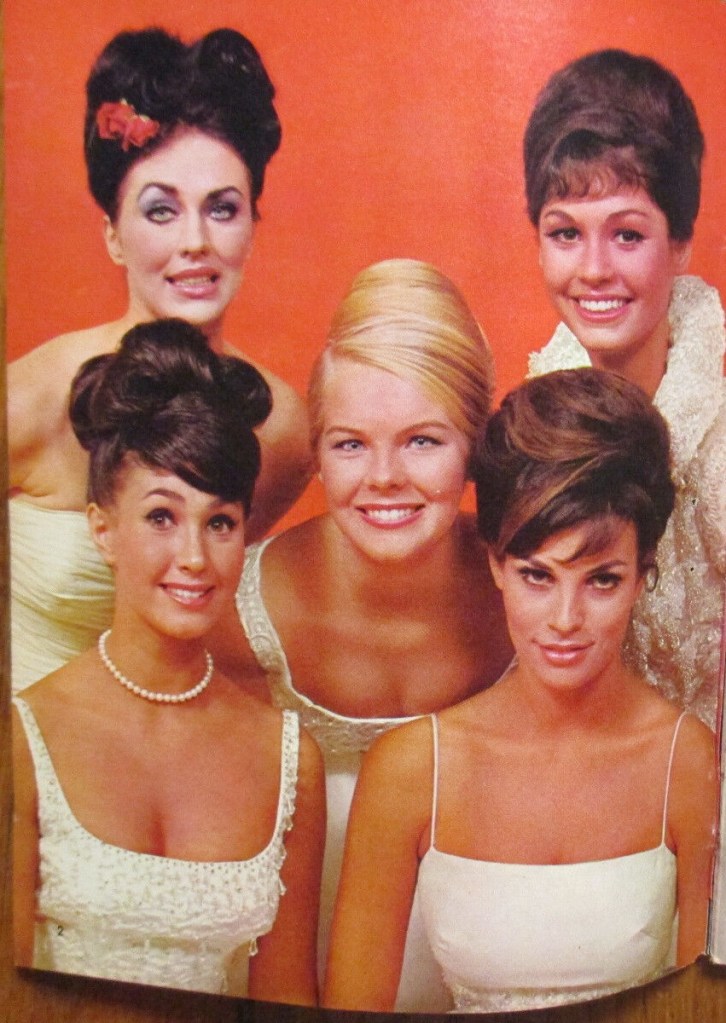
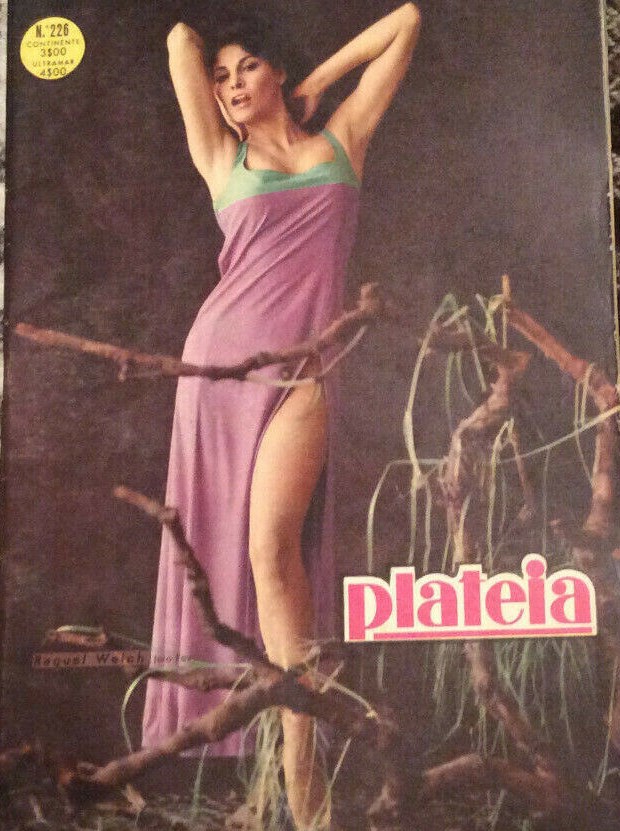


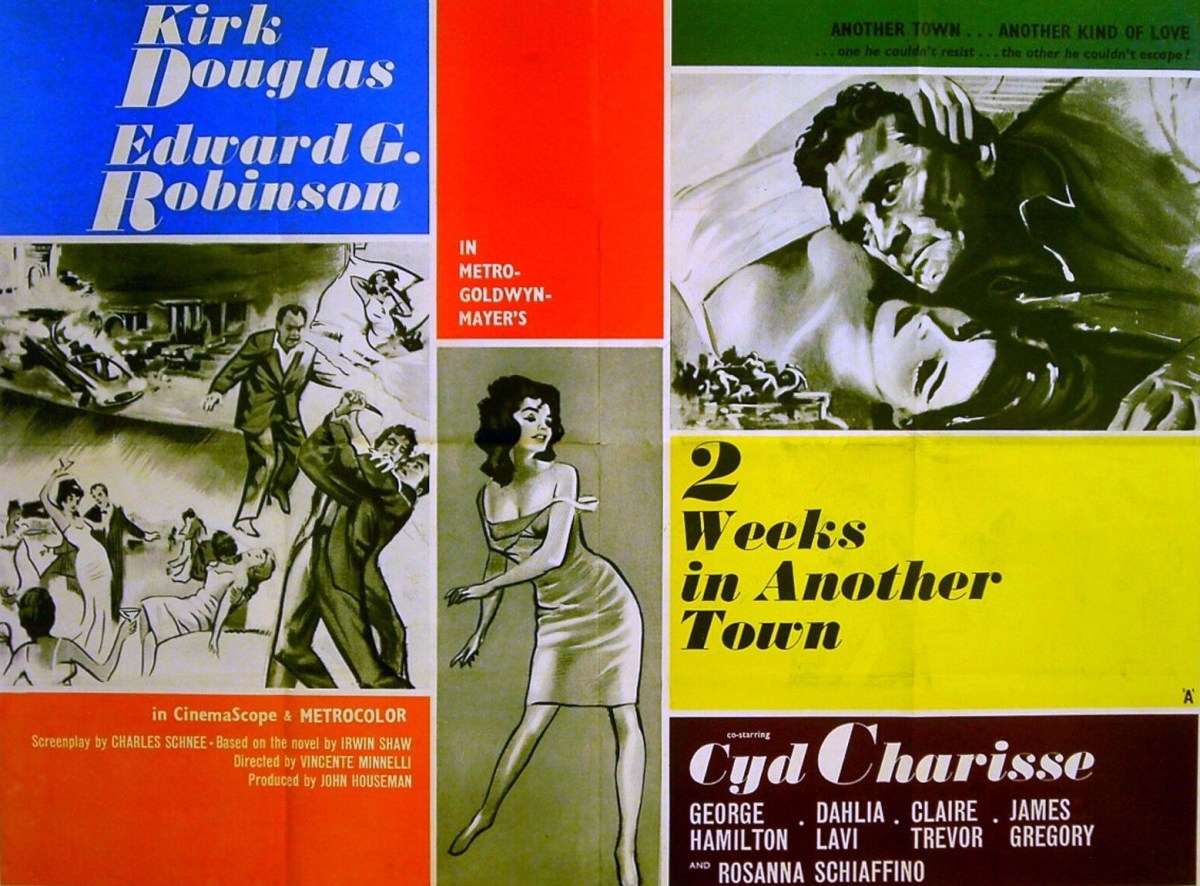
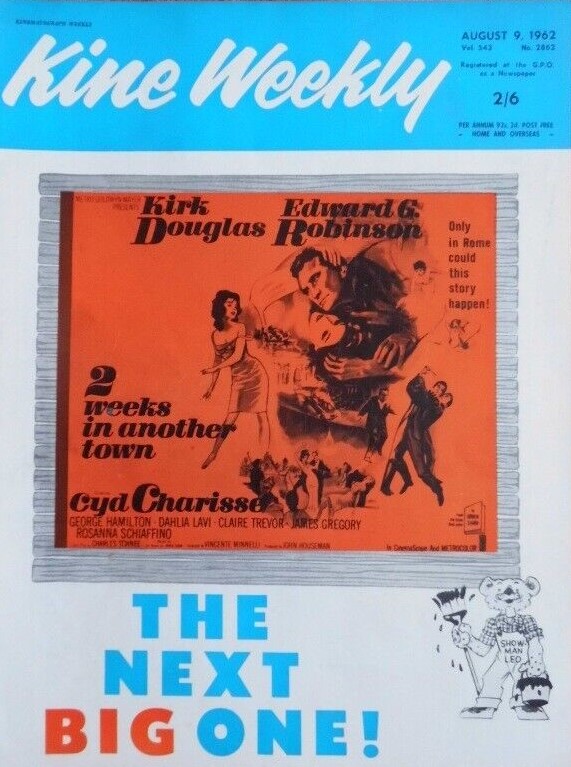
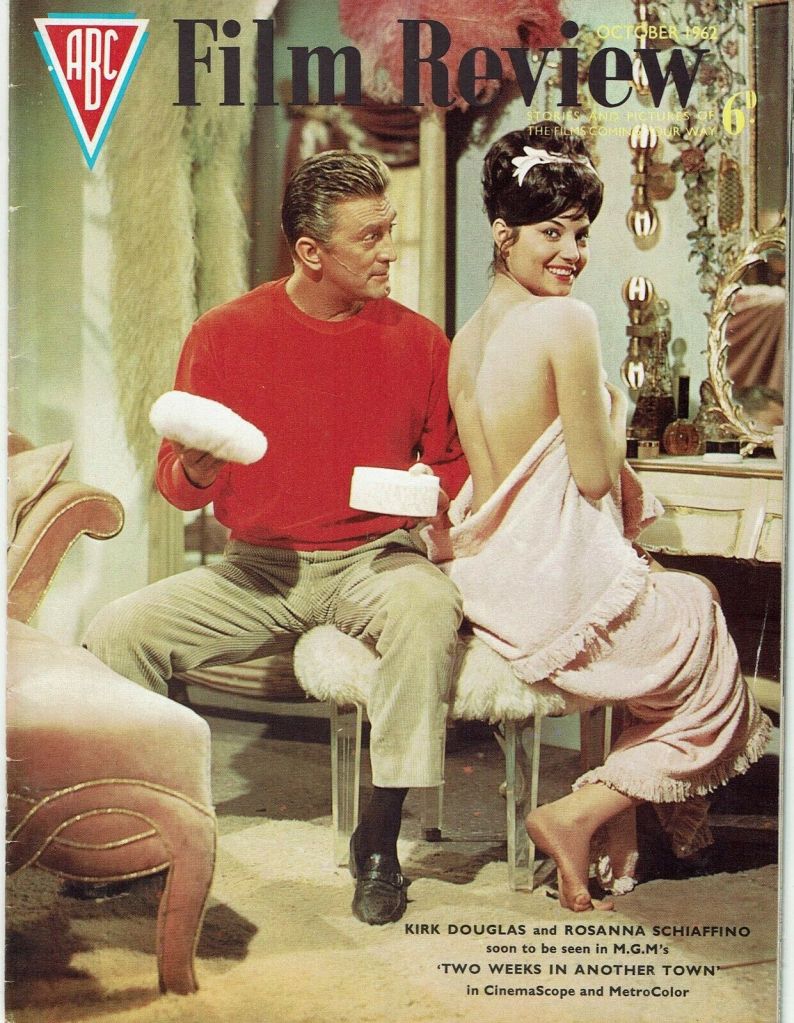
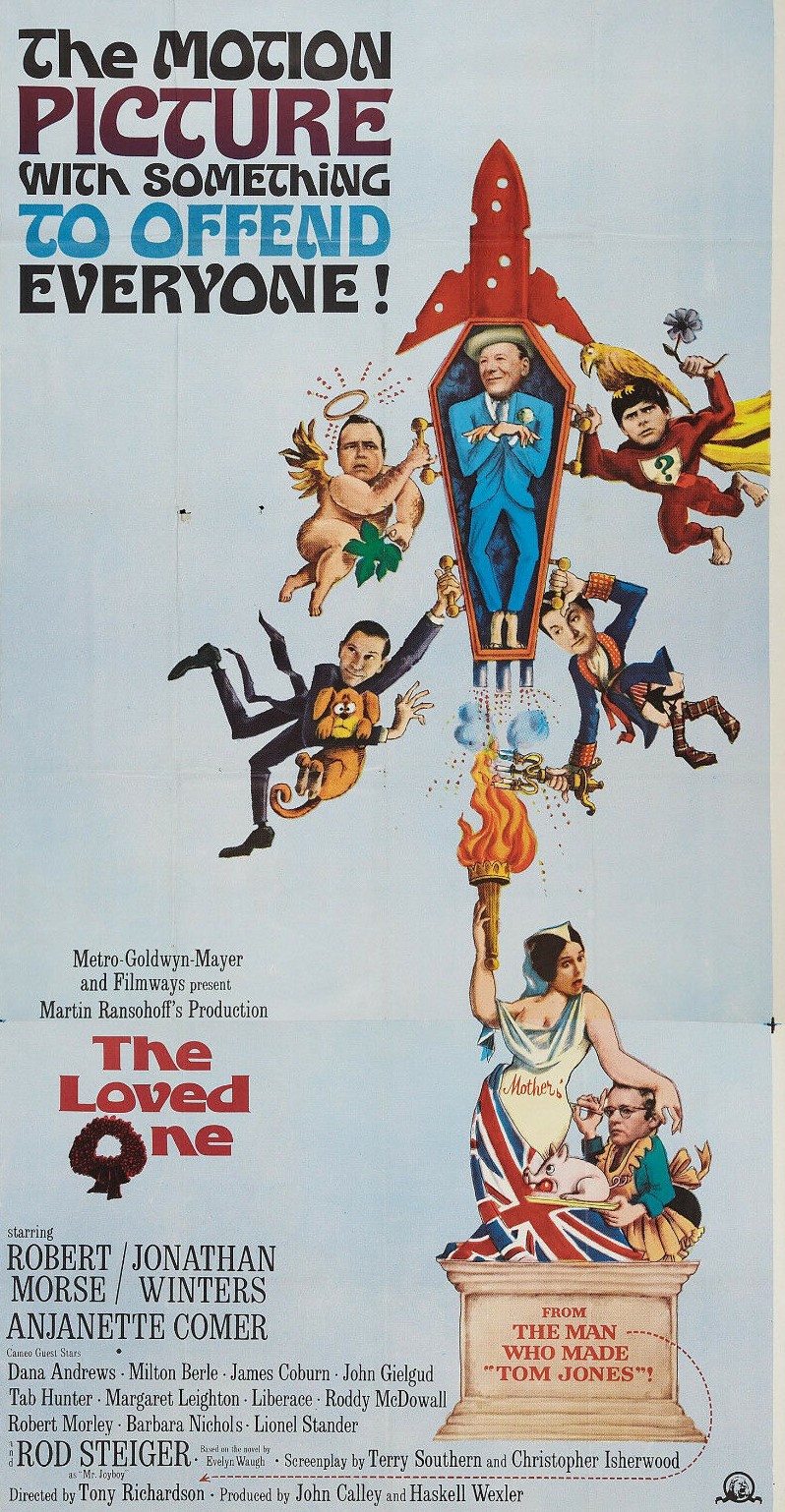
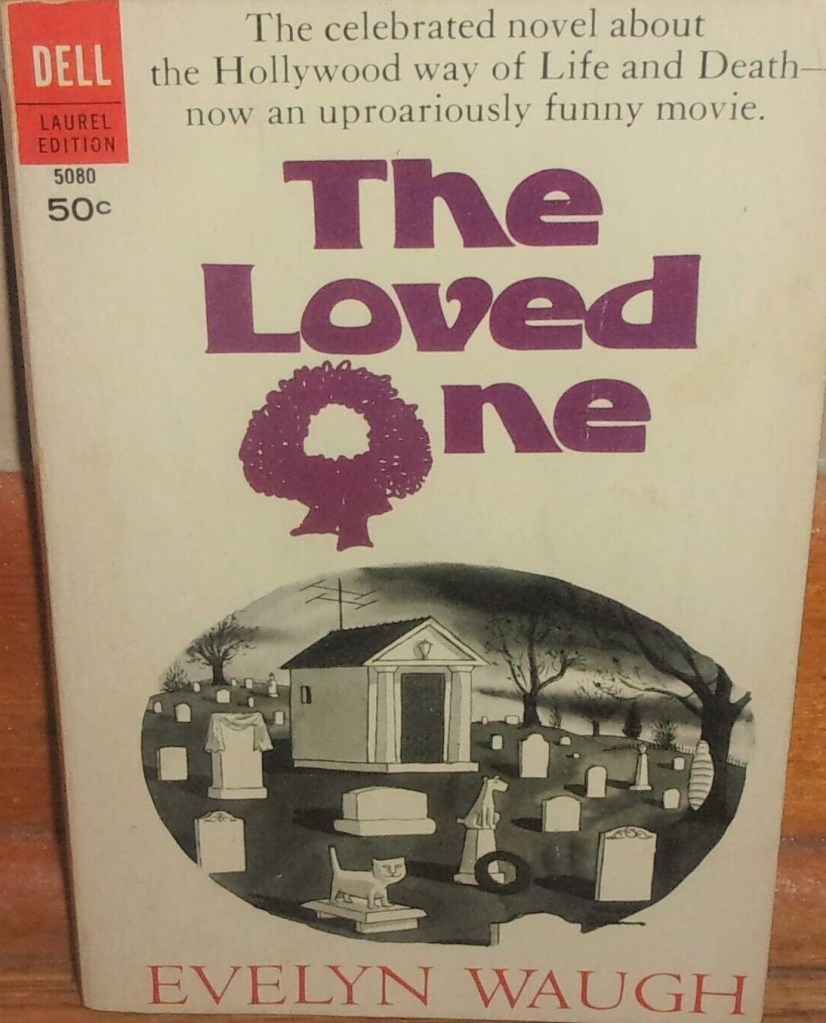
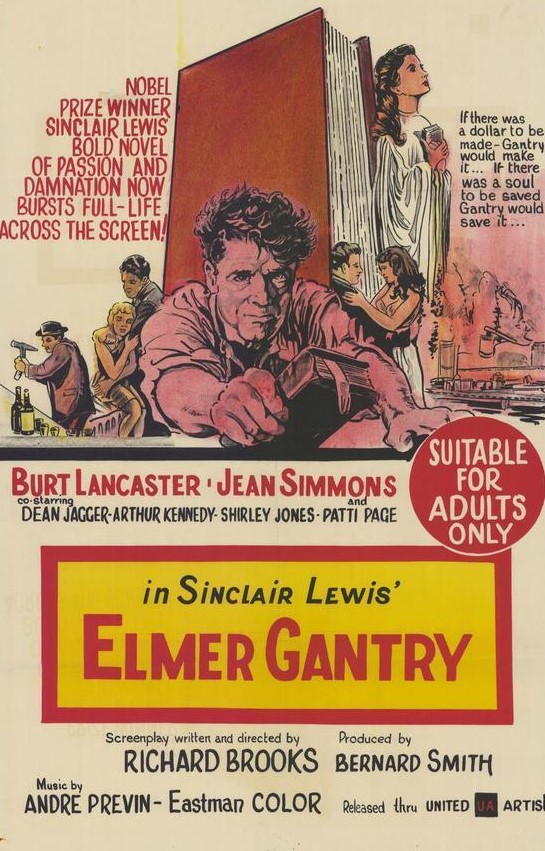

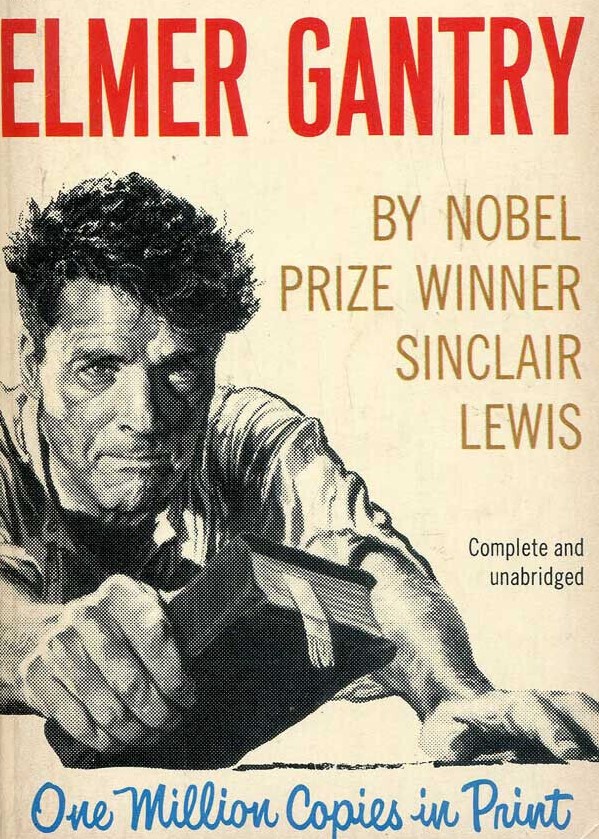


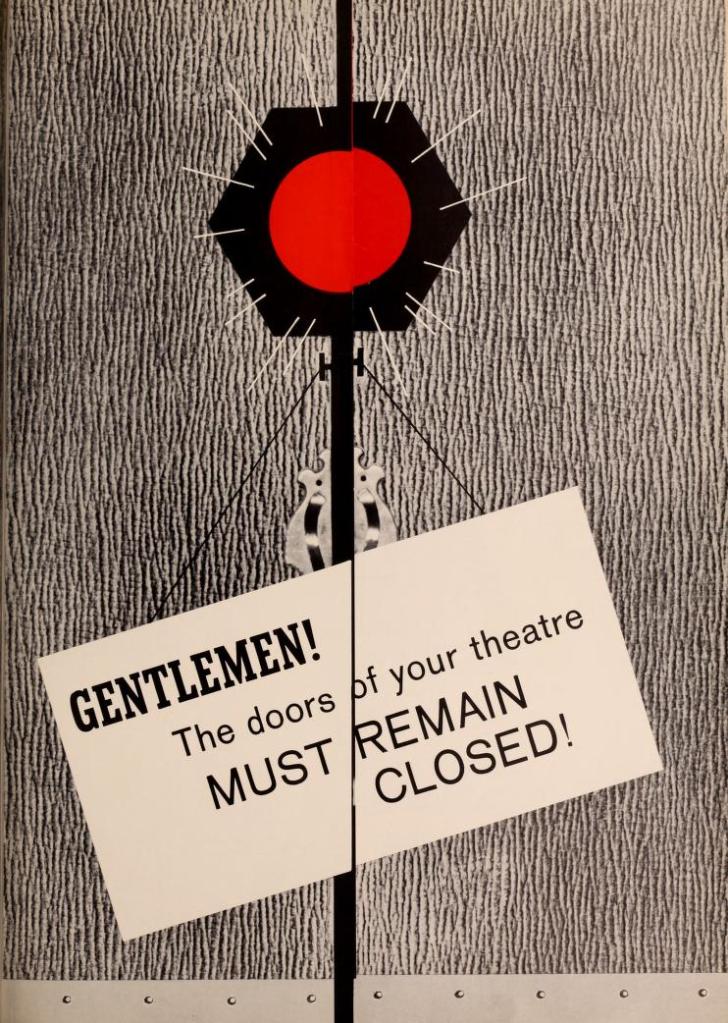
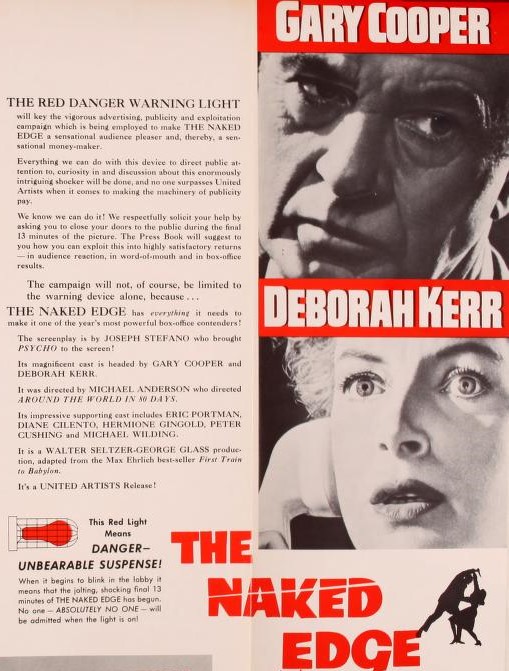
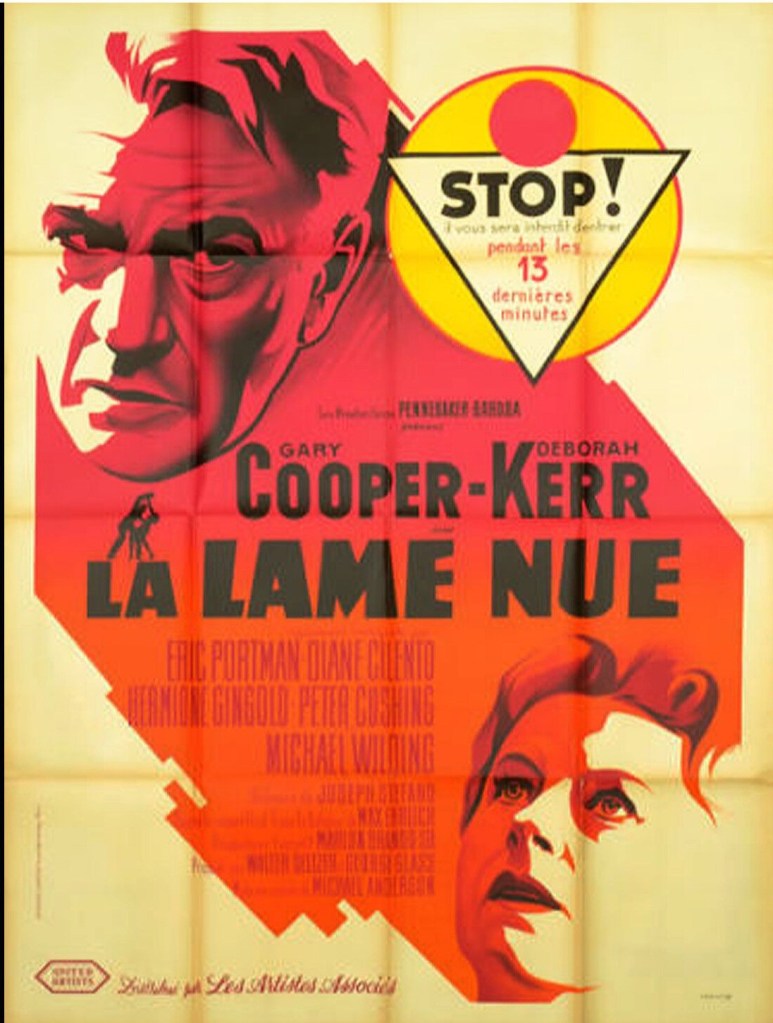


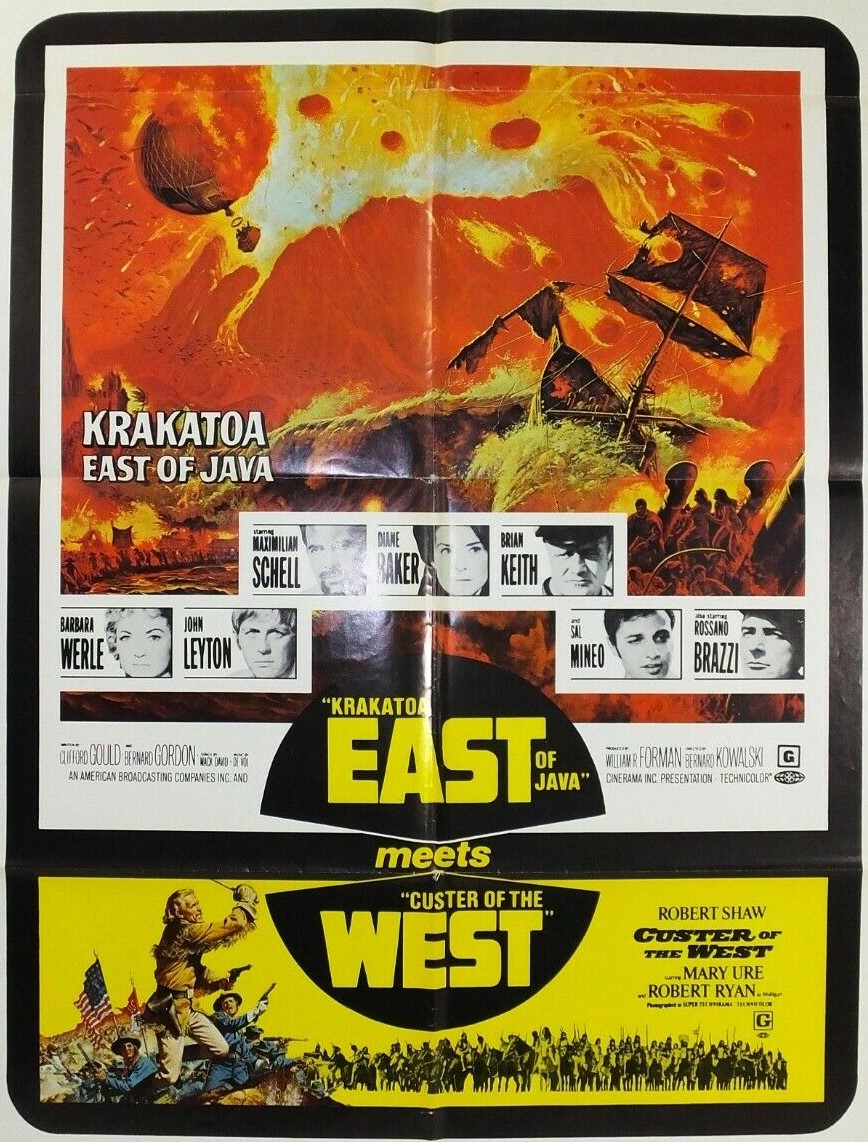
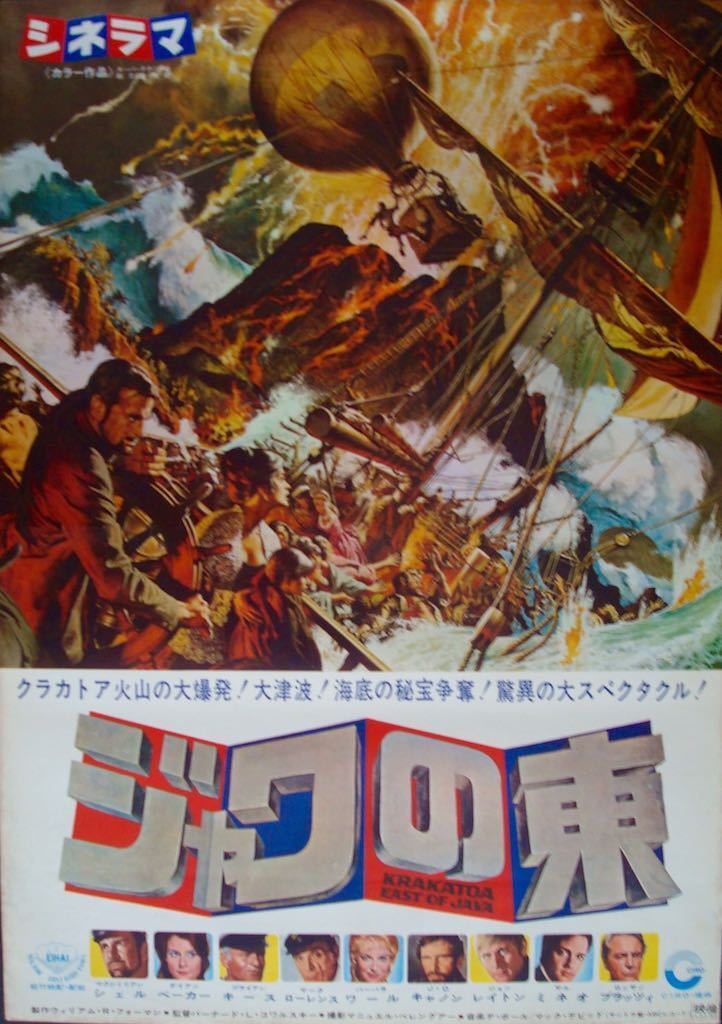
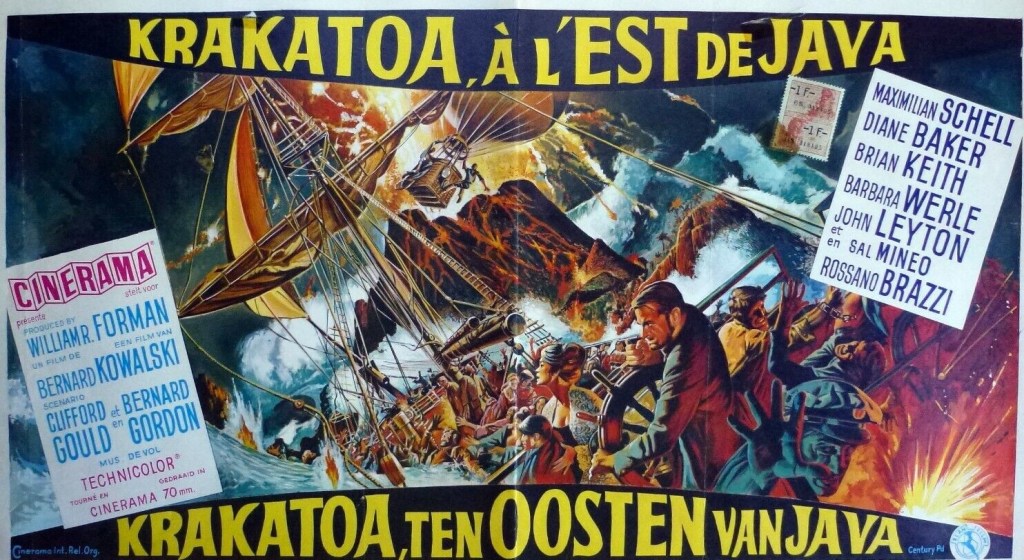
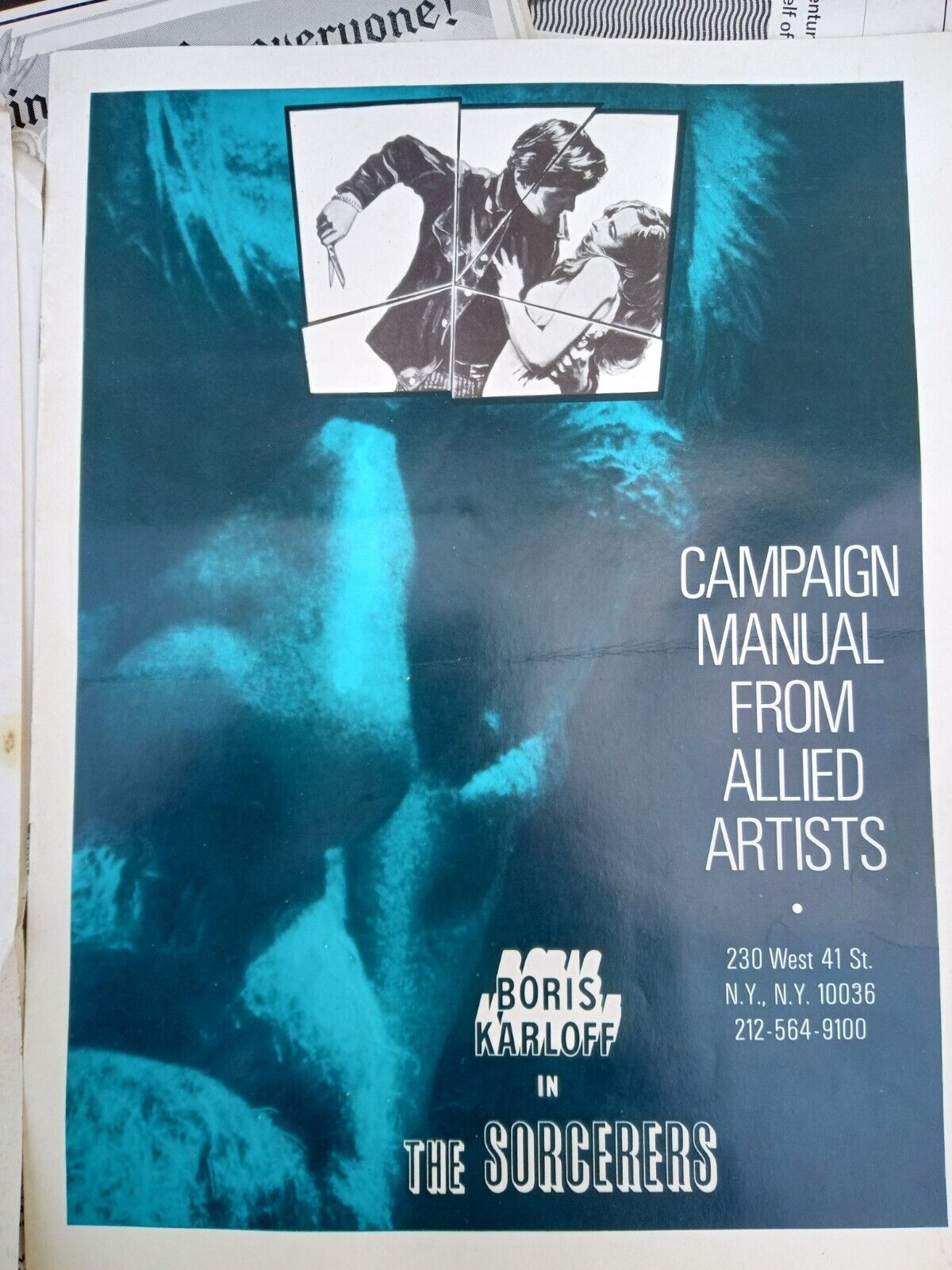

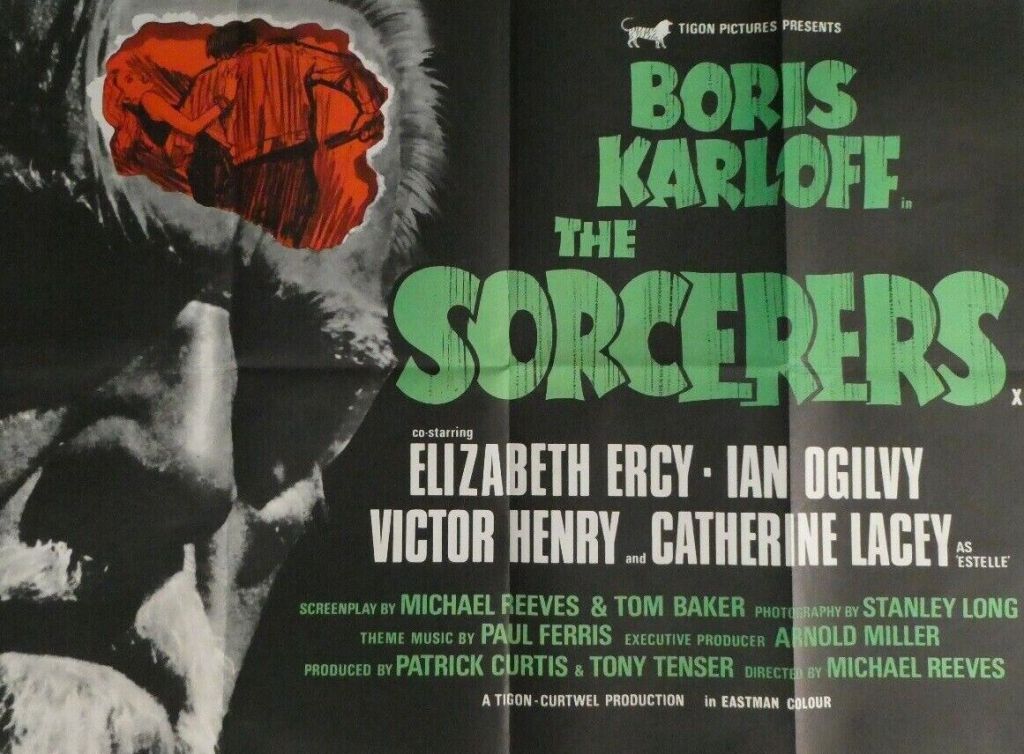
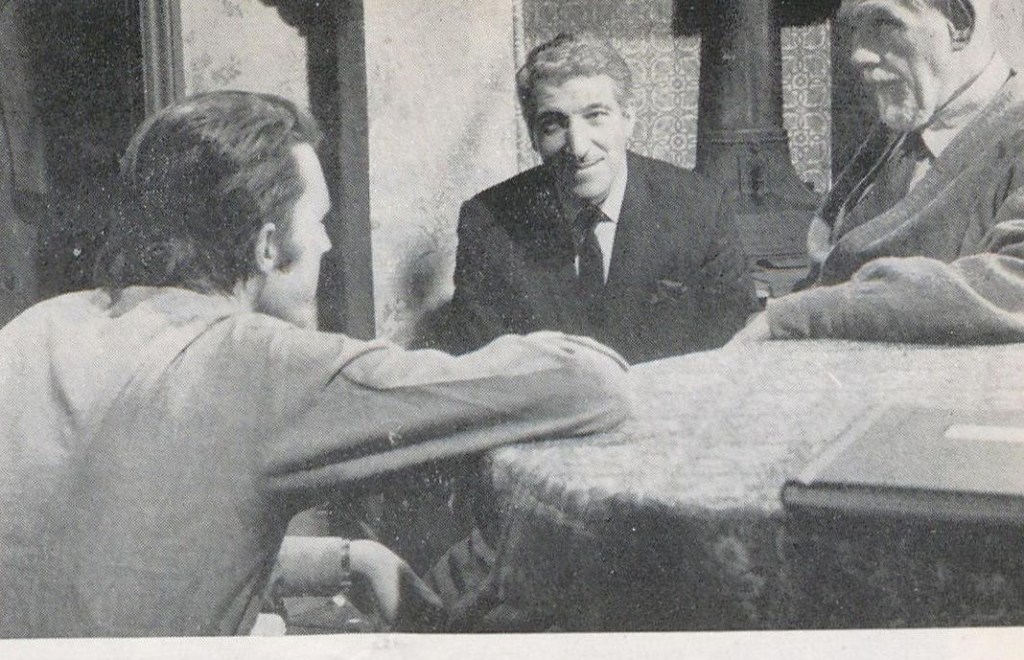
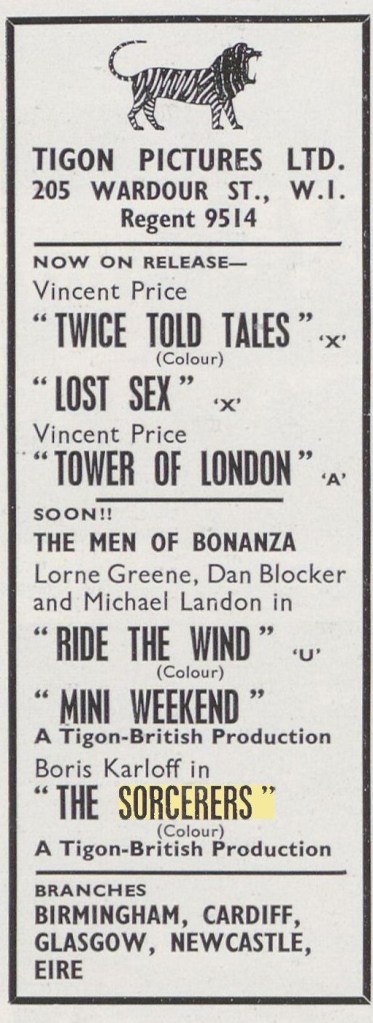
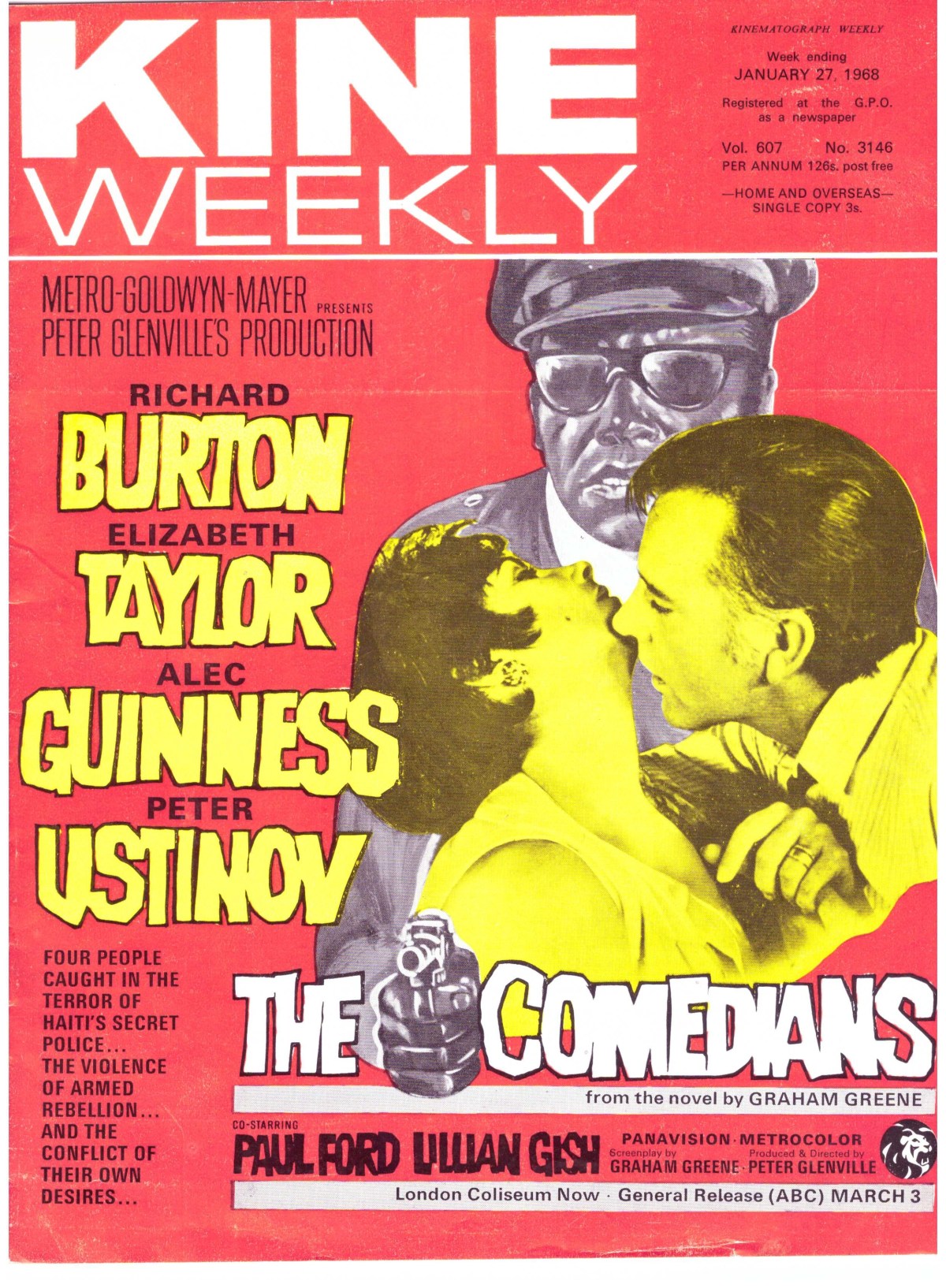
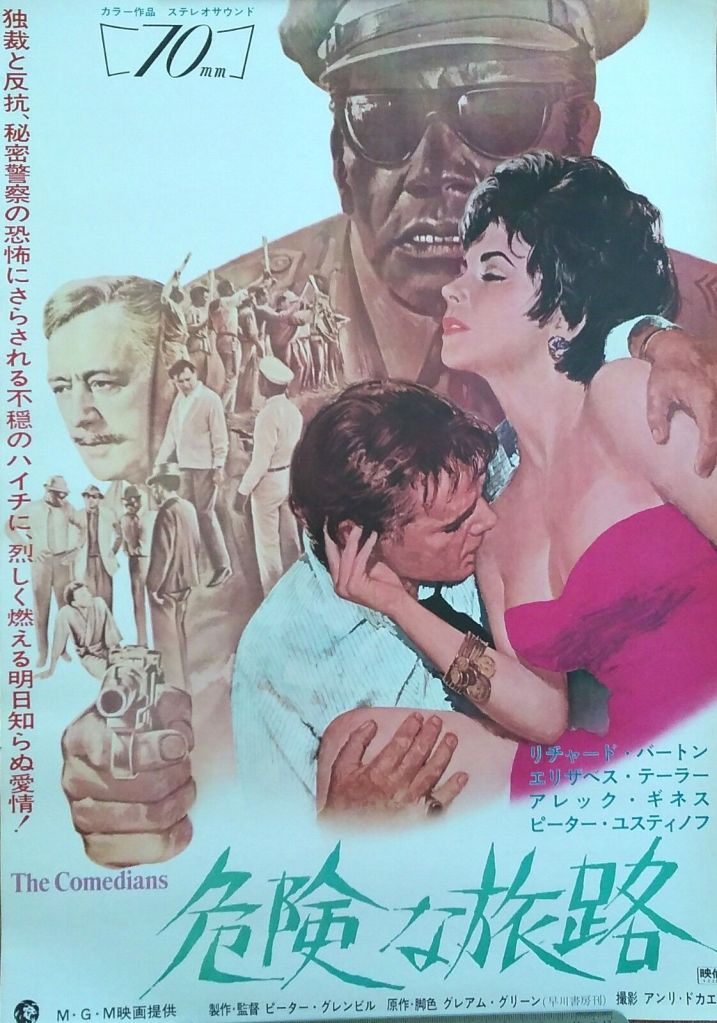
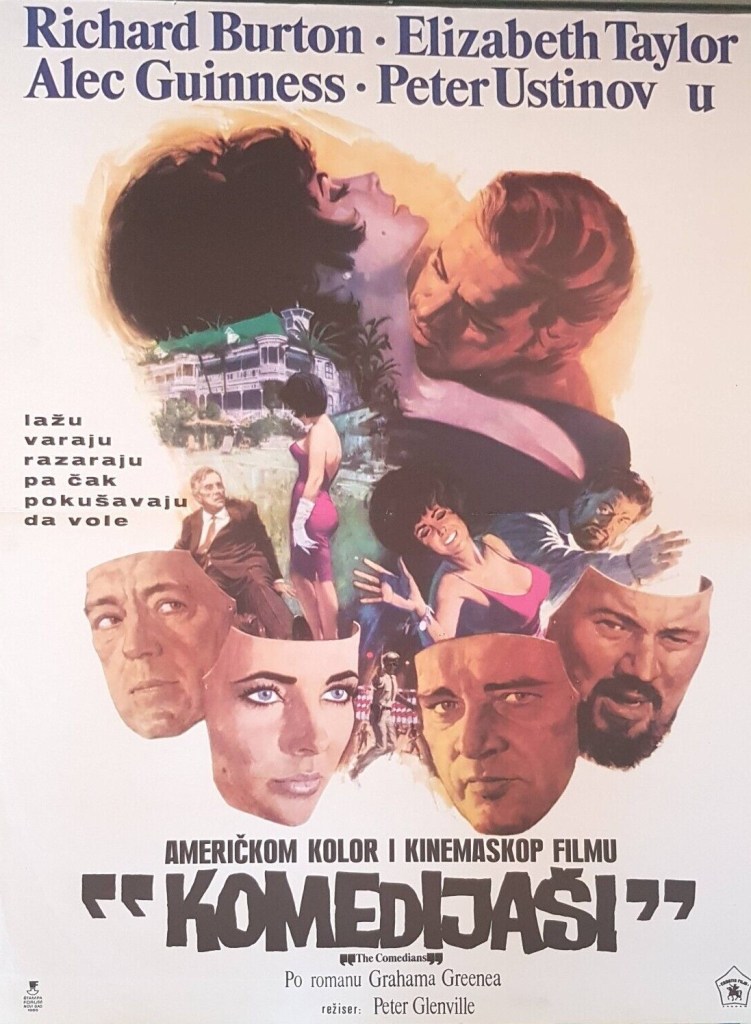
 The Magnificent 60s