Behind the Scenes: “Birdman of Alcatraz” (1962)

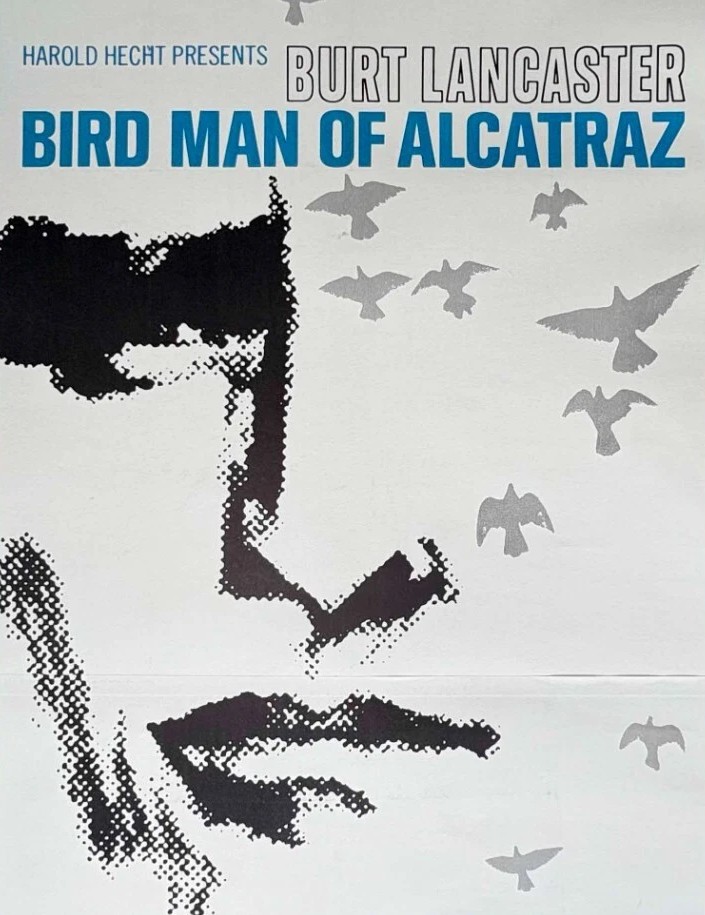
It took three attempts by different producers before Birdman of Alcatraz finally hit the screens. After the novel by Thomas E. Gaddis was published in 1955, Ingo Preminger, brother of director Otto Preminger, a year later was first to throw his hat in the ring – on behalf of director Joshua Logan.

Logan was on a roll, Oscar-nominated for Picnic (1955) starring William Holden and lining up Marilyn Monroe for Bus Stop (1956). Explained Preminger, “I knew Joshua Logan was looking for something off the beaten path for a personal project…(and found) exactly what he was looking for in the controversial novel.” Given Ingo’s track record – he wouldn’t produce his first film until Mash (1970), admittedly a smash – it was small wonder he didn’t make it to first base.

Twentieth Century Fox, under the aegis of Buddy Adler, had the movie on its schedule until abruptly dropping the project in 1958 when he failed to secure the cooperation of the Federal Bureau of Prisons. In fact, the Feds actively opposed the production, feeling the oxygen of publicity for the prisoner was undeserved.

Next up was accomplished independent producer Harold Hecht, who had formed a partnership with Burt Lancaster – Apache (1954), Trapeze (1956), The Unforgiven (1960). He was no more successful with the prisoner authorities – denied permission to shoot in Alcatraz or Leavenworth. But at least with Lancaster on board, he had a marketable commodity. Although he had a close relationship with United Artists, Birdman of Alcatraz was initially set up at Columbia and while shot on that studio’s backlot it was released through UA as a part of a 46-film three-year production package promising to be “as diverse, offbeat and box office” as previous offerings.

Lancaster had abandoned the actioners which had made his name and moved on to more challenging pictures. These days you’d call it virtue-signalling as he took on subjects as varied as evangelism (Elmer Gantry, 1960), juvenile delinquency (The Young Savages, 1961) and the Holocaust (Judgement at Nuremberg, 1961).

Neophyte Stuart Millar was brought in as director. He had set up in partnership with former agent Lawrence Turman (The Graduate, 1967) with a deal to make six movies in three years. His tenure at the helm didn’t last long and eventually he moved sideways to take on the role of producer. (He didn’t land a directing gig for another decade).
Though Lancaster had his eye on Jules Dassin (Never on Sunday, 1960), next in line was Charles Crichton (The Lavender Hill Mob, 1951) but he didn’t last long either. A decidedly odd choice, he fell foul of Lancaster’s impatience and was quickly replaced by John Frankenheimer (Seconds, 1966), one the new breed of directors emerging from live television, and who had made his debut on The Young Savages. Frankenheimer, going through a divorce, was reluctant to set foot in Los Angeles, and was lured there on another pretext by the actor who announced that, having just seen a cut of Young Savages, he was ideal for Birdman.

Not only was Frankenheimer he intent on revolutionizing the movie business, but he had the notion that he could reinvent television. After the demise of television’s Playhouse 90, he planned to set up a “creative stock company” of his former television colleagues and make two-hour programs for the small screen with the aim of helping “the medium out of its degradation.” He expected to win the backing of the likes of Arthur Penn, George Roy Hill, Delbert Mann, Ralph Nelson, Robert Mulligan and Sidney Lumet, who would all become major figures in Hollywood, as well as significant writers like Rod Serling and Horton Foote.

More pertinently to the project at hand, he intended to transition from mere director (i.e. gun for hire) to producer (in charge of his own career) and learn to function at “the business end of production” and to that extent was seeking overseas finance and lining up a $1 million adaptation of William Styron’s 1951 novel Lie Down in Darkness (never made) and Flowers of Hiroshima (never made). “Frankenheimer meant a new voice just at the time Lancaster needed it.”

Lancaster embarked on the picture as a campaign to free Stroud, who by now had served 40 years of a 50-year sentence in solitary confinement (a record). Obsessive by nature, the actor excelled himself, immersing himself in a study of Stroud’s books, letters, coverage of the case and penal law. Despite the enormity of the obstacles, Lancaster thought the movie and its attendant publicity would persuade the authorities to release the prisoner. Nor was Stroud much  help. “Stroud will not kowtow,” said Lancaster, “He will not make polite amends for what he has done.” He was impressed by the fact that “Stroud took a miserable unnatural existence and yet made it a meaningful thing.”

While the actor saw Stroud as rehabilitated through his ornithology, the Feds begged to differ, viewing him as a double murderer who was a danger to society. Lancaster turned down other more lucrative work – though still managing to squeeze in a $750,000 payday for Judgement at Nuremberg – in order to “tinker and groom this very uncommercial” picture.

Writer Guy Trosper (One Eyed Jacks, 1961) was hired to make the character, within a realistic framework, as appealing as possible.

The film was budgeted at $2.65 million though that included some of the losses incurred on The Sweet Smell of Success (1957) and The Bachelor Party (1957)  It proved a major collaboration between actor and director. “We blocked scenes,” explained Frankenheimer, “We decided to do the whole business of building the birdcage, of finding the first bird, of working with the birds – everything.” The movie was made in sequence to aid the ageing of the character. Lancaster didn’t wear a bald cap. His head was shaved halfway to the back and each gray and white hair was added individually

Lancaster spent two weeks rehearsing with 2,000 canaries imported from Japan as well as sparrows, until he could persuade the birds to hop onto his hand and peck at birdseed. To assist the recalcitrant birds, feathers were clipped so they couldn’t fly away. The method of achieving the scenes where the birds got sick and dropped from their perches was achieved by pouring lighter fuel down their throats.

The original cut ran four-and-a-half hours. The first half of the picture was rewritten and reshot. Editing would last another three months. Prior to release, Lancaster began his campaign to win Stroud a release, touring the country, addressing groups and journalists. He walked out of a television interview with Mike Wallace. Issues arose about Stroud’s homosexuality and the public opposition to Lancaster’s campaign soon derailed it.

United Artists planned an experimental release for the movie. Instead of going down the tried-and-tested route of the movie opening in big cinemas in big cities and working its way down stage by stage to the fleapits, A wanted to open the picture in as many houses as possible in new York in what it dubbed a “Premiere Showcase” (I’ve written about this elsewhere).

In one of those quirks that trade journalists pick up, it was noted that there was an ornithological cycle – on the path to release or in production were Bye, Bye, Birdie, To Kill A Mockingbird, The Sweet Bird of Youth, The Birds and Birdman of Alcatraz. The movie managed to see the inside of a jailhouse but only for a screening at Wayne County Jail in Detroit. Relations with the prison authorities otherwise remained frosty – Stroud was denied gifts and cards sent to him by stars and crew of the film.

Simultaneous with screenings at the 1094-seat Astor on Broadway and the 550-seat Trans-Lux 85th arthouse, UA opened the movie in eight other New York theaters (a process known then as daydating). The haul was $490,000 over three weeks. Stage two was an immediate moveover to 54 houses which locked up $196,000 in five days. Elsewhere it attracted the type of business expected of a prestige drama, not a prison movie as such. It finished the year with $2.2 million in rentals (the studio share of the box office gross) – enough for 27th spot on the annual chart – though observers reckoned it might be good for another $1 million or so once the effect of the ~Oscars (it was nominated for four and Lancaster was named Best Actor at the Venice Film Festival) kicked in.

It was successful overseas, ranked 25th of all the movies released in Italy over a two-year period. (Interestingly, in the same list poorer performer at the domestic box office The Notorious Landlady and The Counterfeit Traitor came eighth and 13th respectively, It was televised in October 1964.

SOURCES: Kate Buford, Burt Lancaster, An American Life, (Aurum,2008) pp 207-210; “Clips from Lots,” Variety, June 13, 1956, p24; “Banks Read Titles,” Variety, June 20, 956, p13; “Feds Veto Alcatraz,” Variety,  October 19, 12958, p3; “Stuart Millar,” Variety, October 12, 1960, p17; “New York Sound Track,” Variety, November 23, 1960, p4; “Feds Not Helpful,” Variety, December 7, 1960, p19; “Cruel and Unusual Punishment,” Variety, February 15, 1961, p2; “Playhouse 90 Alumni Band Together,” Variety, March 8, 1961, p25; “If Changes in UA Plans Due,” Variety, October 18, 1971, p7; “To Be Creative Not Enough,” Variety, February 11, 1962, p11; “Homosexual Question Raised at Birdman Feed,” Variety, May 2, 1962, p2; “Audubon Influence,” Variety, May 2, 1965, p3; “Birdman Jail Screening,” Variety, July 4, 1962, p64; “Frankenheimer Thinks Out Loud,” Variety, July 18, 1962, p13; “Premiere Showcase,” Variety, August 22, 1962, p7; “Big Rental Pictures of 1962,” Variety, January 9, 1963, p13.
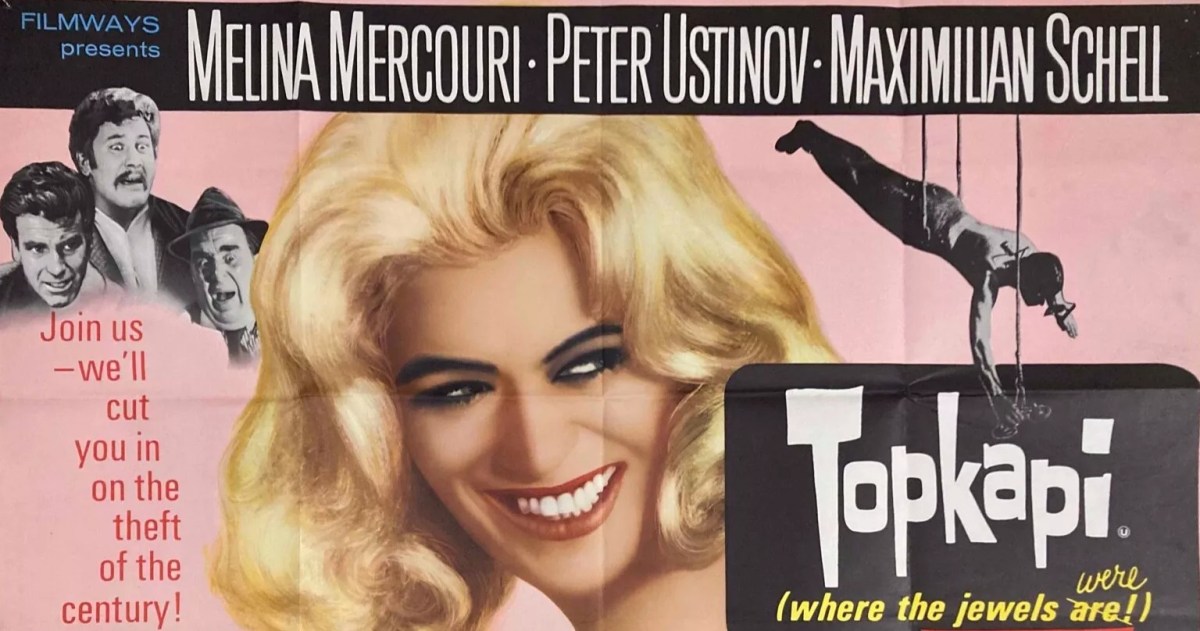
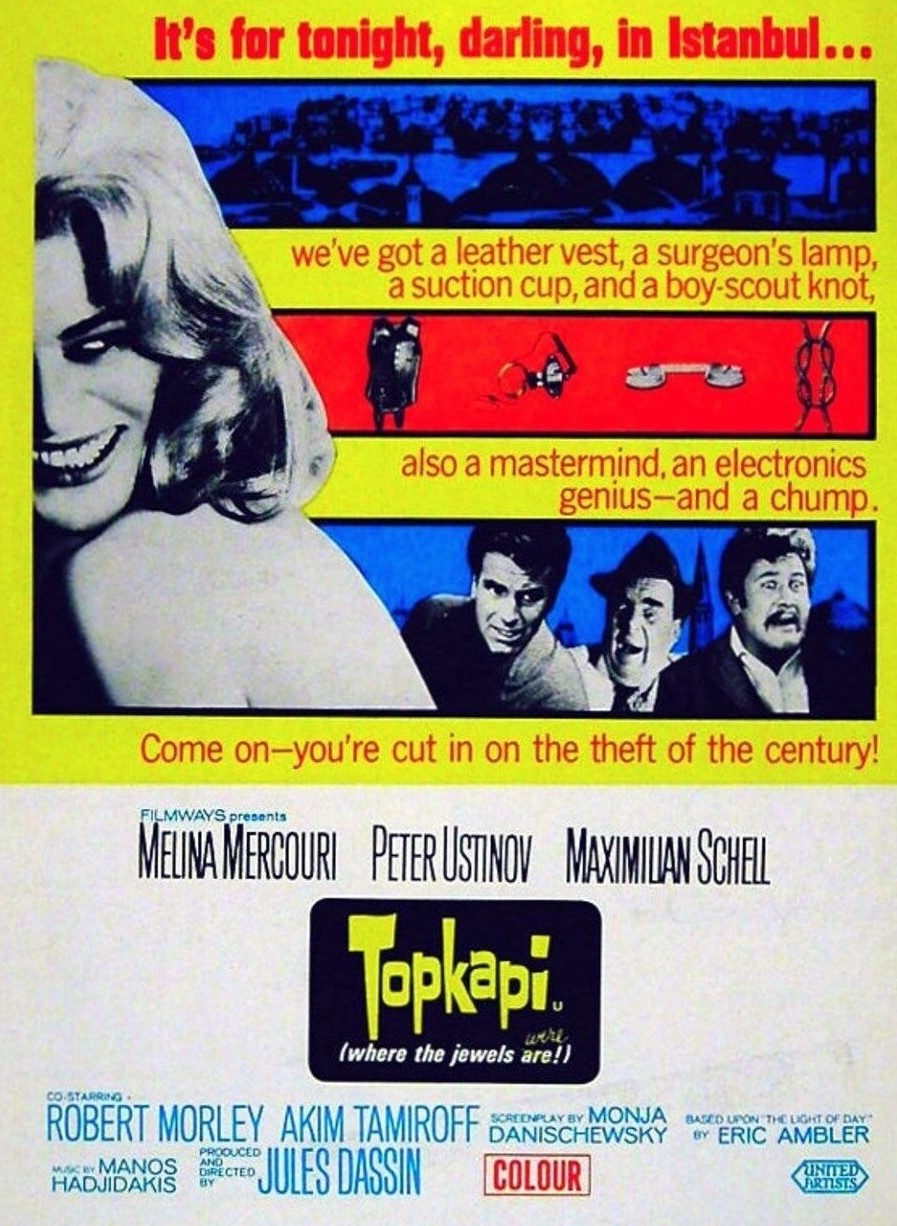
Topkapi (1964) *****

The mother of all heists directed by the father of all heist pictures. Films as diverse as The Italian Job (1969), Mission Impossible (1996) and Ocean’s Eleven (1960) owe director Jules Dassin a massive debt since he pretty much invented this genre with the French-made Rififi (1955). But that involved professional criminals. Outside of masterminds Elizabeth (Melina Mercouri) and Walter (Maximilian Schell), this crew are amateurs, deliberately chosen for their lack of criminal records and with a mind to the specific tasks required. So we have acrobat Giulio (Gilles Segal), upper-class English gadget inventor Cedric (Robert Morley), strongman Hans (Jess Fisher) and driver Arthur (Peter Ustinov).

The target is the impenetrable, complete with sound-sensitive floor, Topkapi Palace in Istanbul where they plan to steal a priceless emerald-encrusted dagger. The plan is ingenious. Arthur is initially only hired to smuggle the weapons essential to the audacious heist across the border. But when he is caught and forced to cooperate with the Turkish secret police, he is enlisted as a replacement for Hans. Minus the rifles and grenades which at first appeared indispensable to the plan, the thieves come up with an even more inspired alternative involving among other things scampering across rooftops, abseiling, a parrot and slowing down the revolutions of a lighthouse.

Originally intending to betray his colleagues as soon as possible, Arthur falls under the seductive spell of Elizabeth and finds himself recruited as the replacement muscles. Elizabeth exudes such sexuality she has the entire gang in her thrall and makes the cowardly, weak acrophobic Arthur believe he can overcome all his fears. Walter engages in a cat-and-mouse game with the police, always one step ahead, with a bagful of red herrings at his disposal, eventually giving the pursuers the slip during a wrestling competition held in a massive outdoor arena.

Interestingly, too, this doesn’t have the trope of gangsters at each other’s throats, planning to double-cross one another or bearing old grudges. Nobody challenges the leader. In fact, the entire crew could not be more docile, content to sit at the feet of Elizabeth and Walter, lapping up the former’s flirtation, wondering at the latter’s skill, as if they are all honored to have been chosen.

The climactic heist, carried out with no musical soundtrack and lasting over 30 minutes, is absolutely superb, setting a very high bar for future imitators, and there is a twist ending. Dassin mixes light comedy and high tension with the sultry attractions of Elizabeth to produce an at times breathtaking picture. As well as the heist itself, the wrestling sequence is stunning and the transition of Arthur forms the acting highlight (Ustinov won the Best Supporting Actor Oscar).

But all four main stars are superb. Audiences accustomed to a more uptight Maximilian Schell (The Condemned of Altona (1962) will have been surprised by his performance. Melina Mercouri (Oscar-nominated for Never on Sunday, 1960) is the archetypal blonde bombshell, liberal with her favors but careful not to favor just one. Although Walter devises the plan, she is actually the criminal supremo, selecting the targets, and then delegating to ensure the tasks are carried out. Robert Morley is having the time of his life. Akim Tamiroff (Lord Jim, 1965) has a cameo as a chef.

A film noir star after Brute Force (1947) and The Naked City (1948) Dassin’s Hollywood career collapsed in the wake of the anti-Communist McCarthy hearings and he was blacklisted. Rififi opened few doors but even the success of Never on Sunday (1960) brought little respite.  Despite returning to the mainstream with such elan through the conduit of Topkapi, albeit with a European cast, he remained on the Hollywood periphery and although Uptight (1968) – previously reviewed in the Blog – involved another heist that was primarily the wrapping for social documentary.

More at home with comedies screenwriter Monja Danischewsky (The Battle of the Sexes, 1960) draws out more humor than the source material, Light of Day by noted thriller writer Eric Ambler, would ostensibly suggest.

A delight from start to finish, the crème de la crème of the heist genre, this is unmissable. Dassin can lay claim to being the John Ford of the crime picture.

Topkapi (1964) *****

The mother of all heists directed by the father of all heist pictures.

Films as diverse as The Italian Job (1969), Mission Impossible (1996) and Ocean’s Eleven (2001) owe director Jules Dassin a massive debt since he pretty much invented this genre with the French-made Rififi (1955). But that involved professional criminals. Outside of masterminds Elizabeth (Melina Mercouri) and Walter (Maximilian Schell), this crew are amateurs, deliberately chosen for their lack of criminal records and with a mind to the specific tasks required. So we have acrobat Giulio (Gilles Segal), upper-class English gadget inventor Cedric (Robert Morley), strongman Hans (Jess Fisher) and driver Arthur (Peter Ustinov).

The target is the impenetrable, complete with sound-sensitive floor, Topkapi Palace in Istanbul where they plan to steal a priceless emerald-encrusted dagger. The plan is ingenious. Arthur is initially only hired to smuggle the weapons essential to the audacious heist across the border. But when he is caught and forced to cooperate with the Turkish secret police, he is enlisted as a replacement for Hans. Minus the rifles and grenades which at first appeared indispensable to the plan, the thieves come up with an even more inspired alternative involving among other things scampering across rooftops, abseiling, a parrot and slowing down the revolutions of a lighthouse.

Originally intending to betray his colleagues as soon as possible, Arthur falls under the seductive spell of Elizabeth and finds himself recruited as the replacement muscles. Elizabeth exudes such sexuality she has the entire gang in her thrall and makes the cowardly, weak, acrophobic Arthur believe he can overcome all his fears. Like current television sensation Money Heist, Walter engages in a cat-and-mouse game with the police, always one step ahead, with a bagful of red herrings at his disposal, eventually giving the pursuers the slip during a wresting competition held in a massive outdoor arena.

Interestingly, too, this doesn’t have the trope of gangsters at each other’s throats, planning to double-cross one another or bearing old grudges. Nor is this the last robbery for anyone prior to retirement. Equally, nobody challenges the leader. In fact, the entire crew could not be more docile, content to sit at the feet of Elizabeth and Walter, lapping up the former’s flirtation, wondering at the latter’s skill, as if they are all honored to have been chosen.

The climactic heist, carried out minus music, and lasting over 30 minutes is absolutely superb, setting a very high bar for future imitators, and there is a twist ending. Dassin mixes light comedy and high tension with the sultry attractions of Elizabeth to produce an at times breathtaking picture. As well as the heist itself, the wrestling sequence is stunning and the transition of Arthur forms the acting highlight (he won the Best Supporting Actor Oscar).

But all four main stars are superb. Audiences accustomed to a more uptight Maximilian Schell (The Condemned of Altona (1962) will have been surprised by his charming performance. Melina Mercouri (Oscar-nominated for Never on Sunday, 1960) is the archetypal blonde bombshell, liberal with her favours but careful not to favour just one. Although Walter devises the plan, she is actually the criminal supremo, selecting the targets, and then delegating to ensure the tasks are carried out. Robert Morley is having the time of his life. Akim Tamiroff (Lord Jim, 1965) has a cameo as a chef.

A film noir star after Brute Force (1947) and The Naked City (1948) Dassin’s Hollywood career collapsed in the wake of the anti-Communist McCarthy hearings and he was blacklisted. Rififi opened few doors but even the success of Never on Sunday (1960) brought negligible offers. Despite returning to the mainstream with such elan through the conduit of Topkapi, albeit with a European cast, he remained on the Hollywood periphery and although the American-set Uptight (1968) – previously reviewed in the Blog – involved another heist that was primarily the wrapping for social documentary.

More at home with comedies screenwriter Monja Danischewsky (The Battle of the Sexes, 1960) draws out more humour than the source material, Light of Day by noted thriller writer Eric Ambler, would ostensibly suggest.

A delight from start to finish, the crème de la crème of the heist genre, this is unmissable. Dassin can lay claim to being the John Ford of the crime picture.

Uptight (1968) ****

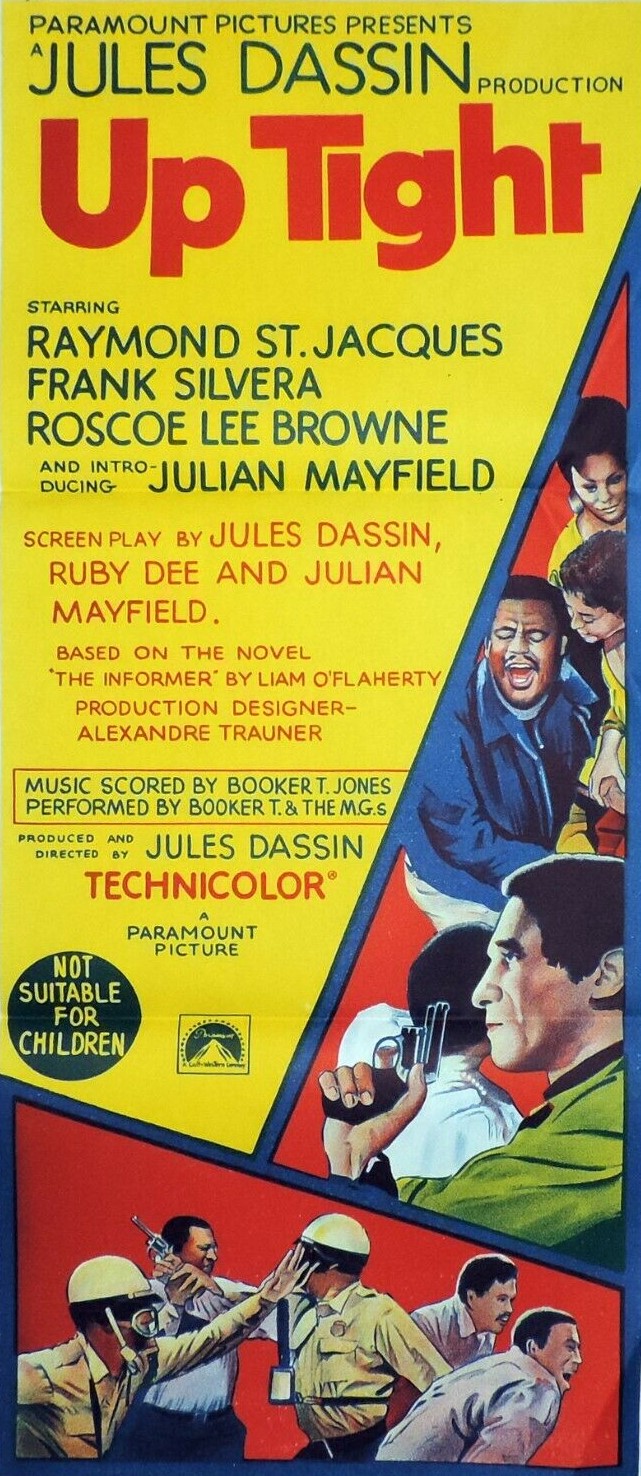
While a misplaced attempt to relocate John Ford’s Oscar-winning The Informer (1935) to Cleveland, Ohio, after the funeral of Martin Luther King, director Jules Dassin more than makes up for it with his exploration of black militancy and racial conflict. The basic story of unemployed alcoholic Tank (Julian Mayfield) trying to regain the favor of local activist committee led by B.G. (Raymond St Jacques) is less interesting than the revolutionary backdrop.

Dassin was suited to uncovering the seamy side of life having helmed film noirs Brute Force (1947) and The Naked City (1948) and while in the 1960s concentrating on dramas he remained best-known for heist pictures Rififi (1955) and Topkapi (1964) so it was almost a given that this movie would feature a robbery.  Tank was supposed to be part of a team, led by Johnny Wells (Max Julien), hijacking guns, but he’s too drunk to help, and during the robbery after a guard is killed the finger points at Johnny. 

Above: American poster. Below: the French version.

Assailed for his lack of maintenance by Laurie (Ruby Dee), mother of his kids, who subsists on welfare and prostitution, Tank considers informing on Johnny and picking up the $1,000 reward. So the story becomes a question of whether he will succumb to temptation.

But that’s really just a MacGuffin for an insight into the problems facing the poverty-stricken black population and the armed response many feel is the only way to resolve such issues. Several outstanding scenes depict the raw emotions of people trapped in this lifestyle. The opening scene, showing the funeral of Martin Luther King, became a clarion call for violence. Laurie is humiliated by a welfare officer. Police attempting to arrest Johnny are met with a fusillade of bottles.

The case for armed insurrection is made abundantly clear. The black population is continually oppressed, not just by police violence, but being told they lack the skills for a rewarding job. “When you’re born black, you’re born dead.” B.G. rejects the offer of assistance of white civil rights activists. Not all the locals are underdogs. Clarence (Roscoe Lee Brown), with an apartment lined with bookshelves and wearing fine clothes, does very well out of his arrangements with the police and the black welfare officer clearly gets a kick out of his power to possibly disbar Laurie from receiving financial assistance. While it might have proved more incendiary at the time, it’s impossible to miss the injustice portrayed. It was almost a wake-up call for the ruling authorities that there existed a growing underground force determined to achieve equality through violence if necessary. The idea of an organised group, rather than a shambolic mob, is the other clear message.

Any actor would baulk at the prospect of matching the Oscar-winning performance of Victor McLaglen in the Ford original and surely no director would entrust the task to an inexperienced actor like Julian Mayfield whose only previous screen credit was a decade before in Virgin Island (1958). Mayfield finds it impossible to conjure up the pathos required and mostly appears as a bumbling fool.

This is despite the movie going out of its way to make Tank appear more sympathetic. He could easily claim he was blackmailed into informing by wealthy stool pigeon Clarence who holds compromising photographs. But, equally, the brotherhood, should it become aware of Clarence’s activities, would surely come down on him hard. Johnny absolves Tank of responsibility for not participating in the robbery, recognizing that while the man’s bulk was useful in the past, he lacks the mind-set for robbery. And he must stay away from Laurie otherwise she will lose her welfare.

But the rest of the cast is outstanding. Raymond St Jacques (If He Hollers, Let Him Go, 1968) stands supreme as an imposing Malcolm X figure. Roscoe Lee Brown (Topaz, 1969) is persuasive as a confident gay informer. Activist Ruby Dee (The Incident, 1967) is good, too. And there is strong support from Frank Silvera (Guns of The Magnificent Seven, 1969), Max Julien, best known later for The Mack (1973), and in her movie debut Janet MacLachlan giving a hint of the acting skills that would win her an Oscar nomination for Maurie (1973)

Perhaps the most important element of the picture was the screenplay, a collaboration between Julian Mayfield, Ruby Dee and Jules Dassin, the involvement of the first two ensuring that the main targets were well and truly hit. Dassin ensures that the movie never loses its way, tension kept high by the hunt for Johnny, the personal dilemma of Tank and the various confrontations with B.G. Great contemporary score by Booker T.

This is a movie that still stands up, not just because of its fearless delineating of the times, but from the suspicion that not enough has changed in the abject poverty to which so many are condemned.

There’s a very decent print available on Youtube.

Discover WordPress

A daily selection of the best content published on WordPress, collected for you by humans who love to read.

The Atavist Magazine

by Brian Hannan

WordPress.com News

The latest news on WordPress.com and the WordPress community.