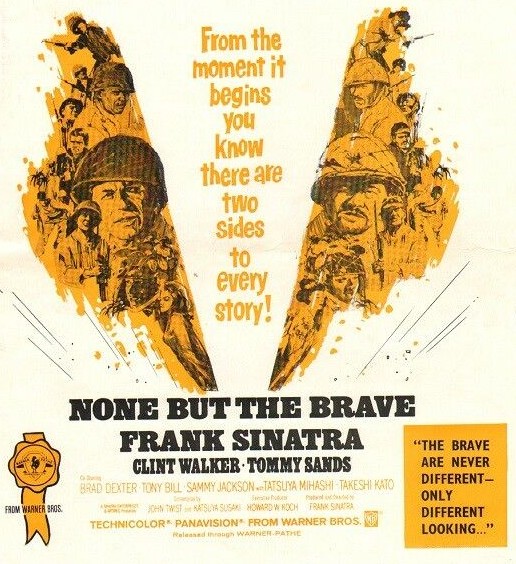
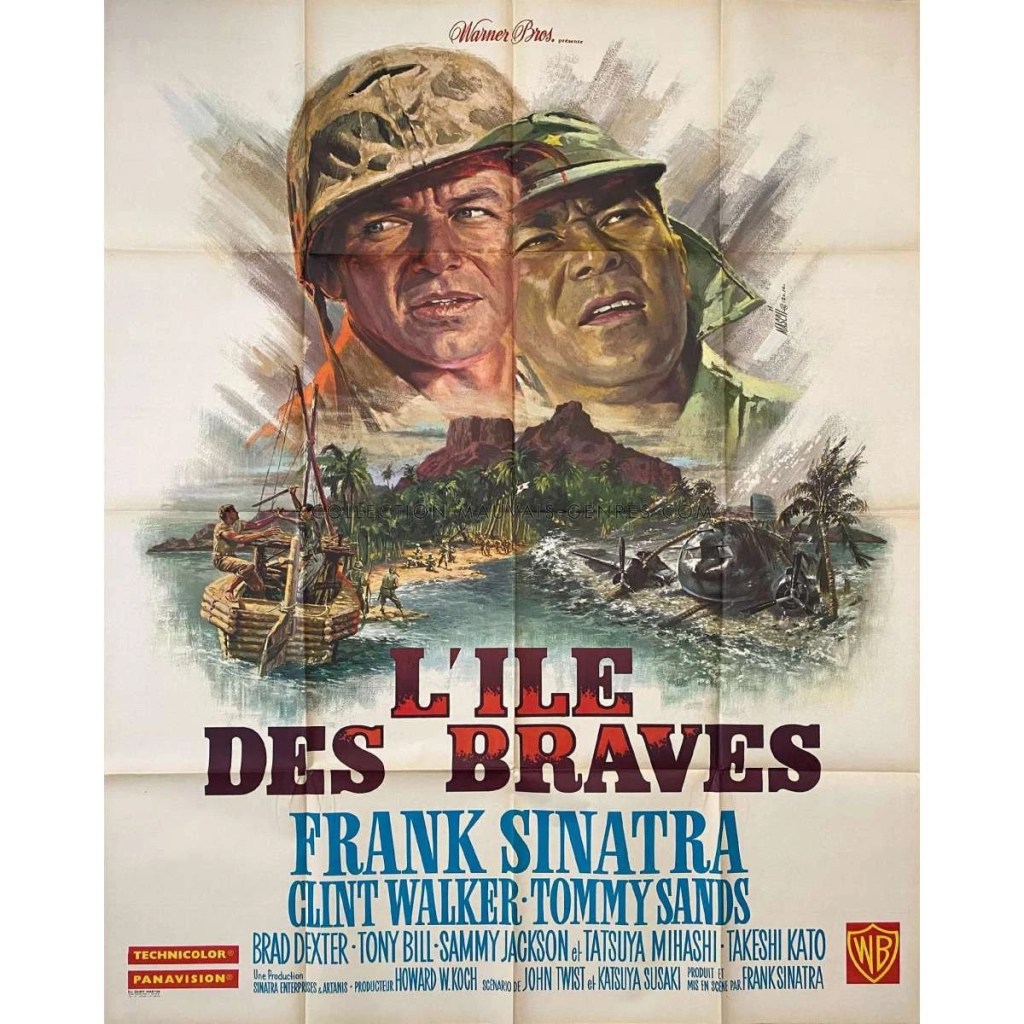
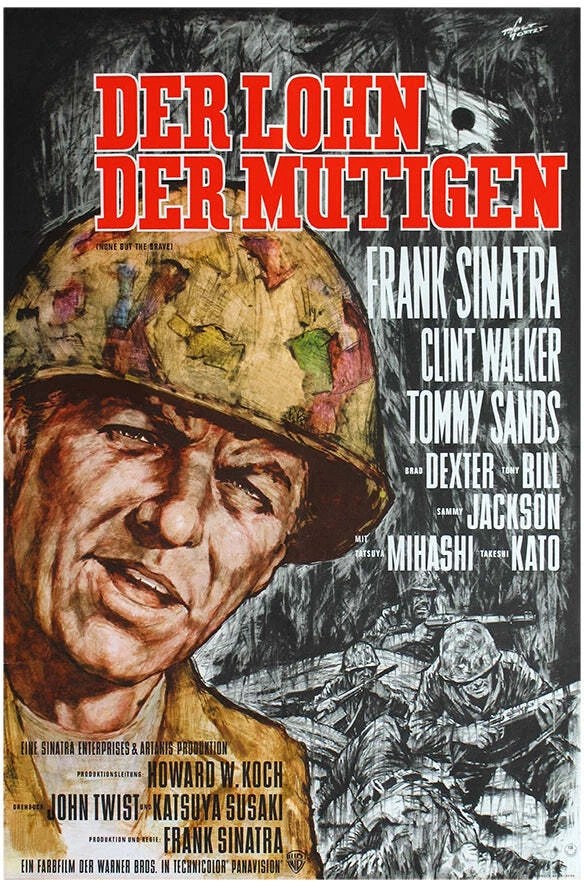
Frank Sinatra’s sole stab at direction is an astonishing piece of work and deserves to be revisited in a more positive frame of mind than it encountered on original release. Maybe critical acclaim depends on your name, and most critics were already tearing into Ol’ Blue Eyes because his acting in the 1960s scarcely matched his work in the 1950s – From Here to Eternity (1953), The Man with the Golden Arm (1955), Guys and Dolls (1955), High Society (1956) and Pal Joey (1957).
On the other hand critics were all over themselves when John Boorman and Clint Eastwood went down a similar route in Hell in the Pacific (1968) and the double header Flags of Our Fathers (2006) and Letters from Iwo Jima (2006), respectively, and American audiences griped about the even-handedness of Tora! Tora! Tora! (1970).
Not only is this primarily presented from the Japanese point-of-view, opening and closing with scenes involving the Japanese, but it is not so much even-handed as presenting the opposing sides in exactly the same manner, so that the “enemy” is never viewed as such but as a rag-tag collection of ordinary men thrust into warfare.
While there’s certainly courage on show, there’s also more than a war movie’s normal share of rashness and stupidity, disobedience, the flouting of orders, the challenging of the line of command and that taboo subject – death from friendly fire. There are clever maneuvers and outwitting the opposition.
The composition of both sides could be echoes of each other. Both have calm leaders in Capt Dennis Bourke (Clint Walker) and Lt Kuroki (Tatsuya Mihashi) who both struggle to keep in line intemperate subordinates, Second Lieut Blair (Tommy Sands) and Sgt Tamuro (Takeshi Kato) who tend to issue orders at a scream and in the latter instance with a slap in the face. Both lieutenant and sergeant, career soldiers, bristle at having to accept orders from less experienced officers.
None of the recruits are worth a button as soldiers. On the Japanese side we have a Buddhist priest, on the American side guys who wouldn’t recognize a trap even when they fell into it. Bourke also has to contend with loudmouth Sgt Bleeker (Brad Dexter), itching to start a fight.
The Americans have one trump card – and it’s not weaponry. They have someone with the medical skill to save a badly wounded Japanese soldier. And although he’s only a pharmacist (Frank Sinatra) he’s got enough knowledge to carry out an amputation. The Japanese have their own trump cards – food and water. And the two leaders effect a truce. You know it won’t last, of course, which leads to a savage ending, though a touching climax.
There’s plenty action, more than you might expect, since generally in this kind of war movie we spend ages getting to know the soldiers long before there’s any reason to fire a shot or explode a bomb. All we know about the Americans is that they shouldn’t be here, they were flying elsewhere when their plane crash-landed on a remote island they believe is unoccupied. All we know about the Japs is that they’re trying to get off the island by building a boat.
Foolish soldiers on either side upset the leader’s strategies so the bullets soon fly. The Japanese on sighting an American warship cruising close by have the cleverest notion, running up a Japanese flag, which the sailors take to mean the island is under Japanese control and begin a bombardment which kills Americans. The Yanks, on the other hand, manage to steal the Japanese boat, but only for a short time before a grenade puts paid to any notions of escape.
In most war movies that pay any attention to the lives of the soldiers, that usually concentrates on sentiment, women left behind, families abandoned and so forth and while this strays into that territory once, the bulk of the time we see character revealed by current action, which is a more difficult thing to achieve, but far more rewarding.
Given his duties behind the camera, Frank Sinatra (Robin and the 7 Hoods, 1964) wisely plays a largely supporting role, restricted to the occasional wisecrack, but allocated one big central scene so that audiences don’t feel they’ve not had their money’s worth. But, actually, he relinquishes the most important scene to someone else. An armed American soldier coming across an unarmed half-naked Japanese who has been catching fish can’t bring himself to shoot him because you shouldn’t shoot a good fisherman.
There’s not much in the way of visuals or composition to write home about, but this film didn’t require such virtuosity, the director more than makes it work by sticking to the knitting, and concentrating on the humanity and refusing to allow the enemy to be portrayed as such.
Clint Walker (Sam Whiskey, 1969) and Tatsuya Mihashi (Tora! Tora! Tora!) carry the picture effortlessly while their rebellious underlings, singer Tommy Sands (Ensign Pulver, 1964) and Takeshi Kato (Yojimbo, 1961) do their best to steal the picture. Look out for Brad Dexter (The Magnificent Seven, 1960) and future producer Tony Bill (The Sting, 1973).
Written by John Twist (A Distant Trumpet, 1964), Katsuya Susaki (Way Out, Way In, 1970) and the film’s producer Kikumaru Okuda.
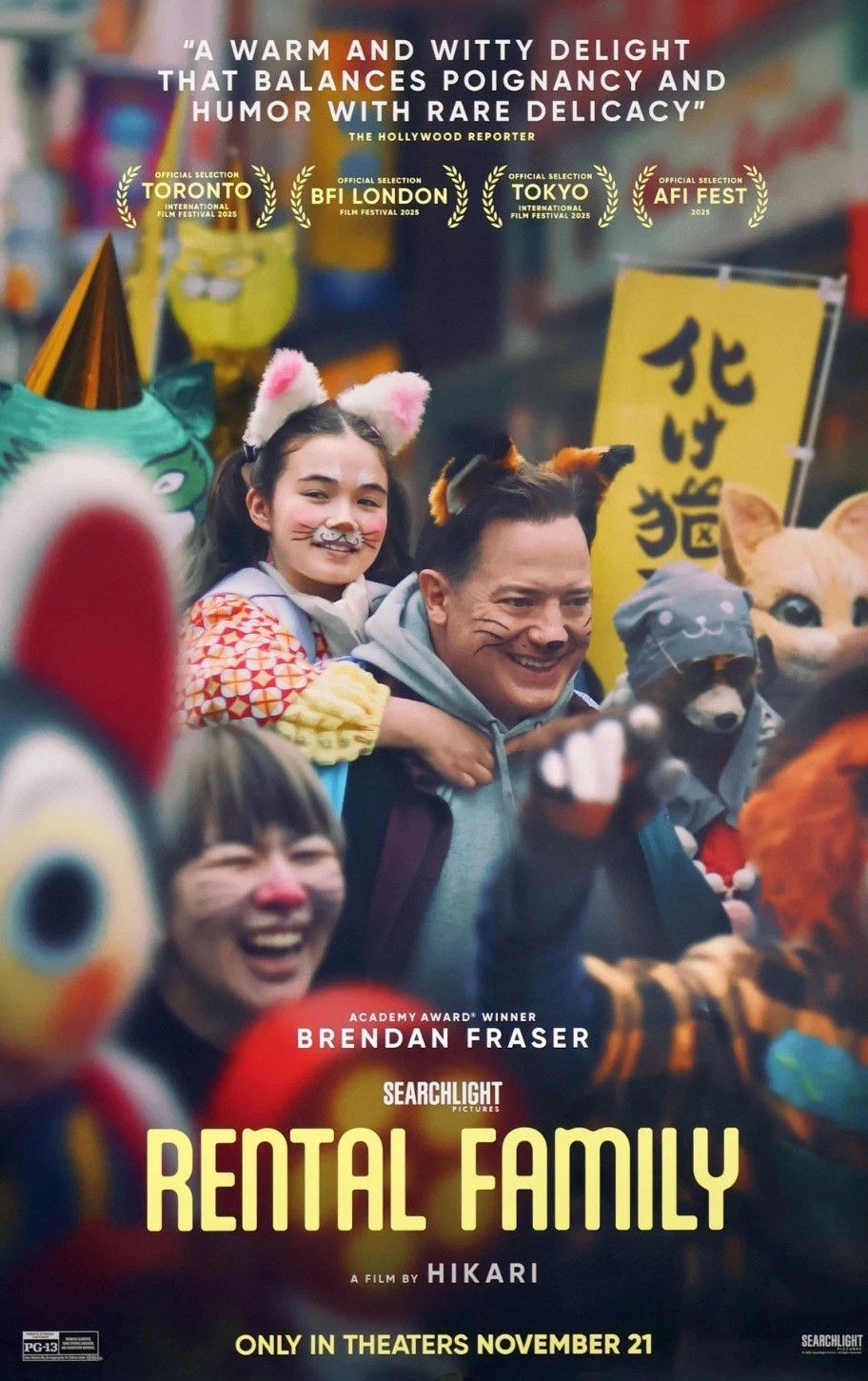
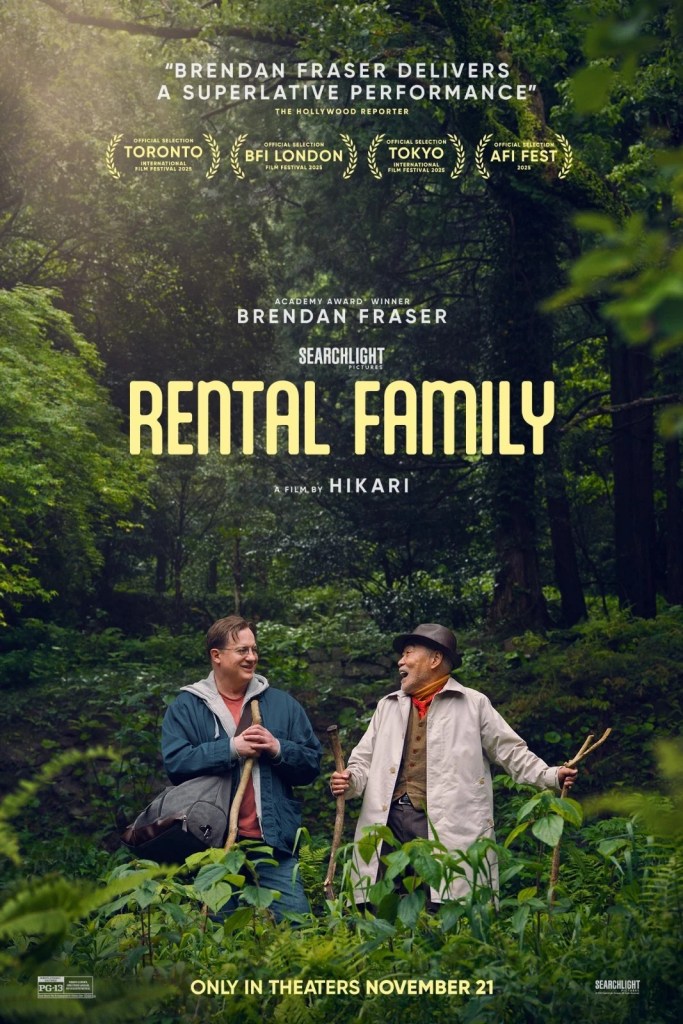
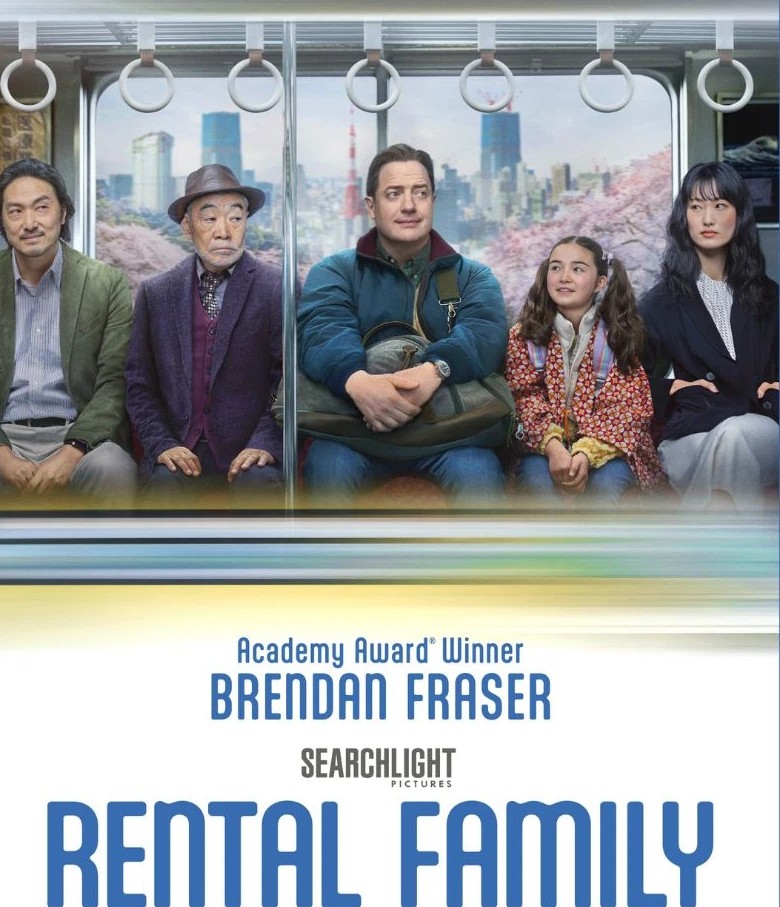
Gaming the system takes on a new meaning in this unlikely hybrid. What sets out to be a hard satire of the rigidity of Japanese culture is compromised by the need to turn it into a feel-good dramedy courtesy of importing American sometime star Brendan Fraser. There’s an awful trade-off here and I think the film suffers as a result of the compromise. I’m no big fan of movies that arrive in my multiplex courtesy of picking up accolades at a film festival, but, as it happened, I only saw print ads for this after I had seen it at a Secret Screening” so had no idea it had actually come via film festivals.
Take the Yank, Brendan Fraser at his puppy-dog best, out of the equation and concentrate on either his boss Shinji (Takehiro Hira) or colleague Aiko (Maru Yamamoto) and you would as easily have come to the same emotionally satisfying conclusion. Sold as a hard-edged indigenous Japanese satire I think it would easily broken out of the arthouse ghetto.
Apart from anything else it’s been, out of desperation I guess, sold as a kind of Mrs Doubtfire, imposter bonding with a young child, but in fact that’s a small part of the overall story, and in trying to make it the central element, goes off-piste.
Let me tell you what a rental family is, in case you are as unfamiliar with the term as I was. Apparently – I looked this up – this phenomenon arrived in Japanese culture in the 1980s and there are about 300 companies currently employing in selling human fraud to various clients.
So if, for example, you are gay but are fearful of denying your parents the opportunity to see you settled in a traditional male/female marriage, then you simply hire a husband for the day of the wedding and then once the ceremony is over you go back to your true love. Or, if, for example, you’d really like to experience your own funeral you can hire an actor to play a corpse while you listen to the nice things people say about you. Or if you want to keep your father, a retired famous actor, think he hasn’t been forgotten you hire an actor to play a reporter to provide him with the adoration you think he deserves.
Or, should you be a single mother and think that will prevent your daughter getting into the school of your choice you simply hire an actor to play the daughter’s long-lost father. That’s taking the helicopter parent to an extreme, I’d say. Still, in between playing all his other roles, which include befriending a geek who likes to visit strip clubs, the aforesaid American actor Philip (Brendan Fraser) drops into the life of the appealing daughter and does the kind of things dads do with young children, hardly much of a stretch since this child is nowhere near the kind of parent-hater she’d be when she hit her teens.
Not much thought has gone into what the idea of the extremely brief appearance of a fake dad will do to a vulnerable child, but hey-ho, that gives Philip the chance to fill the kid in on the realities of life. “Adults lie,” he states crassly and the kid is so desperate to have a dad, she’ll go for a fake one, and doesn’t hate him any more for his cruel deception.
There are some other sections I didn’t really understand. Shinji’s specialty appeared to playing a boss who reduced aberrant employees to gibbering wrecks. It wasn’t clear if this was some kind of fetish – a person who wanted to be screamed at – or a dress rehearsal for an employee who would have to grovel before his employers for embezzlement or somesuch. And it’s not entirely clear why Aiko has to don a blonde wig and sit in a bar and wait for a woman to come in and whack her across the face – a proper slap, one that leaves a bruise – for stealing away (supposedly) her husband.
And it beggars belief that Philip would become so enmeshed in his role of reporter that he would agree to accompany the old actor on a two-day cross-country journey to some shack in the middle of nowhere where the old fella grew up, clearly forgetting that the old fellow’s daughter would be going out of her mind with worry.
But take Philip out of the equation and there’s far more dramatic nuggets as the supporting cast do more than enough to satisfy emotional demand. You might wonder why – except for filling in the time and offering a contrast to Philip’s lonely existence – we are given a glimpse of Shinji’s home life, where his happy wife greets him with a beer and a lovely meal and he can set his son’s troubled mind to rest. But in easily the best scene in the film, we discover wife and son are fakes, that Shinji is living the kind of fantasy he sells.
Structurally, Philip is presented as our window on this odd world. But it jars when he’s seen as putting it right – white savior and all that – and also when you consider he has his own fantasy, paying for love by the hour.
Directed by Hikari (37 Seconds, 2019) who shared screenplay credits with debutant Stephen Blahut.
On oddity for sure, the satire works but the feel-good is limp.
This hasn’t been released yet in Japan – though it premiered some months back at the Tokyo International Film Festival – which has, confusingly, the same acronym as the Toronto International Film Festival, so don’t mix up your TIFFs – and I’d be interested to know how it was received by the public there.
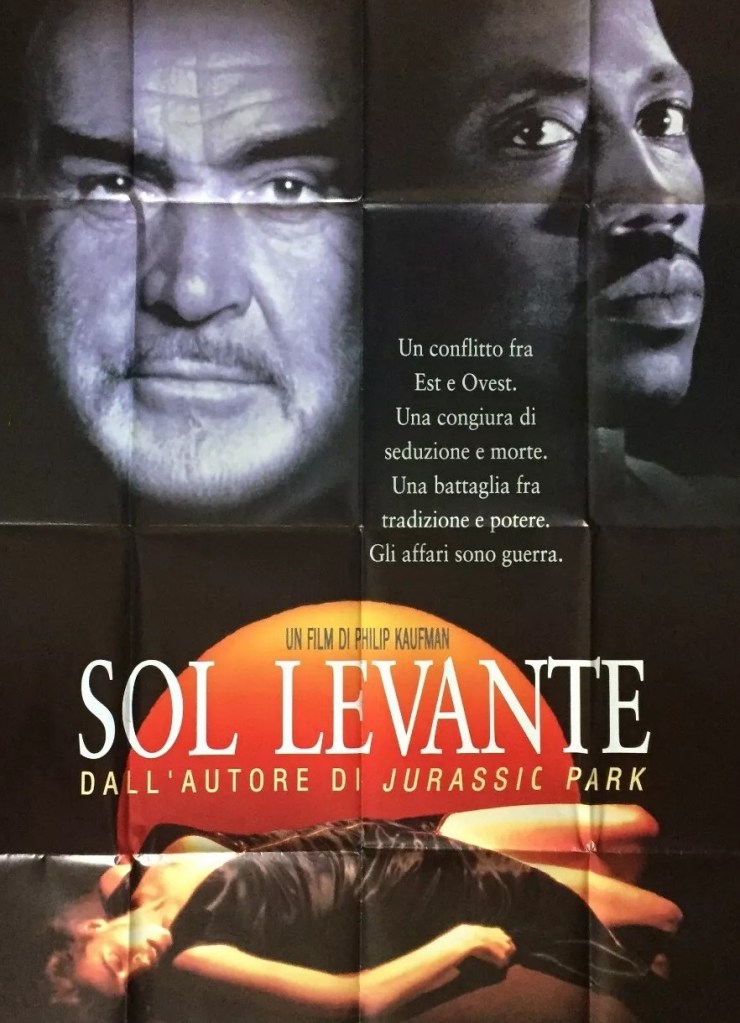
Will instantly connect with the contemporary audiences for two unusual reasons. First off, it’s the initial depiction of deepfake. Secondly, a major plot point concerns an aspect of the roughest kind of sex, erotic asphyxiation. These days you’ll find many women complaining that a partner’s addiction to porn has forced them into such dangerous experiment. Here, lending fire to the idea that it’s nothing but fun, is the notion that it’s the woman who’s desperate for such.
There used to be a standard Hollywood ploy of sticking a younger rising star alongside an established bigger name. After Top Gun (1986) Tom Cruise proved the best exponent of this, working with Paul Newman in The Color of Money (1986) and Dustin Hoffman in Rain Man (1988). The idea is that the younger fella will learn from the older (Newman and Hoffman proved top-class tutors, both winning Oscars).
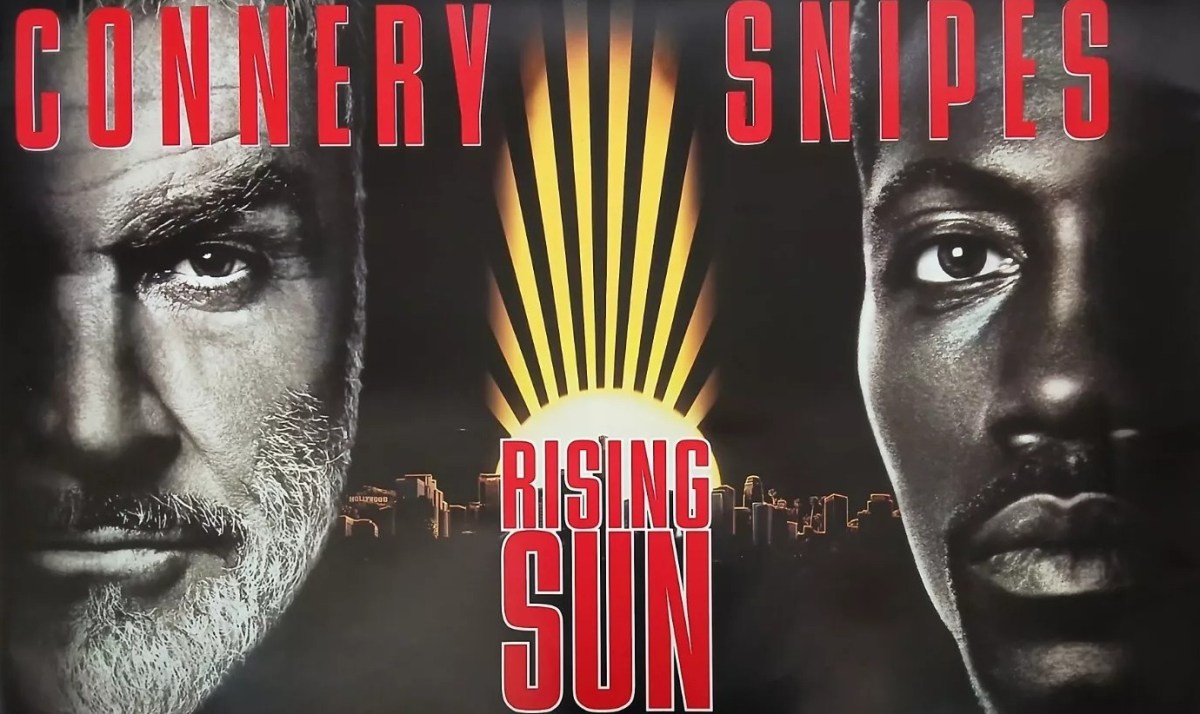
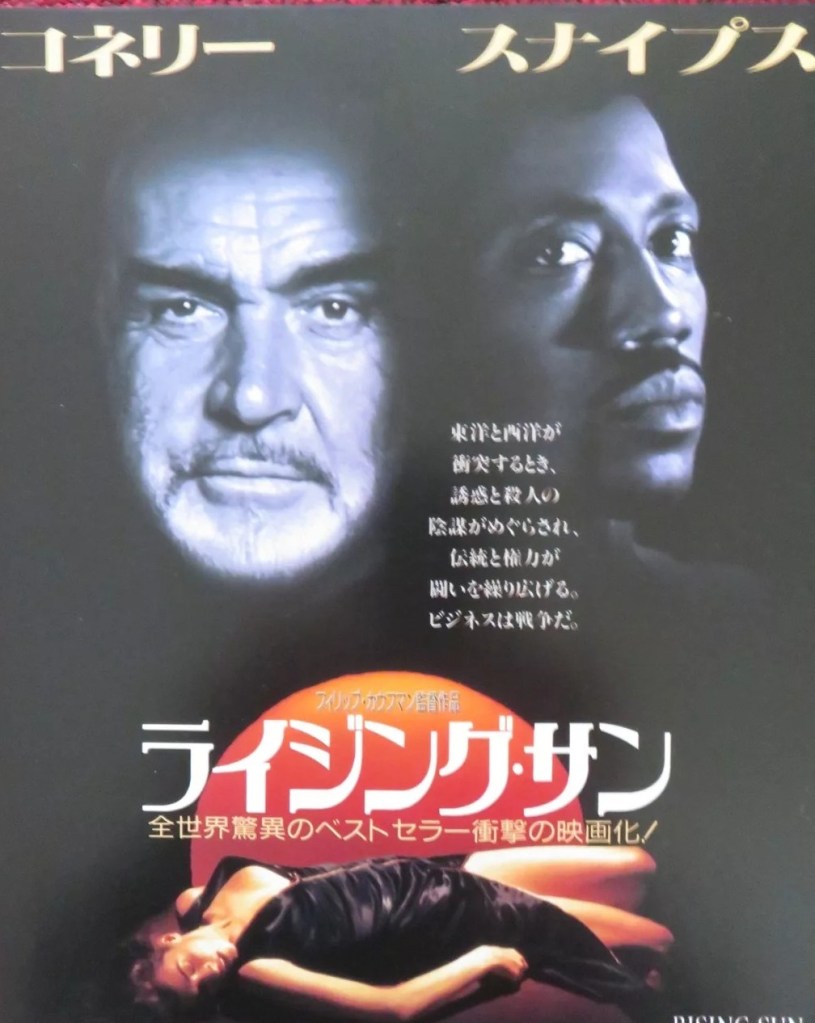
And in fact the narrative here actually takes up such an idea. Semi-retired cop Capt. John Connor (Sean Connery) plays mentor to Lt. Webster Smith (Wesley Snipes) when both are called out to act as liaison between investigator Tom Graham (Harvey Keitel) and the top brass of Japanese corporation Nakamoto where a murder has been committed. The death was initially dismissed as a sex game that went too far and as scarcely worth anyone’s time given the victim was a sex worker, Cheryl (Tatjana Patitz), sometime girlfriend of Japanese playboy and fixer Eddie Sakamura (Cary-Hiroyuki Tagawa).
Matters are complicated because Nakamoto is bidding to take over a key American computer manufacturer and because Senator John Morton (Ray Wise), who initially opposed the deal, is now in favor of a merger. Connor begins to suspect the Japanese have manipulated video recordings of the murder. Single father Smith, objecting to Connor’s involvement, is compromised by a secret past, exposure of which could potentially stop the investigation in its tracks. Slippery American fixer Bob Richmond (Kevin Anderson) is desperate to get a deal over the line.
While the intricate investigation is engrossing in itself, what really makes this fly, beyond another excellent performance by Connery, are the business machinations and the insights into Japanese culture. On the face of it, you might think this is an attack on the Japanese business machine, rampant at the time, but, in reality, my guess is the Japanese would love it for the way it shows American companies in their thrall.
In Japan “business is war” and companies gird themselves for battle by forming alliances that would be outlawed in America. An adept screenplay manages to seed a rich background, featuring elements of Japanese society that are both positive (criminals are generally caught plus caring for employees and “fixing the problem, not the blame”) and negative (racism is widespread). Connor, steeped in Japanese culture, able to move in the highest business circles, calling in favors, is our guide, but that’s never to the detriment of the overall picture, and instead adds welcome depth.
There’s a certain subtlety at work, too, the introduction of the single dad (treated seriously rather than for comic effect) a bit of a thematic coup for the times and Connor’s relationship with Jingo (Tia Carrere) is more fluid than you might expect, the older man leaving the “cage door open” should his younger lover find someone of her own age.
Three decades on from the cultural appropriation of A Majority of One (1961) when Hollywood elected Alec Guinness to play a Japanese man, there’s no shortage of players of Japanese descent to supply the movie with more authenticity. Mako had been Oscar-nominated for The Sand Pebbles (1966) while Stan Egi (Come See the Paradise, 1990), Clyde Kusatsu (In the Line of Fire, 1993) and Nelson Mashita (Darkman, 1990) flesh out the ranks.
Beard aficionados will welcome Connery’s stylish cut which, once again, serves as a shortcut to character – this is a confident, fashionable man. Sean Connery (The Man Who Would Be King, 1975) drives the movie, he’s always one step ahead even when the bad guys think they have him beat. Another top-notch performance from Sean Connery. Wesley Snipes (Passenger 57, 1992) wasn’t paying much attention to the free acting lessons handed out by Connery, not learning to rein it in, and, presumably to maintain his action cojones, is permitted some unlikely karate kicking. That last wasn’t in the book. There were only two other major changes from the book – adding a couple of early scenes with the victim and giving Connors a relationship with Jingo. Some of the book is heavily truncated for obvious reasons – you’ll wonder just what the heck is the purpose of Willy the Weasel (Steve Buscemi).
The screenplay by author Michael Crichton (Jurassic Park, 1993), director Philip Kaufman and Michael Backes in his debut, manages to fully convey the novel at the same time as squeezing in as many bon mots as possible without losing sight of the drama.
Philip Kaufman (Fearless Frank, 1967) makes the most of the rich material.
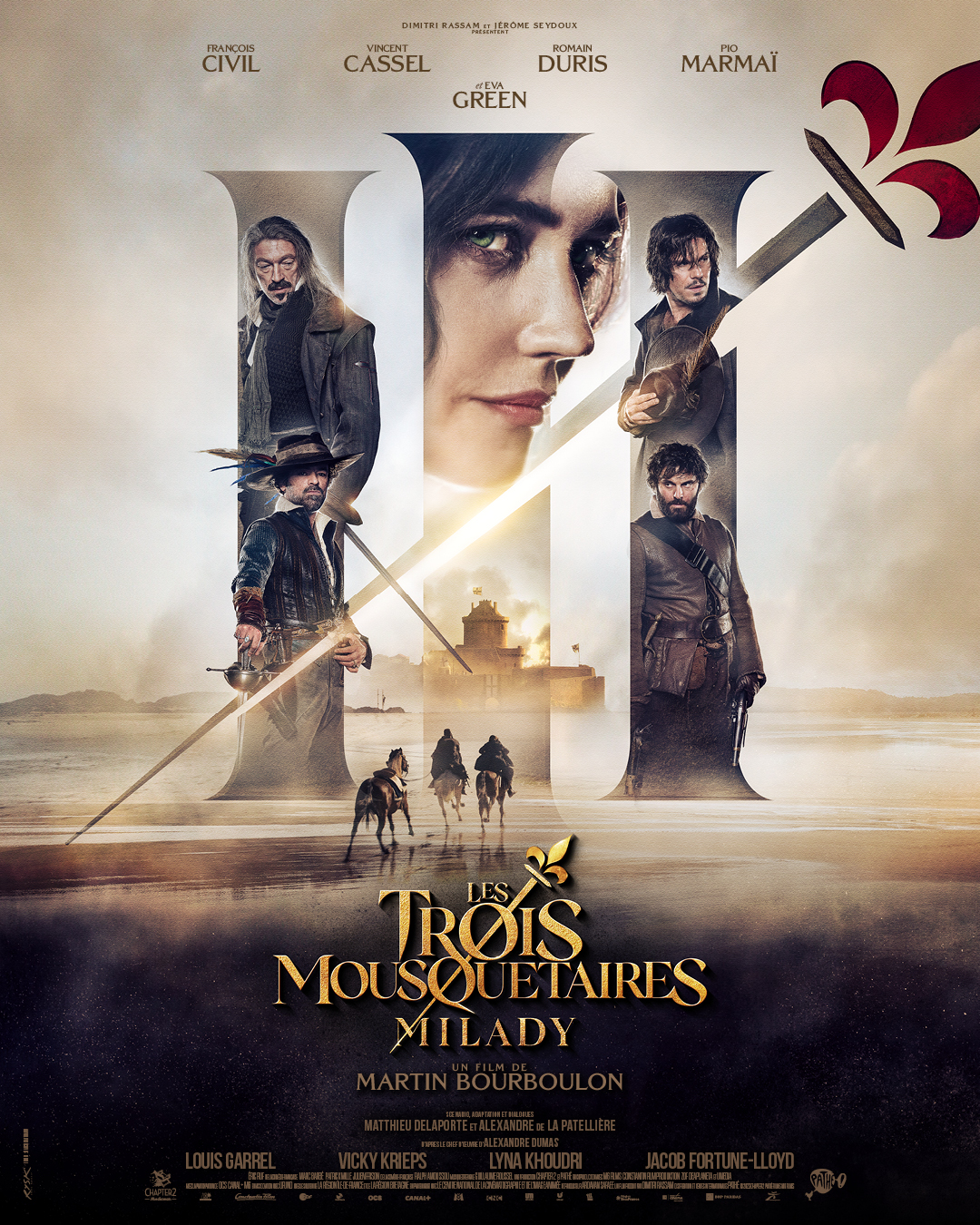
Cherchez la femme, as they say in French. Here, because everyone is doubling up (or doubling down, I never get that right, and it is of course a sequel), the narrative has our heroes (and these being four musketeers if you include D’Artagnan and not three) chasing all over France in pursuit of two women.
If you recall from episode one (and it doesn’t matter if you don’t because this starts with a neat re-cap), D’Artagnan’s (Francois Civil) girlfriend Constance (Lyna Khoudri) has been abducted after overhearing details of a plot to kill King Louis XIII (Louis Garrel), so he’s trying to find her. Meanwhile, everyone’s after Milady (Eva Green), the double-crosser’s double-crosser. In fact, to complicate matters, the movie begins with her being rescued by D’Artagnan.
As it turns out, that’s one of the easiest complications because unless you’ve got a PhD in French history, you won’t have a clue what’s going on, what with imminent English invasion, traitors inside the palace, eternal bad guy Cardinal Richelieu (Eric Ruf) and the French laying siege to their own port of La Rochelle. I’m guessing, because it’s not exactly plain, that the background is Catholic vs Protestant enmity.
I’d forgotten of course that our heroes are called musketeers for a reason and it’s not because they are swashbucklers, though they are pretty nifty with the sword, but the name indicates a certain dexterity with muskets. So, there’s rather a lot more guns being fired and buckles being swashed.
The 1932 version.
And you could be forgiven for thinking this is some kind of riposte to Downton Abbey because everywhere our heroes go there is sure to be some fabulous chateau or castle and all kinds of pomp and circumstance. It’s a tad overladen with characters and not all stand out enough. D’Artagnan doesn’t quite command the screen and of other trio it’s lusty Porthos (Pio Marmai) who steals the show, always ready with a chat-up line or falling down unconscious from alcoholic intake.
Milady is by the far the most interesting character, tying all the males in knots, escaping every type of peril, dodging the hangman’s noose and an inferno and setting up Part III with a clever climax. Although the period wasn’t rife with feminism, she is the poster girl, not just adept with any weapon (including teeth), but detailing what it’s like to be eternally molested by men.
Constance, on the other hand, is as dumb as they come. The scene that allows D’Artagnan to wallow in pathos, you can’t help howling with laughter because the stupid girl has brought on herself a pitiless fate.
Sets quite a pace, but sometimes it’s hard to keep up with the politics and who is romancing who, and why someone who has been helpful in the past now has to be bumped off.
I hope this has earned its big budget back in France because I doubt if it will do well anywhere else.
Feels like director Martin Bourboulon (Eiffel, 2021) has bitten off more than anybody can chew.
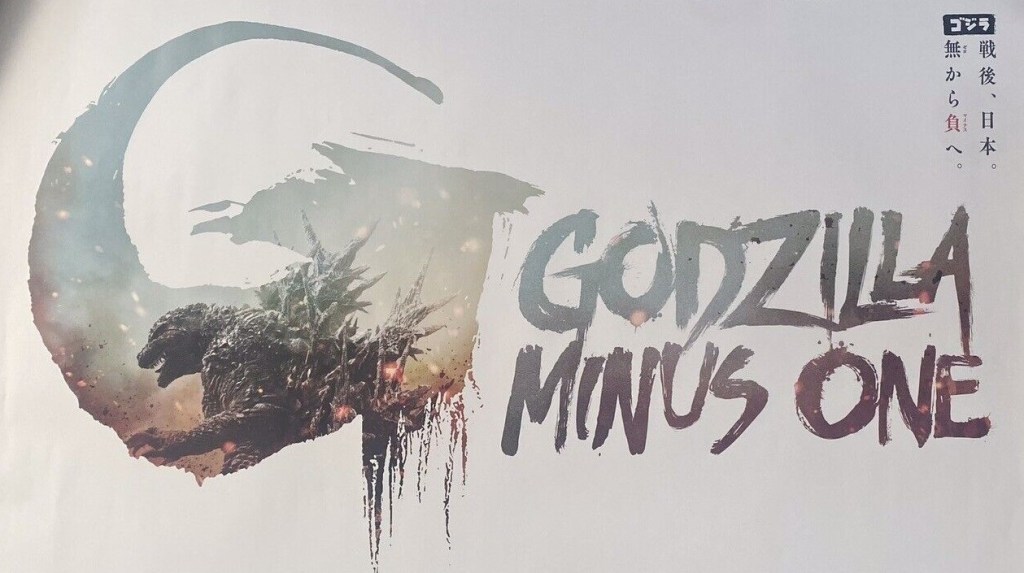
Godzilla Minus One
Not just a remake but, as it turns out, a prequel. It’s nipped in early, ahead of the next vehicle in the recycle business Kong vs Godzilla due out next year.
In this Japanese version, made by Toho Studios which was responsible for the 1954 original, the timeline is 1945-1947. It kicks off at the end of World War Two with cowardly Japanese kamikaze pilot Skikishima (Ryonusuke Kamiki) unable to pull the trigger as the monster emerges from the depths. Fast forward to U.S. nuclear tests on the Bikini Atholl, and the creature now mutates with devastating impact on the mainland.
By this point, Skikishima has acquired an orphaned baby and takes on a job on a minesweeper (his trigger finger now put to good use) destroying the thousands of mines left behind after the war so he’s in the front line when the monster re-emerges with an atomic heat-ray in its arsenal, never find those stomping feet and destructive tail.
There’s some clever scientific ruses to destroy Godzilla involving Freon tanks (whatever they are) and some jiggery-pokery to lower the water’s buoyancy (what now?) but basically as you might expect it’s mostly our favorite monster decimating cities and taking on every warship and airplane that the country can throw at it.
It’s pretty good fun but you might find it hard to sympathize with a kamikaze pilot.
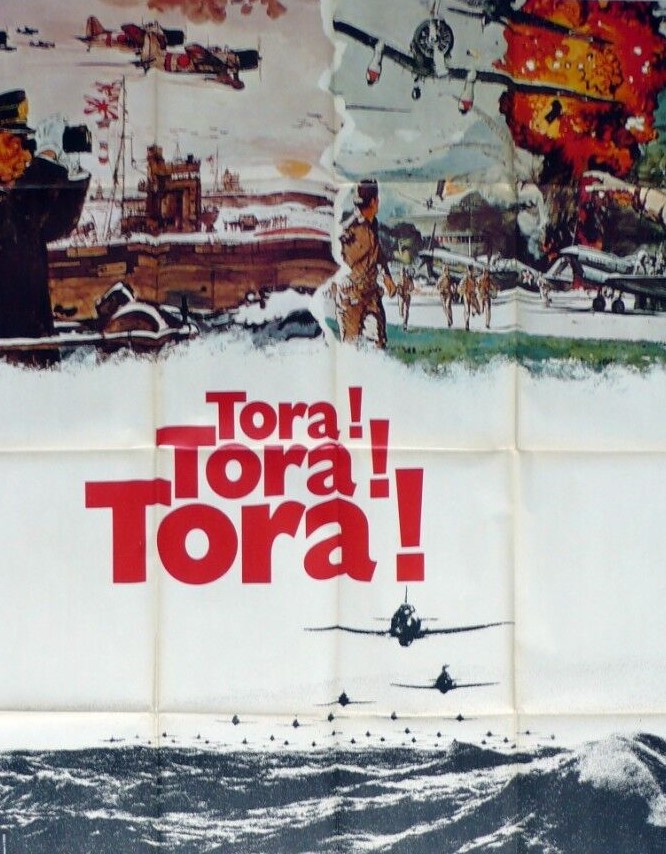
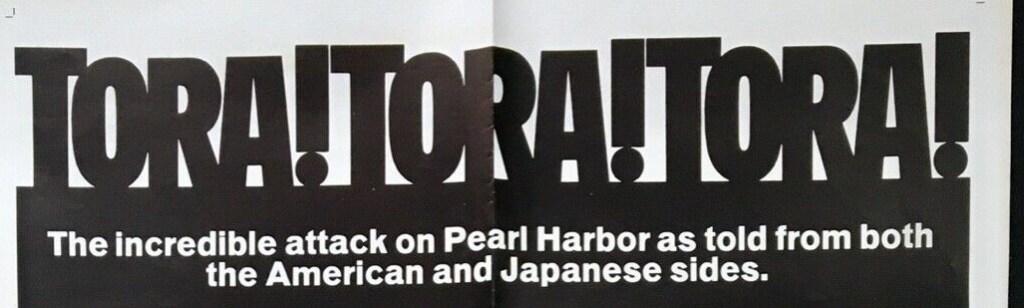
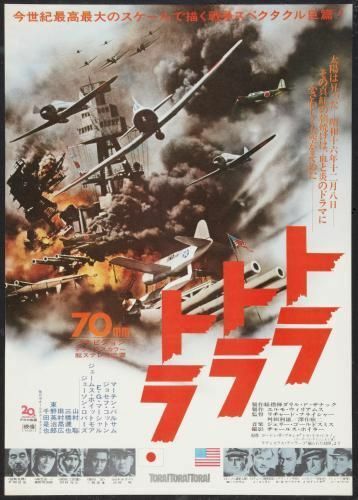
Thankfully devoid of the empty triumphalism that marred In Harm’s Way (1965) and Pearl Harbor (2001) and the gritty backs against the wall heroism and snatching some kind of victory from the jaws of defeat of The Alamo (1960) and Zulu (1964), and with a documentary-style approach much more acceptable these days than then, there is an immense amount to appreciate and absorb in this last-gasp 70mm roadshow from a financially flailing Twentieth Century Fox.
Shorn, too, of the traditional all-star cast bar Jason Robards (Hour of the Gun, 1967) – who might not count – nor the regiment of rising talent stuffed into such epics in the hope one might catch the eye and float to the top. And there’s no room to ram in a distracting romance such as in the previous and future films focusing on the military disaster. Instead, stuffed with dependable supporting players like Martin Balsam (Harlow, 1965), E.G. Marshall (The Chase, 1966) and James Whitmore (The Split, 1968) stops audience rubber-necking in its tracks, unlike producer Darryl F. Zanuck’s previous The Longest Day (1962), in favor of forensic analysis of what went wrong in the defence and what went so brilliant right in the attack.
Like most of the best war epics – The Longest Day, Battle of the Bulge (1965), taking an even-handed approach in presenting both sides of the battle, except here you could argue considerably more time is spent with the Japanese, beginning with the opening credits where the camera floats in and around a giant battleship. Despite the sudden attack which went against all the traditions of war – a timing error apparently – the Japanese are presented as honorable and even arguing against going to war as well as worrying about the consequences of poking the tiger.
And there is none of the endless owing and scraping and not attempting to rise above your station in the traditional Western-view of the Japanese. Here, from the outset, superior officers are questioned possibly in manner that would be permitted among the opposing forces.
The first half is given up to the superb organisation of the attack, including the bold use of using aerial torpedoes – proven to work by the British in an earlier assault on a harbor without the apparent depth of water required – and contrasting it with the general U.S. ineptness, bureaucracy, interdepartmental battles and overall lack of preparation even though several personnel believed an attack imminent. The Yanks had even broken the Japanese codes so could easily have taken heed of obvious omens, had working radar on site though its employment was handicapped by being limited to three hours a day and initially lacking a means of communicating findings. Someone had even worked out that the Japanese would need six aircraft carriers to mount an attack and that the ideal time would be early morning on a weekend, someone even predicting an attack down to the exact time except a week out.
Of course, the U.S. at this point was not at war and so could be excused switching off in the evening or being uncontactable in the morning because they were still out carousing from the night before or sedately riding a horse. While there is a growing sense of alarm, the chain of command is woefully stretched often in the wrong direction and at one point stops before it reaches the President.
Fearful of sabotage, the Americans shift planes away from the perimeter of airfields smack bang into the runway where they can be more easily destroyed. Perhaps the greatest irony is that in shifting the U.S. fleet from its home base in San Diego, the Americans made such an attack possible.
When it gets under way, the battle scenes are superb, especially given none of the CGI Pearl Harbor could call upon, and yet with the U.S. aircraft carriers by luck still at sea failed to deliver a killer blow for the Japanese.
It’s handled superbly by director Richard Fleischer (The Boston Strangler, 1968), Kinju Fukasaku (Battle Royale, 2000) and Toshio Masuda (The Zero Fighter, 1962). The American flaws are dramatized rather than being dealt with by info-dump. Larry Forester (Fathom, 1967) and long-time Akira Kurosawa confederates Hideo Oguni (Ikiru, 1952) and Ryuzo Kikushima (Yojimbo, 1961) fashioned a sharp screenplay from mountains of material.
Long rumored to be a box office flop it turned out to have made a decent profit, albeit not in the U.S.
The documentary approach adds immensely to the movie and it remains one of the all-time greats precisely because of the lack of artificial drama.
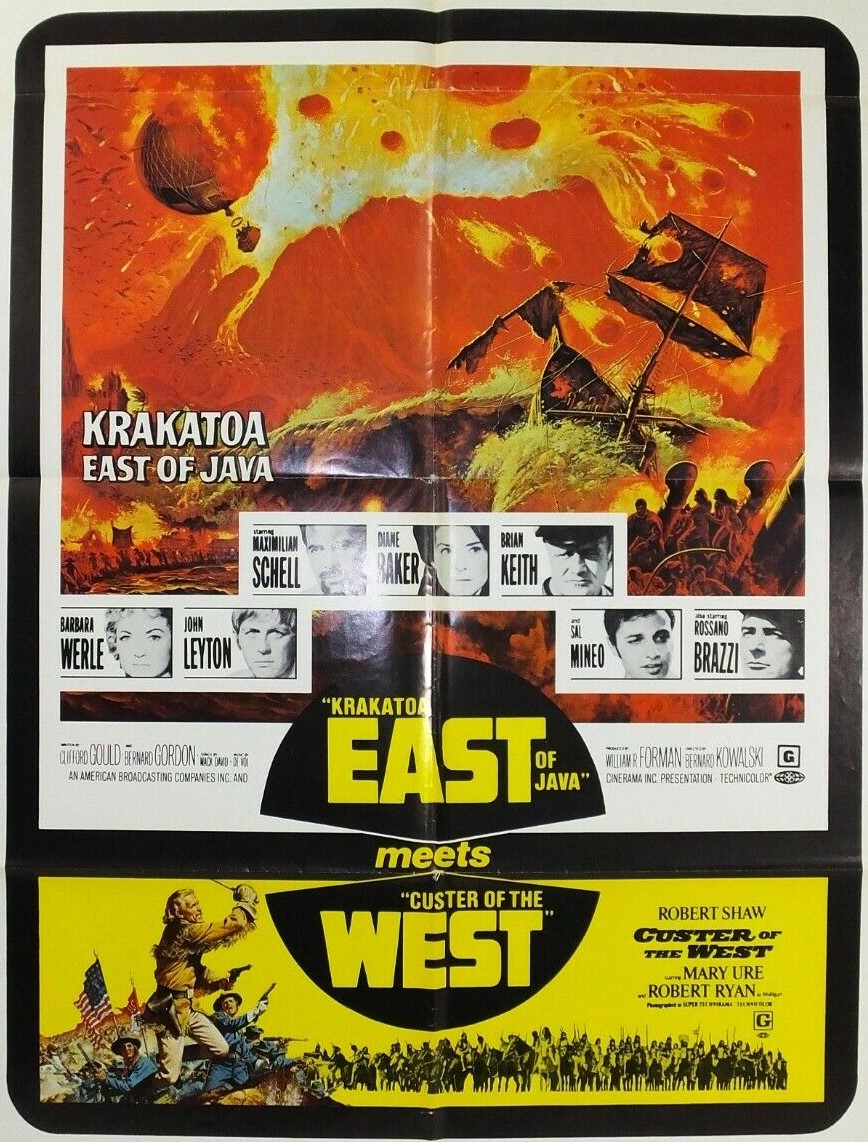
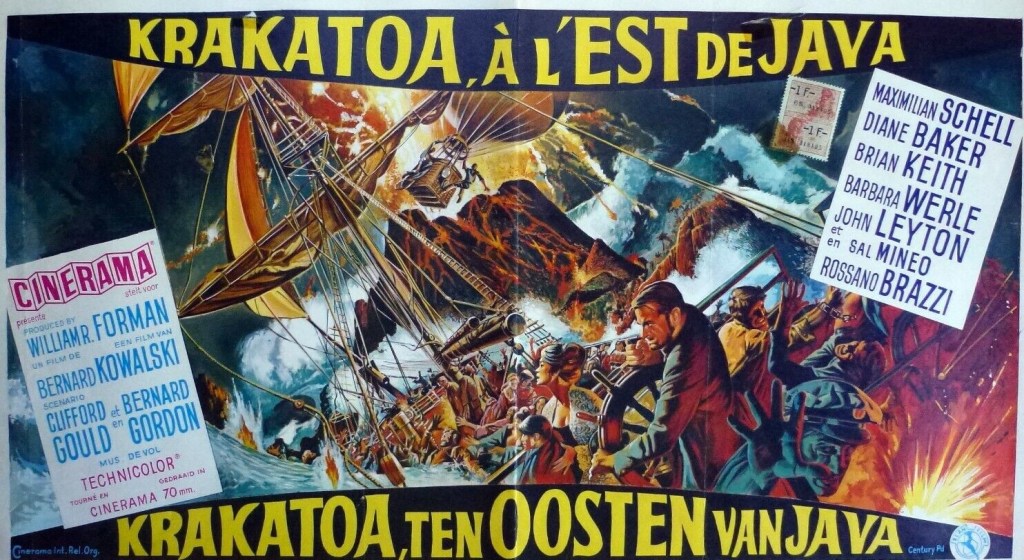
When two pictures made in the Cinerama process – Custer of the West (1967) and Krakatoa East of Java (1968) – didn’t make it onto the U.S. roadshow circuit, the industry was in shock.
There were two reasons for the unexpected decision – distribution logjam and cash flow. For a start you needed deep pockets not just to launch a movie in roadshow but to keep it there bearing in mind the ongoing outlay in interest costs for the production and the longer advertising schedule. That is, if you could find enough available cinemas.
Although there was still a production shortage as far as the general cinema marketplace went, that was not the case for first run. By 1967, studios were not dependent on roadshow for hits. In 1966, only one roadshow featured in the box office top ten. In 1967, the number rose to three. But that still meant the vast majority of first run movie theaters never ran short of product, especially when, should all the regular roadshow houses be already taken, they might be called upon to host a roadshow for a month or two.
Some movies – The Blue Max (1966), for example – which had not been made with roadshow in mind, were launched in a handful of cinemas as roadshow for prestige purposes. Conversely, other movies, produced with the express aim of being released in the roadshow format, skipped that element of the distribution chain and went straight into general release. The Great Race (1965) was shown in hard-ticket only in the Pantages in Los Angeles, but first run general release elsewhere. In Harm’s Way (1965) lasted just one day in roadshow.
But neither had been made in Cinerama which was considered the bedrock of the advance-booking separate-performance high-ticket-priced roadshow. There were two problems with that format and that company. The first was that cinemas equipped to show Cinerama were far fewer than those who could accommodate roadshow, so if they were full to capacity with existing pictures, opportunities to open elsewhere were not only limited but undesirable.
The second was that while in the past major studios had lined up to use the Cinerama format for their movies – Warner Brothers for Battle of the Bulge (1965), MGM for Grand Prix (1966), for example – now Cinerama had decided the company was best served by it taking control of output rather than sharing potential profit with anyone else.
Rather than simply licensing its film-making and projection equipment to studios and cinemas, respectively, and taking a small percentage of picture grosses and a fee for every ticket sold, Cinerama embarked on a bolder strategy. It would turn into a major production outfit – the dozen movies in its first tranche included, as well as the two roadshows, Charly, Shalako, The High Commissioner/Nobody Runs Forever, Candy and Stiletto. It also aimed to virtually double the number of cinemas equipped to show Cinerama, so there would be no shortage of roadshow outlets for its most prestigious pictures productions, and set up its own global distribution system.
But since Cinerama no longer had alliances with major studios, and in fact was now hellbent on competing with them, it lost those studios’ relationships with the big roadshow cinemas in New York and Los Angeles. There were only two houses in New York equipped with Cinerama, and Warner owned one and MGM had an almost symbiotic partnership with the other – Loews. That meant no place initially for Custer of the West.
But there was another option. Open it overseas. Roadshows often played for longer in European capitals than they did in New York or Los Angeles and those cities were often inclined, when demand was at its highest, to switch a big first run house into a roadshow theater.
And there was precedent. MGM had opened How the West Was Won (1962) in the Casino Cinerama in London ahead of its Stateside roadshow release. The Cinerama western had cleaned up, record takings, a massive run into the bargain, all serving to heighten expectation across the Atlantic. So, Cinerama opened Custer of the West in that cinema with top seats costing $3.50 and separate performances (two a day, three at the weekend) and to initial public and critical success.
The much-touted “record” opening week disguised the fact that the only record it took down, and then only by $200, was that of How the West Was Won five years previously; Battle of the Bulge’s opening salvo of $41,608 remaining intact. In any case ticket sales soon tailed off and Cinerama had second thoughts about the cost and wisdom of opening it in roadshow in the U.S. especially when the lack of theaters would produce further delay.
So it took another strategic, possibly perilous, route in deciding to miss out New York and Los Angeles – and Boston and Chicago for that matter – from its initial roadshow roll-out. The assumption was that big box office elsewhere would soon have New York and LA houses queuing up. The film’s U.S. premiere took place in Dallas and Houston on January 24 and it managed another 15 roadshow bookings in the months following.
Except for a “big” $15,000 in Detroit, the other opening week results were so soft – “fairish” $8,500 in Cincinnati, “just okay” $7,000 in Kansas City, $4,000 in Portland which was less than the previous week’s run-of-the-mill picture – the studio called for a rethink. “Due to spotty out of town dates thus far it seems an unlikely bet for New York roadshowing,” opined Variety. And so it proved. Cinerama promoted its general release as “direct from reserved-seat engagements” but it fared little better, a “thin” $171,000 from 34 houses in its first New York salvo.
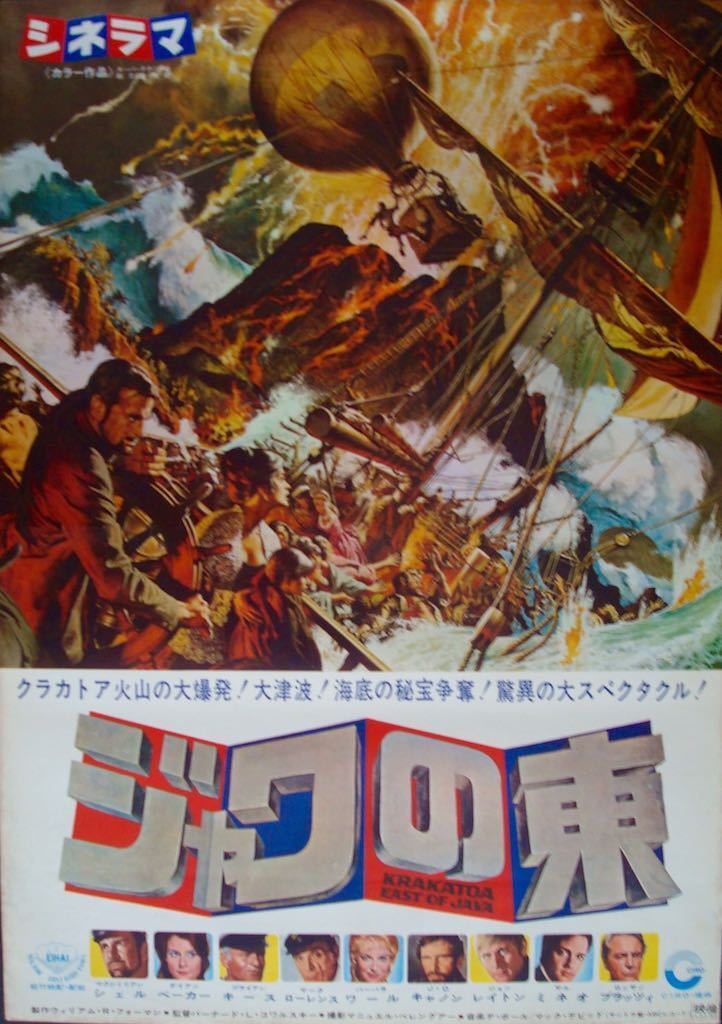
With none of its ambitious slate beyond Charly striking box office gold, Cinerama tore up the rule book for Krakatoa East of Java. In some respects it followed the launch template of Custer of the West with the movie being seen first overseas, world premiere this time in Japan, six months ahead of the May 1969 U.S. opening. But the London launch, at the Astoria – where it ran for nearly six months – came after, on July 31, not before.
But there was clearly an unwillingness to risk all in roadshow. So, Cinerama came up with a clever compromise. While not strictly speaking entering roadshow in that it abandoned advance booking and high ticket prices, it stuck to separate performances but, to compensate for potential loss in box office receipts, operated on four performances daily rather than two. Cinerama called this “scheduled performances” and it was somewhere between roadshow and general release. But it was initially screened in Cinerama in those houses equipped with the projection equipment and only after those semi-hard-ticket bookings were complete did it enter general release.
Even without roadshow, the movie exploded onto screens on opening weeks – a “big” $60,000 in New York (and $55,000 in the second week), a record-breaking $31,764 (and $36,345 in week three) at the Pacific Cinerama Dome in Los Angeles, a “giant” $50,000 in Cleveland, “hotsy” in Detroit with $36,000, $22,000 in Denver and a “mighty” $18,000 in Washington.
Between the Dome (a genuine roadshow with 14 performances a week) in Los Angeles and the Broadway Cinerama (the hybrid with double the performances per week) in New York it grossed $1.2 million. Overall, the various hard-ticket strands kept the movie on screens for most of the summer and into the autumn before a general release targeted for Thanksgiving and Xmas kept up the box office heat.
The studio put an unusually hefty marketing push behind the general release. Having gone round the houses, literally, once with promotional ideas, the company rejigged the best ideas and brought in new suggestions. But, basically, the word to new exhibitors was to learn from successful strategies used in the semi-hard-ticket release. “Rather than rest on its laurels,” the studio packaged the best ideas into a six-page A4 advert and stuck in in Box Office magazine. It knew what worked and just wanted to repeat and expand the process.
One of the marketing coups for the New York launch had been a giant outdoor sign in Times Square, at 265ft long and 62ft high the largest ever designed. The film’s artwork employed in this fashion attracted the attention of thousands of passers-by and served as an example of how the marketing material could work, even if on a smaller scale.
Exhibitors were instructed to target department or chain stores. The launch had found ready cooperation not just from Macy’s but discount store White Front, specially chosen to promote the “price reduction” idea, of a big movie at low prices. It was standard practice for roadshows going into general release to be advertised as “now at regular prices” but the idea of harnessing the mindset of a discount chain, associated with low prices, set a precedent.
There were the obvious routes – tie-ups with record stores and bookshops for the soundtrack and the Signet paperback – but the studio had also made available a reprint of an article on the Krakatoa eruption from Reader’s Digest magazine in 1946, and provided a Teacher’s Guide for schools. Educational avenues were heavily explored, and what teacher would not have an eager audience of young kids to be taught a lesson about volcanoes.
Where the semi-hard-ticket launch had secured the presence of Miss Java, it was suggested that local exhibitors should try and find someone of Indonesian origin, perhaps an exchange student at a local college, to participate in the local screenings. Pearls and balloons, intricate parts of the movie’s narrative, had been used in a big way for the launch, but still lent themselves to simpler exploitation, fake pearls could be given away and colorful balloons if a weather balloon could not be located nearby. The extra effort that went into the general release paid off.
The New York showcase popped a “smash” $430,000 from 31 houses. The company reissued Krakatoa East of Java and Custer of the West in a giant “East Meets West” double bill in 1971 in advance of the television prmeiere of the former two years later.
Overall, while Custer of the West was considered a flop in the U.S., Krakatoa East of Java qualified as a hit of modest proportions, and both movies did well globally. But by 1969, setting aside the $18 million it cost to turn Cinerama into a genuine studio with its own distribution arm, the company had turned a financial corner, and in 1970 income had soared to $46 million – up from $12 million – and there was at last a profit ($3.2 million) instead of a loss ($660,000).
Exactly how much Custer of the West and Krakatoa East of Java contributed to the overall turnaround is impossible to determine because for some arcane reason the studio refused to reveal rental figures even though it had been happy to supply them for other movies which had contributed to the uplift such as Candy, Charly and The Killing of Sister George.
Most film historians point to the flop of several big-budget pictures as the reason for the demise of the roadshow, but just as likely was the move by Cinerama to shift away from the roadshow format in favor of its hybrid, which retained some of the “special event” aspects of the roadshow release while pushing ahead on the more commercial approach of lower prices matched by more daily performances, effectively attempting to bring in revenue at a faster speed, which would be the determined aim of studios in the following decade. The Godfather (1972) might be considered the classic imitator.
SOURCES: Kim R. Holston, Movie Roadshows, A History and Filmography of Reserved-Seat Limited Showings 1911-1973 (McFarland, 2013) p266-267; “Custer Pulls a Record $33,245 in London Bow,” Variety, November 22, 1967, p13; “Cinerama Sanguine on Custer After London; Gets U.S. Roadshowing,” Variety, November 22, 1967, p13; “New York Sound Track,” Variety, February 14, 1968, p18; “N.Y. Roadshow Problem for This & Next Season with Theater Map Torn Apart,” Variety, March 29, 1968, p5; Advert, Box Office, April 29, 1968, p1; “Krakatoa – 3-Site Premiere in Tokyo,” Box Office, January 20, 1969, pE1; “Krakatoa in Paris,” Variety, January 29, 1969, p4; Advert, Variety, May 21, 1969, p35; Advert, Variety, June 11, 1969, p31; “Krakatoa Shuns Roadshow,” Variety, July 9, 1969, p15; “Krakatoa London Bow,” Variety, July 2, 1969, p34; “Picture Grosses,” Variety, July 2-16, 1969; “General Release Set for CRC’s Krakatoa,” Box Office, November 3, 1969, p9; “Merchandising The Picture, ” Box Office, November 17, 1969, p13-18; “New York Showcases,” Variety, December 3, 1969, p9; “West End,” Kine Weekly, January 3, 1970, p9;“Cinerama’s Big Year,” Variety, March 25, 1970, p4.
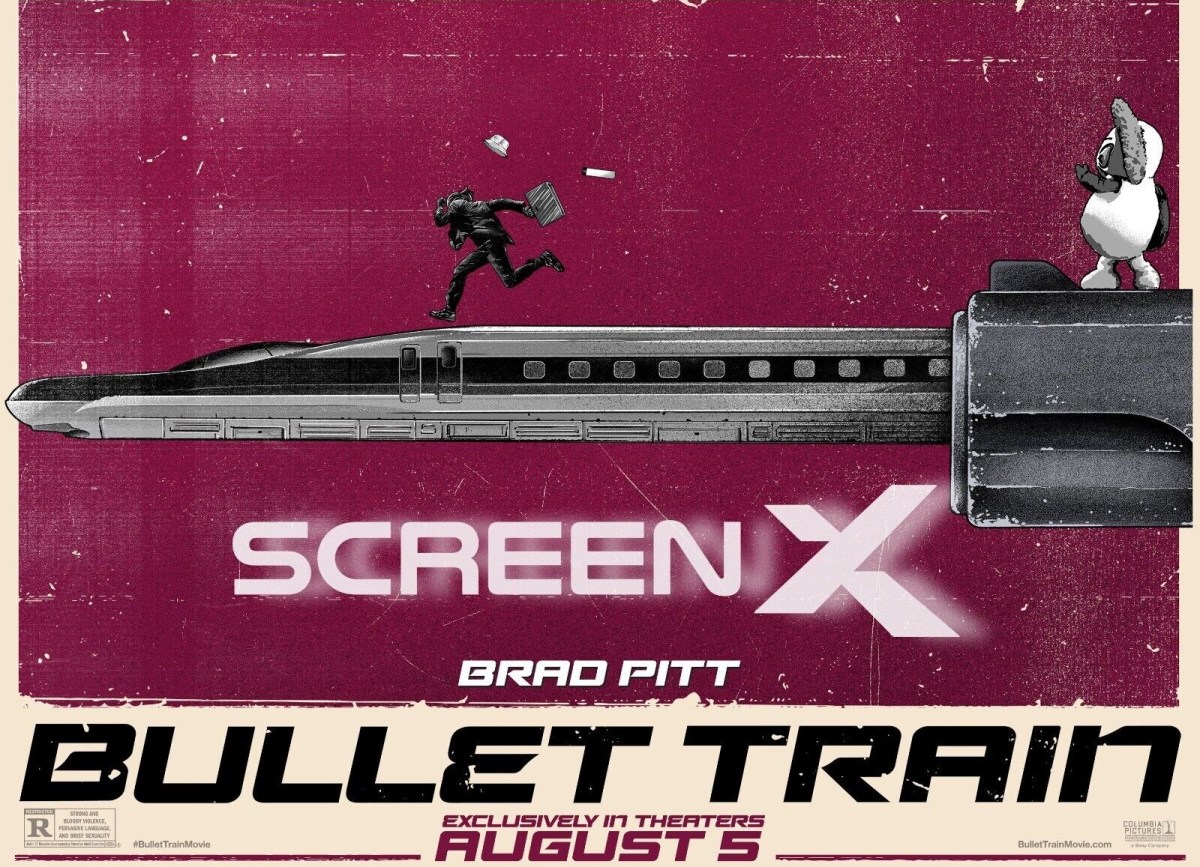
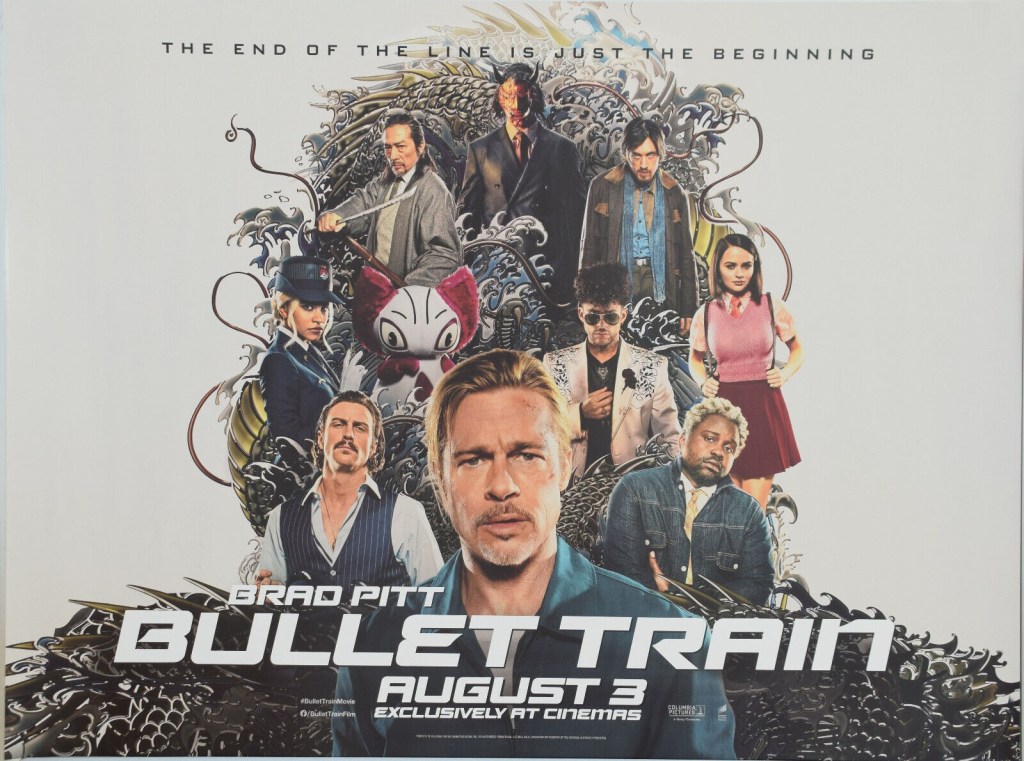
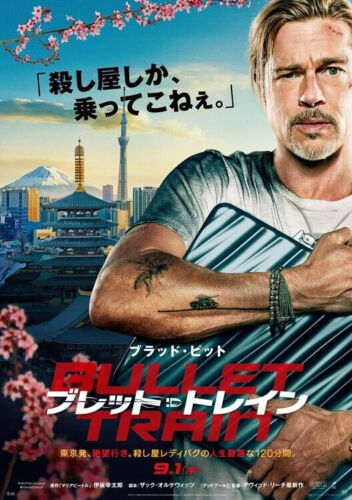
What a blast! What a gas! And what the heck’s wrong with critics? Complaining Hollywood lacks originality and turning their noses up at this helter skelter of a thriller that hits eleven from the outset, maintains a hectic pace, and boasts gut-busting laughs.
The plot’s as complicated as it is simple. A bunch of assassins on a train trying to steal a suitcase containing ten million dollars discover they are taking the ride for another reason. Finding out they have competition, not just on board, but on various train station platforms, lends to the complications as they – and the viewer – try to work out just what the hell is going on. While there’s some great dialogue, for most of these guys fists and guns are their easiest means of communication so cue some fabulous action sequences.
Twin English hitmen Tangerine (Aaron Taylor-Johnson) and Lemon (Brian Tyree Henry) are the original messenger boys, tasked with delivering the loot from Tokyo to Kyoto on the titular train along with the son of a notorious gangster. Lemon, not the brightest gun in the arsenal, has left the case on a communal luggage rack where first off it is snaffled by Ladybug (Brad Pitt), as ethereal an assassin as you could wish for, and one in denial, preferring a more spiritual outlet for his skills. But guys who are good at killing people are less efficient at holding onto suitcases.
And so the prize bounces from character to character, including Kimura (Andrew Koji), the Wolf (Bad Bunny), Hornet (Zazie Beetz) and Prince (Joey King). Did I mention there was a deadly snake aboard and that the ultimate gangster going by the moniker of The White Death (Michael Shannon) was lying in wait? No? I didn’t want to overcomplicate matters.
Every time the various assassins, who specialize in different murder techniques, think they are getting to the bottom of the mysterious goings-on the movie virtually jumps track to head down a different route, but it does so with such elan and verve that you can’t wait for the next wrong turn.
The characterisation is as good as anything dreamt up by Tarantino, the oddbeat characters dancing to their own odd beat, the squabbling Tangerine and Lemon almost steal the show from Ladybug who believes he is suffering from a run of bad luck. And like he’s caught up in the wrong movie, Ladybug confides his thoughts to his offscreen handler Maria (Sandra Bullock). Wistful schoolgirl Prince can talk her way out of any situation. But as I said, the others prefer to just beat up their rivals.
So stand by for some of the greatest action this side of Jason Bourne and John Wick. And some of the dumbest moves this side of Dumb and Dumber. You’d think the action/comedy fusion wouldn’t work at all but the way director David Leitch plays with our expectations the whole shebang works beautifully. Though I wouldn’t describe it as such, more like an action picture that happens to make you laugh.
Part of the reason the action is so terrific is Leitch is a former stuntman, who must dream fights in his sleep, because he’s certainly dreamt up some original mano a mano stuff here. But he’s also the uncredited co-director of John Wick (2104) and sole helmer of Deadpool 2 (2018) and Fast and Furious Presents: Hobbs and Shaw (2019) so he’s no stranger to mixing action and comedy. And he takes a fluid approach to narrative.
But the laidback Brad Pitt (Ad Astra, 2019), almost a Bill Murray throwback, is absolutely superb, an Oscar worthy performance, a character re-examining his life in the midst of an assassins convention, and trying not to blame anyone attempting to kill him. Brian Tyree Henry (Joker, 2019) is the pick of the supporting cast. It’s a step up for Aaron Taylor-Johnson (The King’s Man, 2021), who plays the most irascible gangster since Daniel Day-Lewis in Gangs of New York (2002). The outstanding supporting cast is mostly made up of up-and-comers – Joey King (The Kissing Booth 2, 2020), Zazie Beetz (Lucy in the Sky, 2019), Andrew Koji (Snake Eyes, 2021) – plus Michael Shannon (Heart of Champions, 2021) and Sandra Bullock (The Lost City, 2022) and cameos from Channing Tatum (The Lost City) and
The only minor quibbles are overuse of references to British kids fave Thomas the Tank Engine which may not be such a global phenomenon as the director would like, leading I would guess to some audience bafflement in the U.S., as might occasional mention of London soccer team West Ham, both key to the lives of Tangerine and Lemon.
Leitch owes an almighty vote of thanks to screenwriter Zak Olkewicz (Fear Street, Part Two -1978, 2021) who not only pulls the whole package together but springs brilliant lines and situations though how much was lifted directly from the source book by Kotaro Isaka I couldn’t tell you.
Can’t wait for the sequel. Brad Pitt has created a brilliant screen character that deserves a second outing.
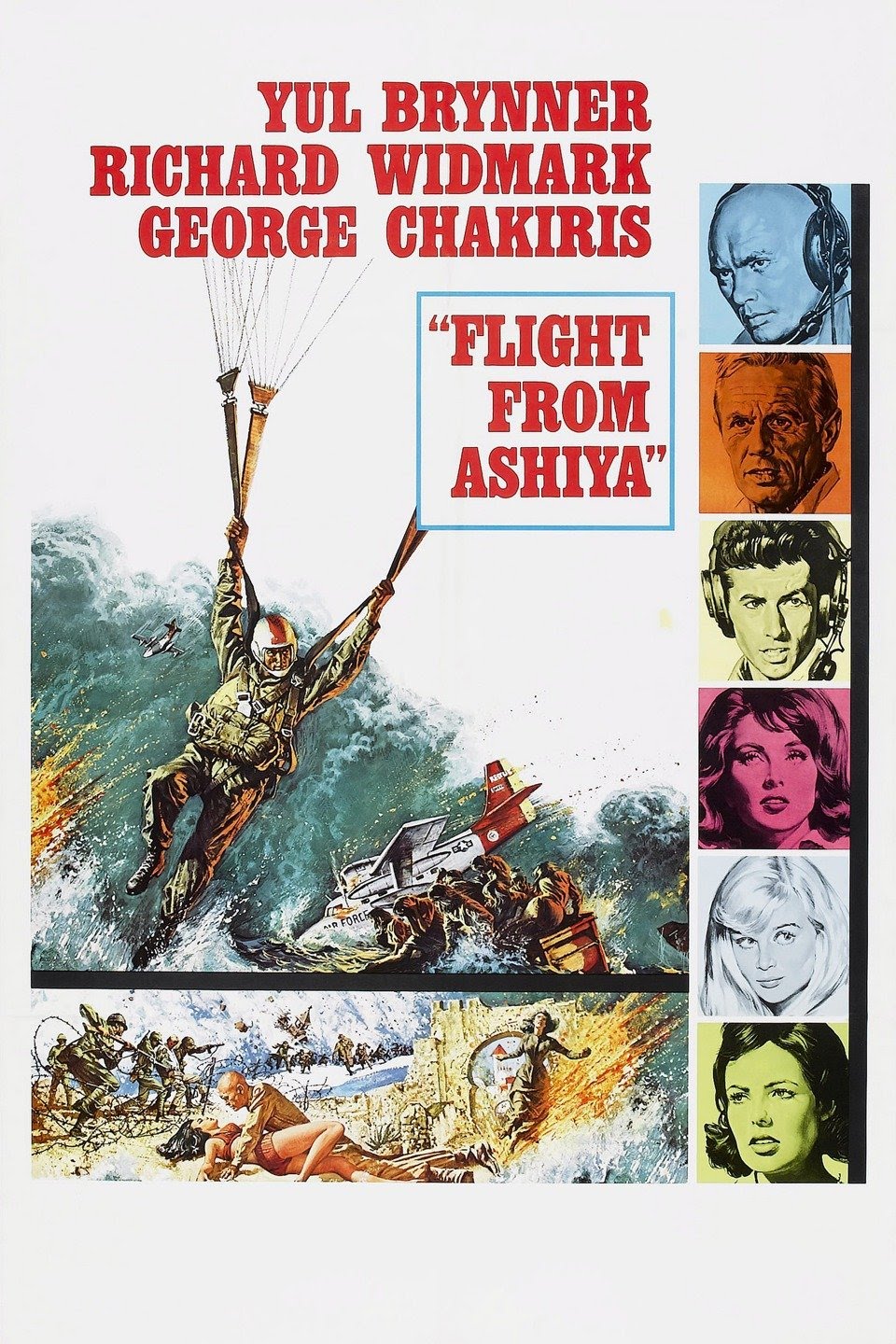
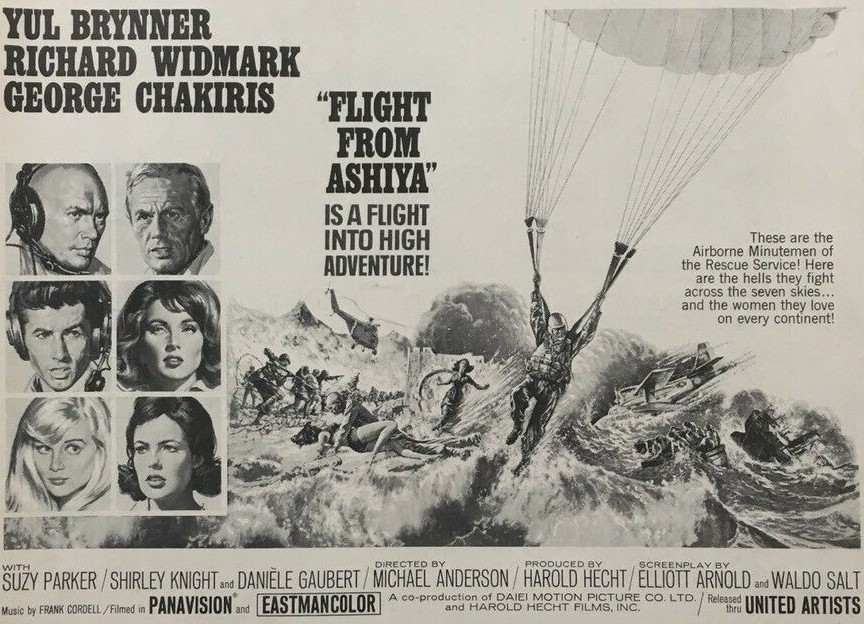
A post-WW2 operation to save a handful of Japanese adrift at sea in a storm is endangered when three members of the U.S. Air Force Air Rescue Service confront conflicts from their past. Despite tense rescue action, this is basically a three-hander about guilt and how men deal – or fail to deal – with emotions. Extended flashbacks illuminate the tangled relationships between Yul Brynner, Richard Widmark and George Chakiris.
So really it’s like one of those portmanteau films that were occasionally popular – like Trio (1950) made up of Somerset Maugham short stories or the more recent The VIPs (1963) or The Yellow Rolls Royce (1964). Each of the episodes stands up in its own right, actions taken in the past having a direct bearing on the present situation. Chakiris is haunted by causing an avalanche after flying his helicopter too close to a mountain and by having to leave behind many of the victims, due to restricted capacity on board, and now he is terrified of flying solo.
As a consequence, Widmark has no faith in abilities as a pilot. Widmark has an ongoing hatred of the Japanese – colleague Brynner of Japanese ancestry also bears his wrath – because his ill wife (Shirley Knight) and child died in a Japanese prisoner-of-war camp where medical supplies were reserved for the Japanese. Faced with rescuing Japanese, he is enraged. For his part, Brynner, as a paratrooper during the war, inadvertently caused the death of his Algerian girlfriend.
It’s not so much an examination of tough guys under pressure as about their inability to deal with the consequences of action. There’s certainly a sense that the only way men like these have of dealing with trauma is to throw themselves further into harm’s way. Unusually, at a time when product was in short supply and for a film boasting a strong cast, the picture was shelved for two years after completion. Michael Anderson (Around the World in 80 Days, 1956) directed.
The title’s a bit of a misnomer, suggesting someone is trying to escape from Ashiya when, in fact, that is just the name of the air base where the rescue team are located. Critics complained it was neither one thing nor the other, but in fact I found it a perfectly satisfactory combination of action and drama, especially as it dealt with rarely-recognised male emotions.
Many of the films from the 1960s are to be found free of charge on TCM and Sony Movies and the British Talking Pictures as well as mainstream television channels. But if this film is not available through these routes, then here is the link to the DVD and/or streaming service.
Stars rarely get to choose when they want to retire. Usually, the phone stops ringing, or they slide down the credits until no one can remember who they once were, or they end up in terrible international co-productions, or like Tyrone Power (Solomon and Sheba) they die on the job or, like Spencer Tracy, because of it.
Cary Grant, on the other hand, went out at the top, or near enough, after a string of box office winners, including this one, throughout the Sixties. If you are more generally familiar with Grant through Hitchcock thrillers or Charade, you might have forgotten his comedy expertise. He was a master of the double take and the startled expression – and he needs that here in what is sometimes a pretty funny farce.
The set-up is peculiar. Grant is a businessman landing in Tokyo two days before the 1964 Olympic Games with nowhere to stay and ends up sleeping on the couch of Samantha Eggar and later sharing his room with Jim Hutton, an athlete equally lacking in the forward planning department. (Excluding the Olympics, of course, the film has a similar concept to The More the Merrier, 1943).
There’s no great plot and no great need for one. Grant’s main purpose is to play Cupid to Hutton and Eggar and steer her stuffy fiancé out of their way. But it says a lot for Grant’s talent that not much plot is required. He is just so deft, whether he is playing top dog or being beaten at his own game by a rather resilient Hutton.
Eggar is Doris Day-lite, but Hutton is a revelation, not the dour dog of later The Hellfighters (1968) and The Green Berets (1968), but showing true comedic talent, especially in quick-fire verbal duels with Grant. There is only a wee bit of stereotype, overmuch bowing mainly and a Russian shot-putter, but some other Japanese customs are more interesting, yellow flags to cross the road, for example.
There are a couple of brilliant visual gags, one involving trousers, another with Grant getting locked out of the apartment, and a terrific payoff in a Japanese restaurant. Except for thrillers, Grant did not need great directors, he knew comedy inside out and here the accomplished Charles Walters (High Society, 1956) has the sense to let him get on with it.
Grant was 62 when the film appeared so quite rightly delegates romance to Hutton, which is a shame because his (non-romantic) interaction with the pernickety Eggar (she and fiance equally matched in this department) carries all the Grant romantic hallmarks. Instead, he ensures that romance between Hutton and Eggar runs its true course, which while that is satisfying enough, is a bit like removing John Wayne from the final shootout in a western. Oh, and there is a reason for the Olympic Games setting.


 The Magnificent 60s