Under the Yum Yum Tree (1963) ***

Must have seemed a good idea at the time. A switcheroo from The Apartment (1960), where Jack Lemmon is the sap caught in middle of illicit affairs, to setting him up as the ace seducer with a string of girls at his beck and call. Except this won’t wash for contemporary audiences given that, effectively, he’s a sexual predator (seducer if you want to be nice about it), peeping tom (no way to dress that up) and eavesdropper (could have taught a class in  The Conversation, 1974). He lets out plush apartments to beautiful girls who either pay no rent or very low rents in return for favors granted.

He uses his own key to let himself into apartments and he’s got a telescope at the ready although that’s hardly required since all the ladies leave windows and doors open permitting him to gawk whenever he wishes.
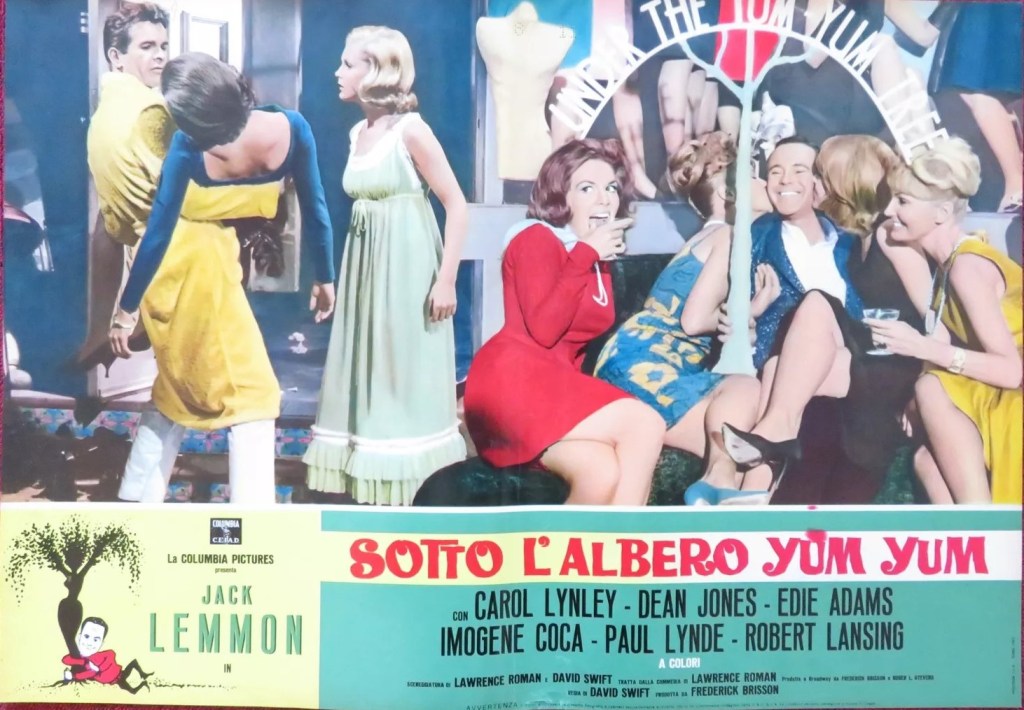
Luckily, he’s not the mainstay of the tale. Nope, that’s breaking down another barrier, and very cleverly for the times. At this time, sex on the screen was usually the result of illegitimate affairs, involving at least one husband or wife, or it was a sex worker by any other name (Elizabeth Taylor in Butterfield 8, 1960, expects presents in lieu of cash). The idea of living in sin, as it used to be called, i.e. cohabiting without a marriage licence, was not generally on the cards.

So the deal here, to get round the snippy censor, was that Robin (Carol Lynley) and Dave (Dean Jones) set up home together to test out their compatibility but without sex entering the equation, him sleeping in a separate bed. Their apartment is let out by Hogan (Jack Lemmon), the predatory landlord. He has just been dumped by Robin’s aunt Irene (Edie Adams), hence the vacancy, and believes it’s two beautiful women moving in, not a couple. So his plan to offer two damsels a romantic meal with candles and violins (these play automatically) and a roaring fire (also electronic) falls apart.

That doesn’t prevent him from using his own key to enter the apartment at inappropriate moments and continuing his ardent wooing while trying to get rid of Dave or cause the kind of ruckus that’s going to cause the boyfriend to quit, leaving the coast clear.

Luckily, which gives the movie some acceptable life of its own, the dodgy landlord aspect takes second place to the lust vs logic argument that’s intrinsic to the idea of marriage. The couple spend most of the time arguing, and the movie is quite specific, much more than you might expect, on the ways in which a lusty young fellow can keep his ardor in check.

It’s based on a stage play, of the farce kind, so it relies on misunderstandings and misalignments and finds various ways of getting various combinations of the trio (and occasionally a quartet when Irene returns) in the room at the same time. There’s the usual problems when exchanges get heated.

Lurking in the background are married housekeeper Dorkus (Imogene Coca) and handyman Murphy (Paul Lynde), at opposite ends of the approval scale, the man even creepier than his employer.

Previously, I hadn’t found Jack Lemmon’s schtick so wearing, but his acting style is so frenetic you wonder how it ever found expression except in madcap comedy. It’s not just that his jaw constantly drops, but his eyebrows go up at the same time, and he might even be chucking in that trademark cackle. He toned it down for Days of Wine and Roses (1962) and jacked it up for The Great Race (1965) and somehow anything in between doesn’t quite work unless he’s got Billy Wilder on his tail.

But there are several pluses here. Carolyn Lynley (Bunny Lake Is Missing, 1965) proves an adept comedienne and Dean Jones was clearly in rehearsal for his later Disney pictures like The Love Bug (1967). Imogene Coca had been a legendary television staple, with her own show in the 1950s. There are fleeting glimpses of Bill Bixby (The Incredible Hulk, 1977-1982) and Variety columnist Army Archerd and James Darren (The Guns of Navarone, 1961), who died recently, sings the title song, and has a more robust voice than I had assumed for a pop singer.

David Swift (The Interns, 1962) directed and co-wrote the script with Lawrence Roman (The Swinger, 1966) from the latter’s Broadway hit.

A film of two halves. You can only cringe at the attitudes on display but enjoy the pre-marital ding-dongs between the couple.
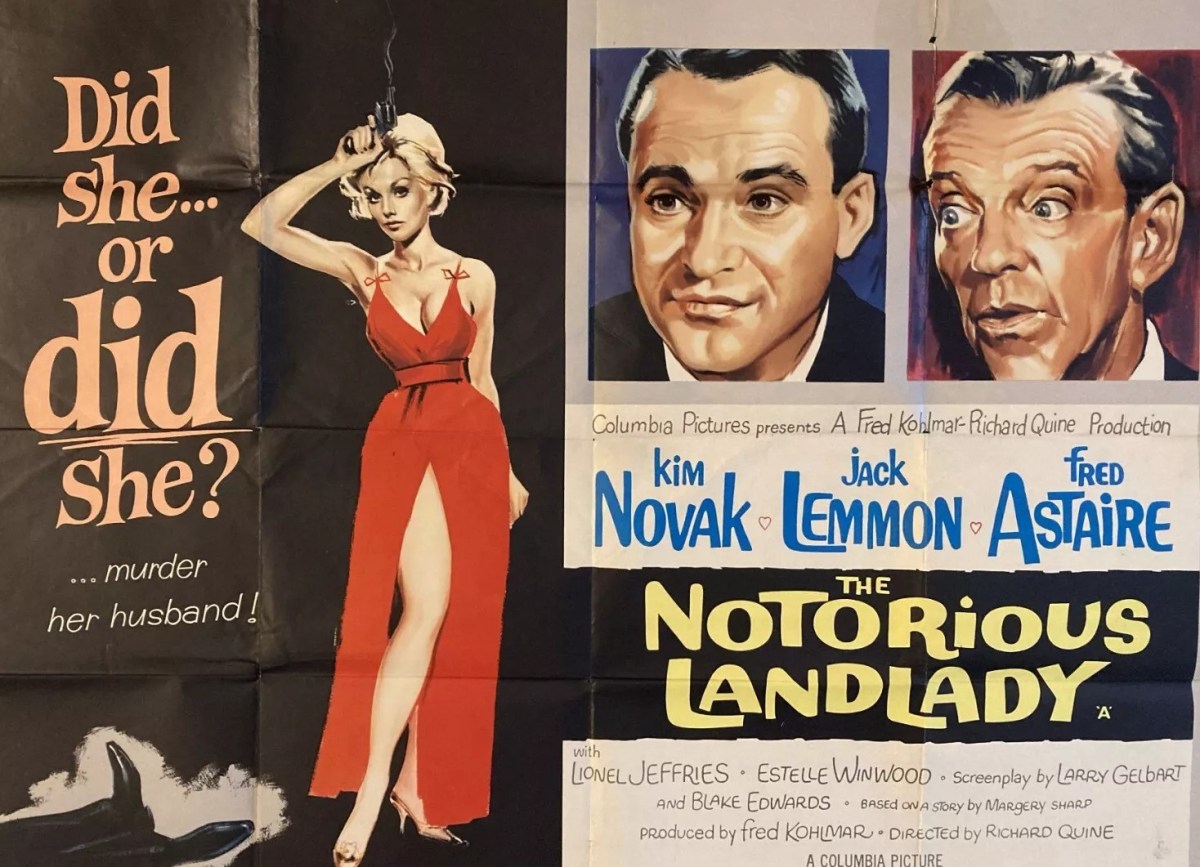
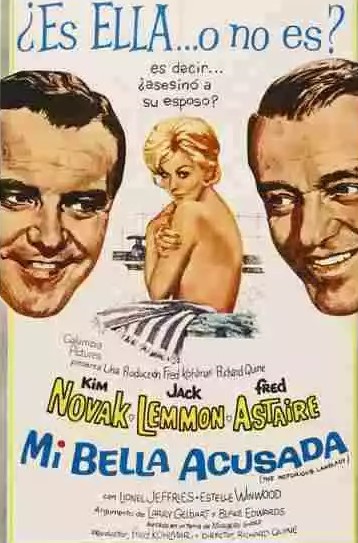
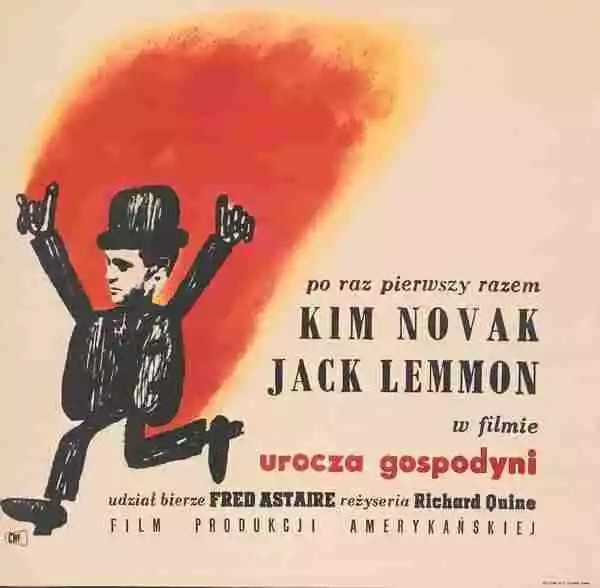
The Notorious Landlady (1962) **

Botched job. Not an all-out stinker. Something that should easily have worked – and didn’t. Thanks to the principals involved. Biggest finger of blame points at Jack Lemmon (How To Murder Your Wife, 1965), who jitters and jabbers, arms waving, eyeballs swivelling, classic example of over-mugging the pudding.

But Kim Novak (Strangers When We Meet, 1960) is as bad for the opposite reason. She’s completely insipid. Sure, she’s meant to be playing someone frightened out of her wits but she could as easily be worrying about how to lay the table for all the energy we get.

Director Richard Quine (Strangers When We Meet)  hardly gets off scot-free for allowing this to happen as well as quite bizarre shifts in tone from a fog-wreathed London straight out of Sherlock Holmes, to a denouement with Novak naked in the bath – Lemmon averts his eyes but the camera and hence the audience doesn’t – and a climax straight out of the Keystone Cops. I know Quine had a fling with Novak but it looks like he’s trying to share her physical charms with all and sundry, scarcely a scene goes by where’s she’s not in her underwear, night-time apparel, soaking wet one way or another or wearing revealing outfits. The “Notorious Cleavage” might have been a better title.

As I say, this should have worked. The story is straightforward enough, a mystery, red herrings aplenty, mysterious lurking figures, enough twists to give it edge.

Diplomat William Gridley (Jack Lemmon), newly arrived from the States, comes to view an apartment to rent in Mayfair only to find landlady Mrs Hardwicke (Kim Novak) most unwelcoming. Unfortunately for her, it’s love at first sight for him, so she can do no wrong. Which is unfortunate for him, for she is suspected of murdering her husband. That doesn’t sit well with Gridley’s boss Ambruster (Fred Astaire) who feels staff should be completely above board and not risk the good name of the U.S. by consorting with film noir style damsels.

Ambruster is already in cahoots with Inspector Oliphant (Lionel Jeffries) and it’s not long before Gridley is enrolled to act in an undercover capacity, sneaking into her bedroom, finding a gun in a drawer and overhearing suspicious phone calls all the while continuing to romance her. Meanwhile, he’s woken up in the middle of the night with her playing an organ. He’s such a clumsy clot he manages to set fire to a garage, which attracts front page headlines and puts his career in jeopardy.

Anyway, various red herrings later and Ambruster somewhat mollified after falling for Hardwicke’s charms himself, we discover that her husband isn’t missing after all, but when he turns up, she shoots him dead and so ends up in court charged with his murder. His death, while convenient, is treated as accidental.

But the fun’s only just beginning. What could have been a shade close to film noir or the kind of romantic thriller Hitchcock turned out in his sleep, now takes a quite bizarre turn. It transpires that her husband, a thief, has hidden stolen jewels in a candelabra which, because she’s short of cash, she has sold to a pawnshop. This emerges in the aforementioned bathtub contretemps. But Hardwicke is being blackmailed by the witness whose evidence cleared her. Said witness has made off with the jewels and now plans to kill off the real witness. So they all end up at a retirement village in, where else, Penzance. Gridley has to save the real witness from being run off the edge of a cliff in a wheelchair while Hardwicke and the fake witness would have had a real old catfight if either of them could have managed to land a punch, instead of hitting the ground or falling backwards into bushes, so the entire climax suddenly takes a distinct comedic turn.

There’s not even a decent performance from Fred Astaire (The Midas Run, 1969) or Lionel Jeffries (First Men in the Moon, 1964) to lift proceedings. In fact, the best performance comes from villain Miles Hardwicke (Maxwell Reed) who rejoices in lines like, “ I like you better when you’re frightened.”   

Written by Larry Gelbart (The Wrong Box, 1966) and Blake Edwards (The Great Race, 1965), which would make you think comedy, and that this was a spoof in the wrong directorial hands, except that Edwards was responsible for Experiment in Terror / Grip of Fear (1962) so knew how to extract thrills.

Coulda been, shoulda been – wasn’t.

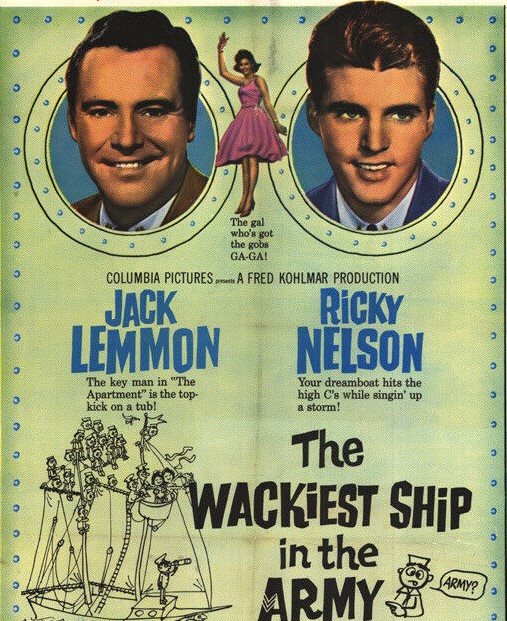
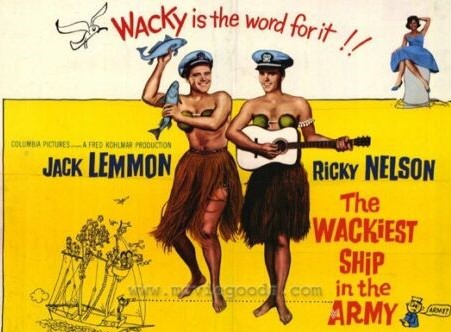
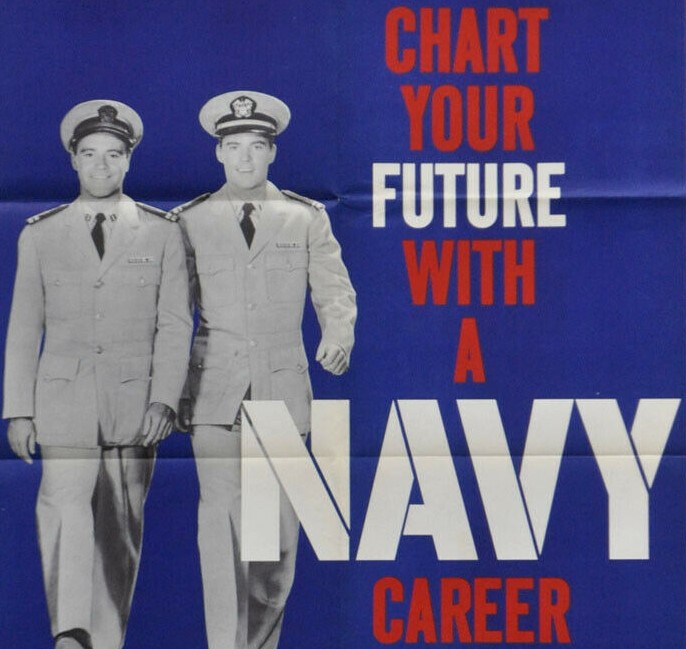
The Wackiest Ship in the Army (1960) ***

A more misleading title would be hard to find – and that goes for the posters too. This is a misfit movie – a bunch of raw recruits knocked into shape by an unwilling captain tasked with sailing a ship into a South Pacific war zone in WWII. Admittedly, Jack Lemmon is in exasperated double-take default in the opening section, but it quickly shifts from comedy to drama as Lemmon shepherds his inexperienced crew into a more compact team.

Screenwriter Frank Murphy has an exceptionally good portfolio – Panic in the Streets (1950), The Desert Rats (1953), Broken Lance (1954) and Compulsion (1959) – but brings less to the table as a director, this only his second – and final – outing in that capacity. But given he is directing from his own screenplay, he must take the blame for the incongruous hybrid. Add in an unnecessary tune from Ricky Nelson and the briefest of brief romances and no wonder it’s hard to make head or tail of the movie until it does eventually head out to sea.

Once Lemmon is given more to do than shake or scratch his head the picture moves into more satisfactory territory. Instead of dismissing the crew as idiots, he takes command and shows dramatic chops that are a hint of things to come (Days of Wine and Roses just two pictures away) when he sloughed off comedy for more serious undertakings.

Reason for Lemmon being assigned this motorized sailing ship rather than something more obviously U.S. Navy is that he is in the last chance saloon. Once under sail, setting aside some dodgy process work, and it becomes clear they are heading into harm’s way rather than simply delivering the boat to General MacArthur in more harmless waters, the story switches into perilous wartime perilous adventure with decent battle, a couple of twists and some dramatic confrontation.

Lemmon is always watchable, and I always thought he could have done with more self-belief when it came to tackling more dramatic parts. When he goes ramrod-stiff and starts barking out orders and has to out-maneuver superiors and enemy, he is entirely convincing, as, too, safeguarding his charges or rescuing them and leading them in battle. Setting aside the need for Nelson to register his credentials as a singer, he is not bad either, as an ensign making his way, an ingenue role that suits this ingenue.

Veteran John Lund (My Friend Irma) appears as a crusty, wide admiral and Chips Rafferty, the only Australian actor anybody had ever heard of at that point outside of Rod Taylor, has a cameo. Irishwoman Patricia O’Driscoll manages a passable Aussie accent as the brief romancer, her role mostly confined to looks of longing while Lemmon is at sea. Raspy-voiced Mike Kellin as an out-of-his-depth chief mate turned up in the television series based on the picture. If ever there was a film of two halves (well, one-third and two-thirds) it’s this, but the second section passes muster.

Not quite shipshape but getting there.

The Great Race (1964) **** – Seen at the Cinema

And not just any old cinema, but the 87-year-old Fine Arts in Los Angeles, I guess the second oldest movie house still standing there, with admission a princely 50 cents and the whole place done out in a gaudy red. I was taking time out from a research mission to the Academy of Motion Pictures Arts and Sciences’ (the Oscar people) equally famous Margaret Herrick Library, where I was digging up stuff for my next book about the films of Alistair MacLean.

And where I discovered to my unimaginable delight they they had my books on their shelves. I’ll never win an Oscar and bestsellerdom will continue to evade me, but for a writer of books on movies, there can be no greater honor than to have your works on the shelves of Hollywood’s most important library. Since data protection will prevent me from discovering who has checked out my books, I can safely imagine that it was bound to be Harrison Ford, Greta Gerwig, Christopher Nolan and/or Steven Spielberg.

Anyway, enough of that self-congratulatory nonsense and on with the show. If you’ve any memory of this picture – jaunty jalopies battling it out at the start of the 20th century when suffragettes were raising hell – it’ll be for the slapstick. The upfront feminism most likely  passed you by. A savvier female you would be hard put to find, especially one that susses out exactly that when a male falls in with her views it’s just to get her into bed. So, from the contemporary perspective, this is a far harder-nosed picture than the fluffy narrative suggests.

Setting aside the famous pie-throwing homage to silent film pie-throwing (and every circus clown act since Doomsday) and a couple of sequences that outlive their welcome and the odd decision to find a plotline that can accommodate Jack Lemmon going down the (almost) identical twin route, this is pretty much sheer delight.

Characters could not be more black-and-white – in visual terms as well – than rival mechanical whizzes The Great Leslie (Tony Curtis) and Professor Fate (Jack Lemmon) except for the much more rounded (in character terms) interloper Maggie Dubois (Natalie Wood) as a reporter. Not content with being a legend in his own lunctime, the mad professor follows the Gore Vidal tack of being upset by any rival’s successes. However, he’s such an incompetent saboteur he doesn’t realize he’s merely the feed for a number of superb visual gags.

The Great Leslie, smile resounding with the Colgate audible zing, doesn’t have much to do except expound the principles of fair play and occasionally demonstrate his fencing skills when the plot turns sideways. Maggie is the ace inveigler, and when that doesn’t work resorts to handcuffs to ensure she will not be moved or someone else will be stuck fast. Standard bearer for female equality, she manages to put all the arguments without sounding dull, especially as, verbally, she is dealing with a keen dueller. And when she’s not switching sides, she’s rooting for the good guy.

The plot could have come out of a dishwasher but roughly equates to a round-the-world road race with most countries conveniently missed out, ending up in Paris with a stop-off somewhere in Germany. The deliberately cartoonish feel shouldn’t work at all, especially for a contemporary audience, but then we all laughed at Dumb and Dumber and plenty comedies with even less of a one-note touch. Thankfully, there was no such thing as deconstructed comedy in those days so everyone enters the spirit of the thing. And it’s quite refreshing to watch stuff being blown up and falling apart not for overblown thriller or comicbook reasons.  

I wasn’t taken with the overlong sequence in the saloon – extended singing and brawl (heck, what else are saloons for) – and wasn’t so hot on the legendary pie section either and certainly the notion that Professor Fate could be such a doppelganger for a dumb German prince that the powers behind the throne plan to substitute one for the other seems to belong in the furthest reaches of the Far Fetched Highway.

But there are so many gags and the characters, no matter how cartoonish at times, seem true to themselves, and with Maggie on hand to constantly upset the misogynistic applecart it seems a tad picky to be so picky. I was astonished that the audience I watched it with, primarily much younger than I, were so tickled.

Tony Curtis (The Boston Strangler, 1968) and Jack Lemmon (How to Murder Your Wife, 1965) repeat the magic of Some Like it Hot (1959) thanks to the strong directorial hand of Blake Edwards (The Pink Panther, 1963). Natalie Wood (Bob and Carol and Ted and Alice, 1969) shines. Rare comedy role from Peter Falk (Penelope, 1966). Excellent support from Keenan Wynn (Warning Shot, 1966). Edwards co-wrote the script with Arthur A. Ross (Brubaker, 1980).

Certainly more than stands the test of time.

The Fortune Cookie / Meet Whiplash Willie (1966) ***

It’s the miracle of cinema. A supporting actor whom you might have glimpsed in a variety of roles over the preceding years suddenly appears as if by magic in a new screen persona and is hailed as a new star. One such was Walter Matthau. From the lecherous neighbor in Strangers When We Meet (1960), good guy in Lonely Are the Brave (1962), bad guy in Charade (1963) and Mirage (1965) and tetchy arrogant analyst in Fail Safe (1964), as if undergoing metamorphosis he creates the slimy, grouchy, crouchy, greedy lawyer duping his brother-in-law in Billy Wilder’s too-obvious satire The Fortune Cookie, beating the top-billed  Jack Lemmon (How To Murder Your Wife, 1965) into a cocked hat.

It doesn’t help Lemmon that this most physical of actors is physically constrained for the bulk of the picture, trussed up within an inch of his life as the key ingredient in a million-dollar insurance scam. And Matthau makes the most of the opportunity, dominating the screen not just with his octopus-like arms, but with his facial expressions, his snarling and growling and snapping, as if this was in fact a one-man movie. He’s so dominant that you almost forget Lemmon, an unavoidable force in most of his movies, is there.

And it’s true that television cameraman Harry Hinkle (Jack Lemmon) is a patsy, duped by his adulterous wife Sandy (Judi West), conned by ambulance-chasing lawyer Willie Gringrich (Walter Matthau) into believing that exaggerating the injury he suffered from colliding with pro football player Boom Boom (Ron Rich) will bring her scurrying back. Never mind that while on the phone apparently going with her ex-husband’s fantasies, we can see her current boyfriend in the background lying abed or taking a shower.

But then Willie has everyone figured out. He can play highball or lowball, he knows every trick in the book and if you try to challenge him he can quote chapter and verse on every personal injury claim over the last century that would favor the victim. And he expects his opposite numbers to play dirty too, and uses to his own advantage the microphones and cameras they have planted in the apartment where Harry is purportedly recuperating.

There’s not much more to the picture than to enjoy Willie hoodwinking everybody in sight. But he’s such a performer to watch that you will be rooting for him rather than his sad sack brother-in-law who you know has paid-up membership of the Suckers Union.

Not for the first time, foreign distributors felt they were saddled with an unworkable title so in
the UK it became Meet Whiplash Willie even though the idea of the con of the whiplash
injuries in supposed car accidents was more prevalent in the US than Britain.

There’s some neat observations of the way law firms work, and the way medical experts refuse to commit in case they are later sued for a wrong diagnosis, and there’s some cute stuff about nuns with the gambling habit and seeing Boom Boom fall apart with guilt. But given the movie’s running time and the talent involved – script by Billy Wilder and I.A.L. Diamond (Some Like it Hot, 1959) and directed by the said Wilder –  it’s not as funny as it could be and sometimes it feels like they’re scraping the barrel to squeeze out an unfunny joke.

But it hardly matters. This could be Fail Safe and with this Walter Matthau persona on the loose you wouldn’t care tuppence if the Russians bombed the hell out of everyone as long as Matthau was in the middle of the action, working out how to chisel a bigger piece for himself, and playing everyone for the dumb schmucks they are.

After this Walter Matthau – as unlikely a mainline star as Lee Marvin or Charles Bronson – never looked back. Unlike other major stars he never had to be completely trustworthy and was almost virtually responsible for bringing a severe dose of cynicism to the forefront of American acting. He could charm you if he set out to do so, but you better keep your wits about you because the chances are he would be robbing you blind.

If The Odd Couple (1967) set the seal on one of Hollywood’s greatest comedy partnerships, The Fortune Cookie was where it all began. Lemmon isn’t bad, just out-acted, and we’ve seen his whiny/forlorn/dumb act many times before. Judi West (A Man Called Gannon, 1968) has the other plum role as the blonde who is anything but dumb and would have proved an ideal partner for Gringrich except he would have seen through her too easily. Ron Rich (Chubasco, 1968) plays the only other character who isn’t spun out of a cliché.

Below par Wilder redeemed by heavenly performance by Matthau.

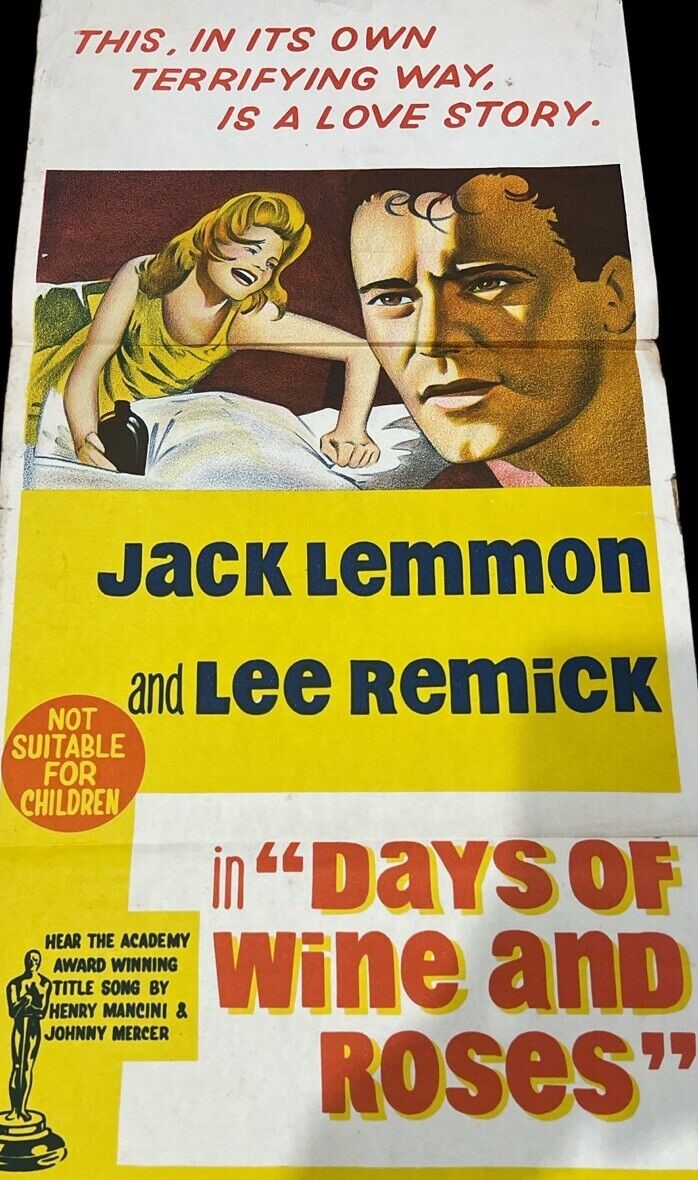
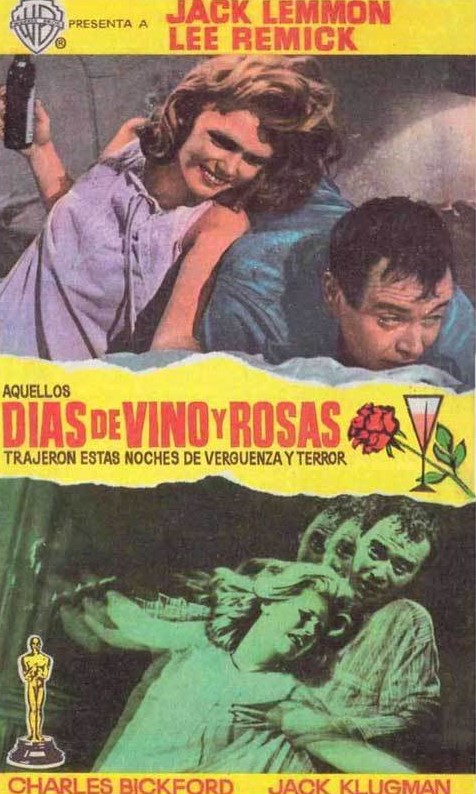
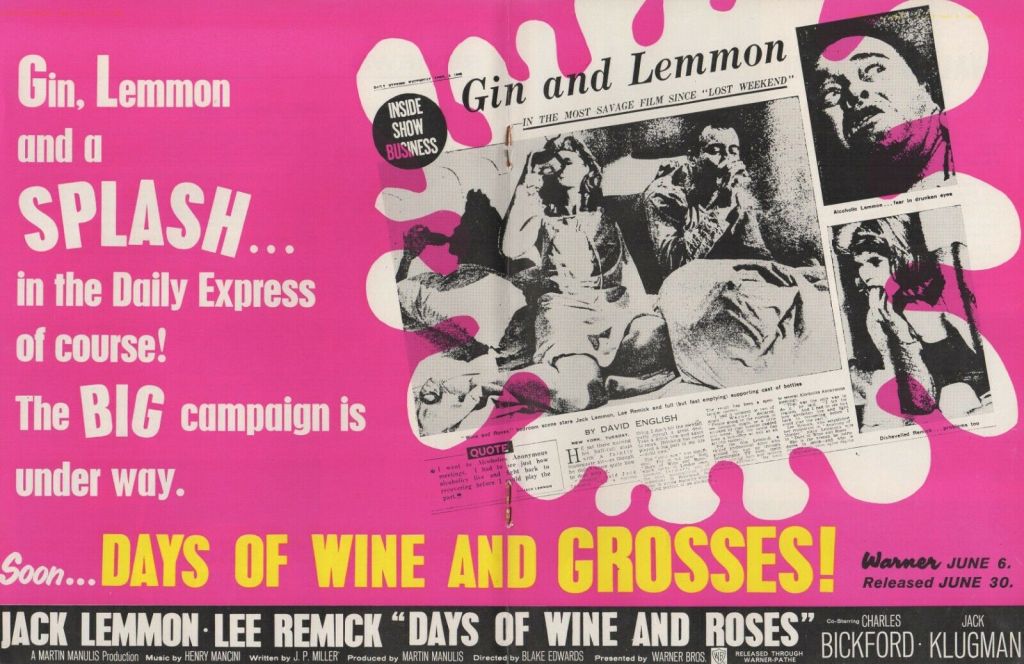
Days of Wine and Roses (1962) *****

A touch of Mad Men satire adds a contemporary bite to tale of the destructive power of alcohol. Not since Billy Wilder let loose on The Lost Weekend (1945) did Hollywood finance a no-holds-barred examination of alcohol addiction.  

But let’s start with the amoral world of advertising or, in this case, public relations. When we are introduced to executive Joe (Jack Lemmon) he’s little more than a pimp for his client, rounding up a plethora of blondes who can be salivated over by wealthy men on a big yacht. When we first meet Kirsten (Lee Remick) she is initially mistaken by Joe as a blonde worth salivating over only to learn that actually she is the prim, though pretty, secretary of his client to whom the idea of a potential pawing on a big yacht has no appeal, regardless of how wealthy the pawing hands might be.

Romance should never have got off the ground as they insult each other in turn, but in the way of such tales, one of his barbed comments strikes home and she consents to be taken to dinner. Astonished to discover she doesn’t drink, he alights upon her weakness for chocolate as a way of getting her to sample Brandy Alexander (as stiff with chocolate as alcohol). That’s all it takes. While she begins to lose her inhibitions, he, ironically, adopts a principled stance towards the aforesaid pimping and is moved to another account.

After they marry, she stays off the sauce once a baby arrives, he, petulant at taking second place to the baby, gets deeper into the stuff. Eventually, he wears her down, and they have a whale of a time getting drunk and ignoring the child. Meanwhile, he is sliding lower down the company pyramid thanks to his drinking. Matters come to a head when she sets the apartment on fire.

Eventually, jobless, Joe throws himself on the mercy of Kirsten’s stern father Ellis (Charles Bickford) and they manage a good few months on the wagon until in a drunken spree he manages to destroy a greenhouse at his father-in-law’s landscaping business.  Joe ends up with the DTs, committed to a sanatorium and determines to mend his ways. But that means admitting his addiction and joining Alcoholics Anonymous. Kirsten, meanwhile, is not such a softie, refusing the believe she is an alcoholic.

Their bright future darkens by the minute as squalidness and selfishness take over. In some senses, this is a case study of the alcoholic, the one who can fight the demons and the one who can’t be bothered to fight anything since the bottle is the easiest cure.

Made at a time when Hollywood was not predisposed to this kind of sharp shock of reality, not even with attractive stars to make the tale more palatable, this is easily the highlight of director Blake Edwards’ career, the comedies and even the romanticised Breakfast at Tiffany’s (1961) seeming like so much fluff in comparison. He manages to avoid being either sentimental or sanctimonious and possibly the only time he holds back is when the fire takes place off-screen. Otherwise, it’s light years ahead of The Lost Weekend, whose protagonist seems more easily than humanly possibly to beat the addiction.

If you think Jack Lemmon (How To Murder Your Wife, 1965) is usually a hyperactive character anyway on screen, wait till you see what’s he’s like with a drink in him, just as if he doesn’t know when to stop, consequence never entering his consciousness, as like any drunken maniac he’s living in a fantasy world. But because she starts out on a different dramatic plane, and her slide into incoherence is more sobering, Lee Remick  (No Way to Treat a Lady, 1968) beats him to the critical kudos. Terrific performances from both and from those tasked with keeping them in line, Charles Bickford (The Unforgiven, 1960) and Jack Klugman (Goodbye, Columbus, 1969) as the recovering alcoholic trying to get Joe to face up to his condition.

In all the literature devoted to twentieth century humanitarians, you’ll find few busting a gut to highlight the work of Bill Wilson (better known as Bill W), the founding father of Alcoholics Anonymous. But this self-funded organisation that created a community for the addicted probably did more in the last century to cure a terrible disease than any scientist inventing a drug. Incidentally, James Garner played Bill in a television biopic My Name Is Bill W (1989).

Sometimes I think actors take on roles aiming to enhance their reputation by playing difficult unsympathetic characters. But I imagine Lemmon and especially Remick got the shock of their lives on seeing the completed movie because their character disintegration is so total it would have required teams of public relations executives to put a good spin on a picture that shows human beings in such a depressing light, almost disempowered by their addictions. First appearing as teleplay in 1958, writer JP Miller (The Young Savages, 1961), while adding more gloss for the movie adaptation, nevertheless does not shrink of the unpalatable truths.

Superb all-round effort.

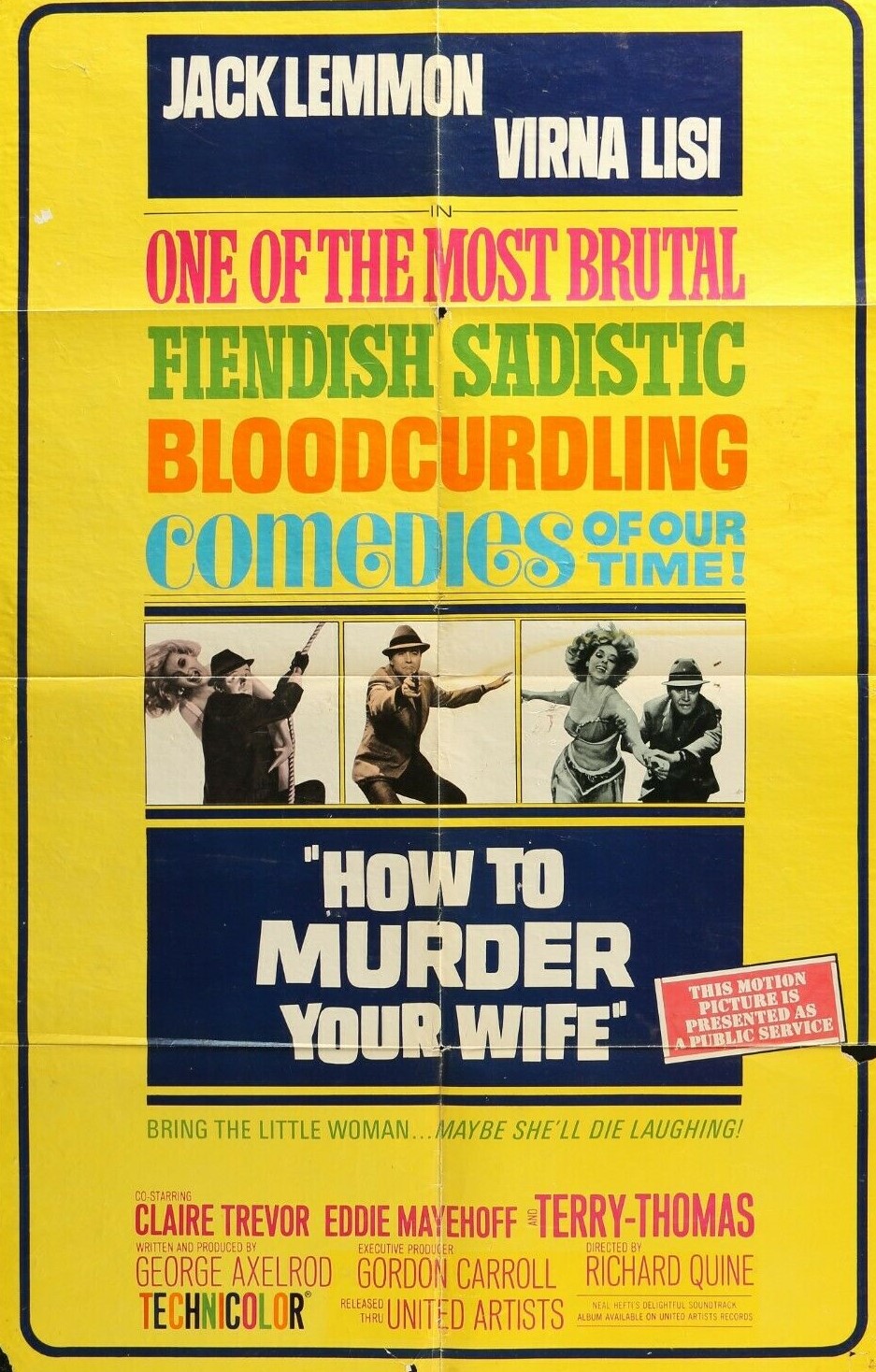
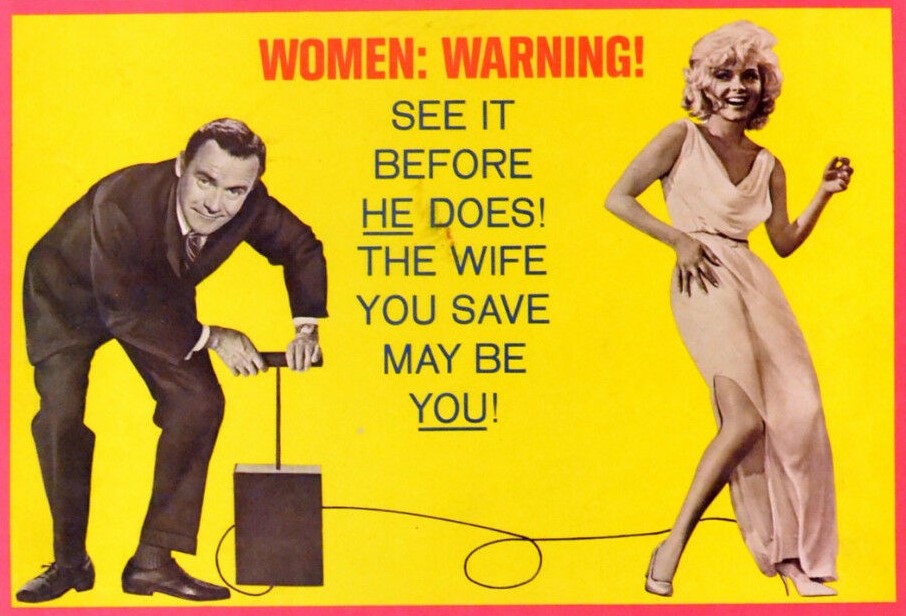
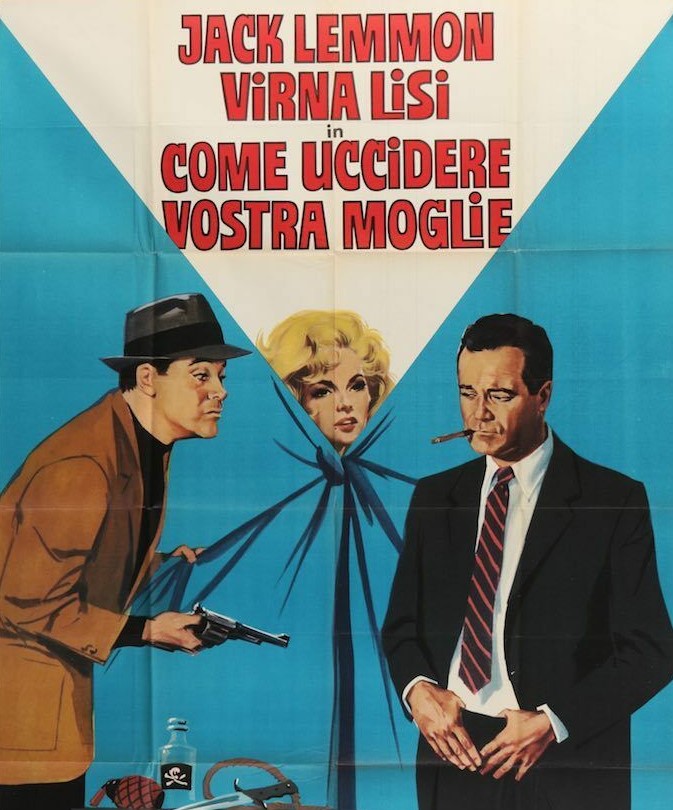
How To Murder Your Wife (1965) ***

Men had a hell of a time in the 1960s to judge from this riff on marital strife that starts off like Walter Mitty meets The Odd Couple. It’s one of those daft comedies that only work on their own terms – and for the most part this works very well.

Dedicated bachelor Stanley Ford (Jack Lemmon), enjoying a host of one-night stands, ensconced in almost a bromance with butler and kindred spirit, the very English Charles (Terry-Thomas), makes the mistake of getting hammered at a drunken party and ends up married to a beauty queen (Virna Lisi). Although she is gorgeous and very loving – most scenes end on a fade as she devours him in kisses – and a good cook (though a bit lax by the high housekeeping standards of Charles), Stanley resents being burdened with a wife, especially when it costs him the services of his butler. 

The biggest casualty is his self-image. He has fashioned his persona after his Bash Brannigan comic strip, syndicated to hundreds of newspapers, that permitted him the fantasy of being secret agent/adventurer/detective, fighting off bad guys and rescuing damsels in distress. Marriage inflicts a devastating change in his mental state, and he transforms from hero into hen-pecked booby.

In a bid to restore his self-esteem, and provide a fictional glimpse of freedom, he plans to murder his wife, if only in the comic strip. It has been Stanley’s working practice to act out and have photographed all the elements of his stories so Charles records the whole episode, from getting advice on how to drug Mrs Ford to (using a dummy) incarcerating her in cement. Unfortunately, Mrs Ford, outraged on discovering the illustrations for this particular comic strip episode, vanishes, leaving no explanation for her disappearance, except that various people witnessed him carrying out the supposed murder. He is arrested and put on trial.

You couldn’t make this up, but strangely enough, it is all very believable. The opening section where Stanley enacts the part of his action man Bash Brannigan in “The Case of the Faberge Navel” is just a delight. When the future Mrs Ford comes to explain exactly why she came to be jumping out of a birthday cake in a bikini, it is as daft as everything else.

However, the picture’s overall theme, the war between men and women, where men feel controlled, is somewhat dated. You might expect such a war to go nuclear when Mrs Ford dares to infringe on the sanctuary of a men-only enclave. The trial scene is particularly laborious in trying to determine that men are victims of controlling women. Despite that, there are some very funny lines that hit the nail on the head – men “are always guilty about something” declares Mrs Ford’s confidante Edna (Claire Trevor) whose strategy is always to keep men off-balance.

Jack Lemmon (The Apartment, 1960) has ploughed this path before, conspirator to the illicit,  although generally to be found in the loser camp rather than, as, effectively here, despite his complaints to the contrary, in the winner’s circle with an enviable lifestyle and willing girlfriends to hand. There’s a gleefulness in his performance, the little boy getting away with everything, that turns into a small boy’s sullenness when it is all apparently taken away.

Italian star Virna Lisi (Assault on a Queen, 1966), in her Hollywood debut, is a delight.  Her frothy sexuality goes down a treat but she is far from a dumb blonde, learning English from television, excellent cook, and wise enough not to go down Edna’s route of dealing with men. Terry-Thomas (Bang! Bang! You’re Dead!, 1966) delivers just as interesting a confection, a touch of ruthlessness to the stiff upper lip, high chieftain of the Male Protection League, reveling in the prospect of ridding the world of insidious influences like Mrs Ford. And there’s a welcome role for Claire Trevor (Stagecoach, 1966), especially when, in a party scene, she really lets go.

The other males, ranging from dumb and dumber to dumbest,  totally lacking in Jack Lemmon’s charm, perfectly illustrate the need for a woman’s firm hand, among them Eddie Mayehoff (Luv, 1967), Sidney Blackmer (A Covenant with Death, 1967) and Harold Wendell (My Blood Runs Cold, 1965).

Richard Quine (The World of Suzie Wong, 1960) directed from an original screenplay by George Axelrod (The Secret Life of an American Wife, 1968).

The Wackiest Ship in the Army (1960) ***

A more misleading title would be hard to find – and that goes for the posters too. This is a misfit movie – a bunch of raw recruits knocked into shape by an unwilling captain tasked with sailing a ship into a South Pacific war zone in WWII. Admittedly, Jack Lemmon is in exasperated double-take default in the opening section, but it quickly shifts from comedy to drama as Lemmon shepherds his inexperienced crew into a more compact team. Screenwriter Frank Murphy has an exceptionally good portfolio – Panic in the Streets (1950), The Desert Rats (1953), Broken Lance (1954) and Compulsion (1959) – but brings less to the table as a director, this only his second – and final – outing in that capacity. But given he is directing from his own screenplay, he must take the blame for the incongruous hybrid. Add in an unnecessary tune from Ricky Nelson and the briefest of brief romances and no wonder it’s hard to make head or tail of the movie until it does eventually head out to sea.

Once Lemmon is given more to do than shake or scratch his head the picture movies into more satisfactory territory. Instead of dismissing the crew as idiots, he takes command and shows dramatic chops that are a hint of things to come (Days of Wine and Roses just two pictures away) when he sloughed off comedy for more serious undertakings. Reason for Lemmon being assigned this motorised sailing ship rather than something more obviously U.S. Navy is that he is in the last chance saloon. Once under sail, setting aside some dodgy process work, and it becomes clear they are heading into harm’s way rather than simply delivering the boat to General MacArthur in more harmless waters, the story switches into perilous wartime perilous adventure with decent battle, a couple of twists and some dramatic confrontation.

Lemmon is always watchable and I always thought he could have done with more self-belief when it came to tackling more dramatic parts. When he goes ramrod-stiff and starts barking out orders and has to out-maneuver superiors and enemy, he is entirely convincing, as, too,  safeguarding or rescuing or leading his men in battle. Setting aside the need for Ricky Nelson to register his credentials as a singer, he is not bad either, as an ensign making his way, an ingenue role that suits this ingenue. Veteran John Lund (My Friend Irma) appears as a crusty admiral and Chips Rafferty, the only Australian actor anybody had ever heard of at that point outside of Rod Taylor, has a cameo. Irishwoman Patricia O’Driscoll manages a passable Aussie accent as the brief romance, her role mostly confined to looks of longing while Lemmon is at sea. Raspy-voiced Mike Kellin as an out-of-his-depth chief mate turned up in the television series based on the picture. If ever there was a film of two halves (well, one-third and two-thirds) it’s this, but the second section passes muster.

What the Exhibitor Did

Movie studio publicity teams bombarded exhibitors with gimmicky promotions via the Pressbooks used to publicize movies. Some of the ideas were so outlandish it is easy to imagine that exhibitors’ eyes glazed over at the prospect.

But that would be to misunderstand the character of the cinema manager/owner on the 1960s. They often referred to themselves as “showmen” (ignore the gender slip) because they saw themselves as hustlers of the old school, required to come up with all sorts of schemes to ensure moviegoers were aware of what was showing.

So they weren’t short of coming up with their own ideas.  To promote Billy Wilder comedy The Apartment (1960) with Jack Lemmon and Shirley Maclaine, Loews State in New Orleans set up a replica three-room apartment within the Hurwitz-Minze furniture store in the city. A female model was hired to live there for a week during opening hours. She cooked, washed dishes, watched television and listened to records. “Her daytime routine was complete even to changing her clothes – behind a screen, of course.” The store advertised her presence daily and explained why there was model in the window. The Monteleone Hotel joined in the promotion by providing the model with free accommodation.

Handcuffs were handed out to customers going in to see Psycho (1960) at Proctor’s Theatre in Schenectady, New York, on the basis that it would be advantageous for patrons to handcuff themselves to their seats in case nerves got the better of them and they tried to dash out before the end.

Of course, that was a long way from offering patrons a dead body, raffled off in the intermission between the movies on a midnight horror program, as carried out by the Super 422 Drive-In in Pittsburgh. A dead body was given away – it just turned out to be a turkey.

Exhibitors pushing a horror picture might plant a coffin in the lobby – more effective if there was a hand sticking out – or, as indicative of the terrors that lay ahead, have a white-coated nurse prominently positioned or park an ambulance outside. Certificates of bravery might be issued to attendees.

To promote Macumba Love (1960) – starring Ziva Rodann from The Giants of Thessaly – which featured cannibals and shrunken heads, Loews State in Cleveland put their own shrunken head on display in the lobby behind reducing glass which made it seem even smaller.   

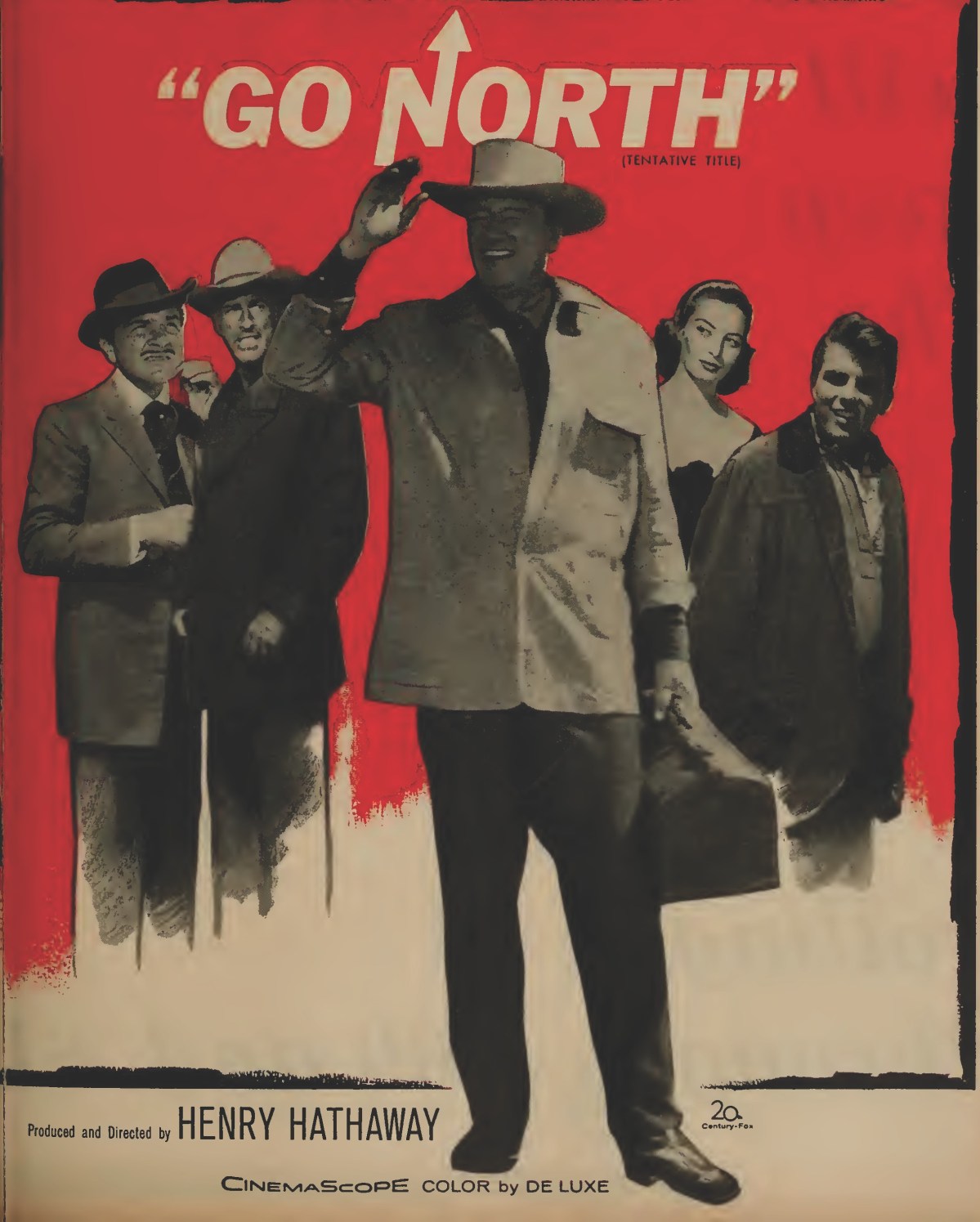
Love takes people the strangest places. Two cycling enthusiasts planning to get married were persuaded by Twentieth Century Fox to travel from New York to Juneau, Alaska, a mere 4,776 miles to promote john Wayne picture North to Alaska (1960).They were paid, of course, and had the honor of being married by the Governor of the state, William Egan. They passed through a hundred towns and cities, stopping off to talk to interested media about their unusual adventure and, in case anyone missed the point, their bikes were plastered with publicity material for the film.

SOURCES: “The Midnight Show,” Box Office, Aug 1, 1960, p64-65; “Girl Keeps House in Window for a Week Prior to Opening of The Apartment,” Box Office, Aug 8, 1960, 118; “Handcuffs Go to Patrons in Advance of Psycho,” Box Office, Oct 3, 1960, 103; “Couple in Bicycle Trip North for To Alaska,” Box Office, Nov 14, 1960, 73.

Discover WordPress

A daily selection of the best content published on WordPress, collected for you by humans who love to read.

The Atavist Magazine

by Brian Hannan

WordPress.com News

The latest news on WordPress.com and the WordPress community.