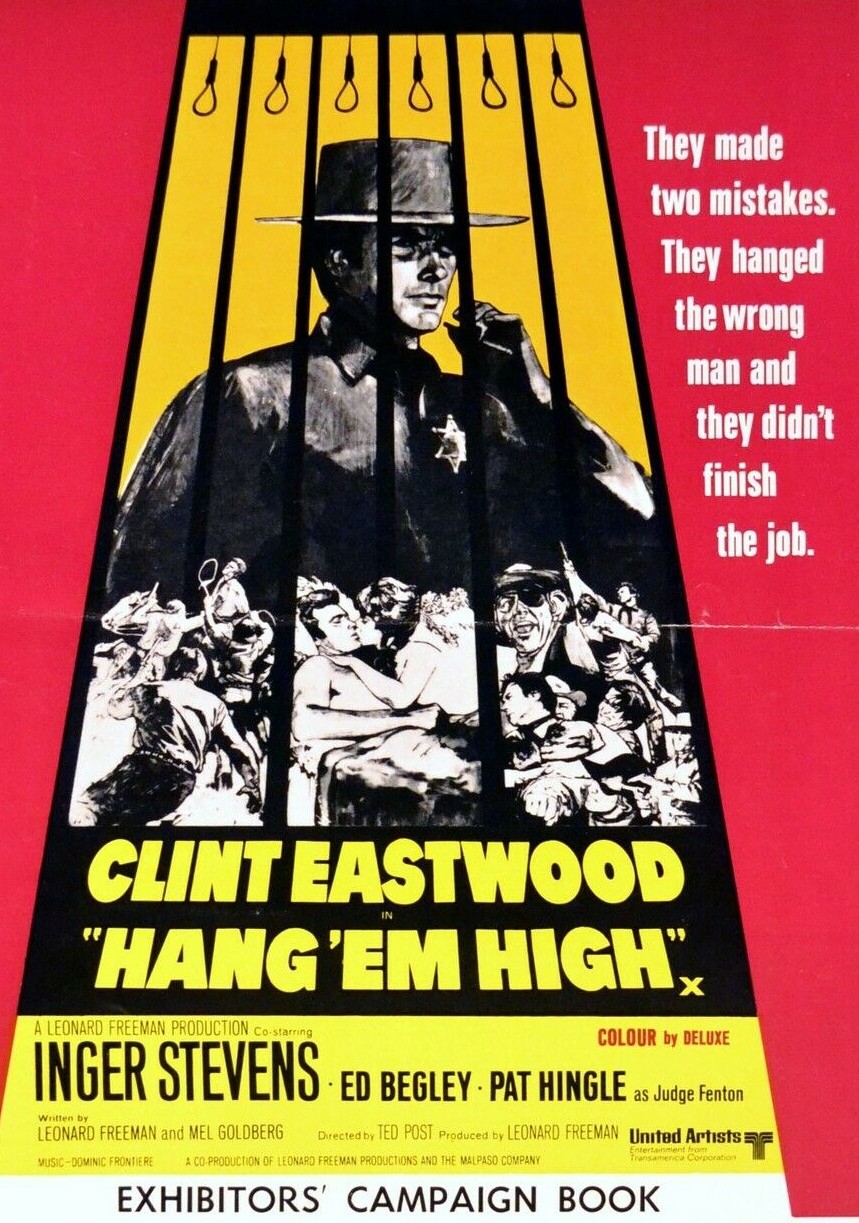
Hang ‘Em High (1968) ****

Clint Eastwood didn’t waste much time capitalizing on the unexpected success of the Dollars Trilogy. But the first was not released in the United States till 1967 and despite the success of the series across Europe was generally dismissed as a fluke, until American audiences suggested otherwise. The following year Eastwood appeared in three pictures, Hang ‘Em High, Coogan’s Bluff and Where Eagles Dare, which solidified his screen persona as portraying more with a twitch or a raised eyebrow than digging deep into the dialog.

Contrary to my expectations, Hang ‘Em High doesn’t quite fall into the trademark revenge mode of later westerns. It’s somewhat episodic, Jed (Clint Eastwood) often sent off on a tangent by Judge Fenton (Pat Hingle), allowing the lynch mob who failed to hang him in the first place a second chance at completing the job.

Following the success of the James Bond double bills,
United Artists spun out its Clint Eastwood portfolio at every opportunity.

And while the presence of the second-billed Inger Stevens (Firecreek, 1968) suggests heady romance that doesn’t kick in until the third act and it’s more tentative than anything and its purpose is more, in narrative terms, to provide Jed with a correlative with which to compare his own obsession, bringing to justice the nine men who attempted to kill him.

Just to confuse things, the middle section isn’t about revenge or romance, but about justice. Specifically, it’s about showing that justice will be done, that in the unruly West, with insufficient enforcers of law and order, that crimes will not go unpunished, a gallows on constant display to make the point.

Surprisingly, it’s Jed who argues that some of this justice is just too summarily executed. He tries in vain to prevent the execution of two young rustlers who fell in with one of his potential assassins, Miller (Bruce Dern), but who refuse to take advantage of the situation when Miller overpowers Jed while he’s bringing the trio in to face the judge. Admittedly, they don’t go to his aid either, but the fact they resist piling in allows Jed to escape. However, rustling is a hanging offence, so they cannot escape the noose, certainly not in Fenton’s town.

There’s a switch in the mentality of Jed. Before he’s co-opted by Fenton to return to his former profession of lawman, Jed is of the school of thought that decides to take the law into his own hands. Even wearing a badge, you are allowed to shoot a man stone dead if he’s trying to escape, even if such action is severely hampered by him already being badly wounded, as lawman Bliss (Ben Johnson) demonstrates. But Bliss isn’t as callous as he sounds. He’s a contradiction, too, racing to the aid of Jed dangling in a noose in a tree, freeing him so he can face justice, even if that will most likely result in hanging.

So Jed upholds the law, preventing other citizens from taking the law into their own hands, Miller a target of the family of the owners he slaughtered before making off with their cattle.  

We only see shop owner Rachel (Inger Stevens) fleetingly for most of the picture. She appears any time a new wagon load of criminals is jailed, scanning their faces for who knows what, though likely we’ve guessed it’ll be to find the killer of a loved one. Not only has her husband been killed by two strangers but while his corpse is lying on the ground beside her she’s raped. And although she eventually responds to Jed’s gentle moves, she still can’t let go of her “ghosts.”

Jed is put through the wringer. Not only an inch from death following the initial hanging but ambushed again by the same gang and nearly dying of pneumonia after being caught in a storm, the latter incidents permitting the kind of nursing that often fuels romance.

There’s an ironic ending. Captain Wilson (Ed Begley), leader of the gang, hangs himself rather than be shot by Jed.

The score by Dominic Frontiere (Number One, 1969) lurches. We go from heavy-handed villain-on-the-loose music to eminently hummable echoes of Ennio Morricone.

Clint Eastwood reinforces his marquee appeal, Inger Stevens delivers another of her wounded creatures, and Pat Hingle (The Gauntlet, 1977) is an effective foil. Bruce Dern (Castle Keep, 1969) does his best to steal every scene without realizing that over-playing never works in a movie featuring the master of under-playing.

Host of cameos include veterans Ben Johnson (The Undefeated, 1969), Charles McGraw (Pendulum, 1969) and L.Q. Jones (Major Dundee, 1965) plus two who had not lived up to their initial promise in Dennis Hopper (though he would revive his career the following year with Easy Rider) and James MacArthur (Battle of the Bulge, 1965).

Journeyman director Ted Post made a big enough impact for Eastwood to work with him again on Magnum Force (1973). Written by Leonard Freeman (Claudelle Inglish, 1961) and Mel Goldberg (Murder Inc., 1960).

More than satisfactory Hollywood debut for Eastwood and worth checking out to see that even at this early stage he had nailed down his screen persona.
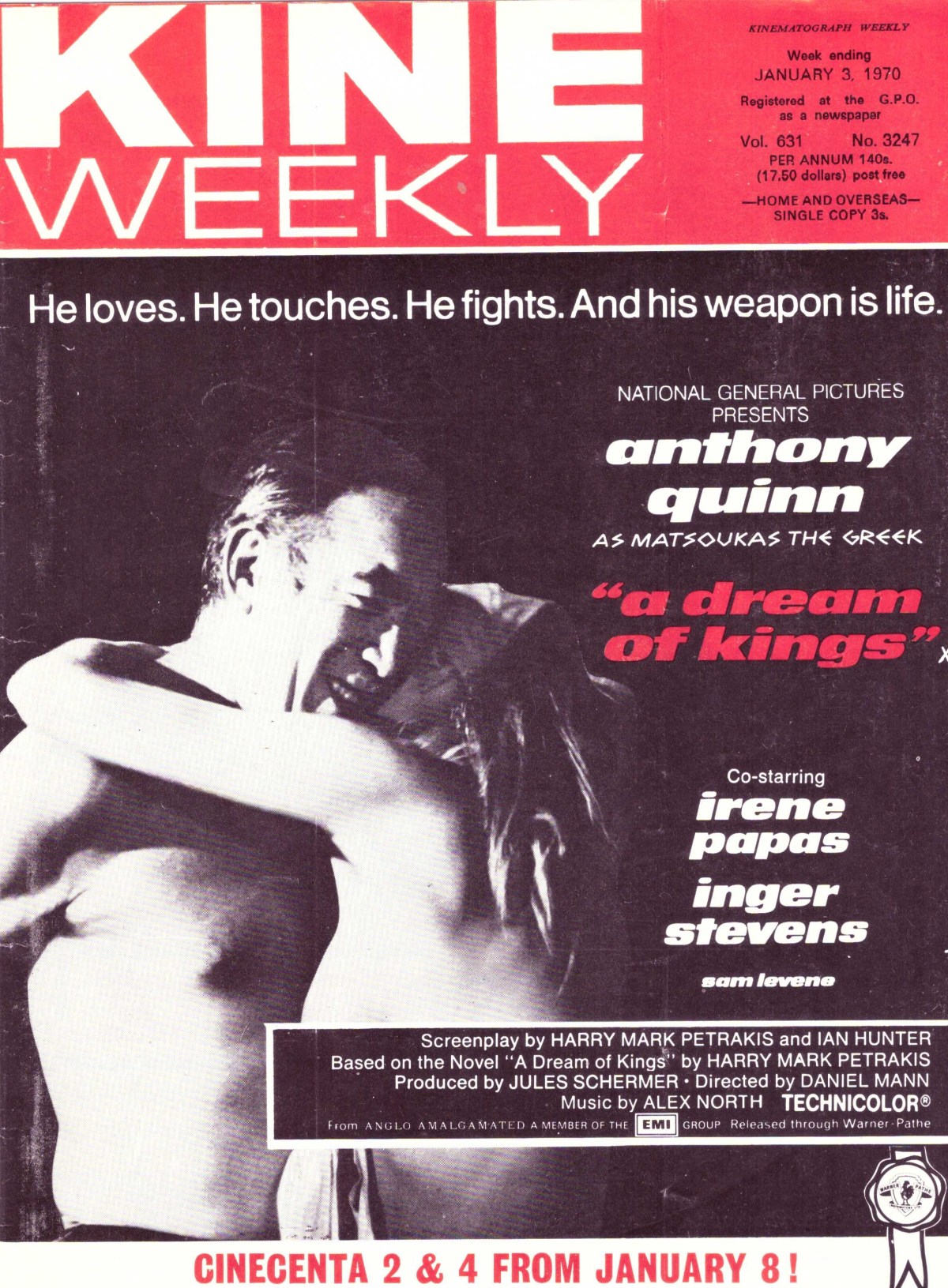
A Dream of Kings (1969) *****

Sometimes great movies just disappear. Even if they pick up some critical traction on initial release, as here, they flop at the box office. And they are not revived because the production company goes bust or the rights are complicated. Or, more likely, they don’t fit into audience expectation. All three stars here completely play against type, outliers in career portfolios. We have become so accustomed to the attraction of stars according to their screen personas that unless they are known to completely change their screen characters with every outing anything that’s different to the norm becomes unacceptable.

Director Daniel Mann (Ada, 1961) was best known for producing Oscar-winning or Oscar-nominated performances from female stars. He was immensely skilled at making audiences sympathize with the most flawed women. Here, he does the same for Anthony Quinn, in a performance that should have had Oscar voters lining up but was dismissed for all the wrong reasons. Theoretically, one of the film’s problems is the dialog. We are so used to a script full of cut-and-thrust or witty putdowns that we fail to recognize a screenplay, that in much the same way as a stage play – but without that form’s inherent artificiality – lets characters live and breathe, explore depths that are just not possible except in fleeting moments in the normal construction of a movie.

Most scenes here begin one way and then move in all sorts of directions, sometimes ending up back where they started, but most often going somewhere unexpected, not in the sense of a sudden twist, but in digging deeper into relationships and understanding that marriages are built on shifting sands, and not all of them perilous. There’s a lot of dialog and when you get a lot of long speeches it can make the actors look as though they’re hamming it up when in fact what they’re doing is opening up the character.

We shouldn’t like Matsoukas (Anthony Quinn) at all. He’s a gambler, a womanizer, drinks, comes home at sunrise, has nothing you’d call a real job.

And yet.

In his company you enter a world of possibility. By sheer force of personality he lifts gloom, even when it’s his actions that have caused it. He can convince the most downtrodden weaklings that they have something of worth.

When nobody has anything good to say about old drunk Cicero (Sam Levene), Matsoukas tells him he has a poker dealer’s graceful hands and provides solace just by befriending him. He convinces a 72-year-old man that the loss of his libido is not down to the old guy’s age but because in four years of marriage he has lost interest in his 31-year-old wife because she’s the one who has aged, physically less appealing, and then he teaches the desperate soul the gentle art of seduction, how to win a woman’s heart by putting her on a pedestal, treating her like a goddess, kissing her softly on eyes and ears rather than pawing her in frantic passion.

Just what Matsoukas’s job is – on the door it says “counsellor” which would suggest something  legal  – but in fact he’s a male version of an old wife and provides solutions to odd problems, a mother worried that her teenage son masturbates, for example.

He is the sort of guy who can wring triumph from disaster. He has just lost a bundle of dough at poker but the way he tells it you’d think he’d won. Instead, he appreciates the drama of it all, the way it makes a great tale even if he’s the loser. Naturally, wife Caliope (Irene Papas) doesn’t see it his way. She’s on her knees with trying to feed her three children from the scraps that fall from his gambling. Though when he wins big, they live like kings.

Although he still has a lusty sex life with Calope, and can mostly coax her round, he has fallen for widowed baker Anna (Inger Stevens), attracted to her in part to alleviate her grief, pull her out of the darkness.

And he cannot face up to the potential loss of his young son who has three months to live and has it fixed in his own mind that the boy will be cured if Matsoukas can expose him to the sunshine and the ancient gods of his Greek homeland, though he lacks the $700 required for the air fare.

Each sequence is long, carefully calibrated, giving time for the exploration of a wealth of emotions. Outside of the three main narratives are two other stand-out scenes. In his sermon a priest rails against the evils of life insurance that makes people welcome death yet argues, ironically, that death is a great joy and should not be feared. And there’s a party where Matsoukas on the dance floor is a magnet for every woman in the room.

This is an Anthony Quinn (The Shoes of the Fisherman, 1968) devoid of all trademark abrasiveness, the loud voice gone, trying to gouge every ounce of joy from a forbidding world. He has a very tender relationship with his dying son, inventing a game with fake telephones to deal with the boy’s fears, and is very playful with his two daughters. He is constantly wooing his wife, in part to ease the pain he causes her, but mostly because he wants them to get the most out of life.

This is a different Irene Papas (The Brotherhood, 1968) too, not the fiery woman or dutiful wife of her screen persona. Whatever anger she feels is subsumed by sorrow and she is always willing to let her husband fire up her heart as in the old days. Actresses don’t get such complex roles these days.

And all the pent-up fragility of Inger Stevens (Five Card Stud, 1968) is suddenly let loose as she twists her entire screen persona of tough woman in a man’s world – usually a western – on its head. Her scenes with Quinn are breathtaking. Unfortunately, this was her final film – she committed suicide shortly after. But she could not have found a better swansong, one that extended her range.

As he always does, Daniel Mann doesn’t take his main character’s side, but while extracting sympathy for character predicament and perspective, still lets the audience make up his mind. This could easily have gone all maudlin, the child miraculously recovering, the flight to Greece to find a rare cure, all Matsoukas’s delusion revealed as nothing more than true faith, but it’s more hard-edged than that. At the end Matsoukas has his exterior carapace ripped apart, beaten up, ostracized for committing the worst crime of a gambler – cheating – in dire straits.

And yet.

Written by Ian McLellan Hunter (Roman Holiday, 1953) from the bestseller by Harry Mark Petrakis.

I just adored this.

The New Interns (1964) ***

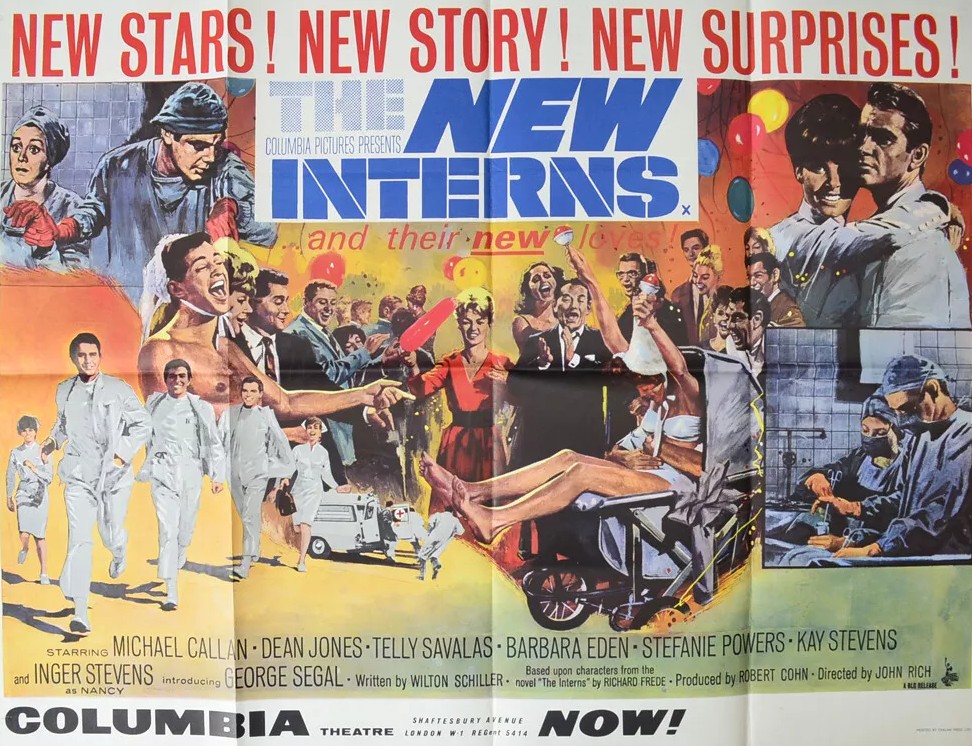
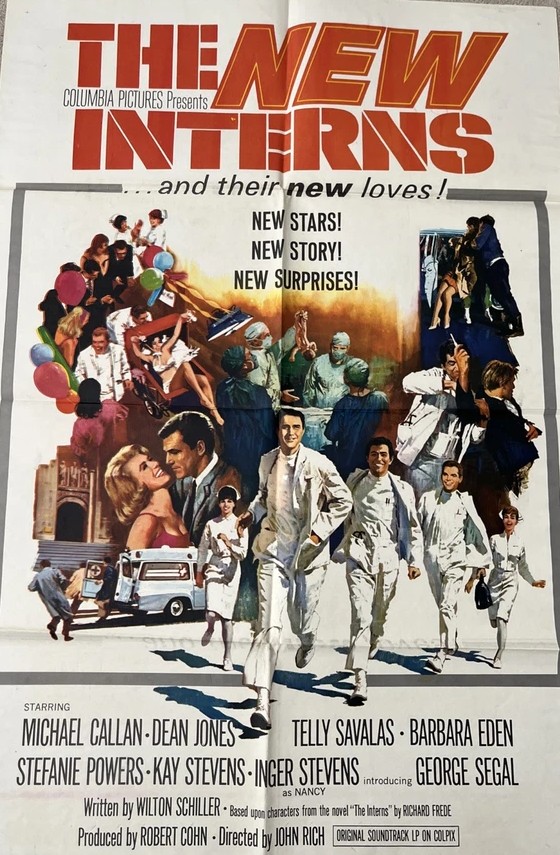
Columbia had turned this series into a glorified New Talent Contest. It didn’t spend much cash buffing up the sequel in terms of narrative or characters, so it’s mostly enjoyable to see just how well the studio was at spotting talent. In that regard this outing was as profitable as the original. This marked the debut of George Segal (The Quiller Memorandum, 1966) who quickly became a major marquee name. Also brought into the mainstream was Inger Stevens (Five Card Stud, 1968). Receiving a welcome career boost was rising star Dean Jones, though Disney (The Love Bug, 1967) rather than Columbia took better advantage of his skills, and in the comedic rather than the dramatic vein.

Various stars reprised their roles including top-billed Michael Callan (You Must Be Joking, 1965), signed up to a long-term deal. But most of the others in this category made their names through television. Telly Savalas (The Assassination Bureau, 1969) was the cop Kojak (1973-1978); Stefanie Powers (Warning Shot, 1967) flourished as The Girl from U.N.C.L.E. (1966-1967) and in Hart to Hart (1979-1984); and Barbara Eden went quickly into I Dream of Jeannie (1965-1970).

The upshot is that, depending on your taste, you might end up talent spotting yourself, shrieking with glee at spotting an old favorite, or perhaps so many of them, in what was, effectively, an all-star (of the minor kind) cast and paying less attention to the various storylines.

Most of the narrative energy revolves around various characters coming together in romantic entanglement – Dr Alec Considine (Michael Callan), while more inclined to play the field, ends up with Nurse Laura Rogers (Barbara Eden); despite initially being at odds Dr Tony Pirelli (George Segal) and social worker Nancy Terman (Inger Stevens) hook up; and various other romances are short-lived.

Outside of this, newlyweds Dr Lew Worship (Dean Jones) and wife Gloria (Stefanie Powers) discover he is sterile. The more powerful sequence relates to Nancy being sexually assaulted by juvenile delinquents who grew up in the same tough neighbourhood as Tony. As you might expect, the thugs end up in hospital and cause a fracas in which Alec is injured.

Tony has all the best lines. Invited to chance his arm with the nurses, he snaps that he didn’t come to the hospital to “learn to kiss.” Pushed out of the way by resident Dr Riccio (Telly Savalas) he retorts that he didn’t come to deliver messages. And so on, the most driven of the new intake, and the most surly, his initial encounter with Nancy has him upbraiding her for crying in front of a patient.

Decent soap opera as soap operas go, but without the more challenging aspects of the original. In an era when the series movie was beginning to take shape – primarily in the espionage arena – you can see why Columbia thought this might run and run and eventually the studio had another go at the concept, but this time as a television series.

Directed by John Rich (Boeing, Boeing, 1965) and written by big screen debutant Wilton Schiller from the bestseller by Richard Frede.

George Segal and Inger Stevens are the standouts.

House of Cards (1968) ***

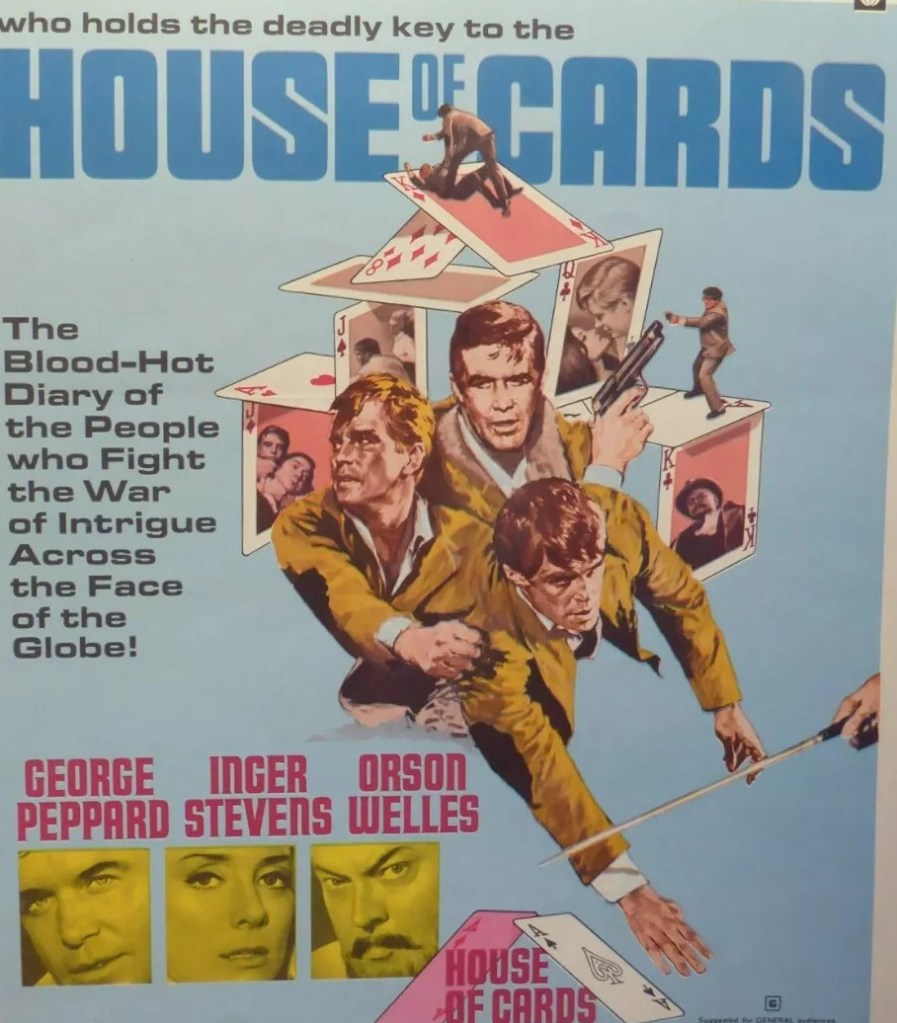
American boxer Reno Davis (George Peppard) stumbles on an international conspiracy when hired by rich widow Anne de Villemont (Inger Stevens) in Paris to look after her eight-year-old son Paul (Barnaby Shaw). All roads eventually lead to Rome and a showdown with arch-conspirator Leschenahut (Orson Welles) in this thriller which throws in a couple of measures of Gaslight (1944) and, more obviously, North by Northwest (1959), to the extent of Anne being an icy blonde of the Eva Marie Saint persuasion and the couple, on the run, sharing a compartment on a train.

The boy’s previous tutor has been murdered. After months in a sanatorium, Anne, paranoid about her son being kidnapped, is in virtual house arrest in the family mansion, watched over by arrogant psychiatrist Dr Morillon (Keith Michell) who has diagnosed her as unstable, neurotic and a danger to the boy.

After an assassin on a bridge on the Seine takes potshots at Reno and Paul, Reno is framed for murder but escaping from the police returns to the mansion to find it empty, the furniture covered in dust sheets. I half-expected Reno to be told that the job was all in his imagination and that Anne did not exist, but instead finds out that mother and son have been taken to a castle in Dijon, in reality a fortress with a platoon of armed guards. Only Paul has been already been transported to Italy. So it’s attempted rescue, imprisonment, escape, fistfights, chase, clever moves and countermoves, twists and double twists as Reno and the still icy Anne head for Rome.

In among the mayhem are a few humorous moments, a play on the Trevi fountain scene from La Dolce Vita, a monk mistaken for a killer, a bored girl only too happy to be taken hostage, an over-familiar American who gives away valuable secrets because he mistakenly believes Reno is a co-conspirator, Dr Morillon making the error of treating Reno as a servant. And characters involved in assisting escape extract a high price, one seeking financial reward, another that her husband be killed in the process. There is also a flirtatious but spiky maid Jeanne-Marie (Perette Pradier) and a couple of excellent reversals.

Reno is somewhat innovative in the weaponry department, the hook of a fishing rod, for example, while the son is rather handy with a pistol. But given the opposition are armed with machine guns, knives and swords that seems only fair.

George Peppard seems to have found his niche in this one, dropping the innate arrogance of The Blue Max (1965) and Operation Crossbow (1965), no chip on the shoulder, a good bit more attractive as a screen presence, a nice line with the ladies, more than able to take care of himself, a sprinkling of wit, completely at ease. Inger Stevens comes off well though her psychological problems and concerns for her son get in the way of any burgeoning romance with Peppard. But she has quite a range of emotions to get through, from wondering if she is mad, to dealing with the controlling family, and letting go of her son enough to allow the boy to bond with Reno, and despite her vast wealth down-to-earth enough to see a toothbrush as an essential when on the run.

Orson Welles (Is Paris Burning?, 1966), as ever, looms large over everything, with dialog so good you always have the impression he improvised on the spot. Keith Michell, a couple of years away from international fame in BBC mini-series The Six Wives of Henry VIII (1970), does a very good turn as the psychiatrist.

John Guillermin, who directed Peppard in The Blue Max, has a lot to do to keep the various balls in the air, especially keeping track of a multiplicity of characters. The screenwriting team of Harriet Frank Jr. and Irving Ravetch (Hud, 1963) pulled this one together from the novel by Stanley Ellin. Francis Lai’s memorable score is worth a mention, with distinctive themes for various parts of the story.

Eva Renzi (Funeral in Berlin, 1966) was originally down for the part of Anne and Italian actress Rosemary Dexter (Romeo and Juliet, 1964) has a small part.

Doesn’t quite come off .

Behind the Scenes: “Five Card Stud” (1968)

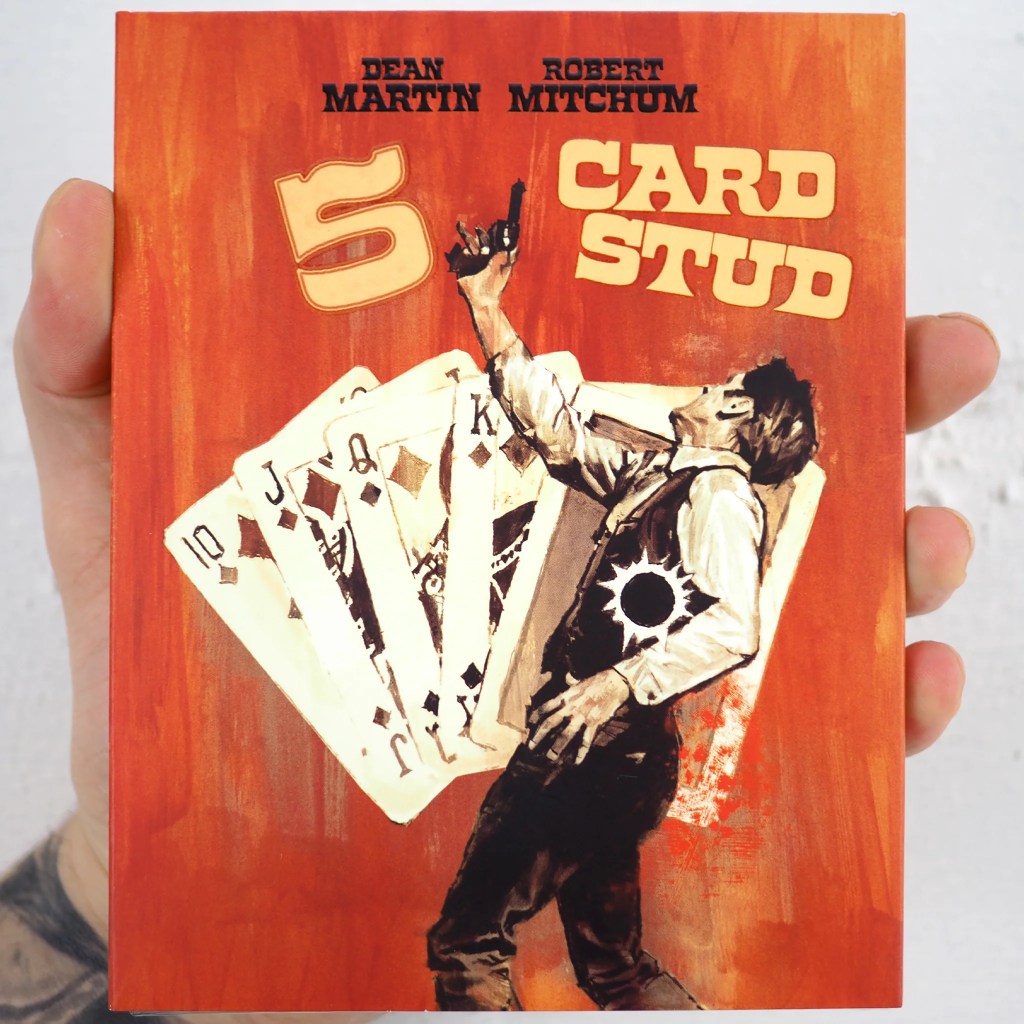
Every now and then in the writing of my blog an event occurs which comes as a great surprise. Last year, I was contacted from Los Angeles by Claudia Pretelin, a producer working for DVD specialist Vinegar Syndrome. They were planning  a 4K restoration of Five Card Stud (1968) and, alighting on my review of the movie, Claudia asked if I would do the audio commentary, especially as I had detected the strong feminist undercurrent that runs through the western.

Five years ago, McFarland had published my book The Gunslingers of ’69: The Westerns’ Greatest Year. But if I had been writing about 1968, Five Card Stud would be one of the standouts. For whatever reason, it’s so under-rated it’s almost been completely forgotten, overshadowed by the three other westerns Henry Hathaway made either side of it, most importantly True Grit (1969) and The Sons of Katie Elder (1965) . Overshadowed because it wasn’t made by John Ford or Howard Hawks. Together with Sergio Leone, Sam Peckinpah and Clint Eastwood they were the directors most admired by critics. Overshadowed because it didn’t star John Wayne or James Stewart, both considered essential elements to any great western. Overshadowed because nobody gave a damn about Dean Martin (Rough Night in Jericho, 1967) as a serious actor.

But from the outset, this is distinctive with recurrent motifs and a visual symmetry – overhead camera, water, strangulation, the card table – that seems to have gone unnoticed, unlike The Searchers.  Given the testosterone on display – Robert Mitchum (Secret Ceremony, 1969) in addition to Dean Martin – this is unusually an extremely feminist western. The three female leads are far from docile and screenwriter Marguerite Roberts has changed the source book, Glory Gulch by Ray Gaulden, to exploit those elements.

 Entrepreneur Lily (Inger Stevens) runs an upmarket barbershop – generally a male monopoly – with an interesting sideline, but when it comes to romance she’s in charge, choosing – and dumping – the men. Nora (Katherine Justice) is a rancher’s daughter so smart and effective that her father has already decided that he’s going to leave her a half-share in his business rather than, as would be the norm, leaving it all to his son Nick (Roddy McDowell). Mama Malone (Ruth Springford) owns the eponymous saloon and takes no sass from anybody.

Van (Dean Martin) likes to think he has the measure of women, when in fact they have the measure of him. The story avoids the obvious lure of a love triangle, of jealous women competing for Van’s affections. Both the young Nora and the more mature Lily are pretty well grounded and judge their men by the standard of their kissing – that’s equality for you.

The movie was one of the fastest ever made, just five months from the start of shooting to release – that’s efficiency for you. And for many critics that was how they regarded director Henry Hathaway. He wasn’t considered a stylist, but a studio workhorse, apt  to take what was offered, work in too many genres. But this is one of his most stylish films. In some ways it harks back to film noir. The story is a mystery. And his extensive use of overhead camera would be considered innovative had it been made now.

This is in fact about a serial killer, a treatise on law and order, almost acting as a conduit between the decade’s previous westerns when the good guys and the bad guys are easily distinguished to the end of the decade when such distinctions were muddied. Here, we don’t know who the bad guy is. He’s not a hero saving a town or enforcing law and order. Not a detective either, trying to nail down a killer. He’s only trying to save his own skin. The whodunit is really a MacGuffin, an opportunity to examine the hypocrisies of the West.

The Sons of Katie Elder, Nevada Smith (1966) and Five Card Stud are all about revenge, justified in you like in the first two. Play this another way and the vengeful preacher Rudd (Robert Mitchum) would be the hero, vindicated as much as characters in Hang ‘Em High (1968), Once Upon a Time in the West (1969) or True Grit.

Producer Hal B. Wallis (True Grit) bought Ray Gaulden’s western Glory Gulch in May 1967, three months after  publication by Berkeley Medallion as a paperback original. (Reprinted a year later, it was re-titled Five Card Stud). It came cheap. Nobody else was bidding. Robert Redford (Downhill Racer, 1969) turned down the role of Rudd – he thought the character too obvious and didn’t like the way the narrative developed – so Robert Mitchum was actually second choice.  

Filming was due to start in October 1967 but was delayed till February 1968. It was shot in Durango – a popular locale also utilized for Guns for San Sebastian (1968), Shalako (1968) and The Scalphunters (1968) – and Churabasco Studios in Mexico City. There were 22 actors and 52 crew. The main location was 8,000ft up on the Sierra Madre mountains. The actors were billeted in a motel, but Mitchum, demanding peace and quiet, had the end room so got more of the cold and required a portable oxygen tank. Instead of privacy he was frozen. The boilers didn’t work and allocated a single blanket he ended up piling all his clothes on the bed. Roddy McDowell wasn’t hired until after shooting began and he modelled his somewhat hippie sideburns after George Harrison. Mitchum was nearly crushed to death by a falling 18th high camera pedestal. While the two stars didn’t particularly hit it off there was no animosity either.

Some of those involved scarcely needed to work. Dean Martin was one of the richest men in the business. At a time when the very top stars took home $750,000 a picture, say $1.5 million if they made two movies a year, Martin took home closer to $5 million a year when you totted up fees from his television show, movies, records and performing. McDowell was the co-owner of a thriving disco franchise. Hathaway had just sold his stake in an oil business for $18 million.

Marguerite Roberts had been one of the top-earning screenwriters in the Hollywood

Golden Age. Starting out in 1933, her credits included Honky Tonk (1941) with Clark Gable and Lana Turner, The Sea of Grass (1947) starring Spencer Tracy and Katharine Hepburn and MGM’s big-budget blockbuster Ivanhoe (1951) teaming Robert Taylor and Elizabeth Taylor. Around the time of Five Card Stud she had two other projects on studio slates, Hero Suit and Flight and Pursuit, though neither was made and it was perhaps ironic that her next assignment concerned a lawman who took the same no-holds-barred approach to the criminal fraternity, namely True Grit, as the killer in this picture.

Filming began on February 7 and finished on April 14. It opened on July 12. That was a phenomenal turnaround for the period. A Time for a Killing/The Long Ride Home (1967),  also starring Inger Stevens, took 16 months to reach the screen. In 1967 there were 125 films in studio backlogs – movies completed but no release date set as yet as yet, studios in no hurry, and often first run cinemas in the major cities clogged up by roadshows or long-running hits.

The western from mid-1960s had become the default for many stars. Where earlier in the decade stars might mix western and war with comedy and drama now for many top names for a period of three, four or five years they appeared either exclusively or almost exclusively in westerns. From 1965 to 1968 except for Matt Helm and one comedy Dean Martin had tackled five westerns. In the same period for James Stewart four out of five were westerns. For Mitchum it was four straight westerns from 1966 to 1968. In two years starting in 1967, four out of five Inger Stevens pictures were westerns. In three years, Glenn Ford made five straight westerns and after Battle of the Bulge (1965) Henry Fonda made four straight westerns. It was the same for directors: between 1965 and 1971 Andrew V. McLaglen made nothing but, and Burt Kennedy, in one year less, seven out of eight.

DVD with 4K restoration and audio commentary by yours truly available to pre-order and comes out in a few days.

https://vinegarsyndrome.com/products/5-card-stud

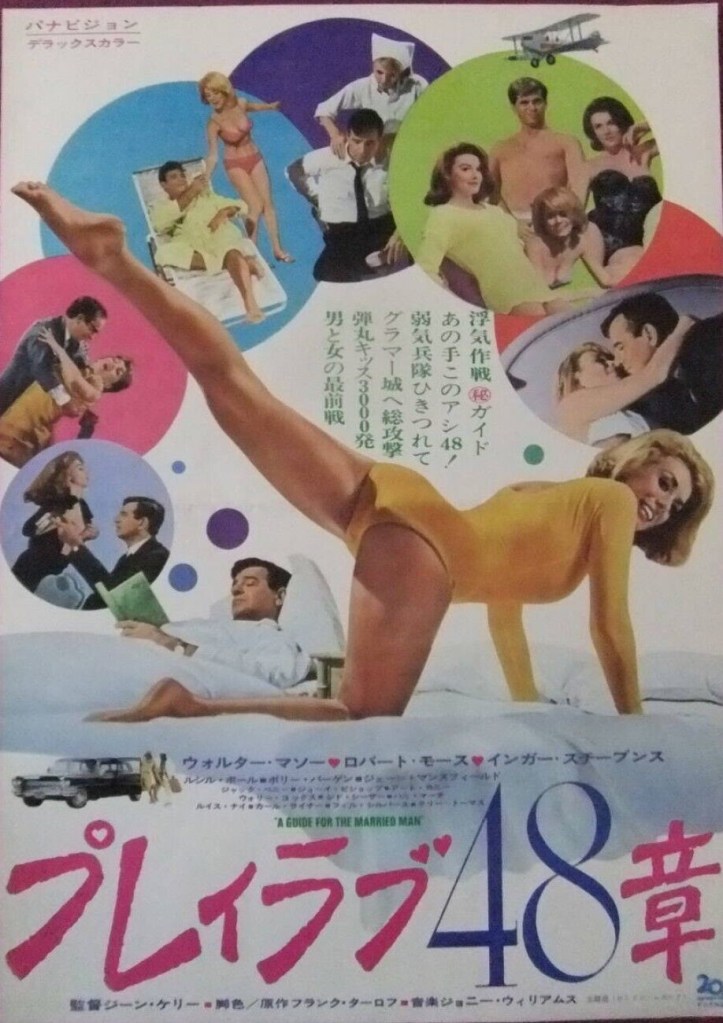
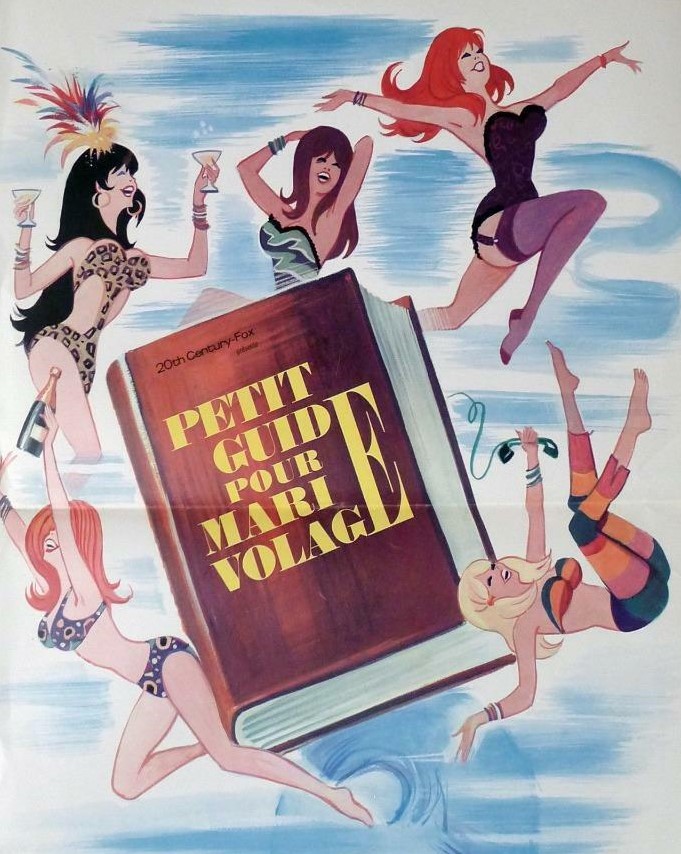
A Guide for the Married Man (1967) **

Little has dated as badly as this male supremacy sexist hogwash. While Billy Wilder can manage to inject some sophistication and even elegance into the thorny subject of adultery and male philandering (The Apartment, 1960), director Gene Kelly has little to offer but crudity.

Walter Matthau (The Fortune Cookie, 1966), top-billed for the first time, does little more than act as listener to neighbour Ed (Robert Morse), supposed expert on wifely deception and link man to a series of lame unconnected sketches featuring a battalion of cameo stars.

It’s more likely to be remembered for being the final film Jayne Mansfield (Playgirl after Dark/Too Hot to Handle, 1960) made before her premature death. Her episode might well sum up the depths of hilarity this opus stoops to – the compelling issue of what to do when your illicit companion loses her bra in your bedroom.

Perhaps the only amusing note is the notion that this has come from the pen of the Oscar-winning Frank Tarloff (Father Goose, 1964), responsible also for the source novel, drawing on the experiences of a bunch of “swingers” reputedly enjoying to the full the sexual excesses of the decade, a decidedly middle-aged gang intent on not leaving all the fun to the hippies and the liberated young

The women here are straight out of The Stepford Wives template of female docility, existing only to please their men, any passing woman automatically in the stunner bracket intent on demonstrating every wiggle possible. Worse, one is so weak that she can be easily manipulated into believing that she did not, in fact, catch her husband in bed with another woman once the wily man falls back on that old political adage of plausible deniability.

What makes the antics of Paul (Matthau) and Ed so reprehensible is that their wives are trusting knock-outs in the first place. Ruth (Inger Stevens), Paul’s other half, not just a keep-fit fanatic but a fabulous cook, able to present a superb meal on a miniscule budget.

So we are meant, I suppose, to sympathize with Paul’s flawed efforts at beginning an extra-marital affair. Or at the very least laugh at his failures, rather than mock his inadequacies as a husband. Paul’s main target is divorcee Irma (Sue Anne Langdon) but it’s no surprise Ed beats him to the punch. There’s an old-fashioned morality lesson at the end but I was hoping, instead, for a twist whereby smug Paul discovered his wife was playing away from home. Although, admittedly, that would be out of character for Ruth.

You might get through this if cameos are your thing and you want to spent a whole movie waiting for an appearance by It’s A Mad, Mad, Mad, Mad World (1963) alumni Sid Caesar, Jack Benny, Phil Silvers and Terry-Thomas plus the likes of Lucille Ball (Yours, Mine and Ours, 1968), Polly Bergen (Kisses for My President, 1964), Art Carney (Harry and Tonto, 1974), Carl Reiner (The Russians Are Coming, The Russians Are Coming, 1966), Linda Harrison (Planet of the Apes, 1968) and Jeffrey Hunter (Custer of the West, 1967).

Walter Matthau just about keeps this afloat and lucky for his career he had The Odd Couple (1968) up next. Inger Stevens (Firecreek, 1968) is wasted.

This was a box office riot on initial release, but times have changed. Gene Kelly (Hello, Dolly!, 1969) directs with a leaden hand. 

Guide to a Slimeball might be a better title.

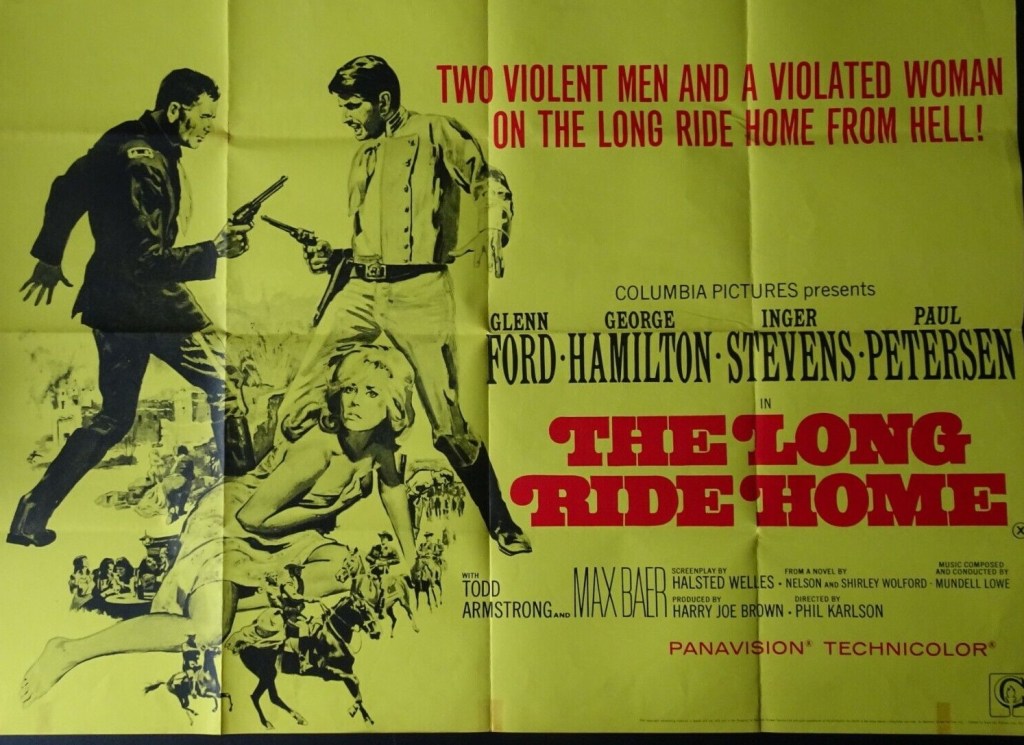
A Time for Killing / The Long Ride Home (1967) ****

The American Civil War is often slotted into the wrong genre. It is not a western. It is a war, with all the inherent wrongheadedness, viciousness and atrocity. We begin with senseless execution and end on a note of humiliating barbarity. Along the way we witness easily the greatest performances in the careers of George Hamilton (The Power, 1968) – a wonder after this how he was ever associated with playboy characters – and Inger Stevens (Firecreek, 1968).

At the tail end of the war in a Confederate POW camp, the disciplinarian commander orders raw recruits to execute an escapee. When they fail to find to the target Major Wolcott (Glenn Ford), witnessed by appalled missionary fiancée Emily (Inger Stevens), steps in to finish the job. In the wake of this Wolcott sends Emily away under escort.

POW leader Captain Bentley (George Hamilton), fully aware the war might end in days, but determined to escape to Mexico and continue the fight, organises a breakout. Instead of sneaking out quietly, in revenge he turns the Union cannons on his captors. And despite being better informed how close the war is to an end, the dutiful Wolcott sets off in pursuit.

Bentley ambushes Emily’s escort, killing the soldiers and stealing their mounts, but promising Emily that as befits a Southern gentleman he will respect her honor. She’s not so innocent of war, anyway, begging Bentley to kill a fatally wounded Union soldier rather than leaving him to the buzzards or, one assumes, marauding Apaches.

Unfortunately, his comrades don’t share that sentiment and when Emily makes the mistake of unloosing her blouse to wet her neck at a stream it inflames their lust. Equally, unfortunately, Emily doesn’t keep to her part of the deal and in attempting to escape hits Bentley a humiliating blow with his own saber.

While unfamiliar with the territory, Wolcott is a pretty good soldier, taking a shortcut over the mountains to cut off their retreat. “How come he knew what we were gonna do before we done it,” wails a Confederate soldier. “Before you even thought it,” snaps the over-confident Emily.

A few miles from the border, the Confederates hole up in a bordello where Bennett finds a despatch announcing the war is over. Ignoring the fact that for the ordinary soldier you couldn’t find a better place to celebrate peace than in a whorehouse, and determined to continue the war, Bennett conceals the information.

In revenge for losing face in front of his soldiers, he (luckily off camera) rapes the half-stripped and bloodied Emily. In the manner of every savage taking advantage of wartime conditions, Bennett tells her, “You think nothing like this can ever happen to you. But you’re lucky because your humiliation will be over soon. You and your major are going to know I won.”

Rape, as currently in the Ukraine and as in many previous conflicts, used as a weapon.

When Wolcott arrives, it’s obvious what has happened and while holding a lid on his own emotions (a Glenn Ford hallmark), once he has proof the war is over, he refuses to give chase. Brutally, he tells her,  “I can see (witness) men die for their country but I can’t see them die for your honor.” It’s Bennett who, oddly, comes to her rescue, opening fire on the Union soldiers, compelling Wolcott, in breach of the rules of war, to cross the border into Mexico in pursuit.

This isn’t a typical Glenn Ford (The Pistolero of Red River/The Last Challenge, 1967) picture where he plays the central character and is scarcely off screen. Here, he disappears for long stretches as the camera focuses on George Hamilton, his squabbling gang and the growing tension between him and Inger Stevens. If you’ve only seen Hamilton in his screen playboy persona, this is a revelation as honor and misguided duty turn into repulsive action.

And this is by far the best performance by Inger Stevens. What she achieved here launched her career, although admittedly as a female lead rather than top-billed star. The emotion her face portrays without the benefit of dialog is quite astonishing. Expecting to be an innocent bystander, unexpectedly thrown into the tumult, physically abused, and then, contrary to her Christian beliefs, she goes from stalwart to victim to, against her Christian principles, showing no sign of turning the other cheek but in full Old Testament mode urging revenge.

The scene when Emily enters a room full of soldiers, attempting to retain some dignity in the face of torn clothes and bloodied face, while acknowledging her humiliation, is stunning. The only scene that comes close to matching its power is at the end, the sequence shot from above, light streaming into a darkened cellar, when, having killed Bennett, Wolcott abandons his potential bride.  

Phil Karlson (The Secret Ways, 1961), a stand-in for original director Roger Corman, does an excellent job of focusing on the brutalities of war, not just the rape and violence, but the recruits, as dumb as they come on both sides, who fail to cope with the pressures. You would have to be fast to spot Harrison Ford (billed as Harrison J. Ford) making his screen debut, but Harry Dean Stanton (Cool Hand Luke, 1967) has a bigger role. Halstead Welles (The Hell with Heroes, 1968) wrote the screenplay based on the novel The Southern Blade by Nelson and Shirley Wolford.

A couple of later westerns might have raided this picture for ideas: continuing the fight in Mexico was the focus of The Undefeated (1969); a constantly carping pair who delight in slaughter evidenced in The Wild Bunch (1969); relentless pursuit a constant theme of 1969 westerns as diverse as Butch Cassidy and the Sundance Kid, True Grit, The Wild Bunch, Mackenna’s Gold and Once Upon a Time in the West.

Regard this as a western and you will be disappointed. Take it more seriously as a war picture and it offers far more. I’m probably being a tad generous in giving it four stars but I was knocked out by the performances of Hamilton and Stevens and a number of excellent scenes, the two in particular mentioned above for example, and the dialogue.

The Borgia Stick / F.B.I vs Gangsters (1967) ****

Happily married after five years Tom Harrison (Don Murray) turns to wife Eve (Inger Stevens) and asks: “Who are you?” No, we’re not tumbling down some existential rabbit hole. Reiterating his love for her, he continues, “Don’t you want to know who I am?”

They’re living an effective lie, nice house in the suburbs, Tom catching the train every morning with neighbor Hal (Barry Nelson), joshing with Hal’s youngest son about the giraffe that took the elephant’s seat one morning, Eve a contented housewife, cocktails and sex at the ready, charity work to occupy her idle day.

Since nobody knew what money-laundering was in the 1960s and any mention of Borgia took audience minds in a historical direction it was best to play safe in the title department.

They work for The Company aka The Mob. Nothing nasty though. He’s not in the drugs/enforcement/prostitution departments. He’s a money launderer. He goes round the country opening accounts in obscure banks and helping deposit Mafia cash as a means of buying other companies. “It’s not illegitimate, but it’s legal,” he’s informed.

This isn’t the Mafia that Coppola and Scorsese would later invest with grandeur, it’s closer to the faceless corporation of Point Blank (1967) but taking the business aspect to a higher level. There’s computerisation for a start, personnel files appear as a printout, and some hefty degree of organisation required to keep tabs of the $100 million-plus that enters legitimate business each year. And you would think they were spies, everyone uses code names, “Borgia Stick” being Tom’s, telephones have particular numbers, even conversation is some kind of code.

Trouble is, what was supposed to be an arrangement with benefits has turned into true love, and Tom wants to find a way out, live a different life, have kids. Eve backs off from that kind of commitment. But eventually the decision is taken out of their hands. A guy called Prentice (Ralph Waite) comes snooping around, claiming he knew Tom as Andy Mitchell from Toledo.

“Murder Syndicate” in one country translated into “Gangster Syndicate” in another, no mention of the FBI.

Cover potentially blown, Tom’s boss Anderson (Fritz Weaver) plans to give him a new life – his employers are not “unfeeling monsters” after all – pack him off to Rio with $83,000 to get him started. But only Tom. Eve is sent back to her old life, to prove she can be trusted, the life she was trying to keep from her husband. She is put to work in a clip joint.

Of course, it doesn’t work out that way and there are about a dozen twists before we reach an unexpected climax, especially given the opening scene which I won’t disclose.

Although The Godfather is seen as the high point of humanising the Mafia, in that picture Michael’s constant concealment from his wife of his true life means it avoids the real drama of the situation. Here, that drama is the crux. A clever big boss would try to avoid a marital mismatch. The wrong kind of love match can endanger the Family – just look at Meghan and Harry – and it’s a pretty clever device to splice two souls rescued from potential prison and a more sordid life, give them life’s trappings, assured that a woman who has sold herself to so many different men might be grateful just to be assigned a single one, and that a man who otherwise might have been a dull banker could receive, almost as an “extra,” a glamorous wife.

That they might have feelings for each other may well have been calculated into the equation. What would that matter? Surely, it would only benefit the relationship. Every manager knows that an employee with a happy home life is one less problem to worry about.

As long as company loyalty remained uppermost. Eve reminds Tom he’s no less guilty in helping the company get rid of tainted money than the guys on the ground who made it in the first place. Quite why Tom has a stab of conscience and hasn’t the smarts to work out that gangsters can be happily married is never made clear. However, once he sets rolling the particular ball of quitting the Mafia, it can only end in trouble.

Director David Lowell Rich (A Lovely Way To Die, 1968) does an exemplary job, spinning emotion and angst, humanising a couple we should really despise, and every now and then throwing in a corker of a twist. Unlike the experience of Lee Marvin in Point Blank, the employers are shown to be far from rigid, with an apparent touching regard for their employees.

Rich even manages to slip in a couple of scenes that provide greater insight. One of Tom’s co-workers  talks like any successful salesman about the pressure of hitting his targets. And he fears the effect of computerisation, that it could make the Mafia vulnerable to Government investigation (rather than, as would later transpire, harnessing it to massive financial effect). And there’s a little nugget about how 200 businesses who controlled the entire U.S. economy in 1932 held the country to ransom for a year by refusing to accede to the wishes of President Roosevelt.

Inger Stevens (Firecreek, 1968) is the pick here, by turn confident, vulnerable, loving, hating, and with a terrific scene as she tries to control her emotions when tossed back into bargain basement of prostitution. Don Murray (The Viking Queen, 1967) spent his entire career trying to live up to the promise shown in Bus Stop (1956), for which he was Oscar-nominated, without quite getting the roles consistently enough that he deserved. But he is pretty convincing here.

This was television regular Barry Nelson’s first movie role in a decade. Fritz Weaver (The Maltese Bippy, 1969) is good as the boss whose game face is “understanding” and you might spot John Randolph (Seconds, 1966). George Benson wrote the songs for the nightclub sequence.

If you’ve never heard of this, it’ll be because David Lowell Rich is a very under-rated director and because it started life as a made-for-television movie in the heyday of that particular notion, but, as was often the norm with such projects, was released as a movie abroad under the alternative title.

Terrific little film, well worth a look. Way ahead of its time regarding money-laundering, sexual business arrangements (Homeland, 2011-2020), the pressures of working for the Mafia (The Sopranos, 1999-2007) and quitting that organization (Stiletto, 1969). You can catch it on YouTube but be warned this was filmed on video so the quality ain’t great.

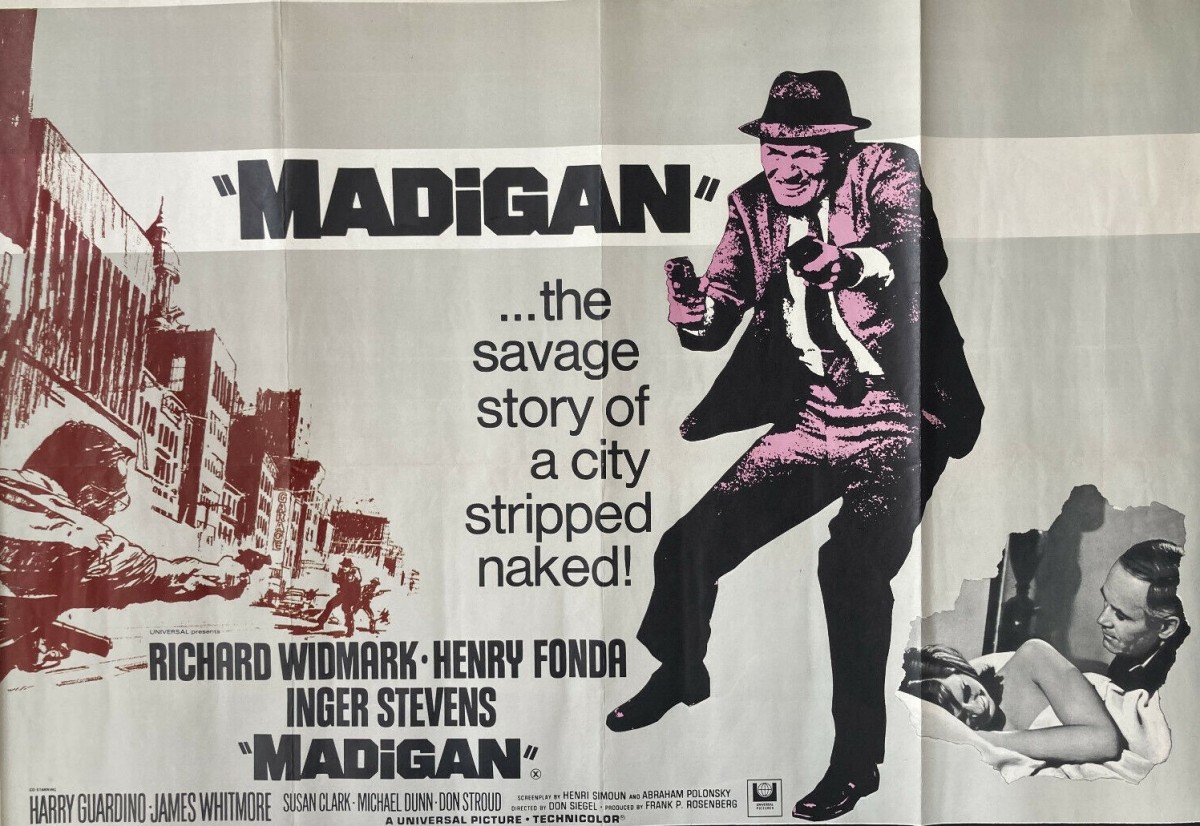
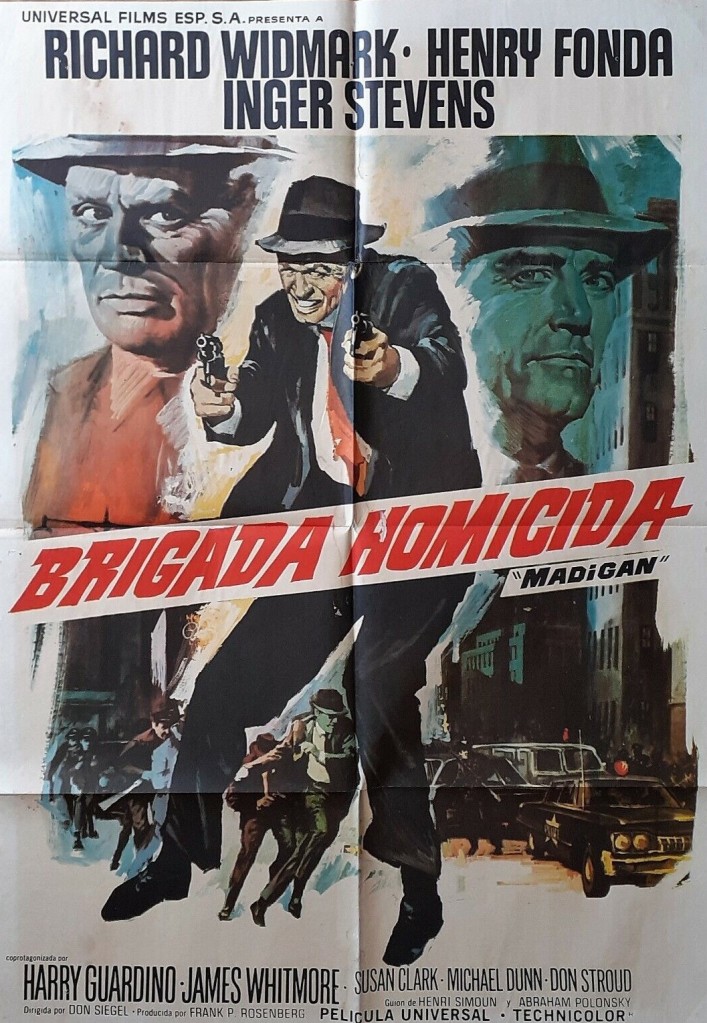
Madigan (1968) ****

Reignited the careers of director Don Siegel (no Hollywood traction since Hell Is For Heroes in 1962), Richard Widmark (reduced to supporting roles) and Henry Fonda (no longer first name on the team sheet for the biggest pictures) and reinvented the cop thriller as a gritty urban affair. The plot – chasing down a suspect – is a MacGuffin to explore tough police methods, corruption, and the harm the job does to the domestic lives of the police.

Detective Dan Madigan (Richard Widmark) and partner Rocco Bonero (Harry Guardino) come woefully and embarrassingly unstuck when hood Benesch (Steve Ihnat) evades capture and steals their guns. They have 72 hours to bring him back or be suspended. So, basically, they spend most of the time following a bunch of leads, intimidating anyone who gets in their way, including a helpless secretary. And while Bonero is happily domesticated, Madigan’s lonely wife Julia (Inger Stevens) is fed up with late nights and broken promises to the extent of considering a one-night stand when hubby stands her up once too often.  

Commissioner Russell (Henry Fonda) has his hands full dealing with the errant detectives  without the ramifications of corruption involving his best friend, long-time cop Chief Inspector Kane (James Whitmore). The widowed Russell would be a poster-boy for the principled cop except he’s having an affair with married woman Tricia (Susan Clark).

While Madigan is kicking and snarling his way through the underworld, Russell is trying to work out how to save his friendship and his affair. And while they might appear opposites, the classy top officer and the street cop, the uptight Russell envies Madigan’s way with people. Madigan is comped drinks and even a suite at the Sherry-Netherland hotel not merely because he’s a cop but because his charm goes a long way.

And while Russell dithers over helping out a friend, Madigan has no qualms about being taking for a ride by an old pal down on his luck and in need of an excuse to be bought a drink. When it comes down to it, Madigan is the better advert for humanity.

The soap opera elements don’t intrude too much on the thriller. Madigan and Bonero go in with fists blazing and work their way through a menagerie of skunks including Castiglione (Michael Dunn) and stool pigeon Hughie (Don Stroud). Benesch is a piece of work, not just clever enough to use his lover’s nudity to distract the attention of cops, but sufficiently hard-boiled to shoot a cop dead in the street and have little hesitation in opening fire on anyone who comes too close.

There’s some fascinating internal cop politics as Kane locks horns with Chief of Detectives Lynch (Bert Freed) over the latter’s insistence on suspending Madigan. And Russell has to finagle his way through the problems a well-heeled son is causing a rich doctor (Raymond Jacques).

Every time the pace slackens, the movie falls back on the old Chandler routine, have someone come through the door with a gun (a fist would suffice). Madigan is a driven cop, struggling to hold onto his marriage, Julia too often the sacrificial lamb. And for all his outward bravado, there’s a superb scene when unexpectedly encountering Russell he turns into a stammering ball of nerves, like a schoolkid anticipating a roasting from a headmaster.

Richard Widmark (The Bedford Incident, 1964) has a hell of a part, tough guy, check, but with a side helping of kindness, and pretty assured on the loving front, investing what could have been a fairly cliched character with a good deal of complexity. Henry Fonda (Firecreek, 1968) does a lot of pacing as his self-esteem implodes; how can he be a good guy if he’s running around with another man’s wife and how can he stick to his principles if he’s going to let a pal away with corruption?

Inger Stevens (Firecreek, 1968) is impressive as the disappointed wife trying to keep disappointment at bay. Harry Guardino (Hell Is For Heroes) always makes a good sidekick, but James Whitmore (The Split, 1968) digs into a sack of guilt as he attempts to avoid the oncoming storm. Don Stroud was almost auditioning for Don Siegel – he would turn up again in Coogan’s Bluff (1968) and Joe Kidd (1973); Susan Clark, too, Eastwood’s squeeze in Coogan’s Bluff. In smaller parts are Sheree North (Lawman, 1971) and Raymond St Jacques (Uptight, 1968).

But the show belongs to Don Seigel. There can be few directors so out-of-favor that they are able on their return to kick start a new cop cycle that culminated in Dirty Harry (1971). While this pulls no punches on the action front, it’s the quieter behind-the-scenes domesticity that almost as much catches the eye, the way he gives the characters time to breathe, opens them up to reveal more intricate inner workings.

It also spelled rebirth for blacklisted screenwriter Abraham Polonsky (Tell Them Willie Boy Is Here, 1969) in his first credit under his own name for 17 years. He didn’t do it all himself, though, Howard Rodman (Coogan’s Bluff) sharing the chores, the pair working from the novel The Commissioner by Richard Dougherty.

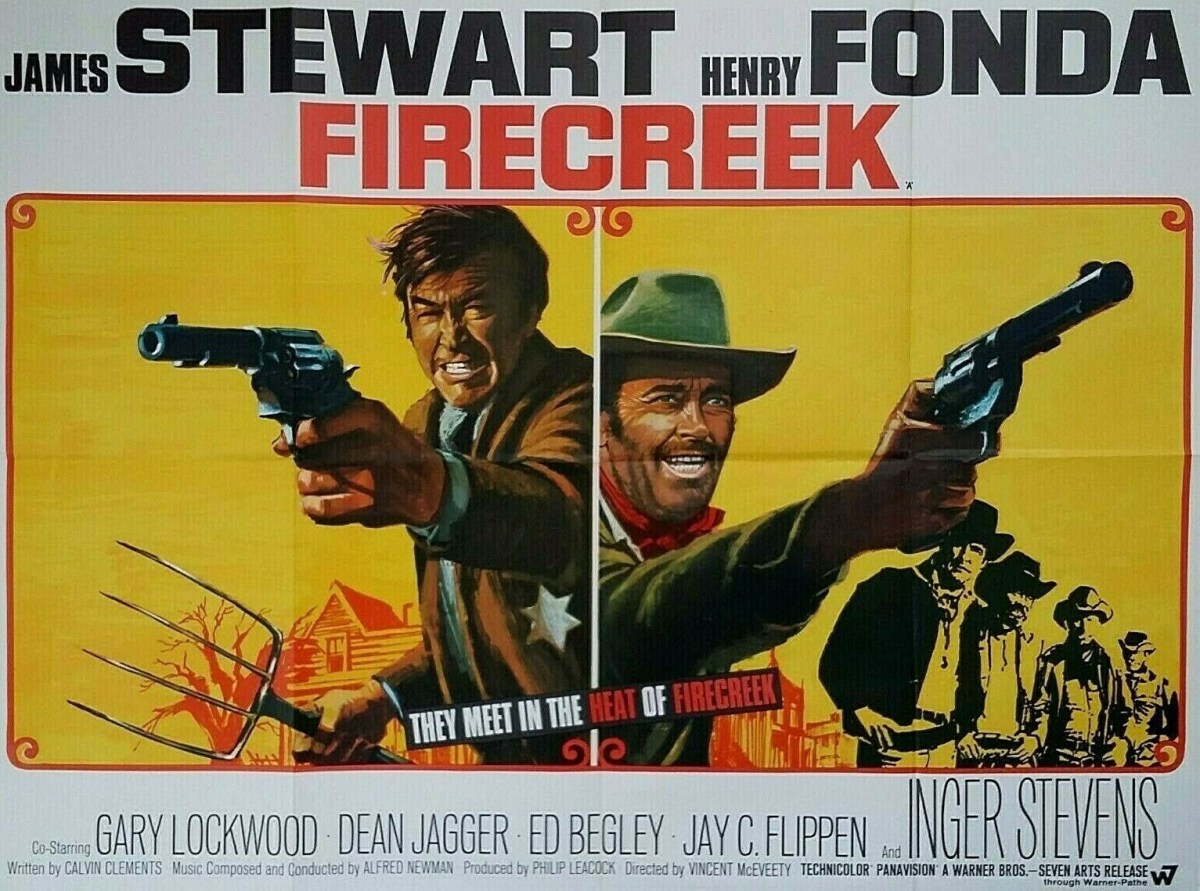
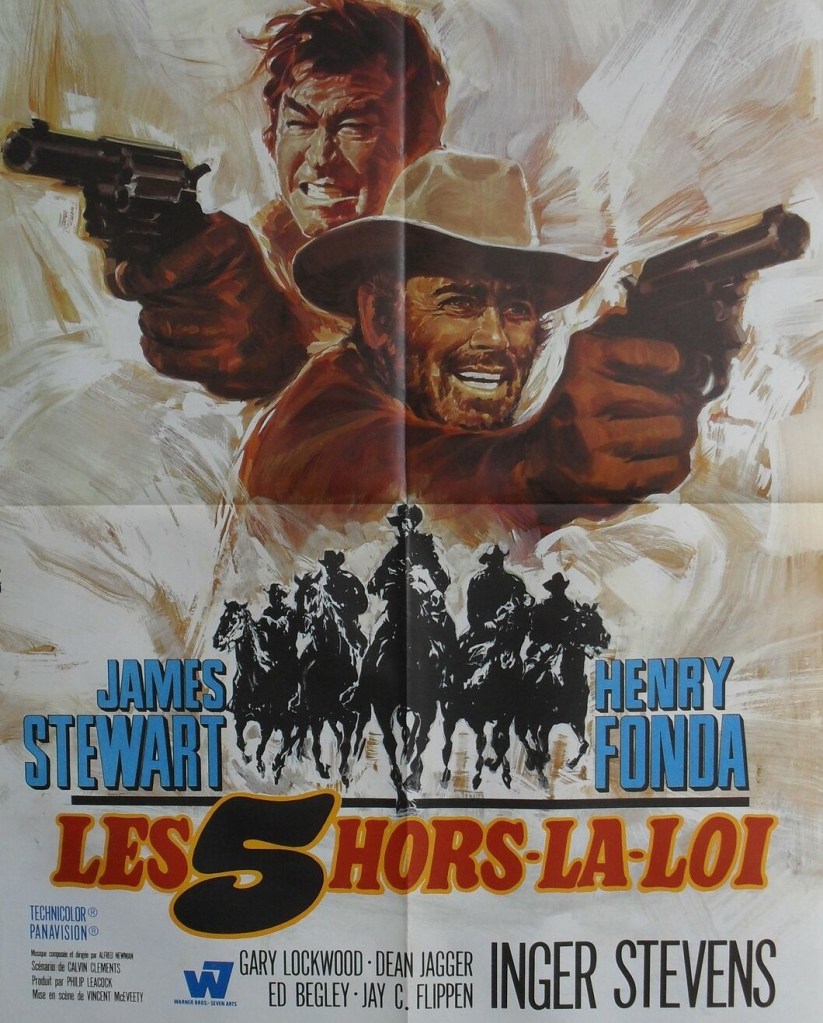
Firecreek (1968) ****

Unfairly overlooked intelligent western with terrific performances from the two male stars and thematically prefiguring both Once Upon a Time in the West (1969) and The Wild Bunch (1969). Granted it appears slow but it’s the slow-burn kind of slow that works exceptionally well. Too often under-stated means under-rated while subtlety rarely attracts critical plaudits. And if you see the role of the screenwriter as probing personality and uncovering self-delusion rather than merely devising pithy lines then this is one for you.

Johnny (James Stewart) is a two-bit (“honorary”) sheriff  in a two-bit town stuffed full of losers. Into his patch comes a gang of hired killers fresh from range wars led by the wounded Bob (Henry Fonda) and including cocksure trigger-happy Earl (Gary Lockwood), mean Norman (Jack Elam) and dumb Drew (James Best). With Bob side-lined with his injury, it’s not long before the gang kicks off, Earl half-drowning a man, smashing up the saloon and nearly killing a pompous preacher (Ed Begley) while Norman attempts to rape Native American squaw Meli (Barbara Luna). They think a few dollars will repair the damage and nullify hurt feelings.

But for the most part tensions just simmer, it looking like the outlaws are temporary visitors, Johnny using diplomacy to settle matters, and none of the townspeople inclined to get into a shooting match. And there’s a rich seam of characters who even when they skirt cliché seem to offer if not necessarily something new but not shop-worn either and with emotional depth.

Headstrong teenager Leah (Brooke Bundy) is attracted to dangerous Earl even though he would as soon rape as romance her, level-headed Evelyn (Inger Stevens) finds solace in a man she knows is a killer and midwife Dulcie (Louise Latham) is so dry her language could cut you with a knife. Johnny’s too trusting wife Henrietta (Jacqueline Scott)  bewails “why did we settle for less than we wanted,” storekeeper Whittier (Dean Jagger) would be a knife-whittling charming elder statesmen except for his habit of going for the jugular,  and hero-worshipping stable boy Arthur (Robert Porter), too old to be just cute and verging on a calamity, “couldn’t tell you what day it was.” And there’s a hint that the upstanding Johnny ain’t quite so perfect, the question of Meli’s white child left dangling in the air.

It’s the kind of “cemetery” town people end up when they’ve nowhere else to go, the inhabitants discomfited “because today didn’t turn out like yesterday.” Johnny’s the worst offender, stopping here on his way to a better life further west because all he “saw here was land nobody wanted and ground that nobody would be challenging me for.” The only person who will stand up for law and order is the witless Arthur who unwittingly triggers trouble. The townspeople mirror the villagers in The Magnificent Seven (1960) who require the assistance of mercenaries before they can stand on their own two feet except in this case nobody is rushing to the rescue.

The initial stand-offs between Johnny and Bob are under-stated, serving to stoke up tension, and the twist is that it’s Bob who tries to avert a showdown, feeling sorry for the sheriff, knowing he will be no match for a proven gunslinger, while the climax provides a surprising saviour. In fact, Bob is the most self-aware of all the characters. He tells Evelyn “you are living even more in the past than I am” and that “I don’t have your temperament to accept another empty day.” And even though he doubts the quality of his gang, he can’t give them up, or the power of being in charge. “I’ve been alone, didn’t like it…I can’t gamble with being a nobody, I’ve been that, doesn’t work for me.”

Among the ton of great touches are Johnny’s badge, made by his kids, title misspelled, the climax in a dust whirlwind, the pompous preacher whose bluster can’t save him, and the most terrible wake you will ever witness.

It’s quite astonishing that a film with such a high quotient of characters – except Johnny at the end – lacking redeeming features could work so well. Director Vincent McEveety was the epitome of a journeyman, best known for television and Disney (Herbie Goes Bananas, 1977) go-to guy. This was his debut feature – if you exclude Blade Rider, Revenge of the Indian Nations (1966) stitched together from episodes of television’s Branded – and it sank at the box office despite the presence of Stewart and Fonda, admittedly at the tail end of their marquee power.

Outside of the wake and the climax, the best scenes are under-played. McEveety lets the words do the talking, a good choice given the exemplary writing (as indicated above) and three principal actors who can be relied upon to ignore the temptations of over-acting. He handles the action well and there’s a growing sense of terror as the townspeople realize what their cowardice has let them in for.

There’s a nod here and there to High Noon (1952) with the town full of cowards but from today’s perspective it’s as a precursor that the movie is perhaps more interesting. Henry Fonda’s (The Best Man, 1964) performance, complete with pitiless stare and thick stubble, seems a rehearsal for Once Upon Time in the West (1969) while his gang, like The Wild Bunch (1969), complete with squabbling outlaws and leadership challenge, are “running out of borders.”  You might notice how Fonda’s death here – the movement to the side when shot, the shock in his eyes – while markedly less operatic closely resembles a similar scene in Once Upon a Time in the West. And if you want further reference to Sergio Leone’s epic, how about a nearby town called Sweetwater.

You might think you’ve seen this James Stewart (The Rare Breed, 1966) performance  before but it’s a subtle variation on the hapless character of Mr Hobbs Takes a Vacation (1962) and far removed from the take-charge characters of this decade. This is man who has fooled himself into thinking he is something he is not, a man of the west in name only.

Inger Stevens (House of Cards) again delivers, like the other townspeople acting tough to hide the weak interior. There’s a terrific supporting cast. Gary Lockwood (2001: A Space Odyssey) is given more rein than anybody else outside of Ed Begley (Warning Shot, 1967). Look out also for Dean Jagger (Elmer Gantry, 1960), Richard Porter (Mackenna’s Gold, 1969), Jay C. Flippen (Hellfighters, 1968), Louise Latham (Marnie, 1964), James Best (Shenandoah, 1965), Brooke Bundy (The Gay Deceivers, 1969) making her movie debut, Barbara Luna (Che!, 1969) and Jack Elam (Once Upon a Time in the West).

Credit for the intelligent screenplay goes to Calvin Clements (Kansas City Bomber, 1972), also making his first picture.

Discover WordPress

A daily selection of the best content published on WordPress, collected for you by humans who love to read.

The Atavist Magazine

by Brian Hannan

WordPress.com News

The latest news on WordPress.com and the WordPress community.