The Assassin (2025) ** Amazon Prime

Ties itself up in knots with narrative complication so that by the time it comes to the dumbest of dumb climaxes you’re simply worn out. And having tied itself up in knots, it only escapes from the problem of a son coming to terms with a mother who’s a serial killer by providing him with the most unlikely of get-out-of-jail-free cards. And, actually, by the time you reach the conclusion you realize it’s really about nepo kids, one dumb as all get out and the other a chinless wonder.

Keeley Hawes as Julie the titular murderous mercenary is good value but that’s mostly because she curses like a defrocked nun and is as ratty as hell and her engagement with her estranged son Edward (Freddie Highmore) is like Lethal Weapon on speed.
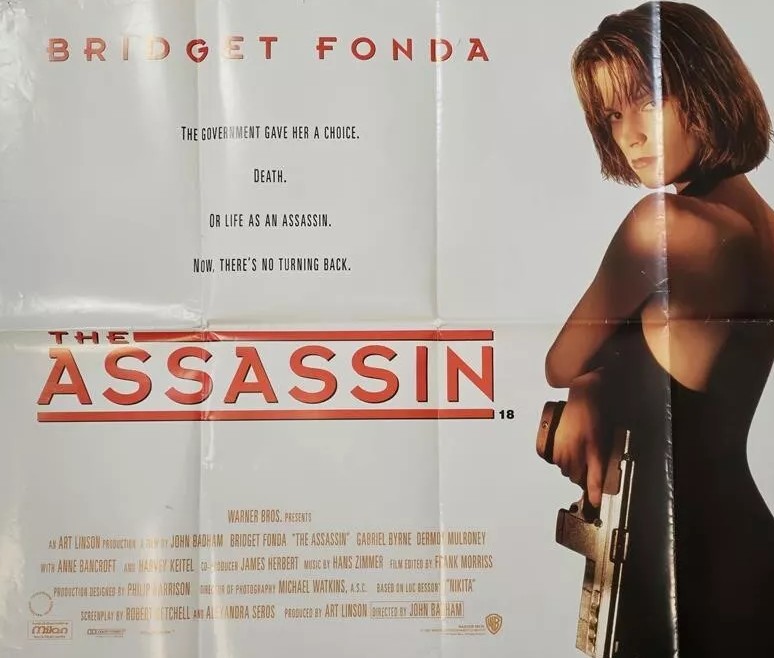
Previous (female) assassins we have known.

So Julie, retired a decade and holed up in Greece, is pulled out of retirement because…she’s closest to potential victim Kayla (Shalom Brune-Franklin) …who is (it turns out) the unlikely girlfriend of unlikely journalist (of what? Rabbit Times?) Edward who is only (it turns out) interested in her because he’s been left a dodgy inheritance by his mysterious father (now deceased) and the trail of that leads to her family.

But not killing Kayla makes Julie the target of various other assassins, but rather than going about their job in discreet fashion by picking her off with a telescopic rifle they decide to barge in on a wedding and massacre everybody in sight in the hope a stray bullet hits her. Luckily though, that provides an opening for local butcher Luka (Gerald Kyd) to become her sometime companion.

Then we leap into a menagerie of subplots. Kayla’s cokehead brother Ezra (Devon Terrell) has mummy issues (she’s deceased, too, mysteriously committing suicide) which (it turns out) is the perfect way for another subplottee Marie (Gina Gershon) to enter the equation. After shagging him to pick his brains she (it turns out) is Edward’s long-lost aunt. Then there’s the mysterious letter, written on yellow notepaper (!!!) kept hidden in a safe by Kayla’s dad, billionaire tycoon Aaron (Alan Dale), which contains information so dangerous it could destroy his business.

Previous (male) assassins we have known.

But (aha!) someone knows the secret, Aaron’s tech expert Jasper (David Dencik) is blackmailing Aaron but is now on the run. Anyways, Kayla discovers the terrible secret which is that Aaron was initially funded by a dodgy arms dealer. To prevent that secret getting out, Aaron had him bumped off 30 years ago by (wait for it) Julie on her first solo killing mission.

Kayla is threatening to expose her dad’s secret though it doesn’t occur to her to just hand the exclusive to Rabbit Times chief investigative reporter Edward. Meanwhile, Ezra spends his time concocting barmy plans majoring in violence that all go south until his exasperated dad gives up all pretence of considering him as just the guy to run the business when the time comes.

Meanwhile, Marie (it turns out) isn’t Edward’s long-lost aunt after all – she’s (wait for it) his long-lost mum. And when Edward finds that hard to believe she kidnaps him and takes him to a stronghold. But (it turns out) Edward’s suspicions are correct.

There’s scarcely a minute goes by without someone bursting in with a machine gun or worse, so it’s no surprise that Julie and Luka (who’s proved himself handy with a meat cleaver) decide to invade the stronghold. And that sets up the preposterous finale.

Marie isn’t Edward’s birth mum at all but her dead husband was his father. Marie didn’t fancy all the messy things pregnancy did to a young beautiful body so they called in a surrogate. But Julie, in the way of Jason Bourne, had a conscience three decades ago when it came to kids and after knocking off Marie’s husband, in the absence of a bottle of milk or any other pacifier to soothe a crying baby, scooped up said infant (Edward). 

Marie wants her revenge by having her not-son Edward kill his not-mother Julie. You couldn’t make it up. Yet someone did, presumably as the get-out-of-jail-free card so Edward didn’t have to worry about being the son of a serial killer.

And to show how grown up her is, Edward kills Marie. And as if this was Revenge of the Nepos, Ezra poisons his old man.

Kayla forgets all about exposing the nasty beginnings of her family company and Edward ignores the complications of the serial killer mum and they all (literally) sail off into the sunset.

Written by the Williams Brothers (The Missing, 2014).

The only good thing to be said about this is that it knocks Guy Ritchie off his throne as the King of the Preposterous.
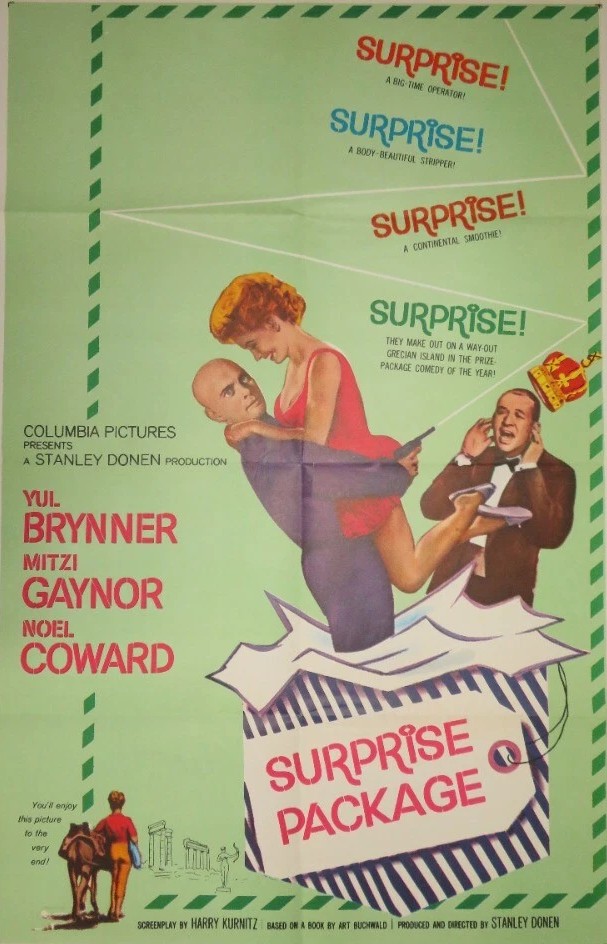
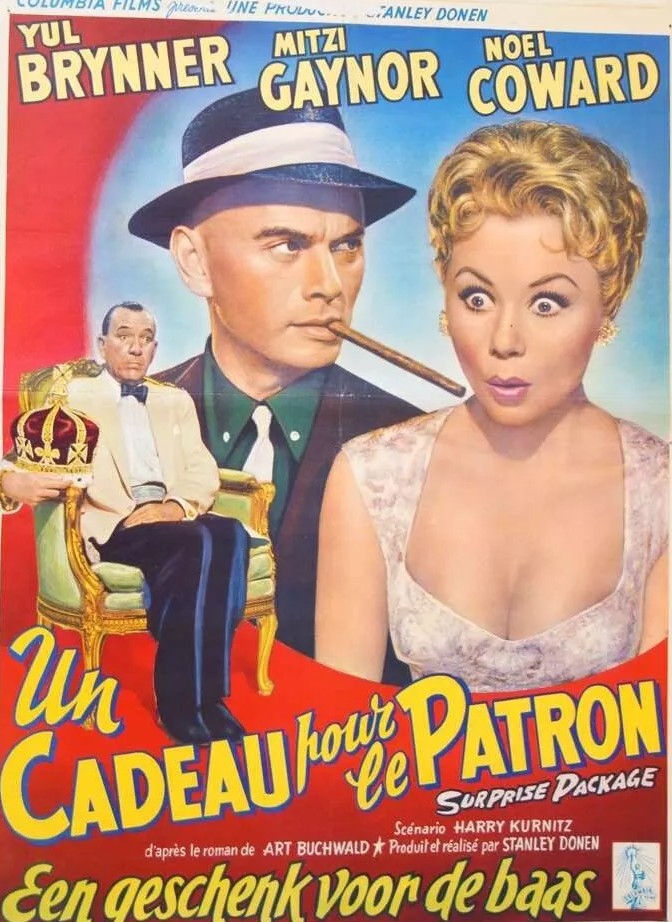
Surprise Package (1960) **

Poses two questions. Is this every bit as bad as Once More with Feeling, Stanley Donen’s previous picture? Yep, sorry, it’s every bit as wretched. The second question is: how on earth did Donen go from this mess to sublime romantic thriller Charade three years later? Well, the answer might simply be in the casting. Yul Brynner is no Cary Grant. And in this movie he’s not even Yul Brynner.

My guess is he’s meant to be a humorous twist on the Brynner screen persona. But playing a gangster with a thick Noo Yoik accent was always the preserve of the dumb supporting actor not the star. And since Yul Brynner isn’t any more convincing in this than in Once More with Feeling the project is in trouble from the start.

We’re given too much of this faux gangster drivel at the start when mob kingpin Nico (Yul Brynner) is collecting tributes from his underlings. Then, for no particular reason, he is deported, sent back into exile to his homeland of Greece. There he encounters the only smart guy in the picture, the corrupt chief of police Stefan (Eric Pohlmann) who’s so astute in the bribery department that all Nico receives in return for his thousand dollar bribe is to be told he won’t be arrested for bribery.

Stefan sets up Nico to meet another exile, deposed King Pavel II (Noel Coward), whose accent makes no sense either unless he was exclusively raised in high class British society, schooled at Eton, a member of upper class clubs etc etc, otherwise how to explain the plummy tones unless this is also meant to be as over-the-top gag as Nico’s Noo Yoik accent. Nico plans to buy the king’s crown for a million bucks. But the boys back home stiff him and instead of the cash send him instead his girlfriend – the surprise package of the title – mob moll Gabby (Mitzi Gaynor), and the ongoing gag here is that, what with Nico trying to elevate himself in society, Gabby’s table manners and speech let him down.

So with no cash forthcoming, what’s a gangster to do to pad out his exile? So Nico decides to steal the crown. And if there had been either a hint of the classic heist a la Grand Slam (1960) or Topkapi (1964) or its alternative, the totally inept thief, then we might have been onto something. But instead we’ve got much what we might expect from such a poor piece – not much. And in any case, the laffs are meant to come from another party, representing the king’s citizens, and led by Dr Panzer (George Coulouris) who wants the crown restored to its proper home. Two crooks chasing the same prize? What a crazy idea. But this works as well as the rest of the picture.

Thanks to Gabby’s principles, the crown goes in neither’s pockets. To make a buck, Nico and the king transform the latter’s villa into a casino with Gabby, now Mrs Nico, employed as the hat check girl.

Stanely Donen made three pictures in 1960 and then not another man for three years, which suggested he was a) working on too many projects at once and b) that break sure refreshed his cinematic skills. Just like Once More with Feeling he gets wrong virtually most of the directorial decisions, beginning with the accents and ending up with the storyline and characters you don’t care a button for, which wouldn’t have mattered if they could generate a laugh.

Yul Brynner followed this up with his iconic performance in The Magnificent Seven (1960) so perhaps he can be excused. This pretty much killed off the career of Mitzi Gaynor (South Pacific, 1958) – it was another three years till she appeared on screen again, and that was her final picture. It took Noel Coward (Bunny Lake Is Missing, 1965) four years to get another screen role.

Written by Harry Kurnitz (Once More with Feeling) from the Art Buchwald novel so I am assuming this was greenlit before the results of the previous Donen-Brynner teaming were known.

At least Charade revived Donen’s career.

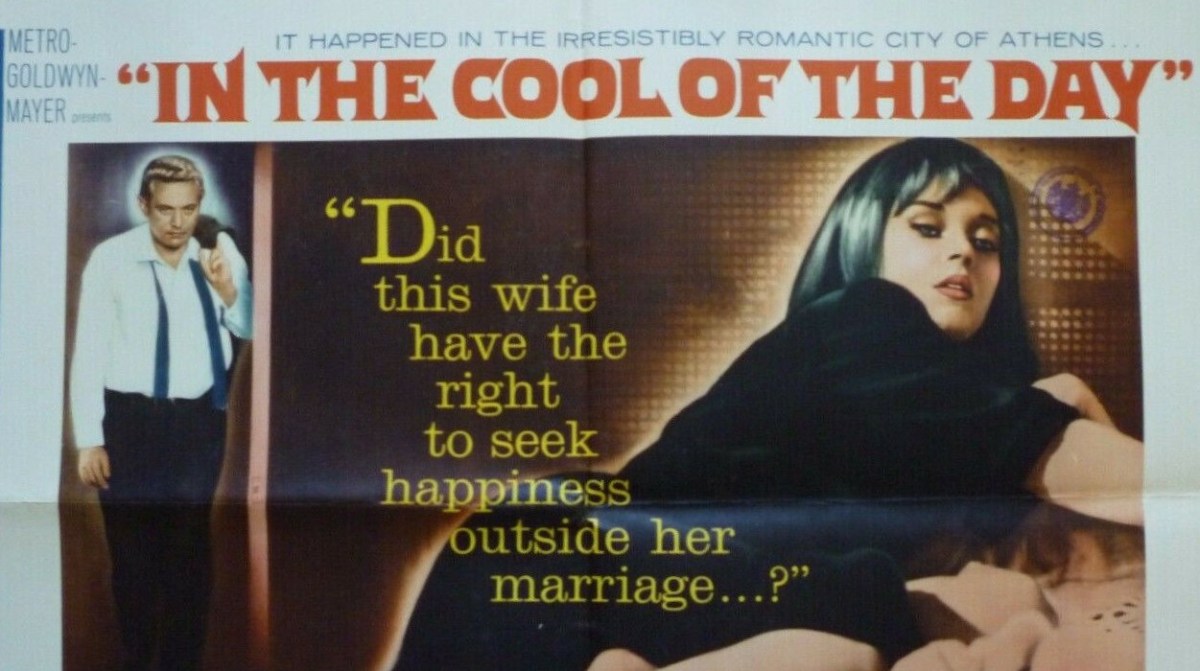
In the Cool of the Day (1963) ***

Jane Fonda tagged this the worst film of her career but that’s a bit harsh and I suspect it owed a lot to the actress being dressed up Audrey Hepburn-style in outfits that scarcely suited her. While it’s certainly overheated, melodramatic moments indicated by thundering music, a marvellous supporting cast, including a quite bitchy Angela Lansbury, provides ample compensation.

It’s  romance in the Love Story vein, rich young flighty heroine Christine (Jane Fonda) at death’s door half her life, but feeling smothered by understandably over-protective husband Sam (Arthur Hill). When she falls for married publisher Murray (Peter Finch) and sets off on a trip to Greece, chaperoned it turns out by Murray’s bitter wife Sybil (Angela Lansbury), it takes a while for romance to physically bud. That it does at all is only because   Sybil has taken off with suave traveling salesman Leonard (Nigel Davenport).

The movie takes a long time to heat up because, as in The Bramble Bush fashion, there’s overmuch character filling-in to do. Part of the interest in this picture is how the bad guys are effectively good guys, more victims of their partner’s behaviour than anything else, though for story purposes, the audience has to be persuaded otherwise.

So besotted Sam, having dealt with umpteen bouts of his wife’s pneumonia and lung operations, a “slave” to her illnesses, is deemed as treating her like a child rather than a wife, preferring her ill rather than well, and denying her the adventure to which she feels entitled. When she meets Murray she has run away. Murray’s wife has a downer on her husband because, wait for it, he killed her child and left her facially scarred (hidden now by hair but she’s still very sensitive about it) in a car accident he caused.

But she’s portrayed as over-sensitive, worried about her appearance, snippy, blaming him for her distraught life, and worse, a philistine, hating being dragged around ancient Greek monuments. Aware of her husband’s proclivities, she mocks, “You’d be an idiot to fall in love with her.” And any time she ventures out, the music rises to a crescendo as if she is a character straight out of film noir.

When she goes off with Leonard, her love affair is viewed as sneaky rather than redemptive, even though he restores her faith in herself. Triumphantly, she tells Christine, “He’s all yours” and her husband “nobody need feel sorry for me any more.”Admittedly, she does take revenge by informing Christine’s husband, who has entrusted his wife to Murray’s care, of their affair. And you would be hard put to argue, although the film wants you to believe otherwise, that Sybil and Sam have been ill-treated by their partners, Sam, in particular, funding her trip to Greece in the hope that allowing her the freedom she needs will save their marriage.

Of course, the characters of both partners, even if their self-pitying is the result of circumstance, do mean that Christine and Murray are presented as people trapped in bad marriages and for whom love, however brief, provides sanctuary from tortured lives, her physical, his more mental, since he is not averse to guilt. 

Sybil’s lack of interest in tourist Greece handily gives the prospective lovers plenty time to fall in love, amid gorgeous scenery, and breathing in air rich in culture. With all film made in the 1960s and set in foreign parts – Pretty Polly (1967) another example – sometimes the story takes second place to the scenery, so it’s lucky that the romance is played out against such an interesting background, an ideal combination, killing two birds with one stone if you like. Given this is prior to Zorba the Greek (1964), the filmmakers have even managed to sneak in some traditional Greek dancing, albeit on the deck of a ferryboat.

Dress-wise, the lovers are ill-matched, Murray plodding around in a suit while Christine parades the latest often clingy fashion. When Sybil departs the scene, that leaves one happy character of the happy couple free of marital encumbrance, but still leaves open the question of how Christine will rid herself of Sam and, more importantly, will Murray wish to take on the all-consuming job of nursing Christine. He never gets the chance to find out. When she does fall ill – as the result of Murray recklessly keeping her out in a thunderstorm – her mother Lily (Valerie Kendrick) swoops in to rush her to hospital.

Spoiler Alert – I’m telling you that she dies because it seems to me that the ending the filmmakers hoped for is not how the audience will perceive it. Beautiful young woman dies too young, yep that’s there, but the man, now free and able to shake off his dull life and start afresh as a writer, seems a long shot. Given he has now, thanks to the thunderstorm episode, killed two people, I would surprised if guilt was not uppermost in his mind.

Not so-good-it’s-bad, and despite the complications, and perhaps because of the Sybil-Leonard romance, it’s certainly an interesting picture as much, perhaps, because it fails to send the audience in the desired direction.

In only her fifth movie, Jane Fonda (They Shoot Horses, Don’t They, 1969), exhibiting the nervous friskiness that would become a hallmark, does pretty well with a febrile, spoiled, character. If she falls down at all it’s that she appears uncomfortable wearing Orry Kelly’s fabulous gowns and it would take Hollywood some time to work out she was not a natural successor to Audrey Hepburn. Peter Finch (The Pumpkin Eater, 1964) is perfectly at ease with the illicit.

But Angela Lansbury (Harlow, 1965), a hoot as the wife who turns rejection into triumph, steals the show. Throw in Arthur Hill (Moment to Moment, 1966), Nigel Davenport (Sands of the Kalahari, 1965), for once neither smug nor snippy, Alexander Knox (Khartoum, 1966), veterans Constance Cummings (The Criminal Code, 1930) and Valerie Taylor (Went the Day Well, 1942), John Le Mesurier (The Liquidator, 1965) and Alec McCowan (Frenzy, 1972) and you have a movie where hardly a moment goes by without admiring a performance.

Robert Stevens (I Thank a Fool, 1962) directed from a screenplay by Meade Roberts (Danger Route, 1967) based on the novel by Susan Ertz.

The Moon-Spinners (1964) ***

Every new Hayley Mills film was an exercise in transition. Would audiences allow the successful child star – the first for a generation – to grow up? Or would they turn against her as they had Shirley Temple? And would her paymasters Disney in the penultimate film in her contract assist her by offering more mature roles or insist she remained the cute kid? She had already ventured into more adult territory with the British-made The Chalk Garden (1964).

Set on the island of Crete, what starts out as typical Disney travelog – traditional Greek wedding and annual festival parade – soon morphs into darker sub-Hitchcockian territory. Nikki (Hayley Mills) on holiday with her aunt (Joan Greenwood), a collector of folk songs, becomes mixed up with skin diver Mark (Peter McEnery) who appears for reasons unknown to be on the trail of a local man Stratos (Eli Wallach). Young love looks set to blossom except for the villainy afoot. The picture holds on to its various mysteries for too long so exposition comes in a flood in the second act while the third act introduces a new set of characters including British consul (John Le Mesurier) and wealthy yacht owner Madame Habib (legendary silent star Pola Negri).

Along the way some excellent scenes feature: a nerve-tingling high-wire stunt on a revolving windmill, a punch-up on a speeding boat, the drunken wife (Sheila Hancock) of the consul, feral cats in an ancient monument, an old woman thinking she is going crazy when a bottle moves seemingly of its own volition, a hearse doubling as an ambulance, a cowardly leopard and a belter of a slap meted out by Nikki. Mark, physically inhibited by a gunshot wound, has to cede investigation into the nefarious activities to Nikki who in any case has already played the independence card.

Getting all the necessary information to the audience and ensuring various characters are properly introduced without the whole enterprise turning into a turgid mess is a tricky proposition but director James Neilson is equally at home with complicated plot and multi-character scenario from his experience on Dr Syn, Alias the Scarecrow (1963) and with Mills from Summer Magic (1963). And he lets mystery and action take precedence over budding romance, the kiss when it comes hardly going to make an audience swoon, and uses the traditional Greek elements to build up atmosphere.

All in all entertaining enough, especially if viewed as Saturday matinee material, but it’s clear that the leading roles would have worked better if played by older characters as was the case with the source novel by Mary Stewart. Hayley Mills (Pollyanna, 1960) makes a game stab at putting forward a more grown-up persona but relies far too much on the acting tricks that got her into the child-star business in the first place. Even so, once she exerts her independence, she becomes more believable although the idea of a teenager solving a crime creates more problems than it solves in attracting an adult audience.

In his first leading role Peter McEnery (Beat Girl, 1960) impresses. Villainy is a stock in trade for Eli Wallach (The Magnificent Seven, 1960) but here he dials down the brutality. Irene Papas (The Guns of Navarone, 1961) plays his sister and were it not for her husky voice Joan Greenwood  (Tom Jones) would have been a dead ringer for a dotty aunt. It’s a treat to see a famed silent star Pola Negri (Shadows of Paris, 1924) putting in an appearance. Character actors John Le Mesurier (The Liquidator, 1965), Andre Morrell (The Vengeance of She, 1968) and Sheila Hancock (Night Must Fall, 1964) complete the British contingent.   For British television writer Michael Dyne this proved his sole screenplay.

Catch Up: you can follow Hayley Mills’ unfolding career on the Blog through reviews of Pollyanna, The Truth about Spring (1965), Sky, West and Crooked / The Gypsy Girl (1966)  and her adult breakthrough The Family Way (1966). Eli Wallach films reviewed are: The Magnificent Seven, Lord Jim (1965), Genghis Khan (1965) and A Lovely Way to Die (1968).   

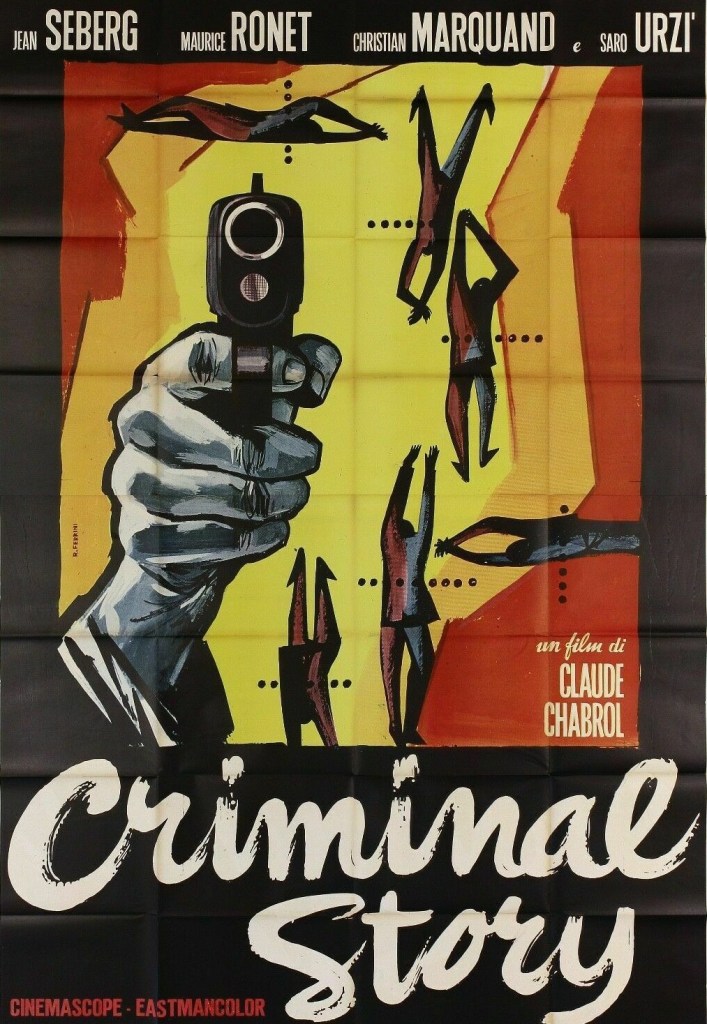
The Road to Corinth (1967) ***

Top-class cast and occasional stylish direction get in the way of a thriller that can’t make up its mind whether it is in reality just a spoof. On the one hand we have a killer in a white suit complete with straw boater and a secret service boss who sells Turkish Delight, on the other hand a story not so much from James Bond but from Bond imitators.

Agent Robert Ford (Christian Marquand) is on the trail of black boxes that prevent missiles launching. When wife Shanny (Jean Seberg) is framed for his murder she determines to uncover the real killer, aided by Dex (Maurice Ronet), and find the maker of the boxes.

But that’s an over-simplification of an over-complicated plot so it’s best to concentrate on the highlights. For example, when customs officials stop a magician they find white rabbits and doves in his vehicle and, despite severe interrogation, he can, magically, release himself from his bonds enough to swallow a concealed cyanide pill. Instead of the usual cute children that proliferate in these kind of films, there’s a really annoying one. Shanny, imprisoned, has to make dolls. Greek Orthodox priests play a significant role.

Throw in kinky secret service boss Sharps (Michel Bouquet) who relishes being slapped for his inappropriate overtures to Shanny, a porn film starring Madame Phiphi, the heroine dangled from a crane and later lashed down to a dumper, and a villain willing to give up his villainy for the love of a good woman.

But mostly it’s a picture in a rush. There are chases galore and nods to Hitchcock and lush Greek scenery.

It would be easy to assume that in eye-catching outfits Jean Seberg (Moment to Moment, 1966) is mostly there to provide eye candy but she does manage to outwit her pursuers from time to time although she seems equally to have a knack for being caught. Maurice Ronet (Lost Command, 1966), Christian Marquand (The Corrupt Ones, 1967) and especially Michel Bouquet (La Femme Infidele, 1969) bring an air of quality to the proceedings.  

Apart from the occasional stunning image, this is not the Claude Chabrol (Les Biches, 1968) that lovers of his thrillers would expect.

There’s a print of this on Youtube. Amazon Prime has this for certain regions. Otherwise it will be Ebay.

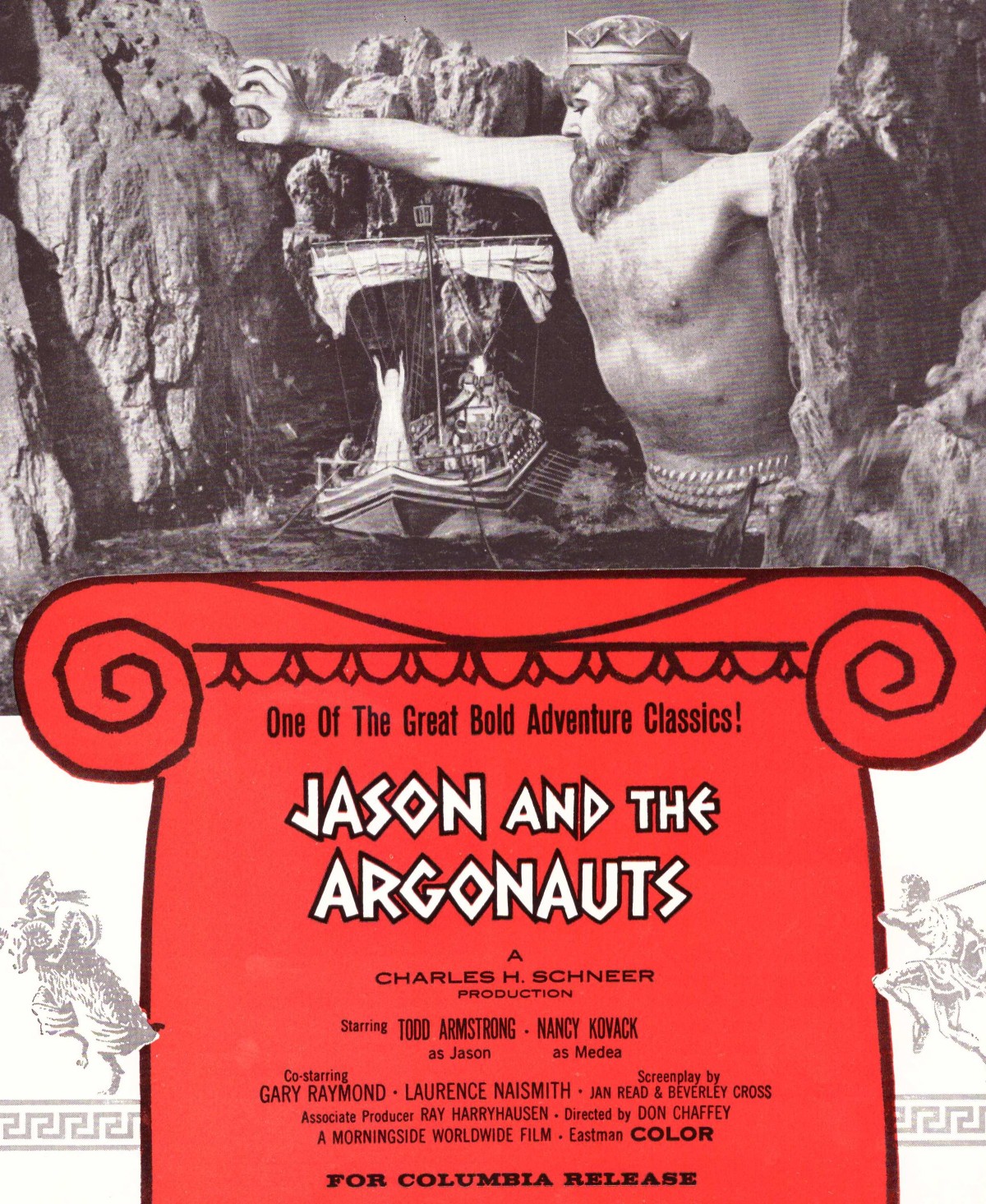
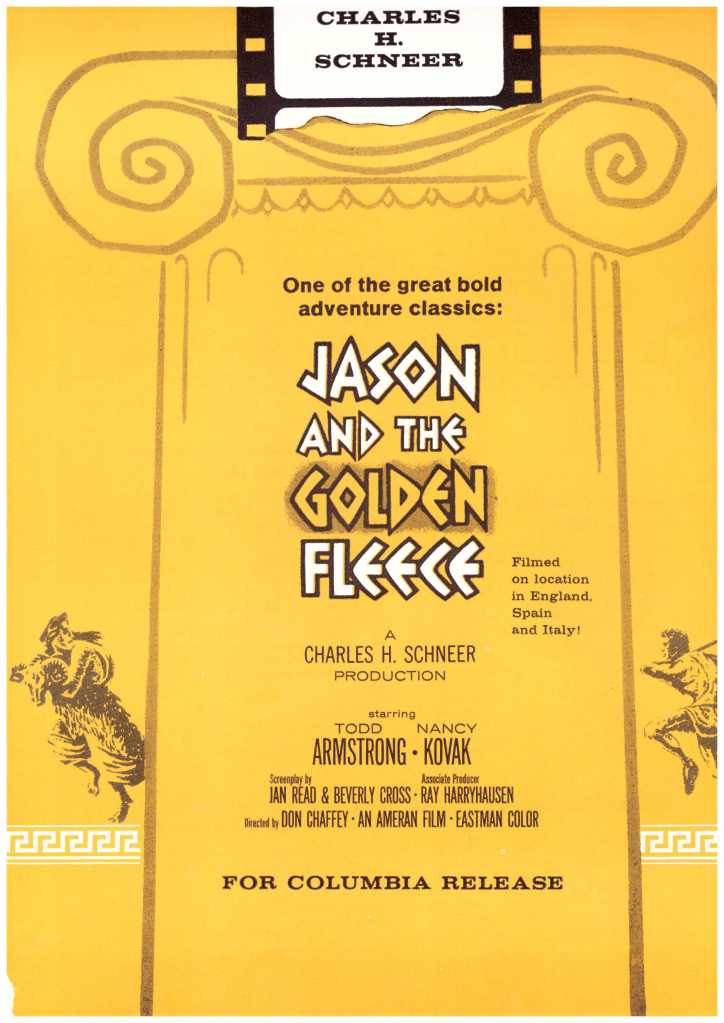
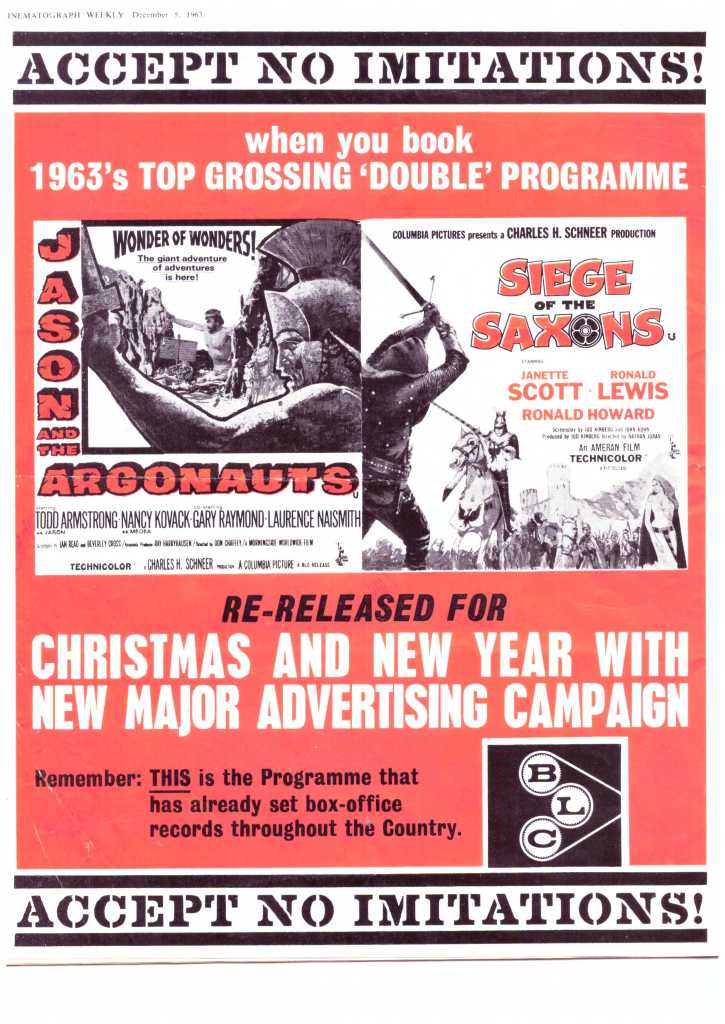
Jason and the Argonauts (1963) *****

An absolute delight, great storytelling married to groundbreaking special effects produces an adventure picture of the highest order. Though mostly known for its Ray Harryhausen stop-motion animation, its success also relied heavily on the direction of Don Chaffey (The Viking Queen, 1967) and a great script. It’s one of the few films to benefit from not being viewed in its original size, the small screen minimizing the flaws of the special effects. In essence it’s a combination of three genres – the Italian peplum, the men-on-a-mission picture and the classic detective story. it was originally entitled Jason and the Golden Fleece (see below).

Plus there are interesting stabs at philosophy – if man refuses to believe in the gods do they cease to exist? And if the golden fleece brings peace and prosperity to a nation what will happen to that country when it is stolen?  And if various people can call on their own gods for help will that not create conflict in heaven as much as on earth? And the ultimately question – what can man achieve without celestial interference?

While the episodic structure derives from the clues meted out piecemeal to hero Jason (Todd Armstrong) during his long voyage to find the golden fleece these often come minus vital pieces of information ensuring that surprise remains a key element.

Without doubt the special effects are the triumph, although some work better than others. The highlights for me were the towering bronze statue of Talos and the skeleton warriors. I can’t be the only one who thinks that some of the visuals in Game of Thrones were inspired by the sight of Talos astride two land masses separated by the sea. Talos is not so much a man-mountain as an actual mountain, first viewed coming round the corner of a cliff top, his head topping it. But where, except for cunning Jason, the crewmen are viewed primarily in miniature in relation to the giant Talos, the skeletons are the same size as the adventurers and that fight scene all the more impressive as the ensuing battle appears completely real.

Scale allows Harryhausen to wriggle out of the problems of contact. If the creatures are out of reach anyway, there’s little need to attempt to bring them into close proximity. The way the Harpies are utilised, close enough to strip clothes from a blind man but otherwise hovering just out of reach, is a classic example of clever direction. The multi-headed Hydra, on the other hand, is the least convincing monster simply because it is impossible for Jason to get close to the beast. Scale is also one of the film’s best weapons. The scenes where a miniaturized Jason is transported to Mount Olympus to face the gods are well done as are the occasions when the gods peer down on tiny man.

Outside of the special effects and the varying degrees of excitement aroused, in the background is constant intrigue. Jason is the son of the King of Thessaly slain by the usurper Pelias (Douglas Wilmer) and his crew includes Acastus (Gary Raymond), son of Pelias, whose task is to cause trouble and if Jason succeeds in his endeavor to kill him. On top of that, there is a heavenly battle over Jason’s fate. Jason, having defied Zeus (Niall MacGinnis) by first of all refusing to believe he exists and that his life is determined by fate, becomes enmeshed in a battle between the king of the gods and his wife Hera (Honor Blackman) who grants Jason a get-out-jail-free card, the ability to call on her help, but only five times.

Jason determines to recruit his own team and in the manner of The Guns of Navarone (1961) and The Professionals (1966) they are all experts in their fields but unlike that film and The Dirty Dozen (1967) are willing conscripts. The team also includes Hercules (Nigel Green) and Hylas (John Cairney) and in the first of the film’s many surprises and reversals, the weedy latter is able to beat the muscular former in a contest of strength.

There is enough incident to keep the story ticking along but Don Chaffey fills in the blanks with montage, the various essentials of a ship – sails, oarsmen, sides, stern, figurehead, pace set by drumbeat  – and a full color palette from the bright blue sky, from dawn and dusk to sunset and night, a wonderful image of rowers at sunset on the sea the pick. He also makes great use of the sea – pounding surf, storms, the sea turned tempest by the clashing rocks, a shipwreck. And we have dancing girls, colorful costumes, ancient backdrops and the sense that the budget has been well spent

Some scenes call for immense skills in coupling special effects with real characters. For the clashing rocks sequence five elements are simultaneously in play: the crew in danger, a tempest, rocks crashing into the water, the ship itself and Neptune.

And the romance is well handled dramatically: if Jason rescues Medea (Nancy Kovack) then she too rescues him. Love produces conflict. To love Jason, Medea must betray her country. There is hardly a moment when Jason, confronted either by monsters or kings, does not face death.  

In addition, there is a stunning score by Bernard Herrmann (Psycho, 1960).

Any top-notch acting would have been overshadowed in any case by the special effects. Which is just as well because the entire cast is drawn from the lower strata of the stardom ladder. Todd Armstrong, from the Manhunt tv series (1961), needs only not to mess up, which he manages adequately. Nancy Kovack (Diary of a Madman, 1963) does well to make an impact given she does not appear until the final third. This did not turn out to be much of a star-making vehicle for either. Honor Blackman drops the slinky persona with which she had made her name in The Avengers tv series (1962-1964) and instead plays a confident goddess willing to out-maneuver husband Zeus.

The rest of the cast comprises a regiment of future movie supporting actors – Nigel Green (Tobruk, 1967), Niall MacGinnis (The Viking Queen, 1967) and Douglas Wilmer (The Brides of Fu Manchu, 1966). Future television stars ranged from Patrick Troughton (the second Dr Who) and Scottish actor John Cairney (This Man Craig, 1966-1967) to Laurence Naismith (The Persuaders, 1971), Gary Raymond (The Rat Patrol, 1966-1968), Mike Gwynn (Poison Island, 1965) and Andrew Faulds (The Protectors, 1964).

The screenplay was written by Jan Read (First Men on the Moon, 1964) and Beverley Cross (The Long Ships, 1964), husband of Maggie Smith. Cross returned to ancient worlds again for producer Charles H. Schneer for Sinbad and the Eye of the Tiger (1977) and Clash of the Titans (1981)

Although the ending appeared to leave the door open for a sequel, none was made. A huge box office hit in Britain, it did not repeat its success elsewhere.

I first saw this film as a boy and was so enthralled I wouldn’t have noticed if there was anything awry with the special effects. I have not seen it since. Coming at it with some degree of scepticism I found that attitude misplaced for I was equally enthralled.

Catch-Up: Nigel Green’s portrayal of Hercules was a far cry from his normal screen persona of martinet. His movies previously reviewed in the Blog are The Skull (1965), Khartoum (1966), Tobruk (1967) and Africa Texas Style (1967).

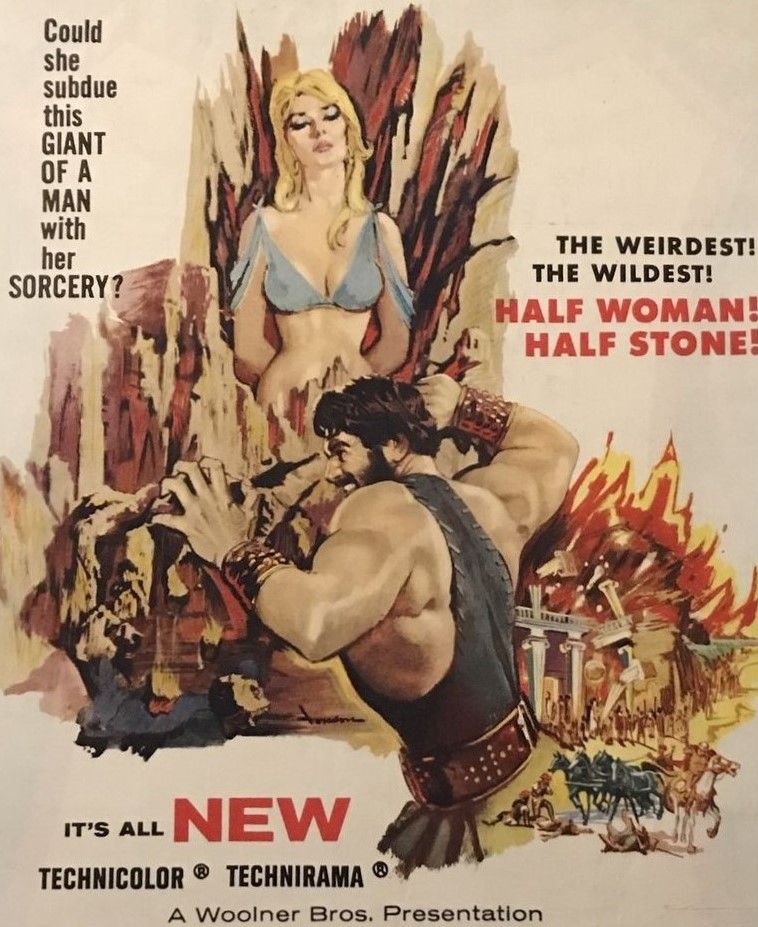
Hercules and the Captive Women / Hercules Conquers Atlantis (1961) ***

Something of a cult in the peplum vein in which Hercules (Reg Park), wanting to enjoy domestic life with his wife and son, is instead drugged by Androcles, King of Thebes (Ettore Manni), and spirited away by ship to Atlantis whose Queen Antinea (Fay Spain) is intent on global domination and the resurrection of the dethroned god Uranus to his rightful place in the heavens.

This isn’t your normal Hercules, not that keen on demonstrating his physical prowess, preferring to sleep or lie around. It’s not your normal ship either. Androcles, unable to persuade his Senate to properly fund the expedition, has crewed his vessel with renegades who are inclined to abandon Hercules on the nearest island  And unbeknownst to Hercules, his son has come along for the ride.

Of course, nothing goes according to plan and Hercules is soon shipwrecked on an island where he finds Ismene (Laura Efrikian) imprisoned in rock as a sacrifice to the gods. Rescue never being simple, Hercules has to first withstand fire then tackle in quick succession snake, lion, eagle and a giant lizard. Ismene turns out to be Antinea’s daughter and the Queen, rather than being delighted at her return, is appalled, for, according to the way the ancient world works with all its prophecies and religious ritual, the girl must be sacrificed to prevent the destruction of Atlantis.

Nor is Atlantis your usual kingdom. Even setting aside the peculiarities that mark the Greek world, this is a place where abnormality rules. Hercules finds Androcles, whom he believed died in the shipwreck, but it turns out to be a vision, or some kind of shape-shifting being. The Queen believes she can subjugate nature and has a tendency to throw those who disappoint her into an acid bath. There is a fiery rock that controls life and death.

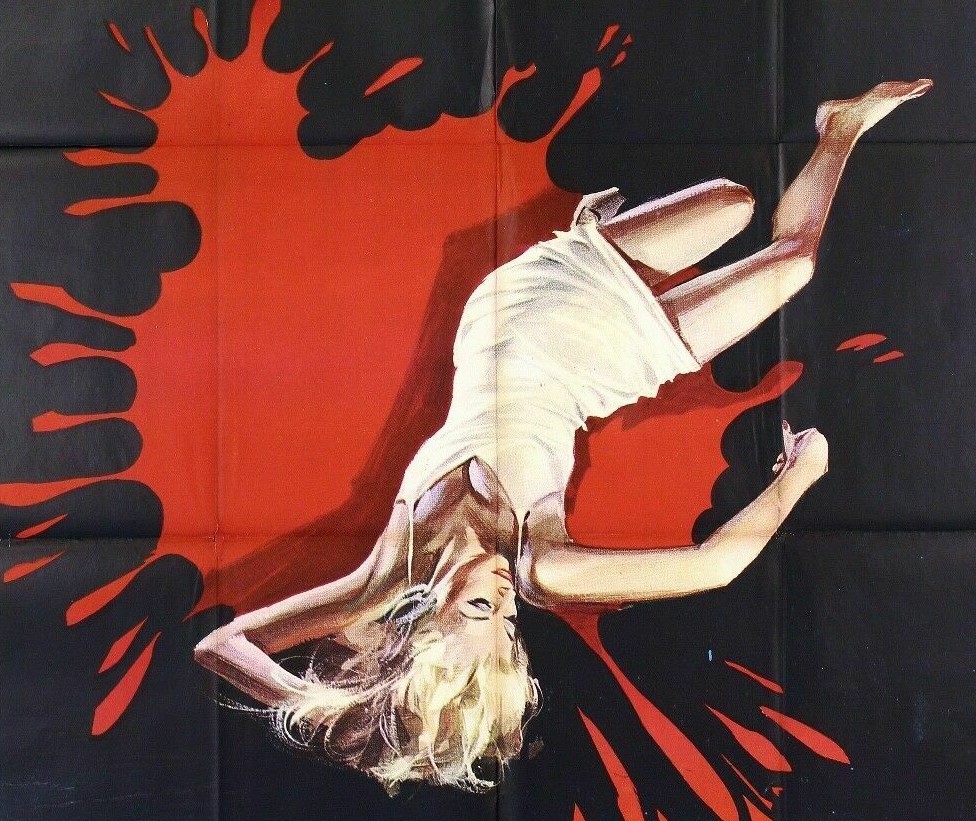
Like most of the peplum output, you have to accept a standard of production lower than the Hollywood norm, and the terrifying beasts sent to test the hero are not at all convincing, but on the plus side are feats of imagination that mainstream American studios would never conjure up, unless it was something that fitted into the swashbuckling genre. You pretty much have to go with the flow and accept what is offered in terms of narrative oddity. Bear in mind, too, that there is no one dressed in as skimpy or revealing a costume as suggested by the poster.

You also need to be get hold of a good copy. Several versions are available, some for free, where the colors are so washed out you can hardly determine what is going on never mind enjoy the costumes, creatures and sets as intended. This was filmed in Technirama 70, shot in 35mm but blown up to70mm widescreen for exhibition, so should generally be of a high technical standard – this was the process used by Spartacus (1960).

It’s not a film to fit into the so-bad-it’s-good category, but of course imagination too often exceeds budget which renders the filmmaking somewhat random at times and like the bulk of the peplums acting skill is not at a premium. As you might expect, the British-born Reg Park was a bodybuilder first – three times winner of the Mr Universe title – and an actor second. He played Hercules another three times and Maciste once but outside this narrow comfort zone made no other films. But he was Arnold Schwarzenegger’s inspiration, so that was probably enough.

American Fay Spain (The Private Life of Adam and Eve, 1960) never got  beyond bit parts as a B-movie bad girl and television, although she was seen in The Godfather: Part II (1974). Italian Laura Efrikina made her debut here and you would later spot her as Dora in the Italian television mini-series David Copperfield (1966).

Director Vittorio Cottafavi was steeped in peplum, from The Warrior and the Slave Girl (1958) to Amazons of Rome (1961) but although he worked consistently in television made only one other piocture, 100 Horsemen (1964).

Behind the Scenes: “The Guns of Navarone” (1961)

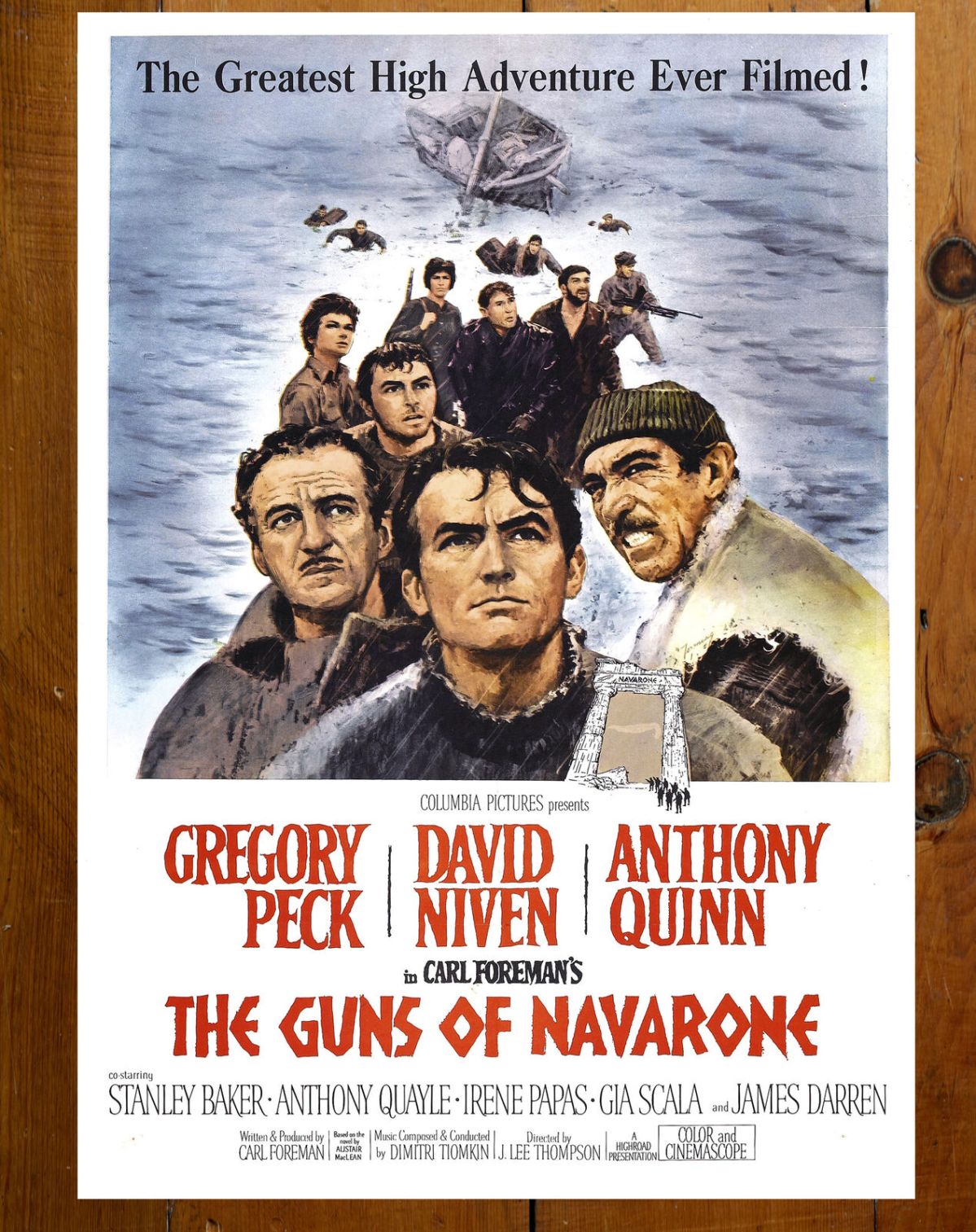
It’s time to celebrate the 60th anniversary of The Guns of Navarone – world premiere on April 27, 1961, in London and New York opening on June 22, 1961. Although the picture set a new benchmark in high-octane entertainment, a fast-moving war thriller packed with twists and a genuine all-star cast, it was far – very far – from the sure thing it appears in retrospect.

Box office smash in Britain.

For a start, U.S producer Carl Foreman, a victim of the McCarthy anti-communist witch-hunt of the early 1950s, was unable to assemble any of the talent he had set his heart on. He lost his preferred male cast of William Holden and Cary Grant and original scriptwriter Eric Ambler, the thriller writer famed for The Mask of Dimitrios and other novels.

He had a registered a major publicity coup by engineering the screen debut of opera diva Maria Callas, one of the most famous people in the world, but she also dropped out as did his other initial choice for leading lady. On top of that, once filming began he lost his director, Alexander Mackendrick, who had not only achieved a critical and commercial success with the British Ealing comedy The Ladykillers (1951) but also crossed the Atlantic to make the acclaimed The Sweet Smell of Success (1957) starring Burt Lancaster and Tony Curtis, to prove he could handle big Hollywood stars.

On top of that David Niven nearly lost his life during production and by the time the picture appeared Gregory Peck had suffered so many box office flops that he was a potential liability. And Foreman’s own marriage was in trouble.

Building the massive guns set.

It was a wonder it was made at all for Foreman was nobody’s idea of a sure thing. Although he had made his name as a screenwriter with three Oscar nominations for Champion (1949), The Men (1950) and High Noon (1952), his career was in ruins after being slung out of America for his supposed communist sympathies. He set up in London where he wrote screenplays under pseudonyms. But in 1956 won a four-picture production deal with Columbia at a time when that studio was investing heavily in making films in Britain to take advantage of the government’s Eady Levy (effectively, a tax rebate) and cheaper costs. But his first film, The Key (1958) with William Holden and Sophia Loren flopped in the U.S. Columbia persevered, seeing Foreman as the man to tackle its biggest-ever European production.

The Guns of Navarone almost fell at the first hurdle. Foreman’s first choice of location was Cyprus which was threatening to erupt into a civil war. At the last minute, he changed his mind and shifted production to Rhodes. Foreman, who also acted as screenwriter, made considerable changes to the book by British bestselling thriller writer Alistair Maclean, not least of which was introducing female characters to a story that had been resolutely all-male.

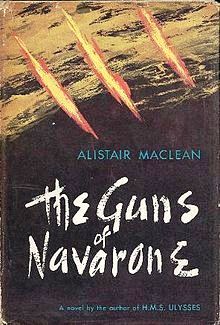
Original hardback book cover.

There was tension on set – four-time Oscar nominee Gregory Peck was annoyed at sharing the screen with two winners David Niven (Best Actor for Separate Tables, 1958) and Anthony Quinn (twice Best Supporting Actor for Viva Zapata, 1952, and Lust for Life, 1956). Replacement director J. Lee Thompson (Ice Cold in Alex, 1958) managed to sink a ship on loan from the Greek navy.  The Actor’s Strike in Hollywood nearly forced the departure of the two younger stars.

The set for the titular guns was the largest ever built, costing £100,000, and even though that proved a design miracle, that, too, was not exempt from disaster, having to be rebuilt after a thunderstorm destroyed part of the set. The injury to David Niven was so severe he nearly died, putting the production in jeopardy. Even when the film approached completion there were other obstacles in the way, composer Dmitri Tiomkin (The Alamo, 1960), for example, demanding a record fee and Foreman locking horns with Columbia over his insistence on launching the picture as a roadshow, request which was ultimately denied, and one of the reasons for the film’ release delay,

I’ve written a book about The Making of The Guns of Navarone. Originally published in 2013, it has been revised with over 30 illustrations added for a new edition to tie in with the 60th anniversary – available both in print and Kindle versions. Needless to say, it would also make an ideal present for Father’s Day.

If you’re interested in this kind of book, you might like to know that I’ve also written The Making of The Magnificent Seven.

Discover WordPress

A daily selection of the best content published on WordPress, collected for you by humans who love to read.

The Atavist Magazine

by Brian Hannan

WordPress.com News

The latest news on WordPress.com and the WordPress community.