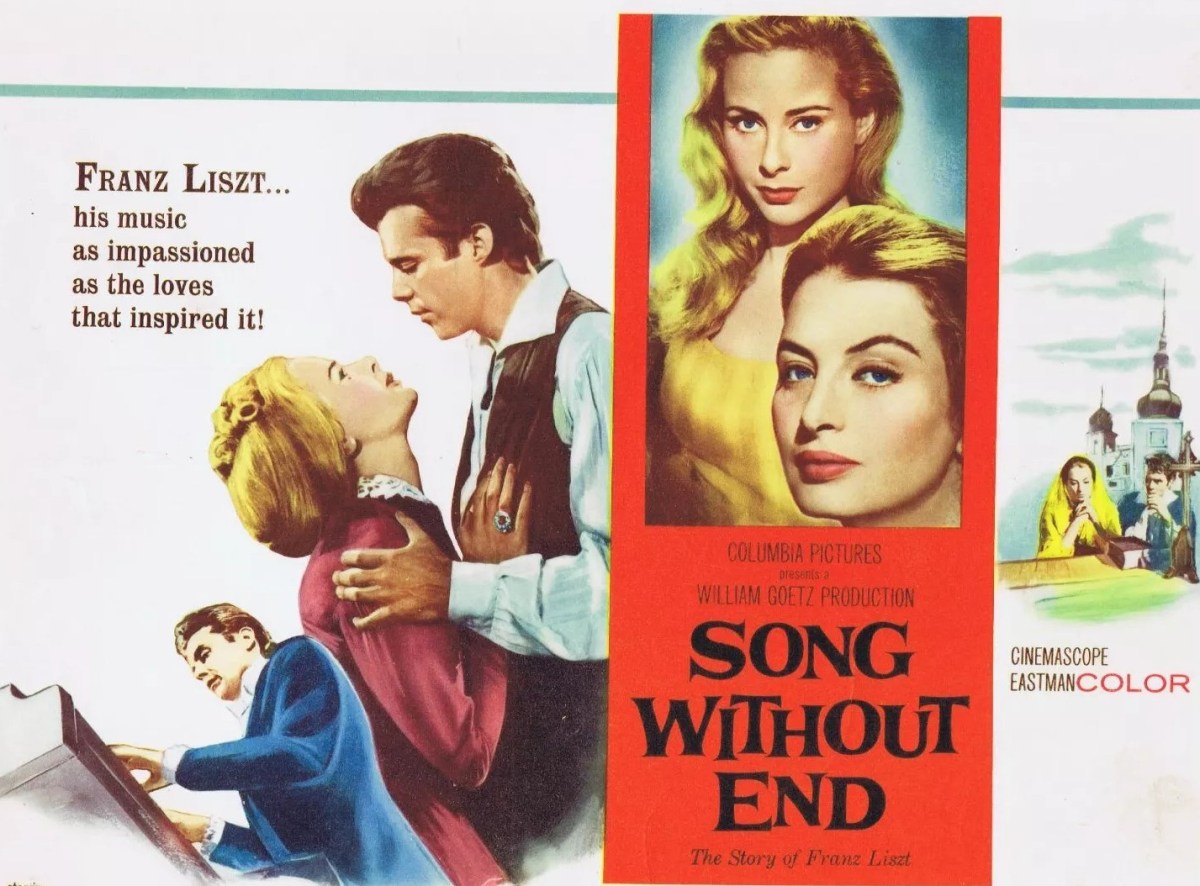
Song without End (1960) ***

Contemporary audiences will be familiar with the jukebox picture. Moviegoers attending biopics of Queen or Elton John can be guaranteed a greatest hits package and if the narrative isn’t driven by problems facing rock superstars nobody is really bothered by an over-confected storyline such as Mamma Mia (and sequel) as long as the soundtrack is filled with beloved classics. On top of that we have the modern phenomenon of Event Cinema where cinemagoers pay to see a live performance, mostly plays, but Andre Rieu taking care of anyone who requires live music.

Song without End is more liberal than most when it comes to the music choices. As well as focusing on the tunes of Hungarian composer Franz Liszt, it also takes time out for snatches of Chopin or Wagner. These days a star like Dirk Bogarde would be a shoo-in for an Oscar nomination for all the training he put in to prove he could actually play the piano – and in  demonic style – rather than showing him knocking out a couple of chords before cutting away to his face or any other shot of the piano except one involving his fingers.
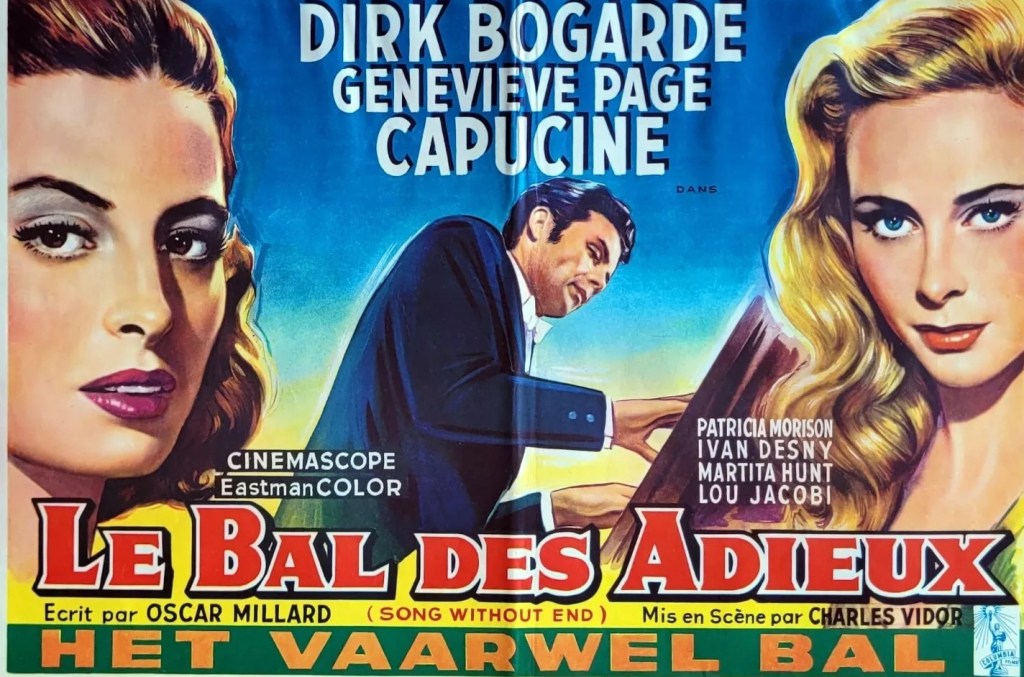
And that’s both the plus and minus point of the movie. Plenty sequences of the maestro at the piano to satisfy the most ardent fan, plenty shots, too, in cutaway, of audiences, that element mostly boring until we are shown the rabid female fans who created the term “Lisztomania.” But the music comes at a price. Unless you are a big fan of the composer you’re faced with the same scene over and over again. Yes, he plays different compositions, and not always his own, and although the fingers move to different keys on the instrument, still it’s nothing but a guy sitting at a keyboard for ages.

So, if the music does it for you, a joy. Otherwise, not so much going on or could be explored in any great depth at the time. Franz Liszt (Dirk Bogarde) was a bit of a lad – when the picture opens he’s living with married woman Marie (Genevieve Page), a countess, and is about to dump her for married Carolyne (Capucine), a Russian princess. Outside of his adultery, the main storyline is him making the transition from pianist to composer. And he helps along newcomer Richard Wagner (Lyndon Brook) – they became great friends until Wagner married Liszt’s daughter, though that’s outwith the movie’s remit.
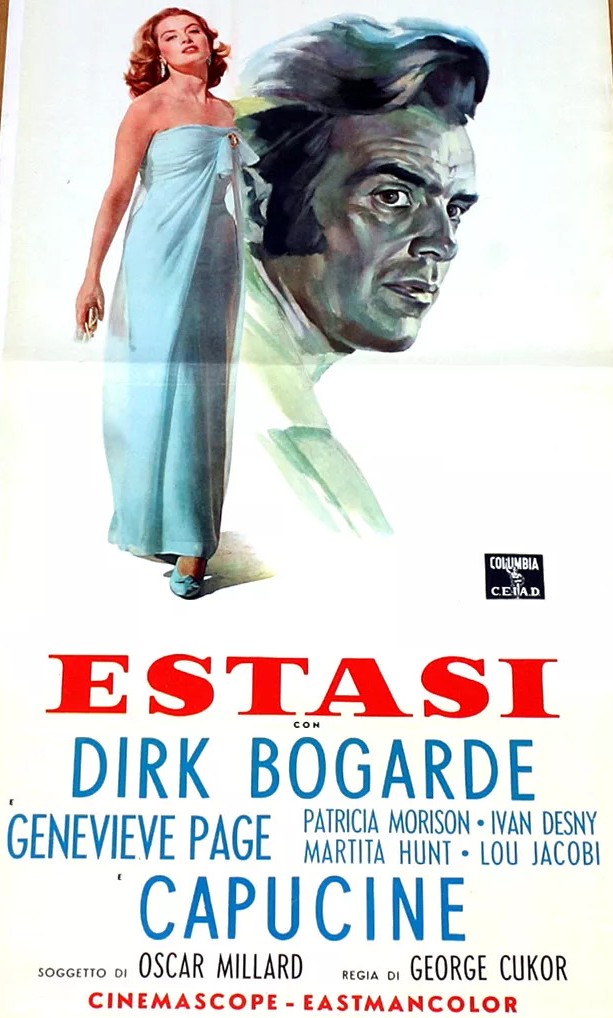
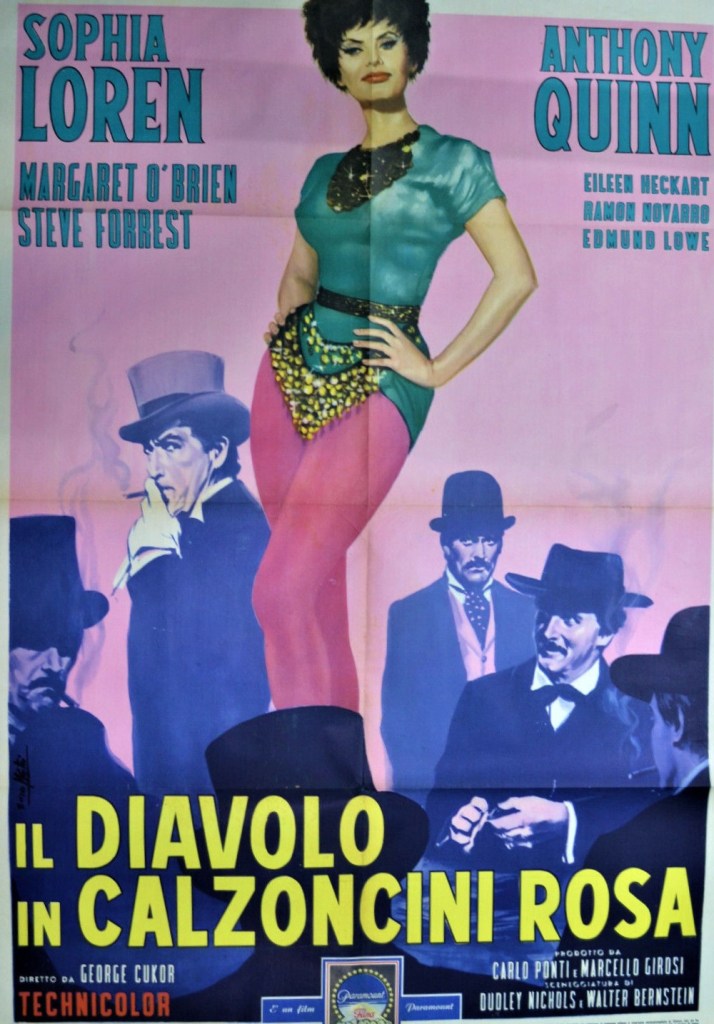
George Cukor gets the directorial credit on this poster.

But he’s something of a contradiction – zest for the high life with buddies Chopin (Alex Davion) and George Sand (Patricia Morison) countered by religious ideals (not shared, it transpires, by the countess). Liszt is very much the “artiste”, given to flouncing around, and having a hissy fit with the Czar of Russia for keeping him waiting. You could surmise that Tom Hulce modelled his portrayal of Mozart in Amadeus (1984) on this kind of charismatic character. Slap him in a pair of tight-fitting trousers, and given his good looks and flowing locks, and you’d have a modern day rock god. .

You’ll not be surprised to learn the movie gives a wide berth to the way he developed music; he was credited with several technical innovations. If you knew what you were looking for, probably you’d pick them out from his performances. He fair batters that piano as if trying to extract every last conceivable note.

This was something of a departure for British star Dirk Bogarde (Victim, 1961). His standard screen person was more prim, tight-lipped, straight-laced, repressed, so this feels like a monumental release, a cathartic moment. He’s certainly put in the work to come across as a proper piano player. The head-tossing and flouncing and heart-breaking is a doddle by comparison.

Columbia French starlet Capucine (The 7th Dawn, 1964), an MTA, made her debut with the kind of icy performance that became her fallback.

Columbia had been trying to make the picture for a decade and it nearly fell at the final hurdle. Director Charles Vidor, who had helmed A Song to Remember (1945) about Chopin, died soon after filming began. George Cukor (Justine, 1969) took over, adding trademark lushness and altering the ending, but, critically, giving Vidor sole credit. Oscar Millard (The Salzburg Connection, 1972) handled the screenplay.

Bogarde is pretty good, especially on the piano stool, and the music is terrific. So, ideal for music lovers not expecting much else. Bit of a let down for the general audience with not so much in way of narrative to get your teeth into.

Jukebox triumph.

The Chapman Report (1962) ***

In the 1950s new talent was largely bloodied via small parts in big movies. In the 1960s, the easier route was to first build them up as television stars. This picture represents the nadir of that plan – female roles filled with established talent, males roles with actors who had made their names in television. And, boy, does it show, to the overall detriment of the picture.

Warner Bros even had the temerity to top-bill Efrem Zimbalist Jr (hauled in from 77 Sunset Strip, 1958-1964) over more famous actresses. Zimbalist Jr at least had some marquee value after starring in low-budget A Fever in the Blood (1961) and second male lead in the classier By Love Possessed (1961) and Ray Danton (The Alaskans, 1959-1960) had played the title role in B-picture The George Raft Story (1961), but Ty Hardin was unknown beyond Bronco (1958-1962) and Chad Everett drafted in from The Dakotas (1962-1963).

Little surprise, therefore, that director George Cukor (Justine, 1969) concentrated his efforts on the females in the cast. But it was curious to find Cukor taking on this sensationalist project based on the surveys of sexuality that had taken the country by storm. Had it been made by a less important studio than Warner Bros it would have been classed as exploitation.

The bestseller by Irving Wallace on which it was based was a take on the Kinsey Report a decade before and others of the species and, theoretically at least, opened up the dry material of the more scientific reports into how men and women behaved behind closed doors.

Amazing that this was passed by the Production Code since dialog and action are pretty ripe. Interviewed women are asked about “heavy petting” and how often they have sex and if they find the act gratifying. One interviewer crosses the line and has an affair; these days that would be viewed as taking advantage of a vulnerable woman. And there’s a gang rape.

Given the movie’s source Cukor takes the portmanteau approach, four women undergoing different experiences. The problem with this picture is that there’s little psychological exploration. Women are presented by their actions not by their thought patterns or by their treatment by their husband.

In what, in movie terms, is the standout section, Naomi (Claire Bloom), an alcoholic nymphomaniac, is so desperate for attention she throws herself at the delivery boy (Chad Everett), then at a married jazz musician (Corey Allen), with devastating effect, as he hands her over to his buddies, causing sufficient degradation that she commits suicide. Since we first come across her crying in bed, sure signs of depression, these days you would expect more exploration of her psychiatric state.

Similarly, the widowed Kathleen (Jane Fonda) has been tabbed frigid by her husband and nobody thinks to call into question his inadequacies as a sex partner rather than hers. Here it’s put down to daddy issues and growing up in a household heavy with morality.

Kathleen is taken aback by the researcher even asking her about sex, “physical love” the technical term, rather than a purer kind but her consternation at the questions being posed in very cold-hearted manner by an anonymous voice – researcher hidden behind a wall – does reveal how ill-equipped some people are to even talk about sex. Her story develops into some kind of happy ending, despite the fact that her interviewer Radford (Efrem Zimblist Jr) would be busted these days for taking advantage.

Teresa (Glynis Johns) is convinced by the interviewer’s tone that the simple normality of her own marriage must be abnormal and so, determined to fit in, embarks on a clumsy attempt to  seduce footballer Ed (Ty Hardin), coming to her senses when it comes to the clinch.

The interview also has a major impact on the adulteress Sarah (Shelley Winters). After confessing her affair to husband Frank (Harold J. Stone) she rushes off to lover, theater director Fred (Ray Danton), only to find, to her astonishment, that he’s a married man. Her husband accepts her back.

To keep you straight, the “good” women are dressed in white, the “bad” ones in black. The filming is distinctly odd. The man behind the wall is filmed with no ostentation, but the style completely changes when the director turns to the women who often end up in floods of tears.

Claire Bloom (Two into Three Won’t Go, 1969) and Jane Fonda (Barbarella, 1968) are the standouts because they have the most emotion to play around with. Oscar-nominated Glynis Johns (The Cabinet of Caligari, 1962) is the comic turn. Over-eager over-confident Oscar-winner Shelley Winters (A House Is Not a Home, 1964) gets her come-uppance. None of the men make any impact.

The book took some knocking into shape. Perhaps because, of the four names on the credits only one had signal screenwriting experience, Don Mankiewicz (I Want to Live, 1958). For the others, better known for different occupations in the business, this was their only screenwriting credit. Wyatt Cooper was an actor married to Gloria Vanderbilt, Gene Allen art director on many Cukor pictures and production designer on this, and Grant Stuart was a boom operator though not on this picture.

Best viewed through a time capsule.

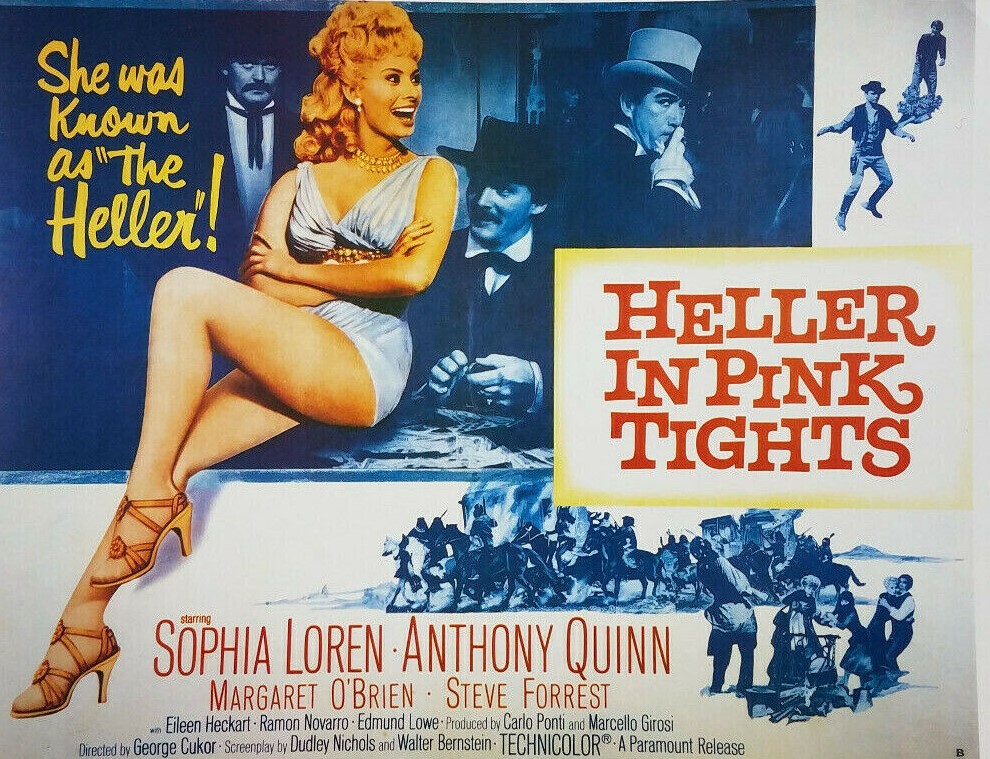
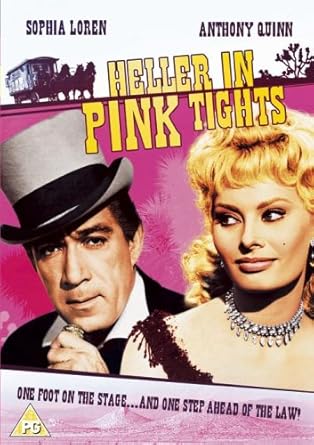
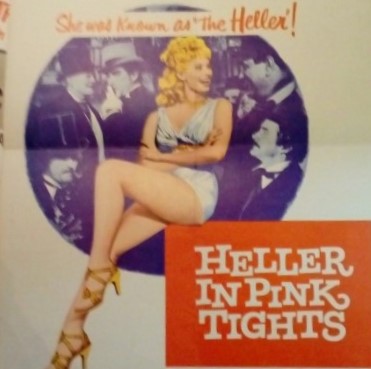
Heller in Pink Tights (1960) ****

Taken on its own merits, George Cukor’s western is a highly enjoyable romp. Hardly your first choice for the genre, Cukor ignores the tenets laid down by John Ford and Howard Hawks and the film is all the better for it. Although there are stagecoach chases, gunfighters and Native Americans, don’t expect upstanding citizens rescuing good folk. Instead of stunning vistas Cukor chooses to spend his budget on lavish costumes and sets.

You can see he knows how to use a colour palette, and there is red or a tinge of it in every scene (to the extent of rather a lot of red-haired folk), and although this might not be your bag – and you may not even notice it – it is what makes a Cukor production so lush. The film might start with comedic overtones but by the end you realise it is serious after all.

Angela (Sophia Loren) is the coquettish leading lady and Tom (Anthony Quinn) the actor-manager of a theatrical company managing to stay one step ahead of its creditors, in the main thanks her propensity for spending money she doesn’t have. Of course, once gunfighter Clint (Steve Forrest) wins Loren in a poker game, things go askew. 

Anthony Quinn (Guns for San Sebastian, 1968) had never convinced me as a romantic lead, but here there is genuine charisma between the two stars. Sophia Loren (Five Miles to Midnight, 1962) is at her most alluring, in dazzling outfits and occasionally in costumes as skin-tight as censors would allow in those days, but with a tendency to use beauty as a means to an end, with the conviction that a smile (or occasionally more) will see her out of any scrape. There is no doubt she is totally beguiling. But that is not enough for Quinn, as she is inclined to include him in her list of dupes.

While primarily a love story and a tale of theatrical woes set against the backdrop of a western, when it comes to dealing with the tropes of the genre Cukor blows it out of the water.  We open with a stagecoach chase but our heroes are only racing away from debt until they reach the safety of a state line. We have a gunfighter, but instead of a shoot-out being built up, minutes ticking by as tension rises, Cukor’s gunman just shoots people in sudden matter-of-fact fashion.

Best of all, George Cukor (Justine, 1969) extracts tremendous comedy from the overbearing actors, each convinced of their own genius, and the petty jealousies and intrigue that are endemic in such a troupe. An everyday story of show-folk contains as much incipient drama as the more angst-ridden A Star Is Born (1954), his previous venture into this arena.

From the guy who gave us The Philadelphia Story (1940) with all its sophisticated comedy, it’s quite astonishing that Cukor extracts so much from a picture where the laughs, mostly from throwaway lines, are derived from less substantial material. Quinn (his third film in a row with Cukor) has never been better, no Oscar-bait this time round, just a genuine guy, pride always to the forefront, king of his domain inside his tiny theatrical kingdom, out of his depth in the big wide world, and unable to contain the “heller.”

I won’t spoil it for you but there are two wonderful character-driven twists that set the world to rights.

There is a tremendous supporting cast with former silent film star Ramon Novarro (Ben-Hur: A Tale of the Christ, 1925) as a duplicitous businessman, former child star Margaret O’Brien, another star from a previous era in Edmund Lowe (Cukor’s Dinner at Eight, 1933), and Eileen Eckhart. Dudley Nichols (Stagecoach, 1939) and Walter Bernstein, who wrote a previous Loren romance That Kind of Women (1959) and had a hand in The Magnificent Seven (1960), do an excellent job of adapting the Louis L’Amour source novel Heller with a Gun, especially considering that contained an entirely different story.

Without a doubt it’s Cukor’s picture but Loren and Quinn combine to make it such a believable delight.

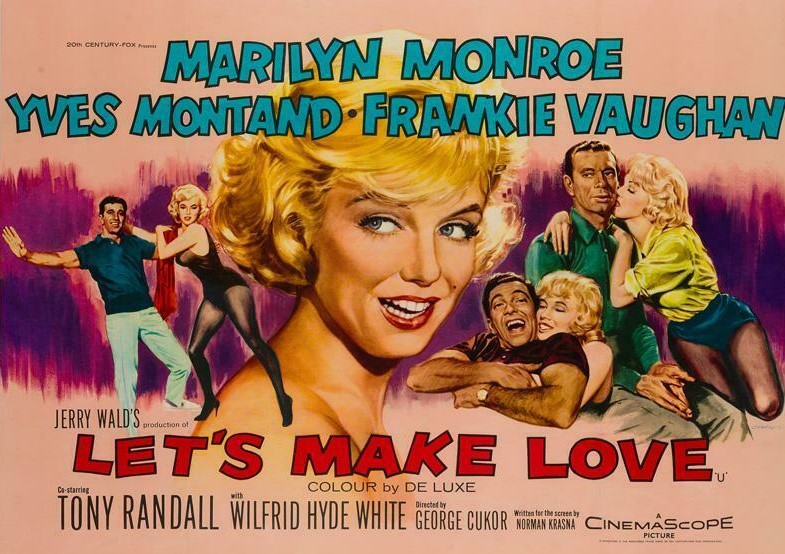
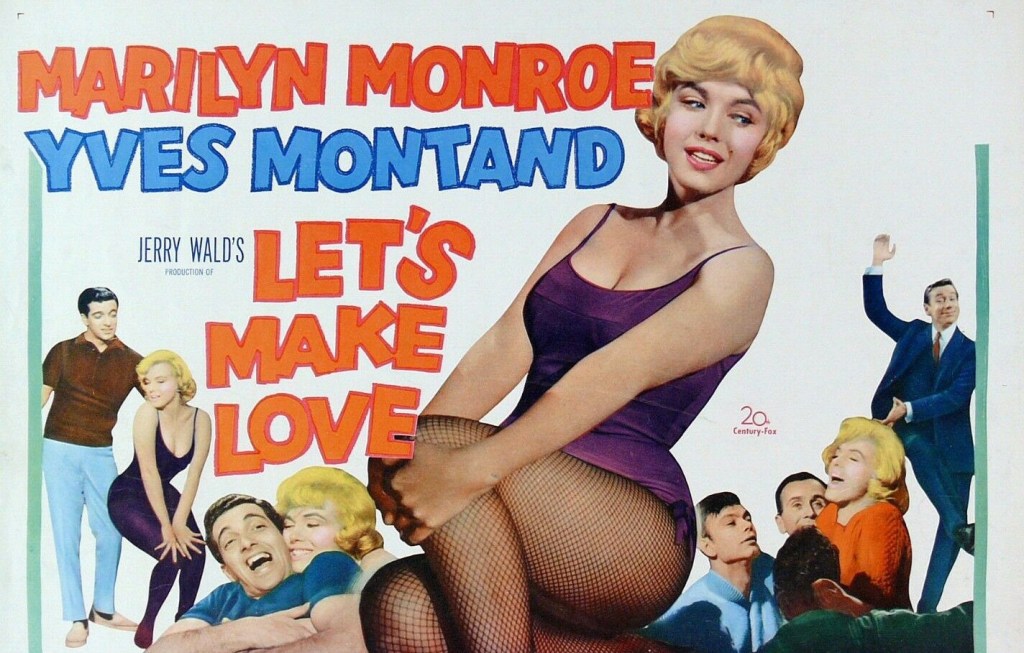
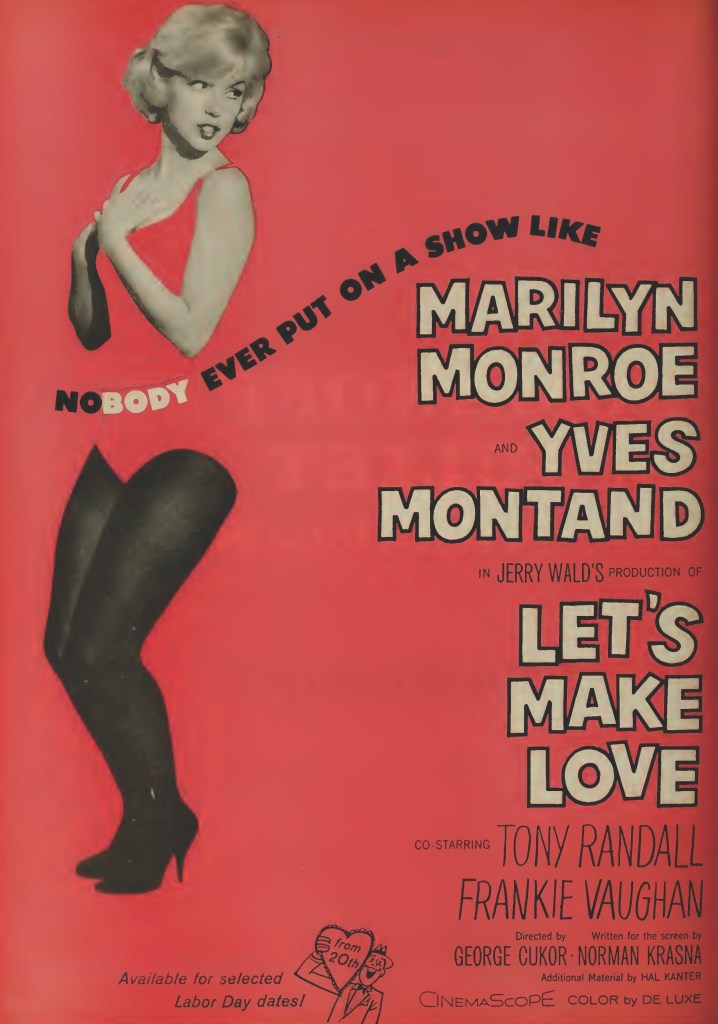
Let’s Make Love (1960) ***

Despite a luminous performance by Marilyn Monroe (Some Like it Hot, 1959) , in revealing outfits half the time, this backstage musical drama barely staggers over the line. Whatever relationship the actress enjoyed off-screen with co-star Frenchman Yves Montand (Grand Prix, 1966) fails to register here. In this fish-out-of-water tale of the Broadway intrigue involved in putting a musical together, watching klutz billionaire Jean-Marc Clement (Montand) getting his act together as neophyte actor-cum-singer fails to fly.

It’s always difficult observing a good actor trying to be bad. If he’s a really good actor, it’s going to be an awful watch. And unless he’s got the comedic chops to trigger a bucketload of laughs it’s painful to observe. Gregory Peck reportedly quit this role in favour of The Guns of Navarone (1961) because there was too much Marilyn Monroe in it, and possibly an awkward Peck would have been more fun to watch though comedy was scarcely his forte, but without Monroe the movie would have been virtually unwatchable.

The story’s familiar, a twist on Cinderella with Clement being the ugly duckling in terms of talent. The billionaire businessman, notorious for his love life, attends a rehearsal of a show intending to register outrage at its veiled portrayal of him. Instead, he is mistaken for an auditioning actor and offered a role. He falls for Amanda (Monroe) but she shows little interest, either obsessed with her knitting or trying to improve her education at night class, and appears far more interested in her stage co-star Tony (Frankie Vaughan).

In order to sharpen up his act, Clement hires a bunch of well-known thespians: Milton Berle, Bing Crosby and Gene Kelly.

This is where the show could be get interesting. Genuinely learning the secrets of a great comedian, singer and dancer should at the very least provide a fascinating insight into their skills. Of these, Crosby is the pick, demonstrating the importance of raising or dropping your voice at various points in order to maximize the emotion in a song, in other words a singing masterclass. Berle has too much screen time and does little to justify it.

Whatever, regardless of what the script says, Clement seems to take on board little of what he is taught. Montand was a gifted crooner in any case, having begun his career as Edith Piaf’s protégé, and it just seems like he switched instantly from being a bad singer to a good one. In contrast, when Amanda has to take direction, she immediately shows how simple it is to improve a number by adding some actions.

Luckily, Monroe is such a mesmeric screen quality that she can rescue any indifferent movie.  This would work better with a more charismatic leading man – and the prospect of Peck teaming with Monroe was intriguing – but regardless of who she acts opposite Monroe will always blow them away. This is a different kind of role for her because in a sense she is neither the girl adored nor the victim of romance gone wrong. For the most part she’s just a career girl focusing all her attention on getting on. She’s almost just the foil in the dramatic sequences for Montand. But once she has the stage or screen or to herself she dazzles.

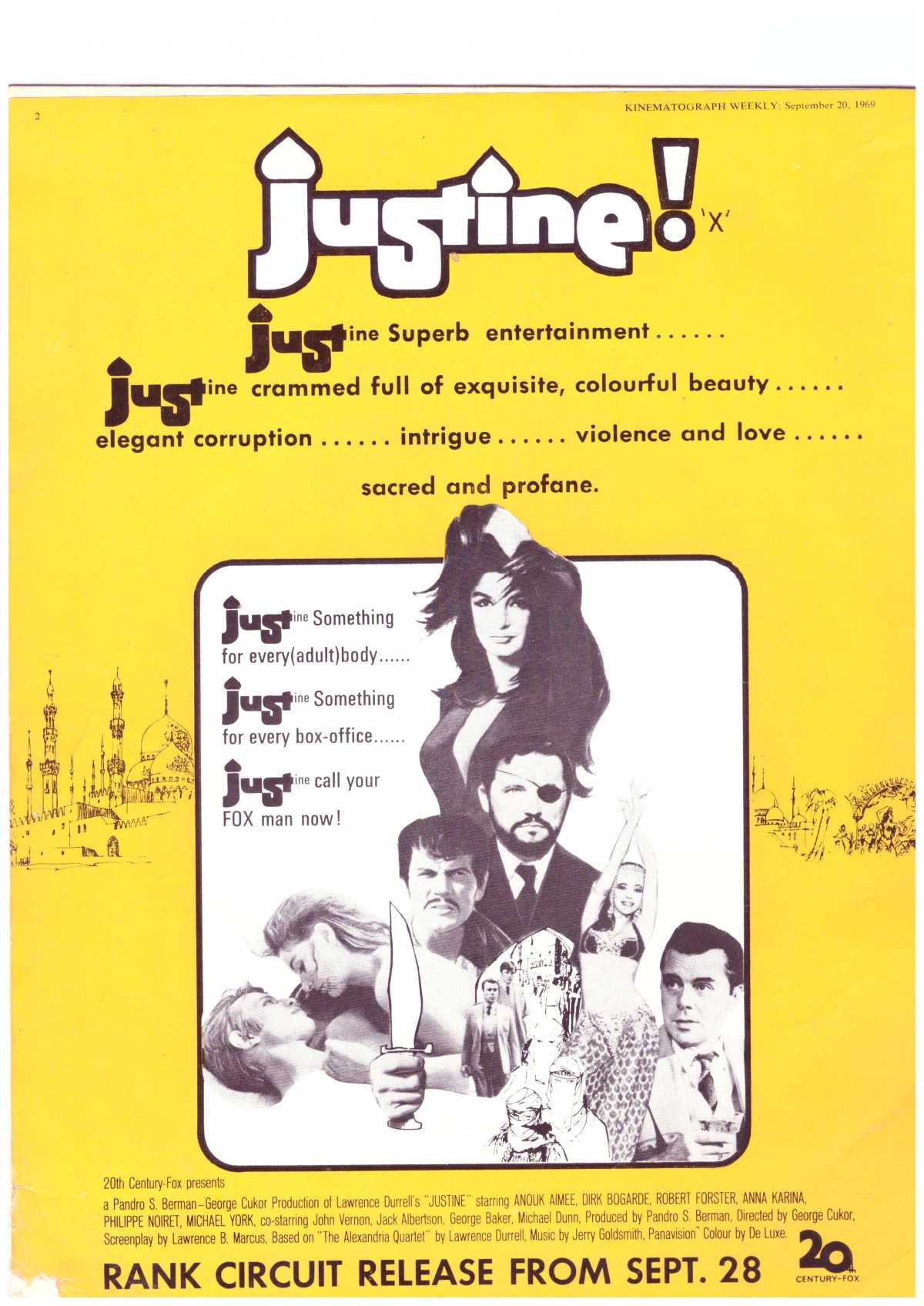
Justine (1969) **

In pre-WW2 Alexandria in the Middle East with the British on the point of departing, impoverished young poet Darley (Michael York) becomes the latest plaything for Justine (Anouk Aimee), wife to Egyptian banker Nessim (John Vernon) who encourages her multiple relationships in order  to smooth the path for his gun-running activities. Matters are complicated since Darley is having an affair with belly dancer Melissa (Anna Karina) and some of Justine’s other lovers float in and out of the picture. Political intrigue which might have anchored the movie also shifts in and out of view. In this cross-cultural hotchpotch various groups – Jews, Moslems, Coptic Christians – look to seize control.

Cluttered is the best way to describe this. Despite excellent performances by Anouk Aimee and Dirk Bogarde it is still a mess. Whatever story there was has been buried by “atmosphere” and too many characters adding too little to the overall outcome. Entangled lives end up being just that – wrapped around each other with nowhere to go. Over-emphasis is placed on the louche background, nightclubs featuring cross-dressing belly dancers and a  massive carnival. Luckily, we can’t entirely blame venerated Oscar-winning director George Cukor (My Fair Lady, 1964). He was picking up the pieces after Twentieth Century Fox fired Joseph Strick (Ulysses, 1967) but was stuck with a lot of footage that had already been shot and a screenplay that didn’t make much sense.

When you realize the movie encompasses religious prejudice, racism, same sex arrangements, incest, child prostitution, nymphomania, revolution, and police and political corruption and is hardly able to give any of these themes more than a fleeting glance you soon realize this is one of those films that is just going to go on and on until sudden conclusion rears up and all is revealed. And that would be fine since many movies of this decade meander at length and sometimes appear to be completely lacking in plot or logic, but whose flaws are more than compensated by outstanding direction or performances. Alas, even the stunning evocation of this city and period cannot save the day.  

And it would have worked if Justine had been a femme fatale of the film noir school or if the politics been more grounded, but that doesn’t occur either and although Justine does have many influential men in her clutches you could hardly say that Darley is one of them. His role is merely to act as narrator and apologist.

One last point which has little to do with the film. In this film and in the same year’s Topaz, John Vernon gives very good dramatic performances, in both cases, coincidentally, wounded emotionally. So what happened that he is mostly remembered for villainous tough-guy roles from the following decade?

Heller in Pink Tights (1960) ****

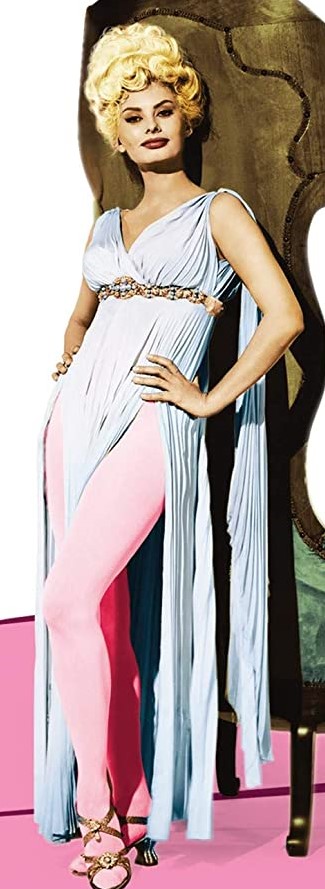
Sophia Loren is enjoying a swansong with the Netflix feature The Life Ahead (2020), which may well net here another Oscar nomination to add to two wins for Two Women (1960) and an Honorary Award in 1991 and a previous nomination for Marriage Italian-Style (1964). She has dined at the Hollywood high table for over 60 years since taking America by storm in 1957 in a three-film blast comprising Boy on a Dolphin with Alan Ladd, The Pride and the Passion with Cary Grant and Frank Sinatra and Legend of the Lost with John Wayne. She was one of the greatest leading ladies of the second half of the twentieth century, combining style with ability. If you want an idea of how mesmerising she was in her pomp, check out this little number – Heller in Pink Tights.

Taken on its own merits, George Cukor’s western is a highly enjoyable romp. Hardly your first choice for the genre, Cukor ignores the tenets laid down by John Ford and Howard Hawks and the film is all the better for it. Although there are stagecoach chases, gunfighters and Native Americans, don’t expect upstanding citizens rescuing good folk.

Instead of stunning vistas Cukor chooses to spend his budget on lavish costumes and sets. You can see he knows how to use a colour palette, and there is red or a tinge of it in every scene (to the extent of rather a lot of red-haired folk), and although this might not be your bag – and you may not even notice it – it is what makes a Cukor production so lush. The film might start with comedic overtones but by the end you realise it is serious after all.

Sophia Loren is the coquettish leading lady and Anthony Quinn the actor-manager of a theatrical company managing to stay one step ahead of its creditors, in the main thanks to Loren’s capacity for spending money she doesn’t have. Of course, once a gunfighter (Steve Forrest) wins Loren in a poker game, things go askew.  Quinn had never convinced me as a romantic lead, but here there is genuine charisma between the two stars.

Loren is at her most alluring, in dazzling outfits and occasionally in costumes as skin-tight as censors would allow in those days, but with a tendency to use beauty as a means to an end, with the conviction that a smile (or occasionally more) will see her out of any scrape. There is no doubt she is totally beguiling. But that is not enough for Quinn, as she is inclined to include him in her list of dupes.

While primarily a love story crossed with a tale of theatrical woes set against the backdrop of a western, when it comes to dealing with the tropes of the genre Cukor blows it out of the water.  We open with a stagecoach chase but our heroes are only racing away from debt until they reach the safety of a state line. We have a gunfighter, but instead of a shoot-out being built up, minutes ticking by as tension rises, Cukor’s gunman just shoots people in sudden matter-of-fact fashion.

Best of all, Cukor extracts tremendous comedy from the overbearing actors, each convinced of their own genius, and the petty jealousies and intrigue that are endemic in such a troupe. An everyday story of show-folk contains as much incipient drama as the more angst-ridden A Star Is Born (1954), his previous venture into this arena. From the guy who gave us The Philadelphia Story (1940) with all its sophisticated comedy, it’s quite astonishing that Cukor extracts so much from a picture where the laughs, mostly from throwaway lines, are derived from less substantial material.

Quinn (his third film in a row with Cukor) has never been better, no Oscar-bait this time round, just a genuine guy, pride always to the forefront, king of his domain inside his tiny theatrical kingdom, out of his depth in the big wide world, and unable to contain the “heller.” I won’t spoil it for you but there are two wonderful character-driven twists that set the world to rights.

There is a tremendous supporting cast with former silent film star Ramon Novarro (Ben-Hur: A Tale of the Christ, 1925) as a duplicitous businessman, former child star Margaret O’Brien, another star from a previous era in Edmund Lowe (Cukor’s Dinner at Eight, 1933), and Eileen Eckhart. Dudley Nichols (Stagecoach, 1939) and Walter Bernstein, who wrote a previous Loren romance That Kind of Women (1959) and had a hand in The Magnificent Seven (1960), do an excellent job of adapting the Louis L’Amour source novel Heller with a Gun, especially considering that contained an entirely different story.

Discover WordPress

A daily selection of the best content published on WordPress, collected for you by humans who love to read.

The Atavist Magazine

by Brian Hannan

WordPress.com News

The latest news on WordPress.com and the WordPress community.