Born Free (1966) ***

Unusual mix of the sentimental and the unsentimental, mixing soft-centered animal features like That Darn Cat (1966) where cute beasts cause mayhem with the kind of realism espoused by Sir David Attenborough (Planet Earth, 2006) where nature is red in tooth and claw, though skipping the irony of game warden-cum-conservationist George Adamson (Bill Travers) bringing up the cubs of the leonine parents he has shot dead.

With wife Joy (Virginia McKenna) they decide to rear the baby animals. Joy is most attracted to the runt of the litter, Elsa. Cue much hilarity as the animals destroy their house, knocking over anything standing, pulling down curtains, breaking plates, and like any youngsters resisting bedtime. Joy is so distraught at having to get rid of the grown-up cubs, despatched to zoos, that her husband holds onto Elsa.

If Joy can’t face shipping the cub overseas, she’s unwilling to face up to the fact that the only other alternative is to groom her for a life in the wild. A tame animal let loose would hardly survive a minute. So they’ve got to train Elsa to hunt. This doesn’t work out, Elsa finding herself at the wrong end of the hunting business – attacked by a warthog – or too inexperienced to know not to go near a herd of wild elephants. When she crawls home nursing her wounds, George is on the verge of giving up, but Joy wishes to persevere, resulting in scenes of the cute Elsa now suddenly red in tooth and claw and savoring her kill.

Now, all that’s left is finding her a willing mate. When that’s achieved, it’s job done, though when Elsa returns for a visit she’s accompanied by her own cubs.

And if you’re occasionally bored by the cutesy elements and wish the movie would get a move on, you can always savor, as I did, the Oscar-winning music by John Barry. It’s what these days would be deemed a feel-good movie but that’s only if you wriggle out of the irony.

The problem for the big cats in Kenya was that they were prey to illicit big-game hunters and if that had been the reason for the cubs being orphaned it would be a better fit for the general theme. But, basically, what lions don’t seem to realize is that they can’t treat humans like any other prey. There’s some weird supposition that they can prefer the taste of human flesh, rather than the more obvious reason why humans are attractive being that, unless armed, they can neither run away nor defend themselves like all the other jungle occupants.

There’s an unspoken rule – to which the lions are obviously not privy – that if you get a reputation as a man-eater then that friendly game warden who’s otherwise on your side is going to come after you and shoot you dead. It would only be luck that your offspring might end up with a couple of friendly humans rather than as dinner for other predators.

So being “born free” comes with the proviso of not getting in the way of humans.

Real life couple Bill Travers (The Bridal Path, 1959) and Virginia McKenna (Carve Her Name with Pride, 1958) were considered well past their sell-by date, neither having made a picture in five years. But they seem to embody the characters well, McKenna’s acting recognized by the Golden Globes.

James Hill (A Study in Terror, 1965) directs from a screenplay by Lester Cole (Operation Eichmann, 1961), blacklisted as one of the Hollywood Ten, and Joy Adamson, author of the eponymous bestseller.

While you’re probably not as nit-picky as me, you might well figure this is well past its sell-by date or, equally, you might hail it as the precursor of an animal rights campaign.
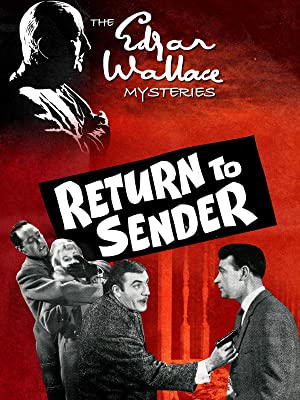
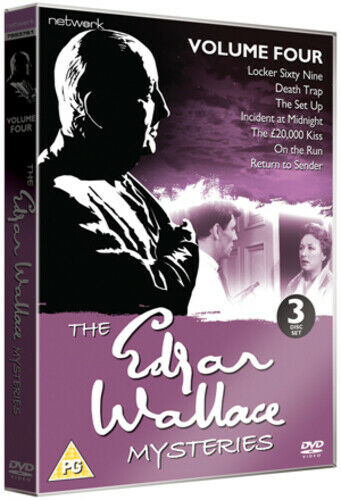
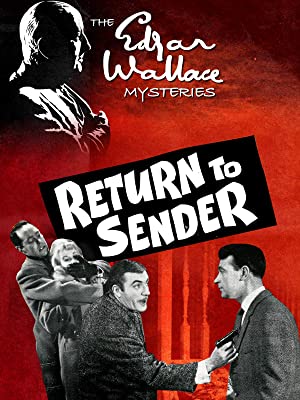
Return to Sender (1963) ***

The B-film’s B-film. Where American B-pictures invariably focused on sleaze, sci-fi- horror or violence, their British counterparts often exuded class with solid acting, clever plots, excellent though simple sets and good composition. Edgar Wallace, the world’s most prolific writer, had regained sudden popularity thirty years after his death, and movies made from his works made ideal subjects for B-pictures fed into the British double-bill system. His thrillers are all story, racing along with twist after twist.

On the verge of being arrested for fraud, high-class businessman Dino Steffano (Nigel Davenport) hits on blackmail as a means of forcing investigator Robert Lindley (Geoffrey Keen) to drop the case. He sets up associate Mike Cochrane (William Russell) to fake photographs involving sexy Lisa (Yvonne Romain) and Lindley in compromising positions. So Lisa, pretending to hold vital evidence, lures him to her flat where this can be staged.

Meanwhile Lindley’s daughter Beth (Jennifer Daniel) chats up Cochrane after overhearing him asking questions about her father’s cottage. Cochrane has history with Lindley, having been sent for an 18-month prison sentence as a result of a previous encounter. He also resents Steffano over previous double-dealing and is planning to take his own revenge while carrying out the master plan.

I doubt if you will be able to see the twists coming. Suffice to say, nothing is what it seems. The closer Lindley gets to uncovering the mystery, the darker it becomes and the more danger he appears to be in. Even when characters reveal their plans, you can be sure they will have a different one up their sleeve. Steffano’s exceptional charm masks his ruthlessness. While Lindley is dogged, he is no match for the slinky Lisa who can play the vulnerable female with ease. Artist Beth treasures her independence so much that it takes her down some devious alleys, especially when trying to pump Cochrane for information. And it all leads to a terrific climax, involving further twists and double-dealing.

Most of this is played out in classy apartments with log fires burning and Steffano drinking brandy and smoking cigars, or on a yacht, or Lindley’s equally splendid chambers.

The stars are either up-and-coming movie stars or destined for small-screen fame. Many of these Edgar Wallace thrillers would prove stepping stones for new talent.

Nigel Davenport (The Third Secret, 1964) is the pick and would become an accomplished supporting actor in films like Play Dirty (1969). Yvonne Romaine had already made a splash in The Frightened City (1961) and would go on to play the female lead in Devil Doll (1964) and The Brigand of Kandahar (1965). Geoffrey Keen (Dr Syn, Alias The Scarecrow, 1963) would make a bigger impact on television in Mogul (1965-1972). As would William Russell (The Great Escape, 1963) who went on to become a long-running sidekick of Dr Who (1963-1965). Jennifer Daniel became a horror favorite with female lead in The Kiss of the Vampire (1963) and The Reptile (1966). 

Making his movie debut director John Hales clearly benefits from a couple of decades as an editor in films like The Seventh Veil (1945) and Village of the Damned (1960) and he nips quickly from one scene to another to keep the plot ticking along while showing some gift for framing characters within a scene.  

I should point out you will easily find flaws. Strictly speaking, if you know your police procedural, Lindley would not be an investigator, and it would not be too hard to find strains of implausibility showing. But that should not detract from this enjoyable movie.

British studio Anglo Amalgamated churned out these Edgar Wallace thrillers as double-bill fodder and, even though compromised in the budget department, they were generally well-made. Wallace was a brand-name, a best-selling author on account of his 200-plus novels, most still in print long after his death, and a byword for a good read. American television edited the features down to fit into a television series. So if you are hunting these down make sure you get the original features rather than the edited versions.

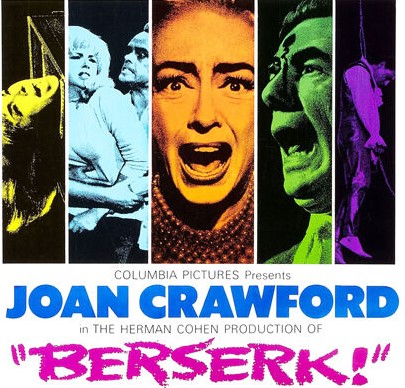
Berserk! (1967) ***

“Murder is good for business,” declares magnificently callous circus boss Monica (Joan Crawford). And so is nostalgia. Interrupting the action every ten minutes or so with the kind of circus act – courtesy of legendary British ringmaster Billy Smart – that you couldn’t see these days is probably going to win more viewers than seeing Joan Crawford in late vintage nastiness. Roll up, roll up for the elephants ridden by glamorous lasses, death-defying (or not so much) high-wire acts, prancing horses, knife-throwing, cutting a woman (and who better than a sequined Diana Dors) in half, and “intelligent” poodles (is there any other kind?).

Step aside John Wayne (Circus World, 1964), whose magnificent showmanship has nothing on circus master Monica, calling the shots and not just in the ring. She rides roughshod over business partner Albert (Michael Gough), pushes back into his box newcomer Frank (Ty Hardin), and packs daughter Angela (Judy Geeson) off to boarding school to shut the book on maternal instinct in case it gets in the way of running the show.

Throw in a good few hapless coppers, including a toff – Monica being such a big noise it requires the involvement of a Commissioner (Geoffrey Keen) and a Superintendent (Robert Hardy) – who pop up sporadically and show surprisingly little skill for detection beyond standing over a corpse or murder implement and making a pronouncement. Naturally, such an atmosphere is riven with jealousy and it doesn’t take much to start a cat fight, no surprise to see Matilda (Diana Dors) in the thick of it.

When her star act dies (murdered) on the high wire and Monica looks around for a replacement, she happens upon pushy Frank (Ty Hardin) who not only walks across the tightrope blindfold, but operates without a safety net and should he fall will land on a series of nasty spikes. He wants to share her bed and her business, but has some dodgy backstory, hints of some incident in Canada seven years ago.

So just as Monica reckons the thrill of possibly seeing death occur in front of their eyes will pull in the punters, that could be (though I doubt it) an ironic nod at the cinema audience since, as in all serial killer pictures, viewers are calculating who will be killed next, and not so much who the murderer is, but who will survive at the end. Luckily, this is British and made in times when the censor exerted a tighter rein, so you can be sure nobody’s going to meet a sticky end just because they’ve had illicit sex.

As if her employees were scary beasts, Monica beats them into submission, though, in fact, outside of Frank, nobody’s got the guts to challenge her. And it being the 1960s and forensics not much in evidence and, frankly, the producers not much interested in rounding up any suspects, you just sit back and wait to see who will be next. Will someone scare the prize elephant into misplacing a foot and crushing to death the beauties lying on the ground so that it can daintily step over them? Will the knife-thrower miss his marks or the spinning wheel containing his human target be rigged to go awry?

My money was on the poodles attacking their mistress for making them jump over a skipping rope. I hadn’t quite seen coming Albert being foolish enough to lean against a post with his head positioned exactly beside a hole so that from behind someone could hammer a spike into it. That should have made Monica a suspect because he wanted out of the business, except she has stolen and burned their contract and not a single soul in the entire circus appears to know that he even was her business partner.

Angela, when she turns up accompanied by a headmistress, appears to be a chip off the old block, turfed out of yet another school for “causing trouble.”  Monica looks as if she was born to be trouble, and you can imagine the machinations that led her to owning a circus. There’s a surprisingly tender mother-daughter reunion and the daughter is soon enrolled in an act.

The ending seems straight out an Agatha Christie novel, take the least likely contender and make them the villain, with psychobabble as justification.

I have to say that I enjoyed this, as much for the circus acts as for seeing noir queen Joan Crawford (Mildred Pierce, 1945) returning to the tough-as-they-come persona of Johnny Guitar (1954) rather than the theatrics of Whatever Happened to Baby Jane (1962). A pre-lugubrious Michael Gough (Batman, 1989) and a non-blousy Diana Dors (Hammerhead, 1968) add to the treats. Maybe Sidney Sweeney (Immaculate, 2024) consulted the Judy Geeson (Prudence and the Pill, 1968) playbook in assessing the career value of appearing in a horror movie. Ty Hardin (Custer of the West, 1967) is miscast, especially in his high-wire wobbles, though anyone thinking they can act Ms Crawford off the screen should be taken away and locked up.

Jim O’Connolly (Vendetta for the Saint, 1969) directed from a script by the team of Aben Kandel and producer Herman Cohen  (Black Zoo, 1963).

Nostalgic fun.

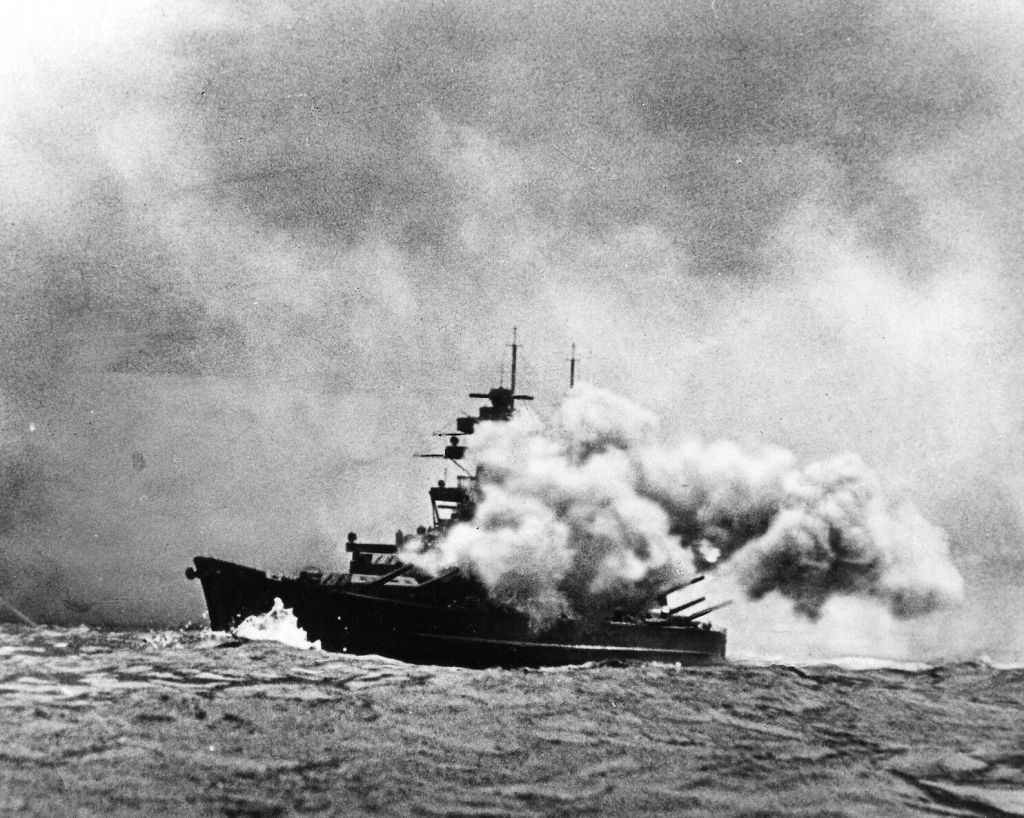
Sink The Bismarck! (1960) ****

Hard to believe but outside of the Hollywood big-budget Bridge on the River Kwai (1957), this was the biggest British film at the U.S. box office in the previous decade. In fact, the British war films that did so well in the home territory, The Cruel Sea (1953) and Reach for the Sky (1956), sank like a stone when exported to in America while earnings for Ealing comedies,  limited to arthouses, hardly made a dent in the box office.

What makes this so appealing is the very lack of Britishness and the intrusion of a Yank, famed reporter Edward  R Morrow (playing himself), interrupting the action at various points to keep audiences up to speed. The fact that the sinking of the Bismarck, the biggest battleship ever built, was one of the few British actions at the start of the Second World War to be counted a success probably helped. Watching the Brits being lionized for defeat was not an attractive notion for global audiences.

But in the main it is a thrilling docu-drama, very much a departure for the genre, with every nuance of potential consequence spelled out. Dialog and models being moved across maps announce the risks inherent in the British attack: the superiority of the newly-built German battleship, the multiple options the Germans had in 1941 to escape, the difficulties in pinpointing the German vessel in the fog-bound waters of the North Sea, and the devastation the battleship could inflict on the beleaguered convoys on which Britain depended to stay afloat. In addition, even when targeted the Germans could flee to occupied France or potentially summon U-boats or air support.

So in the manner or Operation Crossbow (1965) or Day of the Jackal (1973) the audience is primed for a minute-by-minute enterprise, the battleship deemed so dangerous that the Admiralty is willing to risk its own scarce supplies of battleships, destroyers, cruisers and aircraft carriers in a bid sink the enemy. It is so much a documentary that the beyond the thrill of the hunt there is little room left for drama and certainly little of the stirring kind that had become such a byword for the British version of the genre – and such a turn-off for foreign audiences who could hardly make out what the actors were saying never mind work out why such-and-such a mission they had never heard of was so important.

In any case emotion is forbidden in the subterranean claustrophobic Admiralty War Office where new operational commander Capt Shepherd (Kenneth More) holds sway. A martinet, “cold as a witch’s heart,” on arrival he rids staff of what he sees as the rank indiscipline of addressing colleagues by forename rather than surname, eating sandwiches at a desk to which the workforce have been chained for hours  and various minor offences against the strict code of a uniform.

It was inherent in this type of picture that the land-based unit suffer the casualties of war, husbands dead or missing in action, wives and children killed by German bombs. But the tightening of the stiff-upper-lip ensures that when such revelations become known, they appeared like emotional depth-charges on this otherwise staid ocean. And Capt Shepherd, through his choices, as would be true of many high-ranking officers, might be sending his own son to is death.

This is also one of the first instances in war pictures where the Germans are not treated as stock villains, but intelligent people, like Admiral Lutyens (Karel Stepanek) with his own vanity and a hunger for redemption, and Capt Lindemann (Carl Mohner), as valiant an opponent in the cat-and-mouse duel where outwitting the British enemy could wreak untold carnage and hasten – unusually from the German point-of-view rather than from the Allies – the end of the war.

A few months after launch the Bismarck is spotted leaving its home port, destination North Atlantic to feast on convoys travelling from America with invaluable supplies. There are four possible routes open to get round the top of Britain. To prevent the Germans reaching any of them British ships must be sacrificed, including HMS Hood – three survivors out of a crew of 1400.

It’s David vs Goliath except David is a terrier capable of inflicting tiny wounds that drain the battleship of some of its power, loss of fuel and rudder problems limiting movement. It’s a different kind of war picture, as well as the big guns blasting at each other over huge distances, the British employ biplanes loaded with torpedoes, a weapon also used in some instances by its ships.

To keep audiences more heavily involved, there are snippets of dialog involving characters on board the various ships, some in distinctly un-stiff-upper-lip mode, and montages of the various vessels getting ready for action, as well as shots of devastation should a shell find its target.

But basically it’s  brilliantly-told tactic-heavy war picture that shows the shifting battleground, how the various ships are deployed, with no shortage of telling the audience how crucial success is and how crushing defeat. There’s no reliance on individual heroism, no snappy soldier defying authority, no hunch being played out, none of the usual cliches of the genre, instead, as with The Longest Day (1962) a clear explanation of what’s going on with superb battle scenes for the action-inclined.

It’s fair to say that even on the small screen, the models look a bit iffy, but this is more than compensated by other scenes on real warships, the use of newsreel footage, and fast cutting.  That action never takes place under a clear blue sky but always in murky waters also adds to the realism.

In a role that would have been custom-made for Kenneth More (The Comedy Man, 1964), king of the stiff-upper-lip, rather than simply spouting his lines, he adds considerable emotional depth. Dana Wynter (Something of Value, 1957) is excellent as his equally buttoned-up assistant.

There’s a full crew of supporting British character actors including Michael Hordern (Khartoum, 1966), Laurence Naismith (Jason and the Argonauts, 1963), Geoffrey Keen (Dr Syn, Alias The Scarecrow, 1963) and Maurice Denham (Some Girls Do, 1969) while the Czech-born Karel Stepanek (Operation Crossbow, 1965) and Carl Mohner (Assignment K, 1968) inject humanity into the Germans.

Lewis Gilbert (The 7th Dawn, 1964) does a brilliant job of bringing this all together, adding touches of emotion and humour to what could have been a too-dry concoction, drawing on a screenplay by Edmund H. North (HMS Defiant/Damn the Defiant, 1962) which was based on the book by C.S. Forester of Hornblower fame.

Return to Sender (1963) ***

The B-film’s B-film. Where American B-pictures invariably focused on sleaze, sci-fi, horror or violence, their British counterparts often exuded class with solid acting, clever plots, excellent though simple sets and good composition. Edgar Wallace, the world’s most prolific writer, had regained sudden popularity thirty years after his death, and movies made from his works made ideal subjects for B-pictures fed into the British double-bill system. His thrillers are all story, racing along with twist after twist.

On the verge of being arrested for fraud, high-class businessman Dino Steffano (Nigel Davenport) hits on blackmail as a means of forcing investigator Robert Lindley (Geoffrey Keen) to drop the case. He sets up associate Mike Cochrane (William Russell) to fake photographs involving sexy Lisa (Yvonne Romain) and Lindley in compromising positions. So Lisa, pretending to hold vital evidence, lures him to her flat where this can be staged.

Meanwhile Lindley’s daughter Beth (Jennifer Daniel) chats up Cochrane after overhearing him asking questions about her father’s cottage. Cochrane has history with Lindley, an 18-month prison sentence the result of a previous encounter. He also resents Steffano over previous double-dealing and is planning to take his own revenge while carrying out the master plan.

I doubt if you will be able to see the twists coming. Suffice to say, nothing is what it seems. The closer Lindley gets to uncovering the mystery, the darker it becomes and the more danger he appears to be in. Even when characters reveal their plans, you can be sure they will have a different one up their sleeve. Steffano’s exceptional charm masks his ruthlessness. While Lindley is dogged, he is no match for the slinky Lisa who can play the vulnerable female with ease. Artist Beth treasures her independence so much that it takes her down some devious alleys, especially when trying to pump Cochrane for information. And it all leads to a terrific climax, involving further twists and double-dealing.

Most of this is played out in classy apartments with log fires burning and Steffano drinking brandy and smoking cigars, or on a yacht, or Lindley’s equally splendid chambers.

The cast are either up-and-coming movie stars or destined for small-screen fame. Many of these Edgar Wallace thrillers would prove stepping stones for new talent.

Nigel Davenport (The Third Secret, 1964) is the pick and would become an accomplished supporting actor in films like Play Dirty (1969). Yvonne Romaine had already made a splash in The Frightened City (1961) and would go on to play the female lead in Devil Doll (1964) and The Brigand of Kandahar (1965). Geoffrey Keen (Dr Syn, Alias The Scarecrow, 1963) would make a bigger impact on television in Mogul (1965-1972). As would William Russell (The Great Escape, 1963) who went on to become a long-running sidekick of Dr Who (1963-1965). Jennifer Daniel became a horror favorite with the female lead in The Kiss of the Vampire (1963) and The Reptile (1966).  

Making his movie debut director John Hales clearly benefits from a couple of decades as an editor in films like The Seventh Veil (1945) and Village of the Damned (1960) and he nips quickly from one scene to another to keep the plot ticking along while showing some gift for framing characters within a scene.  

I should point out you will easily find flaws. Strictly speaking, if you know your British police procedural, Lindley would not be an investigator, and it would not be too hard to find strains of implausibility showing. But that should not detract from this enjoyable movie.

British studio Anglo Amalgamated churned out these Edgar Wallace thrillers as double-bill fodder and, even though compromised in the budget department, they were generally well-made. Wallace was a brand-name, the country’s best-selling author on account of his 200-plus novels, most still in print long after his death, and a byword for a good read. American networks edited the features down to fit into a television series. So if you are hunting these down make sure you get the original features rather than the edited versions.

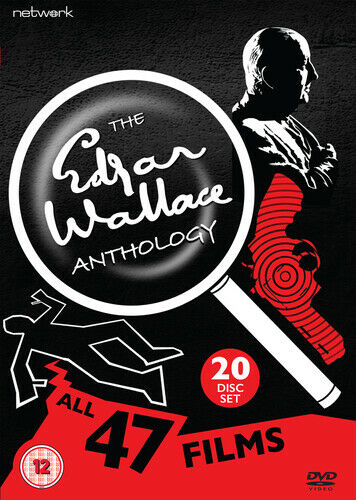
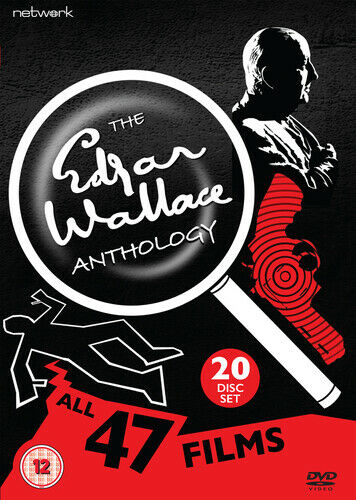
You could try this sampler on Amazon Prime but if you like what you see you would be better to buy one of the box sets.

Dr Syn, Alias The Scarecrow (1963) ****

The mysterious masked Scarecrow was the creepiest character thus far put on celluloid by Disney. A lot of the action takes place at dusk so it is soaked in crepuscular atmosphere. Filmed against the sky, every horse seems to thunder past. Gallows swing ominously. Coupled with a strong storyline and clever ruses by alter ago the mild-mannered clergyman Dr Syn (Patrick McGoohan), this is one for the Under-Rated Hall of Fame.  

While the character has antecedents in folk-hero Robin Hood, the Scarecrow is more rooted in the brutal reality of Britain in the mid-1700s when to fund a host of foreign wars King George taxed already-impoverished peasants to the hilt, making smuggling essential to survival. The Scarecrow is not just the underworld kingpin but has operational skills a spy would be proud of, coded messages, secret rendezvous et al.  

Ruthless General Pugh (Geoffrey Keen), sent to rid the countryside of this menace, makes no bones about putting the squeeze on the wives of villagers to force them into providing the information he requires. Outwitted from the off by Dr Syn, the infuriated general begins torching houses. Helped unwittingly by local squire and judge Thomas Banks (Michael Hordern), the general acquires an informer Joseph Ransley (Patrick Wymark).

This is not the bucolic England of Robin Hood or other historical yarns of Hollywood invention featuring glorious scenery and ample female cleavage. Here, a barmaid is likely to use a meat cleaver to defend herself. This was also the era of press gangs, where government-appointed hoodlums would raid a village and carry off young men as unwilling recruits for the Royal Navy. It was a time of imminent insurrection, the King’s subjects in the North American colonies on the point of sedition. And when money – or its lack – infected every area of society.       

Although like any super-hero the Scarecrow occasionally comes to the rescue, the movie is distinguished by the fact that is more often Dr Syn who subverts the General through cunning subterfuge. Victory through force of arms is impossible since violence visited on the king’s troops would result in a multiplication of their numbers. So it is more a battle of wits. In addition, the Scarecrow faces a dilemma – how to punish a traitor with such severity his authority is never questioned again while at the same time upholding the principles of Dr Syn. Just how these issues and others are resolved make for a very involving picture.

Minor subplots – a romance between the squire’s daughter and an officer, a deserter from the Navy and the presence of an American (Tony Britton) – serve the main story. So the narrative remains taut. And, interestingly, that hangs upon what characters have to lose rather than gain. It is not about greed but survival.

For a Disney picture there is considerable directorial vigor, not just the depiction of the smuggling and pounding hooves accompanying peril or escape, but two terrific trial scenes, a masterly escape conducted in the complete absence of on-screen music and, of course, the terrifying vision of the Scarecrow himself.

The acting has a sterling quality. While Michael Hordern was a stage star, the film primarily called upon actors who later achieved fame on British television programs. Patrick McGoohan headlined The Prisoner (1967-1968), George Cole was in Minder (1979-1994), Patrick Wymark and Alan Dobie in The Plane Makers (1963-1965) Geoffrey Keen in Mogul (1965-1972), and Tony Britton in Robin’s Nest (1977-1981). McGoohan had a previous television incarnation as Danger Man  (1960-1961) and Cole had been a con man in the St Trinian’s films. You can also spot in small roles Kay Walsh, a former British leading lady, and a young Richard O’Sullivan, later star of Man About the House (1973-1976).

Director James Neilson was a Disney favorite, having helmed Moon Pilot (1962), Bon Voyage! (1962) and Summer Magic (1963). But these were all lightweight features and it is to his credit he met the challenge of turning Dr Syn, Alias the Scarecrow into a dramatic actioner. British writer Robert Westerby (The Square Ring, 1953), who also created the source material for Kali-Yug, Goddess of Vengeance (1963),  fashioned the screenplay from the books of William Buchanan and Russell Thorndike

Although Disney had cannibalized the Davy Crockett television series in the 1950s, stitching together episodes for feature films, this was something of a reversal. As part of its The Magical Wonderful World of Disney U.S. television program the studio had shown The Scarecrow of Romney Marsh as a three-part mini-series while Dr Syn, Alias the Scarecrow was released as a movie in Britain.  

You will need to go onto ebay or other secondhand sources to find the movie. The television mini-series can be found below.

Discover WordPress

A daily selection of the best content published on WordPress, collected for you by humans who love to read.

The Atavist Magazine

by Brian Hannan

WordPress.com News

The latest news on WordPress.com and the WordPress community.