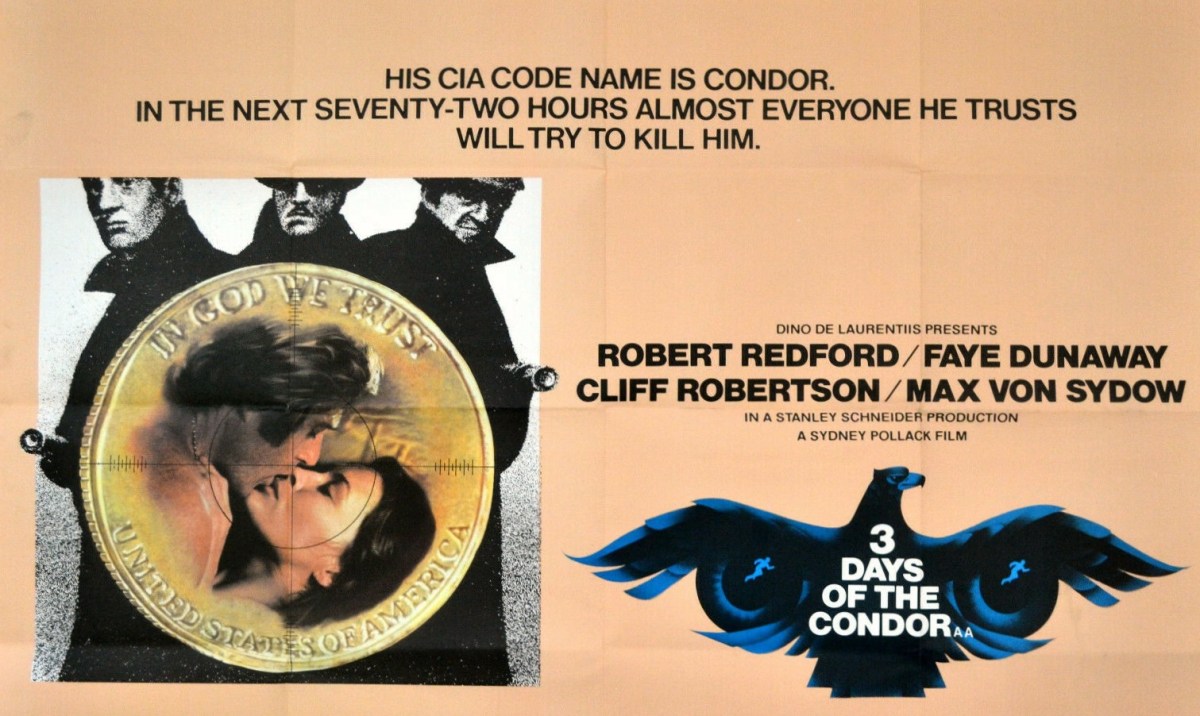
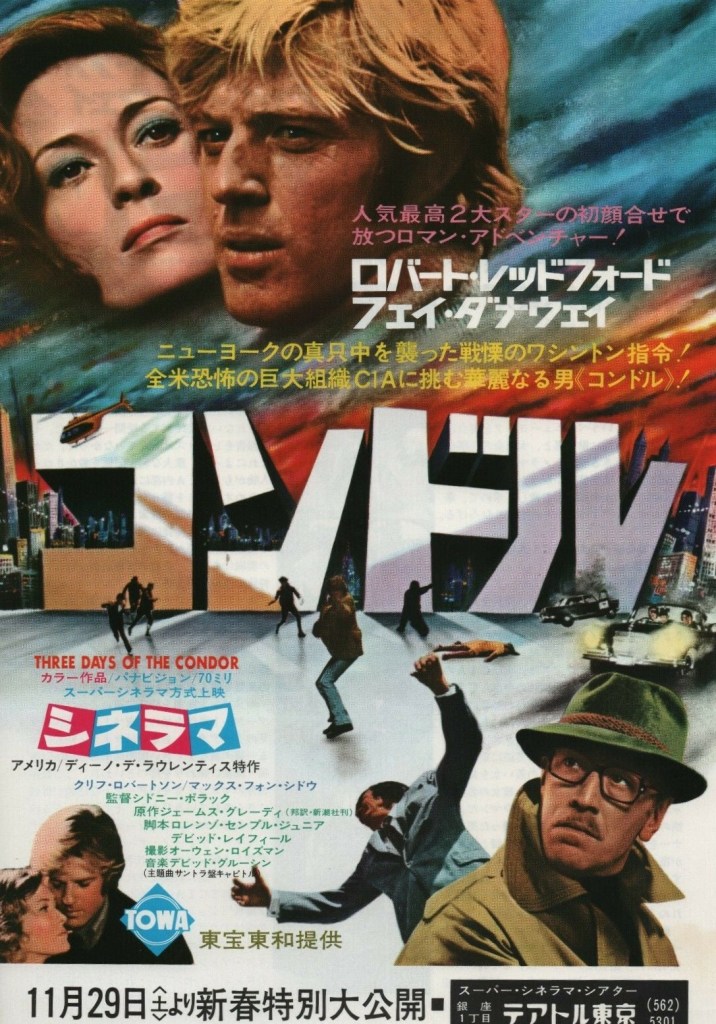
My belated tribute to the recently-deceased Robert Redford. He’s made a bunch of worthier films and his pair with Paul Newman – Butch Cassidy and the Sundance Kid (1969) and The Sting (1973) – take some beating. But this is the one I go back to the most because it combines worthiness with thrills and two stunning performances.
Outstanding thriller in the paranoia vein with Robert Redford delivering one of his best performances. Never mind the terrific score by Dave Grusin (Tell Them Willie Boy Is Here, 1969), the soundtrack to this tale of political chicanery involving the C.I.A. is the chattering of computer printers.
Joe Turner (Robert Redford) is an amiable geek – beanie hat, unfashionable Solex moped – working in an obscure department of the C.I.A. (although one where the receptionist has a gun in her desk drawer) looking for codes in novels. He doesn’t quite conform to type, irritating his rules-conscious colleagues, late for work, illicitly using the back door instead of the front. On returning from collecting lunch, he finds the entire department massacred. His Washington boss Higgins (Cliff Robertson) promises to bring him in but instead arranges an ambush.
On the run, unable to return to his own apartment, his girlfriend Janice (Tina Chen) among those murdered, he kidnaps photographer Kathy (Faye Dunawaye) at first content to find somewhere to hole up but then using her to help him resolve the issues. It’s soon apparent that Turner, in his desk job, has stumbled upon a secret organisation deep within the C.I.A. In a touch of the Hitchcocks, director Sydney Pollack (The Scalphunters, 1968) lets the audience know what Turner does not, that Higgins and his bosses Wabash (John Houseman) and Atwood (Addison Powell) are out for his blood, assassin Joubert (Max von Sydow) the triggerman.
But as Joubert points out, Turner is an amateur and that makes him unpredictable. The killers believe Turner will easily be dealt with. But he’s not as stupid or unresourceful as they might expect. The opening section reveals just how handy he is: fixing a computer, knowledgeable about plants and for some reason the weather, working out an insoluble murder in a book, and most important of all has learned to trust nobody especially his bosses. It turns out he’s got a few of his own tricks up his sleeve, not least how to work a telephone exchange to his advantage and how to flush out his adversaries.
There’s a terrific game of cat-and-mouse and in possibly the only picture in the early cycle of conspiracy pictures the first character capable of harnessing technology.
You often read about character-driven movies but that’s only usually in the sense of dramatic flaws or preferring exploring personality to action. This is character-driven in an entirely different way. Turner’s life depends on him being able to read character, to notice what’s wrong or false in a given situation, to assess the qualities of those around him. For much of the dialogue, Turner is observing as much as listening, watching for behavioural clues.
Original title of “Six Days of the Condor” “wasn’t snappy enough for Hollywood.
Even without the presence of Kathy, this would have been a highly satisfactory thriller. But the tentative romance takes it to another level. Unusually, she is a loner, whose photographic metier is loneliness. That they bond at all is surprising, that they do so with such touching emotion brings unexpected intimacy.
There’s a very contemporary feel to the politics, not just American authorities doing what they want but the idea that liberal values will vanish the moment there is genuine threat to loss of the high living standards citizens enjoy or, worse, oil or gas rationing or famine. “Do we have plans to invade the Middle East?” Turner demands of Higgins. You can’t get more contemporary than that! And at one point Turner uses unsuspecting people as a human shield.
For such a fast-moving picture, time is taken out to understand the characters involved, Higgins not quite as far up the espionage tree as he should be, Joubert’s hobby the meticulous painting of model soldiers. A peck on the cheek is all the information we are given that Tina, a work colleague, is Turner’s girlfriend.
As Kathy moves from indignant captive to welcome participant, you can see that she represents the desire of many liberals to give the authorities a bloody nose. There is one brilliant moment at the end where Turner’s fears overcome his feelings and the devastation of what she perceives as emotional betrayal is seen on her face.
But this is Robert Redford’s picture. He was on an almighty box office roll – Jeremiah Johnson (1972), The Sting (1973), The Way We Were (1973), The Great Gatsby (1974), The Great Waldo Pepper (1975) and on the horizon All the President’s Men (1976). Every minute of the movie his face or body are working hard, eyes constantly involved in the character observation I mentioned. He goes from being light-hearted and handsome at the start to serious and deadly at the end. And there are some superb bits of business. When the rain stops, for example, he checks his watch to see it has ended when he predicted. When he returns after lunch, he peers down over the steps to see that his moped that earlier some kids had tried to steal was still there.
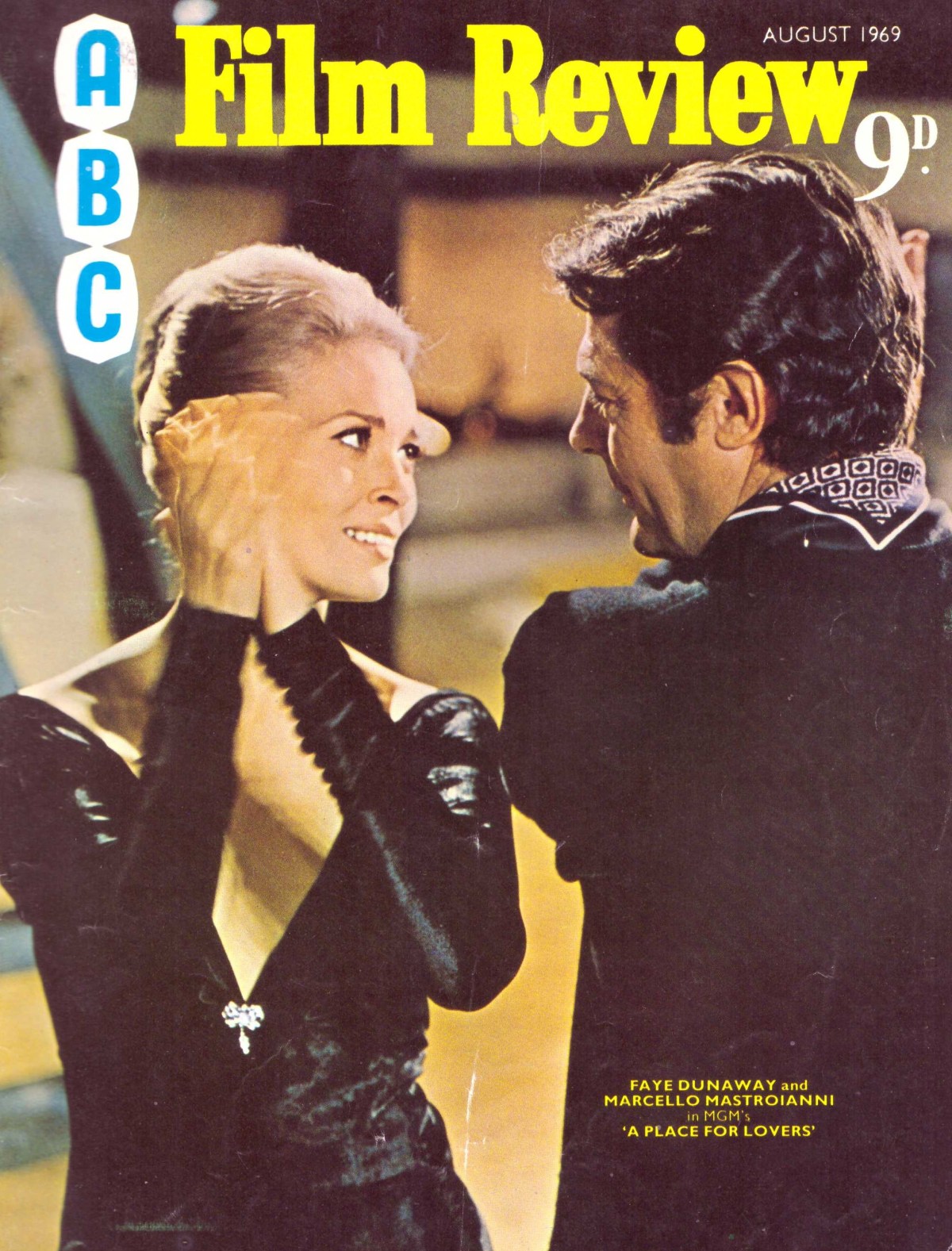
This is probably the quietest you’ll ever see Faye Dunaway (A Place for Lovers, 1968). She is an enigma, the puzzle only uncovered in her photographs. But as a photographer, she is also an observer, and she soon likes what she sees in Turner. The strong supporting cast includes Cliff Robertson (Masquerade, 1965), Max von Sydow (The Quiller Memorandum, 1966), John Houseman (Seven Days in May, 1964), Tina Chen (Alice’s Restaurant, 1969) and Addison Powell (The Thomas Crown Affair, 1968).
Sydney Pollack does an exceptional job, cutting between the pursuers and the pursued. The opening sequence itself is quite superb as the director sets up the massacre which is carried out in silence, machine guns fitted with suppressors, while providing insight into Turner. Based on the bestseller Six Days of the Condor by James Grady, the intelligent screenplay by Lorenzo Semple Jr.(Fathom, 1967, and The Parallax View, 1974) and David Rayfiel (Castle Keep, 1969) keeps everyone on their toes.
More straightforwardly enjoyable than Coppola’s self-conscious The Conversation (1974) and Pakula’s occasionally opaque The Parallax View (1974) with computer surveillance, giving this another contemporary edge, a key factor in the way the tale that switches between pursued and pursuer
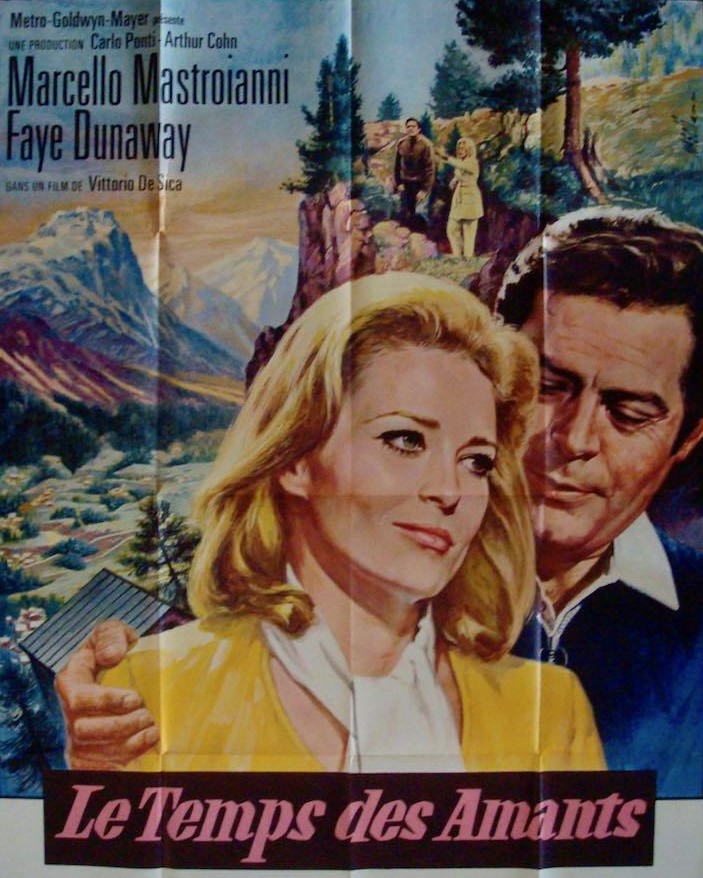
I’ve marked this up since my previous viewing of it. And that’s an exceptionlly rare occurrence. What may not have suited the 1960s audience accustomed to standard boy-meets-girl boy-loses-girl even with whatever complications were available at the time, this should chime more with a contemporary audience seeking more reality and less glorification in a love story.
Not quite the Hollywood romance, too much bellyaching from the male for a start, and a couple of years before Love Story (1971) gave terminal illness a box office shot in the arm, but nonetheless very much an adult love affair and far from deserving a place in the top 50 worst films of all time.
For a start director Vittorio De Sica plays around with audience expectations. This always has the feel of a romance that could end at any time, of characters not quite sure of the other person’s feelings, real love or just sex, the sense of not knowing where this could go, and of where, emotionally, they find themselves. And it begins with confusion, a blaring horn in the background, a close-up of Julia (Faye Dunaway), and then she jiggles around with some bricks in a wall before retrieving a key and finding her way inside a grand though modern Italian pallazo. You’ve no idea why she is here and I guess neither does she.
There’s been no meet-cute and there’s no real intimation of how the attraction began except, judging from a brief flashback, they must have bumped into each other at an airport. That’s my conclusion anyway because the details of the actual meeting are never clarified, like a lot of what subsequently goes on. She hides information from him, he does the same, so for a time feelings are not spelled out. It’s clandestine in all the wrong ways. There’s a separation, a distance, characters often seen in very long shot. Sometimes there are physical barriers between them, a high fence in one instance, as if true intimacy is impossible.
Still no sign of the man she has come to visit. She rescues a stray dog from the town dog collector. It’s an exceptionally grand house, classically designed, marble floors, paintings and artistic artefacts all over the place, but no clutter. When Valerio (Marcello Mastroianni) arrives – it’s his house – he checks the labels on her luggage, presumably finding out her full name, possibly her address, possibly accustomed to lovers providing false information on both counts. We learn he’s a safety-conscious racing driver, a man who requires barriers.
They are on a deadline already. She is only in Italy for a further two days. This is a lie. She has 10 days at her disposal but wants to set the pace, heat up the sexual atmosphere. They make love beside a lake. He takes her to dinner with friends where the entertainment is a lecture on sexual positions shown in art. But after someone suggests a game of what we would these days term speed-dating, he calls an end to the affair, jealous that she would consider spending any time in close proximity to another man.
So that’s it. Grand love affair dead and buried after just one day. Except she turns up next day at a practice at a racing circuit. After they reconcile, she watches in a car mirror as he makes a call in a phone box – speaking to his wife or another lover, we never find out, except her reaction explains it must be either.
There’s little of the sparkling dialog found in Hollywood romances, especially for audiences who grew up on the Tracy-Hepburn pictures, but she tells him that “if you put all the houses I have lived in you would make a good little town” and not just that she had lived a peripatetic lifestyle but that she also had six grandfathers so a rather fluid upbringing. She confesses now she has more time to spare, she just wanted him to ask for it, being stricken by her potential absence an indication in her eyes of true love.
So this is a fragile individual, her smile is always hesitant, external confidence hiding vulnerability. Her face is never flush with passion. When he asks why she never revealed her terminal illness, she replies, “I can’t take any more sad eyes.” There’s an ironic ending.
It is of course set against glorious backdrops but instead of letting the audience wallow in the love affair, as would be the Hollywood temptation, De Sica finds some way of undercutting it. Valerio is never quite sure of her and she is never quite sure of him. Their pasts remain hidden. Their lovemaking beside the lake is interrupted by a hunter bagging game. She coos over a baby only to discover it has an ugly father. She drives too fast even with a racing driver in the passenger seat and she clearly has suicidal tendencies, the love affair almost a salve for her despair.
We could have been presented with the suave charming Marcello Mastroianni (La Dolce Vita, 1960) cliché from a dozen Italian films, but instead he is often jealous, annoyed, real. Faye Dunaway (Bonnie and Clyde, 1967) plays a character who never knows where she stands with her emotions, accepting her fate one moment, determined to end her life the next, and yet still time to dally in a love affair that of course can have no future.
Vittorio De Sica (Two Women, 1960) has fashioned a picture that is neither uplifting nor downhearted, a love affair that lives just for the moment, but with implied complications that could at any moment wreck it, a romance always teetering on the edge.
I’ve no idea what compelled Harry Medved to include this in The Fifty Worst Films of All Time, published in 1978, but you might easily question his judgement on discovering that his list includes Sergei Eisenstein epic Ivan the Terrible, Alain Resnais’s hypnotic Last Year at Marienbad, Otto Preminger’s Hurry Sundown, Alfred Hitchcock’s Jamaica Inn and even such passable entertainments as The Omen.
Maybe you’ve been put off giving this a whirl thanks to the Medved seal of disapproval. A Place for Lovers is not the greatest film ever made, but it’s certainly far from the worst, two striking actors and a director who could never make a terrible picture make sure of that. And, as I mentioned, exerts greater appeal for the contemporary viewer.
No DVD available so you will need to check out Ebay or streaming.
The revisionist western was often a get-out-of-jail-free card to cover various random exercises that purported to present the West as down’n’dirty, held to account white murderers and rapists and tilted the narrative balance in favour of the Native American. Other times, interpretation of the idea was more liberal. You make up whatever story you liked and hope to pass it off as closer to the truth than what went before.
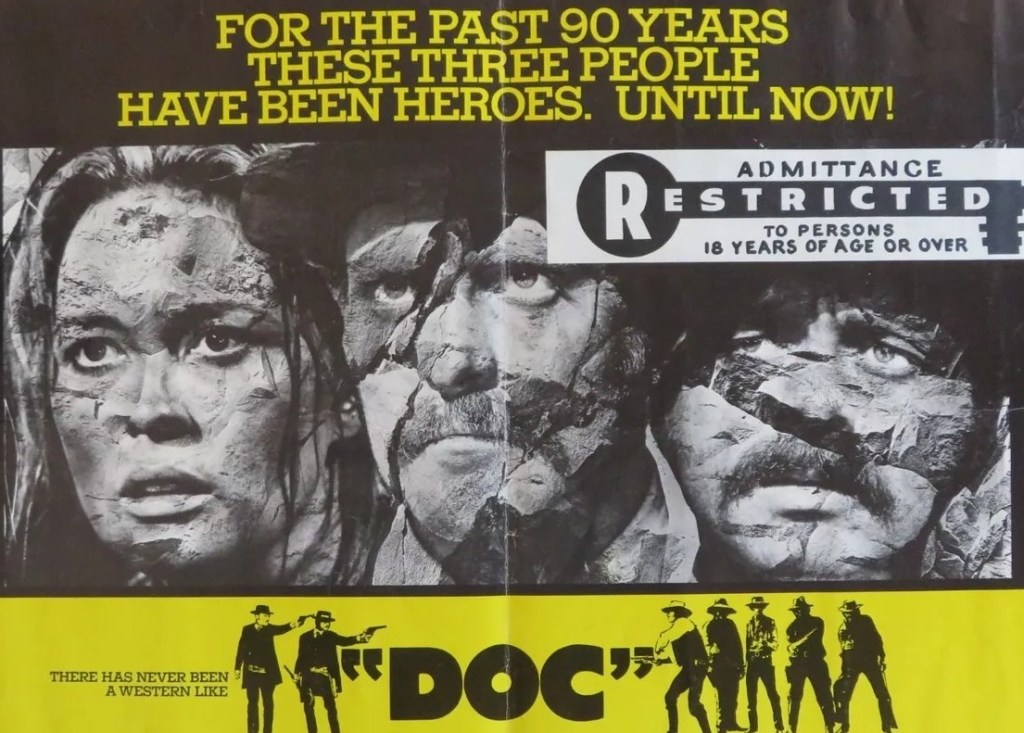
Here, while Doc Holliday (Stacy Keach) is realistically portrayed as an alcoholic (though whisky was prescribed for medicinal purposes) and suffering severely from the tuberculosis that would bring him to a premature end, the narrative is buried in the realms of the unlikely. Notwithstanding that this is the third rendition in 14 years (and only four years after Hour of the Gun) of the famous Gunfight at the OK Corral, whose origins are probably best left to myth, this tries to undercut upholding of the law with corruption, and expects us to fall for a complicated tale that makes no sense. A version of Billy the Kid (Denver John Collins) enters the equation and Doc’s squeeze Kate (Faye Dunaway) veers uneasily between feisty sex worker and adoring partner.
Columnist Pete Hamill (Badge 373, 1973), in his screenwriting debut, ties himself in knots trying to explain how the famous gunfight occurred in the first place. It could as easily have been the consequence of Doc stealing one of the Clanton Brothers’ fiancée, Kate. But although that’s the opening sequence, little is made of it. Instead, we have Wyatt Earp (Harris Yulin) intending to make commercial hay in Tombstone. He’s already deputy marshal but that carries no jurisdiction in Tombstone where there’s money to be made by a corrupt lawman.
Earp is aiming to get elected sheriff and set up buddy Doc in a gambling operation which I guess would have to be illicit in some manner for them to profit. To win favor with the locals, he plans to bring to justice Johnny Ringo, a Clanton associate, who has robbed the stagecoach of $80,000. He bribes Ike Clanton (Michael Witney) with the $20,000 reward money to hand over Ringo. But when that deal goes south for reasons that are unclear the four Earp Brothers plus Doc go head-to-head with the seven-strong Clanton bunch in the corral.
The problem with the OK Corral scenario is that basically you are just filling in time before the shootout. So Doc uses this teaching the Kid to shoot properly, an action that has unforeseen consequences, and setting up house with Kate while coughing up blood and knocking back the whisky. Earp spends most of his time in one conspiracy or another. He tends to cut confrontation short with a quick punch or pistol whipping. But when he is bested in a fistfight with Ike his revenge is suggested as the trigger for the all-out confrontation.
The Clantons don’t know how to fight the Chicago way. They take pistols to the shoot-out whereas the opposition come armed with shotguns. Forgive me if I’m a bit short on weaponry intelligence but I’d always been told (from westerns, to be sure) that a shotgun was only effective over a short distance and here I would question their efficiency. And while I’m chucking spanners into the works I’m surprised that whoever’s stage got robbed left recovery of the stolen money ($2.5 million in today’s equivalent) and apprehending the crook to a deputy marshal.
So a bit of a hodge-podge and not a convincing one at that. I’m sure neither Earp nor Doc were knights in shining armor but neither were they as idiotic as they appear here.
Stacy Keach and Harris Yulin had been paired in The End of the Road (1970) and both were being touted as rising stars though ultimately only the former made the marquee leap. Both are dour and stoic more than anything else and it’s left to Faye Dunaway (The Happening, 1967) to bring some spark to the picture. Being the sassy one, she’s given the best lines, such as explaining to a religious-minded individual that the only time she would be getting on her knees would be for another purpose entirely.
Frank Perry (Lilith, 1962) directs with an eye towards the elegiac but all the artistic sepia-toned cleverness can’t conceal a movie sorely lacking in decent story.
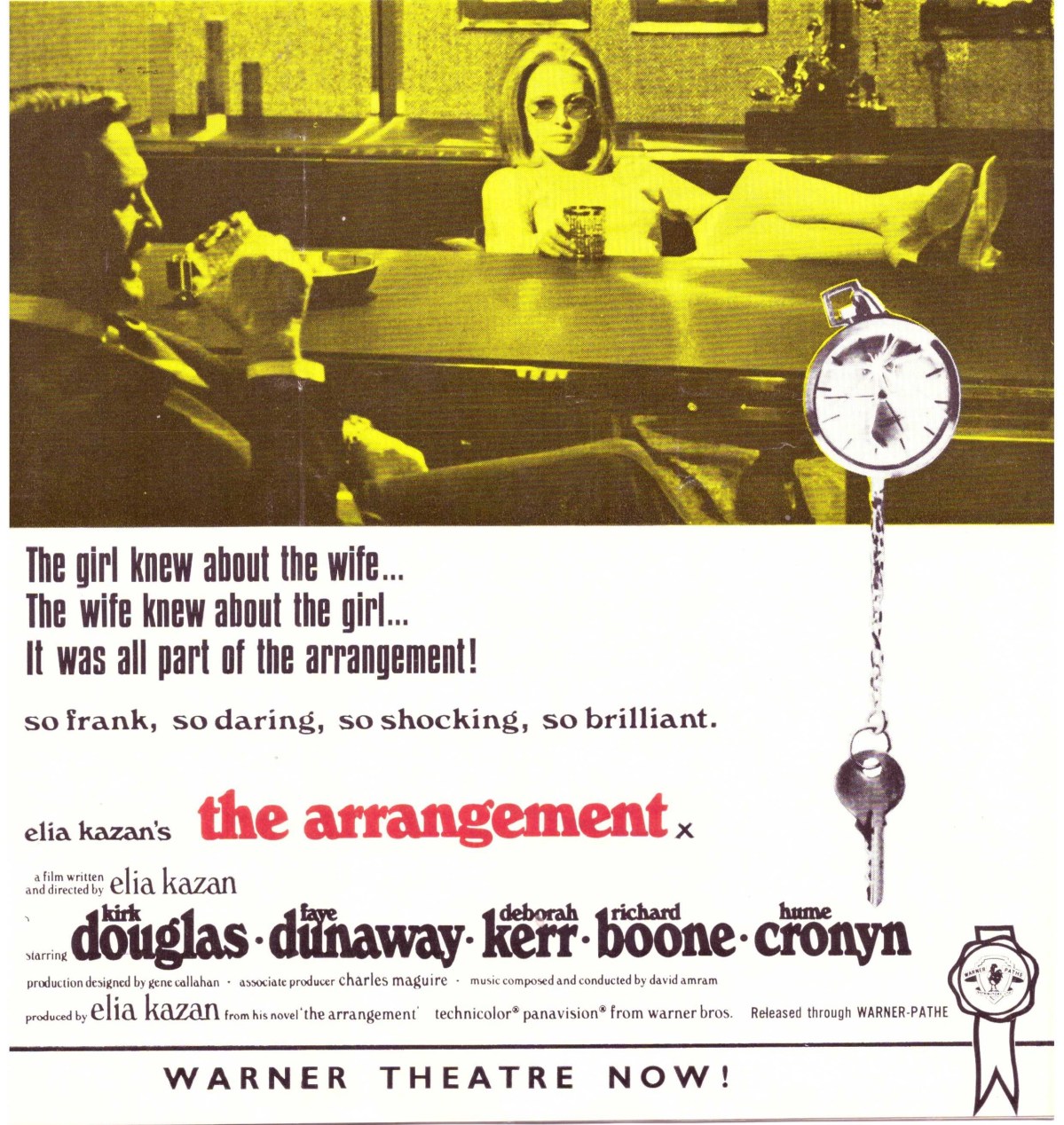
It might have been better if director Elia Kazan had handed over the screenwriting chores for this adaptation of his bestseller about the midlife crisis of advertising man Eddie Anderson (Kirk Douglas). As director he over-angsts the pudding. Anderson’s attempts to juggle wife Florence (Deborah Kerr) and mistress Gwen (Faye Dunaway) coupled with growing disgust at selling a new brand of cigarettes, Zephyr (“The Clean One”), in a way that pointedly avoids their cancer potential, leads to a suicide attempt.
During convalescence he determines to quit the advertising world and go back to his first love, writing, but in fact he ends up sabotaging his career. Florence represents impossible seduction and conscience. Slinky, in dark glasses, hot-tempered rather than submissive or demure, she accuses him of self-deception in his job. The picture flits back and forth between his various choices – different job, return to wife, settle down with mistress, or what seems his ideal world, cossetted by both Gwen and Florence.
Gwen is an excellent study of the modern woman (of that fast-changing period, I hasten to add), who needs a man for sex but not necessarily love, and can use the opposite sex as ruthlessly as any man. What she actually requires in her real life is quite different to what she seeks in the fantasy love she enjoyed with Anderson, sex on the beach, the buzz of controlling a high-powered man. Florence could be seen as an old-fashioned portrait of the adoring wife except for capturing so well the bewilderment of betrayal.
Kazan conjures up some wonderful images: the tension before the suicide attempt as Anderson plays chicken between two trucks, Gwen emerging wet from the pool to eat dangling grapes or with her legs up on Anderson’s desk, Anderson’s mother lighting votive candles in her house before using the same match for her cigarette, Kerr’s futile attempts to win back her fallen husband, Anderson flying solo.
In parts well-observed and directorially savvy, quick cuts between the present and the past, however it sinks beneath its own self-indulgence. My guess is that author Kazan could not bear to kill off a single one of the characters he had created for his acclaimed novel and the upshot is a vastly over-populated picture, few of whom cast any real light on Anderson’s predicament. So we are not only introduced to mother, dying father, brother, sister-in-law and analyst but priest and a bucket of clients and guys from the office. And there are some plot oddities – Anderson gets time off apparently to write journalistic pieces – and what is clearly intended as hard-hitting satire of the advertising world does not come off.
Dunaway (Bonnie and Clyde, 1967) is the standout as Gwen, living life according to her own rules, and with an unexpected vision of domesticity but Deborah Kerr (Prudence and the Pill, 1968) does pain like nobody else and is extremely convincing. Strangely enough, I didn’t go much for Douglas (Seven Days in May, 1964). He could have been leading a cavalry charge for all the range of emotions he exhibited. Douglas is no Montgomery Clift (Wild River, 1960), James Dean (East of Eden, 1955) or Marlon Brando (On the Waterfront, 1954) who was Kazan’s first choice. Kazan had not made a picture in six years and it had been eight years since his last hit Splendor in the Grass (1961). Not quite out-of-touch in concept and delivery, nonetheless it was shunned by the Oscar fraternity.
An odd one distinguished by Deborah Kerr and Faye Dunaway.
In previous decades, box office outside of the U.S., while a growing part of the ancillary equation, only in very rare circumstances outscored domestic. The general expectation, in part due to tougher competition for screens and extra distribution costs, was on average studios could expect to earn about half of domestic revenues.
There was one obvious exemption to this rule. James Bond overseas blew all the competition out of the water. And so it proved in the early 1970s from an examination of United Artists books for the period. Live and Let Die (1973) was the standout performer, knocking up $27 million in rentals (the studio share of the overall box office gross) from foreign cinemas compared to $16.4 million at home. Diamonds Are Forever (1971) did equally well – $22 million abroad, $20 million domestic.
James Bond was such a cash cow that surprised no one. Last Tango in Paris (1973) was considered an anomaly, controversy stoked by UA four-walling the picture when it couldn’t find enough screens. It came in third in the foreign market league, adding $16 million to domestic $21 million.
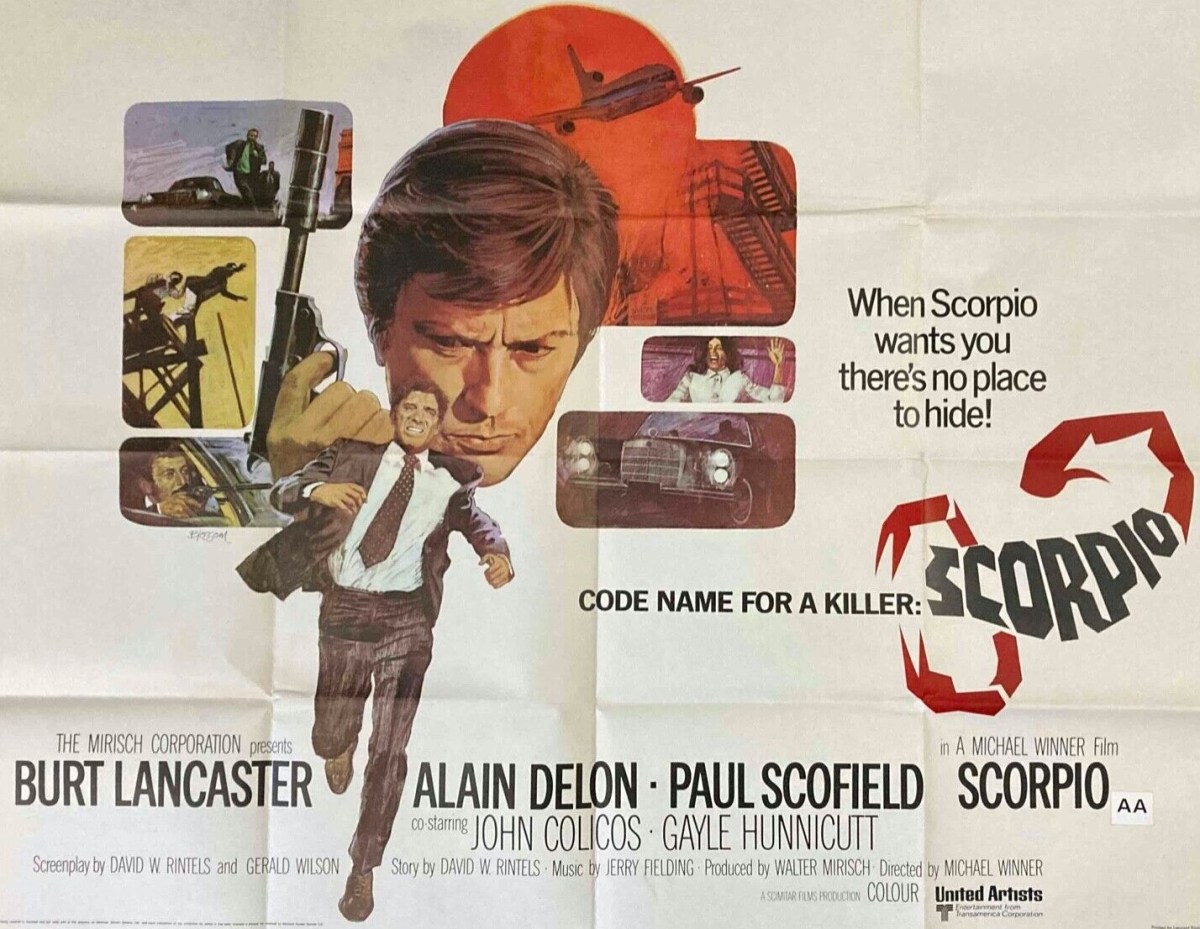
What did take Hollywood’s breath away was how often under-performers – flops even – at the U.S. ticket wickets did gangbusters elsewhere. The biggest winner was the aptly-named Michael Winner, director of westerns Lawman (1971) and Chato’s Land (1972), hitman thriller The Mechanic (1972) and spy drama Scorpio (1973). Total American rentals a shade over $7 million, total foreign rentals three times as much a colossal $21.8 million.
There was hardly a greater example of the disparity between American audience tastes and the rest of the world. And it made Hollywood studios more adventurous when it came to choosing subject matter, and in backing stars, aware that they could make their investment back – and more – from foreign markets.
It was probably astonishing to any studio executive that Burt Lancaster – for over two decades a high-flying marquee name from action-oriented fare like The Crimson Pirate (1952) and controversial drama From Here to Eternity (1953) to his Oscar-winning turn as Elmer Gantry (1960) and hardnosed western The Professionals (1966) – had lost his domestic audience especially after he had fronted up disaster movie smash Airport (1970).
But Lancaster could only scrape up $1.35 million at home for Scorpio, $2.1 million for Lawman and $2.8 million for another western Valdez Is Coming. Scorpio was the biggest hit abroad, with a massive $7 million, over five times domestic, while Lawman shot up $3.2 million (50 per cent above domestic) and Valdez Is Coming $2.65 million.
Charles Bronson was another beneficiary of foreign largesse. The Mechanic, too, targeted $7 million abroad, nearly three times the domestic tally of $2.6 million. Chato’s Land (1972) only delivered $1.27 million in the U.S. but $4.6 million abroad.
Westerns were a mixed bag. Oliver Reed-Candice Bergen-Gene Hackman number The Hunting Party (1971) was an almighty flop at home, just $800,000 in the kitty, but rallied somewhat abroad, not enough to turn profit but at least add a sheen of respectability, with $2.4 million elsewhere, three times domestic. The Magnificent Seven Ride! (1972), proof the sequels had outstayed their welcome, brought in just $750,000 domestically but again did triple the business abroad with $2.15 million and given the paltry budget enough to sit in the black.
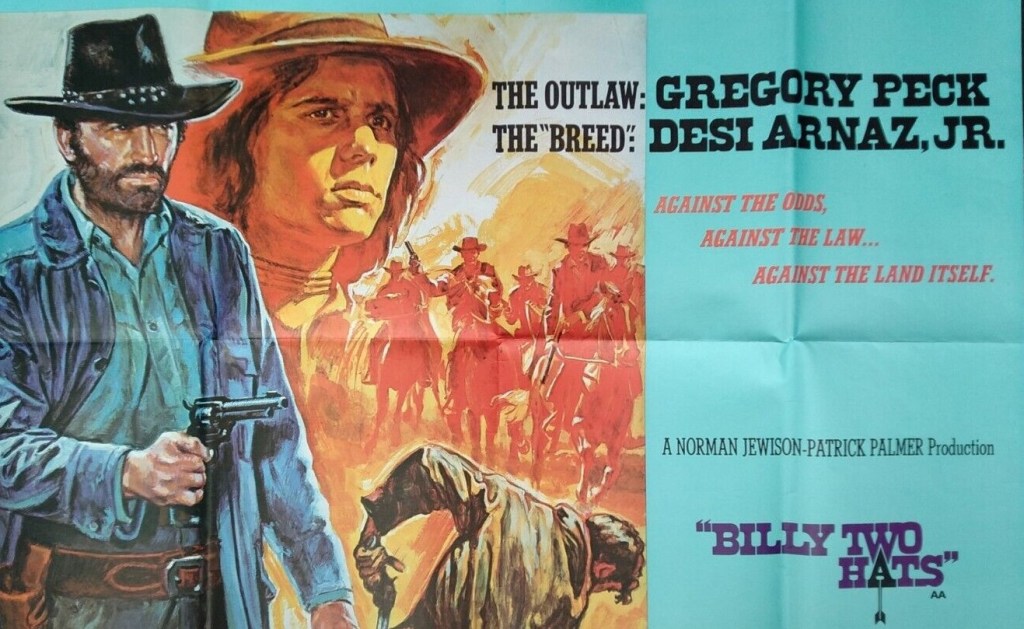
Revisionist effort Billy Two Hats (1974) starring Gregory Peck added $900,000 abroad to a miserable $440,000 at home – foreign revenues not enough to save it from flop. But foreign couldn’t save the second remake of the Gunfight at the OK Corral legend, Doc (1971) with Stacy Keach and Faye Dunaway which moseyed along to $1.35 million abroad to add to $1.8 million domestic. And another western sequel Support Your Local Gunfighter (1971) notched up just $970,000 abroad compared to $2.1 million. Modern western The Honkers (1972) with James Coburn managed just $550,000 abroad and $1 million at home.
It didn’t really matter that Michael Caine comedy thriller Pulp (1972) did better abroad, figures everywhere nothing to write home about, $600,000 in total, five-sixths of that abroad. Fiddler on the Roof (1970), for other reasons, underwhelmed but nobody was going to complain too much when foreign audiences stuck $10 million in till, about a quarter of domestic.
There were some conundrums in the foreign-domestic share-out. Typically, American comedies didn’t travel. But Billy Wilder’s Avanti! (1972) starring Jack Lemmon, perhaps because of the Italian setting, did better abroad – $2.5 million to $1.6 million. Glenda Jackson British-made menage a trois Sunday, Bloody Sunday (1970) not surprisingly did better abroad, but only just, $1.8 million to $1.77 million.
Sidney Poitier in second sequel The Organization (1971) tapped into $2.9 million abroad and $2.45 million at home but generally too-specifically-American features struggled overseas, The Hospital (1971) snaring only $1.9 million compared to $9 million, White Lightning (1973) snagging $1.8 million compared to $6.9 million, Fuzz (1972) holstering $1.7 million against $3.1 million.
Richard Burton was first choice. Sean Connery second. Jack Lemmon a distinct possibility. A suave Frenchman such as Jean-Paul Belmondo (Breathless, 1960) was briefly entertained. Brigitte Bardot a certainty for the female lead. Thoughts of entertaining Steve McQueen for the male lead were so far beyond left field as to have entered the outer limits. He played down’n’dirty working characters clad in nothing more sophisticated than denim. Faye Dunaway’s screen persona – violent slutty bitch – was the opposite of the character depicted.
Producer Walter Mirisch was well versed than most about McQueen, having hired him for The Magnificent Seven (1960) and The Great Escape (1963). But when Burton rejected the part, “we determined to try to interest Sean Connery in the role.” The Scottish actor was receptive to any movies that would instantly take him away from the typecasting of the James Bond series. Lunch at the Regency Hotel was followed by further conversation “for most of a Saturday afternoon.”
But to no avail. “We were crestfallen when we failed to convince Sean Connery,” who was, after all, the biggest star in the world, and looked immaculate in a suit.
Even Steve McQueen acknowledged he was an odd choice. He told a film school class in January 1967 that he was a “limited actor, I mean my range isn’t very great.” But after the possibility of crowning his acting career with Oscar glory for The Sand Pebbles (1966) had faded and with motor racing epic Day of the Champion in cold storage but with a six-picture with Warner brothers promising a hefty $700,000 per, he had the pick of projects.
Maybe too many came his way, over 100 in a few months. He took a meeting with Twentieth Century Fox over a proposal to star with Audrey Hepburn in Two for the Road (1967). He was mooted, along with Paul Newman, for In Cold Blood (1967) and was wooed by John Huston for The Kremlin Letter (not made till 1970).
Eventually, director Norman Jewison, who had worked with McQueen on The Cincinnati Kid (1965), another change to the actor’s screen persona, after much badgering, agreed to let him see the script. “Norman and I both felt that Steve was completely wrong to play Thomas Crown,” commented Mirisch, especially over the demand that “he should to wear a necktie on the screen.”
Although Jewison and McQueen shared the same agency, William Morris, the notion of the actor being tapped up for the role didn’t come from there. McQueen heard about it from a friend Steve Ferry who had seen the screenplay. Jewison came straight to the point when he took a telephone call from McQueen: “If it’s Thomas Crown, forget it. You’re not right. I love you and respect you as an actor. But I’ll never tell you lies. You can’t have the part.”
Jewison went further, listing the actor’s shortcomings, explaining McQueen was prone to “looking down at the ground or squinting up into the sun…What’s going to happen when you have to look people in the eye?” Only after three hours on the director’s back lawn did Jewison’s obstinacy relent. “The more he talked, the more I saw him as Thomas Crown. Now we had the problem of turning him physically into Thomas Crown.”
“He’s a rebel like me,” surmised McQueen, “Sure, a high society rebel, but my kinda cat.” Jewison kept telling him he “wasn’t right for it.” It was “unlike anything Steve had ever done” and casting him still seemed a risk. McQueen was aware of the damage miscasting could do to this career. “I don’t have any illusions on that score…If people laugh at me, my ass is gone.”
McQueen explained his enthusiasm for the role. “I had thought of changing my screen image for more than a year. I felt it was time to get past those tough upright types. When Norman showed me the Crown part I grabbed it.”
It was an odd movie from the beginning, not churned out by a seasoned professional. An experienced Hollywood type would never have considered writing a heist picture where the mastermind was a slick millionaire with a string of successful businesses behind him, who, rather than being a professional criminal, was drawn to crime from sheer boredom.
Alan R. Trustman was a legal eagle, partner at the law firm of Nutter, McClennen and Fish. “I had never written a line, except for law briefs. One Sunday afternoon I got bored watching TV and suddenly, for no apparent reason, I thought it would be fun to write a screen story…in two months The Crown Caper was done.” But it was nothing like the polished movie that ended up on screen. “It had a lot of dialogue, a lot of description and a lot of prose,” recalled Mirisch, and at thirty pages long was more of a treatment than a script. “But it had a great germ of an idea.”
Mirisch was an early advocate of Faye Dunaway, having seen her on stage in a play, Hogan’s Goat (1965), recognized her potential and “always had in mind that, one day, a role would come along.”
Mirisch had McQueen on some sort of a financial string. Their multiple-picture deal with him dated back to The Magnificent Seven (1960), at a time when he was a rising rather than established star. In the way of such pacts, initial remuneration was pretty low, rising with each successive picture, and relying on the actor having become, somehow, a success.
“His agent and manager made a big fuss about the nominal salary provided for in our second option. To settle the argument,” stated Mirisch, “I agreed to pay him the salary called for in the third option as well as to cancel that last option. I recognized that we really should be paying him more than the price stipulated in the option. Also I felt that trying to enforce the third option would be difficult if not impossible.”
If Walter Mirisch thought he was getting a bargain, it wasn’t much of one. McQueen still pulled in $650,000 plus $1,000 a week living expenses and a ton of perks – including it later transpired the dune buggy (worth about $50,000 at today’s prices), all the tailor-made suits, and the shoes and a swag-bag of props. The actor called on his Beverley Hills tailor Ron Postal to deck him out in $400 suits (over $3,500 now), had his hair transformed by celebrity stylist Jay Sebring (later murdered along with his girlfriend Sharon Tate by the Manson gang) and learned to play polo “until his hands literally bled.”
Dunaway, by contrast, with Bonnie and Clyde (1967) in the bank and wanted by every studio in town, was paid a larger salary (though McQueen made up for it by his profit share). Out of the $4.3 million budget around a third was spent on the salaries of the two principals.
Dunaway proved terrific casting for another reason. She was as tough, single-minded and independent as the character she played. She had an inner strength McQueen’s previous leading ladies and contemporary amours lacked. In person “she threw him off-balance” and she “did the same thing on camera” which provided the anchor of their relationship. She was far from the typical Hollywood “love interest.”
Mirisch’s pact with Jewison had proved wildly successful, among the best financial deals the company had ever achieved, the hot box office of The Russians Are Coming, The Russians Are Coming (1966) exceeded by In the Heat of the Night (1967). Jewison rehired many of the crew from his previous picture, including two budding directors, cinematographer Haskell Wexler (Medium Cool, 1969) and editor Hal Ashby (Shampoo, 1975).
Aside from the sensational screen charisma of the leading actors, the screenplay’s originality was enhanced by a huge step forward in the use of technology, the innovative split-screen process, executed by visual designer Pablo Ferro, who had devised the credit sequence for The Russians Are Coming, The Russians Are Coming.
Multiple image was used in three principal area – to introduce six characters and establish their relationship during the initial robbery, for the polo game, and in the final caper. The polo game employed “not only out-of-focus and soft effect panels but also at some point involved over fifty separate panels on the screen simultaneously,” said Jewison. For the second robbery “the amount of film used in relationship to the amount of screen time was probably in the ratio of four-to-one.”
In other words, not only was it incredibly stylish, but it vastly compressed screen time, reducing the running length by fifteen or twenty minutes, ensuring that the audiences concentrated on the evolving relationship between McQueen and Dunaway.
McQueen could ride, of course, what Hollywood star, with westerns in high demand, could not. “But he hated horses and he hated polo, but he wasn’t about to give up.” Thanks to his dedication, he proved a worthy competitor. Jewison only believed in McQueen once he witnessed him in action playing polo. “That’s when I realized how much he was giving for the film. Polo was symbolic of all the reasons why he wanted to play Thomas Crown.” The snobs at the club might sneer but they could not ignore “his sensational back hand.”
McQueen had never used the English saddle, a prerequisite for polo. He trained at the Myopia hunt club from morning till night until he mastered the art of riding using his knees not his arms (essential to be kept as free as possible to swing the mallet) as well as becoming such a “proficient player” he received a standing ovation from the members.
The F.B.I. refused to cooperate. Rejecting a request to film in its Boston office, the crime buster operation complained about what it perceived as “an outrageous portrayal of the Bureau” especially as the film ended with Thomas Crown outwitting the organization.
McQueen turned up for shooting as if he had swallowed the Method. “Call me Tommy,” he told the crew. But there was limited time to knock the character into shape, the actor having only signed up for a week of pre-production.
The twelve-week shoot was marred for McQueen by “some letters of a threatening nature that he had received.” That meant posting a security guard on his rented house to ensure the safety of his children. “It preyed on his mind a great deal during the shooting,” said Mirisch.
According to Jewison, McQueen’s security concerns evolved into paranoia, itself driven by his drug-taking. As well as a 24-hour security detail and surveillance on the front of his house, he demanded the same facility for the back of his house which between him and the Atlantic Ocean consisted only of a private beach. “Who the hell did he think was going to get in from there?” mused the director. Off-screen McQueen never exhibited his on-screen confidence. Jewison observed, “He was tortured.”
Filming was, as Jewison put it, best described as “bittersweet.” Producer Robert Relyea recalled “refereeing” a few incidents between actor and director. McQueen’s unease or the eternal power battle between director and actor resulted in one opportunity missed. For the dune buggy scene, said Jewison, “we had everything lined up for a scene on the beach at Magic Hour just as the sun was going down. Beautiful… conditions were perfect, everyone was ready except Thomas Crown Esq who was out in the surf in his dune buggy not answering his radio.”
Oddly enough, McQueen objected to the director speaking to him snippily when the actor returned and after that their relationship wasn’t the same, McQueen nibbling away at the director’s confidence, objecting to scenes or lines, until Jewison at one point ended up in tears. McQueen became a consummate actor, expressing emotion with the slightest lift of an eyebrow, or tightening a facial muscle, because “he couldn’t get his tongue around a lot of words.”
The producer was delighted to return to Boston, the movie’s main location, because he had attended college there a quarter of a century previously. Locations used included Old Copp’s Hill Cemetery, the Boston commons, the Little Italy outdoor markets, Anthony’s Pier 4 restaurant, and the sand dunes near Crane’s Beach and Provincetown. The St James Ballroom of the Jordan Marsh mansion provided the setting for the ballroom while the chess game was shot at the Goldwyn Studio. The initial bank robbery was filmed using hidden cameras at the National Shawmut Bank.
For the chess game “ we were hoping to get inspired moments that could give us more than dialog could.” Inspiration didn’t stop there, the fashionable outfits adorning Dunaway helped enormously and, of course, the movie hit pay dirt with the Oscar-winning theme song, “The Windmills of Your Mind” composed by Michel Legrand with lyrics by Marilyn and Alan Bergman, a huge success in the global singles charts.
The original title of The Crown Caper was changed for a time to Thomas Crown and Company before setting finally on The Thomas Crown Affair.
Although initially criticized as being primary style over substance, and now recognized as a work of inspired genius, one of the few times when everything falls into place on a movie, according to Mirisch, it was more “an exhibition of style…we hoped to dazzle the audience with the multiple panels and the chess game, the photography and the music.”
It proved a smash at the box office, rentals of $6.25 million in the U.S, nearly matched by $5 million abroad.
SOURCES: Walter Mirisch, I Thought We Were Making Movies, Not History (The University of Wisconsin Press, 2008) p265-270; Penina Spiegel, Steve McQueen, The Untold Story of the Bad Boy of Hollywood (Collins, 1968) p201-209; Christopher Sandford, McQueen, The Biography (HarperCollins Entertainment, 2002) p196-198, 202-206.
Employs Hitchcock’s trick of having you rooting for the bad guy. The caper picture remade. Steve McQueen (Nevada Smith, 1966) reinvented. Faye Dunaway (The Extraordinary Seaman, 1969) making the most stunning entrance this side of Ursula Andress in Dr No (1962). The technological dream of the split screen. Film noir filmed in bright sunshine with a femme fatale on the right side, only just, of the law.
Takes the insurance agent of Psycho (1960) and switches the gender. Nabs the Hitchcock crown (Notorious, 1942) for the longest screen kiss. Steals from Ingmar Bergman (The Seventh Seal, 1957) the title of best chess scene.
Female sleuth at a time when I don’t think the idea of a female detective crossed anyone’s minds in Hollywood. And one so sexy, stylish and uber-confident that she attracts not one sexist remark. Not dumb enough either like Lila in Psycho to walk into a trap.
And, incredibly, given wealth has been a movie trope since day one, luxuriates in a lifestyle – gliders, dune buggies, polo – never seen before. Not just a mesmerising song (“The Windmills of Your Mind”) but an absolutely outstanding score from Michel Legrand (Play Dirty, 1968). Almost works as a visual greatest hits collection, one memorable scene after another, a cat-and-mouse scenario, twists aplenty and smart, smart dialog.
Ignores back story and dark hidden secrets. Dispenses with the usual robbery cliches of planning the heist and the robbers irritating the hell out of each other. Theft here is carried out with mathematical precision, the crew members never meeting, mastermind Thomas Crown (Steve McQueen) hidden from view at initial interview behind a bank of blinding lights. But the investigation is clever, too, donkey work – tracking everyone who flew to Geneva (where the stolen cash is banked) – coupled with instinct, insurance agent Vicki (Faye Dunaway) choosing Crown as the most likely criminal from his photograph, and a piece of inspiration, offering a huge reward for anyone noticing their spouse had been in Boston on the day of the robbery and been behaving oddly.
Crown is a fabulous invention, savvy businessman, bursting with competitive instinct, unable to prevent himself crowing, his opening line – “you overpaid” – puncturing the triumph of businessmen who believed they bettered him in a deal. But he’s bored, riches and all the toys that brings including sexy girlfriend Gwen (Astrid Heeren) not enough, and he seeks to test himself against the law.
But he’s always testing himself, regardless of how high or how low the stakes. He’s the kind of guy who just bets for the thrill. The only reversal in the whole movie is a golf match where he employs the old sucker punch, double-or-quits routine, to be able to repeat an unexpectedly successful shot. When he loses spouts another brilliant line, “What else can we do on Sunday?”
But he’s up against as steely a competitor. Has any character ever delivered such an immortal line with such panache – “I’m immoral” – as Vicki who has no qualms about invading Crown’s house on a flimsy pretext or kidnapping the son of one of the gang. “You won that round,” she tells Crown after bringing gang member Erwin (Jack Weston) in for questioning and stationing him in the same room as Crown, hoping to elicit recognition.
You’d hardly be surprised to discover she’s more than capable of using her body as a weapon, but you’d be hard put to work out who is seducing who. For both, part of the attraction must be danger, being up close (and very personal) with your rival. It wouldn’t take much to imagine this is a reversal, that Vicki is being hunted, that in the throes of romance she will give away too much. Or that the arrogant Crown believes he can have his cake and eat it. He doesn’t need the money, he can give it back, avoid arrest and sail off into the sunset with a woman his match in style and intellect.
If there’s one flaw in the spellbinding narrative, it’s here. We all know insurance exists outside the law. Retrieving money for clients is the sole aim, justice not on the agenda. No bank chief executive wants to suffer the embarrassment of being hauled into a courtroom to explain just how fallible their security systems are. Hand back the money, bury the publicity and all’s well. I’m not entirely sure why Vicki had to seek the approval of detective Eddy (Paul Burke), leading the police side of the investigation, when she could as easily have bypassed him and picked up her ten per cent of the money as reward and sailed off into the sunset.
Unless, of course, it’s not a flaw. And that for Vicki, as resolute a competitor as Crown, she requires official recognition of victory and to prove her superiority over the criminal by allowing him to be set free, giving her if you like the upper hand in the relationship.
Director Norman Jewison was on a box office roll after turning conspiracy upside down with The Russians Are Coming, The Russians Are Coming (1966), and exploring racism with In the Heat of the Night (1967). Where most critics prefer directors who reveal thematic consistency, Jewison seemed to be headed every which way – although in the cat-and-mouse stakes you could look at The Cincinnati Kid (1965) – with elan his ace in the hole.
And if you ever sat in a movie theater and thought you could do better than the drivel you were watching, then screenwriter Alan R. Trustman would be your patron saint. A lawyer by profession, he wrote The Thomas Crown Affair in a couple of weeks and, hardly surprising, given its audacity, it found its way to an agent. He went on to write Bullitt (1969), Lady Ice (1973) – almost a remake of Thomas Crown – and The Next Man (1974) for Sean Connery.
The best fun crime movie since Hitchcock paired Cary Grant and Grace Kelly in To Catch a Thief (1955) and never bettered since.
It wouldn’t be the first time that a director, disgruntled by his fee or some snit with the producer, was wrong in his summation. But John Frankenheimer’s pronouncement that it was “an absolute disaster from beginning to end” is only slightly off the mark. It only really comes apart mid-section when you discover what makes the British Lt. Commander Finchhaven (David Niven) anything out of the ordinary.
Up till then it resembles a decent enough riff on The African Queen (1951), the bearded Finchhaven perennially drunk though not wild-eyed and disorderly like Humphrey Bogart, and take your pick from Lt Krim (Alan Alda) or Jennifer (Faye Dunaway) as the character trying to keep him on the straight and narrow. Instead of being sharp-tongued, Jennifer is a sharp-shooter.
And if anyone’s in the habit of communing with God, it appears to be the British captain. And it’s a bit more upscale, Finchhaven in charge of a ship – the oddly named HMS Curmudgeon, which should give you a hint all is not fine and dandy – rather than a small steamboat.
But he’s stranded on a Philippine island towards the end of World War Two when rescued by four U.S. Marines who themselves have been uncommonly detached from their vessel during a lifeboat exercise in the fog.
But there is more than enough talent assembled to keep any seagoing yarn shipshape. You wouldn’t discount an immediate return to form, despite flopping with The Fixer (1969), by director John Frankenheimer, a huge name after The Manchurian Candidate (1962), Seven Days in May (1964) and Grand Prix (1966) though you might have worried a tad since comedy did not appear to be his forte.
David Niven, whose war movie credentials were still held in high regard after The Guns of Navarone (1961), had resurrected a fading career with unexpected hits The Impossible Years (1968) and Prudence and the Pill (1968) while Faye Dunaway was riding extremely high in Hollywood following the double whammy of Bonnie and Clyde (19670 and TheThomas Crown Affair (1968) and a pre-Mash Alan Alda was a rising star.
Cut off from contact with either British or American forces, and unaware of Hiroshima turning the tide in the Far East, Finchaven and Co (Krim has three buddies) set off in pursuit of the enemy. If anybody is the odd one out at this point in proceedings, you would put your money on Krim who is liable to fall overboard with every turn of the wheel.
But before they get anywhere near the kind of action that typified The African Queen or the later The Sea Wolves (1980 – also starring Niven), there’s the big reveal. Krim is puzzled that the captain never seems to eat and continues to drink constantly despite no sign of any obvious supplies, doesn;t require sleep or to launder his uniform. Krim would never get his detective’s badge, his suspicions are only really raised when he discovers an old photograph of the captain, dated 1914, and when Finchhaven’s empty whisky bottle miraculously refills.
Finchhaven is a ghost. Yep. Have you ever? Nope. The dumbest notion ever to set sail or be funded by a major studio. His back story is worth the price of admission alone if you have your heart set on the so-bad-it’s-good fraternity. He died, wait for it, at the start of World War One, when he fell overboard drunk on this very ship and is condemned, so it would appear, to a hellish life of captaining the ship.
Well, after that, you just couldn’t care less.
You might have already begun to get itchy feet by the constant barrage of newsreel or stock footage interjections, presumably offered as social and/or comic commentary, or perhaps to augment the length which stands at a very neat 80 minutes, somewhat short of the standard feature. Or the fact that after demonstrating her shooting skills, Dunaway gets nothing more to do.
On the plus side, which is still stretching it a bit, David Niven makes a believable ghost, not existing in an imaginary world of his own making, behaving in every way as a normal ship’s master. And Alan Alda gives glimpses of his somewhat unique screen persona. This might have worked on paper – the source is a novel by Phillip Rock – but Frankenheimer makes a pig’s ear of translating it to the screen.
I’m still toying with giving this a one-star review.
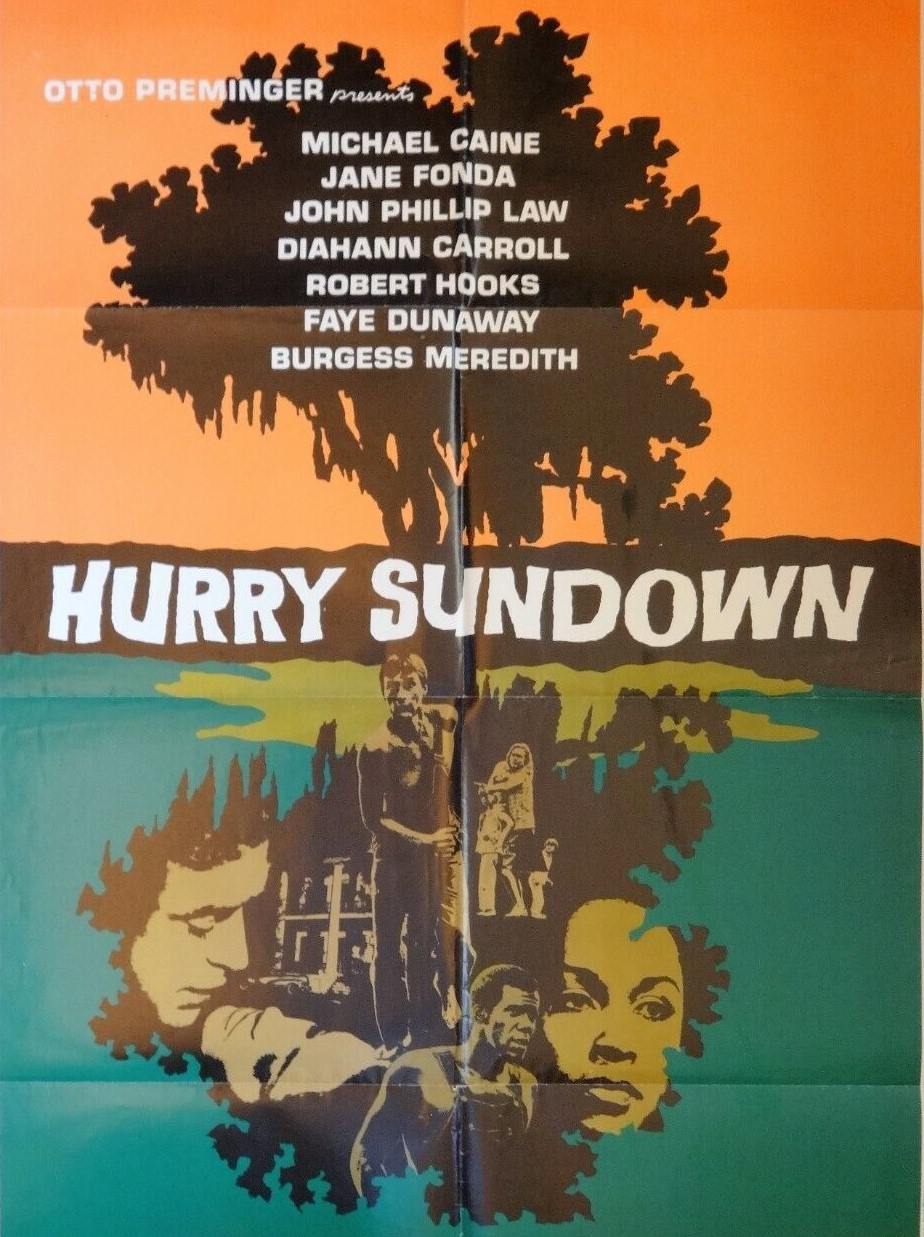
It was rare for Otto Preminger to make a miscalculation on the business aspects of moviemaking. But when in 1964, in the middle of shooting In Harm’s Way (1965), he purchased for $100,000, pre-publication, the rights to K.D. Gilden’s epic novel (1046 pages) he anticipated filming a bestseller of Gone With the Wind proportions. Buoyed by the projection of book sales in the millions, he anticipated making the longest-ever commercial movie, running, in roadshow, for an unprecedented 270 minutes, with admission prices set at a record high.
That notion was scuppered when sales scarcely broached 300,000, the alternative, non-roadshow, was a slimmer picture that would come in at under 150 minutes. If you were going to make a picture set in the Deep South the obvious choice for screenwriter was Horton Foote, Oscar-winner for To Kill a Mockingbird.
The writer spent his months on the project, breaking down the unwieldy novel into manageable basic plot and structure. Although describing Preminger as “wonderful,” Foote’s vision clashed with the director’s and he was replaced by the less-experienced Thomas C. Ryan (The Pad and How To Use It, 1965).
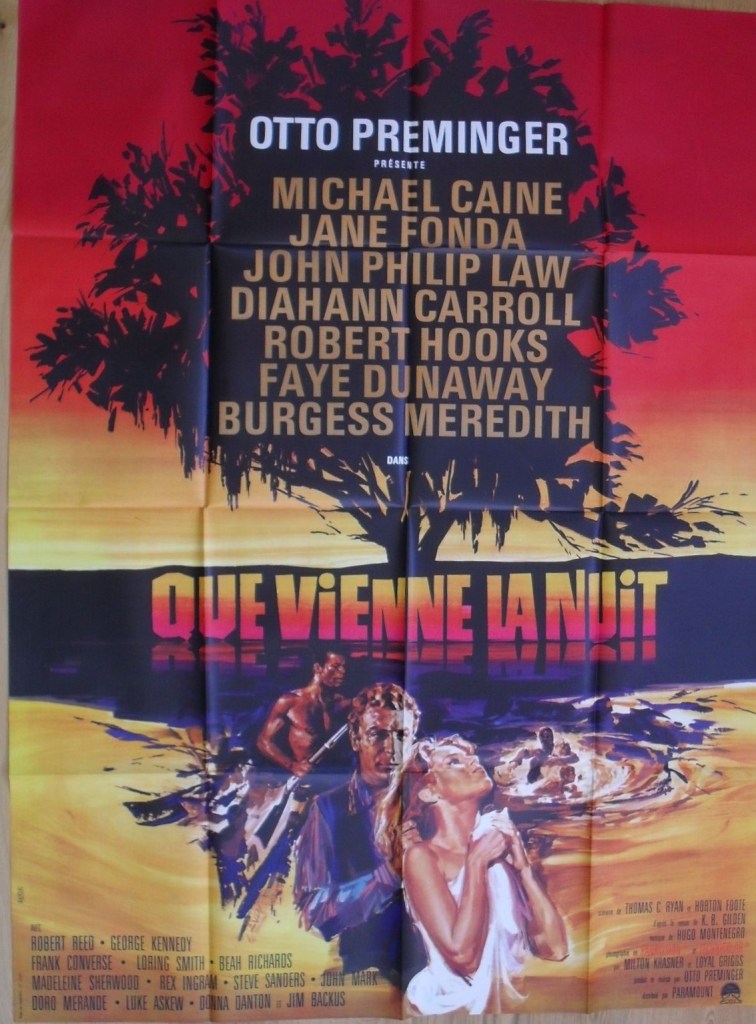
The husband-and-wife principals were initially cast as Michael Caine – enjoying a golden period at the U.S. box office as explained in a previous article When Caine Was King – and Candice Bergen (Soldier Blue, 1967). When the latter dropped out, Jane Fonda (The Chase, 1966) was her replacement. Faye Dunaway was signed to a six-picture deal after Preminger saw her on Broadway in Hogan’s Goat and gave her a screen test. He also signed up, to a three-picture deal, John Philip Law (The Russians Are Coming, The Russians Are Coming, 1966). After Sidney Poitier turned down the role of Reeve, he was replaced by Robert Hooks. The rest of the casting was relatively plain sailing, Burgess Meredith as a bigot, Diahann Carroll as a teacher.
Initially, Preminger planned to shoot in Georgia but, put off by union demands, switched to an area around Baton Rouge, Louisiana. As production designer Gene Callahan hailed from that town his local knowledge and connections helped overcome other obstacles. The house inhabited by Caine and Fonda was an actual Baton Rouge residence while the farms shown in the picture were on land rented from the state prison farm at St Gabriel. St Francisville provided the courthouse, hardware store, and various other locations.
Shooting began on June 6, 1966. For the first third of the shoot, Oscar-winning Loyal Griggs (In Harm’s Way) was director of photography, thereafter it was Milton Krasner (The Venetian Affair, 1966). The New York Times ran a story that Griggs had been fired, but was forced to print a rebuttal to the effect that he had asked to be taken off the picture following a back injury.
This being a Preminger production there was no shortage of tension, the director tending to weigh in on the less experienced or weaker actors. Michael Caine (Gambit, 1966) had accepted the role without reading the script because he was “so flattered and excited” to be asked. He learned to speak with a Southern accent. He received a tip from Vivien Leigh, who told him she recited the phrase “four door Ford” until it came out as “Foah Doah Fohd.”
Aware of Preminger’s reputation, Caine, at the outset, told Preminger that he was very shy and “if anybody ever shouted at me, I would burst into tears and go into my dressing room and not come out for the rest of the day.” Whether Preminger took this seriously, or understood the actor’s little joke, is unknown, but the director responded gently with, “I would never shout at Alfie.”
Others were not so lucky. John Philip Law received “merciless” treatment. This was in spite of the actor liking the director and believing the feeling was mutual, based on the notion that Law “was interested in European culture and other film-makers.” Nonetheless, the actor made few overtures. “He was intimidating enough that he wasn’t a guy I would seek out for a conversation.” Even so, Law appreciated his direction, often minor technical tips like not moving so fast or not to bend down.
In one scene Preminger turned on Law, “tearing him apart and the words were stinging.” Not content with that, he brought wrath to bear on the hapless hairdresser. When Dunaway raced to his defence, “Otto turned on me like a mad dog…I didn’t say anything, I just watched him…it was the only time I’ve really looked into the face at somebody’s who’s just gone into that sort of complete state of rage…I just froze.”
Her kissing scene with Law went to 16 takes, the director only getting the passion he required by literally banging their faces together, resulting in the actress receiving a fat lip. “She just went berserk,” said Law, “I was livid too (but) just gritting my teeth because if you added fuel to the fire he’d just blow.”
Enraged, Dunaway complained that she never wanted to work with him if he was going to behave like this, he muttered that was all right with him, words that she clung onto and sued as the basis for a court suit to end her contract.
But the numerous takes demanded were not confined to Dunaway. The kissing scene between Carroll and Hooks took longer – 20 takes. A scene in the judge’s house required 23 takes, and the scene in the diner a further six. (Though sometimes, the faulty takes were the result of actors not giving the correct line reading rather than Preminger’s imperiousness.)
But there was an overt tension that could not dismissed as the result of a director inclined to bullying. The racism the crew experienced was not an undercurrent. “You can cut the hostility here with a knife,” noted Diahann Carroll. “Down here the terror has killed my taste for going anywhere.” Robert Hooks observed, “You can feel the eyes watching you behind lace curtains…like they could cut your heart out.
Matters were not helped by the cast, ignoring the traditional perspective, jumping into the swimming pool at the motel. That an African American had deigned to join in resulted, according to Jane Fonda, in “reverberations all the way to New Orleans.” Preminger rented out the entire motel to minimize upsetting the locals. Even so, a bomb exploded one night in the pool and trailers were shot at.
Other incidents brought out the notorious Preminger temper. When the soundman switched off the air conditioning during a scene shot in a real hospital the sprinklers drenched the entire cast. Recalled Caine, “I have near seen anyone so near apoplexy. His eyes bulged out of his head.”
For Faye Dunaway, the role of a dirt farmer’s wife waiting for her husband to return from war, resonating too strongly. Her mother had done exactly the same. Dunaway felt “caught in this time warp from my past.”
The last day of shooting was August 13. The critics, almost in revenge for Preminger’s treatment of his actors, were venomous and he received some of the worst notices of his career.
SOURCES: Chris Fujiwara, The World and Its Double, The Life and Work of Otto Preminger (Faber and Faber, 2008), p342-349; Foster Hirsch, Otto, the Man Who Would Be King (Alfred A Knopf, 2007) p410-424; , Michael Caine, What’s It All About? (Arrow Books, 2010), p269-280; Faye Dunaway with Betsy Sharkey, Looking for Gatsby, My Life (Simon and Schuster, 1995) p28, 109, 113-114; Thomas Kiernan, Jane (GP Putnam and Sons, 1973) p200; “Preminger buys Sundown novel,” Film Daily, November 18, 1964, p3; “Conversations with Horton Foote,” On Writing 15, May 2002, p3.
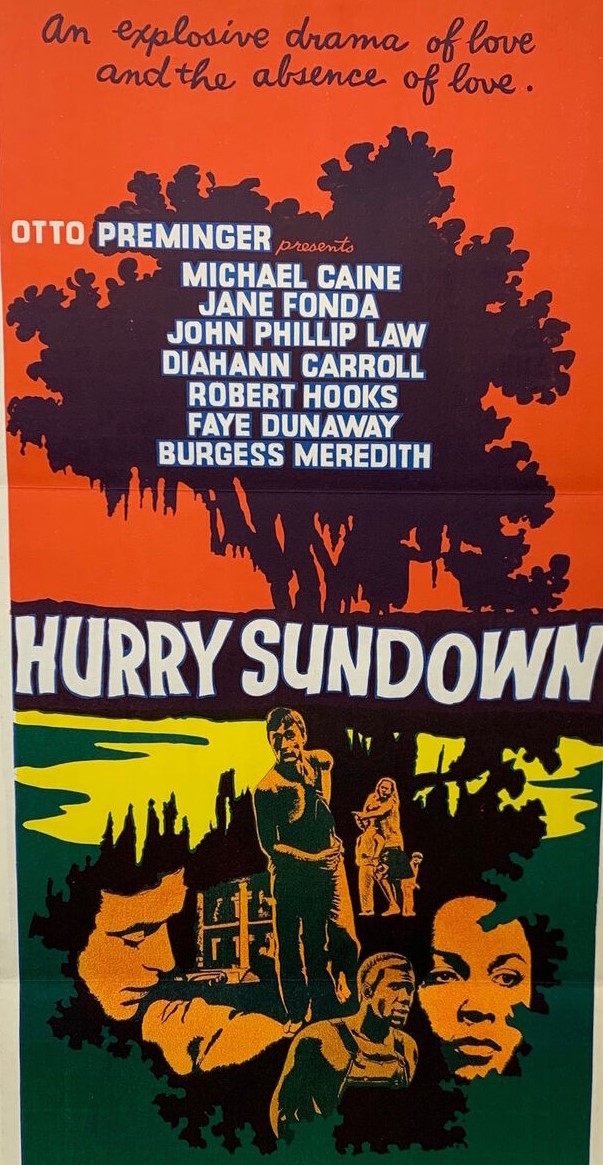
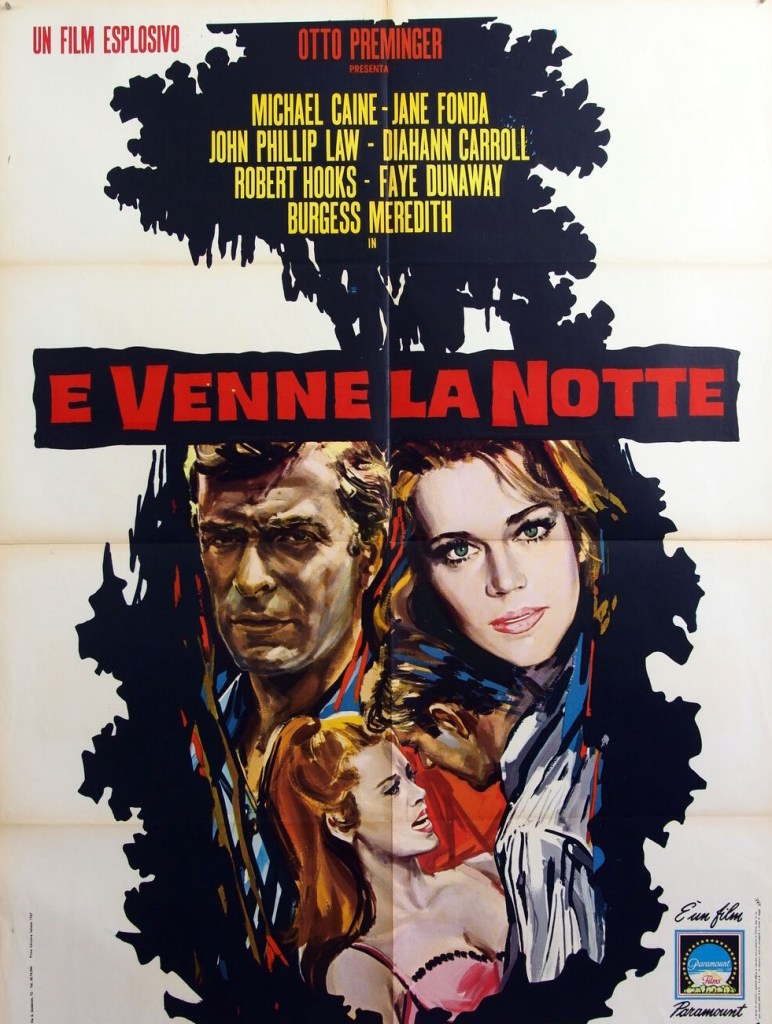
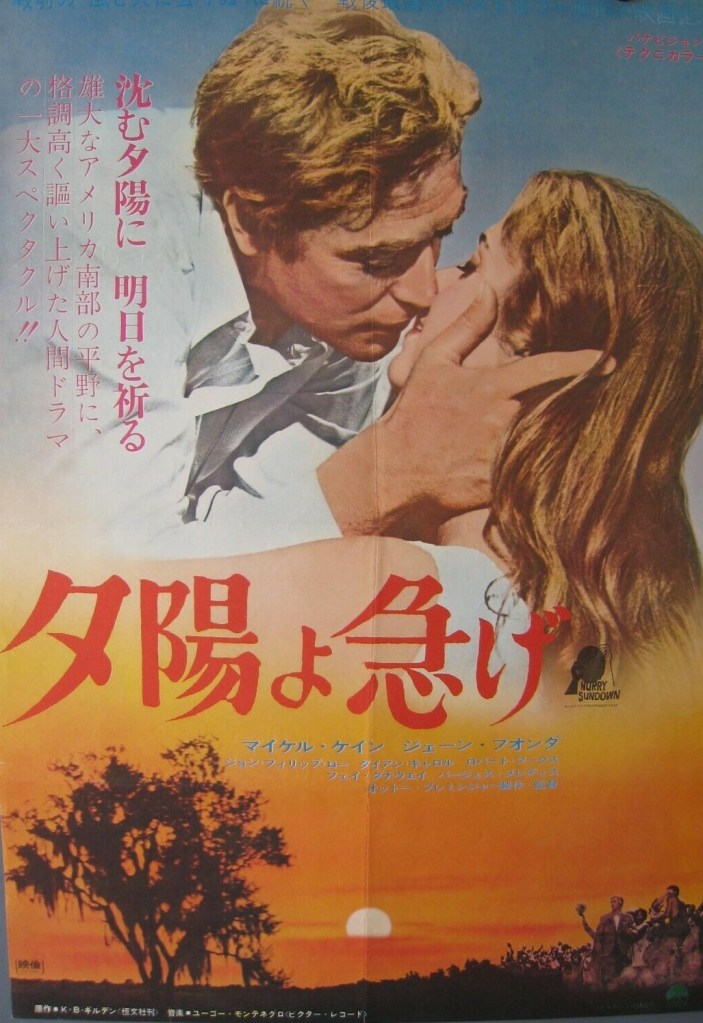
Otto Preminger’s drama was the first of a trio of heavyweight films in 1967 – the others being In the Heat of the Night and Guess Who’s Coming to Dinner – that took African American issues seriously. In post-war Georgia land-grabbing by ambitious Henry Warren (Michael Caine) pits him against World War Two vet Rod (John Philip Law) and African American farmer Reeve (Robert Hooks) who team up. Throw in a quintet of feisty women – Henry’s wife Julie Ann (Jane Fonda), Rod’s wife Lou (Faye Dunaway), schoolteacher Vivian (Diahann Carroll) – Reeve’s love interest – Henry’s lover Sukie (Donnie Banton) and Rod’s mother (Beah Richards) – and emotional confrontation comes thick and fast.
Preminger had spent most of the decade making films about big subjects – Exodus (1960), the politics behind the formation of Israel; Advise and Consent (1962), just politics; The Cardinal (1963), politics within the Roman Catholic Church; and In Harm’s Way (1965), Army politics and bluster around Pearl Harbor
Preminger is both economic and elegant. From opening dialogue to climactic court scene, the picture races along, and continuous use of tracking shots ensures the movie never gets bogged down. While there is no lynching, racist abuse, whether direct or indirect (through patronizing attitude) is never far from the surface. Corrupt Judge Purcell (Burgess Meredith) is by far the most vicious, his unrestrained language making you wince. But even those with more measured approaches have to play the game, Reeve gives a lift to Rod but has to let him off before they reach town in case anyone spots this, Rod forbidden, for example, to buy dynamite.
But the racists do not get it all their own way. Julie Ann stands up to the judge and her position in the community is so strong that others boycott the judge’s daughter’s wedding leading to the judge receiving a tongue-lashing from his wife. Weak Sheriff Coombs (George Kennedy) coming to arrest Rod is bamboozled by his female relatives while Vivian charms her way past the judge.
The women are uniformly strong. Julia Ann goes from seductive wife to distraught mother, but in between capable of defrauding Rod’s mother, her childhood nanny, out of her inheritance. Lou resents her husband’s return after in his absence taking on a full-time job while running the farm and now resisting the idea of selling up to Henry. Rod’s mother, beholden to white men all her life, now turns against them. The judge’s daughter (Donnie Banton) makes no bones about the fact that she is marrying her “dull” fiancé for his money. This is no spoiler because you will have guessed some similar outcome but at the end it is Vivian who takes the initiative in her relationship with Rod and marches into his house with her baggage, declaring she has come to stay.
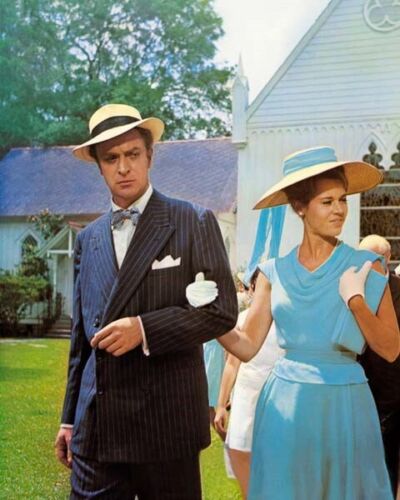
Caine and Fonda.
And although the ruthless Henry is the bad guy, he, too, is afforded insight, soothing himself by playing a musical instrument, a man with talent who had “distracted” himself by pursuit of money. And there is another touching moment when he takes in a runaway child. Acting-wise, Michael Caine (Gambit, 1966) is a revelation. Gone is the trademark drawl and the laid- back physical characteristics. Here he talks snappily – and no quibbles with his Southern accent either – and strides quickly. That we can believe he is brutal, gentle, remorseful and ruthless is testament to his performance.
Similarly, this is a massive step forward in Jane Fonda’s (Cat Ballou, 1965) career, away from Hollywood comedies and sexed-up French dramas, and her internal conflict springs from being forced to choose between husband and son, between her innate sexiness that oozes out in every intimate scene and maternal longing to comfort her disturbed child. Her usual shrill delivery is tempered somewhat by the deeper emotions she is forced to bear. While her attempt to defraud Rod’s mother comes from a desire to keep her husband, her eyes tell you she knows that is no excuse.
What’s perhaps most surprising of all is the tenderness. There are wonderful, gentle love scenes between Caine and Fonda and Law and Dunaway.
Children, too, also unusually, play a central role. Henry’s callousness is no better demonstrated than in his earlier treatment of his son. Reeve’s eldest son also resents his father’s return and, viewing Henry as a more suitable adult, betrays his father. The Judge is obliged to drop one of the worst aspects of his racism in order to appease his daughter.
The acting throughout is uniformly good. Dunaway’s debut won her a six-picture contract with Preminger. Singer Diahann Carroll’s role as a confident young woman led to a television series. Robert Hooks would also enjoy small-screen fame. The surprisingly effective John Philip Law would partner Fonda in sci-fi Barbarella (1968) and link up with Preminger again in the ill-fated Skidoo (1969). Horton Foote (To Kill a Mockingbird, 1962) and Thomas C. Ryan (The Heart Is A Lonely Hunter, 1968) wrote the screenplay based on the bestseller by K.B. Gilden.
Unfairly overlooked by Oscar votes, who preferred the other Poitier films, Hurry Sundown, despite the rawness of the language and the innate brutality meted out to African-Americans, has been vastly under-rated. It is worth another look because at its core is not just racism but big business which scarcely cares about the color of those it exploits. It is as much about the power shift in relationships and ambition.








 The Magnificent 60s