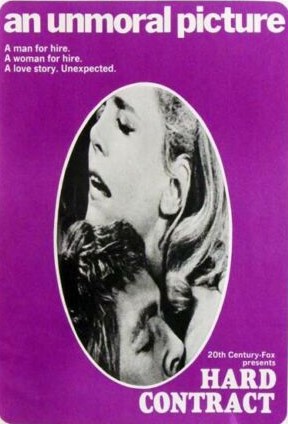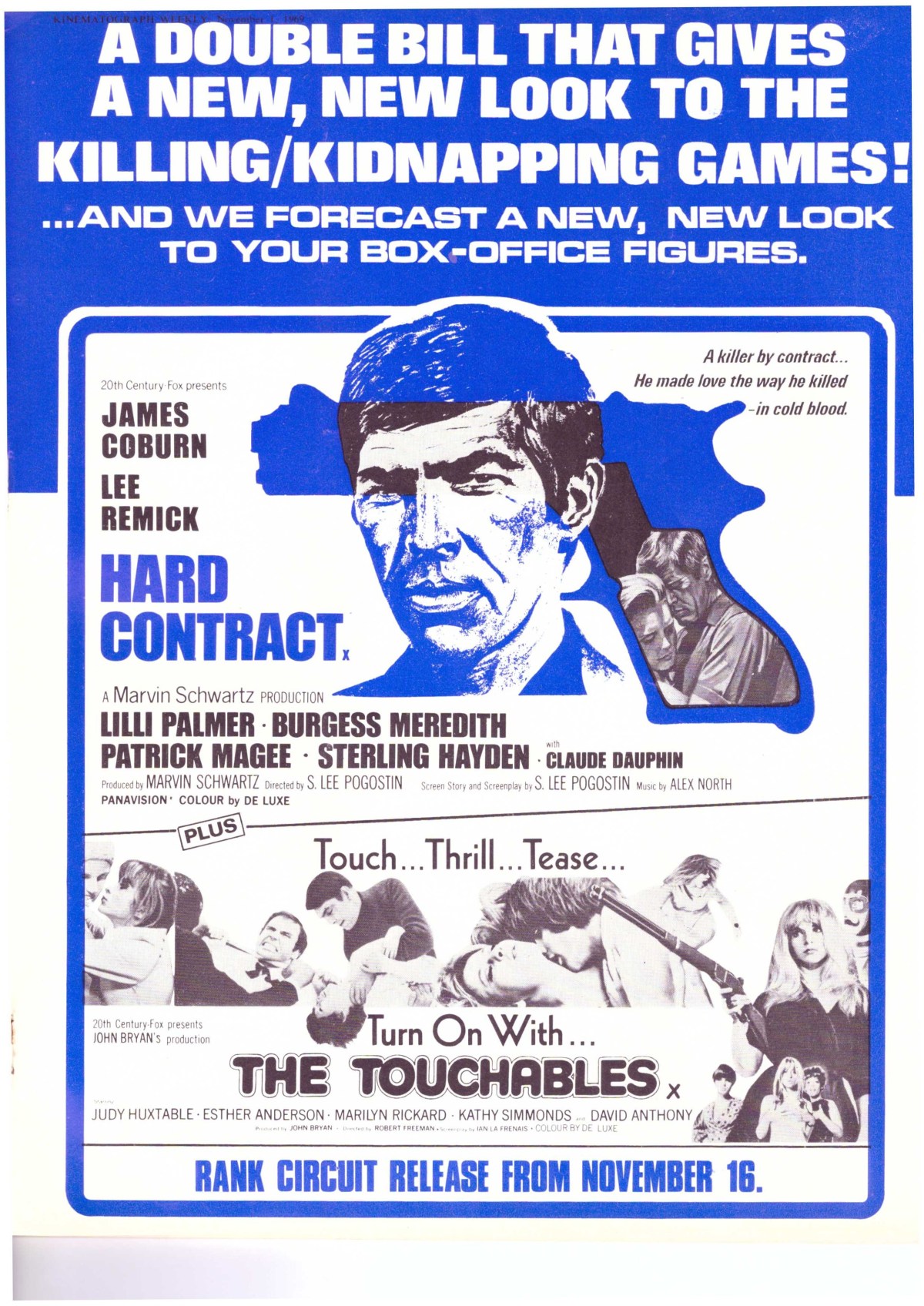
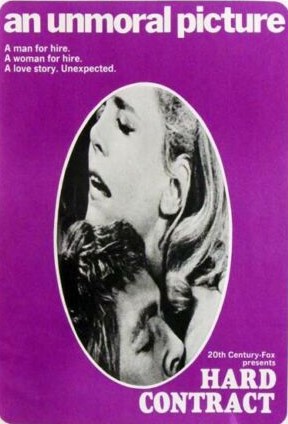
Hard Contract (1969) ***

A hitman movie that verges on the existential is always going to be intriguing. Stone cold killer John Cunningham (James Coburn) manages to keep the world at a distance until he runs into the vibrant Sheila (Lee Remick) in Spain. The film is a curiosity of an admittedly small genre dominated by such disparate offerings as The Killers (1946 and 1964), Yojimbo (1961), Le Samourai (1967) and Stiletto (1969) in that although Cunningham does bump people off you never see the violence. We’ve come to expect hitmen to be introspective, but there’s never been anyone as closed-off as Cunningham. No romance in his life, only hookers, no apparent depth, in fact we learn very little about him.

He only runs into Sheila because for a laugh she pretends to be a sex worker. In reality she’s a wealthy divorced socialite running with a fast set that include Adrianne (Lili Palmer) and ex-Nazi Alexi (Patrick Magee) whom she loves to taunt but whose contacts allow Cunningham to be effectively stalked. And as unsavoury that might be from today’s perspective, it sheds light both on her power and whimsicality.

There’s an unusual background. Amid the extensive jet-setting in Torremolinos, Madrid and Tangiers, there are reality counterpoints, reflecting the issues of the decade – violent demonstrations with police using water cannon to control the crowds, the American elections and discussions about God, world hunger, terrorism and population growth.
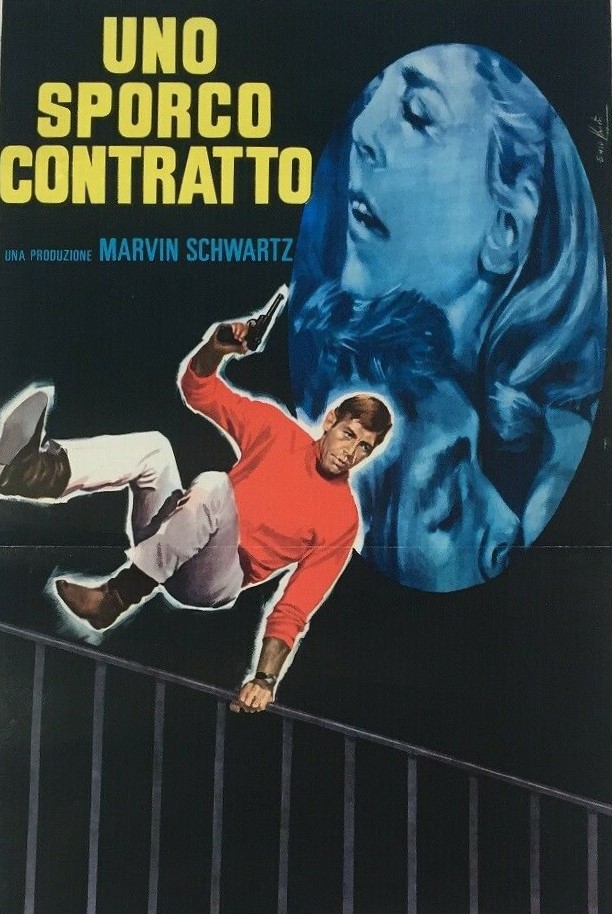
No doubt the script is wordy, but there’s hardly a word that doesn’t challenge convention. It’s steeped in amorality – a touchstone of the decade – good only occurs “when evil takes a rest” and the world is “immune to murder.” And you certainly get the impression that the rich can confront anything because, not having to live in the ordinary world, they can get away with it. Conversely, this is also one of those films where you wonder who did the wardrobe (Gladys de Segonzac, since you ask, who ran fashion house Schiaparelli in the 1950s) because not only does Sheila sport clothes that would have delighted Audrey Hepburn but Cunningham gets away with wearing a white jacket.

And if Korean vet Cunningham is enigmatic, the insomniac Sheila is cut from a similar cloth, and while a potential source for redemption is as likely to have sex with a casual pickup in a filthy alley. The story does not go quite the way you would expect – Cunningham’s growing dissatisfaction with his profession revealed when he can’t perform in a Brussels brothel. And his mindset allows him to consider mass murder as a solution to an emotional problem he cannot solve.

At core, of course, is whether once Cunningham’s emotional defenses are breached he can continue as a hitman, and whether Sheila can accept his profession. The stakes rise when it transpires that (like Stiletto made the same year) retirement is not an option.

And for all the seriousness on show, there are some imaginative moments of hilarity – Cunningham’s idea of a love song is “To the Shores of Tripoli” and Adrianne proves determinedly indiscreet. In keeping with the paranoia cycle that was about to explode, you never find out why people are being murdered, or even who they are, far less the group which his boss Ramsay (Burgess Meredith) is fronting.

Far removed from the Derek Flint persona that had turned him into a star, James Coburn delved deeper into the amoral territory he had previously explored in Waterhole 3 (1967). Lee Remick (The Detective, 1968) is sheer madcap delight even when espousing her odd takes on philosophy. Lili Palmer (The Counterfeit Traitor, 1962), who by this point in her career was usually the wife or girlfriend, creates a very original character. Veteran Sterling Hayden had only made one film (Dr Strangelove, 1964) during the decade and is excellent as a contemplative retired hitman. Patrick Magee (The Skull, 1965) gives another of his tight-lipped performances. Karen Black (Easy Rider, 1969) has a small role as does Sabine Sun (The Sicilian Clan, 1969).

This marked both the debut and the demise of the directorial career of S. Lee Pogostin, best known at this point as the screenwriter of Pressure Point (1962) and Synanon (1965). In terms of argument over issues it stands comparison with Pressure Point but without that film’s intensity.

I remember being baffled by the picture when it came out and I was a teenager because the action I believed I had been promised never materialized but otherwise I could remember little about it so now it appears as an interesting antidote to the mindless action pictures.  

When Time Ran Out (1980) / Earth’s Final Fury ***

The Director’s Cut, can you believe? Or less pompously, The Expanded Version. An extra 30 minutes added to the general release version that traveled the world to general disfavor. (The original 121-minute cut was edited to 109 minutes and this version clocks in at 144 minutes.) Was it a sense of disgruntlement – or sheer opportunism – that led to the Director’s Cut, so many of which scarcely improved on the original version. How many versions can an audience take of The Exorcist (1973) or Blade Runner (1982)? And even where extra length definitely added depth to Kingdom of Heaven (2005) that couldn’t overcome its major flaw, in a massive case of hubris, director Ridley Scott believing he could get away with casting Orlando Bloom instead of waiting till Russell Crowe became available.

When Time Ran Out killed off the disaster cycle and the Hollywood career of uber-producer Irwin Allen who had started that particular ball rolling with The Poseidon Adventure (1972), upped the ante with The Towering Inferno (1974) and dropped the ball with The Swarm (1978) and Beyond the Poseidon Adventure (1979).

This doesn’t feel so much like a disaster movie as a picture tying up all the knots, various relationships coming asunder, and having to accommodate a bunch of well-known supporting actors of dubious all-star-cast status before they suddenly spring into dramatic narrative view.   Audiences had never been particularly keen on volcanic pictures, after all what can the trapped characters do but dodge a sludge of soup and hope they don’t run straight into a tidal wave or, worse, have to negotiate a rickety/rope bridge. The chances of you having a tightrope walker coming to the rescue would generally be remote but that’s what we have here (step forward Burgess Meredith).

I had thought from the title and some guy in a hazmat suit wandering over a desolate area that this might be a prophetic eco-disaster, but excepting that there’s, for reasons best known to the scriptwriters, an oil well being drilled close to a volcano and that hotel investor Shelby (William Holden) has the bright idea of using the volcano as a marketing prop, there’s nothing much going on. The special effects are okay on the small screen, but even if they had been spectacular on the big screen their effect on the much smaller environs of DVD would in any case have been diminished.

So, basically, it’s reliant on working up sufficient audience interest in the relationships to make us care for the characters. We’re offered a pair of two-timing teams. First up, we’ve got Shelby’s secretary and marketing guru Kay (Jacqueline Bisset) who’s just turned down the offer to become his sixth “or seventh” wife, but who, presumably is enjoying, this being the 1980s and not the 1930s, some kind of sexual dalliance with him. When Kay meets up with oil driller old flame Hank (Paul Newman), they rekindle their romance, although with doom impending there’s not much time to take it forward beyond a picnic on the beach.

Next up, hotelier Bob (James Franciscus) is cheating on wife Nikki (Veronica Hamel), Shelby’s god-daughter, with staff member Iolani (Barbara Carerra) who is due to be married to childhood sweetheart hotel manager Brian (Edward Albert). To flesh out the tale, both Shelby and Bob have daddy issues, Tom (Ernest Borgnine) is a New York cop on the tail of swindler Francis (Red Buttons), and no doubt audiences will be desperate to find who wins a  cockfighting contest being held in a local saloon.

Modern transport proves no match for an eruption, so in quick succession we see a car and a helicopter tumbling down the mountainside. The tsunami wipes out a good chunk of the actors that didn’t make it into the all-star-cast bracket and everyone else takes to the hills, no doubt hoping they won’t encounter a rickety/rope bridge. Disaster turns enemies into pals, Tom and Francis, for example, though it’s only now that Nikki comes across her husband’s infidelity.

And this would be a disaster all round except that having hooked myself into watching this, courtesy of a freebie on YouTube, and nothing of real dramatic interest going on, I found myself, oddly enough, concentrating on the three principals and was treated, even more odd I guess, to fine examples of just what these stars do to earn their crust. Paul Newman (The Prize, 1963) in particular, with very little to react to, does very little but with incredible facial agility, to genuine effect, portraying emotion with infinitesimal gesture. Sure, he’s always had the shrug and the walk, both far more suggestive of inner turmoil than any other actor I can name, but here, with very little dialog coming to his aid, you can tell exactly what’s going on in those baby blues.

Jacqueline Bisset (The Cape Town Affair, 1969), too, dressed a good bit less suggestively than in the posters, essays a confident woman coming unstuck when confronted with a romantic error. The scenes between the pair are not meant to be scorching, so there’s none of the screen charisma audiences might feel they’ve been sold, but instead it’s a slow-burn, a couple trying to come to terms with each other, passing through disappointment and hopefully onto something better. And you can’t find anyone better to carry disillusion than William Holden (The Devil’s Brigade, 1968).  

Abject swansong for director James Goldstone (Winning, 1969) and Oscar-nominated screenwriter Carl Foreman (The Guns of Navarone, 1961) but Oscar-winning co-writer Stirling Silliphant (Marlowe, 1969) carried on longer. Who wrote the most effective scenes, Shelby’s engagement ploy and Hank’s initial rejection of Kay, is anybody’s guess but there is some quality writing here. Probably the strangest part of the whole debacle was that the source was a piece of non-fiction, The Day the World Ended by Gordon Thomas and Max Morgan Witts, about a 1902 eruption on Martinique that had nothing to do with oil wells or hotel construction.   

There’s always something wrong with a disaster picture if you suggest watching it for the acting, but happily, this is the case.

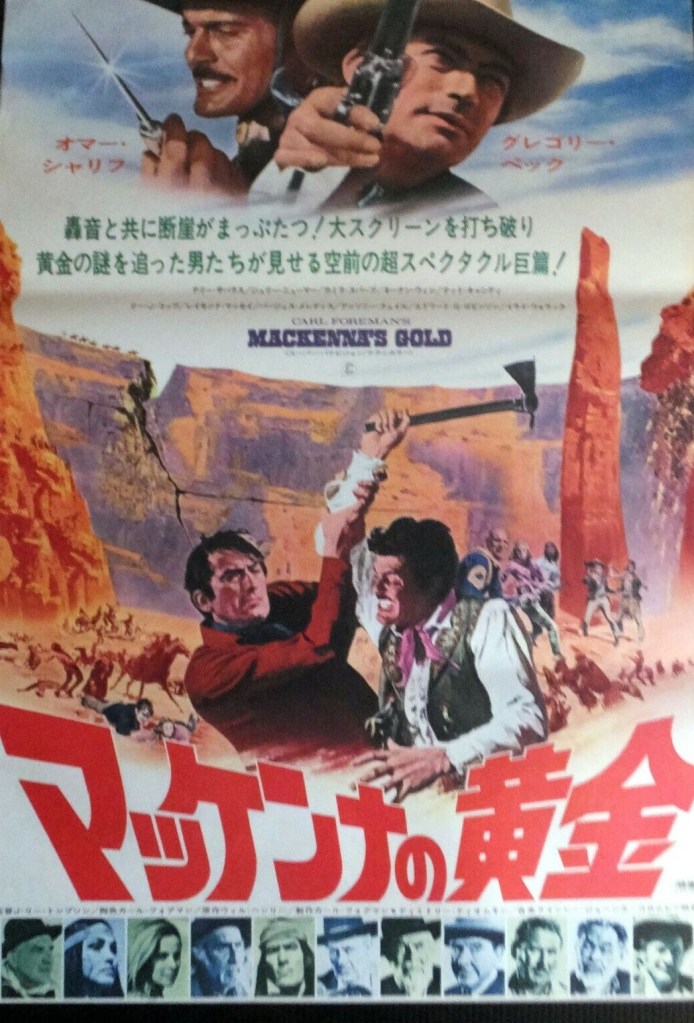
Mackenna’s Gold (1969) ***

The Treasure of the Sierra Madre (1948) set in the West – men driven mad by gold fever. Straightforward plot, however, complicated by an avalanche of characters. And  for a two-hour running time it seemed perverse to waste the first six minutes on scenery, narration – explaining the Apache legend of a fabulous hidden seam of gold – and theme song.

The real film begins with a shoot-out between Marshall Mackenna (Gregory Peck and an Indian. “You will wish you never saw this map,” says the Indian before he dies, but Mackenna burns the map. That doesn’t go down well with villain Colorado (Omar Sharif), whose gang has taken Inga (Camilla Sparv) hostage. Convinced the lawman has memorized the map, Colorado adds Mackenna to his hostage quotient.

At Colorado’s hideout Hesh-Ke (Julie Newmar) has a hostile reaction to Mackenna. Like Colorado, they have history. Mackenna and Inga bond when he fends off an Indian intent on raping her. As if this isn’t a pretty straightforward set-up, old foes reunited, potential romance brewing, a treasure hunt, further complications arise in the shape of a posse led by Ben Baker (Eli Wallach), not hunting renegades but also chasing gold. As if that wasn’t already a complication too far now we have a Cavalry troop, who confuse the posse with outlaws thus mostly eliminating a complication before it gets too complicated – the pursuing Apaches finish them off.  

And in a nearby pool, we get a deadly twist on the naked attraction, as Hesh-Ke, first trying to lure Mackenna then trying to drown the woman she views as her romantic rival. When the Cavalry reappear, they have turned rogue, led by Sgt Tibbs (Telly Savalas). So now we’ve got the narrative ironed out it’s three separate groups – outlaws, Cavalry and Apaches – searching for gold with various individual old scores to be settled. And, just in time, they’ve arrived at Shaking Rock, the tall pillar visualized in the poster, and a sunrise worth waiting for. It is a glorious scene.

After a close-up of the rising sun and the pillar, and the screen changing color, the shadow of the pillar creeps across the canyon floor and points to a crack in the canyon wall. The crack is a tunnel entrance and on the other side the sun is shining on a seam of bright gold. And that leaves only the various denouements to be played out. And some surprises – straightlaced Inga succumbing to gold fever, the supposedly barbarous Apaches revealed as good guys –  treating pillar (and gold) with reverence – and (would you believe it) an earthquake.

The earthquake might just have been too big a temptation given this was filmed in Cinerama. But it’s the least effective use of the process. A fairly standard western trope, crossing a dodgy bridge, is heightened in Cinerama but it’s still a cliché. Much better is the river crossing, the camera’s dizzying effect echoing the rollercoaster ride in This Is Cinerama and the rapids and runaway train of How the West Was Won (1962), audiences pitched headlong into camera point-of-view, racing water, oncoming rapids, thundering waterfall. The final section is triggered by the Cinerama camera racing for two minutes down the  twisting track leading to the gold. So, in Cinerama terms, the audience got its money’s worth.

And there should have been enough conflict to keep the narrative on track – Mackenna vs. Colorado, Hesh-Ke vs. Inga, Inga vs Colorado, Calvary vs. outlaws vs. Apaches, plus various fist, gun, knife and belt fights. The individual conflicts, Inga’s genuine fear over her fate, the romantic triangle and especially ruthless Colorado revealed (ditto Butch Cassidy) as a dreamer, imagining life in faraway lands (swap Butch’s Bolivia and Australia for Colorado’s Paris) were more than enough to be going on with without being drowned out by a simplistic message about greed. This is nothing more – or nothing worse – than a decent western wrapped up in the bloated shadow of a roadshow.

Gregory Peck (Arabesque, 1966) and Omar Sharif (Mayerling, 1969) are both pretty good in roles that play against type, both female roles are well-written and well played by Camilla Sparv (Downhill Racer, 1969) and Julie Newmar (The Maltese Bippy, 1969) but the film is overloaded with way too many cameos. As he had proven in The Guns of Navarone (1961) J. Lee Thompson was excellent at handling large casts especially in scenes featuring a host of characters and his visual and aural skills are superb but not so good at putting writer-producer Carl Foreman in his place.

Take away the Cinerama effects and the roadshow elements, and trim another 20 minutes off the picture, and you would have had a tight character-driven picture.

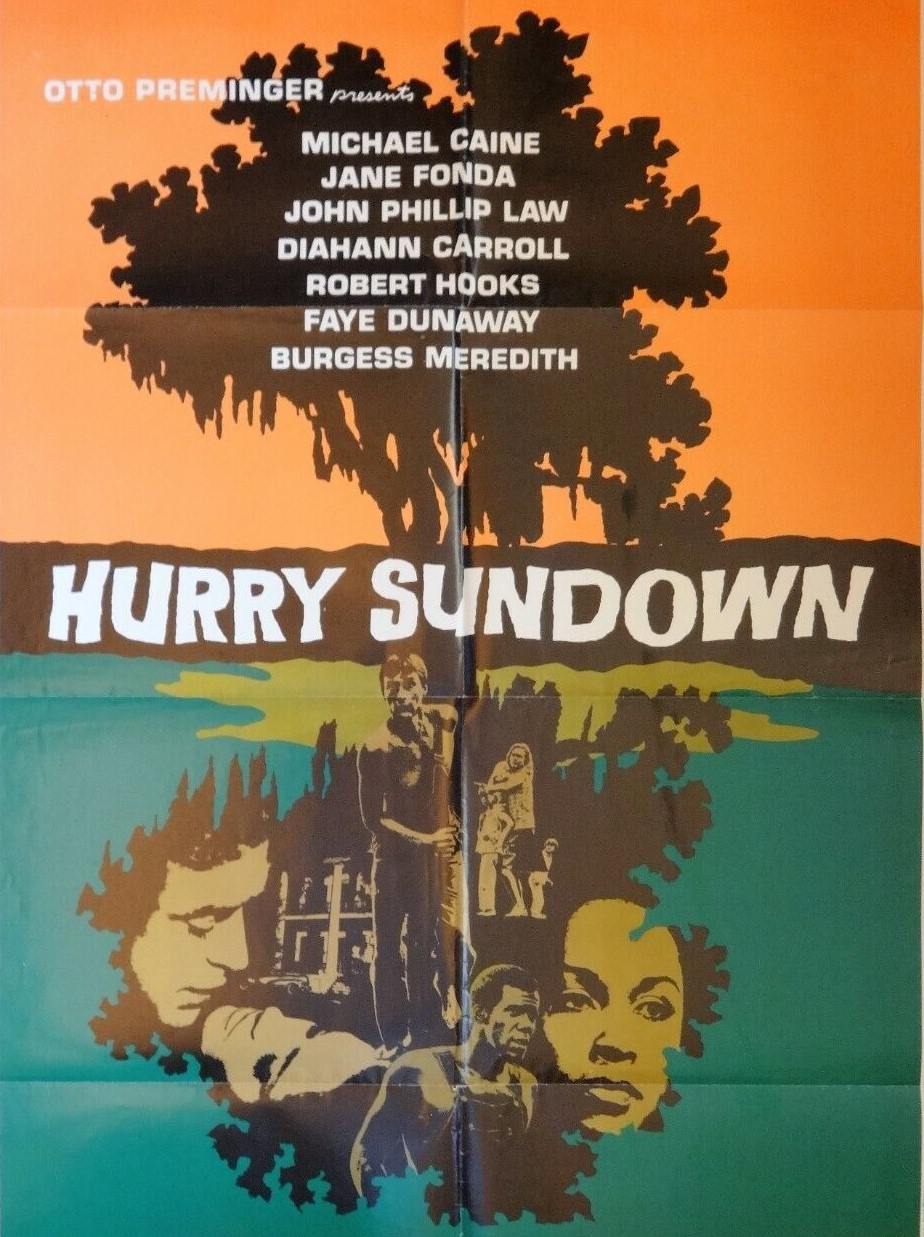
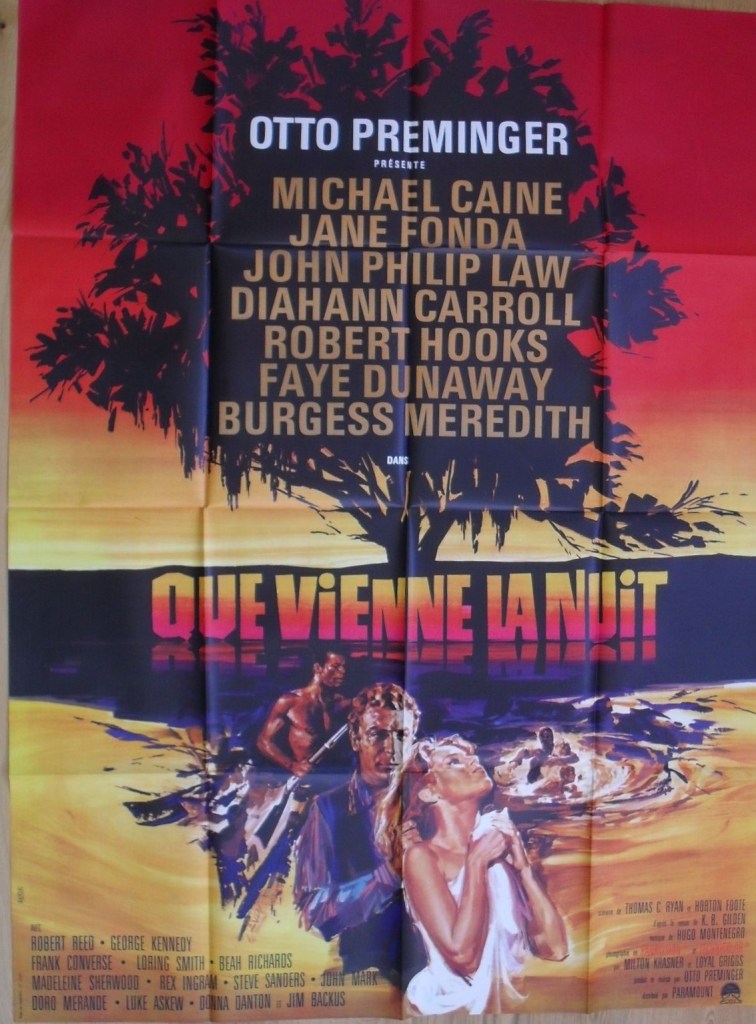
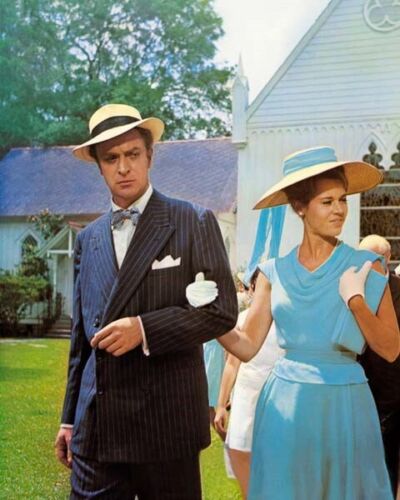
Hurry Sundown (1967) *****

Otto Preminger’s drama was the first of a trio of heavyweight films in 1967 – the others being In the Heat of the Night and Guess Who’s Coming to Dinner – that took African American issues seriously. In post-war Georgia land-grabbing by ambitious Henry Warren (Michael Caine) pits him against World War Two vet Rod (John Philip Law) and African American farmer Reeve (Robert Hooks) who team up. Throw in a quintet of feisty women – Henry’s wife Julie Ann (Jane Fonda), Rod’s wife Lou (Faye Dunaway), schoolteacher Vivian (Diahann Carroll) – Reeve’s love interest – Henry’s lover Sukie (Donnie Banton) and Rod’s mother (Beah Richards) – and emotional confrontation comes thick and fast.

Preminger had spent most of the decade making films about big subjects – Exodus (1960), the politics behind the formation of Israel; Advise and Consent (1962), just politics; The Cardinal (1963), politics within the Roman Catholic Church; and In Harm’s Way (1965), Army politics and bluster around Pearl Harbor

Preminger is both economic and elegant. From opening dialogue to climactic court scene, the picture races along, and continuous use of tracking shots ensures the movie never gets bogged down. While there is no lynching, racist abuse, whether direct or indirect (through patronizing attitude) is never far from the surface. Corrupt Judge Purcell (Burgess Meredith) is by far the most vicious, his unrestrained language making you wince. But even those with more measured approaches have to play the game, Reeve gives a lift to Rod but has to let him off before they reach town in case anyone spots this, Rod forbidden, for example, to buy dynamite.

But the racists do not get it all their own way. Julie Ann stands up to the judge and her position in the community is so strong that others boycott the judge’s daughter’s wedding leading to the judge receiving a tongue-lashing from his wife. Weak Sheriff Coombs (George Kennedy) coming to arrest Rod is bamboozled by his female relatives while  Vivian charms her way past the judge.

The women are uniformly strong. Julia Ann goes from seductive wife to distraught mother, but in between capable of defrauding Rod’s mother, her childhood nanny, out of her inheritance. Lou resents her husband’s return after in his absence taking on a full-time job while running the farm and now resisting the idea of selling up to Henry. Rod’s mother, beholden to white men all her life, now turns against them. The judge’s daughter (Donnie Banton) makes no bones about the fact that she is marrying her “dull” fiancé for his money. This is no spoiler because you will have guessed some similar outcome but at the end it is Vivian who takes the initiative in her relationship with Rod and  marches into his house with her baggage, declaring she has come to stay.

Caine and Fonda.

And although the ruthless Henry is the bad guy, he, too, is afforded insight, soothing himself by playing a musical instrument, a man with talent who had “distracted” himself by pursuit of money. And there is another touching moment when he takes in a runaway child. Acting-wise, Michael Caine (Gambit, 1966) is a revelation. Gone is the trademark drawl and the laid- back physical characteristics. Here he talks snappily – and no quibbles with his Southern accent either – and strides quickly. That we can believe he is brutal, gentle, remorseful and ruthless is testament to his performance.

Similarly, this is a massive step forward in Jane Fonda’s (Cat Ballou, 1965) career, away from Hollywood comedies and sexed-up French dramas, and her internal conflict springs from being forced to choose between husband and son, between her innate sexiness that oozes out in every intimate scene and maternal longing to comfort her disturbed child. Her usual shrill delivery is tempered somewhat by the deeper emotions she is forced to bear. While her attempt to defraud Rod’s mother comes from a desire to keep her husband, her eyes tell you she knows that is no excuse.

What’s perhaps most surprising of all is the tenderness. There are wonderful, gentle love scenes between Caine and Fonda and Law and Dunaway.

Children, too, also unusually, play a central role. Henry’s callousness is no better demonstrated than in his earlier treatment of his son. Reeve’s eldest son also resents his father’s return and, viewing Henry as a more suitable adult, betrays his father. The Judge is obliged to drop one of the worst aspects of his racism in order to appease his daughter.  

The acting throughout is uniformly good. Dunaway’s debut won her a six-picture contract with Preminger. Singer Diahann Carroll’s role as a confident young woman led to a television series. Robert Hooks would also enjoy small-screen fame. The surprisingly effective John Philip Law would partner Fonda in sci-fi Barbarella (1968) and link up with Preminger again in the ill-fated Skidoo (1969). Horton Foote (To Kill a Mockingbird, 1962) and Thomas C. Ryan (The Heart Is A Lonely Hunter, 1968) wrote the screenplay based on the bestseller by K.B. Gilden.

Unfairly overlooked by Oscar votes, who preferred the other Poitier films, Hurry Sundown, despite the rawness of the language and the innate brutality meted out to African-Americans, has been vastly under-rated. It is worth another look because at its core is not just racism but big business which scarcely cares about the color of those it exploits. It is as much about the power shift in relationships and ambition.  

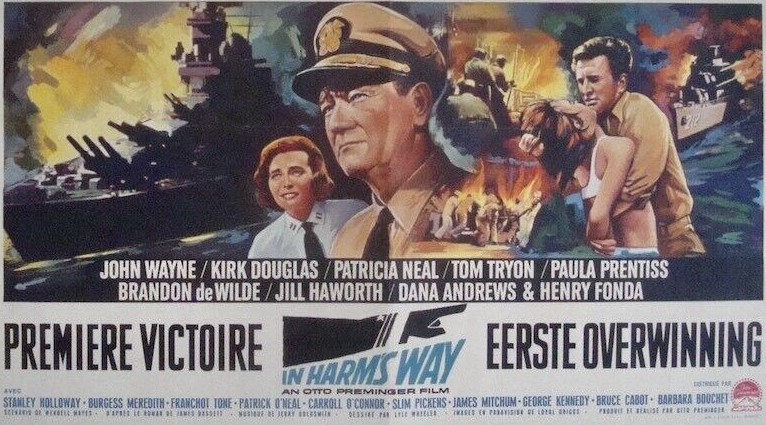
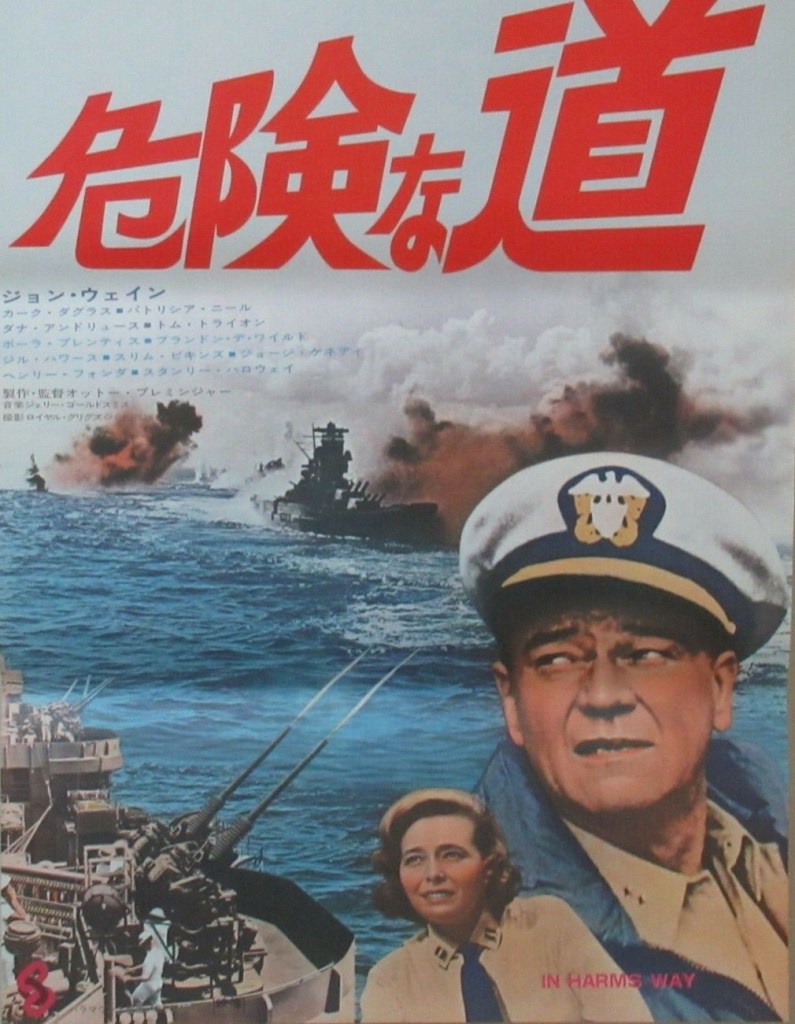
In Harm’s Way (1965) *****

Preminger at a peak, the more I watch this picture, not just the more impressed I become but the more I want to watch it again – three times, as it happens, for this review. A tale of heroism populated by morally wounded heroes, the undertone of critique for the Naval establishment dealt with in brilliant narrative fashion, terrific pacing, one of John Wayne’s very best performances, Kirk Douglas not far behind, great action scenes, and one of the few movies to fulfil this director’s original intent.

You can, of course, argue that it’s the height of political PR. Just as the Americans managed with The Alamo and the British with Dunkirk, the aim was to turn defeat into victory, so this moves beyond the humiliation of Pearl Harbor to the victories beyond. But in some sense Pearl Harbor is just the prologue to a stiffer examination of men at war, rather than sailors taken to task over the complacency that left them so open to cataclysmic attack.

And while there’s a number of sub-plots, these are more expertly handled than I can recall in many another lengthy big-budget picture, no endless cutting between major and minor characters, but the minor characters only entering the frame when they have a dramatic part to play.

Captain “Rock” Rockwell (John Wayne) falls foul of his superiors for basically being in command of a ship sunk by a torpedo. On a technical point, he’s stripped of command, and reduced to a desk job, a casualty of the peace-time hierarchy determined to find someone to blame, only returning to active duty – and promoted to Admiral – when more war-oriented figures are put in charge.

The desk job gives him time to romance feisty nurse Lt. Maggie Haines (Patricia Haines) who has the cojones to take charge of the budding relationship. She happens to share an apartment with another nurse, the much younger Ensign Annalee Dorne (Jill Dorne) who is dating entitled Ensign Jeremiah Torrey (Brandon de Wilde), Rock’s estranged son.

Jeremiah works for slimy glory-hunter Commander Neal Owynn (Patrick O’Neal), a former U.S. Congressman using his political skills to worm his way into the office of by-the-book Vice Admiral Brodick (Dana Andrews). Rock shares his apartment with Commander Egan Powell (Burgess Meredith), a thrice-married playboy, high up in Navy intelligence.

Rock’s second-in-command is Commander – junior to a captain in case you don’t understand the U.S. Navy ranking system – Paul Eddington, a hothead whose mourning for dead wife Liz (Barbara Bouchet) results in him also being reduced to a desk job and exiled to the Pacific. On the fringes of the story are Lt. Commander “Mac” MacConnell (Tom Tryon) and pregnant wife Beverley (Paula Prentiss).

How all these characters enmesh is the consequence of a quite brilliant screenplay by Wendell Hayes (Advise and Consent, 1962). Rockwell and Eddington both seek redemption, the former to prove his Naval worth and regain the affection of his son, the latter to absolve himself for his terrible actions.

You can always tell the hero in war films because they are so rarely a physical casualty of war, all the others are killed and wounded but hardly ever the hero, so it takes something for the Hollywood Hero of the Century to play a character who is wounded not once but twice, and for the early part of the picture walks around with his arm in his sling (not quite an echo of the way he holds his arm in The Searchers, but evoking the same internal conflict).

The only supposed out-and-out hero is MacConnell, but his inaction at the beginning of the movie fails to prevent the death of Eddington’s wife. And his heroism largely takes place off-screen and it’s worth noting that Rock doesn’t raise a rifle or pistol in anger (or even get into a punch-up as was the actor’s wont in other films). Being in charge he’s removed from the core action even if suffering the consequences of battle. In a marvellous touch of irony, Rockwell is the most passive hero to hit the screen. It’s an incredibly bold and self-confident director who would even think of luring audiences into an action picture starring the Hero of the Century and then denying him a single moment of screen glory.

Much has been written about the cinematic arc John Ford took in the beginning and ending of The Searchers, the symbolic opening and closing of doors, but since Preminger is long out of critical favor nobody’s has bothered to notice how much of this film concerns cinematic echo.

To take the most obvious example, the first witnesses of the airborne Japanese attack on Pearl Harbor are illicit pair Liz Eddington and her paramour (Hugh O’Brian) and towards the end it’s her husband Paul, by this point guilty of horrendous behaviour, who leads the airborne fightback against the enemy.

A beach – where Liz and escort make love – is how the director initially pushes the audience towards sympathising with the drunken Eddington. A beach is where we later learn to despise him, as he brutally rapes Ensign Dorne. And it doesn’t take much to work out that his wife’s exuberant wildness explains Eddington’s initial attraction to her, not realising that psychologically it provides him with an excuse for his own darker wildness, initially restricted to self-destruction but when it truly emerges it’s to the detriment of an innocent.

And that’s before we get on to Rockwell as the messenger of death, delivering the bad news to wives, and then being on the receiving end after his son dies in battle. And finally, the political peace-time high-ups get their come-uppance in actual war.

It’s insulting – as some have suggested – that the performance of John Wayne (The Hellfighters, 1968) is the result of undiagnosed cancer when in fact this is a finely nuanced role of a high-ranking figure living out in his life in regret, at times quite shamefaced about abandoning his son at a very early age. Preminger cracked down on Wayne’s habit of splitting his lines in two, so those typical pauses we have come to expect are in large part gone, and it helps the movie’s pacing. For most of the movie the character is saddled with consequence. That passivity that the director saw as essential to the role is virtually present all the time.

Preminger wrings a different performance, too, from Kirk Douglas (A Lovely Way to Die, 1968), equally laden with regret, but not enough to prevent him lashing out and the actor is accorded two quite stunning scenes, the first as he broods in silence over his wife, but for the second, prior to raping Ensign Dorne, the stone-cold look on his face suggests a serial killer held at bay for too long and now about to explode.

Burgess Meredith (Hurry Sundown, 1967) is another brought to directorial heel, his more common scene-stealing and vowel-stretching also eliminated, but in exchange given a larger-than-life character on which to expend screen energy. The entire cast is good-to-excellent and it’s jam-packed: Patricia Neal (Hud, 1962), Tom Tryon (The Cardinal, 1964), Paula Prentiss (Man’s Favorite Sport, 1963), Brandon De Wilde (Shane, 1953), Jill Haworth (Exodus, 1960), Dana Andrews (The Satan Bug, 1965), Franchot Tone (Advise and Consent, 1962), Patrick O’Neal (Stiletto, 1969), George Kennedy (Cool Hand Luke, 1967), Henry Fonda (Battle of the Bulge, 1965), Barbara Bouchet (Danger Route, 1967) and Stanley Holloway (My Fair Lady, 1964) Many of the supporting cast were also playing against type – Prentiss as the young wife falling to pieces, Andrews and O’Neal as slippery political types, Holloway  a guerrilla, and perhaps most interesting off Neal, not the typical woman left behind when the man goes off to war but, in her role as nurse, entering harm’s way herself.

And despite criticism of the miniatures used in sea scenes while that might have been obvious on the big screen you don’t notice it on the small screen. The action  scenes are very well-done for the time, and quite unusual in that by and large it’s the Americans who appear shell-shocked not the enemy.

Cramming this much narrative into the overall arch of Pearl Harbor and retaliation against the Japanese, while bringing so many different characters to the fore with clear dramatic purpose is an amazing achievement, screenwriter Wendell Mayes (Advise and Consent) doing the heavy lifting in this department.

But Preminger the director is very much to the fore, in his composition and use of the camera for long tracking shots (a particular favorite of mine) such as at the beginning. A riveting watch full of splendid acting. Shooting it in black-and-white might have at one time appeared to date the picture but instead it has rendered it ageless. Five stars without a doubt.

Hard Contract (1969) ***

A hitman movie that verges on the existential is always going to be intriguing. Stone cold killer John Cunningham (James Coburn) manages to keep the world at a distance until he runs into the vibrant Sheila (Lee Remick) in Spain. The film is a curiosity of an admittedly small genre dominated by such disparate offerings as The Killers (1946 and 1964), Yojimbo (1961), Le Samourai (1967) and Stiletto (1969). Here, although Cunningham does bump people off, you never see the violence. We’ve come to expect hitmen to be introspective, but there’s never been anyone as closed-off as Cunningham. No romance in his life, only hookers, no apparent depth, in fact we learn very little about him.

He only runs into Sheila because for a laugh she pretends to be a sex worker. In reality she’s a wealthy divorced socialite running with a fast set that include Adrianne (Lili Palmer) and ex-Nazi Alexi (Patrick Magee) whom she loves to taunt but whose contacts allow Cunningham to be effectively stalked. And as unsavory that might be from today’s perspective, it sheds light both on her power and whimsicality.

There’s an unusual background. Amid the extensive jet-setting in Torremolinos, Madrid and Tangiers, there are reality counterpoints, reflecting the issues of the decade – violent demonstrations with police using water cannon to control the crowds, the American elections and discussions about God, world hunger, the Holocaust, terrorism and population growth.

No doubt the script is wordy, but there’s hardly a word that doesn’t challenge convention. It’s steeped in amorality – a touchstone of the decade – good only occurs “when evil takes a rest” and the world is “immune to murder.” And you certainly get the impression that the rich can confront anything because, not having to live in the ordinary world, they can get away with it. Conversely, this is also one of those films where you wonder who did the wardrobe (Gladys de Segonzac, since you ask, who ran fashion house Schiaparelli in the 1950s) because not only does Sheila sport clothes that would have delighted Audrey Hepburn but Cunningham gets away with wearing a white jacket.

And if Korean vet Cunningham is enigmatic, the insomniac Sheila is cut from a similar cloth, and while a potential source for redemption is as likely to have sex with a casual pickup in a filthy alley. The story does not go quite the way you would expect – Cunningham’s growing dissatisfaction with his profession revealed when he can’t perform in a Brussels brothel. And his mindset allows him to consider mass murder as a solution to an emotional problem he cannot solve.

At core, of course, is whether once Cunningham’s emotional defenses are breached he can continue as a hitman, and  whether Sheila can accept his profession. The stakes rise when it transpires that (like Stiletto made the same year) retirement is not an option.

And for all the seriousness on show, there are some imaginative moments of hilarity – Cunningham’s idea of a love song is “To the Shores of Tripoli” and Adrianne proves determinedly indiscreet. In keeping with the paranoia cycle that was about to explode, you never find out why people are being murdered, or even who they are, far less the group which his boss Ramsay (Burgess Meredith) is fronting.

Far removed from the Derek Flint persona that had turned him into a star, James Coburn delved deeper into the amoral territory he had previously explored in Waterhole 3 (1967). Lee Remick (The Detective, 1968) is sheer madcap delight even when espousing her odd takes on philosophy. Lili Palmer (The Counterfeit Traitor, 1962), who by this point in her career was usually the wife or girlfriend, creates a very original character. Veteran Sterling Hayden had only made one film (Dr Strangelove, 1962) in a decade and is excellent as a contemplative retired hitman. Patrick Magee (The Skull) gives another of his tight-lipped performances. Karen Black (Easy Rider, 1969) has a small role as does Sabine Sun (The Sicilian Clan, 1969).

This marked both the debut and the demise of the directorial career of S. Lee Pogostin, best known at this point as the screenwriter of Pressure Point (1962) and Synanon (1965). In terms of argument over issues it stands comparison with Pressure Point but without that film’s intensity.

I remember being baffled by the picture when it came out and I was a teenager because the action I believed I had been promised never materialized but otherwise I could remember little about it so now it appears as an interesting antidote to the mindless action pictures.  

This is another freebie available on YouTube.

https://www.youtube.com/results?search_query=hard+contract+1969

Advise and Consent (1962) ****

Excoriating engrossing political drama in which the unscrupulous take the moral high ground and the principled are destroyed. In other words, the reality of power – gaining it and keeping it and all the skullduggery in between. And it has resonance in today’s cancel culture for it is minor indiscretions from the past that bring down the most upstanding of the species.  

Theoretically, director Otto Preminger (Hurry Sundown, 1967) broke one major taboo in touching on the subject of same-sex relationships. But in reality he took an even bolder step from the Hollywood perspective of giving center stage in the main to older players. Many  had first come to the fore in the 1930s or earlier – Walter Pidgeon (Turn Back the Hours, 1928), Lew Ayres (All Quiet on the Western Front, 1930),  Charles Laughton (Oscar winner for The Private Life of Henry VIII, 1933), Franchot Tone (Oscar nominated for Mutiny on the Bounty, 1935), Henry Fonda (You Only Live Once, 1937). This was the kind of all-star cast you used to get in 1960s big-budget pictures filling out supporting roles. But in this ensemble drama, they all, at various times, hold the floor. And this approach lent the movie greater authenticity.  Even if few viewers today fail to recognize many, that, too, works in the movie’s favor, giving it an almost documentary feel.

Movies about politics are never heavy on plot, so if you’re looking for a thriller in the way of All the President’s Men (1973) go elsewhere. It has more in common with The Trial of the Chicago Seven (2020) with multiple viewpoints and opposing perspectives. What the best movies about politics have in abundance is repartee. Virtually every exchange is a verbal duel, the cut and thrust, the slashing attack, the parry, sometimes a knockout blow delivered through humor. Given politicians spend most of their lives making speeches, even the shortest of sentences, even the bon mots, have a polished ring. And that, frankly, is the joy of this picture, brilliantly written by Wendell Mayes (Anatomy of a Murder, 1959) from the Allen Drury bestseller. In some respects the plot is almost a MacGuffin, a way into this labyrinthine world, where characters duck and dive like a more elevated breed of gangster

A lesser director would have given in to the temptation of filming these duels in close-up.  Instead, Preminger’s direction is almost stately, keeping characters at bay.

A seriously ill President (Franchot Tone), distrusting his feeble Vice-President Harley Hudson (Lew Ayres), decides to fill the vacancy for Secretary of State with highly-principled Senator Robert Leffingwell (Henry Fonda). This not being the beginning of the President’s term, he can’t just do what he wants, his nomination must go before a committee and then face a vote in the Senate. The Senate Majority Leader Bob Munson (Walter Pidgeon) isn’t too happy with the idea, seeing Leffingwell as a dove, likely to appease the growing Soviet threat. Others on the committee, namely Senator Brigham Anderson (Don Murray) side with Munson and the committee hearing turns into a hostile interrogation. The fine upstanding Leffingwell parries well until Senator Seabright Cooley (Charles Laughton) introduces a witness Herbert Gelman (Burgess Meredith) who says Leffingwell belonged to a Communist cell, an accusation Leffingwell denies.

Twist number one: Leffingwell has lied on oath. He confesses this to a friend Hardiman Fletcher (Paul McGrath) who then stitches up the witness. The committee apologises to Leffingwell, which means he is a sure thing for the post, but Cooley smells a rat and starts his own investigation. Leffingwell tries to get out of the job, admitting his perjury, but – twist number two – the President refuses. Munson and Anderson are let in on the secret, the former willing to accommodate the President but the latter outraged and planning to thwart the nomination when it reaches the voting stage at the Senate. Anderson comes under pressure, phone calls to his wife about something from his past that occurred in Hawaii.

And so the stage is set. The pressure builds on Anderson. The President becomes more unwell, making the appointment of Leffingwell more crucial. Aware of Anderson’s intentions, Munson starts whipping up votes, with Cooley doing the same for the opposition. Machinations take over.  And for a movie that was initially light on plot, it ends with three stunning twists, and proving once and for all there is nothing quite so standard as the self-serving politician.

This was the first movie for several years for Henry Fonda (Broadway and television his refuge) and for Gene Tierney (Laura, 1945) – playing a society hostess – who was recovering from mental health problems and the last screen appearance of Charles Laughton. The acting is uniformly excellent and the direction confident and accomplished.  

A slow-burner for sure, but a fascinating insight into the less savory aspects of politics and the human collateral damage.  

Discover WordPress

A daily selection of the best content published on WordPress, collected for you by humans who love to read.

The Atavist Magazine

by Brian Hannan

WordPress.com News

The latest news on WordPress.com and the WordPress community.