Here We Go Round the Mulberry Bush (1968) **

Breaking the fourth wall has become a common conceit these days, especially in television, so you might be surprised to learn it was the key artistic element of this otherwise straightforward British coming of age drama.

Our teenage guide Jamie (Barry Evans), a delivery boy, spends most of his time lusting after any women he meets. Like a junior version of 10 (1979) women are rated according to their physical attributes. Most, of course, are well out of his league, especially as he lacks for what counts as the smooth patter which his cocky pal Spike (Christopher Timothy) has in abundance.
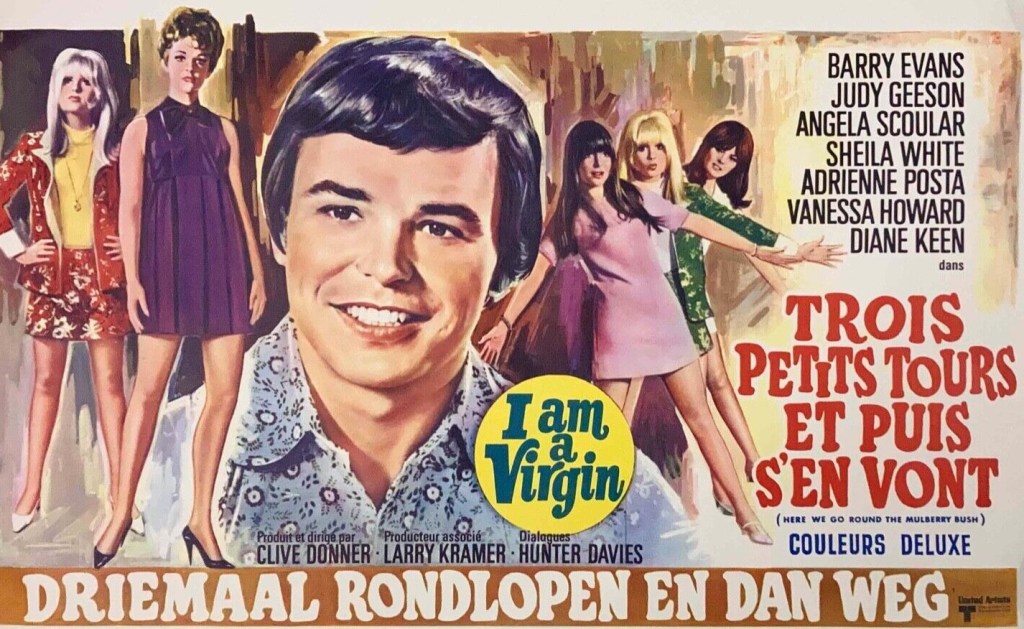
Essentially a series of episodes with the opposite sex as Jamie tries to lose his virginity. But mostly, it’s just Jamie yakking on about how he’s not lost his virginity and what’s up with all those women that they can’t see what a great catch he is. He’s so determined to have sex he will even go out with the dumbest of dumb blondes, Linda (Adrienne Posta).

Naturally, since reality is too cruel, he succumbs to fantasy with a number of scenarios that seem, inexplicably, torn from silent movies, and nothing approaching the imagination of Hieronymus Merkin. For no particular reason, he strikes lucky with the adventurous Mary (Judy Geeson), whose boyfriends usually run to sports cars, but that liaison is nearly interrupted by a wet dog and Jamie’s inexperience.

Apart from the lusting, there’s little else going on, a couple of women in a fish-and-chip shop complain they are fed up with chicken and beef, his younger brother shows more spark, and his home life is pitifully dull. You can’t really blame the movie for lacking the rebelliousness that was potent at the time, there’s no political awareness and no sign Jamie is going to grow up into one of the Angry Young Man so familiar at the beginning of the decade. It’s a quaint version of American Pie.(1999).

But it’s just boring. While Barry Evans (Alfred the Great, 1969) is personable enough he doesn’t have enough in the wit department to keep you hooked for the duration, most of the humor teetering on the side of inuendo..

Unable to recognise the inherent weakness of the script, and assuming that breaking artistic boundaries with the fourth wall is enough, director Clive Donner (Alfred the Great) spends most of his time trying to visually brush everything up, with little success.

That this was a big British hit at the time might have been more to do with the soundtrack – performed and written by Steve Winwood and Traffic – and the fleeting sight of Judy Geeson (Two into Three Won’t Go, 1969) in the buff. The British censor didn’t take too kindly to the actress revealing all, so in fact audiences were treated to very little, but for teenagers at the time very little was more than usually came their way unless willing to sit through a turgid arthouse picture.

About the only thing to commend it is Geeson’s class, she stands head and shoulders above everyone else in terms of screen charisma, and that there’s a roll call of rising British stars. As well as Christopher Timothy who would achieve fame on television in the original All Creatures Great and Small, the supporting cast includes Vanessa Howard (Corruption, 1968), Angela Scoular (On Her Majesty’s Secret Service, 1969), Diane Keen (The Sex Thief, 1973) and Adrienne Posta (Some Girls Do, 1969) and, to show them all how to do it, Denholm Elliot (Maroc 7, 1967) briefly pops up.

Clive Donner (Alfred the Great) directs. Hunter Davies, making his screen debut, wrote the screenplay based on his bestseller. Generally, any film that scores two stars does so out of incompetence. This is well-enough made but never seems to shift into gear.
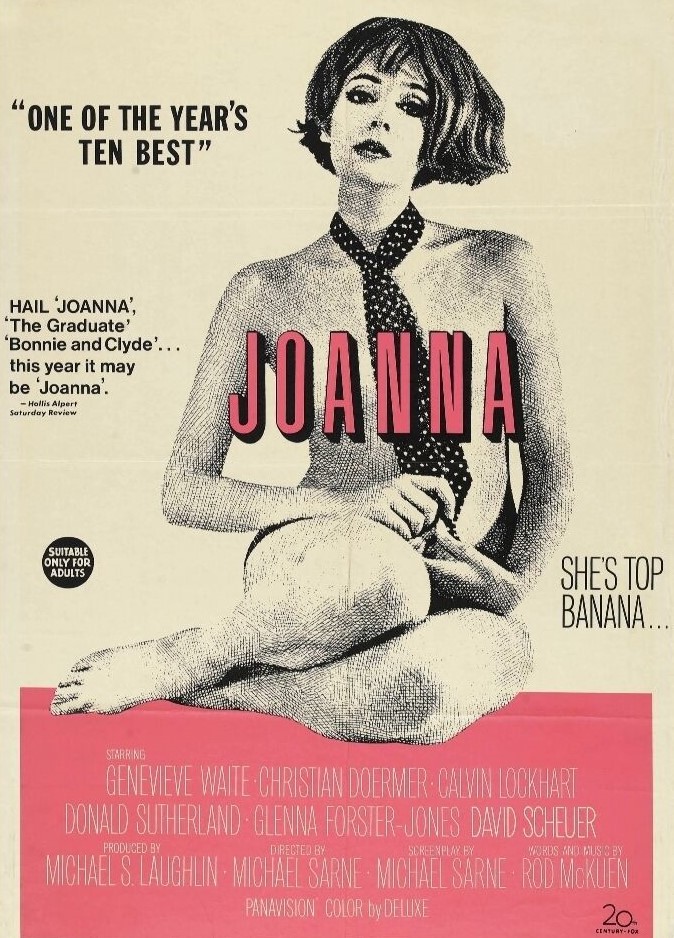
Joanna (1968) **

Mike Sarne (Myra Breckenridge, 1970) was one of those talents who ran away with himself, artistic notions indulged by the industry, until he was exposed as having little to say. Joanna is pretty empty of everything except style. And that wouldn’t be so bad if it was consistently stylish or showed a genuine flair for the visual image beyond a woman bathing in a lily pond or chasing an ambulance through a park.

And, of course, it’s never a good idea to park your inexperienced girlfriend upfront and center of your debut feature. Genevieve Waite, a model in the Twiggy fashion, had a thin, whiny baby voice, and lacked the skill to suggest any depth to the titular heroine.

The film stands up today as a shrine to misogyny, for the way in which, in the name of emancipation, women were exploited by men. Sexual freedom, bouncing along from one man to another, is the theme. “All women gained from emancipation is the privilege of being laid,” points out one (male) character. Freedom is expressed as lack of commitment. It’s kind of odd to hear young trendy men going on about commitment and expressing reservations about a flighty lifestyle, but it’s just as if the male authority figure had simply skipped a generation and was determined to keep women in their place.

Joanna, arriving from the countryside laden down with pots of home-made jam, flits through the Swinging London scene, exploring her artistic side through attending an art studio, occasionally working as a model, but more likely living off men, who are as likely to be married, and even then with another woman on the side.

She flits between artist Hendrik (Christian Dormer), nightclub owner Gordon (Calvin Lockhart) and wealthy dying toff Lord Peter Sanderson (Donald Sutherland) with a yacht in Morocco who surrounds himself with talented people because he lacks any talent himself. We don’t learn much about Joanna except her father, whom she fantasizes about cutting his throat, is a powerful enough magistrate that he can intervene when coppers are causing her boyfriend grief.

The other theme explored is racism. Gordon, a Sierra Leone native but a tax-paying British resident for eight years, is subjected to some racial abuse and later given a beating. That’s given more prominence than the miscegenation that would the following year (in 100 Rifles) attract so much controversy.

Lacking a strong narrative – mostly it’s people sitting around talking or getting into bed with each other – the film mostly hangs on a series of fantasies. Any time a new character appears, Joanna has the habit of spiriting them into a fantasy. Gordon’s sister is transformed into a maid in an English country house, Gordon becomes a Regency hero, the minute someone says sex can get you anything you desired even an elephant, lo and behold there’s Joanna sitting atop an elephant.

There’s a self-consciousness that this film can’t quite shake, the idea that somehow Sarne is holding a pillar up to society when in reality it is more a reflection of his own fantasies. The best scene comes at the end when the entire cast sings the theme song along a railway platform. The song, with no sense of irony, rhymes “top banana” with “Joanna.” And, of course, would you believe, this was all a film, director and cameras appearing at the end.

Whimsy is piled upon whimsy and that’s not enough to sustain the film. Waite offers very little except bounce, Donald Sutherland (The Split, 1968) – now coming up on 200 screen and television roles – is sorely miscast. Calvin Lockhart (The High Commissioner, 1968) brings more to the table, a polished performance that avoids the temptation to go too American. Sarne wrote the screenplay.

It’s not as bad as most films that get two stars from me but for the life of me I can’t see how it honestly earns three stars. You can sample it for free – or watch it all the way through – on Youtube.

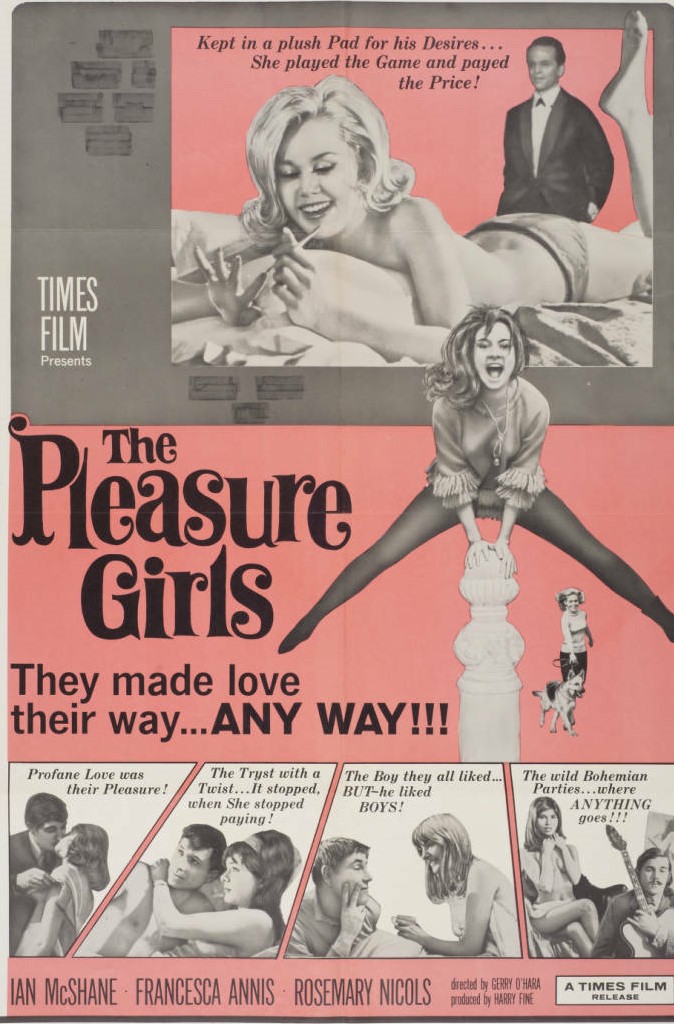
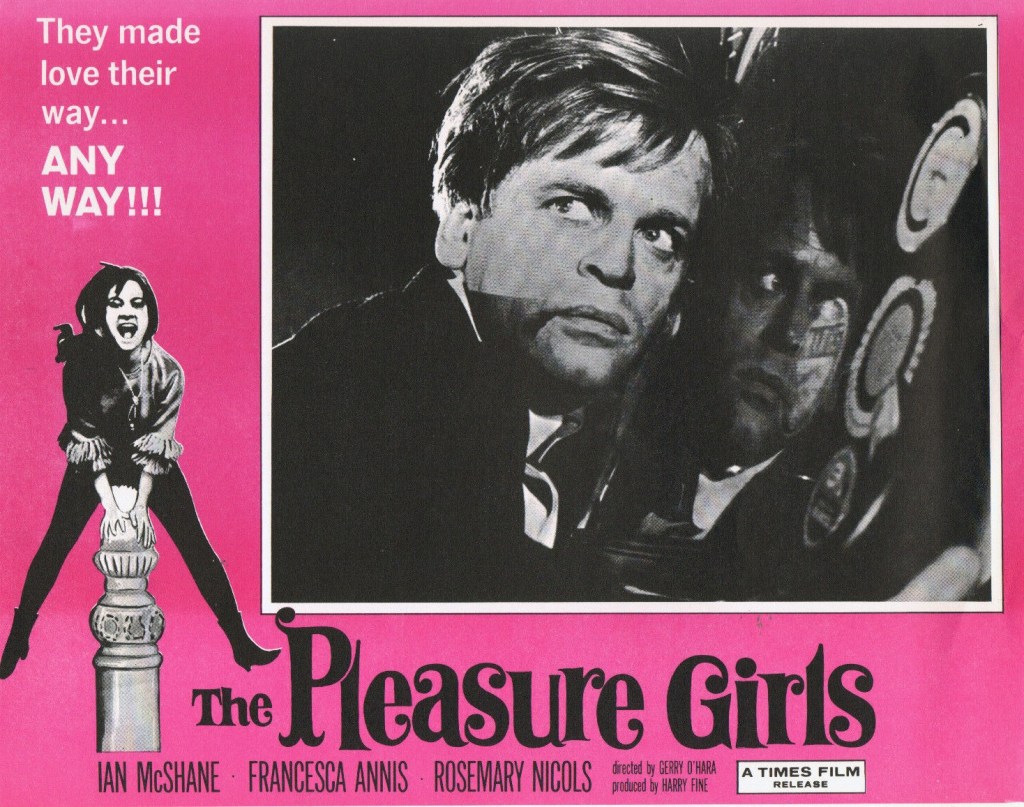
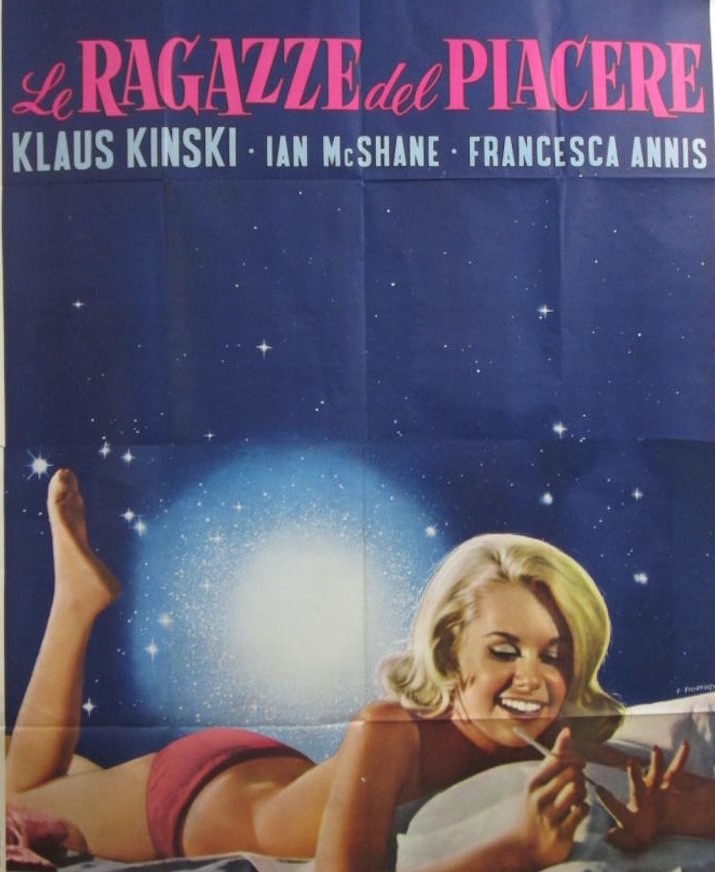
The Pleasure Girls (1965) ***

Klaus Kinski and The Pleasure Girls. What depraved mind dreamed up that concoction?

In reality, given this is early onset Kinski, before he was a fully-developed beast, and because it just precedes the British censor throwing off his shackles to accommodate the likes of Blow Up (1966) and The Fox (1967) it’s pretty tame stuff.

Klaus Kinski – what more did any B-picture of the decade need?

The girls might parade in night attire, and, should they happen to sleep in the nude, flash a bit of less rude skin, but that’s as far as it goes although at least couples are permitted to share a bed unlike the U.S. where that was outlawed by the Production Code (hence, in case you didn’t work it out, why there was so much frolicking via censor loopholes such as the outdoors or in the surf a la From Here to Eternity).

And you might find it hard to believe that John Wick’s Ian McShane has been a star for nearly half a century. Though here on the shifty side here and a shade fresh-faced his trademark cynical eyebrow is perpetually raised. He’s one of the suitors of a posse of girls sharing a house in London. A year later and a photographer like him would have had girls throwing themselves at him rather than primly trying to hold onto their virginity.

A weekend of drama awaits model wannabe and suburban lass Sally (Francesca Annis) on her arrival at the house, a whirlwind of parties beckoning, though drugs and booze in little evidence. Among her flatmates glamorous Dee (Suzanna Leigh) is mistress of slum landlord Nikko (Klaus Kinski) and while happy to be wined and dined and presented with jewellery,  fur coats and cash, draws the line at being put up in an apartment. Compliant Angela (Anneke Wills) is enmeshed with unscrupulous gambler Priddy (Mark Eden).

While there are plenty good-time girls to hand in casinos and there is some discreet nudity at a party it’s not exactly high-end stuff what with scenes set in launderettes and street markets and girls cutting themselves shaving their legs. And while proclaiming himself sex-mad, Keith (Ian McShane) is rather more romantic than he would like, prepared to wait for Sally, even while spouting self-conscious lines like “surely every girl wants you to want to even if she doesn’t want to,” the kind of hypocritical male double standard of the day.

The Sally-Keith relationship doesn’t get much beyond will she-won’t she so the real drama takes place in the lives of Dee-Nikko and Angela-Priddy and Dee’s very outgoing brother Paddy (Tony Tanner). Nikko collects debts with the help of thugs and an Alsatian, while Priddy sells his girlfriend’s precious brooch.

There’s more violence than sex. One man beaten up and tied to the hood of a car to be whipped with a belt. Another is tied to a chair and hung out a window. And, for the time, one man’s homosexuality is unusually tenderly expressed while the prospect of a career being more attractive than marriage is given a fair airing.

It’s surprisingly well acted, all the characters believable with enough development twists to keep you interested, and of course it’s not the degrading or unseemly world the posters would have you believe although in a pre-Pill world the dangers of unprotected sex are only too obvious.

Producers Tony Tenser (later founder of Tigon) and Michael Klinger (Get Carter, 1971) had made their reputations on exploitation pictures like the previously-reviewed London in the Raw (1964) and this attempts, at least for marketing purposes, to go down a similar seedy route, but is confounded by a storyline that is more Peyton Place than Bad Girls Have Sex.

It’s more an opportunity for rising stars to be put though their paces rather than characters put in their place. Ian McShane’s (Sky West and Crooked/Gypsy Girl, 1966) twinkle is never far from view and he demonstrates the charm that will keep him in demand for the next near-50 years. Klaus Kinski (Five Golden Dragons, 1967) is remarkably restrained given his later work, proving he doesn’t have to over-act to make his mark.

Of the others in the talent shop window, Suzanna Leigh (Deadlier than the Male, 1967) makes the biggest impact. It didn’t make a star out of Francesca Annis though Mark Eden (Curse of the Crimson Altar/The Crimson Cult, 1968) had marginally better luck.

Gerry O’Hara (Maroc 7, 1967) directed from his own script.

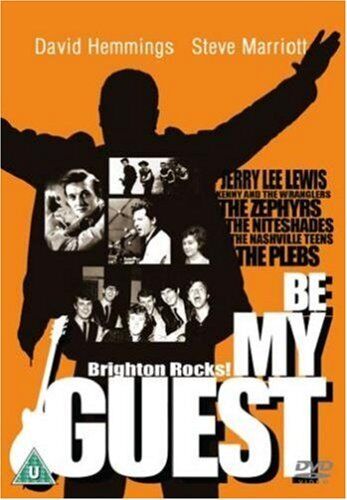
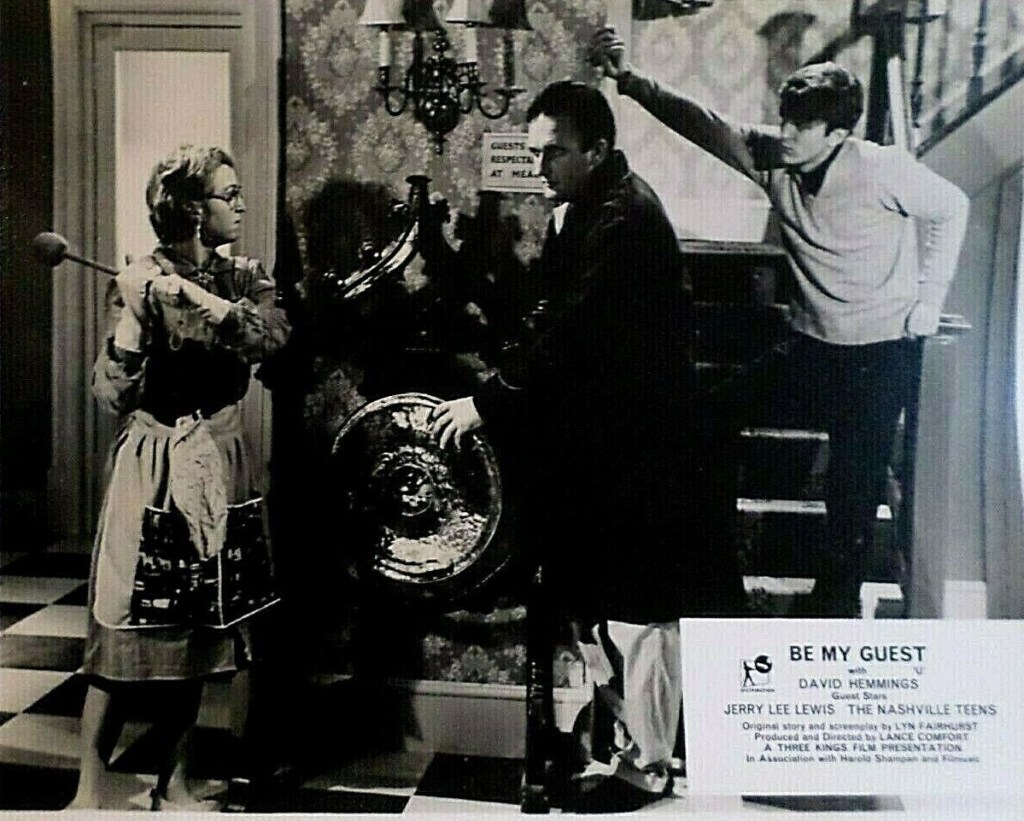
Be My Guest (1965) ***

Every genre produced a B-movie spin-off and the pop music sub-genre, revitalized by the appearance of The Beatles, was soon submerged in quick knock-off numbers that acted primarily as a showcase for various, hopefully, up-and-coming bands and, alternatively, whoever was to hand at the time. They were not viewed as star-making vehicles and the chances of, for example, a debuting player like Raquel Welch in A Swingin’ Summer (1965) hitting the big time was remote.

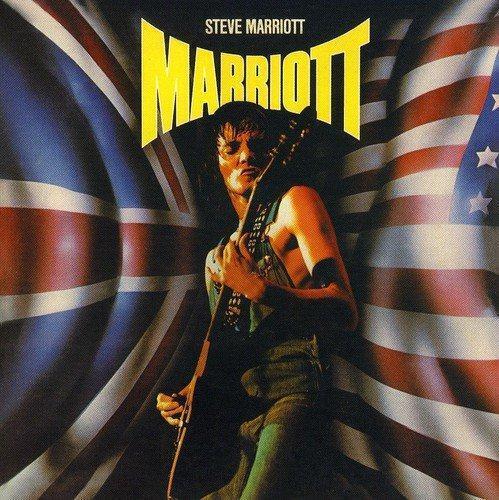
So nobody was counting on floppy-haired youngster David Hemmings (Blow-Up, 1966) making a breakthrough in this ho-hum-plotted let’s-put-on-a-show hardly-slick production set in the musical netherworld of Brighton, England. Had he not surfaced as a potential future star it would remain better known for the appearances of Jerry Lee Lewis and Steve Marriott, predating his fame as guitarist with The Small Faces and Humble Pie.

Astonishingly, this was actually a sequel, Hemmings reprising the character Dave from Live It Up (1964) in which he played a band member. Here, relocated to Brighton where his parents have taken on a hotel, Dave, now an ex-musician, tries his hand at journalism and in due course re-forms his group to participate in a talent contest. 

There’s the requisite American lass, Erica (Andrea Monet), a dancer, and the usual baloney reason for her ending shacked up (though not with Dave – too early in the decade for such blatant permissiveness) in the parental hotel. Most of the running time is taken up with Dave and his band getting into scrapes such as falling out with the local planning officers and blameless ideas misconstrued by those with more lascivious minds.

There’s a marvellous almost 1940s Hollywood innocence about the entire endeavour coupled with a brave, though failed, attempt to inject Beatles-style humor into the proceedings. And if you had any doubt, Hemmings has definite screen appeal. The hair became a trademark, almost a sign of inherent rebelliousness, which suited many of the characters he played. He had a very open face and eyes that, more than revealing internal conflict, were better for reflecting what he saw.

Interesting, too, the difference the camera makes of a persona when an actor is the lead rather than a support. There’s time to play on the features, to let the actor relax, rather than pushing himself forward to steal what few scenes he is in. Previously, he had always been noticeable. Now he acquires an aura and even in a bauble like this he shines. Andrea Monet, in her only movie role, is certainly no rival in the star-building stakes.

And since the movie is not filled with the usual run – or quality – of British character actors there’s no one trying to steal scenes from him, though you might look out for veteran Avril Angers (The Family Way, 1966).

Of course, there’s only so long you can admire an actor when there’s not much genuine acting to do, and this script does him no favors drama-wise. But luckily the music covers up most of the other deficiencies. Apart from Jerry Lee Lewis and Steve Marriott, there’s a chance to gawp at The Zephyrs, The Nashville Teens, Joyce Blair and Kenny and the Wranglers.

Director Lance Comfort (Devils of Darkness, 1965) does his best.

The Naked Edge (1961) ***

What a potential cinematic coup. Upstanding Gary Cooper (High Noon, 1952) a villain? That’s the entire premise and a bold one at that.

Businessman George (Gary Cooper) is the key witness in the trial of alcoholic colleague Donald Heath (Ray McAnally) on charges of murder and theft of £60,000. But after Heath is convicted, George’s wife Martha (Deborah Kerr) begins to suspect the wrong man has been found guilty. Her husband has suddenly come into a large sum of money from, he claims, playing the stock market and at the trial’s conclusion is accosted by a stranger, Jeremy Clay (Eric Portman).

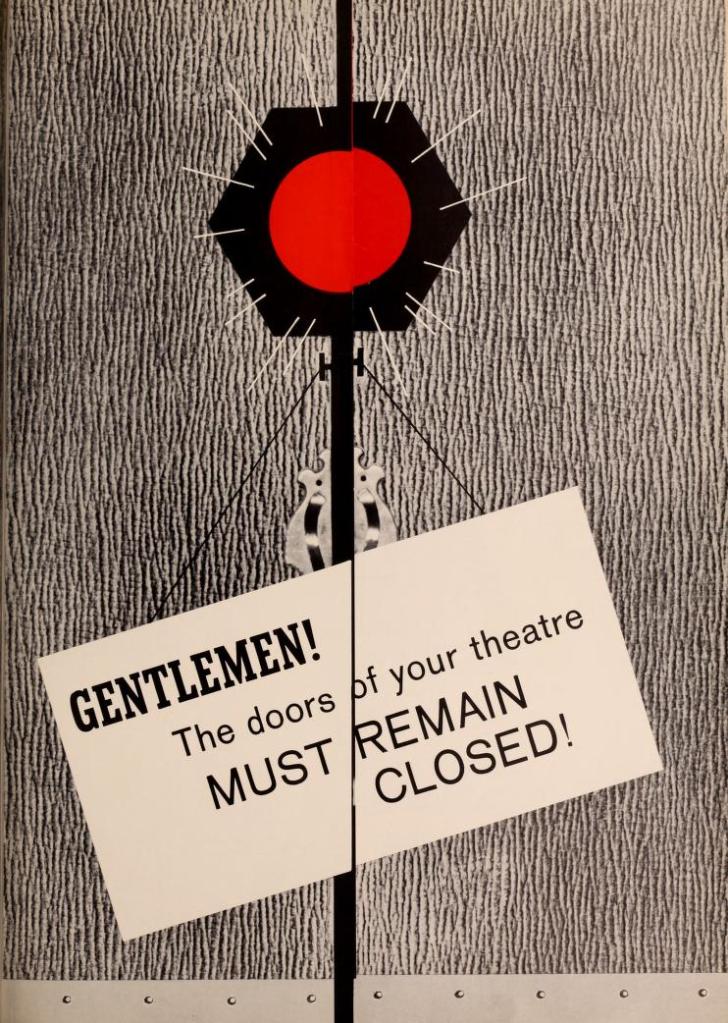
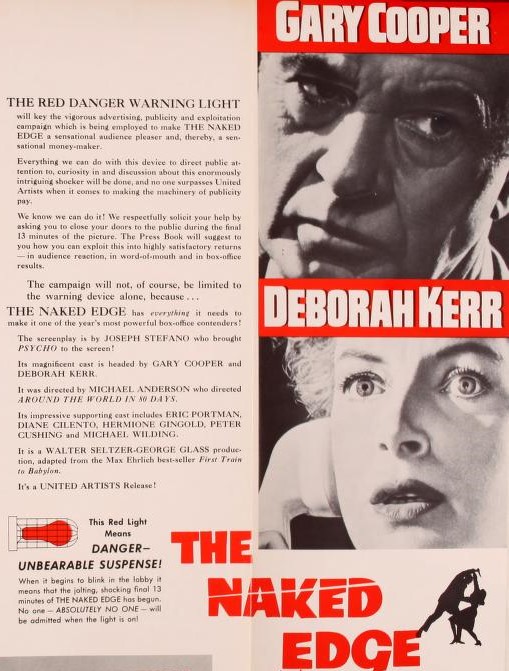
The “red danger warning flashing light.”

Several years a later blackmail letter comes to light, increasing Martha’s doubts. After all this time, George can’t quite lay his hands on the documents regarding his stock market claims. He is spotted in London when he should be abroad. 

Martha is so convinced something is wrong that she writes a cheque to Heath’s wife (Diane Cilento) not realizing how shady this would look if the case was revisited. Alarming incidents mount up – her husband’s razor, an invitation to walk along a clifftop. Much of the pressure is self-generated. She has put so much faith in her husband that she would be destroyed if he was guilty, so he must be innocent. Except she can’t quite get rid of the nagging voice.

For his part, George behaves so oddly, being caught out in lies about his whereabouts, and except, conversely, on his insistence that for the sake of their love she must trust him, he does little to shake the doubts especially when Clay pops up again reasserting his misgivings. Since there is no sign of a police investigation, Martha is solely responsible for creating the tension. And, with her out of the way, life might be a lot easier all-round.

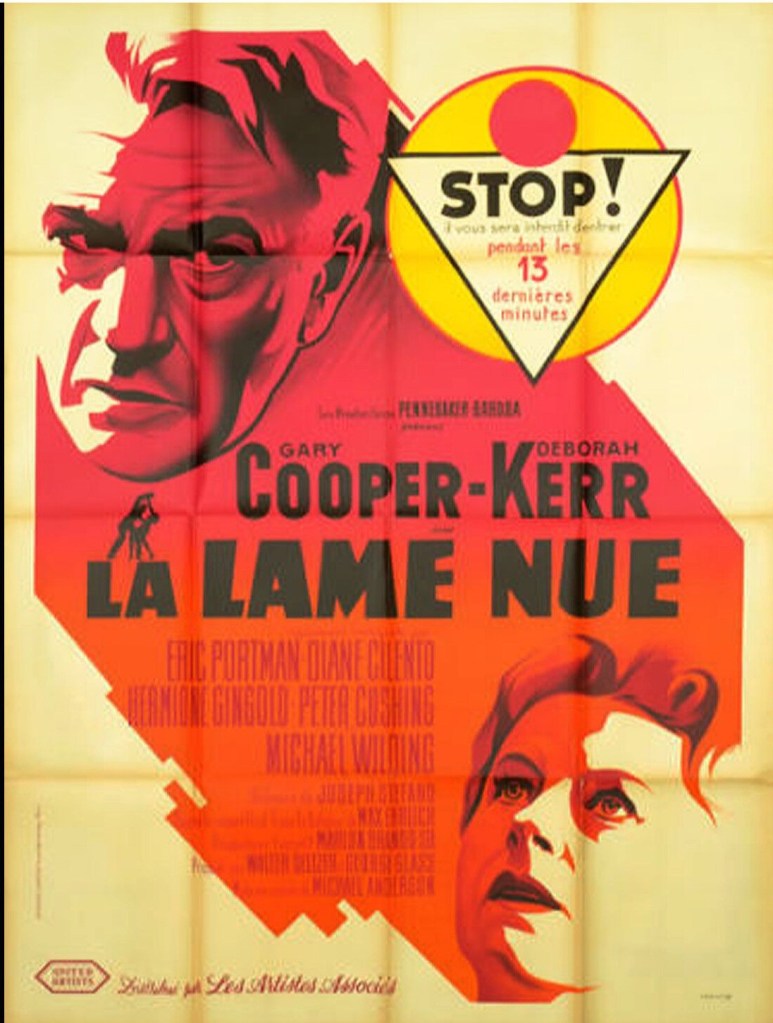
The much-vaunted “final 13 minutes” – as promoted in the poster – certainly justifies the tension but outside of whatever’s going on in Martha’s head much of that has been created by bursts of melodramatic music, sudden close-ups and continued emphasis on her point-of-view.

This was Gary Cooper’s final film and it wasn’t the kind of triumphant send-off achieved by Clark Gable (The Misfits, 1961) or Spencer Tracy (Guess Who’s Coming to Dinner, 1967). It might even have been a surprise choice, audiences more accustomed to find him in westerns – add Vera Cruz (1954) and Friendly Persuasion (1957) to his star turns in that genre. But although he had made nine westerns in the previous decade, he also starred in six non-westerns, including a politician-businessman in Ten North Frederick (1958), and wasn’t averse to playing less than straitlaced characters.

That grim determination that become a hallmark when upholding law and order easily transitioned into just grim determination against whatever threatened his well-being. Of course, the whole enterprise relies on sleight-of-hand but that’s par for the course.

Deborah Kerr had ended the 1950s as a strong-minded female but now seemed to be hell-bent on exploring her fragility and this role seems a direct line to characters played in The Innocents (1961), The Chalk Garden (1964) and The Night of the Iguana (1965).

Audiences were used, by now, to being told when they could enter a theatre. Remember, this was in the glory days of the continuous performance when customers could take their seats at any time during a screening not, as now, before the picture started. You might think it odd that people were barred from entry during the final 13 minutes, as if anyone would consider this a good time to enter, but it was very common for people to take their seats at any odd time. Just in case people didn’t have watches to hand, cinemas were instructed to install a red light and have it flashing in the lobby to prevent interlopers entering. Alfred Hitchcock, of course, invented this clever marketing ploy of annoying the customers for Psycho (1960) but it was still going on as late as Return from the Ashes (1965).

Not Cooper’s greatest film but a decent two-hander that might have worked better if there had been more of a sense of gaslighting Kerr. That it works at all is down to the actors, not a bad achievement when you consider the director was asking the audience to go completely against type in accepting Cooper as a potential killer.

British director Michael Anderson (The Quiller Memorandum, 1966) had the sense to ignore the attractions of tourist London and concentrate on suspense. Joseph Stefano (Psycho) based the screenplay on a novel by Max Ehrlich.

Bank of Dave (2023) *** / No Stars

Take One: A quite superlative courtroom scene sets the tone for this David vs. Goliath clash of a Burnley minibus dealer taking on the might of the British Establishment. In truth, my heart had sunk at the stereotypical opening – posh London lawyer sent “oop north,” his first encounter with natives unintelligible, his client first seen in a pub doing karaoke. And set against the background of the financial crash caused by arrogant and inept big banks, the stall is set out too obviously.

But, gradually, it acquires a different tone, of two outsiders fighting the system, less-than-high-flying corporate attorney Hugh (Joel Fry) trying to gain acceptance in a working-class town, working-class millionaire Dave (Rory Kinnear) battling to gain a foothold in banking circles to put forward his controversial notion of a new bank – the first in 150 years – that dealt only with small businesses.

There’s a toe-curlingly awful romance as Hugh can’t quite put into words his feelings for Dave’s niece Alexandra (Phoebe Dynevor), a Cambridge-educated NHS doctor, and she can’t quite help him along. Banking guru Sir Charles (Hugh Bonneville) has Dave in court on a trumped-up charge. Anyone Hugh trusts in the City does the dirty on him while locals he distrusts are confusingly helpful.

The Banking Powers-That-Be make up the rules as they go along, leaving Hugh with a £12 million shortfall to fill before he can get up and running.

So there’s a lot of ducking-and-diving on both sides, born publicist Dave constantly coming up with entrepreneurial wheezes, the opposition attempting to thwart him at every turn. Business pictures are a hard sell unless the product is drugs or sex, so it’s no surprise this isn’t about setting up a business, even one with righteous credentials (i.e. helping the little guy), but rather about poking a finger in the eye of Big Business, Big Banking, Big Government and anything else that isn’t Little (i.e. good).

Along the way it turns into a warm-hearted feel-good movie with characters you might recognize and situations you might appreciate and although the ending is a tad predictable I was surprised how moved I was. Rory Kinnear (Men, 2022), rarely given anything more than a supporting role, shines as the larger-than-life Dave and Joel Fry (Jasper, if you remember, from Cruella, 2021) goes from romantically inept to courtroom genius and back again while Bridgerton graduate Phoebe Dynevor has a slow-burner of a role. Debut feature of Chris Foggin from a screenplay by Piers Ashworth (Fisherman’s Friends, 2019).

At the high end of streaming material in that it was an enjoyable watch and no complaints about a big film which should have been seen in the cinema.

Take Two: But then I wanted to learn more about Dave and his banking initiative. And lo and behold very little of what you see on the screen is true. The big court case is a figment of the writer’s imagination, which means that however low Big Banking stooped it didn’t stoop this low. And so, it transpired, was the need to raise £12 million. And so was the fundraising concert by Def Leppard and so, too, I guess was the odd million thrown into the kitty at the last minute by Hugh to get Dave over the line.

So, much of Bohemian Rhapsody wasn’t true either and I was always in awe of the bar scene in A Beautiful Mind (2001) in which asking girls to dance is used to demonstrate the Zero Sum theory on which mathematician John Nash made his name, rather than some more complicated explanation. And it’s true, Dave was taking on the Establishment and nobody had set up a bank in 150 years and the financial industry was in crisis and you could ask who were these people to judge who was fit to run a bank when these were the same banking bosses who had squandered gazillions on ill-advised loans. And I’m sure it was a hell of battle. That he didn’t, in fact, win, because the bank Dave did set up is not a bank in the financial meaning of the word.

And, of course, it highlighted the inequities in a system that can reward with bonuses bankers who made a whopping loss.

So I’m really in two minds. I enjoyed it at the time but that enjoyment quickly palled when I realized it was all invention. I just wondered if there was a better and more incisive way to skewer the Big Banks than this.

On Netflix.

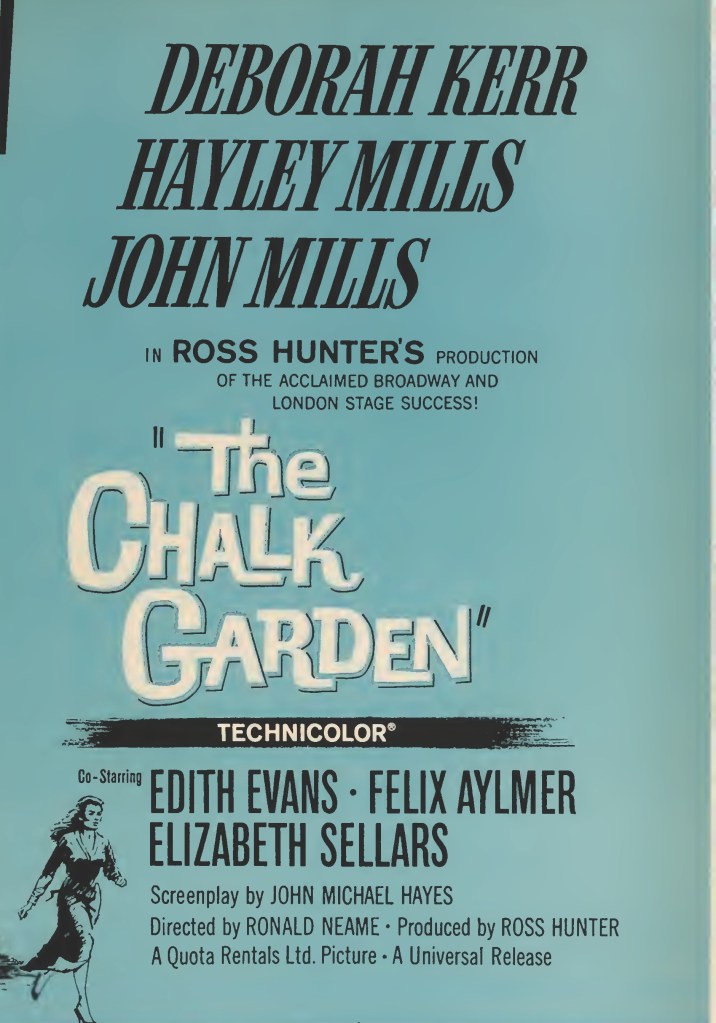
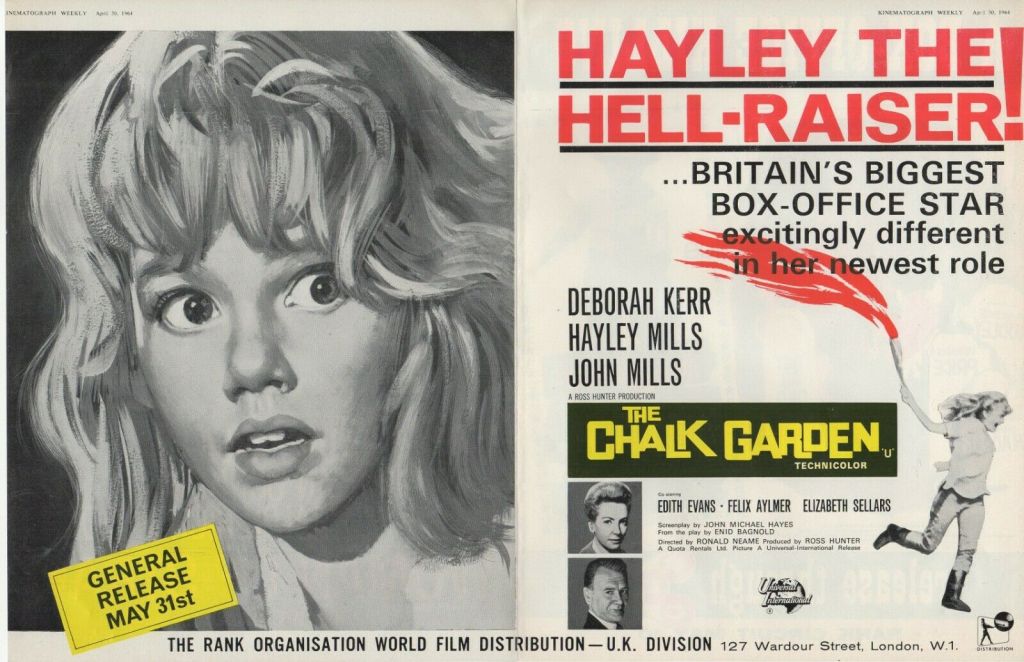
The Chalk Garden (1964) ***

You couldn’t make a movie like this now because (plot spoiler, I’m afraid) even the dottiest of old ladies would make at least a better attempt at collecting a reference from a prospective employee for fear she might be hiring someone disreputable. Though I doubt if many employers would expect a governess to turn out to be a murderess.

That this movie chimes with a contemporary trope – the criminal wanting to prevent others from following in their footsteps – makes it far ahead of its time. Made today, of course, the unruly child rather than merely threatening to unleash her arson impulses would probably have burned the house down.

So it’s more a drama of manners, if you like. Very presentable but clearly down-on-her-luck Miss Madrigal (Deborah Kerr) is taken on by Mrs St Maugham (Edith Evans) as governess for her grandchild Laurel (Hayley Mills) because nobody else wants the job. Laurel’s outrageous behavior has sent a score perfectly well qualified ladies scurrying. Madrigal is hardly fazed by anything Laurel can get up to.

But the child is clearly suffering abandonment issues, her beautiful mother Olivia (Elizabeth Sellars) having gone off with another man. Grandmother incites grandchild to hate the mother. But Olivia’s maternal instincts have kicked in and she wants her child back. While Madrigal can deal with Laurel’s tantrums she is less fortified against the child’s inveterate snooping. Finding a mysterious suitcase leads Laurel to fantasize about Madrigal’s past.

Mostly the film is a four-hander, butler Maitland (John Mills) playing a significant role in proceedings, not least in his effortless management of the wild child. Quite why a such a pragmatic and assured gentleman should end up in this remote mansion is another mystery and thankfully there is no attempt made at playing up the cliff-top location in a suspenseful manner.

Mrs St Maugham is imperious but not entirely practical, either in setting child against mother or in trying to grow flowers in such chalky soil, though Madrigal appears to have sufficient horticultural knowledge to set her straight on the latter and attempt to intervene on the former.

There’s a deadline of sorts. Olivia is coming to remove the child. Whether she goes willingly or not doesn’t matter. Madrigal sees her role as trying to prepare a child to love her mother and be more grown-up than the adults around her and forgive her.  

Madrigal’s guilt unnecessarily causes her to reveal that she had been jailed for murdering her stepsister, having been as resentful and jealous of the girl as Laurel currently is of her mother. Mrs St Maugham had called on old acquaintance Judge (Felix Aylmer ) for legal advice on how to prevent Olivia getting the child. He was the presiding judge in Madrigal’s case. Imagining he had not forgotten the trial – which of course he has – she feels duty bound to blurt out the truth before she is humiliated.  The confession helps Laurel realise how dangerous a path she is on and pushes her towards reconciliation rather than revenge.

It has all the making of a well-made play which is hardly surprising since it is based on Enid Bagnold’s Broadway success, at one time mooted as a film to star Joanne Woodward and Sandra Dee. So it moves along in the traditional three-act manner, plenty space given to establishing characters, introducing the undercurrents and leading to revelation and resolution.

So, mostly, it depends on the acting. Luckily, it is excellent. This was Hayley Mills in transition, far removed from Disney saccharine of The Parent Trap (1961) and about the same distance from the full-blown adult bottom-baring of The Family Way (1966). She projects a great deal more torment than in either of those films and comes across as believable, not exactly a young hoodlum but left to her own devices and starved of parental love only a matter of time before she would commit a crime of some kind.

Deborah Kerr hadn’t made a film in three years but her screen persona had shifted from the passionate – From Here to Eternity (1953), An Affair to Remember (1957), The Sundowners (1960) – to the repressed. Her spinster introduced in The Innocents (1961) had a great deal in common with her spinster of The Night of the Iguana (1965). But this is a different kettle of fish. Here, she exudes capability but with a self-awareness that undercuts such confidence, trying to keep a lid of emotions she struggles to handle.

John Mills (Tunes of Glory, 1960) casts a sardonic eye on the household while Edith Evans (The Whisperers) portrays a sorely wounded matriarch. Director Ronald Neame (Gambit, 1966) cleverly opens up the play, using the cliffs, gardens and rocky beach to considerable effect, but keeps the drama taut. John Michael Hayes (Nevada Smith, 1966) produced a workable screenplay.

Apologies for giving away the story, a good watch more for the acting than the twist.

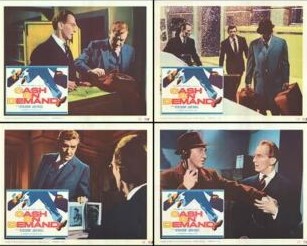
Cash on Demand (1961/1963) ***

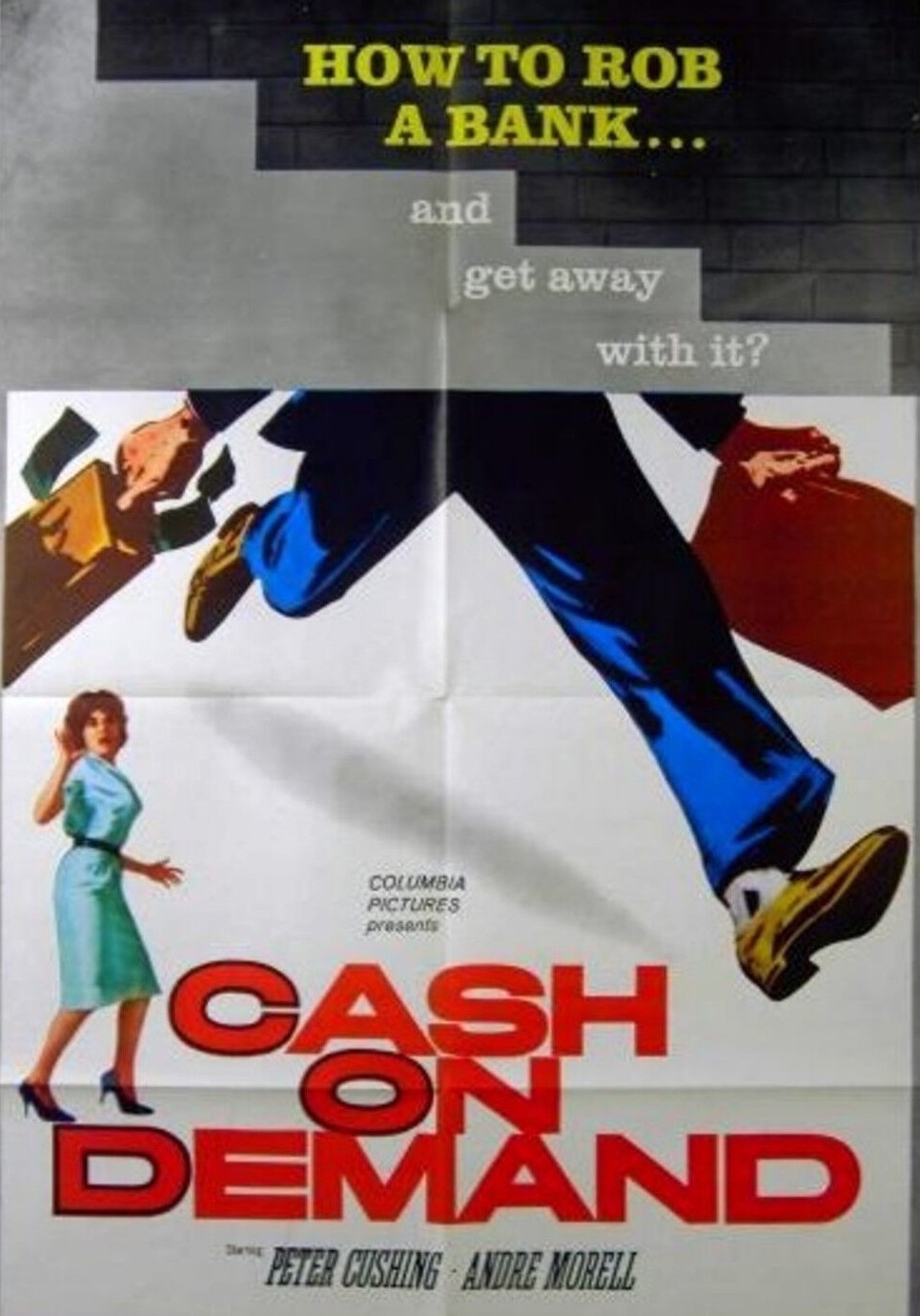
Ideal crime B-picture. No femme fatale, but a tight one-location two-hander. Set a couple of days before Xmas in a rural English market town, while possessing sufficient twists to see it through, in the main it is a battle of wills between urbane thief Col Gore Hepburn (Andre Morell) and his victim, stuffed-shirt bank manager Harry Fordyce (Peter Cushing). Combines slick heist with An Inspector Calls mentality where the morally superior are taken down a peg.

Fordyce is the kind of martinet who makes his staff remove Xmas cards from display, nit-picks about the state of nibs (in the days when pens were dipped in ink) and threatens to sack chief clerk Pearson (Harry Vernon) over a minor error that he has worked up into potential embezzlement. So unpopular, he is not invited to the staff party.

Under the guise of carrying out a security inspection Hepburn sets up a robbery, tying Fordyce in moral knots, his unwilling collaboration ensured by threatening to stick electrodes to the bank manager’s wife’s head. Hepburn has done his research, aware of all aspects of security, but, more importantly, knows his man, how to exert pressure, how to keep Fordyce on edge. Hepburn reeks of self-assurance, Fordyce of insecurity, a friendless man who bullies his staff, living a life suffused with discipline and bereft of enjoyment.

Though there are a couple of red herrings, and an unexpected incident, what mostly endangers Hepburn’s bitingly clever plan is the unforeseen, that the cold-hearted bank manager will come apart under pressure.

Underlying the action is class conflict. But not the usual working- class vs upper class. Instead it is aspiring middle class vs assured well-educated upper class. Hepburn is the kind of well-dressed smoothie  who could talk his way into any company and out of any situation. He puts everyone at their ease, knows how to enjoy himself, would make any party go with a swing, could flirt convincingly with your grandmother, and you would trust within an inch of your life. Fordyce, on the other hand, is one of life’s scrapers, everything by the book, creeping into management painfully slowly, and once acquiring a position of authority letting everyone know who is boss and terrified of losing his standing in society. It’s “class” of another kind too, that of the winning personality versus the eternal loser.

Peter Cushing as the bank manager.

This plays against expectation. Normally, in a heist scenario, there’s one employee who’s trying to beat the baddies, some clever device or trick up their sleeve. That’s not the case here. Instead, we’re served up a character study, the supposedly upright pillar of the community revealed as a coward and moral bankrupt.

And the unexpected also comes in the casting. Both Peter Cushing and Andre Morell play against type. At this point they were best known as Sherlock Holmes and Dr Watson in The Hound of the Baskervilles (1959), an upright team on the side of the angels. Cushing, while often tight-lipped, generally exhibited a morally superior screen persona. Here, that trademark persona rapidly vanishes under pressure.

Quentin Lawrence (The Secret of Blood Island, 1965) directs within a very tight timeframe.

The movie had unusual origins. It was expanded from a short-lived series called Theatre 70 on British ITV, the number relating to time, the program running for 70 minutes rather than the usual hour. And it had just as unusual a release. Perhaps for copyright reasons, it didn’t see the inside of a cinema in the UK until December 1963 when it went out as the support to musical Bye Bye Birdie (1963) on the Odeon circuit. But it had already been released by Columbia in the US in 1961 as the support to Twist Around the Clock (1961).

Becket (1964) *****

Two stars in impeccable form, an intriguing tale of betrayal and redemption, and a sharp reminder that Britain was once a conquered nation. Given the original play was written by a Frenchman, Jean Anouilh, I wondered how much of the experience of France being occupied by Germany during World War Two informed the work.

Becket (Richard Burton) is dabbed a collaborator for having anything to do with King Henry II (Peter O’Toole), not just in his gainful employ and rising to positions of enormous power, but in accepting his friendship being viewed as a traitor to his countryman. England then, 100 years after the invasion of William the Conqueror, was divided into Normans, who ruled, and Saxons, the indigenous population, who obeyed. The only source of rebellion was through the Catholic Church which could claim, in its prime allegiance to God, to place religion above ruler.

Initially, it’s the story of two unprincipled men, who drink and lust to their heart’s content, until Henry, misreading his friend’s personality, appoints him Archbishop of Canterbury, the most important religious leader in the country, assuming that Becket would continue in his hypocritical ways and bring the clergy to heel. Unfortunately, in taking on the position, Becket takes to heart everything it stands for and instead of extending his power Henry finds it challenged.

It’s classic narrative, fast friends turned bitter enemies, the American Civil War in a nutshell. The more Becket sticks to his guns, the more his life is imperilled. Since the story is based on historical actuality, anyone who saw it at the time would be aware of the famous outcome, but the teaching of history and English history at that, either having fallen in abeyance or being given the revisionist treatment, viewers coming at afresh will be surprised at the political and moral twists and turns.

Nor is it of the “thee” and “thou” school of historical drama. The language is modernised, it is filled with humor, and spiced through with irony. Caught in a downpour during a hunt and sheltering, wet and bedraggled, in a peasant hut in a wood, Becket explains to the king that anyone who dared light him a fire would be hanged for taking precious wood out of the forest, a law laid down by Henry to make more money from his forests.

Likeable though Henry is, full of energy and fun, he is also sly and mean. On the basis of what’s mine is yours, he passes on a peasant lass to Becket, but in demanding the favour returned insists that Becket allow him to have sex with his fiancee, who promptly commits suicide rather than submit.

Henry wheedles as much as he demands, needing to keep his nobles in line if they are to fund his lifestyle and wars. There is always the tricky business of making alliances with untrustworthy rivals. This almost a template for Game of Thrones, the business of ruling as much about the velvet glove as the iron fist, negotiation and concession as important as outright demonstrations of strength.

Even when in an inferior position, there is always diplomatic recourse. The French king (John Gielgud), deliberately keeping waiting a British contingent, explains that the delay will allow them time to be measured for some fashionable French clothing. Now that is a barb served in silk.

It’s possibly as big a surprise to Becket, as indulgent in drinking and whoring as the king, to discover that he has principles. The clergy was known for abusing its power and, despite taking a vow of poverty, living high on the hog. So he stuns both his fellow priests and bishops as much as the king when he gives away all his possessions to fulfil that basic vow. There’s almost an element of naivety. Having played the game so far, suddenly he refuses, to the consternation of everyone in power.

For a time it becomes a battle of wills and that eternal question of who is more important, the invisible God or the human king, and Becket to some extent becomes a pawn.

And it’s brilliantly acted. In his first role since coming to global attention with Lawrence of Arabia (1964) Peter O’Toole creates a more down-to-earth conniving ruthless character. Richard Burton (Cleopatra, 1963), trying to prove he can attract an audience without the help of Elizabeth Taylor, matches him every step of the way. The fiery oratory is replaced by introspection.

Director Peter Glenville (The Comedians, 1967) resists the temptation to open up the stage play, which he also helmed on Broadway (where it won the Tony for Best Play), and for a historical picture set in warring times it’s surprisingly lacking in battles. But it’s easily one of the best historical pictures ever made and it’s a travesty that the Oscar for Best Actor went to neither O’Toole nor Burton, both nominated who split the vote, but to Rex Harrison for My Fair Lady. John Gielgud (The Charge of the Light Brigade, 1968) was a whimsical quirky delight, so different to his normal screen persona.

Out of 12 Oscar nominations, it won only for screenplay, by Edward Anhalt (The Satan Bug, 1965).

Does what historical movies so rarely accomplish: thoughtful, stylish, brilliantly structured with superb acting and direction.

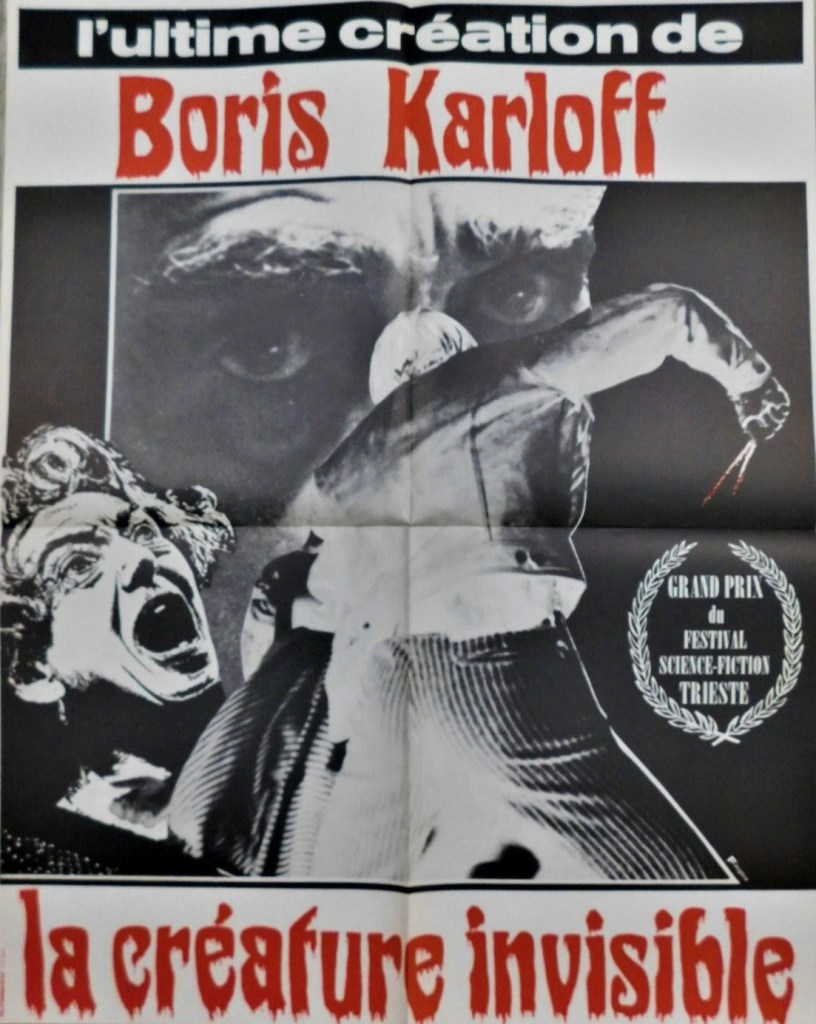
The Sorcerers (1967) ***

I should point out before we go any further there’s a Raquel Welch connection. Husband Patrick Curtis was a producer and La Welch is down as an assistant producer, at a time when the pair were setting up their own production company Curtwel. Hard to see where Raquel would have fitted in but wouldn’t it have been sensational to have her as the devious mastermind?

The concept is better than the execution. There is an inconvenient truth about science. Successful experiments often require guinea pigs. Brain-washing was one such scientific notion, generally seen as an invention of those dastardly Communists a la The Manchurian Candidate (1962) although The Mind Benders (1963) suggested it was as common in the British halls of academe. As indicated by the title here brain washing could be termed  modern-day witchcraft.

But where government scientists could hide behind the greater good, personal advantage is the notion here. And it did make me wonder how many scientists took vicarious pleasure in seeing guinea pigs doing their bidding, enjoying the power to inflict change on the potentially unwilling.

Professor Monserrat (Boris Karloff) and wife Estelle (Catherine Lacey) have invented a machine that through hypnotism can alter a subject’s mind in the longer term, make them prone to acts of savagery. Their chosen target is young man-about-town Mike (Ian Ogilvy). Bored with gorgeous girlfriend Nicole (Elizabeth Ercy) and ripe for adventure he is despatched on an orgy of violence, rape and murder.

What makes this potentially fascinating is that while the Professor draws back from the experiment, Estelle wants to continue. The sadistic female was coming into her own during this decade, Elke Sommer and Sylva Koscina as a deadly tag-team in Deadlier than the Male (1967), Suzanna Leigh in Subterfuge (1968), but these were sidekicks, pawns in the control of devious men.

Estelle wins a battle of wills against her husband and his weak opposition fails to deter her from authorizing ever more despicable acts, as if she is unleashing her own pent-up aggression. Not only can she control her husband but she is in command of the virile young Mike. Sensibly, the film stops short of setting her up as a James Bond-style megalomaniac, but there is something more infernal in committing these acts from a small run-down apartment rather than some underground space-age cavern.

Turning Boris Karloff into a bad guy tripped up by conscience is a neat casting trick. But making him prey to his initially subservient wife is a masterstroke. Her violence is gender-neutral, as happy to force Mike into battering a work colleague as attempting to rape a young woman.

And there is also a sense of the old taking revenge on the young. The old have been left behind in a Swinging London awash with discos and barely-existing morals. Why shouldn’t old people tap into base desire, and better still, not have to lift a finger, their victim carrying the can for every deed. 

It’s stone cold creepy. And would  been a much tighter – and scarier – picture if director Michael Reeves (Witchfinder General, 1968) had not wasted so much time with the dull youngsters, complete with pop groups performing in a nightclub. Ian Ogilvy (Witchfinder General) doesn’t bring much to the party, no more than your standard good-looking young fellow.  

Boris Karloff (The Crimson Cult, 1968) is much better value especially when excitement at his new discovery wears off and he realizes he is playing second fiddle to his wife. For once, there’s nothing inherently evil in him. But Catherine Lacey (The Servant, 1963) is easily the pick, delivering a well-judged performance, assisting her husband in his endeavors until the time is right to take over. You might spot Susan George (The Straw Dogs, 1971) and Sally Sheridan, both a Fu Manchu and Bond girl. Tom Baker (Witchfinder General) co-wrote the script with Reeves.

Provides more to ponder than actually appears on the screen.

Discover WordPress

A daily selection of the best content published on WordPress, collected for you by humans who love to read.

The Atavist Magazine

by Brian Hannan

WordPress.com News

The latest news on WordPress.com and the WordPress community.