Behind the Scenes: The Circuit Breaker Busts the Release System

Every country followed a similar system. Unlike nowadays, new movies would first be released on the biggest cinemas in the biggest cities. Only after the hullabaloo of premieres and publicity in national newspapers did the films move into the bread-and-butter of the release pattern, appearing for a given week on the circuits. Britain had two main circuits, ABC and Odeon, both of whom, unlike their counterparts in the USA, were permitted not just to exhibit movies but to make and distribute them.

In the UK at the start of the 1960s, regardless of how well new movies had done in their opening salvos at the super-cinemas, they were allocated just one week on the circuit. In retrospect, it seemed a weird notion that a big-budget Hollywood movie would be given the same amount of time to sell tickets as a cheaper home-grown product. Even more basic, that demand was automatically limited. Unlike now, a cinema could not hold onto a hit film for as long as it wanted, because the print was already assigned another cinema in another locale. And there was no way of bringing back a hit for a second go-round until years later.
The release system began to change with the introduction of the roadshow, when 70mm movies showing twice a day at increased prices would run for at least a “season” (13 weeks) and could respond to demand by playing for much longer. Following their roadshow run, such films would be fed, at a later date, into the circuit system.

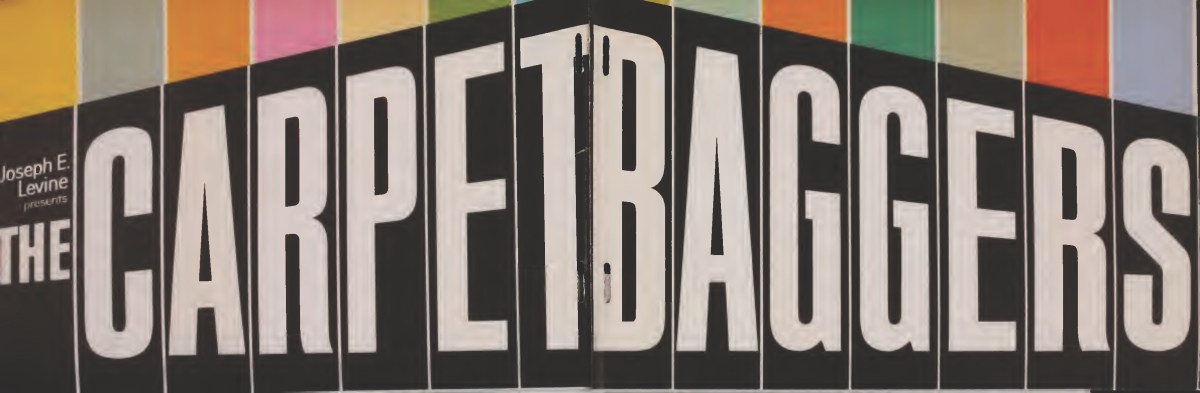
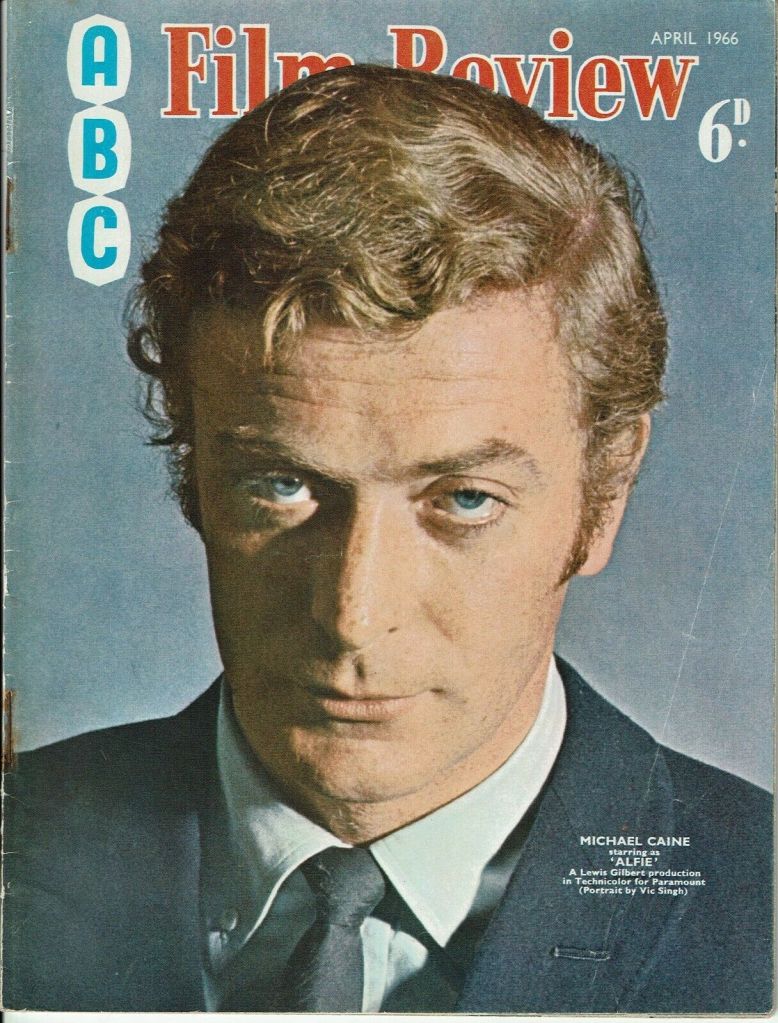
But in 1964, there was the beginnings of a shift on the ABC circuit. Towards the end of the year, instead of the traditional one-week circuit run, The Carpetbaggers, not a contender for roadshow despite its 150-minute running time, was shown for two weeks.  But that proved an isolated incident. It was another two years before ABC repeated the experiment, courtesy of  Alfie starring Michael Caine.

The following year the first two months saw four films go down the same route, Oscar-winning musical My Fair Lady which had been road-shown a couple of years before, Hayley Mills drama The Family Way, The Dirty Dozen, also a roadshow hit, and Bonnie and Clyde (a flop in the USA).

In addition, the circuit had learned to re-evaluate earlier hits. At that point a revival/reissue only made a second showing in the UK about 7-10 years after initial release. But in 1967, just three years after it proved to be a colossal box office success in the UK (it flopped in the USA despite an immense marketing campaign), Zulu was given another week on the circuit, this innovation adding a new dimension to the circuit release system.

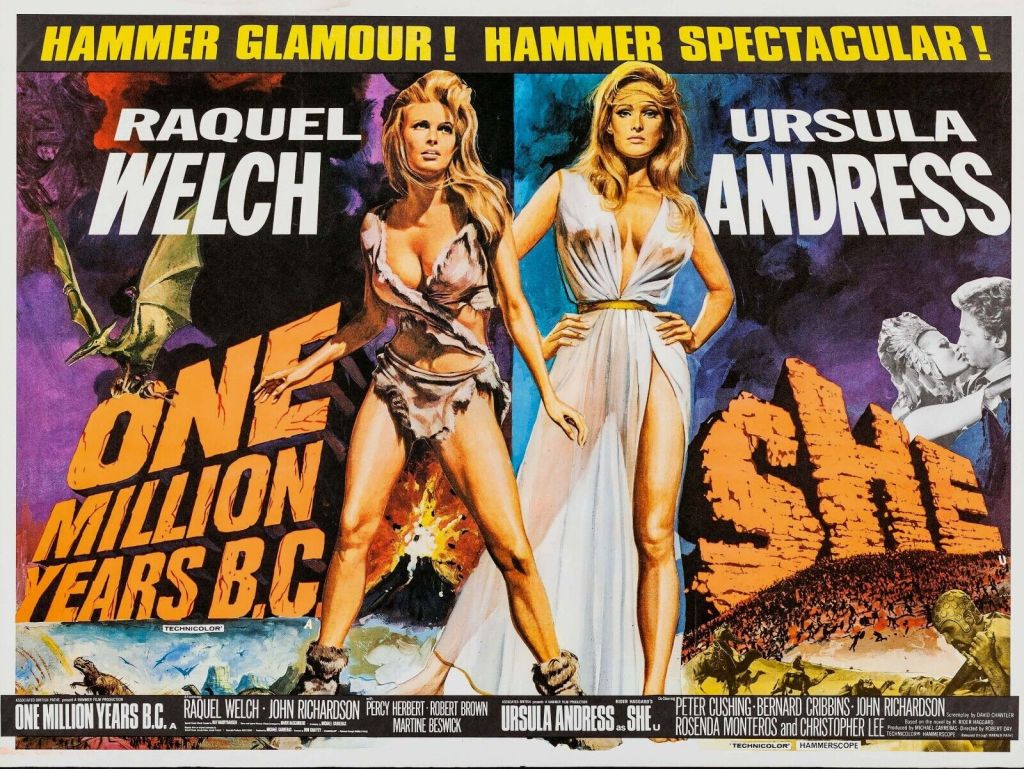
In fact, The Dirty Dozen was afforded yet another week on the circuit in 1968 – in effect, counting the roadshow and the initial circuit release, the public was accorded three opportunities in a very short space of time, The following year One Million Years B.C. (1966) starring Raquel Welch and She (1966) starring Ursula Andress were double-billed in a reissue.
But whether the two-week window had proved a complete success was open to doubt because such clear-cut hits as Bullitt and The Italian Job were only granted one week to make an impact on the circuit box office. In 1969, the circuit had so misjudged the box office potential of Till Death Us Do Part, a movie version of the popular British television comedy series, that it was initially scheduled for a one-week run. But it was such a blockbusting success that ABC tore up its release calendar and slotted it in for a further week two weeks later.

Growth of the multiplex meant big films could be retained for much longer on the biggest houses, switching between two or three or four individual cinemas until demand was deemed fully drained. No longer did a circuit release mean that release dates for the suburban part of the release were set in stone, an approach guaranteed to force the main city center cinemas to remove from its screens a movie that still had pulling power and at higher prices.

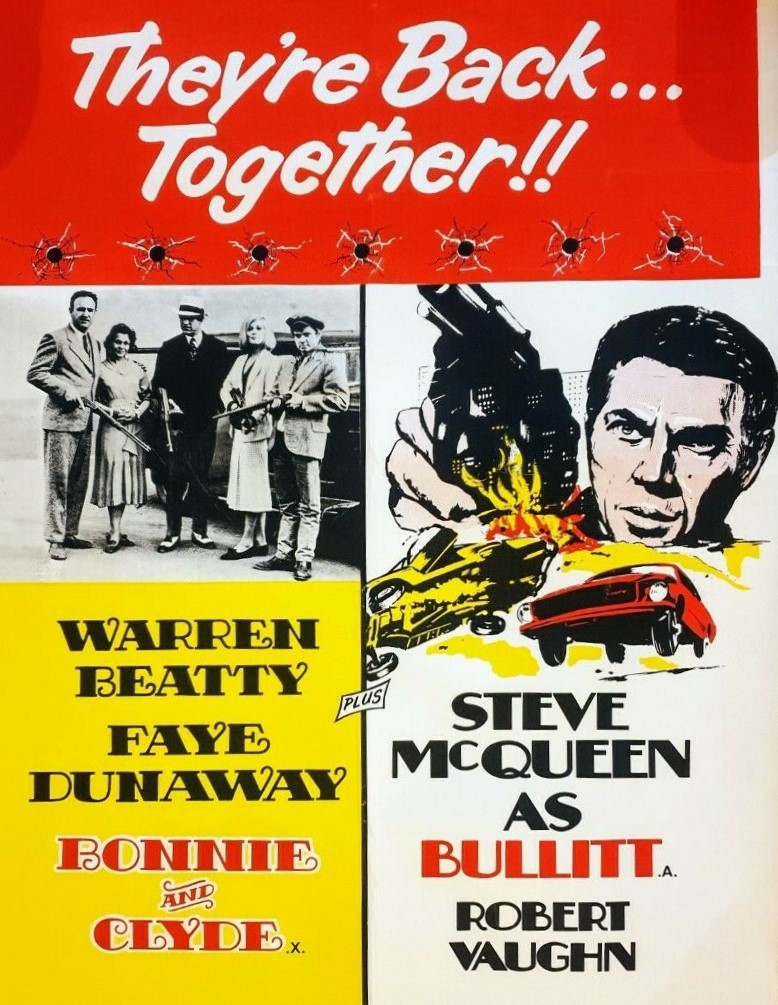
But any kind of change to the circuit release system remained minimal. In 1970, only two movies, Where Eagles Dare, a monumental success when road-shown (a release option denied in the USA), and the home-grown Women in Love were provided with a two-week circuit platform though Bullitt doubled with Bonnie and Clyde made a speedy return as a reissue.
In 1971, a pair of British comedies Percy and Up Pompeii, both made by EMI which had taken over the ABC circuit, were given the two-week treatment. But like Till Death Us Do Part, revisionist western Little Big Man was allocated another week over a month after its initial showing. The Dirty Dozen returned yet again.

In 1972, the circuit introduced unveiled another release strategy called variously a “selective release” or a “pre-release.” This meant, in effect, that in major suburban cinemas, the biggest new pictures would be given two bites of the cherry. A Clockwork Orange and The Godfather were both deemed worthy of a one-week “selective” release with a second week factored in for the following year in what was deemed a “full release.”  A version of roadshow was already in place for both these movies and in the main cinemas in big cities these were retained for a considerable amount of time.

In 1972 there were also re-runs for There’s a Girl in My Soup, Zulu and Paint Your Wagon (a bigger roadshow success in the UK than the USA). But the following year saw a whole wave of reissues beginning with The Ten Commandments (1956) followed by Dirty Harry/Klute (both 1971), The Wild Bunch (1969), Love Story (1970), Coogan’s Bluff (1968)/ Play Misty for Me (1971) while Gunfight at the OK Corral (1957) supported the new Friends of Eddie Coyle.

In 1974, The Sting and Airport 1975 went down the new “selective” plus normal release pattern, enjoying one week in each phase, while Blazing Saddles and The Exorcist received a two-week send-off from the start, Fear Is the Key (1972) was revived to support another television spin-off Holiday on the Buses.

Towering Inferno in 1975 ran for three weeks, the first qualifying as “selective” system but the others two weeks shortly after. But there was another development with Jaws which went out first as “selective”, then a week in “pre-release”  and its third appearance on the circuit deemed a “full release” turned into an extended run. But the “selective”/”full release” of Death Wish, Mandingo,  and Murder on the Orient Express comprised only two weeks. Lisztomania looked set to join the exclusive club but instead of going out on the full release some weeks later it was restricted to a single “selective” week, suggesting it had not fulfilled expectations first time round.  The Godfather Part II also managed two weeks but not sequential, the second week deemed a “re-run” six weeks later. Where Eagles Dare and David Essex duo That’ll Be the Day (1973)/Stardust (1974) were reissued while Uptown Saturday Night (1974) was revived in support of Inside Out. Gone with the Wind (1939) enjoyed another reissue in 1976 as did Zulu and Freebie and the Bean (1974)

In 1977 “pre-release” replaced “selective” as the preferred jargon and was applied to King Kong, Airport 77 and Rollercoaster but in these instances amounted to a total of two weeks counting the later full release. By contrast, When the North Wind Blows and The Eagle Has Landed  enjoyed a straight two-week release.  Ben-Hur (1959) was reissued as were Jaws (1975), The Sting (1973), The Godfather (1972), Clint Eastwood double bill The Outlaw Josey Wales (1976)/Magnum Force (1973) and television spin-off duo All Creatures Great and Small (1977)/It Shouldn’t Happen to a Vet (1976).
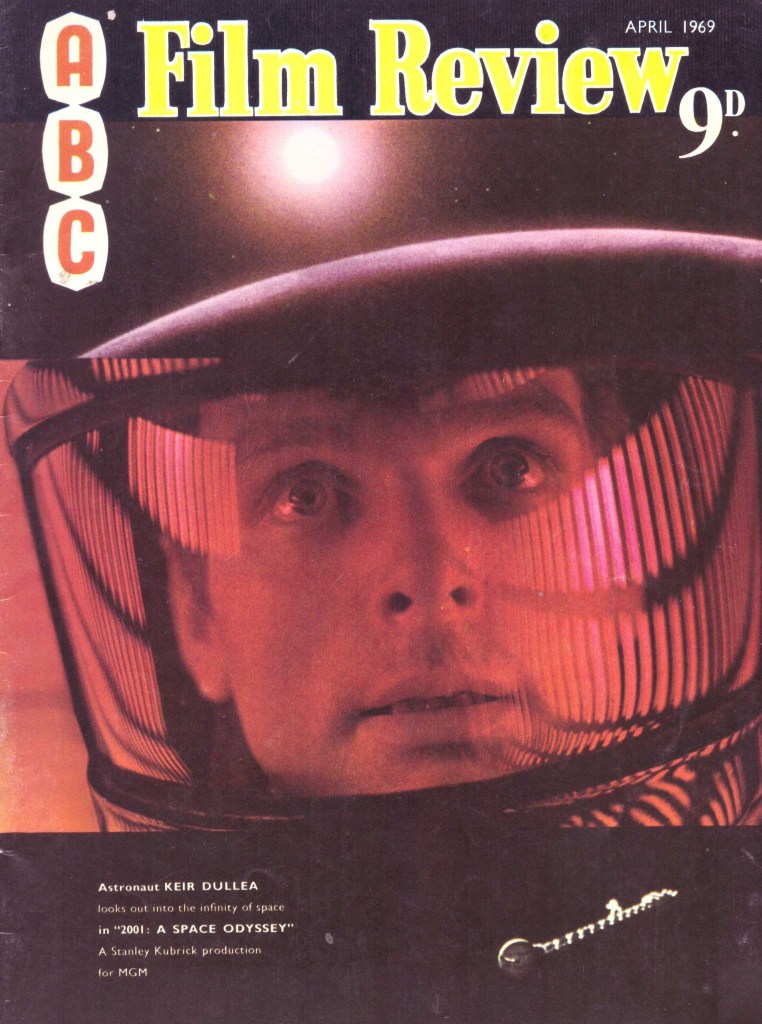
In 1978, 2001: A Space Odyssey (1968) and Jesus Christ Superstar (1973) entered the reissue market along with  revivals of Enter the Dragon (1973)/Death Race 2000 (1975). Charles Bronson western Breakheart Pass (1976) returned  in  support to Michael Caine thriller The Silver Bears, The Car (1977) to Full Circle, Paper Moon (1973) to House Calls and the ribald Adventures of a Taxi Driver (1976) to The Other Cinderella.

However, by this time, the big city center cinemas had begun holding on to major releases for such inordinate lengths of time that they were virtually played out by the time they reached the suburban circuit houses so there was little reason to insist on those cinemas retaining them for two or three weeks. None of the ABC chain’s top hits of the year – including the likes of Saturday Night Fever, Grease and Watership Down – played more than one week when they entered the circuit release.

By 1979 the “selective” and “pre-release” idea and the two-week booking was gone. But the following previous hits were re-cycled: Superman: The Movie (1978), The Goodbye Girl (1977), The Getaway (1972),  The Towering Inferno (1974), the inspired pairings of Blazing Saddles (1974)/Monty Python and the Holy Grail (1975) and Convoy (1978)/Sweeney 2 (1978). More obvious was the dualing of Peter Cushing duo The Ghoul (1975) and Legend of the Werewolf (1975).  Clint Eastwood was back on support duty, The Enforcer (1976) helping out new Boulevard Nights, The Eiger Sanction (1975) bolstering John Travolta romance Moment to Moment while The Land That Time Forgot (1974) boosted to The Brink’s Job.

But by the start of the new decade,  there was little differentiation between a major cinema in a city center and the rest, a new movie, in order to take advantage of advertising, either running for months in the one locale, and sucking the commercial meat out of a movie, or going much wider from the off rather than settling down in any one place for an exclusive run. Though the saturation that’s common today was still a long way off, movies still inclined to be released in regional bursts to save on prints, the circuit business had come a long way in two decades.  

Oldies Every Day of the Week

In the 1960s you could watch old films in the cinema in virtually every country in the world every day of the week. Except in the United States, television had not impacted so much on the availability for booking films made within the last decade, so there was generally plenty of scope to operate a picture house that specialized in old movies. They were called “repertory” theaters. Of course studios dipped in and out of the repertory business themselves, yanking out of the vaults old blockbusters, but on an irregular basis, that particular supply rapidly diminishing as old movies were sold off for small screen presentation. 

Pre-television, in the United States in the 1940s a small industry had grown up, both in distribution and exhibition, either buying up the rights to old movies and recycling them as instituted by the Producers’ Releasing Corporation and Realart and PRC or establishing mini-chains of cinemas like the Academy of Proven Hits. But when television made such big inroads into old stock in the U.S. you were more likely to find old pictures turning up in arthouses, and even then that was limited to known attractions like Garbo and Bogart and occasional retrospectives of Bette Davis and Joan Crawford. Or arthouses would slip in a series of oldies one day a week.

In the 1960s “no cinema in the United States except the Thalia in New York and the Cinema Guild in Berkeley has ever made a serious attempt at presenting cinema repertory.” Occasionally, a U.S. distributor acquired a bundle of old pictures as the basis of an ongoing program distributed through arthouses, such as the 27-film series from Janus or Tom Brandon’s batch of 75. Paris, on the other hand, was a paradise for lovers of old movies. 

The 1960s saw the beginning of the film studies phenomenon, so cinemas showing old movies found new custom. Prior to that, the most common way to view classics was via a film society, another booming sector. While boasting four million members worldwide, access was limited to one movie – in 16mm not 35mm – a week for one screening only and a program that ran for about half a year.

Surprisingly, Britain was at the forefront of the repertory industry. When I was growing up in Glasgow in the 1960s I was astonished to discover a commercial chain – the Classic – operating three cinemas in the city center. Two of the operations, the Classic Grand and the Tatler Classic, while retaining the company name gradually shifted into the sexploitation business, the latter as a private members’ club. But the flagship Classic, just down the road from the Odeon, one of the city’s most prestigious houses, ran a weekly program of old films.

Realart reissue from the 1940s.

At the start of the decade, Classic operated ten cinemas in London and another 80-plus  throughout the United Kingdom. Programmes changed midweek if showing just one film while a double bill would run a full week. Several cinemas ran late night screenings, usually on a Saturday, but these could also be found on a Wednesday or Thursday.

Sometimes the movies shown were foreign, other times there might be a short season of Marx Bros comedies or Hitchcock thrillers, but mostly they were British or American pictures whose quality or reputation suggested they deserved repeat viewing on the big screen. One print would be enough to feed the entire system, shunted from screen to screen.

Quite a few of the films would be hired on a flat fee basis, no sharing the box office with a distributor or studio. Older audiences, fed up with the sex and violence prevalent in current movies, took refuge in safer, older films. Younger audiences, wanting to catch up with great films, found the screenings an unexpected bounty, especially to see them projected in their original dimensions.

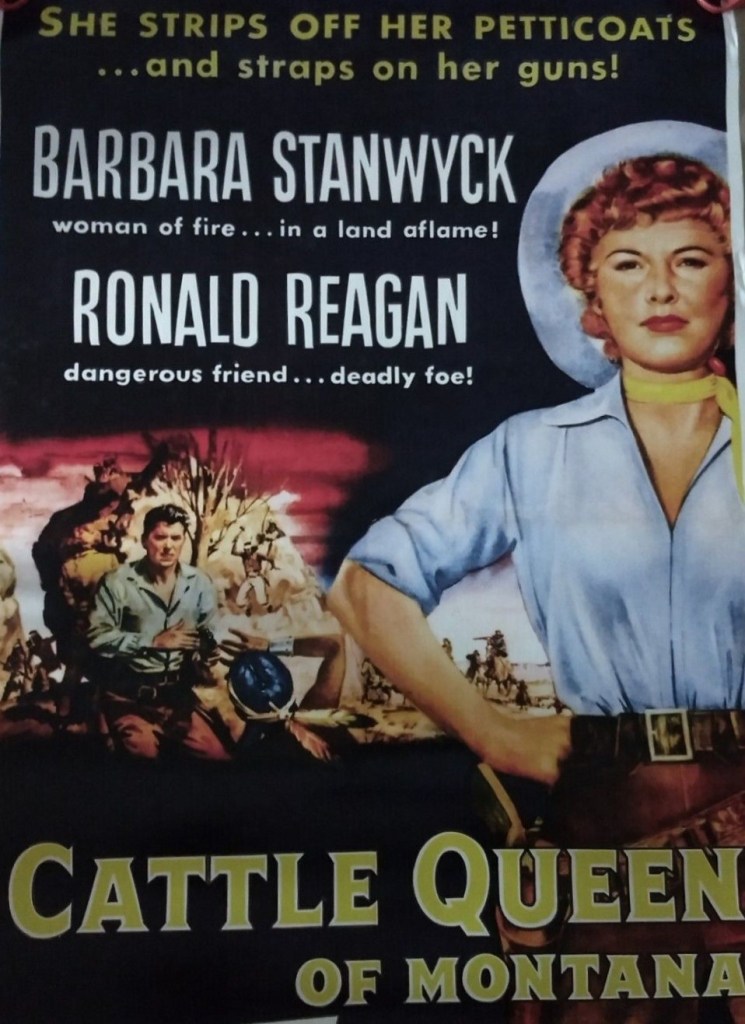
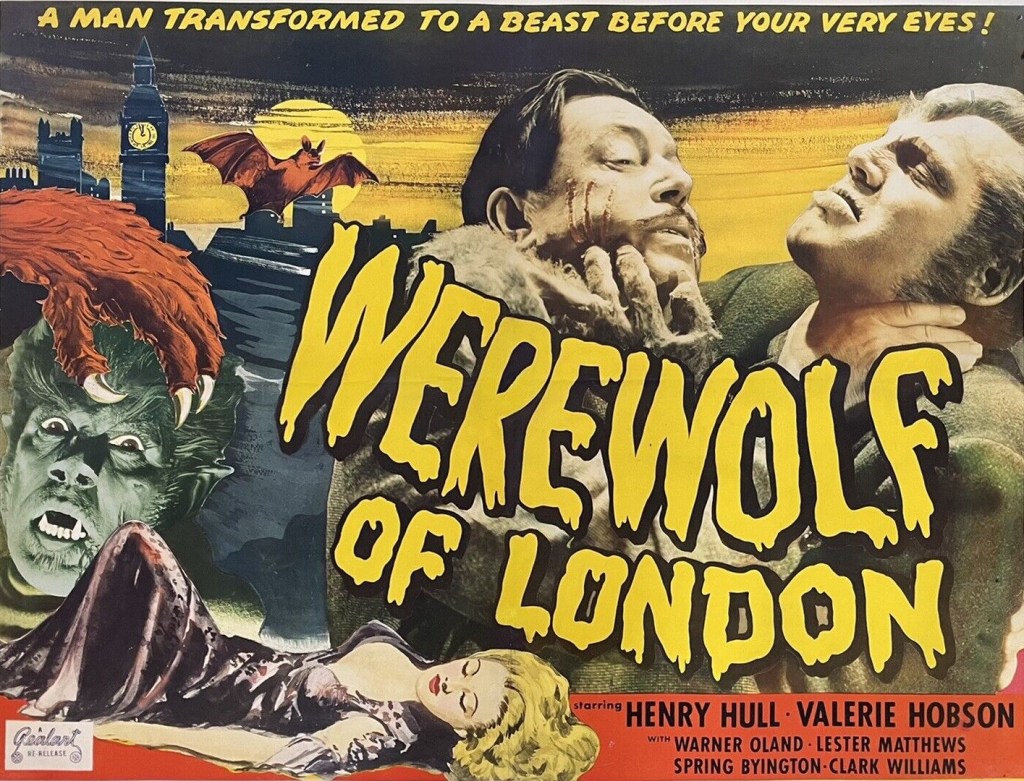
Just how old the offerings were varied. In 1968 over the period March 10-April 6 the youngest film presented on the Classic chain was Bonnie and Clyde (1967), the oldest Animal Crackers (1930), The Lady Vanishes (1938), Carol Reed’s The Stars Look Down (1940) and The Song of Bernadette (1943). In between you could choose between The Third Man (1949), Barbara Stanwyck as The Cattle Queen of Montana (1951), Viva Zapata (1952), The Brides of Dracula (1960), Billy Liar (1963), The Birds (1963), The Pawnbroker (1964) and Peter Sellers comedy After the Fox (1966).

On the foreign front, you could sample Vilgot Sjoman’s My Sister, My Love (1966), Godard’s A Woman Is A Woman (1961), offbeat French film Do You Like Women (1964) about cannibals owning a vegetarian restaurant, and Elke Sommer and Virna Lisi in Four Kinds of Women/The Dolls (1965). It was relatively easy to structure programs to cash in on a current picture by, for example, Peter Sellers or Marlon Brando or directors such as Alfred Hitchcock or Carol Reed.

By the 1970s repertory cinema was booming in America, 400 theaters in operation, major cities accommodating several, while in Britain the Classic chain was acquired by the Tigon production company.

SOURCES: Brian Hannan, Coming Back to a Theater Near You (McFarland, 2016) p48-49, 54, 63, 72-73, 77, 80-81, 72; Gideon Bachmann, “A New Generation of Critical Fans,” Variety, June 1, 1960, p5; Advertisement, Films and Filming, October 1961, p2;“One Night Revivals Add to Arthouse Profits,” Box Office, June 29, 1964, pA3; Gideon Bachmann, “International Film Societies Number 2,500,” Variety, April 20, 1967, p13; “Films in Repertory Set for Reade-Sterling House,” Box Office, February 8, 1965, pE5; “Brandon Lines Up Chain of 30 Arties for Medleys of Oldies and Offbeat Pix,” Variety, Septmeber 6, 1967, p5; “Repertory,” Films and Filming, April 1968, p23;“Squeeze More Coin on Last Run of Classic Films,” Variety, April 24, 1968, p7; “Classic Try Switch To Cinema Club,” Kine Weekly, February 8, 1969, p6; “Tigon Aims Complete Classic Deal by End July,” Kine Weekly, June 12, 1971, p3; Marianne Cotter, “Survival of Revival House,” Box Office, March 1, 1993, p24.

Advance Buzz – The Phenomenon Created in the 1960s

In 1964, Twentieth Century Fox created a new way of selling pictures by inventing the advance buzz.

Of course, movies had always had some kind of pre-launch push but mostly on a small-scale via gossip columnists, who, while they had some influence, did not actually receive much space in a newspaper. Fox set out to change all that and put movies on the front pages and gain big feature spreads inside, an event that only usually occurred through  unwanted scandal (Cleopatra, for example), death  or a photo of a big female star.

Fox revamped the press junket – at that time primarily used as a vehicle to announce a movie premiere – and turned it into a method of creating advance publicity and expanding awareness on new pictures long before they reached the screen. And did so with enormous style, transporting over 100 American journalists to Europe to watch the production of three major big-budget roadshows.

Cecil B. DeMille of all people had invented the movie press junket – for the world premiere of his swashbuckler The Buccaneer in 1938. At a time when world premieres were confined to New York and Los Angeles, Hollywood had begun experimenting on a small scale with different locales for a first showing – whaling picture I Conquer the Sea (1936) was unveiled in New Bedford, Massachusetts, The Petrified Forest (1936) in St Louis and Sutter’s Gold (1936) in Sacramento. But these were all local affairs, the selected city putting on a big show for local dignitaries but the media were drawn only from the immediate surrounding area with stories syndicated to bigger newspapers.

When he selected New Orleans for his world premiere, DeMille, as skilled in marketing as he was in direction, hired a deluxe train to bring journalists from the top newspapers and magazines down from New York and Chicago. The train had a special compartment kitted out with typewriters, telephones, radio, Dictaphones and even stenographers to “relay hot news as it happens.”

All expenses – accommodation, meals, alcohol and various other sundries – for an entire week were picked up by Paramount. Three radio stations made daily broadcasts and the journalists filed news stories and features about the stars and the city, and, most important of all, reviews of the film they were privileged to be the first to see. The city went to extraordinary trouble, proclaiming a local holiday, organizing parades, enlisting the help of local organizations to ensure there was some event worth reporting every day. Local retailers, hoteliers and restaurateurs made a fortune as hundreds of thousands of people piled in to see the stars and witness the festivities.

The press junket was born.

In the following years, world premieres were held all over America either in locations where the movie was filmed or places linked with a star or character. These varied from major metropolises like Detroit (Disputed Passage, 1939), Houston (Man of Conquest, 1939), Memphis (Dr Erlich’s Magic Bullet, 1940) and Philadelphia (Intermezzo, 1939) to smaller locales like Littleton, New Hampshire (The Great Lie, 1941) and South Bend, Indiana (Knute Rockne, All American, 1940).

But by the 1960s, the world premiere idea had been done to death. There was scarcely a town, city or venue that had not been the subject of premiere marketing.

So in 1964 with an unprecedented three roadshow pictures in production Twentieth Century Fox upped the press junket ante by flying a fleet of 110 journalists on a specially chartered Boeing 707 to Europe to watch filming on actual locations in Britain, Austria and Italy.

Over 40 cities were represented by reporters and included representatives of the New York Post, Los Angeles Times, UPI, Detroit Free Press, Kansas City Star, Boston Globe and the Seattle Times as well as The Mike Wallace Show (television) and NBC Radio and magazines as diverse as McCalls, Cue and Newsweek.

At the reconstructed Booker Airport in Britain, journalists watched stunts for Those Magnificent Men in their Flying Machines (1965) and interviewed stars like Sarah Miles, Terry-Thomas and Robert Morley. Each journalist had a photograph taken as a personal souvenir alongside a replica of a 1910 Antoinette airplane specially built for the film, but undoubtedly many such photographs found their way into the newspapers and magazines.

When the media cavalcade shifted to Austria they were treated to a massive banquet at Schloss Klessheim in Salzburg where The Sound of Music (1965) was being filmed. Julie Andrews was interviewed with her feet on a table and the reporters watched choreographer Marc Breaux rehearsing the “I Have Confidence” number (the music had been recorded in Hollywood and then played back synchronized to the action). Andrews and co-star Christopher Plummer were interviewed at Frohnburg Castle.

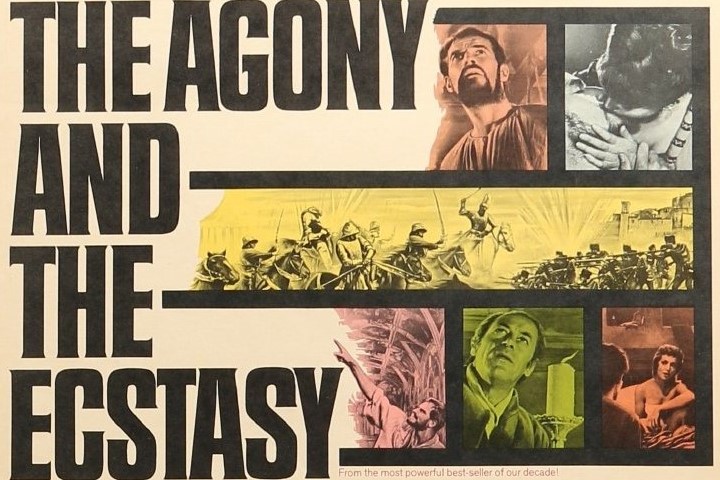
Italy – where The Agony and the Ecstasy (1965) was being shot – was the final destination. The visitors were conveyed up the perilous Carrera Mountains to the 4,700 ft Monte Altimissino to watch a scene being filmed in a quarry usually closed to visitors of a 200-ton block of marble being cut. Director Carol Reed, producer Darryl F. Zanuck and star Charlton Heston were on hand to welcome them. Rex Harrison (playing the Pope) was interviewed outside a restaurant in Rome that bore the Pontiff’s name 

Even before the journalists returned from the seven-day trip, they were sending stories back – over $8,000 (worth about $70,000 today) was spent on cable fees and nearly one million words had been written. Many of the journalists had never been to Europe before and took full advantage of the opportunity. Newspaper and magazines would not permit journalists to spend such a length of time away from the office without expecting a substantial bounty in the shape of news stories – the trip itself received extensive coverage.

Feature editors were deluged with stories and interviews that ran in the main sections of the newspaper and in weekend supplements, shifting the coverage of movies away from the  entertainment sections. In addition, to justify their time away, stories ran in the food, travel and fashion sections.

It was an unprecedented publicity bonanza for films that were still a full year away from release, creating a tsunami of public interest. For the first time a studio had created movie awareness on its own terms. While movies filmed in Europe had often received coverage based on reports by journalists living in that continent, this was rather cursory, had always appeared piecemeal in American newspapers, largely depended on an editor’s decision about reader interest in a particular star, and, more importantly, such stories usually coincided with the film’s launch rather than well in advance.

This huge media onslaught whetted public appetites well in advance. In addition, there were enough articles left over to be used up when the movies actually did open.

The trade press also widely reported on the event and Box Office magazine ran a 12-page feature one month later. In its evaluation of the junket, the studio concluded that it was the “most advanced type of industrial marketing.”

SOURCES: Brian Hannan, In Theaters Everywhere: A History of the Hollywood Wide Release 1913-2017, p32-36 (McFarland Publishing, 2019); “That Was the Week That Was…Fantastic,” Box Office, Jul 6, 1964, p10-21.

Discover WordPress

A daily selection of the best content published on WordPress, collected for you by humans who love to read.

The Atavist Magazine

by Brian Hannan

WordPress.com News

The latest news on WordPress.com and the WordPress community.