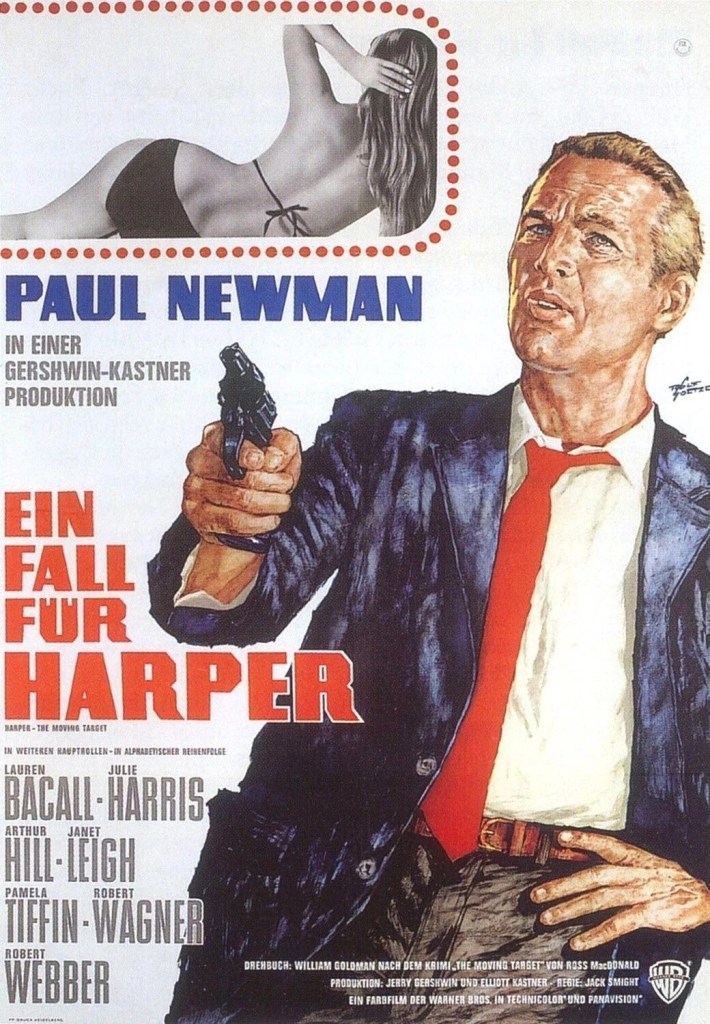
Harper / The Moving Target (1966) ****

Inventive screenplay by William Goldman (Masquerade, 1965), the ideal combination of witty lines and others that strike to the heart, and Paul Newman’s most naturalistic performance, and a family at each other’s throats, create a genuine addition to the private eye genre. Punch-ups are limited, generally the sleuth comes out worse, his skull an easy target apparently for any villain wanting to give him a good biff.

Most people remember the celebrated credit sequence. But, in fact, most people do not. They remember that this is a guy who will reuse old coffee grinds, which is as good a character definition as you’re going to get. But the opening sequence says much more – he sleeps in a pull-out couch, he falls asleep with the television on, dunking his face in ice suggests a hangover, and – the killer – he sleeps in his office. You won’t forget the ending either, the freeze frame, as fed-up Harper (Paul Newman) just gives up on the stupidity of mankind. And just before that there’s a delicious moment when crippled mother Elaine Sampson (Lauren Bacall) trills to the daughter she loathes Miranda (Pamela Tiffin) in a voice that would denote happiness but is anything but, “I’ve got some news for you,” as she looks forward to informing the child that the father she adores and that Elaine equally loathes is dead.

Not surprisingly, Harper’s on the verge of divorce from wife Susan (Janet Leigh), but he still hankers after being a knight in shining armor, those few days every year when he puts the world to rights rather than chasing down errant husbands in seedy hotel rooms.

The tale is a tad convoluted, involving initially tracking down Elaine’s estranged missing millionaire husband that turns into kidnapping and then murder with a side order of a fake cult headed by Claude (Strother Martin) that’s a front for an illegal immigrant operation, and going through the gears, character-wise, with malicious wife, an extremely flirtatious Miranda who gets her come-uppance when she tangles with Harper, faded alcoholic star Fay Estabrook (Shelley Winters) and junkie Betty (Julie Harris) sometime lover of lothario pilot Allan Taggert (Robert Wagner).

Two distinctive thugs Dwight Troy (Robert Webber) – Fay’s husband – and Puddler (Roy Jenson) offset the dumbest of dumb cops led by Sheriff  Spanner (Harold Gould) and lovesick attorney Albert Graves (Arthur Hill), Harper’s longtime buddy, who pines for Miranda.

Torture comes in two guises – the junkie gets the treatment from Dwight and Harper is put through the wringer listening to the endless whining of Fay as he tries to pump her for information. Harper avoids beatings and takes beatings and various characters bounce through doors with a gun – both Taggert and Graves save Harper from being shot.

Harper’s got a slick way about him, but mostly his charm is used to weasel information. He hasn’t got enough of it left to work on his wife.

When Harper’s not racing his sports car along twisting mountain roads, the action shifts to a cult temple, the docks and an abandoned oil tanker. Even when Harper works out who’s in on the kidnapping, it turns out he’s now got a murder to solve since someone’s bumped off the kidnappee.

Despite the endless complications, this whizzes along, helped enormously by Paul Newman’s (Cool Hand Luke, 1967) winning characterization. He’s brought a new trick to his acting arsenal, mastering a method of not listening to a conversation by tilting his head away from the speaker, and there’s a number of novel gestures. The scene where he rejects Miranda is a cracker. Tough guy running short of a soft center, he makes a very believable human being. And he’s got his work cut out because Lauren Bacall (Shock Treatment, 1964) is on scene-stealing duties. As is Pamela Tiffin (The Pleasure Seekers, 1964) though she can hardly match the older woman for arch delivery.

It’s a top-notch cast all the way down. Fans of Strother Martin (Cool Hand Luke) will enjoy his fake healer, Arthur Hill (Moment to Moment, 1966) is engaging, Robert Wagner (Banning, 1967) adds another notch to his rising star bow while Robert Webber (Don’t Make Waves, 1967) emanates menace with his “old stick” routine. Shelley Winters (The Scalphunters, 1968) is a great lush, Julie Harris (The Split, 1968) a junkie trying to pretend she’s not and Janet Leigh (Psycho, 1960), having kicked her husband out, still hoping he might come back in more acceptable form.

Jack Smight (The Third Day, 1965) directs with some zap. This should have had everyone singing the praises of crime writer Ross MacDonald, who in inventing the character (Lew Archer in the original) had inherited the Raymond Chandler mantle, but instead they came away whistling Dixie for screenwriter William Goldman.

Class act.

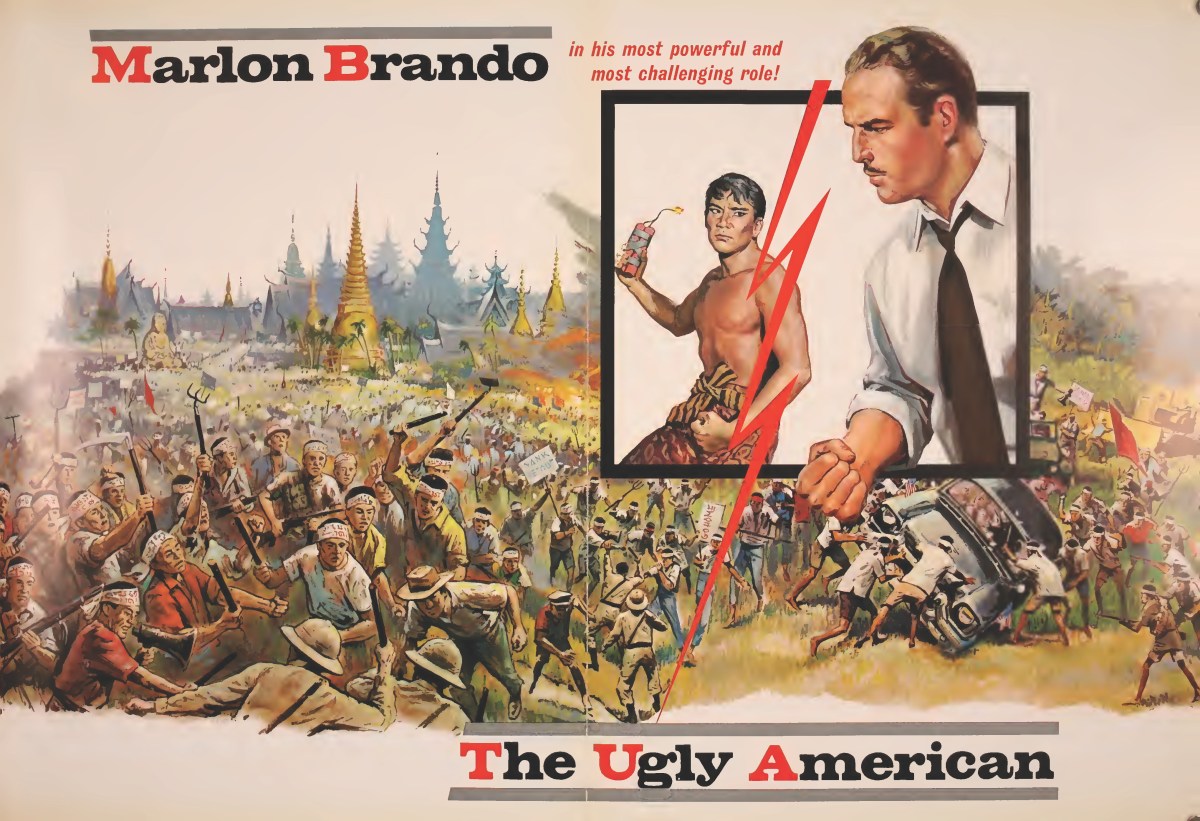
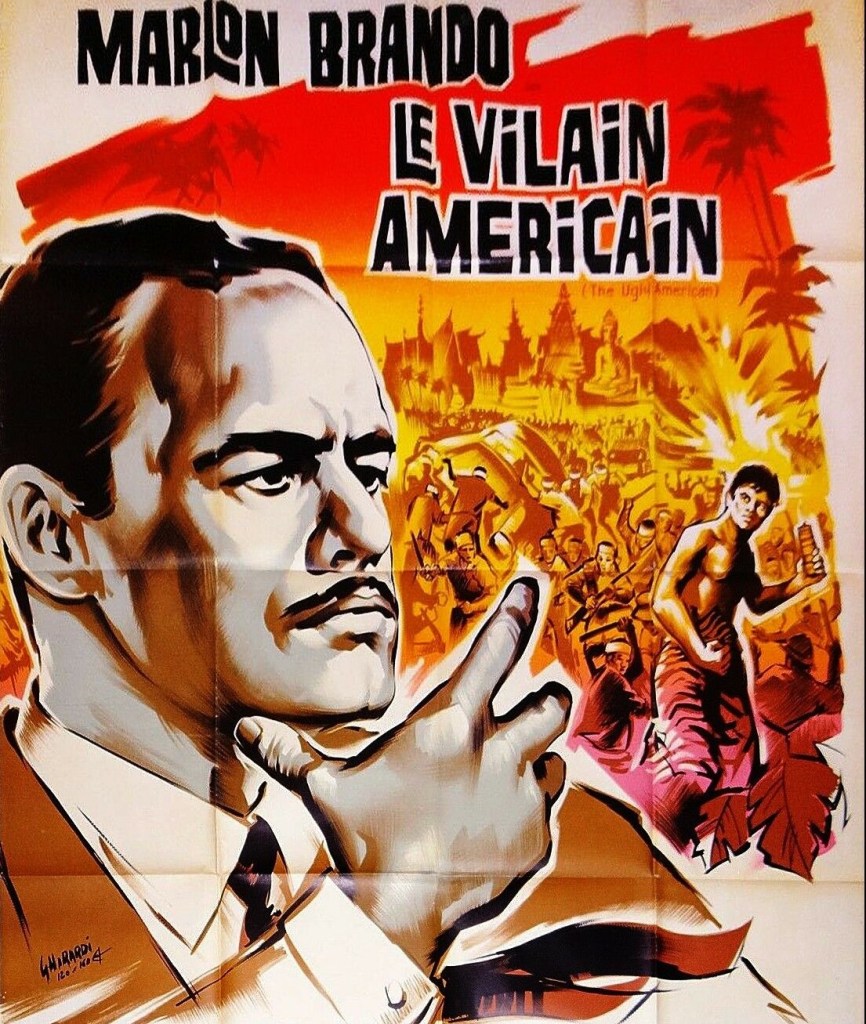
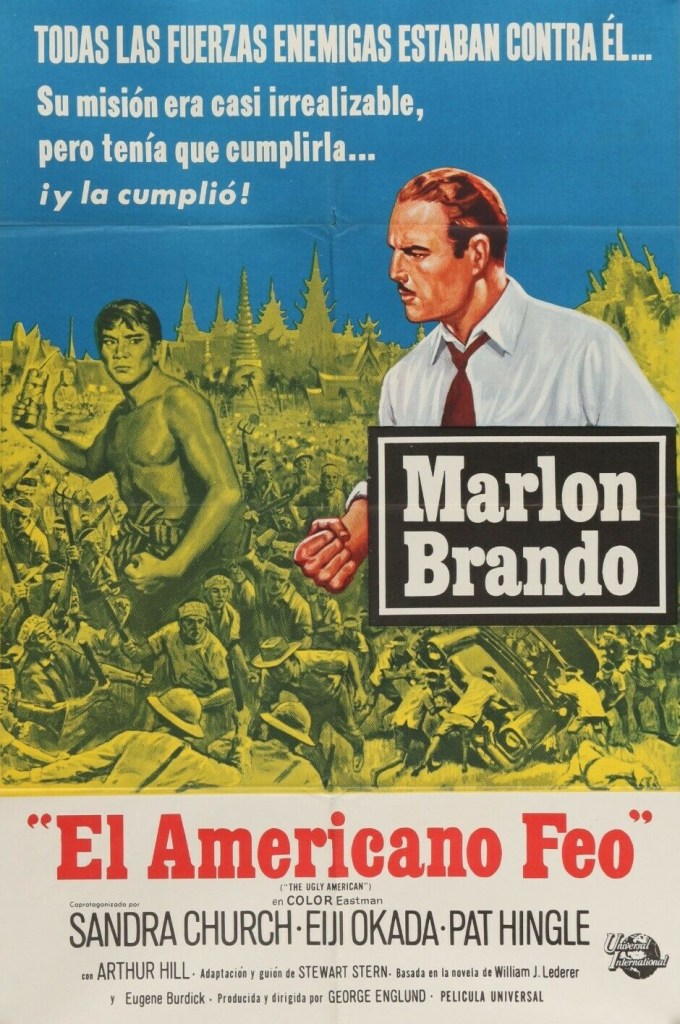
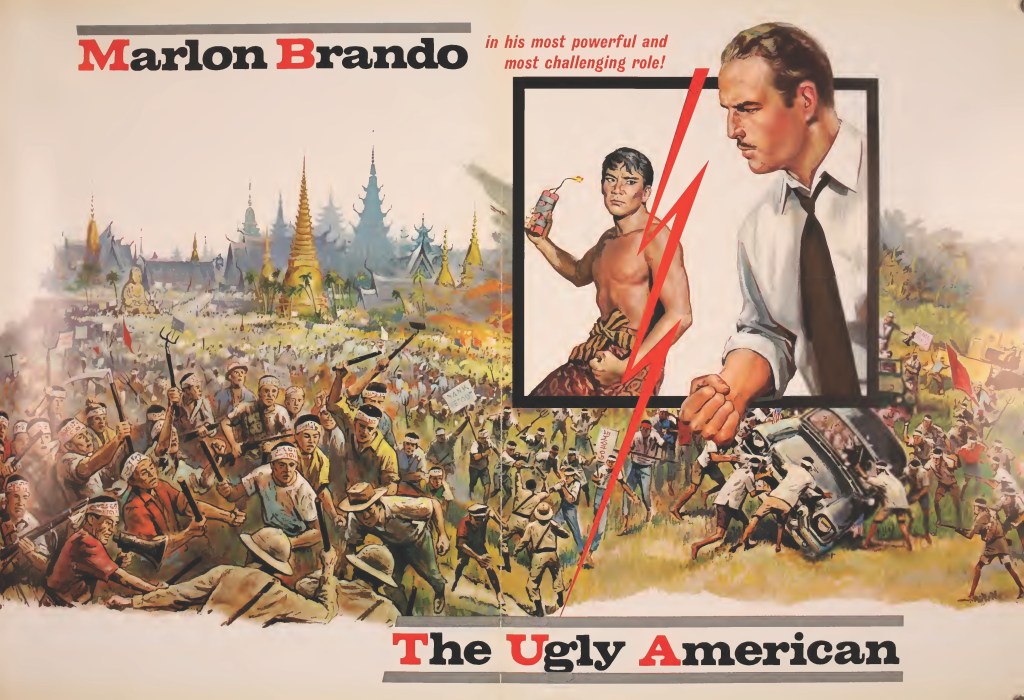
The Ugly American (1963) ***

Terrific performance from Marlon Brando saves this prescient but preachy meditation on Vietnam. Harrison MacWhite (Marlon Brando) is the new ambassador, whose political credentials are questioned by many,  parachuted into the fictional South-East Asia country of Sarkhan, knee-deep in civil war, Communist north versus westernized south. The battleground is the American construction of a “Freedom Road” north to China which dissenters fear will be a conduit for the military. MacWhite owes his appointment to his friendship with Deong (Eeji Okada), a charismatic leader.

On arrival, the ambassadorial car is engulfed in a riot, car rocked, windscreens smashed. MacWhite shakes up a complacent embassy and though articulate and scholarly believes he holds the solution to the tricky situation, not willing to accept that national self-determination does not necessarily mean complete hatred of the Americans. There is duplicity on both sides, rebels blaming U.S. truck drivers for deaths they caused, the Americans so used to getting their way they don’t stop to think if it is the right way.

Anxious not to be seen as a lapdog for Communism, MacWhite’s actions inflame the situation, while Deong falls victim to internal forces. Construction boss Homer Atkins (Pat Hingle) promotes the clever use of building hospitals along the road, thus encouraging locals to back it, but nobody falls for such honest skull-duggery masquerading as well-meaning intent.

Friends turning into enemies is a decent premise for any movie but this is over-burdened with debate that while interesting and providing a reflection of the times is basically a mixture of virtue-signalling and apportioning blame and, most heinous of failings, doesn’t really advance the story.

First-time director George Englund handles the action sequences well and captures the essence of a country about to explode against a background of growing tension and political machination. Use of Thailand as a location adds authenticity.

Based on a controversial novel by political scientist Eugene Burdick (who also wrote a more straightforward cold War thriller Fail Safe) and William Lederer, navy veteran and CIA officer, so it carried the stamp of authority in terms of putting forth the arguments for both sides. However, while the film bears only a “passing resemblance” to the book, according to co-author Burdick, he deemed it a superior achievement on the basis of its more dramatic treatment. Stewart Stern (Rachel, Rachel, 1969) was the screenwriter who received blame and praise in equal measure.

Marlon Brando (Burn! / Quiemada, 1969) exudes authority, broad shoulders packed into a suit, and brilliant captures the anguish of a man led into disaster by arrogance. Coming off back-to-back flops One-Eyed Jacks (1961) and Mutiny on the Bounty (1962), this was a considerable change of pace, the first of several excursions into political territory. Eeji Okada (Hiroshima, Mon Amour, 1958) proves a worthy opponent. Pat Hingle (Sol Madrid, 1968), Arthur Hill (Moment to Moment, 1965) and Jocelyn Brando (The Chase, 1966) provide sterling support.

The movie did not just predict what would happen if the U.S. lost the battle for hearts and minds but a similar situation confronting the U.S. Ambassador to Indonesia in 1965 whose appointment was unwelcome in that country.

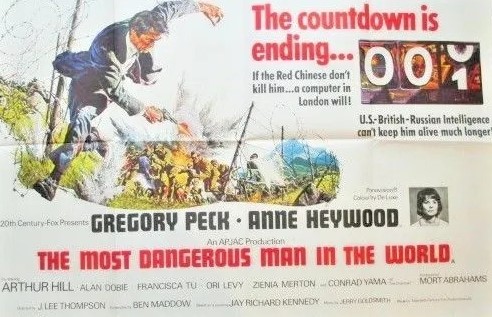
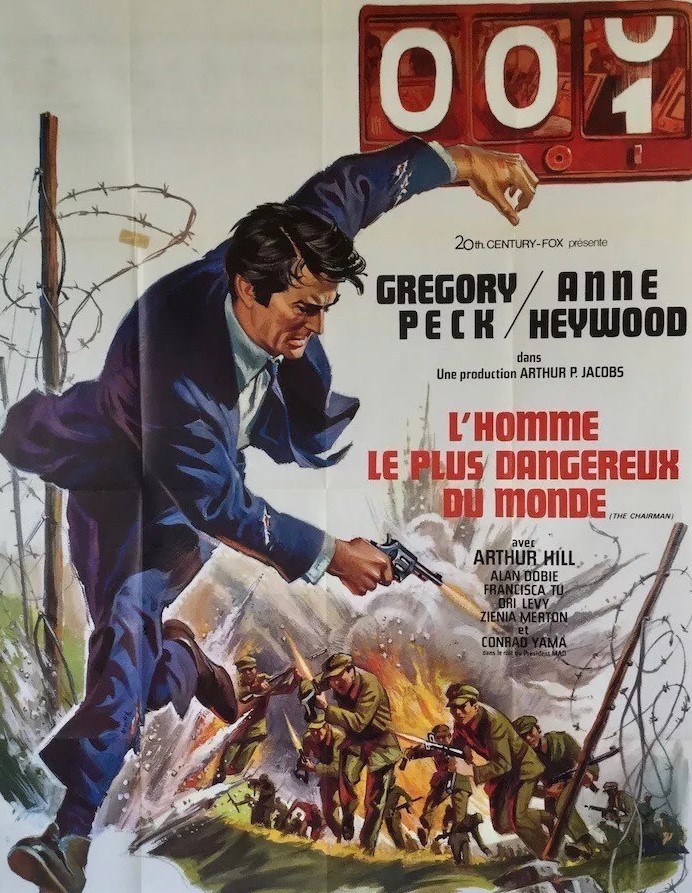
The Chairman / The Most Dangerous Man in the World (1969) ****

The sci-fi elements in this tidy paranoia thriller set in Communist China are not the only issues overlooked at the time and worthy of reconsideration now. Anyone who blasted it for supposedly political jingoism conspicuously failed to read a subtext that chimed with young left-wingers for whom Chairman Mao was not, as now, perceived as a tyrant du jour but as a political god. There’s a distinct whiff of Philip K. Dick in the implanting in a spy’s head of not just a tracking/listening device but one laced with explosive that can be remotely triggered for suicidal or murderous gain. Needless to say, the spy, ignorant of this fact, was a de facto sacrificial lamb. And a key plot thread about genetically modified crops as a means of solving world hunger came about four decades too early.  

Widowed Nobel prize winning scientist Dr Hathaway (Gregory Peck) is despatched into China via Hong Kong to contact a missing scientist with a revolutionary formula for an enzyme. A series of crisp flashbacks set up the scenario of the tracking device and a reverse echo of Marooned (1969) where Army chiefs back at base, led by one-eyed Shelby (Arthur Hill,) can listen in but are helpless to intervene – except in sinister manner. Shelby considers Hathaway “the wrong brilliant man” for the task and that they have sent in “a civilian to do a soldier’s job.”

Not able to trust the Brits to know who the title referred to, they came up with a lame alternative. The taglines reveal way too much of the plot.

The hidden transmitter allows Hathaway to keep his superiors posted but the listening device also picks up a creaking bed as Hathaway almost falls into a honey trap in Hong Kong. Amazingly, he doesn’t have to sneak into China but is welcomed with open arms and hustled along to a meeting, and a game of ping-pong (the real thing and the verbal equivalent) with Chairman Mao (Conrad Yama). While spouting some propaganda, Mao is surprisingly open about sharing the secret of the enzyme rather than blackmailing a starving world. Meanwhile, it’s the Americans who are more interested in the double cross, Shelby itching to blow up Hathaway’s head in the assumption the explosion would dispose of the Chinese leader.

Emissions from the transmitter are tangling up the airwaves, making the Chinese secret police highly suspicious of Hathaway as he heads for the secret scientific compound housing Professor Soong Li (Keye Luke), creator of the enzyme, and his daughter Chu (Francesca Tu).

Turns out Hathaway has been summoned by the professor to help find a missing link in molecular chains. Hathaway has to burgle his way to steal the formula, but fails to find it, but when the professor commits suicide and is denounced by his daughter and the Chinese secret police close in, Hathaway has to scarper and head for the Russian border, that country, oddly enough for a spy movie, being on the same side as the Yanks. Meanwhile, Shelby’s trigger finger it itching to blow his man sky high for fear he might give away details of his mission.  

The French, too, had trouble with the original title.

Turns on its head many of the spy film’s truisms: firstly that Hathaway effectively fails in his mission; secondly that patriotism doesn’t blind him to his country’s greed or folly; thirdly that’s he not in constant seduction mode.

Political argument that one point seemed to excessively delay the narrative thrust, now, at half a century’s move, seems more considered and providing an interesting balance between opposing views.

Gregory Peck (Marooned, 1969) is at his quizzical best, deeply-rooted scepticism helping to anchor his character. But if you were attracted by seeing Anne Heywood (The Fox, 1967) second-billed you’re in for a disappointment as she just tops and tails the picture. Arthur Hill (Moment to Moment, 1966) is good value as always.

But it’s testament to J. Lee Thompson (Mackenna’s Gold, 1969, also starring Peck) that his direction brings together diverse political/sci fi/spy/thriller elements in a winning formula, ignoring the obvious. Some interesting detail: someone handing out coffee on a tray to the inmates of the command station; Hathaway’s guilt at his role in the death of his wife barely touched upon, but it explains a lot; Mao’s famous Little Red Book provides a twist.

Occasional flaw: surely the Chinese would have bugged Hathaway’s room and catching him, however soft voiced, filling in his superiors. The idea that the Chinese could be technologically more advanced than the U.S. would have had John Sturges in a fit of fury, but Thompson takes it in his stride. Screenplay by Ben Maddow (The Way West, 1967) and Jay Richard Kennedy (I’ll Cry Tomorrow, 1955).

Reassessment overdue.

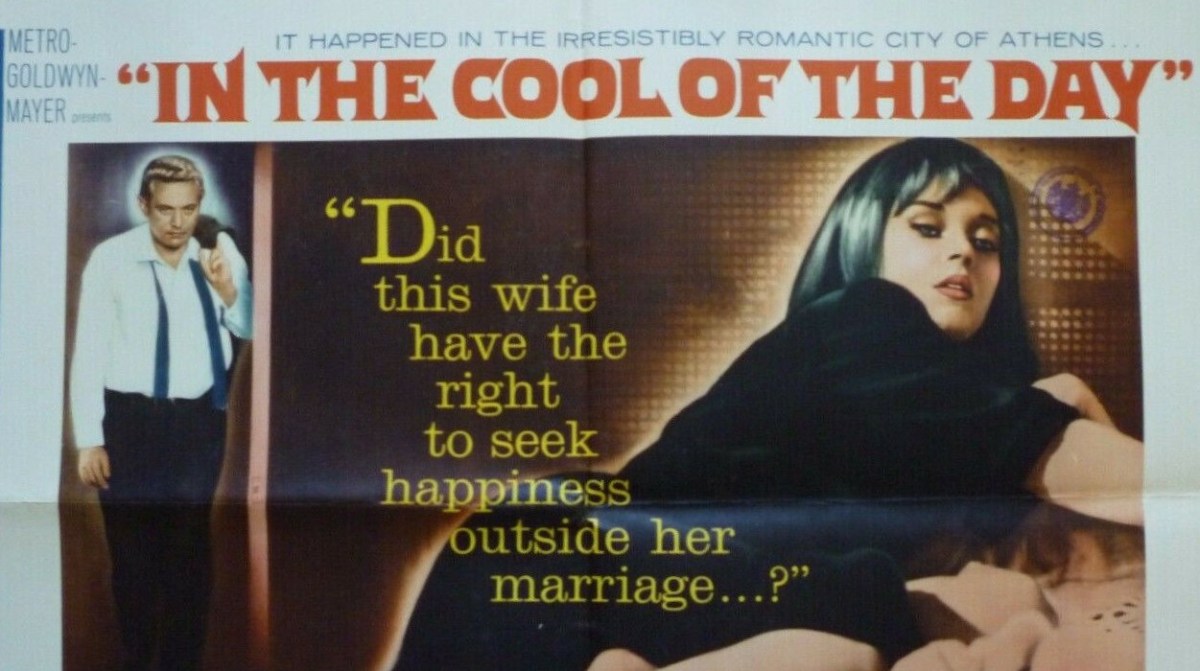
In the Cool of the Day (1963) ***

Jane Fonda tagged this the worst film of her career but that’s a bit harsh and I suspect it owed a lot to the actress being dressed up Audrey Hepburn-style in outfits that scarcely suited her. While it’s certainly overheated, melodramatic moments indicated by thundering music, a marvellous supporting cast, including a quite bitchy Angela Lansbury, provides ample compensation.

It’s  romance in the Love Story vein, rich young flighty heroine Christine (Jane Fonda) at death’s door half her life, but feeling smothered by understandably over-protective husband Sam (Arthur Hill). When she falls for married publisher Murray (Peter Finch) and sets off on a trip to Greece, chaperoned it turns out by Murray’s bitter wife Sybil (Angela Lansbury), it takes a while for romance to physically bud. That it does at all is only because   Sybil has taken off with suave traveling salesman Leonard (Nigel Davenport).

The movie takes a long time to heat up because, as in The Bramble Bush fashion, there’s overmuch character filling-in to do. Part of the interest in this picture is how the bad guys are effectively good guys, more victims of their partner’s behaviour than anything else, though for story purposes, the audience has to be persuaded otherwise.

So besotted Sam, having dealt with umpteen bouts of his wife’s pneumonia and lung operations, a “slave” to her illnesses, is deemed as treating her like a child rather than a wife, preferring her ill rather than well, and denying her the adventure to which she feels entitled. When she meets Murray she has run away. Murray’s wife has a downer on her husband because, wait for it, he killed her child and left her facially scarred (hidden now by hair but she’s still very sensitive about it) in a car accident he caused.

But she’s portrayed as over-sensitive, worried about her appearance, snippy, blaming him for her distraught life, and worse, a philistine, hating being dragged around ancient Greek monuments. Aware of her husband’s proclivities, she mocks, “You’d be an idiot to fall in love with her.” And any time she ventures out, the music rises to a crescendo as if she is a character straight out of film noir.

When she goes off with Leonard, her love affair is viewed as sneaky rather than redemptive, even though he restores her faith in herself. Triumphantly, she tells Christine, “He’s all yours” and her husband “nobody need feel sorry for me any more.”Admittedly, she does take revenge by informing Christine’s husband, who has entrusted his wife to Murray’s care, of their affair. And you would be hard put to argue, although the film wants you to believe otherwise, that Sybil and Sam have been ill-treated by their partners, Sam, in particular, funding her trip to Greece in the hope that allowing her the freedom she needs will save their marriage.

Of course, the characters of both partners, even if their self-pitying is the result of circumstance, do mean that Christine and Murray are presented as people trapped in bad marriages and for whom love, however brief, provides sanctuary from tortured lives, her physical, his more mental, since he is not averse to guilt. 

Sybil’s lack of interest in tourist Greece handily gives the prospective lovers plenty time to fall in love, amid gorgeous scenery, and breathing in air rich in culture. With all film made in the 1960s and set in foreign parts – Pretty Polly (1967) another example – sometimes the story takes second place to the scenery, so it’s lucky that the romance is played out against such an interesting background, an ideal combination, killing two birds with one stone if you like. Given this is prior to Zorba the Greek (1964), the filmmakers have even managed to sneak in some traditional Greek dancing, albeit on the deck of a ferryboat.

Dress-wise, the lovers are ill-matched, Murray plodding around in a suit while Christine parades the latest often clingy fashion. When Sybil departs the scene, that leaves one happy character of the happy couple free of marital encumbrance, but still leaves open the question of how Christine will rid herself of Sam and, more importantly, will Murray wish to take on the all-consuming job of nursing Christine. He never gets the chance to find out. When she does fall ill – as the result of Murray recklessly keeping her out in a thunderstorm – her mother Lily (Valerie Kendrick) swoops in to rush her to hospital.

Spoiler Alert – I’m telling you that she dies because it seems to me that the ending the filmmakers hoped for is not how the audience will perceive it. Beautiful young woman dies too young, yep that’s there, but the man, now free and able to shake off his dull life and start afresh as a writer, seems a long shot. Given he has now, thanks to the thunderstorm episode, killed two people, I would surprised if guilt was not uppermost in his mind.

Not so-good-it’s-bad, and despite the complications, and perhaps because of the Sybil-Leonard romance, it’s certainly an interesting picture as much, perhaps, because it fails to send the audience in the desired direction.

In only her fifth movie, Jane Fonda (They Shoot Horses, Don’t They, 1969), exhibiting the nervous friskiness that would become a hallmark, does pretty well with a febrile, spoiled, character. If she falls down at all it’s that she appears uncomfortable wearing Orry Kelly’s fabulous gowns and it would take Hollywood some time to work out she was not a natural successor to Audrey Hepburn. Peter Finch (The Pumpkin Eater, 1964) is perfectly at ease with the illicit.

But Angela Lansbury (Harlow, 1965), a hoot as the wife who turns rejection into triumph, steals the show. Throw in Arthur Hill (Moment to Moment, 1966), Nigel Davenport (Sands of the Kalahari, 1965), for once neither smug nor snippy, Alexander Knox (Khartoum, 1966), veterans Constance Cummings (The Criminal Code, 1930) and Valerie Taylor (Went the Day Well, 1942), John Le Mesurier (The Liquidator, 1965) and Alec McCowan (Frenzy, 1972) and you have a movie where hardly a moment goes by without admiring a performance.

Robert Stevens (I Thank a Fool, 1962) directed from a screenplay by Meade Roberts (Danger Route, 1967) based on the novel by Susan Ertz.

The Ugly American (1963) ***

Terrific performance from Marlon Brando saves this prescient but preachy meditation on Vietnam. Harrison MacWhite (Marlon Brando) is the new ambassador, whose political credentials are questioned by many,  parachuted into the fictional South-East Asia country of Sarkhan, knee-deep in civil war, communist north versus westernized south. The battleground is the American construction of a “Freedom Road” north to China which dissenters fear will be a conduit for the military. MacWhite owes his appointment to his friendship with Deong (Eeji Okada), a charismatic leader.

On arrival, the ambassadorial car is engulfed in a riot, car rocked, windscreens smashed. MacWhite shakes up a complacent embassy and though articulate and scholarly believes he holds the solution to the tricky situation while unwilling to accept that national self-determination does not necessarily mean complete hatred of the Americans. There is duplicity on both sides, rebels blaming U.S. truck drivers for deaths they caused, the Americans so used to getting their way they don’t stop to think if it is the right way.

Anxious not to be seen as a lapdog for Communism, MacWhite’s actions inflame the situation, while Deong falls victim to internal forces. Construction boss Homer Atkins (Pat Hingle) promotes the clever use of building hospitals along the road, thus encouraging locals to back it, but nobody falls for such honest skull-duggery masquerading as well-meaning intent.

Friends turning into enemies is a decent premise for any movie but this is over-burdened with debate that while interesting and providing a reflection of the times is basically a mixture of virtue-signalling and apportioning blame and, most heinous of failings, doesn’t really advance the story.

First-time director George Englund handles the action sequences well and captures the essence of a country about to explode against a background of growing tension and political machination. Use of Thailand as a location added authenticity.

The movie was based on a controversial novel by political scientist Eugene Burdick (who also wrote a more straightforward cold War thriller Fail Safe) and William Lederer, navy veteran and CIA officer, so it carried the stamp of authority in terms of putting forth the arguments for both sides. However, while the film bore only a “passing resemblance” to the book, according to co-author Burdick, he deemed it a superior achievement on the basis of its more dramatic treatment. Stewart Stern (Rebel Without a Cause, 1955) was the screenwriter who received blame and praise in equal measure.

Marlon Brando (Bedtime Story, 1964) exudes authority, broad shoulders packed into a suit, and brilliantly captures the anguish of a man led into disaster by arrogance. Coming off back-to-back flops One-Eyed Jacks (1961) and Mutiny on the Bounty (1962), this was a considerable change of pace for the actor, the first of several excursions into political territory. Eeji Okada (Hiroshima, Mon Amour, 1958) proves a worth opponent. Pat Hingle (Sol Madrid, 1968), Arthur Hill (Moment to Moment, 1965) and Jocelyn Brando (The Chase, 1966) provide sterling support.

The movie did not just predict what would happen if the U.S. lost the battle for hearts and minds but a similar situation confronting the U.S. Ambassador to Indonesia in 1965 whose appointment was unwelcome in that country.

You can catch this on Amazon Prime.

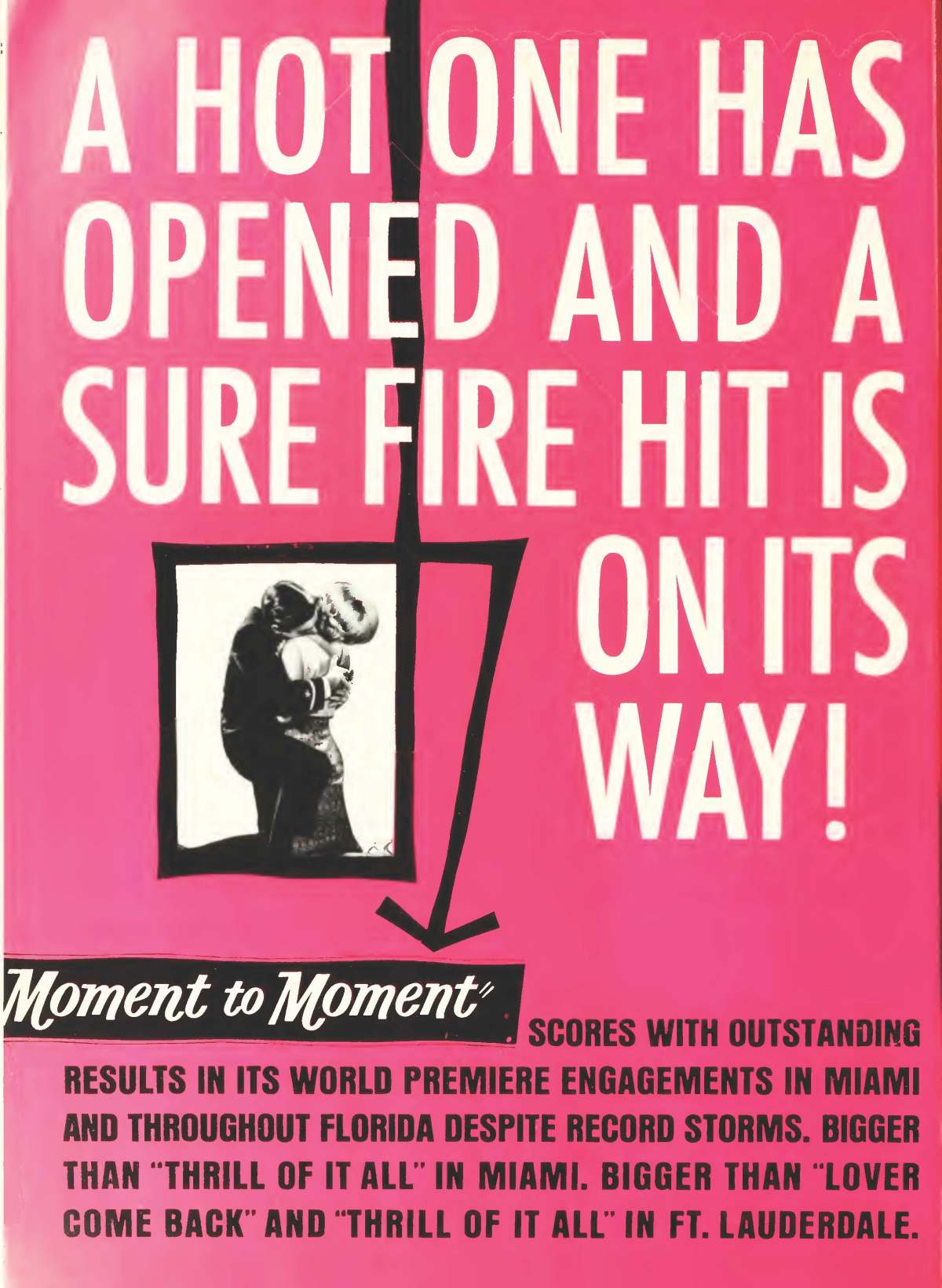
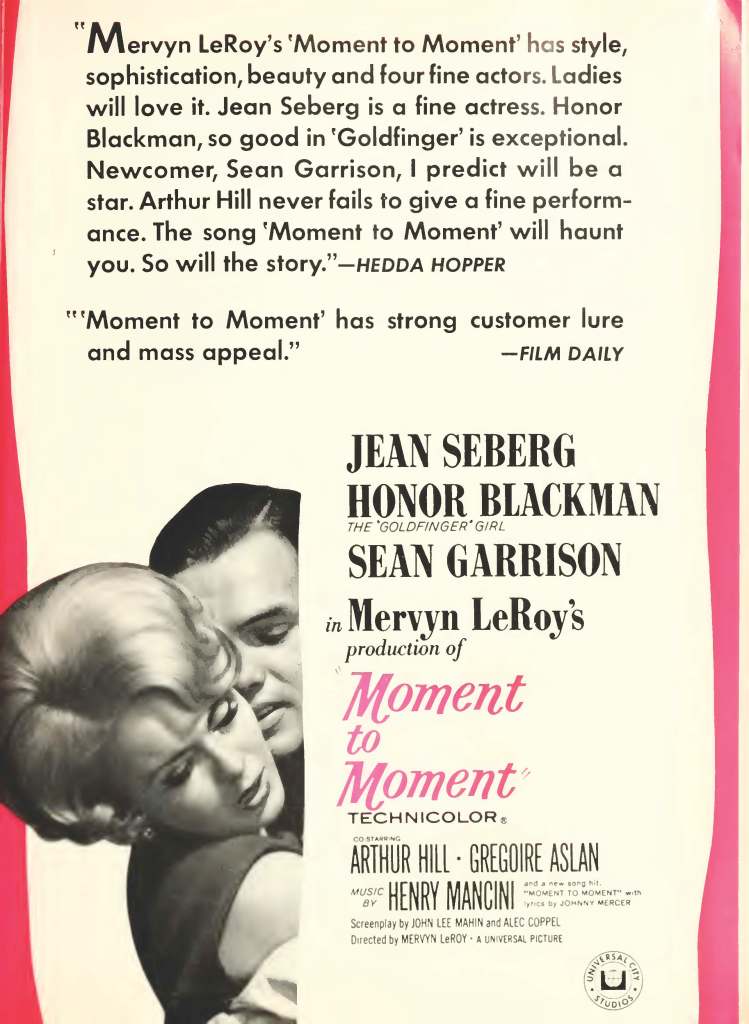
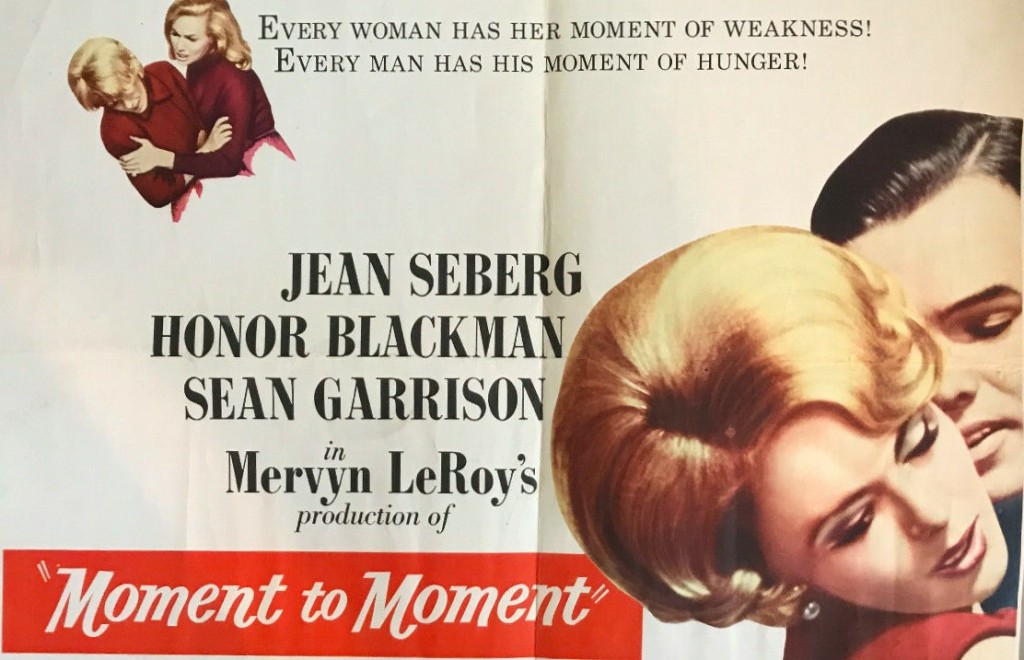
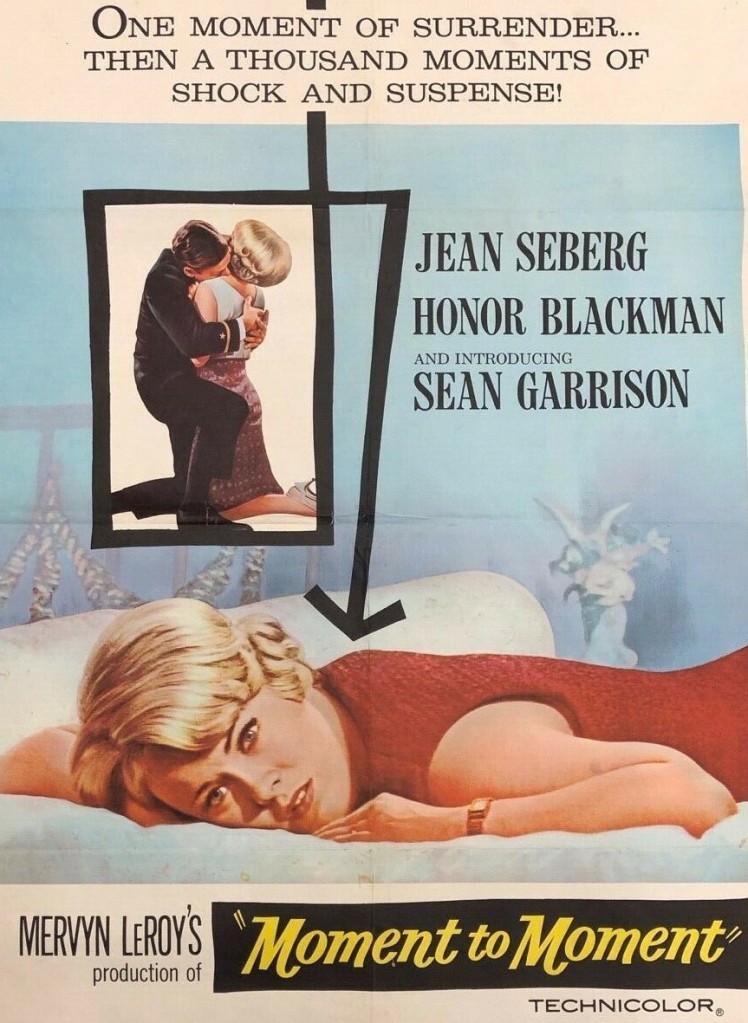
Moment to Moment (1966) ***

Screenwriter Alec Coppel, responsible for Alfred Hitchcock’s Vertigo (1958) – now considered the best film ever made, supplanting Citizen Kane in the Sight & Sound poll – follows pretty much the same structural idea as in the James Stewart-Kim Novak thriller. The second half here is in many respects a repeat of the first, with a man trying to recapture previous experience in a bid to reawaken memory.

But in this case the man is French police inspector DeFargo (Gregoire Aslan) trying to trap glamorous Kay Stanton (Jean Seberg) suspected of killing young sailor and architect-wannabe Mark (Sean Garrison) with whom she has engaged in a brief affair. DeFargo is cunning in the extreme, almost stalking Stanton, turning up unexpectedly, employing all sorts of ruses, including recruiting Stanton’s unsuspecting husband Neil (Arthur Hill), an internationally renowned psychiatrist.

The picture is set on the French Riviera so it’s the height of fashion. Kay wears a series of stunning top-of-the-range clothes (designed in fact by Yves St Laurent), as does high-living  neighbor and suspected accomplice Daphne (Honor Blackman). Kay drives a red sports car and frequents swanky restaurants and chic bars.

A number of cleverly-wrought images in the first half – white doves that turn golden at sunset, dancing to a tune called “Moment to Moment,” the wind causing shutters to bang, a statue in a village square, some sketches, the clacking together of the hard balls used to play the French traditional game of boules, a boardgame called “Blockhead” – prove pivotal in the second half. They form clues from which the inspector has to determine meaning.  

But if ever there was a film of two halves, this is it, and they are not a great fit. The first section involves Kay, lonely due to her husband’s continual absence, embarking on an affair. That she initially resists, in order to prove she is at heart really a good woman, gets in the way of the picture, since that makes the romance more drawn-out than necessary and leaves the viewer wishing the director would get a move on. Even though the time is spent in planting all the clues necessary for the second half to work, had Kay been more keen on a piece of action, driven for example (as is the case) by her husband staying away far longer than promised, it would have speeded things up to get to the more interesting part of the story.

Part of the problem is that the affair is totally unconvincing. Mark is handsome enough and dashing in the way most sailors are in uniform with an artistic streak, first viewed  making sketches, but Sean Garrison is so wooden the romance never sparks. That leaves Seberg to do the heavy lifting and, in fairness, once she is targeted by the wily inspector she comes up to the mark.

I’m not the first to think, after watching this picture, what would Hitchcock have done? That was exactly the same conclusion reached by the New York Times critic on original release. For this picture has a great deal going for it, but not a sufficient quota of suspense, and, as I mentioned, takes too long to get to the core of the story.

However, the second half works exceptionally well, as Seberg is put under pressure by the wily inspector and her husband unexpectedly enters the equation. An abundance of  twists culminate with a number in the final few minutes that serve to confound audience expectation.

Seberg’s career up to now had been somewhat disjointed, a sense of unfulfilled potential. An Otto Preminger protégé via Saint Joan (1957) and Bonjour Tristesse (1958), she was widely believed, despite the artistic coup of Jean-Luc Godard’s Breathless (1960), to have thrown her career away by decamping to France where she made no further films of particular note. Her previous Hollywood offering Lilith (1964) had not commercially delivered. So this high-budget Universal number was considered something of a comeback. But the perfectly-coiffed fashion-model look seems a poor imitation of Grace Kelly (To Catch a Thief, 1955) and Tippi Hedren (The Birds, 1963). At times, with the romance scarcely touching the lower rungs of passion, the movie falls back on haute couture.

Second half Seberg is better than the first as she is given far more material to work with and a decent opponent in Gregoire Aslan. Honor Blackman, as a flirtatious divorcee, reinvents her  screen persona, far removed from her memorable incarnations as Catherine Gale in British television series The Avengers (1962-1964) and Pussy Galore in Goldfinger  (1964). Sean Harrison made only one more movie, and his career mainly consisted of television. Arthur Hill (Harper, 1966) is excellent as the over-enthusiastic husband, unwittingly hammering nails in his wife’s coffin and Gregoire Aslan (Lost Command, 1966) almost steals the show as Seberg’s accomplished adversary.

Veteran Mervyn LeRoy (The Devil at 4 O’Clock, 1964) had a distinguished and versatile career including an Oscar nomination for Random Harvest (1942) and recipient of an Oscar in the form of the Irving G. Thalberg Award for lifetime contribution to the business. But this isn’t quite up to the mark of innovative gangster picture Little Caesar (1931), drama Little Women (1949), Biblical epic Quo Vadis (1951) or cultish The Bad Seed (1958).  

Discover WordPress

A daily selection of the best content published on WordPress, collected for you by humans who love to read.

The Atavist Magazine

by Brian Hannan

WordPress.com News

The latest news on WordPress.com and the WordPress community.