The Power (1968) ***

Low budget sci-fi effort that had little chance in the box office stakes that year up against the big budget psychedelic 2001: A Space Odyssey and the visceral Planet of the Apes. Producer George Pal and director Byron Haskin, the key figures behind War of the Worlds (1953), would later become among the most exalted in the sci-fi genre, but the cult of the 1950s sci-fi movies did not exist yet. Yet if made today, we would be treating this as an origin story with a sequel already in the works and creation of its own universe on the cards.

As the budget can only accommodate a few explosions and a derisory number of tiny special effects, emphasis is placed on imagination as the source of tension. The uncanny remaining unexplained helps ensure mystery remains character-driven. Wisely, the film makers steer clear of providing any detail on the strange force.

It begins with the neat title “Tomorrow.” As part of a planned space program, a team of scientists  experimenting on the limits of human endurance discover that one of them has unusual powers. As a group they are able to make revolve a piece of paper attached to a vertical pencil without establishing who is the driving force. When Professor Hallson (Arthur O’Connell) is found dead in a centrifuge, the only clue being a scrap of paper bearing the name Adam Hart, suspicion falls on the other members. Professor Tanner (George Hamilton) is dismissed when the investigation discovers his credentials are fraudulent.   

Seeking to prove his innocence, Tanner goes on the run before establishing that the main suspects are the mysterious Adam Hart and three of the original team – military chief Nordlund (Michael Rennie), Professor Scott (Earl Holliman) and Tanner’s girlfriend Professor Lansing (Suzanne Pleshette). But he is mostly baffled by the goings-on which include being dumped in an air force target range. He could be the culprit but again so many odd occurrences take place when others are present that it would be hard to pin the blame on Tanner. As the corpses begin to pile up, the list of potential suspects naturally decreases.

A toy winks at Tanner, walls appear were there were none before, a man is convinced Tanner is someone else (not Hart), a high-flying professor’s wife lives in a trailer, characters collapse under psychic assault, a young woman trying to seduce an old man discovers she is kissing a corpse, the imagery appears inspired by Salvador Dali and Hieronymus Bosch,  and you could easily argue that Tanner’s academic records have been deliberately erased. On the more prosaic side, the cops are next to useless, there’s a car chase and a sequence in a lift shaft, but the bulging eyeballs suggested in the posters are a marketeer’s invention. There’s even a clever joke, Tanner  misreading a newspaper headline “Don’t Run” as being a message to him.

The oddities are sufficiently off-beam to appear as figments of the imagination and it certainly seems Tanner suffers from hallucinations.  And there are some deliciously off-key characters, an old woman obsessed with fly-swatting, a sultry waitress. If Hart is the superhuman then experiments may have taken place long before now. In his hometown, people still act on instructions Hart handed out a decade before and accomplices are in place such as Professor Van Zandt (Richard Carlson).

Adding to the mood are philosophic discussions about the existence (as already a fait accompli) of a superhuman: some want to clone him, others would happily submit to him.

Byron Haskin (Conquest of Space, 1955) and George Pal ( The Time Machine, 1960) have marshalled their puny resources with exceptional skill, down to hiring as leading man George Hamilton (Your Cheatin’ Heart, 1964), so far from being a big star at the time that audiences would not automatically assume he had to be the good guy, and peopling the production with names from 1950s sci-fi like Michael Rennie (The Day the Earth Stood Still, 1951) and Richard Carlson (Creature from the Black Lagoon, 1954).

George Hamilton, in the days before the perma-tan became his calling card, is surprisingly good and the supporting cast does what a good supporting cast should do. Suzanne Pleshette (Nevada Smith, 1966) convinces as the lover who could be the cool killer. Also look out for 1940s glamor puss Yvonne De Carlo and a staple of The Munsters television series (1964-1966), Aldo Ray (Johnny Nobody, 1960) and Miko Taka (Walk, Don’t Run, 1966).

Perhaps the biggest coup was the recruitment of triple Oscar-winner Miklos Rosza (Ben-Hur, 1959) who provided a memorable score.

In most sci-fi films, the danger is readily identified. Here, you might hazard a guess but whenever you come close some clever sleight-of-hand misdirects. For most of the time I was happily intrigued, enough coming out of left field to provide distraction. This is a masterclass in how extract the most from very little.
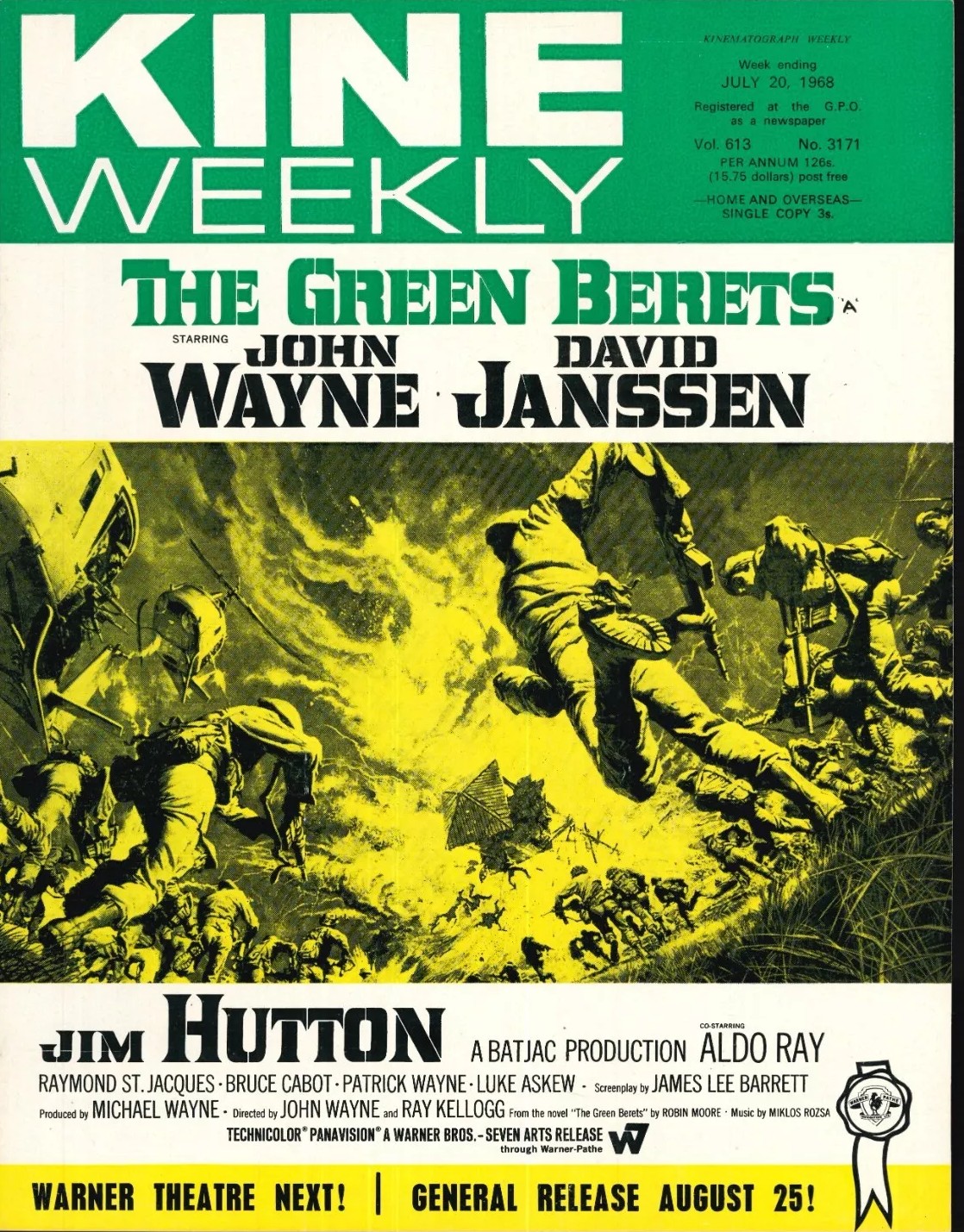
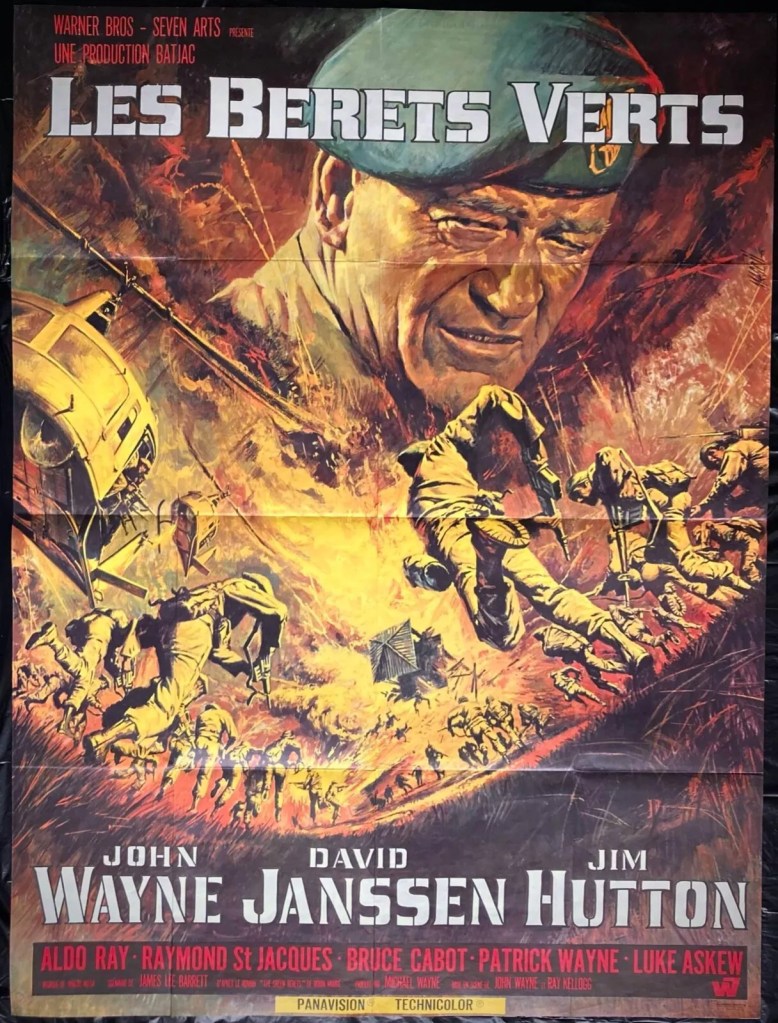
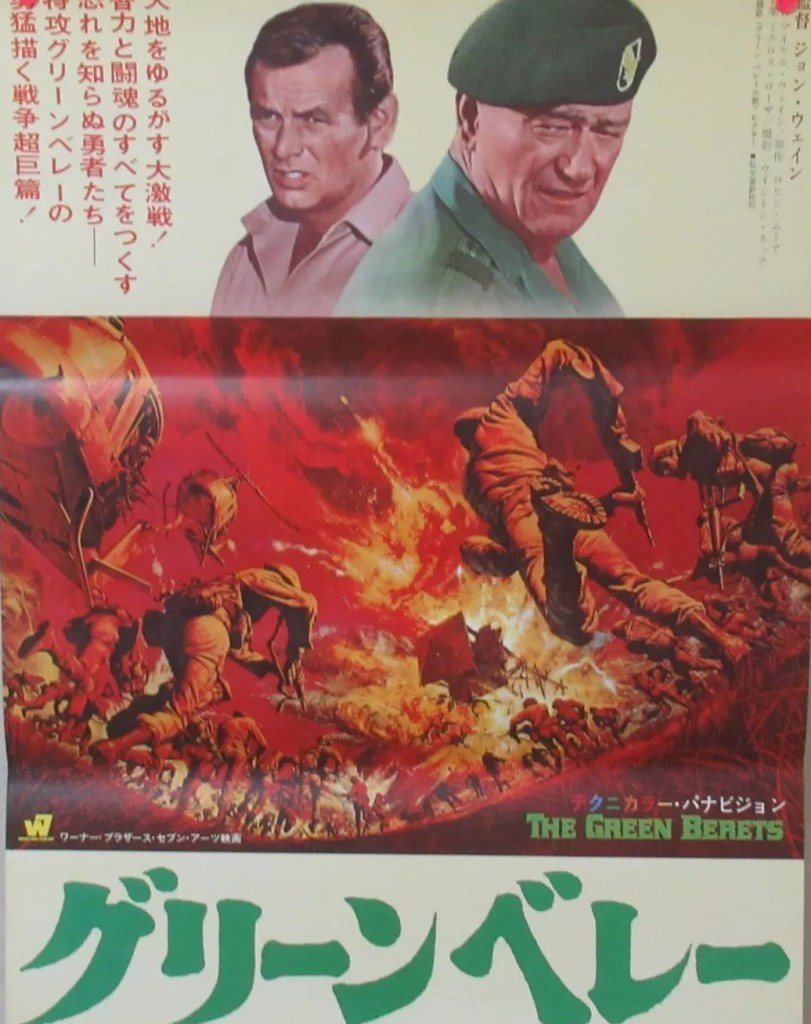
The Green Berets (1968) ***

Apart from attempts to justify the Vietnam War and a hot streak of sentimentality, a grimly realistic tale that doesn’t go in for the grandiosity or self-consciousnesss of the likes of Apocalypse Now (1979), The Deer Hunter (1978) and Platoon (1978). It’s been so long since I’ve watched this that my DVD is one of those where you had to turn the disc over in the middle.

The central action sequence is a kind of backs-to-the-wall Alamo or Rorke’s Drift siege. There’s no sense of triumphalism in the battle where the best you can say is that a reasonable chunk of the American soldiers came out alive but only after evacuating the staging post they were holding, more like Ridley Scott’s Black Hawk Down (2001) where survival is all there is to savor. It’s all pretty brutal stuff, the Americans handicapped by having to also look after the fleeing Vietnamese villagers taking refuge in their camp.

There are plenty grim reminders of how war has become even more devastating in the aftermath of World War Two. The Vietcong take, literally, no prisoners, seen as killing civilians as easily as soldiers. The Americans, for their part, have no compunction in using more sophisticated weaponry, with the addition of targeted air strikes.

Into the mix, somewhat unnecessarily, comes left-wing journo George (David Janssen) whose main job is to change his mind about the work the soldiers are doing, though admitting that to report the truth will lose him his position. He’s slung into the middle of a defensive action headed up by Col Kirby (John Wayne) to hold a position under threat against superior (in numbers) forces. There’s a fair bit of the detail of war but virtually zero about the strategy, whether that’s the U.S. Army’s plan to defeat the enemy or this individual unit’s method of defending this position. Apart from extending the perimeter of the camp to create a more effective killing zone, it’s hard to work out what the heck is going on, no matter how often orders are barked through field telephones or walkie talkies. There are squads out in the field and units in the camp and how the whole operation is meant to mesh is beyond me.

There’s not much time to flesh out the characters, save for “scrounger” Sgt Peterson (Jim Hutton) who adopts an orphan, Vietnamese soldier Capt Nim (George Takei) and Sgt Provo (Luke Askew). The rest of the motley bunch are the usual crew of monosyllabic tough guys and friendly medics and whatnot.

Though the emotional weight falls on Lin (Irene Tsu), fearing shame and being ostracized by her family for befriending the Vietcong general who killed her father and for whom she now lays a honeytrap, Kirby expresses guilt at having to kill anybody.

Despite being sent out to reinforce the position, the Americans are forced to retreat and enjoy only a Pyrrhic victory when the cavalry, in the shape of an airplane, arrives to mow down the enemy after they have captured the position.

The fighting is suitably savage, and there is certainly the notion that the Americans are not only being out-fought but out-thought and that no amount of heavy weaponry is going to win the day.

Possibly to prevent the idea of defeat destabilizing the audience, the movie shifts into a different gear, more the gung-ho commando raid picture that the British used to do so well, where Kirby heads up an infiltration team to capture the Vietcong general who has been seduced by Lin. This sets up a completely different imperative, all stealth and secrecy, the kind of operation that in the past would have been a whole movie in itself rather than the tag-end of one.

While the prime aim of this is to have the audience leave the cinema happier than if they had just witnessed the retreat from the camp, in fact it also serves two purposes. One is worthwhile, to emphasize the sacrifices made by the Vietnamese. Lin, having agreed to prostitute herself, fears being cast out as a result. But the other outcome of this mission is to kill off Sgt Peterson thus leaving the little Vietnamese lad even more orphaned than before.

John Wayne (The Sons of Katie Elder, 1965) doesn’t attempt to gloss over the weariness of his character. Jim Hutton (Walk, Don’t Run, 1966) shifts with surprising ease from comedy to drama. Even as a cliché David Janssen (Warning Shot, 1966) is underused. Watch out for Aldo Ray (The Power, 1968), George Takei (original Star Trek series), Raymond St Jacques (Uptight, 1968), Luke Askew (Flareup, 1969) and Irene Tsu (Caprice, 1967).

Three hands were involved in the direction: John Wayne, veteran Mervyn Leroy (Moment to Moment, 1966) and Ray Kellogg (My Dog, Buddy, 1960). Written by James Lee Barrett (Bandolero!, 1968) from the book by Robin Moore. Worth pointing out the score by triple Oscar-winner Miklos Rosza (The Power, 1968) especially the low notes he hits to provide brooding tension.     

Certainly a mixed bag, the central superb action sequence weighted down by the need to find something to shout about.

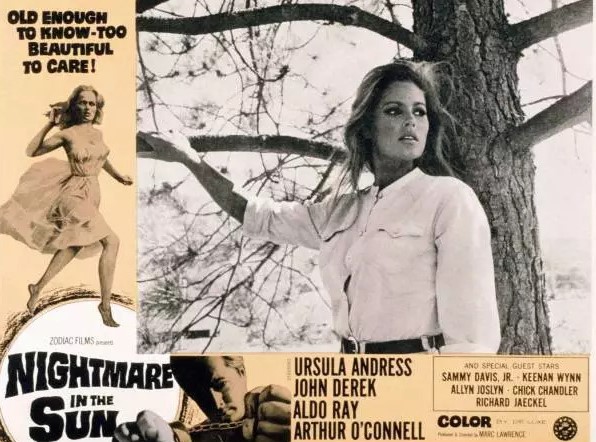
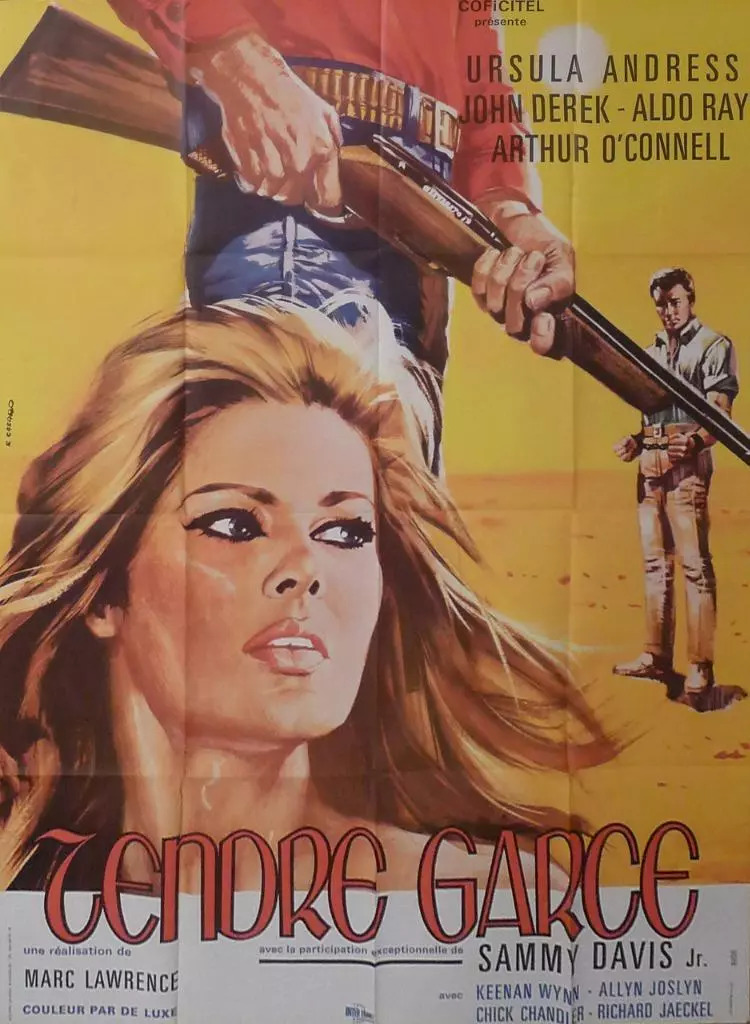
Nightmare in the Sun (1965) ***

Your first question is how did rookie director Marc Lawrence have the standing and the foresight to  assemble such an amazing cast? Not just wife-and- husband team Ursula Andress  and John Derek (Once Before I Die, 1966) upfront, but Rat Pack member Sammy Davis Jr (Sergeants 3, 1962), The Godfather (1972) alumni Robert Duvall and John Marley, Aldo Ray (The Power, 1968), Richard Jaeckel (The Devil’s Brigade, 1968), Keenan Wynn (Warning Shot, 1966) and Arthur O’Connell (Fantastic Voyage, 1966).

And it’s bold work, throwing the Psycho dice, playing the hell out of the noir tune, most of the time heading down a nihilistic road, and with a terrific twist for a climax. Some great scenes that with a more experienced director would be instantly memorable and managing to fit into what should be a straightforward thriller some intriguing oddball characters.

Anonymous drifter (John Derek) ends up in a small town in Nowheresville where Marsha (Ursula Andress) has a slew of lovers including the sheriff (Aldo Ray). Wealthy rancher husband Sam (Arthur O’Connell) is the jealous type who checks out her speedometer to see if her tales of out-of-town visits tally up. Naturally, a handsome stranger is easy prey to her seductive charms but when hubbie spots said stranger leaving his house he loses his rag and kills her.

Holy moly, talk about Psycho, getting rid of the sexy star one-third of the way through is a heck of a note. Who does this director think the audience is coming to see? But if he’s no  Hitchcock, he’s got another trick up his sleeve. Sheriff won’t let the husband plead guilty, not when he can play that card for all it’s worth, rooking the rancher for thousands of bucks, so he decides to pin the blame on the man seen leaving the house. Not only that, he plants evidence, stolen jewellery etc, on the suspect and handcuffs him.

Suspect escapes, taking with him a cop car, but those handcuffs are tougher to remove than most cinemagoers have been led to believe from previous yarns. A hacksaw won’t do it nor will trying to burn them apart with an oxy-acetylene cutter. So he’s stuck with carrying about proof of guilt or at least suspicion and spends most of the time picking up cats or items to hide the evidence.

A couple of bikers (Robert Duvall and Richard Jaeckel) decide to chase the reward money, able to scoot through the desert in a way denied the cops’ four-wheelers. It’s a shame this pair are anonymous, as most characters here are, defined by occupation rather than slowing down the pace with introductions. So it’s the Robert Duvall character who we discover is more fragile than his appearance would suggest and lashes his bike with a chain when his character is questioned.

So here’s the oddball line-up: a couple (George Tobias and Lurene Tuttle) running a small-time animal-bird sanctuary, nursing back to health creatures peppered with gunshot or the wounded version of roadkill; a junkyard dealer (Keenan Wynn), one-time hoofer who can’t wait to demonstrate his moves; and a type of boy scout leader (Allyn Roslyn) whose troop gets lost in a sandstorm, one of whom our drifter rescues. The latter sequence has a touching aspect, rescued child, probably the only person in the whole movie with an understanding of law, accepting a suspect as innocent rather than guilty, is betrayed by the leader who instead of helping our escapee to safety, hands him over to the cops.

And to a final, quite unexpected, climax.

So it’s corruption all the way, even our innocent, supposedly heading home to a beloved wife, taking time out for a touch of adultery.

There’s something about these early low-budget films that brings out the best in Ursula Andress. She’s not just spouting lines to fill in some essential part in a story, but takes her time over delivery, essentially establishing character with what she does between talking and for a practised seducer there’s an innocence in her pleading, “Please take me somewhere nice.”

Aldo Ray is as odious as they come, sneaky too, and you sense he has practice on pinning the blame on the wrong person. And no wonder the wife plays around when her self-pitying husband gets so stoned he passes out.

I saw this on a very poor print on YouTube but even so its narrative qualities, if less so the direction, were obvious.

Worth a look.

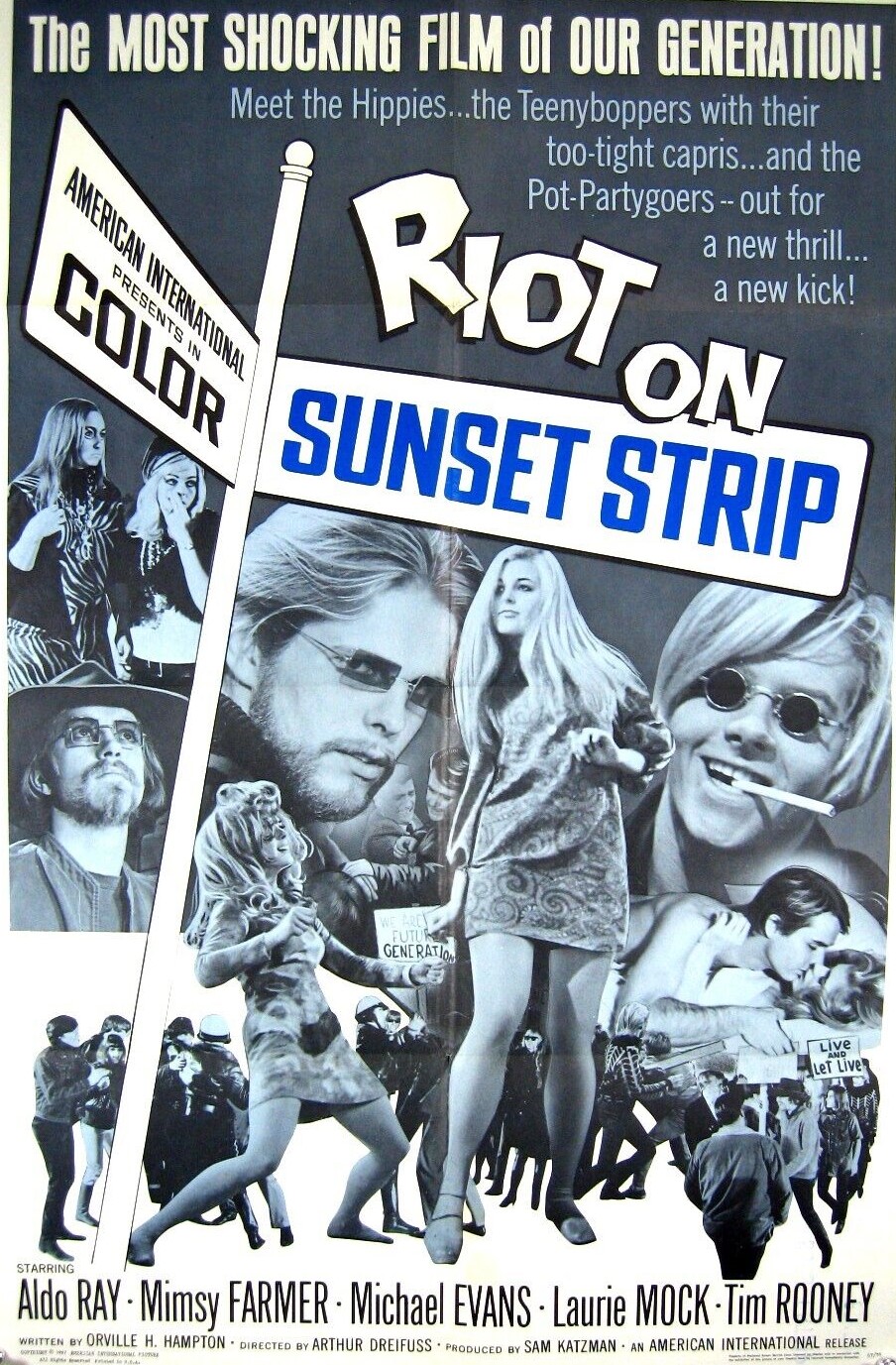
Riot on Sunset Strip (1967) ***

Catholic high school girls in trouble? Call Sam Katzman. Delinquents, crazed by music or booze or sex or drugs (maybe all four), on the rampage? Call Sam Katzman. Thugs, to quote from Johnny Cash, keen to “watch a man die?” Call Sam Katzman. The new generation threatening to swamp the old? Call Sam Katzman. Require a sensuous lass in tight clothes to perform an Ann-Margret-style number? Call Sam Katzman.

Legendary five-and-dime producer Sam Katzman, with over 200 pictures in his portfolio, had put his stamp on everything from the East Side Kids and jungle flicks to horror, westerns and sci-fi. Any new genre with rip-off potential, he’d be first in the queue. Forget knives and guns and fists, music was the most dangerous weapon, over-exciting the young.

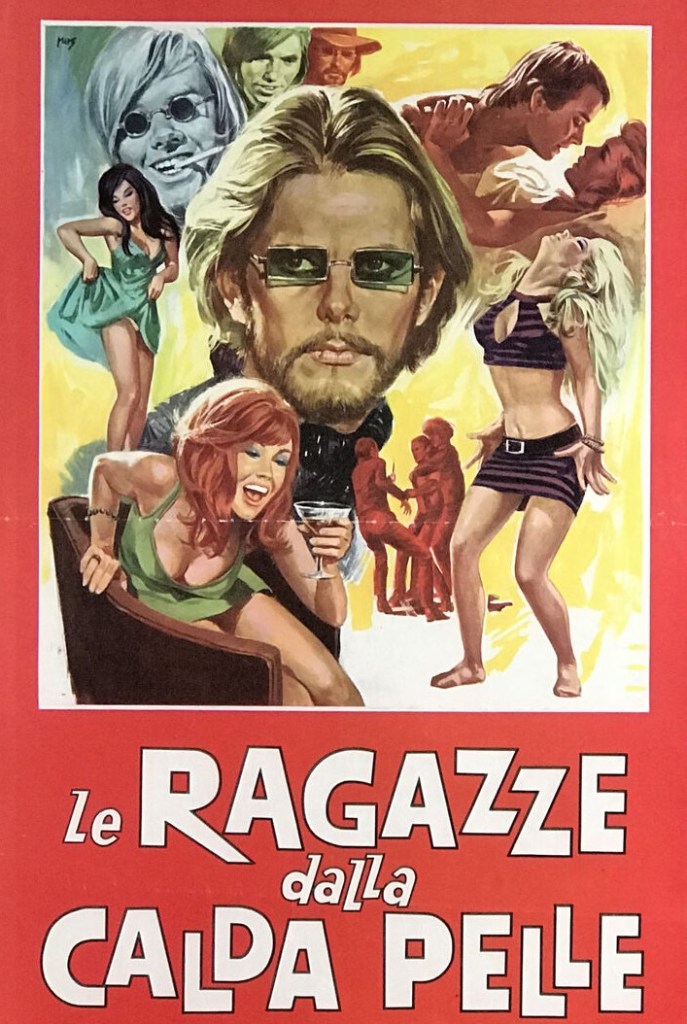
“Girls in Hot Leather” is the bait-and-switch Italian title.

So no surprise then to find the man behind Rock Around the Clock (1955) and Calypso Heat Wave (1957)  also responsible for Teenage Crime Wave (1955), New Orleans Uncensored (1955) and Hot Rods to Hell (1967). Or that he’s an exponent of the old bait-and-switch here – no riot here that I could spot.

And probably over-emphasis on earnestness for a potential exploitationer, from the occasional intrusions of a pseudo-documentary voice-over to the grown-ups debating the causes of the latest outbreak of teenage rebellion, long hair, marijuana, popping pills and energetic dancing. That said, it’s even-handed, adults blamed for the divorce plague that leaves youngsters alone and vulnerable, cops too prone to violence, greedy businessmen and characters with right-wing tendencies causing the problem or making matters worse. “They’re just kids,” spouts earnest top cop Lorrimer (Aldo Ray), “they could be your sons and daughters,” not realizing one of them is.

Away from the grown-up talk-fest, the kids sit either numb listening to loud rock bands in far from sleazy clubs or on the dance floor pounding away to the beat, in either case not having much to say to each other, and inevitably ending up out the back door smoking a quiet joint or gathering in some pretty fancy home for a tripping party

Andrea (Mimsy Farmer), a youngster from a broken home living with her drunken mother, falls in with a bunch of teenagers who hang out in these hard-wired locales. Initially, she resists joining in, and perfectly innocent when caught up in a scuffle. But when supposed cool dude Herbie (Schuyler Hayden) spikes her drink with some acid at a party she turns all Ann-Margret, and is allocated a near six-minute slot to shake her stoned booty, leading the aforesaid Herbie to take her upstairs and take advantage. Doesn’t end well for Herbie as she’s under-age.

Turns out, too, Andrea is not so much the long-lost as abandoned daughter of Lorrimer and when he goes into rescue mode she gives him both barrels. “You left me alone for four years, let’s keep it that way,” she snaps. Apprised of her situation, he sets about the youngsters with his fists.

That supposedly leads to the riot. But it’s no more than the mildest of protests as he has to endure a Walk of Shame a la Game of Thrones (though with clothes on) and, bizarrely, becomes the poster boy for both police brutality and for anti-police-brutality. Natch, there’s a tacked-on happy ending but not before the voice-over can intone in apocalyptic manner: “Half the world’s population is under 25. Where will they go? What will they do?”

I had come at this because I was intrigued to discover Mimsy Farmer as the junior minx in Spencer’s Mountain (1963) and as she was overshadowed by Ann-Margret in Bus Riley’s Back in Town (1965) wondered how her career had progressed. Presumably come to a standstill, otherwise she wouldn’t have ended up in a B-picture cul de sac. She puts in a good performance, however, miles away from the lively youngster of the Henry Fonda picture, withdrawn, anxious, not fitting in.  

A good chunk of the picture is wasted, from today’s perspective, on no-name bands and not much happening, but the talk-fest aspects prove that little has changed in the way the grown-ups misunderstand the young and much the same arguments for reining in the supposedly out-of-control teenagers are still being trotted out today. But it does point a prescient finger at marriage break-up (the fault of the grown-ups doing much of the blaming) as a root cause of teenage misbehavior and contemporary audiences will only be too familiar with predatory males spiking drinks.

Aldo Ray (Welcome to Hard Times, 1967) would be the marquee name, but you try and compete with a lithe teenager who says more in her six minutes of pent-up emotion and the resultant dancing than all the time spent on earnest debate. Laurie Mock (Hot Rods to Hell, 1967) is the wildest of the females.

Director Arthur Dreifuss was a Katzman regular but was also responsible for the movie version of Brendan Behan’s The Quare Fellow (1962). Screenwriter Orville H. Hampton had a surprising pedigree with Cage of Evil (1960) and Jack the Giant Killer (1962) and Oscar-nominated for One Potato, Two Potato (1964).

More absorbing than I expected and Mimsy Farmer’s trip a lot more interesting than Peter Fonda’s.

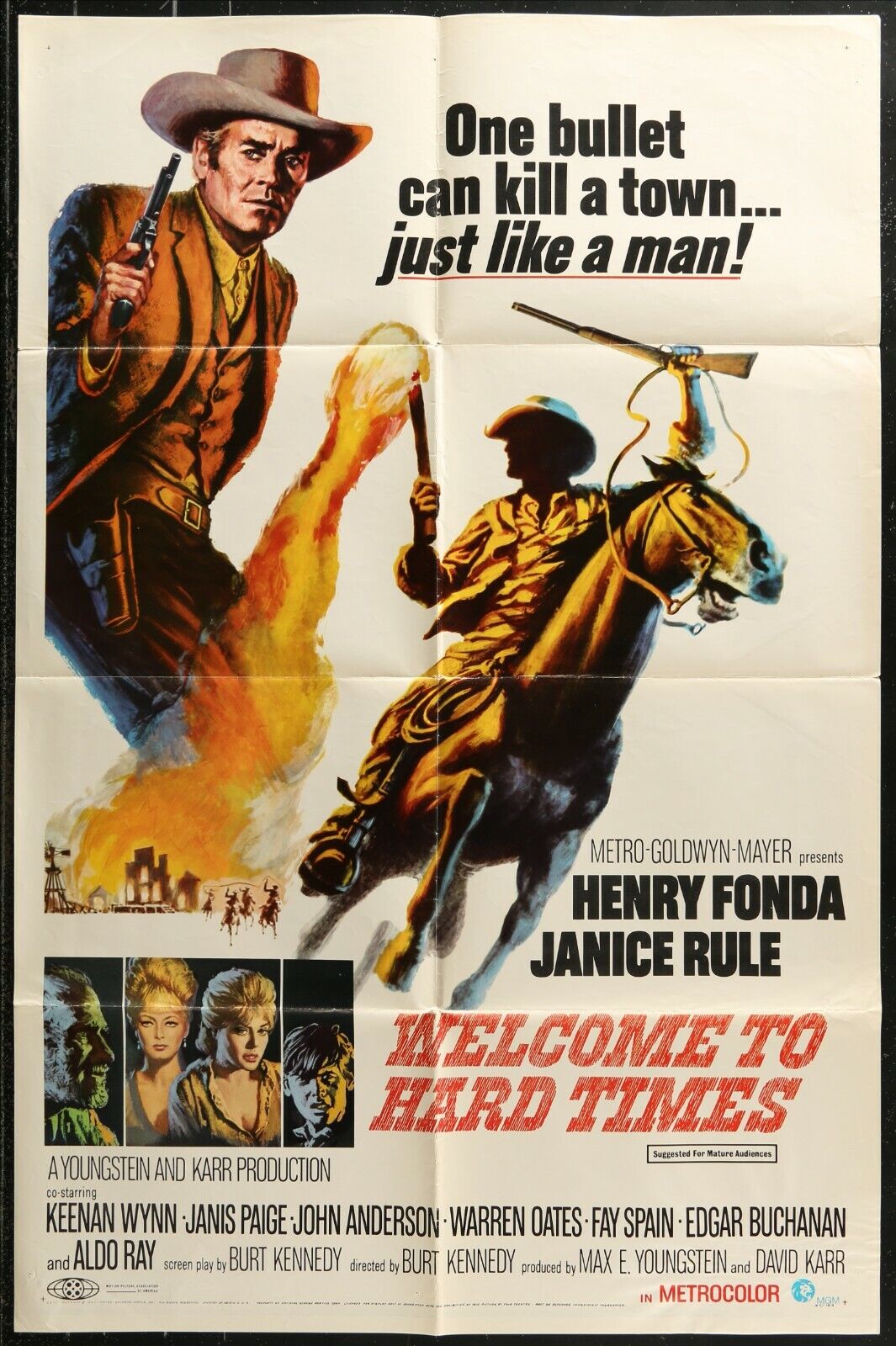
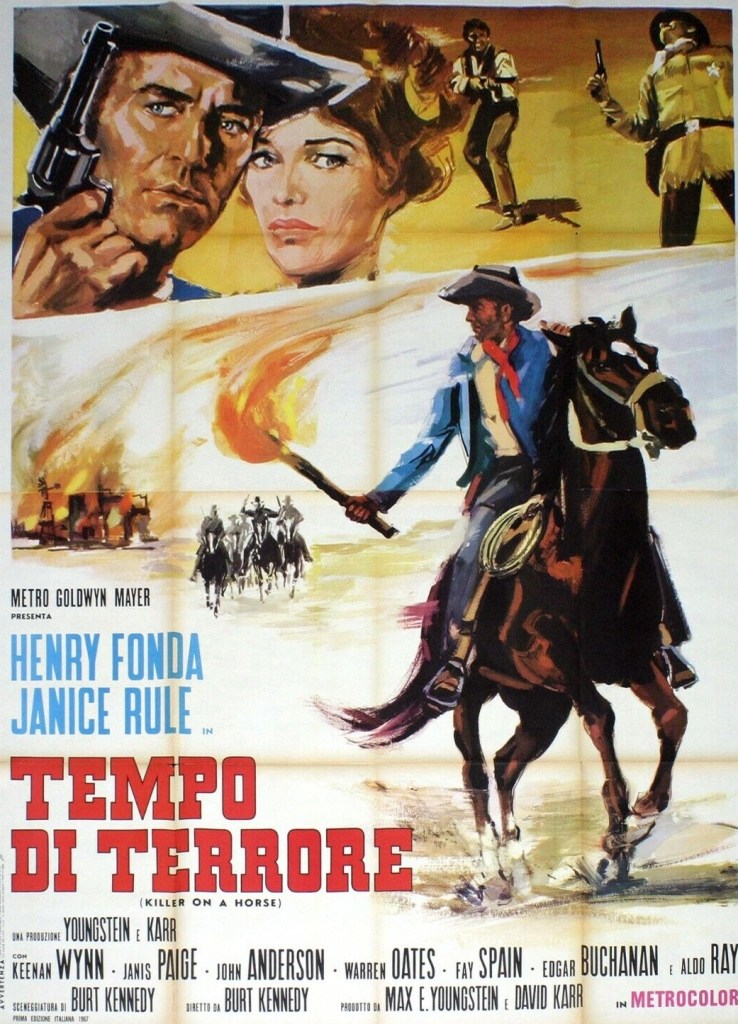
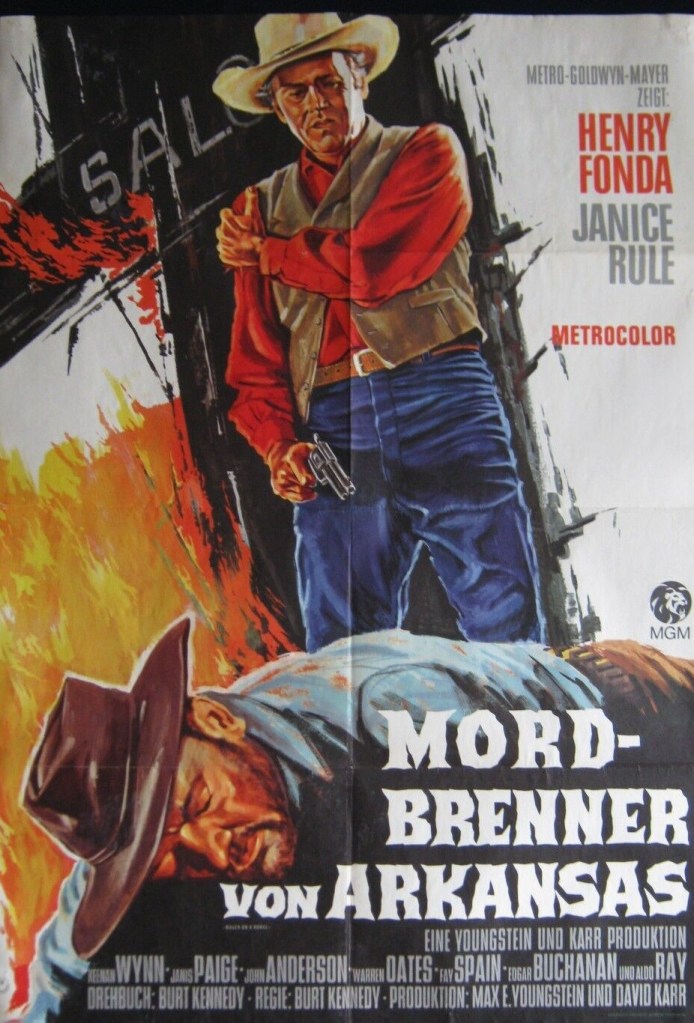
Welcome to Hard Times (1967) ****

Director Burt Kennedy’s record with westerns was very much hit or miss. This revisionist effort is one of the former though it could as easily tipped into the latter, beginning with a shrill soundtrack that telegraphs every incident and the no-name villain. And you might also wonder if irony had taken such a hold of settlers that they would actually name their town “Hard Times” when there was a gold strike over the hills.

Anyway, this is certainly a town that lives up to its name. Can’t have been more than a dozen houses, a saloon of course, but it’s the muddiest place west of No Name City (Paint Your Wagon, 1969) and the meanest to hove into view since High Noon, with the townspeople in thrall not to an entire gang, but one nameless stranger (where have we seen that before).

The Man from Bodie (Aldo Ray), as he is known, is the bad guy from Hell. He shoots anyone who stands up to him like Fee (Paul Birch) or shows the slightest dissent like undertaker Hanson (Elisha Cook Jr) and rapes Fee’s girlfriend Flo (Ann McCrea) before dumping her corpse on the saloon stairs.  

Will Blue (Henry Fonda), lawyer not lawman, hasn’t the guts to stand up to him, but comes the closest of the cowardly bunch. When The Man has done as much rampaging as a tiny town will allow he burns it to the ground. Most people leave, but Blue,  having done too much running in his life, decides to stay to look after Fee’s orphaned son Jimmy (Michael Shea).

If Blue’s vengeful Oirish girlfriend Molly (Janice Rule) also remains it’s mostly to hate him for abandoning her to the madman – Blue had used her to distract the Man but then retreated when the going got tough leaving her to be raped at will. She sets up her own League of Desperadoes, recruiting new arrival Jenks (Warren Oates) and the orphan, to tackle the bad guy on his inevitable return.

Meanwhile, a mobile unit of sex workers, complete with tent, turns up to service the nearby gold workers.  Their entrepreneurial boss Zar (Keenan Wynn) spots opportunity and helps Blue rebuild the town. Of course, everyone’s just waiting for Bodie Man to return.

Anyone that’s likeable or got anything approaching character is killed off at the start, so we’re left with an unlikeable, ambivalent, but realistic, crew. For all his later hi-falutin’ principles and pioneer spirit, Blue is still a coward who, to save his own skin, sacrificed Molly. Hoping to redeem himself by acting as surrogate father to Jimmy doesn’t result in him winning any respect from Molly.

This is one raped woman who found out the man on whom she was depending was no protector. Why should she ever love him again? And she’d be crazy to put her life in his hands once more. Of course, she could have got herself her own shotgun or pistol and ambushed Brodie Man when he took another shine to her, but instead she plays pretty please with Jenks, which is understandable, and the young Jimmy, which is deplorable.

That the sex worker magnate becomes one of the town’s foremost citizens might cleave closer to the bone than many viewers would like, but corruption was as endemic in America then as it presumably is now.

And it begs the question when all those pioneers headed out West how many of them were scum like Bodie Man? And how did the settlers think law-and-order was going to work out?

On the downside we have a villain, who, not content with killing and raping, demonstrates just how mean he is by smashing whisky bottlenecks because he hasn’t the patience to extract the cork with his teeth. Fee is dumb enough to take on the bad guy with a bit of log. Molly’s Irish accent is all over the place. And we could do with less music. And there’s a climactic twist that belonged to a horror film and is not only completely out of place but undoes the realistic tone by providing a somewhat sanctimonious ending.

But if you are expecting a movie along High Noon lines, with the good guy beating the bad, and winning the town’s respect, then you will be disappointed. On the other hand if you come prepared for one of the darkest westerns of the decade where the terrorizing outlaw exerts such fear that the townspeople, in defending themselves, pull down the shades between good and evil, then you will be amply rewarded.

The boldness of director Kennedy (The War Wagon, 1967) in reimagining the West as a place of venal proportions should be applauded. The direction might take a wrong turn here and there but the aim is effective. Henry Fonda (Firecreek, 1968) is good as ever and although I could do without the awful accent Janice Rule (Alvarez Kelly, 1966) is superb as the vengeful woman refusing Blue forgiveness and willing to use a youngster as a weapon.

A sound supporting cast includes Keenan Wynn (Warning Shot, 1967), Edgar Buchanan (Move Over, Darling, 1963), Janis Paige in her final movie outing, John Anderson (5 Card Stud, 1968) in a double role, Aldo Ray (The Power, 1968) and Warren Oates (The Wild Bunch, 1969).

Kennedy wrote the screenplay form the book by E.L. Doctorow.

Will make you flinch but worth a look.

Discover WordPress

A daily selection of the best content published on WordPress, collected for you by humans who love to read.

The Atavist Magazine

by Brian Hannan

WordPress.com News

The latest news on WordPress.com and the WordPress community.