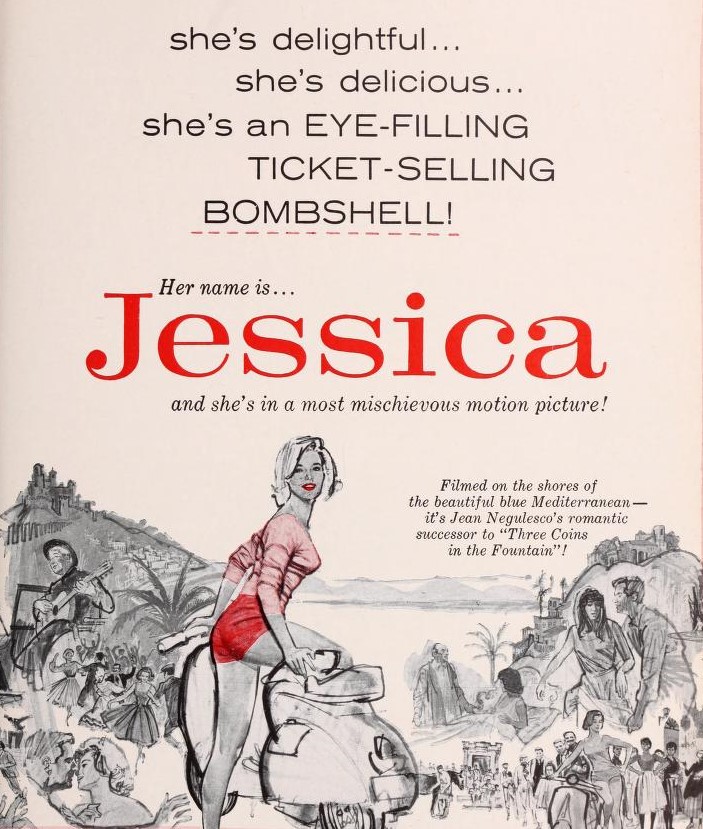
Roman Holiday (1953), Three Coins in a Fountain (1956) and Boy on a Dolphin (1956) had set a high bar for Hollywood romances set in Italy. Since Jean Negulesco had directed the last two, he was expected to sprinkle box office magic on this slight tale of young American midwife Jessica Brown Visconti (Angie Dickinson) adrift in a rustic village in Sicily.
She’s the kind of beauty who’s going to raise male temperatures except Jessica, having been widowed on her wedding day, is not romantically inclined. Unfortunately, that doesn’t stop the entire male population becoming so entranced that their wives become so enraged that led by Maria (Agnes Moorehead) they embark on a sex strike, assuming that without any pregnancies (contraception being frowned upon in a Catholic domain) to deal with Jessica will become redundant and go away. And that so annoys Jessica, who is doing a good job as a midwife, that she turns on the flirting to get back at her female tormentors. Luckily, there’s a reclusive landowner (Gabriele Ferzetti) who happens to be a widower, although romance takes a while to stir. There’s also a priest (Maurice Chevalier), in part acting as narrator, who turns to song every now and then.
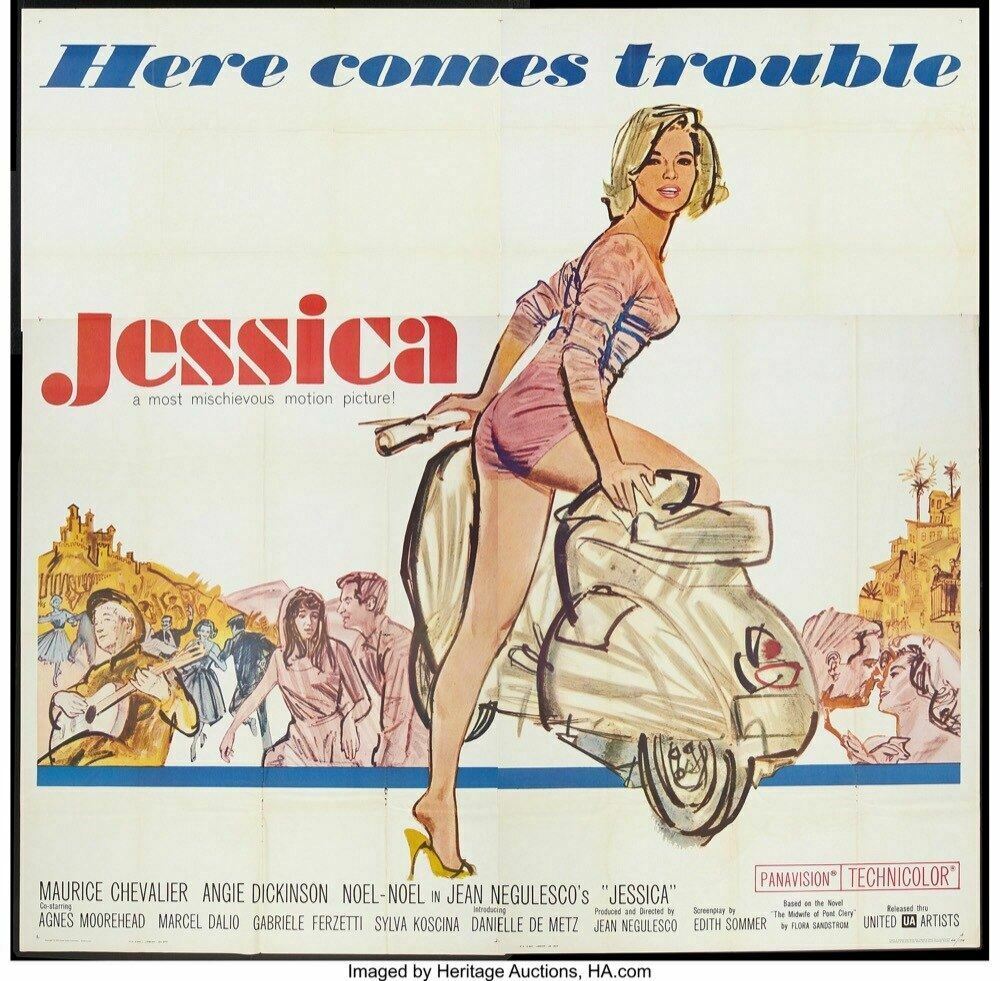
So it’s a surprise that this unlikely concoction works at all. It’s charming in the obvious ways, the lush scenery, a traditional wedding, gentle comedy. But it’s a decade too late in taking an innocent view of sex. There’s no crudeness, of course; it doesn’t fall victim to the 1960s need to sexualize in an obvious manner. And not every husband is continuously ogling Jessica so Nunzia (Sylva Koscina) and young bride Nicolina (Danielle De Metz) are in the awkward situation of potentially betraying the sisterhood.
But in resolving the central issue the story develops too many subplots and introduces too many characters, often leaving Jessica rather redundant in terms of the plot, with not much to do, especially when her prospective suitor is absent for a long period going fishing.
Angie Dickinson is delightful as the Vespa-riding innocent turned mischievous. However, in some way though this seemed a backward step for Dickinson, a rising star in the Lana Turner/Elizabeth Taylor mold after being John Wayne’s squeeze in Rio Bravo (1959) and Frank Sinatra’s estranged wife in Ocean’s Eleven (1960) and after a meaty supporting role in A Fever in the Blood (1961) elevated to top billing in The Sins of Rachel Cade (1961). It seemed like Hollywood could not make up its mind whether it wanted her to be like Gidget or be given free rein to express her sexuality.
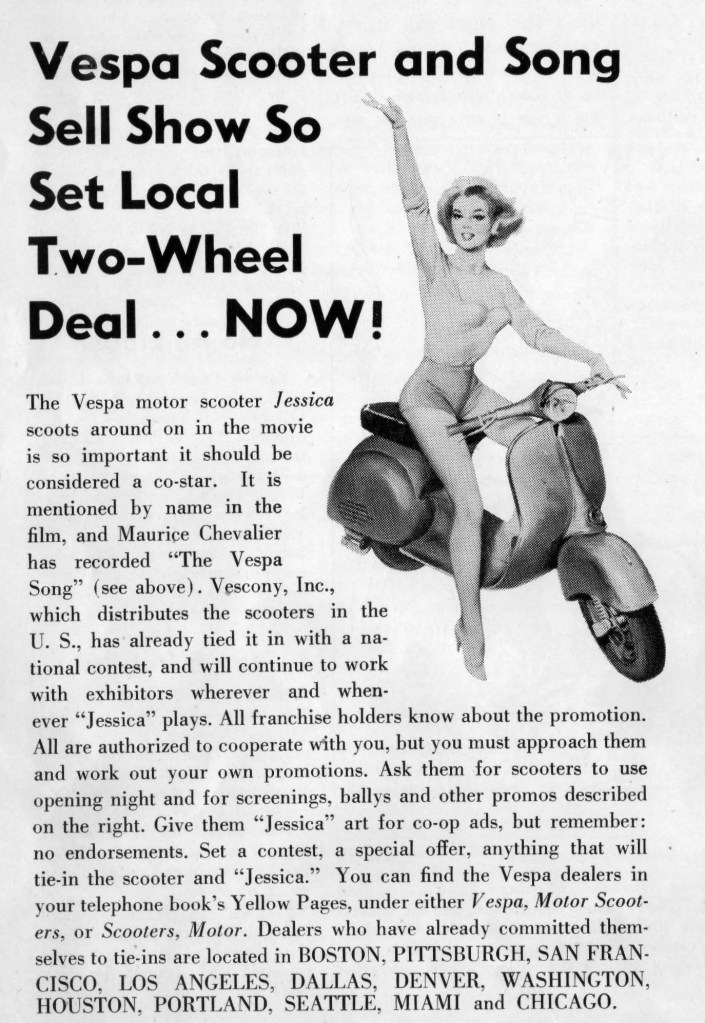
A charmer like Maurice Chevalier (A Breath of Scandal, 1960) was ideal for what was in effect a whimsical part. The singing probably met audience expectation. Perhaps like Sean Connery’s perennial Scottish accent, nobody ever asked Chevalier to drop his pronounced French accent even to play an Italian. But the picture is whimsical enough without him.
There’s a surprisingly strong supporting cast in four-time Oscar nominee Agnes Moorehead (Pollyanna, 1960), Gabriele Ferzetti (Once Upon a Time in the West, 1969) and French actor (and sometime writer-director) Noel-Noel. Yugoslavian Sylva Koscina (Deadlier Than the Male, 1967), Frenchwoman Kerima (Outcast of the Islands, 1951) and Danielle De Metz (The Scorpio Letters, 1967) all make a splash. Screenplay by Edith Sommer (This Property Is Condemned, 1966) from the bestseller by Flora Sandstrom.
Terrific turn from Angie Dickinson.
 The Magnificent 60s