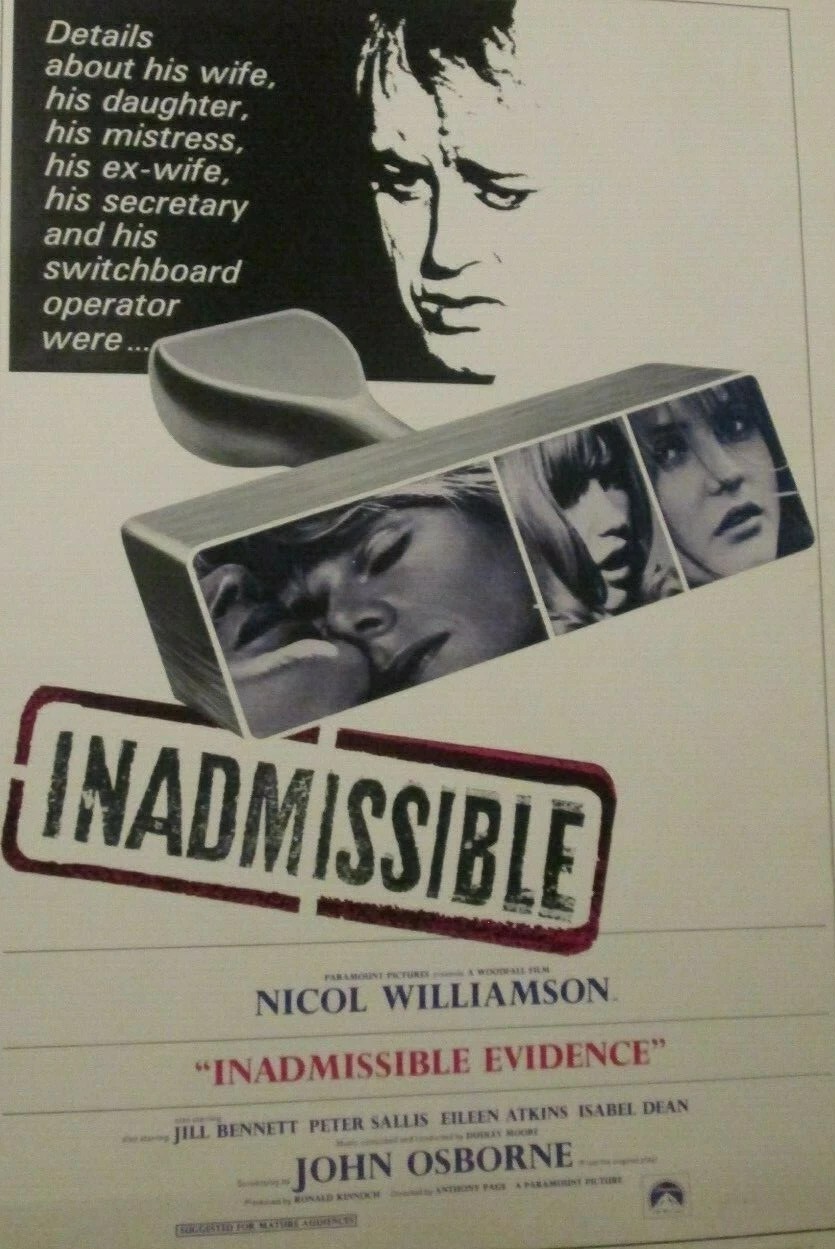
The Angry Young Man approaching 40 is not only a lot angrier but misogynistic, rude, contemptuous, constantly berating society, and, despite his physical energy, completely lacking in the charm that made playwright John Osborne’s groundbreaking Look Back in Anger (1959) with Richard Burton such a conspicuous success.
Lawyer Bill Maitland (Nicol Williamson) exhibits neither self-awareness nor remorse as the aspects of his personality that have fueled his downfall are brought home to roost. He is abandoned by wife, two lovers and colleagues and finds that all the people he has ostracized over the years are unlikely to come to his aid in time of trouble.
Mostly, it’s just a catalog of disaster as his personal and professional life fall apart. While never a high-flyer in the legal field he had done enough to run a reasonably successful business, delegating those tasks for which he was unfit to employees, but treating everyone with disrespect, except temporarily when he is in seduction mode.
There’s an early scene advising a client on her impending divorce where it seems as though the scenario could shift in his favor, in the sense that the audience could be more on his side, empathizing with his situation rather than hating him. Mrs Gamsey (Isabel Dean) doesn’t want to divorce her philandering husband but realizes she can’t make him happy and has no idea what might bring him contentment, a situation that clearly reflects Bill’s own, and though for a moment it looks like he might be on the verge of self-realization the moment passes and he’s back on a rant against the world.
When secretary and lover Shirley (Eileen Atkins) tells him she’s pregnant, his first instinct isn’t congratulations or commiseration, but to try and establish, by working out when they last had sex, whether he could be the father. No sooner has she quit than he’s trying it on with the newest staff member, the comely Joy (Gillian Hills). Despite sleeping with him she doesn’t stay enamored of him for long. No matter, he already has another mistress, Liz (Jill Bennett) but that relationship is on the brink.
His marriage to Anna (Eleanor Fazan) is falling apart and she at least has the strength of mind to give him a good slap when at a party he insults their friends. That sends him scurrying out of the marital house. Daughter Jane (Ingrid Brett) can’t put up with his behavior either.
He is too late in realizing just how essential his clerk Hudson (Peter Sallis) is and by the time he offers the man a partnership, Hudson is already halfway out the door having received a better offer. He’s a poor operator, leaving a client (and former lover) in the lurch while another client is reduced to tears.
Throughout this, Bill keeps up a steady stream of abuse on virtually anyone his imagination alights. But it’s that imagination that also preys on his mind as he slips into nightmare scenarios of being brought to court for trial for his personal misdemeanors, of being disqualified from the profession, of being cremated. It’s not going to end well but just how it ends is left to the audience’s imagination.
It’s only the energy of Nicol Williamson (The Reckoning, 1970) that makes this fly at all. This falls into the sub-genre of successful men, lacking in self-worth, heading for a nervous breakdown as exemplified by The Arrangement (1969). Williamson was being hailed as the successor to the mantle of Richard Burton, but his choice of films soon scuppered that notion. He was a bigger draw on stage.
Here, director Anthony Page (Absolution, 1978) does him a disservice by, in terms of framing, refusing to give him physical stature. The camera always seems to be looking down on him, squashing his features, rather than elevating him as occurred in other films. Page does the audience a disservice by choosing to film in black-and-white. Whether for budgetary or artistic purposes is unclear. Adapted by Osborne from his play.
For about 30 minutes this is terrific stuff because Williamson can command the screen like few others. But then it’s just too wearing.
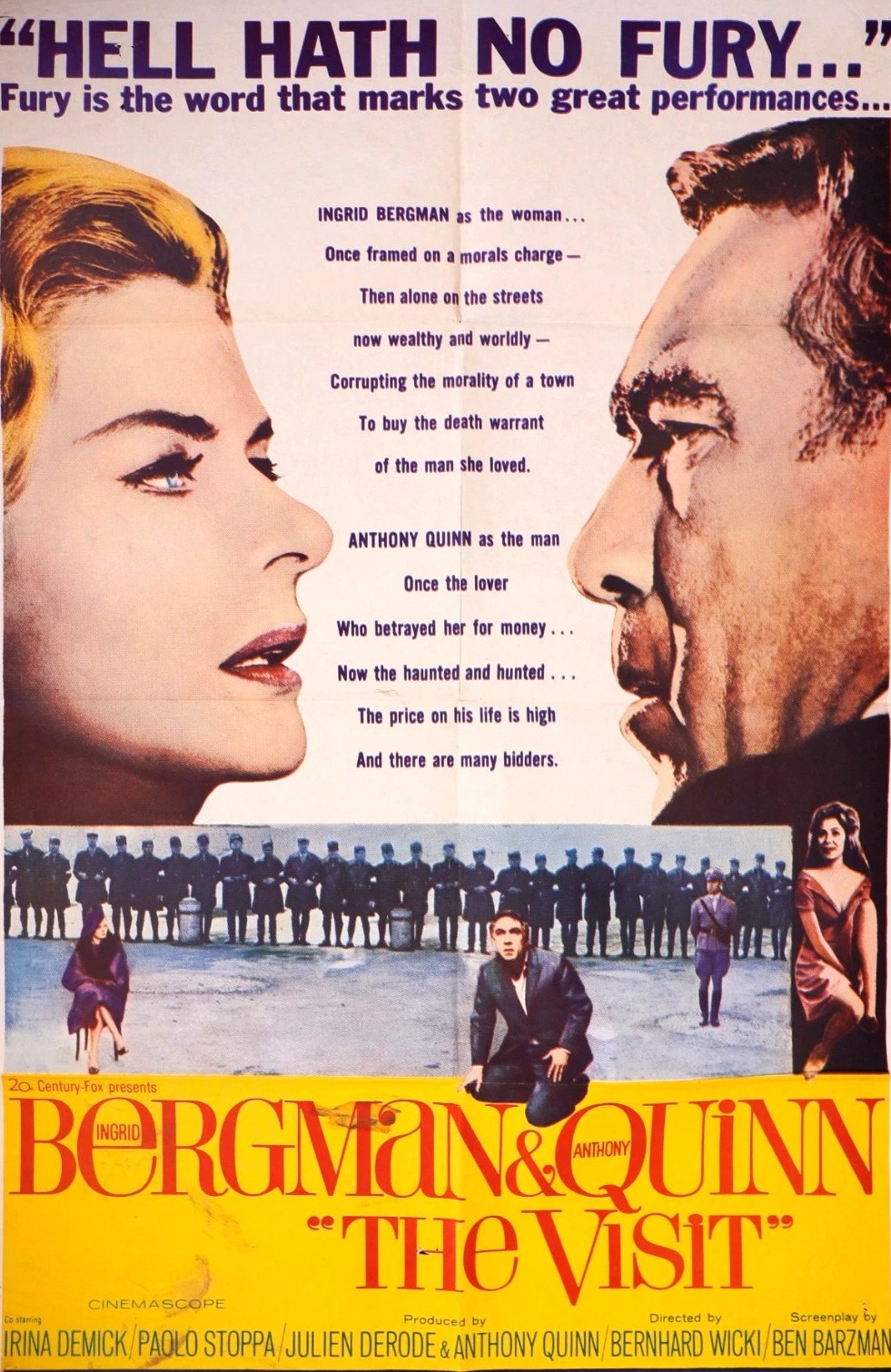
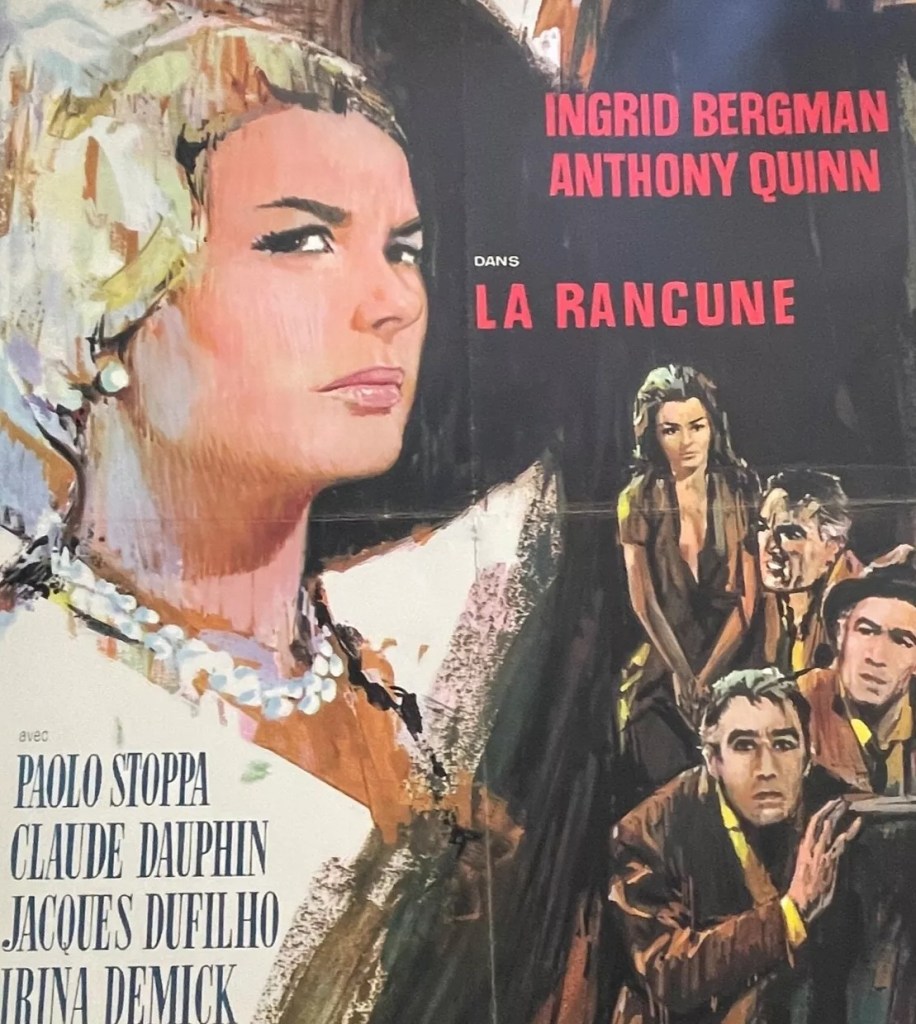
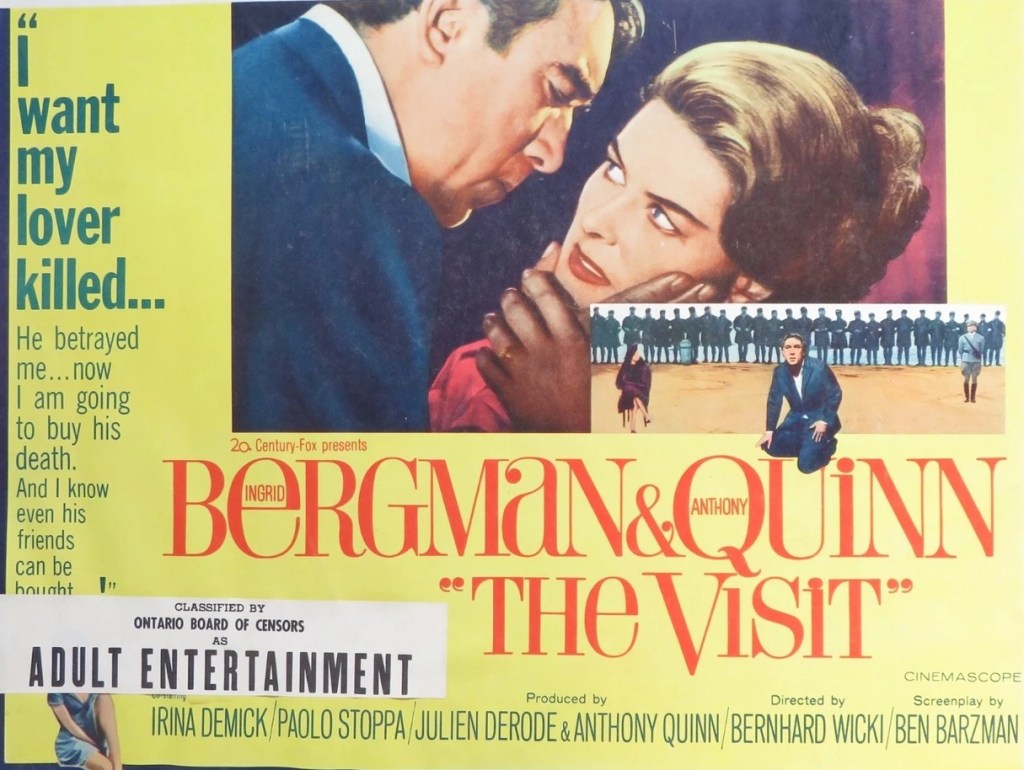
Wow! How has this sailed under the radar? Not only does two-time (at this point) Oscar-winner Ingrid Bergman shred her screen persona as the loved one in a romantic interlude or as the victim, but she turns into one of the most chilling femme fatales you can imagine. Made today, this would be termed “High Concept”. But it’s better than that, it’s concept heaven, such a brilliant idea and superbly executed.
From the moment widowed billionaire Karla Zachanassian (Ingrid Bergman), dressed in white like a Hollywood star, steps off a train and cuts the waiting townspeople dead with a haughty look only to seconds later seduce them with a warm smile, you can guess this is going nowhere near where you’d expect.
The train wasn’t scheduled to stop. She merely pulled the emergency cord as if her wealth was excuse enough. And she was only on the train because she wanted to make an entrance. For, as it transpires, her chauffeur is in attendance.
The town is bankrupt and in the way of the small-minded the townspeople imagine that the only reason she could be returning to the place where she could grew up twenty years after she left would be to rescue Guellen from its financial misery. So the townspeople are ready with a parade and welcome banners and fine speeches. Former lover Serge (Anthony Quinn), though now married to Mathilda (Valentina Corsese), is happy to play his part and recall their romance, visit the barn where they made love for the first time, as if she has returned only to satisfy memory.
But that’s not the reason. She has a different recollection of events and while she’s willing to play the role of the returning benefactor, offering the town one million and another million to be shared equally among the townspeople, there’s a condition. She wants revenge for being humiliated. Serge – who had thrown Karla over in favour on the daughter of a richer man – denied her child was his and bribed false witnesses so she was sent packing, with prostitution her only option and the child dead within a year.
So now the townspeople can show themselves to be principled, refusing to encourage her barbaric sense of justice, or, more likely, start to nip away at the idea of justice when there’s a bounty of two million at stake. Karla sits on her balcony dressed to the nines twirling her parasol and sipping an iced drink watching like a hawk chaos unfold below or lounges in her room feeding red meat on a toasting fork to a caged cheetah.
There’s some interesting satire on both bureaucracy and democracy – should people be banned from voting on such a sensitive subject or should democracy insist otherwise. And while ostensibly the powers-that-be back Serge, he gets a shock when he realizes the ordinary people have starting buying new shoes and clothes on credit in anticipation of the bounty and the going rate for an assassin is just two thousand. Soon the town is overwhelmed with retailers selling fancy goods – cars, fridges, televisions, fashion items – on credit. There’s time, too, for other stories to play out in realistic fashion.
There’s a brilliant sequence where Serge is hunted through the streets by men with rifles on the erroneous (or deliberately erroneous) belief that he’s been mistaken for a wild animal and even his wife deserts him. The climax is absolutely stunning.
There would have been many parallels at the time – Communist witch hunt, the persecution of the Jews – but from today’s perceptive it’s more like a capitalist witch hunt or judgement on a “good” society.
Anthony Quinn (Guns for San Sebastian, 1968) bought the rights because he realized Serge was a terrific part but as producer he made the mistake (or touch of genius) in hiring Ingrid Bergman (Goodbye Again, 1961). Without doubt she stole the show. Amazing that she wasn’t even nominated for an Oscar given the chilling portrayal she delivered.
Directed by Bernhard Wicki (Morituri / Code Name Morituri, 1965). Adapted by Ben Barzman (The Heroes of Telemark, 1965) and Maurice Valency (The Madwoman of Chaillott, 1969) from the play by Friedrich Durrenmatt.
When you see how hard today’s “visionaries” strive to come up with meaningful tales of a serious nature or examinations of “the human condition,” you can see how much they fall short compared to this well thought-out drama.
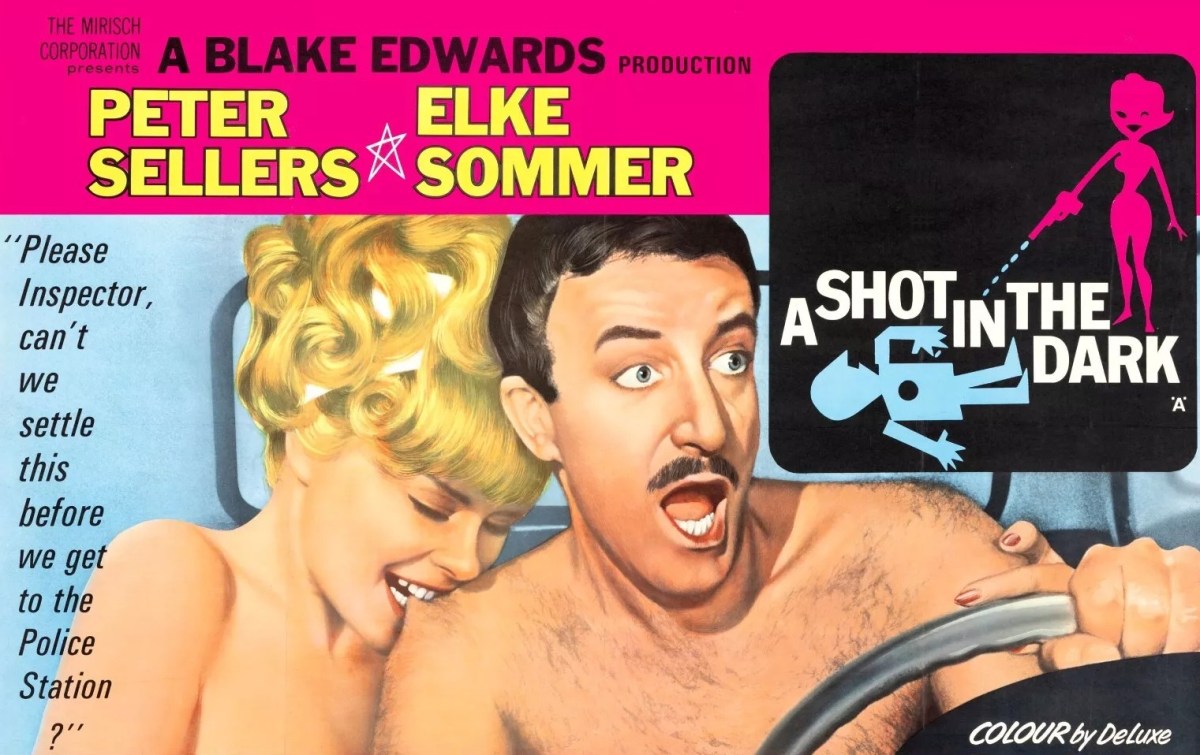
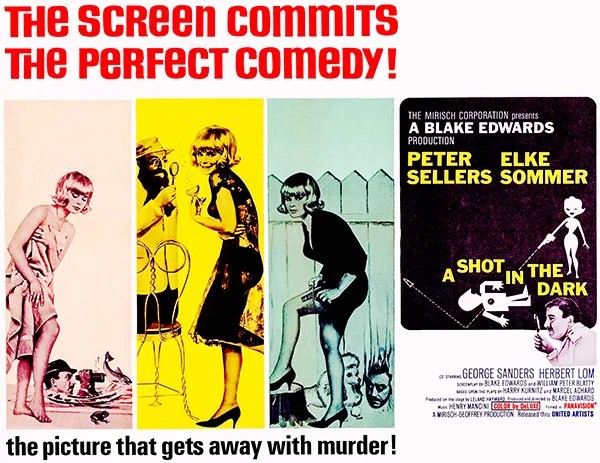
A pratfall still works wonders. An open door or window, anything that happens to be on the floor, or for that matter any object of any description – billiard cues, for example – within easy reach offers the opportunity for havoc – and a steady stream of laffs. Which is just as well, because this complicated farce, which might get a few extra brownie points today for its satire on serial killers, doesn’t do the movie any favors.
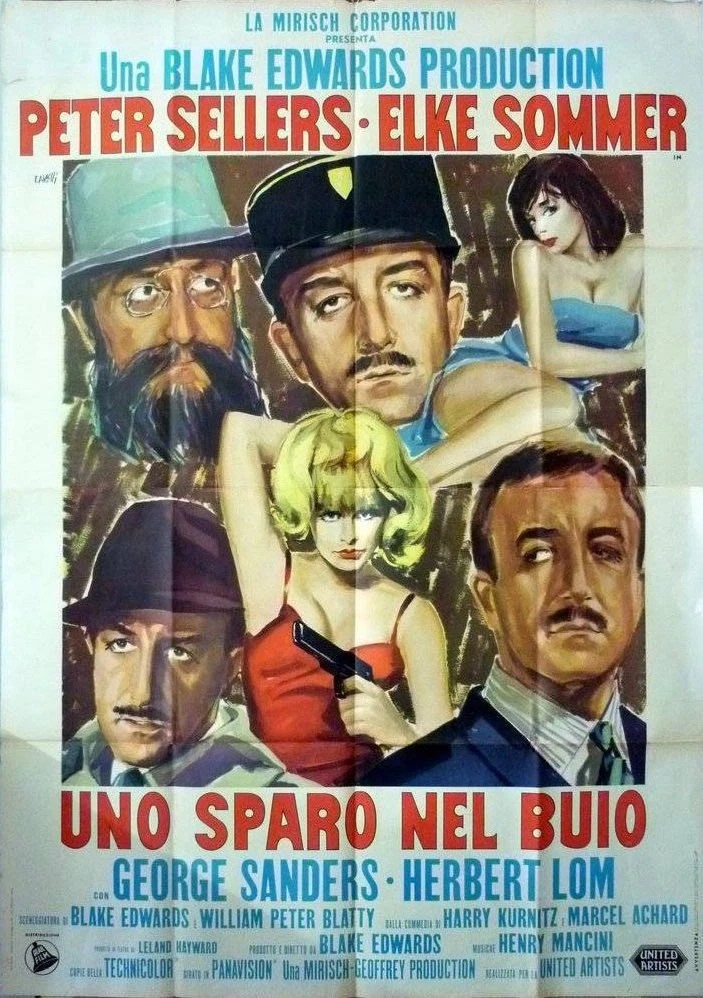
Inspector Clouseau (Peter Sellers) has acquired a more pronounced French accent than since his last incursion in The Pink Panther (1963) but it’s nothing like as excruciatingly hilarious as would be in later episodes. He still falls in love at the drop of a hat though this time the object of his affection is maid Maria (Elke Sommer) who, unfortunately, happens to be the prime murder suspect. She should be in jail but she is constantly released. Clouseau should be sacked for incompetence, but he is constantly reinstated.
The repertory team of his frustrated boss Dreyfus (Herbert Lom) and karate teacher (Burt Kwouk) interrupt proceedings from time to time but don’t really add to the laugh quotient. A bit more effective is the satire on French bureaucracy, a running gag on the need for an official permit, for example, before you could think of selling balloons on the street or trying to earn a buck as a street artist.
I won’t go into the plot since it’s a series of baffling murders and you could argue that Peter Sellers needs neither plot nor love interest. All he needs is an open door beckoning.
I was astonished how often I laughed out loud at something I knew was coming. The minute someone walked through a door you knew Clouseau would be the other side of it waiting to be buffeted. Any open window and he’d be through it and likely as not water would await.
He doesn’t just get tangled up in words but ask him to replace a billiard cue and you’d think billiard cues had declared war on him. He’s forgetful to the point of forgetting to switch off his cigarette lighter and naturally ignores the signs that he’s set his coat on fire.
For those more censorious times, there’s a foray into a nudist colony which is primarily an exercise in the various ways that private parts can be hidden from the camera while suggesting the salacious opposite. Clothed or unclothed you can rely on Clouseau to fall down. The only hilarious scene that doesn’t involve him falling down is when Maria miraculously appears in his office and when an attached key tears a whole in his trousers.
The various twists – Dreyfus is the assassin stalking Clouseau – and the lax French attitude to adultery keep the plot going and when the narrative slackens you can always stick a bomb into the mix.
From the outset, there is plenty opportunity for farce, the wrong people entering the wrong doors, continuous mix-up, plenty occasions for the innocent person to be caught red-handed clutching the murder weapon.
It almost looks as though the two aspects of the picture are clashing. Director Blake Edwards (The Pink Panther) appears to be helming a farce within which Inspector Clouseau is encased. You might think there’s a limit to the number of pratfalls you can stick in a picture, but my answer is “try me”.
With Peter Sellers so dominant, the only way the supporting cast could compete was by over-acting (Herbert Lom) or under-acting (all the rest). Elke Sommer (The Prize, 1963) needs do little more than look winsome.
Written by Edwards and William Peter Blatty (Gunn, 1967) based on the play by Harry Kurnitz.
Occasionally drags but lifted by the genius of Sellers.
A huge flop at the time given both Richard Burton and Rex Harrison trousered $1 million. Now, primarily of historical interest, hailing from a time when homosexuals could be jailed. A man dressing up in woman’s clothing, as here, could be summoned in front of the magistrates. It’s the kind of movie that would work better if, as with the American idiom, the dialog of two people of any sex engaged in a long-term relationship was spattered with brilliant one-liners rather than a series of sarcastic putdowns.
Even so, there’s more here than originally met the eye. The fact that the hairdressers Charlie (Rex Harrison) and Harry (Richard Burton) have remained, like a married couple, together for twenty years says a lot about their enduring, if fractious, relationship. While Charlie has a daughter he never sees – and never wants to – Harry pines after a child. And there is some gentle complaint about why, in the eyes of the law, Harry would neither be permitted to adopt a child not to love a man, but those aspects are never in your face except that Charlie is awaiting his summons for the crime outlined above.
There’s not as much mincing and preening as you’d expect. Charlie is the better looking and has retained his good looks with the help of considerable pampering but Harry has lost his hair thanks to alopecia and rather than wearing a wig opts for a bandage.
It’s one of those movies where nothing happens based on a play (by Charles Dyer) where nothing happens, what little tension there is reliant on waiting (for the summons and the threat of an appearance by Charlie’s daughter). But while the stage can get away with two actors at the top of their game (Paul Scofield and Patrick Magee in London’s West End, Eli Wallach and Milo O’Shea on Broadway), that’s a far harder trick to pull off on screen.
So it’s to the credit of both actors than they make it work and we empathize with their immediate and ongoing circumstances. While Charlie sees his role as being the scathing dismissive one, leaving Harry to be supportive and apparently still in love, nonetheless his true feelings come out when he thinks his partner has had a heart attack.
In male-female terms, this would come across as just another middle-aged couple stuck in a humdrum marriage, and indeed there’s nothing elevated about the relationship between Charlie and Harry who live a very working class life in London’s East End, the former’s ambitions to become an actor long since dashed.
There’s not much director Stanley Donen (Surprise Package, 1960) can do to open up the play beyond sticking a few of the scenes outdoors and there’s one sequence that would raise eyebrows these days when Charlie ogles half-naked male teenagers playing in the sun. The worst reason for adapting a play for Hollywood is that, unless farce raises its head or there’s a string of one-liners or hilarious circumstance, the verbosity plays against the possibility of there being outstanding cinematic sequences. Luckily, it ends with one, when Harry takes a frightened Charlie by the arm.
I’m not sure I’d actually recommend it because there’s not much going on and the performances are not in the Oscar league, but it is much better than I thought. Rex Harrison (The Honey Pot, 1967) has the showier role, Richard Burton (Anne of the Thousand Days, 1969) reining himself in.
Commercially, nobody came out of this well. Rex Harrison didn’t make another film for eight years, Burton finding it more difficult to extract a million bucks from producers, and Stanley Donen continuing his run of poor box office. And harder for any British audience to take this seriously once comic pair Morecambe and Wise started sharing a bed in their sketches.
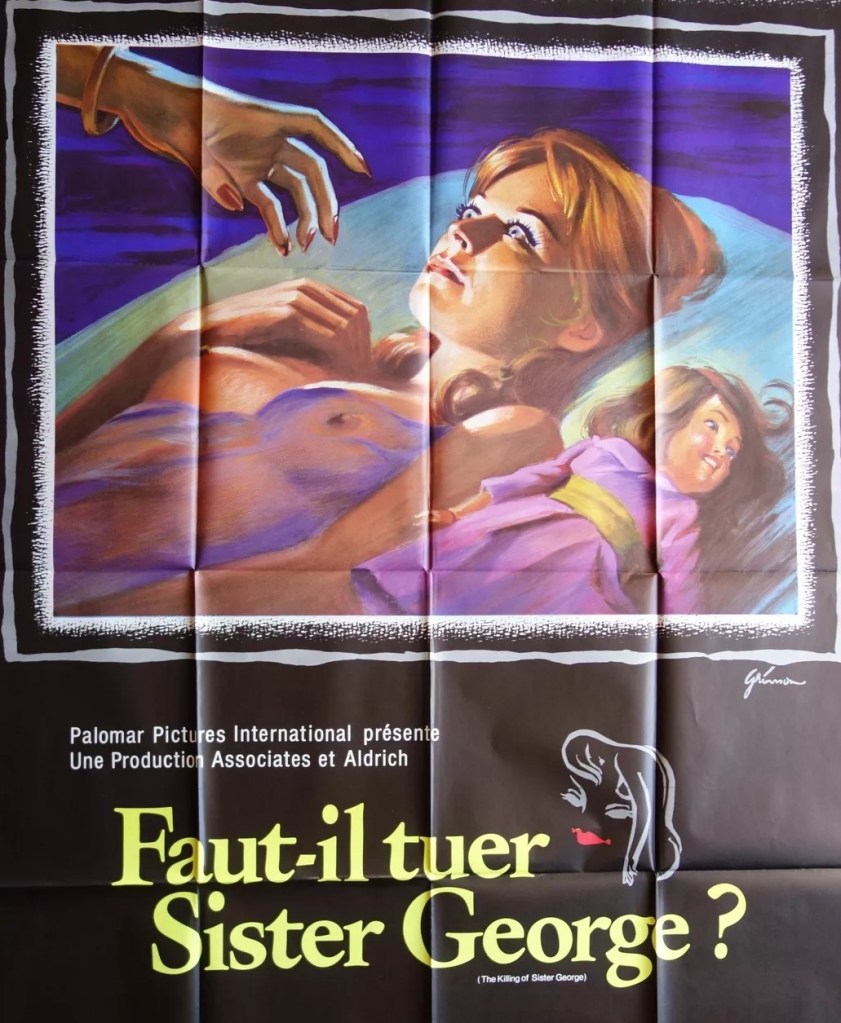
Somewhere between camp classic, hilarious comedy and bitchiness-on-speed, loaded down with a May-December narrative, too much of the genuine soap opera element of the filming of a soap opera but lifted up by some very touching moments. This started life as a black comedy and its stage antecedents are only too obvious, many scenes running way too long for a movie, and in the unlikely hands of director Robert Aldrich – at this point best known for male actioner The Dirty Dozen (1967) rather than the equally bitchy Whatever Happened to Baby Jane (1962) – asks audiences to ingest a great deal more seriousness.
The sex scene was so shocking in its day that, in the reformed U.S. censorship system, earned one of the first mainstream X-certificates, thus torpedoing its box office potential as newspapers routinely refused to accept adverts for such. Yet while it is tender, and to some extent galvanized by the astonishment of older lesbian Mercy Croft (Coral Browne), a high-ranking television executive, at having such a young and adorable lover as Alice (Susannah York), it is sabotaged by Alice’s gurning.
Whereas Beryl Reid’s performance as aging soap opera actress June (aka Sister George) about to be cut adrift by the television production which has made her name is pretty much spot on as a drunken, insecure, needy, dominant, older lover. Susannah York (They Shoot Horses, Don’t They, 1969) just seems out of control as the bonkers dumb blonde. While same sex relationships between men had only just become legal in England, and the specter of blackmail, public scandal or imprisonment that had hung over many generations now removed, there had never been a correlative for women. Though a newspaper headline might well kill a career.
The best sequence in terms of the harmonious gay relationship comes in the gay club where women hold each other for a slow dance and it seems so normal and touching. Of course, relationships, straight or gay, don’t necessarily run smoothly, but the longstanding affair between June and Alice belongs to the Who’s Afraid of Virginia Woolf (1966) playbook. Alice may well be a gold-digger for all she does, but since the May-December aspect of male-female relationships was a standard Hollywood trope it seems fair enough to apply the same rationale to a single-sex partnership.
There’s some uncomfortable sadism when, as punishment for mild misdemeanor, Alice is forced to eat a cigar butt and told in no uncertain terms just how stupid she is. There had been a recent rash of on-set bitchiness, star tantrums and studio power struggles from pictures like The Carpetbaggers (1964), Harlow (1965), Inside Daisy Clover (1965), The Oscar (1966) and Aldrich’s own The Legend of Lylah Clare (1968), so none of production shenanigans bring anything new to the table.
However, when June lets rip, embarrassing management or forcing her fellow actors to laugh during a tragic scene, this is comedy gold. Her alcohol intake and arrogance aside, it seems a step too far for June to attempt to sexually assault two nuns in a taxi – this unseen sequence key to her downfall. You might be inclined to question how Alice came into the sexual orbit of June and Mercy in the first place, and wonder if the two older women are not guilty of what would be termed these days inappropriate behavior in taking advantage of clearly a vulnerable young woman.
Beryl Reid (The Assassination Bureau, 1969) walks a fine line between self-indulgence and character insight. I felt Susannah York’s over-acting got in the way. The tight-lipped Coral Brown (The Legend of Lylah Clare) was too close to the cliché for my liking.
Robert Aldrich just about gets away with it. Lukas Heller (The Dirty Dozen) adapted Frank Marcus’s play.
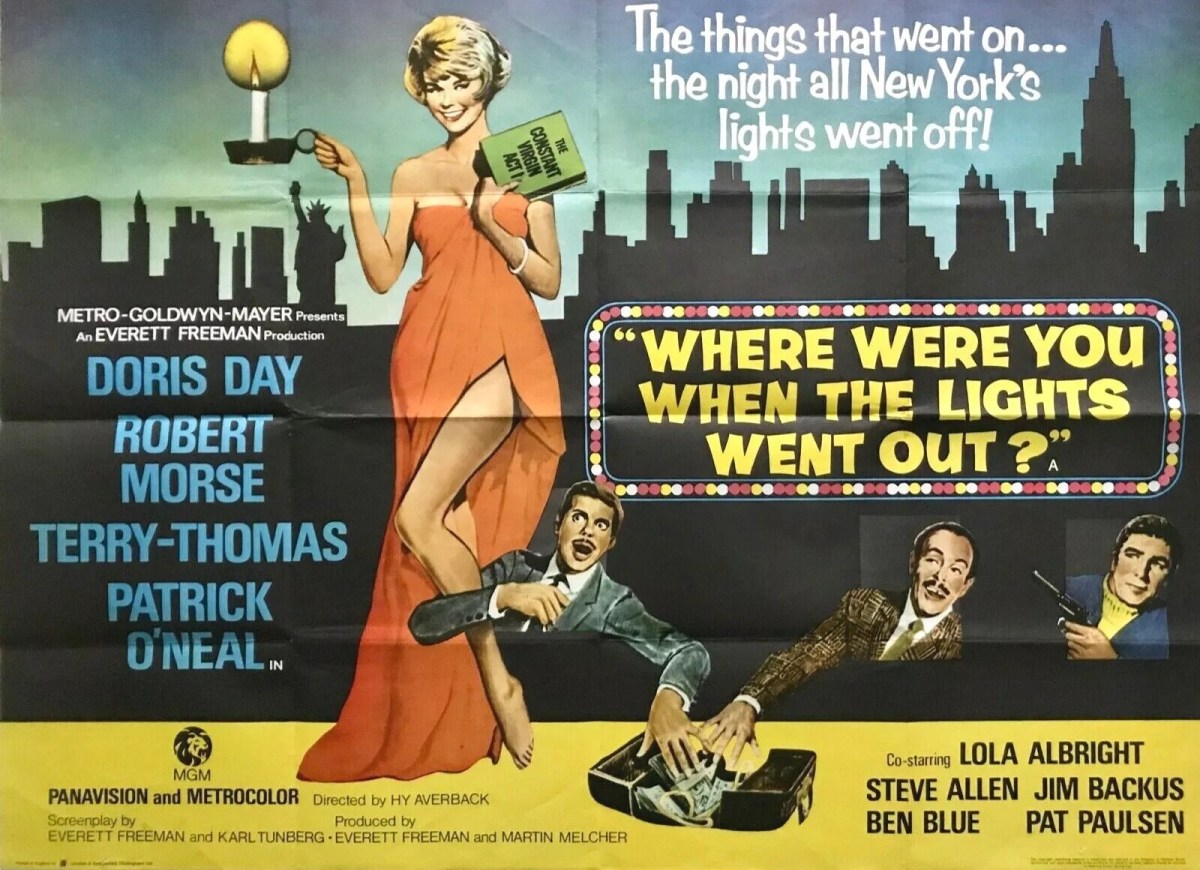
Of the 25 million stories you could have chosen when New York and the surrounding area was hit by an electricity blackout in the mid-1960s, you could have elected for something more interesting than this farce-style comedy that after the opening sections resembles nothing more than a stage play. But that’s because, somewhat surprisingly, it is based on a play and one concerning not the great fracas in the Big Apple but a similar occurrence in Paris almost a decade before. Once you know that, the farce element makes sense, but not much else does.
The three constituent parts that eventually coalesce into little more than a collage of double takes and startled expressions are: thwarted businessman Waldo (Robert Morse) making off with a couple of million bucks; Broadway star Margaret (Doris Day) finding architect husband Peter (Patrick O’Neal) in a clinch with journalist Roberta (Lola Albright); and impresario Ladislaus (Terry-Thomas), the most English-sounding Eastern European you ever came across, terrified Margaret is going to quit his play.
The lights going out malarkey is an ill-judged MacGuffin so that all except Roberta can end up in a classy Connecticut apartment and get into a quandary about who loves who and who’s cheating on who and career choices to be made. It’s pretty hard work all round to make all the pieces misalign and then fit. Waldo’s car has broken down so he has no real reason to be there nor to gulp down a beaker of alcohol that knocks him out without noticing that Margaret is fast asleep on the same couch after imbibing the same concoction.
Cue not much hilarity when guilty Peter turns up hoping to win back his wife, not expecting to find her unconscious from booze and once he discovers her bed partner convinces himself that she is as much of a cheat as himself. Meanwhile, Ladislaus tries to keep the jealousy pot boiling in the hope that she will divorce her husband and be forced to continue working.
I’m not sure I really cared whether it all worked out or not. Sure, comedies often pivot on bizarre instance, but this is just awful. More to the point, the structure doesn’t focus sufficiently on Margaret. The Waldo scenario seems wildly out of place and not enough is made of the chaos of the blackout. More to the point, with streets completely jammed and traffic signals not working, just how all four manage to get out of the city is beyond belief.
Sure, Doris Day grew up fast in the decade; at the start we worry about her losing her virginity; by the end it’s whether she’s going to embark on an affair. She’s always on the brink of the kind of sophistication that might tolerate an affair before drawing back in shock at such a notion.
The laffs are thin on the ground, even Doris Day drunk – one of her trademark touches – seems to lack punch. The best written scenes are those between Ladislaus and his cynical psychiatrist
Doris Day does her best but it’s far from the sparkling form of Pillow Talk (1959) that kicked off her very own rom-com subgenre. The quality of her male co-star had diminished over the years, from the peaks of Rock Hudson and Cary Grant to the acceptable Rod Taylor and James Garner but Patrick O’Neal (Stiletto, 1969) acts as if he is curling his lip and about to belt someone in the harder-edged dramas with which he made his name. Robert Morse (The Loved One, 1965) looks as though he’s still trying to work out what his character’s doing there. However, Terry-Thomas (Arabella, 1967) exudes such charm he’s always a joy to watch. Lola Albright (A Cold Wind in August, 1961) isn’t in it nearly enough.
The original French play by Claude Magnier was a sex farce, but casting Doris Day meant the sex angle was played down, inhibiting the movie. An unlikely vehicle for screenwriter Karl Tunberg – Ben-Hur (1959) and Harlow (1965) – who co-wrote with producer Everett Freeman (The Maltese Bippy, 1969). Director Hy Averback (The Great Bank Robbery, 1969) doesn’t come close to demonstrating the lightness of touch required to make such a ponderous effort work.
Nothing to live on but dreams and, in those days, no social media to bail them out. Spare sad lives in Small Town U.S.A. told with an occasional grand guignol touch. Look elsewhere for the laconic loner of Steve McQueen legend, to, for example, The Cincinnati Kid, out the same year.
This has the feel of a vanity project, the actor’s Solar outfit taking a production credit, as if the star felt he wouldn’t properly be recognized as an actor unless he had a ton of lines to chew through. And he might be right to feel aggrieved, wildly contrasting roles from Daniel Day-Lewis in movies that opened the same day in New York two decades later had critics reaching for the superlatives.
By my reckoning, this was the last year, save for occasional outliers like In Cold Blood (1967), when studios accepted the hi-falutin’ notion that filming in black-and-white added artistic luster regardless of the damage it might do to a picture’s commercial prospects. The mono approach is taken to extremes from time to time, the contrast so sharp it might have emanated from the Ingmar Bergman school of cinematography. And given the desultory lives picked over, this might have fared better with subtitles, the kind of foreign picture that arthouse audiences fawned over.
Prison parolee Henry (Steve McQueen), entitlement hormone running amok, has got it into his head that if only he had the funds to reach Hollywood or Nashville (either would do) his singing and song-writing talent would be recognised. This puts wife Georgette (Lee Remick), newly arrived with small daughter, in the position of going out to work to keep the family, altering her domestic situation from independent single mother to wife in thrall to waster husband.
She’s supposedly no dupe either, rejecting the kindness of strangers, as if aware it usually comes with strings attached. It’s a given that any time a child enters a romantic equation you can be sure the narrative will turn on parenthood and responsibility. And that’s pretty much all the story there is.
You can guess from the outset that while Henry’s singing might set a few female hearts zinging, it’s not likely to win him a contract. So the question is, really, whether Henry can settle down and not be so swift to resort to his knife when confronted with a messy situation.
It’s marred by a couple of truly terrible scenes, a poorly-choreographed fight and a really odd sequence that has Henry declaiming with his back to a tableau of motley characters with the contrast at its sharpest. And in what looks like nothing more than an old haunted house.
It’s well-meaning enough and for the most part McQueen dispenses with the tough-guy attitude, but he doesn’t really offer enough in its place. It’s the kind of role that could easily have been delivered as effectively by any number of actors with nothing approaching his star quality. And that’s a shame because he really is trying – though it’s the trying that gets in the way, you keep on waiting for the real Steve McQueen to turn up.
If director Robert Mulligan (Up the Down Staircase, 1967) hadn’t been so determined to paint it in downbeat arthouse tones, the actor might have felt free enough to come up with a genuinely original turn. Though I accept it’s a bit unfair to complain about McQueen attempting something different, there’s no real excuse for him creating the worst singer ever to hit the screen.
You might also note, by the way that whereas McQueen takes pole position on the poster, in the screen credits Lee Remick (Days of Wine and Roses, 1962) is top-billed. Remick is better than McQueen because she has a deeper well of emotions and wider range of characterizations to choose from. You never feel she is acting to save her career or hope that Oscar voters might nod in her direction.
The movie makes more sense once you understand it really belongs to the 1950s – the Horton Foote (To Kill a Mockingbird, 1962) Broadway play on which it is based was staged in 1954. The movie fatally switches focus from Georgette to Henry before working out which actor was likely to best convey the happiness drought on which the work depends. There’s more than enough sadness to go round but it just seems solidified from the outset. No great harm – that may well be the truth of it – but it prevents the movie taking off, stuck as it is in recycling Henry’s weary past. Don Murray (The Viking Queen, 1967) makes a good fist of a widowed sheriff.
Worth a look to see McQueen tackling something different. You decide whether he succeeds or fails.
Nudity was not an option for previous child stars attempting to make the leap into adult roles. Shirley Temple in the 1930s and Margaret O’Brien in the 1940s were kids when they played kids and when they outgrew their cuteness audiences proved indifferent.
Being older when playing younger characters increased the chances of career survival. Silent movie superstar Mary Pickford was 22 when she first tackled child heroine Tess of the Storm Country (1914) and 30 for the remake and she made an absolute fortune from these kinds of roles. Judy Garland was 17 when The Wizard of Oz (1939) appeared and managed another 15 years at the top before drugs and drink took their toll, still worthy of supporting roles after A Star Is Born (1954) and even star billing in her last film I Could Go On Singing (1963). But she was fired from Valley of the Dolls (1967), ironically enough given the film’s subject matter, due to alcohol and drug dependency.
Hayley Mills was 14 when her first Disney picture Pollyanna (1960) was released and for the next five years at that studio never played anyone approaching her true age. She was protected from studio abuse because this was Disney and because her father was actor John Mills, who often appeared in her movies. When the Disney contract ended, Sky, West and Crooked (1966), her father’s directorial debut, attempted to refashion her screen persona with a more challenging role.
But The Family Way forced audiences to set aside all preconceptions. Not only did she show her naked derriere, but this was a film essentially about sex. No sex is actually shown because newly-weds Jenny (Hayley Mills) and Arthur (Hywel Bennett) have problems consummating their marriage. You can thank the Carry On films for the snigger-snigger British mindset to sex. The promiscuous and often predatory characters of Darling (1965) and Alfie (1965) occupied a different world, almost a foreign country as far as the inhabitants of this solid working-class town were concerned.
They would have looked askance at such permissiveness. Here, at this particular point in history, both sexes were still expected to be virgins when they married. Sex in Darling and Alfie, for example, carries little emotional overtones. The Family Way is novel in treating sex as fundamental to happiness within marriage.
The subject of impotence would not be first on your list when you set out to make a warm-hearted drama. But here screenwriter Bill Naughton (Alfie) in adapting his play All in Good Time uses the theme to explore family values. But where recrimination – and subsequent confrontation – might be the first port of call for another writer, Naughton foregoes that obvious route to concentrate on the way impotence eats at a man’s self-worth. Two secrets drive the plot but the second is preserved right to the end, resulting in possibly the most moving finale you will ever watch.
In documenting working-class life it is superior to the earlier Saturday Night and Sunday Morning (1960). It is life without inbuilt bitterness. Families are still crammed into small houses, a visit to the housing department – to get a new council house or just be put on the waiting list – an invitation to humiliation, but there is full employment and enjoyment to be found in simple pleasures.
Family dynamics are expertly explored. Arthur, with a shelf load of books and penchant for classical music, is diametrically opposed to his down-to-earth but exceptionally obtuse father Ezra (John Mills), and there is a wonderful scene early on where Arthur seeing how badly his father takes defeat allows him to win an arm-wrestling competition.
Ezra is the standout, devoted to the memory of a long-departed childhood pal and struggling with his position as patriarch especially in the face of perennial sniping by wife Lucy (Marjorie Rhodes). Ezra is so expressive of longing and emotion, and it is he who has the heart-breaking final scene.
The older characters are fully rounded, bluff exteriors concealing fragile emotion. Hard-faced Lucy appears almost fey when she recalls a moment of love. Jenny’s burly father (John Comer) cannot cope with her departure from his household, especially as that leaves him at the mercy of his shrewish wife (stand-up comedienne Avril Angers).
Hywel Bennett begins a successful movie career with a difficult part, an introspective role calling for him to contain his emotions – not venting his spleen like the endlessly complaining Arthur Seaton of Saturday Night – until they erupt in a spectacular fist fight that does not go at all the way you would expect.
Barry Foster (Frenzy, 1972) has the showy part as the rough-edged workmate and Murray Head (later part of the love triangle in Sunday, Bloody Sunday, 1971) also makes his debut in an equally showy role as Bennett’s brother who makes advances to his frustrated sister-in-law.
Even without the nudity, Hayley Mills, the denoted star, makes the transition to movie adulthood with ease. In part, all she had to do was drop the unnatural excitement that appeared essential to her Disney portfolio. Her delivery, her reading of a line, had always been good and she had clearly worked out she was going to be an actress not a sex symbol so there was no exaggerated use of her physicality.
Even the nudity worked in her favor, startled to be disturbed emerging from a bath, genuinely shy, not the mock-shy or reveling in her naked state that was de rigeur in Hollywood. She was also helped by being a light foil to the brooding, gloomy Bennett, her natural bright personality, while affected by their problem, still capable of enjoying harmless pleasures.
This was a distinct change of pace for the fraternal producer-directing team John and Roy Boulting, stalwarts of British production since the 1940s with a host of well-regarded dramas and comedies, often with Peter Sellers, to their name. Generally, they took turns about in the director’s chair – the former putting his name to thriller Brighton Rock (1948) and comedies Lucky Jim (1957) and I’m Alright, Jack (1959), the latter claiming credit for drama Fame Is the Spur (1947), thriller Run for the Sun (1956) and comedy A French Mistress (1960). Occasionally, they shared the directing chore as with thriller Seven Days to Noon (1950), comedy Heavens Above (1963) and in this contemporary drama.
Their approach to The Family Way went against the grain of the gritty working-class dramas in the vein of Saturday Night and Sunday Morning and This Sporting Life (1962). Nobody here has a job they hate or comes home covered in grime. In fact, since the central thrust (pardon the pun) of the movie is about pleasure (sexual, that is), it is set against a background of enjoyment. Both principals have jobs in entertainment, Arthur an assistant projectionist in a cinema, Jenny working in a record store and also seen at a disco and a motocross event. Alcohol plays a role, of course, but not to the extent of over-indulgence, not drinking yourself to oblivion like Arthur Seaton, and its main purpose is to present the father as an amiable host.
What impact the burgeoning affair between Hayley Mills and Roy Boulting (33 years her senior) had on the production is anyone’s guess but possibly it helped steady the star’s nerves when it came to the nude scene. From today’s perspective the nudity appears gratuitous. And certainly back then it was shocking, ensuring an X-certificate (although the subject matter probably already guaranteed that).
Actually, it was social comment. While living in a decent-enough house, the family lacked one particular amenity – an indoor toilet. Washing took place at a communal sink or in the privacy of a bedroom with a bowl of water. A bath was a mobile unit, a zinc item dragged out of the scullery into the living room, filled with endless pots or kettles of hot water.
But for a young woman to take a bath demanded privacy. So when Jenny is interrupted in her ablutions, males and females in the audience had opposite reactions. It would not be unreasonable to suggest that males simply enjoyed the sight of the naked posterior. Women, on the other hand, would wince.
Aversion to nudity may have played a part but more likely women would feel deeply the humiliation at the lack of privacy in such a household, that someone could come upon you at your most vulnerable at any time. Sure, nothing went hidden in such houses, the sounds of any activity would carry through walls, but such a deep personal activity as exposure while taking a bath said far more about the brutal congestion of family life than jokes about hearing someone urinating into a container in the next room.
Paul McCartney contributed a very hummable melody as part of his debut movie score.
American audiences did not respond so well to Hayley Mills’ emergence as an adult actor and the movie failed to click at the box office there. But by that point it was already in profit, a runaway British hit (among the top twelve films of the year) and set the female star up for an adult career, pointed Hywel Bennett in the right direction and gave John Mills one of his most memorable turns.
The predatory female was a late 1960s trope but this takes it stage further by suggesting that a woman can have it all, husband, lover and career fulfilment. Usually, it’s the powerful male that sets his mistress up in an apartment. It being British, Mrs Blossom (Shirley MacLaine), wife of bra manufacturer Robert (Richard Attenborough), stashes lover Ambrose (James Booth) in the attic.
There’s an element of Carry On in the focus on Robert’s profession, sniggering at the audacity of it all when it’s little more than an excuse to show a succession of half-naked girls modelling the product. The central conceit is ahead of its time, not so much one-size-fits-all, the Holy Grail of all manufacturers, but that women can have the bosom-shape they desire (rather than these days opting for the under-wired bra or going the whole hog with cosmetic surgery) through inflating the brassiere to suit.
Except toward the end, the bra business takes second place to the sex business as Mrs Blossom demonstrates exactly how to have your cake and eat it. Her shenanigans with Ambrose cause her to make greater effort with Robert. Although the male perspective occasionally intrudes: Mrs Blossom “ecstatic” at the prospect of making two men happy.
There’s not much going on plot-wise beyond Robert hearing strange noises in the attic and discovering a number of items, purloined by Ambrose, going missing, resulting in him seeking the help of a psychiatrist (Bob Monkhouse).
The whole enterprise is doused in modernity, probably post-ironic for all I know, Mrs Blossom’s painting tending towards Pop Art, some in-jokes (one dot on a canvas turns out to be a “sold” sticker). Since there’s not much else going on, Robert, kept sexually satisfied, hardly imagining his wife is engaged upon an affair, scarcely raising a scintilla of suspicion, the lovers carry on as if they are, in the best Hieronymus Merkin fashion, embarking on a welter of fantasies, primarily of the cinematic variety, so nods to Hitchcock, David Lean and even Raymond Chandler etc.
The climax at some kind of ticker-tape convention featuring Robert speaking atop a giant bra-clothed statue looks as though it consumed most of the budget. At bit more of the money could have been spent on jokes, because, without the danger of the illicit couple being found out, it lacks any real tension, unless you count a pair of bumbling and/or camp detectives (Freddie Jones and Willie Rushton) whose sole purpose appears to be to over-act. There’s a clever twist at the end.
Director Joseph McGrath (The Magic Christian, 1968) is something of an acquired taste. His main claim to fame at this point having helmed music videos for The Beatles and his scattergun approach rarely hits the target. One of the few examples where opening up a play (by Alec Coppel – of Vertigo fame!!) results in in racing in too many directions.
Shirley MacLaine (Sweet Charity, 1969), by now the decade’s most celebrated kookie, brings immense charm to the role and it has to be said it’s the acting in the main that keeps this on an even keel when the director is so clearly on a different planet. Richard Attenborough (The Flight of the Phoenix, 1965) is believable as a workaholic who lets off steam conducting an imaginary orchestra. James Booth (Fraulein Doktor, 1969), meanwhile, in a role that could have gone seven ways to Sunday, makes a convincing lothario.
Comedian Bob Monkhouse is surprising good as the madcap psychiatrist and you might have some fun spotting John Cleese, Barry Humphries and a young Patricia Routledge. Producer Joseph Shaftel (The Biggest Bundle of Them All, 1968) wrote the script with Denis Norden (The Best House in London, 1969).
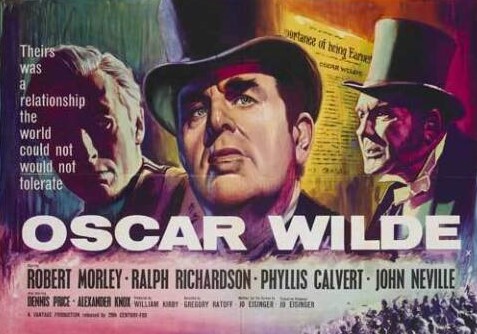
You might be surprised to learn there were two Oscar Wildes. Not the famed writer and a doppelganger of course but two films on the same subject that were released in the same month. This is the low-rent version, costing a fraction of the rival The Trials of Oscar Wilde directed by Ken Hughes. It’s easy to be disdainful of the cheaper effort, with little cash available for scenery and costumes, but somehow it rises above budget limitations. Structurally, both movies focus on the trial – or in the case of The Trials of Oscar Wilde the three trials he endured – but the glossier pictures it has to be said glosses over a great deal.
While I enjoyed it at the time, I now find that in trying to make a modern martyr out of Oscar Wilde, the Ken Hughes picture built him up so much that it was difficult to find any flaw in his character. We never find out what was the actual slur the Marquis of Queensbury made on Wilde, resulting the playwright taking him to court for libel. And that version begins with Wilde and Alfred Lord Douglas (“Bosie”), son of the Marquis, already deep into their affair.
On the other hand, Oscar Wilde, the final film of Hollywood veteran director Gregory Ratoff (Intermezzo, 1939), starts at the beginning of their relationship with greater emphasis on Wilde’s practicality rather than his wit and Bosie’s (John Neville) tortured relationship with his hypocritical father (Edward Chapman) who, while taking the moral high ground, keeps a mistress. On Wilde (Robert Morley) being described as a sodomite by the Marquis, Bosie’s desire to see his father humiliated in court verges on revenge. “You weren’t looking for a friend,” Wilde astutely tells his lover, “You were looking for a weapon.” Bosie is big on humiliation – he is the one to break the news of Wilde’s duplicity to the author’s wife (Phyllis Calvert). So determined is he on the court case that he fails to tell Wilde that his father has private detectives scouring London to find evidence.
While in court Wilde can keep the jury in stitches with his epigrams, he soon comes up against the Marquis’s formidable lawyer Sir Edward Carson (a quite stunning performance by Ralph Richardson). From Carson we learn a great deal more of Wilde’s practices, some of which nowadays would be termed grooming. Essentially, Carson paints a portrait of a predator, an older man (Wilde was 41) whose uses his wealth and wit to court many lovers, mostly aged around 20, but some as young as 16, barely the age of consent.. And when he felt his secret life was in danger of being exposed, he went so far as to pay for the passage to America of one of his lovers, Alfred Woods, to get him out of the way.
No matter that Wilde at the start can gloss over his promiscuity, complaining that Carson is misinterpreting innocent gestures of friendship, the cunning attorney soon has the author tied in knots as he wheels out one by one information regarding the various lovers.
It’s quite odd to realise that The Trials of Oscar Wilde in presenting the more accurate truth – that the author underwent three trials – fails to provide little more than a surface treatment of the man’s real-life affairs. Oscar Wilde perhaps delves too deeply for audiences brought up to consider the author a martyr who deserves the free pass allocated all writers of genius. I found Oscar Wilde the more riveting watch because, of course, I already knew the outcome, but the sight of the famed writer, encouraged by the vengeful Bosie, hung out to dry by his own hubris, and for a man of such wit to be outwitted in the courtroom by Carson was an exceptional watch.
Of course, the imprisonment of Wilde for the crime of being a homosexual is detestable. Even at the point this film was made homosexuality was a crime. So it’s fascinating to see how much The Trials of Oscar Wilde skirts round issues that Oscar Wilde had little problem in spelling out.
I was surprised how much I enjoyed Robert Morley’s performance. I may be wrong, but I think this was the only time he was accorded leading man status. Mostly, he was a supporting actor (The African Queen, 1951, say, or Genghis Khan, 1965) and often just playing a version of his self. Of course, he is outshone by a simply brilliant Ralph Richardson (Khartoum, 1966). John Neville (A Study in Terror, 1965) presents a more in-depth performance than in the rival picture. One-time British box office star Phyllis Calvert (The Golden Madonna, 1949) does well in a small but pivotal role. You might also spot Dennis Price (Tunes of Glory, 1960) and Alexander Knox (Mister Moses, 1965).
Lacking a budget to do much more, Gregory Ratoff sticks to the detail and draws out two superb performances, aided by a tight script by Jo Eisinger (Gilda, 1946; Cold Sweat, 1970) based on the play by Leslie and Sewell Stokes and the work of Frank Harris. As swansongs go, this is hard to beat.
Vastly underrated.
Catch it on YouTube.
NOTE: Oscar Wilde appeared in first run in Glasgow at the La Scala cinema in June 1960 one week ahead of The Trials of Oscar Wilde at the first run ABC Regal and ABC Coliseum.






 The Magnificent 60s