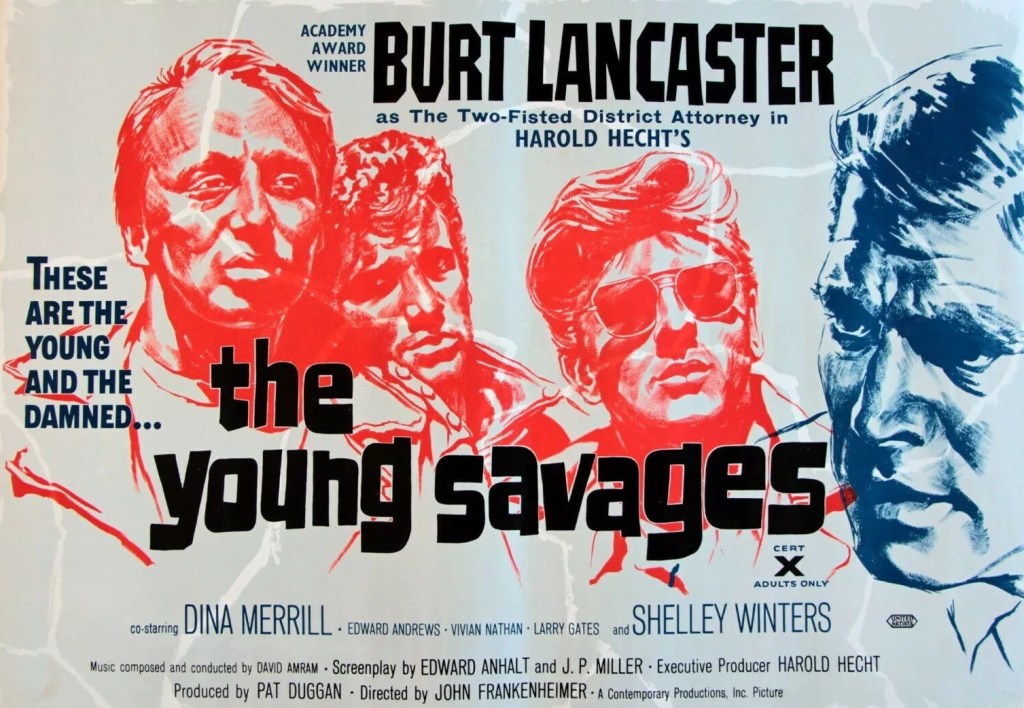
The Young Savages (1961) ****

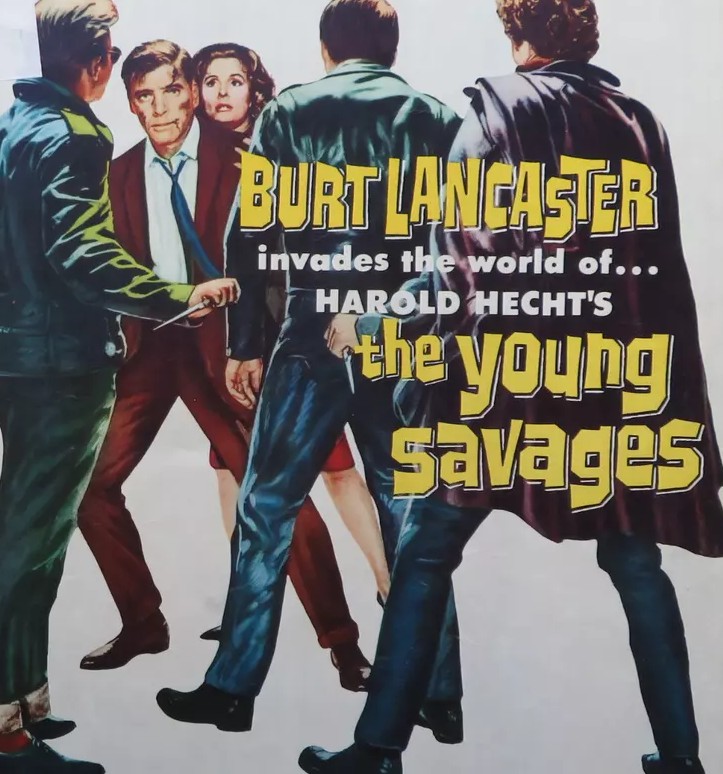
You have to put out of your mind any thoughts about West Side Story, released the same year and also dealing with teenage gangs in New York. But whereas the musical tapped into Shakespeare and tugged at audience heartstrings with a tragic love story, The Young Savages is what used to be called an “issue picture,” a realistic portrayal of a growing problem in society.

Rather than the sullen relatively harmless rebels of Rebel without a Cause (1955) or this decade’s Easy Rider (1969), the question of youth disenfranchisement and the growth of a culture, here majoring in violence, at an opposite extreme to social norms, was beginning to take hold. Where earlier immigrants emerging from New York housing hellholes had tended to graduate to straightforward crime, which occasionally spilled over into the main street, now youths were engaging in turf wars, knives rather than machine guns the weapon of choice, which took place in full view of a terrified population.
Oddly enough the movie opens with the same motif as West Side Story, the feet of a gang, but rather than expressing their frustration through dancing, these feet, belonging to three members of the Italian-American Thunderbirds mob, are marching through the streets of New York, brushing aside passersby, knocking over toy prams, on their way to kill a member of the rival Puerto Rican Horseman gang.

When arrested, they claim self-defense. The only flaw in that argument is the victim Roberto Escalante (Jose Perez) is blind.  Naturally, there is a public outcry and calls for the death penalty. Prosecutor Hank Bell (Burt Lancaster), who had grown up in the same streets as the gangs but managed to make a life for himself outside its confines, is hellbent on extracting the maximum punishment. Bell was born Bellini but changed his name to hide his background, make it easier for him to serenade Vassar graduates and advance his career.

That leads to complications, and it’s hard to say which is the more compelling. His more liberal wife Karin (Dina Merrill), the Vassar item, is appalled. District attorney Dan Cole (Edward Andrews), who fancies his chances as a politician, faces public backlash if he doesn’t take tough action. And Hank had a romantic fling in the past with the mother Mary DiPace (Shelley Winters) of one of the accused.   
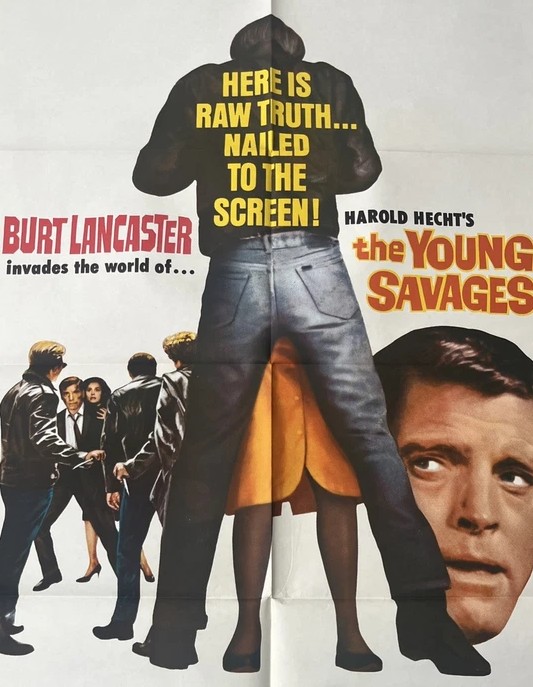
But Hank hasn’t quite thrown off the shackles of his upbringing, and though currently an upstanding member of society, he finds his principles taking a battering when he is himself attacked and discovers just how easy it is to resort to violence. Karin, too, finds her liberal attitude shot to pieces when she is also attacked.

Even without personal involvement of the husband and wife in being forced to face up individually to the violence pervading the city, the focus is on the exploration of how such violence becomes endemic in those parts of society left behind in the pursuit of the Great American Dream.

There’s plenty issues to deal with: poverty for a start, lack of ethnic tolerance, hatred of one immigrant group to another, politicians making capital out of the situation, parents powerless to prevent their children growing up as hoodlums, youngsters seeking identity and respect from joining a gang, and the growth of the gangs themselves as a social dynamic.

As you might expect, there are no easy answers. In fact, there are no answers at all. A movie like this can only lift the stone without being able to effect what’s happening underneath. But in some respects, that’s the aim of the issue picture, an early type of virtue-signaling. None of the issues raised have gone away, more likely they’ve just got worse.

But that’s not to downplay the film’s impact. There’s an inherent honesty here in the decision of debutant director John Frankenheimer (The Manchurian Candidate, 1962) not to take sides.    

Burt Lancaster (The Swimmer, 1969) delivers another excellent performance. Dina Merill (Butterfield 8, 1960) thrives in a solid role and Shelley Winters (A House Is Not a Home, 1964) is effective. Watch out for the debut also of Telly Savalas (The Assassination Bureau, 1969).  Written by Edward Anhalt (Becket, 1964) and J.P. Miller (Days of Wine and Roses, 1962) from the bestseller by Evan Hunter, who had explored similar youth issues in The Blackboard Jungle filmed in 1955.

Still powerful stuff.
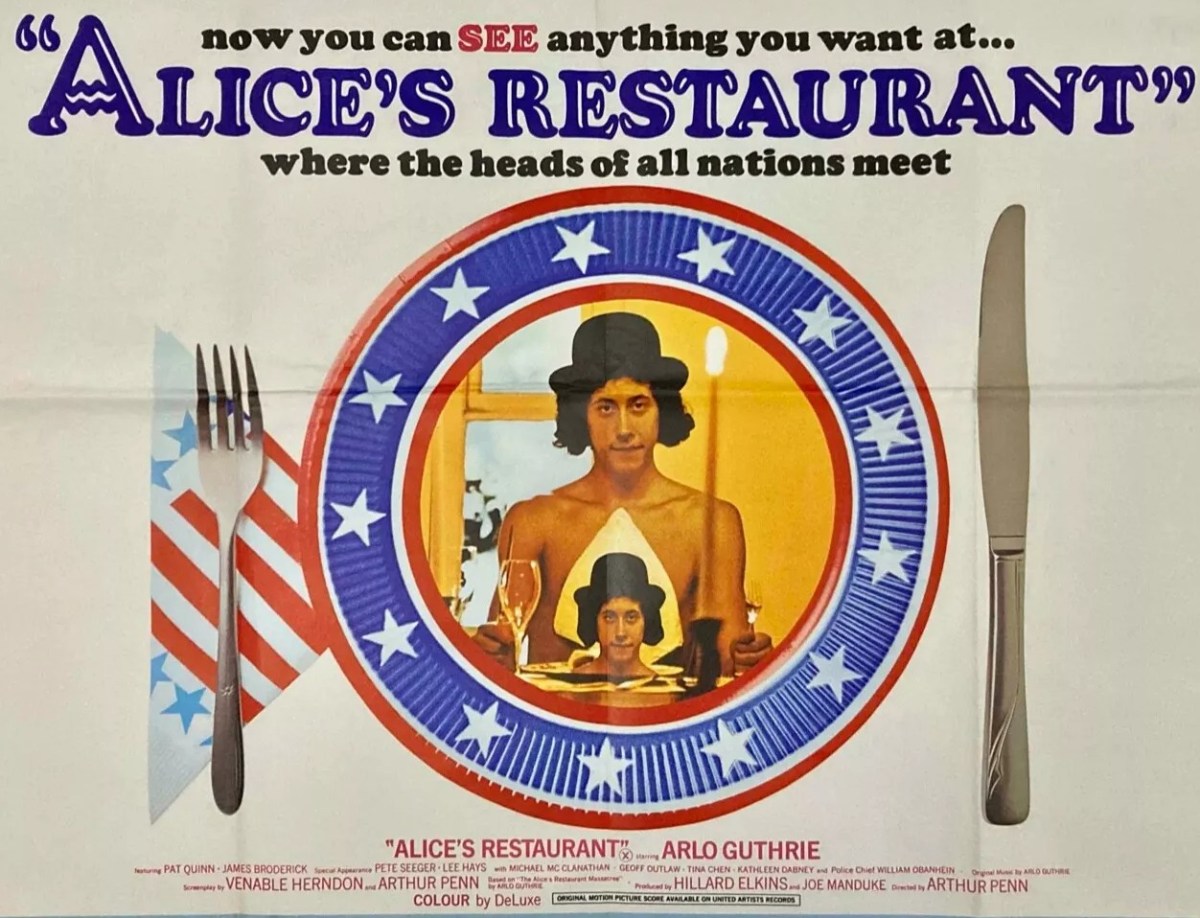
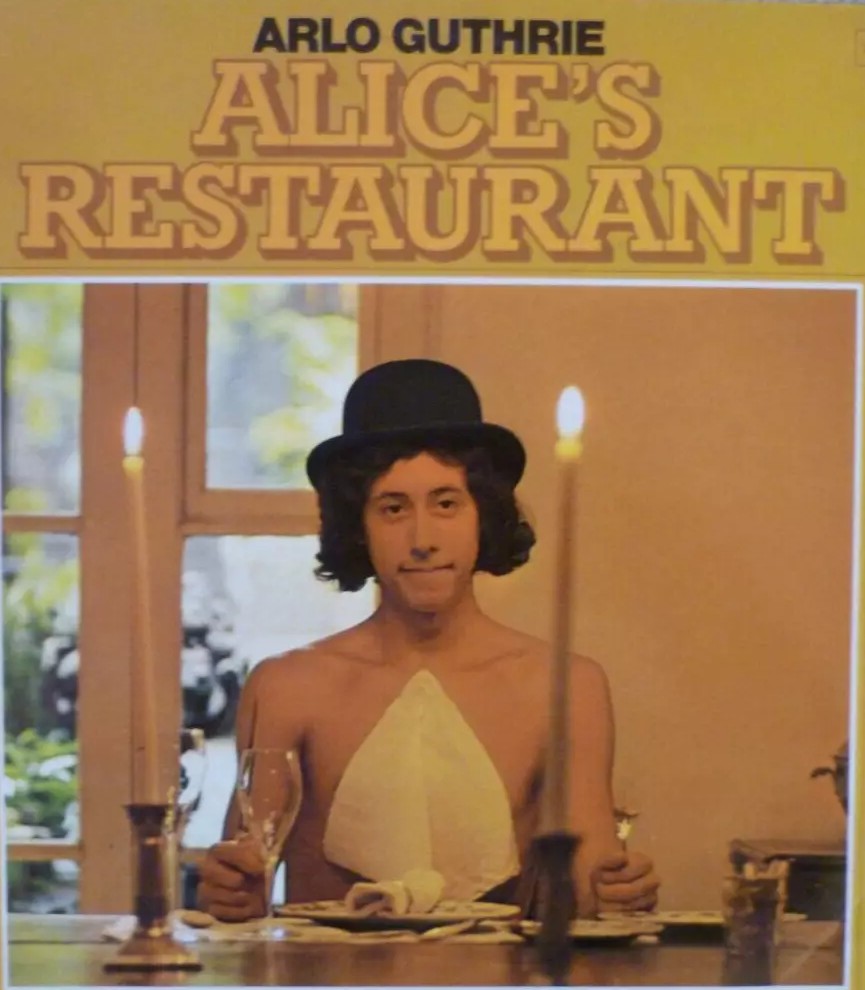
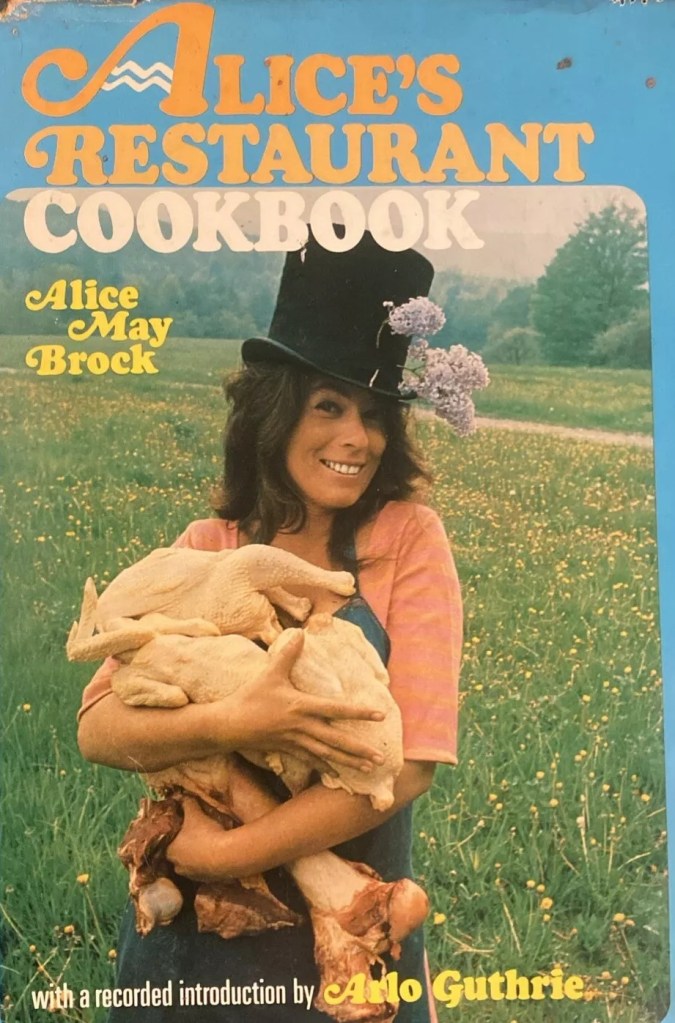
Alice’s Restaurant (1969) **

It might have been better if I’d come to this in a hazy glow of nostalgia. But I’d skipped this back in the day and although I’m a big fan of Arthur Penn I was never sparked to seek this out on VHS/DVD. So I’m coming to it for the first time. And I’m sorry to say it just feels like an indulgent mess.

It’s hard enough getting novelists to hack about their sacred texts sufficiently to turn them into workable screenplays, never mind putting the author center stage and not only have him narrate his tale but act it out. And when you discover that he’s not much of an actor, you’re not left with much but almost a documentary with drama coming from outside, from the forces of authority trying to shape the rebellious young to fit the pre-existing mold.

Album cover.

I have to confess I was never a big fan of folk music, excepting Bob Dylan I guess and you can argue he was only a folkie at the outset of his career. I was only vaguely aware of Woody Guthrie and don’t remember in the late 1960s his son ever touching the public consciousness overseas. So this might simply be one of those American movies that didn’t travel, like comedy or most musicals which had trouble matching up with foreign appreciation of those genres which tended to be nationalistic.

The narrative drive is Arlo Guthrie (Arlo Guthrie) dodging the draft. This was a right-of-passage especially for all young creatives, who would tend to be the most openly rebellious, but equally for a whole generation of young men who didn’t want to get themselves killed in a war they saw as senseless and who had gone off the idea of war altogether.

In Britain national conscription had ended in the late 1950s but there were no tales of people trying to dodge the draft. Elvis Presley had done his duty in America but Cassius Clay (later Muhammed Ali) did not – and was stripped of his World Championship. But away from all these high-profile cases, youngsters could avoid the draft by enrolling in colleges or universities, or pretending to have homosexual tendences, or shooting themselves (literally) in the foot, or claiming, as Guthrie did, that he had inherited a genetic illness – his father was dying of Hodgkins Disease – and when that doesn’t work acting mad, which doesn’t either.

What does get Arlo off national service is his involvement in a bizarre incident which made headlines at the time when he was arrested for littering and fined. When he reiterates his lack of objection to littering to the draft board, he is deemed unfit and is let off, as satirical a comment on the war between youth and authority as much as on the Vietnam conflict.

There was a real Alice and there was a real restaurant and there was an unusual tie-in.

There’s a story in here somewhere but it’s so ramshackle that, at the remove of over half a century, it doesn’t even appeal to those who worship the alternative lifestyle. After being chucked out of college, he heads off to join friends Alice (Pat Quinn) and Ray Brock (James Broderick) who have taken over a deconsecrated church in Massachusetts with Alice planning to set up nearby her eponymous restaurant, and not entirely for philanthropic reasons, Arlo composing a jingle to pull in customers.

Alice, disgruntled with lack of attention from Ray, begins an affair with Shelly (Michael McClanathan), an artist and ex-heroin addict, and every now and then Arlo returns to New York to visit his father Woody in hospital (Arlo is nowhere to be seen in A Complete Unknown). There’s a motocross race, and Shelly later dies in a motorbike crash. Woody dies too and Alice and Ray get married in a hippie-style wedding.

But most of this seems viewed even then through a time capsule as if Penn is assiduously recording a counter culture. The commercial success of this film and Easy Rider the same year triggered a cycle of youth-oriented movies that put Hollywood into an even deeper financial hole  

Sorry, folks, this just didn’t click. Maybe I was expecting too much. But the desultory narrative and the lack of any real acting made me switch off. While it has some of the offbeat vibe of Arthur Penn’s Mickey One (1965), it lacked that film’s compelling drive. Written by the director and Venable Herndon in his debut based on the Arlo Guthrie book.

Major disappointment

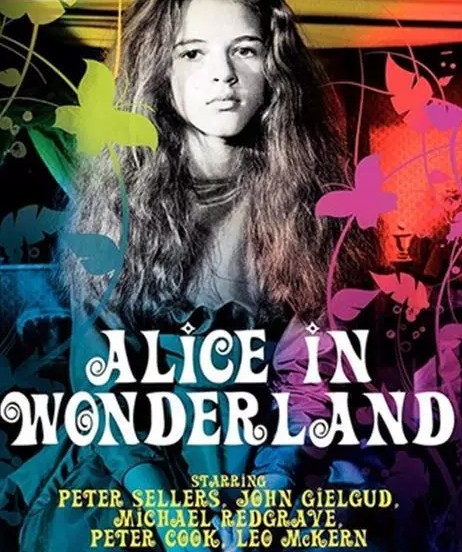
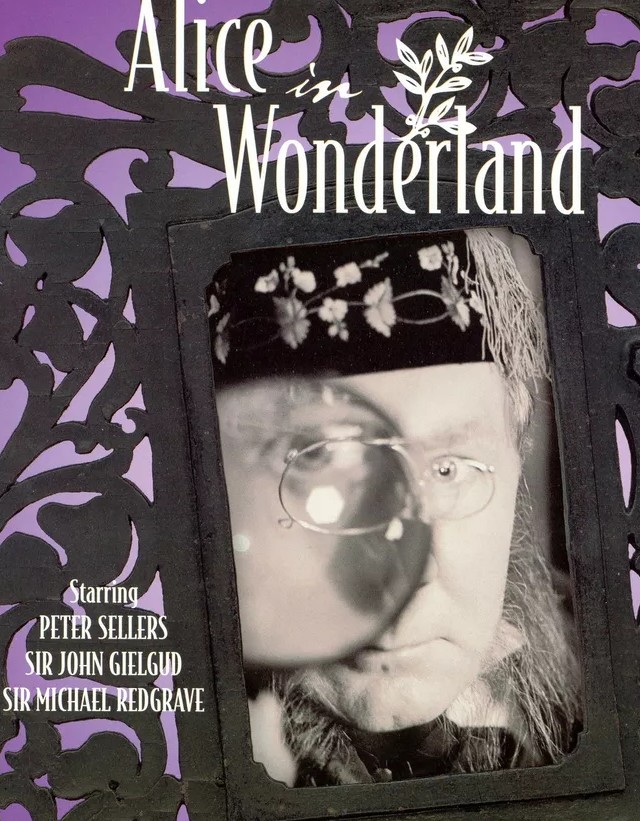
Alice in Wonderland (1966) **

Young bucks wanting to make a bigger splash are apt to rampage through sacred texts and treat unwary audiences to avant-garde notions. Thus, Jonathan Miller (Take a Girl Like You, 1970), in his debut, set aside all expectations and in fairness purists had decried Walt Disney’s 1951 telling of the Lewis Carroll classic. In truth audiences weren’t so in love with the Disney version either, an unusually low hitter for the company, and one that only really found its niche when reissued to catch a whiff of the stoned hippies who had drooled over 2001: A Space Odyssey (1968).

This 1966 reimagining might have been buried in the vaults after its initial showing except that Jonathan Miller went on to become something of a British institution, renowned directed of opera and stage plays, writer and presenter of a number of highly-regarded television projects and a regular on the talk show circuit. That his career had begun in sensational fashion, one of the hands on the tiller of the satirical Beyond the Fringe stage show (a hit in the West End and Broadway) and television program, meant that when he decided to spread his wings into the movies, no expense was spared.

Big stars flocked. What other neophyte could attract stars of the caliber of Peter Sellers (The Pink Panther, 1964), John Gielgud (Khartoum, 1966), Michael Redgrave (Goodbye, Mr. Chips, 1969), Leo McKern (Bunny Lake Is Missing, 1965), Peter Cook (The Wrong Box, 1966) and playwright Alan Bennett (The Madness of King George, 1994)? All admittedly in small parts but that was the nature of the all-star enterprise.

And that would have been fine if they had all been employed to supply the voices. Or if audiences had the fun of trying to determine who was who when hidden under the ton of make-up required to turn them into White Rabbits or Mock Turtles or Caterpillars or Lobsters cutting a quadrille.

But Miller had determined that not only was the Disney version short of the mark but for too long readers had missed the entire point of the Lewis Carroll book. He decided the point of the story wasn’t humor at all, nor a succinct exploration of the pitfalls of language, but about a young girl adrift in a adult world of confusion. So that was bye-bye to the cuteness.

He even broke a cardinal role. Alice doesn’t fall down a rabbit hole. The whole thing is a dream.

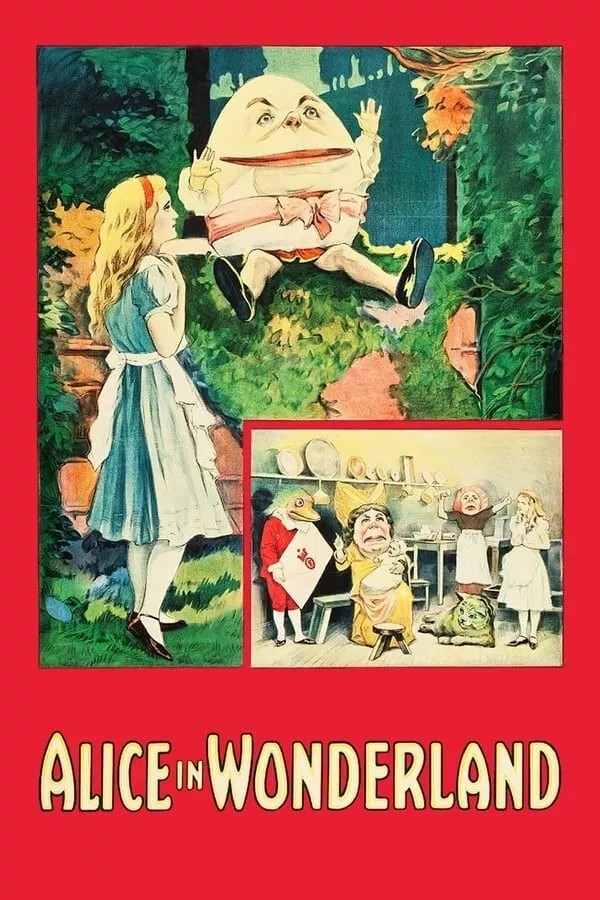
They’ve been adapting the book since the early days of cinema. This poster dates from 1915.

So you need to listen carefully to find out, with the lack of make-up, which actor is playing which fantasy character. And this isn’t set in any fantasy world either, certainly far removed from the famous illustrations that accompanied the book. It takes place in Victorian times which, yes, reflects the era in which the book was written, but, no, seems an extremely odd decision to give what is still fantasy some kind of realism.

It’s as if the director didn’t really have the courage of his convictions. That said, if he was catering to the arthouse mob, it’s got that kind of cinematic sensibility, with voice-over and unusual compositions.

Just to help you out, let me tell you that Peter Sellers plays the King of Hearts, John Gielgud the Mock Turtle, Michael Redgrave the Caterpillar, Alan Bennett the Mouse, Finlay Currie the Dodo, Leo McKern the Duchess and Peter Cook the Mad Hatter. The part of Alice went to 13-year-old Anne-Marie Mallik who never made another movie.

While it retains enough of the original to be recognizably based on the book – with all the catchphrases, “off with their heads” etc – the locale is just totally at odds with the story. And while it’s a tonic to hear the mellifluous tones of John Gielgud uttering the author’s immortal words, it would have been better just to hear his voice.

My guess is this is only still available because Miller made such a name for himself. You can catch it on Talking Pictures.

Curiosity or mess, it’s hard to decide.

https://www.facebook.com/TalkingPicturesTV/videos/easter-on-tptv/654499693946106

Jigsaw (1962) ***

Unusual crime picture even for the period. Most of these British pictures focused on the crime or an innocent caught up in nefarious activity, not just a straightforward police procedural before the term was even invented. In fact, the plodder was more likely to be a private eye or gifted amateur like Hercule Poirot or Miss Marple.

The title doesn’t refer to mystery but the painstaking element of putting all the pieces together and most likely still not being able to complete the puzzle – as occurs here until the very last scene and even then by pure accident. There are no sudden sparks of insight and the detectives don’t have the luxury of gathering all the suspects in a room Agatha Christie style. In fact for most of the movie not only can they not settle on a suspect they’re struggling to identify the victim. And this being when forensics didn’t exist except for fingerprints, there’s nothing even from that area to help.

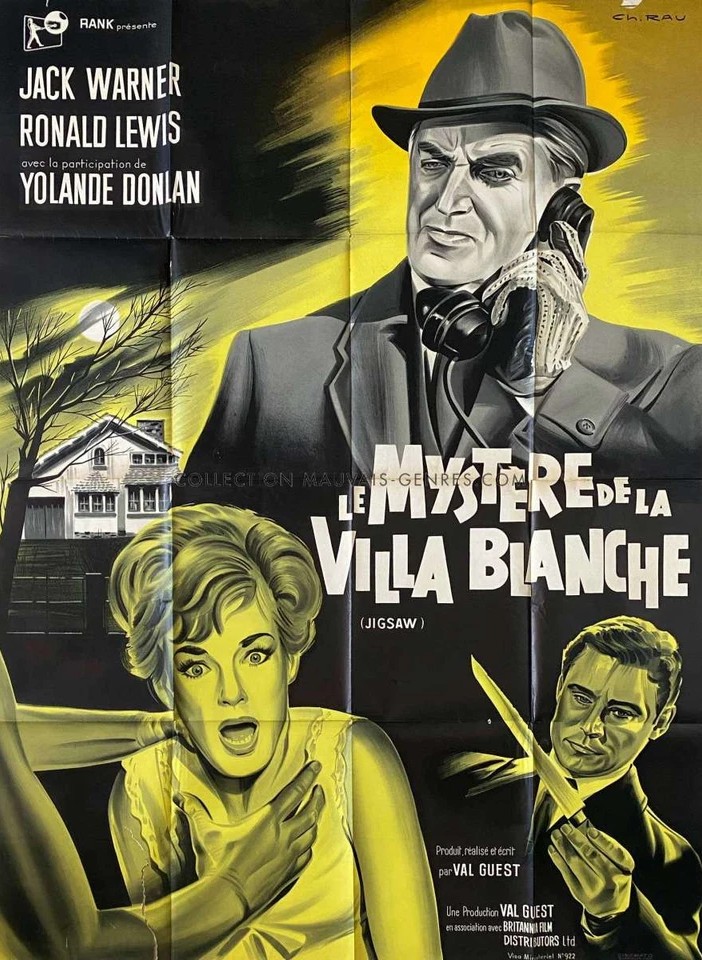
At first Detective Inspector Fred Fellowes (Jack Warner) and Det Sgt Jim Wilks (Ronald Lewis) are investigating a break-in at a real estate office. Nothing’s been taken except leases, which suggests someone who either wants to get out of a lease or who doesn’t want their handwriting identified. After an exceptionally long haul it proves to be the latter. A lead takes them to a house in Brighton where they find the corpse of a woman with the initials JS.

I doubt if any police pictures of the period went into as much detail in following clues as this. Hunting for the killer the police interview taxi drivers, delivery men, garage mechanics, grocery clerks, truck drivers working construction, hardware and vacuum cleaner salesmen. Searching for the victim they check out beauty parlors, factories, pawnbrokers, airlines and hairdressers. The only clues are a gray car with a bent wing mirror – but even when they can identify the make it turns out there are thousands in the country – the contents of a vacuum, perfume smells on a pillow, particles of bone found in a furnace. Finally, with an old-fashioned trick Fellowes finds a name – Jean Sherman (Yolande Donlan) – and an address.

But Jean Sherman isn’t dead, though it transpires that she had a one-night stand in the murder house with a man she identifies as Campbell. But they can’t find Campbell either. They do alight on dodgy vacuum cleaner salesman Clyde Burchard (Michael Goodliffe), who has a previous conviction for indecency. Despite being identified by the delivery driver, it turns out he just had sex with the dead woman and nothing else.

Eventually, Fellowes finds Ray Tenby (John Barron) who is identified by Jean. He had picked her up after killing the other woman, Joan (Moira Redmond), and had sex with her in the next room to the corpse. But they can’t prove Tenby didn’t act in self-defense, and it’s only by that piece of unexpected luck that they can pin it on him.

Although most of the dialog focuses on the investigation there are some clever remarks. A journalist pressing a beat cop for information is told that leaving his car running unattended is an offence. Jean’s hardline father (John Le Mesurier) initially decries his daughter’s behaviour as immoral to the point of almost disowning her until, discovering she is dead, he bursts into tears.

With the amount of mileage the investigation covers, this could be done within the usual hour-and-a-bit of the standard British B-movie so it stretches a proper feature length. As written and directed by Val Guest (Assignment K, 1968), it’s not particularly stylistic, nor does it stretch tension too far, but it is still engrossing in the accumulation of detail.

Goodbye Again / Aimez-vous Brahms (1961) ***

Something of a feminist icon with middle-aged single woman choosing her lovers. I should warn you that there’s a May-December trope, which was very common at this period, as older female stars, engaging on romance with younger males, catch up with the unchallenged notion that any ageing male star should be accorded a younger female partner regardless of the age difference.

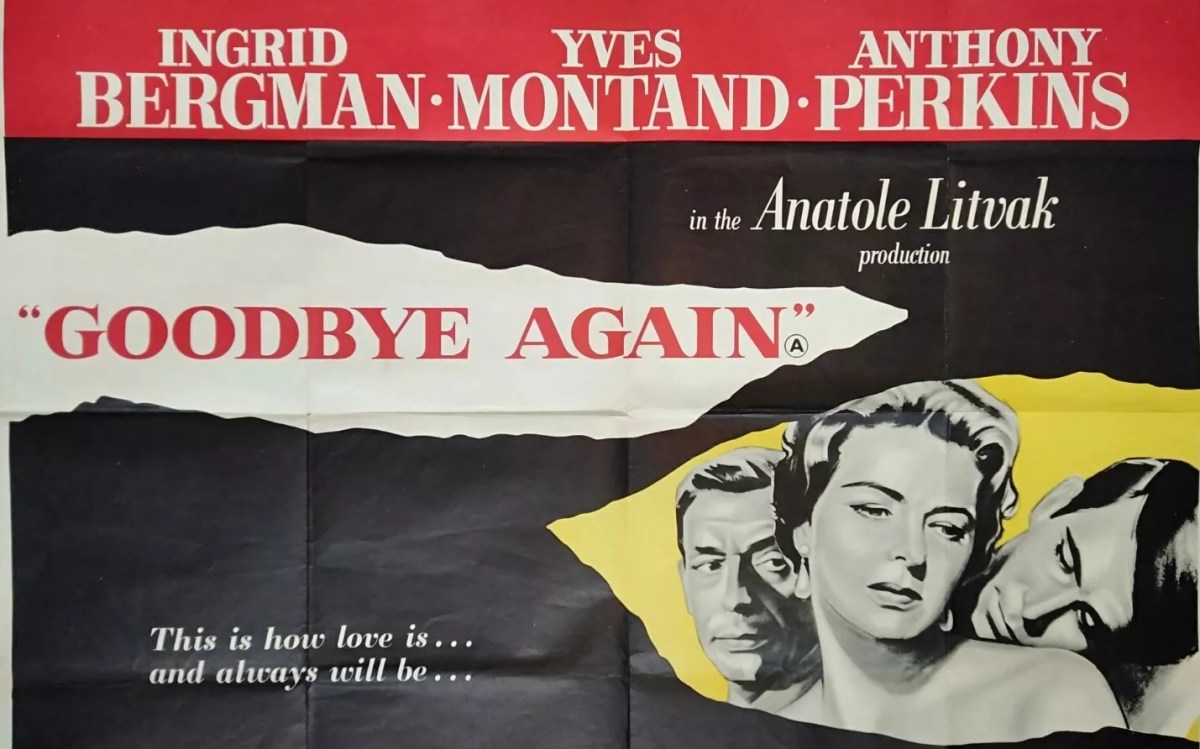
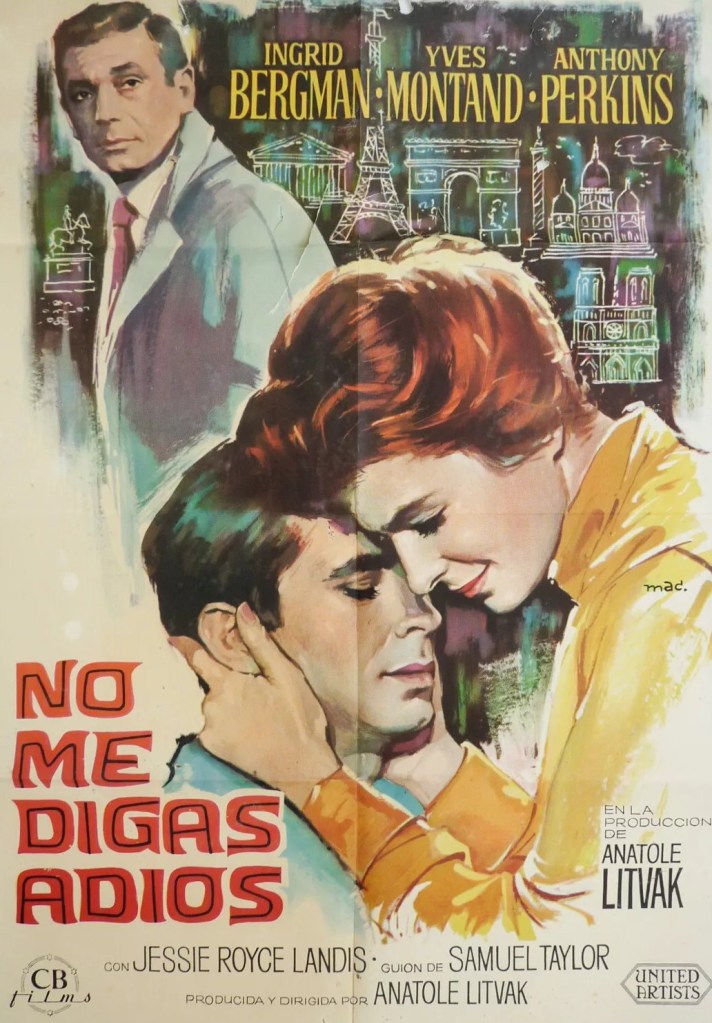
Paula (Ingrid Bergman), a lady of independent means, is tiring of philandering lover Roger (Yves Montand). After five years, he still can’t keep his hands off any young girl – known as “Maisies” – who come within reach. Paula is pursued by a younger man Philip (Anthony Perkins) and eventually succumbs to his ardent wooing. They differ on whether their relationship has much of a future, she the more pragmatic of the two, as, I would guess, are the audience.

While he’s refreshing and energetic, the spoiled rich boy exhibits childish tendencies. There’s a clash between the independent woman and the older macho misogynist male who expects his lover to be at his beck and call, even when his disappearances are the result of assignations with other lovers.

A middle-aged woman was as much on the hook to an unfaithful lover as a married woman. While she doesn’t want to be married, she wants to enjoy the same sense of trust that marriage might bring. However, she’s not destroyed, as a married woman of the period might have been, by her partner’s infidelity. And precisely because they are not bound by legal obligation, she is perfectly within her rights to choose another lover.

Still, there is an intense melancholy that she cannot make Roger settle down with just the one woman – her – and that if their affair is to continue it must be on his unacceptable terms. Yet she is terrified of being alone and except for the appearance of Philip and her independence there is the sense that she might subdue tragic instinct and settle for the crumbs from Roger’s table.  

Glorified soap opera, no doubt, but it survives on the playing of Ingrid Bergman (The Visit, 1964) who shares with Deborah Kerr the ability to show conflict and sadness in her eyes. She brings so much depth to her character you are apt to forget you are watching a soap opera. That she remains attracted to Roger beyond the realms of logic compounds her tragedy.

Anthony Perkins (Pretty Poison, 1968) is very charming, ridding himself in the main of the jumpiness that appeared to fit his screen persona. While Perkins and Bergman make an unlikely screen couple, they are a believable one.

Yves Montand (Let’s Make Love, 1961) doesn’t have to drift much outside his screen persona of male fantasy figure, the one who has all the dames at his feet.

This is one of those very well-made Hollywood movies, full of gloss, trimmed with an edginess that soon takes center stage. Made in the 1940s it would be a classic weepie. The ending will take you by surprise.

Directed by Oscar-nominated Anatole Litvak (The Night of the Generals, 1967) in determined old-fashioned style from a screenplay by Samuel A. Taylor (Topaz, 1969) based on the Francoise Sagan bestseller.

An old-fashioned treat.

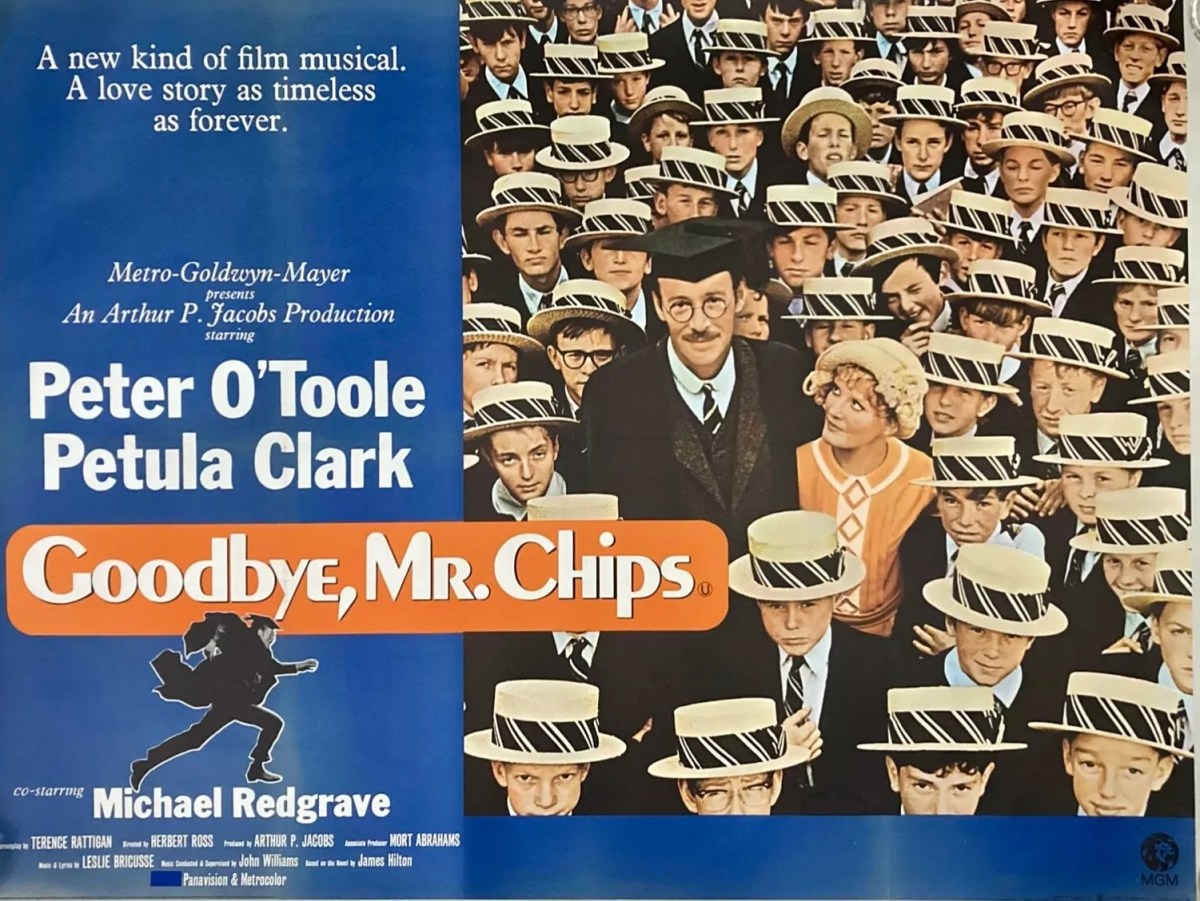
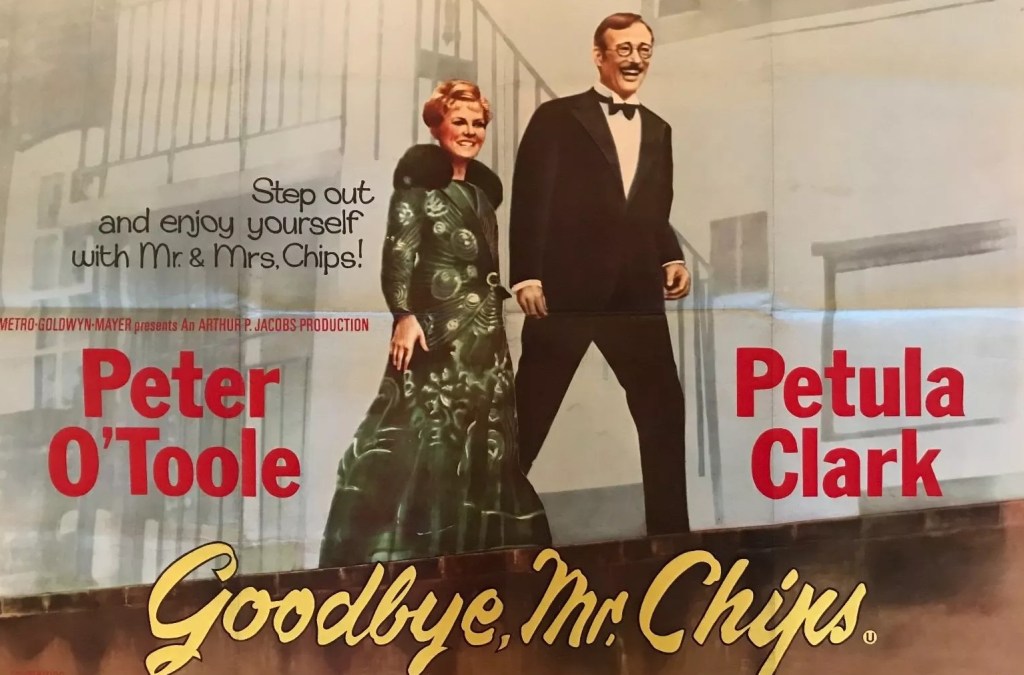
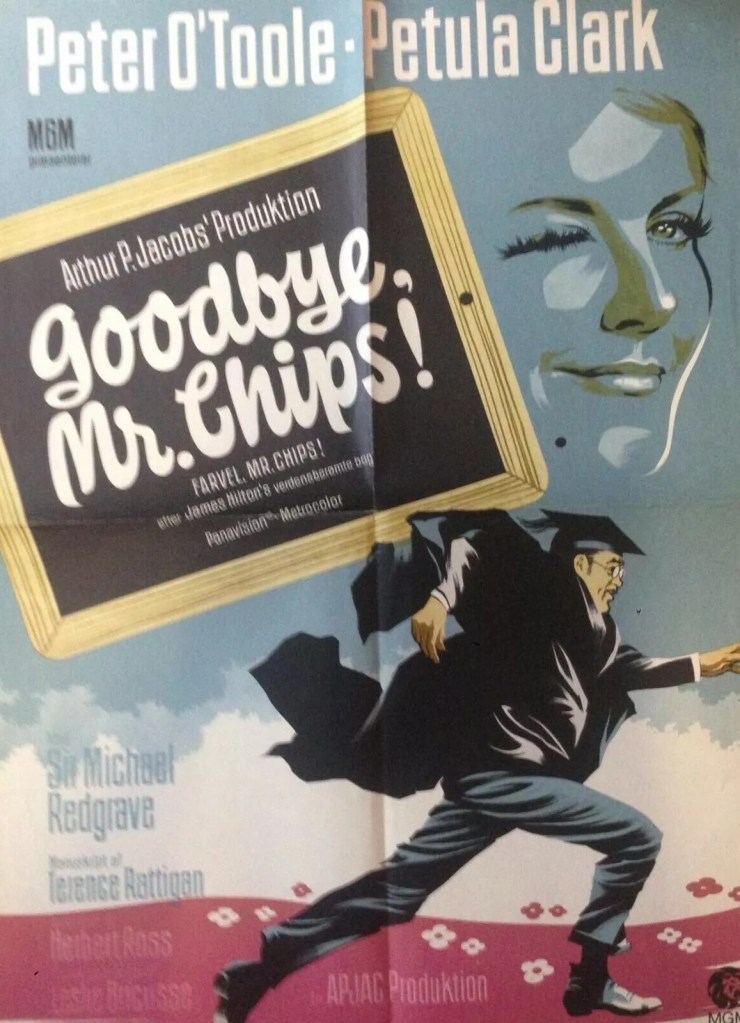
Goodbye, Mr Chips (1969) ****

Stunning revelatory performance by Peter O’Toole (The Night of the Generals, 1967) and unexpected screen chemistry with former British child star turned pop singer Petula Clark (Finian’s Rainbow, 1968) lift a relatively humdrum musical remake of the 1939 classic. Musicals entrusted with roadshow-sized budgets usually came with the proviso that they had already conquered London’s West End or Broadway – The Sound of Music (1965), Oliver! (1968) et al – and so came with an inbuilt audience. A movie musical original with little audience familiarity was always a risk.

There had been a trend away from the choreographic splendor, star exuberance and lightweight narratives that held the key to the golden era of Hollywood musicals. The movie musical had embraced both the introspective and weightier tales – Camelot (1967) the most obvious example. Male stars who couldn’t sing could simply “talk” their way through a tune following the example of Rex Harrison in My Fair Lady (1964).

The proper stretching of vocal chords is sensibly left to Petula Clark, but none of the songs by Leslie Bricusse (Doctor Dolittle, 1967) leave much of an imprint, and you might question why MGM was in such a hurry to commission a remake at all except for O’Toole’s Oscar-nominated turn. By now audiences were well aware of the actor’s screen tics and the intensity he could bring. But moviegoers might as well have been embracing a new star because everything you ever knew about O’Toole was left at the door.

In some respects the realism of his performance plays against the picture, which, effectively, save for the ending, has a lightweight narrative. There’s nothing remotely charming about his characterization of Arthur Chipping. He’s not the kind of eccentric fuddy-duddy that was a common feature of the British movie. Duty has got in the way of likeability. We are introduced to him denying a poor lad the opportunity to become a school tennis champion on the last day of term simply because the match had been scheduled to take place within teaching hours. Small surprise that he is actively disliked, although he takes that, in some respects, as a mark of his teaching prowess.

Unexpectedly, he is introduced to music hall singer Katherine (Petula Clark). What would be the standard meet-cute turns into a meet-awful as unintentionally he delivers a series of insults. Unexpectedly, they meet again, this time in the kind of surroundings that suit his mentality, a Greek amphitheater where he can demonstrate his academic skill, filling her on the acoustics and on the fact that sound travels upward so it’s easier for the person seated above to hear the person standing below than the other way round. Cinematically, this is superbly done, the best scene in the picture from a visual perspective.

Even though, initially, he has no recollection of their previous meeting, a spark is lit and catches fire so that when he returns to school it’s with a somewhat “unsuitable” bride. The best scene in the movie from an emotional perspective is driven by Katherine as she injects some verve into the stodgy school hymn so much so that she soon has the entire school singing with gusto and as though they have for the first time understood the lyrics.

It’s not long before her influence softens the harsh schoolmaster. But she is not a welcome addition in many eyes, her background not what would be expected of a schoolmaster’s wife, and a couple of sub-plots revolve around the impact of her unsuitability on her husband’s career. There’s not much more to go on beyond the sad ending and as I said the songs are treated in low-key fashion rather than full-on energy with dancing schoolboys in the background.

But you don’t really need the songs to enjoy this. Peter O’Toole’s sensational performance more than justifies the remake while the pairing with Petula Clark works surprisingly well.

Herbert Ross (Play It, Again, Sam, 1972) makes his directorial debut. Terrence Rattigan who had previously delved into the public school system to find lonely teachers with The Browning Version (1948) updates the original tale by James Hilton. This is not the performance Peter O’Toole fans would generally nudge you towards, because it’s such an oddity in his portfolio, but, truly, this deserves much wider appreciation

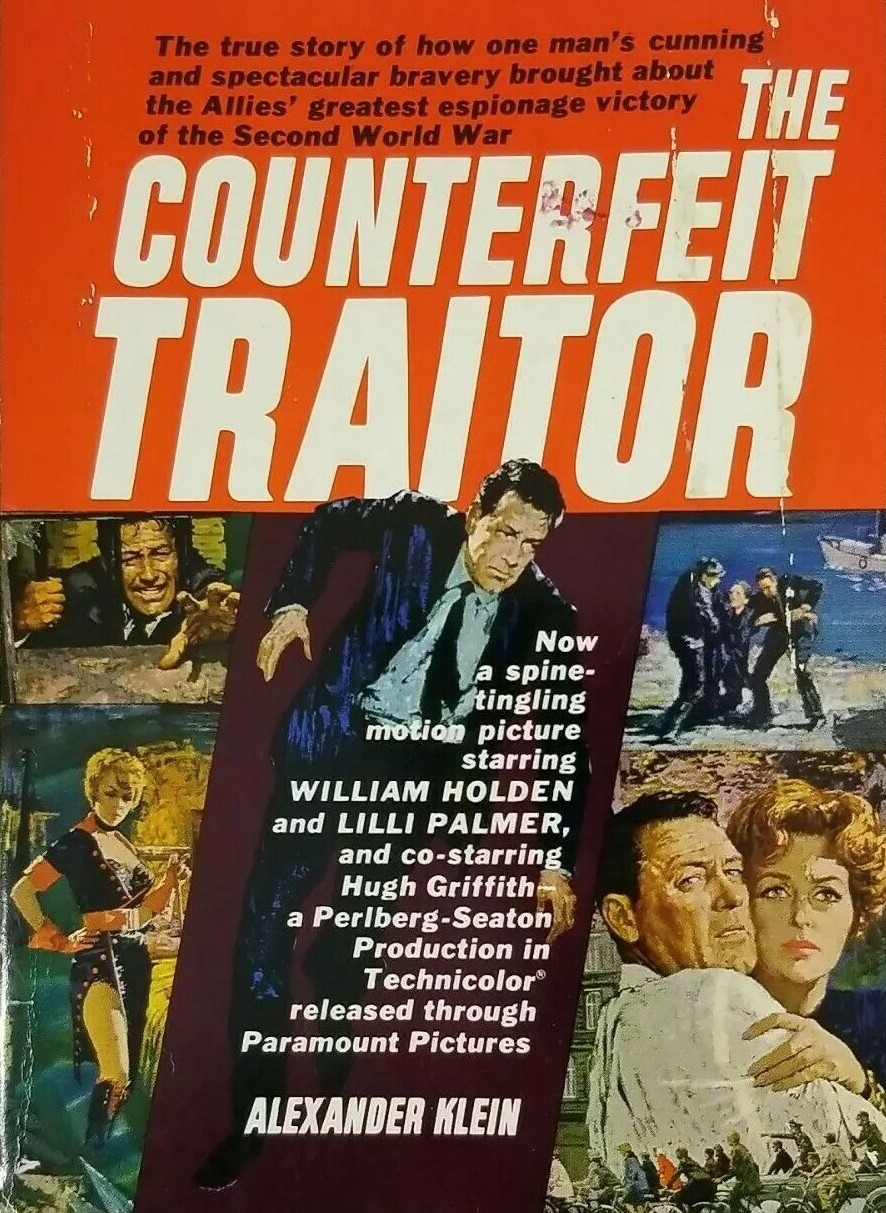
The Counterfeit Traitor (1962) ***

Cynical and opportunistic Swedish oil executive Eric Erickson (William Holden) blackmailed into World War Two espionage finds redemption after witnessing first-hand the horrors of Nazi Germany. Two extraordinary scenes lift this out of the mainstream biopic league, the first Erickson witnessing an execution, the second a betrayal. While some participants in the espionage game pay a terrible price, others like spy chief Collins (Hugh Griffiths) manage to maintain a champagne lifestyle.

Structurally, this is something of a curiosity. The first section, with over-emphasis on voice-over, concerns Holden’s recruitment and initial attempts at spying on German oil installations on the pretext of building a refinery in Sweden. Although resenting the manner in which he was recruited, Erickson had no qualms about resorting to blackmail himself to enlarge his espionage ring.

But it’s only when Marianne Mollendorf (Lili Palmer) enters the frame as his contact in Germany that the movie picks up dramatic heft. As cover for frequent meetings, they pretend to be lovers, that charade soon deepening into the real thing. While abhorring Hitler, she suffers a crisis of conscience after realizing that the information she is passing on to the Allies results in innocent deaths. The final segment involves Erickson’s thrilling escape back home.

The picture is at its best when contrasting the unscrupulous Erickson with the principled Marianne. Virtually every character is trying to hold on to way of life endangered by the war or created by the conflict and there are some interesting observations on the way Erickson manages to harness foreign dignitaries while being held to hostage in his home country. Loyalties are sparing and even families come under internal threat.

Sweden was neutral during the Second World War so in assisting the Allied cause Erickson was effectively betraying his country and once, in order to keep proposed German investors sweet, he begins to spout Nazi propaganda at home finds himself deserted by friends and, eventually, wife.  

In some respects, William Holden (The Devil’s Brigade, 1968) plays one his typical flawed personalities, easy on the charm, fluid with convention, but once he learns the true cost of his espionage a much deeper character emerges. The actor’s insistence, for tax reasons, on working abroad – this was filmed on location in Europe – would hamper his box office credibility and although not all his movie choices proved sound this was a welcome diversion. Whether American audiences were that interested in what a Swede did in the war was a moot point, as poor box office testified. And the title might have proved too sophisticated for some audiences, given there was no counterfeiting of money involved.

Lili Palmer (Sebastian, 1968) is excellent as the manipulative Marianne, betraying her country in order to save it from the depredations of Hitler, not above using her body to win favor, but paralyzed by consequence. Hugh Griffith (Exodus, 1960) provides another larger-than-life portrayal, disguising his venal core.

Werner Peters (Istanbul Express, 1968) puts in an appearance and Klaus Kinski (Five Golden Dragons, 1967) has a bit part.

Double Oscar-winner George Seaton (Airport, 1970) makes a bold attempt to embrace a wider coverage of the war than the film requires and could have done with concentrating more on the central Erickson-Mollendorf drama, especially the German woman’s dilemma, but it remains an interesting examination of duplicity in wartime. Written by the director based on the novel by Alexander Klein.

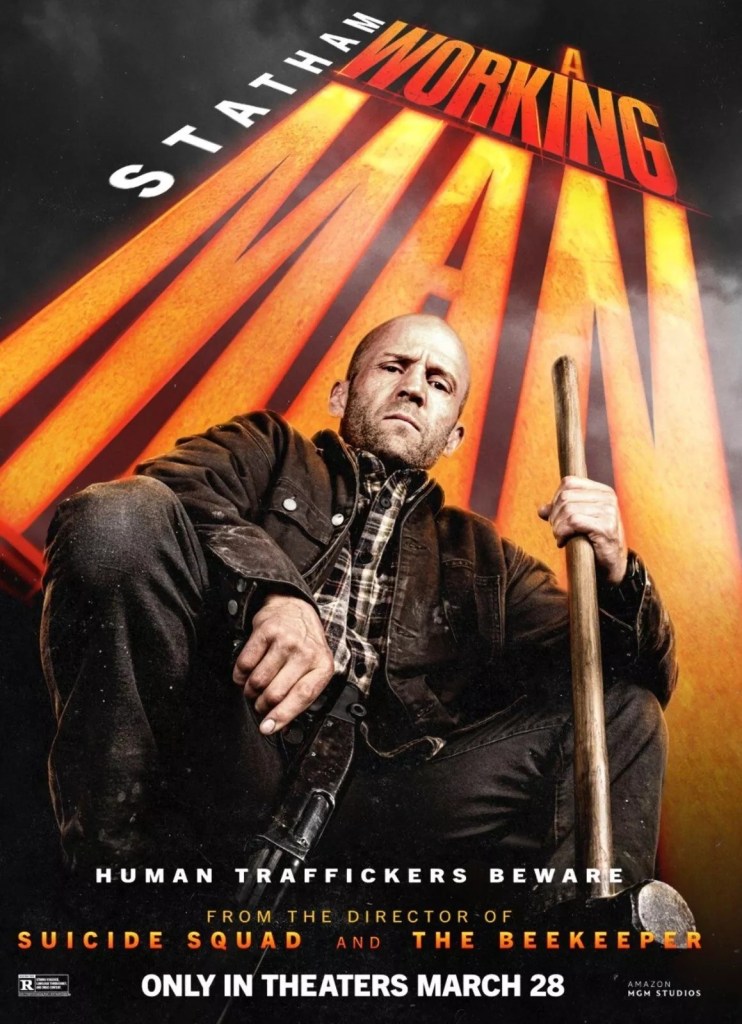
A Working Man (2025) **** – Seen at the Cinema

Audiences have been so let down by high-profile big-budget disasters like Snow White, Captain America, The Joker Folie a Deux, and critical clunkers like Anora, is it any wonder that they queue up to see a movie with a star who generally delivers. Sure, this is a meat-and-potatoes picture and it might well spell a new trend and consign high concept to the trash basket. That’s not to say our star Jason Statham hasn’t had his share of high concept – he doesn’t jump the shark but is inclined to punch it on the nose in the various The Meg iterations and his usual beating up bad guys routine was nearly snarled up in high concept politics in last year’s The Beekeeper.

I saw this at a matinee performance on Monday and the place was packed and as I left I overheard two ladies saying how much they had enjoyed it. Critics have been a bit sniffy about this because the plot is old hat. Who cares? All plots are old hat and those that aren’t are too new hat for audiences to enjoy.

There’s some attempt to repurpose the lonely hero, generally estranged from his family and down on his luck. Here Levon, an ex- (British) soldier, is suffering from PTSD, kept away from his only child by a wealth father-in-law who bankrolls teams of lawyers to ensure visitation rights are kept to a minimum. And Levon blames himself – as does the father-in-law – for being away fighting for Queen and Country when he should have been at home helping his depressed wife and stopping her committing suicide.

It’s piling it on a bit thick though to have him living in his automobile when as a boss on a construction site he must be earning enough to rent even the lowliest bug-ridden apartment, which he eventually does, since “no fixed abode” doesn’t look good on legal papers.

Anyways, we’re soon introduced to his special set of skills when he sets about some gangsters picking on one of his workers. You think the narrative’s going to involve some backlash from the guys he’s beaten up. But it takes a different route. The daughter Jenny (Arianna Rivas) of his boss Joe (Michael Pena) is kidnapped to order by a human trafficking operation headed up by Dimi (Maximilian Osinski), disgraced son of Russian Mafia head honcho Wolo (Jason Flemyng).

Posing as a drug dealer, after carrying out a ton of clever reconnaissance, Levon infiltrates the drugs outfit at a very low level and then works his way up, knocking off members of Wolo’s clan and various affiliates. Meanwhile, Jenny proves herself adept at improvising, in the violence arena, you understand – when your hands and feet are tied, remember you’ve still got your teeth.

This is the kind of film where you’re going to lose count of the number of violent deaths but all you’re interested in is Levon cutting through the wheat and chaff and getting to the top so he can save the girl. Luckily, it doesn’t try to build up a mythical gangster backstory in the manner of John Wick, but there are some interesting scenes where Wolo, initially introduced as sitting at the high table, is put in his place by someone higher up the rankings, and a great scene just at the end where Wolo, by now bereft of his sons, is told by the big boss to accept his losses and get on with the job of selling drugs and leave Levon alone, at which point he lets out the kind of wail that, had he been a bereft hero, would have had him in contention for an Oscar.

There’s no romance either to get in the way so it’s very strictly meat-and-potatoes. In an era when MCU and DC are flailing, Hollywood could do worse than resorting to a more basic kind of hero. Let’s call him, since all superheroes need titles, Workingman Man.

Directed with a zest for pace and tension by David Ayer (The Beekeeper). Interesting to see Sylvester Stallone’s name attached as co-screenwriter and a producer, so I wonder if this had been originally touted as starring him.

Does what it says on the tin.

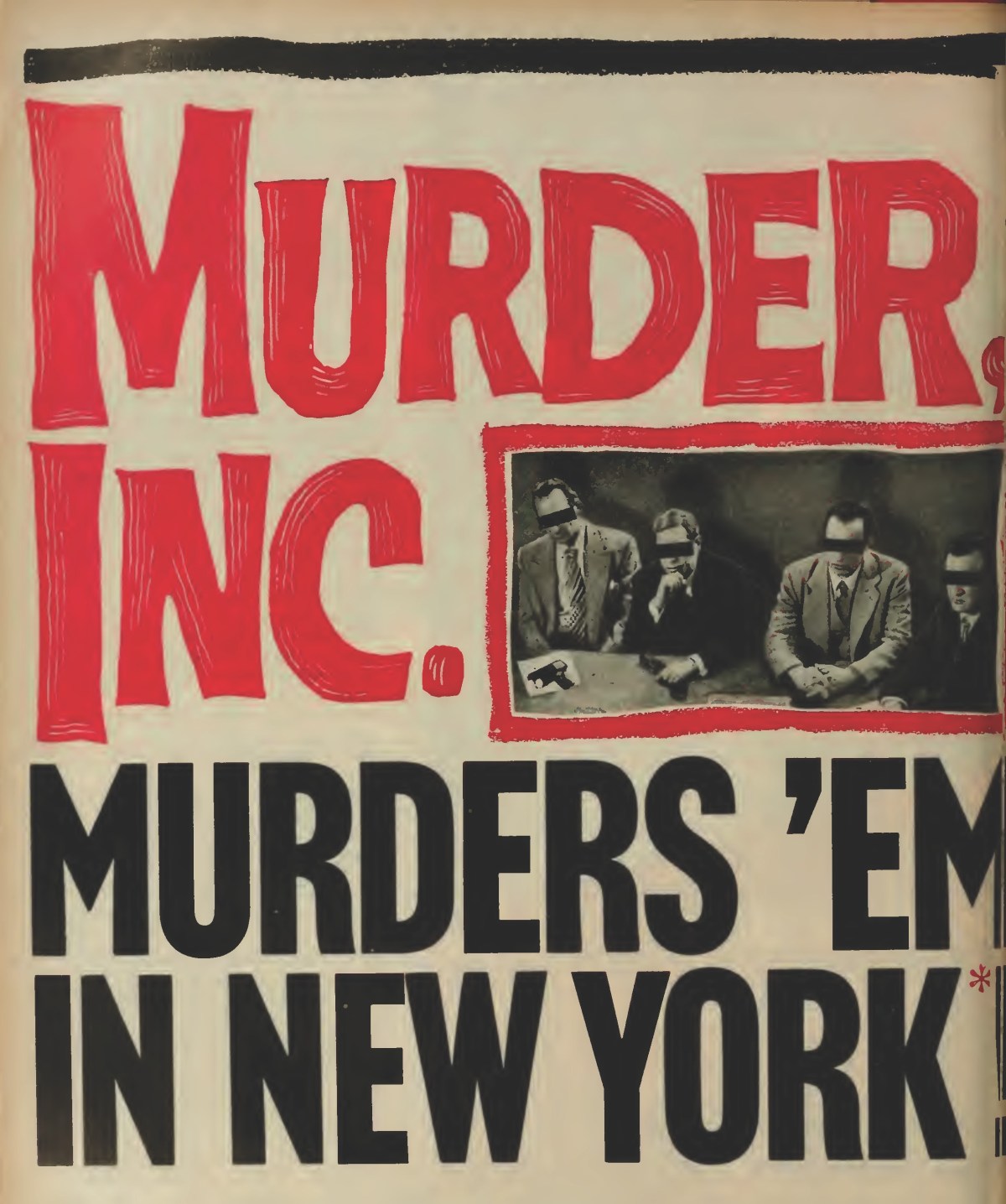
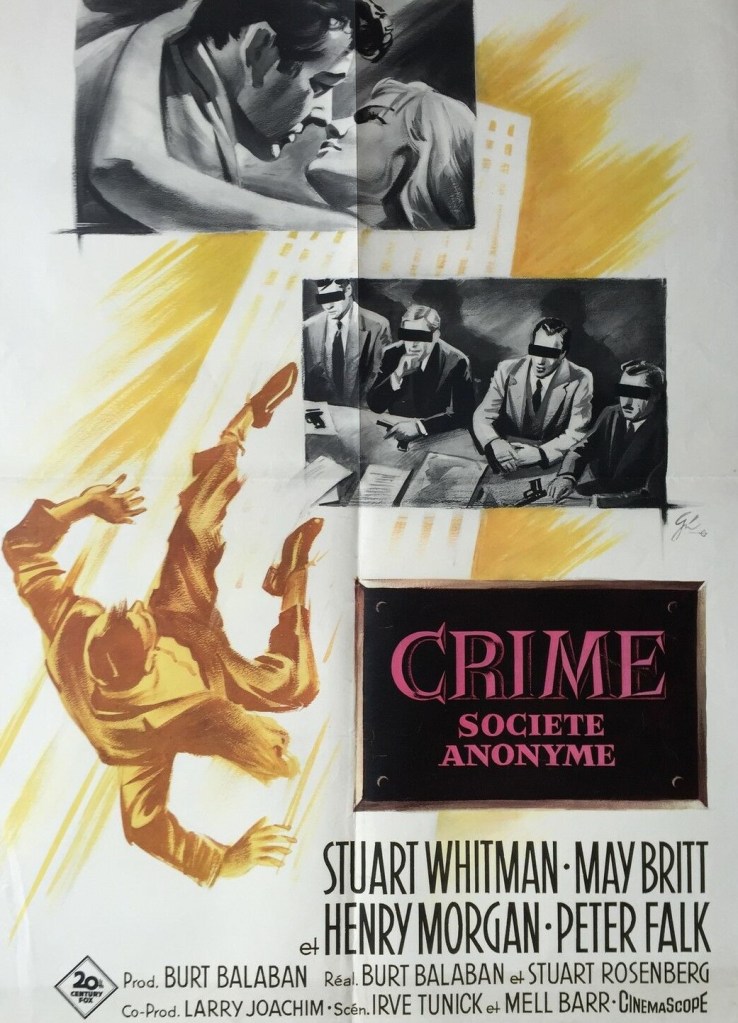
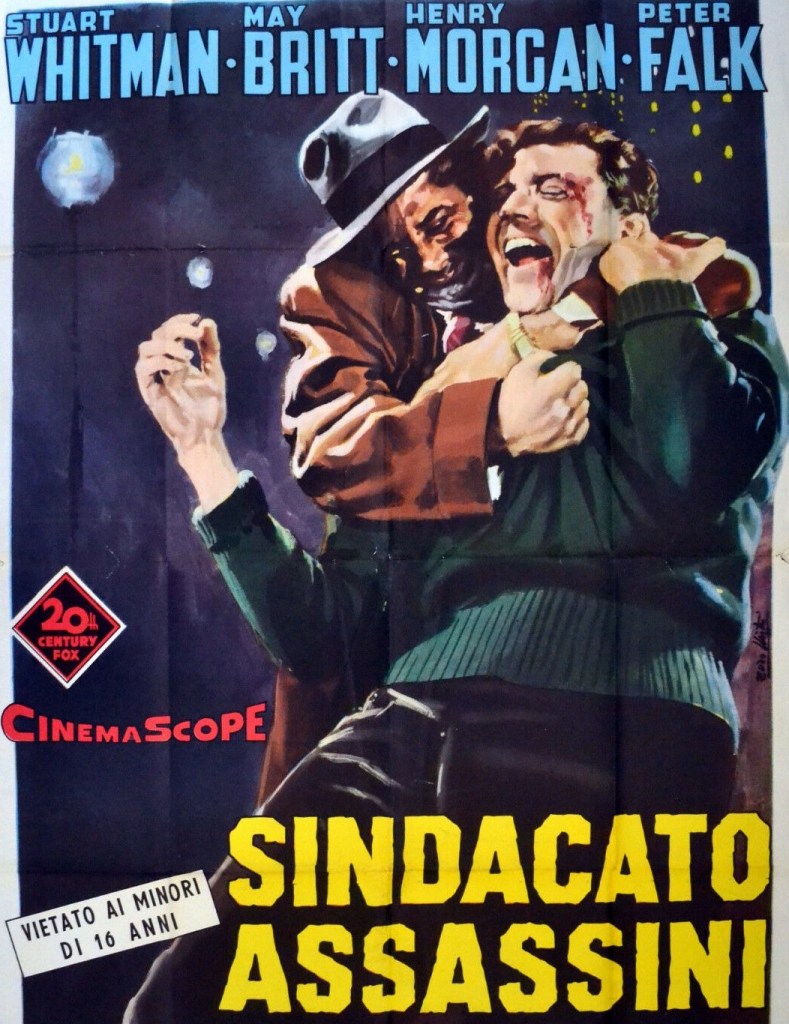
Murder Inc (1960) ***

A gangster trend hit the mean streets of Hollywood at the start of the 1960s. But in the absence of big box office hitters like James Cagney, Humphrey Bogart and Edward G. Robinson, these were all B films with unknowns or low-ranked stars in the leading roles. Whereas Little Caesar (1931), Public Enemy (1931), The Roaring Twenties (1939) and White Heat (1949) were fictionalized accounts of hoodlums, the gun-toting movie spree kicked off by Machine Gun Kelly (1958) and Al Capone (1959) was based on the real-life gangsters who had terrorized America’s big cities in the 1920s and 1930s.

By the end of 1960, moviegoers had been served up an informal history of the country’s best-known mobsters from Ma Barker’s Killer Band (1960), Pretty Boy Floyd (1960), The Rise and Fall of Legs Diamond (1960) and Murder Inc (1960). The infamy of the criminals was so comparatively recent that moviemakers assumed audiences had a wider knowledge of their exploits and the context of their crimes.

Murder Inc tells how underworld kingpin Lepke Buchalter – Tony Curtis played him in the more straightforward biopic Lepke (1975) – set up a system of killing dissenters in the ranks for the entire American Cosa Nostra (aka The Syndicate) in a way that prevented those ordering the murders being connected to those committing them, the same kind of protective cell operation used by terrorists. He created a separate organization of hitmen.

This quasi-documentary, with occasional voice-over narrative, focuses on three characters – the quiet-spoken Lepke (David J. Stewart), hitman Abe Reles (Peter Falk) and singer Joey Collins (Stuart Whitman) who becomes involved to pay off a gambling debt. Later on, the focus switches to Brooklyn assistant district attorney Burton Turkus (Henry Morgan), against a backdrop of massive police corruption, investigating the murder epidemic this deadly enterprise created. The films jumps around too much to be totally engrossing but it is certainly an interesting watch.

The two main villains could not be more different, Lepke representing the new school, a businessman, ordering killings but never participating, and for such a tough character tormented by a delicate stomach. Reles is old school, relishing opportunities to murder, and raping Collins’ honest wife Eadie (May Britt) in part because she treats him as scum. It’s hard to muster much sympathy for Joey especially as his wife takes the brunt of the violence.

In an Oscar-nominated performance Peter Falk (Castle Keep, 1969) steals the show as the chilling, venomous killer, the kind of nonentity who rises to prominence only through his penchant for homicide. Swedish star May Britt (The Blue Angel, 1959) isn’t far behind with a portrayal of a strong woman saddled with a weak husband. David J. Stewart (The Young Savages, 1961) only made three movies in the 1960s and his milk-drinking hood was as scary in his pitilessness as his more overtly violent underling.

Stuart Whitman (The Commancheros, 1961) is almost acting against type for he was later known for rugged roles. Henry Morgan (It Happened to Jane, 1959) gave his portrayal of Turkus similar characteristics to Lepke, appearing as a quiet individual, concerned with details,  except that he was incorruptible.

Simon Oakland (Bullitt, 1968) is an honest cop, Vincent Gardenia (Mad Dog Coll, 1961) is a lawyer, comedian Morey Amsterdam (The Dick Van Dyke Show, 1961-1964) plays a hotel manager, Sylvia Miles (Oscar-nominated for Midnight Cowboy, 1969) has a bit part and singer Sarah Vaughan is a singer.

For some reason, this movie starred a number of actors in leading roles who made few screen appearances. This was the only movie of the decade for May Britt, David J. Stewart made only three movies during the same period, and Henry Morgan only made three pictures in his entire career, this being the last.

The movie boasted two directors. Stuart Rosenberg (Cool Hand Luke, 1967) was replaced  by Burt Balaban (Mad Dog Coll, 1961) when the threat of strike action by actors and writers in 1960 forced the 18-day shoot to be cut by 10 days so it’s hard to say who was responsible for which scenes, although the film does boast some unusual aerial shots. Written by Irve Tunick (High Hell, 1958) and Mel Goldberg (Hang ‘Em High, 1968) from the book by Burton Turkus and Sid Field.

Killers are loose – and how!

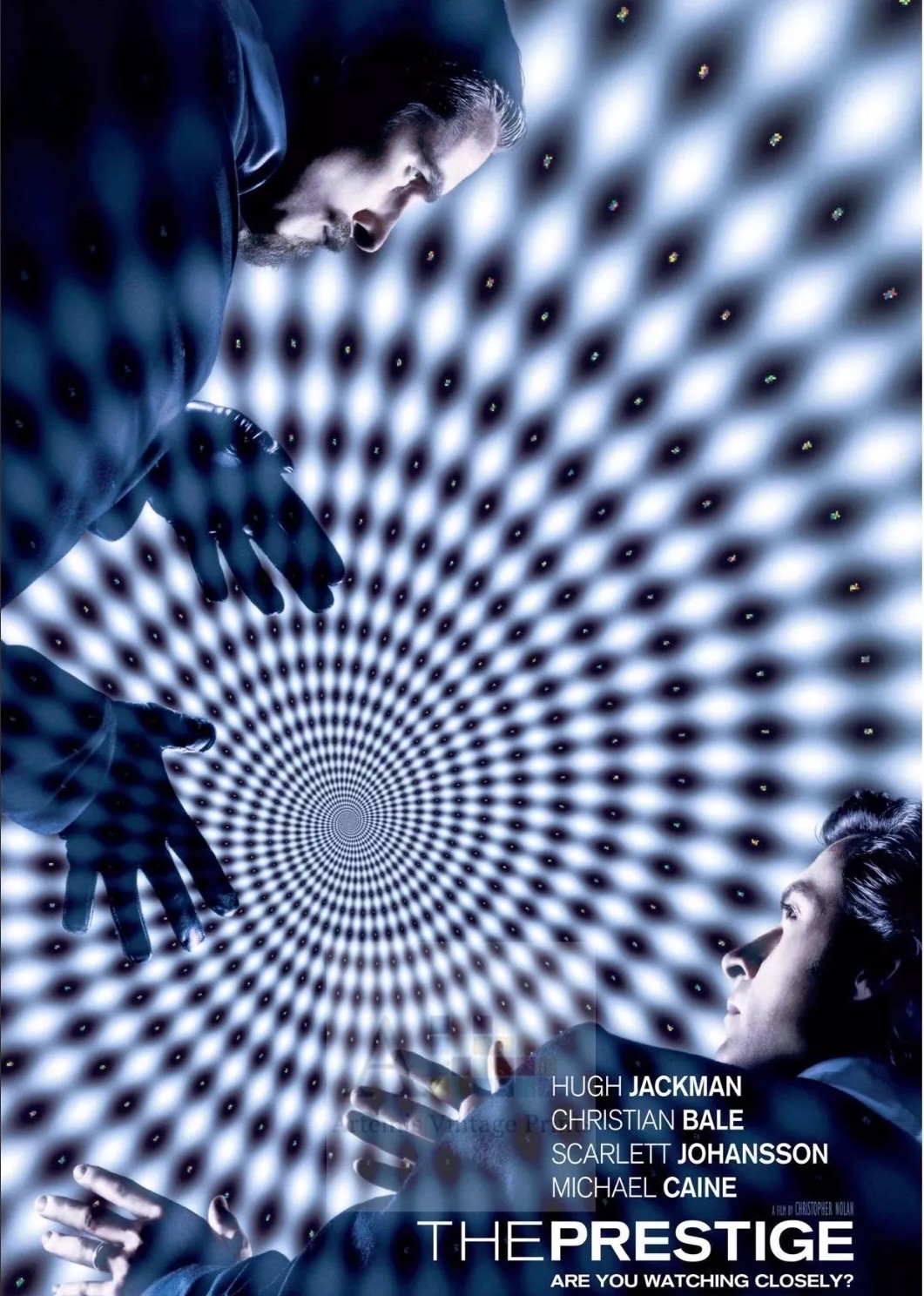
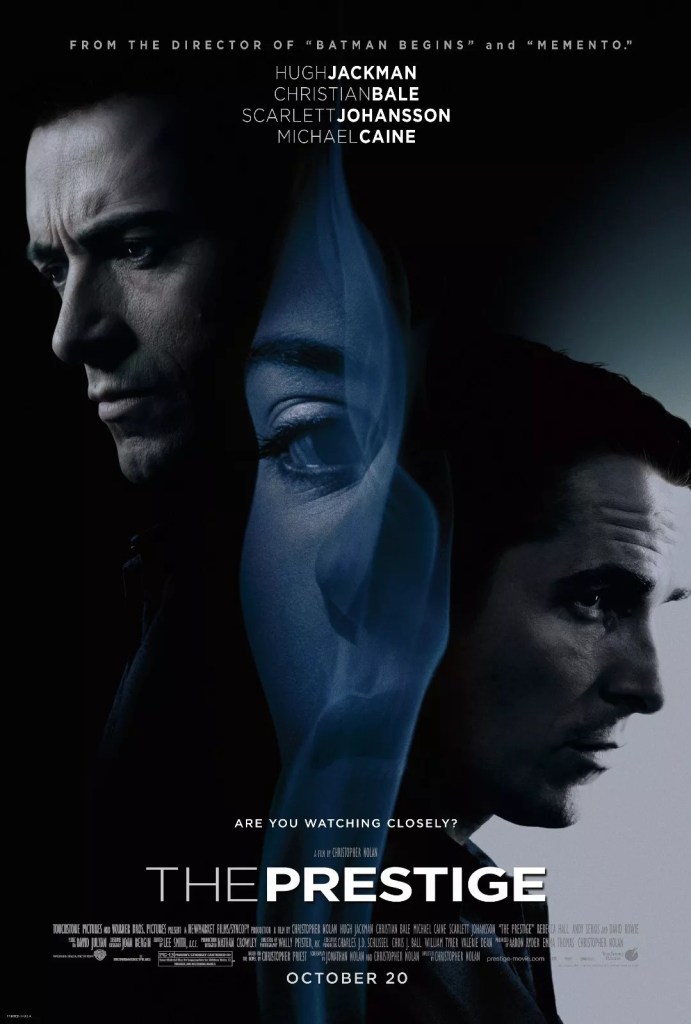
The Prestige (2006) ****

Christopher Nolan (Oppenheimer, 2023) revels in sleight-of-hand, if only by mixing up time frames, but even he isn’t intellectually smart enough to overcome the deficiency that ensured this picture failed to emulate the commercial success of all his other movies. And it revolves not around what you do to dupe an audience. An audience wants to be duped and isn’t so concerned if how the duping is achieved is never revealed, which is, of course, core to the business of the stage magician. Part of the success of this picture is that Nolan gives away stage secrets, even, if you were playing close enough attention, giving away the main reveal of one of the two dueling stage magicians.

But one of these revelations cuts so close to the bone the audience loses its sympathy for both the main characters, Alfred Borden (Christian Bale) and Robert Angier (Hugh Jackman). By the time we understand just how ruthless this pair are to the extent of risking marriage/romantic attachment for the sake of either getting one over on the opponent or maintaining the central deceit of their act, we have already become too squeamish to care overmuch. And the twists which come with increasing regularity which are supposed to take our breath away are defused by the ticking time bomb.

And the miscalculation pivots on who you can kill in a movie. Henry Fonda cold-bloodedly slaughtering an innocent child in Once Upon a Time in the West (1969) set a new high/low for onscreen barbarity, but that was excused because it demonstrated just what a villain this character was. Since then a virtual industry has grown up over inventing more creative ways in which people can be killed.

One of the standard ploys of the stage magician is to make a canary in a cage disappear in front of your very eyes only for said canary, minus cage, to reappear moments later to thunderous applause. Turns out the cage is collapsible and it vanishes into a space hidden in a table. The canary? It is squashed to death in the cage. It’s a different canary that magically reappears.

So all through the picture canaries are squashed, sometimes we see the cages being emptied of dead canaries, and workrooms filled with canaries waiting to be squashed.

What happens after this somehow pales into insignificance. Here we have a business that requires murdering God knows how many canaries every night of the year. It doesn’t take much intelligence among the easily duped moviegoer to work out how many canaries both magicians have ruthlessly despatched.

So when they get around to killing each other’s loved ones, or shooting off each other’s fingers or ruining each other’s acts, your stomach has already been turned and although the darkest of dark narratives has long been a theme of the movies, this, and not fitting into the exploitation B-picture genre where it would more comfortable reside, sucks the sympathy out from under the director’s feet and all his later sleight-of-hand, as ingenious as it is, counts for very little.

There’s certainly tragedy here and of the kind that only Shakespeare could conjure. In order to safeguard the integrity of his act – the secrecy paramount to its success – loving husband Borden is forced to pretend to his loving wife Sarah (Rebecca Hall) that he has a mistress, resulting in distraught wife killing herself. Though discreetly done, scarcely glimpsed in the final sequence, Angier has embarked on the murderous spree essential to concealing the mechanics of his famous trick, The Transported Man.

That it works at all, and splendidly to a large extent, is down to Nolan’s traditional time-shift sleight-of-hand and installing in the middle of this brouhaha the wise Cutter (Michael Caine) whose tempered diction brings the movie unexpected gravitas. When he speaks you tend to believe. The minute the other pair open their mouths you are suspect.

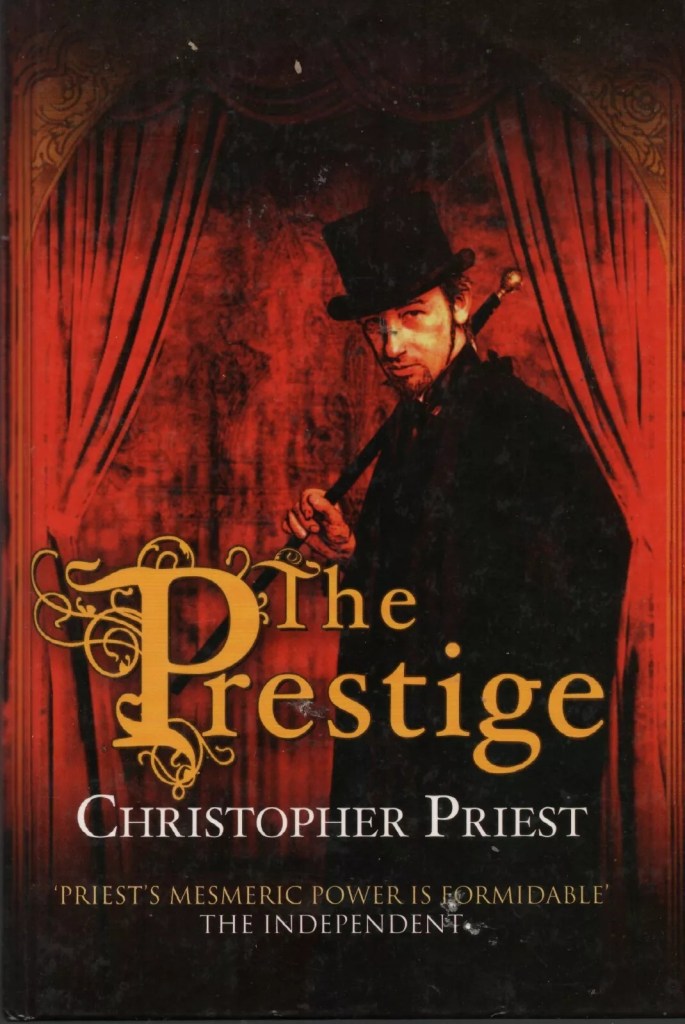
Just for his calmness Michael Caine (Interstellar, 2014) steals the picture from Christian Bale (Ford v Ferrari / Le Mans ’66, 2019) and Hugh Jackman (Deadpool and Wolverine, 2024). Rebecca Hall (Godzilla v Kong: The New Empire, 2024)and Scarlett Johansson (Fly Me to the Moon, 2024) are at opposite ends of the feminine divide, the former unable to cope with deceit, the latter manipulating it to her own ends. The director and brother Jonathan adapted the Christopher Priest award-winning novel.

Setting aside the canaries and the difficulties of presenting all-consuming obsession, this remains an intriguing work, possibly the darkest area into which the director ever ventured.  

Discover WordPress

A daily selection of the best content published on WordPress, collected for you by humans who love to read.

The Atavist Magazine

by Brian Hannan

WordPress.com News

The latest news on WordPress.com and the WordPress community.