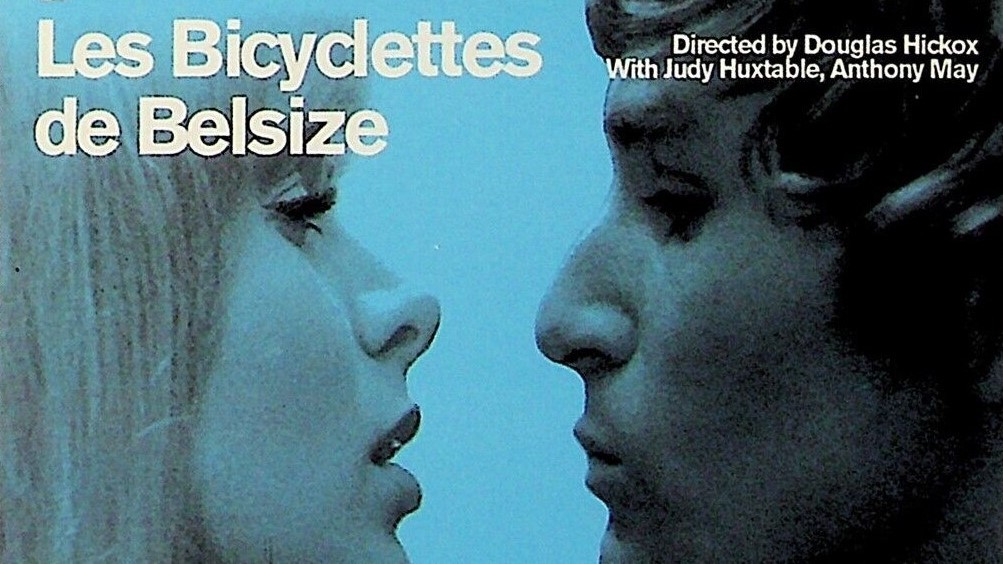
Les Bicyclettes de Belsize (1968) ***

So, John Wayne, what first attracted you to working with British director Douglas Hickox for tough cop thriller Brannigan (1975)? Was it his work on tough thriller Sitting Target (1973)? Or could it be you were entranced by his directorial debut on this whimsical low-budget  London-based musical?

Credit for making a splash in turning the operetta into something that might appeal to the cntemporary youth didn’t go to The Who with Tommy or Andrew Lloyd Webber and Tim Rice for Joseph and His Amazing Technicolor Dreamcoat, but with middle-of-the-road song-writing team Les Reed and Barry Mason, best known for supplying a constant stream of hits for Tom Jones and Engelbert Humperdinck. They need a string of songs here as the opera format excludes dialog, so the music carries both story and emotion.
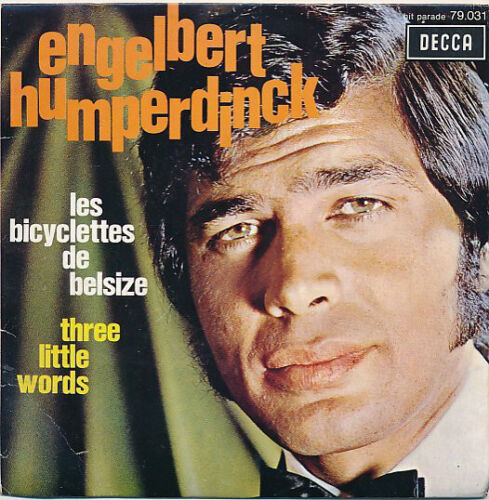
The theme tune gave British pop star Engelbert Humperdinck a Top Ten hit.

Belsize, in case you are unaware, abuts Hampstead, the most upmarket suburb of London, devoid of the garish tourist scene, immune to the wrecking balls that demolished the same year’s The London Nobody Knows. Hampstead Heath is a huge swatch of parkland, untouched by moviemakers more concerned with Swinging London, red buses and Big Ben. This has more in common with the London of Mary Poppins, rooftops prominent, the camera often lofty.

The French title, suggesting arthouse fare, could not be more misleading except that to some extent it emulates Jacques Demy’s Les Parapluies de Cherbourg (1964). However, the French picture had a more serious theme. This just concentrates on the simplicity of falling love.

At first it’s puppy love as, after a collision, a female child (Leslie Goddard), on a tricycle, follows a young man Steve (Anthony May) on his bicycle. He crashes through a billboard featuring a model Julie (Judy Huxtable) – or a model advertising something called “Julie” (it’s not clear) – and falls in love with her. And, coincidence being the essence of movie romance, bumps into her outside a shop.

She is somewhat disenchanted with the whole model business, constantly turned this way and that for the definable pose, and looking for true love. Initially, though separated by a window, their eyes have met, and they are drawn to kiss each other through the glass. Much to the little girl’s displeasure, Steve pursues Julie but the disappointed youngster soon makes a match of her own with someone her own size.
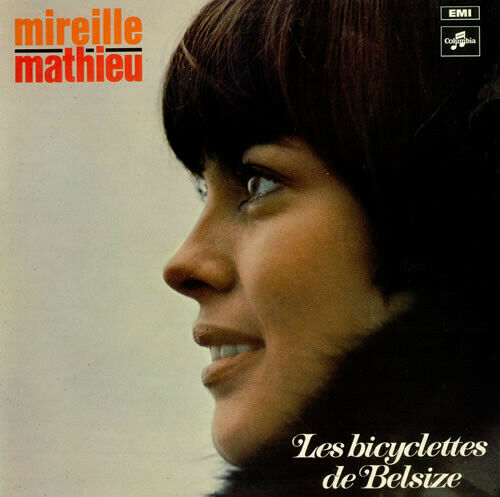
French singer Mirieille Mathieu had the chart hit in France.

Apart from the songs, this is surprisingly well done. The fantasy elements, which failed to click on movies like Wonderwall (1968) and Can Hieronymus Merkin… (1969), work a treat here, never galloping off into the unlikely, but remaining core to the movie’s light-hearted mood.

But it is directed as an audition piece, Douglas Hickox attempting more with the camera than with the script. There’s use of the fish-eye lens, the rarely-seen wipe, this time in vertical rather than horizontal fashion, long tracking shots, and characters silhouetted on the skyline.

We open audaciously with a spinning chimney pot before panning across rooftops to a shaving mirror on top of a chimney pot and watch Steve, mounted on his bike, reach the ground in a series of acrobatic moves. There’s unexpected comedy. The little girl is fond of blowing a raspberry. Doing so at a bus stop causes the waiting passengers to blame each other, the scene degenerating into unexpected slapstick. There’s a Cinerama moment as Steve loses control of his bike and the screen races past.

But once Julie is introduced in person it shifts to something deeper. The eyes meeting across an empty space and the lips approaching each other through the glass is very well done. But that’s undercut by the model being treated as a puppet.

There are some audacious cuts. A car swings by and a door opens and the next thing Julie is in the back seat twisting round to look out the back window while male fingers yank her face back to the ever-present camera. She’s constantly prodded into position. Her look changes with every wig.

The fashion is more mainstream than Wonderwall, hippie dress and headband, short red dress and matching red tights, a striped fur coat, a mini skirt and knee-high boots. By the time the camera focuses on the model, she is the one afflicted with angst, Steve more happy-go-lucky and it’s a tribute to the direction that Julie’s face is more reflective, expressive.

Given the lack of dialog, Judy Huxtable (The Touchables, 1968) is to be applauded for creating an immediately recognisable character. Anthony May (No Blade of Grass, 1970) managed less emotion in his part.

I didn’t mention that this was hardly a full-length feature, coming in at around the 30-minute mark, and hardly set Hickox up for the action genre, any more than his next picture Entertaining Mr Sloane (1970). The team of Francis Megahy and Bernie Cooper (Freelance, 1970) plus Michael Newling devised the screenplay.

Innovative and interesting with hummable tunes. You can catch it on YouTube.

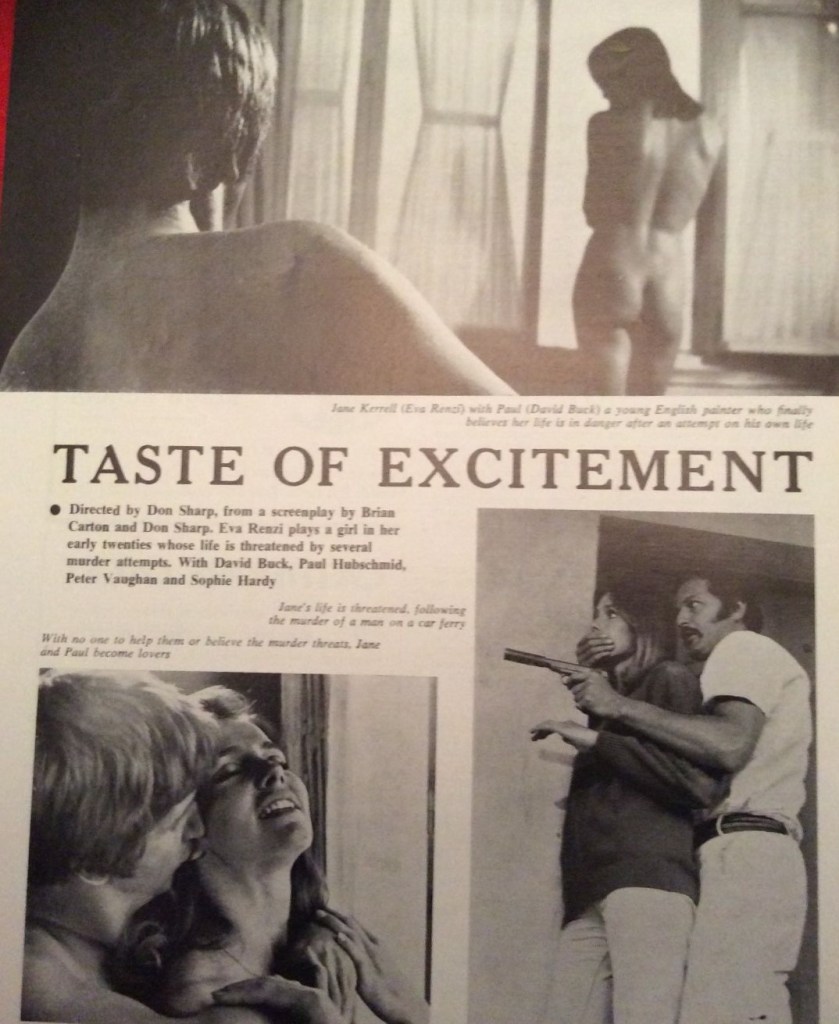
Taste of Excitment (1969) **

Must-see for all the wrong reasons. An epic of confusion, appalling acting and dodgy accents make this thriller a prime contender for the “So-Bad-It’s-Good” Hall of Fame. Director Don Sharp (The Devil-Ship Pirates, 1964) jibed at star Eva Renzi (Funeral in Berlin, 1966) when he should have concentrated on a script that is over-plotted to within an inch of its life. A couple of kidnaps, casino visit, a sniper, and a vertiginous cliff-top maneuver are thrown in before a truth serum lights up the climax in spectacularly hilarious fashion.

Promising material goes badly awry. English tourist Jane Kerrell (Eva Renzi), floating around the South of France, is being targeted for unknown reasons. A white Mercedes has tried to drive her off the road, mysterious phone calls and visions make her believe she is going mad, that prognosis helped along by handy psychiatrist Dr Forla (George Pravda). And before you can say Surete, Scotland Yard and NATO she is the chief suspect in the murder of a man called Chalker on the ferry to France. Assistance comes in the form of handsome artist David Headley (David Buck) – preposterously famous “I’m David Headley” “The painter?” – who nearly does what’s she’s been complaining everyone else is trying to do, namely knock her down with his car. He specialises in painting nude women and for no reason at all, given he is identified immediately as a lothario, he resists her attempts to take her to bed.

Turns out Jane is something of a boffin, as any self-respecting computer expert would be known in those days, and a millionaire businessman Beiber (Paul Hubschmid), one of Headley’s rich clients, enlists the painter to offer her a job. Of course, he has something else in mind. His company is being accused to shipping unnamed goods to the unnamed opposition, hence the involvement of NATO chap Breese (Francis Matthews).

But nobody is to be trusted, especially as the French police have dismissed her fears as nonsensical. Scotland Yard’s Inspector Malling (Peter Vaughan) throws flames on the fire by not coming to her rescue but planning to arrest her since she is the last person to see Chalker alive. Then it turns out Chalker must have given her a code or secret message before he died. The police take apart her red Mini Cooper in clinical French Connection style but find nothing. That just shows how dumb they are. It never occurred to them, as it does instantly to Headley, to check the carburretor.

By now you’ll have guessed consistency is not this movie’s strong point. You never even know who the sniper Gaudi (Peter Bowles) is targeting his aim is so appalling. There’s even a sinister secretary Miss Barrow (Kay Walsh) with a pronounced Scottish accent in the Jean Brodie class. Headley comes up with an idea to disguise her – by changing her hairstyle (that’ll fool them!! – and astonishingly, in keeping with the bizarre tone, it does).

For someone who is meant to be paranoid Jane is surprisingly trusting, toddling off with clearly-identified villains when fed a line.

Most of the advertising, including this spread in “Films and Filming” magazine, made play of the sight of Eva Renzi’s naked derriere but ignored the unusual gender equality when it came to the nudity since in this scene David Buck gets out of bed and stands as equally starkers by the window.

You won’t be surprised when Jane ends up trussed and gagged, in her bikini naturally, in a fabulous house with an electrified fence. I can’t resist telling you about the truth serum. Before the evil psychiatrist has the chance to question her he is bopped on the head, Headley having sneaking in before (the dolts!) Gaudi thought to switch on the electric fence. (The electric fence is nullified by the police who just switch off all the electricity in the area.) But when she escapes, still full of the truth drug, when Gaudi calls out to find out where she is hiding, the serum forces her to give the correct answer. In the midst of the danger, Headley takes the opportunity to get an honest answer to the question of whether she loves him. And that’s not the best bit. The final line, given there hasn’t been a decent line all the way through, is a cracker. “Never believe a woman when she is telling you the truth” certainly gives you something to ponder.

So much is held back from the audience that there is never a chance, unlike Charade (1963), of genuine tension. Even the one gripping moment, taking a shortcut along a perilous cliff road, which is well done, is undercut by their pursuer beating them to their destination. The whole thing has an air of being improvised or being devised by someone who thought that twists counted more than characterisation, plot development or relationships.

The acting is so uniformly bad that Eva Renzi actually looks good. David Buck (Deadfall, 1968) is miscast in the slick Cary Grant role. While it is entertaining to see Peter Bowles (The Charge of the Light Brigade, 1968) drop his plummy English accent, his Italian accent fails to pass muster. Peter Vaughan (Alfred the Great, 1969), saddled with the bulk of the murky exposition, does his best. In a bit part, veteran Kay Walsh (A Study in Terror, 1965), holds the acting aces but she doesn’t have much competition.

Director Don Sharp also had a hand in the screenplay so it’s difficult to know who must take most blame, him or colleagues Brian Carton and Ben Healey. This was the alpha and omega of this pair’s movie career.

If you want to see how not to handle a potentially classy thriller tune in.  Can’t make up my mind whether to give this two stars for being so bad or four stars for being so bad it’s good. You decide.

And you can do so for free on Flick Vault. Be warned that you have to get past some adverts first. And if you’re wondering what happened to the opening credits, there ain’t any.

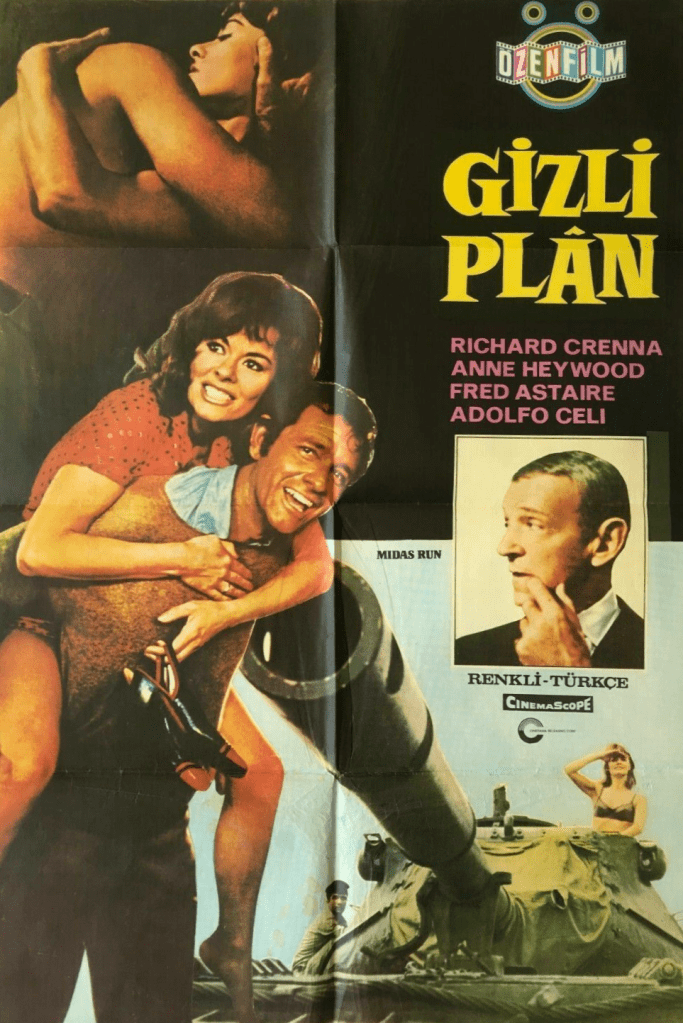
The Midas Run (1969) ***

You ever wonder what triggers criminality? Don’t deny an upper class English civil servant his knighthood, don’t fire an American university lecturer for an anti-war demonstration, don’t humiliate your beautiful wife by making her part of a business transaction. They might all feel robbery is the best revenge.

The highly respected Pedley (Fred Astaire) has talked his superiors in government into the notion that the best way to ship a consignment of gold is by passenger rather than commercial airplane. He recruits wannabe author Mike (Richard Crenna) who, in turn, comes to the rescue of glamorous Sylvia (Anne Heywood) when she is being sold off to sweeten a business deal.

The apparently eccentric casting was based on unfulfilled promise. Fred Astaire, who had not starred in a film for over decade, had made a comeback for Finian’s Rainbow (1968). But that had flopped, putting a dent in his marquee credentials and dramatic roles were hardly the forte of this twinkle-toed dancer. Richard Crenna’s bid for leading man status in Star! (1968) had spectacularly derailed at the box office.

Anne Heywood, the only one of the three principles to have a recent hit, in unexpected sleeper The Fox (1967), found no demand consequently for her services except from lover, future husband and biggest fan, producer Raymond Stross who had bankrolled the lesbian drama, and assigned her female lead here. You could extend your incredulity to the involvement of Swedish director Alf Kjellin,who hadn’t made a picture since Siska seven years before, and like most of his countrymen was seen as producing arthouse fare.

The biggest problem in a gold heist, as anyone watching the current television series The Gold will be aware, is shifting loot that weighs a ton. So Mike and Sylvia hire some Italian crooks to supply a couple of petrol tankers to hide and transport the bullion after the airplane has been forced down over Italian airspace by an Albanian fighter plane, Mike driving the World War Two tank that supplies the ground-based pressure.

As with any heist picture, robbery is only the beginning, double-cross the middle and triple-cross the end. Pedley, who has accompanied the shipment, is delegated by the British secret service to recover the gold, aided by suspicious assistant Wister (Roddy McDowall).  The twist here is that he not only recovers most of the gold, apart from some secreted away by the now romantically-inclined twosome, but points the finger at his accomplices, including the fence General Ferranti (Adolfo Celi).

It then becomes a question of whether the younger crooks can evade his clutches, whether Wister can confirm his suspicions that the investigation has proceeded a tad too conveniently, and discover what the heck the bowler-hatted Englishman is up to. And, of course, whether Mike can trust Sylvia. It wouldn’t be the first – or last (see Perfect Friday, 1970) – grand theft in which the male has been the dupe.

Along the way there is some clever comedy, a play on the British assumption that everyone in the world naturally speaks English, the implicit trust that the upper-classes place in each other, and the stock view that any Italian, law enforcer or crook, can be distracted by a pretty face or comely derriere.

On the downside, the set-up takes too long coming to fruition, especially a mid-movie  interlude that seems intend on channelling the worst romantic notions of the era, idyllic strolls in fields, that I half-expected a burst of slow-motion trotting, or some metaphor for the orgasm. There is some little understood banter about war games. And, for obvious reasons, La Heywood strips down to brassiere in the overheated tank (Mike manages to resist such un-English impulses) though she has previously indulged her innovative ideas about dress, turning a bedsheet into a fashionable toga at a moment’s notice.

There’s nothing particularly new here but Fred Astaire makes a deft impression as a typical upper-class Englishman, accent not found wanting, and successfully reinvents himself as a dramatic actor, that highpoint an Oscar nomination for The Towering Inferno (1974). Anne Heywood, once you realise she is playing all sides against each other, slips easily into the femme fatale role. Richard Crenna’s acting appears limited since his character, despite occasional initiative, is outwitted by all and sundry, and that was scarcely a good look in those days for the leading man to be out-thought by the leading woman.

Effortless, and harmless enough for a matinee.

Behind the Scenes: Top of the Flops, United Artists 1965-1969, Global Box Office – Part Two

United Artists took an unholy bath on George Stevens’ all-star The Greatest Story Ever Told (1965), shouldering a colossal loss of $9.1 million in global rentals (not gross), one of the biggest financial disasters of the decade. In second place, by a long margin, was Blake Edwards’ anti-war comedy What Did You Do in the War, Daddy? (1966). The presence of James Coburn at  a career-high thanks to the Flint spy pictures couldn’t prevent this ending up $2.75 million in the red.

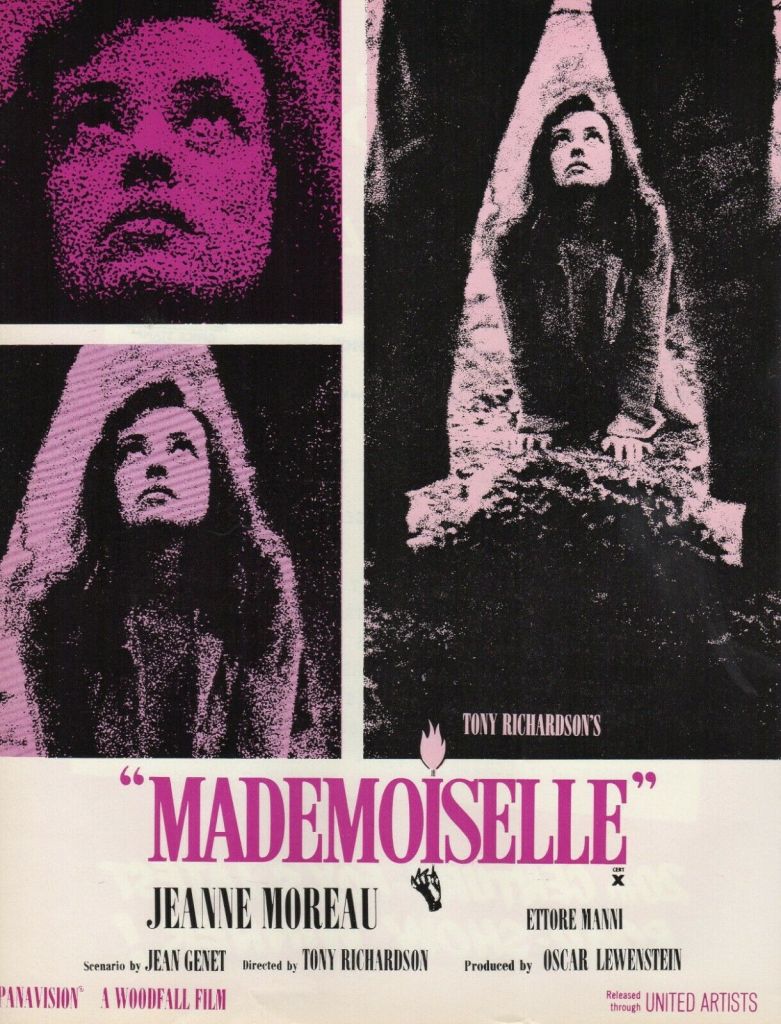
Another all-star prestige war movie, though this time set in the Crimea, Tony Richardson’s The Charge of the Light Brigade (1968) ran it close, registering a deficit of $2.59 million. This was not the first time the studio’s faith in Richardson proved unfounded. He had lost $1.17 million on Sailor from Gibralter (1967) and another $1 million Mademoiselle (1966), both starring French actress Jeanne Moreau, cited in divorce proceedings brought by his wife Vanessa Redgrave.

History was also unkind to John Huston, coming unstuck with romp Sinful Davey (1969), also set in Britain, and starring newcomer John Hurt. With only $250,000 in rentals in the U.S. market it dropped a total of $2.4 million. Richard Lester was also well off the mark with anti-nuke comedy The Bedsitting Room (1969) which imploded to the tune of $1.42 million.

Although Dick Van Dyke justified his fee for the studio’s Chitty,Chitty Bang Bang, his marquee status proved decidedly unjustified in two other pictures. Some Kind of Nut (1969) lost $1.36 million while Fitzwilly (1967) was $312,000 short of break-even.

British star Michael Caine also fell into the questionable category. Billion Dollar Brain (1968), his third outing as spy Harry Palmer, proved a dud, $1.18 million down while Second World War picture  Play Dirty (1968) lost out at the box office wickets to the tune of $350,000.

Others in the million-dollar-loser class were: The Honey Pot (1967) despite the presence of Rex Harrison and Cliff Robertson; Alan Arkin’s ill-fated attempt to emulate Peter Sellers as Inspector Clouseau (1968); Jules Dassin’s 10.30pm Summer (1966); and A Twist of Sand (1967) with Richard Johnson and Honor Blackman.  And Peter Sellers himself misjudged the material for After the Fox (1966) for it came home $432,000 short of the target.

The Witches (1967) failed to coast home on the back of new sensation Clint Eastwood in the cast plus an all-star directing team including Vittorio De Sica, Luchino Visconti and Pier Paolo Pasolino and lost $880,000.

World War Two pictures proved too often problematic in registering global appeal. Michael Winner’s Hannibal Brooks (1969) starring Oliver Reed shed $650,000, John Guillermin’s The Bridge at Remagen (1969) was on the downside of $526,000, Richard Lester’s How I Won the War (1967) was $257,000 shy of budget and even low-budget numbers that were expected to at least break even failed to do so, The 1,000 Plane Raid (1969) missing out by $316,000 and Submarine X-1 starring James Caan by $156,000.

The notion that westerns had universal appeal turned out to be a dodgy proposition for some products. Whereas foreign made a distinctive impact in the box office for a film like Guns of the Magnificent Seven (1969) it did not always play out that way. Though John Sturges’ Hour of the Gun (1967) toplining  James Garner and Jason Robards did better aboard than at home that still wasn’t enough to offset losses of $627,000. Overseas rentals matched domestic for Young Billy Young (1969) starring Robert Mitchum but that still kept it out in the cold with another half a million needed to get over the line.

You would think minimal budgets would be a guarantee against outright failure, but too often promise remained unfulfilled. Charlotte Rampling and Sam Waterston were touted as rising talents when cast in Three (1969). The budget was a miserly $355,000. Yet it still lost $305,000, generating rentals of just $25,000 both at home and abroad. Bryan Forbes’ The Whisperers (1967), with Edith Evans winning an Oscar nomination, lost $180,000 on a budget of just under $400,000. The Russian version of Hamlet (1966) dropped $55,000 on a $75,000 budget.  Don’t Worry We’ll Think of a Title (1966) starring Morey Amsterdam only earned back $50,000 on its $181,000 cost.

Some movies came pretty close to break-even – another $16,000 would have seen Danger Route (1968) also with Richard Johnson reach the magic mark, American football drama Number One (1969) with Charlton Heston required another $40,000.  

SOURCE: “United Artists Corporation and Subsidiaries Motion Picture Negative Costs for Pictures Released in the Year Ended 1965, 1966, 1967, 1968 and 1969,” United Artists Files, Wisconsin Center for Film and Theater Research, University of Wisconsin.

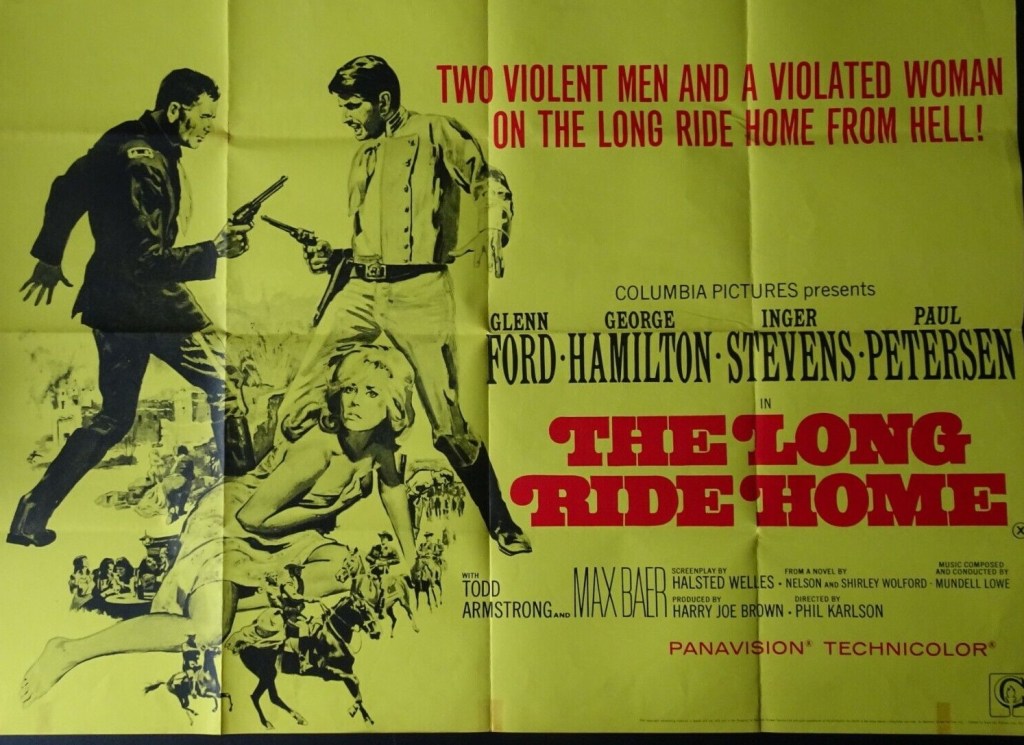
A Time for Killing / The Long Ride Home (1967) ****

The American Civil War is often slotted into the wrong genre. It is not a western. It is a war, with all the inherent wrongheadedness, viciousness and atrocity. We begin with senseless execution and end on a note of humiliating barbarity. Along the way we witness easily the greatest performances in the careers of George Hamilton (The Power, 1968) – a wonder after this how he was ever associated with playboy characters – and Inger Stevens (Firecreek, 1968).

At the tail end of the war in a Confederate POW camp, the disciplinarian commander orders raw recruits to execute an escapee. When they fail to find to the target Major Wolcott (Glenn Ford), witnessed by appalled missionary fiancée Emily (Inger Stevens), steps in to finish the job. In the wake of this Wolcott sends Emily away under escort.

POW leader Captain Bentley (George Hamilton), fully aware the war might end in days, but determined to escape to Mexico and continue the fight, organises a breakout. Instead of sneaking out quietly, in revenge he turns the Union cannons on his captors. And despite being better informed how close the war is to an end, the dutiful Wolcott sets off in pursuit.

Bentley ambushes Emily’s escort, killing the soldiers and stealing their mounts, but promising Emily that as befits a Southern gentleman he will respect her honor. She’s not so innocent of war, anyway, begging Bentley to kill a fatally wounded Union soldier rather than leaving him to the buzzards or, one assumes, marauding Apaches.

Unfortunately, his comrades don’t share that sentiment and when Emily makes the mistake of unloosing her blouse to wet her neck at a stream it inflames their lust. Equally, unfortunately, Emily doesn’t keep to her part of the deal and in attempting to escape hits Bentley a humiliating blow with his own saber.

While unfamiliar with the territory, Wolcott is a pretty good soldier, taking a shortcut over the mountains to cut off their retreat. “How come he knew what we were gonna do before we done it,” wails a Confederate soldier. “Before you even thought it,” snaps the over-confident Emily.

A few miles from the border, the Confederates hole up in a bordello where Bennett finds a despatch announcing the war is over. Ignoring the fact that for the ordinary soldier you couldn’t find a better place to celebrate peace than in a whorehouse, and determined to continue the war, Bennett conceals the information.

In revenge for losing face in front of his soldiers, he (luckily off camera) rapes the half-stripped and bloodied Emily. In the manner of every savage taking advantage of wartime conditions, Bennett tells her, “You think nothing like this can ever happen to you. But you’re lucky because your humiliation will be over soon. You and your major are going to know I won.”

Rape, as currently in the Ukraine and as in many previous conflicts, used as a weapon.

When Wolcott arrives, it’s obvious what has happened and while holding a lid on his own emotions (a Glenn Ford hallmark), once he has proof the war is over, he refuses to give chase. Brutally, he tells her,  “I can see (witness) men die for their country but I can’t see them die for your honor.” It’s Bennett who, oddly, comes to her rescue, opening fire on the Union soldiers, compelling Wolcott, in breach of the rules of war, to cross the border into Mexico in pursuit.

This isn’t a typical Glenn Ford (The Pistolero of Red River/The Last Challenge, 1967) picture where he plays the central character and is scarcely off screen. Here, he disappears for long stretches as the camera focuses on George Hamilton, his squabbling gang and the growing tension between him and Inger Stevens. If you’ve only seen Hamilton in his screen playboy persona, this is a revelation as honor and misguided duty turn into repulsive action.

And this is by far the best performance by Inger Stevens. What she achieved here launched her career, although admittedly as a female lead rather than top-billed star. The emotion her face portrays without the benefit of dialog is quite astonishing. Expecting to be an innocent bystander, unexpectedly thrown into the tumult, physically abused, and then, contrary to her Christian beliefs, she goes from stalwart to victim to, against her Christian principles, showing no sign of turning the other cheek but in full Old Testament mode urging revenge.

The scene when Emily enters a room full of soldiers, attempting to retain some dignity in the face of torn clothes and bloodied face, while acknowledging her humiliation, is stunning. The only scene that comes close to matching its power is at the end, the sequence shot from above, light streaming into a darkened cellar, when, having killed Bennett, Wolcott abandons his potential bride.  

Phil Karlson (The Secret Ways, 1961), a stand-in for original director Roger Corman, does an excellent job of focusing on the brutalities of war, not just the rape and violence, but the recruits, as dumb as they come on both sides, who fail to cope with the pressures. You would have to be fast to spot Harrison Ford (billed as Harrison J. Ford) making his screen debut, but Harry Dean Stanton (Cool Hand Luke, 1967) has a bigger role. Halstead Welles (The Hell with Heroes, 1968) wrote the screenplay based on the novel The Southern Blade by Nelson and Shirley Wolford.

A couple of later westerns might have raided this picture for ideas: continuing the fight in Mexico was the focus of The Undefeated (1969); a constantly carping pair who delight in slaughter evidenced in The Wild Bunch (1969); relentless pursuit a constant theme of 1969 westerns as diverse as Butch Cassidy and the Sundance Kid, True Grit, The Wild Bunch, Mackenna’s Gold and Once Upon a Time in the West.

Regard this as a western and you will be disappointed. Take it more seriously as a war picture and it offers far more. I’m probably being a tad generous in giving it four stars but I was knocked out by the performances of Hamilton and Stevens and a number of excellent scenes, the two in particular mentioned above for example, and the dialogue.

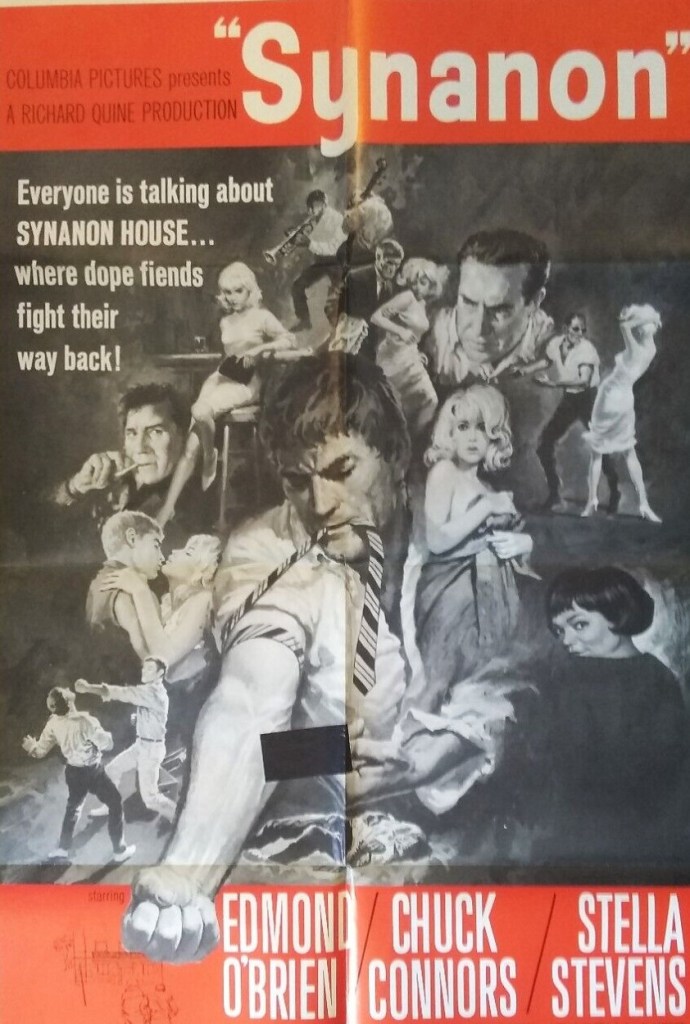
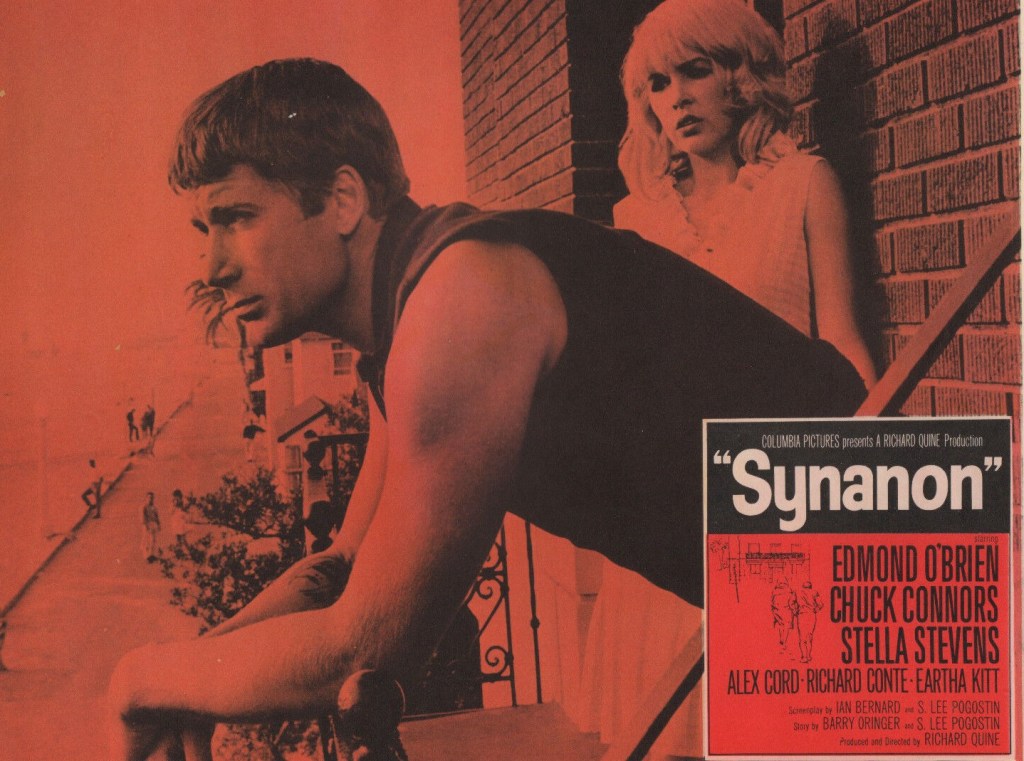
Synanon (1965) ***

Pre-dating Hollywood’s love affair with drugs, before sub-culture transformed into counter culture, before smoking a joint marked a generational divide, before marijuana symbolized freedom and was, well, the epitome of cool, before all that heroin was still seen as a scourge.

Addiction had rarely been viewed as persuasive audience fodder with the odd exception of The Man with the Golden Arm (1953) or the less-starry Monkey on My Back (1957). And this was also before Synanon became a byword for cult excess and was eventually closed down for committing the cardinal sin of employing tax exemption to get stinking rich.

At the time it was a byword for something else – rehabilitation. Its methods might have been controversial given leader Chuck (Edmond O’Brien) had no psychiatric training and was simply an ex-addict looking to find a way back. The main weapon in the community’s arsenal was confrontation. What became known as attack therapy. Rather than being permitted to stew in self-pity, inmates, all voluntary, had their weaknesses spelled out by others until they were ready to acknowledge them for themselves. The key to recovery was talking. Anyone not talking was hiding from their problems. (I’m not so well up on addiction therapy to know whether Synanon invented that kind of counselling of talking out problems in groups that then became the norm.)  If patients took to the scheme they were soon addicted to smoking and coffee; sex being considered too dangerous to contemplate.

Anyways, heroin addict Zankie (Alex Cord) is a newcomer helped along an entrant’s path by Joaney (Stella Stevens), a single mum so out of kilter with responsibility she kidnaps her son, and confronted by hardass Ben (Chuck Connors), so consumed with guilt over the death of his dope-fiend wife that he spurns all women. There’s a sub-plot of sorts. Chuck is being charged with various minor violations, including permitting convicted criminals out on parole to enter the establishment. But Chuck’s main job is to be sarcastic, challenging anyone’s notions that they could be cured, but occasionally analytically correct. “You put yourself in a position where you could lose control,” he tells Ben.

It’s a hothouse of emotions for sure. Zankie and Ben come to blows over Joaney. Zankie sees little wrong in knocking back some cough medicine. Eventually, Zankie skips out, pursued by Joaney, who goes back to turning tricks to fund her habit. There’s a surprising scene – for the time (likely excised from the British version and possibly the original) – of Chuck going through the whole candle, spoon, injection routine.

Set up as a sanitised public relations package promoting Synanon ideals with overmuch detail on the establishment’s background and conflict with authority, nonetheless it touches far better than most addiction movies on the lack of self-awareness that afflicts users, their creation of fantasy worlds where whatever they do is deemed right. The tension that comes from an entire house of jumpy characters, their dependence on a higher power (Chuck in this case) is well-drawn. Even the incessant smoking and the constant reliance on coffee suggests those with an addictive personality are only too likely to switch to something else.

You might question the casting. Alex Cord (Stagecoach, 1966), Stella Stevens (Rage, 1966) and Chuck Connors (Move Over Darling, 1963) are far too well-groomed to pass for skanky addicts even if on the road to recovery. And Edmond O’Brien (The Man Who Shot Liberty Valance, 1962) and his sidekick (Richard Conte, Lady in Cement, 1968)) come across like tougher versions of the tough priests tackling delinquency that used to be played by the likes of Spencer Tracy.

But Cord and Stevens do suggest the vulnerability of the delusional addict, Stevens little-girl-lost persona at odds with her glamor, actions devoid of the concept of consequence. Although boasting a six-pack, Cord’s portrayal of a man destroyed by weakness did not suggest he would segue from this screen debut into tough-guy leading roles. Better actors might have suggested a greater degree of internal conflict but externally, in the looks department, might have looked like this was always going to be their destination. So the casting works both ways, more surface, less depth, but a warning that even the prom king and queen are not immune from addiction.

Soberly directed by Richard Quine (How To Murder Your Wife, 1965) from a screenplay by Ian Bernard, in his debut, but feels it owes too much from input by the original Chuck Dederich.

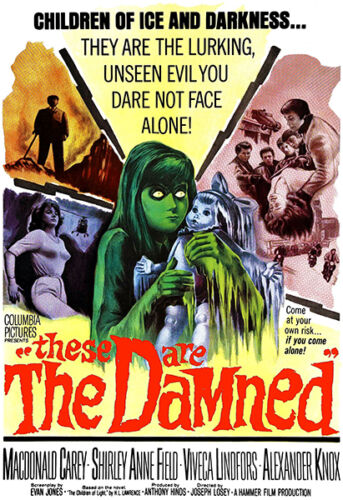
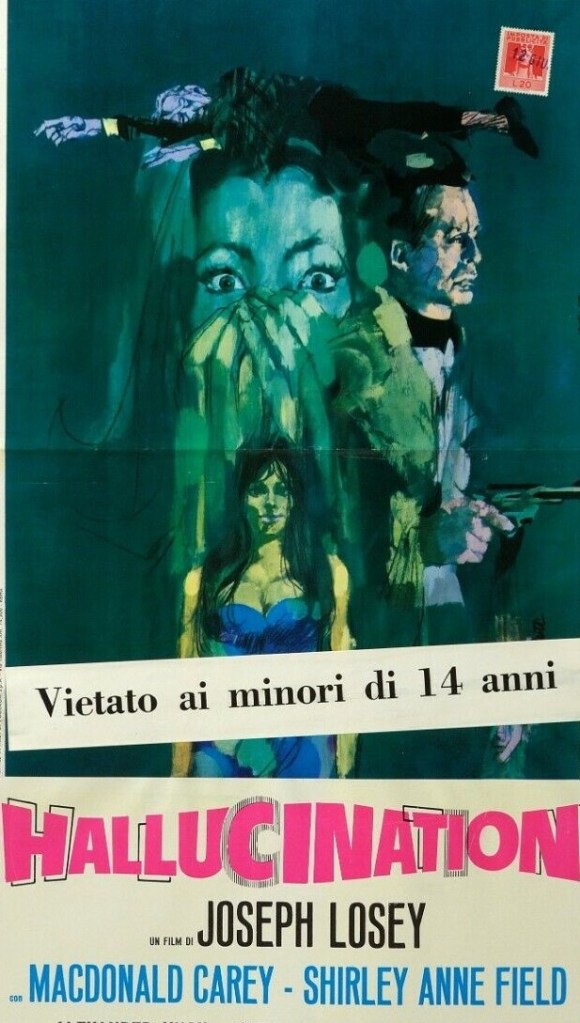
The Damned / These Are The Damned (1963) ****

Nihilism was at a peak in the 1960s. The threat of nuclear war and/or the fallout from radiation was as genuine a fear as the leak of a man-made disease is today. This was a precursor, though initially ignored, of the spate of nuke movies like Fail Safe (1964), Dr Strangelove (1964) and The Bedford Incident (1965) which made the argument not to leave nuclear accessibility in the hands of trigger-happy politicians, scientists and the military.  

The idea that scientists for experimental reasons might welcome radiation was not a notion easily embraced. The Damned (not to be confused with the earlier Village of the Damned, 1960,  and later Children of the Damned, 1964, or, for that matter, Luchino Visconti’s The Damned in 1969) presents a more ruthless scientific approach than audiences might expect.

Three tales eventually dovetail. In a very contemporary nod to English society, tearaways known as “teddy boys” terrorise a seaside town. Led by the snappily-dressed umbrella-wielding King (Oliver Reed) when not causing general mayhem they take pleasure in beating up any male who happens to be enticed by his glamorous sister Joan (Shirley Anne Field). One such unfortunate is Simon (MacDonald Carey), an American tired of the rat race. Joan decides she has had enough of being used as sexual bait and boards Simon’s yacht to apologise, at which point unlikely romance ensues. Not that romantic initially, as Simon assumes she is easy pickings, and comes on a shade too strong. Her thwarted brother sends his gang to spy on the couple.

Scientist Bernard (Alexander Knox) welcomes the arrival of his sculptor girlfriend Freya (Viveca Lindfors) who has a studio in a cottage on the cliffs. Underneath the cliffs is a secret project involving a group of obedient 11-year-old children who appear to have lived there from birth, with whom Bernard communicates via closed circuit television.

Joan and Simon enjoy an evening idyll in the empty cottage until chased out by the gang. Escape leads them down the cliffside where the children offer them a hiding place. The kids think Joan and Simon are their parents coming to the rescue. They believe they are on a spaceship headed to planets unknown. They are as baffled that the incomers have warm skin as the escapees that they have cold skin. Eventually, they are joined by King, rescued from drowning by one of the children.

Eventually, too, all are trapped by Bernard and his men. King, with his violent skills honed, is able to take on the guards and fashion an escape. Bernard allows the couple to leave on Simon’s yacht, knowing they will die of radiation poisoning before too long, a helicopter hovering overhead should they decide to land anywhere.

When Freya discovers the truth, Bernard kills her. The children lived through a radiation leak and are being groomed by Bernard to survive the inevitable future nuclear war in the hope, presumably, that they might breed and create a generation invulnerable to radiation. All that upsets the scientist of this incident is that the children now know they are prisoners.

Small wonder Hammer didn’t know what to do with such downbeat fare. Ruthless scientists like Bernard were usually put in their place by intrepid civilians like Simon and Joan or outsiders like King. The imprisoned always escaped. Humans, never mind children, were not treated as lab rats. A more cynical contemporary audience would not be remotely surprised at the conspiracies of scientists and governments.

If you think The Wicker Man (1973) took an age to achieve cultdom, this took forever, in part because of the later artistic recognition of director Joseph Losey, this scarcely fitting into an oeuvre that contained The Servant (1964) and The Go-Between (1971). Recognition was negated by poor initial distribution, the American version heavily edited, and it wasn’t really until this century that its worth was vindicated.

It’s a brilliantly bold construct, especially as, in retrospect, other characters are imprisoned one way or another. King scarcely lets Joan out of his sight, and while forcing her to strut her stuff to entice men that he can mug is revulsed at the notion of her embracing another man. Freya, too, although she doesn’t realise it, can only enjoy a relationship with Bernard in which he has complete control. The teddy boys, who think they can wreak havoc, are easy pickings for the might of the military.

Some scenes are just superb. Joan picking up Simon. King’s relish of violence. Bernard in avuncular tones addressing the children, who could all be in the running for cute Disney roles. Joan’s shock at the coldness of the children. The children’s innate obedience turning to rebellion at their betrayal. A camera tracking a room to the sound of heavy footsteps, those revealed to belong to a man in a Hazchem outfit. Bernard’s cold-blooded elimination of his lover. Finally, the cries of the children too distant to be heard by tourists on a beach.

Oliver Reed (Hannibal Brooks, 1968), working hard on his steely stare and his breathless tones, is the pick here, but Alexander Knox (Accident, 1967)  runs him close. Sultry-eyed Shirley Anne Field (Saturday Night and Sunday Morning, 1960) does better than B-film regular MacDonald Carey who appears out of his acting depth.  

Genuine cult material.

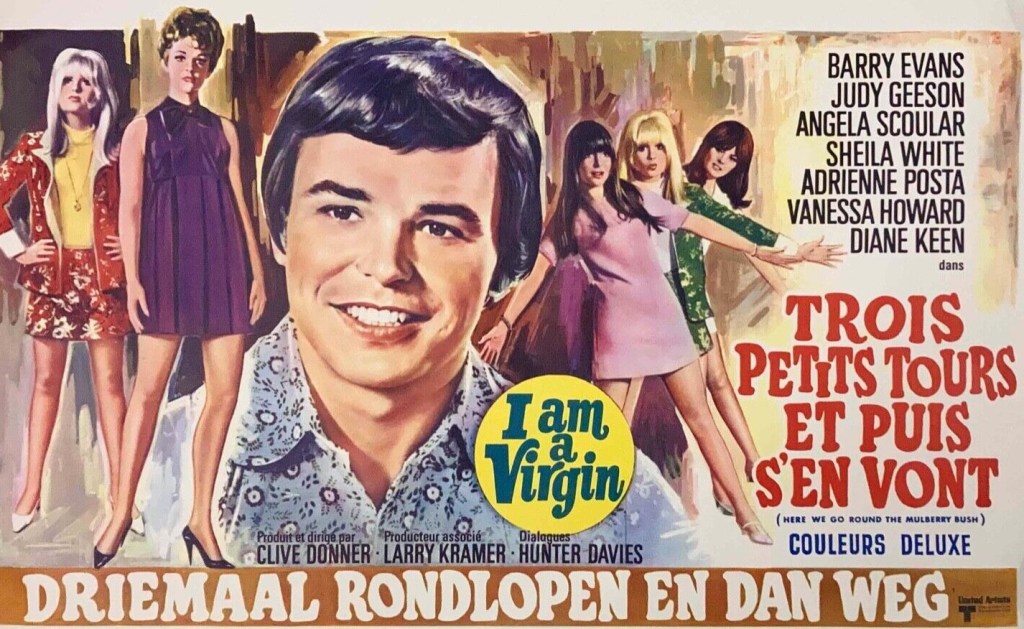
Here We Go Round the Mulberry Bush (1968) **

Breaking the fourth wall has become a common conceit these days, especially in television, so you might be surprised to learn it was the key artistic element of this otherwise straightforward British coming of age drama.

Our teenage guide Jamie (Barry Evans), a delivery boy, spends most of his time lusting after any women he meets. Like a junior version of 10 (1979) women are rated according to their physical attributes. Most, of course, are well out of his league, especially as he lacks for what counts as the smooth patter which his cocky pal Spike (Christopher Timothy) has in abundance.

Essentially a series of episodes with the opposite sex as Jamie tries to lose his virginity. But mostly, it’s just Jamie yakking on about how he’s not lost his virginity and what’s up with all those women that they can’t see what a great catch he is. He’s so determined to have sex he will even go out with the dumbest of dumb blondes, Linda (Adrienne Posta).

Naturally, since reality is too cruel, he succumbs to fantasy with a number of scenarios that seem, inexplicably, torn from silent movies, and nothing approaching the imagination of Hieronymus Merkin. For no particular reason, he strikes lucky with the adventurous Mary (Judy Geeson), whose boyfriends usually run to sports cars, but that liaison is nearly interrupted by a wet dog and Jamie’s inexperience.

Apart from the lusting, there’s little else going on, a couple of women in a fish-and-chip shop complain they are fed up with chicken and beef, his younger brother shows more spark, and his home life is pitifully dull. You can’t really blame the movie for lacking the rebelliousness that was potent at the time, there’s no political awareness and no sign Jamie is going to grow up into one of the Angry Young Man so familiar at the beginning of the decade. It’s a quaint version of American Pie.(1999).

But it’s just boring. While Barry Evans (Alfred the Great, 1969) is personable enough he doesn’t have enough in the wit department to keep you hooked for the duration, most of the humor teetering on the side of inuendo..

Unable to recognise the inherent weakness of the script, and assuming that breaking artistic boundaries with the fourth wall is enough, director Clive Donner (Alfred the Great) spends most of his time trying to visually brush everything up, with little success.

That this was a big British hit at the time might have been more to do with the soundtrack – performed and written by Steve Winwood and Traffic – and the fleeting sight of Judy Geeson (Two into Three Won’t Go, 1969) in the buff. The British censor didn’t take too kindly to the actress revealing all, so in fact audiences were treated to very little, but for teenagers at the time very little was more than usually came their way unless willing to sit through a turgid arthouse picture.

About the only thing to commend it is Geeson’s class, she stands head and shoulders above everyone else in terms of screen charisma, and that there’s a roll call of rising British stars. As well as Christopher Timothy who would achieve fame on television in the original All Creatures Great and Small, the supporting cast includes Vanessa Howard (Corruption, 1968), Angela Scoular (On Her Majesty’s Secret Service, 1969), Diane Keen (The Sex Thief, 1973) and Adrienne Posta (Some Girls Do, 1969) and, to show them all how to do it, Denholm Elliot (Maroc 7, 1967) briefly pops up.

Clive Donner (Alfred the Great) directs. Hunter Davies, making his screen debut, wrote the screenplay based on his bestseller. Generally, any film that scores two stars does so out of incompetence. This is well-enough made but never seems to shift into gear.

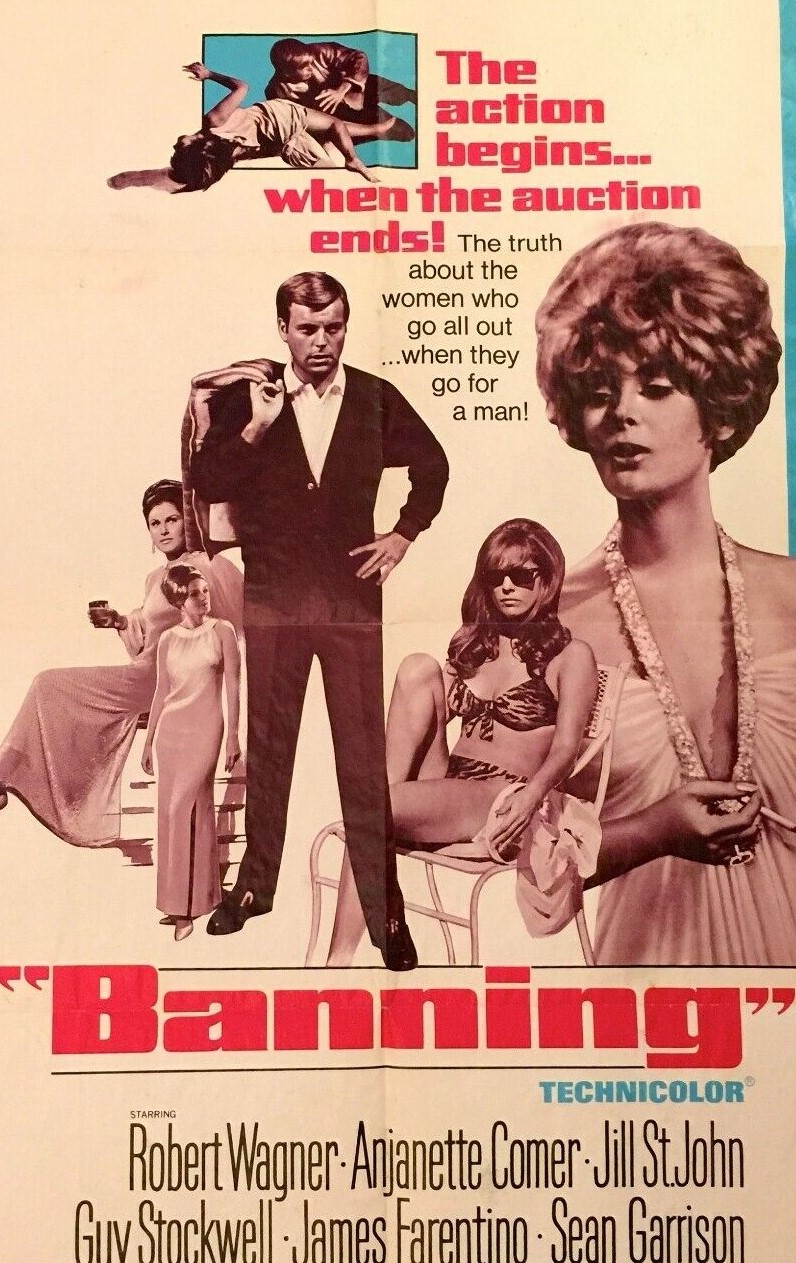
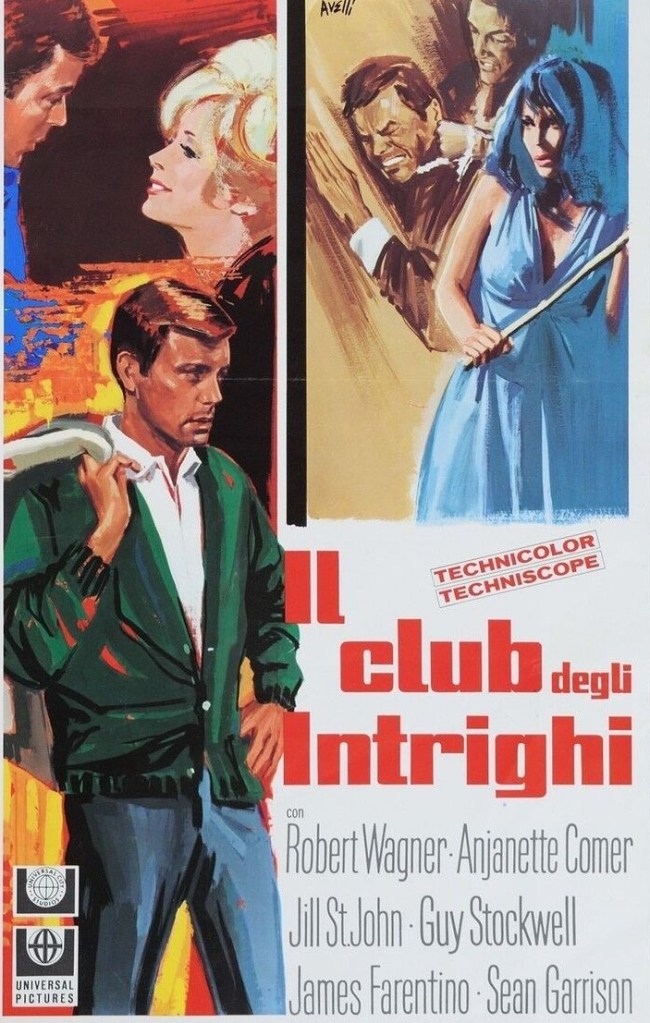
Banning (1967) ***

Robert Wagner’s bid for stardom is scuppered by a limp plot set in the overheated world of the country club set where a posse of sexually predatory women operate. It doesn’t help that the main narrative thrust finds trouble just hanging in there.

Ex-professional golfer Banning (Robert Wagner), a “moral diabetic” on the run from a loan shark, pitches up at an upmarket country club where he finds work as the assistant golf pro to Jonathan (Guy Stockwell). His most arduous task appears to be picking his way between the toned bikini-ed bodies lounging around the pool and avoiding the advances of Angela (Jill St John) and Jonathan’s wife Cynthia (Susan Clark) while coming on strong to overpaid secretary Carol (Anjanette Comer).

There’s an element of Life at the Top (1965) here, with Jonathan married to the boss’s daughter, resenting their close relationship while not making the executive advances he would like. Every now and then bits of what sound like a complicated past implicating Jonathan and the alcoholic Tommy Del Gaddo (Gene Hackman) pop up and around the halfway mark a subplot kicks in, involving something called a “Calcutta,” a golf tourney which looks like it’s being rigged.

Given that it’s organised by a club boss (Howard St John) who claims every gimme going and feigns drunkenness to skin members at poker, it’s almost a given that Banning is going to come out worst. I have to tell you you probably couldn’t care less, since most of the action, and all of the fun, is off course, and not so much in the bedroom stakes as the war between women for available men.

“I bought you,” purrs Angela in her  most seductive attire after she has made it possible for Banning to find a way to pay off his debts. “I want you,” snaps single mother Carol, making a forthright play after spending most of the picture fending off his advances. Standing on the side-lines, watching Angela making her moves, Cynthia observes, “I’d say Angela’s had at least a dozen husbands,” pause for the punchline, “including mine for all I know.”

Predatory moves are not all one way. Turns out the price Carol pays for a salary five times the going rate and a nice house and private schooling for her daughter is setting aside Thursday afternoons for Jonathan. But in the pragmatic manner that appears inbred in the country club, she states, “No apologies, no excuses.”

And before Carol works out just how attractive Banning actually is she had to cut him dead a couple of times and, in a scene guaranteed to put off the modern audience, prevent him drunkenly raping her. It was almost a throwback to the 1940s and 1950s when, it appeared, a woman just needed a good smack on the chops before she could submit and start billing and cooing.

Robert Wagner (The Biggest Bundle of Them All, 1968), tanned within an inch of his life, doesn’t so much miss the target as not being given a target worth hitting. There’s very little sense danger, of a man on the run from the mob or whichever gangster has picked up the tab for his debt, and he’s not a lounge lizard. Acting-wise, he relies on a raised eyebrow, an eye swivel and that scene-stealing trick, copyright Robert Vaughn, of raising his lowered head to open his closed eyes, a neat device for a supporting star but hardly required when you are top-billed.

Anjanette Comer (Guns for San Sebastian, 1968) doesn’t snatch the brass ring either, relying on a tremulous lower lip to evoke emotion. In fact, it’s a toss-up between the classier Jill St John (The King’s Pirate, 1967) and Susan Clark (Tell Them Willie Boy Is Here, 1969) as to who steals the most scenes, both winging it with striking dialog, emanating power, regarding men as weak and playthings.

Gene Hackman (Lilith, 1964), generally a prime contender for scene stealing, especially with trademark chuckle now in full swing, unfortunately does himself no favors by over-acting.  You might also spot James Farentino (Rosie, 1967) and Sean Garrison (Moment to Moment, 1966).

Ron Winston (Ambush Bay, 1966) directed from a screenplay by James Lee (Counterpoint, 1967). It would have worked better to concentrate more on the bitchy women than the sub-plots.

I’m sorry to say you’ll have a hard job finding this since I purchased my DVD on the second-hand market. Worth the hunt if you’re a fan of St John and Clark or to discover why Wagner’s promising screen career never took off.

Crack in the World (1965) ***

There’s only one thing better than a crackpot sci-fi notion. And that’s two crackpot notions. The first one might have contemporary appeal – the need to find a cheaper source of sustainable energy. Come to think of it, the second one is even more contemporary – saving the world. Although this is achieved not by cutting back on nuclear power but by doubling down on it.

With so much resting on the special effects it’s a shame producer Philip Yordan lacked as  indulgent an employer as Samuel Bronston for whom he was the go-to-guy on a string of epics like El Cid (1961) and The Fall of the Roman Empire (1964). Had Bronston been involved  this would have had world-shattering special effects. Even so, Yordan was way too smart to fall into the trap that awaited many producers of disaster movies, that the special effects would save a movie weighted down with a clunky script.

Here at least Yordan shows his pedigree. Dr Sorensen (Dana Andrews) isn’t so much the mad scientist as a guy overwhelmed by his own cleverness, his insanity of possibly a worse kind, driven by ambition and arrogance. And he’s a heck of a manipulator. When pitching the notion to Sir Charles Eggerton (Alexander Knox) and sundry political and military types he ensures his doubter Dr Rampion (Kieron Moore) isn’t around to spike his theory.

He’s got history in getting Rampion out of the way, ensuring he was in a lofty position thousands of miles away, making the coast clear for Sorensen to woo his rival’s lover Maggie (Janette Scott) to whom he is now married. Sorensen isn’t just a flawed human being, he’s a dying specimen, gradually taking on the appearance of a mummy he’s so clad in bandage one way or another as the story progresses.

Of course, it all goes wrong. Who could have foreseen there would be a pocket of hydrogen down there in the earth’s crust to knock for six Sorensen’s carefully calculated calculations. A ring of fire begins to spread around the globe, threatening to split the world in two. Of course if you drop a nuke down a volcano, as one might expect, that could possibly reverse the process.

Sorensen’s way too ill by now to take on such a physical endeavor so it falls to Rampion, naturally immune inside his Hazchem suit to the heat inside a volcano. But this proves an emotional miscalculation because it throws Maggie and Rampion together and you only need to see the look on her face when he enters the danger zone to realize that their love has only been temporarily buried not extinguished.

Oddly enough, it’s the flaws of character that hold this picture together. Sorensen determined to win his second Nobel Prize at any cost, the politicians pure suckers to anyone who can promise a new source of energy, Maggie deceiving her dying husband, Rampion principled enough to challenge Sorensen but betraying his trust to win back his former lover.

And it’s all delivered with enough believable scientific jargon snapped out in a staccato of confidence that you hardly question the concept. And Sorensen is pure scientist to the end and at least given to accepting he was wrong.

A modern audience might laugh at some of the special effects. The volcano looks like a toy and the inevitable train heading towards destruction, as though Yordan had boarded a Cinerama vehicle (which he would later do), also looks like something you’d buy in a shop. But you need to cut it some slack. This was before anyone (Fox with Fantastic Voyage, 1966, MGM on 2001: A Space Odyssey, 1968) was happy to back imagination to the tune of millions of dollars in sfx. The pressure cooker is kept on tight with the flawed characters, a traitorous romance, the fire circling the globe, Sorensen at first denying his experiment was causing earthquakes, and a simplifying of the scientific.

There’s a great scene at the start when Sorensen demonstrates the pros and cons of his scheme with the use of two panes of glass. And various maps are all we need to keep up to speed on the disaster spiralling out of control.

But if you ever want to humanize a barmy scientist call on Dana Andrews, clipped delivery, handsome, carefully coiffed silver hair, correct in every calculation until now, even emotional ones, realizing that in the September of his life he deserves romance. Astonishingly, this was his first picture in four years and he still dominates the screen.

Kieron Moore is clever casting, too, for he falls into the jutting-jaw category of handsome actor, not the bespectacled, wizened boffin, tough enough to take on Sorensen, handsome enough to challenge him romantically. Janette Scott and Moore played a couple in Day of the Triffids (1963) and she does well enough as the romantic prize. Director Andrew Marton (Texas: Africa Style, 1967) holds it all together.

Discover WordPress

A daily selection of the best content published on WordPress, collected for you by humans who love to read.

The Atavist Magazine

by Brian Hannan

WordPress.com News

The latest news on WordPress.com and the WordPress community.