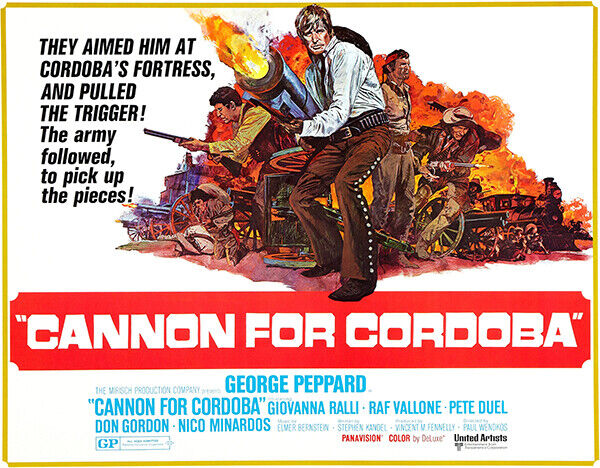
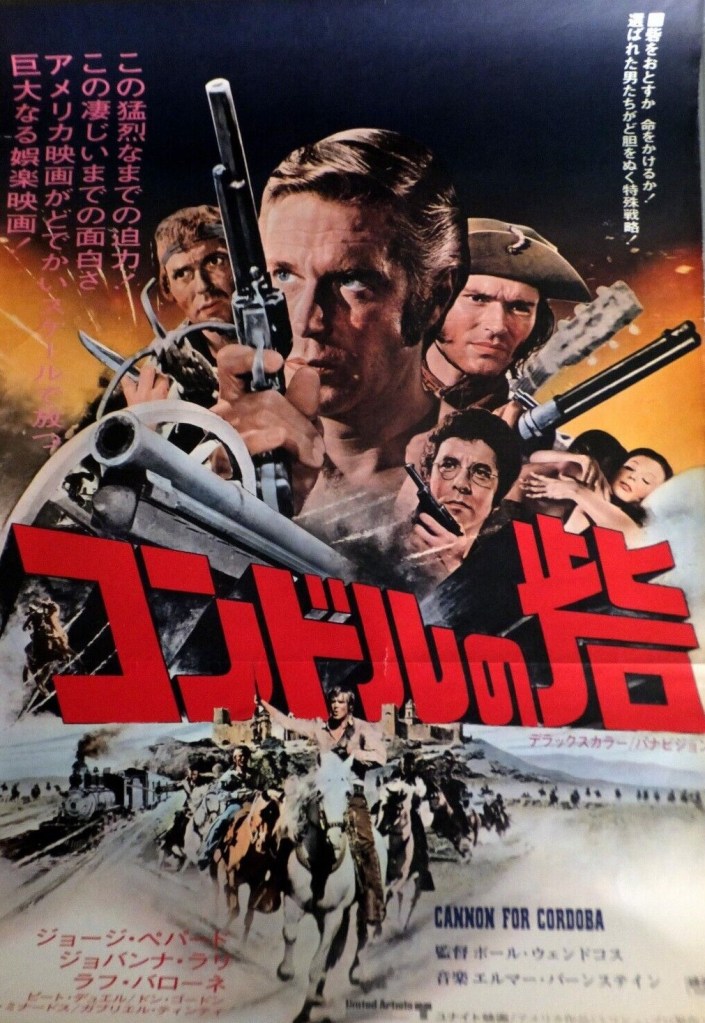
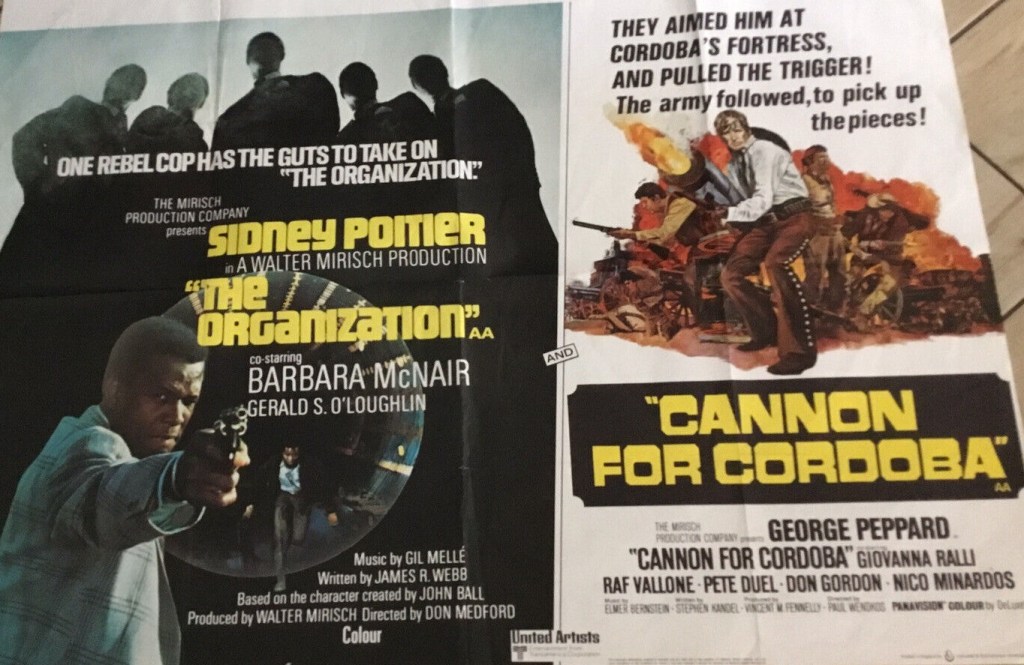
Cannon for Cordoba (1970) ***

Why settle for a measly Gatling Gun, as Mapache does in Sam Peckinpah’s gloriously violent The Wild Bunch (1969), when you can just as easily relieve government troops of serious artillery. It’s 1912 and the U.S. has sent General Pershing (John Russell) into Mexico with the titular weaponry in a bid to subdue Mexican rebels led by the titular Cordoba (Raf Vallone) raiding across the border and annoying powerful ranchers like Warner (John Larch).

Over-plotted to within an inch of its life and atmospherically indulgent – the natives are constantly whooping it up – and with star George Peppard trying out cigars for size for future enterprises like The A-Team (American television 1983-1987), this comes up short when compared to similar hard-nosed incursions into enemy territory like The Professionals (1966) and The Dirty Dozen (1967).

It’s a movie of many – too many – parts. First of all, we have rebellious U.S. soldier Capt Douglas (George Peppard), who gives superiors the finger, packed off with a small team to infiltrate the rebel army and find out what they’re up to. Not that that would require any infiltration. It’s pretty obvious with a prize plum like artillery suddenly arrived, the rebels are going to chance their arm and steal it.

Lo and behold that’s exactly what Douglas’s gang – which includes Jackson Harness (Don Gordon) quickly embittered because the good captain, in order to maintain his disguise, refuses to save one of his captured team being slowly roasted over a pit – does discover. But they don’t quite manage to get this information back to Pershing before those dashed clever Mexicans are blowing everything to hell and stealing the train containing the guns.

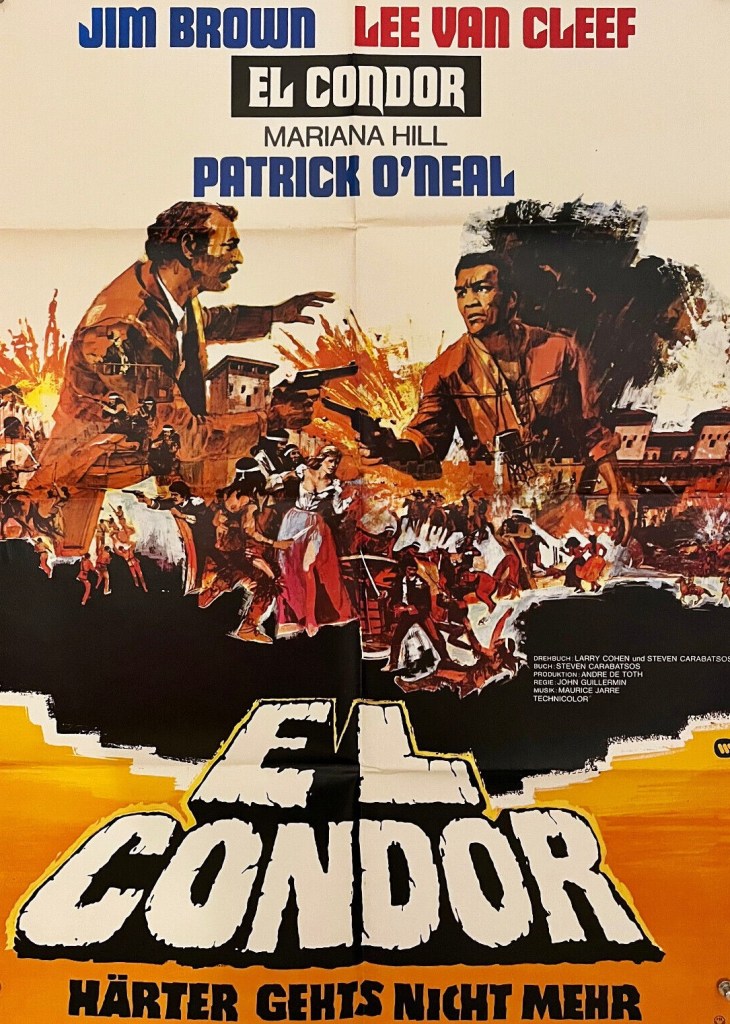
So now Douglas has to put together another team, the aforementioned Harkness augmented by Rice (Pete Duel) and Antonio (Gabriele Tinti), a Mexican who wants Cordoba brought to justice, and a few others, and infiltrate the Mexican stronghold. Along the way, they acquire the assistance of the beautiful Leonora (Giovanni Ralli) who is willing to use her body any which way (not going quite as far as Marianna Hill in El Condor out the same year) to gain revenge for Cordoba slaughtering her family and raping her. That last aspect seems a psychological stretch, but what the hell, how otherwise will the gang get close enough to the rebel leader.

Of course, just to sauce up the story, as if anything more is required, they are captured and need to bust out of jail and what with one thing and another it takes a goodly time before they can get close to achieving their objective. And that’s not to mention the betrayal that simmers in the background, Leonara having her own way of getting close to Cordoba, Warner not  quite as right-minded as he appears, and the aforementioned Harkness waiting for the right moment to blow away his leader.

Not too well received, the movie went out in the supporting role in a double bill.

Plenty explosions, plenty action, and plenty living it up, scantily-glad women appearing at every turn, firecrackers going off, dancing in the streets, but somehow too much of this scrambles the focus while subsidiary characters take center stage too briefly too often, as with rebel women in the 100 Rifles (1969)-Raquel Welch mold. It gets there in the end of course but you just wish it would hurry up or expend more of its running time on developing the main personnel.

George Peppard (The Groundstar Conspiracy, 1972) is having a ball, but that’s only because every other character is so reined-in and there’s little else character-wise for him to hold onto. It wouldn’t have taken that much for him to command center stage, for competition in the acting stakes he’s only got Raf Vallone (The Cardinal, 1963), in worldly-wise form, and Don Gordon (Bullitt, 1968), stewing away. Giovanni Ralli (Deadfall, 1968) arrives too late in the proceedings to make much impact. Pete Duel (Alias Smith and Jones, 1971-1973) looks cute but has little to do.

Diligently put together by Paul Wendkos (Guns of The Magnificent Seven, 1969) but coming across as trying too hard, from a screenplay by Stephen Kandel (Chamber of Horrors, 1970).

Enjoyable if you enjoy shoot-em-ups, and even more if you’ve been charting the career of George Peppard who here makes the switch from all those uptight characters of the previous few years to letting a whole lot more hang out.

https://amzn.to/49SXTGg

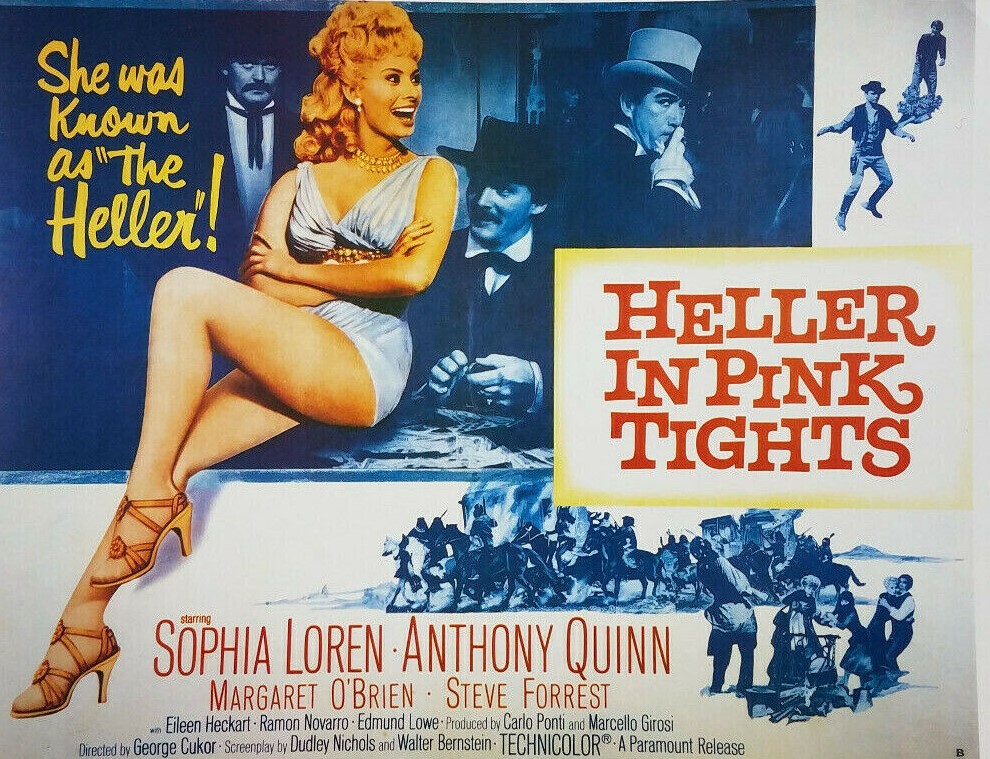
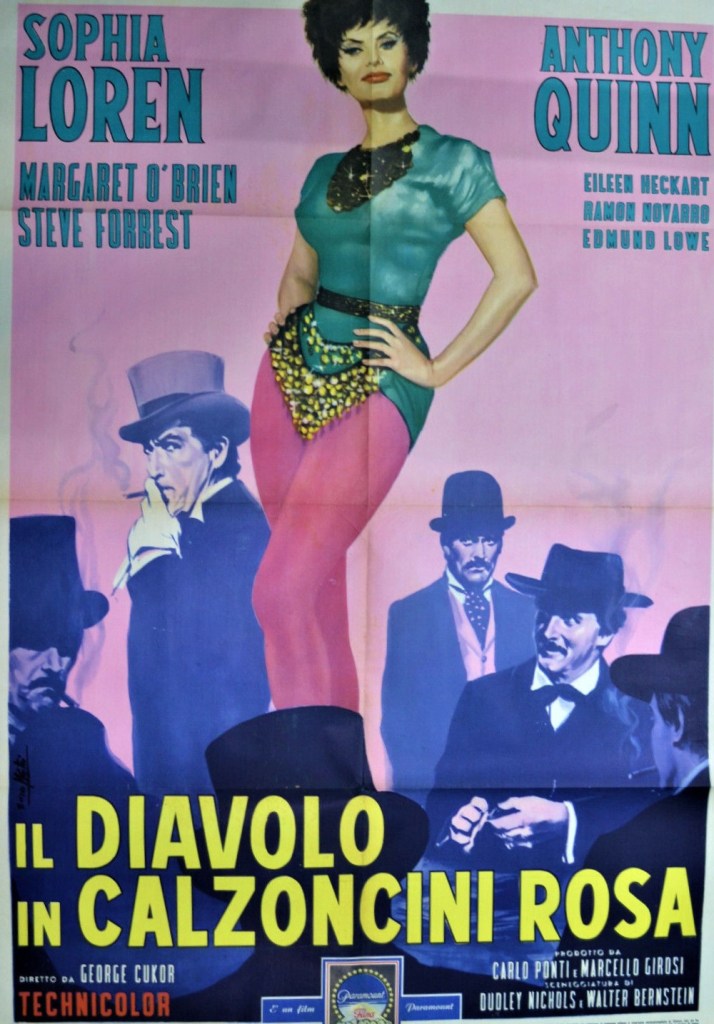
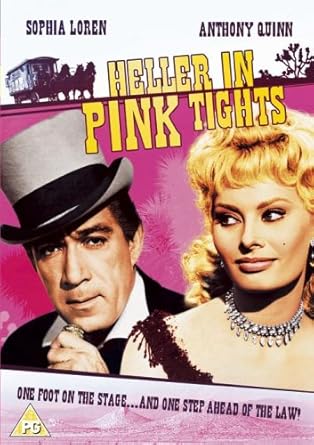
Heller in Pink Tights (1960) ****

Taken on its own merits, George Cukor’s western is a highly enjoyable romp. Hardly your first choice for the genre, Cukor ignores the tenets laid down by John Ford and Howard Hawks and the film is all the better for it. Although there are stagecoach chases, gunfighters and Native Americans, don’t expect upstanding citizens rescuing good folk. Instead of stunning vistas Cukor chooses to spend his budget on lavish costumes and sets.

You can see he knows how to use a colour palette, and there is red or a tinge of it in every scene (to the extent of rather a lot of red-haired folk), and although this might not be your bag – and you may not even notice it – it is what makes a Cukor production so lush. The film might start with comedic overtones but by the end you realise it is serious after all.

Angela (Sophia Loren) is the coquettish leading lady and Tom (Anthony Quinn) the actor-manager of a theatrical company managing to stay one step ahead of its creditors, in the main thanks her propensity for spending money she doesn’t have. Of course, once gunfighter Clint (Steve Forrest) wins Loren in a poker game, things go askew. 

Anthony Quinn (Guns for San Sebastian, 1968) had never convinced me as a romantic lead, but here there is genuine charisma between the two stars. Sophia Loren (Five Miles to Midnight, 1962) is at her most alluring, in dazzling outfits and occasionally in costumes as skin-tight as censors would allow in those days, but with a tendency to use beauty as a means to an end, with the conviction that a smile (or occasionally more) will see her out of any scrape. There is no doubt she is totally beguiling. But that is not enough for Quinn, as she is inclined to include him in her list of dupes.

While primarily a love story and a tale of theatrical woes set against the backdrop of a western, when it comes to dealing with the tropes of the genre Cukor blows it out of the water.  We open with a stagecoach chase but our heroes are only racing away from debt until they reach the safety of a state line. We have a gunfighter, but instead of a shoot-out being built up, minutes ticking by as tension rises, Cukor’s gunman just shoots people in sudden matter-of-fact fashion.

Best of all, George Cukor (Justine, 1969) extracts tremendous comedy from the overbearing actors, each convinced of their own genius, and the petty jealousies and intrigue that are endemic in such a troupe. An everyday story of show-folk contains as much incipient drama as the more angst-ridden A Star Is Born (1954), his previous venture into this arena.

From the guy who gave us The Philadelphia Story (1940) with all its sophisticated comedy, it’s quite astonishing that Cukor extracts so much from a picture where the laughs, mostly from throwaway lines, are derived from less substantial material. Quinn (his third film in a row with Cukor) has never been better, no Oscar-bait this time round, just a genuine guy, pride always to the forefront, king of his domain inside his tiny theatrical kingdom, out of his depth in the big wide world, and unable to contain the “heller.”

I won’t spoil it for you but there are two wonderful character-driven twists that set the world to rights.

There is a tremendous supporting cast with former silent film star Ramon Novarro (Ben-Hur: A Tale of the Christ, 1925) as a duplicitous businessman, former child star Margaret O’Brien, another star from a previous era in Edmund Lowe (Cukor’s Dinner at Eight, 1933), and Eileen Eckhart. Dudley Nichols (Stagecoach, 1939) and Walter Bernstein, who wrote a previous Loren romance That Kind of Women (1959) and had a hand in The Magnificent Seven (1960), do an excellent job of adapting the Louis L’Amour source novel Heller with a Gun, especially considering that contained an entirely different story.

Without a doubt it’s Cukor’s picture but Loren and Quinn combine to make it such a believable delight.

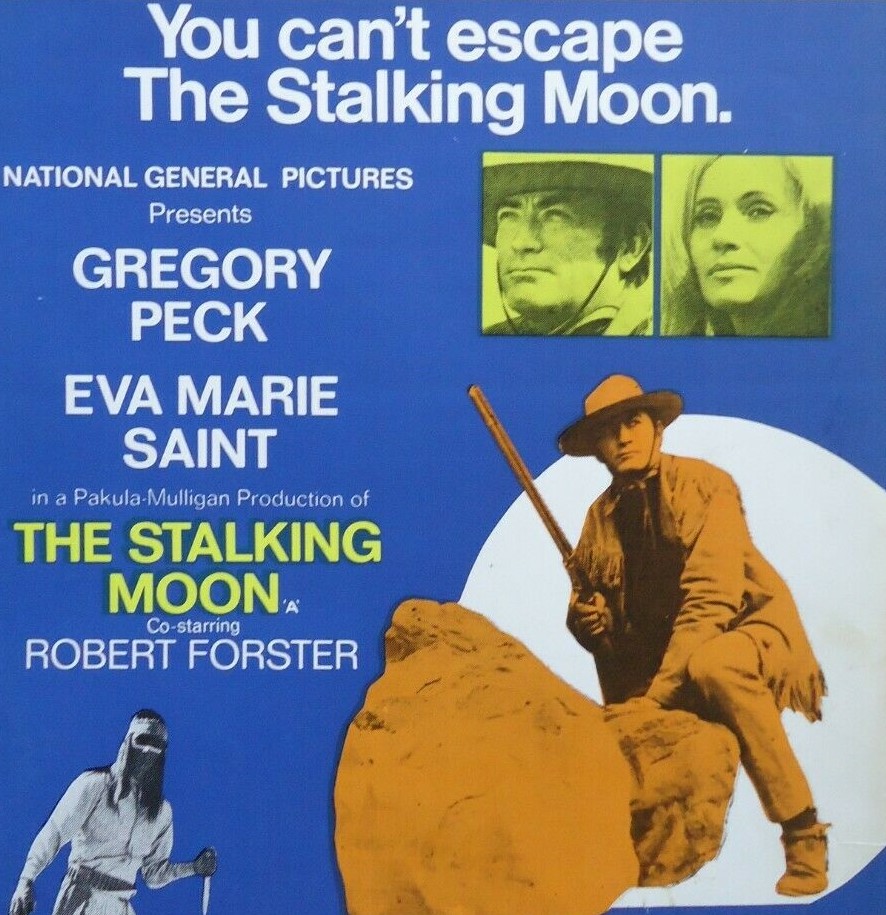
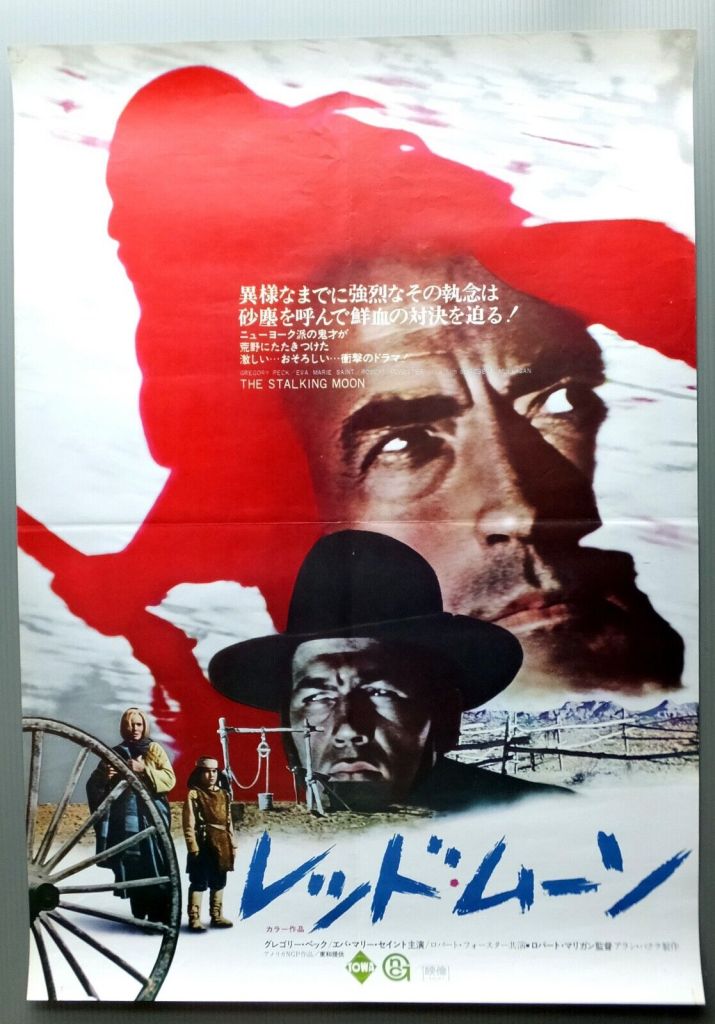
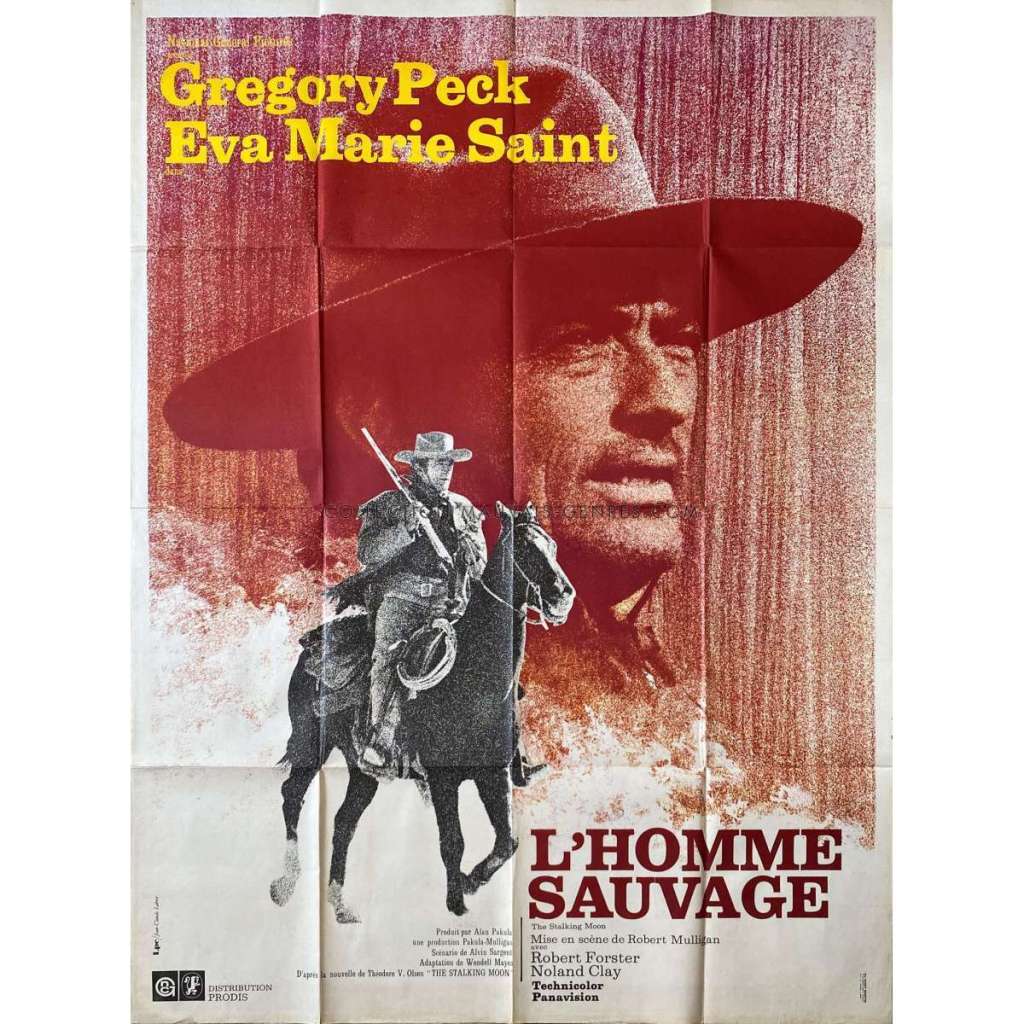
The Stalking Moon (1969) ****

About-to-retire Indian scout Sam Varner (Gregory Peck) helps the U.S. Cavalry round up Indians to take to reservations. One of these is American Sarah Carver (Eva Marie Saint) who, with her Apache son, is attempting to escape her vengeful Apache husband Salvaje (Nathaniel Narcisco). Varner agrees to take her to the nearest stage coach post, and then to a train depot, and, finally, to his ranch in New Mexico where they enjoy a period of security. But wherever she goes, death follows, culminating in a shootout in the hills around his ranch.

But the treatment by director Robert Mulligan (Up the Down Staircase, 1967) is far more complicated, often asking questions that cannot be answered, and placing the principals in situations that cannot be easily resolved. Sarah Carver has not gone running in order to find a man to save her; she does not think she can be saved and accepts the inevitable. She feels guilty for “lacking the courage to die,” of accepting Salvaje as her husband instead of dying along with the rest of her family when attacked a decade before by Indians.

She is weak in other ways, hiding the identity of her husband from the Army and everyone else in case she is abandoned. She shows no great bond with her son, who, several times, attempts to escape.

Sam Varner is very much an ordinary guy, just wanting to quit the Army and work his ranch. He is not the traditional extrovert western hero, nor the man who reluctantly takes up arms.  He has no wish to get involved with Carver and each time he does agree to help it is with a time-limited condition attached and these scenes lack any sense of meet-cuteness, no romantic interplay hastening him to a decision, little expectation that either party is angling to fall in love.

It is practicality rather than intimacy that makes them share a blanket during a dust storm and he asks her to come to his ranch because he will get on with the work quicker if he has someone to cook. In fact, his honesty prevents that: he confronts her over the fact that she “put us out here knowing all the time that he’d come after us” and making her face the corpses of men who died because she hid the truth. He is honest with his emotions and he is determined (“I got a place to go and I’m going”). But he bears none of the normal western hero’s traits, neither a hard drinker, loner, or gunman. He is not gauche like James Stewart or malevolent like Clint Eastwood. 

Even more unusual is the treatment of Salvaje. Despite the savagery of his actions, there is within him a sense of honor. He only chases his wife because she has stolen his son; there could be no greater affront to his dignity. The story is told from the point of view of the pursued i.e. Sarah Carver. But, by turning that perspective on its head, The Stalking Moon more easily fits into the category of revenge western, characteristically a picture concerning chase and pursuit by someone who has been wronged.

The director takes a bold step in the presentation of Salvaje. He is not seen at all in the first hour, then in just a few glimpses of a shape, his face only revealed at the climax. He is a ghost and a killing machine combined. Like a latter-day “Terminator,” he cannot be stopped, so skilful he evades capture, and relentless.

It is also, unusually for a western, a thriller. The tension mounts from the discovery, at the 10-minute mark, of Salvaje’s first three victims, all fully-armed soldiers, and the news, one minute later, that he single-handedly killed four troopers previously. At Hennessy, a staging post, when Varner and Carver go out into a dust-storm to search for her son who has run away, they return to find all dead. Everyone they left behind at Silverton, a train depot, is also killed.

Initially, Carver appears impatient, not willing to wait five days for an Army escort, but once she reveals who the boy’s father is, the reason becomes clear, and her desire for speedier transition creates more tension. Even in New Mexico, the death toll mounts, once Salvaje arrives. Now the trap closes in on them. Even the ranch house cannot prevent Salvaje from sneaking in and kidnapping his wife, leaving her for dead outside.

When Varner and a fellow scout, the half-breed Nick Tana (Robert Forster), attempt to turn the tables on Salvaje and track him down, it ends in Tana’s death. Although most of the tension comes from the will- he-won’t-he dynamic, there are number of Hitchcockian touches such as offscreen sound cues triggering alarm in characters. In two instances, a door provides shock.

Far from providing the expected relief, the ranch house merely provides a claustrophobic setting for the characters. Varner is trapped with an inarticulate pair. Instead of arrival at the ranch house precipitating emotional response and romantic interlude, as would be par for the course for other westerns, Varner finds himself stuck with a woman who refuses to talk and a boy who does not understand a word he says. The seven-minute scene where he sits down to eat and then has to virtually command mother and son to join him and encourage them to talk even if it is just to say “pass the peas” is one of the most awkward ever filmed. 

The movie is so darned awkward that you never laugh even at the few moments of comedy, the complicated issuing of train tickets, Varner keeping up a one-sided conversation at the table, Nick’s attempts to teach the boy poker. Relationships are more likely to remain in limbo than move on to any romantic or sentimental plane.

The film has a tight structure, the first 40-odd minutes setting up the story and tracing Varner and Sarah’s journey to the ranch house, the next 20 minutes at the ranch alternating between comfort and discomfort as emotional release battles with restraint, the final 40 minutes the physical battle between the mostly unseen enemy and the farm occupants. 

Stylistically, it is exceptional. The first section is all open vistas, characters minute figures on vast landscapes, the middle section suggests harmony with nature, and the final battle alternating between being the hunter and the hunted. When we first see Varner he is picked out along the edges of the screen as he leaps up or down or across rocky hillsides. That he appears and disappears at will could almost be the motif for the film.

Virtually everyone is in long shot or medium shot for the first half. Varner appears on the periphery of the screen and the action. He enters scenes where something important is being discussed, such as Sarah’s pleading to be allowed to leave the Army camp quickly. Most directors present Gregory Peck with aura intact, keeping him motionless on the screen to maintain his authority, but here he is always on the move, walking across open ground or confined spaces or darting across hillsides or through bushes, dashing on foot down slopes or racing on horseback.

Although the script – by Alvin Sargent (Gambit, 1966) and Wendell Mayes (Von Ryan’s Express, 1965) based on the T.V. Olson (Soldier Blue, 1970) novel –  was viewed in many quarters as being underwritten, in particular Sarah’s role, and that there were too many silences for comfort, in the view of many  that is the strength of the picture. There is none of the easy dialogue, crackling lines, coarse confrontation, sentiment or raw emotion of other westerns.

The movie hardly even skirts a cliché. This is in a class of its own in terms of the distance characters maintain between each other. Varner has very little to say, Sarah’s guilt restricts her vocabulary. In one regard the thriller element gets in the way of a study of two remote characters.

If I have any reservations about The Stalking Moon it is that is neither enough of a thriller nor enough of a character study. George Stevens might have sought emotional resolution and producer Alan J. Pakula, who later went on to direct Klute (1971) and The Parallax View (1974), might have proved more adept at marrying the thriller elements to personal anguish. Although The Stalking Moon may not have entered the pantheon of the greatest westerns, it is a very noble effort indeed, its slow pace and lack of dialogue providing it with a very modern appeal.

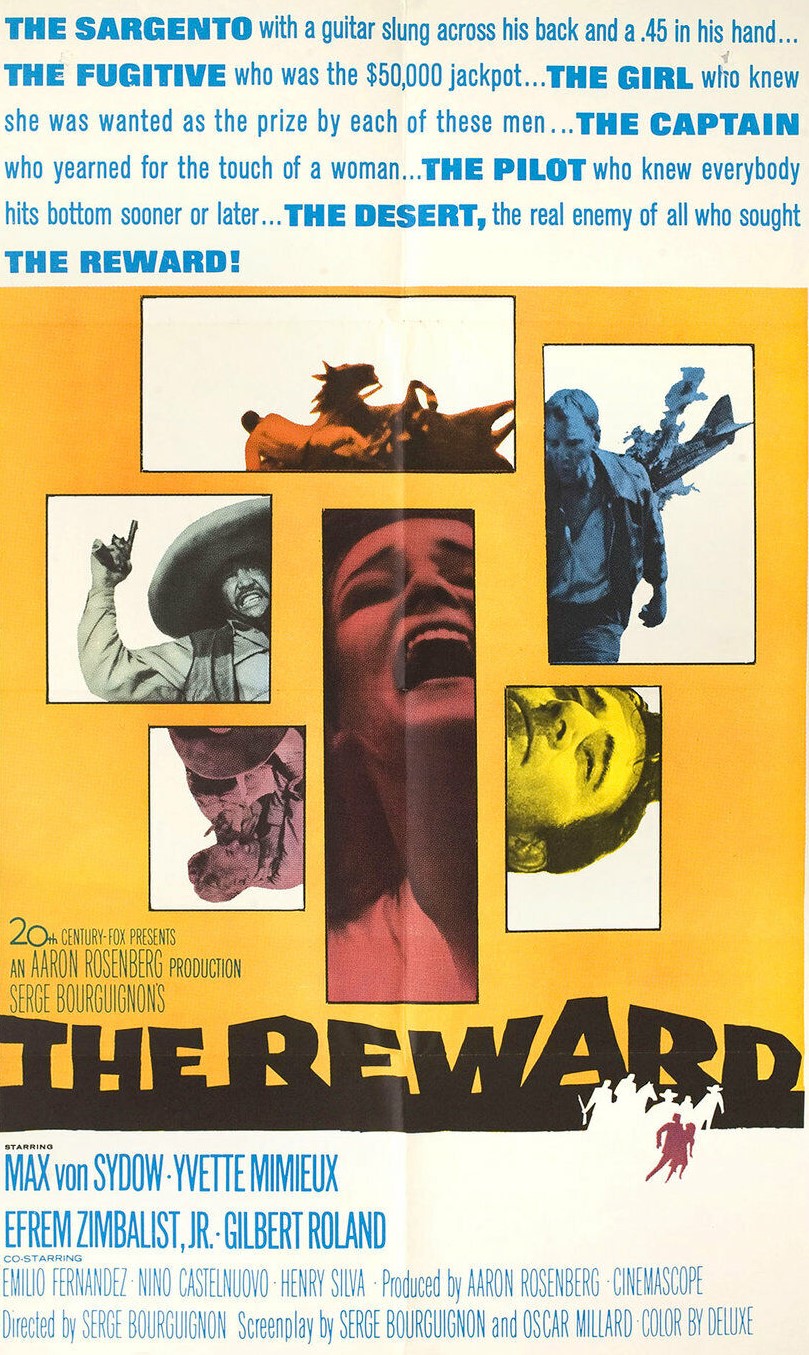
The Reward (1965) ***

Max von Sydow’s Hollywood career might have gone in a different direction had this brooding modern western remake of The Treasure of the Sierra Madre (1948) taken off. Instead of a screen persona as a heavily-accented somewhat awkward foreigner, he would have been viewed as a lean adventurer in the laconic Steve McQueen mold.

There’s no actual gold here, American airline pilot Scott Swenson (Max von Sydow) and his impromptu gang chasing into the Mexican desert human prey worth $50,000. Frank Bryant (Efrem Zimbalist Jr) is wanted for kidnapping and killing his own child. His virtually monosyllabic girlfriend Sylvia (Yvette Mimieux) is viewed as a bonus, clearly rape in the mind of some of his pursuers.

In normal circumstances, Swenson would spend his time dusting crops but he is being held for inadvertently destroying a water tower that will cost $20,000 to repair. But when he spots old buddy Bryant drive into town, he turns bounty hunter, cutting local English-speaking sheriff Capt Carbajal (Gilbert Roland), an exile in this remote town, in on the deal to repay the debt. The rest of the posse, led by his guitar-playing deputy Sgt Lopez (Emilio Fernandez) are initially misled as regards reward. So,when they do find out, greed will out.

When the escapees run out of road, they take to horses, but are located pretty quickly by the posse, also on horseback. Finding them was easy compared to getting them back. In fact, the posse seems to return via a different route that takes them through an abandoned town complete with church bell that Lopez makes ring through the simple device of battering it with his head.

It’s that kind of movie, filled with odd scenes that reflect character. In one episode, at the start of the chase and in a truck, a flat tyre is caused by one dumb occupant chucking his beer bottle in front, rather than to the side, of the vehicle. Flute-playing Joaquin (Henry Silva) tames a wild horse which, when he’s not around, has a bit of a rebellious streak, apt to lead the other mounts astray.

But it’s realistic, too. There’s not enough food to go round and even that seems limited to tortilla. There’s no reason to tie up the prisoners because there’s no escape in the desert hell. But although Swenson has betrayed an old friend in order to get himself out of a hole, there’s none of the guilty dialog you might expect and Sylvia turns out to be more cynical, not intent on building romance out of a brief fling in Acapulco, and only too aware of what captivity might mean. As is pointed out, the reward will be paid out for a decapitated head as much as a complete living person.

Rather than being devastated at killing his son, Bryant wants sympathy. It was an accident. Blame the police for starting a shoot-out that ended with the child dying in the crossfire. Blame his wife for taking the child away in the first place.

Nobody comes out of this well, except Sylvia whose good deed might result in rape, but whose motives you would also question, given she is harboring a child killer, an action not excused as would be the norm by being rapturously in love with him. She is resigned to her fate rather than flirting  with the gang as a way of avoiding it.

So it’s tension all the way, Lopez working on the principle that the fewer claimants of the reward the better. But it’s not just lack of water that’s the most dangerous element in this perilous landscape, but lack of horses. Water isn’t in dramatically short supply anyway not when you can count on the occasional thunderstorm, which, unfortunately, makes Sylvia a more attractive reward when she is soaked to the skin.

The body count, as you might expect, mounts as Lopez takes control, his boss, coming down with a fever, growing weaker by the day.

But it’s not as noir as you might imagine. Mostly, it’s just characters trudging through the desert, enlivened by some flute- and guitar-playing, heading into a doom of their own making. There’s very little in the way of heated dialog and there’s a very bold decision to dispense with subtitles – only the sheriff and Swenson are bilingual, helping them devise a  conspiracy to keep the reward to themselves  – but it’s easy enough to work out what’s going on with the Spanish-speaking Mexicans and it does explain why Sylvia says so little.

If you managed to get hold of The Picasso Summer (1969) – reviewed earlier in the Blog – this is for you since it has the same director Serge Bourguignon whose style is elliptical to say the least. But cutting down on expository consequence is spot-on. We don’t need characters bewailing their fate to know the potential outcome. Circumstance makes menace implicit rather than explicit.

The actors are good enough not to be laden down with overwrought dialog. This is certainly presents a refreshing aspect of Max von Sydow (The Quiller Memorandum, 1966). Yvette Mimieux (The Picasso Summer) is mostly a bewildered fragile beauty. Emilio Fernandez (The Wild Bunch, 1969) would be at his scene-stealing best except he has to contend with Henry Silva (Secret Invasion, 1964) in one of his few heroic parts. Veteran Gilbert Roland (Cheyenne Autumn, 1964), who made his name as The Cisco Kid, is the surprise turn, authority sapped as illness takes hold.

If you want a peek at a curiosity, it might as well be this one.

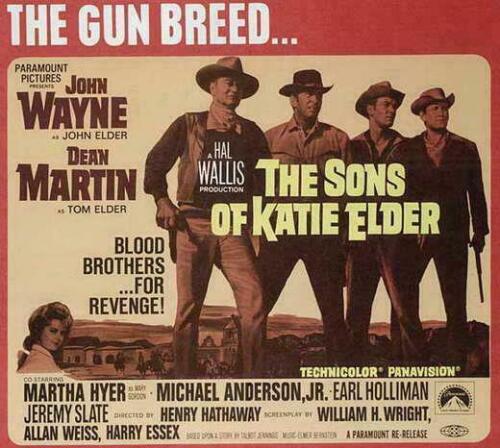
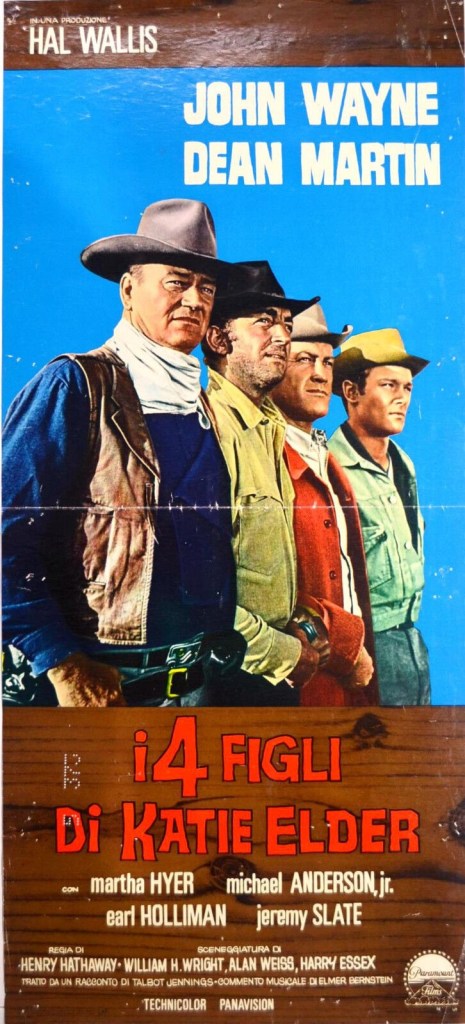
The Sons of Katie Elder (1965) ****

The rocking chair motif in this underrated film is ignored while the door opening and closing in The Searchers (1956) is hailed as one of cinema’s greatest images. Welcome to the world of director Henry Hathaway (Nevada Smith, 1966). Way down the pecking order when it comes to the makers of great westerns, below Sergio Leone (Once Upon a Time in the West, 1969) who only made four and Howard Hawks (Rio Bravo, 1959) only three.

Closer inspection, too, of The Wild Bunch (1969) might reveal cinematic ideas that turned up here first. Closer inspection of John Wayne (The Commancheros, 1961) might reveal a mighty fine, very touching, performance.

The genre was chock-full of vengeance, but here that is tempered by mystery over the death of their father, a drunken gambler, that has led to the loss of the family ranch, leaving the mother, for whose funeral the titular sons return, living hand-to-mouth, supplementing the usual sewing and mending with giving guitar lessons.

Hastings (James Gregory),  a businessman with big ideas, has taken over the ranch and pretty much the local town of Clearwater. And he’s just hired extra muscle, notorious gunslinger Curley (George Kennedy), to swell his already-growing army.

Only the youngest son, Bud (Michael Anderson Jr), a reluctant college student, is clear of the taint of wrong-doing. John Elder (John Wayne) has a reputation as a gunfighter but unlike shifty younger brother Tom (Dean Martin) doesn’t have a wanted poster following him around. The other son Matt (Earl Holliman) takes after John, some shady action but no legal consequence.

This is certainly not a great fraternal union. When they’re not engaged in low-level investigation or trying to prevent themselves being lynched, they’re bickering and fighting. The only thing that unites them, beyond love of the deceased woman, is determination to continue paying for Bud’s education.

Apart from the ranch, one of Hastings’ other lucrative investments is a firearms business, which allows him to tote around a telescopic rifle which, of course, ensures he can bump off those who get in his way from a distance, without fear of discovery. The easiest way to get rid of the brothers is to have them arrested for murder and to kill off the one man, Sheriff Wilson (Paul Fix), who might have the brains and experience to work out something fishy was going on.

John Wayne is more emotional here than in any picture since The Searchers, though, as you’ll be aware, his emotion is registered through his eyes or bits of business rather than a lengthy speech. And given double duty of looking after the youngest while holding back the more tempestuous Tom.

Dean Martin’s (Five Card Stud, 1968) charm runs thin, as is intended, no woman to gull, and no cliché alcoholism a la Rio Bravo to fall back on. It’s a part he plays completely against type, although you can sense he’s bursting out of those confines in the false eye con. He’s pretty much always brought to heel by Wayne. The one time he defies big brother ends in personal calamity. Imagine a marquee name as big as Dean Martin taking on a role where the part sets him up to be walking in the Duke’s shadow, despite his efforts to break loose.

In fact, unusually for a western, until Butch Cassidy and the Sundance Kid (1969) came long, it’s replete with reversals. Hathaway plays with expectations from the outset, the opening sequence of big beast of a train puffing through fabulous scenery doesn’t bring John, instead, unknown to the waiting brothers, Curley disembarks. Katie Elder’s friend Mary (Martha Hayer) cuts off at the pass any idea the audience might have of incipient romance when she gives John both barrels.

Thanks to the screenplay, Michael Anderson Jr.(Major Dundee, 1965) and Earl Holliman (The Power, 1968) are given more bite than their roles might suggest and James Gregory (The Manchurian Candidate, 1962) makes his villain meaty though you suspect the presence of George Kennedy (Cool Hand Luke, 1967) is another lure, creating audience expectation that is not fulfilled. Martha Hyer (The Chase, 1966) is more conscience than glamor,  spending most of the time on the sidelines.

You’d be surprised just how lean a production this is, and equally how deftly Hathaway avoids cliches. Just because there’s a kid you don’t need to teach him how to be a man. A huge herd of horses doesn’t need to stampede. Beautiful woman in the vicinity doesn’t necessarily call for a heated love affair. Ending up in jail doesn’t necessitate a bust-out. Villainous gunslinger doesn’t set up obligatory shootout in an empty street.

Hathaway’s unusual, too, in the way he anchors his pictures in reality. Here it’s a funeral director washing the wheels of his hearse, a blacksmith applying shackles.

You’d marvel, too, at just who was involved in fashioning the terrific screenplay: veteran William H. Wright, his first in two decades, Harry Essex (Creature from the Black Lagoon, 1954) in his first in eight years, and Allan Weiss whose six other movies were all Elvis Presley vehicles. Hardly the pedigree to produce one of the best westerns of the decade. This is the kind of screenplay where no line is wasted, not when a retort can be used to define  character.

Most people remember the rousing theme by Elmer Bernstein (The Scalphunters, 1968), but actually there are also some very innovative musical passages worth listening out for.

Curiously, it was Andrew Sarris,  hardly a John Wayne fan, who recognized the movie’s attributes, though in niggardly fashion, “The spectacle of people in Hollywood trying to do something different in a western at this late date is reassuring.”

It’s about time those differences and the picture’s excellence were recognized.

Dirty Dingus Magee (1970) ***

The boldest role ever undertaken by a major star of Frank Sinatra’s generation – and little thanks he got for it. Not only was he virtually unrecognisable under a slab of make-up that George Hamilton would have envied but the role was a complete reversal of his screen persona. Admittedly, he had flipped that persona for Tony Rome (1967) and as the cuckolded cop in The Detective (1968), but this was on a completely different level.

Sinatra was no Tom Hanks or Daniel Day-Lewis, known for inhabiting different types of characters, and, while he did have a vulnerability that he put to good use in The Manchurian Candidate (1962) and The Man with the Golden Arm (1955), he was best known on screen as the guy in charge.

That was far from the case here. Dumb and dumber might be more apposite. Dingus Magee (Frank Sinatra) is a scamp, an outlaw so useless he is worth only $10 in reward money, who steals the stash of old rival Hoke Birdsill (George Kennedy), triggering a revenge caper that is complicated by a host of unnecessary complications by director Burt Kennedy (Welcome to Hard Times, 1967) who has set his heart on some kind of satirical comedy western with a revisionist slant.

So we get a female mayor, Belle (Anne Jackson), who happens to own the local brothel, whose commercial prospects are endangered when the local Cavalry are called away to fight the Native Americans, an Indian chief Crazy Blanket desperate to trade his daughter for a rifle, and when that looks like not working out calling on any available squaw to seal the deal,  predatory schoolteacher Prudence (Lois Nettleton) and a running gag involving a Brown Derby hat that results in a gunfighter (Jack Elam) being mistaken for Magee.

It’s a bit long on complications and short on satire and is rescued by the double act of Magee and Birdsill, who constantly get in each other’s way or try to pull a fast one. Birdsill, as it happens, is appointed sheriff, since that’s in the purview of the mayor, and, on the right side of the law for the first time in his life, makes an ill-fated attempt to do good.

Magee tries to help him along. In exchange for the sheriff turning a blind eye for a period of time to Magee’s nefarious activities, the reward for the outlaw will mushroom, permitting greater kudos for the sheriff on his capture.

The main problem is that Kennedy directs with a very heavy hand, very obvious musical cues for a start, and there’s not enough that’s intrinsically funny. Though there is a reversal of an obvious joke of Birdsall being sent to the brothel to locate the mayor, expecting to find a client not the owner.

But both Sinatra and George Kennedy (The Sons of Katie Elder, 1965) are a delight, the latter also playing against type rather than his usual dominating character. Their dumbness takes some beating. Sinatra just about gets the upper hand, but there’s not much in it.

The best thing about the picture is the sense of reality. The U.S. Cavalry spend more time in the brothel than out hunting Native Americans. Law and order can go to hell as long as everyone is having illicit fun. The respectable schoolmarm proves a skilled seductress. Peace is desirable because it is more profitable than war. And the bulk of the outlaws in the Wild West are far from achieving legendary status, just two-bit punks.

Not surprisingly, this was a massive flop and killed off Sinatra’s movie career for the rest of the decade – not that he was overly concerned, “My Way” having reignited his singing career and he was a Vegas regular. But it’s a shame the acting was so vilified, Roger Ebert blamed Sinatra rather than the director for its failure, in particular taking him to task for the one-take approach that Gena Rowlands previously exalted (but what does she know, she’s just an acclaimed actress and knows how a movie works better than a critic).

Well overdue for a reappraisal and if you go in duly warned you might even enjoy it, or at least the Sinatra-Kennedy double act.

The Belle Starr Story (1968) ***

Only spaghetti western directed by a woman. Brings a distinctly feminist feel to that most sexist of the subgenres. You tend to forget that the sexy female Europeans imported to Hollywood as co-stars or to add spice further down the credits were actually top-billed stars in their natïve countries and demonstrated a greater range than the American industry allowed.

Not only do we have Elsa Martinelli (Maroc 7, 1967) as the leather-clad cigar-smoking titular gunslinger, whose watchword is female independence, but it was helmed by arthouse icon Lina Wertmuller (Swept Away, 1974).  There’s a thematic consistency lacking in most Italian-made westerns, for example predating Once Upon a Time in the West (1969) in its water imagery. But any potential for lyricism is undercut by the risk attached to being a lone woman. And there’s a Tracy-Hepburn tone to the endless bickering and battle for superiority in her niggling romance with outlaw Blackie (George Eastman).

And, unusually in that decade, a woman who throws caution to the wind and will even bet her body when the money runs out at the poker table, as twisty a meet-cute as a screenwriter could devise. But thereafter it’s a struggle for dominance between the pair. She won’t take orders from a man. He won’t accept female equality even when she shoots the wooden fence  he’s sitting on from under him, making him fall to the ground, and for good measure putting a bullet in his heels.

The first act builds up Belle Starr, cool at the poker table, even cooler in the bedroom, and demonstrating the gunplay that attracted her notoriety. The second act take an odd route, a lengthy flashback that digs deep into feminism, the orphaned Belle Starr running away after being sold into marriage by her uncle to an ugly old rich powerful man, traded, effectively, for political favor.

She returns to save a servant condemned to death for the crime of attacking the uncle when he tried to rape her. Sexual humiliation is a theme. Another outlaw Harvey (Robert Woods), who she regards as a platonic friend, steals her clothes as she swims in a lake, and then, having saved her from a posse, forcibly tries to take his reward.

The third act, like the duel between The Man With No Name and The Man in Black, is a case of double- and triple-cross. She refuses to join Blackie’s gang when he plans a million-dollar jewel heist, but hijacks the concept, recruiting her own gang to beat him to the robbery, and teach him a lesson.

But it backfires. Blackie is waiting. She has inadvertently hired his men. In the subsequence shoot-out he is captured. She rides to his rescue. But with their opposing ideas of a woman’s place in the world part on good terms.

The flashback was more subtly observed in Once Upon a Time in the West, and while she shared with Charles Bronson gunslinging skills he was not at any time viewed as a commodity or a piece of property or a candidate for rape. The flashback here fleshes out for the audience the powerlessness of women. But also the kind of camaraderie that is generally also usually only conferred on male characters.

We are pretty conversant with the notion that the gun rules the West. But less conscious of what happens when you are gun-less. Depriving someone of their fundamental weaponry makes them instantly impotent, as humiliating as denying someone water in a desert.

There are some nice directorial touches, blood dripping from a ceiling onto a dinner table, a saloon door opening to cast sudden light onto a corpse, waterfalls suggest sanctuary whereas open water attracts predatory males, and the finale, as they part, of Blackie, desperate to demonstrate his superiority, shooting off her hat from some distance.

Elsa Martinelli is a revelation as a star working to her own beat rather than playing second fiddle to some Hollywood marquee name. This wasn’t Lina Wertmuller’s first film and she had already made an impact with the Rita the Mosquito series, featuring another rebellious woman. Don’t be fooled by the co-directing credit, she replaced debut director Piero Cristofani after a few days.

It’s somewhat ironic that in a contemporary Hollywood attempt to create a female outlaw leader in Cat Ballou (1965), Jane Fonda was upstaged by Lee Marvin, and that in Bonnie and Clyde (1967), despite taking precedence in the title, Faye Dunaway was not the dominant one in the relationship.

By no means a great western but worth a look to see what Elsa Martinelli can achieve when not slotted in to the Hollywood co-star cliche and to get a preview of what Lina Wertmuller could offer.  

Decent print on YouTube.

The Comancheros (1961) ****

You can always tell a studio is piling a lot behind a rising actor when the top-billed star is absent, except for a fleeting moment during the credits, for the first 10 minutes. In this case, Twentieth Century Fox was showcasing two new talents, Stuart Whitman (Murder, Inc. 1960) and Ina Balin (From the Terrace, 1960).

I’m sticking my neck out a little on this one, not considered as top-notch as Duke’s other great westerns of the decade – The Man Who Shot Liberty Valance (1962), El Dorado (1967) and True Grit (1969) – but it’s an unusual story, hardly following a standard narrative, has a great score by Elmer Bernstein but most importantly because it’s real old-school film-making with the emphasis on the classic long shot and the horizon line.

And it takes a surprisingly feminist approach with gypsy Pilar (Ina Balin) making the running in the seduction stakes. Indeed, should she be willing to surrender an iota of her hard-won independence for a long-term relationship sticks to the view that in love there is always a dominant one and a subservient one, with no question about which she is. Plus, although the nickname “Pilgrim” became a famed element of The Man Who Shot Liberty Valance this is where the nickname notion began when lawman Jake (John Wayne) assigns prisoner Paul Regret (Stuart Whitman) the appellation “Monsoor” because he’s of French heritage.

Meshes effortlessly three storylines – Jake taking prisoner Regret back to base, Regret turning from western tenderfoot to accomplished hand, and Jake and his captive infiltrating the Comancheros of the title, a secret society of white men who utilize Comanche power to its own ends. You could argue this is ushered in the “buddy” movie, the repartee between the two principals a delight. Plus, you would have to take note that legendary director Michael Curtiz (Casablanca, 1942), in his final picture, has done something remarkable in getting the Duke to speak proper, not hi-hat English, but without that Wayne trick of breaking up his sentences so it appears he’s thinking.

Curtiz is pretty nifty when it comes to setting up scenes, interrupting gentle moments with elements of stunning ferocity. When Jake arrives at a ranch, the camera tracks back from his arrival to reveal the corpses hanging upside down under the ranch gateway. Later, Jake is tucking into a meal at the home of another rancher when that man’s pregnant wife in the background suddenly sits up and from her point-of-view we see through a window as big as the entire screen a band of renegades in attack mode charging through a river.

Regret isn’t one to hang around either when he can escape during the ensuing melee, but no sooner has he gone than he returns with a bunch of Texas Rangers, thus redeeming himself in Jake’s eyes. And there’s a great cut between Jake being knocked unconscious in the blazing sun and waking up in the pouring rain.

And it’s chock-full of reversal, not just that Pilar dumps her pick-up Regret when their riverboat docks at Galveston, but Regret, forced to ride a mule in handcuffs to prevent his escape, gets the jump on his captor at the saddest scene in the picture, the burial of a family killed by Comanches. Later, after taking on the alias McBain, he encounters Regret at a poker table and the wanted man does not give him away.

After a bit of legal chicanery, Regret is a free man, although with the proviso he teams up with Jake to go undercover into the Comancheros camp. This doesn’t work out too well, the pair strung up by suspicious crippled leader Graile (Nehemiah Persoff) until rescued by, surprise, Pilar. Love works its mysterious way and soon Pilar is on Regret’s side, resulting in a classy finale.

Along the way we encounter Lee Marvin (Raintree County, 1957) having another scene-stealing ball as the Comancheros contact.  Clever screenwriters James Edward Grant (Circus World/The Magnificent Showman, 1964) and Clair Huffaker (Hellfighters, 1968) find an entirely believable method of getting him out of the way. And in passing we learn that Jake’s wife died “two years, two months and 13 days” ago and without an ounce of revealing dialog between them that Jake would like to take up with widow Melinda (Joan O’Brien). Meanwhile, initially presented as a man of such honor that he will fight a duel to protect such notions of nobility, Regret goes from gambler, wanton lover, and prisoner to revert to his original state.  

Expect chunks of western lore – don’t give a hot horse water until it has cooled down is one takeaway. And men who swear by an unwritten code. Here, it’s “words are what men live by.” What’s so refreshing is that lore and code alike arequickly punctured. The follow-up to the code annoncement to which Regret shows indiference is a pronouncement from Jake: “You must’ve had a real careless upbringing. ” that’s not forgetting characters remembering to be characters in the midst of all the uproar as with the bedridden pregnant wife instructing her husband to make sure Jake eats off the “best china.”

It’s not only a well-structured movie but it’s filled with moments that reveal character and even when Curtiz feels duty bound to include standard tropes such as the bar-room brawl or the drunk there are enough twists to have you believe the clichés have been bitten in half.

A superb ending to Curtiz’s career, terrific performances all round, great double act from Wayne and Whitman, with the latter afforded considerably more leeway acting-wise than any time in his career, and Ina Balin in a prize role.

Cheyenne Autumn (1964) ***

Lack of narrative energy and focus sabotages well-meaning atonement epic. John Ford’s final western, made half a decade before Dee Brown’s seminal Bury My Heart at Wounded Knee was published, is not the epitaph he might have envisioned. For a start, it’s just not rigorous enough. You might accept there’s no mention of the word “genocide” since until Vietnam the United States was hardly capable of mea culpa.    

But that we learn very little about the Native Americans trekking 1500 miles from their Oklahoma reservation to their Wyoming homeland beyond that it’s an exhausting trek. Although the Native Americans are treated in a positive manner, and the U.S. Cavalry and Government are seen as inefficient and corrupt, little has been invested in the Native American characters.

The crux of their story is that the two brothers – Dull Knife (Gilbert Roland) and Little Wolf (Ricardo Montalban) leading the journey – eventually go their separate ways, and that a younger headstrong Native American steals one of the brother’s wives. Instead, more attention is paid to a young do-gooding Quaker teacher Deborah Wright (Carroll Baker) who opts to join them on their quest in order to look after the children attending her classes.

Caustic Captain Archer (Richard Widmark), either in person or through voice-over, is the most notable character, fighting his superiors to allow the wanderers unrestricted passage and eventually winning over Secretary of the Interior Carl Schurz (Edward G. Robinson) to ease the last stages of their journey.

The plot diverges from the Exodus-style mission for a totally irrelevant sequence set in Dodge City featuring a gambling Wyatt Earp (James Stewart) and Doc Holliday (Arthur Kennedy) and a spurious bunch of townspeople getting over-excited at the prospect of being attacked. More to the point, when Little Wolf splits from Dull Knife and heads for the sanctuary of Fort Robinson in Nebraska they are imprisoned by authoritative Captain Wessels (Karl Malden), gunning for promotion and in an echo of German apology for the Holocaust “only obeying orders,” with savage consequence.

The couple of action sequences show the fighting skills and tactical ability of the Native Americans but this is undermined by also showing them as sly and cunning, hiding weaponry under campfires and in baby’s clothing.

You might also be asking just how big is Monument Valley for it seems to be the location for about half the picture.  Sure, it’s a terrific backdrop and possibly never been better utilized but it’s an example of the creative lethargy not to follow in more authentic manner the actual route of the Cheyenne. Adding to that disgruntlement you might also note the omission of any Native Americans in the leading roles, those parts being taken by Mexicans or dark-skinned Americans.

While John Ford clearly had his heart in the right place, his fans weren’t ready for this kind of revisionist approach – the movie, a 70mm roadshow, was a big flop at the box office – and the result just doesn’t do the subject justice. And in fact a corrective correlative to How the West Was Won (1962) perhaps entitled How the West Was Stolen has yet to be made.

For a long time Bury my Heart at Wounded Knee was considered the landmark historical work depicting the ruthless conquering of the Native Americans but the more recent The Earth Is Weeping by Peter Cozzens, which I read a couple of months back, offers a more authoritative look at the sorry saga, but, without, I hasten to add, a mention of the scary word “genocide.”

I wouldn’t normally be in favor of editing the work of a director as legendary as John Ford but the omission of the Dodge City sequence would have considerably shortened the movie and retained the focus and perhaps improved the picture.

As it stands, a valiant effort. None of the stars is provided with sufficient narrative to make their acting stand out and it feels like they have all stumbled into a documentary.

Two Rode Together (1961) *****

Never quite considered top drawer John Ford, yet it should rank alongside Stagecoach (1939), The Searchers (1956) and The Man Who Shot Liberty Valance (1962). I’ve been talking recently about a movie completed in a single take (Grenfell, 2023) and the power of a single scene (The Manchurian Candidate, 1962), and now I’m touching upon another piece of cinematic dexterity – the fixed-camera seqeunce.

This is a beauty and it lasts four minutes. Yep, for a four-minute medium-shot scene featuring the  two major characters the camera doesn’t move. Lawman Guthrie McCabe (James Stewart) and Cavalry officer Jim Gary (Richard Widmark) take a break from the 40-mile journey back to the fort. You think this is where Gary is going to spring upon McCabe exactly why his presence is so necessary for Army business. But instead, the scene, driven by Gary, is set up to discover why McCabe is so agreeable to taking a temporary leave of absence from an exceptionally comfortable lifestyle back in his small town.

Sure, this scene boasts a bit of business, the waving about of cigars and some pointing and McCabe’s head bobbing around, but otherwise the camera just observes. First of all we discover that McCabe earns $20 a month more than the soldier – that is, when the officer is paid at all, three months since he saw any money – and that McCabe is on the mean side and sarcastic with it. McCabe starts puffing on a long cigar and has to be nudged to offer Gary one. “You can afford matches,” he notes when Gary produces a packet.

McCabe has temporarily upped sticks it transpires because he’s getting unwelcome heat from his hotel owning lover Belle (Annelle Hayes),  on the sticky subject of marriage. The subject was brought up with a woman’s “animal cunning” when Belle asked why he was content with just taking 10 per cent of her income when, through entering into a partnership via marriage, he could receive 50 per cent. Gary is taken aback that his old pal is getting a slice off the top. And then somewhat shocked to learn that McCabe takes the same percentage from every business in town. McCabe is surprised to learn this comes as news to Gary. How else could the marshal support his lifestyle.

This mild interrogation is interrupted by a nugget about Belle. She has a stiletto strapped to her leg. That’s not news to Gary. McCabe is perturbed. How did he know. You just told me is the speedy retort. That takes a moment to sink in before McCabe’s suspicions are aroused and then allayed.

In other hands, this scene could have lasted a minute. Some speedy dialog would have got to the point faster. But that’s not the point. You can’t attempt this length of fixed camera scene unless you have two wonderful actors. It might appear indulgent but the director wants us to be sucked in by the affable McCabe.

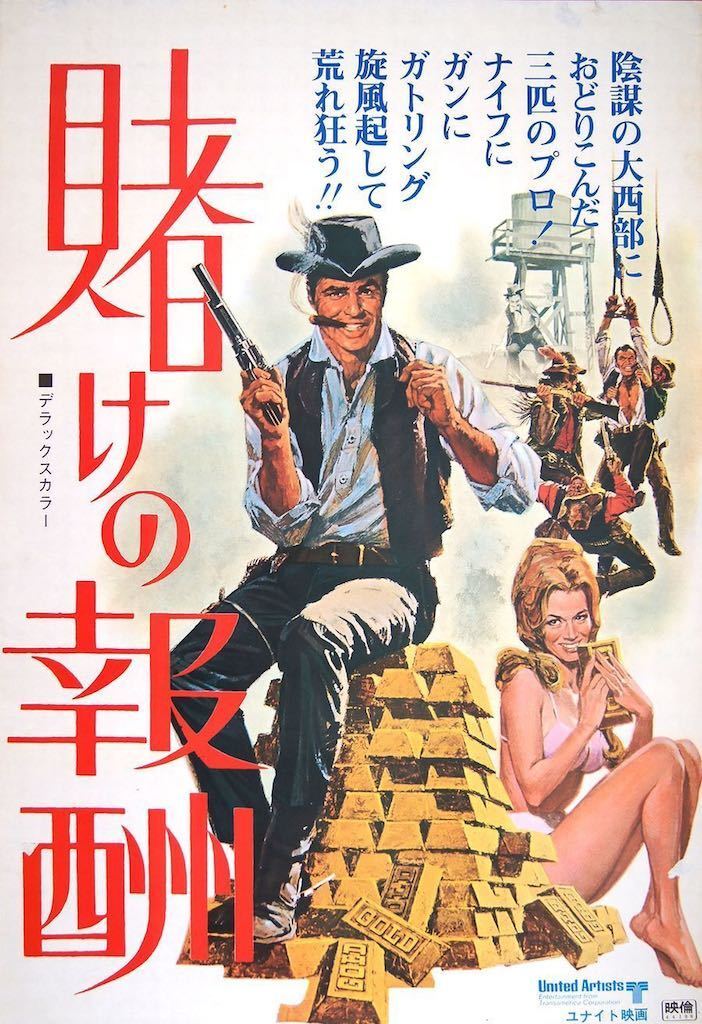
Not sure where they got the image of the women in red being hanged – must be from another movie.

Because until now it has been all economy. The movie opens with a well-heeled fella dozing on a hotel veranda being woken up by a waiter bringing him beer and a cigar, candle at the ready to light the tobacco. The stage arrives. Two cowboys approach asking where they can get a decent drink. The man pulls back his jacket to reveal his badge. The mention of his name, Guthrie McCabe, is enough to make the pair reconsider staying.

A cavalry troop arrives with Gary at the head. Gary’s uniform is covered in dust, so thick you can hardly beat it off, so thick that unless accompanied by McCabe he would have been forbidden entry to the hotel by the owner. There’s snippy dialog here but it’s all delivered by Belle as she provides a series of sharp observations about men. Uninvited, she joins the pair as they sit down, Gary somewhat vague about his mission. Outside, we encounter McCabe’s dumb deputy, escorting a bunch of prisoners back to the jail because the judge was too drunk to appear in the courtroom – it’s that kind of town. McCabe, seeking re-election shortly for his position, sets them free and buys them a drink. Then we’re off on the 40-mile trip.

Still, we don’t know why McCabe’s presence at the fort is so important. John Ford doesn’t usually fall back on mystery as a narrative device unless it’s some personal secret hidden by a character. So McCabe is astonished to be hailed as a conquering hero, cheered by the people inhabiting an encampment outside the fort. One woman even says she can see his halo. What the…

Inside, it transpires Gary is merely doing his superior’s dirty work. And it’s cynical stuff at that. Major Frazer (John McIntyre) wants rid of the rabble who are giving him grief over their sons and daughters long ago kidnapped by the Commanche. Due to the current treaty, the Cavalry can’t just wade in and collect the kids, grown-up by now some of them. So he needs someone who is on nodding terms with the tribal chief (Henry Brandon) and negotiate their release.

McCabe’s first thought is how much he would be paid, given a cavalry officer’s salary would hardly keep him in cigars, reckoning it would be worth $500 a skull. “Whatever the market can bear,” insists McCabe. Both officers are appalled and even more so when McCabe reckons he’ll screw the money out of the distraught families. And that’s what he does. Affable has suddenly turned callous. The camera in this next scene focuses on Gary’s face, until he can take no more of his old buddy’s blatant greed.

Sucker punch number two. McCabe is as mercenary as the later Man With No Name. but he’s not the only one displaying cynicism. To appease his second wife Henry J. Ringle (Willis Bouchey) will cough up $1,000 if McCabe can bring back any child, not the actual one lost, because the kid was so young when kidnapped that his wife won’t know the difference and he has to get her off his back because it’s interfering with his business.

But there’s more sucker punches to come. McCabe won’t accept Gary’s leadership and won’t even agree to work out their approach together. But when it comes to action, it’s soon pretty clear that McCabe is the tougher character, can anticipate the enemy reaction. And he’s right to be cynical because when Elena (Linda Cristal) is returned to the fold, she is despised, all the fort wives want to know is how many Native American braves she slept with, and why she didn’t commit suicide instead.

There’s a sting in the tale for McCabe when he returns home and finds Belle has taken decisive action in his absence.

McCabe is a superb creation, none of that risking your life for nothing in his game plan, possibly the most realistic character in the Ford oeuvre, who doesn’t care a whit what people think about him, as long as he is paid what he feels is his due. Sure, he puts his life on the line, but you can be guaranteed that’s not much of a gamble, he is so accomplished with the gun and can outwit any foe. As corrupt as he is, he’s a lot more straightforward than the apparently high-principled wives and officers who treat Elena so abominably.

There’s a good bit more to this picture than I’ve described. I’ll pass over the usual punch-up to which Ford appears addicted. Gary’s romance with civilian Marty (Shirley Jones) is well done, she carrying the burden of surviving Indian attack when her younger brother was taken, and she is an accomplished pioneer, in another superb scene Gary congratulates her on pitching her tent out of the wind, far enough for the creek to escape mosquitoes and near a dead tree to get firewood.

And there’s another brilliant scene, revolving around a music box, that could have been a cliché but in another sucker punch takes a different, quite awful, direction.

This is so beautifully written and directed I’m just astonished it wasn’t met with acclaim at the time or since. The typical western has ever been so undercut nor typical action met with such dire consequence, the soft underbelly of life at the fort never so cruelly exposed.

You might think James Stewart was taking a chance in assuming the mantle of the man who killed Liberty Valance in order to advance his political career when in reality he did no such thing. But this character is light years away from that simple theft. His character in that Ford picture was exactly the high-principled guy you had come to expect from Stewart, even if, at the last instant, succumbing to a lie.

In the hands of another director McCabe would have been played by a sleazy Lee Marvin or another actor who could not rise above his bad-guy persona. This must be James Stewart’s finest hour, making an unattractive character appealing, so much so you almost appreciate his point of view in relation to the corruption and his antipathy to matrimony, and taking pains to conceal not the goodness underneath but his understanding of the harsher realities of Western life, at which he is more than adept at dealing.

Richard Widmark (The Secret Ways, 1961) also discards his normal screen persona, his job to act as observer to the Stewart character, to lead audience disapproval, and to be hoodwinked as much as McCabe by the cynical Major while enjoying none of the reward. He is gentler than usual, more resigned to his job, expecting little. Good supporting cast including Oscar-winner Shirley Jones (Bedtime Story, 1964), Linda Cristel (The Alamo, 1960) and especially, in her only movie, Annelle Hayes, as an extremely savvy character who gets the better of her slippery lover.

Brilliant film. And if like me you come to the four-minute scene you might just rewind once or twice to enjoy what Ford, Widmark and Stewart achieve. I was so taken with the entire film, which I’d never seen before, that I watched it again the next night.  

Discover WordPress

A daily selection of the best content published on WordPress, collected for you by humans who love to read.

The Atavist Magazine

by Brian Hannan

WordPress.com News

The latest news on WordPress.com and the WordPress community.