Quarter of a Million Views…and Counting

When I started out in 2020 and could barely notch up 100 views a month it seemed like I would never make any significant impact in movie blog world. But now with views in the region of 11,000 a month, I have amassed a grand total of 250,000 views.

Seems an unlikely reward for doing something that gives me so much pleasure. I love watching movies – two, sometimes, three contemporary ones on my weekly Monday outing to the cineplex and then one a day for the rest of the week.  However, the bigger reward is being able to mine a decade that is scarcely touched by contemporary academics. I’m sure critical reappraisal, like everything, goes in cycles. I recall massive interest in the films of Humphrey Bogart or Bette Davis. At various times horror or sci fi and noir have been the order of the day.

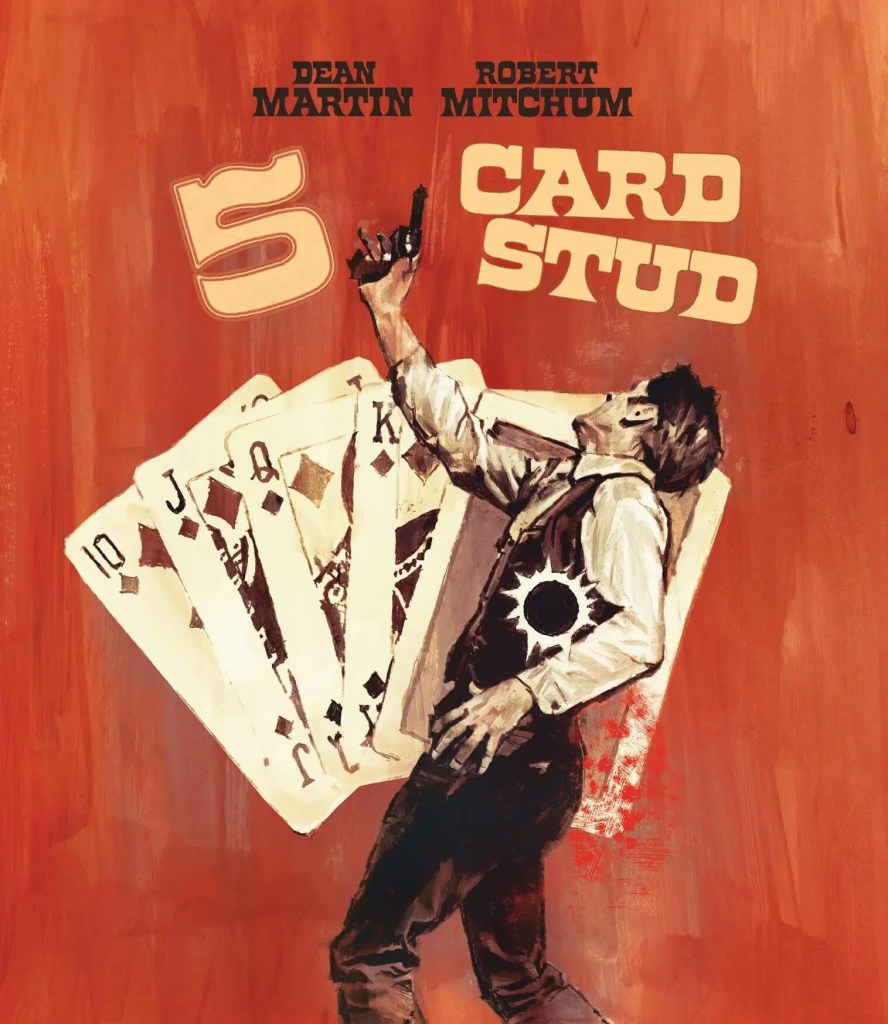
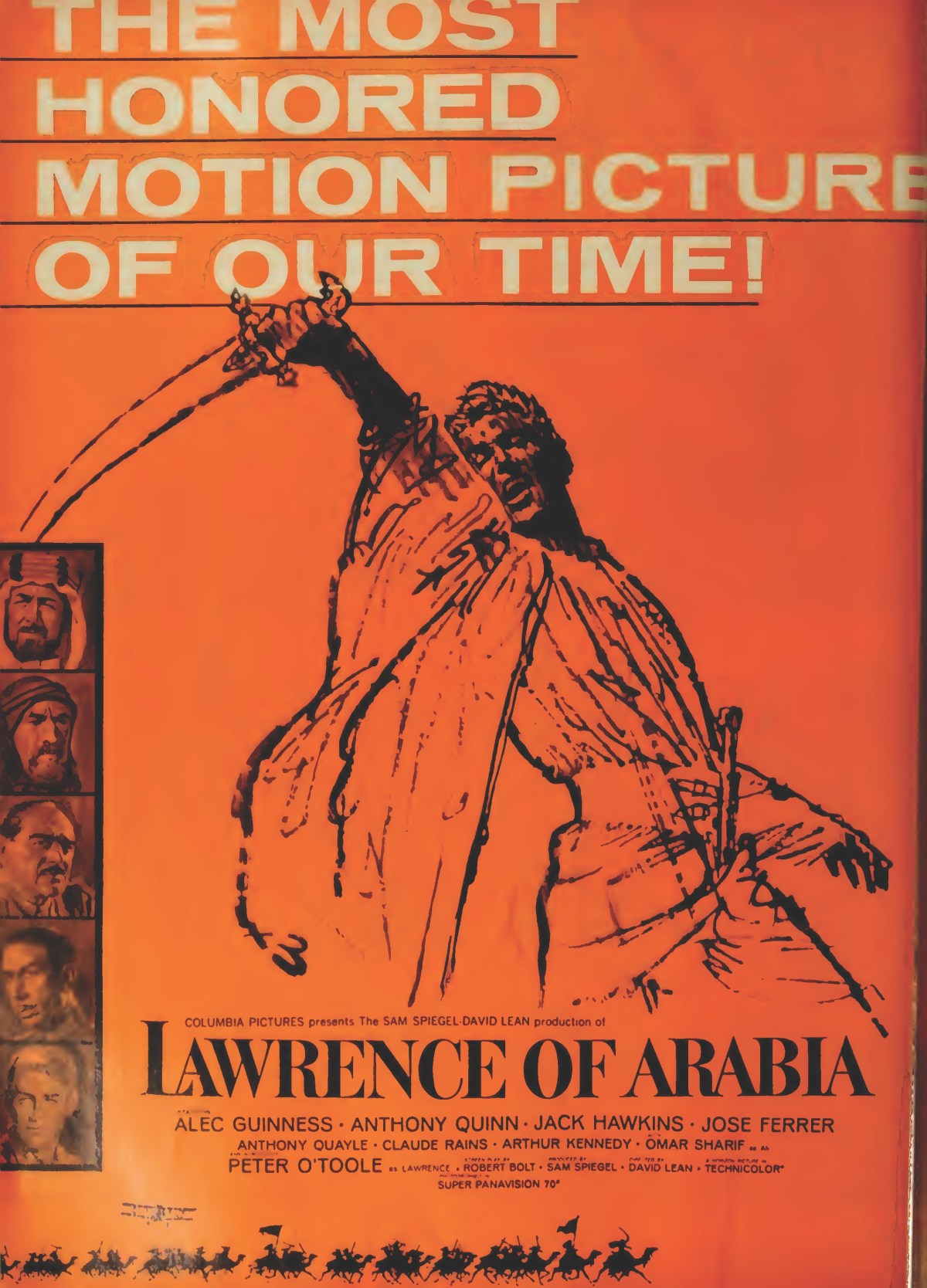
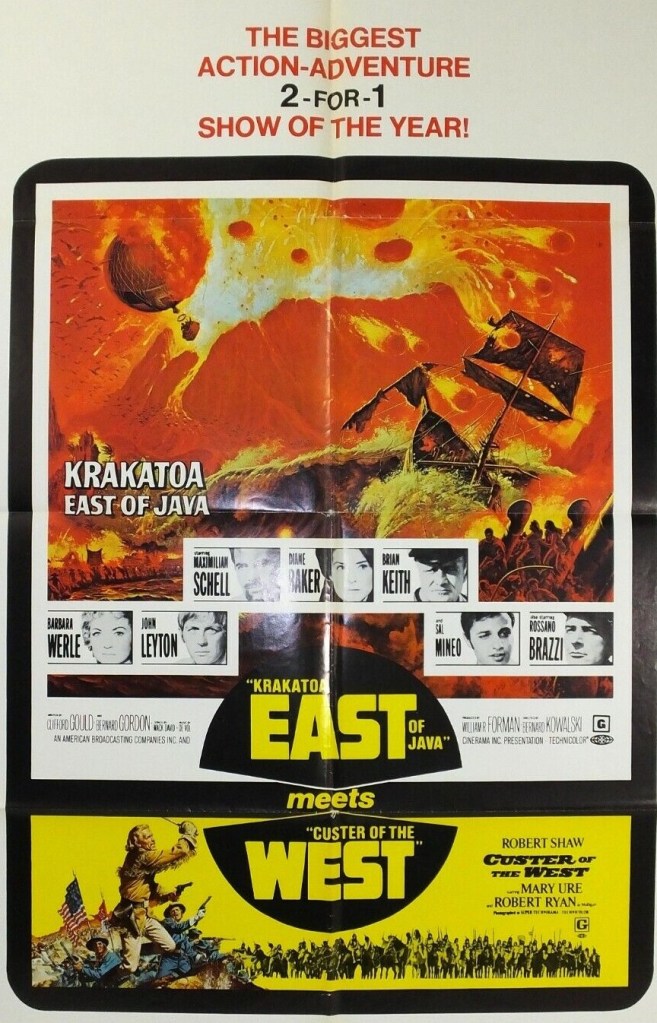
Although I grew up in the 1960s, I didn’t do much cinemagoing. I lived in the one town in the whole of Britain that – thanks to the planners of a new town – lacked a cinema. Excursions were limited to a family outing at Xmas – a roadshow trip to see The Sound of Music (1965) or Oliver! (1968) – and the summer holidays, which might mean the sumptuous Jason and the Argonauts (1963) or, more likely, less memorable Disney fare. One summer me and my brother were despatched into Glasgow for a matinee showing of El Dorado (1967) – I’m not sure my mother was so aware of Howard Hawks, but still. I also saw Lawrence of Arabia (1962) on reissue and when I could choose to spend my pocket money any way I liked I walked a couple of miles to the La Scala in Clydebank and plonked down my cash for a matinee performance of Custer of the West (1967), Krakatoa, East of Java (1968) and Carry On Again Doctor (1969).

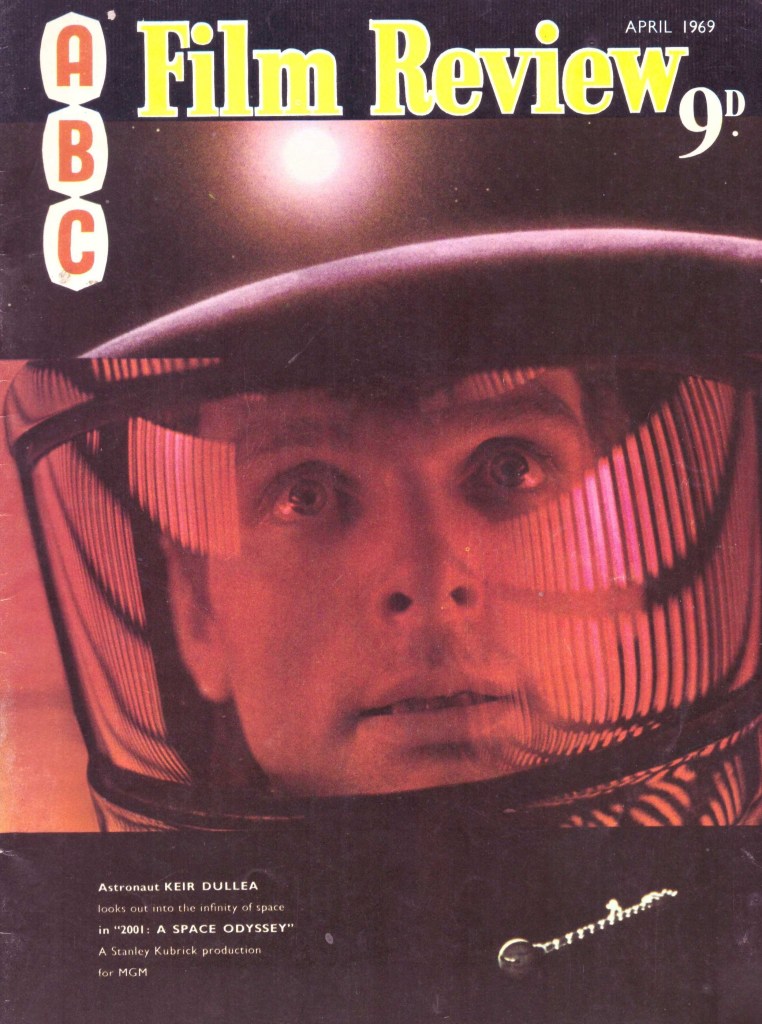
I also sauntered once a week down to the main road to check out the giant hoarding that showed what was showing at the La Scala. Unusually, I was kept well informed of what was on at the main first- and second-run houses in Glasgow because I attended secondary school in the city center and, if I took a later train home, could potter along the two main intersecting streets and check out the stills outside eight cinemas and I learned if you pressed your glass to the window of the front door you could spot a poster advertising what was coming next. By that time I had started buying Photoplay and ABC Film Review.

But my real education started at university. I could rearrange my own schedule to suit and nip off to the cinema at any point and with the beginnings of the multiplex found there were even more movies on offer. I was astonished to discover the university offered a film course as part of a drama course so that was a movie a week, plus I joined the university film society and for a time reviewed movies for the university newspaper so that automatically extended by viewing pleasure to include both the esoteric and the common. I would also scour the city for older films putting in a rare appearance. I saw Spartacus (1961) – on a five-hour double bill – in the vast chasm of the Parade in Dennistoun, visited the Vogue in Riddrie, the Lyceum in Govan, the Odeon at Anniesland, the Mayfair in Battlefield, the Kelburne in Paisley and many others.

Thereafter, I had created a lifelong pleasure. When I moved to London, one of the joys of my Saturday afternoon was nipping into the West End and not just trawling past all the first run houses but also pottering along Wardour St and peering into the windows of all the major studio head offices and discovering forthcoming films that had hadn’t even been mentioned in the fan magazines or even the more esteemed Films and Filming.

I discovered, too, that I didn’t have to wait months, as in Glasgow, for a new film to turn up even at the first run houses, but could see pictures virtually the moment they appeared. Thus, I was one of the first in the queue for Star Wars, Close Encounters of the Third Kind, Alien, Midnight Express and if I didn’t care to fork out West End prices I had two triples close to my home.

Excepting my Monday outings, I don’t have to go anywhere. I just dig into my massive selection of DVDs, prop my feet up every evening and watch an old movie. I’ve no idea, really, why I decided on the 1960s as my chosen era. Perhaps it was because my cinematic education was formed in the 1970s and due to city planners and disinterested parents I had missed out entirely on the 1960s – I didn’t see my first James Bond until the 1970s.

My viewing doesn’t follow, thank goodness, any discernible critical or academic bent. I just pop into the machine whatever takes my fancy. But I’ve realized that students of movies usually stick to a tried-and-tested route, usually decided by previous academics who ignored the vast catalog of movies in favor of a select few and while claiming to study a “period” actually ignore the era because they don’t have a clue what audiences of the decade actually watched and would be shocked that their eclectic tastes were not reflected by the ordinary moviegoer.

Anyway, it’s thanks to you, my viewers, that I owe the honor of celebrating reaching the 250,000-view landmark. So three cheers to you for following me on my journey.

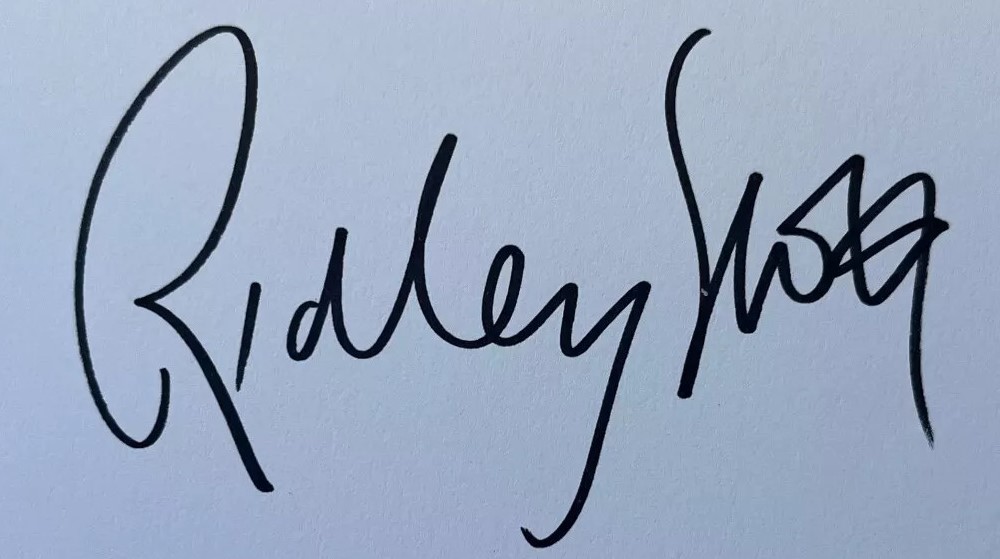
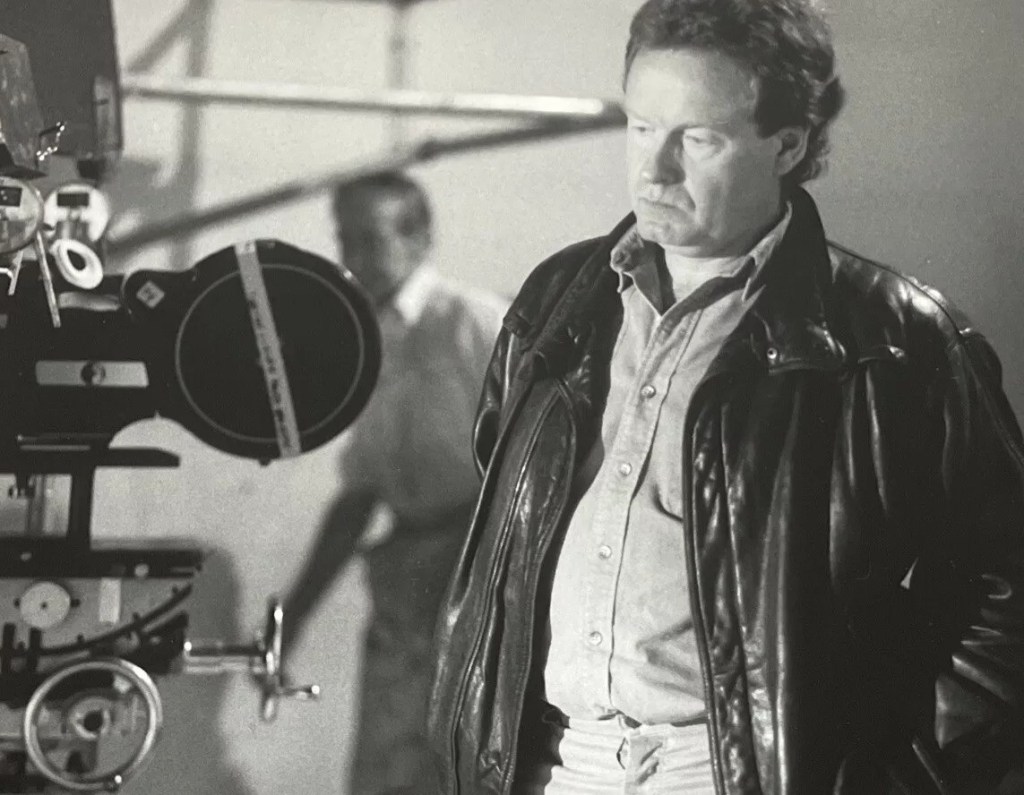
Behind the Scenes: Best-Ever Ridley Scott Interview

Interviews are always over-hyped. These days, with thousands of media mouths to feed, interviews are surface-friendly, a big splash to hook the reader and then very little content. Stars and directors do not grant, as they did in the past to the likes of Rolling Stone or Vanity Fair, in-depth interviews where the journalist has been granted several days holed up with the subject.

More likely, a reporter is stitching something together after being in a room with a hundred other media skunks being told the same rehashed story.

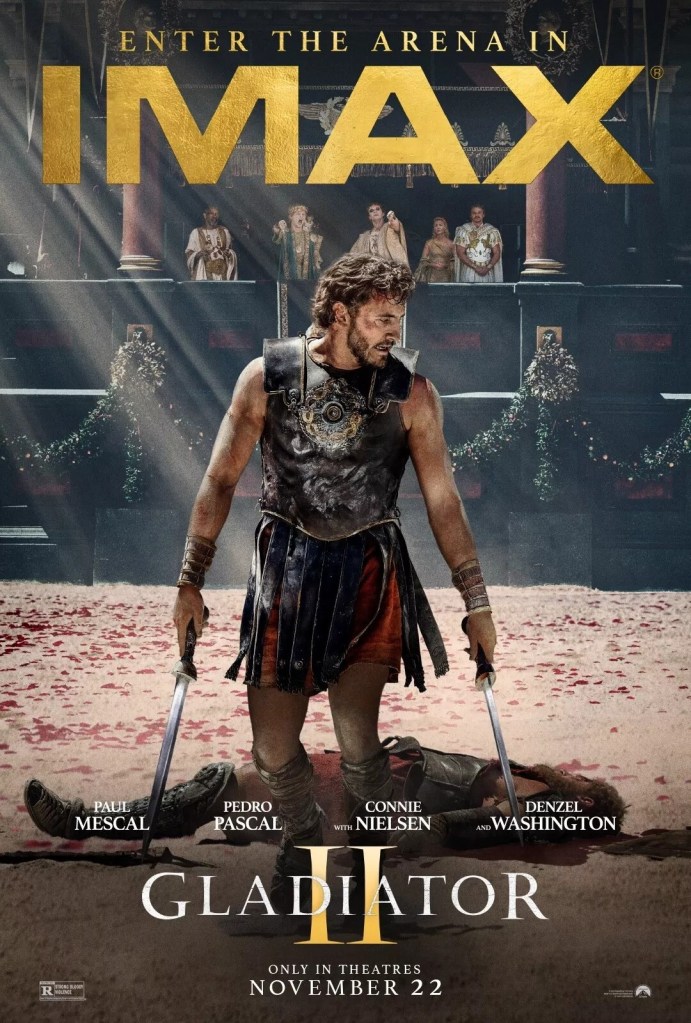
So it came as an enormous surprise to find an interview as refreshing as this. In part it succeeds because the interviewer isn’t a journalist at all, but an actor, Paul Mescal, star of Scott’s latest opus, Gladiator II, and in part because it reads like a conversation between mates, one where the dialog follows no set path as it would had a journalist been in charge and dives into the director’s artistic development in great detail. Part of the joy of the feature is that Mescal ignored four pages of “suggested questions” set by The Guardian newspaper’s features team in favor of going his own way. So what we get is Scott responding to Mescal’s urgent curiosity rather than to an old hack asking the same old questions.

Scott explains his obsession with cinema from an early age resulted in him getting a free pass to his local Odeon by agreeing to paint huge posters for their forthcoming features. At night he watched television endlessly – “image, image, image,” he recalls.

He had little intention of pursuing a cinematic career when studying at art college in 1962 but came across a 16mm Bolex cine camera and decided to make a short film, Boy and Bicycle (1965), funded to the tune of £65 by the college, and helped along by brother Tony, mother doing the voiceover, which he later edited at the BBC, sneaking in at night when everyone had gone home. He didn’t learn to edit – he just did it. At the BBC where he originally worked as a set designer he was considered “the oik from up north” compared to the Oxbridge set in power. Paid £75 a week, he was delighted to be offered commercials which paid £100 a time. So he quit the BBC and set up his own advertising business, making 100 commercials a year. “I learned that the best and fastest solution – because I paint with pictures – was to be a camera operator….I could do anything with a camera.” And did that job on Alien, Thelma and Louise and others.

On Blade Runner, he was “inventing the wheel…a new language but I wasn’t a kid. I was 44 and already had my second Rolls Royce.”

The most important lesson he learned was casting. “I try to form a partnership with the actor. And so I’m listening to you  as much as you’re listening to me. That is essential. A casting director can be as valuable as a good cameraman…I didn’t come to that (casting) with any formal training….You just cast the actor. Once they’ve said yes, they’re gonna work it out in the kitchen by themselves…On the set I say, “show me.” We’ll rehearse it on camera, and I go “wow” or “where did that come from” or “no.” I’ve already seen all the colours in their paintbox. I watched eight hours of Normal People (before I cast you i.e Mescal). Within that you cover a lot of emotional layer and ground.”

He considers shooting Boy and Bicycle as the defining moment of his career. He recalls being in the trunk of his father’s car – father driving it – with the Bolex and “my brother’s to the side on a bicycle. We drive underneath the bridge.” When he edited it he though it was “good.” He chased John Barry to get permission to use a piece of his music. The composer’s going rate was £1500, but after six weeks of persuasion gave in.

Next on the agenda. Possibly a sequel to Gladiator II and various other projects. But Scott has a hankering to do a musical and/or a western, set around 1829, “pre-trains with cattle catchers and pre-batwing saloon doors. Where the force of nature is the biggest enemy you’ve got.”

I reckon I’ve sampled enough of this much lengthier interview.

You can find the full, much more extensive interview here:

https://www.theguardian.com/film/2024/nov/15/paul-mescal-ridley-scott-gladiator-ii-interview

You can catch Boy and Bicycle on YouTube

Poor Cow (1967) ****

Fifty years on, the title has an ironic ring as the main character may well be viewed as more feminist than victim, taking her men as and when she wants them, and not especially ground down by rejection and setbacks. Should be a favorite of Martin Scorsese for its reliance on interior monologue. However, that now comes across as unnecessary indulgence. Her abilities as a survivor are apparent without such declamation.

Indulgent, too, is the casual sweep over her surroundings in almost documentary style to make up for the lack of any driving narrative. As a slice-of-life kitchen-sink drama minus any of the acceptable angry young men of earlier in the decade, it’s superior to the male-dominated species in that at least they can rail against injustice from the perspective of one who, thanks to their gender, has a fair chance of rising above it, whereas here Joy (Carol White) is not so much a victim of circumstance as an ace manipulator.

If she’s occasionally dealt a bad hand it’s through her own bad choices. She likes the company of men – and, let’s face it, regular sex – too much to consider consequence. She’s as likely to take up with a thug like husband Tom (John Bindon) as the more caring Dave (Terence Stamp) as a baker or any other geezer she meets in a pub who gives her a “funny feeling” in her stomach.

Being a single mother doesn’t seem to prevent her taking up with a variety of men and it’s only when her child goes missing – though quickly found – that she faces up to her responsibilities. While she flirts with easier ways of making money – modelling for leering male amateur photographers – and readily accepts gifts from her admirers, which could as easily be fresh-baked bread as tiny amounts of cash, but wouldn’t stoop to prostitution as a way of easing her path.

It’s a male dominant world peopled by the kind of men who would slap you around the face for refusing to change the channel on the  television (in the days before remote control, obviously, and fights over who holds the remote control) and take pleasure in exerting such power in small humiliating ways. You can stand up to a fellow as much as you like until he whacks you one, and then you realise how little defense you have against such brutality.

Luckily, Tom gets put away after a robbery goes wrong and she can pass the time more peacefully with Dave (Terence Stamp) who has a more romantic and gentle nature, although he, too, a thief, gets jailed.  She’s unable to remain faithful to either of them while they’re inside, but it’s the more vulnerable Dave who requires assurance that she’s not playing around while he’s locked up. By now, of course, she’s a deft liar and able to put his mind at ease.

Tom doesn’t expect her to remain true, he has a harder view of life, doesn’t expect anything from anybody, not even his best pals, and should he find himself in an extreme situation, wouldn’t expect anyone to come to this aid.

So the narrative, such as it is, revolves around her going from one bloke to the other, taking her pleasures where she can, manipulating any susceptible male, without for a moment losing audience sympathy. Though for a time she occupies a nice house in a middle-class estate, most of the time she lives in less salubrious apartments, often next door to buildings that are being demolished.

Whether director Ken Loach has tossed bit parts to all and sundry or has simply shot footage in pubs and cafes documentary-style is unclear but it’s quite a different kind of Britain he presents, not the happy Cockney nor making a point about an underclass, but simply presenting a world that rarely merits screen time.

Given Loach’s later political stances, this is surprisingly free of a left-wing perspective, beyond the notion, recounted by a crook, that everyone is a crook.

What gives it its power are the naturalistic performances of Carol White (Daddy’s Gone-A-Hunting, 1969) and, especially given his tendency to over-stylized performances, Terence Stamp (Modesty Blaise, 1966). Some sequences are more marked because, in contributing nothing whatsoever to the drama, they stand out as the kind of talking about nothing dialog with which Tarantino made his name. I’d also point out the titles of the various chapters would appeal to a contemporary audience since they turn the whole chapter-title notion on its head.

Joy stands out as a genuine character full of contradiction and possibly as the most freewheeling female character of the entire decade, and one who’s not remotely troubled by guilt.

Distinctive debut by Ken Loach (Kes, 1969) who co-wrote the screenplay with Nell Dunn from her novel of the same name. Soundtrack by Donovan.

Immensely appealing character.

Once a Thief (1965) ****

Film noir gem with terrific cast filmed in black-and-white and often at night that crams into a taut storyline different slants of the themes of the con-going-straight, the vendetta and the double-cross. While Hollywood at this point had imported platoons of foreign beauties in the Sophia Loren-Elke Sommer vein, there had been less interest in the male of the species with the exception of a small British contingent and possibly Omar Sharif, on whom the jury was still out. 

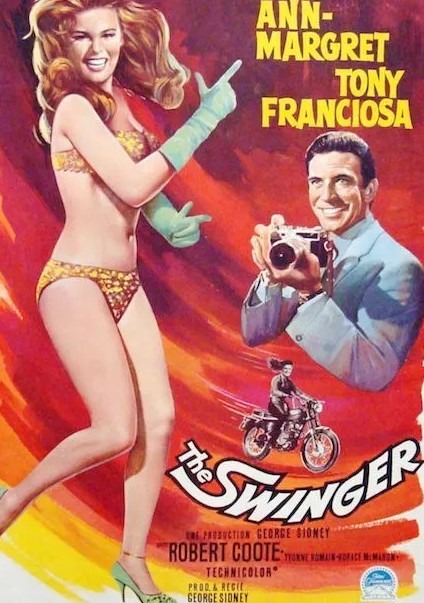
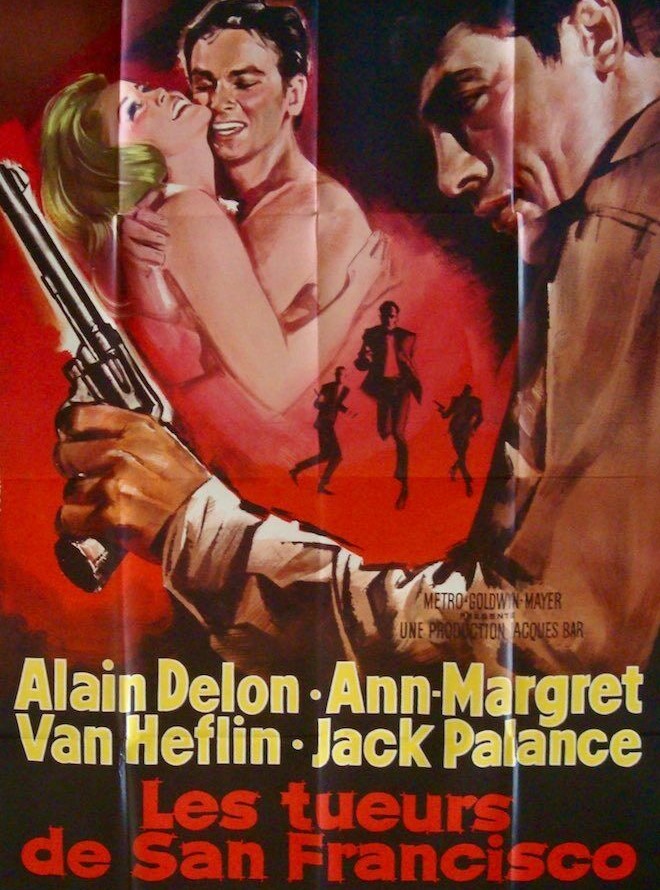
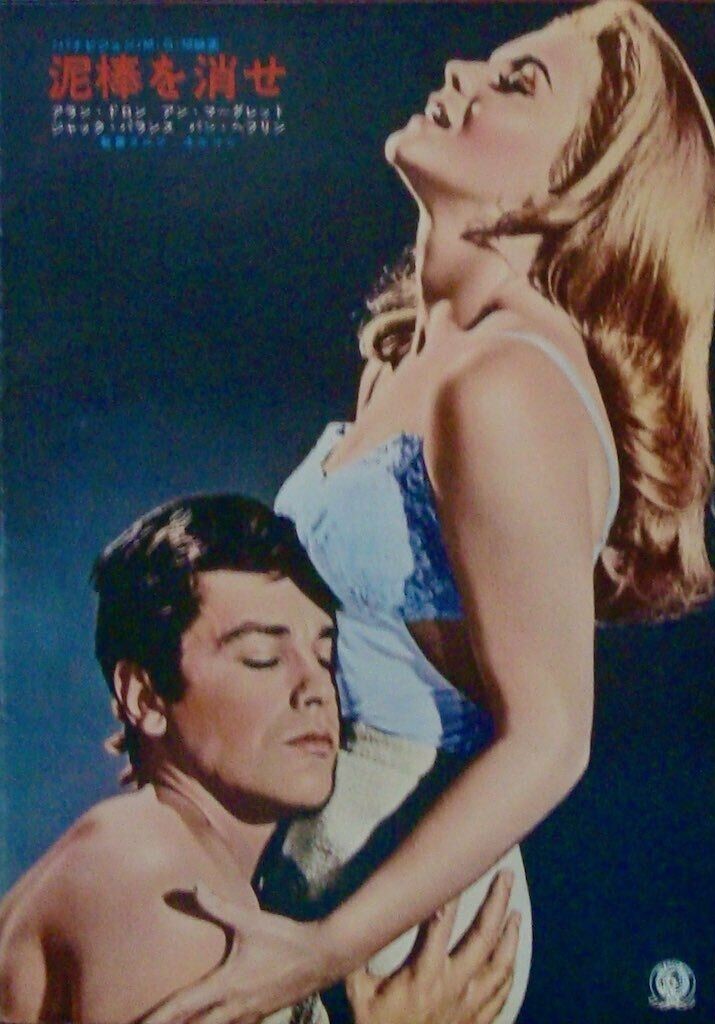
MGM was gambling on Frenchman Alain Delon (Farewell Friend / Adieu L’Ami, 1968) to alter industry perspective at the same time as pushing new contract star Ann-Margret (The Swinger, 1966)  along more dramatic lines away from the glossy puffery that had made her name and which relied more upon her physical assets than acting potential. Had she continued in this vein, her career would certainly have taken a different turn. 

Eddie Pedak (Alain Delon), former minor hood turned San Francisco truck driver, is happily married to Kristine (Ann-Margret) with a young daughter they both adore. But tough cop Mike Vido (Van Heflin), with a reputation for brutality, is determined to pin a murder on him in revenge for purportedly being shot by him early in Eddie’s previous career. Eddie manages for a time to resist the overtures of brother Walter (Jack Palance) to participate in a million-dollar diamond heist. But when he loses his job, that changes.

While the robbery naturally takes center stage, that’s not actually the dramatic highlight. Instead, it is the Eddie-Kristine relationship. Instead of Eddie being the usual down-on-his-luck ex-con, he has clearly turned his life around, so much so he can afford a $500 down payment on a small boat. A loving father, he accepts without rancor when his daughter interrupts a night-time lovemaking session. And he’s stylish, too, wearing an iconic sheepskin jacket and driving a snazzy 1931 Ford Model A roadster. Kristine just wants a normal home life, desiring domesticity above all else, but swallowing her pride when she needs to go out to work in a night club to make ends meet, for a time rendering the unemployed Eddie a house husband.

But Eddie is not all he initially seems. His tough streak has not been smothered by the good life. In a brilliant Catch-22 situation he gets violent when an employment benefits clerk refuses to accept that Eddie was fired from his job, instead believing his employer’s claim that he resigned – the former triggering relief payment, the latter zilch. But that’s nothing to the beating he administers to Kristine when, pride injured that he is not the breadwinner, he discovers the skimpy costume she wears for her job.

Adding to the unusual mix are Vido and Walter, the former’s brooding presence somewhat undercut by the fact that in middle age he still lives with his mother, the latter while a big-time gangster letting nothing get in the way of strong fraternal feeling for Eddie.

You won’t be surprised to learn double cross is in the air, not when Walter employs a creepy sunglass-wearing henchman Sargantanas (John Davis Chandler) who appears to have more than a passing interest in little girls. The climax, which contains both emotional and dramatic twist, involves redemption and sacrifice.

Delon has played the cold-eyed ruthless but romantic character before, but here adds depth from his paternal commitment and as a man turned inside out by the system.

Ann-Margret is the revelation, truly believable as mother first, sexy wife second, and her anguish in the later parts of the picture showcase a different level of acting skill to anything she previously essayed. This role immediately preceded her man-eater in The Cincinnati Kid (1965) which attracted far more attention and considerably bigger box office and it would been interesting to see how her career might have panned out had Once a Thief been the critical and commercial triumph. She probably did not attain such acting heights again until Carnal Knowledge (1971). And I did wonder, as with Daliah Lavi (The Demon, 1963) before her, whether her acting skills were too often overshadowed in the Hollywood mindset by her physical attributes. 

Van Heflin (Cry of Battle, 1963) is excellent as the cop tormented by the idea that a villain is walking free, Jack Palance (The Professionals, 1966) is good as always and character actor Jeff Corey (The Cincinnati Kid) puts in an appearance as Vido’s whip-cracking boss and this marks the debut of Tony Musante (The Bird with the Crystal Plumage, 1970). Watch for a cameo by screenwriter Zekial Marko (Any Number Can Win, 1963) , who wrote the original book.

This represented another change of pace for director Ralph Nelson, Oscar-nominated for the Lilies of the Field (1963) and also known for box office comedy hit Father Goose (1964). His use of an experimental, more light-sensitive, camera eliminated the bulky lighting commensurate with filming at night, bringing freshness and greater freedom to those scenes. His natural gift for drama ensured that the emotional was given as much prominence as the action. Racial awareness was demonstrated by the opening scene in a jazz club where African Americans were clearly welcome, hardly the norm at that time.

Mention again of a terrific score by Lalo Schifrin, especially the bold drum solo that played out over the credit sequence.

Top-notch.

Pressure Point (1962) ****

Central to this under-rated tale of psychopathy and racism is one extraordinary scene, possibly the most exceptional bar-room sequence ever filmed. In the annals of imaginative repulsion, it ranks alongside the rape committed by Alex and his “droogs” in Stanley Kubrick’s A Clockwork Orange (1971). It begins with mere intimidation as an unnamed young man (Bobby Darin) begins to etch into a bar-counter the lines and symbols of Tic-Tac-Toe (aka Knots & Crosses or Noughts and Crosses). Discovering tins of paint, the man and his gang proceed to cover the entire bar – floor, walls, ceiling, even tables – with the same symbols.

The humiliation is ratcheted up a notch when, after forcing the tavern owner (Howard Caine)  to lie on the floor behind the counter, the bar hostess (Mary Munday), rigid with fear, is tormented. Using lipstick rifled from her handbag, the young man decorates her face in the same fashion before pulling down the back of her dress and doing the same there. Fortunately, the scene – although unlikely the reality – ends at this point.

Other potent scenes show how the man arrived at his crazed state, smothered with affection by a weak mother (Anne Barton) who has taken to bed by choice in order to escape his drunken, raucous father (James Anderson) who taunts his ineffective wife by flaunting to her face his casual pick-ups and making love to them in the same room. Indicative of the lonely child’s disturbed personality is that when he invents an imaginary playmate, it is to have someone to subjugate, making his fictional friend lick his boots.

Imprisoned during the Second World War for sedition, the man, suffering from blackouts and nightmares – in which he imagines himself clinging to the edge of a giant plughole before being swept away by a torrent of water from the taps – becomes a patient of a young, also unnamed, doctor (Sidney Poitier) whom he subjects to racial abuse.  The doctor, physically bigger and more imposing than the patient, would like to simply give him a good thumping, but his profession necessitates that he treats this objectionable person as just another patient. And eventually they come to enough of a concord that the patient accepts treatment although the doctor suspects that his core personality has not changed.

The movie is layered with themes other than psychopathy and psychiatry. While the racist element is to the fore, including the doctor’s need to prove himself in a white man’s world, director Hubert Cornfield also explores the growth of right-wing extremism among the disaffected who see no contradiction in still espousing traditional American values, for example giving the Nazi salute while singing in all sincerity the national anthem. The African American doctor has to come to terms with lack of objectiveness when dealing with such an abhorrent person.

The movie flits between scenes between the two protagonists staged in a stagey manner and  expressionistic almost dreamlike sequences representing the patient’s upbringing such as being menaced by his butcher father among the swinging carcasses of the store. The patient flashbacks are shown without dialog, explanation given in voice-over – far more potent use of this device than in Nothing but the Best (1964) – by either the patient or the doctor.

Reliance on visual dexterity, however, detracts from the tension and director Hubert Cornfield (The 3rd Voice, 1960) is also hampered by an unnecessary framing device which results in the story being told in flashback – and a conflation of flashbacks: of Poitier’s problems as a young doctor dealing with a difficult patent and the patient’s own life story. So the pressure indicated by the title is often undercut and does not build as much as you might expect. Critical reaction in those days pivoted on the racism elements, but a contemporary audience is almost certainly going to be more influenced by sequences involving the patient, so the picture automatically becomes more involved and Cornfield’s visual mastery more appreciated.

You can detect the influence of producer Stanley Kramer. In his capacity as director he had explored psychiatric therapy and antisemitism in Home of the Brave (1949) and racism in The Defiant Ones (1958) also with Poitier. As producer he was responsible not only for selection of the original material, based on a short story The Fifty-Minute Hour by Robert M. Lindner, but also imposing the present-day framing device, which Kramer wrote, on the picture. Those scenes relate to another psychiatrist (Peter Falk) coming to a much older and experienced Poitier for advice after hitting a brick wall with a similarly repugnant patient, Poitier telling the story of his treatment of the Bobby Darin patient as a way of showing that even the worst patients are treatable.

This is quite a different Sidney Poitier than you might be used to. Wearing suit and tie, and spectacles, this is a more restrained, measured performance. Poitier’s taboo-busting Oscar nomination for The Defiant Ones had not progressed his career that much, still restricted to starring roles in low-budget pictures. But Kramer broke another taboo in Poitier’s favor with this one, casting him a role not initially written as an African American.

Bobby Darin (Come September, 1961) had parlayed his status as hit recording artist into a burgeoning movie career but does not quite display the menace necessary for a fully-fledged psycho. Peter Falk (Machine Gun McCain, 1969) has a small one-tone role. The jazz-nuanced music by Ernest Gold (Exodus, 1961) is worth a listen. And if someone can tell me who designed the striking credit sequence, I would be very pleased.

Incidentally, the title of Lindner’s short story is ironic. Patients pay for one hour of a psychiatrist’s time but in reality only receive 50 minutes in order for the professional to achieve a swift turnaround and keep his/her appointment timetable scheduled to the hour.

Tic-Tac-Toe, in case you are unfamiliar with this two-person childhood game, consists of drawing lines to create nine squares and filling those with either a zero or a cross. The object of the exercise is to create a complete line of either symbols.

Still very powerful.

Behind the Scenes: Charlton Heston – The Roads Not Taken

Charlton Heston started the 1960s if not as the biggest star in the world then at least the star of the biggest film in the world, Ben-Hur, released in the last month of the previous year, and ushering in the roadshow era. One of eleven Oscar winners for the picture, Heston’s career was at all-time high. While he wouldn’t ever enter the Steve McQueen/Robert Redford universe of being offered every conceivable script, he was still a huge marquee draw. And it’s interesting to see not so much just what he chose but what he rejected and why.

Often an automatic choice for epics in the vein of El Cid (1961), 55 Days at Peking (1963), The Agony and the Ecstasy (1965) and Khartoum (1966), he was versatile enough to play in westerns like Major Dundee (1965) and Will Penny (1967), ground-breaking sci fi Planet of the Apes (1968), war Counterpoint (1967), drama Number One (1969) and even leave room for some comedy The Pigeon That Took Rome (1962). When you were as big as Heston, you had choice and could vary your projects.

In 1960 while dithering over a poor screenplay for El Cid, Heston turned down By Love Possessed (1961) made by John Sturges, and From the Terrace (1960) which Mark Robson filmed with Paul Newman. Heston’s judgement was that both scripts were inferior to even what was currently being put before him for El Cid. While the Sturges flopped, the Robson did well.

The next year Samuel Bronston, producer of El Cid – and later 55 Days at Peking – attempted to tie Heston down to a picture about William the Conqueror and The Fall of the Roman Empire (1964). Nicholas Ray, who would direct Heston in 55 Days at Peking, wanted him for a picture about the Children’s Crusade. Twentieth Century Fox offered him a three-picture deal, beginning with western The Comancheros (1961). Heston “was leery” and rejected the project – and the overall deal – when the directors Fox initially suggested were too “routine” for Heston’s taste. Presumably, neither was legendary Warner director Michael Curtiz who made the picture with John Wayne.

Heston felt “a slight pang of guilt” turning down the opportunity to work with Laurence Olivier on an adaptation of Graham Greene’s The Power and the Glory because while it would receive cinematic distribution abroad it would be shown on television in the U.S. That went ahead with Olivier and Frank Conroy in the Heston role but with very limited overseas distribution.

He was very keen on Otto Preminger’s Advise and Consent (1962). It appealed “without reading the script.” However, he was offered the part of Brig Anderson, which he disliked. “I’m not put off by the homosexual angle,” he confided to his Journal, “but the part isn’t very interesting.” He pushed for Senator Cooley but Preminger was already chasing Spencer Tracy for that role and, when he passed, happy with second choice Charles Laughton.

Heston dithered over Easter Dinner because he didn’t want to work in Rome. Director Melville Shavelson suggested filming in Paris with Charles Boyer or Maurice Chevalier as co-stars. An alternative title was Americans Go Home. It became The Pigeon That Took Rome (1962) but a chunk was filmed on the Paramount lot.

Perhaps the most interesting prospect was a remake of Beau Geste (1939) with Dean Martin and Tony Curtis. Also on the table was The View from the Fortieth Floor from the bestseller by Theodore H. White.

In 1962 he became enamoured of a project he had previously rejected. The Lovers by Leslie Stevens (who would later create The Outer Limits television series) was a Broadway play starring Joanne Woodward in 1956. Heston now envisaged it as an ideal movie vehicle. He would spend the next few years trying to put it together; it became The War Lord (1965). He turned down a Renaissance film from Arthur Penn (The Chase, 1966), The Royal Hunt of the Sun (1970) and a similar Orson Welles project on Cortez (never made).

In 1963 he received three scripts in one day. A pair were presented as a two-picture deal from Twentieth Century Fox. While Heston was keen on The Agony and the Ecstasy (1965) he was less impressed by Fate Is the Hunter (1964). The other script, from the Mirisch Bros, was The Satan Bug (1965) from the Alistair MacLean thriller, which went ahead with name director John Sturges but no-name star George Maharis. He rejected Lady L (1965) opposite Sophia Loren and Morituri (1965), wryly commenting that Brando “should have passed too.”  He was very tempted by a “very funny” script for The Great Race (1965) but “taking it would mean pushing back War Lord again.” Tony Curtis stepped in.

Twentieth Century Fox was pushing in 1964 for him to become involved in a film about General Custer. He declined. “It doesn’t seem like a good idea to me.” He also turned down Hawaii (1966) “with a few regrets, it has too much plot and not enough people.”

In 1965, another Alistair MacLean project came his way with Ice Station Zebra (1968). “Good script but I don’t like the part.” He was also offered a “curious comedy” Twinkle, Twinkle, Killer Kane by unknown William Peter Blatty, later author of The Exorcist (1973). This was filmed as The Ninth Configuration (1990), directed by the author. He mulled over Sam Peckinpah script  Hilo (never made), an unnamed Mirisch western, The Quiller Memorandum (1966) – “modern story and a simple part” – and The Way West (1967). A second effort was made to enrol him for the  Beau Geste (1966) remake with him playing the sadistic sergeant.

Vittorio De Sica came calling in 1966 for a film with Shirley MacLaine Woman Times Seven (1967). He was “flattered to be asked” to star in Heaven’s My Destination to be directed by Garson Kanin based on the bestseller by Thornton Wilder. There was short-lived attempt in 1968 to mount Eagle at Escambray to be directed by Sandy Mackendrick. He turned down Elia Kazan’s The Arrangement (1969) – “don’t care for it…loser for a protagonist” – Colossus: The Forbin Project (1970), a science fiction picture about a giant computer, and a western by Elliott Silverstein (Cat Ballou, 1965) called The Marauders.

Beyond The Great Race and perhaps Hawaii, unlike some stars – come in Steve McQueen and  Robert Redford – he doesn’t appear to have turned down anything that subsequently became a major commercial or critical hit.

SOURCE: Charlton Heston, The Actor’s Life, Journals 1956-1976 (Penguin, 1979).

Let No Man Write My Epitaph (1960) ***

You can decamp to Europe all you like and even make a flashy bow in a hit French picture but that still won’t stop Hollywood hauling you back and treating you like a contract player. Thus it was with Jean Seberg. The toast of France and of arthouses worldwide for Breathless (1960) but relegated to ingenue here.

In truth, this had all the makings of an edgy drama given it was littered with alcoholics and drug addicts and pimps and heroin dealers. Set in the roughest part of Chicago, the shining light was Nick (James Darren), piano prodigy, weighted down not just by his surroundings but by memory of his murderer father who died in the elecric chair.

Single mom Nellie (Shelley Winters), not decent barmaid material because she refuses to allow customers to grope her, nonetheless ends up working as a B-girl and part-time sex worker to support Nick and pay for his ambition.

The motley gang promising to keep Nick out of harm’s way include alcoholic Judge Sullivan (Burl Ives), drug addict chanteuse Flora (Ella Fitzgerald), reduced to singing in deadbeat bars, ex-con George (Bernie Hamilton) and goodtime aloholic Fran (Jeanne Cooper). Unfortunately, Nick can’t keep himself out of harm’s way, responding too readily with his fists – not apparently noticing how risky that might be for his future – to the barbs and slurs meted out.

Nellie thinks she’s turned a corner when she hooks up with Louis (Ricardo Montalban). In her neck of the woods everyone’s shady so if he’s involved in the numbers or some other racket, she’s not that perturbed. But he’s spotted the stash in her bankbook, set aside to pay for her son’s tuition when he gets into music school, and gets her hooked on drugs to separate her from her dough.

Nick just thinks her erratic behavior is the kind of drunkenness he encounters every day. An old buddy of his father, Grant (Philip Ober), a lawyer, deciding to make restitution for not getting his father off the murder charge, eases the way into Nick getting an audition for music school. And this is where Jean Seberg comes in, as Grant’s daughter, whose only role is to believe in Nick. So much for swanky Paris!

Naturally, everything comes unstuck. Protecting Nick, George ends up on a charge, not saved by the judge riding to his alcoholic rescue, summoning up his previous oratorical skills to plead the case but only for so long as it takes for him to tumble to the ground in a drunken haze. When Nick discovers that Louis has got his mum hooked, he tackles the thug only to come out the worse, and end up hogtied in a garret. It’s up to the big man, i.e. the judge, to come to the rescue again. He’s the kind of man mountain that you can plug with several bullets and still he comes after you with his lethal hands to strangle the life out of you.

Made a decade later, this would have been much grittier, with tougher-minded directors happy to grind the audience in the residue filth and would probably have dumped some of the faithful retainers who come across like a Hollywood picture from the 1940s, the kind of save-the-day angels who always lingered on the edges of villainy ready to poke their heads above the parapets of degradation in the hope of snatching a glimpse of redemption.

It might have helped if singer James Darren (The Guns of Navarone, 1961) looked as if he could actually play the piano. A bit too cute in places and concentrating more on the only non-addict means too much bypassing of the generational consequences of addiction.

Oscar-winner Burl Ives (The Brass Bottle,1964) is the standout but that’s not saying much in a picture where the other actors pretty much stand by their existing screen personas. Shelley Winters (The Scalphunters, 1968) sways between tough and whiny, Ricardo Montalban (Sweet Charity, 1969) disappears behind his tough guy demeanor. You wouldn’t notice Jean Seberg.

Directed  by Philip Leacock (Tamahine, 1963) from a script by Robert Presnell Jr (The Third Day, 1963) from the bestseller by Willard Motley.

Wannabe neo-noir but not tough enough to qualify.

Behind the Scenes: “Will Penny” (1967)

Tom Gries was a jobbing television director who had written a script he wouldn’t sell except with the proviso that he also direct. Sylvester Stallone with Rocky (1976) and Matt Damon and Ben Affleck with Good Will Hunting (1997) used the same ploy to ensure they were given the starring roles.  In August 1966, the script reached Charlton Heston. “I read the first forty pages of a damn good western,” he noted in his diary, “if the rest is up to the beginning it could really be something.”

He had envisioned a director of the caliber of John Huston or William Wyler coming on board until his longtime producer Walter Selzer pointed out “the catch”. Gries was attached. Heston was on the point of declining but swiftly changed his mind. “The script’s so good, there’s really nothing else to do but give him a go at it.” The script became Will Penny, although Heston’s first reaction to the title was “that won’t do.”

This wasn’t Tom Gries’ movie debut though it was certainly a step up from the quartet of B-pictures he had directed in the previous decade – Serpent Island (1954) with Sonny Tufts, Hell’s Horizon (1955) starring John Ireland, The Girl in the Woods (1958) headlined by Forrest Tucker and Mustang! (1959) featuring Jack Buetel. But television was his beat, he’d even won an Emmy in 1964 for an episode of East Side/West Side with George C. Scott as a social worker.

Will Penny was based on his script for a 1960 episode of The Westerner called Line Camp. In preparing to write the movie, Gries spent two years researching “language, customs, fighting techniques and other aspects of the period” to provide the movie with an authentic feel. When it came to direction, he ensured the cowboys used antique weaponry rather than stock rifles and guns.

First call for funding was United Artists. The board turned it down “three to two.” Heston was “shocked” that the studio didn’t “recognize the value of this.” At that point, Heston was also putting together what became Counterpoint (1967), was in initial talks for Planet of the Apes (1968) and was also trying to get Pro/Number One (1969) off the ground.

Twentieth Century Fox was next to give Will Penny the thumbs-down. It was the same story all round Hollywood until Lew Wasserman of Universal showed an interest. But then rejected it. Finally, Selzer made a deal with Paramount, his first movie there since The Pigeon That Took Rome (1962).

Finding an actress willing to play the lead proved troublesome. Top of the agenda was Lee Remick (The Hallelujah Trail, 1965). Heston had two reservations. He considered her “too contemporary” and didn’t think “she’d be much help at the box office.” (She hadn’t had a hit since Days of Wine and Roses in 1962). She was the studio’s choice and although Heston’s contract allowed him to veto her casting, he couldn’t bring himself to do it. In the end, he didn’t have to take any action at all. After “all the fuss,” Lee Remick turned the part down. (Following The Hallelujah Trail she didn’t work again for three years.)

Next choice was Jean Simmons (Rough Night at Jericho, 1967), not as plain as the woman called for in the script, but a “helluva good actress.” Paramount chief Robert Evans was less keen. In the event Simmons was unavailable, so they turned to Eva Marie Saint (Grand Prix, 1966), “closer physically to our frontier woman.” But she rejected the script, too. They settled in the end on the less experienced Joan Hackett (The Group, 1966).

Meanwhile, Heston was trying to get into character, beginning with his clothing. “The look is the beginning, then you dig for the center.”

Filming started on February 8, 1967, on location in Bishop, California, shooting for around a month in the high altitudes. Heston was accommodated in a “not-quite-large-enough apartment.” It was slow going, Gries quite a one for the close-up especially in the action sequences. Some shots such as Heston milking a cow were edited from the final version. When the snow melted, bare patches of land were covered with detergent foam, “satisfactory enough in close angles, but we can’t cover enough for a long shot (and)…too slippery to work in for fight scenes.” A further fall of snow arrived five days later, the location covered in six inches of snow, ensuring that the previous week’s work required reshooting. But the “lovely snow” melting away every day created a deadline, calling for careful selection of which scenes to shoot on location and which to leave for the studio, consequently managing to finish location work only marginally over schedule.

To get the reaction he required from Heston and Lee Majors to drinking rotgut whisky, Gries plied them with straight gin. “If Wyler (famous for many takes) had been shooting it, we’d have been unconscious by the time he got a print,” noted Heston. This was an example of Gries’ inexperience. A good drunk scene was better played sober.

After two decades in the business, Heston had a technique that worked. “Since what you’re aiming for in a performance is the illusion of the first time, I like to start on takes as early as possible. I don’t forget lines, so I can nail down the necessary physical matches, then try to reach some truth in playing the scene.”

He was enough of an old hand, too, to ascertain when a scene wouldn’t work. “The scene (when the Quints captured the pair in the cabin) with Joan wasn’t really valid as written,” he pointed out. “To talk intimately within earshot of the Quints was unreal. We finally arrived at a concept of the scene where the Quints allow her to talk to Will so they can overhear and bait them.”

Sometimes, though, with an inexperienced director it was only failure that convinced. For the scene where Will pours sulfur down the chimney (to smoke the Quints out of the cabin), “I told Tom (Gries) we should begin with the acting scene and do the pickup shots with the sulfur later on, but he wouldn’t listen. I was right.” However, he conceded, “I saw Tom’s point. He wanted to shoot in sequence.”

On viewing the initial cut, Heston confided to his diary, “We may have something very worthwhile on our hands.”

Heston complained that Paramount, favoring movies instigated by the new management, “more or less buried the film.” But that wasn’t true. In the first place, this was made under the aegis of the new production team headed by Robert Evans. More importantly, Paramount made a determined effort to sell it as a serious picture, initial ads promoting positive critical response, leading with the Los Angeles Herald-Examiner claim that it was “quite possibly a classic.”  However, its release was flawed. It was launched in Britain first, pitched out, again despite excellent reviews (“Gries…deserves an Oscar” proclaimed the London Evening News), in general release in January 1968 after a short run the West End. It may have suffered from the choice of premiere venue. Except for this one year, the Cambridge in cambridge Circus had operated as a venue for stage shows. It had been co-opted into becoming a cinema because so many other cinemas were tied up showing roadshows.

In the US, it was sent out in “selected engagements” in March 1968 but without hitting the box office target so that by the time it reached New York Paramount had ditched the “artiest campaign of the year” and reverted to more action-oriented marketing, dispensing with a Broadway first run in favour of a showcase (wide release) outing which generated an “okay” $189,000 from 31 theaters in its first week and $144,000 from 28 in its second.

Overall tally came to $1.8 million in rentals, placing it 44th in the annual chart, far below the sixth place and $15 million in rentals accrued by Planet of the Apes (1968) which didn’t appear till later in the year. Had release dates been swapped, and Will Penny sold off the back of the success of the sci-fi epic, it might have done better. In general, it was hampered by the downbeat ending and the overacting of the villains. Although initially touted for Oscar glory, all the movie won was the annual Wrangler Award, for best western of the year handed out by the National Cowboy Hall of Fame.

Despite not making quite the anticipated impact, nonetheless it set Gries up as a movie director. His next project, for Columbia, Fugitive Pigeon, based on a Donald Westlake novel, didn’t reach the screen.

Despite tabbing Gries “gifted, mercurial, oddly unpredictable and somewhat childlike”, Heston lined him up to direct Number One/Pro (1969) and The Hawaiians (1970). In fairness, Heston conceded that “given the right material, Gries was excellent.” Gries directed two more westerns, 100 Rifles (1969) and Breakheart Pass (1975).

SOURCES: Charlton Heston, The Actor’s Life, Journals 1956-1976 (Penguin, 1980); “Heston To Star,” Box Office, October 17, 1966, pW1; Advert, Kine Weekly, January 6, 1968, p2; Advert, Variety, March 6, 1968, p20; Advert, Box Office, March 18, 1968, p8; “Big Rental Films of 1968,” Variety, January 8, 1969, p15; “Rex Reed Case Histories,” Variety, February 19, 1969, p22; “Will Penny Winner of Wrangler Award,” Box Office, April 21, 1969, pSW2.

Moment to Moment (1966) ***

Screenwriter Alec Coppel, responsible for Alfred Hitchcock’s Vertigo (1958) – until recently considered the best film ever made, supplanting Citizen Kane in the Sight & Sound poll – follows pretty much the same structural idea as in the James Stewart-Kim Novak thriller. The second half here is in many respects a repeat of the first, with a man trying to recapture previous experience in a bid to reawaken memory.

But in this case the man is French police inspector DeFargo (Gregoire Aslan) trying to trap glamorous Kay Stanton (Jean Seberg) suspected of killing young sailor and architect-wannabe Mark (Sean Garrison) with whom she has engaged in a brief affair. DeFargo is cunning in the extreme, almost stalking Stanton, turning up unexpectedly, employing all sorts of ruses, including recruiting Stanton’s unsuspecting husband Neil (Arthur Hill), an internationally renowned psychiatrist.

The picture is set on the French Riviera so it’s the height of fashion. Kay wears a series of stunning top-of-the-range clothes (designed in fact by Yves St Laurent), as does high-living  neighbor and suspected accomplice Daphne (Honor Blackman). She drives a red sports car and frequents swanky restaurants and chic bars.

A number of cleverly-wrought images in the first half – white doves that turn golden at sunset, dancing to a tune called “Moment to Moment,” the wind causing shutters to bang, a statue in a village square, some sketches, the clacking together of the hard balls used to play the French traditional games of boules, a boardgame called “Blockhead” – prove pivotal in the second half. They form clues from which the inspector has to determine meaning. 

But if ever there was a film of two halves, this is it, and they are not a great fit. The first section involves Kay, lonely due to her husband’s continual absence, embarking on an affair. That she initially resists, in order to prove she is at heart really a good woman, gets in the way of the picture, since that makes the romance more drawn-out than necessary and leaves the viewer wishing the director would get a move on. Even though the time is spent in planting all the clues necessary for the second half to work, had Kay been more keen on a piece of action, driven for example (as is the case) by her husband staying away far longer than promised, it would have speeded things up to get to the more interesting part of the story.

Part of the problem is that the affair is totally unconvincing. Mark the character is handsome enough and dashing in the way most sailors are in uniform with an artistic streak, first viewed  making sketches, but actor Sean Garrison is so wooden the romance never sparks. That leaves Seberg to do the heavy lifting and, in fairness, once she is targeted by the wily inspector she comes up to the mark.

I’m not the first to think, after watching this picture, what would Hitchcock have done? That was exactly the same conclusion reached by the New York Times critic on original release. For this picture has a great deal going for it, but not a sufficient quota of suspense, and, as I mentioned, takes too long to get to the core of the story.

Seberg’s career up to now had been somewhat disjointed, a sense of unfulfilled potential. An Otto Preminger protégé via Saint Joan (1957) and Bonjour Tristesse (1958), she was widely believed, despite the artistic coup of Jean-Luc Godard’s Breathless (1960), to have thrown her career away by decamping to France where she made no further films of particular note. Her previous Hollywood film Lilith (1964) had not commercially delivered. So this high-budget Universal number was considered something of a comeback. But the perfectly-coiffed fashion-model look seems a poor imitation of Grace Kelly (To Catch a Thief, 1955) and Tippi Hedren (The Birds, 1963). At the times, with the romance scarcely touching the lower rungs of passion, the movie falls back on haute couture.

However, the second half works exceptionally well, as Seberg is put under pressure by the wily inspector and her husband unexpectedly enters the equation. An abundance of  twists culminate with a number in the final few minutes that serve to confound audience expectation.

Second half Seberg is better than the first as she is given far more material to work with and a decent opponent in Gregoire Aslan. Honor Blackman, as a flirtatious divorcee, reinvents her  screen persona, far removed from her memorable incarnations as Catherine Gale in British television series The Avengers (1962-1964) and Pussy Galore in Goldfinger  (1964). Sean Harrison made only one more movie, and his career mainly consisted of television. Arthur Hill (Harper, 1966) is excellent as the over-enthusiastic husband, unwittingly hammering nails in his wife’s coffin and Gregoire Aslan (Lost Command, 1966) almost steals the show as Seberg’s accomplished adversary.

Veteran Mervyn LeRoy (The Devil at 4 O’Clock (1964) had a distinguished and versatile career including an Oscar nomination for Random Harvest (1942) and recipient of an Oscar in the form of the Irving G. Thalberg Award for lifetime contribution to the business. But this isn’t quite up to the mark of innovative gangster picture Little Caesar (1931), drama Little Women (1949), Biblical epic Quo Vadis (1951) or cultish The Bad Seed (1958). 

Doctor Zhivago (1965) ***** – Seen at the Cinema in 70mm – Bradford Widescreen Weekend

“Showmanship” isn’t a word likely to crop up in critical appraisals of David Lean’s magnificent Russian romance. Few people in any audience would have an idea of its meaning. But when you see Doctor Zhivago given the full roadshow treatment with overture and entr’acte and in a theater where curtains come into play and a good chunk of the audience comprises industry professionals – projectionists, exhibitors and the like – it takes on a certain significance.

Generally speaking, “showmanship” related to the efforts of the exhibitor to sell a picture to a local audience in an enterprising manner. It’s not about posters or adverts. It’s about, in this instance, tying up a fashion show with a department store or having a sleigh sitting outside the cinema on opening night or running a competition where the prize is Russian fur.

But there was another element to showmanship and that was what was under consideration for the 70mm screening at the Bradford Widescreen Festival. You’re probably unaware that studios were incredibly dictatorial when it came to the presentation aspects of roadshows. Not only were musical cues expected to be rigidly adhered to, but projectionists were supposed to open the curtains at a specific point and progressively dim the lights at other pre-set moments.

The opening of the second half of this picture was considered a highlight – if not the highlight of all roadshows – of the movie. For when the movie recommences, we are in a tunnel and stay there until the train emerges at the other side. If such a thing exists it’s a roadshow coup de theatre, a director who’s not just taken immense pains over the most infinite of details but worked out to the last second where the first half of the movie should end and, more importantly here, how the second half should begin.

So the couple of hundred in the audience were watching to see if the projectionist would cock it up. Luckily, he didn’t. I was expecting the audience to burst into applause, but they didn’t do that either.

I hadn’t seen this picture in well over a quarter of century, once the director’s reputation, outside of Lawrence of Arabia (1962), had declined in the face of a critical onslaught that declared him the wrong kind of auteur, the one who wastes his power on frivolities. As far as the auteur theory went, it wasn’t a good idea for a director to drift outside set lines.

And this was one who’d moved from movies featuring a flawed hero struck down by circumstance as with Bridge on the River Kwai (1957) and Lawrence of Arabia, to one who’s major flaw was falling in love. What’s more, in Doctor Zhivago and its critically reviled successor Ryan’s Daughter (1970) he was focusing far more on women than ever before.

Lean was the type of director who visually went all-in. You want jungle, you’ll get masses of it in Bridge on the River Kwai, acres of sand dunes in Lawrence of Arabia, ice-covered panorama in Doctor Zhivago and the pounding Atlantic Ocean in Ryan’s Daughter.

And, boy, especially in 70mm, does it work here. The whiteness of the land is as implacable as the situation our hero finds himself in.

I was surprised how cleverly constructed the film was in terms of the romance. Zhivago (Omar Sharif) and Lara (Julie Christie) are kept apart for substantial periods of screen time. Even when they do fall in love, working side by side in medical tents during the First World War, you don’t see it, or at least not that moment so beloved of the romanticists.

In fact, it would have been better if he had disdained her, given she was the mistress of  loathsome businessman Komarovsky (Rod Steiger) and attempted murderess and wife of  vicious Bolshevik leader Pasha (Tom Courtenay) to boot. In any case, he’s in love with Tonya (Geraldine Chaplin).

That Zhivago is tossed here and there by the consequences of the Russian Revolution serves the movie’s purpose of keeping him even further apart from Lara. For good measure, his half-brother, the secret policeman Yevgraf (Alec Guiness) turns up from time to time to keep the narrative on track.

Zhivago moves from rich society to a somewhat rebellious proletariat and finally settles down as a poet in an icebound wilderness. But, except for a couple of sequences, David Lean avoids the sweeping action of Lawrence of Arabia, and in fact the most notable scene, the charge of the horsemen down the streets of Moscow, is dealt with discreetly, its impact most viewed through the eyes of the watching Zhivago.

Lean took an enormous risk in imposing two virtual unknowns on MGM for the leads. Theoretically, Sharif was a star but had done nothing to bolster his marquee credentials following Lawrence of Arabia, ending up in a series of duds that did not envisage him as the Egyptian equivalent of the Latin lover. It took Lean to see the power in those brown eyes. And to put his faith in Julie Christie, who had even less in her locker (she made Darling, 1965, after this).

There is very dependable work all round, Rod Steiger (The Pawnbroker, 1964) overplaying, Alec Guinness (Lawrence of Arabia) underplaying, Tom Courtenay (A Dandy in Aspic, 1968) doing both.

But the movie belongs to the principals and to Lean and on seeing again after all these years and with the benefit of 70mm, it now sits very close to the peak of the director’s achievements. Screenplay by Robert Bolt (Lawrence of Arabia) and memorable score from Maurice Jarre (Lawrence of Arabia).

Not just sumptuous, but tough, hard-edged, and doesn’t let the audience a moment to breath.

Discover WordPress

A daily selection of the best content published on WordPress, collected for you by humans who love to read.

The Atavist Magazine

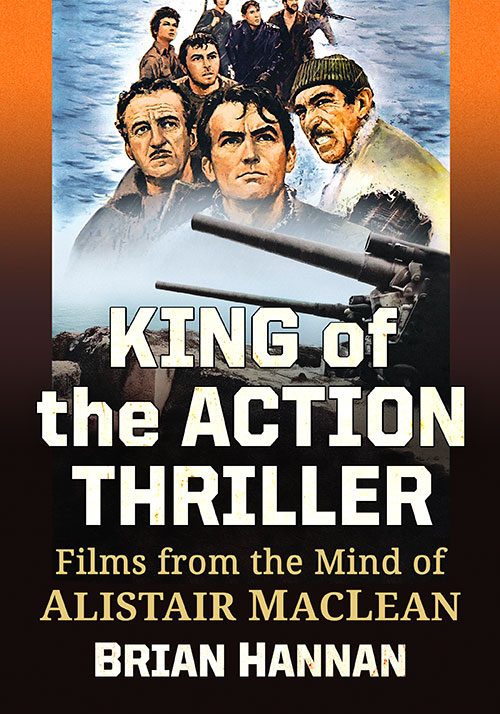
by Brian Hannan

WordPress.com News

The latest news on WordPress.com and the WordPress community.