Behind the Scenes: All-Time Top 20

You might be surprised to learn that many of the “Behind the Scenes” articles that feature in the Blog have become more popular than some of the reviews. As regular readers will know I am fascinated by problems incurred in making movies. Most of the material has come from my own digging, and sources are always quoted at the end of each article. Alistair MacLean still exerts fascination – three films in the Top Ten. Last year’s positions in brackets.

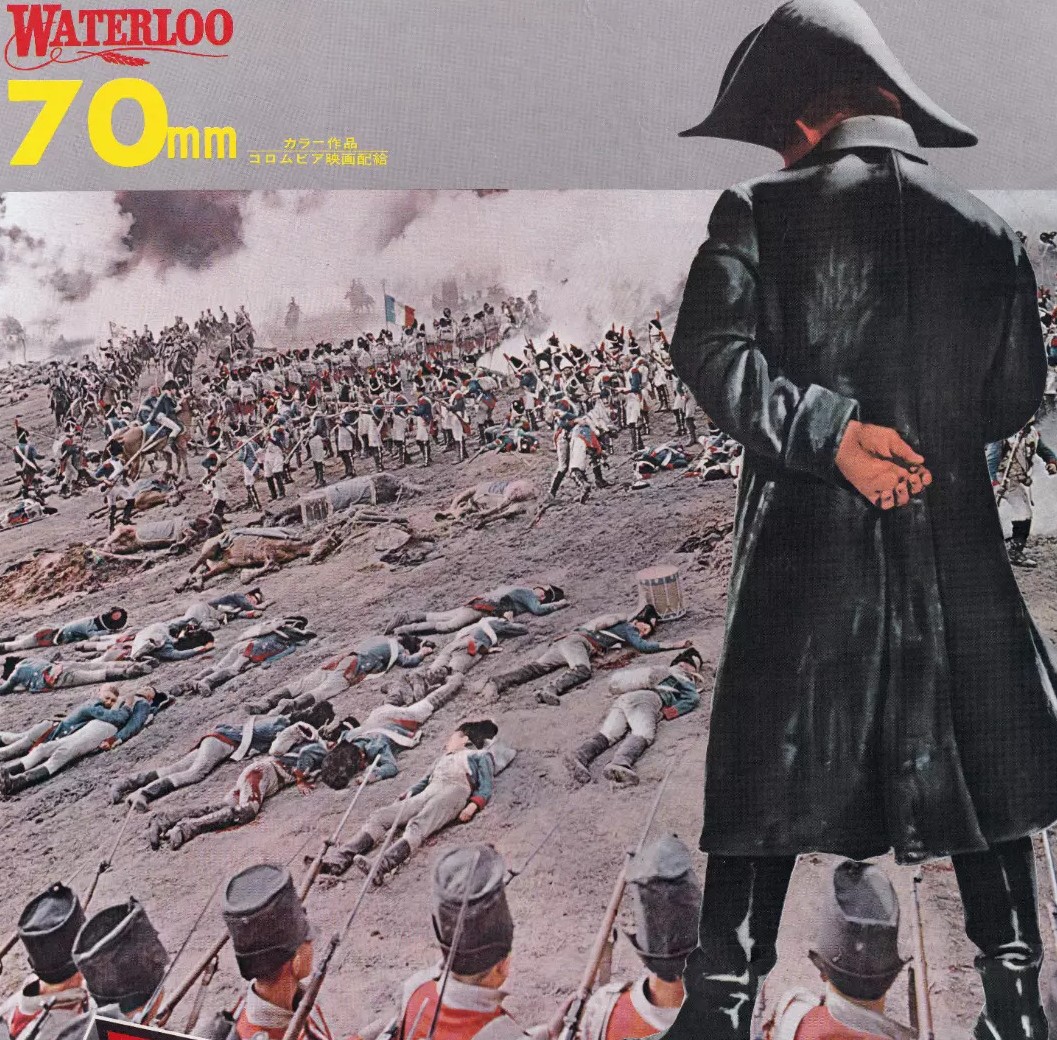
  1. (1) Waterloo (1970). No doubting the effect of Ridley Scott’s Napoleon in increasing interest in this famous flop that had Rod Steiger’s French emperor squaring off against Christopher Plummer.
  2. (9) Man’s Favorite Sport (1964). Howard Hawks back in the gender wars with Rock Hudson being taken down a peg by Paula Prentiss.
  3. (3) In Harm’s Way (1965). Otto Preminger takes off the gloves to expose problems in the American military around Pearl Harbor.
  4. (7) The Guns of Navarone (1961). The ultimate template for the men-on-a-mission war picture with an all-star cast and enough jeopardy to qualify for a movie of its own.
  5. (2) Ice Station Zebra (1968). A complete cast overhaul and ground-breaking  special effects are at the core of this filming of another Alistair MacLean tale.
  6. (4) Battle of the Bulge (1965). There were going to be two versions, so the race was on to get this one to the public first.
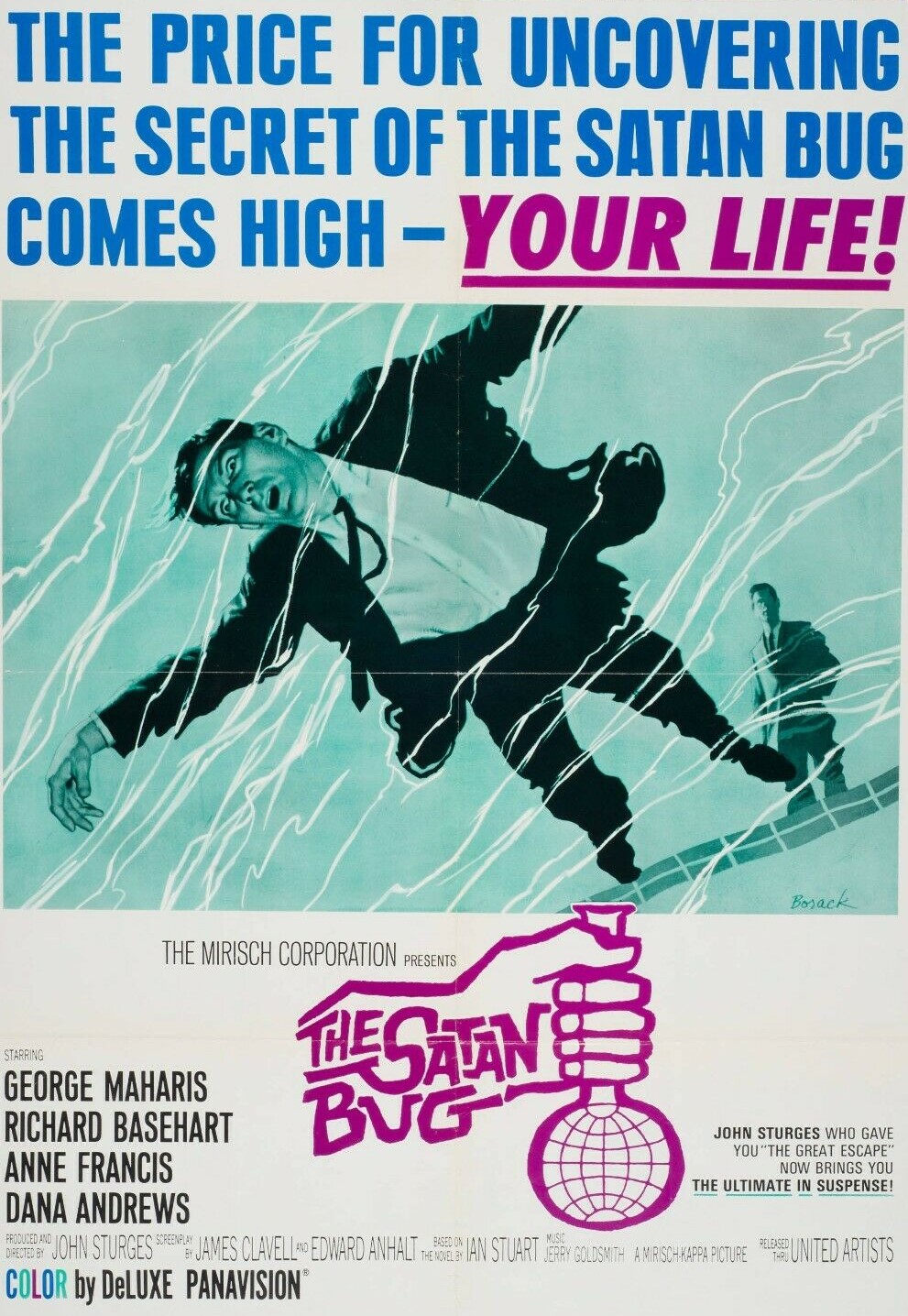
  7. (6) The Satan Bug (1965). The problems facing director John Sturges in adapting the Alistair MacLean pandemic classic for the big screen.
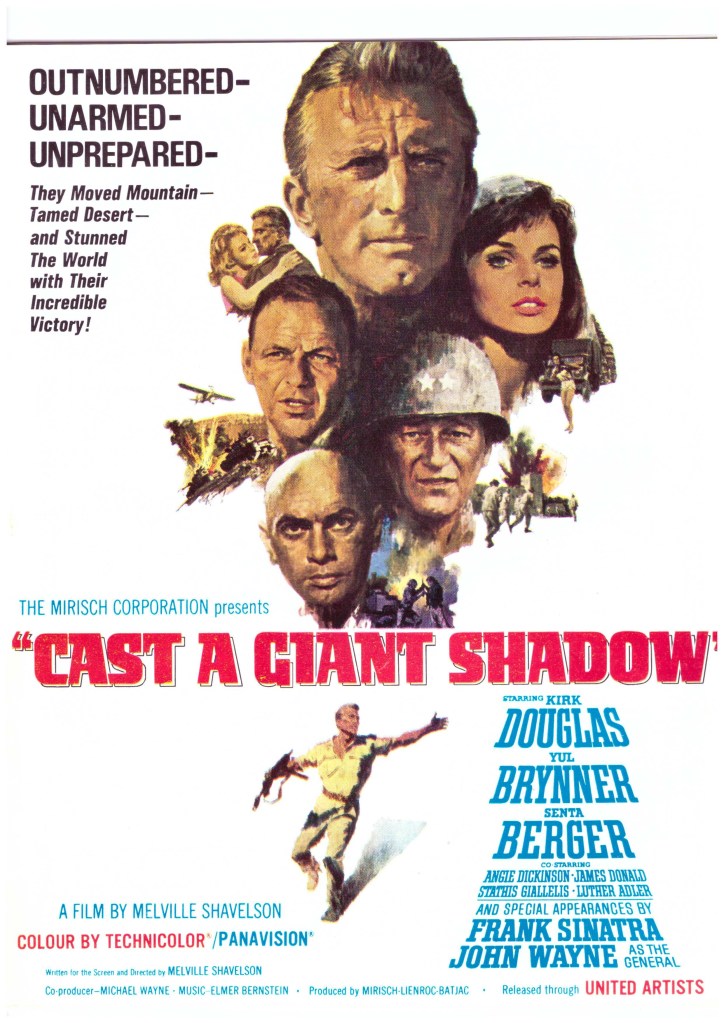
  8. (5) Cast a Giant Shadow (1965). Producer Melville Shavelson wrote a book about his experiences and this and other material relating the arduous task of bringing the Kirk Douglas-starrer to the screen are told here.
  9. (10) The Girl on a Motorcycle / Naked under Leather (1968). Cult classic starring Marianne Faithful and Alain Delon had a rocky road to release, especially in the U.S. where the censor was not happy.
  10. (New Entry) The Sons of Katie Elder (1965). First envisioned nearly a decade before, Henry Hathaway western finally hit the screen with John Wayne and Dean Martin.
  11. (11). Tora! Tora! Tora! (1970). Richard Fleischer dispenses with the all-star cast in favor of even-handed verisimilitude.
  12. (New entry) Mackenna’s Gold (1969). Tortuous route to the screen for Carl Foreman-produced roadshow western, filmed in 70mm Cinerama, with an all-star cast including Omar Sharif, Gregory Peck and Telly Savalas.
  13. (8) Sink the Bismarck! (1960). Documentary-style British World War Two classic with Kenneth More exhibiting the stiffest of stiff-upper-lips.
  14. (13). The Bridge at Remagen (1969). British director John Guillerman hits trouble filming World War Two picture starring George Segal and Robert Vaughn.
  15. (New entry) The Trouble with Angels (1966). Less than angelic Hayley Mills sparring with convent boss Rosalind Russell. Directed by one-time star Ida Lupino.
  16. (New entry) For a Few Dollars More (1965). Sergio Leone sequel to first spaghetti western brings in Lee van Cleef to pair with Clint Eastwood.
  17. (New entry) How The West Was Won (1962). First non-travelog Cinerama picture, all-star cast and all-star team of directors tackling multi-generational western and all sorts of logistical problems.
  18. (New entry) Bandolero! (1968). Director Andrew V. McLaglen teams up with James Stewart, Dean Martin and Raquel Welch to fight Mexican bandits.
  19. (New Entry) The Train (1964). John Frankenheimer replaced Arthur Penn in the directorial chair to steer home unusual over-budget World War Two picture with Burt Lancaster trying to steal art treasures from under the nose of German Paul Schofield.
  20. (17) The Collector (1963). William Wyler’s creepy adaptation of John Fowles’ creepy bestseller with Terence Stamp and Samatha Eggar.

All-Time Top 40

Not my pick of the flicks, but yours, the films viewed most often since the Blog began in June 2020. There’s no shaking Ann-Margret, a brace of her movies retaining the same top two spots as last year. Other standouts – i.e. more than one entry in the list –  include Raquel Welch, Gina Lollobrigida, Charles Bronson, Alain Delon, Angie Dickinson, Roger Moore and Jean Seberg.

The figures in brackets represent the previous year’s position and New Entry is self-explanatory.

  1. (1) The Swinger (1966). All hail Ann-Margret, second year in a row at number one. Bouncy sex comedy that manages a sprinkling of innocence. 
  2. (2) Stagecoach (1966). No prizes for guessing that it’s the presence of Ann-Margret (again) rather than Alex Cord that has hit a chord in this decent remake of John Ford’s famous western.
  3. (4) Fraulein Doktor (1969). Grisly realistic battle scenes and a superb score from Ennio Morricone help this Suzy Kendall vehicle in which she plays a World War One German spy going head-to-head with Brit Kenneth More and taking time out for romantic dalliance with Capucine.
  4. (34) In Harm’s Way (1965). Under-rated John Wayne World War Two number. Co-starring Kirk Douglas, Patricia Neal, Tom Tryon and Paula Prentiss. Director Otto Preminger surveys Pearl Harbor and after.
  5. (7) Fireball XL5. The famous British television series (1962-1963) from Gerry and Sylvia Anderson, now colorized. “My heart will be a fireball…”
  6. (6) Once Upon a Time in the West (1969). Along with The Searchers (1956) now considered the most influential western of all time. Sergio Leone rounds up Claudia Cardinale, Henry Fonda and Charles Bronson and that fabulous Morricone score.
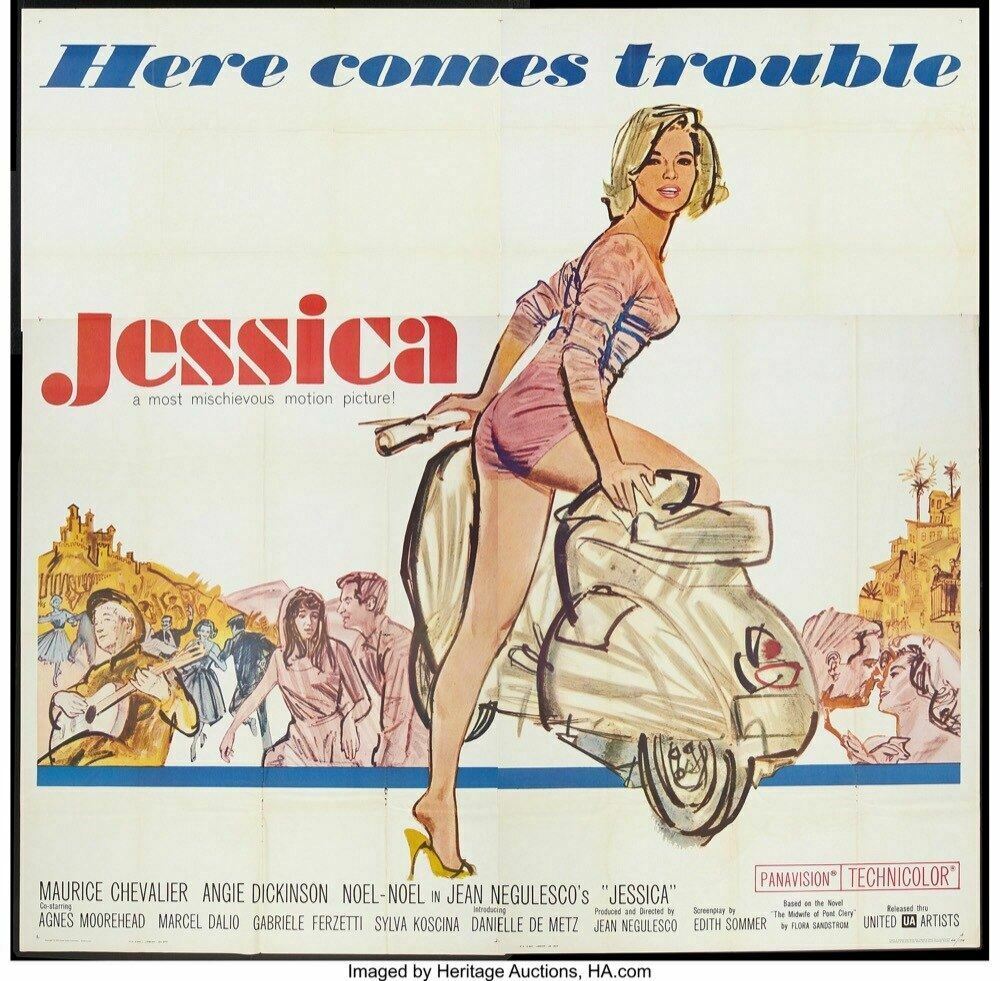
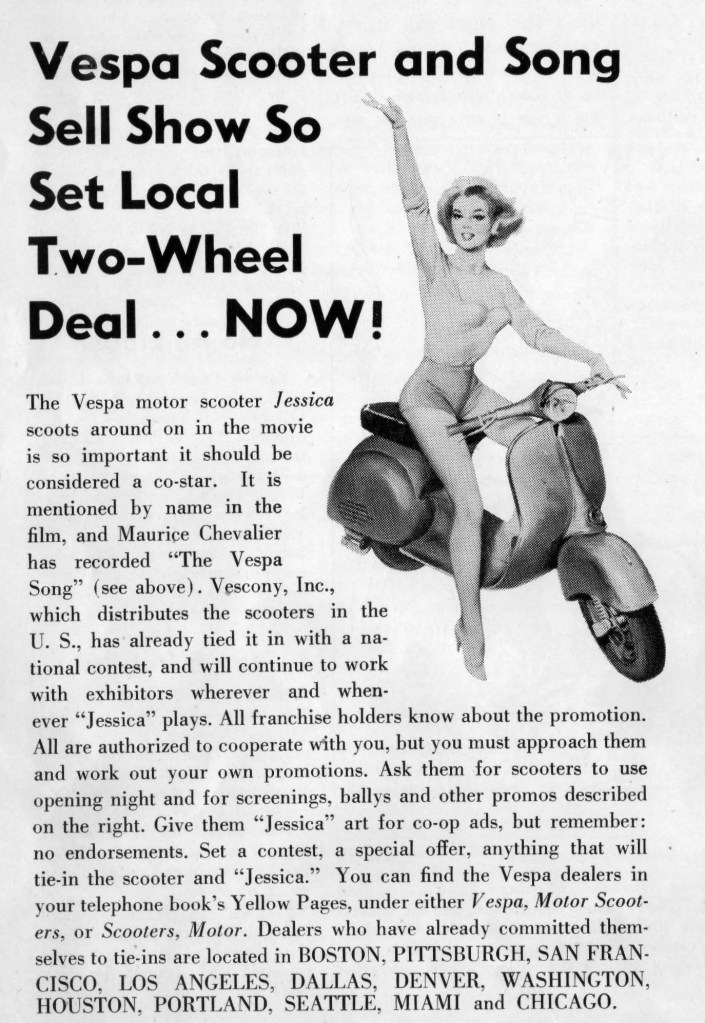
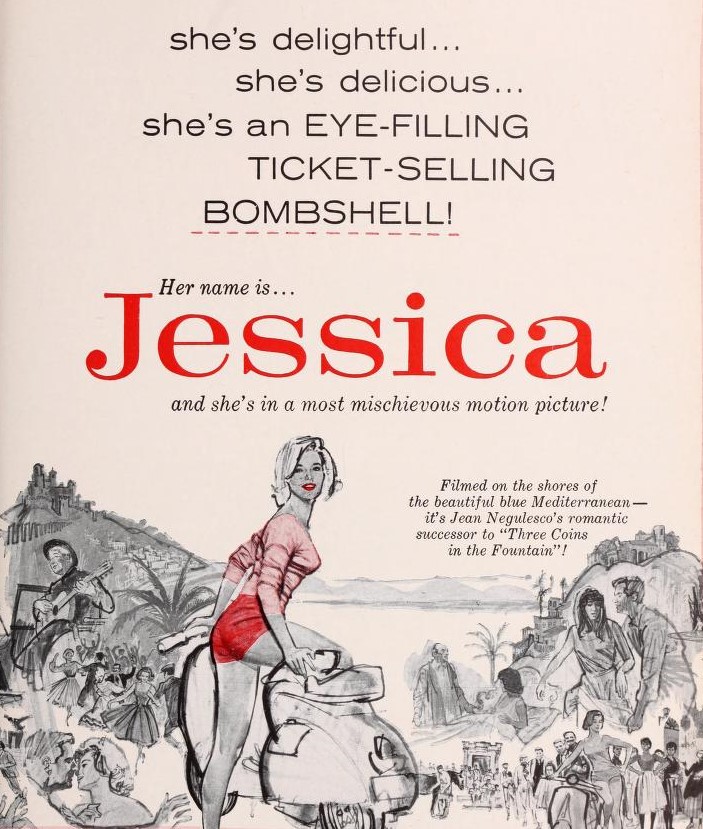
  7. (3) Jessica (1962). Angie Dickinson as a young widow incurring the wrath of wives in a small Italian town.
  8. (New Entry) Thank You Very Much/ A Touch of Love (1969). Sandy Dennis as academic single mother in London impregnated by Ian McKellen.
  9. (13) Pharoah (1966). Delighted to see this holding fast, climbing back up the table this year. Polish epic set in Egypt sees the country’s ruler at odds with the religious hierarchy.
  10. (11) Baby Love (1969). Controversy was the initial selling point but now it’s morphed into a morality tale as orphaned Linda Hayden tries to fit into an upper-class London household.
  11. (5) The Sins of Rachel Cade (1961) Angie Dickinson (again) as African missionary falling foul of the locals and Commissioner Peter Finch. Roger Moore in an early role.
  12. (10) Vendetta for the Saint (1969). A more typical trademark role from Roger Moore. Two television episodes of the popular series combined sees our hero tackle the Mafia.
  13. (New Entry) The Appointment (1969). Inhibited lawyer Omar Sharif discovers the secrets of Anouk Aimee in under-rated and little-seen Italian-set drama from Sidney Lumet.
  14. (12) The Sisters / My Sister, My Love (1969). Incest rears its head as Nathalie Delon and Susan Strasberg ignore husbands and lovers in favor of each other.  
  15. (21) Go Naked in the World (1961). Gina Lollobrigida finds that love for a wealthy playboy clashes with her profession (the oldest). Look out for highly emotional turn from the usually taciturn Ernest Borgnine.
  16. (New Entry) Diamond Head (1962). Over-ambitious hypocritical landowner Charlton Heston comes unstuck in love, politics and business in Hawaii. George Chakiris, Yvette Mimieux and France Nuyen turn up the heat.
  17. (9) Moment to Moment (1966). Hitchcockian thriller set in Hitchcock country – the South of France – as unfaithful Jean Seberg is on the hook for the murder of her lover.  Also featuring Honor Blackman.  
  18. (20) The Golden Claws of the Cat Girl (1968). Cults don’t come any sexier than Daniele Gaubert as a French cat burglar.
  19. (22) Pressure Point (1962). Nazi extremist Bobby Darin causes chaos for psychiatrist Sidney Poitier. Stunning dream sequences.
  20. (New Entry) Young Cassidy (1965). Julie Christie came out of this best, winning her role in Doctor Zhivago as a result. Rod Taylor as Irish playwright Sean O’Casey.
  21. (14) Can Heironymus Merkin Ever Forget Mercy Humpe and Find True Happiness? Fellini would turn in his grave at the self-indulgence of singer Anthony Newley who manages to lament that women falling at his feet cause him so much strife. Joan Collins co-stars.
  22. (8) The Secret Ways (1961). The first of the Alistair MacLean adaptations to hit the big screen features Richard Widmark trapped in Hungary during the Cold War. 
  23. (New Entry) The Chalk Garden (1964). Wild child Hayley Mills, trying to break out of her Disney straitjacket, duels with governess Deborah Kerr.
  24. (23) A Dandy in Aspic (1968). Cold War thriller with Laurence Harvey as a double agent who wants out. Mia Farrow co-stars.  
  25.  (16) Pendulum (1968). Fast-rising cop George Peppard accused of murdering unfaithful wife Jean Seberg
  26. (25) Once a Thief (1965). Ann-Margret again, in a less sexy incarnation, as a working mother whose ex-jailbird thief Alain Delon takes a detour back into crime.
  27. (New entry) Fathom (1967). Raquel Welch models a string of bikinis as a skydiver caught up in spy malarkey.
  28. (New entry) Farewell, Friend / Adieu L’Ami (1968). A star is born – at least in France, the United States a good few years behind in recognizing the marquee attractions of Charles Bronson. Alain Delon co-stars in twisty French heist thriller featuring Olga Georges-Picot and Brigitte Fossey.
  29. (New Entry) Woman of Straw (1964). More sub-Hitchockian goings-on as Sean Connery tries to frame Gina Lollobrigida in a dubious scheme.
  30. (28) The Girl on a Motorcycle / Naked under Leather (1968). How much you saw of star Marianne Faithfull depended on where you saw it. The U.S. censor came down heavily on the titular fantasizing heroine, the British censor more liberal. Alain Delon co-stars.
  31. (New entry) Claudelle Inglish (1961). Diane McBain seeks revenge for being stood up at the altar in the Deep South.
  32. (15) The Best House in London (1969). David Hemmings tries to do right by Victorian sex workers.
  33. (19) Lady in Cement (1969). Raquel Welch models more bikinis as the gangster’s moll taken on as a client by private eye Frank Sinatra in his second outing as Tony Rome.
  34. (30) She Died with Her Boots On / Whirlpool (1969). More sleaze than cult. Spanish director Jose Ramon Larraz’s thriller sees kinky photographer Karl Lanchbury targeting real-life MTA Vivien Neves.  
  35. (New entry) Horizon: An American Saga – Chapter 1 (2024). So I wasn’t the only one to enjoy Kevin Costner’s majestic western that became one of the biggest flops of the year.
  36. (New entry) Prehistoric Women / Slave Girls (1967). Raquel Welch look away now. Martine Beswick attempts to steal the One Million Years B.C. crown.
  37. (New entry) Five Card Stud (1968). Entertaining Henry Hathaway western thriller with Dean Martin, when not dallying with Inger Stevens, investigating a serial killer. Robert Mitchum as a preacher.
  38. (31) The Misfits (1960). Last hurrah for Clark Gable, fabulous turns from Montgomery Clift and Marilyn Monroe in John Huston tale of losers. 
  39. (New entry) Plane (2023). Die Hard on a desert island with Gerard Butler as a pilot tackling terrorists in the Pacific.
  40. (32) Rage (1966). Glenn Ford and Stella Stevens combat pandemic in Mexican town.

Top 30 2024

Ever since I’ve started writing this Blog, a film starring a female has taken pole position in the Annual Top 30. And this year is no exception though it has gone down to the wire with Sandy Dennis literally pipping John Wayne at the post. I was somewhat surprised to see some movies that featured on this list last year so prominent again. These include Stagecoach, Fireball XL5, Fraulein Doktor and The Sisters.

  1. Thank You Very Much/A Touch of Love (1969). Singleton Sandy Dennis comes to terms with pregnancy in London. Ian McKellen is the male lead.
  2. In Harm’s Way (1965). Otto Preminger war epic based around Pearl Harbor. John Wayne and Kirk Douglas duke it out.
  3. The Appointment (1969). Unusual Sidney Lumet drama set in Italy with Omar Sharif becoming mixed up with Anouk Aimee.
  4. Stagecoach (1966). There’s no stopping Ann-Margret. Interest remains high in remake of John Ford classic also starring Alex Cord and Bing Crosby.
  5. Young Cassidy (1965). Talking of John Ford, he was meant to direct this biopic of Irish playwright Sean O’Casey but took ill, leaving Jack Cardiff in charge. Rod Taylor and Julie Christie star.
  6. Diamond Head (1962). Charlton Heston as hypocritical racist landowner in Hawaii. Co-stars George Chakiris and Yvette Mimieux.
  7. Prehistoric Women/Slave Girls (1967). Martine Beswick is no Raquel Welch in One Million Years B.C. knock-off.
  8. The Chalk Garden (1964). Hayley Mills sheds her puppy fat as wild child brought to heel by Deborah Kerr as a governess with a secret past. Co-stars John Mills and Edith Evans. Directed by Ronald Neame.
  9. Fireball XL5. The colorised version of the Gerry and Sylvia Anderson futuristic classic British television series.
  10. Pharoah / Pharon (1966). Polish epic – religion vs state in ancient Egypt.
  11. Go Naked in the World (1961). Gina Lollobrigida finds out how difficult it is for a sex worker to fall in love. Fine Ernest Borgnine turn as a doting father.
  12. The Swinger (1966). Ann-Margret again. She sings, she dances – she writes? Who cares about a barmy plot when she shakes her booty.
  13. The Beekeeper (2024). Jason Statham kicks off a new action franchise with scintillating turn as black ops operative brought out of retirement. Jeremy Irons tries to keep the peace.
  14. La Belle Noiseuse (1991). French drama in which Jacques Rivette explores relationship between painter Michel Piccoli and model Emmanuelle Beart.
  15. Baby Love (1969). Teenager Linda Hayden unintentionally causing turmoil in dysfunctional middle class family in London.
  16. Pressure Point (1962). Psychiatrist Sidney Poitier coming to terms with racist patient Bobby Darin.
  17. Farewell Friend / Adieu L’Ami (1968). Charles Bronson had to go to France to find stardom in this heist thriller co-starring Alain Delon.
  18. Fraulein Doktor (1969). Suzy Kendall’s finest hour as World War One German spy outwitting Kenneth More.
  19. Immaculate (2024). Sydney Sweeney dons nun garb and encounters horror in Italian convent.
  20. The Count of Monte Cristo (2024). Splendid adaptation of the classic Dumas novel of a wrongly-imprisoned man seeking revenge.
  21. Fear No More (1961). Mentally disturbed Mala Powers mixed up in murder plot.
  22. Woman of Straw (1964). Gina Lollobrigida takes on Sean Connery in Hitchcockian thriller.
  23. Claudelle Inglish (1961). Thwarted bride Diane McBain exploits male desire in the Deep South.
  24. Carry On Up the Khyber (1968). Innuendo gets a cloak of satire as the team make light work of the British in India.
  25. The Trouble with Angels (1966). Hayley Mills again, another wild child, this time challenging Mother Superior Rosalind Russell in convent school.
  26. Lilith (1964). War veteran Warren Beatty bewitched by troubled Jean Seberg at a mental institution.
  27. The Sisters / My Sister, My Love (1969). Another French drama with Nathalie Delon and Susan Strasberg too tangled up with each other to bother with the likes of Giancarlo Giannini.
  28. Five Card Stud (1969). Poker player Dean Martin turns detective as the body count mushrooms in Henry Hathaway western co-starring Robert Mitchum and Inger Stevens.
  29. The Undefeated (1969). John Wayne chases defeated Confederate Rock Hudson into Mexico.
  30. Villain (1971). Heist thriller with Richard Burton and Ian McShane as bisexual gangsters.

Beat Girl / Wild for Kicks (1960) **

More social document than drama, but that aspect somewhat diluted by the moviemakers’ attempts at exposing rebellious youth while taking for granted more sordid adult behavior. Narrative flow is interrupted now and then to showcase Adam Faith’s singing and to accommodate a few striptease acts. Probably more interesting is the array of new talent on show.

Spoiled teenager Jennifer (Gillian Hill) heads for the wild side of town to experience the beatnik lifestyle in Soho coffee shops and cellars. That there are no drugs involved, and that alcohol is considered “square” – as for that matter is violence – may come as a surprise to students of the period. Apart from one episode of road-racing and playing “chicken” along a railway track, most of the time the gang listen to music or dance until Jennifer gets it into her head that ejoining a striptease show might give her life the thrill it is missing.

This is prompted by the discovery that her new too-young stepmother Nichole (Noelle Adams) has been a stripper and most likely a sex worker in Paris before marrying wealthy architect Paul (David Farrar), cueing a round-robin of confrontations. Strangely enough, from the narrative perspective, none of the young bucks appear romantically interested in the provocatively dressed Jennifer and so it is left to creepy club owner Kenny (Christopher Lee) to make a move.

The gaping hole left by lack of narrative drive is not offset by immersion in the beatnik or striptease scene. Back in the day the British censors took the editing scissors to the striptease but although restored versions available now contain nudity you are left wishing that there was some lost element to the beatnik sections that would have given the picture the energy it required.

Gillian Hill (Les Liaisions Dangereuses, 1959), comes over as a cross between Brigitte Bardot and Diana Dors without having an ounce of the sex appeal of either. All pout and flounce, she is unable to inject any heart into her two-dimensional character, although given her youth and inexperience this was hardly surprising. Former British star David Farrar (Black Narcissus, 1947) was coming to the end of his career and in a thankless role as a frustrated father could do little to rescue the project.

French actress Noelle Gordon (Sergeant X of the Foreign Legion, 1960) could have been Jennifer’s mother given her own tendencies towards wiggle and pout but at least she makes a stab at trying to overcome her step-daughter’s hostility.

In the main, the picture’s delight is bringing to the fore a whole chorus of new faces. Pick of the supporting cast is Shirley Anne Field (Kings of the Sun, 1963) who doesn’t just have a knowing look but looks as if she knows what’s she doing acting-wise. Making his movie debut was teen pop idol Adam Faith, who had made his name playing in coffee bars. He had already notched up a couple of number one singles, but doesn’t quite set the screen on fire. Peter McEnery (The Fighting Prince of Donegal, 1966) plays his inebriated pal.

You can also spot Oliver Reed (Women in Love, 1969), Julie Christie (Doctor Zhivago, 1965), Claire Gordon (Cool It, Carol, 1970) and Nigel Green (Jason and the Argonauts, 1963).

Perhaps the most important debut belonged to composer John Barry. He had already been working with Adam Faith. Barry’s music for the film was the first British soundtrack album ever released, reaching number eleven on the charts, and opening the doors for future soundtrack albums, not least of which was the rich vein of theme tunes produced by Barry in the next few years. 

French director Edmond T. Greville, who brought little panache to the subject matter, would redeem himself with his next picture The Hands of Orlac (1960). 

This doesn’t fall into the “so-bad-it’s-good” category, nor has it been unfairly overlooked, and probably is better known as an example of the kind of exploitation B-picture that the Americans do so much better and a reminder that, except on rare occasions such as The Wild One (1953), older moviemakers seem incapable of capturing the essence of youth.

Behind the Scenes: Selling the Age Gap – “The Idol” (1966) Pressbook

“At what age should a woman stop loving?” is one of the least used of the tag lines for The Idol and yet is the one that provides the strongest narrative thread. Had the movie been filmed from the perspective of Carol, the mother, the answer to the tagline – “when her hate becomes stronger than her hunger…when her pride overcomes her passion” – might have offered audiences something with greater depth than the final movie that appeared.

The movie took a heck of a time to arrive at the May-December reversal brief love affair and the Pressbook/Marketing Manual spends more time playing up the “generation gap.” It’s one of those Pressbooks where it appears the publicity masterminds were watching a different picture to the audience.

“Highlighting the lack of communication between the younger and older generations,” spouts the Pressbook, “director Petrie shows young people as lacking in values, while pointing out it is not necessarily their fault. He thinks parents today are unwilling or unable to pass along to their children a concept of truth (“recollections vary” perhaps) – because they themselves are no longer sure of what is true, what is right and wrong.”

Really? That’s not the movie I saw. The Pressbook is on surer ground when providing background to the filming. Much of the picture was shot in unusual locations like the 300-year-old Queen’s Inn in Chelsea and Brad’s Club in the West End, redecorated for the occasion with zebra skins, spears, shields and jungle foliage, the revamp so successful with existing customers the club wanted to buy the props from the production company. Star Jennifer Jones wore creations made by Italian fashion designers Galitzino and Emilio Pucci.

Michael Parks, heralded as a great new star after his role in The Bible (1966), preferred his part here. “I’d much rather be judged by my performance in The Idol – as a complicated young man with tremendous problems.” At least his characterization echoed his own impoverished life, attending 21 schools in a peripatetic childhood. At one high school his grades prevented him taking drama classes. He lived as a hobo for a time after leaving home, then worked as a door-to-door salesman.

The 14-page landscape A3 Pressbook offers relatively few marketing ideas for prospective exhibitors. There was a paperback book tie-in by Frances Rickett from Popular Library and an album of the score from composer Johnny Dankworth and an instrumental single. Oddly enough, singer John Leyton doesn’t sing.

There was an attempt to push the fashion angle, the Pressbook arguing that “many of these fashions typify the ‘mod’ look so popular with today’s clothes-conscious women.” Exhibitors in America were urged to use travel posters of England in their lobbies, even though since the movie was shot in black-and-white it hardly presents an appealing version of the country.

Parks has supposedly competition from John Leyton as the next big thing. Leyton came from English theatrical stock, mother an actress, father an owner of music halls and trained at the Actor’s Workshop in London. “Had Leyton not catapulted to fame as a singer, it would only have been a matter of time before the public would have singled him out for stardom as a fine actor.”

Jennifer Jones, on the other hand, required no puffery to be accepted as an actress. Her breakthrough came in Song of Bernadette (1943), one of six actresses tested but the only one who could convincingly look as if she had seen “a vision.” She had married legendary producer David O. Selznick and despite her box office marquee and Oscar recognition had largely been off-screen to fulfil the same role as she does in the picture – of a mother.

The Annual (Shameless) Xmas Plug For My Books

It’s coming! My latest book – King of the Action Thrillers – is on the films of Alistair MacLean. Regular readers will know movies based on the thrillers of the Scottish bestselling author are very close to my heart. As it would appear to be to yours. For, as you will be aware, readers of the Blog have responded massively to my behind-the-scenes tales of the making of a few of the MacLean movies.

The new book is based on exclusive access to many rare archives so I am able to tell – for the first time – the real story behind MacLean’s rise to movie prominence. In addition, I’ve tracked down a hitherto unknown screenplay. His books were turned into both big-budget blockbusters like The Guns of Navarone (1961), Where Eagles Dare (1968) and Ice Station Zebra (1968) as well as the more modestly budgeted Puppet on a Chain (1970) and Fear Is the Key (1972) which set new standards for all kinds of chase sequences.

Stylish cover for the Vinegar Syndrome DVD.

MacLean was an absolute phenomenon in Hollywood terms. Between 1961 and 1979 a total of 13 of his books were turned into movies, an unprecedented hit rate. Another four began in television, and there was one final movie in 1989.  Given he only wrote 28 works of fiction that is some achievement.

This book isn’t published until November next year but is currently available for pre-order on Amazon so there’s no reason why it wouldn’t make a great Xmas present this year.

I’ve diversified somewhat in my activities. Vinegar Syndrome, one of the top DVD re-packagers, has called twice on my services for an audio commentary. So if you want to know what I sound like or you just find the Scottish accent soothing, check out my work on Henry Hathaway western Five Card Stud (1968). Although it starred the fairly macho likes of Robert Mitchum and Dean Martin, I also detected considerable feminist aspects which, it appears, others have overlooked. That’s already out. You can get it direct from Vinegar Syndrome.

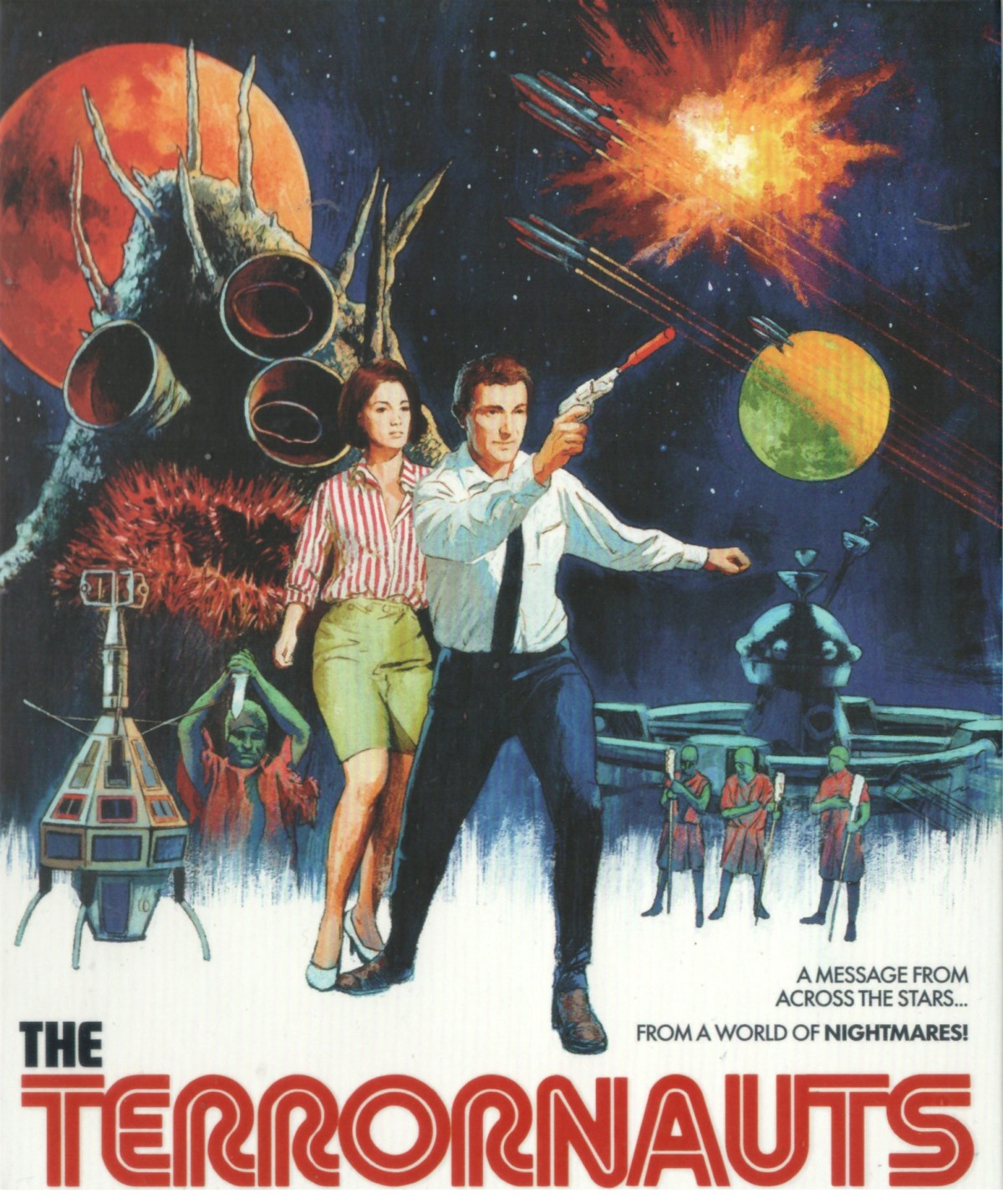
Coming soon is my audio commentary on British cult sci fi The Terrornauts (1967), an Amicus production starring Simon Oates, Zena Marshall, Charles Hawtrey and Patricia Hayes and based on a bestseller by Murray Leinster, considered second only to H.G. Wells for his speculative imagination.

I’ve been paid a rather unique compliment by the highly esteemed Cinema Retro magazine. They are putting out a “Special Edition” – in magazine format with dozens of stills and posters – of my Making of The Magnificent Seven book, which covers the original series.

But that’s not out till January. The full version of the book is also available from Amazon at a very reduced price. If you’re a fan of the “making-of” books – as, judging by the views of my behind-the-scenes articles, many of you are – then you may well be interested in The Making of The Guns of Navarone (Revised Edition) and The Making of Lawrence of Arabia. For that matter, there is ample “behind the scenes” material in two other books. The Magnificent 60s examines in detail the  top 100 movies of the decade and could easily be retitled “how the decade was born.” The  Gunslingers of ’69 examines the western in a pivotal year that saw the release of The Wild Bunch, True Grit, Once Upon a Time in the West and Butch Cassidy and the Sundance Kid among others.

My research into The Magnificent Seven spawned two other books. I came to write Coming Back to a Theater Near You, A History of Hollywood Reissues 1914-2014 as a direct result of discovering that the western had flopped on initial U.S. release and only became profitable there after several revivals. Equally, the movie enjoyed an unusual release pattern, going out in a what you’d call these days a rudimentary form of wide release and that led me to In Theaters Everywhere: A History of the Hollywood Wide release 1913-2017.

Since I’ve now written over a dozen books on the movies I’m not going to bore you with them all. You can check me out on Amazon.

I would beg you, however, to pass on to anyone you can think of the information regarding the Alistair MacLean book. It would be great if thanks to pre-orders it could open at No 1 in the Amazon movie chart.

Quarter of a Million Views…and Counting

When I started out in 2020 and could barely notch up 100 views a month it seemed like I would never make any significant impact in movie blog world. But now with views in the region of 11,000 a month, I have amassed a grand total of 250,000 views.

Seems an unlikely reward for doing something that gives me so much pleasure. I love watching movies – two, sometimes, three contemporary ones on my weekly Monday outing to the cineplex and then one a day for the rest of the week.  However, the bigger reward is being able to mine a decade that is scarcely touched by contemporary academics. I’m sure critical reappraisal, like everything, goes in cycles. I recall massive interest in the films of Humphrey Bogart or Bette Davis. At various times horror or sci fi and noir have been the order of the day.

Although I grew up in the 1960s, I didn’t do much cinemagoing. I lived in the one town in the whole of Britain that – thanks to the planners of a new town – lacked a cinema. Excursions were limited to a family outing at Xmas – a roadshow trip to see The Sound of Music (1965) or Oliver! (1968) – and the summer holidays, which might mean the sumptuous Jason and the Argonauts (1963) or, more likely, less memorable Disney fare. One summer me and my brother were despatched into Glasgow for a matinee showing of El Dorado (1967) – I’m not sure my mother was so aware of Howard Hawks, but still. I also saw Lawrence of Arabia (1962) on reissue and when I could choose to spend my pocket money any way I liked I walked a couple of miles to the La Scala in Clydebank and plonked down my cash for a matinee performance of Custer of the West (1967), Krakatoa, East of Java (1968) and Carry On Again Doctor (1969).

I also sauntered once a week down to the main road to check out the giant hoarding that showed what was showing at the La Scala. Unusually, I was kept well informed of what was on at the main first- and second-run houses in Glasgow because I attended secondary school in the city center and, if I took a later train home, could potter along the two main intersecting streets and check out the stills outside eight cinemas and I learned if you pressed your glass to the window of the front door you could spot a poster advertising what was coming next. By that time I had started buying Photoplay and ABC Film Review.

But my real education started at university. I could rearrange my own schedule to suit and nip off to the cinema at any point and with the beginnings of the multiplex found there were even more movies on offer. I was astonished to discover the university offered a film course as part of a drama course so that was a movie a week, plus I joined the university film society and for a time reviewed movies for the university newspaper so that automatically extended by viewing pleasure to include both the esoteric and the common. I would also scour the city for older films putting in a rare appearance. I saw Spartacus (1961) – on a five-hour double bill – in the vast chasm of the Parade in Dennistoun, visited the Vogue in Riddrie, the Lyceum in Govan, the Odeon at Anniesland, the Mayfair in Battlefield, the Kelburne in Paisley and many others.

Thereafter, I had created a lifelong pleasure. When I moved to London, one of the joys of my Saturday afternoon was nipping into the West End and not just trawling past all the first run houses but also pottering along Wardour St and peering into the windows of all the major studio head offices and discovering forthcoming films that had hadn’t even been mentioned in the fan magazines or even the more esteemed Films and Filming.

I discovered, too, that I didn’t have to wait months, as in Glasgow, for a new film to turn up even at the first run houses, but could see pictures virtually the moment they appeared. Thus, I was one of the first in the queue for Star Wars, Close Encounters of the Third Kind, Alien, Midnight Express and if I didn’t care to fork out West End prices I had two triples close to my home.

Excepting my Monday outings, I don’t have to go anywhere. I just dig into my massive selection of DVDs, prop my feet up every evening and watch an old movie. I’ve no idea, really, why I decided on the 1960s as my chosen era. Perhaps it was because my cinematic education was formed in the 1970s and due to city planners and disinterested parents I had missed out entirely on the 1960s – I didn’t see my first James Bond until the 1970s.

My viewing doesn’t follow, thank goodness, any discernible critical or academic bent. I just pop into the machine whatever takes my fancy. But I’ve realized that students of movies usually stick to a tried-and-tested route, usually decided by previous academics who ignored the vast catalog of movies in favor of a select few and while claiming to study a “period” actually ignore the era because they don’t have a clue what audiences of the decade actually watched and would be shocked that their eclectic tastes were not reflected by the ordinary moviegoer.

Anyway, it’s thanks to you, my viewers, that I owe the honor of celebrating reaching the 250,000-view landmark. So three cheers to you for following me on my journey.

Behind the Scenes: Best-Ever Ridley Scott Interview

Interviews are always over-hyped. These days, with thousands of media mouths to feed, interviews are surface-friendly, a big splash to hook the reader and then very little content. Stars and directors do not grant, as they did in the past to the likes of Rolling Stone or Vanity Fair, in-depth interviews where the journalist has been granted several days holed up with the subject.

More likely, a reporter is stitching something together after being in a room with a hundred other media skunks being told the same rehashed story.

So it came as an enormous surprise to find an interview as refreshing as this. In part it succeeds because the interviewer isn’t a journalist at all, but an actor, Paul Mescal, star of Scott’s latest opus, Gladiator II, and in part because it reads like a conversation between mates, one where the dialog follows no set path as it would had a journalist been in charge and dives into the director’s artistic development in great detail. Part of the joy of the feature is that Mescal ignored four pages of “suggested questions” set by The Guardian newspaper’s features team in favor of going his own way. So what we get is Scott responding to Mescal’s urgent curiosity rather than to an old hack asking the same old questions.

Scott explains his obsession with cinema from an early age resulted in him getting a free pass to his local Odeon by agreeing to paint huge posters for their forthcoming features. At night he watched television endlessly – “image, image, image,” he recalls.

He had little intention of pursuing a cinematic career when studying at art college in 1962 but came across a 16mm Bolex cine camera and decided to make a short film, Boy and Bicycle (1965), funded to the tune of £65 by the college, and helped along by brother Tony, mother doing the voiceover, which he later edited at the BBC, sneaking in at night when everyone had gone home. He didn’t learn to edit – he just did it. At the BBC where he originally worked as a set designer he was considered “the oik from up north” compared to the Oxbridge set in power. Paid £75 a week, he was delighted to be offered commercials which paid £100 a time. So he quit the BBC and set up his own advertising business, making 100 commercials a year. “I learned that the best and fastest solution – because I paint with pictures – was to be a camera operator….I could do anything with a camera.” And did that job on Alien, Thelma and Louise and others.

On Blade Runner, he was “inventing the wheel…a new language but I wasn’t a kid. I was 44 and already had my second Rolls Royce.”

The most important lesson he learned was casting. “I try to form a partnership with the actor. And so I’m listening to you  as much as you’re listening to me. That is essential. A casting director can be as valuable as a good cameraman…I didn’t come to that (casting) with any formal training….You just cast the actor. Once they’ve said yes, they’re gonna work it out in the kitchen by themselves…On the set I say, “show me.” We’ll rehearse it on camera, and I go “wow” or “where did that come from” or “no.” I’ve already seen all the colours in their paintbox. I watched eight hours of Normal People (before I cast you i.e Mescal). Within that you cover a lot of emotional layer and ground.”

He considers shooting Boy and Bicycle as the defining moment of his career. He recalls being in the trunk of his father’s car – father driving it – with the Bolex and “my brother’s to the side on a bicycle. We drive underneath the bridge.” When he edited it he though it was “good.” He chased John Barry to get permission to use a piece of his music. The composer’s going rate was £1500, but after six weeks of persuasion gave in.

Next on the agenda. Possibly a sequel to Gladiator II and various other projects. But Scott has a hankering to do a musical and/or a western, set around 1829, “pre-trains with cattle catchers and pre-batwing saloon doors. Where the force of nature is the biggest enemy you’ve got.”

I reckon I’ve sampled enough of this much lengthier interview.

You can find the full, much more extensive interview here:

https://www.theguardian.com/film/2024/nov/15/paul-mescal-ridley-scott-gladiator-ii-interview

You can catch Boy and Bicycle on YouTube

Poor Cow (1967) ****

Fifty years on, the title has an ironic ring as the main character may well be viewed as more feminist than victim, taking her men as and when she wants them, and not especially ground down by rejection and setbacks. Should be a favorite of Martin Scorsese for its reliance on interior monologue. However, that now comes across as unnecessary indulgence. Her abilities as a survivor are apparent without such declamation.

Indulgent, too, is the casual sweep over her surroundings in almost documentary style to make up for the lack of any driving narrative. As a slice-of-life kitchen-sink drama minus any of the acceptable angry young men of earlier in the decade, it’s superior to the male-dominated species in that at least they can rail against injustice from the perspective of one who, thanks to their gender, has a fair chance of rising above it, whereas here Joy (Carol White) is not so much a victim of circumstance as an ace manipulator.

If she’s occasionally dealt a bad hand it’s through her own bad choices. She likes the company of men – and, let’s face it, regular sex – too much to consider consequence. She’s as likely to take up with a thug like husband Tom (John Bindon) as the more caring Dave (Terence Stamp) as a baker or any other geezer she meets in a pub who gives her a “funny feeling” in her stomach.

Being a single mother doesn’t seem to prevent her taking up with a variety of men and it’s only when her child goes missing – though quickly found – that she faces up to her responsibilities. While she flirts with easier ways of making money – modelling for leering male amateur photographers – and readily accepts gifts from her admirers, which could as easily be fresh-baked bread as tiny amounts of cash, but wouldn’t stoop to prostitution as a way of easing her path.

It’s a male dominant world peopled by the kind of men who would slap you around the face for refusing to change the channel on the  television (in the days before remote control, obviously, and fights over who holds the remote control) and take pleasure in exerting such power in small humiliating ways. You can stand up to a fellow as much as you like until he whacks you one, and then you realise how little defense you have against such brutality.

Luckily, Tom gets put away after a robbery goes wrong and she can pass the time more peacefully with Dave (Terence Stamp) who has a more romantic and gentle nature, although he, too, a thief, gets jailed.  She’s unable to remain faithful to either of them while they’re inside, but it’s the more vulnerable Dave who requires assurance that she’s not playing around while he’s locked up. By now, of course, she’s a deft liar and able to put his mind at ease.

Tom doesn’t expect her to remain true, he has a harder view of life, doesn’t expect anything from anybody, not even his best pals, and should he find himself in an extreme situation, wouldn’t expect anyone to come to this aid.

So the narrative, such as it is, revolves around her going from one bloke to the other, taking her pleasures where she can, manipulating any susceptible male, without for a moment losing audience sympathy. Though for a time she occupies a nice house in a middle-class estate, most of the time she lives in less salubrious apartments, often next door to buildings that are being demolished.

Whether director Ken Loach has tossed bit parts to all and sundry or has simply shot footage in pubs and cafes documentary-style is unclear but it’s quite a different kind of Britain he presents, not the happy Cockney nor making a point about an underclass, but simply presenting a world that rarely merits screen time.

Given Loach’s later political stances, this is surprisingly free of a left-wing perspective, beyond the notion, recounted by a crook, that everyone is a crook.

What gives it its power are the naturalistic performances of Carol White (Daddy’s Gone-A-Hunting, 1969) and, especially given his tendency to over-stylized performances, Terence Stamp (Modesty Blaise, 1966). Some sequences are more marked because, in contributing nothing whatsoever to the drama, they stand out as the kind of talking about nothing dialog with which Tarantino made his name. I’d also point out the titles of the various chapters would appeal to a contemporary audience since they turn the whole chapter-title notion on its head.

Joy stands out as a genuine character full of contradiction and possibly as the most freewheeling female character of the entire decade, and one who’s not remotely troubled by guilt.

Distinctive debut by Ken Loach (Kes, 1969) who co-wrote the screenplay with Nell Dunn from her novel of the same name. Soundtrack by Donovan.

Immensely appealing character.

Once a Thief (1965) ****

Film noir gem with terrific cast filmed in black-and-white and often at night that crams into a taut storyline different slants of the themes of the con-going-straight, the vendetta and the double-cross. While Hollywood at this point had imported platoons of foreign beauties in the Sophia Loren-Elke Sommer vein, there had been less interest in the male of the species with the exception of a small British contingent and possibly Omar Sharif, on whom the jury was still out. 

MGM was gambling on Frenchman Alain Delon (Farewell Friend / Adieu L’Ami, 1968) to alter industry perspective at the same time as pushing new contract star Ann-Margret (The Swinger, 1966)  along more dramatic lines away from the glossy puffery that had made her name and which relied more upon her physical assets than acting potential. Had she continued in this vein, her career would certainly have taken a different turn. 

Eddie Pedak (Alain Delon), former minor hood turned San Francisco truck driver, is happily married to Kristine (Ann-Margret) with a young daughter they both adore. But tough cop Mike Vido (Van Heflin), with a reputation for brutality, is determined to pin a murder on him in revenge for purportedly being shot by him early in Eddie’s previous career. Eddie manages for a time to resist the overtures of brother Walter (Jack Palance) to participate in a million-dollar diamond heist. But when he loses his job, that changes.

While the robbery naturally takes center stage, that’s not actually the dramatic highlight. Instead, it is the Eddie-Kristine relationship. Instead of Eddie being the usual down-on-his-luck ex-con, he has clearly turned his life around, so much so he can afford a $500 down payment on a small boat. A loving father, he accepts without rancor when his daughter interrupts a night-time lovemaking session. And he’s stylish, too, wearing an iconic sheepskin jacket and driving a snazzy 1931 Ford Model A roadster. Kristine just wants a normal home life, desiring domesticity above all else, but swallowing her pride when she needs to go out to work in a night club to make ends meet, for a time rendering the unemployed Eddie a house husband.

But Eddie is not all he initially seems. His tough streak has not been smothered by the good life. In a brilliant Catch-22 situation he gets violent when an employment benefits clerk refuses to accept that Eddie was fired from his job, instead believing his employer’s claim that he resigned – the former triggering relief payment, the latter zilch. But that’s nothing to the beating he administers to Kristine when, pride injured that he is not the breadwinner, he discovers the skimpy costume she wears for her job.

Adding to the unusual mix are Vido and Walter, the former’s brooding presence somewhat undercut by the fact that in middle age he still lives with his mother, the latter while a big-time gangster letting nothing get in the way of strong fraternal feeling for Eddie.

You won’t be surprised to learn double cross is in the air, not when Walter employs a creepy sunglass-wearing henchman Sargantanas (John Davis Chandler) who appears to have more than a passing interest in little girls. The climax, which contains both emotional and dramatic twist, involves redemption and sacrifice.

Delon has played the cold-eyed ruthless but romantic character before, but here adds depth from his paternal commitment and as a man turned inside out by the system.

Ann-Margret is the revelation, truly believable as mother first, sexy wife second, and her anguish in the later parts of the picture showcase a different level of acting skill to anything she previously essayed. This role immediately preceded her man-eater in The Cincinnati Kid (1965) which attracted far more attention and considerably bigger box office and it would been interesting to see how her career might have panned out had Once a Thief been the critical and commercial triumph. She probably did not attain such acting heights again until Carnal Knowledge (1971). And I did wonder, as with Daliah Lavi (The Demon, 1963) before her, whether her acting skills were too often overshadowed in the Hollywood mindset by her physical attributes. 

Van Heflin (Cry of Battle, 1963) is excellent as the cop tormented by the idea that a villain is walking free, Jack Palance (The Professionals, 1966) is good as always and character actor Jeff Corey (The Cincinnati Kid) puts in an appearance as Vido’s whip-cracking boss and this marks the debut of Tony Musante (The Bird with the Crystal Plumage, 1970). Watch for a cameo by screenwriter Zekial Marko (Any Number Can Win, 1963) , who wrote the original book.

This represented another change of pace for director Ralph Nelson, Oscar-nominated for the Lilies of the Field (1963) and also known for box office comedy hit Father Goose (1964). His use of an experimental, more light-sensitive, camera eliminated the bulky lighting commensurate with filming at night, bringing freshness and greater freedom to those scenes. His natural gift for drama ensured that the emotional was given as much prominence as the action. Racial awareness was demonstrated by the opening scene in a jazz club where African Americans were clearly welcome, hardly the norm at that time.

Mention again of a terrific score by Lalo Schifrin, especially the bold drum solo that played out over the credit sequence.

Top-notch.

Discover WordPress

A daily selection of the best content published on WordPress, collected for you by humans who love to read.

The Atavist Magazine

by Brian Hannan

WordPress.com News

The latest news on WordPress.com and the WordPress community.