Banned, Ignored, Shelved: Part Two

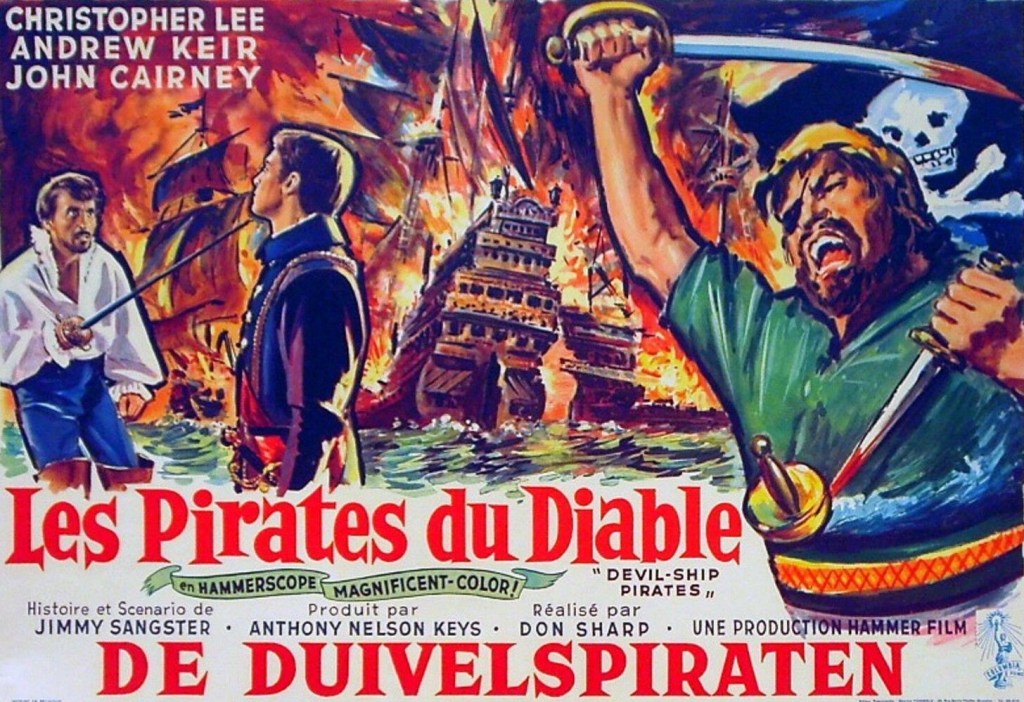
It wasn’t just the censor who put paid to the chances of some films receiving a cinema release. Even more likely, a movie fell foul of distributors or cinema circuits especially in countries where chians were more dominant such us Britain.

Some cultural boundaries were never meant to be crossed. A country like Britain that barely saw a drop of sunshine from one year to the next could hardly be expected to appreciate the joys of endless sunshine instanced in the sub-genre of movies revolving round surfing and beach activity. This was slightly surprising given that every spy picture came with a bevy of beauties in bikinis, but the slight stories and even more miniscule budgets of the beach movies failed to find an audience in Britain. Although Beach Party (1963) with Robert Cummings and Bikini Beach (1964) starring Frankie Avalon and Annette Funicello got the series off to a decent start, it was quickly downhill thereafter, the bulk of this kind of picture never shown not even the likes of The Ghost in the Invisible Bikini (1966) boasting an impressive cast in Boris Karloff, Basil Rathbone, Elsa Lanchester and Nancy Sinatra.

Whether or not they might have fared better at the box office will never be know because they were not given a chance. In Britain two cinema chains – ABC and Odeon (also including Gaumont) – predominated and if a movie failed to win a circuit release on either there was little chance of it opening at all. In general, assuming a programme did not always comprise a double bill, ABC/Odeon/Gaumont  between them showed around 200 films a year. Allowing that Hollywood produced 300 movies on an annual basis and the domestic industry produced about 75-100 and space had to be found for the occasional reissue or foreign blockbuster, it was no surprise that some films were just ignored altogether – never seen in Britain or received a derisory release.

This was not a situation that would be restricted to Britain. Every country in the world in the 1960s wanted to protect its domestic output, limiting audience access to American or British films by various embargoes or through the censor. Spain, for example, had 370 films on its backlog in 1962. But Britain is an interesting example since culturally it was closest to America and in theory at least there should have been no bar to movies making the Atlantic crossing.

As well as the beach party anathema, Britain film bookers proved resistant to the charms of country-and-western music, no homes found for the likes of Hootennany Hoot (1963), Nashville Rebel (1966) starring Waylon Jennings and That Tennessee Beat (1966). A variety pictures concerning serious subjects like racism, politics, drug addiction, or mental illness put paid to the prospects of, respectively, Black Like Me (1964), The Best Man (1964) – directed by Franklin J. Schaffner and starring Henry Fonda and Cliff Robertson – Synanon (1965) with Stella Stevens and Andy (1965).

Neither did stars necessarily open doors. Henry Fonda led the field in circuit disfavor with The Best Man, The Dirty Game (1966) and Killer on a Horse (1966). Also out in the exhibition cold: Act One (1963) with George Hamilton, Jason Robards and George Segal, Virna Lisi and James Fox in Arabella (1967), Who Has Seen the Wind (1965) with Edward G. Robinson, Maximilian Schell in Beyond the Mountains (1966), Ginger Rogers and Ray Milland in The Confession (1965), Rossano Brazzi and Shirley Jones in Dark Purpose (1964), Anthony Perkins in Violent Journey (1965), Robert Taylor and Anita Ekberg in The Glass Sphinx (1966), and Alec Guinness and Gina Lollobrigida in Hotel Paradiso (1965).

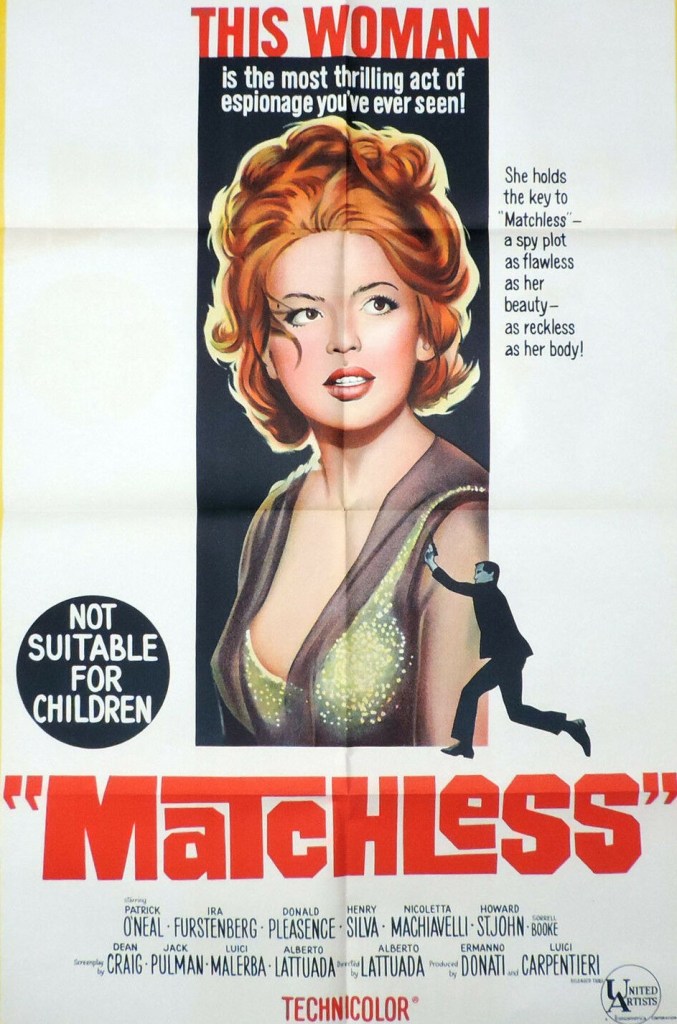
Other big names unwanted by the circuits: James Mason in Love Is Where You Find It (1967), Patrick O’Neal in Matchless (1966), Marcello Mastroianni and Pamela Tiffin in Paranoia (1965), Anthony Quinn and Rita Hayworth in The Rover (1967), Raquel Welch in Shout, Shout, Louder, I Don’t Understand (1966), Rod Steiger in Time of Indifference (1966), Troy Donahue in Come Spy with Me (1967), Angie Dickinson in I’ll Give My Life (1960),  and Elke Sommer in The Wicked Dreams of Paula Schultz (1967)

On the comedy front add to that list: Jackie Gleason in Papa’s Delicate Condition (1962), The Outlaws Is Coming (1965) with The Three Stooges and Woody Allen in What’s Up, Tiger Lily? (1966). Despite headlining Jayne Mansfield, Las Vegas Hillbillies (1966) found no takers. But that was not unusual for Mansfield. Other films never considered for the circuits were Promises, Promises (1963), The Fat Spy (1966), Panic Button (1964) co-starring Maurice Chevalier, and Single Room Furnished (1968). No room was found for  Jeffrey Hunter trio – Battle Royal (1965) with Luciana Paluzzi hot after Thunderball, The Christmas Kid (1967) and Witch without a Broom (1967). John Saxon – generally appreciated as a supporting actor – found no circuit support for pictures in which he was top-billed such as The Ravagers (1965) and The Cavern (1965) with Rosanna Schiaffino.

There was very low interest in William Castle gimmick-ridden horror films 13 Ghosts (1960), Mr. Sardonicus (1961) and 13 Frightened Girls (1963) and none at all in Project X (1967) while  the films of Samuel Fuller scarcely got a look-in, in part due to censorship, Underworld USA (1960) the only one to get any bookings. Despite the general demand for horror, The Blood of Dracula’s Castle (1969), Blood Bath (1966), Queen of Blood (1966) directed by Curtis Harrington, and Orgy of Blood (1968) did not get onto the bookings starting grid. Nor did Michael Rennie in Cyborg 2087 (1966) or Scott Brady in Destination Inner Space (1966) or Women of the Prehistoric Planet (1966).

Tammy and the Millionaire (1967) was one too many in the previously popular series. While topping the pop music charts, Sonny and Cher were considered box office busts, Wild on the Beach (1965), Good Times (1967) directed by William Friedkin and Chastity (1967) all failing to bag a booking.

The term “shelved” had a different meaning in the United States and tended to means films which had been cancelled at the production stage, rather than completed but not finding their way into the release system. In 1969, when Warner Brothers tied up with Seven Arts, around 40 projected pictures bit the dust including Sam Peckinpah pair The Diamond Story and North to Yesterday, Heart of Darkness to be directed by Andrej Wadja, William Friedkin’s Sand Soldiers, Edward Dmytryk’s Act of Anger, Paradise from a story by Edna O’Brien, and Sentries from the Evan Hunter novel.  Some movies killed off at this point would eventually be filmed: The Man Who Would Be King (filmed in 1975), 99 and 44/100%  Dead (1974) and a musical version of Tom Sawyer (1973)

While not on this scale, movies were cancelled all the time. Some movies carried hefty price tags. Shirley MacLaine nabbed $1 million after a pay-or-play deal after the cancellation of musical Bloomer Girl to be directed by George Cukor. the director was also initially involved in a version of Lady L to star Tony Curtis and Gina Lollobrigida. it was scrapped in 1961 but later filmed with different stars in 1965.

Even so, the shelf of unreleased films in the U.S. was at times very crowded. Although the vast majority of studio pictures received some kind of release, either in the arthouse or drive-in circuits if not deemed commercial enough for first run, sometimes they sat around for an unusually long time. When Variety determined in 1967 that the Hollywood vaults were bulging with over 125 completed pictures, among them were several movies that would not see the light of day until well into 1968 including Dark of the Sun, Planet of the Apes, Hang ‘Em High and The Odd Couple.

Although there were circuits in the United States, they were not national nor as dominant as in the U.K. so most films managed to find a way into the system somewhere, and therefore until the likes of The Picasso Summer (1969) and The Extraordinary Seaman (1969) – as previously mentioned in the Blog – were deemed to not hold sufficient commercial attraction and were dumped more or less straight into television then the number of movies not screened was considerably lower than in Britain.

SOURCES: David McGillivray, “The Crowded Shelf,” Films and Filming, September 1969, p15-22; “Lady L Cold,” Variety, June 21, 1961, p19; “Spain’s Unreleased Backlog: 370,” Variety, May 2, 1962, p120; “Shirley Yens $1-Mil on Fox’s Unmade Bloomer,” Variety, September 7, 1966, p7; “H’wood Backlog Hefty at 125,” Variety, September 13, 1967, p3; “Courtesy of the Film Road,” Variety, July 23, 1969, p 5; “Deferred Film Deals at W-7,” Variety, July 23, 1969, p 5; “Projects Scratched at Warners,” Variety, October 22, 1969, p6.

The Blogger Speaks

This weekend I am one of the very few male speakers at the “Doing Women’s Film and Television History” international conference being hosted by Maynooth University, Dublin, on July 10-11. Naturally it is a virtual conference but it is packed with speakers from all over the world who have been researching issues relating to women working in film and television. I am not an academic so it is signal honor for me to be invited to speak at a university-run conference.

My topic is “When Women Ruled Hollywood” which looks at female salaries in the movie business from 1910 to 1970. Although most people think women were hard-done-by in Hollywood and generally considered as second-class citizens, I found this was not at all the case. In the 1910s, Mary Pickford earned double the earnings of Charlie Chaplin. In the 1920s, the top earning star of either gender was Corinne Griffith.s

At the start of the 1930s, Greta Garbo was the dominant figure when it came to salaries. In 1935 Mae West was the second-highest earner in the whole of America, beaten only by William Randolph Hearst, immortalised as Citizen Kane.

In the annual salary league for the remainder of the 1930s and 1940s, Claudette Colbert (twice), Irene Dunne, Ginger Rogers, Joan Crawford and Deanna Durbin all topped the rankings and in the years when males came out on top the female stars were not far behind.

While female salaries dipped in the 1950s, by the 1960s women were again beating the males at the salary game, Elizabeth Taylor way ahead of everybody, Audrey Hepburn on $1 million a picture, Julie Andrews out-earning Paul Newman in Torn Curtain and newcomer Barbra Streisand reaching unheard-of commercial heights.

I had written a couple of business histories of Hollywood, the research for which took me back to 1910 and in the course of writing those books I discovered information about salaries that would have been out of place in those works, so I dug around some more and came up with the information for this talk.

If you want an idea of my speech, you can check out this short sample on Youtube.

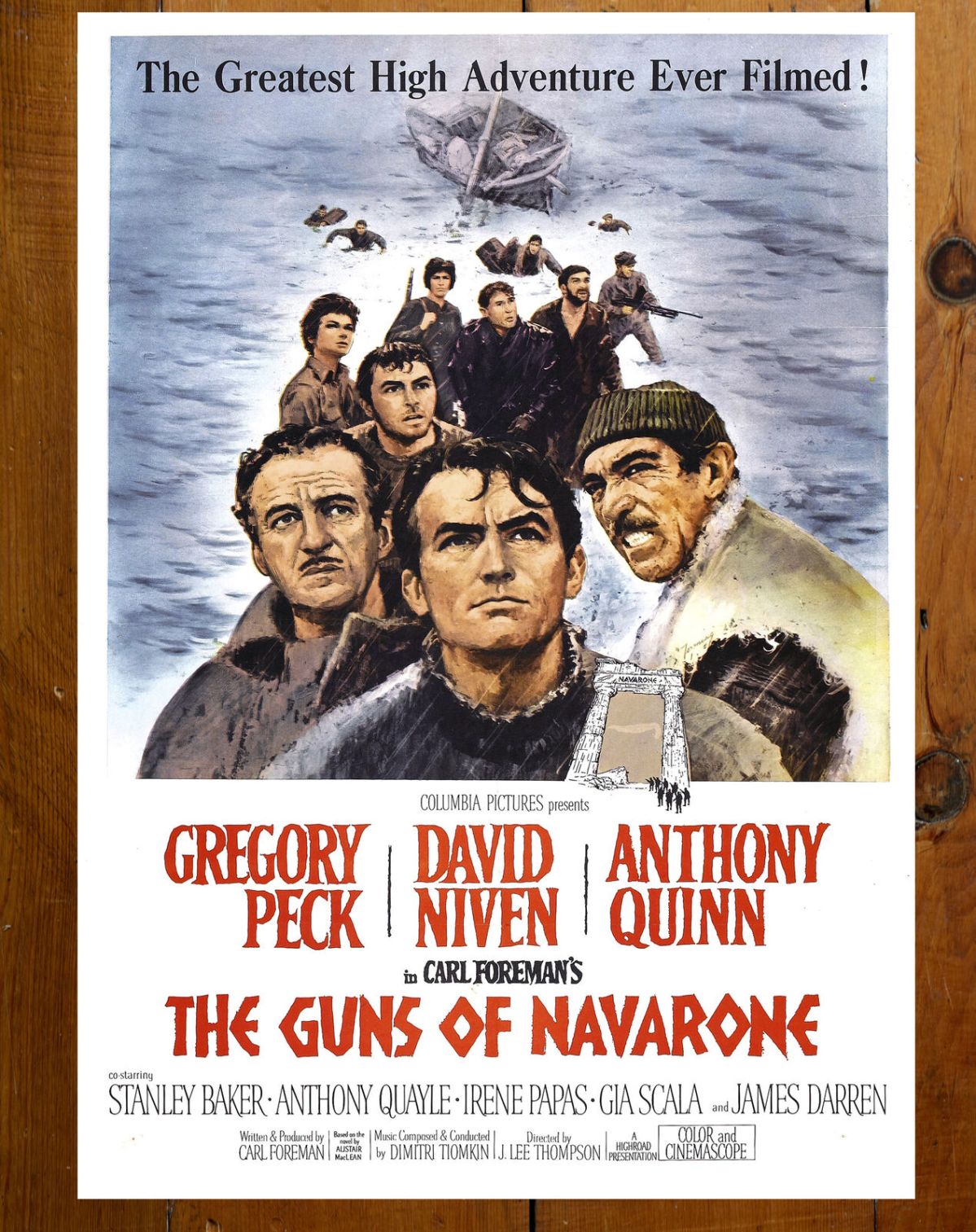
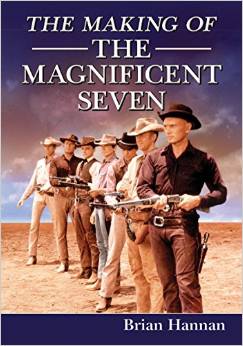
Last Chance to Enter – Win a Signed Copy of “The Making of The Guns of Navarone”

What were the most popular films of last month on the Blog in terms of views? Was it Julie Christie hunting for a lover in In Search of Gregory, Doris Day comedy Move Over, Darling, James Garner and Sidney Poitier is all-action western Duel at Diablo, British newcomer Carol White under threat in Daddy’s Gone A-Hunting or twisty thriller The Secret Partner with Stewart Granger?

Or was it none of these? Would you pick instead Britt Ekland as an unlikely Amish stripper in The Night They Raided Minskys or a depressed Anne Bancroft in The Pumpkin Eater or Robert Vaughn in spy thriller The Venetian Affair?

Or would your choice be Mafia thriller Stiletto with Alex Cord or Claude Chabrol’s French love triangle Les Biches or Richard Widmark in The Secret Ways, an adaptation of the Alistair Maclean bestseller?

Guess which were the top five films last month in terms of views in ascending order and you could win a signed copy of my book The Making of The Guns of Navarone. This is the revised edition with for the first time over 30 illustrations.

Email your answers to bhkhannan@aol.com

Closing date is today at midnight.

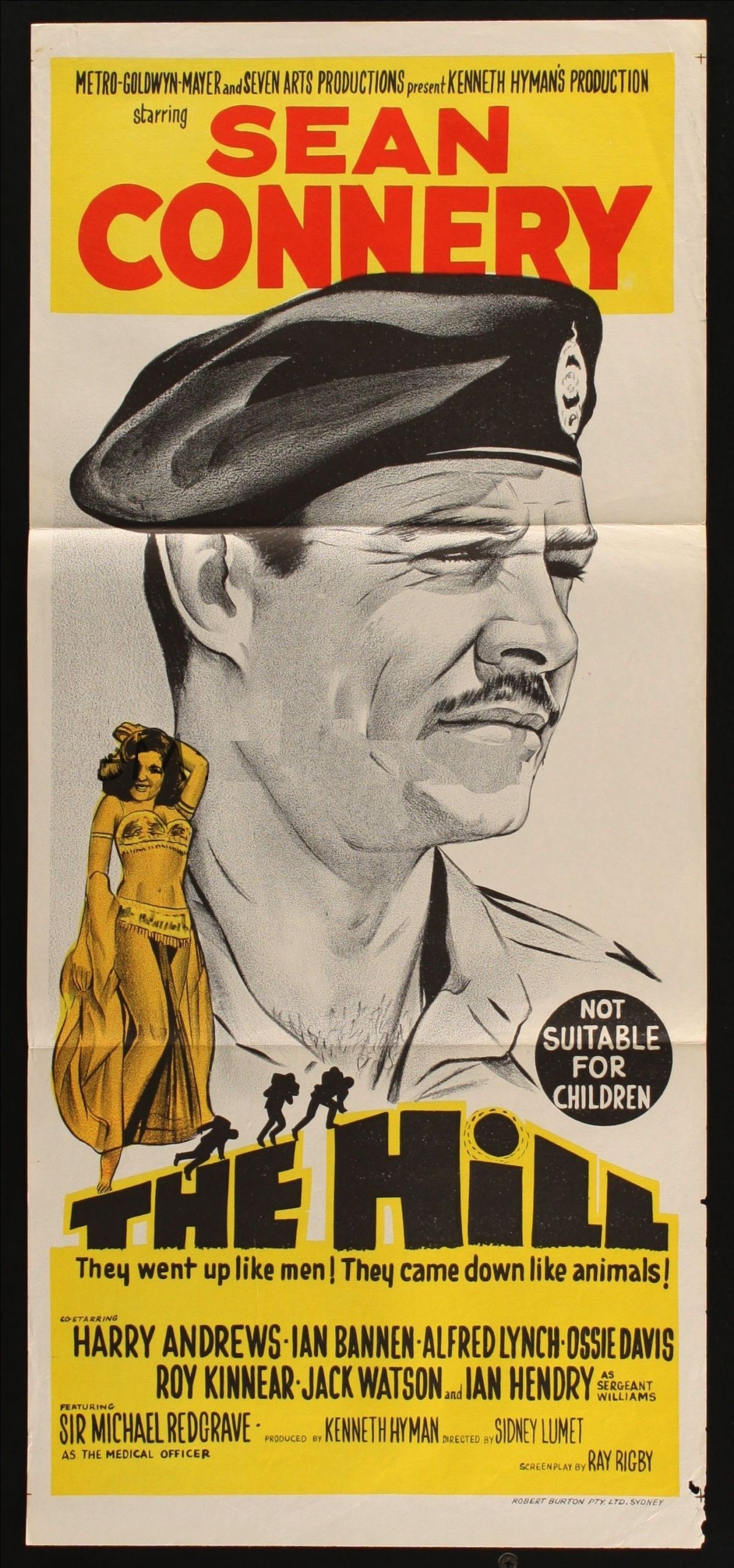
The Hill (1965) ****

Set in a British Army prison camp in North Africa during World War Two ruled by sadistic Sergeant Wilson (Harry Andrews) who believes himself above the regulations he forces others to follow, The Hill is a parable about the hypocrisy of totalitarian rule. And much of what is shown would be offensive to modern sensibilities. Although the commandant (Norman Bird) and medical officer (Michael Redgrave) are his superior officers, Wilson runs the unit by force of personality. He believes his ruthless treatment of the prisoners turns them into proper soldiers. Into his fiefdom come five new prisoners including coward Joe Roberts (Sean Connery), spiv Monty Bartlett (Roy Kinnear), African American Jacko King (Ossie Davis), another Scot Jock McGrath (Jack Watson) and weakest link George Stevens (Alfred Lynch).

Most films about prisons emphasize imprisonment, most scenes taking place in cells or other places of confinement. Sidney Lumet (The Pawnbroker, 1964) directs this film as though it is a paeon to freedom with incredible shots of the vista within which the men are contained. He uses some of the most bravura camerawork you will ever see outside of David Lean. The film opens with a two-minute crane shot credit sequence that begins with a prisoner collapsing on the titular hill and pulls back to reveal the entire encampment and follows with a one-minute reverse tracking shot of Andrews striding through his domain. And while the camera controls what we see, our ears are constantly assailed by the constant drumbeat of other marching prisoners.  

Climbing the hill in full pack would break any man and those who collapse are roused by pails of water. The first to crack is Stevens who is constantly tormented by homophobic jibes. Continuous racist abuse is heaped on Jacko King until driven to the point of madness he begins to behave like a gorilla which frightens the life out of his superiors. Obeying orders, says Joe Roberts, is “like a dog picking up a bone.”  RSM Wilson is out of control, the commandant spending his nights with a prostitute, the medical officer clearly sent here as punishment for some previous misdemeanor. Of the senior staff only Harris (Ian Bannen) comes away with any dignity, constantly trying to thwart the worst bullying.

When Stevens dies suddenly, the film changes tack and becomes a battle for survival among those who could be blamed for causing his death and those who dare to point the finger.  Wilson has no problem stitching up his colleagues and blackmailing the medical officer while Roberts is beaten up for his effrontery in standing up to authority. But the astonishing presence and self-confidence and, it has to be said, courage of Wilson lords it over everyone, and there is an extraordinary scene where he forces the entire battalion of prisoners to back down when they are on the brink of open rebellion.

Connery as Roberts is superb in what is his first dramatic role in a bread-and-butter dramatic production rather than the glossier Marnie (1964) and Woman of Straw (1964) and while he has his moment of defiance he gives enough glimpses of vulnerability and fear to ensure we do not mistake him for his alter ego James Bond. Ian Bannen delivers a touching assured performance far removed from the nasty sarcastic personalities he portrayed in his other desert pictures, Station Six Sahara (1963) and the Flight of the Phoenix (1965).  Ossie Davies, as defiant as Connery, is brilliant as the man who works out a way to beat the enemy by confusing them; the scene in the commandant’s office where he treats the officer as his inferior is a tour de force.   

Although the Army is meant to run according to established regulation, where obedience to a superior is paramount, it is equally apparent that it can also become a jungle if those who are the fittest assume control. Sgt Wilson demands unquestioned discipline even as he is breaking all the rules in the book. But he retains his authority not just by bullying, but by intelligence, exploiting weakness, coolness under pressure and by welcoming confrontation, his personality as dangerous as any serial killer.   

Discover WordPress

A daily selection of the best content published on WordPress, collected for you by humans who love to read.

The Atavist Magazine

by Brian Hannan

WordPress.com News

The latest news on WordPress.com and the WordPress community.