The idea that Hollywood ever knew what it was doing can be seen not just in the follies of the 1960s when, let’s be clear, by the end of that decade everything was falling apart. The 1970s were meant to be different. Younger bucks were in chargr of studios, the Brat Pack was in control and movies could be both critically-acclaimed and become box office blockbusters. Witness The Godfather (1972), The Sting (1973), Jaws (1975) and Star Wars (1977). But, it turns out, chief executives, directors and stars could as easily commit to pictures that never saw the light of day – and from some of the industry’s biggest studios.
At one point, United Artists was as infallible as you could get. Box office gold oozed from its James Bond. The Magnificent Seven, Pink Panther and Rocky franchises, Woody Allen wooed away from the arthouse. And it had a highter batting average than most when it came to the Oscars – taking Best Picture for West Side Story (1961), Tom Jones (1963), In the Heat of the Night (1967), Midnight Cowboy (1969), One Flew over the Cuckoo’s Nest (1975), Rocky (1976) and Annie Hall (1977). So you’d think the studio had a lock on what would work and what wouldn’t. Not everything might be touched with genius, but you’d think it would have fair chance of getting made.
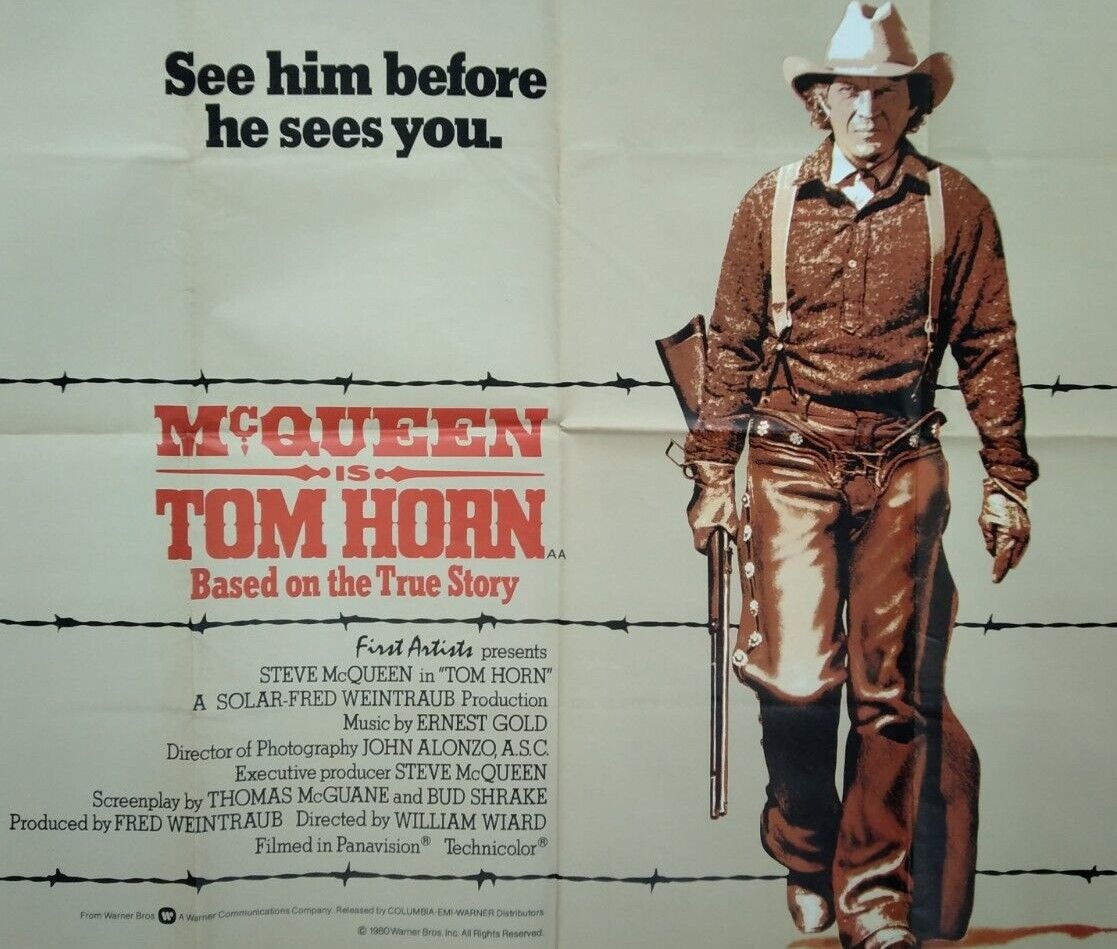
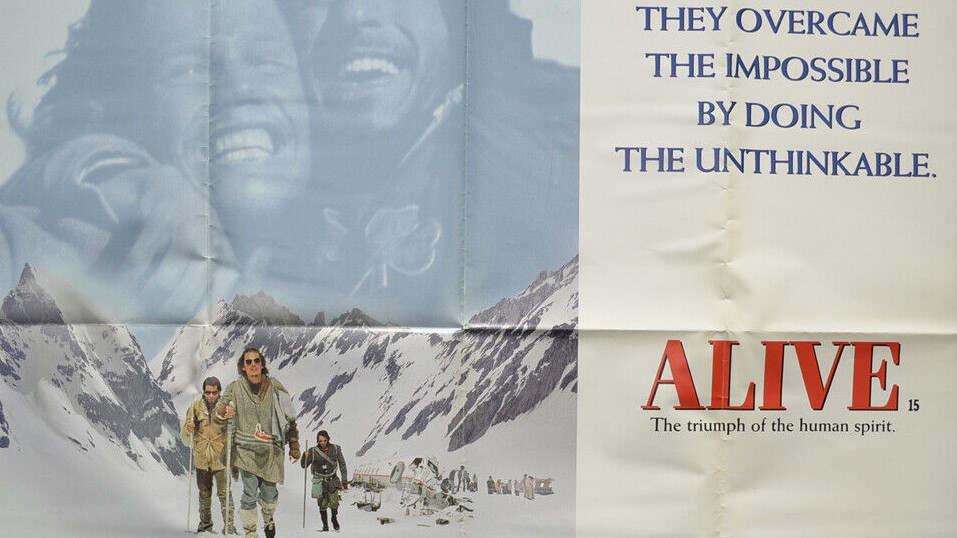
Well, yes and no. Some projects did end up being greenlit but at another studio and with a different director or star. Others just bit the dust. John Schlesinger had his eye on Alive (the story told recently in Society of the Snow), but that took nearly another two decades to appear, and across town at Paramount and with director Frank Marshall. Schlesinger didn’t have much luck – Coming Home had his name on it in 1975 but three years later it was Hal Ashby in the director’s chair. Screenwriter William Goldman of Butch Cassidy and the Sundance Kid (1969) fame had snagged producer Elliott Kastner to railroad Mister Horn but, sabotaged by a rival production Tom Horn starring Steve McQueen, it ended up on television.
Liza Minnelli was tagged to star in Ring Them Bells. No dice. Paul Newman was announced as star of The R Document, based on the bestseller by Irving Wallace. Dead end. Jack Clayton had Massacre at Fall Creek on his slate. No go.
Westerns had trouble getting off the ground at Columbia. Bury My Heart at Wounded Knee, based on the seminal book, to star Marlon Brando, a known champion of Native Americans, was dropped due to a “failure to agree on costs.” Fear of Flying, based on the sensational bestsller by Erica Jong, was canned after a spat between the author and producer Julia Philips.
How about family dream team of Henry, Jane and Peter Fonda? American Revolution was the title of this project. Father and duaghter eventually got it together in On Golden Pond (1981) but this stiffed at the start. Robert Mitchum and Raquel Welch? Now that’s what you call a potent combination. But The Bind stalled on the starting grid. James Bridges had a reimagining of Houdini and Sidney Lumet a picture called Devil Drives but neither went anywhere. Nicolas Roeg was in the driving seat for Out of Africa with Ryan O’Neal down as star but when it appeared a couple of years later, to box office and Oscar applause, neither was involved. Brian G. Hutton was working on Ghost Boat about a submarine that disappeared in 1943 and reappeared in 1975. Sound familiar? An aircraft carrier went missing in 1941 in The Final Countdown (1980).
But the King of the Never Was reigned at Cannon. Tobe Hooper was a perennial loser. He was associated with Spiderman, Pinnochio The Robot and King Solomon’s Mines, the latter made but minus him. Michael Winner was down for Captain America and Delta Force 2 but these were made without him. Charles Bronson was the denoted star of The Golem and a remake of Rider on the Rain (1970) but even his marquee pull couldn’t get these off the ground. John Travolta was teamed with Rebecca de Mornay for Crack and with Whoopi Goldberg for Public Enemies to no avail. Other proposed star turns were Al Pacino in The Investigation and Walter Matthau and Whoopi Goldberg in another remake, Born Yesterday (1950). Faye Dunaway was replaced by Julie Andrews in Duet for One (1986).
And sequels were no longer nailed-on for release. Whatever happened to Freebie and the Bean 2, Cobra 2 and Superman 5?
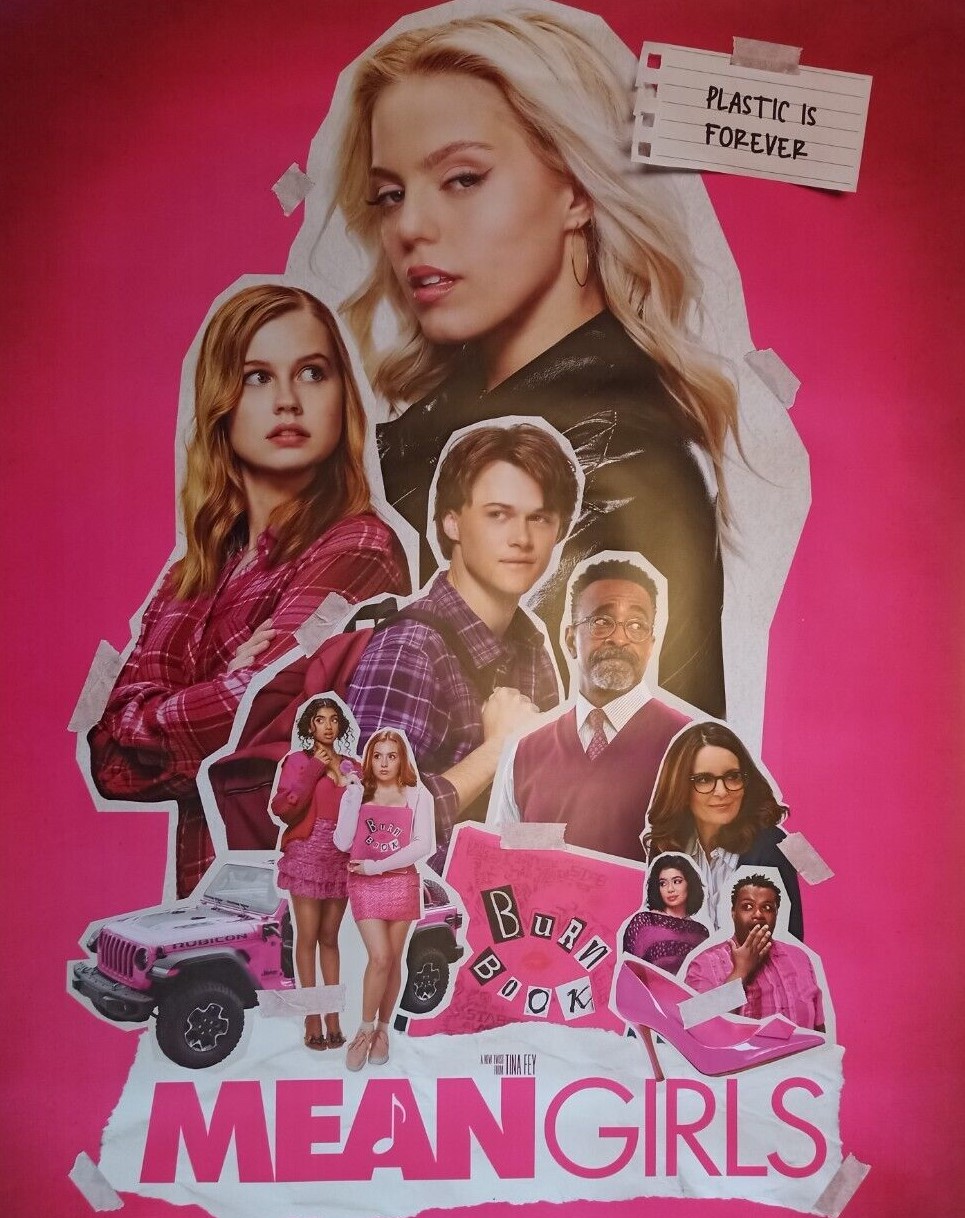
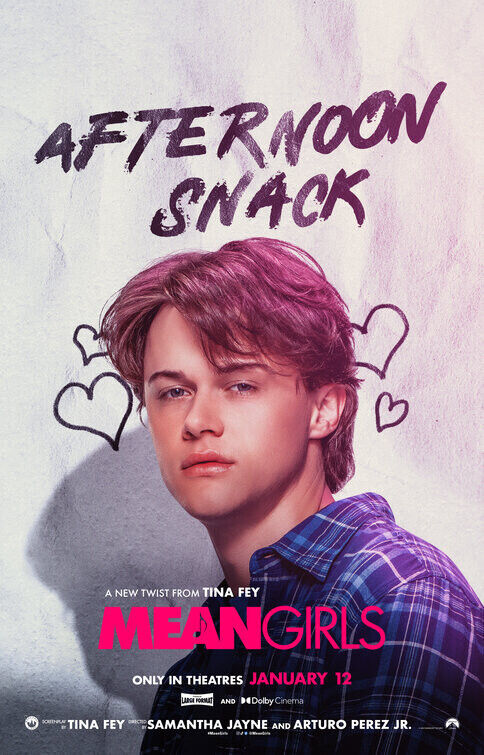
Hollywood has clearly grown leery of the musical after the disastrous public reaction to Steven Spielberg’s much-touted remake of West Side Story (2021). Or of just marketing them. I turned up to see Wonka (2023) not realizing it was pretty much a full-blown musical, because the trailer made little reference to that fact. And the same holds true of Mean Girls. So it’s hardly surprising both received mixed reviews from audiences expecting more straightforward narratives.
Of course, the problem is that musicals in the past came with a substantial in-built audience. No movie was ever made until a musical had ended its Broadway run of four/seven/ten years and hit London’s West End and toured the world and sold millions of copies of the original cast recording so that when the movie finally appeared there was at least the prospect of a decent opening from fans of the stage show. They might gripe at what Hollywood did to their beloved show, but at least they came, and they came back, giving the movie the legendary “legs” if they thought the transformation was good.
I enjoyed Wonka primarily because of the narrative invention and Timothy Chamelet’s terrific performance but the singing and dancing left me cold, the only tune that struck any kind of chord was a leftover from Willie Wonka and the Chocolate Factory (1971). I didn’t come to Mean Girls with trepidation. I had no idea the original had turned into a beloved cult classic and therefore didn’t arrive armed with objections to the various changes.
I only came because there was nothing else. So I double-billed it with a second stab at The Beekeeper (2024) and emerged from the experience wondering why no social media guru had though fit to tag these pictures a la Barbieheimer – Meankeeper has a nice ring to it (can’t be Bee Girls because there already is Invasion of the Bee Girls) – because they made a zingy combination.
What struck me most about Mean Girls was the paradox between outward confidence and inner insecurity. The songs acted as soliloquies or confessions or inner turmoil and occasionally they were employed to help tell the story. As a musical, I thought it was flush with inventiveness, fresh, and contained a number of killer songs. I wasn’t acquainted with any of the cast but most appeared capable of carrying a tune.
But it was the dance numbers that really caught my attention. This was Hollywood throwback. Dancing ensembles appeared out of nowhere, doing incredibly daft routines, using whatever props came to hand, and it proved an insanely infectious success. The characters, of course, are cliches, alpha females and those caught in their thrall or rebelling against their power. It’s hardly original to note that the worst thing that can happen to an alpha female is to get a pimple or put on weight.
In another picture that would have been its downfall. Instead, the actors went overboard with the cliché, tore the face off it, and except for scrambling around at the end trying to find some moralizing conclusion that would satisfy wokeness, the approach worked a treat.
Shorn of the earworm numbers of a hugely successful musical, given I had no idea there would be any singing involved, equally I wasn’t waiting to see what they did with a favorite number, and, unlike Wonka, every time they set the tale to one side and embarked, generally all-out, on a tune, I sat back and lapped it up.
And unlike your standard musical, it was filled with neat twists and ripostes, the screenplay slammed full of zingers, and intelligent ones at that, for example, when the carefully-planned revenge plot backfires and social media goes wild to copy Regina’s (Renee Rapp) mascara-streaked face as the latest must-have look, or when the incapacitated Regina admits to liking her enemy Katie (Angourie Rice) only to admit that’s only probably on account of the medication. The “gossip is bad” notion, on the other hand, feels tacked-on although the close-your-eyes-and-raise-your-hand sequence that nails it is actually well done.
I’m not sure what was changed from the stage show and whether I should be irate or grateful for that, because I really don’t care.
On a footnote, this predilection for every aspiring star to have a crazy name is wearing thin. You can’t possibly remember all the odd combinations or inventions. Presumably, these are intended to attract attention, but when you get so many thrown at you all at once, the mind just freezes into disinterest.
The wife-and-husband team of Samatha Jayne and Arturo Perez Jr, in their debut feature, made a sparkling start to a big-screen career. Tina Fey wrote the sharp screenplay as she did the original 2004 movie, but I don’t know if she wrote the lyrics of Jeff Richmond’s excellent songs.
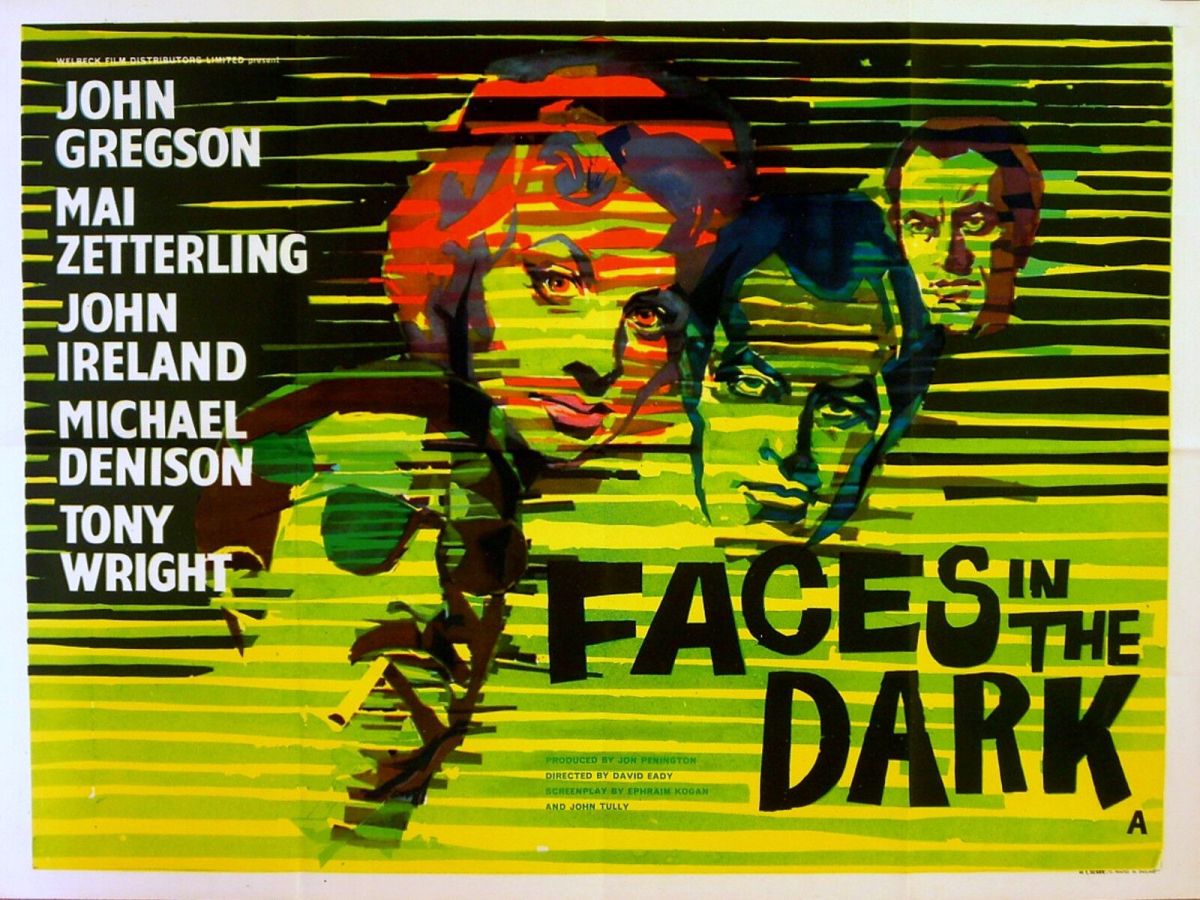
Had his been tagged “From the Makers of Vertigo”, it might have immediately attracted a greater immediate audience and been treated these days with more critical reverence. But Vertigo wasn’t the cult film it is now, so the names of the authors of the source book, Pierre Boileau and Thomas Narcejac, would have no promotional value.
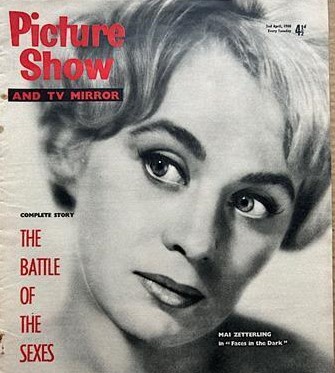
Throw in a stunning score by Mikis Theodarakis (Zorba the Greek, 1964) and a top-line cast including Swedish bombshell Mai Zetterling (Only Two Can Play, 1962), cult character actor John Ireland (The Ceremony, 1963) and an early role for Nanette Newman (The Wrong Box, 1966) plus a gender switch on the traditional gaslighting plot and you have makings of a classy little number.
When an experiment goes wrong, ambitious arrogant businessman Richard Hammond (John Gregson) is blinded. To help him recuperate wife Christiane (Mai Zetterling) flies him off to their luxurious Cornwall retreat where, to ensure is mind isn’t overloaded with business concerns, she switches off the phone. Along for the ride are his sponging brother Max (John Ireland), business partner David (Michael Denison), housemaid Janet (Nanette Newman) and chauffeur Clem (Tony Wright).
When things are not what they seem – the cat has suddenly lost its tail, a peach plant has disappeared from the garden, he smells pine, hears church bells – he believes he is going insane. Doesn’t take long before he realizes this is not a haven, but a trap. Sounds providing the greatest clues, he hears a giveaway clicking, indicating the presence of David, in his wife’s bedroom when the partner is meant to be a hundred miles away.
His brother has also disappeared, believed dead, and when his wife gives the help the night off and he is left in the house with the lovers is convinced they are trying to poison him and refuses to eat any food. Given sounds are so important, there’s one brilliant scene, where, having escaped, he discovers none of the locals can understand what he’s saying, and not because he’s gabbling either. But that’s such a clever plot point, I wouldn’t be a spoiler.
So you’ve got tension fairly climbing the walls .
The only downside is that Richard is such an unlikeable character – not a poor soul like Audrey Hepburn in Wait until Dark (1967) – that it’s hard to summon up the sympathy an audience requires for such a story to properly work. Theoretically, he’s just a driven man, whose genius is being blocked by the cynical bankers, but from the outset he’s full of bluster and nasty put-downs, and has everyone in the factory he owns on edge.
Anger at his condition and fear that insanity or failure lies ahead puts him in a constant rage and, heavily sweating for no particular medical reason, he’s not the most charismatic of screen characters. Even though his reaction would fit with a successful businessman failing to come to terms with the calamity, those elements, which might have evoked greater sympathy, are somewhat adrift when they get tangled up with the plot.
Director David Eady (The Verdict, 1964) does his best to compensate. The music, as mentioned, helps, throbbing piano rather than screaming violins. And there a couple of neat visuals, the swirling smoke of the credit sequence reappearing to devastating effect in one sequence. But, mostly, he lines up reasons for Richard to begin to question his sanity and believe he is being duped – he can’t read documents he must sign and as the only part of his handwriting that stands up is his signature suspects his impoverished brother will write a larger sum on a cheque he signs.
And since most of this unfolds through the mind of Richard, the director plays fair with the audience. There are no nods and winks about the nature of the relationship between wife and partner. Even though she confides in David that she’s planning to leave Richard, there’s no indication that it’s for the partner.
So this is more like a detective story and, as with Vertigo, featuring an obsessive character driven mad by obsession, both led on by the devious, and having to piece together a strange amalgam of clues.
John Gregson (The Frightened City, 1961), normally essaying more stoical characters, overacts, but the others do the opposite. Mai Zetterling is convincing and former British matinee idol Michael Denison plays against type (he wouldn’t make another movie for 30 years). Nanette Newman shows promise while John Ireland reins in the surliness. Ephraim Kogan (in his sole movie credit) and John Tully (who didn’t get another movie credit for the decade) wrote the screenplay.
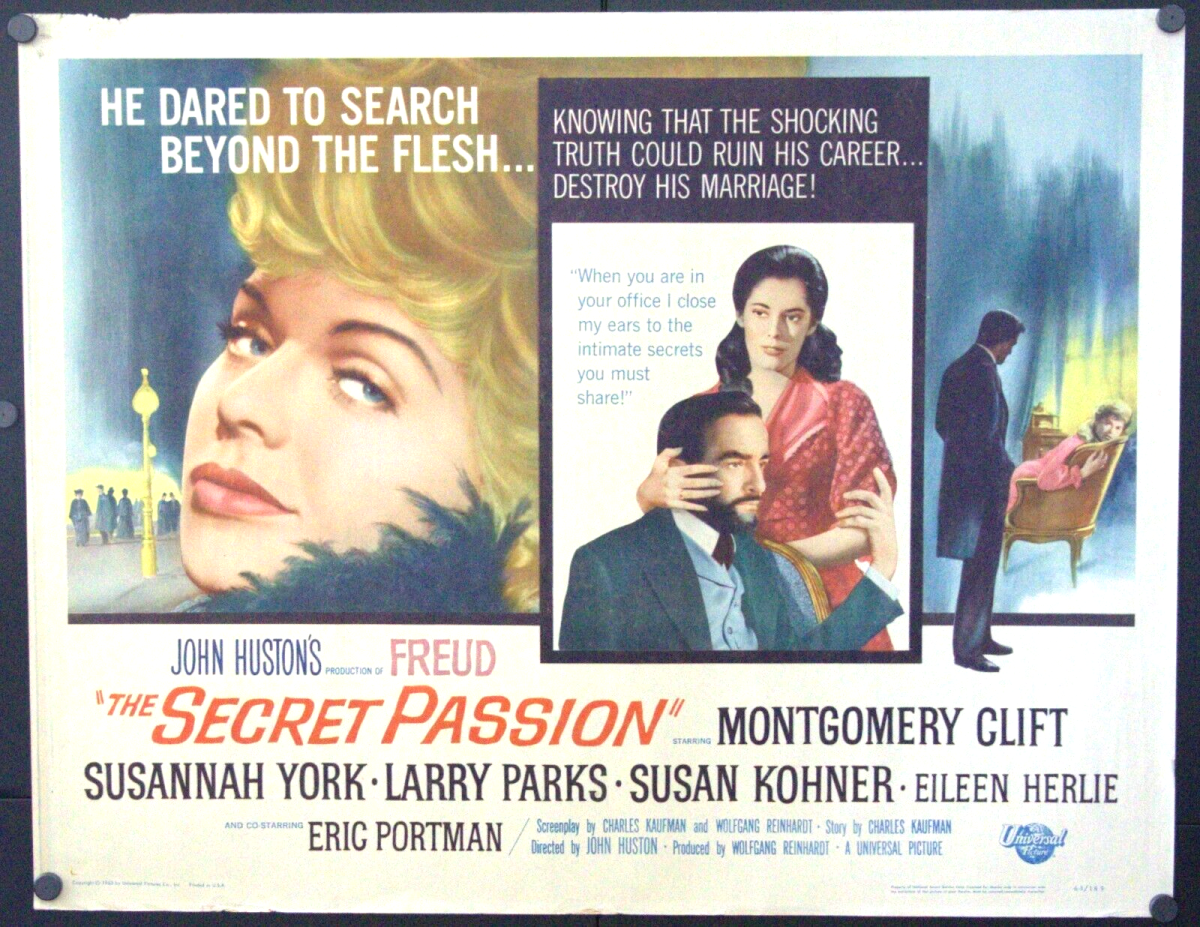
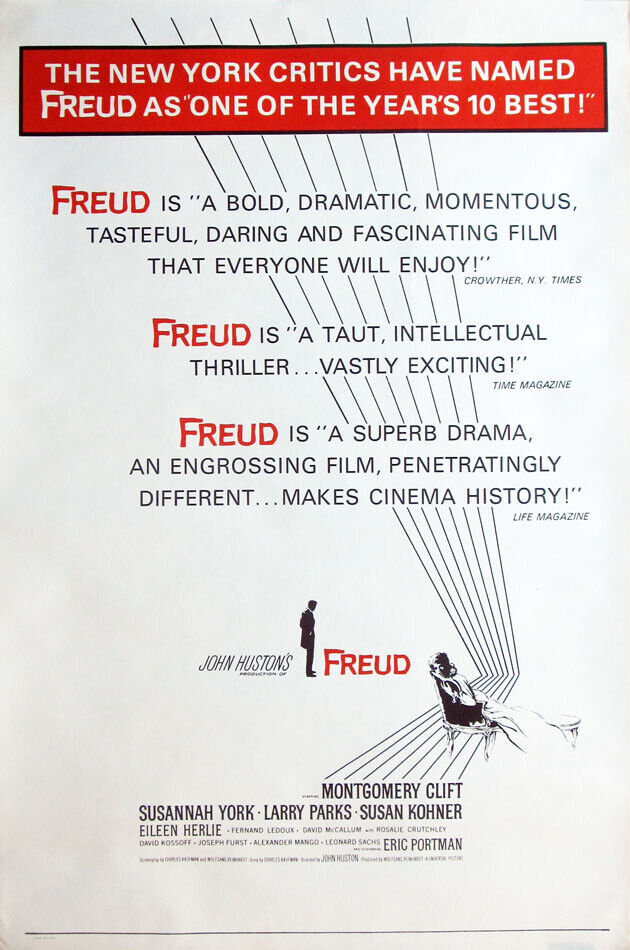
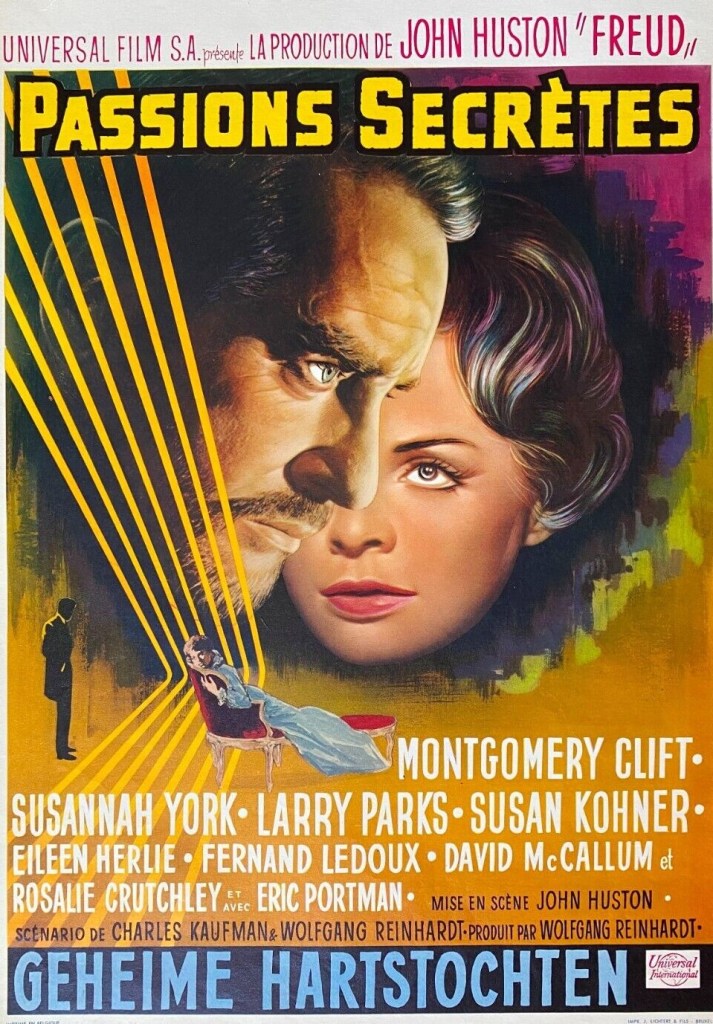
The Oppenheimer of its day. Instead of splitting the atom, seizing on inexplicable division within the brain. Rather than untapping raw energy concealed inside a previous passive element, delving into the raging unknown of the human psyche. While lacking Christopher Nolan’s cinematic bravura and his post-discovery crucifixion of the main character, nonetheless an intense, under-rated piece. Without doubt one of the few genuine examples of ideal casting – tortured actor playing tortured character.
In the main it’s a tale of three case studies: Oedipal complex exhibited by suicidal Carl (David McCallum), the paternal fixation of Cecily (Susannah York), and Freud’s own sexuality, his strong feelings for his mother. Along the way there’s a potted history of psychiatry. Freud eventually discards the traditional route of hypnotism for getting to grips with a character’s malfunctioning brain and invents the new technique of simply talking to the person. Bit by bit like a forensic analyst going deeper and deeper into character-forming events in early childhood that trigger shame, revulsion and guilt in emotional maturity.
In the case of Cecily, her inability to face the consequences of early circumstances – she was abused by a father she had convinced herself she adored – forces her either to reinvent key moments of her life (believing her father died in a hospital rather than a brothel) or to become afflicted by blindness, phantom pregnancy and paralysis.
It doesn’t shy away from the intimacy of the psychiatrist-patient relationship that can lead to a vulnerable client falling in love with her doctor or, conversely, the physician taking advantage. Freud often felt bound up with his patients’ dilemma, some potent imagery shows him physically unable to free himself from a client.
It unwinds like a detective story, almost a film noir where the investigator goes down the wrong path and finds clues buried within himself, becoming aware of how complicit the mind can become in concealing from the conscious part of the brain what the unconscious cannot deal with.
Theoretically, with mental health issues more to the fore these days, we are all familiar with the causes of emotional disturbance but, in fact, far from this being old hat, in the same way as Oppenheimer shed new light on a significant event with which we are all familiar, I found it quite fresh, especially as, in his intensity, Freud could have been blood brother to the renowned physicist.
As you might expect, Montgomery Clift (The Misfits, 1961) is quite superb. You might think there’s not much acting involved here, Clift just being himself. But compare this performance with The Misfits or the later The Defector (1964) and you can see both similarities and considerable differences. No actor was more adept at revealing soul through the eyes.
The less experienced Susannah York (They Shoot Horses, Don’t They, 1969) and David McCallum (Sol Madrid / The Heroin Gang, 1968) overplay their hand, depending too often on physical expression to show torment. Larry Parks (The Jolson Story, 1946), in his final movie, is more discreet as the shrink falling dangerously in love with his patient without stopping to examine what forces led her to harbor romantic inclination towards him.
As with Oppenheimer, information dumps are made credibly dramatic, and Freud’s lecture on infant emotion to a shocked audience is a stand-out.
John Huston (The Night of the Iguana, 1964) wisely uses the Viennese backdrop as window dressing rather than the camera over-indulging in scenery, although there is a hint of the Sherlock Holmes in scenes of illicit night life.
French philosopher and playwright Jean-Paul Sartre (The Condemned of Altona, 1962) worked on the screenplay along with Charles Kaufman (Bridge to the Sun, 1961) and Wolfgang Reinhardt (Hitler – The Last Ten Days, 1973).
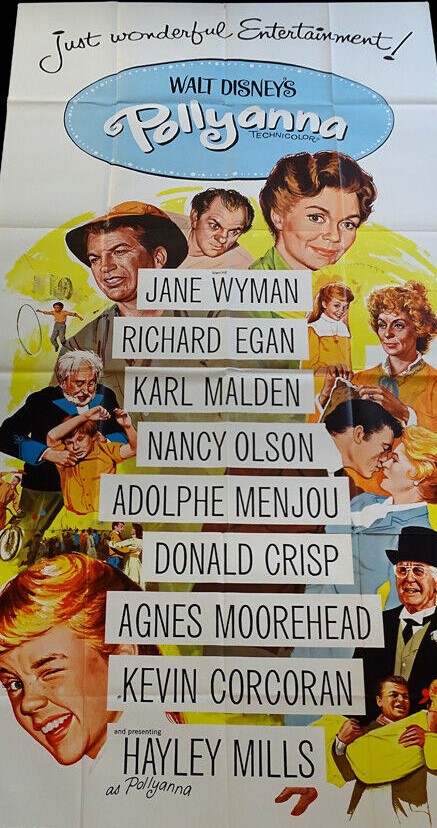
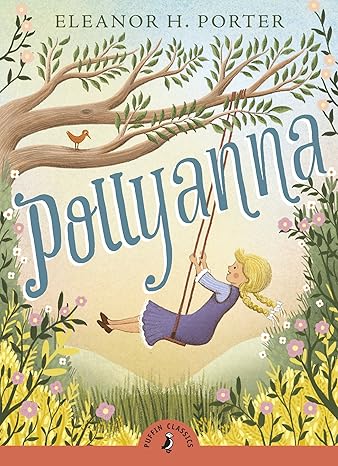
Walt Disney discarded much of Eleanor H. Porter’s original best seller not to mention a great deal of the tear-jerking section that played to superstar Mary Pickford’s strengths in the silent 1920 adaptation. Pickford was in her late 20s at the time and a movie mogul to boot (having launched United Artists) so had a depth of emotion Hayley Mills (aged 13 during filming) could not hope to match.
The screenplay, by David Swift (Love Is A Ball, 1963) is an object lesson in how to retain the essential element of a story – a positive-thinking orphan alleviates the gloom in an embittered town – while providing enough worthwhile for adult audiences. Disney assembled an awesome cast with three Oscar-winners – Jane Wyman (Best Actress, Johnny Belinda, 1948), Karl Malden (Best Supporting Actor, A Streetcar Named Desire, 1952) and Donald Crisp (Best Supporting Actor, How Green Was My Valley, 1942) – plus four-time nominee Agnes Moorehead and Adolph Menjou.
Despite no Oscar recognition Nancy Olsen had been leading lady to the likes of Bing Crosby (Mr Music, 1950), John Wayne (Big Jim McLain, 1952) and William Holden (Force of Arms, 1951). In effect, parents would be very familiar with the stellar supporting cast.
Orphan Pollyanna (Hayley Mills) – British accent explained by parents being missionaries – , majoring on optimism, tries to enliven a town torn apart by dissent and petty feuds and in thrall to her intimidating aunt and fading spinster Polly Harrington (Jane Wyman). While she tries to see the good in everyone, the rest of the population is forever pointing out the bad. The main source of contention is a derelict orphanage. The townspeople want it demolished and a new one erected. Polly Harrington wishes it preserved in its dilapidated state as a monument to her father who had built it. It’s the kind of attitude someone would take who was just plain determined to get their own way. Pollyanna tries to sway opinion against her aunt, resulting in no end of trouble.
Various sub-plots include stifled romance, Harrington has driven away boyfriend Dr Chilton (Richard Egan), fire-and-brimstone preacher Rev Ford (Karl Malden),another orphan Jimmy (Kevin Corcoran), the reclusive Mr Prendergast (Adolphe Menjou) coaxed back into communal life, and the mayor (Donald Crisp) trying to repair the rifts.
Unusually for a kid’s picture, Wyman, Malden and Crisp each are given a reflective moment to prove they are doing more than taking an easy salary cheque, bearing some of the weight of the narrative, Malden especially allocated more screen time than would be normal in a movie aimed at kids.
I have never read the book nor (to my shame) seen the Pickford version, so I came to the movie with low expectations, anticipating a lazy, maudlin effort. So I was quite surprised to discover how much I enjoyed it and was shocked by the final piece of action which turned the movie on its head. Sure, it relies on a feelgood drive but there is some decent stuff here – Pollyanna’s determination to find goodness in every event and every person takes her into some strange avenues, the rainbow playing on the walls, the “good parts” of the Bible – that these days makes for an entertaining matinee.
At least in Hollywood terms (Mills made her debut the year before in the British Tiger Bay, 1959) Pollyanna falls into the a-star-is-born category. The actress acquits herself well, with her expressive face, while hearing the emotion she packs into the word “gorgeous” is word admission alone. Being older than the usual child star, she was one of the few who made the transition into adult roles. Karl Malden is the pick of the supporting cast but he is given a good run for his money by Jane Wyman. Disney’s trick of peppering a children’s film with actors well-known to the adult audiences was one he would use again.
Swift, in dual capacity as director (and making his movie debut) played down the saccharine nature, making the main character less just automatically bouncing with happiness and more striving to make the best of difficult situations.
You might be forgiven for wondering why Otto Preminger, a past master at film noir, did not simply adapt the source novel by Francoise Sagan by tilting the material in that direction. After all, Preminger had helped create the genre with Laura (1944) and followed up with noir trilogy Whirlpool (1950), Where the Sidewalk Ends (1951) and Angel Face (1952).
The purported saving grace of the Sagan novel is the main character’s guilt at the disaster she triggers, although, from another perspective that could be viewed as author cunning, employing acceptance of culpability to render her more sympathetic. In other words, she gets away with it, and that’s a completely different twist.
Whereas, in another world, she would be doing jail time or at least undergoing psychiatric care, her action appears to make her even more independent, discarding men at whim, turning into the character whom Jean-Luc Godard would use as the inspiration for Breathless (1960).
The tale is told in flashback, allowing a peppering of grief into what otherwise would be a straightforward story of spoiled little rich girl Cecile (Jean Seberg) plotting to rid herself of interloper Anne (Deborah Kerr) who has disrupted the perfect life she shares with doting father Raymond (David Niven).
In some respects it applies a coming-of-age template to all the main characters, adults as well as young required to adjust to the consequences of love and alter their behavior. It’s not just the teenage Cecile who’s spoiled – nothing to do but laze in the sun, swim in the sea and attend parties and night clubs – but Raymond, a charming philanderer/perfect cad, new girlfriend on tap, the beauty of current one, Elsa (Mylene Demongeot), undercut by her propensity to blister under the sun and despite her overall shallowness a mathematical whiz in the casino, a skill which would probably allow her to dispense with her apparent dependence on an older rich lover.
Into this cosy set-up arrives, by an accident of timing, old flame Anne, a successful couturier, whose mental fragility is disguised by an outwardly strong character. Her presence is accepted until Elsa is sent packing and Raymond proposes marriage. Anne makes the fatal mistake of overdoing the maternal, seeking to rein in Cecile, instructing her to chuck her boyfriend Philippe (Geoffrey Horne) and spend her time studying. It says a lot about Anne’s character that she couldn’t have more seriously miscalculated not just Cecile’s character but that of Philippe, who, intending to become a lawyer, seems a sensible choice for a boyfriend.
So, Cecile hatches a plan to bring Elsa back into Raymond’s orbit knowing that fidelity is scarcely his strong suit. Oddly enough, this kind of plotting, especially given the South of France atmosphere, would play better as a standard rom-com ploy, daughter trying to push father in the direction of preferred lover.
Instead, it exposes the cracks in Anne’s psyche and drives her to suicide. But since no one is aware, and Elsa too dumb ostensibly to recognize the part she plays, of the machinations, Cecile gets off scot-free, and in reality using the guilt to make her appear more sympathetic. This probably worked better in the Sagan novel which, with a first-person narrative, allows the author to form the other characters in a manner that makes Cecile’s actions more understandable or at least acceptable, nudging the reader towards sympathy rather than repulsion.
Whatever way the story is pitched, it doesn’t really work. All the characters, save Elsa, are exposed as inherently fragile, unable to accept change and/or reality. The suicide seems a mundane narrative ploy. Raymond is never presented as the love of Anne’s life and her death seems an incredible over-reaction, intended to give the story a more dramatic climax.
However, the characters are all well-drawn and the vivacity of the French lifestyle brings the picture to life, but hardly suited to Preminger who, by this stage, had a tendency to look for a bigger issue to chew over.
Jean Seberg (Moment to Moment, 1966) never managed a successful Hollywood career but this film was a big hit with emerging French filmmakers, and she was a far bigger box office attraction in France. The iconic short haircut and Givenchy attire seemed to present her as a latter-day Audrey Hepburn, but it was her screen independence that appealed more. Deborah Kerr (Prudence and the Pill, 1968), portraying a complex character, would be the pick of the actors except David Niven (Prudence and the Pill) exerts effortless charm and in terms of screen splash you could scarcely fault the effervescent Mylene Demongeot (The Singer not the Song, 1961).
Preminger, as ever, toys with convention. It’s the present day that’s shot in black-and-white rather than the past. Just as he rid John Wayne of his trick of breaking sentences in two in In Harm’s Way (1965), here Deborah Kerr is revealed without make-up, her freckled face providing her with an innocence. He had some fun with the house servants, apt to glug champagne, literally, behind their employer’s back. Arthur Laurents (Rope, 1948) wrote the screenplay.
Not quite sure how it ended up at the Bradford Widescreen Weekend since although it is in Cinemascope it was not one of that process’s more outstanding champions. Nor why it was introduced as Deborah Kerr’s movie when as far as the public was concerned the star was Jean Seberg. Nor even why Kerr was deemed a “Queen of Scope” since you could apply that term to virtually every female star who appeared in the 1950s in Cinemascope (20th Century Fox), VistaVision (Paramount) or Panavision (MGM).
If this were made now, there would be a scene at the end where Cecile tips the wink to the audience and enjoys rather than feels guilty about her clever ploy.
You might be surprised to learn that by Hollywood standards the recent self-elective dualing of Barbie and Oppenheimer was a perfect double bill. Not because it resuscitated an old distribution ploy but that the two films would have been viewed in the 1960s as an ideal pairing. A program comprising two completely different pictures was seen as the best way to attract an audience.
You might also be under the misapprehension that until the dominance of the single-film program from the 1980s onwards an outing to the movies always involved seeing two movies. But that wasn’t the case at all and studios fought a hard battle against a trend, beginning in the United States in 1930s especially in cities like Chicago, of demanding a program comprising two films rather than one.
Horror films were the most common to end up on a double bill and, in fact, were often made with that purpose in mind.
But by the 1960s, except in their initial publicity-driven outings in the giant seating arenas in the likes of London, Paris, New York, Rome, Chicago etc, films that went out on subsequent release were often accompanied by a supporting feature well above the caliber of the B-pictures that had saturated the previous decades. In the 1940s and 1950s, for example, most double bills, while complying with the three-hour dictat for a reasonable night out, were rarely value-for-money, usually composed of a main feature and a much inferior cheaper B-movie, often a series western or crime movie.
It was only in the 1960s, when B-film production all but vanished, that cinemas began to offer what you might call a decent value-for-money package. Though, if you looked beneath the lines, you might discover that one of the offerings was being offloaded after flopping in initial opening.
Not surprisingly, at the start of the 1960s, with movie production in terminal decline, the last thing studios wanted to do was to use up their scant supplies too soon. Double bills could also limit box office. Shown on its own, a single feature could generate four or five showings a day. Teamed with another movie, exposure was reduced to two, maybe three, complete programmes a day depending on venue and location. The supporting feature generally played for a fixed rental rather than a percentage, so income was further reduced.
U.S. chains tended to be regional rather than national so it’s hard to get an idea from them of the importance double bills played in the national consciousness. On the other hand, Britain boasted two national circuits, ABC and Odeon, and examination the programmes put out there give a better idea of the role double bills had in cinemas.
Considerable thought went into allocating partners, studios, rather than cinemas, responsible for the arriving at the ideal mix. Except for a horror pairing, appealing to a specific adult market, the perfect double bill was deliberately wide in its aim, attempting to scoop up business from different sectors of the population, perhaps on a sexist basis. For example, a drama targeting women might be paired with a western attracting men. This kind of thinking accounted for some of what you might consider oddities of programming.
On the UK’s ABC circuit, for example heist picture They Came To Rob Las Vegas (1969) went out as the main attraction with Sandy Dennis romantic drama Sweet November (1969); Angie Dickinson romance Lovers Must Learn (aka Rome Adventure, 1962) with violent Sam Peckinpah western The Deadly Companions (1961); Faye Dunaway-Rossano Brazzi tragic romance A Place for Lovers (1969) with Glenn Ford western Heaven with a Gun (1969); and the sixth iteration of The Man from U.N.C.L.E. series The Karate Killers (1967) with Alexander Mackendrick’s Californian beach comedy Don’t Make Waves (1967) starring Tony Curtis and Claudia Cardinale.
Other times, there was clearly an element of making the best of a bad job, how to otherwise explain thriller David McCallum in non-U.N.C.L.E. thriller The Heroin Gang (aka Sol Madrid, 1968) – the main attraction – being matched with David Niven-Deborah Kerr occult oddity Eye of the Devil, which had been sitting on the shelf for two years; Ann-Margret showcase The Swinger (1966) with Rock Hudson sci fi Seconds (1966) directed by John Frankenheimer; and French sex romp Benjamin (aka Diary of an Innocent Boy, 1968) with the violent prison-set Riot (1969) starring Jim Brown and Gene Hackman.
The only genre, outside of horror, that accommodated the double bill was comedy as seen through the teaming of Who’s Minding the Store (1963) starring Jerry Lewis and Jill St John and Who’s Been Sleeping in My Bed (1963) with Dean Martin; Jerry Lewis again in The Patsy (1964) with Robinson Crusoe on Mars (1964); and Tony Curtis starrer Drop Dead Darling (aka Arrivederci, Baby, 1966) with Warren Beatty and Leslie Caron in Promise Her Anything (1966).
Some Elvis Presley musicals were considered too lightweight to be released without a support – It Happened at the World’s Fair (1963) was bracketed with swashbuckler Swordsman of Siena (1962) starring Stewart Granger; Kissin’ Cousins (1964) with Pat Boone comedy Never Put It in Writing (1964); Tickle Me (1965) with Soldier in the Rain (1963) – only given a full release two years after completion due to star Steve McQueen’s increasing popularity; California Holiday (aka Spinout, 1966) with sword-and-sandal epic Hercules, Samson and Ulysses (1963); and Double Trouble (1967) with western Hondo and the Apaches (1967), a feature stitched together from two episodes of TV series Hondo. Others Elvis pictures were deemed quite capable of looking after themselves at the box office – Girls! Girls! Girls! (1962), Roustabout (1964), and Easy Come, Easy Go (1967), for example, released as single bills.
Some programs seemed terrific value for money, films that individually might struggle to find an audience, but together seemed a worthwhile visit. I would have been quite happy to line up for any of the following: John Ford western Sergeant Rutledge (1960) plus A Tall Story with Anthony Perkins and Jane Fonda; Never Take Sweets (Candy) from a Stranger (1960) and Brigitte Bardot crime drama Come Dance With Me (1959); France Nuyen in John Sturges’ A Girl Named Tamiko (1962) and Debbie Reynolds in My Six Loves (1963); and Rod Taylor and Jane Fonda in romance Sunday in New York (1963) plus Glenn Ford and Stella Stevens in comedy western Company of Cowards (aka Advance to the Rear, 1964).
For that matter I’d be easily tempted into a program comprising Rod Taylor as Young Cassidy (1965) and Glenn Ford-Henry Fonda modern western The Rounders (1965); Sidney Poitier in A Patch of Blue (1965) and Ann-Margret romantic comedy Made in Paris (1966); Robert Stack and Elke Sommer thriller The Peking Medallion (aka The Corrupt Ones, 1967) and Jane Fonda in comedy Bachelor Girl Apartment (aka Any Wednesday, 1966); and Rod Taylor as Chuka (1967) in the Gordon Douglas western and David Janssen in thriller The Warning Shot (1967).
Count me in for the following combos: Charlton Heston in WW2 drama Counterpoint (1967) coupled with James Garner adventure The Pink Jungle (1968); George Segal hunting serial killer Rod Steiger in No Way to Treat a Lady (1968) and Sidney Poitier in The Slender Thread (1965) – receiving a full release somewhat late in the day on the back of the star’s recent box office; British home invasion thriller The Penthouse (1967) and heist masterclass Grand Slam (1967); and Burt Lancaster-Deborah Kerr drama The Gypsy Moths (1969) and James Garner as Raymond Chandler’s Marlowe (1969).
Imagining either The Wonders of Aladdin (1961) or Tarzan Goes to India (1962) as single bill fodder would be a stretch, a double bill the best solution. In any case, since Disney pushed all its product through the rival Odeon chain, ABC was short of family-friendly programs for the school holiday periods. Hence the coupling of Son of Spartacus (aka The Slave, 1962) starring Steve Reeves with Flipper (1964) or Tarzan’s Three Challenges (1963) with Flipper and the Pirates (aka Flipper’s New Adventure, 1964).
Equally, you might wonder what had gone so wrong with Kirk Douglas Korean War drama The Hook (1963) that it ended up on the lower end of a double bill with airline stewardess comedy Come Fly with Me (1963). And you might be surprised to discover which films weren’t rated strong enough box office to go out on their own. James Garner and Julie Andrews in cynical WW2 drama The Americanization of Emily (1964) required support from the first The Man from U.N.C.L.E. adventure To Trap a Spy (1964) (Equally odd given the series’ later fame that the latter was merely a support.)
Richard Burton and Elizabeth Taylor in The Sandpiper (1965) were given a helping hand by Miss Marple mystery Murder Ahoy! (1964). Sophia Loren as Lady L (1965) plus an all-star cast including Paul Newman required release assistance from Glenn Ford-Rita Hayward film noir The Money Trap (1965). Sizzling London box office and critical adoration didn’t save Antonioni’s Blow-Up (1966) from being paired with Sandra Dee comedy Doctor, You’ve Got To Be Kidding (1967). Charlton Heston western Will Penny (1968) was bundled up with Tarzan and the Great River (1967).
Nothing pointed to Doris Day’s fading box office prowess more than Where Were You When the Lights Went Out? (1968) being hooked up to Raquel Welch bikini caper The Biggest Bundle of Them All (1968). An Oscar nomination for Joanne Woodward in drama Rachel (aka Rachel, Rachel, 1968) wasn’t enough to see it home without the accompaniment of Tony Curtis period comedy The Chastity Belt (aka On the Way to the Crusades, 1967). Goodbye, Columbus might have been a huge hit in the USA and turned Ali McGraw into a star but as an unknown her debut feature went out with Peter Bogdanovich’s Targets (1968).
On the other hand, if a feature was considered too weak to play on its own, it might be withdrawn from the British ABC circuit before the week was over, a fate that befell Maureen O’Hara starrer Battle of the Villa Florita (1965), Jeffrey Hunter thriller Brainstorm (1965) and, unusually given its source, a bestseller by Arthur Hailey, Hotel (1966) starring Rod Taylor.
One of the ways to get round the circuit system that limited showing of a film generally to a single week was to double up two hits for a second tilt at the box office.
The advent of the reissue double bill made studios reassess what constituted a successful combo. James Bond, Clint Eastwood, Pink Panther and cheesecake duos (One Million Years B.C., 1966, starring Raquel Welch paired with She, 1965, headlining Ursula Andress), and speedy revivals of recent hits, such as Bonnie and Clyde (1967)/Bullitt (1968). showed that such programs could do just as well, if not better, by targeting a specific audiences as attempting to spread appeal.
The single-bill was in decline throughout the 1960s. On the ABC circuit in the U.K., for example, the number of single bills shown in an individual year peaked at 37 in 1963 before sharply falling to an average of 28 for the next six years. In other words, while ABC worked its way through a total of 67 movies in 1963, for the rest of the decade it was screening an average of 76 a year.
The following decade it was a different story as the circuit release system crumpled under the weight of long-runners like The Godfather (1972) and Jaws (1975) that sucked up so much juice in first run there was little left at the box office when they hit the suburban/small town circuit. The single bill was back on top by the end of 1970s – only eight double bills shown in 1979.
More typical of the 1970s double bill – two top stars in movies that hadn’t quite hit the box office mark Stateside so were bundled together as a more audience-friendly attraction.
(Of course, I’m ignoring here those independent cinemas – the Scala in London’s King’s Cross or the Prince Charles in Leicester Square – that became famous for making up their own double bills, many of which examples went into legend.)
Gradually, except for very occasional reissues, the double bill was consigned to history until the public this year, of its own accord (though perhaps driven by a clever social media campaign) changed its tune. I’m a perennial supporter of the do-it-yourself double bill. On my weekly jaunt to the cinema I see back-to-back two films of my own choosing. But I’m guessing that cinema buffs regularly make up their own double bills from their own collections or digging out what’s on offer from mainstream networks and the streamers. So I’m not as surprised as some that what appears a one-off phenomenon caught on so fast.
Note: I’d be interested to know if the double bills I’ve mentioned above were shown in the USA or the rest of the world for that matter.
SOURCE: Allen Eyles, ABC, The First Name in Entertainment (Cinema Theatre Association, 1993) p122-127.
The alternative title assumed nobody in America knew what a greengage was – it’s a type of plum – but the new title was actually pretty apposite. Until then director Lewis Gilbert had been known mostly for Second World War pictures like Reach for the Sky (1954) and Carve Her Name with Pride (1955) so this was a considerable change of pace, and filmed on location in France.
Joss (Susannah York) takes center stage as a girl on the brink of womanhood who experiences powerful emotions for the first time – love and its perpetual bedfellow jealousy – as well as rite-of-passage experiences like getting hammered on champagne. She is the oldest of four siblings stranded in a French chateau when their mother takes ill.
Left to her own devices, she promptly falls for the suave and much older Eliot (Kenneth More) who has interceded on their behalf when the hotel owner is against putting up with a bunch of motherless children. Matters are complicated because Eliot is having an affair with chateau owner Zizi (Danielle Darrieux) and by Joss attracting the attention of Paul (David Saire), a hotel worker closer to her own age. In short time, the situation is brimming over with suppressed emotion.
Hester (Jane Asher), suddenly aware of the romantic havoc being wreaked by her older sister, is going through her own transformation, jealous that the unrequited love of Paul is not directed towards her, her emotions flying off the handle when she triggers a violent altercation with a local lad.
Despite the distributor’s best efforts – the tagline promises “A Summer of Evil” – by modern standards this is a gentle tale, but not without a harsh undercurrent. York is superb as she undergoes a transformation from uncertain schoolgirl to a woman realizing the power her beauty can exert. She flares from child to adult and back again in seconds.
The main U.S. poster and this one seem determined to add seediness to the tale.
Susannah York (They Shoot Horses, Don’t They, 1969) had won her big break after a sparkling performance in a small role in Tunes of Glory (1960) and she floats effortlessly between chalet school pranks and more serious misdemeanors including drunkenness.
Sometime child actor Jane Asher (still better known as Paul McCartney’s girlfriend or for her cakes rather than stunning turns like Deep End, 1970) also achieves a career breakthrough and you could argue that she edges out York in a role that calls for more balance.
Kenneth More (Sink the Bismarck!, 1960) was at his charming best in the kind of affable role he had generally moved away from, but his character has a darker side. More importantly, as an older adult infatuated with a young girl, he manages to steer well clear of any inherent creepiness. There is no sense of him exploiting the situation, rather trying to guide the young woman in the art of love.
The dialogue is surprisingly good and Danielle Darrieux (better known as one of Darryl F. Zanuck’s girlfriends rather than for the likes of Romain Gary’s The Birds Go To Die in Peru, 1968) is convincing as an aging beauty willing to do anything to hold onto her man. There is an interesting under-developed subplot too dangerous to explore at this point in the decade of the hotel manager Madame Corbet (Claude Nollier) clearly being in love with Zizi.
The young Elizabeth Dear (The Battle of the Villa Florita, 1965), making her debut, also enhances her career and British character actor Maurice Denham (Danger Route, 1967) has a small role.
Lewis Gilbert’s subtle direction set his career on a new course that would ultimately deliver an Oscar nomination for Alfie (1966). The Howard Koch (The Fox, 1967) screenplay draws heavily on the source novel by Rumer Godden, an expert in the suppressed complexities of female life, best displayed in Black Narcissus (1947) and The Battle of the Villa Florita
The scenery is a bonus as are the snatches of provincial French life. All in all, an engaging piece of work, with Susannah York delivering a star-is-born kind of turn.
Just like the All-Time Top 40, this is based on views on the Blog. I realized I didn’t do a catch-up last year and haven’t done one in two years so it kind of feels redundant to do a previous-year’s-position in brackets number.
All of these movies incurred problems – budget, changes of director or star, censorship issues, studio indifference – and for some it’s a surprise they ever made it onto the big screen.
Waterloo (1970). Sergei Bondarchuk’s roadshow epic with Rod Steiger and Christopher Plummer.
The Satan Bug (1965). John Sturges adaptation of Alistair MacLean pandemic thriller, striking a stronger note now than when originally release.
The Girl on a Motorcycle / Naked Under Leather (1968). Marianne Faithful in leathers, what more can you say, except the U.S. censors took umbrage and cut out most of what Europe went crazy for.
Ice Station Zebra (1968). John Sturges again. Alistair MacLean again. Big budget roadshow set mostly under the polar ice cap.
The Guns of Navarone (1961). All-star cast for J. Lee Thompson WW2 epic.
Cast a Giant Shadow (1966). Comedy director Melville Shavelson goes straight with Israeli action picture starring Kirk Douglas, Frank Sinatra, John Wayne and Senta Berger.
In Harm’s Way (1965). John Wayne and Kirk Douglas (again) in Otto Preminger’s examination of Army politics pre- and post-Pearl Harbor.
Spartacus (1961). Battle between the Kirk Douglas vehicle and a rival production from Yul Brynner.
Battle of the Bulge (1965). Cinerama to the fore in the battle of the tanks in WW2.
The Cincinnati Kid (1965). Sam Peckinpah fired, Norman Jewison takes over, Steve McQueen perfects his iconic loner in poker drama.
Secret Ceremony (1969). Elizabeth Taylor, Mia Farrow and a creepy Robert Mitchum in odd Joseph Losey drama.
The Ipcress File (1965). The spy picture that attempted to upend the Bond applecart. Michael Caine’s most iconic role.
Genghis Khan (1965). Though way down the credits, Omar Sharif in the title role.
Sink the Bismarck! (1962). British war film starring Kenneth More that does what it says on the tin.
They Shoot Horses, Don’t They (1969). Decades in the making, finally surfacing with a dream cast of Jane Fonda, Michael Sarrazin and Susannah York.
Doctor Zhivago (1965). Selling the David Lean epic.
The Shoes of the Fisherman (1968). Whoever imagined this would work as a roadshow? Anthony Quinn headlines.
The Biggest Bundle of Them All (1968). Raquel Welch effortlessly steals the show in Italian caper.
Night of the Living Dead (1968). Horror was never the same after George A. Romero went to work on zombies.
The Way West (1967). Underrated Andrew V. McLaglen western with top-notch cast in Kirk Douglas, Robert Mitchum and Richard Widmark.
Valley of the Dolls (1967). Would have been Judy Garland’s last hurrah except she was fired.
When Alistair MacLean Quit: Part Two. Not content with serving up concepts that were turned into some of the best films of the decade, the bestselling author had his own demons to battle.
The Wicker Man (1973). The trap is sprung on naïve Scottish cop in movie that was flop on release but is now considered one of the best horror films ever made.
The Secret Ways (1961). Richard Widmark hunted in Hungary in adaptation of Alistair MacLean thriller. The star finished off the picture when Phil Karlson quit/was fired.
Humphrey Bogart: 1960s Revival Champ. The reason Bogart became so iconic for a new generation: his reissued movies proved box office dynamite.
Once Upon a Time in the West (1969). The inside story of the Sergio Leone classic.
100 Rifles (1969). Raquel Welch, need I say more…well, yes, because Jim Brown brings a helluva lot to the action.
The Bridge at Remagen (1969). Producer David Wolper didn’t count on Russia invading Czechoslovakia when he scheduled his shoot.
The Man in the Middle / The Winston Affair (1964). Robert Mitchum defends an apparently guilty man.
When Box Office Went Worldwide. In the 1960s nobody reported foreign box office so you had to dig deep like I did to find the information all hidden away. Fascinating reading especially as it shows what films touted as successes were actually flops.
Otto Preminger was beaten to the punch on this one, the scandalous Henry Morton Robinson bestseller snapped up in 1955 by producer Louis de Rochemont (The Roman Spring of Mrs Stone, 1961) who had a tie-up with Columbia. Due to interference from the Catholic Church, de Rochemont dropped his option which Preminger picked up in 1961 while working on Advise and Consent (1962).
The last section of the novel, set in Austria during the Anschluss, reverberated with the director who was born in what was then the Austro-Hungarian Empire and although a Jew was well acquainted with Catholic society. One of his most significant changes to the book was introducing the Austrian cardinal who endorsed Hitler.
The first two screenwriters James Lee (Banning, 1967) and Daniel Taradash (Castle Keep, 1969) failed to whittle down the complex novel to cinematic proportions. So Preminger brought in Robert Dozier (The Big Bounce, 1969) and began working with him in summer 1962 making other alterations to heighten the drama. The incident involving the unborn child of the sister of Fr Fermoyle (Tom Tryon) acquires greater emotional power in the film, touching on the ambiguities inherent in any institution and provoking the priest’s guilt.
Gore Vidal (The Best Man, 1964) also worked on the script, swapping the novel’s Italian countess for the Viennese Annemarie (Romy Scheider) who, abandoned by the priest had married and was reunited with him prior to the Anschluss, and is sympathetic to Hitler until her husband’s faith endangers them both. Ring Lardner, who had satirized the Catholic church in a recent novel, was the final screenwriter added, his main task to rewrite scenes “to achieve what he (Preminger) wanted,” and, more importantly, to introduce the flashback structure. Ironically, both Vidal and Lardner were atheists.
Tom Tryon and Romy Scheider meet again in Vienna.
The director considered five actors for the leading role – Hugh O’Brian (Africa – Texas Style, 1967), Stuart Whitman (The Commancheros, 1961), Cliff Robertson (The Devil’s Brigade, 1968), Bradford Dillman (Circle of Deception, 1960) and Tom Tryon (In Harm’s Way, 1965), the latter three advancing to the screen-testing stage. The 34-year-old Tryon won the role and a five-picture contract he would later regret. Carol Lynley (Bunny Lake Is Missing, 1965) who plays the priest’s sister also pacted for five movies.
Romy Scheider’s (Triple Cross, 1966) part was enhanced by the work of cinematographer Leon Shamroy who “fell madly in love with her,” resulting in the actress virtually shimmering on screen, never before “looking as beautiful.” Held in warm regard by the director, she was exempt from his tirades.
It took considerable persuasion on the part of Preminger for John Huston to participate. Curd Jurgens, initially cast as the Austrian cardinal, pulled out and was replaced by character actor Josef Meinrad whose lack of English meant he had to learn his lines phonetically.
Tom Tryon described Preminger as “tyrant who ruled by terror.” He was fired on the first day and probably wished the director had not rescinded the decision, for thereafter the actor was tabbed “lazy…a fool…stupid and unprofessional.” Commented Tryon, “I was so frightened he was going to scream that…I (just) wanted the experience to end.”
One scene with John Huston took 78 takes because Tryon could not deliver what the director wanted. And at one point first assistant director Gerry O’Hara (later director of The Bitch, 1979) found the star in tears and refusing to return unless the director agreed not to shout at him. Eventually, during the Italian section of the shoot, Tryon collapsed from nervous exhaustion, and was prescribed two days rest, and after this incident Preminger let up on his demands of the actor.
Explained Preminger, “I probably chose him without deliberation because he is weak.” He felt than an ordinary person would not side with the Church against a family member in a predicament, and that only a person “with weakness in his character” would be believable in the role. The character “fails because when you become a priest you substitute your own judgement and your own feelings for the law of the Church…The big decisions are made for him.” (Quite why he never chose an actor who could portray such weakness is not known.)
Tryon admitted that he owed a brief let-up in the bullying to “Schneider’s benign presence.” He commented, “The only fun I ever had on The Cardinal was a (ballroom) scene I did with Romy.” Prior to turning the cameras, Prior called both over, appeared ready to issue instructions, but instead waved them away “you know what to do.”
Added Schneider, “Preminger taught me an important thing: work fast. It’s true that it greatly helps our acting. Each of his directions, whether of gesture or of intonation, is precise and correct. Even better, it’s the only one possible…Each phrase, each world, each syllable are minutely weighed.” That dexterity applied to his positioning of the camera. He made decisions immediately, never hesitating “over the placement of the camera and each time…it was the simplest, the most natural and, dramatically, the best.”
Ossie Davis (The Scalphunters, 1968), who professed to have enjoyed a marvellous relationship with the director, observed: “I met actors whom Otto liked, I met actors that had no relationship or feelings one way or the other and I met actors who were almost absolutely destroyed, almost literally in panic because of Otto Preminger (who) was always looking for a spark…whether you had the spark or not, he was going to find it and even put it in you.”
But Patrick O’Neal stood his ground. “I woiuld not take it from him.” And they became friends.
The unit shot for five weeks in New England before heading to Vienna, Preminger choosing to stay in the same suite in the Hotel Imperial as appropriated by Hitler when visiting the city. Permission to shoot in the National Library, “one of the most beautiful monuments in the city” was attacked by the current minister of education who wanted the Hitler era erased from memory. And he was barred from using other government buildings for spurious reasons.
After four and a half months in Austria, the unit shifted to Rome, locations including St Peter’s Square and inside St Peter’s Cathedral and the Santa Maria sopra Minerva church, with priests and monks hired as extras for the various ceremonies. The Georgia scenes were shot in Hollywood on the Universal back lot.
Although generally dismissed by the critics and given a hard time as you might expect from the Catholic Church, The Cardinal hit a chord with audiences, who turned it into Premigner’s second-biggest hit of the decade.