Bus Riley’s Back in Town (1965) ***

Given Ann-Margret receives top billing I had automatically assumed she was the Bus Riley in question. Although decidedly the female lead, her role is secondary to that of a sailor returning to his small town. The backstory is that Bus – no explanation ever provided for this nickname – Riley (Michael Parks) had been too young to marry the gorgeous Laurel (Ann-Margret) before he joined the U.S. Navy and in his absence she married an older wealthy man.  

Bus dithers over his future, re-engages with his mother and two sisters and finds he has not lost his attraction to Laurel. Although a handy mechanic, he has his eye on a white collar  career. An initial foray into becoming a mortician founders after sexual advances by his employer (Crahan Denton). Instead he is employed as a vacuum salesman by slick Slocum (Brad Dexter).  

While his sister’s friend Judy (Janet Margolin) does catch his eye, she is hardly as forward or inviting as the sexy Laurel who crashes her car into his to attract his attention. But the easy sex available with Laurel and the easy money from exploiting lonely housewives trigger a crisis of conscience.

Perhaps the most prominent aspect is the absence of good male role models. Bus is fatherless, his mother (Jocelyn Brando) taking in boarders to meet her financial burden – including the neurotic Carlotta (Brett Somers) – and while younger sister Gussie (Kim Darby) adores Bus the other sister Paula (Mimsy Farmer) is jealous of his freedom. Judy’s father is also missing and her mother (Nan Martin) a desperate alcoholic. The biggest male players are the ruthless Slocum and Laurel’s husband who clearly views her as a plaything he has bought. The biggest female player, Laurel, is equally ruthless, boredom sending her in search of male company, slithering and simpering to get what she wants.   

Scandal is often a flickering curtain away in small towns so it’s no surprise that Bus can enjoy a reckless affair with Laurel or that a meek mortician can get away with making his desires so quickly apparent, or that behind closed doors houses reek of alcohol or repression. A couple of years later and Hollywood would have encouraged youngsters like Bus and Laurel to scorn respectability in favor of free love. But this has a 1950s sensibility when finding a fulfilling job and the right partner was preferred to the illicit.

In that context – and it makes an interesting comparison to the more recent Licorice Pizza that despite being set in the 1970s finds youngsters still struggling with the difference between sex and love – it’s an excellent depiction of small-town life.

While Michael Parks (The Happening, 1967) anchors the picture, it’s the women who create the sparks. Not least, of course, is Ann-Margret (Once a Thief, 1965), at her most provocative but also revealing an inner helpless core. And you can trace her screen development from her earlier fluffier roles into the more mature parts she played in The Cincinnati Kid (1965) and more especially Once a Thief (1965).

In her movie debut Kim Darby (True Grit, 1969) is terrific as the bouncy Gussie and Janet Margolin (David and Lisa, 1962) invests her predominantly demure role with some bite. Jocelyn Brando (The Ugly American, 1963) reveals vulnerability while essaying the strong mother. Mimsy Farmer (Four Flies on Grey Velvet, 1971) also makes her debut and it’s only the second picture for David Carradine (Boxcar Bertha, 1972). Brad Dexter (The Magnificent Seven, 1960) is very convincing as the arrogant salesman.

It’s also the first film for Canadian director Harvey Hart (The Sweet Ride, 1968) and he has some nice visual flourishes, making particular use of aerial shots. The scenes of Bus trudging through town at night are particularly well done as are those of Laurel strutting her stuff.

It was also the only credit for screenwriter Walter Gage. That was because Gage didn’t exist. Like the Allen Smithee later adopted as the all-purpose pseudonym for pictures a director had disowned, this was the name adopted when playwright William Inge (Oscar-winner for Splendor in the Grass, 1961) refused to have anything to do with the finished film.

One Battle after Another (2025) **

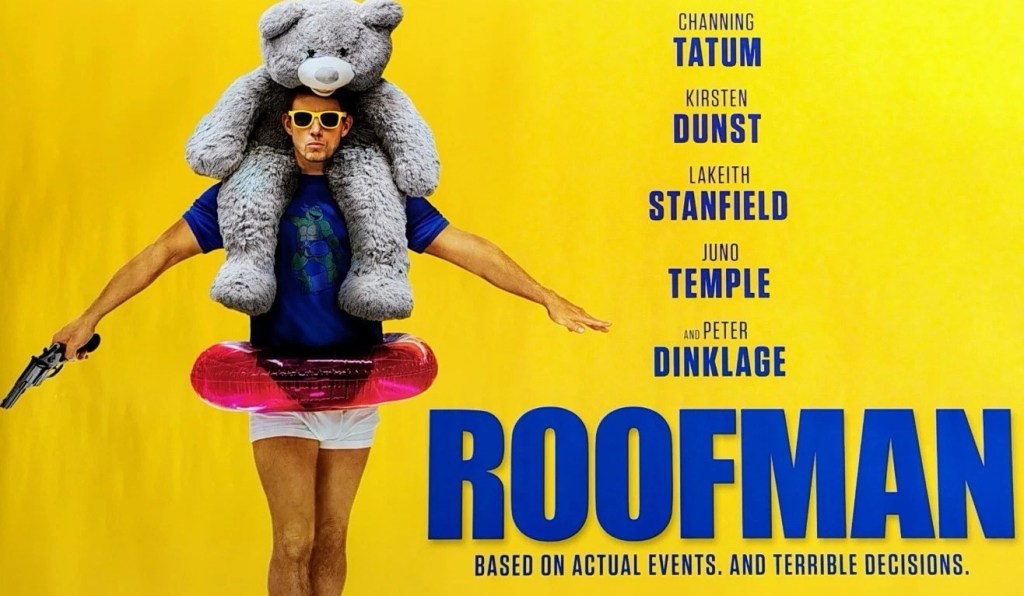
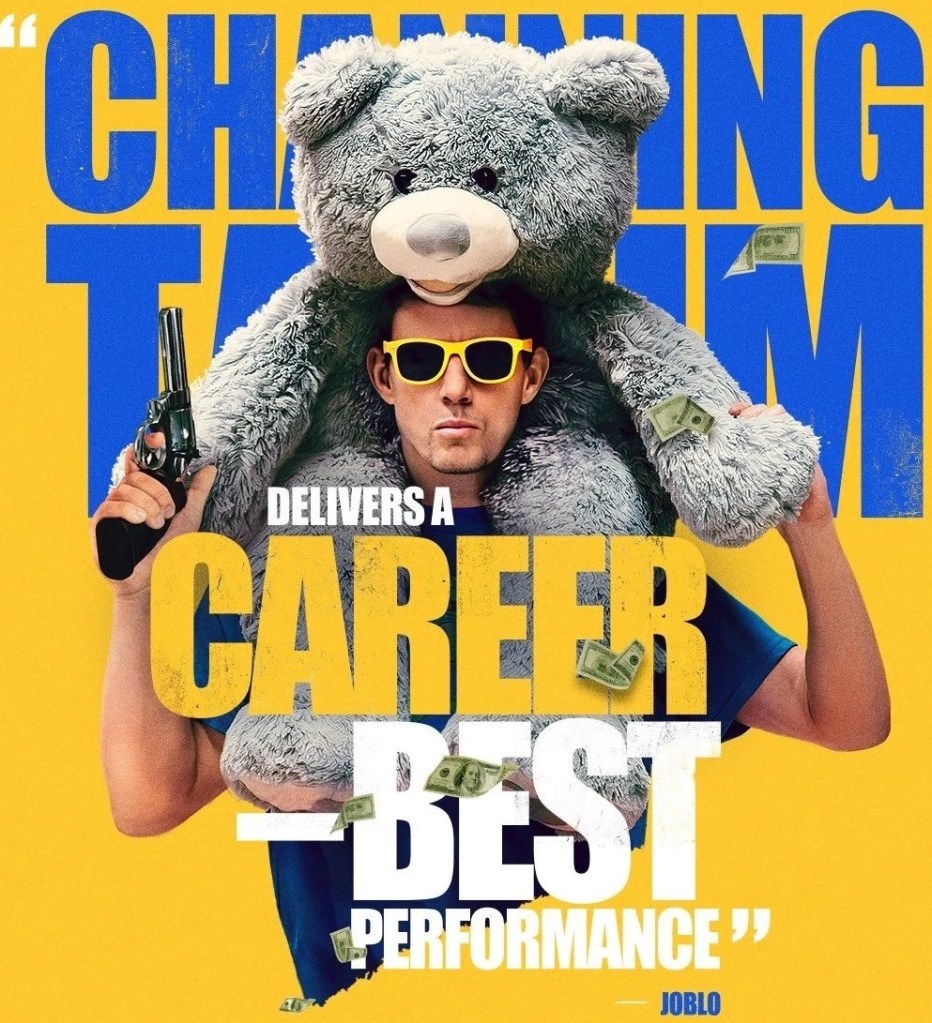
Sorry to be a party-pooper but I didn’t take to this critically-acclaimed shaggy dog story heavy on the satire. It’s partly redeemed by the performances – Sean Penn, in particular – but there’s not much to say that hasn’t already been said, and far more succinctly, about immigration and the rising right-wing influence in America. I’m sure Leonardo DiCaprio’s $20-$30 million standard remuneration fee might account for a good chunk of the $130 million budget but unless rates for extras have soared I can’t see where the rest of the money has gone.

Perhaps Warner Bros, having lost out on cult box office hotshot Christopher Nolan (Oppenheimer), was hoping to replace him with Paul Thomas Anderson, who while generally a critical darling, has none of Nolan’s box office clout. Though let’s not forget Anderson’s highly rated by his peers, otherwise how to explain his three Oscar nominations for direction and four for writing. He should be a good fit for the wild unwieldy sprawling works of Thomas Pynchon, another cult darling, and his previous effort Inherent Vice (2014) made a reasonable stab at capturing, albeit on a smaller scale, the author’s idiosyncrasy, though the writer as often took the blunderbuss approach to his subject.

The only element of directorial bravura that I detected here was the Cinerama effect of mounting and falling down hills in the car chase.

The tale is just lame. Revolutionaries grow old or turn snitch to save their skin. White old guys belong to some secret racist organisation going by the name of the Santa Claus Club or some such. Black gals get to kill people and rattle off machine guns. The nuns, as you might guess, are  another secret organisation. The main element of the narrative appears to be whether racist Col Slackjaw – I mean Lockjaw (Sean Penn) – but I mean, who cares, when you give the bad guy such an improbable name you’re stating from the outset that he’s a joke and not the threat he’s meant to be

Anyway, improbable as it sounds, the avowed racist has a thing for dominant Black women – check out his erection at first sight of gun-toting Perfidia (Teyana Taylor) and his predilection for being anally probed by her. She’s sometime revolutionary, sometime aforementioned snitch, sometime boyfriend of revolutionary-cum-hophead Bob (Leonardo DiCaprio), and definitely not maternal material given she walks out on new-born Deandra (Regina Hall) leaving the hophead to bring her up.

The Santa Claus Club gets wind of the fact that Lockjaw might not be as racist as he pretends so that sets it at odds with its very own top racist as he embarks on a scorched-earth quest to find out if he should have a paternal bone in his body.

All sorts of chases ensue, mostly revolving around one-dimensional characters though Benicio del Toro makes a fair stab at humanizing his revolutionary.

It just went on and on, like a latter-day Anora (2023), making same point over and over again, albeit that presumably it is aimed at the intelligent section of the cinematic audience who shouldn’t need to be battered over the head with the message. This is the kind of picture which complains about the treatment of people by the Santa Claus Club but then expects audiences to burst into a round of applause when the club meets out punishment to one of its own.

File under major disappointment.

Leonardo DiCaprio (Killers of the Flower Moon, 2023) is good, but there’s not much for him to get his teeth into, we’ve seen this deadbeat character so many times before, even ones that form emotional ties with their children.

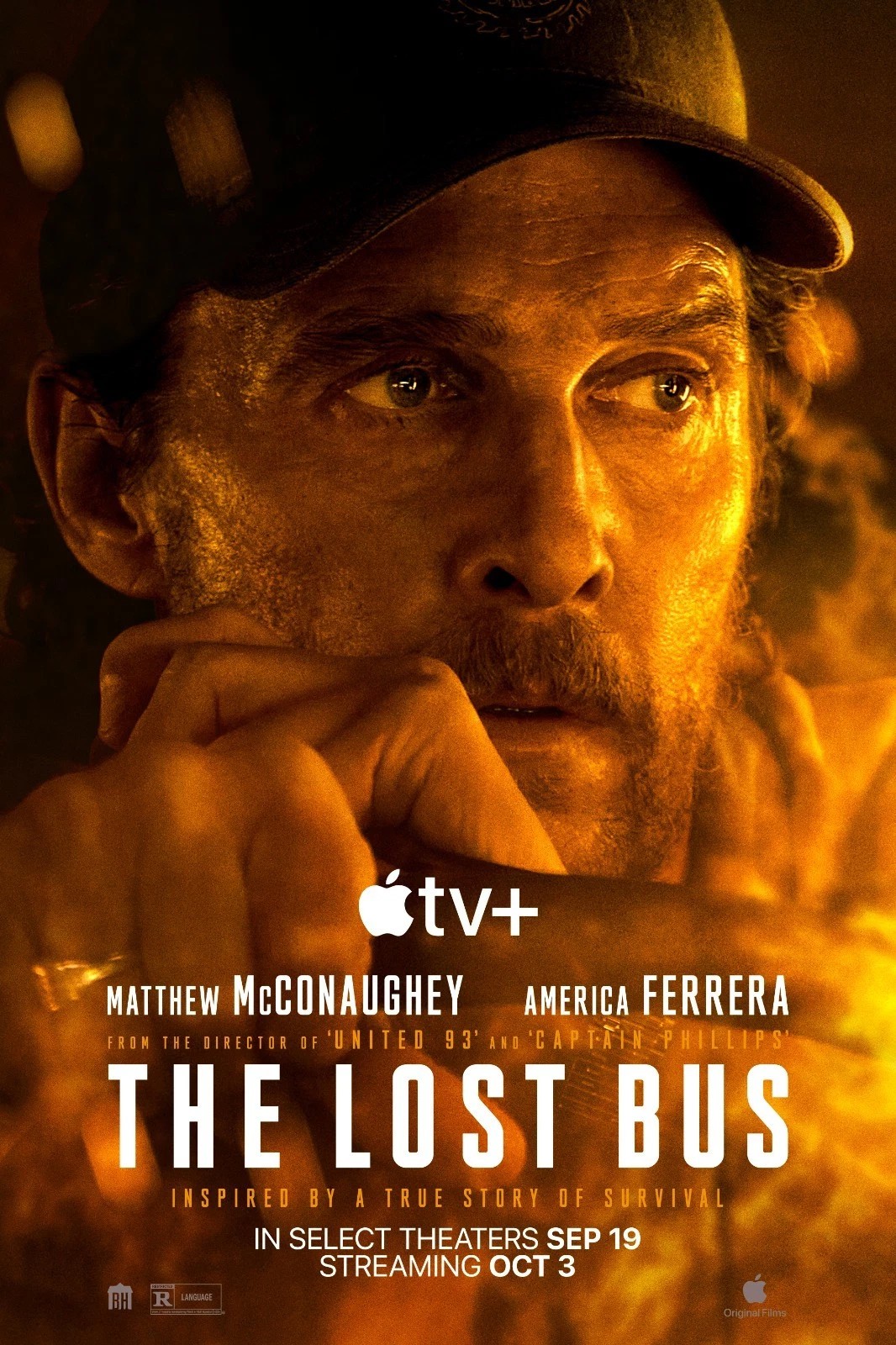
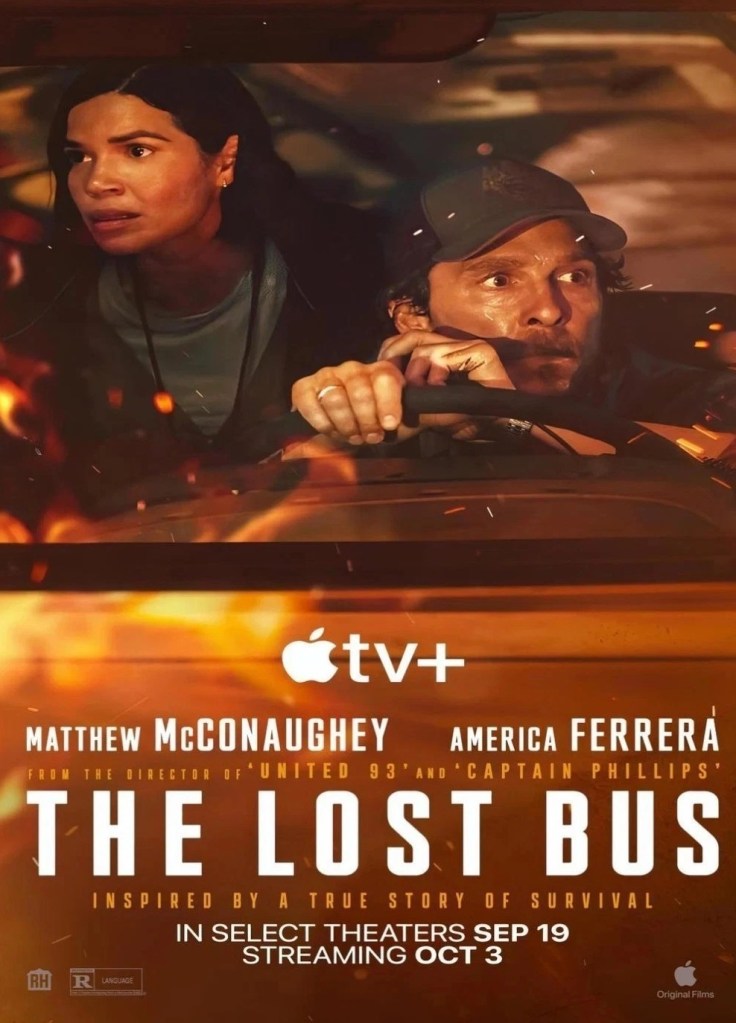
The Lost Bus (2025) ****

What a blast! Director Paul Greengrass (he of the shaky camera) has revived the 1970s disaster movie – and how! I’m not a huge fan of Matthew McConaughey (Interstellar, 2014) but he puts in a terrific shift as an ordinary joe. But you’re going to have to hurry to catch this in cinemas – where it absolutely belongs – because it hits the streamer on Oct 3. And without doubt Apple has made a major blunder in not sticking a huge wodge of dough behind the cinematic release and finding a few Imax screens. The special effects won’t have anything like the required impact on the small screen.

It’s generally considered that The Towering Inferno (1974) was the biggest of the disaster cycle at the box office because it paired superstars Paul Newman and Steve McQueen. But, actually, the real reason was fire. Any other disaster – cyclone, tsunami – doesn’t just spring  out of nowhere. No matter that these are natural disasters, they do follow a largely designated path and through for cinematic purposes twisters can shift around a bit, generally they are not going to switch direction dramatically.

Fire is a primal fear. Smoke itself is bad enough, it can suffocate you in an instant, but fire will just rip through you and destroy everything in its path. And of all the terrible aspects of nature, it’s the most horrific visually – the thick clouds of smoke rising ominously and the red red – bad enough in the distance but close-up looking like some mad archer has unleashed a thousand bolts in a hundred different directions all at once. Backdraft (1991), by comparison, largely dealt with containable fires rather than wildfire.

This doesn’t follow the usual template of sticking a bunch of disparate people in jeopardy and allowing character exposition to suck up a good chunk of the running time. Instead, almost documentary style, we follow harassed fire chief Martinez (Yul Vazquez) as he sets about the impossible task of getting enough waterpower up into the mountains to quell the flames and in the end decides to switch off the hoses and concentrate on getting 30,000 people to safety. There’s an interesting amount of detail on the strategy of containing a fire, but mostly you can see that once the fire takes hold they are fighting a losing battle. We don’t learn a single thing about the personal life of Martinez or any other fireman, so it’s action, action, action.

School bus driver Kevin McKay (Mathew McConaughey) isn’t exactly loaded down with trauma, but he does have an ailing mother and a disaffected son, Shaun (Levi McConaughey), whose unexplained illness can be treated by over-the-counter medicine so he’s not on the point of death. Kevin has clearly relied too much in the past on his charm to get him out of sticky situations and here he’s trying to wheedle his way round boss Ruby (Ashlie Atkinson) whose giving him a hard time for his lack of attention to managing his vehicle.

But he doesn’t really come into the story until he’s given the job of rescuing a bunch of stranded schoolkids who, thankfully, don’t have any back stories either and we’re e not having to worry about kids who’ll die without expert care. And they come with eminently sensible teacher Mary (America Ferrara), who, despite the immediate threat of fire, has them line up in twos to board the bus. Mostly, the kids contribute a soundtrack of squealing while Mary spends her time calming them down and acting as navigator.

Eventually, Kevin finds himself stranded in the heart of the fire, but that looks like the best place to be, like the calm at the heart of a storm, until it doesn’t.

It’s a heck of a terrifying ride and I found myself gripping my seat on occasions. Of course, I knew they’d get out, nobody’s going to barbecue a bunch of small kids on screen, but Kevin’s maneuvers and the storm of flame all round was a very scary experience.

Apparently, this is based on a true story and there’s some unnecessary virtue-signalling at the end when it turns out the fire wasn’t caused by a careless camper but by a careless energy company which was fined billions.

McConaughey is superb. He’s flustered throughout, initially by domestic issues, and then by the task. For the most part he looks worn down to the bone and it’s not heroics but sheet determination that gets him through. And the director avoids the temptation of trying to add romance into the equation. America Ferrara (Dumb Money, 2023) is pretty good, too, as the nit-picking schoolteacher and Yul Vazquez (Tin Soldier, 2025), a new name to me, certainly lends strength to his role. But this picture belongs to Paul Greengrass (The Bourne Ultimatum, 2007), shouldering a disaster tour de force. Screenplay by the director, Brad Inglesby (Mare of Easttown, 2021) and Lizzie Johnson in her debut.

Catch it before it hits streaming.

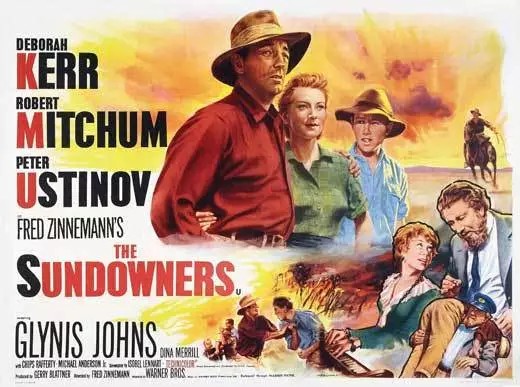
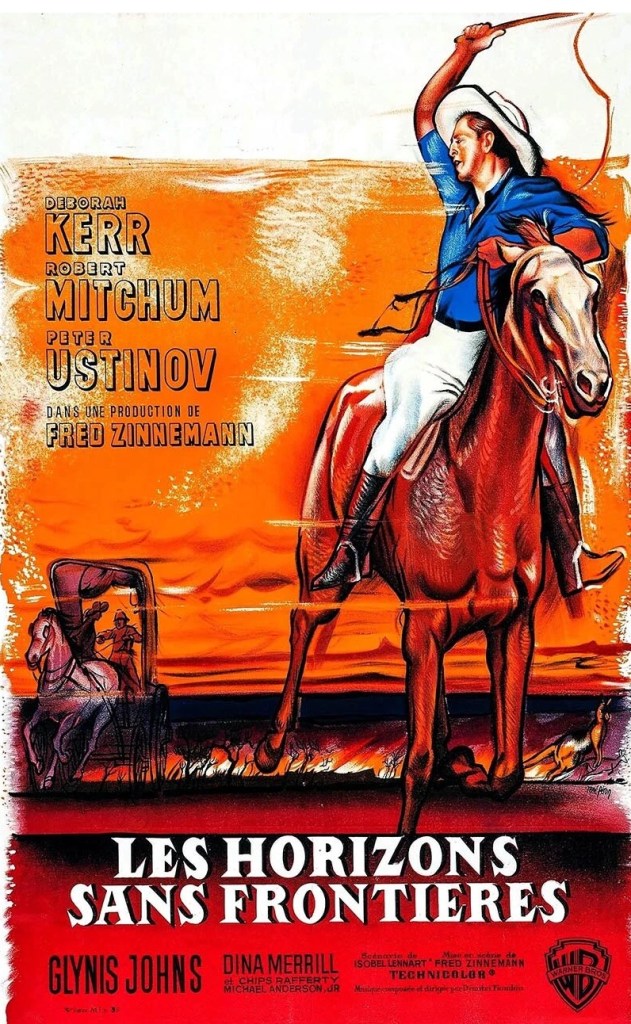
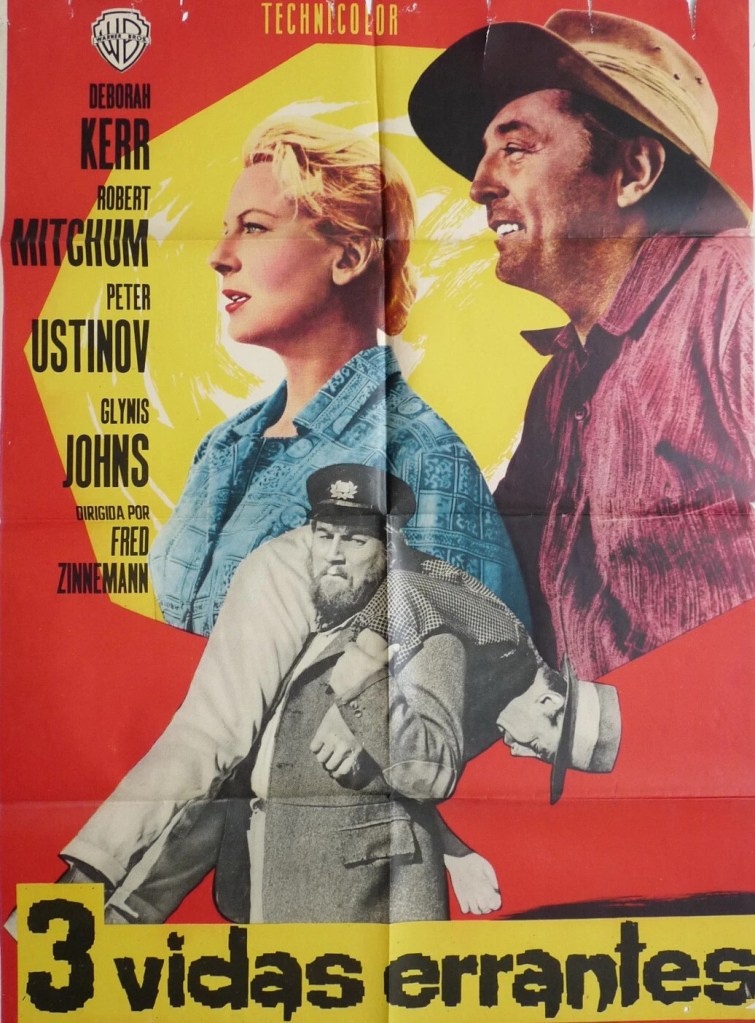
The Sundowners (1960) ****

I kept waiting for Deborah Kerr to turn up and it was a good 20 minutes before I realized that the actress had so immersed herself in the dowdy Ida Carmody that she was turning in what would be recognized as an Oscar-nominated performance. I was less convinced by Robert Mitchum’s Oirish accent but after a time, he, too, buried his normal screen persona under a feckless wanderer. And I was expecting some meaningful point-making stuff from director Fred Zinnemann given he had nursed home such purposeful features as High Noon (1952), From Here to Eternity (1953), A Hatful of Rain (1957) and The Nun’s Story (1959) and would soon be heading back in that virtue-signalling direction with Behold a Pale Horse (1964) and A Man for All Seasons (1966). However, like Day of the Jackal (1973), though for other reasons, this is very much an outlier in the Zinnemann portfolio.

It’s groundbreaking work from the stars. In the first place, Deborah Kerr does the unthinkable for a star of her magnitude – five Oscar nominations so far and a string of hits including From Here to Eternity, The Proud and the Profane (1955) opposite William Holden, The King and I (1956) top-billed ahead of Yul Brynner, An Affair to Remember (1957) opposite Cary Grant and Heaven Knows, Mr Allison (1958) leading Robert Mitchum a merry dance. Here, she is shorn of make-up. Her freckles are everywhere and her cheekbones look as if they are there from hunger not for reasons of fashion. These days, that down-to-the-wire approach would suggest an actress desperately trying to revive her career – Demi Moore in The Substance (2024) or Pamela Anderson in  The Last Showgirl (2024) – rather than a star at the top of her game.

Robert Mitchum, too, dumps his screen persona, and provides his most relaxed and naturalistic performance.

The story is pretty straightforward. Ida wants to settle down, husband Paddy (Robert Mitchum), a born drifter, does not. Paddy enjoys drinking and gambling and wandering through the Australian Outback and ekes out enough as a drover to keep them solvent. The plot, therefore, is episodic. But what could have been a series of loosely-linked sequences is held together by a concentration of the reality of an existence revolving around sheep – droving, shearing, rearing – and trundling along in a horse-drawn caravan, putting up a tent at night, cooking over an open fire, other aspects bordering on the primitive. You can be sure that every minor triumph will be torpedoed.

You could be forgiven for thinking that Wyler had set out to make a western what with the preponderance of sweeping location. Make it sheep instead of cattle and you have Red River (1948) in a minor key with the usual shenanigans once the drover makes his destination.

Livening up proceedings are equally responsibility-resistant itinerant Rupert Venneker (Peter Ustinov), whose more basic skills including pugilism belie his posh accent, and innkeeper Mrs Firth (Glynis Johns) who makes a good stab at trying to hold onto him.

The bulk of the emotion plays through the eyes of Ida, desperately trying to save up enough money to buy a house. A bushfire that temporarily separates the couple unexpectedly acts to strengthen their relationship. While Ida is helping deliver a baby, Frank is getting roaring drunk. The tension between the pair is also a metaphor for growing civilization out of a wilderness, the men who tamed the land becoming redundant, a new educated class taking over. Ida wants to be settled to provide her ambitious son Sean (Michael Anderson Jr) with an education as much as she doesn’t want to be a traveller in her old age.

Offers much about a civilization in the making still relying on the old-timers to put in the hard yards while the guys doing all the work don’t have the sense to seek greater or more stable reward. What’s life if it doesn’t go wrong once in a while? Freedom is its own reward. As Paddy points out, he has no restrictions, the entirety of Australia is his bailiwick.

Wyler makes much of what he’s got, the tensions between the couple undercutting the strength of their affection for each other, and just when it looks as if Ida has got her way Paddy manages to cut loose and destroy her dreams.

There’s drama a-plenty, not just the terrifying bushfire, but a pretty engrossing horse race or two. Paddy’s idea of heaven is to hold court in a saloon singing old Irish songs. Sometimes Ida has little but heartbreak to nurse her along.

And while the various episodes make it a tidy drama, really it’s what one critic described as “a no-story movie – an observation of life” and in that regard more concerned with fallibility and vulnerability. Had it been made by a European director, it would remain one of the most talked-about movies of the decade.

Wyler keeps up a tidy pace. Deborah Kerr (The Arrangement, 1969) steals the show and her peers agreed, putting her up for an Oscar, but it was a close-run thing because Glynis Johns (The Cabinet of Caligari, 1962) was also nominated. Peter Ustinov (Topkapi, 1964) was equally impressive, as was Robert Mitchum (El Dorado, 1967). Wyler was also nominated as was screenwriter Isobel Lennart (Fitzwilly / Fitzwilly Strikes Back, 1967) adapting the Jon Cleary bestseller.

I caught this on Amazon Prime.

Thoroughly involving.

They Shoot Horses, Don’t They (1969) *****

Fans of reality television shows will be only too aware how participants volunteer for ritual humiliation, but swallowing a few locusts and being stuck with a couple of snakes has nothing on the realities facing individuals during the Great Depression who would literally dance non-stop for days on end with a ten-minute break every two hours. It’s impossible to imagine that anybody could think of dreaming up such a degrading circus to take advantage of the desperate. But then this is America, land of opportunity and the MC Rocky  (Gig Young) continues to spout aphorisms and continues to promote the American Dream even as it disintegrates in front of him.

When the partner of Gloria (Jane Fonda), out-of-work actress and one of the more physical and cynical of the candidates hoping to scoop the $1,500 first prize (no prizes for coming second, of course), is ruled out through bronchitis – in case he passes it on to others rather than more any humane consideration – she pairs up with dreamer Robert who initially wanders in as spectator rather than participant. Glamorous platinum blonde aspiring actress Alice (Susannah York) is already coming apart. Sailor (Red Buttons) is a former war hero and James (Bruce Dern) drags his heavily pregnant wife (Bonnie Bedelia) around the dance floor.

There is not a great deal of story except to watch everyone grow mentally and physically incapacitated. There is betrayal and lust and survival instinct leads characters into sexual situations. When Alice seduces Robert, in retaliation Gloria dumps him and then has sex with Rocky, while attempting to retain control of that situation, but clearly needing at the very least consolation and confirmation of her attractiveness and at best some sign of favoritism.

As well as non-stop dancing, Rocky throws in stunts to keep the audience, who can sponsor a pair, interested. So there are 10-minute races, the last three to be eliminated. So determined are some of the competitors they will even lug their dead partner over the finishing line. Another of Rocky’s wheezes is to have Gloria and Robert marry, worth $200 in terms of the gifts they will receive from a sentimental audience, in the middle of the dance floor.

They are literally dancing for hours, over 1,000 in over 40 days so gradually the dance floor becomes less crowded as dancers collapse from exhaustion or cannot take it anymore. The spectators, we are reminded, are only there because “they want to see someone worse than them.” Just when you think nothing can shock you any more, it is revealed that the first prize is minus the cost of feeding, sheltering and looking after the winner.

Those who think they are tough find that the demands of mental and physical endurance are beyond them. This is a shocking film and there’s no doubt it will stay with you for a long time. I saw it first when it came out but not again until now and thank goodness for forgetfulness otherwise I doubt if I would have chosen to sit through it again.

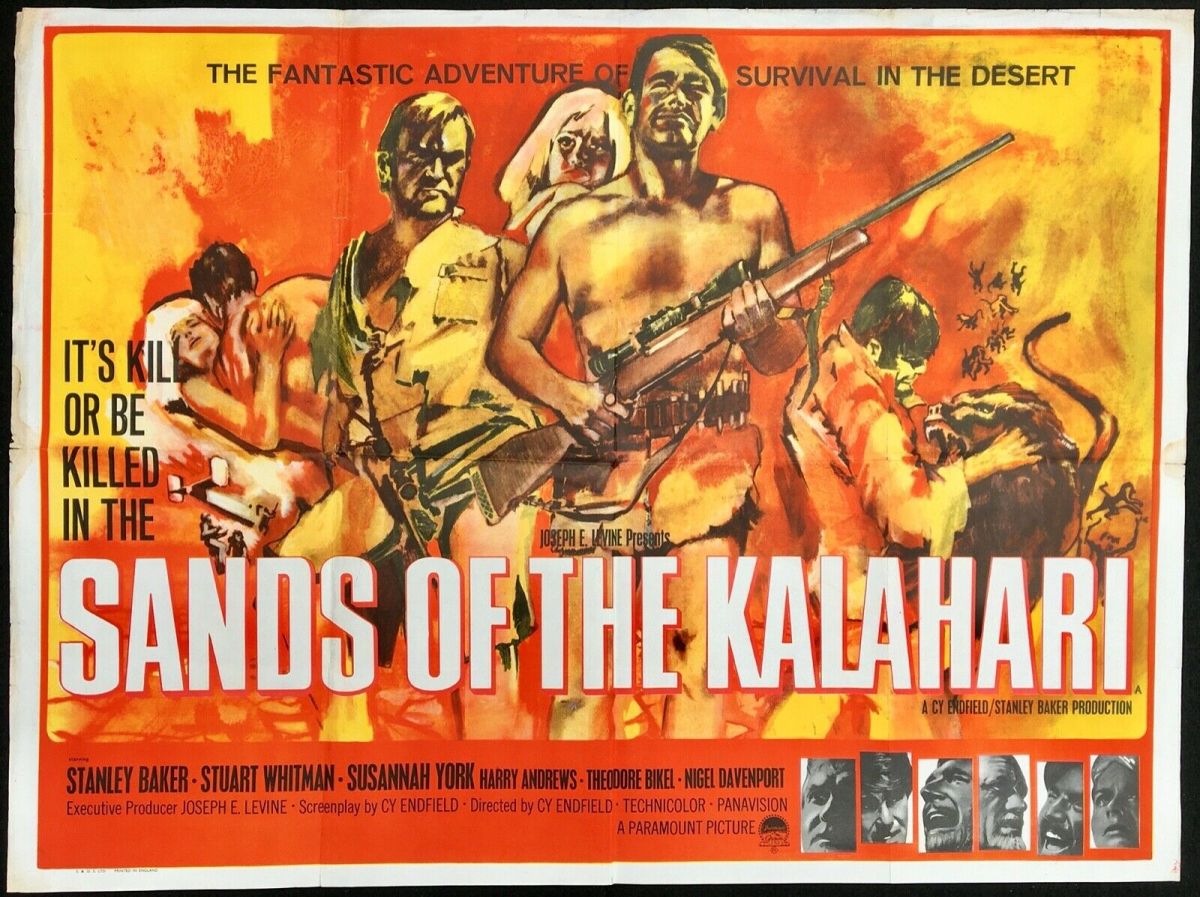
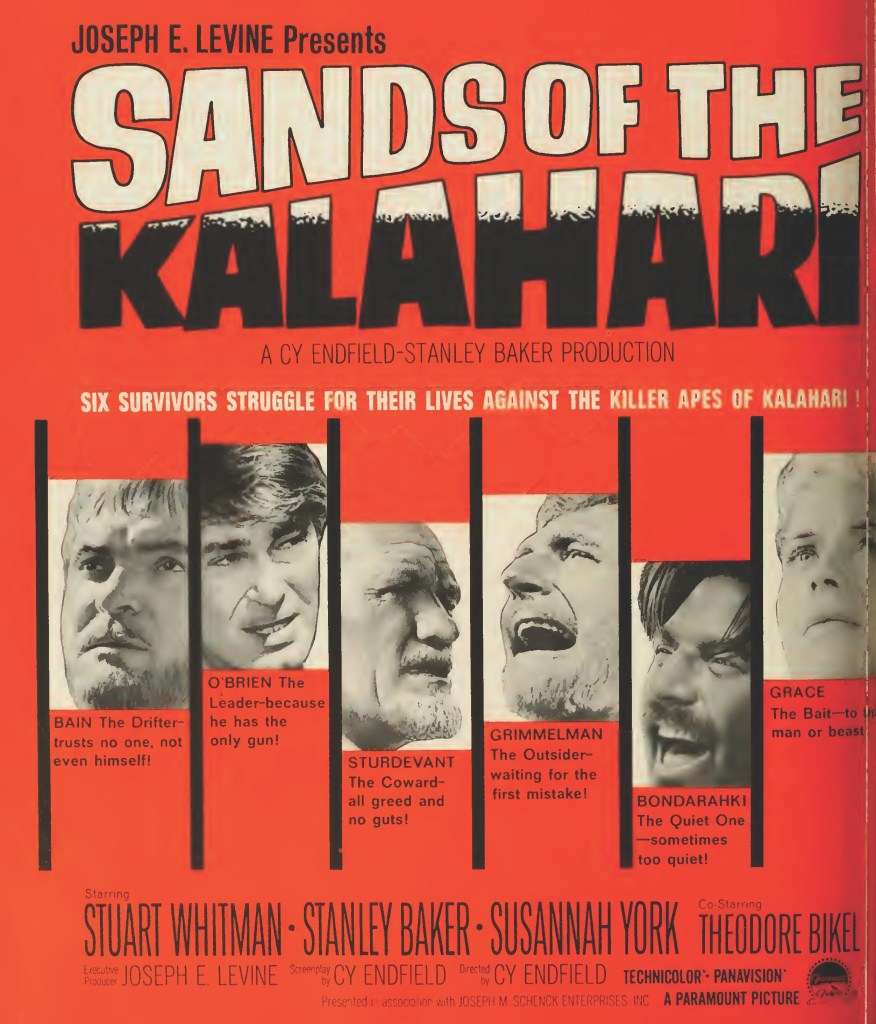
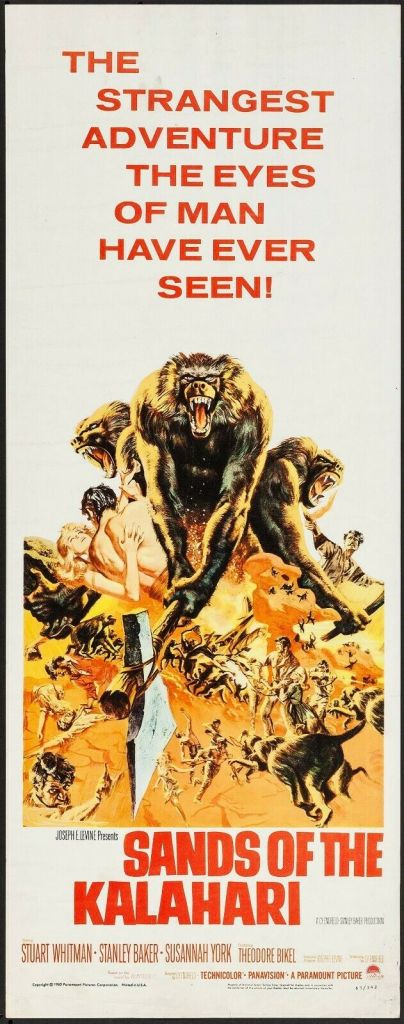
It’s doubtful if any actress had achieved such a speedy transition from glamorous leading lady to serious actress as Jane Fonda. From stripping in space in Barbarella (1968) to stripping away the last vestiges of her humanity here. Suddenly, she appears in a brand-new screen persona with the grating voice, the chip on the shoulder, the feistiness and worthy inheritor of father Henry’s acting genes. It’s also a bold role for Susannah York, in an extension of the weak character she essayed in Sands of the Kalahari (1965) but far more delusional, believing in a rainbow that will never appear. Michael Sarrazin (In Search of Gregory, 1969) initially appears out of his league but his character calls for a gentle innocence that is well within his scope.

Gig Young steals the picture, offered the opportunity to bring alive a multi-faceted character, as big a spiel-merchant who ever crossed the screen, but engaging in a marathon of optimism, and at some points, such as when coaxing a demented Alice out of the shower, earning our sympathy.  Red Buttons (Stagecoach, 1966), Bruce Dern (Castle Keep, 1969) and Bonnie Bedelia (Die Hard, 1988) also put in sterling work.

The movie received nine Oscar nominations but was ignored in the Best Picture category. Only Gig Young won for Best Supporting Actor.  Jane Fonda and Susannah York both received their first Oscar nominations, for Fonda the first of many, for York the one and only. It was also a debut nomination for Pollack, a future winner.

Sydney Pollack directs with simplicity, concentrating on the indignities of the event and focusing mostly on the personalities draining away, and even the drama is undercut, most of those scenes directed in straightforward style. However, Pollack plays around with the innovative fast forward – flashes into scenes that have not yet taken place. James Poe (Lilies of the Field, 1963), at one time down to direct, and Robert E. Thompson, a television writer making his first venture on the big screen, wrote the screenplay from the Horace McCoy novel.

Check out the Behind the Scenes article on this one.

Harley Davidson and the Marlboro Man (1991) *****

I always approach cult with some unease. You never know why a film has fallen into the category. It could simply be awful and resurrected with glee because someone has cleverly constructed a sub-genre called So Bad It’s Good – check out Orgy of the Dead (1965) or Can Hieronymus Merkin Ever Forget Mercy Humpe and Find True Happiness? (1969). Or it’s been a surprising flop first time round and discovered an audience through VHS and DVD – The Shawshank Redemption (1994) the forerunner in that field. But the plusses – well-made, great characters, some standout scenes – in the Stephen King adaptation were so obvious and the studio put a lot of dough behind re-marketing it to the at-home audience that it was not so surprising that it found a better response second time around.

But Harley Davidson and the Marlboro Man did not, as with The Shawshank Redemption, come garlanded with seven Oscar nominations, and the stars had considerably less marquee appeal and peer acceptance than Tim Robbins (The Player, 1992) and Morgan Freeman (Driving Miss Daisy, 1990). Mickey Rourke (9½ Weeks, 1986) and Don Johnson (The Hot Spot, 1990) had not only mostly blown their status in the Hollywood hierarchy but only seemed one newspaper headline away from further notoriety.

That it works – and so well- relies on mix of several ingredients. In the first place it’s a throwback to the buddy movie, the easy camaraderie between Harley Davidson (Mickey Rourke) and the Marlboro Man (Don Johnson) has obvious precedents from Butch Cassidy and the Sundance Kid (1969) and clearly is some kind of homage to the Paul Newman-Robert Redford picture since it pinches three of the elements that made the western such a box office smash.

Secondly, our fellas do bad for a good – if somewhat lopsided – reason so aren’t true criminals and, in any case, earn a get-out-of-jail-free card because it turns out they’ve robbed from proper bad guys. Thirdly, there’s a terrific robbery and street shoot-out. Fourthly, it draws on the spaghetti western in the costume department, repurposing the top-to-toe dusters into black leather, an idea that would be snatched up by the likes of The Matrix and quintet of bad guys toting machine guns and dressed in black picked up not only by The Matrix but also by Men in Black (1997).

You could argue that a better director than Simon Wincer (Harlequin, 1980) would have done more visually with the leather-clad gangsters emerging from a vehicle and producing a solid wall of lead – perhaps through slo-mo or taking more time to concentrate on their sudden appearance – and made it a scene that might stand up to the ambulatory episodes in The Wild Bunch (1969) or Reservoir Dogs (1992). Even so, quite simply, it is a stunningly arresting piece of cinema.

But the real reason this works is that the two main characters are so human. Harley is given to philosophizing and wondering (in the manner, it might be said, of Butch Cassidy) and Marlboro loses out in love. While they fall into the category of endless drifters, an aversion to commitment, living easy, and more in love with their bikes than anything else, they are almost winsome in their innocence, as if everyone else will just fall into line with their world view.

Signed photo of Mickey Rourke in this piacture will set you back three hundred bucks.
That’s cult for you.

Anyways, we are duped into thinking this is going to be a John Wick-Die Hard wild ride from the opening scenes where both dudes prove mighty handy with their fists, Harley preventing a gas-station robbery, Marlboro taking on poolroom cheats in a bar. The plot only kicks in when they discover that the bank is planning to foreclose on their favorite bar. Needing to get their hands on a quick $2.5 million, the boys decide to do a bit of foreclosing themselves, taking the required sum from the bank in question, organizing a neat heist only to discover they’ve not stolen money but drugs.

Being smarter than your average hood, they swap the drugs for the dough but don’t take into account that the villains are smarter than the average thug and aren’t in the business of donating to good causes. The gangsters hunt them down. Harley and Marlboro could just disappear, especially once they dispose of the hidden tracking device, because they are A-grade students in the art of hiding away. Instead, honor is at stake so they set up an ambush in an airplane graveyard.

Since you’re asking, the Butch Cassidy the Sundance Kid grace notes are: Marlboro is the equal of The Sundance Kid is the shooting stakes and, in fact, like his predecessor, Marlboro manages the same trick of shooting off a character’s gunbelt; in the gunfighting stakes, Harley is the equivalent of Butch, never killed a man, absolutely useless with a pistol; and, the piece de resistance, when trapped they jump off an exceptionally high ledge into water.

Mickey Rourke and Don Johnson take the opportunity to shift well away from their existing screen personas and are thoroughly engaging. Simon Wincer keeps to a tidy pace. Written by Don Michael Paul (Half Past Dead, 2002) in his debut.

The action is top-notch, all the characters are well-drawn, the women not just bed fodder, usually brighter than the men. Terrific roster of supporting cast including Chelsea Field (The Last Boy Scout, 1991), Tom Sizemore (Saving Private Ryan, 1998), Robert Ginty (The Exterminator, 1980), Daniel Baldwin (Mulholland Falls, 1996), pop star Vanessa Williams (Eraser, 1996), Giancarlo Esposito (Megalopolis, 2024), Tia Carrere (Rising Sun, 1993) and Kelly Hu (X-Men 2, 2003).

The kind of movie where you wish they would do it all over again. Had the movie been a success a sequel would have been a shoo-in. As it is, we’ve only got this, so enjoy it while you can.

Catch it (for the moment) on Amazon Prime.

Duet for Cannibals (1969) ****

Terrific twist-a-minute thriller. Forget its arthouse origins. The gap of half a century since its initial appearance has worked in its favor and you can now view it as exceptionally gripping entertainment. The Swedish setting doesn’t mean it’s drenched in angst and repression, and instead pivots on that other Swedish contribution to cinema of that decade of sex and nudity.  Though power games these days tend to belong to the horror vernacular where innocents stray into the wrong location – Barbarian (2022), Heretic (2024)  –  outwith such business-set items as Working Girl (1988) and The Devil Wears Prada (2006), this belongs to an earlier version of the cycle which relies on sexual undertones.

This will most likely be touted as worth a look because it was one of the very few – less than a dozen – movies directed by women in the 1960s. While Swedish actress Mai Zetterling was the jointly the most prolific with four films beginning with Loving Couples (1964) and Frenchwoman Agnes Varda, also with four, the most acclaimed following Cleo from 5 to 7 (1962), American Susan Sontag’s debut – she also wrote the piece – was the most highly awaited. Through her writings she was something of an outspoken icon and an intellectual powerhouse.

You can tell it’s arthouse because the poster is only altered minimally.
Instead of holding four figures in her hand the woman now holds on.

Made in Sweden with a Swedish cast and while originally seen as Bergmanesque or perhaps Pinteresque, a contemporary audience is more likely to ignore the other influences and settle for the innocents walking willingly into a trap.  Tomas (Gosta Ekman) goes to work for enigmatic political exile Dr Bauer (Lars Ekborg). His duties mostly involve curating the revolutionary’s life’s work, transcribing diaries and such, but occasionally he is called upon to do what appear to be simple acts of espionage, nothing dangerous just delivering a mysterious parcel.

Dr Bauer is pumped up with his own importance and expects employees at his beck and call – Tomas has to sleep there, in a made-up bed in the library – and enjoys the power surge of bawling people out when minor mishaps occur. But he also enjoys – if that’s the word – a peculiar marriage to younger Italian wife Francesca (Adrianna Asti) who while doe-eyed is far from docile. On her first encounter with Tomas, Francesca breaks a window and it’s not long until she exerts a sexual lure.

Tomas dreams of making love to her and would watch her making love to her husband in a car in the garage except Francesca obscures the windscreen with shaving foam. That scene in itself is one of the most intriguing. She has thrown an almighty sulk, locked herself in the car, ignoring her husband until she starts the engine and nearly mows him down at which point the tempo dramatically changes triggering for a bout of heavy sex.

Nothing so common as a noveliization for Sontag. She gets the full screenplay treatment.
This appeared in 1970.

Theoretically, Dr Bauer is dying from a mysterious illness. You get the sense he’s auditioning Tomas as someone to look after his wife when he’s gone, but all of that could just be part of the game.

There’s a marvelous scene where Tomas is encouraged to continue eating at the dinner table to the soundtrack of Dr Bauer throwing up in the toilet. When the doctor returns, he heaps food on his plate and continues eating.  

Dr Bauer isn’t just paranoid – the cook’s poisoning him, his phone’s tapped, Tomas is a spy, his wife’s planning to kill him – but he’s also a narcissist, studying his face in the mirror, improving his appearance with wigs and a painted-on aesthetic beard. He encourages potential intimacy by having Tomas read poetry to his wife.

She’s the dominant one in her fantasy, rescuing Tomas from an enchanted castle, standing above him on a stool, bandaging his face so that as a mummy he can terrorize her in sexual fashion. She puts her husband’s perennial sunglasses on his eyes. Sometimes her husband’s head is bandaged.

Braun plans to kill his wife because “there’s no point keeping her alive.” Equally, she, apparently is intent on returning the compliment though she wants Tomas to do the dirty deed. Or it could be a murder-suicide pact.

She locks her husband in her bedroom closet so she can make love to Tomas while he listens but he also has key to the door and could let himself out at any time. When Tomas’s girlfriend Ingrid (Agneta Ekmanner) enters the equation Tomas is forced to watch her making love to Dr Bauer. And it’s not long before Tomas is chucked out and Ingrid sucked in. In one of the most erotic scenes you’ll ever witness husband and wife feverishly feed Ingrid with their hands and before you know it she’s sharing their bed.

Even within the confines and the mathematical possibilities of the power play, you still never know which way this is going to turn. You might quibble at the voice-over which attempts to play much of the goings-on through Tomas’s POV and the flirtations with left wing politics, but those are easy to ignore as you are carried along on the twists and turns. It keeps twisting till the very end when the stings in the tail come fast.

These days it would be played at a higher tempo, the melodramatic elements ramped up, but actually the lack of emotional heft works to its advantage. Terrific debut from Susan Sontag. The slinky Adriana Asti (Love Circle, 1969) steals the show.

Rare find.

Catch it on Netflix (great print) or YouTube.

Should you be interested YouTube has an interview with both Sontag and Varda.

Bob & Carol & Ted & Alice (1969) ****

The one with the wife-swapping. Like Easy Rider released earlier the same year, a hymn to freedom, only this time of the sexual kind. Responsible thirtysomethings, well-to-do, married with children, jealous of the younger generation’s counter culture, seek guilt-free irresponsibility. They feel they’ve missed out, despite knocking back cocktails in their heyday, probably remained virgins until marriage. Like the recently-reviewed The Battle of the Villa Fiorita (1965), the problems incurred in marriage appear eternal, and decades later this holds up superbly, not just for taking a measure of its times, but for a screenplay setting up a bold series of reversals, character reaction you would never expect, that will have you in stitches even as it dissects universal truths.

Documentary film-maker Bob (Robert Culp) and housewife Carol (Natalie Wood) “find” themselves at a weekend retreat espousing naked yoga, primal screams, group therapy and emotional intimacy. Carol admits she finds her husband controlling. They return in evangelistic mode, desperate to pass on their new-found knowledge to their stuffier friends, Ted (Elliott Gould) and Alice (Dyan Cannon).

The advertising campaign focused on the tease of wife-swapping.

The film unfolds in a series of long sequences, each sparked by external incident. Bob confesses to his wife that while away on business he had an affair. To his astonishment she forgives him. Expecting this to be a prelude to some new way of tormenting an unfaithful husband, Bob remains skeptical until Carol convinces him that her world-view has changed following the retreat.

But Ted and Alice find it harder to accept. In a brilliant scene that exposes basic gender differences, he sees the problem as his revelation, she as the act of infidelity itself. High after meeting the other couple, Ted wants sex, but Alice, shocked by what she has heard, cannot contemplate it. He exerts so much pressure that she, deeply insecure, is almost on the verge of giving in. The dialogue not just marvelously encapsulates their marriage but sets out opposing views that, I am sorry to say, would probably be as prevalent today.

But the best scene, a superb reversal, occurs when Bob, spurning another night of illicit passion, returns home from a trip early to find his wife in bed with the tennis coach. Gender equality et al. The sequence turns completely on its head when, according to the couple’s new philosophy, Bob should not only accept and forgive, but help the tennis coach out of his predicament, calming his fears of facing an angry husband, in effect consoling his bedroom rival.

Bob and Carol and the Tennis Coach.

What appears to have been just a Ted fantasy, hooking up with a woman he met on an airplane, turns out to be true, creating a crisis in that marriage and when Alice is pacified, acknowledging a new truth, it is she who calls for an orgy. Now this is a revolution for Alice is by far the most repressed, although attractive almost matronly, and still using a childish word to describe her private parts. Her confessions to a psychiatrist reveal a tormented individual.

It’s a stunning debut from Paul Mazursky (An Unmarried Woman, 1978) who also had a hand in the screenplay with Larry Tucker (I Love You, Alice B. Toklas, 1968). He takes a story of endorsed immorality and stamps it as a morality tale. A movie that depended so much on dialogue concludes with a fabulous series of shots where the look on the faces of the characters tells you all you need to know.

Elliott Gould (The Night They Raided Minsky’s, 1968) and Dyan Cannon (The Murder Game, 1965) are the pick of the actors, both stepping up to the plate after less than stand-out performances previously. Both were Oscar-nominated but more importantly here created  screen personas that would define their futures. Natalie Wood (This Property Is Condemned, 1966), in her first picture in three years, revitalized her career after a string of flops. Robert Culp, in a step-up from the I Spy television series (1965-1968), initially takes center stage but cedes ground to the superior acting of the others.  

Where a whole bundle of films by new directors flopped that year and the next by targeting the younger generation, this was a success by painting a wry picture of a slightly older generation, not yet tipping into middle age, but terrified they might be missing out on something.

On Swift Horses (2025) *** – Seen at the Cinema

Authentic story stymied by unlikely plot. Set in a post-Korean War American when the United States is still a land of opportunity even for blue collar workers but sexuality and other forms of self-expression are stifled and the homosexual world is only accessible through secret codes. Married Muriel (Daisy Edgar-Jones) hankers after something of the wilder life apparently enjoyed by the brother Julius (Jacob Elordi) of her staid husband Lee (Will Poulter). Truth be told she hankers after an illicit relationship with Julius.

Muriel harbors two other secrets. Firstly, she wants to gamble, a notion that would never gain approval from her husband, who accounts for every penny in his bid to own his own home and thus move up in society. Secondly, she has lesbian tendencies and gradually, encouraged by the self-confidence generated through successful betting at the racetrack, she assumes a different persona, surprisingly capable of making the first move.

Lee is aware of his brother’s proclivities, though these, too, are measured in guarded tones. Julius lives “in another world”, not just the low-down hustling and gambling and earning a living as a gigolo and card cheat. His homosexuality is repressed but his barriers are broken down by Mexican hustler Henry (Diego Calva). But while Julius is willing to settle for a life of energetic sex with Henry, his lover has greater ambition and plans to move up in society via the scam route.

Muriel’s affection for Julius is not hampered by the fact that he constantly steals from her, pocketing the cash she sends him for a bus fare home, burglarizing their house while they sleep. And while she is happy to indulge in a casual affair with gay neighbor Sandra (Sasha Calle) she’s not whole-heartedly committed to that lifestyle. And it’s hard to see just how committed she is to Lee – the horde of cash she wins at the racecourse she keeps hidden from her husband even though it would miraculously ease their upwardly mobility.

While Muriel negotiates the hidden world with some care – gay people of both sexes meet at a certain hotel or come together under the guise of a book club – Julius is less wary and is beaten up and robbed a couple of times.

This isn’t quite the lush America of 1950s Hollywood with women bedecked in colorful dresses and enjoying cocktails, but there’s still satisfaction to be had in hauling yourself up and owning a tract of land and your own house. And it’s still down’n’dirty. Casinos spy on customers through two-mirror mirrors set in the ceiling and beat the life out of anyone caught cheating.

What wins your heart is the yearning. Muriel is caught in a half-world, even when she finds a willing lesbian partner she still aches for a heterosexual whirl with Julius. And Julius who believes he has found a safe sexual haven with Henry discovers that the latter’s naked ambition will destroy their tryst.

What doesn’t work are the fairy tale aspects. Julius isn’t a particularly good card cheat, a hidden ace or a partner at another table providing him with illicit advantage at the poker table. You’d expect he’d be rumbled quite easily. But the plot says no.

Similarly, Muriel enjoys an unbelievable good run on the horses, able to turn tips overheard from customers in the diner where she works into winning bets. Pretty quickly, and without a stumble, she has amassed a stash of $20,000. As if.

The ending doesn’t work either, Julius galloping on a horse (yep!) from San Diego to Las Vegas – a distance of some 350 miles (that’s some horse!) – after he realizes that, in fact, his heart belongs to Muriel, whose marriage has at last broken up, and she’s decided to follow her heart and become a gambler.

It leaves you wondering what kind of relationship they would have, a lavender marriage, where both are free to indulge in other aspects of their sexuality, no doubt living high on the hog from her racetrack winnings and his cheating at cards.

It looks to me like the director has bottled out of the third act, the one where supposedly they are the person of each other’s dreams and manage to make a life together as happy gamblers, until one or other decides that a person of their own sex is more fulfilling ultimately than a person of the opposite sex.

You didn’t need the barmy plot for this to work. And in fact it’s the barmy plot that gets in the way of it working. Both Julius and Muriel are entirely believable in looking for a love that dare not speak its name but can yet be easily located if you can follow the codes or if your gaydar is sufficiently developed.

Oddly enough, the most heart-breaking scene is the one before the barmy galloping. On the message board inside a gay meeting place are notes revealing the heartbreak caused not just by the dashing of love’s hopes but the destruction of marriages by men unable to conceal their secret desires.

The acting is uniformly good, though Jacob Elordi (Saltburn, 2023) thanks to his vulnerability, wins by a nose from Daisy Edgar-Jones (Twisters, 2024). But Will Poulter (Warfare, 2025) and Diego Calva (Babylon, 2022) also score points. Movie directing debut from Daniel Minahan from a script by Bryce Kass (Lizzie, 2018) based on the novel by Shannon Pufahl.

While you have to admire the actors for taking a gamble on this project – Elordi and Edgar-Jones are down as executive producers so they might also have taken pay cuts. But it has been  an unmitigated financial bomb. Even the leanest movies these days appear to cost upwards of $10 million and this has barely touched the $1 million mark in global box offices. I attended the only daily screening at my local multiplex and there was only one other person in the audience. It probably deserves better and might have an afterlife on a streamer.

Enjoy the performances and ignore the plot.

The Wild and the Willing (1962) ***

The problem with showcasing new talent is that it’s a pretty difficult sell given that all audiences have to go on is a studio’s faith in these newcomers. You can’t actually justify which of these will succeed until long after their initial forays.

In fact, this was a pretty good indicator one way or another of the talent the Brits had at their disposal, although some only became major players via television and others like Ian McShane, making his debut, as durable as he was as occasional leading and staunch support and television work (Lovejoy, 1986-1994), really only achieved substantial fame around four decades later via Deadwood (2004-2006) and the John Wick series.

For others, this proved an ideal calling card, Samantha Eggar, another debutante, was the biggest immediate beneficiary, female lead in big-budgeters The Collector (1965) and Walk, Don’t Run (1966). But virtually everyone in the cast had a whiff of stardom at one time or another. John Hurt’s stint as Sinful Davey (1969) didn’t do him much good but his career revived through the likes of television movie The Naked Civil Servant (1975), Midnight Express (1978) and Alien (1979).

This is stuffed with names you might remember one way or another. Jeremy Brett became a television Sherlock Holmes, Johnny Briggs enjoyed one of the longest-running roles in British soap Coronation St. Paul Rogers made headway in Stolen Hours (1963) and was a solid supporting actor. Johnny Sekka made a splash in Woman of Straw (1964) and The Southern Star (1969). Some careers were short-lived, the slightly more established Virginia Maskell’s last picture was Interlude (1968).

The story itself – I’m sure you couldn’t wait till I come to that – is slight, but with sufficient complication for a narrative to flourish. Activity takes place on a university campus. Harry (Ian McShane) and Josie (Samantha Eggar) are an item, at least until his eye wanders to Virginia (Virginia Maskell), the unhappy wife of Professor Chown (Paul Rogers).

Harry’s nerdy pal Phil (John Hurt) has been knocked back by Virginia’s classy pal Sarah (Katherine Woodville) and in trying to become as popular as Harry embarks in a daft adventure that ends in disaster.

As far removed from the kitchen sink drama popular at the time, this is a well-observed piece about the young and ambitious without ever descending into the intensity that other pictures wallowed in. You can forget about the suggestiveness of the title, by today’s standards this is very tame and skirts issues of sexuality that were becoming more predominant.

Ralph Thomas (Deadlier than the Male, 1967) directs from a script by Mordecai Richler and Nicholas Phipps adapting a play The Tinker by Laurence Doble and Robert Sloman, effortlessly seguing away from the stage origins and deftly putting every aspect of the narrative jigsaw in its place.

So, part of the fun here is seeing how well actors established a screen persona, or how they moved on. Ian McShane certainly had the cocky walk, but was still too much of the ingénue, even while playing a bad boy. Samantha Eggar was more instantly recognizable for the charisma she threw off. You would see John Hurt’s nerd again and again.

Interesting for more than archival purposes.

Discover WordPress

A daily selection of the best content published on WordPress, collected for you by humans who love to read.

The Atavist Magazine

by Brian Hannan

WordPress.com News

The latest news on WordPress.com and the WordPress community.