Behold a Pale Horse (1964) ***

Old causes never die but they do go out of fashion and interest from movie audiences in the issues surrounding the Spanish Civil War had fallen from the peak when they attracted artists of the caliber of Ernest Hemingway and Pablo Picasso. But passions surrounding the conflict remained high even 20 years after its conclusion as indicated in this Fred Zinnemann (The Sundowners, 1960) drama.

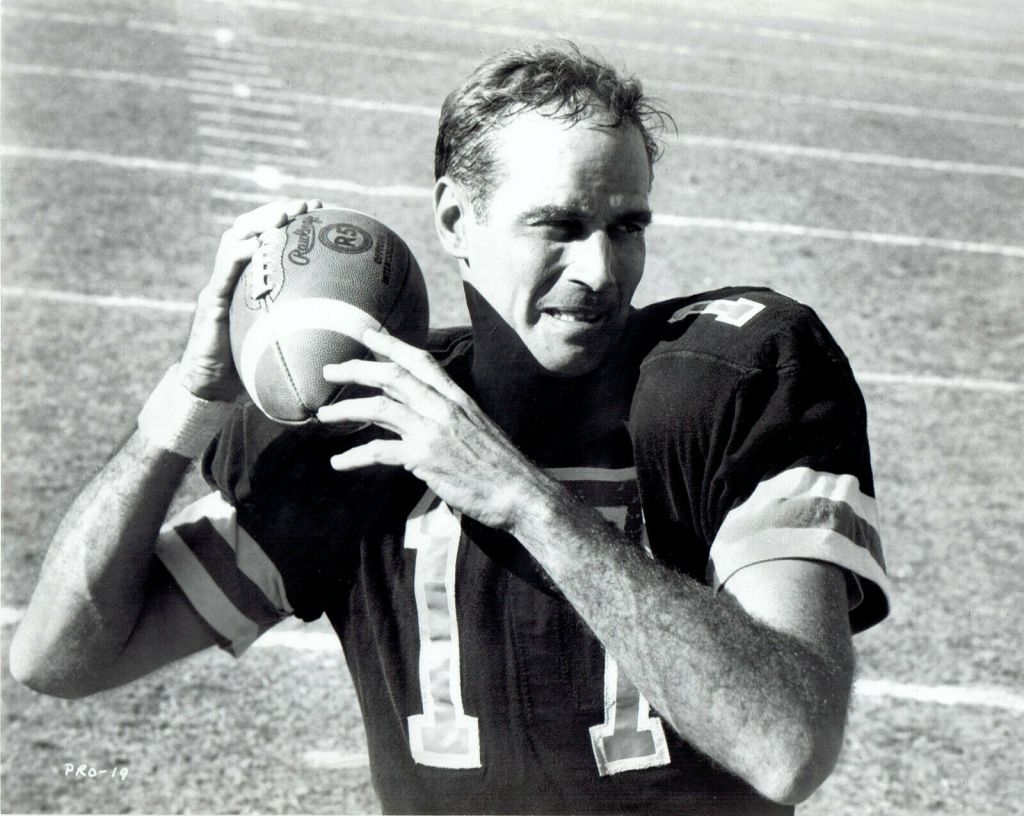
Manuel Artiguez (Gregory Peck) plays a disillusioned guerilla living in exile in France who has ceased raiding the Spanish border town under the thrall of the corrupt Captain Vinolas (Anthony Quinn). Artiguez has two compelling reasons to return home – a young boy Paco asks him to revenge the death of his father at the hands of Vinolas and his mother is dying. But Artiguez is disinclined to do either. Heroism has lost its luster. He has grown more fearful and prefers to live out his life drinking wine and casting lustful glances at young women.

In France he enjoys a freedom he would be denied in Spain. He is not hidden. Ask anybody in the street where he lives and they will tell you. This is a crusty old soldier, unshaven, long past finding refuge in memories, but not destroyed either by regret. There is a fair bit of plot, some of it stretching incredulity. The action sequence at the end, conducted in complete silence, is very well done, but mostly, while a shade on the earnest side, this is a character piece.

This is not the upstanding Gregory Peck of his Oscar-winning To Kill a Mockingbird (1962). He is a considerably less attractive character, burnt-out, shabby, grizzled, lazy, easily duped, unwilling to risk his life to see his mother. We have seen aspects of the Anthony Quinn character before but he brings a certain humanity to his villain, bombastic to hide his own failings, coarse but occasionally charming, suitably embarrassed when caught by his wife visiting his mistress and praying earnestly to God to deliver Artiquez into his hands. Omar Sharif is the most conflicted character, forced by conscience to help an enemy of the Church.

Movie tie-in paperback edition.
The more esoteric cover for the original hardback edition.

However, two elements in the picture don’t make much sense. Paco tears up a letter (critical to the plot) to Artiquez which I just cannot see a young boy doing, not in an era when children respected and feared their elders. And I am also wondering what was it about Spain that stopped directors filming it in color. This is the third Spain-set picture I have reviewed in this Blog after The Happy Thieves and The Angel Is Red. For the first two I can see perhaps budget restrictions being the cause, but given the stars involved – Rex Harrison and Rita Hayworth in the first and Ava Gardner and Dirk Bogarde in the second – hardly facing the production dilemmas of a genuine B-picture. But Behold a Pale Horse was a big-budget effort from Columbia and while black-and-white camerawork may achieve an artistic  darkness of tone it feels artificial. This was never going to be the colorful Spain of fiestas and tourist vistas but it would have perhaps been more inviting to audiences had it taken more advantage of ordinary scenery.

J.P. Miller (Days of Wine and Roses, 1962) adapted the film from the novel by Emeric Pressburger who in tandem with Michael Powell had made films like Black Narcissus (1947) and The Red Shoes (1948). The film caused calamity for Columbia in Spain, the depiction of Vinolas with a mistress and taking bribes so upset the authorities that all the studio’s movies were banned.   Peck and Quinn had worked together in The Guns of Navarone (1961) and Quinn and Sharif in Lawrence of Arabia (1962).

Three into Two Won’t Go (1969) ***

Unhappily married and childless salesman Steve (Rod Steiger) begins an affair with kooky promiscuous hitchhiker Ella (Judy Geeson). A free spirit in control of her life – no VD and on the Pill – and happy to drift from mundane job to mundane job, Ella ranks her many lovers on their sexual performance. Steve has just moved into a new house in a dreary new estate, perhaps in the hope of revitalizing his staid marriage to Frances (Claire Bloom).

While Steve is away on business, Ella turns up at his home where, revealing – without implicating Steve – that she is pregnant and convinces Frances to let her stay the night. Naturally, it is Steve’s baby but Ella plans an abortion. Steve wants the baby and so, too, still unaware of the father, does Frances, seeing adoption as the solution to their marital woes. And so a love triangle, or more correctly a baby triangle, plays out, with a few unexpected twists.

Like most of the marital dramas of the 1960s, especially in the wake of the no-holds-barred Who’s Afraid of Virginia Woolf (1966), this is riddled with outspoken protagonists who have no idea how to find real happiness. Based on the book by Andrea Newman and adapted by Edna O’Brien, who both have previously marked out this kind of territory, the picture shifts sympathy from one character to the next. While no one is entirely culpable, none are blameless either. Yet there is an innocence about Steve and Frances in the way they fling themselves at unlikely salvation. They are not the first couple to find themselves in a marital cul de sac, nor the first to do nothing about it, hoping that somehow through a new house or job promotion things will right themselves.

Audiences, accustomed to seeing Steiger (In the Heat of the Night, 1967) in morose roles, might have been shocked to see him happy and he manages to present a more rounded character than in some previous screen incarnations. In burying herself in domesticity, Claire Bloom (Charly, 1968) essays a far from fragile character, whose resilience and pragmatism will always find a way forward. Geeson is the surprise package, at once knowing and in charge, and at other times completely out of her depth, and to some extent enjoying the chaos she sparks. The exuberant screen personality she presents here is almost a grown-up more calculating version of the character she portrays in Hammerhead (1968).

Director Peter Hall (Work is a Four-Letter Word, 1968) ensures more universal appeal by not grounding the movie in the swinging sixties so that it would not quickly become  outdated. The snatching at last-minute fantasy to avert marital disharmony will still strike a note. The performances are all excellent, including a turn by Peggy Ashcroft (Secret Ceremony, 1968) and bit parts from British character actors Paul Rogers (Stolen Hours, 1963) and Elizabeth Spriggs in her second movie.

Make sure you catch the correct version of this picture if you hunt it down. Against the director’s wishes. Universal edited it then added new characters for the version shown on American television.

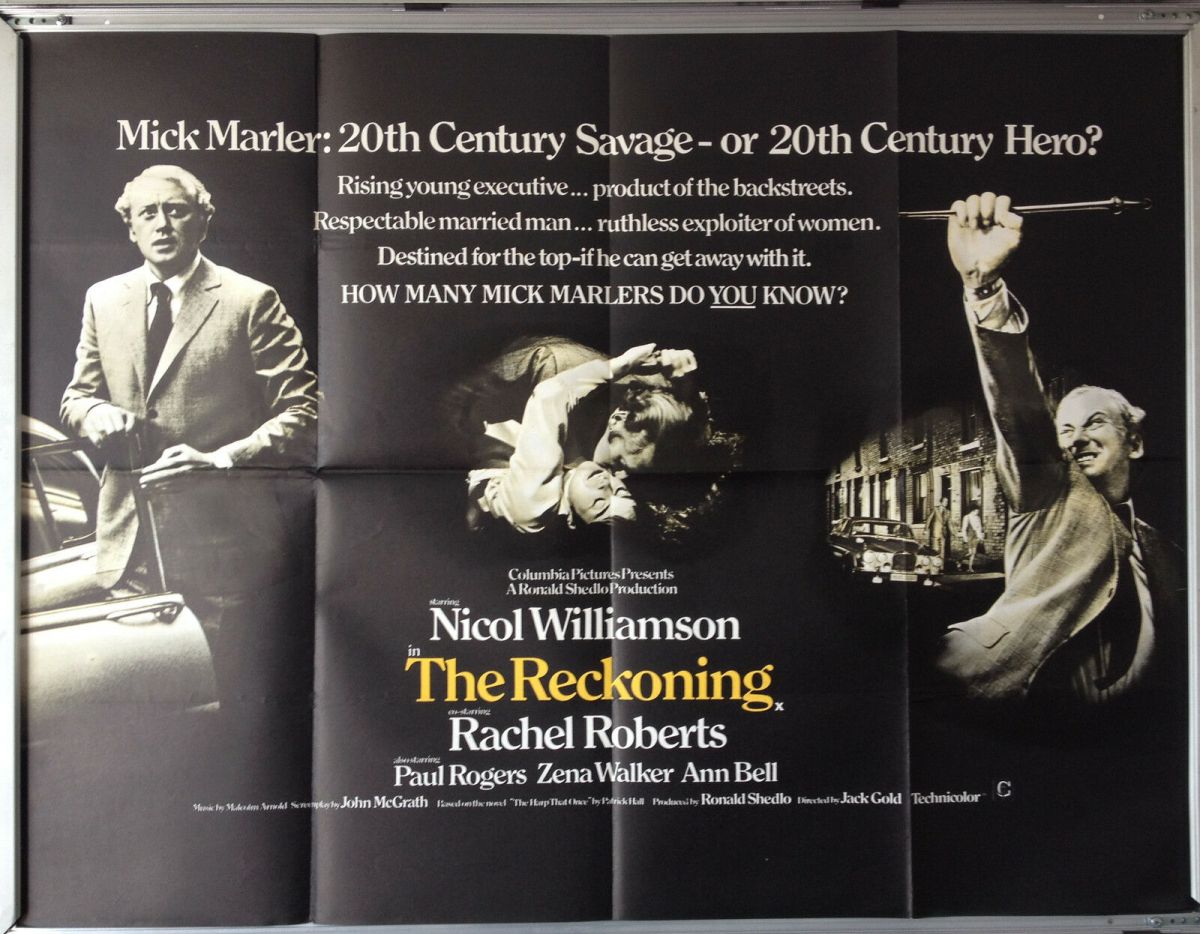
The Reckoning (1970) ****

Fans of Succession will love the boardroom battles and fans of Get Carter (1971) the gritty violence. Michael Marler (Nicol Williamson) is a thug whichever way you cut it. He’s a business hard-ass, at his nicest he’s obnoxious, at this worst brutal. He drives like a demon. Even in love, he’s fueled by hate, sex with wife Rosemary (Ann Bell) infernal. And all of this made acceptable, according to the left-wing tenets that underwrite the film, because he is a working-class man battling upper-class hypocrisy, never mind that his upper-class wife was hardly foisted upon him, nor that he was forced to live in luxury.

Unexpectedly, the film also explores other themes which have contemporary significance. Computers play a pivotal role and so does honor killing. The picture’s original title – A Matter of Honor – was ironic given that in the upper-class worlds in which Marler moved, courtesy of job and marriage, he is considered to have little in the way of chivalry. But in the working-class world he has escaped he must exact revenge according to a code of honor steeped in violence.   

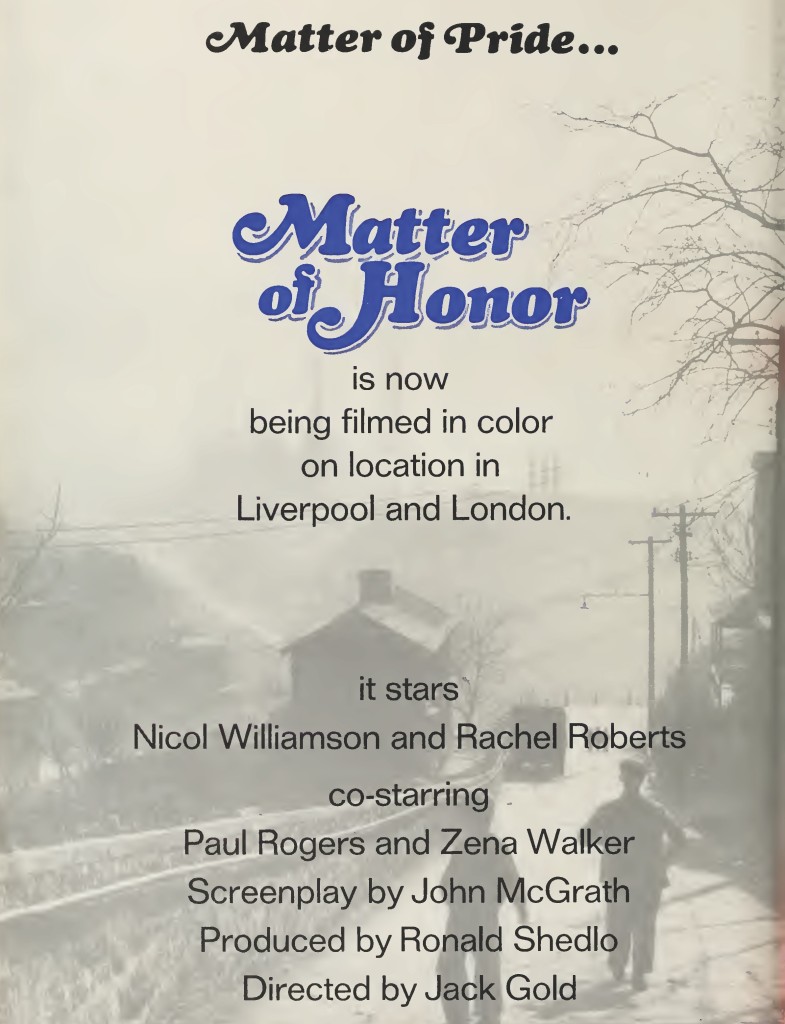
This advert dates from October 1968, which gives an indication of how long the film’s release was delayed, not appearing until January 1970. Interestingly, the advert appeared in the U.S. trade magazine Box Office (October 28, 1968), suggesting Columbia had high hopes for the British production. The title here suggest a different approach to the movie.

The sudden death of his father sends Marler back to Liverpool where he discovers the old man was killed in a pub brawl. But the local doctor and the police, uninterested in complicating what must be a regular occurrence, view his death as accidental. So Marler takes it upon himself to uncover the culprits and wreak revenge, any kind of revenge on any kind of culprit, regardless of the fact that from the outset it is clear they will hardly be gangsters.  While contemplating violence, he strikes up a sexual relationship with the married Joyce (Rachel Roberts).

The story jumps between the back-stabbing corporate world to a scarcely less violent working class environment. The combination of charm and brute energy holds a certain appeal for Rosemary (Ann Bell) and helps keep him in the good books of his boss, but he is otherwise a bully, targeting the weak spots of anyone who stands in his way on his climb to the top, and while heading up the sales division of a company in trouble blaming everyone else for his own failings. And while scorning his wife’s upper-class friends is quite happy to enjoy the benefits of her lifestyle, the flashy car might be the result of his endeavors but not the huge posh house. Marler stitches up another associate with the assistance of another lover, secretary Hilda (Zena Walker), and his long-suffering wife finally takes umbrage at his venomous manner.

Marler hides his hypocrisy behind the façade of a left-wing class-struggle. John McGrath’s screenplay clearly intends Marler’s working-class background to provide him with a get-out-of-jail-free card as well as to launch an attack on upper classes seen as namby-pamby except when it comes to putting the poor in their place. The anti-class polemic has somewhat eroded over time but in its place can be found an accurate portrait of the social mores of ordinary people for whom, alcohol, the drug du jour, plays a massive part.  The going-home element is populated by endless terraced houses without a single parked car, vast caverns of pubs which host wrestling matches and are a tinder spark away from erupting in a brawl. This is in stark contrast to the high-living life Marler enjoys in London.

He has no desire to go back home, hasn’t visited in five years, escaping from there deemed a sign of success, and mostly returns metaphorically to draw on memories with which to scourge the upper-class and excuse his own behavior. 

Nicol Williamson (Inadmissable Evidence, 1968) delivers a tour de force, his screen presence never so vibrant, exhibiting the same raw appeal as Caine in Get Carter. At this point in his career, with a critically-acclaimed Hamlet on stage, he was perceived as the natural successor to Laurence Olivier and Columbia held up the release of The Reckoning to allow the Tony Richardson film of that stage production to pick up critical momentum. Oddly enough Rachel Roberts had not capitalized on her Oscar-nominated role in This Sporting Life (1963), this only her second movie in seven years. Initially coming across as brassy caricature, she soon softens into a surprisingly wistful character. Both Ann Bell and Zena Walker bring greater dimension to their characters rather than as adoring doormats. You can catch Paul Rogers (Three Into Two Won’t Go, 1969) and Tom Kempinski in supporting roles.

Director Jack Gold, who had worked with both Williamson and McGrath on his movie debut The Bofors Gun (based on the writer’s play), does a great job of capturing a particular period of British social history as well as allowing Williamson to stomp around in his pomp.

Subterfuge (1968) ***

Worth seeing just for super-slinky leather-clad uber-sadistic Donetta (Suzanna Leigh) who  delights in torturing the daylights out of any secret agent who crosses her path, in this case Michael Donovan (Gene Barry). She’s got a neat line in handbags, too, the poisonous kind. Two stories cross over in this London-set spy drama. American Donovan is under surveillance from both foreign powers and British intelligence. When his contact comes into unfortunate contact with a handbag, he finds himself on the sticky end of the attention of Shevik (Marius Goring) while at the same time employed by the British spy chief Goldsmith (Michael Rennie) to find the mole in their camp.

The three potential British suspects are top-ranking intelligence officer Col. Redmayne (Richard Todd), British spy Peter Langley (Tom Adams) and backroom underling Kitteridge (Colin Gordon). On top of this Langley’s wife Anne (Joan Collins) adds conscience to the proceedings, growing more and more concerned that the affairs of the secret state are taking too much precedence over her marriage.

The hunt-the-mole aspect is pretty well-staged. Kitteridge always looks shifty, keenly watching his boss twisting the dials on a huge office safe containing top secret secrets. Langley is introduced as a villain, turning up at Shevik’s with the drugs that are going to send the Donovan to sleep for eight hours before being transported abroad in a trunk. But he turns out to be just pretending and aids Donovan’s innovative escape. Charming but ruthless Redmayne is also under suspicion if only because he belongs to the upper-class strata of spies (Burgess, Philby and Maclean) who had already betrayed their country.

In investigating Langley, Donovan fixes on the wife, now, coincidentally, a potential romantic target since her husband is suing for divorce. She is particularly attracted to Donovan after he saves her son from a difficult situation on the water, although that appears manufactured for the very purpose of making her feel indebted. However, the couple are clearly attracted, although the top of a London bus would not generally be the chosen location, in such glamorous spy pictures, for said romance to develop.

As you will be aware, romance is a weak spot for any hard-bitten spy and Shevik’s gang take easy advantage, putting Anne, her son and Donovan in peril at the same time as the American follows all sorts of clues to pin down the traitor.

This is the final chapter in Gene Barry’s unofficial 1960s movie trilogy – following Maroc 7 (1967) and Istanbul Express (1968) – and London is a more dour and more apt climate for this more down-to-earth drama. Forget bikinis and gadgets, the best you can ask for is Joan Collins dolled up in trendy mini-skirt and furs. Barry, only too aware that London has nothing on Morocco or Istanbul in the weather department, dresses as if expecting thunderstorms, so he’s not quite the suave character of the previous two pictures. In this grittier role, he does not always come out on top. But that does not seem to dampen his ardor and the gentle romantic banter is well done.

Joan Collins, in career trough after her Twentieth Century Fox contract ended with Esther and the King (1960), has the principled role, determining that the price paid by families for those in active secret service is too high. No slouch in the spy department himself, essaying Charles Vine in three movies including Where the Bullets Fly (1966), Tom Adams plays with audience expectations in this role. It’s a marvelous cast, one of those iconic congregations of talent, with former British superstar Richard Todd (The Dam Busters, 1955), Michael Rennie, television’s The Third Man (1959-1965), Marius Goring (The Girl on a Motorcycle, 1968) and Suzanna Leigh (The Lost Continent, 1968) trading her usual damsel-in-distress persona for a turn as terrific damsel-causing-distress.

Shorn of sunny location to augment his backgrounds, director Peter Graham Scott (Bitter Harvest, 1963) turns his camera on scenic London to take in Trafalgar Square, the zoo, Royal Festival Hall, the Underground, Regent’s Park with the usual flotilla of pigeons and ducks to fill in any blanks in the canvas.

Catch-Up: Previously reviewed in the Blog are Gene Barry in Maroc 7 (1967) and Istanbul Express (1968), Joan Collins in Esther and the King (1960) and Suzanna Leigh in The Lost Continent (1968).

This is hard to find so your best bet is ebay although it is available on Youtube for free but the print quality is not great.

Stillwater (2021) *** – Seen at the Cinema

A towering central performance from Matt Damon as a redneck American adrift in Marseilles just about saves this from being a total train wreck. Oscar-nominated director Tom McCarthy (Spotlight, 2015) doesn’t just go off-kilter but dangerously off-piste in a truly bizarre third act that sabotages the entire picture, which already is within touching distance of the jump-the-shark record.

But let’s concentrate on the good stuff. Bill Baker (Matt Damon) is an oil rig worker in Marseilles trying to clear gay daughter Allison (Abigail Breslin) from a murder charge – she has served four years of a ten-year sentence. Normally, he only remains in France for two weeks but this time, frustrated by the French judicial system, attempts his own investigation. He strikes up a relationship with single mother Virginie (Camille Cottin), becoming very attached to her daughter Maya (Lilou Siauvaud).

He becomes a surrogate father to Maya, collecting her after school, taking on babysitting duties to allow Virginie to continue her acting career. He moves in, initially in platonic fashion, but soon they become lovers. Considering he has been a lousy dad to Allison, who still, for good reason, distrusts him, he makes up for it with Maya and soon Virginie, sensing the decent qualities beneath the typical angry American, takes him into her bed.

These relationships are all terrifically well done and it’s almost Bill’s first stab at parenthood since he was absent for most of Allison’s childhood, either away working on oil rigs or out of his skull on drink or drugs. The character exhibits considerable self-awareness and the gradual transformation from bull in a china shop (not exactly how you would describe tough Marseilles, but still) to father and lover is incredibly well done.  

So the film could have gone one of two ways. He could have remained in France, working as a general laborer, contributing to the household, watching Maya grow up, perhaps (God forbid!) actually learning some French, and waiting to be reunited with his daughter once freed – she is allowed one day a month out of prison so their relationship is being strengthened in incremental stages.

***SPOILER ALERT***

Or, the director having succumbed to brain fever, Bill could decide to throw all that away by capturing the suspect he has been hunting, slicing off a hunk of hair for DNA purposes, and keeping the prisoner in his basement until the results of such testing comes through. And in the process discovering that his daughter is in fact guilty. It’s as if Damon had realized he was in the wrong picture and slipped into his Jason Bourne alter ego or had been watching too many Taken films.

It would be entirely in character that he hides this unsavory fact from the French police, only confronting his daughter with it once she is safely back home, but it might have been a different, and more satisfying, picture altogether if he had uncovered this evidence in another, simpler, manner and then had to deal with the consequences.

I am making it sound as if the whole picture comes apart in the final section but in truth it is perilously off the rails from the get-go. McCarthy’s contribution to an outdated sub-genre that includes Missing (1982) and Not Without My Daughter (1991) falls into the unacceptable trap of tapping foreign judicial systems as incompetent at best and corrupt at worst. Bill Baker exhibits the worst characteristics of dumb American colonialism as he charges around Marseilles baffled that none of the inhabitants can speak English. It is a truly awful directorial conceit where the eight-year-old Maya is expected to have a better grasp of English than Bill of French. He surely cannot be so dumb that he can’t say “Je t’aime” instead of letting loose an emotional barrage in English to the poor child.

Then there is the very uncomfortable treatment of the locals. Sure, parts of France are certainly racist, and although Bill Baker is comfortable with racists, since he has worked alongside them and he might well have been a Trump supporter had he been allowed to vote instead of being barred due to his criminal record, director McCarthy feels it is his duty as a brave American director shining a spotlight on the country’s nether regions to highlight this aspect of French culture.

Shooting yourself in the foot was never easier than here. The movie bears strong and quite unnecessary similarities to the Amanda Knox case, especially since Allison’s experience with her gay lover comes so close to the facts of the Knox situation.

And that’s not counting the improbabilities. Guess where Bill spots the suspect Akim (Idir Azougli) he has been chasing all his time? Yep, you’ve guessed it. In a crowd of 60,000 people. At a football match. It could only happen in Hollywood. He only needs a sample of the guy’s DNA, a snippet of hair would do, to prove he was present at the scene of the crime and cast sufficient reasonable doubt on his daughter’s conviction. Instead, having floored the guy in the street to get the few strands of hair required, he then locks him up in his cellar – for a week! – until the results of the DNA test comes through.

But someone tips off the cops. But lo and behold when they arrive there is not only no body in the cellar but no evidence that anyone has ever been there because the quick-thinking but very skinny Virginie has improbably managed to untie him and move him to some other unspecified hidden location.

And so we come to the mysterious title. Stillwater is a nondescript backwater in Oklahoma where Allison lived. But for some reason it’s the type of place where not even with a touch of irony canny manufacturers believe its name attached to a necklace would be an unbelievably attractive purchase in a retail outlet at an airport. And that it was worthy not just of being a mere bauble but of being made of gold, and sufficiently valuable that it would be acceptable as part payment to Akim for carrying out a bad deed.

Tom McCarthy has been incredibly lucky to receive a performance of a lifetime by Matt Damon, so sure-footed that there is not even an inkling of his trademark shy smile. Camille Cottin is also excellent. I’m not sure whether Abigail Breslin is meant to be this unlikeable, in which case blame the director, or whether her whiny behavior is a pointer to her guilt. Either way, she is over the top.

However, this is one of those rare instances where if you swallow your disbelief at the plotting, you will uncover a pure gem of a performance.

I saw this at the cinema as part of my Monday night outing. It’s available on Amazon Prime and not the type of picture where the visuals are so outstanding that I would urge you only to watch it on the big screen.

Advise and Consent (1962) ****

Excoriating engrossing political drama in which the unscrupulous take the moral high ground and the principled are destroyed. In other words, the reality of power – gaining it and keeping it and all the skullduggery in between. And it has resonance in today’s cancel culture for it is minor indiscretions from the past that bring down the most upstanding of the species.  

Theoretically, director Otto Preminger (Hurry Sundown, 1967) broke one major taboo in touching on the subject of same-sex relationships. But in reality he took an even bolder step from the Hollywood perspective of giving center stage in the main to older players. Many  had first come to the fore in the 1930s or earlier – Walter Pidgeon (Turn Back the Hours, 1928), Lew Ayres (All Quiet on the Western Front, 1930),  Charles Laughton (Oscar winner for The Private Life of Henry VIII, 1933), Franchot Tone (Oscar nominated for Mutiny on the Bounty, 1935), Henry Fonda (You Only Live Once, 1937). This was the kind of all-star cast you used to get in 1960s big-budget pictures filling out supporting roles. But in this ensemble drama, they all, at various times, hold the floor. And this approach lent the movie greater authenticity.  Even if few viewers today fail to recognize many, that, too, works in the movie’s favor, giving it an almost documentary feel.

Movies about politics are never heavy on plot, so if you’re looking for a thriller in the way of All the President’s Men (1973) go elsewhere. It has more in common with The Trial of the Chicago Seven (2020) with multiple viewpoints and opposing perspectives. What the best movies about politics have in abundance is repartee. Virtually every exchange is a verbal duel, the cut and thrust, the slashing attack, the parry, sometimes a knockout blow delivered through humor. Given politicians spend most of their lives making speeches, even the shortest of sentences, even the bon mots, have a polished ring. And that, frankly, is the joy of this picture, brilliantly written by Wendell Mayes (Anatomy of a Murder, 1959) from the Allen Drury bestseller. In some respects the plot is almost a MacGuffin, a way into this labyrinthine world, where characters duck and dive like a more elevated breed of gangster

A lesser director would have given in to the temptation of filming these duels in close-up.  Instead, Preminger’s direction is almost stately, keeping characters at bay.

A seriously ill President (Franchot Tone), distrusting his feeble Vice-President Harley Hudson (Lew Ayres), decides to fill the vacancy for Secretary of State with highly-principled Senator Robert Leffingwell (Henry Fonda). This not being the beginning of the President’s term, he can’t just do what he wants, his nomination must go before a committee and then face a vote in the Senate. The Senate Majority Leader Bob Munson (Walter Pidgeon) isn’t too happy with the idea, seeing Leffingwell as a dove, likely to appease the growing Soviet threat. Others on the committee, namely Senator Brigham Anderson (Don Murray) side with Munson and the committee hearing turns into a hostile interrogation. The fine upstanding Leffingwell parries well until Senator Seabright Cooley (Charles Laughton) introduces a witness Herbert Gelman (Burgess Meredith) who says Leffingwell belonged to a Communist cell, an accusation Leffingwell denies.

Twist number one: Leffingwell has lied on oath. He confesses this to a friend Hardiman Fletcher (Paul McGrath) who then stitches up the witness. The committee apologises to Leffingwell, which means he is a sure thing for the post, but Cooley smells a rat and starts his own investigation. Leffingwell tries to get out of the job, admitting his perjury, but – twist number two – the President refuses. Munson and Anderson are let in on the secret, the former willing to accommodate the President but the latter outraged and planning to thwart the nomination when it reaches the voting stage at the Senate. Anderson comes under pressure, phone calls to his wife about something from his past that occurred in Hawaii.

And so the stage is set. The pressure builds on Anderson. The President becomes more unwell, making the appointment of Leffingwell more crucial. Aware of Anderson’s intentions, Munson starts whipping up votes, with Cooley doing the same for the opposition. Machinations take over.  And for a movie that was initially light on plot, it ends with three stunning twists, and proving once and for all there is nothing quite so standard as the self-serving politician.

This was the first movie for several years for Henry Fonda (Broadway and television his refuge) and for Gene Tierney (Laura, 1945) – playing a society hostess – who was recovering from mental health problems and the last screen appearance of Charles Laughton. The acting is uniformly excellent and the direction confident and accomplished.  

A slow-burner for sure, but a fascinating insight into the less savory aspects of politics and the human collateral damage.  

The Defector (1966) ***

How often does a government hoodwink a morally upright citizen into deceitful action for the cause of the greater good? In this case physicist Professor James Bower (Montgomery Clift) doesn’t need a great deal of urging because what’s at stake are Russian space race secrets and the man selling them is a Russian scientist he knows from translating his books. It’s apparent from the outset that in setting out to make contact in East Germany, he is walking into a trap. It’s moody, and drab in the vein of The Quiller Memorandum (1966), shot in soulless German streets, and of course it is the final performance, after a four-year screen absence, of a frail-looking Clift, an iconic Hollywood star for nearly two decades.

But genres can be confusing. Although tagged as a spy picture it’s not really a spy film. It’s a character study. In fact, two character studies, the other being a far-from-typical communist. And when you get to the end and realize the sacrifice made in order not to compromise principle, it turns into quite a different movie, one with considerably more depth than you might have imagined.

Bower is a rather adept amateur spy, neatly dodging being followed, and capable of nipping between two moving trams to evade pursuit. His instructions lead him to asking for a particular prescription and being sent in apparent haphazard fashion to an intended meeting with Dr Salter (Hans Messemer), his contact. Instead he is led to Counselor Peter Heinzmann (Hardy Kruger). His hotel room is not merely bugged but fitted with electronic instruments to prevent sleep and distort his mind. Meanwhile Heinzmann is engaged in a hawk-vs.-dove battle with  Orlovsky (David Opatoshu) to determine whose methods, the latter preferring torture and brainwashing, would prove the more successful in forcing Bower to betray the whereabouts of the would-be defector. And there is also a doctor’s receptionist Frieda (Macha Meril), with whom romance so obviously beckons your natural moviegoer instinct is to regard her as lure rather than friend.

It’s a chess game, Bower a pawn, with the net growing tighter, imprisoned in more ways than one, being groomed for defection himself. Although there is double cross, triple cross, murder and an excellent Hitchcockian escape/chase, and a final unexpected, very human, twist, it’s far from your typical spy thriller, in general subtle in tone except for the nightmarish hotel scenes. Heinzmann is also a pawn, fighting a system that sees degradation as its most potent weapon and even while a danger to Bower displays humanity.

Clift’s physical state, skin drawn tight over his face, works to the movie’s advantage, turning him into more of a Glenn Ford-type actor, the staunch man-next-door with steely resolve, but not the kind of character you would imagine Elizabeth Taylor or Marilyn Monroe giving a second glance. In fact, since the story calls for him to be suffering from a mysterious malady – hence the need to seek out a pharmacy and doctor in a foreign country – his features endorse this plot point far better than if he had been fit and well.

Quite what the set was like is anybody’s guess given that not only was Clift dead by the time of the film’s release but that Belgian director Raoul Levy (Hail, Mafia, 1965) – better known as the producer of many Brigitte Bardot films and now helming only his second film – had committed suicide.  

If ever there was proof of star power, this is it. Even when the film is meandering and the plot at times impenetrable, Clift exerts an almost hypnotic hold on the viewer. Despite his clear infirmity, the intensity that enraptured audiences from films as disparate as Red River (1948), From Here to Eternity (1953) and The Misfits (1961) has not vanished. Since many scenes are just meetings that scarcely progress the story, it is quite a feat to keep audiences interested. Far from his greatest performance, he still displays screen presence.

He is helped along by Hardy Kruger (Flight of the Phoenix, 1965) in one of his more measured performances, both men sharing the knowledge that in doing good for their country they are betraying themselves. David Opatashu (Guns of Darkness, 1962) is excellent as his  quietly ruthless superior and there should be mention of  Karl Lieffen as the constantly complaining Major. Even as a dowdy East German, Macha Meril (Une Femme Mariee, 1964) still captivates.  Serge Gainsbourg contributed the music.

Jungle Cruise (2021) **** – Seen At The Cinema

Can’t believe this romp is getting such sniffy reviews. But the reason is simple enough. Critics don’t watch it with an audience (except possibly of other critics) – on Rotten Tomatoes critics scored this at 63% while audiences rated it 93%. I saw it as part of my Monday Night Cinema Double Bill – along with Suicide Squad which critics adored. But while I thought Suicide Squad was a blast and very original, I laughed more at Jungle Cruise and I was much more involved. The difference – Suicide Squad is slick and cynical with hardly a single empathetic character, which is an easier target these days, but Jungle Cruise goes for something more difficult to achieve, a genuine warm-hearted movie that doesn’t disappear into romantic slush.

Sure, Jungle Cruise recycles not just Raiders of the Lost Ark (1981) – which itself recycled just about everything – but Ghost (1990), Highlander (1986), The African Queen (1951), Romancing the Stone (1984) and Pirates of the Caribbean (2003), but I don’t think that took away from its originality. The story made sense and the clues involved in the treasure hunt aspect of the picture were well worked out, delivering quite a few surprises. But mostly, there was terrific charisma between Dwayne Johnson and Emily Blunt.

Roguish Frank Wolff (Dwayne Johnson), with a line in lame jokes (which, by the way, had the audience roaring), operates an Amazon river cruise before the First World War where most of what the passengers see is manufactured. Explorer and accomplished burglar Lily Houghton (Emily Blunt) mistakes him for riverboat magnate Nilo (Paul Giametti) but after Frank saves her from a tiger (his tame beast, it turns out) she hires him to find a fabled treasure. Also in the hunt are ruthless German Prince Joachim (Jesse Plemons) and Spaniard Aguirre (Edgar Ramirez).

Both Wolff and Houghton are given great opening scenes, he proving what a con man he is, she more than capable in a man’s world, where such is the antipathy to female archaeologists that her brother MacGregor (Jack Whitehall) has to deliver her lecture for her. There’s action by the bucketload, quite a few Indiana Jones-type escapes, shooting the rapids, encounters with dangerous animals – snakes, piranha fish etc – and natives. Prince Joachim has one hell of a river vessel and quite a few tricks up his sleeve. It’s not just that the pace never lets up, but it is generally delivered with verve.  

Interestingly, there is a nod towards diversity in that MacGregor is gay, a fact accepted by Wolff. Equally interesting, MacGregor has a pivotal transitional moment as his character starts out in one mode and ends in another.  And Lily gives the finger to the male-dominated academic world.

Paul Giamatti (TV’s Billions, 2016-2021) only has a small part but it’s a delight to see him make any big screen appearance at all and Jesse Plemons (Judas and the Black Messiah, 2021) takes on the rather unusual role of the German bad guy. Even though Edgar Ramirez (Yes Day, 2021) spends most of the movie in disguise one way or another, his intensity still shines through.

Jaume Collet-Sera made his name directing Liam Neeson thrillers like Unknown (2011) – one of my favorite pictures – and Non-Stop (2014), Run All Night (2015) and The Commuter (2018) but this is a big step up not just in terms of budget and the occasionally complex story line but also in the romance and comedy elements and in my eyes he more than delivers. Michael Green (Blade Runner 2049, 2017), Glen Ficarra (Focus, 2013) and John Requa (The Bad News Bears, 2005) all had a hand in the screenplay and James Newton Howard (News of the World, 2020) has written a great score.  

I’ve no idea whether Jungle Cruise has anything in common with the ride at the Disney theme park and I didn’t care. This is not just great family viewing but for audiences of all ages who just want to be – wait for it – entertained. But Disney may well have shot itself in the foot by streaming this at the same time as opening it in cinemas for I bet you this will get terrific word-of-mouth and they should have let it sit in cinemas for months to gather the benefits. An ideal summer movie of the old-fashioned kind.

Sodom and Gomorrah (1962) ****

Setting aside the Biblical angle and the need to inject as much sin as the censor at that time would permit, this works very well as a historical drama filled with political intrigue, pivoting on the morality/sin axis, and with a terrific battle scene. The set up is superb. Bera (Anouk Aimee), Queen of the titular twin cities, allows Hebrew leader Lot (Stewart Granger) to settle his wandering tribe along the River Jordan in order to provide a buffer between her kingdom and the marauding Elamite tribe. Meanwhile, her treacherous brother Astaroth (Stanley Baker) intends using the Elamites to dethrone his sister.

Stunning image from the Pressbook.

The Sodom-Hebrew arrangement is ugly from the start. Sodom owes its wealth to salt. And it relies for its salt mining and processing to thousands of slaves, literally worked to death, corpses piled high on wagons and dumped in the desert. The Hebrews abhor slavery. But having been homeless for so many years, Lot is in no position to argue and assumes that his people can live peacefully enough alongside the heathens, even accommodating Sodom to the point of returning fleeing slaves.

Another superb illustration from the Pressbook.

In fact, in agreeing to live in such close proximity to Sodom, Lot is already in the throes of seduction. In what appears a gesture to seal the deal, Bera presents Lot with her chief female slave Ildith (Pier Angeli). In reality this is a cunning move designed to undermine Hebrew culture. Naturally, Lot grants Ildith her freedom but her presence creates disharmony, Melchior (Rik Battaglia) leading the dissenters. Astaroth seduces both of Lot’s daughters Shuah (Rosanna Podesta) and Maleb (Claudia Mori).

Eventually, of course, the Hebrews succumb to many of the pleasures of Sodom, especially after discovering their own salt deposits which instantly make them wealthy, while Astaroth continues to stir up trouble. Lot the politician is more to the forefront than Lot the good and faithful servant, ignoring the slavery for the sake of peace. However, politics remain a sticky maneuver and, in the end, of course, it is God who intervenes, smiting the wicked.

There are surprising depths to the story. Ildrith initially rejects Lot’s overtures of marriage on the grounds that it will diminish his goodness. In trying to improve living conditions for the Hebrews, Lot does the opposite, jeopardizing their beliefs, his actions rendering virtually invisible the distinctions between the opposing cultures, especially when he is up close to the dancing female slaves and men being burned alive on a wheel. Queen Bera is a political genius, skilled at keeping her enemies closer, not just taking advantage of Lot’s weakness but ensuring that Astaroth never catches her cold.

It’s a very absorbing mix of power, politics, human weakness, the dangers of collaboration, sex and action. Although Lot takes center stage, it is only to watch his decline from man of principle to weak-willed politician, through the astute workings of Queen Bera, a far better manipulator of human emotions than her opposing number.

Images showing the capture of slave Tamar (Scilla Gabel)

Stewart Granger (The Secret Partner, 1961) is surprisingly good as the Hebrew leader. He might lack the physical presence of the likes of Charlton Heston but he proves himself no mean adversary in the various action scenes, two fights with Astaroth for example, the battle itself and in quickly dealing with dissent in the ranks. It would never have occurred to me that a shepherd’s crook was much of a weapon, but in Granger’s hands it proves very effective. He knows he is being seduced, first by Ildith, and then by Sodom, but, as a human being rather than figure of spirituality, is powerless to stop it.  Stanley Baker (The Guns of Navarone, 1961) as the queen’s treacherous brother, on the other hand, just looks shifty and mean throughout.

Anouk Aimee (La Dolce Vita, 1960) is excellent as the politically astute monarch, and save for God’s intervention, would have got the better of everyone around her.  Pier Angeli (The Angry Silence, 1960) is touching, initially angry at being cast out of Sodom, gradually warming to Lot, but only too aware that in succumbing to her charms he might spoil his own innate goodness, like a femme fatale only too wary of her own powers.  Rosanna Podesta (Seven Golden Men, 1965) is good in a supporting role as is Rik Battaglia (Esther and the King, 1960) while Scilla Gabel (Colossus of the Arena, 1962) has a smaller part as the slave Tamar who meets a horrible death. Look out, too, for Gabrielle Tinti (Esther and the King, 1960), later best known for his marriage to Laura Gemser of the Black Emmanuelle series, and future spaghetti western anti-hero Anthony Steffen (Django the Bastard, 1969).

Novelisation of the screenplay with a cover placing the focus strictly on sin.

Robert Aldrich (4 for Texas, 1963) creates an excellent addition to the genre, the pace of the drama, with various storylines, never slacking. As a historical picture this aims higher than mere pulp where sexiness and torture are the audience hooks. His battle sequence is outstanding, unusual in that the balance of power shifts throughout, in part through treachery, between the participants. Although Aldrich often disparaged this picture, he has done a really good job of working up the ingredients into a heady brew, notwithstanding the “deus ex machina” ending that met audience expectation. Ken Adam (Dr No, 1962) headed up the production design and Wally Veevers (The Guns of Navarone, 1961) among the half dozen experts contributing to the special effects. Mention also to Maurice Binder for the credit sequence and Miklos Rosza (Ben-Hur, 1959) for a nuanced score.

Catch-Up: Reviewed previously in the Blog are Robert Aldrich’s 4 for Texas (1963) and The Flight of the Phoenix (1965), Stewart Granger in The Secret Partner (1961) and The Secret Invasion (1964), and Stanley Baker in The Guns of Navarone (1961) and The Girl with a Pistol (1968).

A House Is Not a Home (1964) ***

Best remembered these days as the debut film for Raquel Welch (One Million Years BC, 1966), the rest of the film is well worth a look.

Hypocrisy had its heyday in The Roaring 20s when prohibition made bootleggers millionaires, helped bankroll other criminal activities like prostitution and encouraged cops and politicians to seek their share of the loot. No surprise then that the biopic of real-life madam Polly Adler (Shelley Winters) is knee-deep in corruption.  

Thrown out of her own home after being raped, Adler finds a knight in shining armor in the shape of bootlegger Frank Costigan (Robert Taylor) and is soon, at first apparently innocently, pimping out her friends. The reality of what becomes her profession is not ignored, the word “whore” bandied around, one girl, Madge (Lisa Seagram), turning junkie as a result while Lorraine (Meri Welles) commits suicide. As in Go Naked in the World (1961) Polly realizes that true love has no place in her world, a relationship with musician Casey (Ralph Taeger) unsustainable.

Adler, in her many voice-overs, explains why vulnerable women become sex workers – poverty, lack of family and lack of hope is her take on it – and she professes to view it as a business and preferable to working in a factory for pitiful wages, but the movie is at its best in linking the nether worlds of infamy and showing that the woman is always the loser.  Morality got in the way of portraying Adler as a winner, a successful businesswoman who brought a certain amount of style to the oldest profession. Women profiting from illegal activity would not be deemed heroic (to use the word loosely) until Molly’s Game (2017) and like Jessica Chastain in that film Adler’s love life is in tatters because, like her male counterparts, she devotes so much time to her business.

While any attempt to properly portray the period is hampered by lack of budget, it does provide an array of interesting and occasionally real-life characters, Lucky Luciano (Cesar Romero) for example. A brothel proves an ideal meeting place for crooks and politicians, the latter easily bought by contributions to their campaign funds. Cops are not shy about asking for donations to their Xmas funds or using the facility.

The Adler operation puts a glossy shine on the shady business since all her girls are glamorous. But still the movie pulls no punches except in the case of the madam herself, presented too often as an innocent and who saw nothing wrong in taking as much advantage of the vulnerable girls in her employ as the  clients who paid for them. Nonetheless, while Adler attempts to justify her life the film’s moralistic tone undercuts this.


Oscar-winner Shelley Winters (The Chapman Report, 1962), more often a supporting player at this point in the 1960s than the star, grabs the role with both hands and although unconvincing as the younger girl delivers a rounded performance minus the blowsy affectations that marred much of later work. One-time MGM golden boy Robert Taylor, pretty much in the 1960s reduced to television (The Detectives, 1959-1962) and low-budget pictures, shows a glimpse of old form as the smooth bootlegger.

Cesar Romero (Oceans 11, 1960) and Oscar-winner Broderick Crawford (All the Kings Men, 1949) head up a checklist of old-timers filling out the supporting cast. Future director Lisa Seagram (Paradise Pictures, 1997) as the junkie hooker makes the biggest impact among the girls.

From the flotilla of wannabes playing Polly’s girls, apart from Raquel Welch the only one to break into the big time was Edy Williams (Beyond the Valley of the Dolls, 1970). In the main they comprised beauty queens – Amede Chabot (Miss America), Danica d’Hondt (Miss Canada) and Leona Gage (Miss Universe) who had a small part in Tales of Terror (1962). Otherwise Sandra Grant became the most famous – for marrying singer Tony Bennett. Patricia Manning had the most screen experience, second-billed in The Hideous Sun Demon (1958), bit parts in television shows, and fourth-billed in The Grass Eater (1961). Inga Nielsen would later turn up as bikini fodder in The Silencers (1966), In Like Flint (1967) and The Ambushers (1967).

Director Russell Rouse (The Fastest Gun Alive, 1956) was better known for the screenplay of D.O.A. (1949) and had a story credit for Pillow Talk (1959). In fairness, although the film has no great depth, Rouse keeps it ticking along via multiple story strands, although occasional lapses into comedy fail to work. Lovers of curiosities might like to note that Rouse was the producer on an abortive American attempt to remake the classic British television comedy Steptoe and Son for U.S. audiences with Lee Tracy in the role of Albert and Aldo Ray as his son Harold.

This is hard to get hold of. Ebay will be your best bet. Youtube has a print but it’s not in great condition.

Discover WordPress

A daily selection of the best content published on WordPress, collected for you by humans who love to read.

The Atavist Magazine

by Brian Hannan

WordPress.com News

The latest news on WordPress.com and the WordPress community.