Mister Moses (1965) ***

The “lost” Robert Mitchum picture, never seen on VHS or DVD, but now turning up on YouTube.

Elephants have little proven appeal for audiences. From Dumbo (1941), Hannibal (1960), Billy Rose’s Jumbo (1962) and Hannibal Brooks (1968) through to Dumbo (2017) and Babylon (2022), the story is one of negative impact on box office. Baby elephants are maybe a different story – see Hatari! (1962)  – but there’s very little that’s cuddly about the adult version and their main purpose appears to be to annoy a major stars initially and then go on a rampage that either hinders or helps said star. If you’re acquainted with elephants, you’ll notice this is of the tameable Asian variety rather than the untamed African.

The unnamed beast here would fall into the former category except the eponymous Mister Moses (Robert Mitchum) – real name Joe – can talk to the animal in a language it understands and persuade it to show off its parlor tricks, enhancing Moses’s status among a small  community in Kenya. Moses is a con-man-cum-diamond smuggler, rescued from a river, specifically the reeds growing there that offer a Biblical connection to the natives.

The Bible plays a significant role here, though the natives don’t fall for the Noah story as explained by missionary (Alexander Knox). They are, like Native Americans, being driven off their land by the arrival of a dam which will flood their traditional grounds. Their cattle have not been included in the grand plan to airlift the entire community. So they refuse government help, hence the need to embark on a 300-mile trek.

Moses, a dodgy character with “an allergy to badges of authority”, is blackmailed by the missionary’s daughter Julie (Carroll Baker) and ends up doing the job of her fiancé, district commissioner Robert (Ian Bannen), to shift the natives off their land. He’s got some parlor tricks up his sleeve, too, including a flame-thrower which, again the old Biblical touch, he can employ to burn a bush, thus endearing himself as a leader.  

Naturally, enough, though staid, Julie finds herself attracted to Moses, a somewhat laid-back character with quite a line in hip patter. But it’s quite a stretch for Julie to be seduced by his knowledge of classical literature, namely the Andromeda-Perseus tale. Not everyone takes to Moses’ leadership, saboteurs steal the map and the compass.  And it’s no surprise when someone finds another purpose for the flame-thrower. There’s a bad witch doctor Ubi (Raymond St Jacques) to be put in his place, and Joe rises out of his lethargy long enough to dispose of a couple of villains.

With the emphasis on the Biblical, Joe is called upon to “part the waters” Exodus-style. Disappointingly, this is a bit of a parlor trick. It had me wondering how the heck he was going to do that,  with just a flame thrower and an elephant at his disposal, and also given that the sole purpose of rivers in African movie vernacular is so that the leading lady can bathe in one. Since the aforementioned river is nothing more than the outcome of another dam, Moses is clever enough to simply persuade the dam superintendent to – miracle of miracles – to turn off the water.

There’s enough going on to maintain interest and the will-she-won’t-she element is well-handled and there’s a good final line, “What’ll I do for laughs?”

Robert Mitchum has been here before (Rampage, 1963) but this time is on the side of the animals. Of course, the main interest is not how well he gets on with the elephant but whether he strikes sparks with a Carroll Baker (Harlow, 1965) eschewing her normal sexy persona. A cross between Hayley Mills and Deborah Kerr, Baker doesn’t quite suggest bottled-up sexual energy fizzing to get out, but then that wouldn’t be in character. It’s not in The African Queen league in terms of screen partnerships but it’s certainly workable enough.

Ian Bannen (The Flight of the Phoenix, 1965) is at his scowling best although Raymond St Jacques (Uptight, 1968) gives him a run for his money. Director Ronald Neame (Gambit, 1966) proved as adept at handling the big-name stars as the animals without it being acclaimed as a famous “lost” work of Mitchum. The screenplay by Charles Beaumont (Night of the Eagle/Burn, With, Burn, 1962) and Monja Danischewsky (Topkapi, 1964) was based on the novel by Max Catto (Seven Thieves, 1960).

A pleasant enough diversion.

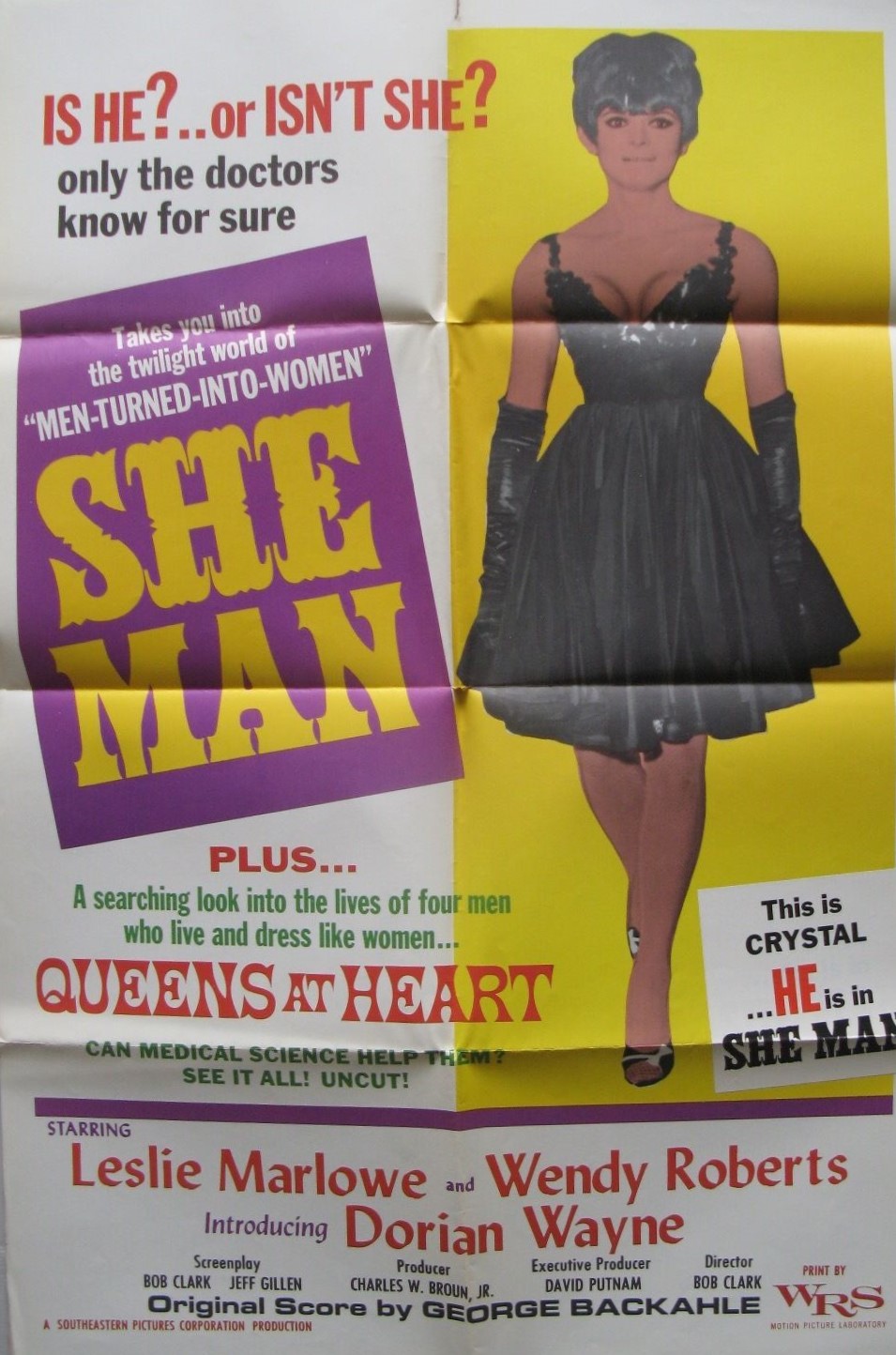
She-Man (1967) ***

If you were astonished that musical Les Bicyclettes des Belsize (1968) was the debut of action director Douglas Hickox (Sitting Target, 1973, Brannigan, 1975) you might be knocked sideways to discover Bob Clark of Porky’s (1981) fame cut his teeth on this tale of cross-dressing. Perhaps even more astounding is that what appeared little more than a cheesy sexploitation number has now come into its own as a plea for understanding for those taking a different sexual path in life.

Bookended by one of those tropes popularized by Alfred Hitchcock via Psycho (1960) of a psychiatrist making sense of the characters for an audience unfamiliar with their predilections,  the narrative itself while on the preposterous side does highlight how vulnerable anybody back in the day for displaying what was then known as “perversion” – punishable by law – was to blackmail.

And in keeping with Hickox, Bob Clark’s tale shows considerable artistry. It might be the only film of the decade to pay homage to Arthur Penn’s Mickey One (1965), in particular the scene where Warren Beatty on stage is dazzled by a spotlight that also serves to hide his interrogator. Clark takes this notion one stage further. In one sequence the screen is completely black with the face of Lt Albert Rose (Leslie Marlow), the victim, a small white blob.

I should also mention a quite astonishing cabaret act which sees performers dressed in outsized top hat and tails, the hat perched so high that there’s room to draw a face on the upper torso. The credits scene is worth noticing as well, a woman in silhouette stripping, except that the punchline is she’s a man.

The story is crude, but I guess for the times the only way to show that people wishing to express a part of their character that would be alien to others had to pretend that they were giving in to outside forces rather than sexuality being their own choice. And it takes the view that any male, given the opportunity to explore their feminine side, might be grateful.

Anyway, the plot begins with macho soldier Rose who surrounds himself with beautiful women being blackmailed by Dominique (Dorian Wayne) for deserting in the line of fire in Indo-China in 1951. In return for keeping quiet, Dominque extracts payment of $20,000 and an agreement that Rose spend a year as her maid. The lieutenant has been chosen for a more sinister purpose, to blackmail his senator father and his commanding officer.

Initially resistant, when Rose starts taking estrogen and underghoes “transformation” – eyebrows plucked, all body hair shaved, make-up applied, and wearing a typical male fantasy maid’s outfit – he begins to become comfortable with his feminine side. The point is pointedly made – and repeated in the coda – that cross-dressing does not turn him into a homosexual for he falls in love with Dominique’s assistant Ruth (Wendy Roberts). This doesn’t quite ring true since Ruth is a professed lesbian, and blackmailed for being so, and it seems a stretch to imagine that if she’s forbidden to enjoy true sapphic love she would make do with a feminine-type male.

I should also point out that Dominique is indiscriminate in her determination to transform. Women are turned into men as well as men turned into women. Which also poses a plot hole, or perhaps makes a more subtle point in suggesting Ruth is actually a man who convinces himself he’s really a lesbian. Either way, it’s not particularly clear.

I was hoping that Louise C Pessalano, head of “Psycho Research,” the aforementioned bookender was a genuine psychiatrist or expert in sexual mores but it turns out he’s an actor, best known for The Farmer (1977). Even so, the points he makes remain valid half a century later and possibly even more vital in these times when issues of sexuality are more prominent. He asks the audience to sympathize with people who are perhaps haunted by “unexplainable drives and anxieties that constantly haunt them.” The case study, “File 743,” shows that Rose, though a cross-dresser, has a “normal” male sex drive while Dominique “show an unnatural desire for power.”

Examining this film from a modern perspective, you would at least feel sympathy for characters trapped into living their life in the shadows, terrified of their own desires, aware of the damage revelation could inflict on life, marriage and career. It’s certainly not terrible and given the obvious budget restrictions Clark uses lighting as if making a silent movie.

Worth a look on Youtube.

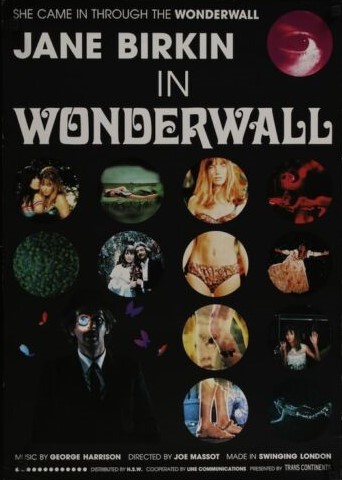
Wonderwall (1968) **

While psychedelic forays were all the rage in the late 1960s it’s hard to see how that excuses a movie that appears to exalt a peeping tom. Or at the very least appear to give him a free pass because he’s a barmy scentist and, more likely, because he saves the object of his spying from suicide. And you have to wonder what prompted George Harrison (at the time still a Beatle) to volunteer to provide the soundtrack.

Of course, the title has been popularised by the catchy Oasis song and star Jane Birkin achieved notoriety also on the musical front when her single “Je T’Aime” was banned by the BBC the following year (censorship having the opposite effect and sending it to the top of the charts, as any good marketing analyst could have predicted).

But there’s not much going on here that purports to be narrative and the psychedelics and fantasy sequences fail to remove discomfort over the context.

Professor Collins ( a wild-haired Jack MacGowran) spends his days glued to a microscope studying amoebas and perhaps in a nod to other less than savoury literary characters (Lolita, 1962 and The Collector, 1965, in case you haven’t guessed) collects butterflies and spends the evening in a chaotic apartment stacked high with old magazines (their content, given his later behavior, not what you might expect).

Disturbed by the noise of a party upstairs, he throws something at the wall, knocks something loose and finds a hole-sized light streaming into the darkness of his apartment. With nothing else to keep himself occupied, he peers through and is entranced by the long legs of model Penny Lane (Jane Birkin). Soon, he is checking out a photo shoot, a party, Penny making love to boyfriend (Iain Quarrier), the model rejecting her lover’s suggestions of a threesome with another equally lithe model (Anita Pallenberg), and later discovering she is pregnant.

In between, Collins has various fantasies about challenging the boyfriend to a duel. Initially, this is in the formal manner, with duelling pistols or rapiers, but soon takes the form of giant fountain pens or giant cigarettes. Occasionally, there’s a butterfly motif. Once, he imagines Penny as a mermaid swimming among the amoebas. His dead mother appears in a puff of smoke to tell him off.

And he didn’t get to being a professor without showing some initiative. So when he realises that a tiny hole limits his viewing pleasure, he starts to knock the wall down and watch the woman in widescreen, though somehow the wall is made of glass, thus preventing him intruding, and equally somehow the neighbors never seem to notice.

Of course, you could take it all as fantasy, that a lonely old man just wants to befriend a young woman, as if there was anything less creepy about that.

Naturally, if you’re inclined to ignore the creepiness, you might be tempted to start to praise the psychedelic, but I’m not sure that’s a very good starting point. If you’re into sitar music or George Harrison you will probably enjoy the score.

Jack MacGowran (Age of Consent, 1969) didn’t seem to feel he needed to do any more with the character than dress him as an eccentric. There’s certainly no sense of shame. If anything, thanks to the ending, he is afforded redemption. Jane Birkin (Blow-Up, 1966) isn’t called upon to do anything except appear soulful, and, of course, from time to time, nude. British character actors like Irene Handl and Richard Wattis appear in stock roles.

Joe Massot (The Song Remains the Same, 1976) directed and Gerard Brach (Repulsion, 1965) and Guillermo Cain (Vanishing Point, 1971) wrote the screenplay. But while Massot was a debutant, Brach’s involvement would have indicated something perhaps creepier still but with a more relevant outcome. A case study on how this got the green light in the first place would be most appreciated.

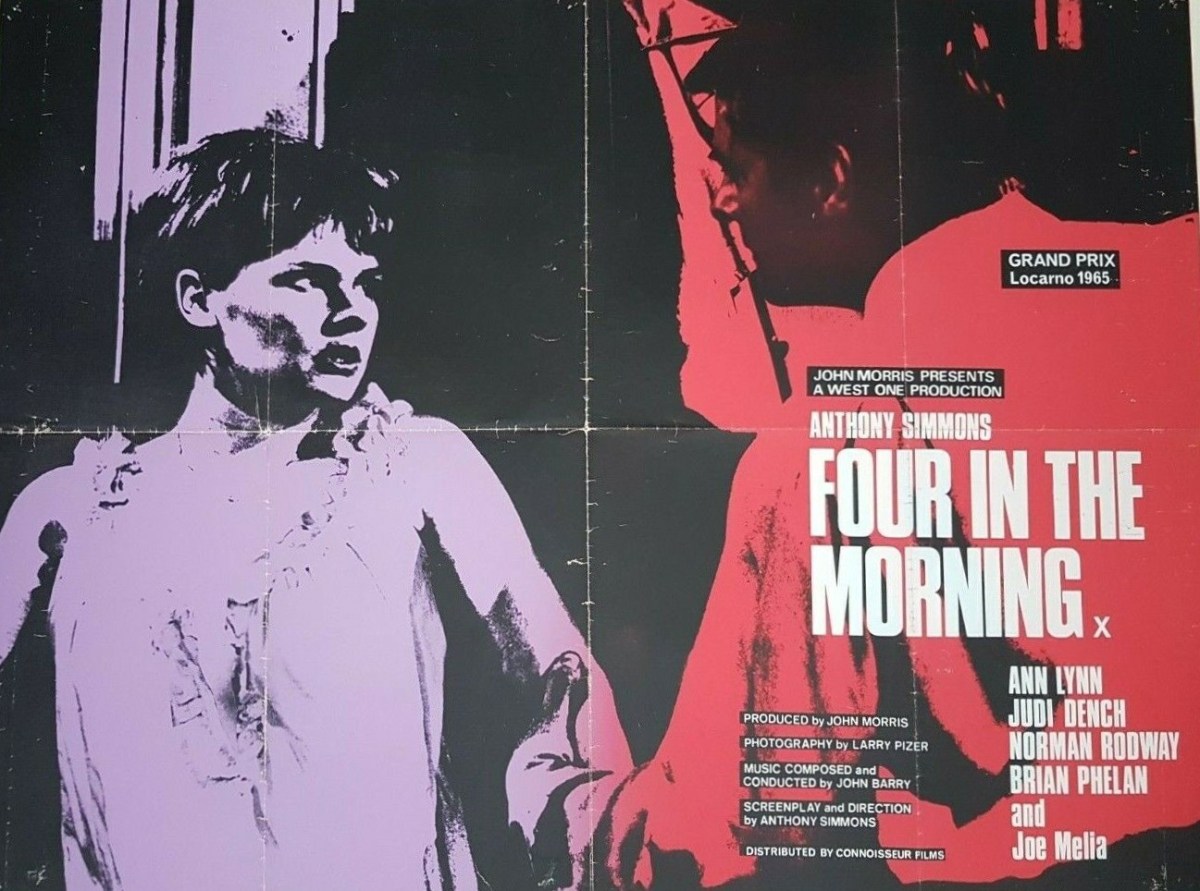
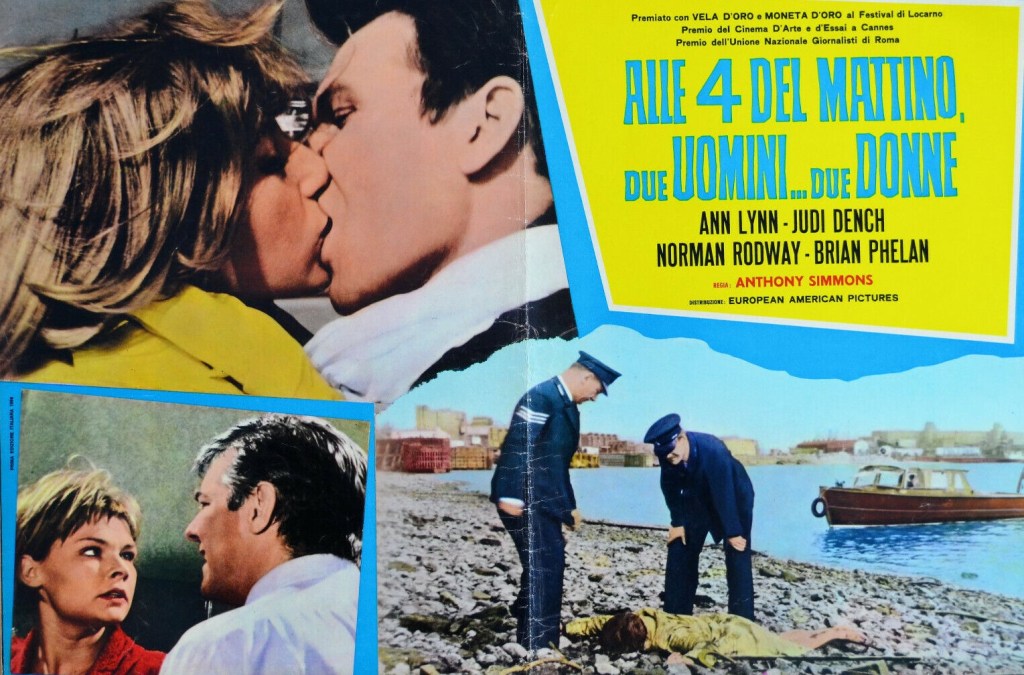
Four in the Morning (1965) ****

Directors learned this early that you only had to point the camera at Judi Dench (Oscar winner for Shakespeare in Love, 1998, but here in her first starring role) and even without the benefit of dialog she will always be compelling. And that’s just as well because this is one of those elliptical movies that were in fashion in the wake of Last Year in Marienbad (1960).

Less twisty and self-conscious for sure two apparently unconnected tales are conjoined by a mysterious drowning in the Thames. And this isn’t tourist London, either, but the working version, a city waking up, famed fruit and flower markets coming to life, ferryboat teaming with passengers, the skyline dominated by tiny dots setting off for the office.

In fact, the picture draws its power from three women, the aforementioned Dench as a young woman smothered by motherhood, marriage disintegrating, Ann Lynn (The System/The Girl-Getters, 1965) who breaks out of the supporting role cage where her character is generally fixed from the start to take advantage of a name-above-the-title role as a reticent lover to explore a gamut of emotions. Last of the trio is the drowned woman, whose callous treatment dominates the action.

If you ever wanted to find out what happens to a drownee here’s your chance. Unceremoniously dragged from the shore, transported to a mortuary in a coffin, head laid on a block of wood, clothes cut off, naked body sluiced with water, fingerprints taken, stored in a refrigerator, indignity run riot, it’s a harrowing sight.

As if to compound the movie’s arthouse sensibilities – and it won big at various film festivals – the characters remain anonymous. The wife (Judi Dench), stuck at home with a mewling teething infant, is disconcerted to find husband (Norman Rodway) has returned from a night on the town with  buddy (Joe Melia) in tow. They want to continue partying, waking up wife and baby, resulting in non-stop argument.

Divorced manager of an upmarket bar (Ann Lynn) tries to put off a boyfriend (Brian Phelan) pestering her for a date. Eventually, she relents and they embark on an initially unsatisfying date before she finally comes alive when he steals a speedboat and they power upriver. Even when passion takes over she remains wary of commitment.

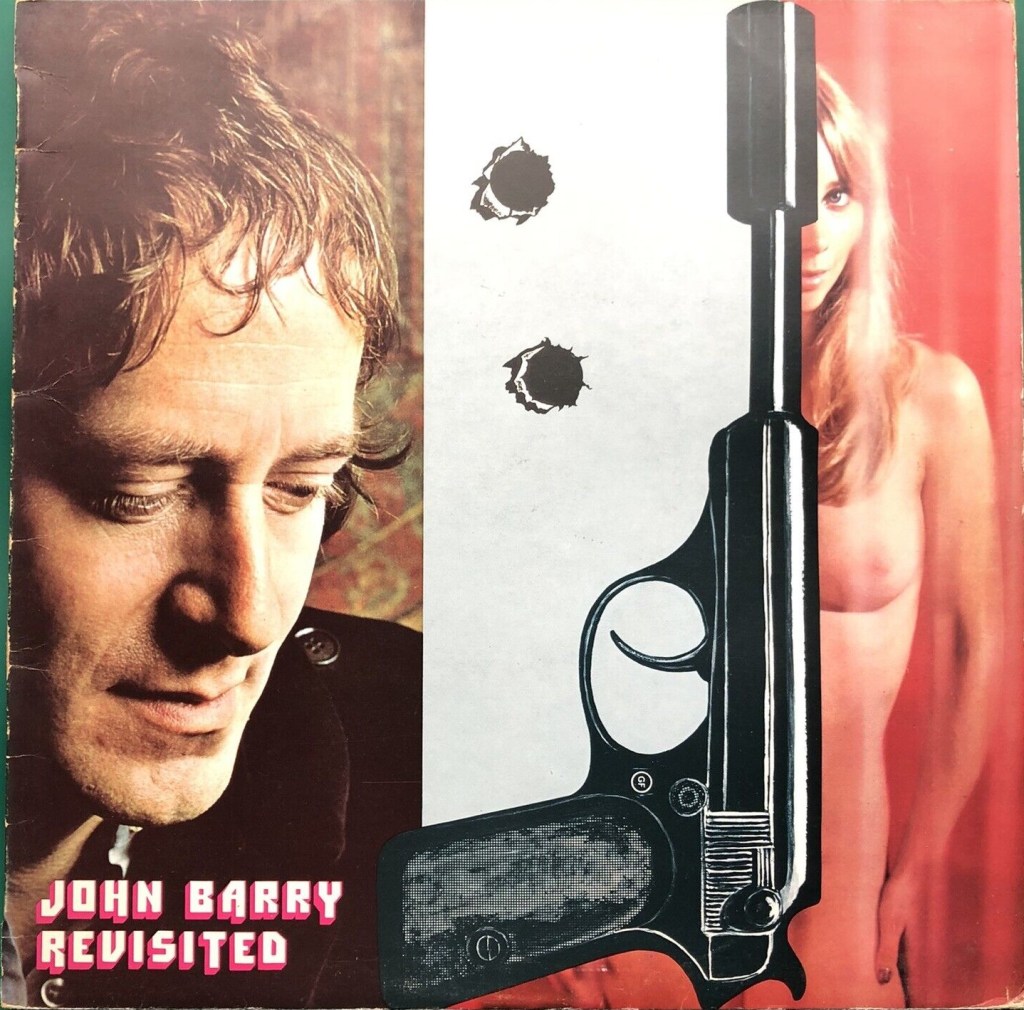
I chose this purely on the strength of the score. I first heard the theme on this album when I was in my teens. Fearing that my parents might veto the purchase because of the nudity on the cover – and since the record player was in the lounge – I showed suprising nous for a teenager, and stuck sticky tape over the offending bits. Of course, I then had to come up with a reason why there would be brown sticky tape on the album cover.

Beyond the to-and-fro of each couple’s situation, there’s little in the way of story, but the dialog is refreshing as it winds back and forth through a variety of emotions, including playfulness, a genuine sense that this is not about scoring points but exploring characters, each development the consequence of action however minimal. The mood is often bleak but always ruminative, a sense that emotions could tip at the touch of a switch, nothing quite defined, except that angst one way or another is going to hold sway.

Most British kitchen sink dramas of the period took place up north, not in the country’s capital, and the wife is too young to expect to be so hemmed in by motherhood, unable to grasp, what with the changing times, that she has still contracted, through marriage, to carry the burden of child-rearing.

The sting in the tale is that since the drowned woman is never identified that she turns out to be one or other of the women, my bet being on the wife, who seems at the end of her tether. This might have been more easily tagged as a couple of one-act plays except for the concentration on the drowning and the focus on girlfriend and suitor exploring various parts of the capital at its least tourist-y. But it’s almost a ghostly city, hardly the location for romance.

Judi Dench is superb – she won the Bafta that year as the Most Promising Newcomer – as she captures a character twisting and turning in a situation she never expected to be so depressing. But Ann Lynn, whose career did not have as much upward mobility, is equally expressive as she changes from morose to excited until heightened romance is sufficient to kill off any expectation of fulfilment. Norman Rodway (The Penthouse, 1967), Joe Melia (Modesty Blaise, 1966) and Brian Phelan (A High Wind in Jamaica, 1965) has less room for  development, tending to be more focused on pleasure than emotion.

This didn’t open too many doors for writer-director Anthony Simmons (Your Money or Your Wife, 1960) and he didn’t get behind a camera for another eight years and only made four films in total. Quite why he was so ignored remains a mystery because this is a haunting piece of work, with an excellent script. John Barry (The Lion in Winter, 1968) wrote evocative score.  

Worth seeing for Dench’s performance alone.

The System / The Girl-Getters (1964) ***

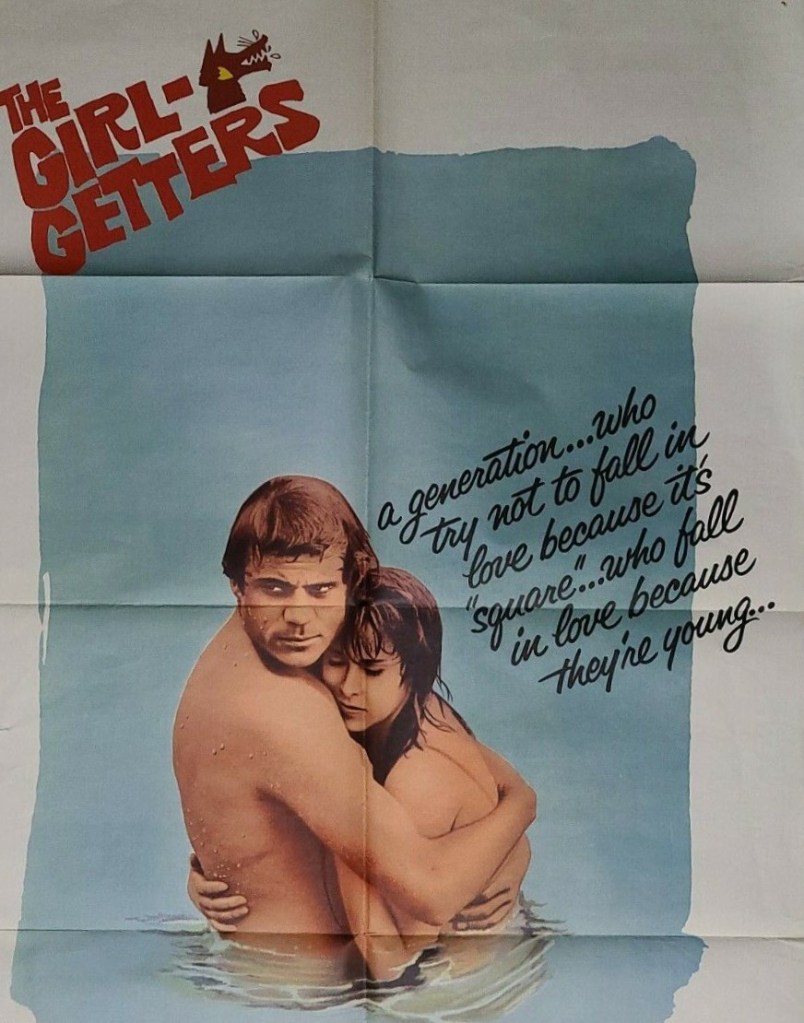
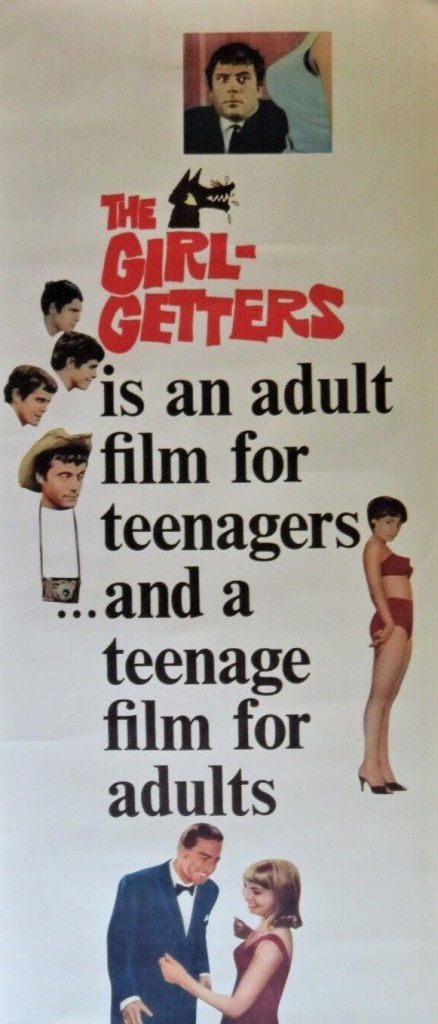
Surprisingly subtle performance from Oliver Reed (Hannibal Brooks, 1968), eschewing the trademark quick inhalation of breath and steely glare, as leader of a gang seducing impressionable young girls during the summer season in an English seaside town.  Surprisingly artistic touches – swipes, montage, a meet-cute involved blowing bubbles – from the more usually heavy-handed director Michael Winner (Hannibal Brooks). Surprising amount of rising talent including cinematographer Nicolas Roeg (Don’t Look Now, 1971).

And unlike the previous The Damned / Those Are the Damned (1963), the impromptu gang headed by Tinker (Oliver Reed) is not hell-bent on violence and destruction, and the various seducers, thankfully, could hardly be described as sexual predators. Young girls away on their own for the first time, disappointed not to find the love of their lives,  are still happy to settle for a holiday affair.

The American title is more appropriate and only an overbearing parent would dream of marketing it – effectively from the male perspective – as girls entering perilous territory rather than with the lightness of tourist romance a la The Pleasure Seekers out the same year. The “system,” a misnomer if ever there was one, involves the guys finding various ways of getting tourists’ addresses – Tinker as a beach photographer has the advantage here – in order to seduce them.

Sometimes the plan goes wrong and a girl gets pregnant leaving Nidge (John Alderton) not only abandoning the frolics but doing the decent thing by proposing. Oddly, there’s no sense of the guys competing with each other for the biggest tally of notches on a bed-post; in fact they’re a democratic bunch, dividing up the potential prospects equally.  Equally oddly, I guess, none of the women come across as virgins, no first-timer angst.

Tinker, who spends most of his time avoiding telling compliant girls what they are desperate to hear, i.e that he is in love with them and that the holiday affair might turn into something more permanent, falls for posh model Nicola (Jane Merrow).

There is some, for the time, risqué material, a view in very long shot of a nude woman, a girl in bra and panties (getting dressed after sex, so perhaps where Roeg got the idea from for the famed montage in Don’t Look Now), a brutal fight between rival photographers, camera smashing on the stairs. But there’s also Tinker’s humiliation by the jet set as he tries to fit in, thumped at tennis, and dumped by the married lover he ignores during the season. There’s surprising inventiveness, a demonic parade where effigies of bride and groom are burned on a pyre, a soulful scene of a bubble salesman blowing bubbles on a deserted beach at night.

The twist is of course that some girls come to the seaside town to find boys from whom they want no commitment, instead just the enjoyment of a casual fling. Should a man like Tinker happy to fall in love, more fool he.

Naturally, with a film aimed at the young crowd, there are snatches of pop performers – the Rockin’ Berries the most prominent – and a rock arrangement of Khachaturyan’s Sabre Dance that would four years later become, for someone else, a hit single.

Oliver Reed proves very engaging, especially when in playful mode, benefitting from lengthy screen time rather than being forced into a supporting actor’s scene-stealing. Jane Merrow (The Lion in Winter, 1968), excellent as the self-aware boy-getter, heads a raft of rising talent that includes David Hemmings (Blow-Up, 1966), almost unrecognisable with a side parting rather than the trademark mop of hair, and really a bystander here. John Alderton (Hannibal Brooks) is also permitted more artistic leeway, and takes it, rather than the comedic gurning of later years.

Look out for Julia Foster (Half a Sixpence, 1967), Barbara Ferris (Interlude, 1968), and Ann Lynn (Baby Love, 1969). Even Harry Andrews (The Hill, 1965) tones down his usual screen persona.

Considerably more thoughtful and visually interesting – and occasionally playful, for goodness sake – than anything else Winner produced during the decade. A good script by Peter Draper on his screen debut makes its points without either being too clever or too forceful.   

Life at the Top (1965) ***

Succession as seen from the perspective of someone like the inadequate Tom (Matthew Macfadyen), who has married his way into big business and has an elevated idea of entitlement.

Joe Lampton (Laurence Harvey) was a genuine working-class hero of Room at the Top (1958) who connived his way into the marriage bed of businessman Abe Brown’s (Donald Wolfit) daughter Susan (Jean Simmons) and set himself up as the heir apparent. Several years on, it’s not quite worked out the way he planned, stuck in a loveless marriage, out of his depth among the Yorkshire elite, passed over for promotion, pinning hopes of personal happiness on an affair with television personality Norah (Honor Blackman).

The only problem is that screen-wise he’s a b*****d without an ounce of the dominating personality of Brian Cox, the ultimate b*****d’s b*****d. This plays out more The Tale of Two Spoiled Brats. So if you’re looking to see Lampton get his come-uppance on several fronts, you’ve come to the right place. Unfortunately, that means there’s isn’t a single likeable character in sight. It might be the way of the world among the high-rollers but it makes for rather dispirited watching.

On the other hand, Lampton was always such a louse it is enjoyable to see him not only being put in his place but ending up a few rungs further down the ladder than where he started. This might have scored some points for social commentary but it’s such a scattershot approach – racing pigeons, local government corruption (by Tories, who else), strip club, ballroom dancing (the original Come Dancing before that usurper Strictly Come Dancing came along), drinking a yard of ale, swimming in the canal, ruthless entrepreneurs, luvvies  – it does little justice to any.

Perhaps the most surprising aspect is the independence of the women. Susan has a lover Mark (Michael Craig) and emasculates Joe by going behind his back to get whatever she wants, financially, from her father. Ambitious Norah refuses to give up her career for Joe and is likely to withdraw her favors should his ambition fails to match hers.

Even the cuckolded get in on the act, taunting those who had fallen for their partners’ adulterous ways. George Aisgill (Allan Cuthbertson) mocks Joe for falling (in the previous film) for his wife when she went after anything in trousers. Similarly, Mark’s wife ridicules Susan for just being the latest notch on Mark’s bed.

Naturally, Joe hasn’t the wit to see what a good deal he has and spends all his time in self-pitying mode. Poor Joe – he is stuck with driving a white Jag while Abe swans around in a Rolls-Royce. Poor Joe – his wife isn’t going to make do with hotel bedrooms for illicit assignations, but makes full use of the house. Poor Joe – his son doesn’t like him. Poor Joe – he trots out all his childhood deprivations at the slightest opportunity as if auditioning for a Monty Python sketch.

Poor Joe – he’s not even that good a businessman, so naïve that he doesn’t realise that many deals require sweeteners, backhanders, bribes, though smart enough enough to add on a little extra, when extracting such sums from the more worldly Abe, for himself. Poor Joe – he believes business blandishments. Poor Joe – Abe has no interest in the “Report” he’s slaved his guts over. Poor Joe – when he applies for another job, his lack of education marks him down.

The big problem is it’s impossible to feel any sympathy foe Joe. Your heart is more likely to go out to those he wounds with his atrocious behavior. The more he blames everyone else for his predicament, the more an idiot he looks, duped and a biter bit.

And Laurence Harvey (A Dandy in Aspic, 1968) whose screen person is one part arrogance, one part snarky, and one part well-groomed male is not capable of making you feel for his character. Jean Simmons (Rough Night in Jericho, 1967) reveals greater depths, vulnerable, passionate, seductive, practical. Honor Blackman (A Twist of Sand, 1968) gives a good account of herself as an ambitious woman with a conscience.  

Few of the other characters are more than ciphers but there’s a decent supporting cast in Donald Wolfit (Becket, 1964), Michael Craig (Stolen Hours, 1963), Robert Morley (Deadlier than the Male, 1967), Allan Cuthbertson (The 7th Dawn, 1964) and Nigel Davenport (Sands of the Kalahari, 1965).

Canadian Ted Kotcheff (Tiara Tahiti, 1962) directed from a screenplay by fellow country man Mordecai Richler (Young and Willing, 1962) based on the John Braine bestseller.  And it seems a bit mean to film it in black-and-white, presumably to emphasize the social aspects when in fact most of its takes place in glamorous settings.  

Synanon (1965) ***

Pre-dating Hollywood’s love affair with drugs, before sub-culture transformed into counter culture, before smoking a joint marked a generational divide, before marijuana symbolized freedom and was, well, the epitome of cool, before all that heroin was still seen as a scourge.

Addiction had rarely been viewed as persuasive audience fodder with the odd exception of The Man with the Golden Arm (1953) or the less-starry Monkey on My Back (1957). And this was also before Synanon became a byword for cult excess and was eventually closed down for committing the cardinal sin of employing tax exemption to get stinking rich.

At the time it was a byword for something else – rehabilitation. Its methods might have been controversial given leader Chuck (Edmond O’Brien) had no psychiatric training and was simply an ex-addict looking to find a way back. The main weapon in the community’s arsenal was confrontation. What became known as attack therapy. Rather than being permitted to stew in self-pity, inmates, all voluntary, had their weaknesses spelled out by others until they were ready to acknowledge them for themselves. The key to recovery was talking. Anyone not talking was hiding from their problems. (I’m not so well up on addiction therapy to know whether Synanon invented that kind of counselling of talking out problems in groups that then became the norm.)  If patients took to the scheme they were soon addicted to smoking and coffee; sex being considered too dangerous to contemplate.

Anyways, heroin addict Zankie (Alex Cord) is a newcomer helped along an entrant’s path by Joaney (Stella Stevens), a single mum so out of kilter with responsibility she kidnaps her son, and confronted by hardass Ben (Chuck Connors), so consumed with guilt over the death of his dope-fiend wife that he spurns all women. There’s a sub-plot of sorts. Chuck is being charged with various minor violations, including permitting convicted criminals out on parole to enter the establishment. But Chuck’s main job is to be sarcastic, challenging anyone’s notions that they could be cured, but occasionally analytically correct. “You put yourself in a position where you could lose control,” he tells Ben.

It’s a hothouse of emotions for sure. Zankie and Ben come to blows over Joaney. Zankie sees little wrong in knocking back some cough medicine. Eventually, Zankie skips out, pursued by Joaney, who goes back to turning tricks to fund her habit. There’s a surprising scene – for the time (likely excised from the British version and possibly the original) – of Chuck going through the whole candle, spoon, injection routine.

Set up as a sanitised public relations package promoting Synanon ideals with overmuch detail on the establishment’s background and conflict with authority, nonetheless it touches far better than most addiction movies on the lack of self-awareness that afflicts users, their creation of fantasy worlds where whatever they do is deemed right. The tension that comes from an entire house of jumpy characters, their dependence on a higher power (Chuck in this case) is well-drawn. Even the incessant smoking and the constant reliance on coffee suggests those with an addictive personality are only too likely to switch to something else.

You might question the casting. Alex Cord (Stagecoach, 1966), Stella Stevens (Rage, 1966) and Chuck Connors (Move Over Darling, 1963) are far too well-groomed to pass for skanky addicts even if on the road to recovery. And Edmond O’Brien (The Man Who Shot Liberty Valance, 1962) and his sidekick (Richard Conte, Lady in Cement, 1968)) come across like tougher versions of the tough priests tackling delinquency that used to be played by the likes of Spencer Tracy.

But Cord and Stevens do suggest the vulnerability of the delusional addict, Stevens little-girl-lost persona at odds with her glamor, actions devoid of the concept of consequence. Although boasting a six-pack, Cord’s portrayal of a man destroyed by weakness did not suggest he would segue from this screen debut into tough-guy leading roles. Better actors might have suggested a greater degree of internal conflict but externally, in the looks department, might have looked like this was always going to be their destination. So the casting works both ways, more surface, less depth, but a warning that even the prom king and queen are not immune from addiction.

Soberly directed by Richard Quine (How To Murder Your Wife, 1965) from a screenplay by Ian Bernard, in his debut, but feels it owes too much from input by the original Chuck Dederich.

Here We Go Round the Mulberry Bush (1968) **

Breaking the fourth wall has become a common conceit these days, especially in television, so you might be surprised to learn it was the key artistic element of this otherwise straightforward British coming of age drama.

Our teenage guide Jamie (Barry Evans), a delivery boy, spends most of his time lusting after any women he meets. Like a junior version of 10 (1979) women are rated according to their physical attributes. Most, of course, are well out of his league, especially as he lacks for what counts as the smooth patter which his cocky pal Spike (Christopher Timothy) has in abundance.

Essentially a series of episodes with the opposite sex as Jamie tries to lose his virginity. But mostly, it’s just Jamie yakking on about how he’s not lost his virginity and what’s up with all those women that they can’t see what a great catch he is. He’s so determined to have sex he will even go out with the dumbest of dumb blondes, Linda (Adrienne Posta).

Naturally, since reality is too cruel, he succumbs to fantasy with a number of scenarios that seem, inexplicably, torn from silent movies, and nothing approaching the imagination of Hieronymus Merkin. For no particular reason, he strikes lucky with the adventurous Mary (Judy Geeson), whose boyfriends usually run to sports cars, but that liaison is nearly interrupted by a wet dog and Jamie’s inexperience.

Apart from the lusting, there’s little else going on, a couple of women in a fish-and-chip shop complain they are fed up with chicken and beef, his younger brother shows more spark, and his home life is pitifully dull. You can’t really blame the movie for lacking the rebelliousness that was potent at the time, there’s no political awareness and no sign Jamie is going to grow up into one of the Angry Young Man so familiar at the beginning of the decade. It’s a quaint version of American Pie.(1999).

But it’s just boring. While Barry Evans (Alfred the Great, 1969) is personable enough he doesn’t have enough in the wit department to keep you hooked for the duration, most of the humor teetering on the side of inuendo..

Unable to recognise the inherent weakness of the script, and assuming that breaking artistic boundaries with the fourth wall is enough, director Clive Donner (Alfred the Great) spends most of his time trying to visually brush everything up, with little success.

That this was a big British hit at the time might have been more to do with the soundtrack – performed and written by Steve Winwood and Traffic – and the fleeting sight of Judy Geeson (Two into Three Won’t Go, 1969) in the buff. The British censor didn’t take too kindly to the actress revealing all, so in fact audiences were treated to very little, but for teenagers at the time very little was more than usually came their way unless willing to sit through a turgid arthouse picture.

About the only thing to commend it is Geeson’s class, she stands head and shoulders above everyone else in terms of screen charisma, and that there’s a roll call of rising British stars. As well as Christopher Timothy who would achieve fame on television in the original All Creatures Great and Small, the supporting cast includes Vanessa Howard (Corruption, 1968), Angela Scoular (On Her Majesty’s Secret Service, 1969), Diane Keen (The Sex Thief, 1973) and Adrienne Posta (Some Girls Do, 1969) and, to show them all how to do it, Denholm Elliot (Maroc 7, 1967) briefly pops up.

Clive Donner (Alfred the Great) directs. Hunter Davies, making his screen debut, wrote the screenplay based on his bestseller. Generally, any film that scores two stars does so out of incompetence. This is well-enough made but never seems to shift into gear.

Banning (1967) ***

Robert Wagner’s bid for stardom is scuppered by a limp plot set in the overheated world of the country club set where a posse of sexually predatory women operate. It doesn’t help that the main narrative thrust finds trouble just hanging in there.

Ex-professional golfer Banning (Robert Wagner), a “moral diabetic” on the run from a loan shark, pitches up at an upmarket country club where he finds work as the assistant golf pro to Jonathan (Guy Stockwell). His most arduous task appears to be picking his way between the toned bikini-ed bodies lounging around the pool and avoiding the advances of Angela (Jill St John) and Jonathan’s wife Cynthia (Susan Clark) while coming on strong to overpaid secretary Carol (Anjanette Comer).

There’s an element of Life at the Top (1965) here, with Jonathan married to the boss’s daughter, resenting their close relationship while not making the executive advances he would like. Every now and then bits of what sound like a complicated past implicating Jonathan and the alcoholic Tommy Del Gaddo (Gene Hackman) pop up and around the halfway mark a subplot kicks in, involving something called a “Calcutta,” a golf tourney which looks like it’s being rigged.

Given that it’s organised by a club boss (Howard St John) who claims every gimme going and feigns drunkenness to skin members at poker, it’s almost a given that Banning is going to come out worst. I have to tell you you probably couldn’t care less, since most of the action, and all of the fun, is off course, and not so much in the bedroom stakes as the war between women for available men.

“I bought you,” purrs Angela in her  most seductive attire after she has made it possible for Banning to find a way to pay off his debts. “I want you,” snaps single mother Carol, making a forthright play after spending most of the picture fending off his advances. Standing on the side-lines, watching Angela making her moves, Cynthia observes, “I’d say Angela’s had at least a dozen husbands,” pause for the punchline, “including mine for all I know.”

Predatory moves are not all one way. Turns out the price Carol pays for a salary five times the going rate and a nice house and private schooling for her daughter is setting aside Thursday afternoons for Jonathan. But in the pragmatic manner that appears inbred in the country club, she states, “No apologies, no excuses.”

And before Carol works out just how attractive Banning actually is she had to cut him dead a couple of times and, in a scene guaranteed to put off the modern audience, prevent him drunkenly raping her. It was almost a throwback to the 1940s and 1950s when, it appeared, a woman just needed a good smack on the chops before she could submit and start billing and cooing.

Robert Wagner (The Biggest Bundle of Them All, 1968), tanned within an inch of his life, doesn’t so much miss the target as not being given a target worth hitting. There’s very little sense danger, of a man on the run from the mob or whichever gangster has picked up the tab for his debt, and he’s not a lounge lizard. Acting-wise, he relies on a raised eyebrow, an eye swivel and that scene-stealing trick, copyright Robert Vaughn, of raising his lowered head to open his closed eyes, a neat device for a supporting star but hardly required when you are top-billed.

Anjanette Comer (Guns for San Sebastian, 1968) doesn’t snatch the brass ring either, relying on a tremulous lower lip to evoke emotion. In fact, it’s a toss-up between the classier Jill St John (The King’s Pirate, 1967) and Susan Clark (Tell Them Willie Boy Is Here, 1969) as to who steals the most scenes, both winging it with striking dialog, emanating power, regarding men as weak and playthings.

Gene Hackman (Lilith, 1964), generally a prime contender for scene stealing, especially with trademark chuckle now in full swing, unfortunately does himself no favors by over-acting.  You might also spot James Farentino (Rosie, 1967) and Sean Garrison (Moment to Moment, 1966).

Ron Winston (Ambush Bay, 1966) directed from a screenplay by James Lee (Counterpoint, 1967). It would have worked better to concentrate more on the bitchy women than the sub-plots.

I’m sorry to say you’ll have a hard job finding this since I purchased my DVD on the second-hand market. Worth the hunt if you’re a fan of St John and Clark or to discover why Wagner’s promising screen career never took off.

Champions (2023) **** – Seen at the Cinema

If there’s any justice in the world this fresh take on the feel-good movie will trump fading franchise at the box office. Sure, we’ve been here before. Due to a misdemeanour or professional fall from grace, grouchy lame duck is forced to coach a bunch of lame duck misfits. Hell, The Mighty Ducks (1992) even took the same route of community service, though that regarded a lawyer.

Despite his position as a mere assistant coach in the most minor of minor basketball leagues,  Marcus (Woody Harrelson) has an NBA level of arrogance. To escape an 18-month jail sentence following a DUI, he is handed an intellectually challenged gang who test more than his patience. On a  personal level, he has to swap seeing a team as something that can blindly follow his instructions to a group of individuals whose lives require understanding. And go from being an inveterate Tinderite to a keeper.

Marcus as well as Harrelson has his work cut out because you’ve never come across such a bunch of scene-stealers from animal-loving Johnny (Kevin Iannucci) who has a morbid fear of water to Showtime (Bradley Evens) whose specialty is celebration despite his constant inability to hit the target due to his insistence in turning his back on the hoop when taking a shot. In between you’ve Ms Consentino (Madison Tevlin), a legend in her own lunchtime and natural born hard-ass leader, and Darius (Joshua Felder), the team’s top player whose interaction with coach is limited to “Nope” as he goes immediately on strike.

Considerable effort goes into grounding the lives of these characters, all gainfully employed, none actually lame ducks. And seeing the world from their point of view. And thankfully, the movie avoids all signs of virtue signalling, the characters so vibrant on screen they are just a joy to watch.

In plot terms, we are treated to a series of sometimes hilarious, sometimes touching episodes, while Marcus gets wise to his situation and transforms from selfish a**hole to caring person, while not losing sight of his main function which is winning. Along the way, he attracts a girlfriend Alex (Kaitlin Olson), Johnnie’s sister, a 40-something singleton, happy to put up with passable if it means regular sex and with a refreshing line in punchy dialog that would put any cocky fellow in his place.

It doesn’t end the way you’d expect, which is probably another first for this kind of picture, but it’s a very enjoyable ride. You couldn’t choose a more difficult subject than acceptance of the intellectually challenged in the community and director Bobby Farelly (Dumb and Dumber To, 2014), who would probably be the first to admit he was guilty of getting easy laughs from such characters in the past. In his first movie for nearly a decade, he sprints past every potential trap with aplomb, only stopping to indulge in a vomit scene that seems a prerequisite of his style.

A good many of the laughs are at Marcus’s expense and often a phrase used in coaching comes back to bite him. And basketball is such an easy sport to understand, you run from one end of a court to another and lob a ball into a basket so the only tactical element we have to absorb is the intricacy of one specific move, helpfully translated from arcane sporting jargon into the easily understood by a dollop of Shakespeare.

Part of the joy of the feel-good movie is that it will be borne away on the box office wind by word-of-mouth, that impossible-to-define trick where audience approval wins out over gigantic marketing spend. Alternatively, we might live in the kind of cynical society that is already immune to the heart-warming. I hope not because this is immensely enjoyable without stooping to tear-jerking.

Woody Harrelson (Triangle of Sadness, 2022) is back to his best and you can see why he was at one time an out-and-out star. And there’s the credits bonus, unless this is snazzy CGI, of Woody singing and playing the piano and doing a back flip in the pool.After decades of bit parts and television roles Kaitlin Olson comes exceptionally good in a zingy role that delivers a side order of angst. As a bonus on the acting side are roles for Cheech Marin (The War with Grandpa, 2020)  and Ernie Hudson (Ghostbusters: Afterlife, 2021).

Book now.

Discover WordPress

A daily selection of the best content published on WordPress, collected for you by humans who love to read.

The Atavist Magazine

by Brian Hannan

WordPress.com News

The latest news on WordPress.com and the WordPress community.