Pretty Poison (1968) *****

Faultessly prophetic. Acquiring significantly greater power than at initial release. You can easily imagine Dennis (Anthony Perkins) these days as a conspiracy theorist on social media. You can picture Sue Ann (Tuesday Weld) as the impressionable acolyte learning at his feet. What she picks up most is the art of manipulation. And it’s done with marvelous flair,  disturbing information slipped in at the right moment, and so focused are we on Dennis we scarcely notice Sue Ann’s transformation.

There’s a sense of Big Brother – Dennis evades his probation officer for a year to prevent his activities being overseen – and untrammelled big business, the chemical factory nonchalantly poisoning the local river. And it all takes place in Humdrum U.S.A.: hot dog stands, teenagers practising for parades, evenings at the movies, necking in the woods, mindless jobs in factories, with just a hint of overbearing police wielding a moral big stick.

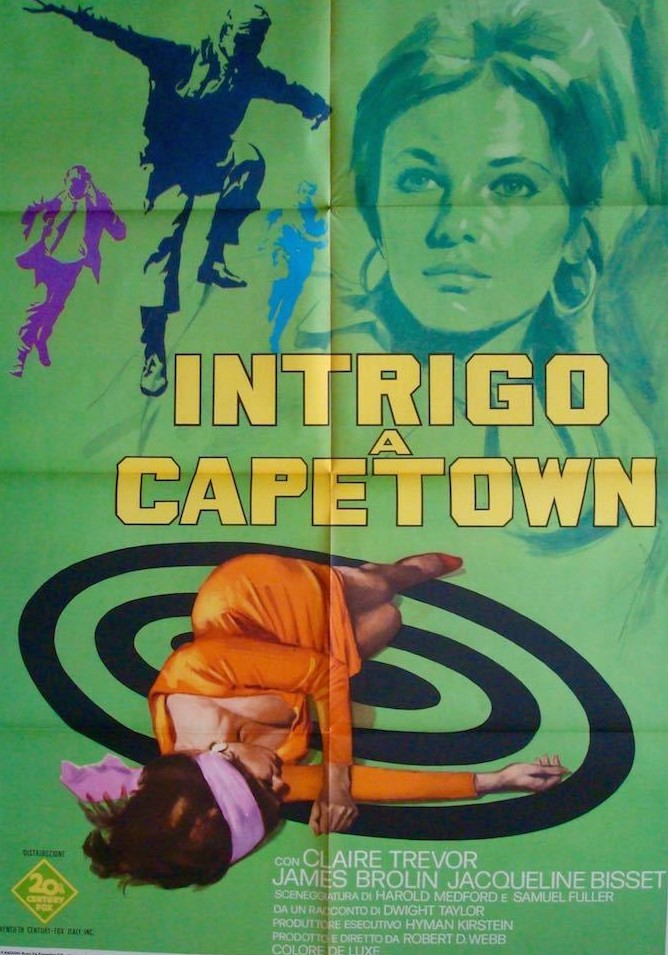
Classic example of the marketing team getting cold feet. Fox didn’t know how to sell this
in the subtle fashion it required so it came over in the bulk of the advertising
materials as second cousin to “Bonnie and Clyde.”

The 1960s had taken a new line on the wicked women of the 1930s and the femme fatales of film noir. They might be mentally disturbed like Lilith (1964) or scrapheap fodder like Bonnie Parker (Bonnie and Clyde, 1967), but more likely to be cartoon villains decorating spy movies. This follows a completely different path, exploring latent tendency that might have remained hidden forever except for encountering the right spark.

Dennis is an outright oddball, a fantasist who has created for himself another world of being a secret agent intent on thwarting an alien plot. (Less intense than A Beautiful Mind, 2001) Some people, the next door neighbor, for example, who without question drops in spools of microfilm at the chemist for development  under her own name, are easily taken in. Others are not, his employer at the chemical factory itching for an excuse to fire him, Sue Ann’s mother (Beverly Garland) who catches him out too easily.

Dennis snares gullible bouncy blonde Sue Ann in textbook style. He elicits mystery, popping in and out of her life, peppering her with secret codes, tradecraft, warnings, a farrago of information that would appeal to the insecure. She goes from girlfriend to accomplice, an eager participant in Dennis’s admittedly clever plan to cause the plant to shut down. But when he is rumbled by the nightwatchman and rooted to the spot in fear, it’s Sue Ann who comes to the rescue, clubbing the interloper, pushing his body in the river, sitting triumphantly aside her still conscious victim holding his head under the water.

The twist is: reality has paid a visit. Dennis is shocked at the murder. Although his past is now revealed, he is remorseful that it caused unfortunate consequence. Sue Ann’s reaction is the opposite. She wants post-murder sex. Cool to the point of calculating, remorse scarcely entering her vocabulary, taking command, spinning a web Dennis doesn’t see coming.

It plays out brilliantly, even to the point of Dennis taking comfort in the fact that he has spawned a murderess, one who might embark on an endless killing spree, such is the attractive innocent mask she hides behind.

You would put down Anthony Perkins (Psycho, 1960) as warped the minute his lop-sided grin slips into place. But there’s a youthfulness to this nutcase, always sprinting away, and he’s not, like Norman Bates, sitting in a lair awaiting potential victims, and, in a sense, he’s humanized by a beautiful woman falling in love with him. He’s out there like a con man with the practised patter that’s going to snare the pliable. If he was planning to wage war on the chemical polluters we’d be on his side immediately, and although that kind of action wasn’t yet going to turn anyone into an automatic screen hero, it does now, so a contemporary audience would be inclined to view him through an entirely different, and more sympathetic, prism.  

Perkins’s playing is perfectly judged. He takes the mickey out of stuffy superiors, smart enough to elude the probation officer for a year, astute enough to find a job that gives credence to his secret identity, ingenious enough to come up with the perfect crime, and certainly his vulnerability evokes audience sympathy, especially when it transpires he may be the subject of unlawful judgement.

But Tuesday Weld (The Cincinnati Kid, 1965) is this movie’s gift. She is stunningly believable, both as the innocent dupe and the calculating killer. Yet she never emerges from her teenage dream. Even when her actions are clearly more grown-up she remains winsome and youthful. If Perkins is revealed as a child who had never grown up, Perkins becomes an adult in teenager’s clothing.

It’s only at the end you think perhaps this movie should be read back-to-front and that Perkins was the victim all along. (Arthouse filmmakers have been more celebrated for less.) Which would make her the mother (or perhaps daughter) of all femme fatales. There is no limit to what she going to get away with. If it was made today, there would be a sequel a year.

Noel Black (Run, Shadow, Run/Cover Me Babe, 1970) was the cult director’s cult director, eventually making a living in television, and only occasionally managing a big screen effort. This would have been a twisty enough number at the time but has rightly grown into a cult.

Plane (2023) **** – Seen at the Cinema

Gerard Butler is pure Ronseal. “It does what it says on the tin” goes that advert. And so does Butler. You want action, he is first in the queue, and he delivers. But our Gerard is no Bruce Willis and doesn’t pretend he can do it all on his own. Not only does he enlist a murderer, an elite military force is also in due course on his side. You’d think that would leave Gerard with little to do, but you’d be wrong.

He’s the moral center and the driving force and of course he’s the pilot. the only one who can get them in and out. Just as well there’s someone to do things by the book because his employers, desperate to make PR spin their way, are as cynical as they come, sending a pilot to fly through a storm to save a few bucks on fuel.

So, New Year’s Eve, widower Brodie (Gerard Butler) on a plane with only a handful of passengers crash lands on a remote island in the South China Seas where cut-throat separatists run a hostage business. Brodie frees murderer and ex-Foreign Legionnaire Louis (Mike Colter) and sets out to make contact with home. Meanwhile, back at the office, troubleshooter du jour Scarsdale (Tony Goldwyn) sends in a bunch of mercenaries. So it’s mostly escape and capture, you know the drill.

At least, at last, it’s not an airplane picture about apportioning blame after a disaster or stitching up the captain (Flight, 2012/Sully, 2016). There’s no ballast: no pregnant woman or child on board, not even a nun, and the pilot doesn’t have the hots for a stewardess and the criminal doesn’t hunker down at night and home in on audience sympathies with a heartrending tale, and there’s no retired airman called into service one last time, and it’s not the pilot’s final trip before retirement and there’s no wizard engineer who can put back together a broken machine and it’s not about everyone pulling their weight in a tight spot.

The passengers, those that survive that is, might be mildly annoying on the plane but once landed they’re too busy being terrified to make a nuisance of themselves. So it’s pretty realistic for what could otherwise have been a pure gung-ho actioner. When Brodie does get through to his company, he gets treated as a time-waster. And there’s really no way, realistically, without the intervention of mercenaries that he’s going to get the passengers off the island on his own.

In some senses it’s kind of two different movies jammed together in occasional clunky fashion and you wonder if initially it was devised as a pure rescue number before someone had the bright idea of bringing a star in as the pilot.

Brodie might be a rough diamond, but he sure can fly, witness two crash landings and a take-off hindered by enemy rocket launchers. He’s a true Scot, wouldn’t “lower himself” to be tabbed English, although the scriptwriters make an elementary howler in imagining that the traditional New Year dinner is haggis, neeps and tatties when it’s actually steak-and-kidney pie.

And the myth that a Scottish accent will get you through more doors than an English one, and that you’ll soon be nattering away convivially with your captors about Sir Sean and wee drams and kilts, is quickly exploded. Nationality in international war zones is mere currency. Brodie, of course, has to take one (more than one, actually) for the team but is happy to put himself in harm’s way to safeguard his charges.

Luckily, Louis has no such reservations, primarily with his own interests at heart, intent on escaping official clutches and disappearing into the jungle with a cache of cash.

This is Butler reinvented as Everyman. Yep, action abungo but humane with depths. With an astonishing 70 credits and too many supposedly star-making outings to count he has an equally diverse range, can hold his own against top female stars like Angeline Jolie (Lara Croft, Tomb Raider: The Cradle of Life), Katharine Heigl (The Ugly Truth, 2009) and Jennifer Aniston (The Bounty Hunter, 2010) but these days is more likely to be the go-to actioneer. I am hoping that some Hollywood producer might recognise his other qualities and pitch him a drama like A Man Called Otto. Imagine that snarl in your neighborhood.

You get exactly what you pay for here, for workmanlike read spare and lean, for reimagining previous rescue pictures read tension-filled character-driven edge-of-your-seat action. Butler brings tremendous humanity to a role that could as easily have been muscle-bound.

I’m less familiar with Mike Colter (Carter, 2022) but sensibly he underplays his role. Danielle Pineda (Jurassic World: Dominion, 2022) is good as the level-headed chief stewardess and Tony Goldwyn (Ghost, 1990) makes a sinister troubleshooter. MTA Kelly Gale makes her debut.

A welcome return to pedal-to-the-metal form for director Jean-Francois Richet (Mesrine, 2008) who employs hand-held cameras to great effect. Marks the screen debut of thriller writer Charles Cumming along with J.P. Walsh (The Contractor, 2022).

This is ideal counter-programming when we’re mired down in the Oscar-worthy.

You can’t go wrong with Butler.

Passport to China / Visa to Canton (1961) **

Marked down for sheer laziness. Another Hammer “thriller,” this time with fading American star Richard Basehart and Italian glamor puss Lisa Gastoni. But mostly a hodge-podge travelog of stock footage with dialog taking the place of action, a tedious voice-over far removed from the snappy one-liners we are accustomed to getting from Chandleresque investigators. And let’s forget the red-eyed Chinese replete with drooping moustaches who pepper the picture.

A plane has gone down in Red China with an American courier carrying vital “scientific” information, Approached to help by US government personnel, snappily-dressed Hong Kong travel agent Benton (Richard Basehart) refuses. But when he discovers the pilot is Jimmy (Burt Kwouk), a member of a Chinese family he has befriended during World War Two, he mounts his own rescue mission. Which consists, by the way, of nothing more than floating a sampan up a river, avoiding a few bullets and whisking the lad away.

But he is blackmailed into rescuing the courier when Hong Kong police imprison Jimmy. So off he trots to Macao and then Canton aided along the way, in the opulent back room of a casino, by Chinese businessman Kong (Eric Pohlmann) who you might mistake for a James Bond villain such is his fondness for being surrounded by women – or such is his girth mistake him for a Robert Morley lookalike. Kong happens to be a Russian spy.

No sneaking into China by parachute or perhaps motor boat is required, Kong simply furnishes him with the visa of the title. Benton, vaguely assisted by a maker of fake porcelain, has clues –  Three Fishes, The Stream of the Willows.

In his hotel bedroom sits the courier, blonde Lola (Lisa Gastoni), held prisoner. But no sooner have they kissed, as you might expect of any self-respecting travel agent doubling as a spy, than they are interrupted by Kong. She disappears. Naturally, Benton finds her easily enough. She doesn’t have papers, instead a photographic memory.

But she’s not working for the Americans. She’s an espionage freelance, working for the highest bidder. She does it for the danger, perhaps like a certain James Bond, danger is the drug, heightens her senses.

But she’s also pretty damn clever. Knowing Kong is a double agent and can’t just snatch her out of China, she starts an auction for her information. Benton offers more. Therefore she is his property. To get over the tickly issue of Kong, in revenge, keeping her prisoner in China, he is conveniently accidentally shot.

So now they have to escape. But in the shoot-out at the docks (in a barn full of hay for some reason she gets shot) so the movie suddenly turns into one of those post-Bond thrillers where all that effort has been expended for no result.

But you might have thought a producer (Michael Carreras) would have introduced Lola much earlier in femme fatale fashion. But then this producer who, as it happens was also the director, seems to think that voice-over will solve all the tedious problems of actually creating a screenplay that works.

You shouldn’t have cared less about a snappy-suited character such as the one played by Gene Barry in his informal espionage trilogy – Maroc 7 (1967), Istanbul Express (1968) and Subterfuge (1968) – he’s about on a par as an actor as Basehart. But those movies at least had proper stories that made sense and were not just a series of jumps explained by voice-over, the hero neither having to undertake any shamus digging or go into harm’s way, or battle his way out of perilous situation.

It’s not even bad enough to eventually win over a cult audience. The problem is it’s well-made up to a point and the story is intriguing up to a point, but that mark is very low.

Richard Basehart (The Satan Bug, 1965) isn’t called upon to do much except act as the storyteller he’s okay and Lisa Gastoni (Maddalena, 1971) isn’t accorded sufficient screen time to really make a mark. Which is the biggest shame because an amoral spy like her would have made a brilliant femme fatale had she been introduced early on and then turned out to be the mercenary she was.

The rest of the cast are caricatures, though interesting to see Burt Kwouk in pre-Pink Panther persona but cringe-worthy to see Bernard Cribbins (You Must Be Joking, 1965)  mangle a foreign accent. Clearly Carreras learned a lesson from this implosion of talent and story because two pictures on he directed taut thriller Maniac (1963).  

Return from the Ashes (1965) ****

When your starting point is an arcane French inheritance law and the plot revolves around swindling a concentration camp survivor you are immediately on “icky” ground. Throw in a relationship between an adult male and the step-daughter of his deceased wife and the audience might already be backing off.

So it’s a tribute to the acting and that each character is not so much unlikeable as both vulnerable and predatory that this turns into a very involving drama. On the eve of World War Two in Paris Dr Michele Wolf (Ingrid Thulin) buys the love of penniless Polish chess player Stanislaus (Maximilian Schell) but at the cost of abandoning her step-daughter Fabi (Samantha Eggar). For him, love is contingent on wealth, but he marries Michele, a Jew, in a (failed) bid to save her from the clutches of the Nazis. Fabi, shorn of maternal love finds turns to a paternal variation, but is capable of coming up with an ingenious murder plot.

Just quite how hollow Michele has become is demonstrated in a brilliant opening scene set after the end of the war. In a railway carriage, a bored small boy endlessly kicks a door. Pretty much for 90 seconds we either see or hear that door being kicked. Foolishly, his hands wander from the window to the door handle. Next thing, he has fallen out. Cue screams, chaos, shocked passengers racing out of the carriage.

But when the conductor turns up to investigate the incident he finds Michele still sitting in her seat, oblivious to any death, even that of a child. When she returns to Paris, she takes a room in a hotel under a pseudonym, fearing that her ravaged looks make her unattractive, guilty at surviving (by volunteering to work in the camp brothel) when all her relatives were wiped out, unaware that she has unexpectedly inherited all their combined wealth.

So the story begins in a different way. When Stanislaus meets her accidentally under her false name, he immediately assumes she is just a dead ringer for his deceased wife and enrols her in a scheme to win the millions currently held in escrow under this inexplicable French law.

Since she continues to play the part of a different woman, she hears the truth about her relationship with Stanislaus, that although he committed the only unselfish “gallant act” in his life in marrying her nonetheless his prime reason was money. Already Fabi, in full femme fatale mode, is planning to rid the couple of Michele once the money has been legally acquired.

To his credit, Stanislaus initially balks at this notion, but when Michele reveals her true identity and scuppers his relationship with Fabi while at the same time trying to win back the affection of her step-daughter, matters take a deadly turn.

For the most part what we have is a menage a trois, equal parts driven by money and love, but in each instance propelled by innermost desire. Stanislaus is adept at pulling the wool over Michele’s eyes, she only too willingly blinding herself to his sexual deception. But Michele is equally willing, even when she knows his true feelings, to use her money to win him back while Fabi, aware that for her lover money will always trump romance, is determined to use her body to achieve the same effect.

What makes this so compelling is that, unusually, it avoids sentiment. It would have been easy to load each character up with such vulnerability that an audience would not condemn them. Instead, in addition to their individual weaknesses, we are shown their inherent predatory natures.

What makes it so enjoyable is the acting. So often Maximilian Schell is called upon to play stern characters, often typecast from his accent as a villainous German of one kind or another (Judgement at Nuremberg, 1961, The Deadly Affair, 1967), rather than allowing him to invent a more rounded character as he did in Topkapi (1964). This is a wonderfully involving performance,  the wannabe chess grandmaster who uses his considerable charm to buttress his fears of poverty, and is only too aware of his failing, full of joie de vivre, bristling at being a kept man yet at the same time only too ready to financially exploit the situation.  

Where in The Collector (1965) Samantha Eggar was constrained by circumstance and in Walk, Don’t Walk (1966) saddled with an initially cold character, here she is permitted greater freedom to develop a conflicted personality, loving and deadly at the same time, drawn to and hating her step-mother, attracted by the thought of the money that would secure Stanislaus but repulsed by the cost.  

Ingmar Bergman protégé Ingrid Thulin (Wild Strawberries, 1957) is given the least leeway, another of the tormented characters in her intense portfolio. Herbert Lom (Villa Rides, 1968) puts in an appearance as a friend trying to warn her off Stanislaus.  

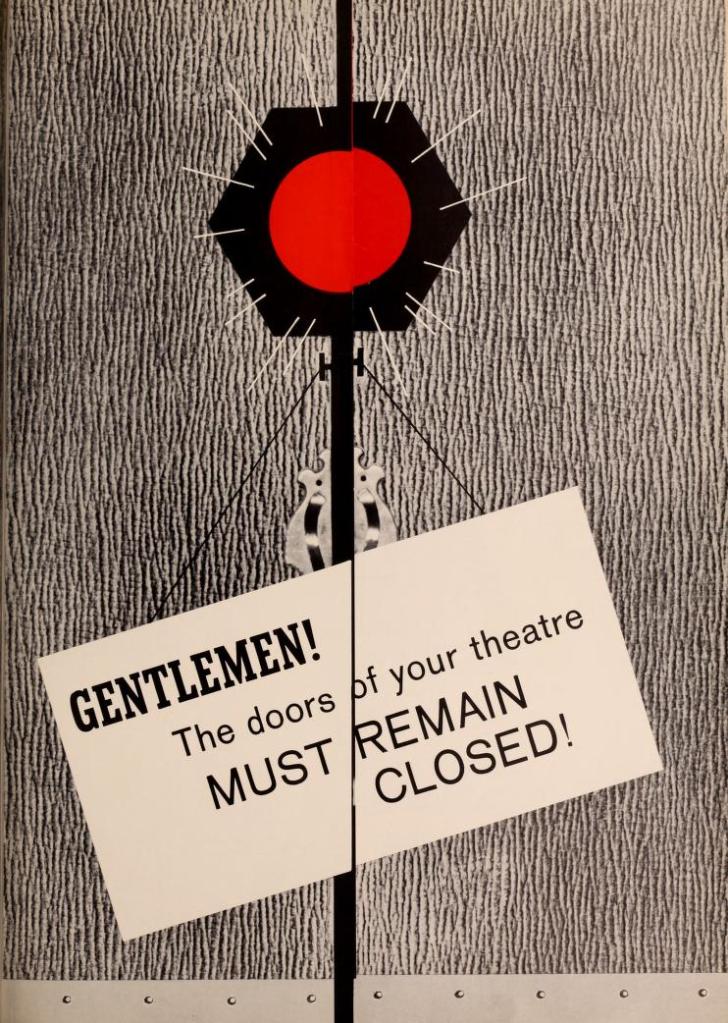
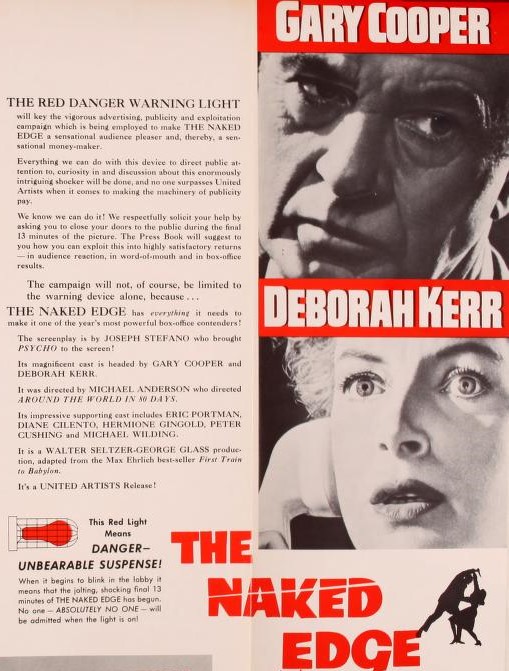
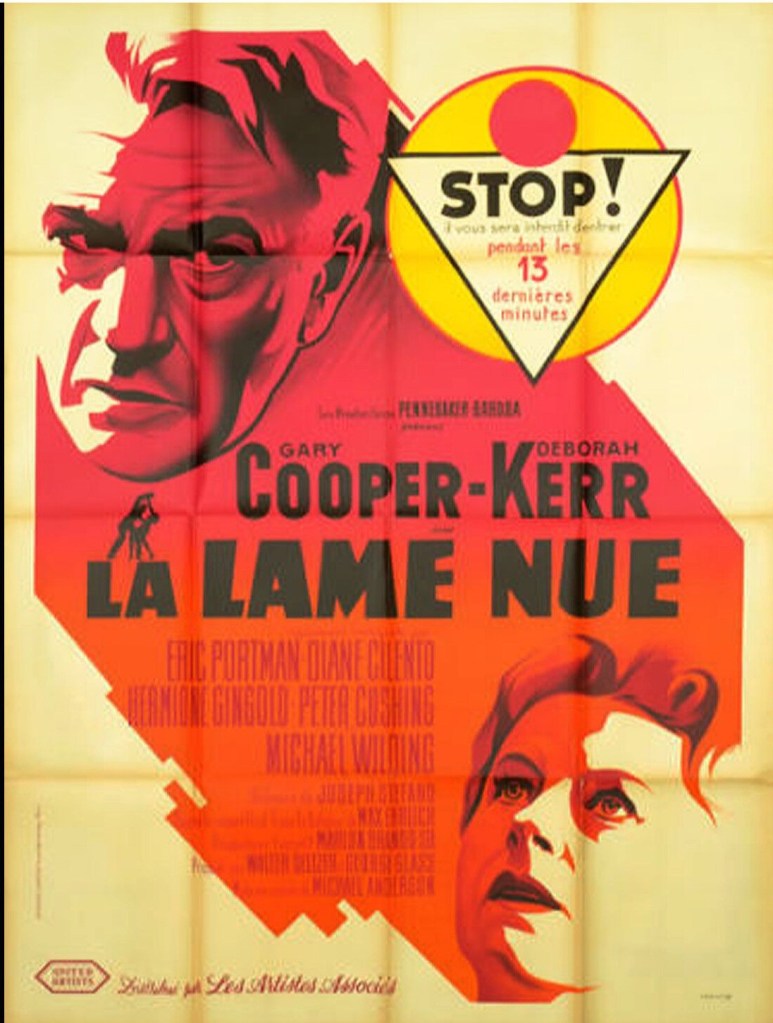
Director J. Lee Thompson (The Guns of Navarone, 1961) takes the bold approach of allowing characters and situation to develop before moving into thriller mode. There are a couple of quite superb scenes, running the opening segment close is the much-vaunted scene of Fabi in the bath (“No one may enter the theater once Fabi enters her bath” was a famous tagline). It is brilliantly filmed in film noir tones, bright light slashed across eyes rather than through windows, and Johnny Dankworth provides an interesting score. Julius J. Epstein (Casablanca, 1942) wrote the screenplay based on the bestseller by Hubert Monteilhet.

Cash on Demand (1961/1963) ***

Ideal crime B-picture. No femme fatale, but a tight one-location two-hander. Set a couple of days before Xmas in a rural English market town, while possessing sufficient twists to see it through, in the main it is a battle of wills between urbane thief Col Gore Hepburn (Andre Morell) and his victim, stuffed-shirt bank manager Harry Fordyce (Peter Cushing). Combines slick heist with An Inspector Calls mentality where the morally superior are taken down a peg.

Fordyce is the kind of martinet who makes his staff remove Xmas cards from display, nit-picks about the state of nibs (in the days when pens were dipped in ink) and threatens to sack chief clerk Pearson (Harry Vernon) over a minor error that he has worked up into potential embezzlement. So unpopular, he is not invited to the staff party.

Under the guise of carrying out a security inspection Hepburn sets up a robbery, tying Fordyce in moral knots, his unwilling collaboration ensured by threatening to stick electrodes to the bank manager’s wife’s head. Hepburn has done his research, aware of all aspects of security, but, more importantly, knows his man, how to exert pressure, how to keep Fordyce on edge. Hepburn reeks of self-assurance, Fordyce of insecurity, a friendless man who bullies his staff, living a life suffused with discipline and bereft of enjoyment.

Though there are a couple of red herrings, and an unexpected incident, what mostly endangers Hepburn’s bitingly clever plan is the unforeseen, that the cold-hearted bank manager will come apart under pressure.

Underlying the action is class conflict. But not the usual working- class vs upper class. Instead it is aspiring middle class vs assured well-educated upper class. Hepburn is the kind of well-dressed smoothie  who could talk his way into any company and out of any situation. He puts everyone at their ease, knows how to enjoy himself, would make any party go with a swing, could flirt convincingly with your grandmother, and you would trust within an inch of your life. Fordyce, on the other hand, is one of life’s scrapers, everything by the book, creeping into management painfully slowly, and once acquiring a position of authority letting everyone know who is boss and terrified of losing his standing in society. It’s “class” of another kind too, that of the winning personality versus the eternal loser.

Peter Cushing as the bank manager.

This plays against expectation. Normally, in a heist scenario, there’s one employee who’s trying to beat the baddies, some clever device or trick up their sleeve. That’s not the case here. Instead, we’re served up a character study, the supposedly upright pillar of the community revealed as a coward and moral bankrupt.

And the unexpected also comes in the casting. Both Peter Cushing and Andre Morell play against type. At this point they were best known as Sherlock Holmes and Dr Watson in The Hound of the Baskervilles (1959), an upright team on the side of the angels. Cushing, while often tight-lipped, generally exhibited a morally superior screen persona. Here, that trademark persona rapidly vanishes under pressure.

Quentin Lawrence (The Secret of Blood Island, 1965) directs within a very tight timeframe.

The movie had unusual origins. It was expanded from a short-lived series called Theatre 70 on British ITV, the number relating to time, the program running for 70 minutes rather than the usual hour. And it had just as unusual a release. Perhaps for copyright reasons, it didn’t see the inside of a cinema in the UK until December 1963 when it went out as the support to musical Bye Bye Birdie (1963) on the Odeon circuit. But it had already been released by Columbia in the US in 1961 as the support to Twist Around the Clock (1961).

Mozambique (1964) ***

Here’s a great idea for a movie. A pair of nubile young girls sign on for a yacht trip with a renowned Hollywood lothario. A couple of days in the star dies. Neither of the girls knows anything about sailing. The boat drifts. If this was a Hollywood movie there would be circling sharks and at least a squall. But it’s not, the girls are picked up 10 days later complete with festering corpse. Witness the sad end of Steve Cochran.

He never made it as a big star, Sometime top-billed in B-movies, but mostly supporting roles, so it was somehow ironic that producer Harry Alan Towers, on the look-out for any kind of name who didn’t mind spending a couple of weeks on location in a remote African spot, gave him his first starring role in six years as down-on-his-luck pilot Brad sent to infiltrate a smuggling gang in the eponymous country.

In the German market, the Germans were the stars, Steve Cochran relegated below the title.

And this would have been a fitting send-off because, in among the sleaze, there’s a decent story and some pretty good lines. But it really needed the dry delivery of a Rod Taylor to give those lines the zest they required.

There’s a sudden contemporary feel courtesy of former kickboxing champ and influencer Andrew Tate, arrested in Romania for alleged human trafficking, because the underlying story here is white slave trade. Or, put another way, the one-way ticket. The prospect of a job, any job, anywhere, is sometimes enough, no time, or need, to think how you will get back home. Here, a place of dreams for those running out of anything else that might fit the bill, might become home.

Christine (Vivi Bach) is one such dreamer, a singer. What she doesn’t realise is that in the club where she is employed the girls are part of the deal, a commodity. Her one-way ticket is destination human trafficking. What used to be called in those sensationalist times as the “white” slave trade, as if any other type of slave trade was acceptable or less worrisome. She is sold to an Arab sheik (Gert can den Bergh), to form part of his harem.

Luckily for Christine, Brad has taken a shine to her so when the Arab appears on his smuggling radar their paths converge. But trafficking is a sub-plot. Brad has been hired as a pilot for Col Valdez but he has died intestate so his wife Ilona (Hildegarde Knef), in this corrupt country, is also up for grabs and has to (literally) sing for her supper before segueing from black widow to femme fatale. Standing in Ilona’s way are her husband’s associate Da Silva (Martin Benson) and his one-time business rival Henderson (Dietmar Schonherr) and quickly those two guys are in Brad’s way too.

So it’s a solid old-fashioned tale, Brad digging up the dirt, pausing for a bit of romance, chasing the villains. Smashing the human trafficking isn’t part of his brief, so that’s put to one side, but a missing will, which could rescue Ilona from her impoverished situation, runs parallel to the plot.

The exotic locale was typical Harry Alan Towers. But this has a better plot than most of the ones reviewed so far in the Blog, it’s not rammed with cameos (Five Golden Dragons, 1967) or a star out of his depth (Bang! Bang! You’re Dead!, 1966) or a story that takes forever to come to the boil (24 Hours to Kill, 1965).

And, discounting the tribal dancers shaking their booty in a nightclub, it displays some finesse and comedic touches. Stonewalled by Da Silva on arrival, Brad insists on seeing his employer only to be led into a funeral parlor. A waiter knocks back unfinished drinks. “Nobody’s seen her since last night,” is followed by “then, we’d better stop looking for her, hadn’t we?” And did I mention the snake on the plane?

But Towers always got his money’s worth. Although making a (plot) point, there was another reason for Ilona singing. Knef had relaunched her career in the early 1960s as a singer, so her voice was a welcome interlude, and an improvement on that of Vivi Bach, married to Dieter Schonherr, so perhaps hired as a package.

Steve Cochran (The Deadly Companions, 1961) really only requires masculinity to see this through, though has a way with throwaway lines. Hildegard Knef (The Lost Continent, 1968) adds a touch of class but Vivi Bach (Assignment K, 1968) is merely competent.

Robert Lynn (Dr Crippen, 1963) directed from a script by Peter Yeldham (The Liquidator, 1965).

More topical than most Towers’ pictures and in fact one of his best.

The Enforcer (2022) *** – Seen at the Cinema

After pulling double worthy duty with Empire of Light and Till as the starting points for my Monday multiplex triple bill it was something of a welcome relief to finish with an unpretentious pretty serviceable actioner that traded on Taken, The Equalizer and The Mechanic.

Ex-con Cuda (Antonio Banderas) has taken up his old job of debt collector/enforcer for bisexual mob boss Estelle (Kate Bosworth). Through happenstance he acquires streetfighter  protégé Stray (Mojean Aria). Cuda’s daughter won’t speak to him so he’s partial to coming to the aid of homeless 15-year-old Billie (Zolee Griggs). To get her off the streets he puts her up in a motel. But, of course, no good deed goes un-punished and the motel manager arranges for her kidnap by Freddie (2 Chainz), a rising gangster who threatens Estelle’s dominance.

Meanwhile, Stray falls for dancer/hooker Lexus (Alexis Ren) who works for Estelle and may well be her main squeeze, though the consensuality of that relationship may be in question.

There’s none of the pavement-pounding hard-core detective work or even nascent skill undertaken by the likes of Taken’s Bryan Mills before Cuda tracks down Billie’s whereabouts and it doesn’t take long for the various strands to coalesce, resulting in a variety of fights and shootings.  Given it’s a perky 90-minutes long, there’s very little time for subplots anyway or to find deeper meaning. That’s not to say there aren’t patches of clever dialog – Estelle compares the blood in her veins to that of the marauders in ocean depths whose blood has evolved to be extremely able to withstand parts of the sea where the sun never shines. (She says it a bit neater than that).

And there’s no time wasted on sentimentality either. Neither Cuda’s ex-wife or daughter want anything to do with him and thank goodness we’re spared a scene of him emerging from jail with nobody to greet him. The movie touches on the most venal aspects of modern crime, paedophilia, webcam pornography, kidnap, sexual violence, and of course Freddie bemoans the fact that Estelle is so old-fashioned she wants her tribute paid in cash not cryptocurrency.

It’s straight down to brass tacks, Cuda not seeing the betrayal coming. Thanks for bringing me fresh blood, Cuda, says Estelle, would you like one bullet or two with your retiral package. The only element that seems contrived at the time, that the battered and bloodied Stray can fix Cuda’s broken down car, actually turns into a decent plot point. And where Bryan Mills seems to be living on Lazarus-time, here it’s clear that the ageing Cuda is not going survive these endless beatings and shootings, so if there’s going to be a sequel it will be on the head of Stray.

I had half-expected Antonio Banderas (Uncharted, 2022) to sleepwalk through this kind of good guy-tough guy role but in fact his mostly soft-voiced portrayal is very effective, and his occasional stupidity lends considerable depth to the character.  Kate Bosworth (Barbarian, 2022) has been undergoing a transition of late and is very convincing as a smooth, if distinctly evil, bisexual gangster.

I’ve never heard of Mojean Aria though if I’d kept my ear closer to the ground I might have ascertained he was a Heath Ledger Scholarship recipient. He had a small role in the misconceived Reminiscence (2021) and took the lead in the arthouse Kapo (2022). Judging on his performance here, I’d say he is one to look out for. He has definite screen presence, action smarts and can act a bit too.

And just to show my ignorance I was unaware that Alexis Ren is one of the biggest influencers in the world. This is her second movie and she doesn’t really have much of a part beyond compromised girlfriend. Zolee Griggs (Archenemy, 2020) is another newcomer. But you remember that old Raymond Chandler saying that when the plot sags have a man come through the door with a gun. Well, here, there’s a different twist – it’s a woman, in fact both these women turn up trumps when it comes to rescuing the guys.

This is the directing debut of Aussie commercials wiz Richard Hughes and, thankfully, there’s none of the flashiness than would have drowned a tight picture like this. He keeps to the script by W. Peter Iliff who’s been out of the game for some time but who you may remember for Point Break (both versions), Patriot Games (1992), Varsity Blues (movie and TV series) and Under Suspicion (2000).

Undemanding action fare, for sure, but still it delivers on what it promises. It doesn’t have a wide enough release or a big enough marketing budget to even qualify as a sleeper but I reckon it will keep most people satisfied. I had thought this might be DTV but that’s not so. Although it’s not been released in the States it’s had a wide cinema release in Europe. However, this looks like it’s already on DVD but been thrown into cinemas to coincide with the launch of Puss in Boots.

The Borgia Stick / F.B.I vs Gangsters (1967) ****

Happily married after five years Tom Harrison (Don Murray) turns to wife Eve (Inger Stevens) and asks: “Who are you?” No, we’re not tumbling down some existential rabbit hole. Reiterating his love for her, he continues, “Don’t you want to know who I am?”

They’re living an effective lie, nice house in the suburbs, Tom catching the train every morning with neighbor Hal (Barry Nelson), joshing with Hal’s youngest son about the giraffe that took the elephant’s seat one morning, Eve a contented housewife, cocktails and sex at the ready, charity work to occupy her idle day.

Since nobody knew what money-laundering was in the 1960s and any mention of Borgia took audience minds in a historical direction it was best to play safe in the title department.

They work for The Company aka The Mob. Nothing nasty though. He’s not in the drugs/enforcement/prostitution departments. He’s a money launderer. He goes round the country opening accounts in obscure banks and helping deposit Mafia cash as a means of buying other companies. “It’s not illegitimate, but it’s legal,” he’s informed.

This isn’t the Mafia that Coppola and Scorsese would later invest with grandeur, it’s closer to the faceless corporation of Point Blank (1967) but taking the business aspect to a higher level. There’s computerisation for a start, personnel files appear as a printout, and some hefty degree of organisation required to keep tabs of the $100 million-plus that enters legitimate business each year. And you would think they were spies, everyone uses code names, “Borgia Stick” being Tom’s, telephones have particular numbers, even conversation is some kind of code.

Trouble is, what was supposed to be an arrangement with benefits has turned into true love, and Tom wants to find a way out, live a different life, have kids. Eve backs off from that kind of commitment. But eventually the decision is taken out of their hands. A guy called Prentice (Ralph Waite) comes snooping around, claiming he knew Tom as Andy Mitchell from Toledo.

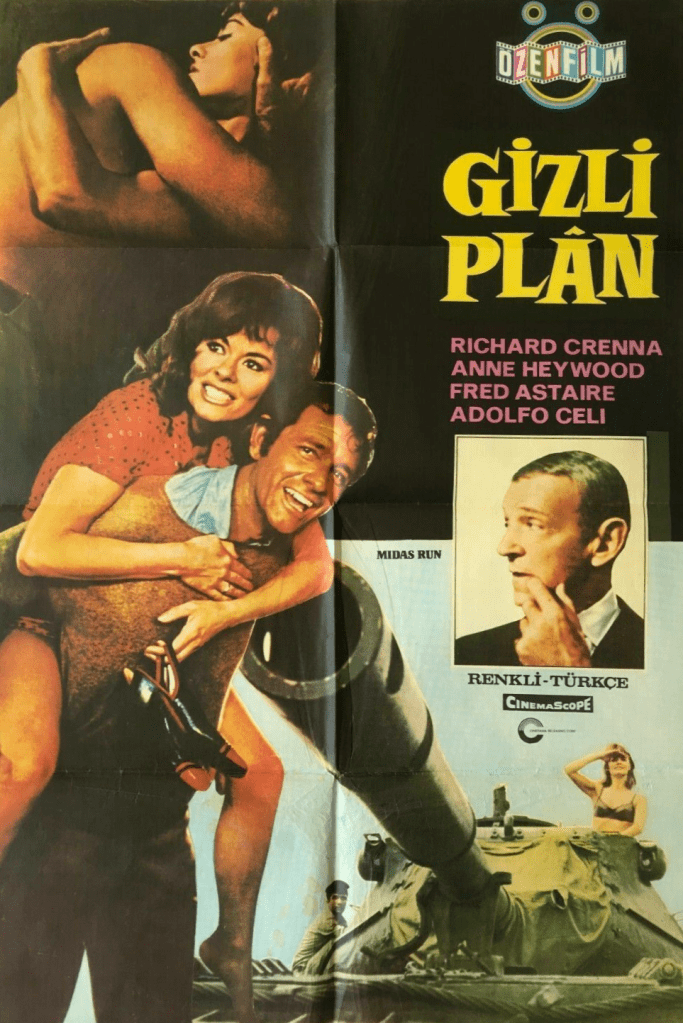
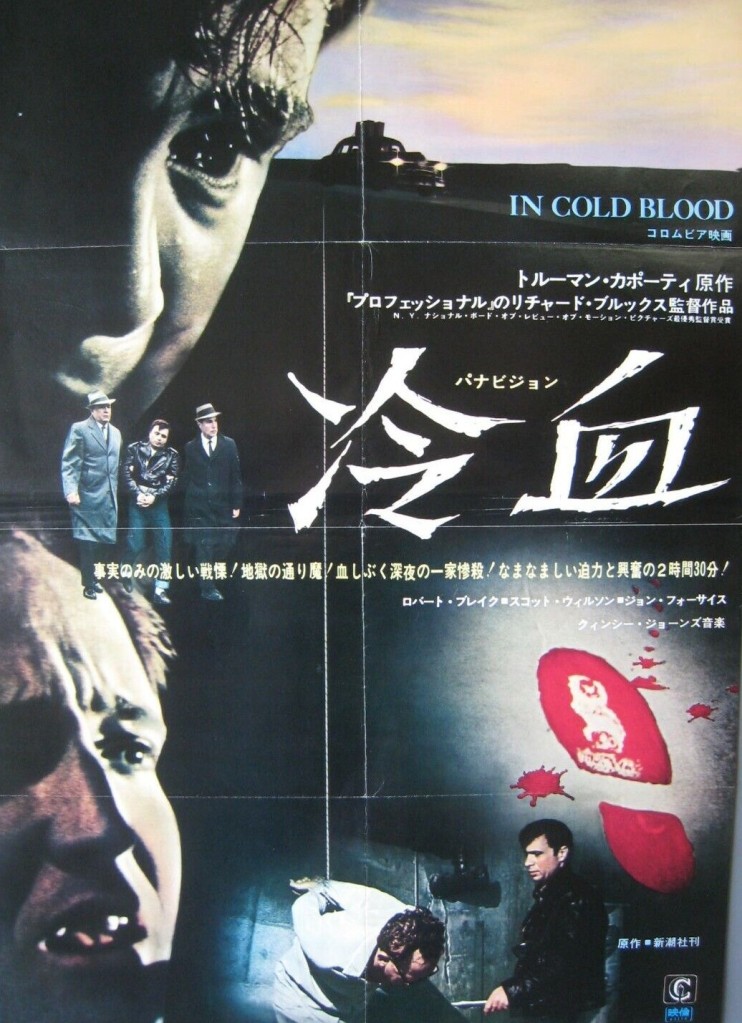
“Murder Syndicate” in one country translated into “Gangster Syndicate” in another, no mention of the FBI.

Cover potentially blown, Tom’s boss Anderson (Fritz Weaver) plans to give him a new life – his employers are not “unfeeling monsters” after all – pack him off to Rio with $83,000 to get him started. But only Tom. Eve is sent back to her old life, to prove she can be trusted, the life she was trying to keep from her husband. She is put to work in a clip joint.

Of course, it doesn’t work out that way and there are about a dozen twists before we reach an unexpected climax, especially given the opening scene which I won’t disclose.

Although The Godfather is seen as the high point of humanising the Mafia, in that picture Michael’s constant concealment from his wife of his true life means it avoids the real drama of the situation. Here, that drama is the crux. A clever big boss would try to avoid a marital mismatch. The wrong kind of love match can endanger the Family – just look at Meghan and Harry – and it’s a pretty clever device to splice two souls rescued from potential prison and a more sordid life, give them life’s trappings, assured that a woman who has sold herself to so many different men might be grateful just to be assigned a single one, and that a man who otherwise might have been a dull banker could receive, almost as an “extra,” a glamorous wife.

That they might have feelings for each other may well have been calculated into the equation. What would that matter? Surely, it would only benefit the relationship. Every manager knows that an employee with a happy home life is one less problem to worry about.

As long as company loyalty remained uppermost. Eve reminds Tom he’s no less guilty in helping the company get rid of tainted money than the guys on the ground who made it in the first place. Quite why Tom has a stab of conscience and hasn’t the smarts to work out that gangsters can be happily married is never made clear. However, once he sets rolling the particular ball of quitting the Mafia, it can only end in trouble.

Director David Lowell Rich (A Lovely Way To Die, 1968) does an exemplary job, spinning emotion and angst, humanising a couple we should really despise, and every now and then throwing in a corker of a twist. Unlike the experience of Lee Marvin in Point Blank, the employers are shown to be far from rigid, with an apparent touching regard for their employees.

Rich even manages to slip in a couple of scenes that provide greater insight. One of Tom’s co-workers  talks like any successful salesman about the pressure of hitting his targets. And he fears the effect of computerisation, that it could make the Mafia vulnerable to Government investigation (rather than, as would later transpire, harnessing it to massive financial effect). And there’s a little nugget about how 200 businesses who controlled the entire U.S. economy in 1932 held the country to ransom for a year by refusing to accede to the wishes of President Roosevelt.

Inger Stevens (Firecreek, 1968) is the pick here, by turn confident, vulnerable, loving, hating, and with a terrific scene as she tries to control her emotions when tossed back into bargain basement of prostitution. Don Murray (The Viking Queen, 1967) spent his entire career trying to live up to the promise shown in Bus Stop (1956), for which he was Oscar-nominated, without quite getting the roles consistently enough that he deserved. But he is pretty convincing here.

This was television regular Barry Nelson’s first movie role in a decade. Fritz Weaver (The Maltese Bippy, 1969) is good as the boss whose game face is “understanding” and you might spot John Randolph (Seconds, 1966). George Benson wrote the songs for the nightclub sequence.

If you’ve never heard of this, it’ll be because David Lowell Rich is a very under-rated director and because it started life as a made-for-television movie in the heyday of that particular notion, but, as was often the norm with such projects, was released as a movie abroad under the alternative title.

Terrific little film, well worth a look. Way ahead of its time regarding money-laundering, sexual business arrangements (Homeland, 2011-2020), the pressures of working for the Mafia (The Sopranos, 1999-2007) and quitting that organization (Stiletto, 1969). You can catch it on YouTube but be warned this was filmed on video so the quality ain’t great.

Lost Highway (1997) *** – Seen at the Cinema

One of these films with bits missing. Where you are fated to fail to join the dots the director didn’t put there in the first place. Or so it seems. But when you work it all back from the end appears to make some kind of sense.

But that’s only while you are of a mind, given the directorial credentials, to stick it in the cult category rather than the direct-to-video vault where its companions might be any erotic thriller featuring Shannon Tweed. And that might be appropriate in  another way because this was such a flop on initial release, despite David Lynch’s reputation courtesy of Blue Velvet (19860 and Twin Peaks, that it owes much of its current cult status to rediscovery on DVD.

Mysterious message, mysterious video, mysterious man (Robert Blake) resembling Lindsay Kemp from The Wicker Man (1973). What connects jazz saxophonist Fred (Bill Pullman) and garage mechanic Pete (Balthazar Getty) except the women in their lives, brunette and blonde, respectively, and the fact that the former’s high-pitched music gives the latter a headache.

In fact, sorry to spoil it for you, though you’ve no doubt already seen this, this is really a story told, however opaquely, from the perspective of blonde/brunette Alice/Renee (Patricia Arquette), a commodity du jour looking for a dupe du jour. Because it’s, don’t you know, about a young woman lured into debauchery, forced to strip at gunpoint for gangster Mr Eddy (Robert Loggia), act in porno and become his squeeze, and naturally looking for a way out. Enter Pete, an easy enough snare, just turn up at his garage looking blonde and sexy. Not that Pete in any way resembles the introspective jealous Fred, Pete can make out in the backs of cars with other willing women like Sheila (Natasha Gregson Warner).

Into Fred’s dull life – he doesn’t seem that excited by being an avant garde jazzman and his sexy wife has given up on sitting adoringly in nightclubs gazing at her idol – comes the mysterious trilogy. “Dick Laurent is dead” is the mysterious message. The video contains footage of their apartment, with some footage shot when they were asleep. The mysterious man, unless he’s a ventriloquist, has the mysterious ability to be two places at once and then just turn up, like a subconscious, out of the blue.

That’s not the only switcheroo. At times Fred turns into Pete. And the two women turn up in the same photograph. And nobody seems much alive except when it comes to villainy. The gangster has a neat method of teaching tailgaters the error of their ways and likes his goodies (women) to unwrap themselves in the presence of others.

And it’s a nightmare of sorts, hallucinatory, or at least the characters exist on a surreal landscape. The audience never quite knows where it is. Instead of the usual twists of the thriller genre, this has mind-bending twists. It may make sense, I tried to make sense of it, but I’m not sure that’s necessary and it may even be folly, the whole idea I guess being to go with the flow and just enjoy what the director puts in front of us.

The forced strip sits uneasily in these times, though the beating up of the tail-gater always geta a great audience response, as if of course gangster violence has the imprimatur of Martin Scorsese, and in the world of a lost woman seeking a way out any man, no matter how innocent (Pete refuses loan of a porno video), is there to be used.

David Lynch is one of the few directors of the last 30/40 years to be considered a true auteur, his movies full of strange exotic images, and characters who would not exist outside his imagination, and it was quite rewarding to see that he has at least garnered an audience for I saw this in the largest cinema in a triple-screen arthouse and it had attracted a sizeable audience.

Peak enjoyment for the head-scratching fraternity, red meat for arthouse hounds, it certainly has the Lynch trademarks in camerawork and music and the parcelling up of the illicit into digestible fragments.

The Lie (2018) ***

I rarely feel inclined to dig around the two streamers – Netflix and Amazon – available to me what with a vast backlog of 1960s DVD/VHS still to plough through and interest in contemporary cinema sated though a weekly visit to the multiplex.  It’s rare that I can sit through more than five minutes of the movies funded or picked up by streamers, so poor is their quality control. So this came as a surprise.

The acting’s not the best and just when you are beginning to run out of patience suddenly the real twist kicks in and it makes terrible, terrible sense and a situation that has spiralled out of control ends up in a bottomless pit. I say the real twist because I had guessed the first twist, an obvious consequence of the set-up of these kind of films. But the real twist is much darker and eminently more savage.

So, the basic story is rock musician Jay (Peter Sarsgard), estranged from wife Rebecca (Mireille Enos), takes teenage daughter Kayla (Joey King) to dance camp and on the way picks up her best pal Trini (Dani Kind) and somewhere in the middle of an ice-bound wilderness said friend needs the toilet. Kayla and pal go off but only Kayla returns, admitting she has pushed friend off a bridge into icy river.

Jay’s now got to decide how to protect his murderous daughter, hide any evidence of Trini being in the car etc. He confides in Rebecca, and protecting their daughter brings the couple closer together. Meanwhile, Kayla is acting as if what’s all the fuss about. This is dysfunctional on the rocks.

Luckily, it turns out Trini has a record of running away and her dad Sam (Cas Anwar) has a terrible temper and may be abusing her so it’s relatively easy to get the police to consider him the main suspect, especially as he’s very lax in reporting the child missing. Plus, Rebecca seems to know her way about the police and Sam makes the mistake of causing a scene in the street.

But, of course, nothing goes according to plan, the situation gets worse, as the innocent parents try to fabricate something that will make the police go away. There’s a lot of other subtle stuff that complicates the situation. But essentially it’s two parallel stories diverging along psychological lines.

With those malevolent eyes, Peter Sarsgard (The Batman, 2022) has some difficulty passing for innocent, and of course his character is not exactly saintly, so that muddies the waters, as I guess is the intention, while the casting of Mirielle Enos (best-known as the detective in the U.S. television adaptation of Nordic hit The Killing, 2011-2014) also suggests the director is hoping to mislead the audience.

Joey King (Bullet Train, 2022) is so sulky and petulant from the outset that you wouldn’t be remotely surprised that her teenage hormones could escalate into murder and then for her sit back and enjoy watching her parents try to deal with the consequences.

And you might nitpick and wonder exactly what kind of town this is when there’s not a single neighbour to appear at the sound of an argument or a fight or a car accident, and no cameras on the streets. But generally, this is a tight mostly three-hander with tension quietly building, wrong decisions taken by people who think they are cleverer than they are, a finely balanced pyramid of parental attitudes to children and vice-versa and throwing out the one question every parent hopes to avoid: how will your react if your beloved child commits a heinous crime? What lengths will you go to protect them?

So in the context of the shattering ending, everything makes far worse sense.

A very neat thriller and almost a made-for-streamer feel about it, in the old made-for-television sense.

Writer-director Veena Sud (The Salton Sea, 2016) keeps a keen grip on a tale that is a remake of German picture Wir Monster (2015).

On Amazon Prime.

Discover WordPress

A daily selection of the best content published on WordPress, collected for you by humans who love to read.

The Atavist Magazine

by Brian Hannan

WordPress.com News

The latest news on WordPress.com and the WordPress community.