Night of the Following Day (1969) ***

As his popularity in the 1960s faded, Marlon Brando was often called upon to save, or greenlight, a picture unworthy of his talent. Except that director Hubert Cornfield failed to extract enough tension from a kidnap thriller with an inbuilt deadline and a double-crossing sub-plot this might have been one to rise out of the mediocrity.

It’s not unknown for strangers working together on a robbery to adopt pseudonyms, colors in the case of Reservoir Dogs (1992) or cities as in Spanish television hit The Money Heist. Here they are known by their designated tasks, which seemed a nod towards artistic pretension at the time. Even so, the gang have too many frailties for taking on a caper like this, the pressure of a deadline and the publicity their crime attracts exacerbating the situation. So kidnapping a millionaire’s daughter (Pamela Franklin) are: Chauffeur (Marlon Brando), in on the job because he owes a favour to Friendly (Jess Hahn), whose sister Blonde (Rita Moreno) is also the chauffeur’s drug-addict girlfriend, the psychopathic Leer (Richard Boone) and a pilot (Al Lettieri).

All except the pilot are holed up in a remote beach house in France. The first signs of cracks show when Blonde is so drugged up she fails to collect her colleagues from a small local airport and, when suspecting the chauffeur of having sex with the girl, she explodes in a tantrum. And because she can’t get her story straight she attracts the attention of a local cop (Gerard Buhr). Despite making a good job of calming down the terrified girl, Leer has other plans for her which the Chauffeur is constantly trying to thwart. At various points various people try to quit. At various points romantic and family ties are pulled tight.

The details of the cash hand-over are well done as is the unexpected double-cross and the diversion allowing them to escape but about ten minutes of the running time is people driving around in cars, only at the later stages to any useful dramatic purpose, time that would been better spent filling us in on the characters. Most of the tension derives from a gang with two loose cannons and certainly the wait for the confrontation between Chauffeur and Leer is worthwhile.

The biggest plus point is Marlon Brando (The Chase, 1966) and even – perhaps because of – sporting a blonde wig and black tee-shirt remains a compelling screen presence. He might have been slumming it but he is certainly believable as the minor criminal way out of his depth. It’s a mistake to think of him as intended to exude menace along the line of Quint in The Nightcomers (1971) because this is actually a complicated role. On the one hand he clearly never wanted to be involved, participation triggered by a sense of honor, trying to keep his girlfriend and the kidnappee safe while at the same time happy to resort to considerable violence to achieve his ends.

The malevolent Boone (The Arrangement, 1969) almost steals the show, beginning as the voice of reason and gradually succumbing to his inner vices. The love interest benefits from Brando and Moreno (West Side Story, 1961), also in blonde wig, being ex-lovers in real life and it takes little to ignite the anger in Moreno. But her portrayal of the addict who cannot stay off her chosen poison long enough to carry out a simple task is excellent. Pamela Franklin (The Prime of Miss Jean Brodie, 1968) has little to do except look scared and she has one revealing scene when in attempting to seduce the Chauffeur sets up the prospect of a different kind of liaison with Leer.

Hubert Cornfield had not directed a picture since Pressure Point (1962) which acted as a decent calling-card and showed how good he was at creating tension between opposing individuals. Instead of focusing here on the characters, Cornfield seems more interested in the visuals, none of which as it turns out are particular arresting and in one instance virtually impossible to see what is going on.

Not so much a curiosity as a masterclass in how to blow a once-in-a-lifetime gig with Marlon Brando and what not to do with a thriller.

Brannigan (1975) ***

File under guilty pleasure. And bear in mind in the early 1970s there was no such thing as the police procedural, certainly not as we know it today, when cops have the benefits of DNA, increased forensics and computer technology. Hollywood in this era didn’t waste time with endless knocking on doors or collecting massive amounts of minutiae in the hope of uncovering a clue.

Generally speaking, cops of this period had two things in common. They were mavericks and they constantly fought authority usually represented by some dumb superior. Normally the narrative consisted of the character taking on the  persona of a bull in a china shop and thundering towards a main objective, the more set pieces to demonstrate said bullish tendencies the better, and if in the course of apprehending a criminal he can deliver a catchphrase such as “make my day” or, as here, “knock, knock,” so much the better.

John Wayne had made eight westerns in a row and having turned down Dirty Harry (1971) ventured into the cop genre with McQ (1974) and came straight back for seconds here.

Brannigan (John Wayne) has been shipped over to London to bring back under the extradition treaty Mob gangster Larkin (John Vernon) which would be pretty straightforward except the Brits don’t keep such prisoners in custody – Larkin swans around in a white Rolls Royce – and in any case he’s in custody of another kind, having been kidnapped by some British hoods.

In terms of authority Brannigan battles the sappy Brits who won’t allow him to carry a gun and do things the Chicago way. Luckily, for the picture, top cop Commander Swann (Richard Attenborough) is not the standard stiff-upper-lip buffoon but as likely to pitch in when the fisticuffs begin. There are a couple of excellent car chases and one stunt of French Connection (1971) quality when two cars go sailing over the gap in a raised Tower Bridge. This is a London mixing glory and grit, posh residences and ancient buildings share screen time with rundown docklands. And the movie has the sense not to go all May-December on us and while a certain affection builds up between the U.S. cop and his driver Jennifer (Judy Gesson), it doesn’t teeter into unlikely romance.

The plot’s clever. While in a sauna having a massage Larkin is knocked out cold and bundled into a sweatbox by two apparent delivery guys and then smooth attorney Fields (Mel Ferrer) acts as the go-between, delivering Mob ransom money to the kidnappers, the price increasing with every failed rescue attempt, until the kidnappers are sitting on a cool million. Naturally, there’s some double-crossing and the cops have one tiny magic bullet to use to their advantage.

So mainly the fun is watching Brannigan charge around in a British china shop, mostly bypassing British rules. There’s a subplot involving a hitman hunting Brannigan and even when in a normal cop movie you might think, fair’s fair, the policeman should be able to defend himself with a weapon, that doesn’t equate with the British rules, so you have our hero able to point out that if he wasn’t armed to the teeth Jennifer would be dead, while Swann does his best to insist that it would be better for the young lass to end up on a mortuary slab than British cops go rampaging around with guns.

There’s some gentle fun in poking at British tradition – the obligatory wearing a tie in certain upmarket establishments – and in Swann having to translate to a waitperson Brannigan’s breakfast order.

Except when standing up for rules, Swann is great value, a good match for the American, both in tempering his ruthlessness, and matching him punch-for-punch in a brawl.

Apart from the action sequences, John Wayne is permitted to grow old gracefully, his dialog rarely filled with barbed retorts or salty words and there’s quite nice acting on the Duke’s part when he’s called upon to demonstrate his special skill, which is “reacting”.

Richard Attenborough (Only When I Larf, 1968) has a ball, and not before time, able to let some of the usual repressed intensity burst out. Judy Geeson (The Executioner, 1970) must have been delighted to find a part that didn’t involve her taking off her clothes and she’s afforded some of the best lines. John Vernon (Topaz, 1969) is his usual hardass but Mel Ferrer (The Fall of the Roman Empire, 1964) has a good stab at a bad guy.

Not in the same league as director Douglas Hickox’s Sitting Target (1972). Written by Christopher Trumbo (The Don Is Dead, 1973), William McGivern (The Wrecking Crew, 1968), Michael Butler (The Gauntlet, 1977) and William Norton (The Scalphunters, 1968).  

Erroneously tabbed as a box office disappointment, this was made on a budget of $2.6 million but cleared $7 million in rentals (the studio share of the box office) plus another $1.5 million from television.

Obviously, if you’re in the Clint Eastwood camp this falls short, but otherwise it’s enjoyable stuff.

Out of Time (2003) *****

The most tension-filled thriller this side of The Day of the Jackal (1973). Stone-cold classic in my book. Admittedly not a big box office success in its day nor critically acclaimed, but this nod to film noir with cop taking a stroll for his own convenience down the wrong mean streets and an old-fashioned femme-fatale male-dupe scenario coupled with witty dialog and terrific set pieces suggests to me this is long overdue for reappraisal.

This was really the start of Denzel Washington as action hero – Crimson Tide (1995) was more a straightforward drama albeit with characters facing the ultimate consequence – and it probably helps that I’m looking back at this through the prism of more than two decades of the actor whizzing along in the derring-do department especially in his turn as The Equalizer (2014) – and sequels – where he demolishes opponents in seconds. Apart from the occasional side hustle as a bad guy, he’s generally been a good guy, the sort of dependable hunk that Tom Hanks would aspire to if he wanted to add brawn to his guy-next-door persona.

Matt Whitlock is the top law enforcement officer in a Florida slumber town (pop 1300) but he’s not as clean-cut as he looks given his affair with married Ann Harrison (Sanaa Latham) who bursts his romantic bubble by announcing she has just six months to live thanks to a cancer so advanced that only some new-fangled treatment could save her. I smelled a rat, I have to confess, the minute she decided she was going to make him the beneficiary of her million-dollar insurance policy.

So what’s a decent guy to do but steal the $500,000 drugs money he’s holding in his police safe, that’s liable to sit untouched for years to come, in order to fund her treatment on the assumption that the insurance policy acts as his insurance. How dumb can you be?

So when Ann and husband Chris (Dean Cain) die in a horrific fire, his world unravels, especially as detective soon-to-be-ex-wife Alex (Eva Mendes) is in charge of the murder investigation and the Feds arrive out of the blue looking for the drugs cash. So basically he’s an old-fashioned “running man”, diving from one hole to the next, barely keeping ahead of the cops and the FBI, fingered twice by witnesses, discovering that the specialist who diagnosed the cancer is an imposter, and not just being made to look the biggest fool who ever fell in love with the wrong woman but liable to pay for his error with a lengthy jail sentence.

Alex begins to suspect he knows more than he’s letting on, he’s desperate to trace the bogus doctor, all the while, in a nod to No Way Out (1987), desperately trying to stop a tsunami of telephone evidence – arriving via fax and computer – that links him to the supposed dead woman.

There are verbal confrontations galore and a couple of physical ones, a chase through a hotel culminating in a brawl on a balcony, and possibly a second murder charge.

It’s not just a terrific tale, mostly consisting of twists and narrow escapes, I counted half a dozen twists in the last ten minutes alone, but offers some terrific dialog. In a diner, the relationship between Matt and Chris is spelled out in style: Matt recommends the crab, Chris points out he’s allergic to crab. “I know,” retorts Matt. The movie opens with some decidedly salty goings-on between Matt and his lover and the verbal duel between Matt and Alex has the underlying Tracy-Hepburn classic squabbling.

For all that Matt is smart enough to chase down the missing cash and hold the Feds at arm’s length long enough, he’s still, when you come down to it, only going from dumb to dumber and the shock when he realizes just how well he’s been duped is a cracker.

So, obviously, the key is that the audience wants him, guilty though he is of theft and stupidity, to get away with it or at least be thrown a get-out-of-jail-free card and that’s part of the hook, and that element is brilliantly done. I had no idea how he was going to get off with it, as one avenue of escape after another was rigorously shut down, until the very end.

There’s a whole stew of those reversals that screenwriters throw at audiences who think they are one step ahead of the game.

It’s a great cast. Denzel Washington is superb, Eva Mendes (Training Day, 2001) is an excellent sparring partner, Sanaa Latham (AVP: Alien vs Predator, 2004) as slinky as femme fatale as you’ll find. Look out for television’s Superman Dean Cain and especially character actor John Billingsley.

Director Carl Franklin (Devil in a Blue Dress, 1995) piles on the tension and kudos to screenwriter Dave Collard (Annapolis, 2006) for creating the blueprint.   

I caught this on Amazon Prime but be quick about it because it’s in the section that the streamer calls “leaving in 30 days.”

An absolute classic.

Wait Until Dark (1967) ****

You wouldn’t have figured Audrey Hepburn – she of the model looks (Breakfast at Tiffany’s, 1961)  and upmarket twang and belonging to the highest echelons of the movie business – for a Scream Queen. But there were precedents – Doris Day had at times been screaming fit to burst in Midnight Lace (1960) and Lee Remick, though not in either’s marquee league, had been terrified to bits in Experiment in Terror / The Grip of Fear (1962). By this point in pictures, the screen was awash with Scream Queens, courtesy of lower-budgeted efforts from Hammer, AIP and Amicus, so asking a top star to exercise her lungs in similar fashion might have been career suicide.

As it was, which would have come as a surprise to her legion of fans, this turned out to be pretty much the star’s swansong. She wouldn’t make another movie in nearly a decade and only another three after that. But here she certainly hits a dramatic peak.

The story’s a bit muddled and initially requires unraveling. Drug mule Lisa (Samantha Jones) passes a doll packed with heroin to fellow passenger Sam (Efrem Zimbalist Jr.) on a plane. She had been planning to steal the dope and set up on her own with Mike (Richard Crenna) and former cop Carlino (Jack Weston). There’s a bit missing from the tale but you have to assume that somehow Lisa got talking to Sam and he gave her his address and that she has turned up at his apartment looking for the doll, which wasn’t there.

Mike and Carlino turn up and have no luck searching the apartment. They don’t look hard enough because if they’d looked in the closet they’d have found the corpse of Lisa, killed by her employer Roat (Alan Arkin) who arrives to confront the pair and then hire them to help him find the heroin and dispose of the body.

So with all that out of the way we come to the meat of the story. And it follows the same premise as Man in the Dark / Blind Corner (1964) –  though, luckily, so few people saw that it wouldn’t be at the forefront of the audience mind at the time – of not so much a blind person being terrorized in their home but being largely played for a fool. The audience knows more than the blind person does and much of the story is not their vulnerability but just how long it will take for them to twig what’s going on.

In the case of Susy (Audrey Hepburn), as with the composer in Man in the Dark, her ears are her radar. She is on the alert after hearing the same pair of squeaky shoes on different people and wondering why people are opening and closing her blinds so often. Mike and Carlino masquerade as good guys, cops investigating the murder of Lisa for which her husband Sam is a suspect. She helps them tear apart the apartment looking for the doll.

She trusts Mike implicitly, less so Carlino, and when she starts to put two and two together she has an ally, teenager Gloria (Julie Herrod) who lives upstairs – they communicate like jailbirds by banging on the pipes. Although her eyes are denied sight, they still express her emotions – trust, relief, gratitude, fear.

But there’s not just one game of cat-and-mouse. There’s three. You know damn well that Mike and Carlino plan to squeeze Roat out of the equation just as you know damn well that he is planning to play them for patsies, apt to take revenge when double-crossed.   

Gradually, her suspicions ramp up. She’s pretty smart working out the various clues. And then we hit two dramatic peaks. Firstly, when she discovers Mike is a bad guy. Secondly, when Roat kills Mike and turns on her, splashing petrol about the place, exploiting her terror of fire. She’s still got a couple of moves to turn the tables, at least temporarily but when absolute darkness does descend – she’s smashed all the lights out – and theoretically they are both in the same boat, and advantage her because of her keener hearing, it doesn’t quite work out the way she’s expected because he knows how to exploit sound.

I won’t tell you where the doll is hidden because that’s a very clever twist in itself, but apart from the few plotholes at the outset (how did Lisa manage to break into Susy’s apartment for a start and leave no trace, for example) once the narrative takes hold it exerts a very strong bite.

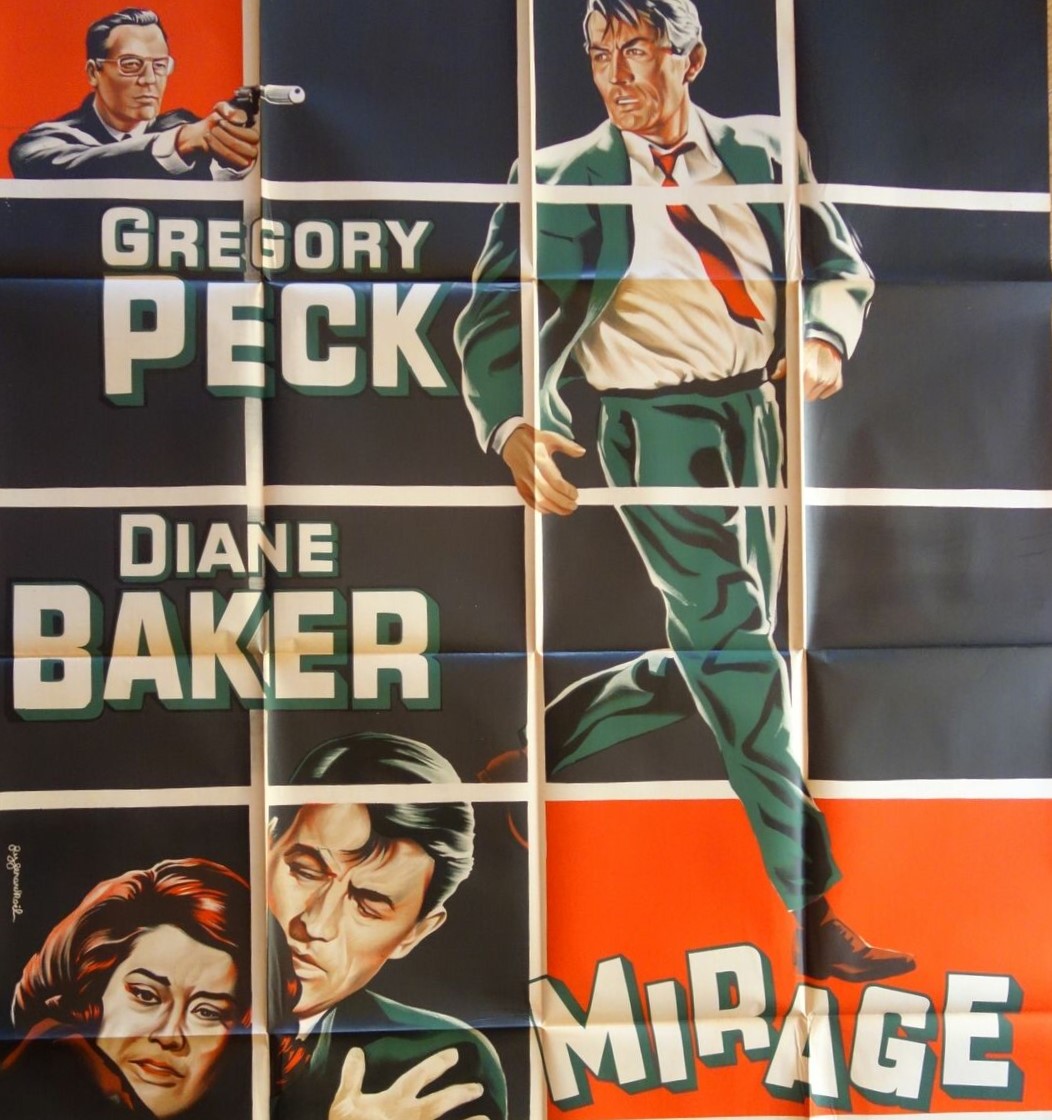
Audrey Hepburn is on top form. Alan Arkin (The Russians Are Coming, The Russians Are Coming, 1966) and Jack Weston (Mirage, 1965) are a bit too obvious for me, but the smoother Richard Crenna (Marooned, 1969) is excellent.

Directed with both an eye to character and tension by Terence Young (Dr No, 1962) and adapted by Robert and Jane-Howard Carrington (Kaleidoscope, 1966) from the Broadway play by Frederick Knott (Dial M for Murder, 1954).

Top notch.

The St Valentine’s Day Massacre (1967) ***

I didn’t realise that the Prohibition gangsters who invented the drive-by shooting were perfectionists. Just to be make sure of completing the job, I found out here, they might send a dozen cars one after the other rolling past the chosen restaurant/cafe, machine guns spouting hundreds of bullets. Nobody could survive that, you would think. But there was a flaw to the idea. If someone just lay down on the floor, the bullets would pass over their head. Strangely enough, we never got a potted history of the drive-by shooting in this docu-drama because otherwise we found out just about everything we needed to know about the infamous massacre.

But I did wish that the narrator would shut up once in a while. I kept on thinking we were going to be examined afterwards. Every dumb schmuck that made even a brief appearance on screen got the full bio treatment, including when – and how (not always by violence) – they died. That annoying feature aside, it was certainly a forensic examination of the whys and wherefores of the infamous gangland slaying. Rival Chicago mobsters Al Capone (Jason Robards) and Bugs Moran (Ralph Meeker), both concluding that the other was not open to negotiation, decided instead to rub him out and the movie basically follows how each develops their murderous plan.

All the big gangster names are here – it’s like a hit man’s greatest hits – Frank Nitti (Harold J. Stone), massacre mastermind Jack McGurn (Clint Ritchie) and Capone enforcer Peter Gusenberg (George Segal) – and the movie reprises some of the classic genre tropes like mashing food (sandwich this time rather than grapefruit) in a woman’s face and Capone taking a baseball bat to a traitorous underling. And there’s the usual lopsided notion of “rules,” Capone incandescent that a ganster was murdered in his own home.

Capone’s plan is the cleverest, involving recruiting people with little or no criminal record including the likes of Johnny May (Bruce Dern in a part originally assigned to Jack Nicholson), renting a garage as the massacre venue, and dressing his hoods up as cops. The film occasionally tracks back to set the scene. And the ever-vigilant narrator makes sure to identify every passing gangster but come the climax seems to run out of things to say, a good many sentences beginning with “on the last morning of the last day of his life.”

Since there’s so much money washing around, it makes sense for the ladies to try and get their share. Gusenberg’s girlfriend (Jean Hale) casually, without seeking permission, swaps one fur for another four times as expensive. A sex worker as casually steals from her client’s wallet before demanding payment for services rendered.

The only problem with bringing in so many bit characters – either those doing the murdering or being murdered – into play is that it cuts down the time remaining to cover Capone and Moran, so, apart from the voice-over, we learn little of significance, most of the drama amounting to outbursts of one kind or another. But it’s certainly very entertaining and follows the Raymond Chandler maxim of when in doubt with your story introduce a man with a gun, or in this case machine gun. The violence is episodic throughout.

Despite the authenticity, punches are pulled when it comes to the physical depiction of Capone. The man universally known as “Scarface” shows no signs of such affliction as played by Jason Robards (Hour of the Gun, 1967). Certainly, Robards shows none of the brooding intensity with which we associate Godfather and son Michael in the Coppola epic, rather he has more in common with Sonny. He delivers a one-key performance of no subtlety but since the film has no subtlety either then it’s a good fit. Ralph Meeker (The Dirty Dozen, 1967) has the better role, since being the junior gangster in terms of power he has more to fear. I felt sorry for Oscar-nominated George Segal (No Way To Treat a Lady, 1968) since although his character is there for obvious reasons there is no obvious reason why he should be allocated more screen time. And given more screen time, nobody seems to know what to do with it.

There’s a superb supporting cast including Jean Hale (In Like Flint 1967), Bruce Dern (They Shoot Horses, Don’t They, 1969), Frank Silvera (Uptight, 1969), Joseph Campanella (Murder Inc., 1960) Alex Rocco (The Godfather, 1972), future director Gus Trikonis and future superstar Jack Nicholson.  

After over a decade of low-budget sci-fi, horror and biker pictures, this was director Roger Corman’s biggest movie to date – his first for a major studio – and, excepting the voice-over, he does an efficient job with the script by Howard Browne (Portrait of a Mobster, 1961) who was presumably responsible for the intrusive narration.

CATCH-UP: This isn’t really a good place to start with the acting of George Segal and you will get a better idea of his talent if you check out the following films covered so far in the Blog: Act One (1963), The New Interns (1964), Invitation to a Gunfighter (1964), King Rat (1965), Lost Command (1966), The Quiller Memorandum (1966), No Way to Treat a Lady (1968), The Bridge at Remagen (1969) and The Southern Star (1969).

Dead Heat on a Merry Go Round (1966) ****

Highly entertaining woefully underrated heist picture with an impish James Coburn (Hard Contract, 1967), Swedish Camilla Sparv (Downhill Racer, 1969) in a sparkling debut and at the end an outrageous twist you won’t see coming in a million years. This is the antithesis of capers of the Topkapi (1964) variety. Not only is it an all-professional job, it takes a good while before you even realise the final focus is robbery or even the actual location. There are hints about the that event and glimpses in passing of material that may be used, and although the theft is planned to intricate detail, none of that planning is revealed to the audience.

The paroled Eli Kotch (James Coburn), who has seduced the prison psychiatrist, immediately skips town and starts fleecing any woman who falls for his charms. He changes personality at the drop of a hat, fitting into the likes of the mark, and in turn is burglar, art thief, car hijacker, in order to raise the loot required to buy a set of bank plans, and yet not above taking on ordinary jobs like shoe salesman to meet the ladies and coffin escort to get free travel across the country. So adept at the minutiae of the con he even manages to impersonate a hotel guest in order to get free phone calls.

He enrols girlfriend Inger (Camilla Sparv) to act as an amateur photographer working on a “poetic essay on transient populations” to get an idea of sites he means to access. He manages to have the head of a Secret Service detail blamed for a leak. Everything is micro-managed and his final masquerade is an Australian cop with a prisoner to extradite which provides him with an excuse to linger in a police station, privy to what is going on at crucial points.

If I tell you any more I’m going to give away too much of the plot and deprive you of delight at its cleverness. The original posters did their best not to give away too much but you can rely on critics on Imdb to spoil everything.

This is just so much fun, with the slick confident Eli as a very engaging con man, the supreme manipulator, and almost in cahoots with writer-director Bernard Girardin (The Mad Room, 1969) in manipulating the audience. There are plenty films full of obfuscation just for the hell of it, or because plots are so complex there’s no room for simplification, or simply at directorial whim. But this has so much going on and Kotch so entertaining to watch that you hardly realize the tension that has been building up, not just looking forward to what exactly is the heist but also how are they going to pull it off, what other clever tricks does Kotch have up his sleeve for any eventuality, and of course, for the denouement, are they going to get away with it, or fall at the last hurdle. There is a great twist before the brilliant twist but I’m not going to tell you about that either.

There’s plenty Swinging Sixties in the background, the permissive society that Kotch is able to exploit, and yet the film has some unexpected depths. You wonder if the memories Kotch draws upon to win the sympathy of his female admirers have their basis in his own life. You are tempted to think not since he is after all a con man, but the detail is so specific it has you thinking maybe this is where his inability to trust anyone originates.

Bernard Giradin was not a name known to me I have to confess, since he was more of a television director than a big screen purveyor – prior to this he had made A Public Affair (1962) with the unheard-off Myron McCormick – and Coburn was the only big star he ever had the privilege to direct. But there are some nice directorial touches. The movie opens with a wall of shadows, there are some striking images of winter, a twist on bedroom footsie, and jabbering translators. But most of all he has the courage to stick to his guns, not feeling obliged to have Kotch spill out everything to a colleague or girl, either to boast of his brilliance, or to reveal innermost nerves, or, worse, to fulfil audience need. There’s an almost documentary feel to the whole enterprise.

James Coburn is superb. Sure, we get the teeth, the wide grin, but I sometimes felt all the smiling was unnecessary, almost a short cut to winning audience favour, and this portrayal, with the smile less in evidence, feels more intimate, more seductive. This may well be his best, most winning, performance. Camilla Sparv is something of a surprise, nothing like the ice queen of future movies, very much an ordinary girl delighted to be falling in love, and with a writer of all the things, the man of her dreams.

The excellent supporting cast includes Marian McCargo (The Undefeated, 1969), Aldo Ray (The Power, 1968), Robert Webber (The Dirty Dozen, 1967), Todd Armstrong (Jason and the Argonauts, 1963) and of course a blink-and-you-miss-it appearance of Harrison Ford as the only bellboy (that’s a clue) in the picture. You might also spot showbiz legend Rose Marie (The Jazz Singer, 1927).

Nine Bodies in a Mexican Morgue (2025) ** or **** (depending)

Ludicrous production values point this in the direction of a laughable project, but a clever twist on both the detection picture and the survival genre and a heck of a lot of fun once it gets into the swing tilt this into the So Bad It’s Good category and a four-star rating for that.

Maybe there’s some of that post-ironic modernist stuff flying around in that we’re not meant to take the setting seriously. How could you when the only attempts to fill out the background of the Mexican jungle are one snake, one lizard and one crow and a pool of barracuda (yep, you heard me, somebody’s got to be able to chew off, for narrative purposes, a human face). Occasionally, reminiscent of the worst of the B-picture horror movies where actors had to strangle themselves with plastic snakes, here the characters take it in turns to slap their faces at supposed insects.

Other morgues you might be interested in…

But they’re never covered in sweat and there’s nary a tarantula or rattlesnake in sight. And any time one of them is due to be bumped off, they just have to wander away from camp.

This sets out its stall in disaster movie fashion. In classics like The Poseidon Adventure (1972), The Towering Inferno (1074) and Earthquake (1974) part of the fun was working out who would bite the dust.

Here, we’re told at the outset that out of the ten people aboard a light aircraft that’s crashed into the jungle nine don’t make it. So, over six episodes, we’ve got to guess who’s the survivor as well as why he or she feels obliged to get rid of his fellow passengers and it’s not as simple as in Sands of the Kalahari (1965) where it’s simply to increase one individual’s food stock.

Nor is it a simple matter of checking the billing. We know that Paul Newman and Steve McQueen aren’t going to be victims in The Towering Inferno, likewise Charlton Heston in Earthquake, but here none of the cast is familiar in the slightest, so no fans are going to bitch at their beloved idol being killed off, though Game of Thrones showed little compunction.

“The Living Dead at the Manchester Morgue” should you be interested.

Naturally, the one creature that’s dominant in the jungle is the red herring. Virtually every character isn’t what they seem. Kevin (Eric McCormack), an ex-doctor, feels like somewhere along the line he’s been struck off; Zack (David Ajala) is certainly no insurance investigator; Dan (Adam Long) isn’t a novelist; millionaire’s daughter Amy (Jan Le) clearly has issues; Lisa (Siobhan MacSweeney) ain’t no ordinary housewife; and everyone’s suspicious of Sonja (Lydia Wilson) because she’s so guarded.

Alliances crumble once the body count rises. And gradually, the survivors realize they are not alone, there’s someone else in this neck of the jungle who will sabotage their efforts to set up a rudimentary transmitter. It’s not Flight of the Phoenix (1965) either or those others in the survival sub-genre where characters use their skills to find an escape. This lot do nothing more energetic than wait. Though they don’t have much energy left over after all their confrontations and squabbling over who’s the killer among them.

What writer Anthony Horowitz (Foyle’s War, 2002-2025) does brilliantly is take the hoary old detective tale and turn it upside down. Sure, we’re accustomed to multiple murders in virtually any episode of a television mystery, but setting the bar as high as nine killings, and telling us that fact from the off, making us wonder who will be next – a bit like Strictly, wondering who will be axed this week – provides this with the narrative fillip it requires.

And you forget about the lousy production values and go with the flow. Here and there sub-plots turn up the puzzle factor.

You may well, like me (he boasted), work out who the killer is and what he’s up to, but likely as not you won’t.

Apart from a marvelous turn from Siobhan MacSweeny, the dry head nun from the Derry Girls (2018) television series, nobody’s called upon to do much acting, except of the duplicitous kind as they keep their real characters under wraps.

Couple of good twists at the end.

Guilty pleasure (four-stars) or utter rubbish (two stars) – you choose.

Catch it on BBC and various streamers or on DVD.

Man in the Dark / Blind Corner (1964) ***

Hammer Scream Queens rarely make an impact outside the genre, so it comes as something of a surprise to find Barbara Shelley effortlessly making the transition from The Gorgon (1964) to a slinky femme fatale spinning a deadly web around three men. While British femme fatales tend not to go all-out full throttle in terms of seduction and revenge, that suits the set-up here which is distinctly slow-burn. In fact, you might be persuaded to accuse the production of time-wasting or padding-out the story with its occasional diversions into song numbers (though that is a trope of these B-features) until you discover later on that there’s a very good reason for listening to the dulcet tones of pop singer Ronnie Carroll.

While there are echoes of Faces in the Dark (1960), blind composer Paul (William Sylvester) here is a far more sympathetic character especially once audiences latch on to what he as to put up with. And where Wait until Dark (1967) majors on terror, here the approach is much more subtle. And while audiences might wince at Audrey Hepburn’s predicament, here they will be appalled to see Paul’s wife Anne (Barbara Shelley) virtually taunt him by not just parading her secret lover Ricky (Alexander Davion), a penniless artist, but caressing him and pecking his cheek with kisses as if to test her husband’s radar.

Not only is Paul the forgiving type – turning a blind eye to his wife’s regular late nights – but he is devoted to Anne and considers himself lucky that she has stuck by him and it never occurs to him that his wealth plays a significant part in that bargain, Anne, a little-known former actress, unlikely to enjoy such bounty any other way. He’s so in love with his wife that he knocks back his secretary Joan (Elizabeth Shepherd) who has a good idea her employer is being played for a fool.

Under the guise of Ricky painting her portrait, Anne manages to legitimately spend a considerable amount of time with her lover and fine-tune her plans to rid herself of Paul. There’s a fairly easy option. Paul is an alcoholic and given to standing in an open balcony. He could easily lose his footing and topple over should there be someone around to give him the initial nudge.

Ricky is pencilled in as the murderer. And though he initially baulks at the idea, the prospect of both losing Anne and resolving at the same time his financial problems is too tempting. By now, Paul is aware of the tryst, having been alerted to the couple smooching in a restaurant, by his best pal and manager Mike (Mark Eden). Once we realize that Paul has been taping his wife’s telephone conversations, you are misdirected into thinking he will be better prepared. But this isn’t America or even sleazy Soho and there’s not a gun to hand or even a knife so Paul is vulnerable to an assailant and even as weak-minded an individual as Ricky seems to grow in confidence the minute the tussling begins.

Even then Ricky is so incompetent Paul needs to coach him into how to get away with the perfect murder and once we get to this stage it’s clear there’s something else going on and we’re in for a torrent of twists, delectably delivered. Ricky is informed that he’s a patsy, that Anne is in love with Mike and that in a courtroom she will act her socks off as the innocent victim of an overzealous lover – “a choked sob will escape her –  she did that in The Act of Cain” or “she might fall into a crumpled but not unattractive faint” as she did in Murder Undaunted.”

When Anne arrives, accompanied by Mike, to check on Ricky’s handiwork, the game is clearly up. But Paul has police hidden in the bedroom to hear what amounts to Anne’s confession. All three are locked up and Paul heads off into the sunset with his secretary.

Barbara Shelley creates a sizzling tension of her own and is a superb femme fatale, dangling three men on a string. Alexander Davion (Paranoiac, 1963) and Mark Eden (Curse of the Crimson Altar, 1968) don’t get a look-in though simply by being stoic and then clever William Sylvester (Devils of Darkness, 1965) manages to hold his own.

Quite a different proposition to Tomorrow at Ten (1963), also helmed by Lance Comfort, where the tension is upfront. You’d say this was a weighted piece of direction, with much of the pressure in the early stages reliant on whether Paul will see through his wife. Those scenes where she toys as much with her lover as her husband are unique. Written by the team of James Kelly and Peter Miller (Tomorrow at Ten) plus Vivian Kemble (Olympus Force, 1988).

Takes a while to come to the boil but well worth the wait.

Catch it on Talking Pictures TV under the title Blind Corner.

Birdman of Alcatraz (1962) ****

It always helps a prison picture if your character has been wrongfully convicted (The Shawshank Redemption, 1994) or is incarcerated through an unfortunately set of circumstances including self-destructive tendencies (Cool Hand Luke, 1967). Whatever the case, the malevolence of the wardens or the emergence of his own engaging personality will ensure that your character is sprinkled with enough sympathy to transform into our hero.

But that’s not the case here and it takes a strong chunk of bravura acting from Burt Lancaster (Elmer Gantry, 1960) to pull this off.

Oddly, this works in the main not because it’s your typical prison picture with endless confrontations with guards and preventing your dignity being sliced and diced by a ton of humiliating actions. Walt Disney couldn’t have done a better job of hooking the audience with its nature true-life approach. I guarantee you will be chuckling to watch a newborn chick trying to shuck off the top half of its egg.

Robert Stroud (Burt Lancaster), a pimp, was certainly no innocent, a two-time killer, who only escapes execution through the efforts of his mother (Thelma Ritter) in persuading U.S. President Woodrow Wilson to commute his sentence. However, there is an evil Catch-22 which infuriated prison governor Harvey Shoemaker (Karl Malden) invokes. While awaiting sentence, and assuming execution is inevitable because he murdered a prison guard in front of hundreds of witnesses, the local judge has decreed that Stroud should be kept in solitary confinement.

Shoemaker, nettled by Stroud’s defiance, interprets that as being able to keep the prisoner in solitary confinement for the rest of his term – which amounts, as it happens, to 40 years. None of this bugs Stroud that much. He’s averse to human companionship, as likely to bully a cellmate and cause ructions elsewhere, and certainly not ever going to give in to the prison system with its endless rules.

The marketeers have taken some liberties with the title. But Alcatraz is certainly a bigger lure to moviegoers than Leavenworth. By the time Stroud reaches Alcatraz he’s devoid of birds. All the breeding activity takes place in Leavenworth.

And while there are aspects of Stroud’s character you will never warm to, he’s got us hooked the minute he embarks on the bird breeding, in part because it’s the antithesis of his character to be so humane, and in part because the dedication involved in painstakingly building cages or other toys (a little wooden chariot a bird is taught to drive) from nothing but wooden boxes with rudimentary tools he has fashioned himself is wondrous to behold. That section of the movie is just enthralling.

Although he’s rescued a chick from a broken nest that lands in the prisoner courtyard during a storm, it takes him a while to cotton on that the bird needs fed, which he does with his version of a toothpick. He coaxes the frightened bird to fly and eventually starts breeding the damn things, persuading a new governor to allow him to buy birdseed and encourages his hobby, so much so that after extensive study Stroud becomes a noted ornithologist with a couple of publications to his name. His case became widely known after a bird researcher Stella Johnson (Betty Field) publicizes his activities and eventually marries him.

But when he’s shifted to Alcatraz, he encounters Shoemaker who forbids the birds. So Stroud starts to write a history of the U.S. penal system. Despite being prone to violence, he is instrumental in ending a prisoner uprising. He is never released, despite various petitions.

So while there’s no happy ending it’s an absorbing picture. Burt Lancaster is at the top of his form, winning another Oscar nomination. Telly Savalas (Crooks and Coronets, 1969), playing another prisoner, was also nominated. Karl Malden (One Eyed Jacks, 1961) is an excellent foil and any time Thelma Ritter (A New Kind of Love, 1963) pops up she steals the show.

While it’s on the long side for a prison picture and lacks the epic quality that the 150-minute running time would suggest, director John Frankenheimer (The Manchurian Candidate, 1962) takes an almost documentary approach to his subject. You might call it an intimate epic. Screenplay by Guy Trosper (The Spy Who Came in from the Cold, 1965) from the book by Thomas E. Gaddis.

Standout show from Lancaster.

Tomorrow at Ten (1962) ****

Surprisingly hardnosed for a British crime thriller. Surprisingly stylish and when the sting in the tail comes, it’s an emotional one, adding a deeper level to one of the main characters. In most crime picture – wherever they originate, Britain, Hollywood, France, Italy – the detectives may well complain to their colleagues about their superiors but they never take them on head-to-head and again and again. For that element alone, this is well worth watching.

The opening has you hooked, way head of its time, you would be more likely to see this type of approach in a picture from a top-name director, Alfred Hitchcock for example. A man, Marlowe (Robert Shaw) enters a derelict detached house carrying three parcels. He climbs a flight of stairs. With a key he opens a locked door. It might be a bedsit it’s so scarcely furnished except for the child’s bed. He sits down at the table, empties out two bottles of milk and some food. He opens a long parcel wrapped in paper and takes out a stuffed toy. He flips it over on its stomach, cuts open its back, pulls out the stuffing and from his last parcel removes a small bomb which he places in the empty space.

(At this point I have to explain that the toy is a gollywog, an innocent enough toy at the time but which has different connotations now, so is rarely mentioned, but this particular type of toy has a bearing on the plot, so forgive me if I make further mention of it.)

Next time we see him he’s wearing a chauffer’s uniform, picking up a small boy, Jonathan, (Piers Bishop) to take to school. Only, as you’ll have gathered, he has another destination in mind, but takes care not to frighten the child, to keep him distracted to the extent of the child thinking there’s nothing untoward as he is taken upstairs. He’s delighted with the toy, and not, at this point, too worried to be left alone.

Meanwhile, at the boy’s house, nanny Mrs Robinson (Helen Cherry) receives a telephone call from the school asking where the boy is. Just as the perplexed widowed father Anthony Chester (Alec Clunes) is given the news, Marlowe, now dressed in a suit, and carrying a Gladstone bag, appears at the door. Anthony greets him by name.

In the study Marlowe explains he has kidnapped the son, requires £50,000 in ransom, has planted a bomb set to go off the next morning at ten o’clock (hence the title), but will only release details of the child’s whereabouts once he is out of the country. Chester, a millionaire, has no qualms about paying up. Marlow is as cool as a cucumber. He has come up with the perfect crime. He will get off scot-free, become instantly rich and no one will come to any harm.

Except the nanny is listening at the door and dials 999. The local cops call in Scotland Yard. Assistant Commissioner Bewley (Alan Wheatley) assigns the case to Detective Inspector Parnell (John Gregson) quickly revealed as a tough nut, threatening to turn a suspect in a jewel robbery loose so that his pals will think he’s squealed and exact vengeance.

By the time, he reaches the house, Chester has gone off to withdraw the cash from the bank.  Inside, Parnell confronts Marlowe. And so begins a game of cat-and-mouse. Marlowe holds firm, believing that the cop will give in to save the child, Parnell searches for a psychological weakness in the criminal’s makeup that he can use to crack him. Each convinced of their own mental strength in a battle with an innocent life at stake.

Chester returns with the money and is furious to discover the cop. When Parnell refuses to play along with handing over the cash to the kidnapper, Chester pulls out his ace, the old boys network, calling up Bewley, asking for Parnell to be removed from the case. Bewley, happy to do a favor for a wealthy pal, agrees. But Parnell refuses to go.

Bewley goes in person to confront his insubordinate officer. Still, Parnell refuses to budge, verbally attacking his smug superior, threatening to go to the newspapers.

While the pair are arguing, Chester loses his rag, physically attacking Marlowe. In the struggle, Marlowe falls  back, hits his head and falls unconscious. Bewley, who has reluctantly agreed to let Parnell continue, now responds with spiteful glee. The cop will carry the can if the child dies.

Chester, meanwhile, is calling in the top medical experts to save Marlowe, money no object. But Parnell can’t afford to wait and enlarges the inquiry, putting out a public appeal, Marlowe’s face on the front page of the evening newspaper. But every other investigation can’t be halted just for this case, so Parnell is frustrated when various beat cops, originally going door-to-door, are pulled off onto other case.

Meanwhile, we already know Jonathan has worked out something is wrong, But the window is sealed with steel mesh and the door is locked and eventually he goes to sleep cuddling the deadly toy.

Marlowe shows no sign of recovery and dies. Bewley ups the stakes against Parnell. A beat cop looks at the outside of the house in question but walks away. Parnell gets a tip-off that leads him to a nightclub called the Gollywog Club and encounters Marlowe’s parents who run the place. Their name is Maddow. They haven’t seen their son in several months and while they accept he’s a criminal, the mother reminisces about what a loving boy he was.

Eventually, Parnell finds the estate agent who rented the property to Marlowe. By now they have just five minutes to get to the property.

They arrive a few minutes after the deadline.

But Jonathan has inadvertently saved his own skin, and ironically the plan has backfired because of Marlowe’s insistence on hiding the bomb in a stuffed toy of sentimental value rather than secreting it in a cupboard or somewhere the child would not have looked, and even if he found it wouldn’t know what it was.

After waking up Jonathan has washed his face and hands and decides the toy could do with a bit of tidying up the same so dunks it in a sink full of water, thus nullifying the bomb.

Parnell goes home, welcomed by wife and – child the same age as Jonathan.

So, yes, much of the tale is par for the course, several twists to up the tension, but Parnell’s duels with his boss put this on a different level, and the realisation at the end that he has managed to set aside the feelings for his own child. And it’s also elevated by the direction of veteran Lance Comfort (Devils of Darkness, 1965) who takes time out – in an era when such features were usually cut to the bone – to add atmosphere. The first and last scenes are outstanding for different reasons and the two verbal duels make for a fascinating movie.

Stronger cast than most in this budget category – John Gregson (Faces in the Dark, 1960) and Robert Shaw (Jaws, 1975) bring cool steel to the affair.

Though little-know, Tomorrow at Ten has been acclaimed as one of the top 15 British crime pictures made between 1945 and 1970 and I wholeheartedly agree.

Another welcome revival from Talking Pictures TV.

Discover WordPress

A daily selection of the best content published on WordPress, collected for you by humans who love to read.

The Atavist Magazine

by Brian Hannan

WordPress.com News

The latest news on WordPress.com and the WordPress community.