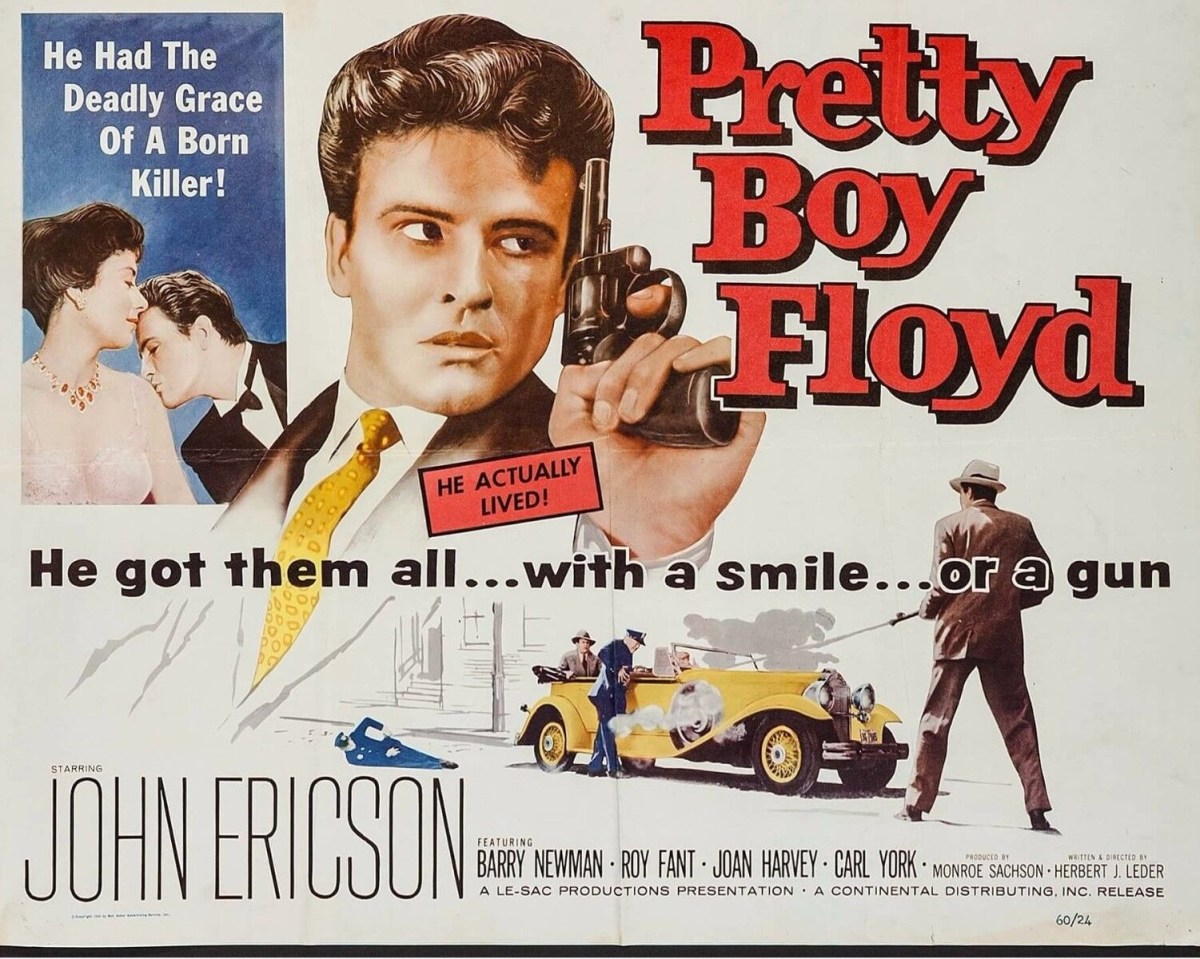
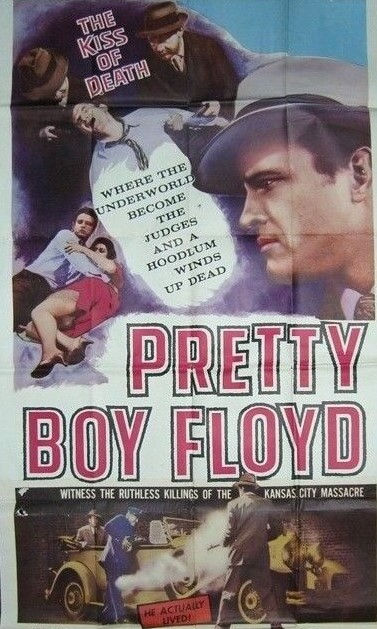
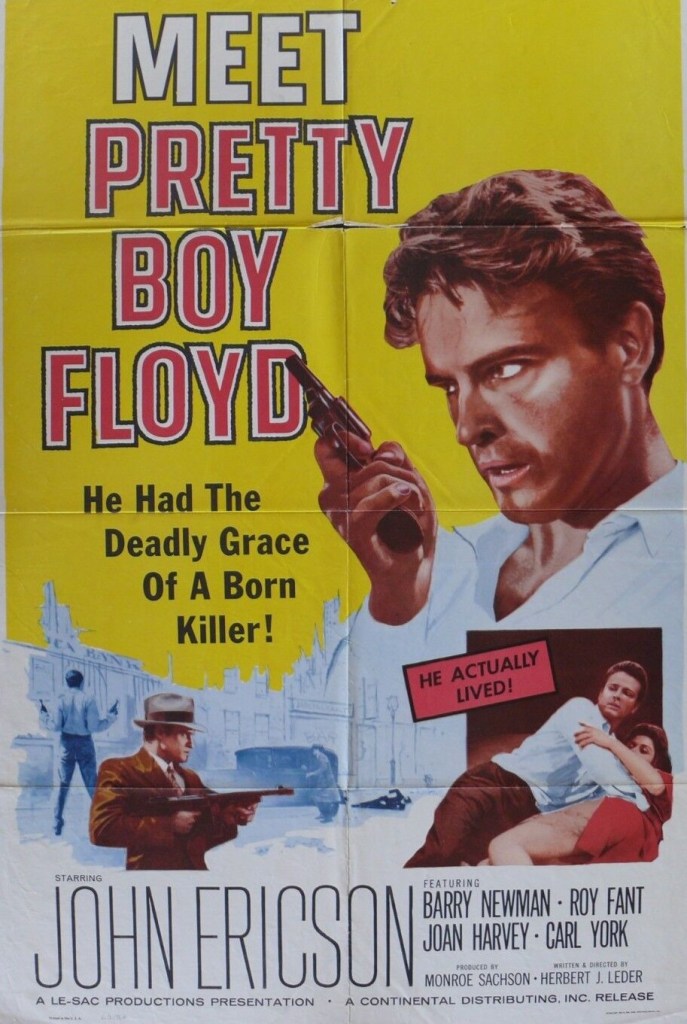
Pretty Boy Floyd (1960) ***

The makers of Oppenheimer (2023) and Napoleon (2023) cast light on the major problem of a biopic – what to leave out. Here, no such problem was actually countenanced. Hell, they just threw everything in – some job given the lean running time. That does mean, however, some mighty info dumps, as we are filled in on the gangster’s past and present. Not much of his life goes unturned.

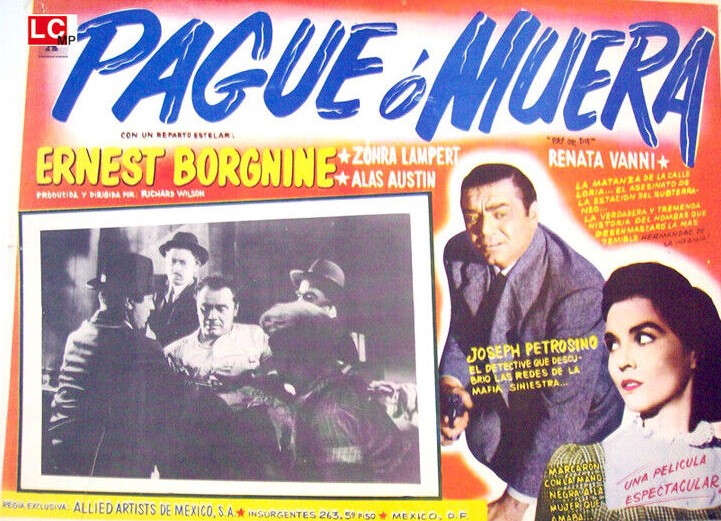
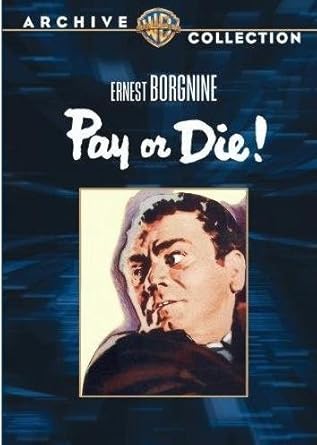
There was a spate of gangster pictures around the turn of the decade. The success of Machine Gun Kelly (1958) starring Charles Bronson, The Bonnie Parker Story (1958) and Al Capone (1959) spurred a hot lead deluge the following year including Murder Inc (Lepke), Ma Barker’s Killer Brood, Pay or Die, The Rise and Fall of Legs Diamond and Pretty Boy Floyd. In 1961 came Mad Dog Coll, Portrait of a Mobster (Dutch Schulz) and King of the Roaring 20s (Arnold Rothstein).

But if you thought this would lead to a noir revival, think again. Nobody would give finesse the time of day. Not with so many facts to pack in. And to explain – love of power and ambition the only psychological insight available – why of all the millions of Americans brought to their knees by the Great Depression Floyd was one of the few who turned to violent crime. His own saving grace – if it can be called that, given the length of the murder sheet – is his Robin Hood-ism, he gives way a lot of his stolen loot

We pick up Pretty Boy Floyd (John Ericson) towards the end of his short-lived boxing career – by which time he’s already been sent away for five years by Sheriff Blackie (Jason Evers), annoyed the gangster had taken up with his sister. Floyd now beats up the husband of his lover, works on the oil rigs but loses his job for concealing his criminal record. Returning to Oklahoma, he discovers his father has just been shot by a character called Grindon, who got away with the crime.

He tries to go straight but is turned down for a loan by the bank. He locates Grindon and ices him. Partnering with hood Shorty Walters (Peter Falk), he enters the bank-robbing business, but Shorty’s loud mouth gets them caught. On the way to prison, they escape and rob the bank that refused him a loan.

He heads for Kansas City because until the FBI came along you could commit a crime in one state and vanish over the border to another knowing you were out of the original jurisdiction and couldn’t be tracked down. He finds another married woman, Lil Courtney (Joan Harvey), to romance, but the husband wants to turn him in for the reward, by now substantial. Returning to Oklahoma and teaming up with the vulnerable childhood pal Curly (Carl York), he gets into his stride, robbing a bank every two weeks.

You get the picture. This is biopic at full throttle. Every “I” is dotted and every “t” is crossed and still we don’t get any real idea what made him tick beyond he was as mad as hell and wasn’t going to take it anymore. I could have got all of this from a book.

The one ace fact I learned was where the term “kiss of death” comes from. Apparently, if you committed a crime against the mob – such as killing someone you were paid to rescue – you were put on trial before three Mob guys. The verdict had to be unanimous and was decided thus: a gun was passed between the three men, if each of them picked up the pistol and kissed it you were a dead duck.

The problem with all the gangster pictures is they all end the same way. Nobody is long for this world and nobody can evade justice.

This is straightforward stuff, shot on a tiny budget, and except for the info dumps and pausing here and there for a spot of philosophy/psychology or sympathy, tears along at a fair old pace. That’s very much on the plus side. On the minus side is the lack of depth and you would have to say lack of acting.

It’s not much of a stretch for John Ericson (The Money Jungle, 1967) to look mean, but he’s closer to James Dean than Charles Bronson. Peter Falk (Machine Gun McCain, 1969) is generally perceived as the standout but my money is on Barry Newman (Vanishing Point, 1970) as Floyd’s trainer and later criminal partner. Shame Joan Harvey (Hand of Night, 1962) only made three pictures, as she excels in a small part.  

The whizz-bang approach from writer-director Herbert J. Leder (It!, 1967) ensures that, like Napoleon, you need Google open to check out the flood of names racing towards you. You might be baffled and confused, but never bored.

Worth it for the “kiss of death.”

File of the Golden Goose (1969) **

A dud. Not even Yul Brynner, whom I pumped up as under-rated yesterday in Escape from Zahrain (1962), can save it, nor a camped-up Charles Gray (The Devil Rides Out, 1968). Takes too long to get started, meanders all over the place while suspension of audience disbelief breaks new ground.

The first ten minutes or so via voiceover are wasted telling us stuff that one character could deliver in a single line. That is, there’s a worldwide counterfeit operation in place and London is the next target. Hence, American Treasury Agent Novak (Yul Brynner) being seconded to Scotland Yard where he is saddled with ineffective British sidekick Thompson (Edward Woodward).

For no particular reason, they head off to Liverpool where they attempt to infiltrate the gang. The mobsters are so dumb they fall for their lame story, though without first giving them routine warehouse work (cue montage of the pair falling asleep on the job and doing the wrong thing). Novak, it has to be said, is pretty slick at avoiding any traps, cleverly talking himself out of dodgy situations, pinning any blame on whoever is convenient.  

But, eventually (thank goodness), they reach London. And if you have been waiting virtually the whole movie with bated breath for the appearance of female lead Adrienne Corri (Africa Texas Style, 1967)  you can stand easy for now she turns up as ostensibly the gangster queen-pin.

The journey to here is enlivened by hitman Smythe (Graham Crowden), as English as they come, bowler hat and all,  whose weapon of choice is a blade embedded in a walking stick, and The Owl (yep, The Owl, played by Charles Gray) with every fetish under the sun whose presence seems to demand an orgy.

By the time you get to the final shoot-out you couldn’t care less. With a bit more care and attention to detail, this could have been a reasonably thrilling picture. Novak is two-fisted enough to cut the mustard, and naturally treats the English cops as dumb-as-they-come, what with their lily-livered aversion to weapons. Surprisingly, Thompson takes to mobster life and quite enjoys dishing it out in a most un-English fashion.

There’s quite a nice twist when the chief counterfeiter leads Novak into a soundproof vault because he can’t be overheard spilling the beans on his colleagues and seeking witness protection.   

But the movie appears to have been not made for a contemporary audience. Given Lee Marvin has reinvented the movie tough guy in Point Blank (1967) and Clint Eastwood the hardnosed cop in Coogan’s Bluff (1968), Novak doesn’t come close, and since British gangsters are slick enough to pull off Robbery (1967) and The Italian Job (1969), it seems the criminals here have lived a very sheltered life.

There’s not even the old reliable comedic standby of American fish out of British water, such as occasionally helped along pictures like Brannigan (1975). In fact, all the humor rests upon the dry-witted Owl.

Television director Sam Wanamaker (Catlow, 1971) makes his movie debut. John C. Higgins (Impasse, 1969) wrote the screenplay along with Robert E. Kent (The Fastest Guitar Alive, 1967).

For Yul Brynner completists only.

Hard to find, but Talking Pictures has this, but only until Dec 10. Strangely enough, I can’t see any rush.

https://www.tptvencore.co.uk/Video/The-File-of-the-Golden-Goose?id=8a918a69-adf1-4db0-938c-921eaa6494e9

Never Let Go (1960) ****

Under-rated British film noir classic. All the principals playing against type. Comedian Peter Sellers (The Millionairess, 1960) as the villain, British hero Richard Todd (The Dam Busters, 1955) comes seriously unstuck, pop star Adam Faith (Beat Girl / Wild for Kicks, 1960) tosses away his cuddly image. One of the earliest scores by John (James Bond) Barry. First grown-up role for Carol White (Daddy’s Gone A-Hunting, 1969). As much savage violence as the censor would allow at the time.

Down-on-his-luck salesman John (Richard Todd) has his car stolen. It’s uninsured. Without it he can’t get to his appointments on time. The police aren’t interested. So he has to investigate. That leads first to dodgy Teddy Boy Tommy (Adam Faith) who steals cars to order for supposedly legitimate businessman Lionel (Peter Sellers) and makes a play for Lionel’s young mistress Jackie (Carol White).

The interest lies not so much in the investigation as how those involved deal with pressure. John, hardly able to support wife Anne (Elizabeth Sellars) and two kids, has a history of failure, squandering money on get-rich-quick schemes, and apt to blow his top at clients who complain when he fails to keep appointments.

Doesn’t take long for him to lose his job. But instead of knuckling down and finding another, he stubbornly refuses to abandon his investigation, upsetting Scotland Yard Inspector Thomas (Noel Willman) who has much bigger fish to fry.

Lionel is a cocky gangster not afraid to lash out. In fact, he seems to enjoy battering people with his fists, feet and broken bottle. He treats Jackie with contempt, reminding her she’d be a sex worker if it wasn’t for him. He’s got a nice little empire and has kept his nose clean. He pays off corrupt cops.

But the last thing he expects is to be pursued by a loser like John who’s not cut from the John Wick template. Not does he possess the very particular set of skills that appear to be the prerequisite of anyone embarking on a mission of revenge.

If director John Guillermin (El Condor, 1970) hadn’t been obliged to tag on a happy ending, this would have been a downbeat tour-de-force, with the good guy losing everything in order to win back his self-respect.

It just sizzles with tension. Lionel belongs to the generation that spawned the likes of Harold in The Long Good Friday (1980) or the Kray Twins, a simmering, stewing piece of work, all gloss on the outside, a tinderbox on the inside.  

There’s fabulous photography, eyes trapped in pools of light, overhead camera staking out victims, and seedy London picked out in detail. Newspaper vendor Alfie (Mervyn Johns), of pensionable age, the only witness to the crime, has his bedsit ransacked, the tiny terrapin he treasures crushed underfoot, when inadvertently he gives too much away.

Tearaway Tommy isn’t such a tough guy when Lionel comes battering on his door. Jackie is the only one who not so much stands up to Lionel as treats his idea of romance with disdain. Even when John fingers Lionel, Inspector Thomas bluntly tells him he’s too small fry and the cops aren’t interesting in chasing after his plebeian vehicle.

Lionel is the kind of gangster who is never going to realise he can’t always get away with it, that he might have to trim back his ambition until the coast is clearer. Instead, he batters on regardless, determined to terrify everyone into acquiescence.

As the movie progresses, the more you learn about John, the less you sympathise. His wife has stood by him through mostly thin, and will stick by him even if unemployed, but draws the line at antagonising a gangster who doesn’t know when to draw a line. John isn’t Gary Cooper in High Noon. He’s not a principled defender of the law. He’s almost as bad as the gangster, in that he doesn’t know when to stop, regardless of the danger this places his family.

Understandably, Peter Sellers attracted most of the critical plaudits, but this is the role of a lifetime for Richard Todd, who detonates his screen image, battered and bloodied almost beyond recognition, not hiding behind a stiff upper lip. Carol White, too, is superb as the mistress who just about recognises that this is not a good deal, and that she’s a chattel, not a loved one.

John Guillermin’s direction is superb. Coupled with the insistent, jazzy John Barry score, this is British film noir (admittedly, that’s not large pool to draw on) at its best.

https://amzn.to/3GoA77M

The Assassination Bureau (1969) ****

A couple of decades before “high concept” was invented came this high concept picture – a killer is hired to kill himself. Ivan Dragomiloff (Oliver Reed) is the assassin in question and Sonya Winter (Diana Rigg) the journalist doing the hiring. So Ivan challenges the other members of his murderous outfit to kill him before he despatches them. The odds are about ten to one. Initially involved in shadowing Ivan, Sonya becomes drawn to his aid when it transpires there is a bigger conspiracy afoot.

Set just before World War One, the action cuts a swathe through Europe’s glamor cities – London, Paris, Vienna, Venice – while stopping off for a bit of slapstick, some decent sight gags and a nod now and then to James Bond (gadgets) and The Pink Panther (exploding sausages).

Odd a mixture as it is, mostly it works, thanks to the intuitive partnership of director Basil Dearden and producer (and sometime writer and designer) Michael Relph, previously responsible this decade for League of Gentlemen (1960), Victim (1961), Masquerade (1965) and Khartoum (1966).

Playing mustachioed media magnate Lord Bostwick, Telly Savalas (The Scalphunters, 1968)  has a decent chomp at an upper-class British action. It’s easy to forget was one of the things that marked him out was his clear diction and he always had an air about him, so this was possibly less of a stretch.

Ramping up the fun is a multi-cultural melange in supporting roles:  Frenchman Phillipe Noiret (Night of the Generals, 1967), everyone’s favourite German Curt Jurgens (Psyche ’59, 1964) playing another general, Italian Annabella Contrera (The Ambushers, 1967) and Greek George Coulouris (Arabesque, 1966) plus British stalwarts Beryl Reid (The Killing of Sister George, 1969) as a brothel madam, television’s Warren Mitchell (Till Death Do Us Part), Kenneth Griffith and Clive Revill (Fathom, 1967).

The action flits between sudden danger and elaborate set pieces. When Ivan announces his proposal to his board he promptly fells a colleague with a gavel just as that man throws a knife. Apart from folderols in a Parisian brothel, we are treated to a Viennese waltz and malarkey in Venice. There are disguises aplenty, donned by our hero and his enemies. Lighters are turned into flame throwers.

And there is a lovely sly sense of humour, an Italian countess, wanting rid of her husband, does so under the pretext of Ivan gone rogue. Oliver Reed (Hannibal Brooks, 1969) and Diana Rigg (On Her Majesty’s Secret Service, 1970), adopting her best Julie Andrews impression, are in excellent form and strike sparks off each other. Their verbal duels are a joy to watch. Basil Dearden, in his second-last picture, invested the movie with considerable panache. It takes more skill to carry off this kind of movie, as much satire and spoof as anything else, than a straightforward action or crime picture.

Relph conjured up the screenplay based on an unfinished Jack London novel published posthumously in 1963 with the assistance of crime writer Robert L. Fish.

Shouldn’t work as well as it does. Surprisingly enjoyable.

https://amzn.to/49R8RMy

Gunn (1967) **

Director Blake Edwards was so confident that he could repeat on the big screen the small screen success of Peter Gunn (1958-1961) that the movie was promoted as the first in a series. He couldn’t have been more wrong.

Although the private eye genre had been given a fillip by Paul Newman’s shamus Harper (1966) the bulk of screen investigation has been subsumed wholesale by spies. And the amount of time that had passed between the demise of the original television series and the movie revival – only six years – was hardly enough for nostalgia to kick in. Nor did star Craig Stevens have any box office appeal – this was his first picture in nearly a decade.  

A James-Bond-rip off credit sequence with girls dancing to a psychedelic background sets up a more contemporary picture than the one unveiled which is as old-fashioned as they come and, except for an increased budget, betrays its television origins. A few characters, Gunn’s girlfriend Edie  (Helen Traubel), a nightclub singer, Mother (Laura Devon), the owner of the eponymous nightclub, and Lt Jacoby  (Edward Asner) are reprised from the series although played by different actors. 

The dialogue is sometimes slick (“Call me Samantha” – “Samantha” – “You called”) and sometimes corny as when prior to an explosion that knocks the hero sideways is the line “may God strike me down.”

Gunn is hired by a nightclub owner Mother to find out who killed a gangster who had once saved the detective’s life. Fingers point at another gangster, Nick (Alberto Paulsen), somewhat protected from the law by his corruption, but it soon becomes clear that the obvious may not be correct. Naturally, Gunn gets in the way of Lt Jacoby, while women fall at his feet.

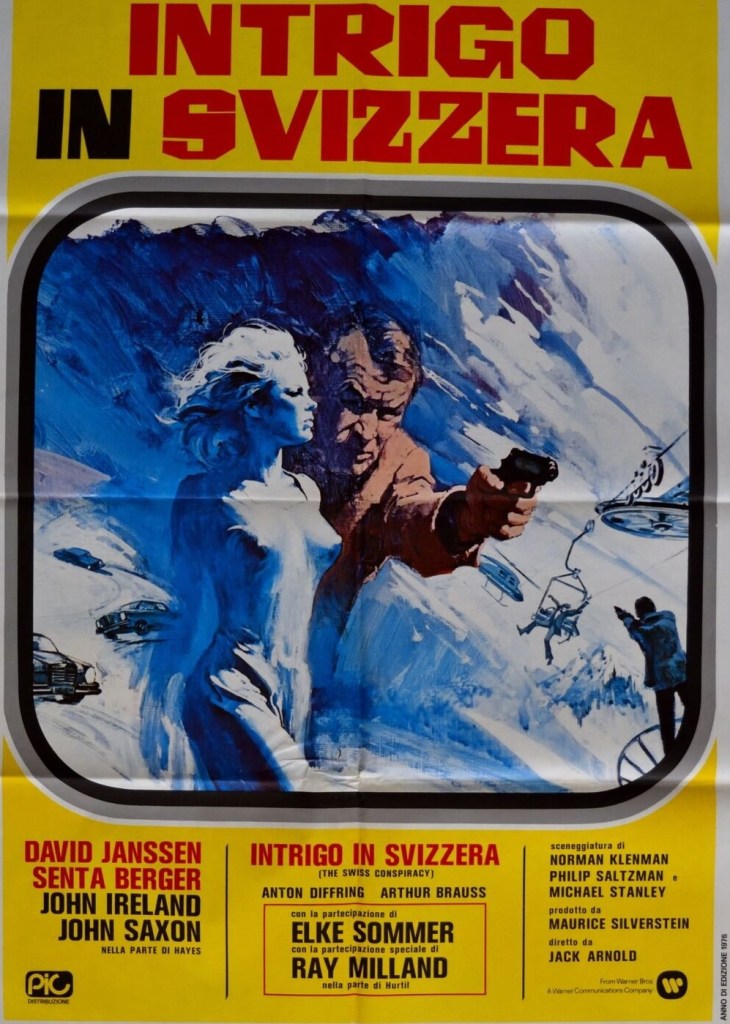
Somewhat unusually, in this foreign poster the women are covered up.

Making the biggest impression is Sherry Jackson (The Mini-Skirt Mob, 1968) as the aforementioned Samantha who turns up unannounced in Gunn’s flat. You can catch Edward  Asner (The Satan Bug, 1965) in an early role. Plus there’s the Henry Mancini (Breakfast at Tiffany’s, 1961) score, already a big hit. The only element that makes it contemporary is some gender-confusion but otherwise it’s a fairly flat story and relies far too much on its television origins.

Rather than go to the trouble of reinventing the character for more contemporary times, Blake Edwards (The Grip of Fear / Experiment in Terror, 1967), wearing two hats, simply rewrites the small screen’s first episode, adding some violence to attract a cinematic audience.

It might have been better had William Friedkin not turned it down, but given how poorly that director served The Night They Raided Minsky’s / The Night They Invented Striptease (1968) it could well have had the same outcome.

Strictly for fans of nostalgia.

You can catch the original TV series on DVD or check out the movie version for free on YouTube.

https://amzn.to/3G5OlKo

A Question of Suspense (1961) ***

Only a streamer could have a film designated as released in 2023 when it was made 60 years earlier. I wonder if that’s one of those deliberate streaming errors where an old movie is classified as a new one just because it’s appearing on a streamer for the first time. You might think someone might have wondered how a director who died in 1996 ctually managed to make a movie in 2023.   

The British had another word for the B-film. They called it a “quota quickie.” By law, 20 per cent of the films shown in cinemas in Britain had to be home-grown. Bear in mind that except in London’s West End, movies shown in first run only lasted a week, and small neighborhood houses, requiring to screen double bills, might get through five or six pictures a week. There was no way the British industry could produce that number of quality films.

So movies made on tiny budgets came in to fill the gap – and fulfil the quota. This is one of the better ones. It didn’t last long – barely an hour – and in Britain went out on the Odeon circuit as the supporting feature for John Ford’s Two Rode Together (1961).

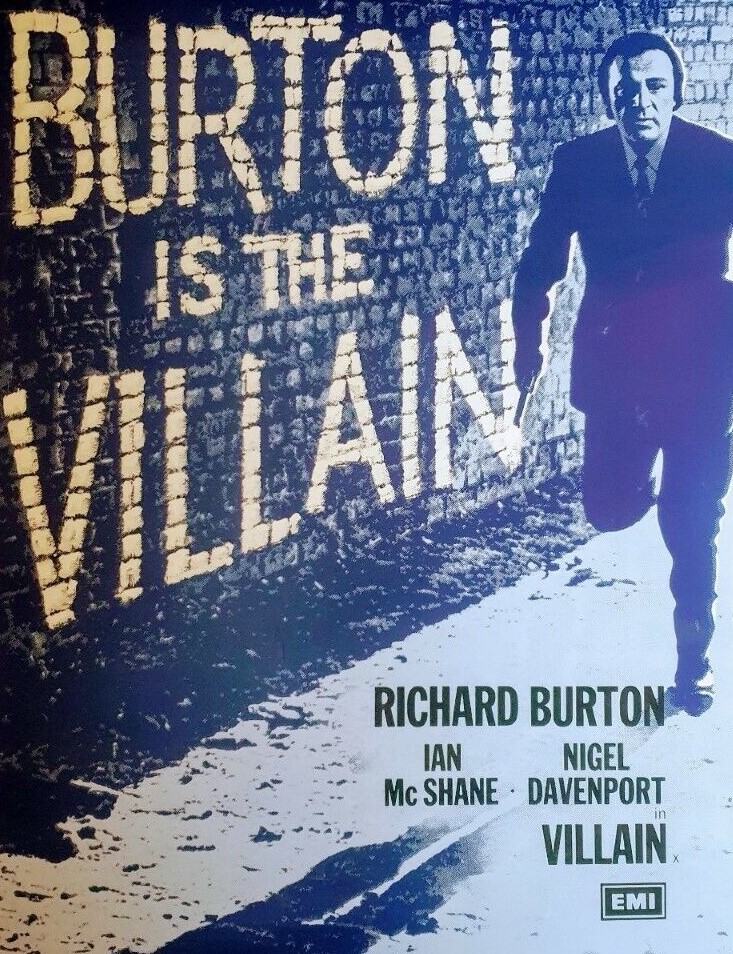
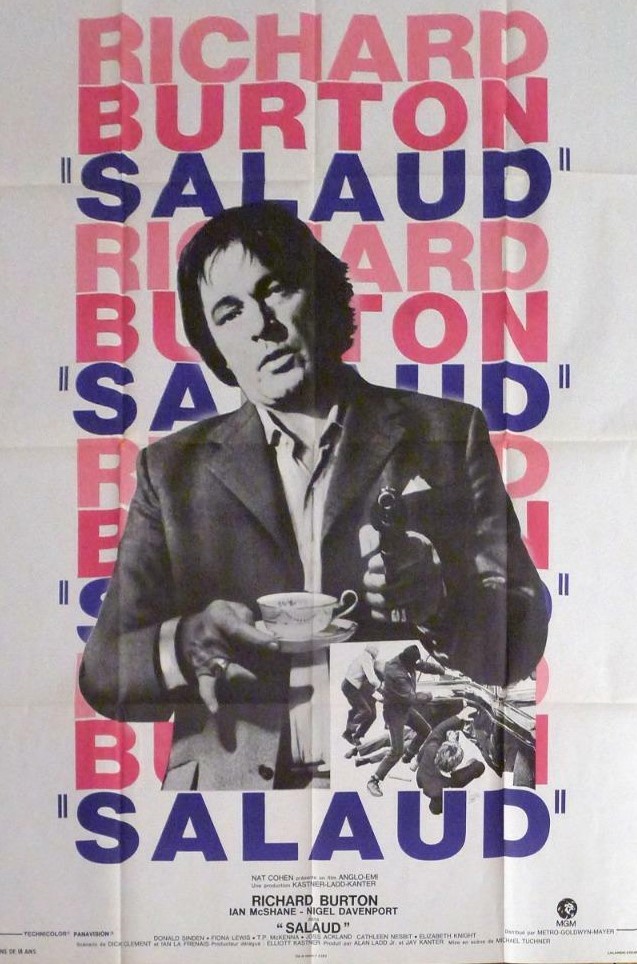
Above and below: the absence of any poster featuring the movie I’m reviewing has forced me to compensate with two others top-billing the star.

Smarmy rich company owner Jim (Peter Reynolds) expects employee and childhood buddy Frank (Norman Rodway) to go along with a fraud involving £30,000 – equivalent to over £500,000 today. When Frank refuses Jim kills him, burying him close to a childhood haunt. As far as the cops are concerned, Frank has just disappeared, in their eyes hardly surprising when the fraud comes to light.

Turns out, to Jim’s surprise, Frank has a wife, Rose (Noelle Middleton), and partly to keep tabs on her and stop her investigating further, and partly because he was sweet on her when he was a teenager, and partly, I guess, because he’s the type of man who thinks all women should fall at his feet, he starts to romance her. He’s a bit of a swine in the romantic department because it’s quite obvious that he’s being having an affair with his secretary Jean (Yvonne Buckingham).

Rose is suspicious of his ardor and when other clues come to light suspects Frank was actually murdered and she determines to act as bait to catch him.

When I say this film had a tiny budget, it might have well have been shot in a week or ten days. So it’s instructive how French director Max Varnel makes clever use of what must have been very limited location and studio space. Jim drives a Jaguar and lives in a posh house. Everything about him is spacious. His office is very long, the rooms in his house very big, so that instead of the claustrophobia of film noir, you get the opposite. And why would you waste any time on atmospheric lighting when you can create that with quick snips of music. And it’s not one of those Hollywood pictures where villains knock back whisky in quick shots. Jim likes his booze, but mostly he sips it, and from the balloon glasses he uses it looks like brandy.

The cops aren’t from the American tough-guy template either and if a guy disappears having stolen a huge amount of money they are liable to settle for the obvious – that he’s done a runner – rather than assume foul play.

The beauty of this kind of picture is that most of the time you expect the villain to get away with it. He’s so smart, one step ahead, and everyone else is so dumb, and a relatively plain girl like Rose should be delighted he’s paying her any attention at all and showering her with gifts – he rents her a flat and a car, takes her out to expensive restaurants.

Peter Reynolds (Spare the Rod, 1961) is impressive as the cocky villain but in terms of screen charisma Yvonne Buckingham (The Christine Keeler Story, 1963) takes precedence over Noelle Middleton (Bafta nominated for Court Martial, 1954) and the picture suffers when she disappears about one-third of the way in. Max Vernal (Part-Time Wife, 1961) does a good job with limited resources. Roy Vickers (Rebound, 1959) and Lawrence Huntingdon (The Vulture, 1966) dreamed it up.

But, as I said, it’s pretty short (just 63 minutes) so no need to worry about sub-plots or be drowned in self-justification, self-pity or backstory. A bit more fleshing out and some more money spent and it would be pretty good. As it is, it’s way better than two-star but possibly only nudging into the three-star category.

Flareup (1969) ***

I thought I’d be taking one for the team in tracking down this much-maligned Raquel Welch number. Instead, I was pleasantly surprised. Oh, the movie’s nothing to write home about, desultory home invasion thriller that fails to come close to Kitten with a Whip (1964), Wait until Dark (1967) or The Penthouse (1967). But La Welch is something of a revelation.

Forget the Las Vegas go-go dancer come-on, this is more of a gentle romance. While attractive, Welch dispenses with the bra-busting outfits and overt sexiness, settling for a girl-next-door persona. In fact, you could have dumped the entire murder plot and had a more interesting picture, along the lines of Fade In (1969) where the normal hot-to-trot Burt Reynolds plays a gentler character.

Artistic license taken to an extreme. Raquel Welch is a brunette not a redhead.

Since, (spoiler alert) in her sole dance number Welch keeps her attributes well-hidden, the producers felt obliged to stick in some topless dancers (quite how Welch is permitted to keep her clothes on in a topless go-go bar is never explained) which gives the picture a sleazy feel that runs counter to the tone of the romance.

So, Michele (Raquel Welch) is on the run from nutjob killer Alan (Luke Askew) who has bumped off his ex- Nikki (Sandra Giles) and her friend Iris (Pat Delaney). But why Michele is in the killer’s sights is never satisfactorily explained, except that she purportedly turned Nikki against him. Michele swaps Las Vegas for Los Angeles, finding work in another go-go bar and romance with Joe (James Stacy) whose interest in bull-fighting might have scared her off. But that’s tempered by his enthusiasm for flying model airplanes (an important plot point it transpires).

Cops are on the killer’s trail but not before he bumps off a guy who gave him a lift. Michele’s not hard to find, a drug addict employee of the Las Vegas operation points him in the right direction. There’s some desultory car chase footage and for no reason at all a chase on foot through an old zoo (presumably a genuine old zoo).

I had half-expected there might have been a lion or snake left behind to ramp up the thrill-quotient, but no such luck. What we do get, however, is a rarity in the chase department – exhaustion. Most people being chased on foot manage to drum up an insane amount of energy. Michele, on the other hand, is on the point of collapse.

But she’s not dumb. She might be rootless, not the questing soul of Easy Rider, but driven away by parental issues and, in gaining independence not keen on surrendering it to any passing male. And come the climax, she’s got a nasty weapon up her sleeve.

Essentially, she’s a sweet gal. Not the kind of character you’d expect La Welch to be playing, and perhaps that’s what attracted her to the script. It gives the actress the opportunity to escape from her sexy persona, and, while the tale is hardly weighty, the chance to prove she can do more than hide behind her particulars. Innocence isn’t something you’d associate with Raquel Welch, but here she exudes more of that than earthiness or sex appeal.

James Stacy (star of Welch’s debut picture A Swingin’ Summer, 1965) is a likeable boyfriend, not the kind trying to hustle her into bed. Luke Askew (The Devil’s Brigade, 1968) doesn’t do much except play mean.

James Neilson (The Moon-Spinners, 1964), while not able to jazz up a rancid plot, allows, as he did with Hayley Mills (an odd comparison indeed), Welch the chance to grow up on screen, defusing her sexuality but allowing her space to create a character so far removed from anything previously seen. But the tempo sags with over-reliance on dancing sequences, the Las Vegas backdrop and too much chasing that goes nowhere. Mark Rodgers (Let’s Kill Uncle, 1966) dreamt this up.

One perhaps for completionists. Lack of sexy scenes might be off-putting but, equally, you might want to see what Welch can do when playing against type.

https://amzn.to/3s0UpRi

Kitten with a Whip (1964) ****

I’ll let you down gently. Ain’t no whip. What you have instead is one of the most under-rated, unseen and maligned mini-masterpieces you will ever come across marching to the film noir beat. Bewildering femme fatale and the kind of disenchanted anti-authority teenagers who would drive the “youthquake” that almost destroyed the industry half a decade later. And within this, one of the great tragedies of Hollywood, the performance of her career from Ann-Margret, buried because it wasn’t what the public, the critics or the industry expected from the young star.

Edgy score with soulful sax underwrites a picture brimfull of surprises and plays constantly with your expectations, the picture shifting gear so often you’d think you were in a tumble dryer. The doorbell plays like a loaded gun, every interruption racking up tension.

Stylish credits that hint of Hitchcock precede a brilliant opening as in full noir fashion a band of light catches the eyes in the darkness of a blonde (Ann-Margret) dressed in a nightgown cresting a hill.

She tries to jump on a moving goods wagon, eventually makes her way to a deserted house, untouched wrapped newspapers littering the lawn, clambering into a bed, clutching a teddy bear for comfort. You want mystery? This is just the start. In one of the best neat cuts, we jump from the eyes of a teddy bear to headlights. Owner returning home is budding politician David (John Forsythe), wife away due to marital issues.

Come morning, he discovers his guest, Jody. She recites a sad tale of fleeing sex abuse. But soon he realizes she’s got a story to fit every occasion and can turn the emotions on like a tap. Manipulation is in her DNA. But she’s a tough little number. “Hands off, buster,” she snaps at one point as she tries to physically hustle her out.

It’s unspoken that the idea of being caught, regardless of whether he’s entirely innocent, in illicit dalliance would mean  the end of his political ambitions, but she’s happy to spell it out. If the cops work her over, who knows what would spill out.

He buys her clothes, gives her money. Sayonara, baby! Except it’s not. He discovers she’s on the run from juvie, where she torched the home and stabbed the matron. Worse, she’s not left after all, but returned, the house filled with the noise of television cartoons, floor littered with teenager mess.

It’s unclear what exactly she wants. But she knows if she screams rape that’s curtains for him. And if Freud (1962) used a length of rope to show how a psychiatrist can’t escape his client, Jody’s version is a length of telephone cable, dragging her quarry to the floor when he’s talking to his wife.

And before you know it, it turns into home invasion. She’s called up some pals, younger  versions of the creeps in The Penthouse (1967) but with a similar set of philosophic ramblings (“the meanings of the meaningless”) from thug Ron (Peter Brown), not averse to sharing buddy’s docile girlfriend Vera (Patricia Barry). And now it’s blackmail. And violence, a cutthroat razor the weapon of choice, though thug Buck (Skip Ward) is handy with his fists, too.

The kids, drug peddlers, want driven over the border. So now we’re racing off in the dark. David is savvy enough to leave Buck entangled in barbed wire, manages to drop the wounded Ron off at a doctor’s surgery and now desperately tries to escape Jody, though, as you might expect she has other plans.

So the movie spins all the time on the twin axis of discovery that could end David’s career and the demonic damsel. While it steers clear of any sexual attraction by David for the young glamor girl, his interest is initially more paternal, and consequence-aware. Quite what she does want is unclear, beyond some kind of freedom, power even, “I call the shots, not you,” the upper hand over the males, marking him with her nails in the way she has been scarred.

But it races along, it’s impossible not to be dragged into the quandary, half the time you hoping that somehow she will escape her demons, while fully aware that she’s on the fast track to Hell and will take people with her.

This is Ann-Margret (The Swinger, 1966) as you’ve never seen her. It’s not that the sexiness is hidden, it’s a heck more subtle than that, and when she parades in some flimsy item it’s clearly more for approval than arousal. At one point she dances in a jokingly sensuous manner, but otherwise there’s no trademark singing and dancing. She’s a junior version of the more fully-fledged femme fatales of noir who’ve hooked some sap into crime. This gal hasn’t got that kind of criminal brain – or maybe not yet – she’s a victim of circumstance and, let’s face it, the powerful male.

There’s a terrific moment when Vera accepts that she means little more to her boyfriend than that she has a car, exhibiting the kind of impotence that came with the territory for young women of the era lacking confidence or a decent role model. Jody’s the opposite. She’s confident enough, but no idea what to do with it, beyond ensuring no man gets the better of her.

You’ve heard enough of Jody’s sob stories not to believe a word she says but still the power of Ann-Margret’s performance is that you feel the deeper, hidden, pain.

Writer-director Douglas Heyes (Beau Geste, 1966) directs with tremendous verve, keeping his foot down on the tension pedal. That the movie was generally seen as a low-point in the career of Heyes and Ann-Margret is one of those Hollywood anomalies, or ironies if you will, probably dumped on because it was perceived as flying too close to the Lolita (1962)/Baby Doll (1958) template, although in reality the character avoids going down the simpering child route except as a means of extracting sympathy.

John Forsythe (Topaz, 1969) begins on the rack and never gets free.

Nothing like would you expect – and certainly not from the title – and deserves full reassessment and all the critical accolades going especially from those who appreciate the noir canon.

Massive disservice to Ann-Margret, whose performance here should have opened up a career of more serious movies.

B-movie noir masterpiece.

https://amzn.to/3FP3WxL

https://amzn.to/46Xr0q4

The Running Man (1963) ****

Twisty Carol Reed thriller pivoting on emotional entanglement that keeps you guessing right up to the end. In revenge for losing his business after an insurance company failed to cough up for his crashed plane, entrepreneur Rex (Laurence Harvey) fakes his own death and flees to Malaga in Spain.

But when girlfriend Stella (Lee Remick) joins him she discovers he has assumed the identity of an Australian millionaire whose passport he has purloined and completed the transformation by changing his black hair to blond. Rex has a mind to repeat the experiment by killing off himself (under the new identity) and claiming the insurance. Stella, complicit in the original scam, not only balks at this idea but finds disconcerting his change of personality and clear attraction to the opposite sex.

Tensions mount when mild-mannered insurance investigator Stephen (Alan Bates) appears on the scene. Anyone watching the film now has to accept that in the days before social media every face was not instantly tracked and accept that Stephen is unaware of what Rex looks like.

The couple cannot run because they are awaiting a bank draft. Stephen immediately sets the tone for suspicion when he pronounces that their vehicle  “looks like a getaway car.”  Forced to follow “The Godfather” dictum of keeping your enemies closer, the pair befriend Stephen  with the intention of finding out what he knows and what are his intentions. Rex and Stella  have to pretend they have only just met, separate bedrooms et al, leaving the door open for Stephen to gently woo Stella, an action endorsed by Harvey. They are caught out in small lies. Rex’s Australian accent falters. Stephen keeps on making notations in a notebook. Rex  foils his pursuer’s attempts to photograph him.

The ensuing game of cat-and-mouse is complicated by Stephen’s romantic inclinations towards Stella. Is this as genuine as it appears? Or is he trying to get her on her own to admit complicity? Both Rex and Stella are, effectively, forced to adopt the new identities they have forged to dupe Stephen, with unforeseen results. There are red herrings aplenty, a race along mountainous roads, and some marvelous twists as the couple find the tale they have woven is turning too tight for comfort until murder appears the only solution.  

As with his international breakthrough The Third Man (1949), Carol Reed grounds the whole Hitchcockian enterprise in local culture – this being unspoiled Malaga prior to the tourist deluge – Spanish churches, a wedding, fiesta, the running of the bulls, with an occasional ironic twist – “gypsy” musicians watching ballroom dancing on television. Reed resists taking the material down a darker route – Hitchcock would undoubtedly have twisted the scenario in another direction until Stella came under threat from Rex – but instead allows it to play out as a menage a trois underwritten by menace.

The acting is sublime. Laurence Harvey (A Dandy in Aspic, 1968) wallows in his part, Remick (Days of Wine and Roses, 1962) quietly anxious scarcely coming to belief that she had played a part in the original crime, Alan Bates (The Fixer, 1969), his deceptively pleasant inquisitive demeanor the ideal foil to Harvey. Unusually, they all undergo change, Harvey uncovers a more ruthless side to his character, Remick responds to the gentler nature of Bates, while Bates shrugs off his schoolmasterly aspects to become an attractive companion.

A couple of footnotes – special mention to Maurice Binder for the opening credits and this was the final score of British composer William Alwyn (The Fallen Idol, 1948). John Mortimer (Bunny Lake Is Missing, 1965) wrote the screenplay based on the Shelley Smith novel.

Full throttle film noir.

https://amzn.to/45ZFynU

Retribution (2023) **** – Seen at the Cinema

Take a renowned screen tough guy and turn him into a nervous wreck. Stick a bomb under his car seat. Hobble him further by saddling him with his kids in the back. Ensure he is so  frazzled by constant explosions that he lacks the time to do the clever things that heroes in his position, no matter how dicey the situation, generally manage. And the usual running and gunplay is out of the question. Screw that lid down tight.

And play around with Liam Neeson’s Taken (2008) screen persona, show him demolishing a punch bag at the very start to convince us he still has the cojones, with a special set of skills to take down the bad guys. But that image is quickly shredded.

Once he is blamed for a series of devastating car explosions and can’t escape the electronic voice in his ear and the bad guy five steps ahead of everyone, this just ramps up the stakes and in the Neeson portfolio nestles a shade below Unknown (2011) where the actor was equally disorientated, though that time by amnesia.

Matt (Liam Neeson) is a financier having a tough time. It’s just his bad luck he needs to take the kids, rebellious Zach (Jack Champion) and precocious Emily (Lilly Aspinall), to school because, unknown to him, wife Heather (Embeth Davidz) needs time out to consult a divorce lawyer. Now he’s being held hostage in his own car by a tech whiz kidnapper.

Sure, there are shades of Speed (1994) but thank goodness fewer echoes of the likes of Phone Booth (2002) and a few plot holes and a fair bit of misdirection – wife Heather (Embeth Davidz) perhaps having a lesbian affair, financial shenanigans catching up with him, mysterious motorcyclist on his tail – but precisely because Matt has no leeway and the running time is lean (under 90 minutes once you remove the credits) it works like a dream. Just no let-up.

There’s a surprise reveal at the end and a neat get-out-of-jail that Bryan Mills in his element might have dreamed up but mostly it’s pedal-to-the-metal.

After a few direct-to-streaming losers like Marlowe (2022), this is Neeson back at his best, relying far more on his acting talent than his action chops. Even the title is against type. Mention the word retribution and you expect it will be the actor doing the seeking, not being its object.

With the exception of Schindler’s List (1993) – and that’s three decades away – most people can’t remember when Liam Neeson was being touted as a genuine Oscar contender. Producers didn’t seem to know what to do with him. Every star turn in a compelling drama was accompanied by a supporting role in some big-budget extravaganza (not least his Star Wars episodes). And, miraculously, just as it appeared his career was winding down, he reinvented himself as Bryan Mills and was forever typecast in thrillers, but the law of diminishing returns meant that he was as synonymous with Nicolas Cage in making pictures that couldn’t get a cinema release break.

Here’s a movie that depends entirely on facial expression. And no escape from that. Which means relying on whatever he can tick in the acting box. Which, luckily, Neeson still has in spades.

This is kind of movie Sky used to make, a low-budget effort with a big name down on his luck, killed off by poor production values and low-end direction. But if this is the way Sky is heading, upping its game in the face of Netflix and Apple’s clever manipulation of cinematic release, then this movie deserves a wider showing.

Remake of a 2015 Spanish picture, directed by Dani de la Tore and scripted by Alberto Marini, the new version sticks to the knitting, no complicated sub-plots involving the kids, just them sitting in the back waiting to become collateral damage.

Nimrod Antal (Predators, 2010) does an excellent job teasing out the tale, throwing in a car chase through the streets of Berlin, but keeping the camera squarely on the trapped trio. With an inferior star, this could easily have failed to grip, but Neeson pulls it off with ease.

If you can’t catch it in the cinema, where my guess it will only last a week, put it on your must-watch list elsewhere.

Destined to become a DVD “sleeper.”

https://amzn.to/3QDjHhH

Discover WordPress

A daily selection of the best content published on WordPress, collected for you by humans who love to read.

The Atavist Magazine

by Brian Hannan

WordPress.com News

The latest news on WordPress.com and the WordPress community.