Fast Charlie (2023) ****

If you like your characters to sport monikers like Donut (“don’t call me Donut”) or Blade (not that Blade, obviously) or The Freak (“get me The Freak”) and like to see death dealt out in novel fashion – taxidermized bird beak through the eye, beer bottle through the mouth, and an update on the Magnum .357 “blow your head clean off” trope – then this one is for you. Not to mention the riffs on Quentin Tarantino and John Wick. And, here’s the kicker, a delicate meditation on old age and father-son relationships.

Your first port of marquee call, of course, should be star Pierce Brosnan. Not the Abba-magnet of Mamma Mia (2008), and far removed from James Bond, but with a hint of the clever machination of The Thomas Crown Affair remake (1999). You might regard his character as a common-or-garden retired hitman now doing business as a chauffeur to a younger generation of hitmen (step up Donut) but he tends to see himself as a “problem-solver” or even “concierge” (as though we might be talking The Continental Hotel). I suspect Brosnan was drawn to the script for the “cowboy draw” soliloquy that has echoes of the gold watch in Pulp Fiction (1994).

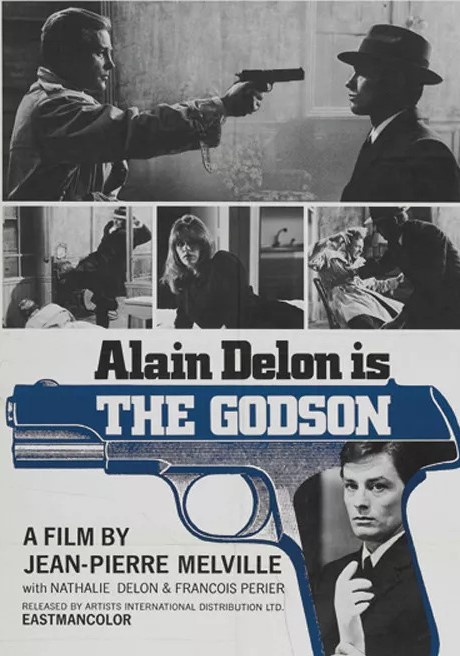
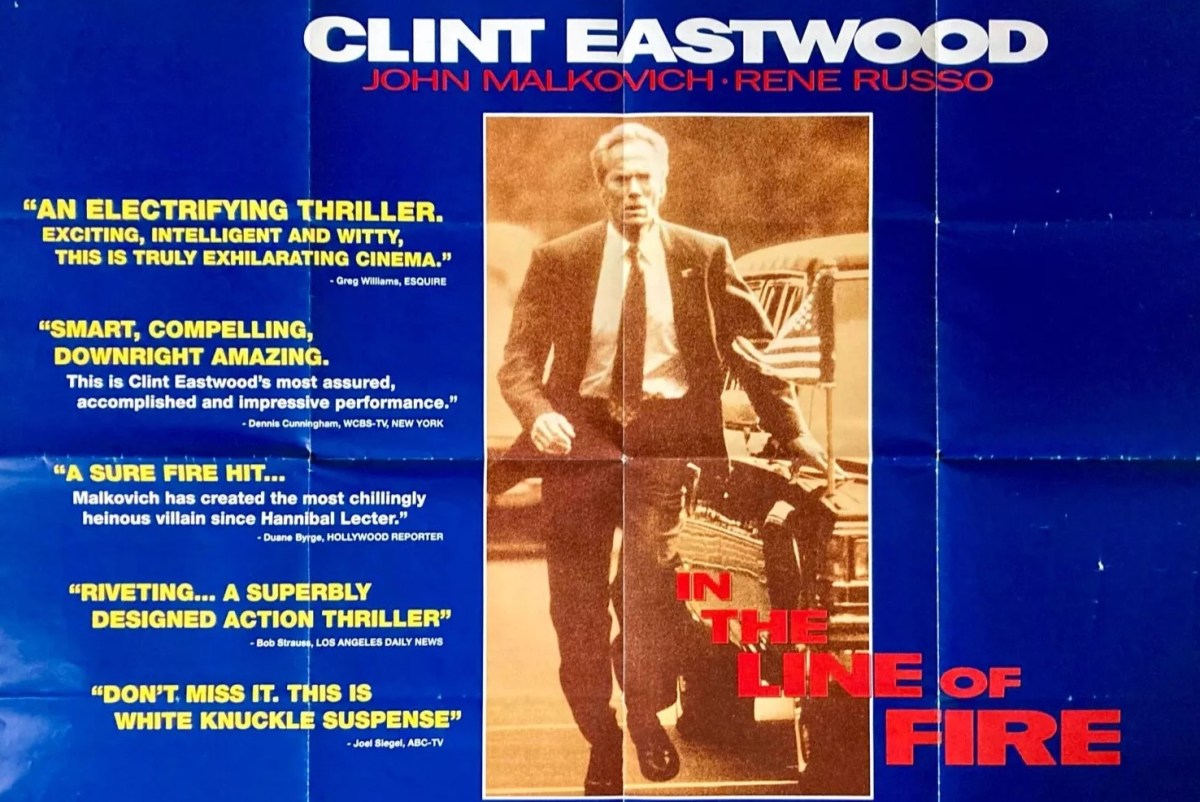
Add in director Philip Noyce, director of Patriot Games (1992) and Clear and Present Danger (1994), the titles heavily promoted on the poster, and also, more importantly from this picture’s perspective, Dead Calm (1989). The poster says nothing about screenwriter Richard Wenk but since he gave us The Equalizer trilogy – three of my favorite pictures – then suddenly this little movie, shoved out into streamer with none of the publicity accorded lesser movies, has got my attention.  

I started out not liking this at all but gradually warmed to it and at the end considered it a pretty good addition to the sub-genre of new-gangster-takes-over-old-gangster’s-territory-but-with-a-twist. So  Charlie (Pierce Brosnan) is driving hitman Donut (Brennan Keel Cook) to knock off low-end crim Kramer. Donut’s M.O. is the knife, but this being the kind of picture where characters swerve from the norm, he decides instead he’ll stick some explosive device in a box of donuts. That works, for sure, but it has the unfortunate by-product of blowing the guy’s head clean off – clean off as in no longer attached to the shoulders and, even if you could scrape up the bits and pieces, unrecognizable.

Therein lies the problem. To pick up his dough, Charlie needs to show an identifiable corpse. Donut is soon out of the picture, the dumb sonofa, pistol in hand while driving over bumpy road, shoots himself in the head, brings down a telegraph pole and sets the car on fire. Still Charlie isn’t known as fast for nothing (in fact, the title had no relevance whatsoever, so if you’re expecting a car chase buckle up and get frustrated) and he decides the dead man’s wife should somehow be able to identify him.

Sure enough, Marcie (Morena Baccarin), now an ex-wife but still harboring sentimental thoughts about her deadbeat now dead husband, explains he has a tattoo on his ass that she is willing to verify as belonging to the ass of said deceased. That should be that, another problem solved by our problem-solver or concierge, if you prefer.

Except, suddenly, all hell breaks loose. It’s gang war time.   Charlie’s ageing boss Stan (James Caan) is the object of the hit and, unfortunately, for the hitters, Charlie treats this old man very much like a father (hence the “cowboy draw” soliloquy) and takes agin anyone who could have been responsible for the hit, which is pretty much anyone who has crossed the screen in the early part of the picture.

These dudes will have names, for sure, but heck, they hardly appear before Charlie starts to knock ‘em off so don’t expect me to remember them all. In any case, the movie, I warned  you to expect a narrative swerve, moves in a different direction. One route is that subtle kind of May-December romance Wenk gave us in The Equalizer 3 (2023), Charlie, while trying his hand with Marcie, aware that he’s got very little chance of success, given the age gap (acknowledged at least rather than expecting younger women to jump into bed with any old guy just because they’re an ageing movie star and that’s what the audience expects), even though he’s a cultured hitman, pretty ace in the kitchen and old-style in attitude to women. Whether it’s her particular set of skills – see what she can do with a bird beak – or her lost soul that’s the attraction.

But that element is left kind of floating in the background as the story shifts up a gear as we discover why the hit was out on Kramer in the first place and why everybody else was getting rubbed out. It wouldn’t be this kind of picture without a couple of twists at the end.

Charlie is a laid-back hardman with a nice line in quips, self-possessed and self-effacing, but a regular guy when it comes to the regular things in life. His relationship to Stan is very touching and the romantic element is underdone.

So if you’re going to buckle up for his one, ignore the opening sequence, set the Tarantino vibe aside and wait until it gets into the meat-and-potatoes of relationships and of course, for the thrill-seekers out there, Charlie taking revenge.

Shows there’s more to Brosnan than a raised eyebrow, a last hurrah for James Caan (no introduction needed), and Brazilian actress Morena Baccarin (Deadpool, 2016) reveals unusual reserve in what could easily have been, in other hands, a more showy part.

Worth a look and free on Amazon Prime.

The Brides of Fu Manchu (1966) ***

The 1960s was awash with movie megalomaniacs, most courtesy of the spy vogue. You could also count on secret agents for trailing in their wake bevies of beauties. So no surprise then that criminal mastermind Fu Manchu (Christopher Lee) has his own gang, his “brides,” although they are hardly volunteers, being the kidnapped daughters of top scientists. His plan for global domination this time consists of transmitting energy as sound waves, using miniaturization, a sonic death ray, with enough power to destroy a city.

The result is good hokum, a thriller set in the 1920s with a cracking pace, plenty of action, explosions, burgeoning romance, and a plot that gets more complicated by the minute as a tribe of worthies try out to outwit the evil genius. There is a terrific lair – where the disobedient end up in a snake pit – a passable laboratory, chases, truth serums (“the dust that loosens tongues”), hypnotism, bait-and-switch tricks and decent special effects.  Three stories race along in a parallel pell-mell: Manchu needs one more kidnapping to complete his complement of daughters, while the good guys headed by Fu Manchu’s old adversary Nayland Smith (Douglas Wilmer) are trying to locate the bad guy’s secret location while at the same time attempting to find out where he will strike next. 

While Fu Manchu is indestructible – supposed dead after the previous film – his henchmen (and henchwomen) are all too human. It takes three attempts to kidnap Manchu’s next victim. They are easily identifiable by their giveaway cummerbunds and bandanas and their method of assault is not kung fu but brawling so a good solid British punch of the old-school soon sorts them out. Manchu’s daughter Lin Tang (Tsai Chin) is a chip off the old block, delighted at any opportunity to torment the brides.  

The brides, in diaphanous gowns that might have been a job-lot from the set of She, are far from compliant, even rebelling at one point, and employing vicious fight tactics. Fans of director Don Sharp will find him every bit as inventive as in The Devil-Ship Pirates (1964) and  Bang, Bang, You’re Dead  (1966) . It’s another Harry Alan Towers (written under his pseudonym Peter Welbeck) effort so that means an international cast.

Two television cops, British Rupert Davies (BBC’s Maigret) and German Heinz Drache (cop in a Francis Durbridge series), plus Francois Mitterand’s brother-in-law Roger Hanin, provide solid support. Not forgetting Burt Kwouk as a henchman. Brides of the year include French Marie Versini (German western Winnetou, 1963) and Rhodesian Carole Gray (Curse of the Fly, 1965). The film did not prove much of a jumping-off point for other brides such as Ulla Berglin, Danielle Defrere and Anje Langstraat, for whom this debut was as far as their careers went.

Christopher Lee, despite the dodgy moustache, is resplendent, exuding evil, and with a gift for rising again (just like Dracula) as he would do for another three films in the series.

Only When I Larf (1968) ***

Terrific, elongated, 20-minute pre-credit sequence sets up this brisk con-man thriller as the trio of Silas (Richard Attenborough0, his younger lover Liz (Alexandra Stewart) and apprentice Bob (David Hemmings) fleece a couple of greedy businessmen in New York.  The action moves with military precision, the trio so appealing, the scam so well-worked, you want them to escape.

But when their next sting fails to come off, roles are reversed and it is floppy-haired Bob  who takes charge, organizing the scheme, and making moves on Liz. Meanwhile, Silas is planning to double-cross them. The first and last schemes work a treat but the middle one sags, even allowing for cracks to appear in the relationships.

Attenborough is the pick of the bunch, switching accents and personalities, one minute a suave businessman, the next a nervous Lebanon banker, while at other times his stiff upper lip contends with his sergeant-major attitude. Hemmings’ accents are less convincing, all over the place at times, but the switch from junior partner to operation controller is convincing especially as he clearly enjoys putting Attenborough in his place, forcing him to shave off his moustache and giving him the name Longbottom.

And Stewart is never quite what she seems, willing to indulge either man to suit her purpose. Scottish actress Melissa Stribling, wife of director Basil Dearden, is a late addition to the crew and colder-eyed.

This was Attenborough’s first starring role since Guns at Batasi (1964) – Best Actor at the Bafta Awards – and although he had featured roles in Hollywood productions The Flight of the Phoenix (1965) and The Sand Pebbles (1966) – his screen person was quite confined in those pictures. Here, it feels like he has been let free. Hemmings was coming off three heavy roles in Camelot (1967), The Charge of the Light Brigade (1968) and The Long Day’s Dying (1968) so it felt like he, too, had a spring in his step. This was a distinct mainstream jump for Canadian actress Alexandra Stewart, although she had small roles in Maroc 7 (19670 and Truffaut’s The Bride Wore Black (1968),

Basil Dearden slipped this one in between the more lavish Khartoum (1966) and The Assassination Bureau (1969). There is a slapstick chase reminiscent of the latter but, basically, he keeps to the story and allows character to develop. This being a British film, you might find some outdated British attitudes. This was bestselling author Len Deighton’s first stab at production.


Cold Sweat (1970) ***

One great scene doesn’t make a great movie, but I’ll tell you about it anyway and we can all wonder what went wrong with the rest of the picture. Through a swinging louvre door we catch glimpses of Joe (Charles Bronson) putting a headlock on a thug. The motion of the door  slows down as the villain is slowly choked to death. As the door closes we cut to Joe’s terrified wife Fabienne (Liv Ullman) and watch her reaction as she hears the neck snap.

Pretty good, eh? If only the rest of the movie were in that class. Except for a rollicking good car chase, it’s hampered by an over-complicated plot, kidnappings in retaliation for kidnappings, a dippie hippie (Jill Ireland) and one of the worst accents you will ever hear – quite why director Terence Young (Mayerling, 1969) wasn’t able to tell James Mason that his American South impersonation didn’t cut it is anybody’s guess.

Made before Bronson was a major global star, there’s a fair chance
the kung fu picture was a stronger attration.

Joe charters out a yacht in the south of France, but prefers gambling and drinking to spending evenings with his wife. But then his past catches up with him. Cue complicated backstory – he was a soldier who got mixed up in a robbery but ran away from the theft when the going got tough and was the only one who escaped a jail term. Now his old buddies want revenge but will accept instead Joe doing another job for them.

Joe doesn’t agree so Captain Ross (James Mason) kidnaps his wife and child. So Joe kidnaps the captain’s girlfriend Moira (Jill Ireland), stashing her away in a remote cabin filled with creepy-crawlies where she has “nothing to eat but money.” So they do a trade, except Ross reneges, and then gets shot, potentially leaving wife and child at the mercy of his creepy sidekick.

There’s a fair bit of action, and when Joe is beating people up or driving like crazy over inhospitable terrain, it makes like a thriller but when he’s left to try and lift a flare gun up with his foot it’s on shakier territory. The two elements of the story split too quickly and while wife and daughter make the most of being scared out of their wits, terrified women aren’t what people come to see a Bronson picture for.

So it’s too much of a mixed bag. To compensate for the dire Mason (A Touch of Larceny, 1960), Liv Ullman offers a fresh perspective on the female lead in a Bronson picture, an actress who can actually act, her extremely expressive features meaning she doesn’t need to over-act. In her first mainstream picture, Ullman junks the Ingmar Bergman angst and comes across as a normal wife and mother thrown into a desperate situation. Her presence lightens up Bronson, though at this stage in his career, as evidenced by Someone Behind the Door (1970), Violent City / Family (1970) and Red Sun (1971), he presents quite a different screen persona to the grimacing/growling that was his post-Death Wish (1974) trademark.

Young seems caught between the action of his James Bond trilogy and the emotion-led drama of Mayerling and falls between two stools and hadn’t quite worked out how to get the best out of Bronson, a problem he rectified in Red Sun. Based, theoretically, on a novel by Richard Matheson (The Devil Rides Out, 1968), the screenplay has gone through too many hands, four at the last count, which probably accounts for the dodgy plot.

Not Bronson at his best, probably not a highlight of Ullman’s career either, and definitely a low point for Mason.

For Bronson completists only.

NOTE: There’s a vicious rumor going round, spread on Imdb, that this movie ended up on television only three days after cinematic release. Total nonsense of course. It was released in Britain in July 1973, gaining a two-week London West End run at the ABC-2 (“West End Soars, Variety, July 25, 1973, p19) and going out on a circuit release. It failed to find a U.S. distributor until 1974 in the wake of the success of Death Wish whne it was given a PG certificate by the Motion Picture Code and Rating Program and subsequently distributed by independents like Marcus Film and Emerson. It premiered in Denver – seen as a testing ground for difficult pictures, the city viewed “as a good barometer” of how movies will perform nationwide – in May 1974 (“Denver Used As Testing Ground For New Movies,” Box Office, May 20, 1974, pW4). Total rentals were estimated at around $250,000 (“Variety Chart Summary,” Variety, May 7, 1975, p134) and it placed 247th in the chart. It made its U.S. television debut on ABC in February 1975. (“Only ABC Enters Second Season With Quantity of First-Run films,” Variety, January 29, 1975, p43) but didn’t score highly with viewers finishing in 119th place for the year (“Theatrical Movie Rankings 1974-1975,” Variety, September 17, 1975, p40).

Machine Gun McCain (1969) ***

Armed robbers lack the finesse of a jewel thief or burglar when it comes to pulling off a major heist. Rather than resorting to the weaponry of the title, they are more inclined, as John Cassavetes does here, to plant bombs, both as a diversionary tactic and within the target building, in this case a Las Vegas casino.

Although boasting Hollywood leads in Cassavetes and Peter Falk and rising Swedish leading lady Britt Ekland (The Double Man, 1967) and wife of star Peter Sellers, this was an Italian-made gangster thriller with the usual abundance of location work. Without the romantic complications of A Fine Pair (1968) it concentrates on the machinations of the central characters.

And it is a pretty lean machine. The robbery takes place against the background of warring Mafia chieftains, West coast boss Charlie Adamo (Peter Falk) trying to muscle in on a Vegas casino without being aware it is controlled by the New York hierarchy. Hank McCain (John Cassavetes) does not realize the robbery has been set up by his naïve son Jack (Pierluigi Apra) on behalf of Adamo. Irene Tucker (Britt Ekland) is on board as a kind of mostly mute magician’s assistant, helping out Hank.

Little dialogue comes Cassavetes’ way, either, which plays to his strength, that glowering intense unpredictable weasel-face, whose reactions are less likely to be emotional than violent. Falk gets the dialog and little help it does him, his goose is cooked when he has the temerity to shout at the New York kingpin. 

Yet this slimmed-down documentary-style hard-nosed picture in the vein of Point Blank (1967) manages several touching moments, even more effective for completely lacking sentimentality. When Hank’s son is knifed in the back, the gangster finishes him off with a burst from the titular machine gun rather than see him suffer. His old flame Rosemary (Gene Rowlands), making too brief an appearance, has a wall covered in newspaper headlines of herself with Hank celebrating her life as his moll and she accepts without enmity the new woman in his life and she proves the toughest moll of all when confronted with Mafia gunslingers.. 

The planning of the heist is well done, no explanatory dialog, just action on screen; there’s a car chase; and the gangster dragnet is unexpectedly powerful. Gabriele Ferzetti (the railroad baron in Once Upon a Time in the West, 1968) is excellent as the calm authoritative New York boss, Falk a bit too excitable, and Florinda Balkan (The Last Valley, 1971), in her third screen role, has a small part as a traitorous moll. Ekland is surprisingly good with not much to play with, a couple of lines here and there but still emoting with her face.

Cassavetes, who always claimed he was only acting to fill in the time between directing  (Faces, 1968), and as a means of financing them, was at a career peak, Oscar-nominated for The Dirty Dozen (1967) and male lead in Rosemary’s Baby (1968). He had just appeared in another Italian gangster movie Bandits in Rome (1968). Cassavetes and Falk would go on to have a fruitful partnership over another five films. Falk and Ekland had played opposite each other in Too Many Thieves (1967). Falk also had an Oscar nod behind him for Murder Inc. (1961) but his career was about to go in a different direction after the TV movie Presciption: Murder (1968) that introduced Columbo.

Trivia trackers might also note a score by Ennio Morricone. Though not one of his best, a few years later he would deliver one of his most memorable themes for Sacco and Vanzetti (1971) for the same director Giuliano Montaldo.

Anatomy of a Fall (2023) ***

I hate it when a mystery movie so blatantly cheats. Sure, we expect some sleight of hand, some vital piece of evidence retained, for the purposes of maintaining high tension, till the very end. Or a twist, a la Jagged Edge (1985), when a murderer, having got off scot-free, is revealed as the killer after all.

And while the central performances of accused, bisexual respected author and mother Sandra (Sandra Hueller), and accuser, smug unnamed prosecutor (Antoine Reinartz), are excellent and the exposition of the psychology of a marriage is well done, still the omission of the kind of critical forensic evidence that a modern audience would require works against the end result. Because otherwise, it plays like a 1940s courtroom drama, where the emphasis is solely on character rather than the weight of evidence.

So, here’s my complaint. The dead man has fallen from a window. Did he jump or was he pushed? Using forensics, the prosecution maintains he was hit by a heavy blow and some of the blood spatters down below were consistent with him losing blood when he was falling rather than when he hit the ground.

So we spend a great deal of time on examining how the body might fall and accounting for the blood, all of which appears to go against the accused, who is revealed as a not-so-nice person, possibly a sexual predator, possibly controlling, certainly a cheat – taking lovers while married and a heinous spot of plagiarism from her unpublished wannabe writer husband.

Only at the very end, when the half-blind child enters the loft space from which the father fell, do we realize that it would be impossible for this to be murder unless there was more evidence pointing to that eventuality. If the movie – prosecution and defence equally guilty of overlooking the obvious –  had spent a couple of minutes on the loft space both would have come to the conclusion not so much that murder could be counted out but that there would be clear evidence of it.  

The window is pretty small and an odd shape. But there was no evidence of a struggle, no scratches on the wood or glass, no tiny shred of material, and for the questionable spatters to end up where they did, the victim had to fall out backwards. So that means he needs to be pushed from the front and make no effort to save himself. The more obvious means of disposing of him – being thumped on the head from the back – was not consistent with the way he fell. And in any case, the space available for the wife to hit him with some heavy object would have meant leaving some evidence of that.

So, while it was certainly overlong, and could do with losing a good 15-30 minutes, I was happy to go along with the tale, held together as it was by the superlative performances and the usual courtoom duelling, though taking the last-minute evidence presented by the young boy as conclusive proof the father committed suicide seemed a step too far.

As a dissection of a marriage, of expectations of roles, and especially of the propensity for a failure to blame everyone else for their failings, it gets top marks. But it wears out its arthouse credentials by ignoring the forensic obvious.

I can’t also be the only one really annoyed that this Oscar-nominated performance basically skipped cinematic release. As far as I can work out, it was shown for one week in an arthouse in my neck of the woods way back last year and despite the Oscar nomination didn’t resurface except for a money-grab one-day showing two days (i.e. last night) before the Oscar ceremony. Like Maestro, it’s taken the streaming dollar and run, rather than allowed cinematic word-of-mouth to do what cinematic word-of-mouth is meant to do and build a groundswell of positive opinion prior to the awards.

So, yes, watch it for the psychology and the Oscar-worthy performance but don’t expect a contemporary approach to the mystery.

The Happy Thieves (1961) ****

A triumvirate of art thieves are blackmailed into stealing a famous Goya painting from the Prada museum in Madrid. Jimmy Bourne (Rex Harrison) is the actual thief, Eve Lewis (Rita Hayworth) smuggles the artworks out of the country and Jean-Marie (Joseph Wiseman, soon to be more famous as Dr No, 1962) creates the forgeries that replace the stolen masterpieces. Hayworth is the least reliable of the trio, her drinking (she had a problem in real life) jeopardizes their slick operation. Not only has the painting they have stolen slipped through their hands but the thief, Dr Victor Munoz (Gregoire Aslan), is not above a bit of murder on the side

Bourne is always one-step-ahead but  never overbearing, and the thefts are carried out with military precision. Even when let down by colleagues, who are inclined to scarper when threatened, he takes it all in his stride, the calm center of any potential storm. His marriage proposal is just as cool, coming by way of dictation, “the new Mrs Bourne.”

Bourne is the archetypal gentleman thief (“there is a touch of larceny in all successful men”) and Eve does her earnest best to keep up (“I want so much to be a first-class crook for you, I’m trying to be dishonest, honestly I am.”). But there is never the remotest chance of them being confused with real gangsters. “I thought that stealing was the only honest way Jimmy could live with himself,” says Eve.  In truth, their characters set the template for better-known later heist pictures like How to Steal a Million (1966), Gambit (1966) and A Fine Pair (1968) which couple one determined thief with one less so.   

Of course, heist pictures rely for much of their success on the actual heist. And Bourne’s plan for the Prada is brilliantly simple and carried out, as mentioned, with military precision. The get-out clause, which, of course, is how such films reach their conclusion, is more realistic and human than the other movies I have mentioned.

What’s more, there are number of excellent sight gags and great throwaway lines, while Jean-Marie and Dr Munoz are well-written, the villain’s motivation is particularly good. Other incidentals lend weight – their apartment is opposite a prison, the security guards at the Prada are caring rather than the idiots of How to Steal a Million, and a sub-plot involving a bullfighter (Virgilio Teixeira, Return of the Seven, 1966) also sheds light on Bourne.  There is a jaunty whistling theme tune by Mario Nascimbene (One Million Years B.C., 1966) which maintains levity throughout.

The movie does tilt from the gentleman thievery of the initial section into something much darker, but, so too, do the two principals and, unusually, rather than in the usual contrived fashion, Bourne and Eve undergo personal transition by the end.

Rex Harrison (Midnight Lace, 1960) and Hayworth are a delightful pairing. Hayworth has abandoned the sultry in favor of the winsome, Harrison shifted from sarcasm to dry wit. And there is genuine chemistry between them though his character’s matter-of-fact attitude tends to undercut the kind of passionate romance that moviegoers came to expect from top-class players thus paired. It would have been tempting for Hayworth to act as the ditzy blonde (brunette, actually) but instead she plays it straight, which is more effecting.

I found the whole exercise highly enjoyable. It’s very under-rated. My only quibbles are that it is shot in black-and-white, which seems bizarre when Spain is such a colorful location. The title, too, is an oddity. This was the only picture produced by Hayworth in partnership with husband James Hill. They split up before the picture was released which might explain its poor initial box office. 

Hill was an experienced producer, part of Hill-Hecht-Lancaster (The Unforgiven, 1960), but this proved his final film. Hayworth, too, had previously worn the producer’s hat for The Loves of Carmen (1948), Affair in Trinidad (1952) and Salome (1953). Hayworth was still a marquee attraction at this point, taking top billing here, and second billing to John Wayne in Circus World/The Magnificent Showman (1963). But this is quite a different performance to her all-out-passionate persona or the slinky deviousness of Gilda (1946).   

Director George Marshall (Advance to the Rear, 1964) knew how to stay out of the way and let his stars deliver the fireworks. John Gay (Soldier Blue, 1970) wrote the screenplay from the novel by Richard Condon (The Manchurian Candidate, 1962).

The Man Who Haunted Himself (1970) ****

I grant you, not many movies pivot on a broken matchstick. Nor, for that matter, play around with the screen persona of the imperturbable Roger Moore (Vendetta for the Saint, 1968) or call upon him to do more than raise an occasional eyebrow. No doubt I’m committing heresy in comparing this to The Wicker Man (1973) but there’s a certain similarity in the innocent being dragged into deep waters and, as in that picture, instead of our hero triumphing against sinister forces, ending up a victim.   

While the main narrative thrust is a doppelganger, the initial plot concerns murky business dealings, boardroom betrayal, and corporate espionage set against the backdrop of high living, upscale car, trophy wife, a spot of fun in a casino. The final film of Basil Dearden (The Assassination Bureau, 1969), who died prematurely aged 60, deals with the shattering of the life of strait-laced Pelham (Roger Moore).

He is fastening his car seat-belt a full decade before that was mandatory in Britain, punctuality his mantra, keeps to the speed limit, an immaculate dresser, and while hard work has taken its toll on his marriage he’s not the kind to have a mistress stashed away. But he crashes his car when, against all odds, he seems possessed by the desire to race along at 100mph, overtaking like crazy. For a moment, in surgery, his body registers two heartbeats.

Then people start reminding him of out-of-character activities, thrashing everyone at the club at snooker (and for money stakes), hitting the casino, receiving a nod-and-wink for under-the-table business dealings, while fashion photographer Julie (Olga Georges-Picot) makes sexual demands.

And outside his house his wife Eve (Hildegard Neil) spies a very swanky sports car and begins to suspect her husband is having an affair. Naturally, the upstanding Pelham tries to track down this imposter who has the habit of marking his territory with a broken matchstick. Some occurrences are downright weird. On meeting colleague Alexander (Anton Rogers) for a drink, he discovers he’s already had a drink. There’s the question of a piece of jewellery for Julie that he doesn’t recall buying. An astonished barber wonders why his client would need his hair cut two days in a row. And is someone stealing his shirts and ties?

This is the kind of picture where the normal resolution would be some kind of gas lighting, or tip into film noir with wife and/or the femme fatale involved in conspiracy, or at least some reasonable explanation for the dodgy goings-on.

Britain was going through a doppelganger mini-epidemic, Doppleganger/ Journey to the Far Side of the Sun appearing the year before, but that was a more straightforward sci-fi, being set in the future. And, of course, sci-fi was going through a new cycle what with 2001: A Space Odyssey (1968), Barbarella (1968) and Planet of the Apes (1968).

But it would be a tough call to place this in the same straightforward sci-fi category. The better fit, as I suggested, is The Wicker Man, the background one of a character upset by a different version of normality rather than inhabiting another world or discovering things have changed in the future. And there’s a psychological twist too, the sense of man losing grip on reality, battling  a madness he cannot escape, and while it could have done with dwelling on that aspect a while longer, nonetheless Dearden still achieves his result.

Roger Moore is excellent in twin roles, Hildegard Neil makes an interesting debut and Olga-Georges Picot (Farewell, Friend / Adieu L’Ami, 1968) brings surprising depth to her limited role.

The twisty stuff was written by Michael Relph (The Assassination Bureau) and Dearden based on the bestseller The Strange Case of Mr Pelham by Anthony Armstrong.

Violent City /Family (1970) ****

Of all the lazy, incompetent streamers this has to take the biscuit. Not content with branding as new films made over half a century ago, now we have films being screened which clearly nobody has bothered to watch even once. Otherwise, how to explain a picture where the language lapses into Italian at critical moments without the benefit of sub-titles.

Which is a big shame because, confusing through the movie is, it takes an unique approach to the femme fatale angle and serves up a noted screen tough guy as one whose heart is genuinely broken – suck that up, pale imitators going by the name of Stallone, Schwarzenner, Willis et al.

Post-Bullitt (1968) but pre-The French Connection (1971) we open with a dazzling car chase where the pursued race up stairs rather than down as is the current trope and batter their way through closely-packed streets in the Virgin Islands. That’s before wannabe retired assassin Jeff (Charles Bronson) is gunned down, although he’s still capable of diving under a burning car to escape immediate detection.

Jeff is on the lam with lover Vanessa (Jill Ireland). Dumped in jail with time to repent (no, strike that), mull over his circumstances, in the meantime dodging a tarantula (a real one!) crawling over his body, and coming to the conclusion that the moll has set him up and has returned to her previous lover, ace racing driver Coogan (no idea who plays him, imdb doesn’t know either). Despite having abandoned his profession, Jeff, not getting the hang of the broken-hearted moping malarkey, decides he’ll come out of retirement for the usual one last job, this time laying waste to Coogan.

But someone spots him and he’s blackmailed by Mafia chief Weber (Telly Savalas) into continuing his murderous ways. But here’s a sting in the tail – a wonderful twist to end all twists: Weber is Vanessa’s husband. She’s not a femme fatale at all just a sexual butterfly who dances from one lover to the next with Weber’s tacit approval.

But, in fact, in another twist, she is, after all, the femme fatale to end all femme fatales, setting up Jeff to bump off Weber so that she and attorney lover (what, another one) Steve (Umberto Orsini), Jeff’s best buddy, can take over her husband’s organization now that it has gone legit. And in the final twist to end all twists this ends with Jeff’s broken heart turning him suicidal (beat that Schwarzenneger, Stallone, Willis et al).

This is a very down’n’dirty Italian thriller, dashing from deadbeat locale to Southern Belle balls, from rusting riverboats to swampland, from factories to fashion shoots, the confusion factor infused further by the sudden incursions into Italian, often in mid-scene, as if this was some kind of artistic coup, determined to leave the viewer baffled.

Despite going the whole nine yards in the broken-heareted department, Jeff isn’t quite the full-blown romantic, an attempted rape of Vanessa in New Orleans only interrupted by (wait for it) three thugs beating another character to death. Naturally, Jeff isn’t the kind of good bad guy who intervenes, and these characters, even more naturally, have nothing to do with the plot (except as Jeff points out it’s a violent city after all). But what the hell, it’s that kind of film.

I’ve cutting Amazon Prime a big break here with my rating, because despite the language problems, it’s a cut above your normal thriller, and Charles Bronson (Red Sun, 1971) before being typecast by Death Wish (1974) gives a very good account of himself, certainly a lot more to do than just grimace, and, heck, you even feel sorry for him twisted inside out by emotion. Telly Savalas (A Town Called Hell, 1971) is a bit more polished and emotionally aware than his usual villain.

You might be tempted to call Jill Ireland (Rider on the Rain, 1970) the stand-out. She still can’t act for toffee, but she is well suited to playing this kind of jinxed minx, whose beauty snags dupes well below her league. And (spoiler alert) she does let it all hang out, indulging in copious nudity.

Directed with some flair by Sergio Sollima (The Big Gundown, 1967) and extra marks for coaxing unusual performances from the three principals. Six screenwriters (can’t you tell) put this together including Lina Wertmuller (The Belle Starr Story, 1968). Great score by Ennio Morricone.

Given I couldn’t understand half of what was going on thanks to streamer disinterest in sub-titles, I was still very impressed. Worth a watch.

NOTE: Amazon Prime has this under the title Family but once the credits roll it switches to original title Violent City.

Youtube has the trailer.

A Fine Pair (1968) ***

Essentially an Italian take on the slick glossy American thriller in the vein of Charade (1963), Arabesque (1966) and of course Blindfold (1966) which previously brought together Rock Hudson and Claudia Cardinale. Produced by Cardinale’s husband Franco Cristaldi, directed and co-written by Francesco Maselli (Time of Indifference, 1966), it is a cute variation on the heist picture. Fans accustomed to seeing the more sultry side of the Italian actress (as in The Professionals, 1966) might be surprised to see how effective she is in more playful mood apart from one scene where she strips down to bra and pants. The other major difference is that in her American-made films, Cardinale is usually the female lead, that is, not the one driving the story, but here she provides the narrative thrust virtually right up until the end.

The twist here (as in Pirates of the Caribbean nearly four decades later) is that the bad guy (in this case bad girl) wants to return treasure rather than steal it.  Esmeralda (Claudia Cardinale) arrives in New York to seek the help of Capt. Mike Harmon (Rock Hudson), an old family friend, a stuffy married American cop who even has a timer to tell him when to take his next cigarette. She has come into jewels stolen by an internationally famous thief and wishes to return them to a villa in the Alps before the owners discover the theft. The bait for Harmon is to try and apprehend the guilty party.

The audience will have guessed the twist, that she is not breaking in to return jewels, but once Harmon, through his police connections, has been shown the alarm systems, to deposit fakes and steal the real thing. So Harmon has to work out an ingenious method of beating three alarm systems, one of which is heat-sensitive, the whole place “one big safe.”

Most of the fun comes from the banter between the principals and the is-she-telling-truth element essential to these pictures. “I lied – and that’s the truth,” spouts Esmeralda at one point. I disagree with a common complaint of a lack of chemistry between Hudson and Cardinale. What the film lacks is not enough going wrong such as occurred in Man’s Favorite Sport (1962), which makes the audience warm to the otherwise rigid Hudson, or as seen in Gambit (1966) where Michael Caine played a similar stand-offish character. Cardinale is terrific in a Shirley MacLaine-type role, as the playful foil to the uptight cop, and who, like MacLaine in Gambit, knows far more than she is letting on.

What does let the film down is that it is at cross-cultural cross-purposes. As mentioned, this is an Italian film with Italian production values. The color is murky, way too many important scenes take place outside, but, more importantly, the actual heist lacks sufficient detail, and post-heist, although there a few more twists, the film takes too long to reach a conclusion. But for the first two-thirds it is a perfectly acceptable addition to the heist canon, the script has some very funny lines, Cardinale is light, charming and sexy.

The American title of this film was Steal from Your Neighbor, which is weak. A Fine Pair while colloquial enough in America has, however, an unfortunate meaning of the double-entendre kind in Britain.

Lack of films being released – these days due to the pandemic – is not new. A Fine Pair was made during a time of low production. But there was a sickening irony in the story of this film’s production. It was financed by the short-lived Cinema Center owned by the American television network CBS. When television was in its infancy, American studios had been barred by the Government from becoming involved in the new media. CBS got into movie production after studios had suffered from another governmental policy reversal.

In 1948 the Paramount Decree prohibited studios from owning cinemas, a move which led to the end of the studio system and decimated production. The most sacrosanct rule of American film regulations was that studios could not own movie houses. Everyone assumed that applied the other way until in the early 1960s cinema chain National General challenged the ruling.

By this point, production was so low that exhibitors were crying out for new product so the government relented, much to the fury of the studios. That opened the door for television networks like CBS and later ABC (Charly, 1968) to enter movie production. And now, of course, studios have re-entered the exhibition market as have, once again, television companies.

Entertaining enough and the pair have enough charisma to see it through.

Discover WordPress

A daily selection of the best content published on WordPress, collected for you by humans who love to read.

The Atavist Magazine

by Brian Hannan

WordPress.com News

The latest news on WordPress.com and the WordPress community.