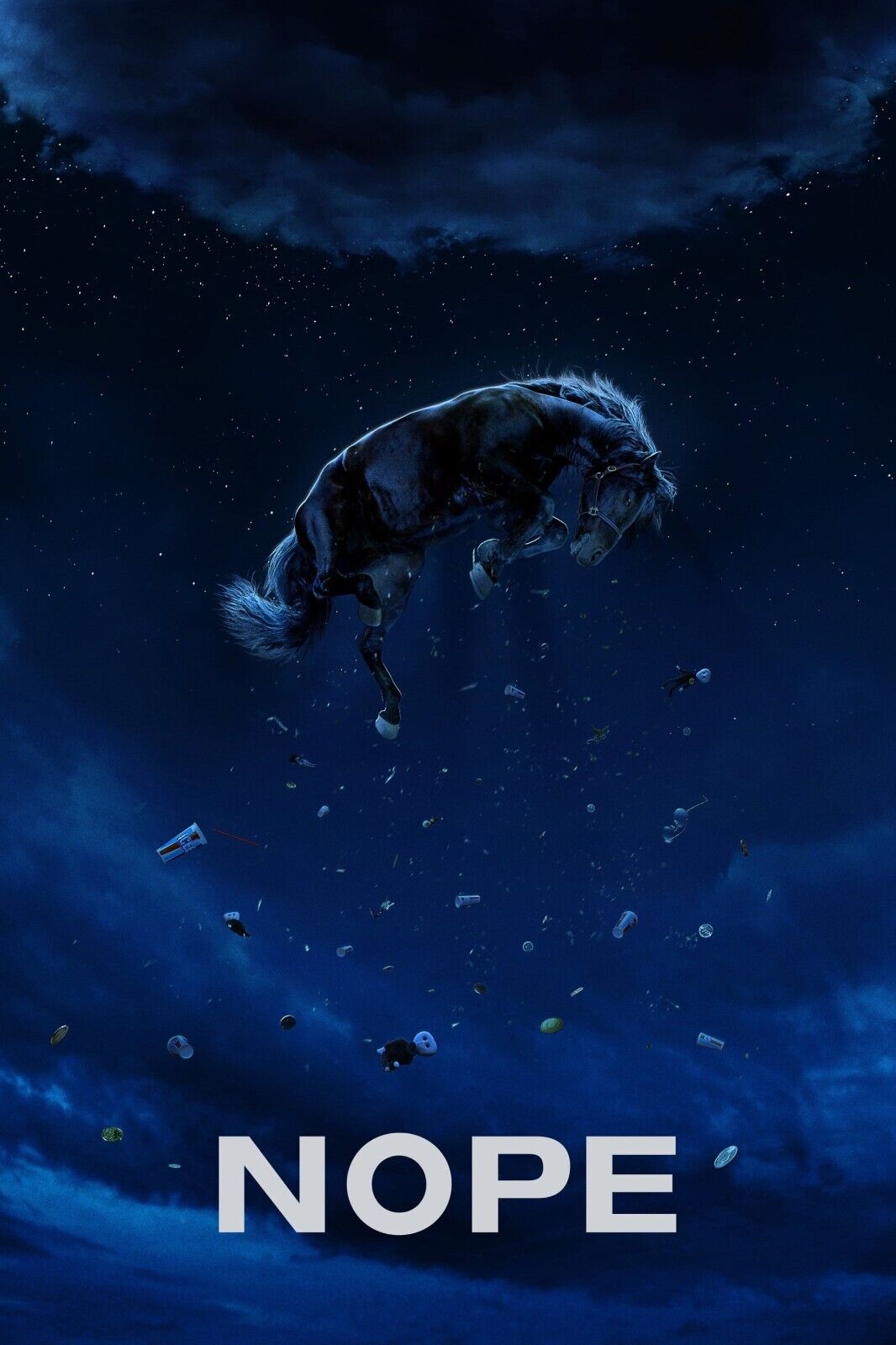
Nope (2022) **** – Seen at the Cinema

So I’m going to start with a SPOILER ALERT. To give you a moment to digest that, I’m going to explain that if I included half points in my ratings system, this would be a three-and-a-half rather than a four. But it’s certainly better than a three, so it automatically becomes a four. Okay, now that we’ve got that out of the way let’s take the plunge.

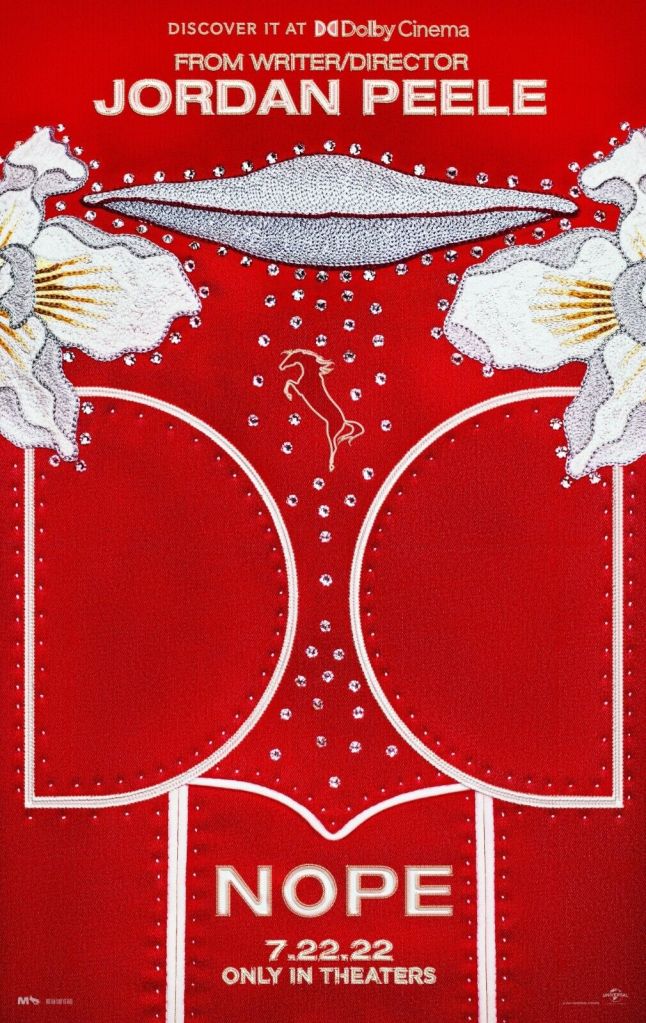
After a pretty good build-up, invoking elements of Close Encounters of the Third Kind (1977), Alien (1979) and, yes, Predator (1987), the mysterious spaceship goes from being a cloud that doesn’t move for six months to a flying saucer (yawn!) to a giant stetson with a hole in the middle to the kind of piratical sail that might have been shredded in a storm. And for an alien that’s flown a gazillion miles to get to this spot of wilderness, it’s pretty dumb, falling for the old trick of swallowing a balloon. Yep, didn’t make much sense to me neither.
But that’s most of the downside because it’s anchored by an absolutely outstanding performance from Daniel Kaluuya who is not far off being this generation’s Tom Hanks.

And there’s a lot of pretty neat stuff, a couple of sizzlers of a red herring, some clever moves at the end by our beleaguered team as they turn from hunted to hunters. And there a host of stunning images, blood drenching a house, a pig on a roof, the deflation of inflatable stick figures, a guy wrapping himself in barbed wire, a boy trapped under a table by a chimp terrorizing a television studio, a shoe that stands up on its end, a horse statue rammed through a windscreen, a bug on a camera that might just be the alien and innovative sound effects.

O.J. Haywood (Daniel Kaluuya) runs a ranch specializing in supplying horses for the movies. But it’s on its last legs after the mysterious death of his father (Keith David). He’s not helped by his sister Emerald  (Keke Palmer), as wacky as he is sombre. Amateur Ufologist Angel (Brandon Perea) invites himself to the party while sometime cinematic genius Antlers (Michael Wincott) is a late recruit, but in the end a bit too close to the nutters atop skyscrapers in Independence Day (1996) desperate to welcome aliens.

It does veer too often from sci-fi to horror but instead of Spielbergian awe the characters, while intrigued by the prospect of aliens, are just as likely to be shit scared, too worried about consequence to actually come clean about what they may have witnessed. Emerald and Angel are the enthusiasts, OJ the naysayer. Turns out the sassy Emerald, prone to unearned self-importance and acting too often on whims, annoys the alien by planting in a field a statue of a horse, stolen from a Wild West tourist attraction run by Ricky Park (Steven Yeun), a one-time child television star. Turns out Ricky has the same sensitivity to the presence of the cloud as OJ but instead of leaving well alone plans to publicize its existence to help market his ailing venture.

I’m not sure where the rampaging chimpanzee fits into the equation since that incident occurred in 1998 and Ricky was the youngster hiding under the table.

But once the quartet turn their attention to attempting to lure the alien onto a camera, previous efforts ruined by the alien’s ability to knock out any electricity supply, it turns into quite a cinematic spectacle, the kind of equivalent to Apollo 13 (1995) or The Martian (2015) where survivors of catastrophe have to come up with ideas out of left field.

Adding a bit of spice surprisingly enough is some interesting comedy, OJ and Emerald rubbing each other up the wrong way, Angel complaining of being dumped by a model-turned-actress, and some deadpan one-liners.

There’s a certainly a welcome freshness in terms of the characters, all superb inventions, recognisable as only too human, some of the family dysfunction but none of the obsession of Roy Neary from Close Encounters, nor the enclosed world of the space travellers from Alien whose personalities are generally revealed only in relation to their reaction to the predator, and none of the governmental mumbo-jumbo of ID4.

As I mentioned, the acting is a huge plus. Often sci-fi characterisation is paper-thin, the director thinking, wrongly, that audiences just want to get to the monsters. Daniel Kaluuya (Get Out, 2017) is top-notch but energy-on-a-stick Keke Palmer (Alice, 2022) runs him very close. Brandon Perea (American Insurrection, 2021) and Steven Yeung (The Humans, 20201) are also excellent, investing their characters with considerable ambiguity, while veteran  character actor Michael Wincott has his first movie outing since Forsaken (2015).

I take issue with the notion that director Jordan Peele (Get Out) has fallen into the M Night Shyamalen (The Sixth Sense, 1999) trap of following an inspired debut with subsequently less inspiring pictures. This is a very bold effort for his third outing and only really let down by the fact that, in carrying out the roles of writer, producer and director, he doesn’t have anyone to rein him in when the ideas go off-piste. Trimming twenty minutes out and losing the self-consciously arty elements and adding a bit more clarity and spending a bit more on CGI and this might have been a real winner.

As it is, worth seeing but with reservations.
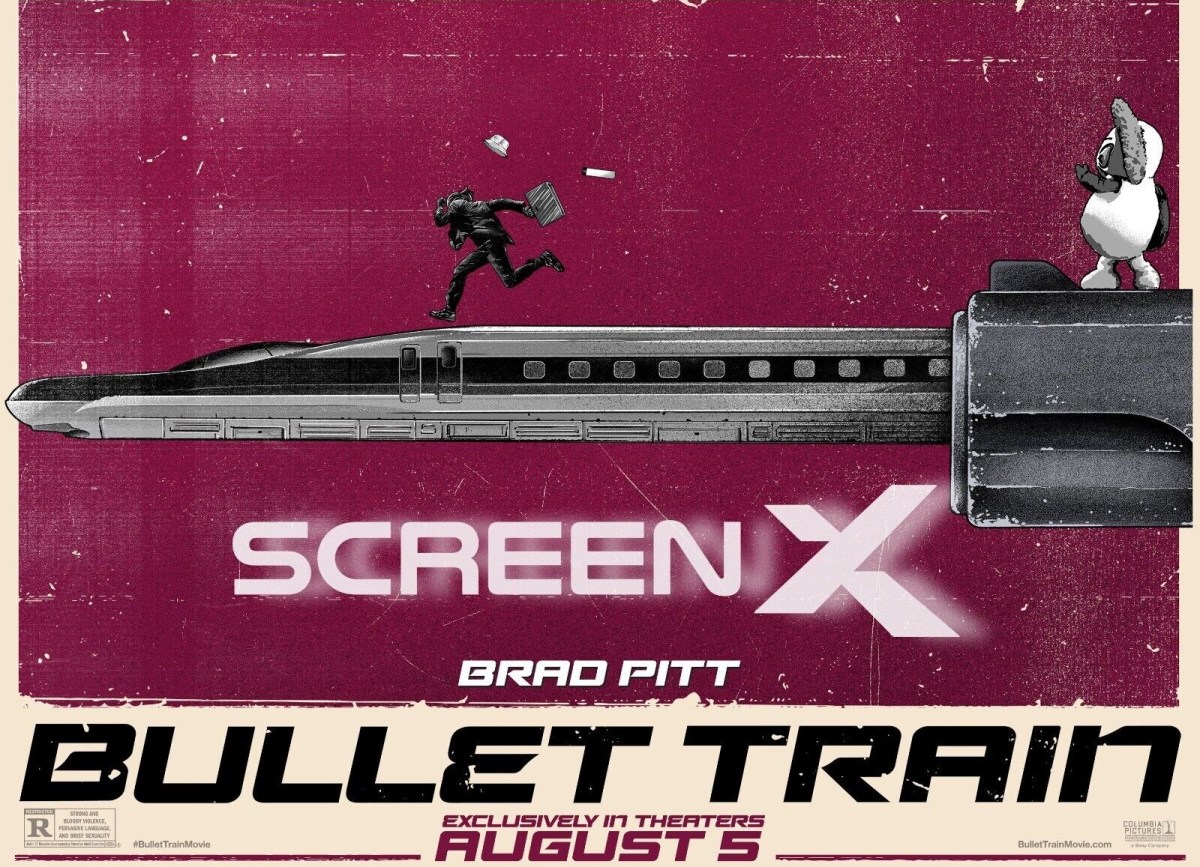
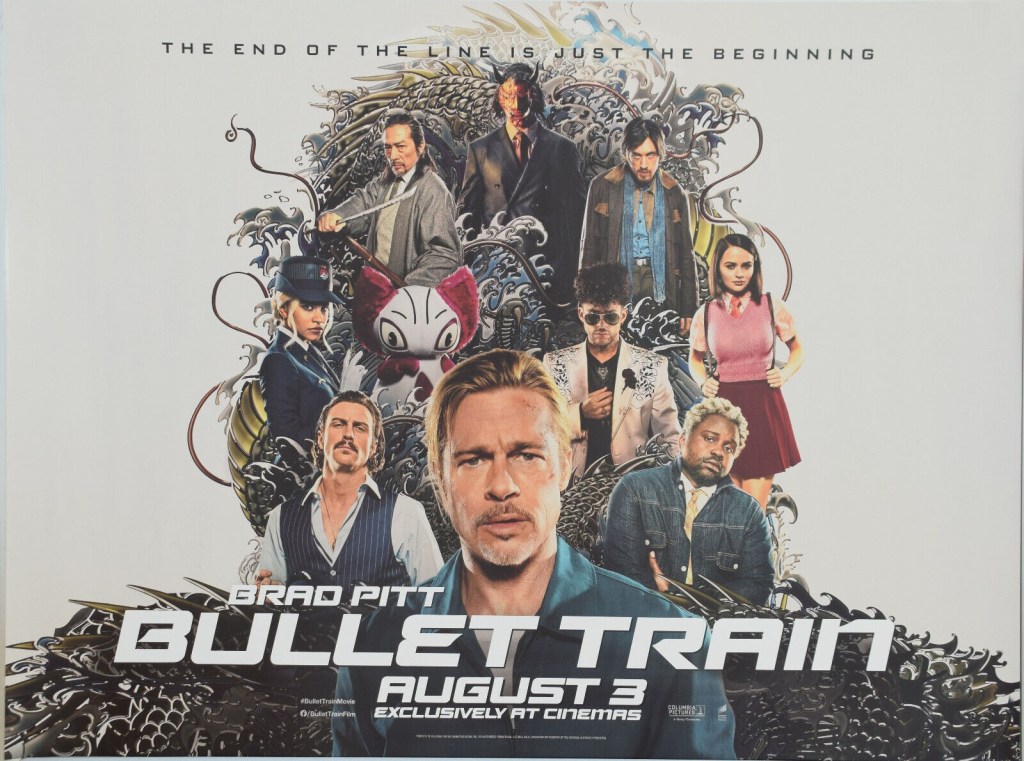
Bullet Train (2022) **** – Seen at the Cinema

What a blast! What a gas! And what the heck’s wrong with critics? Complaining Hollywood lacks originality and turning their noses up at this helter skelter of a thriller that hits eleven from the outset, maintains a hectic pace, and boasts gut-busting laughs.

The plot’s as complicated as it is simple. A bunch of assassins on a train trying to steal a suitcase containing ten million dollars discover they are taking the ride for another reason. Finding out they have competition, not just on board, but on various train station platforms, lends to the complications as they – and the viewer – try to work out just what the hell is going on. While there’s some great dialogue, for most of these guys fists and guns are their easiest means of communication so cue some fabulous action sequences.

Twin English hitmen Tangerine (Aaron Taylor-Johnson) and Lemon (Brian Tyree Henry) are the original messenger boys, tasked with delivering the loot from Tokyo to Kyoto on the titular train along with the son of a notorious gangster. Lemon, not the brightest gun in the arsenal, has left the case on a communal luggage rack where first off it is snaffled by Ladybug (Brad Pitt), as ethereal an assassin as you could wish for, and one in denial, preferring a more spiritual outlet for his skills. But guys who are good at killing people are less efficient at holding onto suitcases.

And so the prize bounces from character to character, including Kimura (Andrew Koji), the Wolf (Bad Bunny), Hornet (Zazie Beetz) and Prince (Joey King). Did I mention there was a deadly snake aboard and that the ultimate gangster going by the moniker of The White Death (Michael Shannon) was lying in wait? No? I didn’t want to overcomplicate matters.

Every time the various assassins, who specialize in different murder techniques, think they are getting to the bottom of the mysterious goings-on the movie virtually jumps track to head down a different route, but it does so with such elan and verve that you can’t wait for the next wrong turn.

The characterisation is as good as anything dreamt up by Tarantino, the oddbeat characters dancing to their own odd beat, the squabbling Tangerine and Lemon almost steal the show from Ladybug who believes he is suffering from a run of bad luck. And like he’s caught up in the wrong movie, Ladybug confides his thoughts to his offscreen handler Maria (Sandra Bullock). Wistful schoolgirl Prince can talk her way out of any situation. But as I said, the others prefer to just beat up their rivals.

So stand by for some of the greatest action this side of Jason Bourne and John Wick. And some of the dumbest moves this side of Dumb and Dumber. You’d think the action/comedy fusion wouldn’t work at all but the way director David Leitch plays with our expectations the whole shebang works beautifully. Though I wouldn’t describe it as such, more like an action picture that happens to make you laugh.

Part of the reason the action is so terrific is Leitch is a former stuntman, who must dream fights in his sleep, because he’s certainly dreamt up some original mano a mano stuff here. But he’s also the uncredited co-director of John Wick (2104) and sole helmer of Deadpool 2 (2018) and Fast and Furious Presents: Hobbs and Shaw (2019) so he’s no stranger to mixing action and comedy. And he takes a fluid approach to narrative.

But the laidback Brad Pitt (Ad Astra, 2019), almost a Bill Murray throwback, is absolutely superb, an Oscar worthy performance, a character re-examining his life in the midst of an assassins convention, and trying not to blame anyone attempting to kill him. Brian Tyree Henry (Joker, 2019) is the pick of the supporting cast. It’s a step up for Aaron Taylor-Johnson (The King’s Man, 2021), who plays the most irascible gangster since Daniel Day-Lewis in Gangs of New York (2002). The outstanding supporting cast is mostly made up of up-and-comers  – Joey King (The Kissing Booth 2, 2020), Zazie Beetz (Lucy in the Sky, 2019), Andrew Koji (Snake Eyes, 2021) – plus Michael Shannon (Heart of Champions, 2021) and Sandra Bullock (The Lost City, 2022) and cameos from Channing Tatum (The Lost City) and

The only minor quibbles are overuse of references to British kids fave Thomas the Tank Engine which may not be such a global phenomenon as the director would like, leading I would guess to some audience bafflement in the U.S., as might occasional mention of London soccer team West Ham, both key to the lives of Tangerine and Lemon.

Leitch owes an almighty vote of thanks to screenwriter Zak Olkewicz (Fear Street, Part Two -1978, 2021) who not only pulls the whole package together but springs brilliant lines and situations though how much was lifted directly from the source book by Kotaro Isaka I couldn’t tell you.

Can’t wait for the sequel. Brad Pitt has created a brilliant screen character that deserves a second outing.

Where the Crawdads Sing (2022) **** – Seen at the Cinema

I enjoyed the film so much I went out (literally) and bought the book (multiplex and bookshop in same shopping mall). And I’ve no idea why this has received such a tepid response from critics. Reminiscent of Prince of Tides (1991), it packs a far greater emotional punch when it gets into its stride with the aftermath of romance gone wrong. And it’s not as sappy as that might suggest, themes far more adult than young adult, covering domestic abuse, attempted rape, vilification and humiliation.

Even though set in the 1960s, the sense that people fear the different is as topical today, it still stands as a portrait of the outsider for whom rejection by society is common. Illiterate Kya (Daisy Edgar-Jones), snubbed by locals, lives alone in the marshes of North Carolina so when her boyfriend is killed she becomes the automatic suspect. The movie then shifts between the the present day courtroom of 1969 and the past. Isolation makes her vulnerable but not to the point where she is scared to fight back, although she acknowledges that “men always need the last word.” She’s also accustomed to literally covering her tracks, returning leaves disturbed by her footsteps to their original position, with concealment a fact of life.

Regardless of the prejudices of the townspeople, the audience is fed enough clues to leave them guessing right up to the very last scene in one of those revelations straight out of Jagged Edge (1985). And sufficient red herrings muddy the pitch while in true modern style vital pieces of information that might easily have determined the outcome of the trial are hidden until late in the day.

But this is not primarily a courtroom drama. It’s a beautifully realized coming-of-age picture, sucking you into a wilderness that in previous depictions of such alternative worlds would have been doused in violence, check Deliverance (1972) or Southern Comfort (1981). Kya isn’t capable of setting traps to lure the unwary, nor of predatory behavior. Instead, she is more open to abuse of her trust. The two men – Tate (Taylor John Smith) and Chase (Harris Dickinson) – who enter her life, with different degrees of entitlement, are liable to either abandon her or wish to control her.

Self-discovery remains core, with Kya’s tale as much about growing up as finding her path as an artist, and as she develops self-confidence is able to monetize her naturalist skills. Her artistry is often on show and through poetic internal monologues we view her soul, sometimes aching but just as often practical, never confusing the beauty of nature with a reality in which “even doves fight” to quote from the first few pages of the book I managed to read before starting this Blog.

Producer Reese Witherspoon performed a nifty trick. She chose the novel for her book club, watched it turn into a bestseller and then produced the film.

Tate and Chase bring out different aspects of her personality, the former teaching her to read and write, the latter determined to ensure she doesn’t lose the freedom so essential to her being. But whether either man can provide the emotional support she requires is open to question.

The twists and turns of the courtroom are well done. Defence attorney Tom Milton (David Strathairn) is surprisingly gentle for a lawyer, doing his best to bat away the more aggressive  prosecutor’s claims. It’s classic stuff, trying to tie Sheriff Jackson (Bill Kelly) up in knots, deflecting prosecution attempts to paint her as an out-of-control feral child. Milton, plus storekeeper Jumpin’ (Sterling Macey Jr.) and his wife Mabel (Michael Hyatt), are the only locals to show any kindness.

It’s rich in atmosphere and the feeling Kya has for nature comes easily to the surface. I found it totally absorbing, helped in equal parts by the court proceedings, and Kya’s difficult navigation of the emotional highway. There’s a nice meet-cute, done with feathers would you believe, and her reactions to both men, restraint followed by passion, caution at war with raw impulse, are entirely believable. If there is any problem in the narrative relating to both suitors, it’s that we only see them through Kya’s eyes, rather than being given true insight into their ambitions, but you can hardly fault a movie taking the point-of-view of the heroine for expecting her to have a clearer picture of what would-be romancers would rather hide.

The early scenes, depicting abuse of the young Kya (JoJo Regina) at the hands of her alcoholic father (Garret Dillahunt) and her disillusion and fear as one by one she is abandoned by mother and brothers are especially powerful, nobody departing without a cut or a bruise, as if carrying a paternal brand.

The whole picture is such an immersive experience, understanding insects and shellfish as Kya’s wealth of knowledge grows, fearing for her involvement with any man, her inexperience inevitably faulting her choice. And yet she grows through bad experience until she gains the self-reliance to see her through.

Daisy Edgar-Jones, best known for the television mini-series Normal People (2020) does wonders with a difficult role, never playing the sympathy card. It’s always a delight to see a veteran like David Strathairn (Nomadland, 2020) get his teeth into a meaty role. And it’s refreshing to see neither of the young men, Taylor John Smith (Blacklight, 2022) and  British actor Harris Dickinson (The King’s Man, 2021) favoring the grandstanding approach, delivering largely subtle performances.

Restrained performances too from Sterling Macer Jr. (Double Down, 2020) and Michael Hyatt (The Little Things, 2021) while Garret Dillahunt (Ambulance, 2022) continues to do admirable work.

Most credit goes to Olivia Newman (First Match, 2018) for creating a fascinating well-paced picture that allows the actors to breathe and refuses to fall into the trap of delivering a bloated adaptation of a bestseller. And in part this is down to calling in for screenplay duty Lucy Alibar, who has form in this area through Beasts of the Southern Wild (2012).

This has all the hallmarks of a classic sleeper.   

The Gray Man (2022) ** – Seen at the Cinema

I could have seen this for nothing on Netflix, but instead, hoping to do an action picture justice by seeing it on the  big screen, I shelled out my bucks for the privilege. Bourne Ripoff is as much as you need to know. Lazy writing with a bundle of the incongruities you can get away with within the MCU because as long as there’s the requisite action nobody bothers too much about logic.

Don’t be fooled into thinking this is John Wick gone wild. It’s many things gone wild, including a heap of overacting, and a pair of the biggest villainous klutzes you will ever come across. It’s vaguely redeemed by an explosions/ shootout/ tram chase in Vienna but that’s only enough to shift it up from one-star to two. And it’s a shame because Ryan Gosling (First Man, 2018) in his first movie for four years is a believable tough guy in the Bourne tradition and Ana de Armas delivers on the action chops she displayed in No Time to Die (2021).

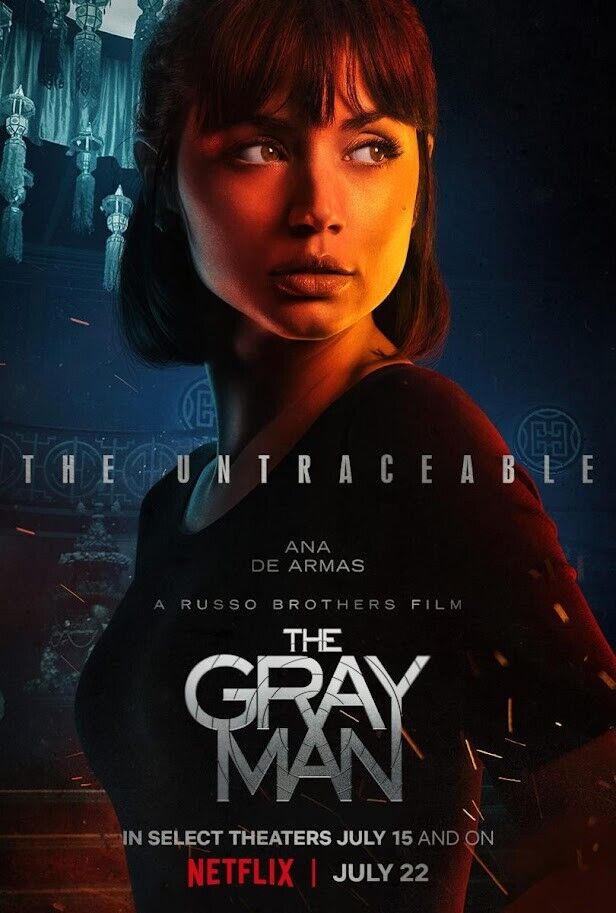
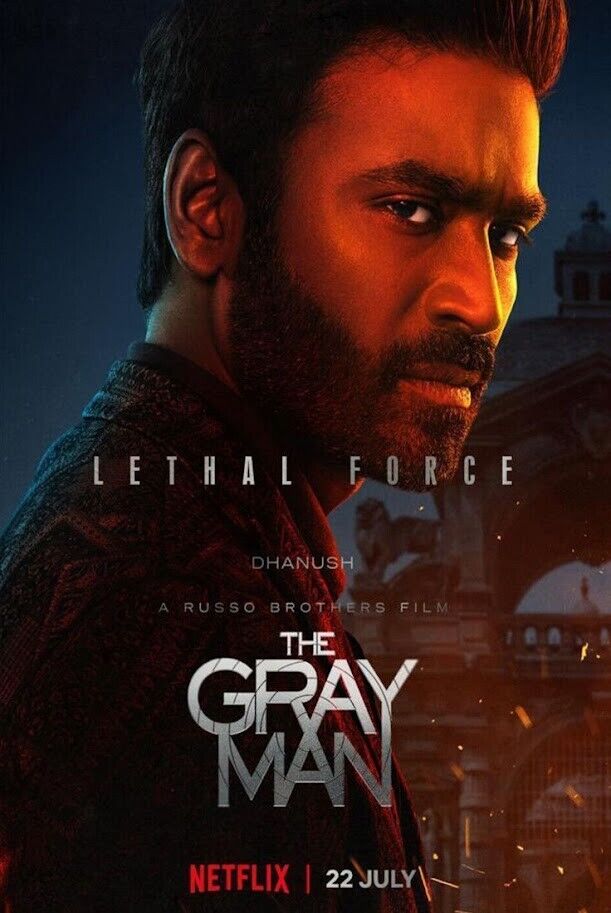
A poster straight out of the Joseph E. Levine playbook. He used to dream up these kind of posters which characters were assigned titles that bore no resemblance to the part they played on screen.

It should be an action romp, but instead it’s a mess. A C.I.A. black ops unit – inventively called the gray department – is hiring convicted killers to knock off anyone they want. Six (Ryan Gosling) got jailed for an insane amount of time, would you believe (nope!) for, as a teenager, killing his dad who was domestically abusing both his sons (trying to drown Six, for example). Six’s latest mission is to kill a guy who turns out to be an assassin in the same line of work but who is blackmailing C.I.A. boss Carmichael (Rege-Jean Page).

There’s nothing cool about Carmichael, he throws coffee at windows when he’s cross, and that sets an awfully bad example because his underling Suzanne (Jessica Henwick) is also prone to getting very cross. But that’s nothing compared to complete nutjob Lloyd (Chris Evans) who enjoys a bit of torture and gives psychopaths a bad name, but if I got this right attended Harvard with Carmichael so that’s okay then. Lloyd is hired to kill Six because he knows too much. And Lloyd calls in other assassins.

Now we’ve had that template in Bourne so what’s going to make it different? I know, let’s ramp it up. Instead of individual assassins, who might display some kind of finesse, let’s have teams of rampaging assassins. You can’t really wreck Vienna with just an assassin or two, you need a whole army.

Danush (Avik San) is an unusual assassin in that he operates on his own, not needing a huge team, but he is also cursed by – remember he’s a ruthless assassin – being suddenly conscience-stricken.

Oh, I forgot to mention Fitzroy (Billy Bob Thornton), the guy who sprung Six from jail but is now retired. Luckily, he happens to have a young niece Claire (Julia Butters). And that comes in handy when Lloyd needs to bring him to heel – and can kidnap the girl. But wait, two years before, Six was assigned to protect Claire and saved her life twice.

Twice? Yep, once from assassination and once when he rushed her to hospital after something went wrong with her pacemaker. Yep, she has some terrible heart disease. But not enough apparently to prevent her being the world’s pacemaker poster girl. Guess what? She can race along the top of a castle and jump 100 feet off a castle wall into a moat.

After being blame-shamed by Carmichael, Six’s C.I.A. sidekick Dani (Ana de Armas) switches sides to help him and can be counted on to turn up to shoot darts at Lloyd and appear with a fast car in time to save Six from assassins on the aforesaid tram. But she’s one of the victims of the lazy writing. She has two clear chances to save the day by marksmanship and fails each time. The first excuse is just so dumb. Thrown a sharpshooting rifle by Six, she discovers this comes minus ammunition. “Never throw a loaded gun,” must be one of the stupidest lines ever written, a lame joke that clearly makes reference to No Time to Die. Armed with another sharpshooting device and with clear line of sight on Lloyd, for reasons that are never made clear she doesn’t shoot.

Did I mention that Six is the kind of tough guy who, armed with little more than a penknife, can saw through a water pipe because the directors want to do some kind of riff on Kingsman: The Secret Service (2014) or that this this is the thriller version of If It’s Tuesday It Must Be Belgium (1969) with a different country about every ten minutes. And if people aren’t losing digits, it’s fingernails.

Ryan Gosling and Ana de Armas come out of this well but Chris Evans (Avengers: Infinity War, 2018), with a Tom Selleck moustache, is just awful, a joke villain, the only surprise being he doesn’t twirl said moustache. It’s almost as if he’s doing his utmost to make people forget he was ever Captain Marvel, but this is to the utmost and beyond. Stick to Bridgerton would be my advice to Rege-Jean Page. Billy Bob Thornton (Bad Santa 2, 2016) plays one of his more restrained characters.

The Russo Brothers (Avengers: Infinity War) throw every trick in the book at the movie without starting from the obvious point – a decent script.

Thor (2022) **** – Seen at the Cinema

It was time someone took the piss out of the MCU. Just as well Marvel decided to do it for themselves. The result is a hoot.

Finding gainful employment for the universe’s dumbest superhero is no joke, but in a welter of visual and verbal gags the studio celebrates his stupidity. I was laughing from the outset and I didn’t stop and from the mad recaps to the giant goats, Thor (Chris Hemsworth) treating his weapons as if they had the power to upset him, his ignorance of the devastation he wreaks, and non-PC references to orgies and the size of his manhood, the inevitable Marvel save-the-world plot takes second place to humor.

Asgard has been turned into a tourist attraction, terrible actors perform sagas in tacky productions to entertain visitors, until Gorr (Christian Bale) the god-killer, having been allocated in normal mysterious fashion and in Excalibur-style the Necrosword, comes calling, kidnapping children, packing them off to the Shadow Realm as a means of luring Thor. Fortunately, lost love Jane Foster (Natalie Portman), unfortunately dying of cancer, reappears in his life, though, on the debit side, she steals his hammer, causing him to turn to his axe. There’s hammer hocus-pocus, the usual lengthy daft exposition, but that’s offset by Thor, sensitive soul that he is, feeling he has to woo the discarded axe.

Also recruited are Asgard king Valkyrie (Tessa Thompson) and stone-man Korg. First port of call, naturally, is Omnipotence City where all the top gods hang out, including Zeus (Russell Crowe), the top god of all. Unwilling to help them out when there are delectable maidens hanging on his every word and orgies to enjoy, Zeus foolishly picks a fight and loses his lightning bolt.

But that’s enough of the madcap fun. Now it gets serious in the usual annoying way, redemption and its alter-ego sacrifice required at every turn, as you try to keep up with the new ideas suddenly introduced, the Bifrost and Eternity, and have to remind yourself of the rules regarding the axe and sword and the various pitfalls awaiting the characters. But the first half has given the movie sufficient energy to woosh you through the second half.

I’m not sure of The Avengers recruitment policy and how Thor ever fitted in and it’s just as well his cohorts in this adventure, part of the way at least, are the equally demented Guardians of the Galaxy phalanx led by the vain and vainglorious Star Lord (Chris Pratt). I always felt the rest of the MCU mob, albeit they occasionally deliver a good quip or two, were just too serious a bunch, what with all the saving-the-universe-and-beyond malarkey whereas Thor and Star Lord are blood brothers, daft specimens, useless at romance and anything serious, good for nothing except a good scrap.

There are a whole bunch of stand-out comic scenes – Thor looking to Star Lord of all people for advice on matters of the heart, the goats leading the space craft crash-landing into a planet. Admittedly, excepting the serious bits at the end, this is far more light-hearted than anything else in the MCU and thankfully sticking to the one universe rather than the multi-universe departures of late.

Chris Hemsworth (Thor: Ragnarok, 2017) as usual is superb, just the right bombast and imbecility coupled with vulnerability and sweetness, his clipped delivery at odds with his befuddlement, his eve-of-battle speeches would have Churchill turning in his grave. But Russell Crowe (Unhinged, 2020), with his mangled Greek accent, matches him in the dumb stakes. Natalie Portman (Lucy in the Sky, 2019) makes a welcome return and Tessa Thompson (Passing, 2021) proves a good side-kick to both. Christian Bale (Ford vs. Ferrari, 2019) bring his malevolent A-game as a memorable villain. Watch out for cameos from Matt Damon (The Last Duel, 2021), Melissa McCarthy (Superintelligence, 2020), Luke Hemsworth (Death of Me, 2020) and Sam Neill (Jurassic World: Dominion, 2022).

Director Taika Waitiki (Thor: Ragnarok , who also voices Korg, does a quite brilliant job of combining action and comedy. He also takes credit for the screenplay along with Jennifer Kaytin Robinson (Unpregnant, 2020).

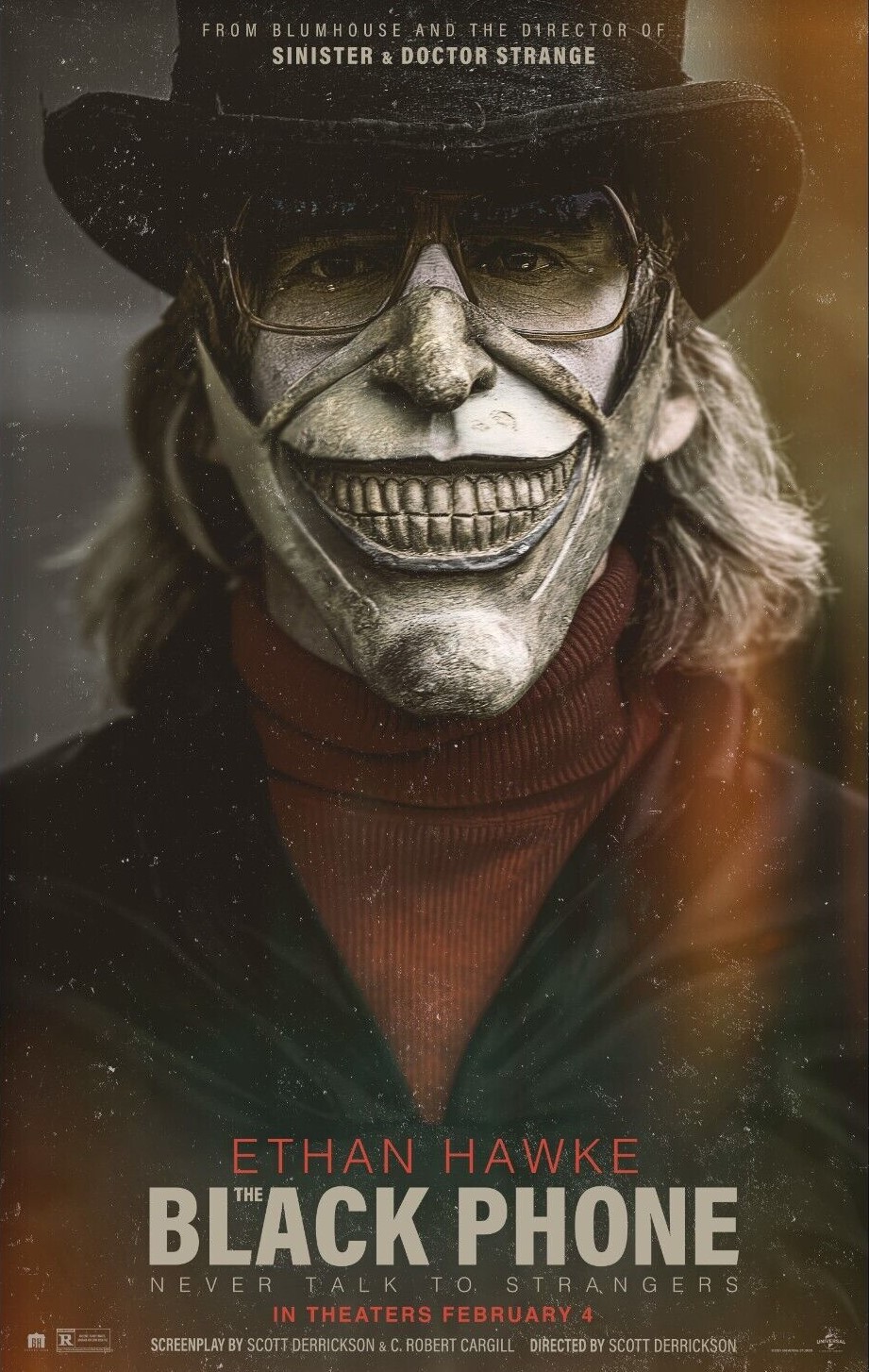
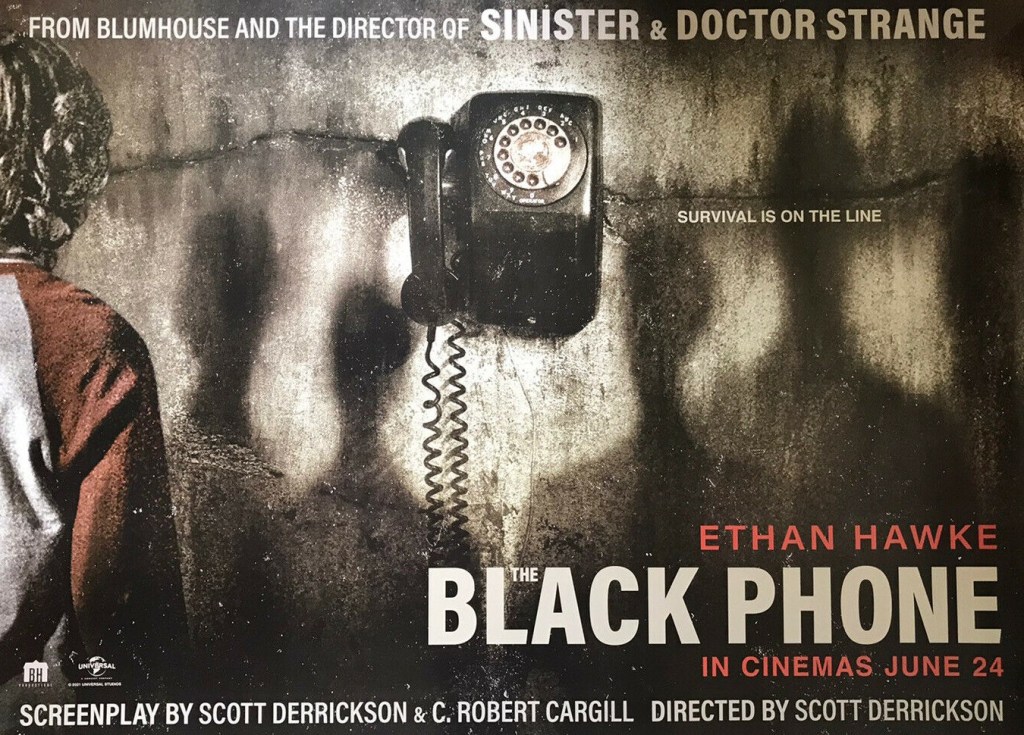
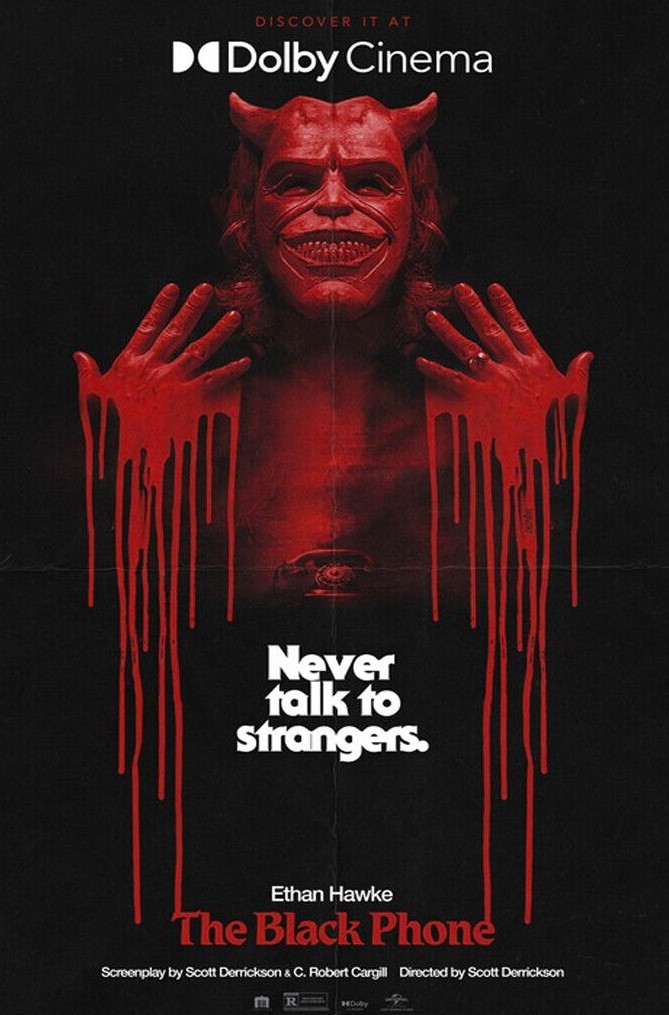
The Black Phone (2022) **** – Seen at the Cinema

Most original horror film since Jordan Peele’s Get Out (2017) and sharing that film’s ability to throw the audience off guard by constantly twisting expectations and slowly taking its time to reach an incredible denouement. Be warned, though, it is about child abuse and some of the scenes come down to the knuckle. But it is also, surprisingly, a coming-of-age picture.  

In 1978 in a Denver suburb, Finney (Mason Thames) and younger sister Gwen (Madeleine McGraw) live with widowed alcoholic father  (Jeremy Davies), prone to beating his kids with a belt. Although bullied by classmates, Finney always picks himself up. Gwen has dreams which may be real – her mother committed suicide after similar visions.

When Finney becomes the latest victim of masked serial child kidnapper The Grabber (Ethan Hawke) he finds himself trapped in a basement, empty except for a mattress and a phone that doesn’t work. The cops are baffled. Gwen attempts to reach her brother through dreams. When the phone mysteriously does ring it’s always one of the Grabber’s five previous victims offering practical escape advice. At the top of the stairs a half-naked masked Grabber sits in a chair gripping a leather belt waiting for his captive to become “naughty” so he can be punished.

I’m going to be in spoiler alert country if I tell you anymore but if you’ve seen the trailer be aware that’s far from the whole story. Part of what makes this so good is how realistic is the portrayal of the kids and the venal world they inhabit. They have no defence against the brutal father and in some respects expect adults to behave in horrific fashion. A boy who Finney helps with schoolwork acts as his protector but when he is kidnapped the bullies take revenge, handing out a bloody beating. Although brother and sister are close, there are few limits to their teasing. And Gwen has the lip of an adult in taking on a couple of unwary cops.

All the time you are left guessing. Is the Grabber behind the phone calls? Is it another of his elaborate games? Does he intend to offer escape, only to snatch it away? Can Gwen summon up spirits at will or will she flounder helplessly trying to save her brother. And if he disappears for ever, what prospect could be worse than living with her awful dad? Have the snippy cops got any leads at all? The father’s not out helping the hunt for his boy, so it possible he’s involved, especially since he wields a belt similar to the killer? Is Max, the visitor from out of state, possibly the killer, even though he appears to be a harmless cocaine-sniffing conspiracy nut?

And if five previous victims are gone, presumed dead, what chance has Finney, a vulnerable kid if ever? His protector was a very tough kid, one capable of beating a bully to a pulp, and if he can’t survive the kidnapping what chance does Finney have?

Over it all is the malevolent presence of the Grabber who wears two-piece masks (with devilish horns and long chin) that show different parts of his face but never the whole, who sometimes just sounds like a guy who has lost his way and means no real harm, if only he could sort out what’s gone wrong.  His kidnapping ploy is to drop his shopping on the sidewalk and hope a nice kid is going to help, especially as he is a magician with a stack of black balloons, the kind of conjurer who might appeal to an edgy teenager who thinks The Texas Chainsaw Massacre the greatest film ever made.

Jump-out-of-your-seat shocks are few but this is a rare horror movie that has little reliance on such tricks. Tension is maintained with magnificent ease.

Mason Thames (Walker TV series 2021) and Madeleine McGraw (Secrets of Sulphur Springs, 2021-2022) are terrific as the kids, not putting a foot wrong as they move in the sometimes inexplicable adult world, but sharpening their teeth on vicious childhood. Sure the mask does a lot for Ethan Hawkes (The Northman, 2022) but his voice and his movements do the rest and this is a bold part to take on, way out of his comfort zone. Jeremy Davies (The House That Jack Built, 2018) is every bit as creepy.

While Scott Derrickson has dipped his foot into horror (The Exorcism of Emily Rose, 2005.) and for that matter the supernatural (Doctor Strange, 2016) before, he has never done so with such distinction, reining in the shocks in favour of escalating tension, never shifting focus away from the kids. He co-wrote the screenplay with Doctor Strange collaborator Robert Cargill based on the short story by Joe Hill (Horns, 2013).

Men (2022) ** – Seen at the Cinema

Bizarre movie seeks cult audience! You might as well have stuck that on the poster. When I tell you the film climaxes like a Monty Python sketch with four successive men giving birth – from a variety of orifices – the first three to emerge different versions of the same character, the last the dead husband James (Paapa Essiedu) of Harper (Jessie Buckley). And that men also appear fully naked, in the form of some kind of vegetation, and can survive despite having an arm spliced from elbow to fingers. And that James desperately wants her to feel guilty about his suicide, triggered by her demanding a divorce.

Of course, all this could be taking place in her tormented mind except that she steadfastly refuses to admit to torment over the suicide even though she does scream her head off in church. If any of this is remotely realistic it points to someone with a severe downer on men, since there is not a single likeable one in sight. Men, in fact, are just four-letter words (choose your own) whose sole purpose is to accuse women of not loving them enough. And women – cue symbolism – are all born of Eve and inclined to eat a forbidden apple.

None of this would be so bad if in attempting a psychological thriller and/or horror film (I am assuming horror because of the births and arms sliced in two) there was actually a shock or two or even a general sense of creepiness. On the plus side, should this ever achieve cult status – “makes Titane look like Paddington” (1 or 2, you choose) – then I am sure director Alex Garland will only be too happy to turn up for a tenth anniversary Q&A and explain his intentions and/or symbolism and if he’s very lucky find an audience composed of students who have written a thesis on the film.

So the story – or did you think there wasn’t one – sees Harper repair to a village in the country to a fantastic country house with all the trimmings including an Aga and a baby grand for two weeks holiday to recover from the suicide, her mind still so muddled that she’s not thought to change her married name. It’s the kind of village where there appears a considerable amount of inbreeding. The letting agent (Rory Kinnear) looks suspiciously like the long-haired vicar (Rory Kinnear) and the rude schoolboy (Rory Kinnear) and the policeman (Rory Kinnear) and the bollocks-naked stalker (Rory Kinnear).

Harper gets lost in the unfamiliar countryside and happens across a tunnel where the echo effects could have been created by Robert Fripp and is then chased by a man (Rory Kinnear anyone?) and then catches sight of the naked man who later appears in her garden looking like an rewilded exhibit from the Chelsea Flower Show. The various versions of the man appear at different points and even when the letting agent appears good (and brave) actually he is just as bad.

I felt sorry for the Oscar-nominated Jessie Buckley (The Lost Daughter, 2021) for having to put up with this script. I also felt sorry for Rory Kinnear (No Time to Die, 2021) with a movie career so far consisting of supporting roles who must have been convinced that the chance to channel his inner Alec Guinness/Peter Sellers and play multiple characters would have been his breakthrough.

I did not in the slightest feel any sympathy towards Alex Garland (Ex Machina, 2014) for dreaming up this pile of tosh. This is one those films that strides the critic/moviegoer divide. Around 70 per cent of critics on Rotten Tomatoes gave it a positive review but moviegoers disagreed and, as surveyed by Cinemascore, gave it a D score (on a rank from A to F).

Maverick: Top Gun (2022) **** – Seen at the Cinema

And just like that Old Hollywood thumped a nose at super-heroes and jumped back to the top of the tree. Of course, that’s if you discount Tom Cruise as being a super-hero of box office dimensions and one with his own franchise Mission Impossible which at times has single-handedly kept his marquee value alive.

Unusually, for a sequel, this has taken account of the passing of time. No shoe-horning Maverick (Tom Cruise) into the role of current hot-shot pilot and there is a past he has to deal with, two relationships in fact, with Rooster (Miles Teller) the son of Goose, whose death Maverick is accused of causing, and with Penny (Jennifer Connelly), an on-again off-again affair too often too easily fractured. But, of course, the main thrust of the picture is Maverick taking on everybody, the top brass in the shape of Admiral Simpson (Jon Hamm) and Admiral Bates (Charles Parnell), his pupils and the unnamed bad guys.

It’s pretty nifty in using character flaw to justify the plot. That Maverick is anywhere near being recruited as teacher and not gainfully employed as a high-flying Admiral somewhere – as is former-rival-cum-buddy Iceman (Val Kilmer) – is down to the fact that he has resisted well-justified promotion in order to keep flying and because, well, he tends to piss off his superiors. But he still has the juice, in the opening sequence taking an experimental plane way beyond its capabilities (another plot point, by the way).

Somewhat older, not necessarily that much wiser, Maverick’s introduction to the Top Gun base is a tad humiliating, drummed out of Penny’s bar for not being able to pay his tab, watching wistfully as younger guns batter out his favorite tune on the piano, and aware that he has personal bridges to mend, that maybe, just this time, he might have the maturity to manage.

There’s the usual cocky bunch led by Hangman (Glen Powell), Phoenix (Monica Barbaro)  and Payback (Jay Ellis) plus Bob (Lewis Pullman), his call sign apparently a contraction of first name Robert but in reality standing for baby-on-board. In true reality television style there are heats, only four pilots making the cut to fly the desperate mission against the enemy.

And here’s where the picture takes off (pardon the pun). The aeronautics are just breathtaking and if you happen to catch it in Imax or an equivalent you’re going to be rocked by the sound  as well. It’s unbelievable stuff.  If there’s any CGI in there it’s not in the shapes of aliens, and looks distinctly old Hollywood. The kind of epic airplane stunts for which you run out of superlatives. And in best James Bond fashion the clock is ticking.

A resoundingly human story, relationships that looked cut-and-dried proving more fluid, until a band of brothers are properly worked up. Even as you wonder just how they are going to involve Maverick in a finale in which he should be a back-seat driver, a deft screenplay provides the answer. Maverick stands up for older guys everywhere, like an ageing pro brought back to save a football game.

Nostalgia has never been more vividly utilized. In terms of satisfactory denouement this is along the lines of the resolutions in Star Wars VII: The Force Awakens (2015) rather than the desultory reappearance of Decker (Harrison Ford again) in Blade Runner 2049 (2017). Some great scenes from the original have been touchingly reinvented, snippets of the original themes inserted at vital points plus a Lady Gaga offering.

It could easily have sunk not so much from the weight of expectations (and the long Covid-induced delay) but from a clunky re-boot, as producers determined, story be damned, to get all their ducks in line. Instead, there’s enough recycling to catch satisfy the previous generation of fans and sufficient whip-smacking wizardry to pull in the new generation,  which determinedly steers clear of anything non-CGI.  

Cruise is just superb, potentially an Oscar-nominated performance, as the guy who refuses to be jaded, who requires not one wingman but a whole team of them, with still the individuality and self-confidence that manuals cannot deliver. Given a job that set him up not to be a scene-stealer (teachers just ain’t action heroes) Cruise effortlessly steals the show, and its maturity more than double-balls-out cojones that does the trick.

Full marks to Joseph Kosinski (Oblivion, 2103) for fulfilling those weighty expectations, for keeping the movie focused when the temptation must have been to insert more romance, buff up issues facing the rest of the gang, add too much more when what this always needed was so much less, let the action show the way and Cruise carry the story. Much as I like Miles Teller in this I was hoping he would go on to better top-billed parts after Whiplash (2014).  Glen Powell (Everybody Wants Some, 2016) is another one Hollywood should be trying to make more of. I could say the same for the gutsy Monica Barbero (The Cathedral, 2021). This is the kind of movie to make the next generation of stars, especially as it solidified the reputation of the last of the older generation in Tom Cruise.

Incidentally, while I was at the cinema for this I saw a cracking trailer for the next Mission Impossible picture so cruise is going to continue his box office roll for a while.

Father Stu (2022) **** – Seen at the Cinema

If Benedict Cumberbatch or Leonardo DiCaprio or Brad Pitt had essayed this role Oscar voters would already be sharpening their pencils, especially as dramatic weight gain (Robert DeNiro in Raging Bull) seems to attract more sympathy than dramatic weight loss (Christian Bale, The Machinist). Although Mark Wahlberg (Uncharted, 2022) has a brace of Oscar nominations to his name, this movie seems to have struck out with most critics due to prejudice against organised religion. And that’s a shame because Wahlberg gives the performance of his career as a self-destructive boxer who finds redemption in becoming a rebel priest.

Atheist Stuart Long (Mark Wahlberg) is a whip-smart, charming, cocky loser. But when it comes to lifestyle choices he hasn’t the brains of a toad. Washed up as a boxer, he decides, as one does, that he has missed his vocation – he should be an actor. So off he hoofs to California, taking a job in a supermarket, on the basis (obviously) that one of the customers is bound to work in the movies and provide the lucky break. Instead, he falls for Carmen (Teresa Ruiz) only to discover she is an avowed Catholic, so serious about religion there would none of that sex-before-marriage nonsense.

So smitten is Stuart that he agrees to get baptised and then proving a holy hell of a parishioner questions priests about everything sacred, dropping F*** bombs left, right and center. But when he almost dies in a drunken accident, he decides to turn his life around the hard way and determines to become a priest. That’s another almighty battle in the acceptance stakes, and his take on religion is certainly not what the Catholic Church expected, but just when it looks as if he is going to achieve his ambition he is diagnosed with an incurable wasting disease.

Three hankies at the ready? No way. This is not one of the lovestruck teenager dying of cancer pictures, but a thoughtful and hilarious account of, effectively, stoicism. I knew nothing about the story on which this is based and half-expected either a miracle cure or that Carmen would announce herself pregnant, having done the whole sex-before-marriage thing, and scupper his chances of a life of chastity helping others.

Instead, Stuart is the kind of guy whose suffering infuses others with a dynamic to accept their own, often as miserable, life. And he’s so far from a saint that nobody could be lobbying the Pope on his behalf. I’ve no idea why this has been tagged “faith-based” which seems to spell box office doom especially Stateside. Anyone wanting to know what religion means to someone for whom religion means a lot would learn a huge amount from this picture. Stuart challenges everyone – and that includes the Almighty – but in a very real and often very funny way.

Yes, there is discussion of doctrine, but this part is fascinating, as Stuart pulls apart long-held tenets and tackles one of the apparent hallmarks of the faith in the U.S. – that no disabled person is allowed to stand on the altar. That he’s not the one who personally mounts a campaign to change this, since he’s so accepting of the will of God, and that it’s left to others, helps make this movie character-based rather than virtue-signalling.

This is best I have ever seen Wahlberg, not just because of how far he goes, body-wise, but because it is an incredibly assured performance, the fast-talking screen persona given the bullet, and in its place a realistic human being who begins to understand the benefits of humility over brashness. If it wasn’t for religion Stuart would have been one of life’s washed-up characters, ending up like his father Bill (Mel Gibson) at the bottom of a bottle.

Mel Gibson, now firmly in the Nicolas-Cage-straight-to-dvd league, turns in a superb performance as the bitter father and the Oscar-nominated Jackie Weaver (The Silver Linings Playbook, 2012) is excellent as the buttoned-down lost mother.  Teresa Ruiz (The Marksman, 2021) is every bit as good. Cody Fern (Eden television series, 2021) as a buttoned-up priest who doubts his faith is one to watch and you might spot, under all his priestly garb and smug expression, Malcolm McDowell (A Clockwork Orange, 1971).  

Given the emphasis on equality I’m surprised writer-director Rosalind Ross has not received more acclaim, if any at all from what I can gather, for what is a very assured debut. And I can only hope this is not because she committed the terrible sin, apparently, of attempting to make a sincere picture about the effect of religion on peoples’ lives.  In Hollywood’s Golden Era all sorts of unlikely priests, step up Bing Crosby et al, and stars like Gary Cooper (The Pride of the Yankees, 1942) died of incurable diseases and the crowds would line up, but somehow this kind of storyline has become a box office affliction rather than carrying a banner for the kind of character-based straightforward story audiences used to love.

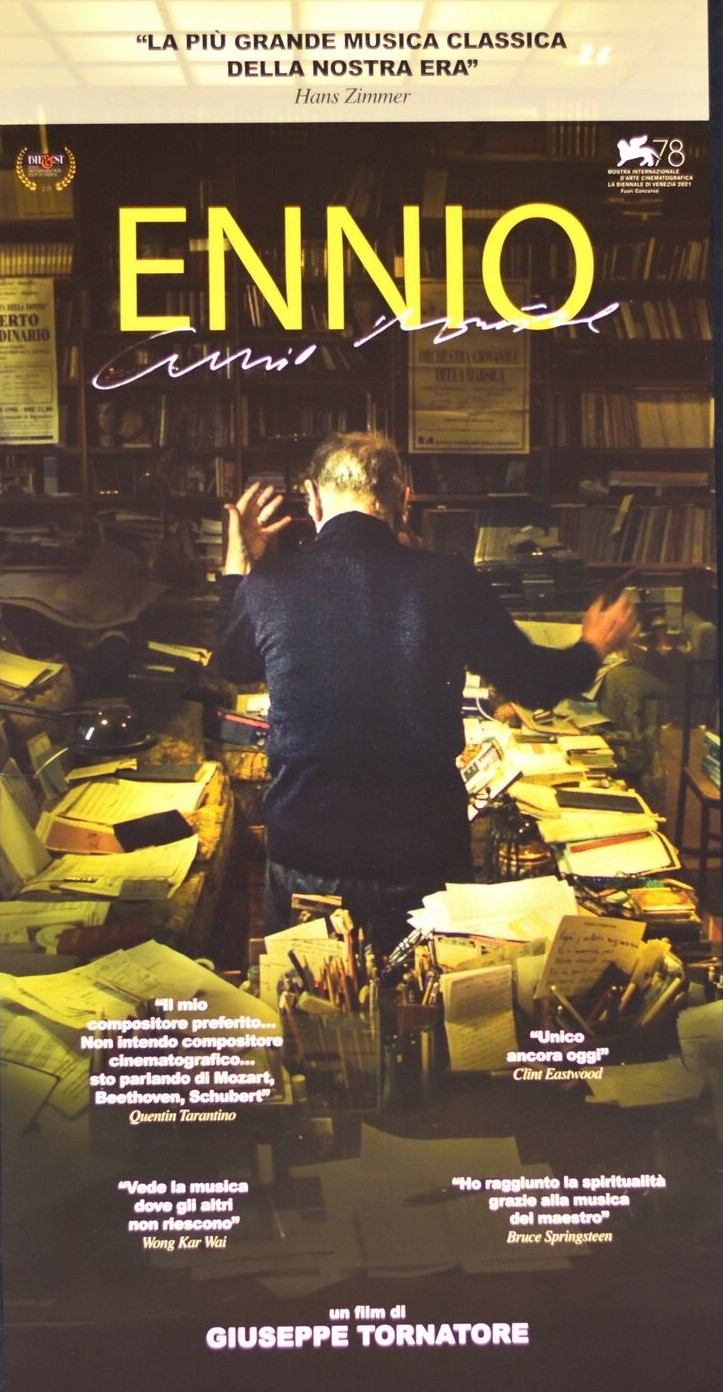
Ennio (2021) ***** – Seen at the Cinema

I became an instant fan of Ennio Morricone after watching dance troupe Pan’s People performing on BBC TV’s weekly Top of the Pops to Hugo Montenegro’s version of The Good, the Bad and the Ugly when it topped the singles charts in Britain in 1968. Sure, there had been successful theme songs in the charts before like Shirley Bassey’s rendering of Goldfinger, but never a pure instrumental and not a wailing guitar. This is quite simply an extraordinary documentary, and although it comes with an indulgence of anecdotes, what is considerably more compelling is the concentration, in accessible fashion, on the artist’s compositional skills. I could have watched four hours of this, never mind that clocking in at 156 minutes it’s already on the lengthy side for a documentary.

Morricone should never have been a film composer or a composer of any kind. He was too poor. His father was a trumpet-player and Morricone only took up music, designated instrument the trumpet, because his father believed a good trumpet player would always make a living and provide for his family. He was not a good trumpet player. At least, not at the start. Given that once orchestras and dance bands went out of favor, trumpet playing would have been a precarious existence, it was lucky his father’s insisted he also study harmony and composition. He won a place at a conservatoire, where the pupils, all except him, were the sons and daughters of the wealthy elite. And a conservatoire in those days was academically inclined, intending to produce classical composers and players, not people who would work as arrangers and composers of pop songs or commit the unpardonable sin of writing for the movies.

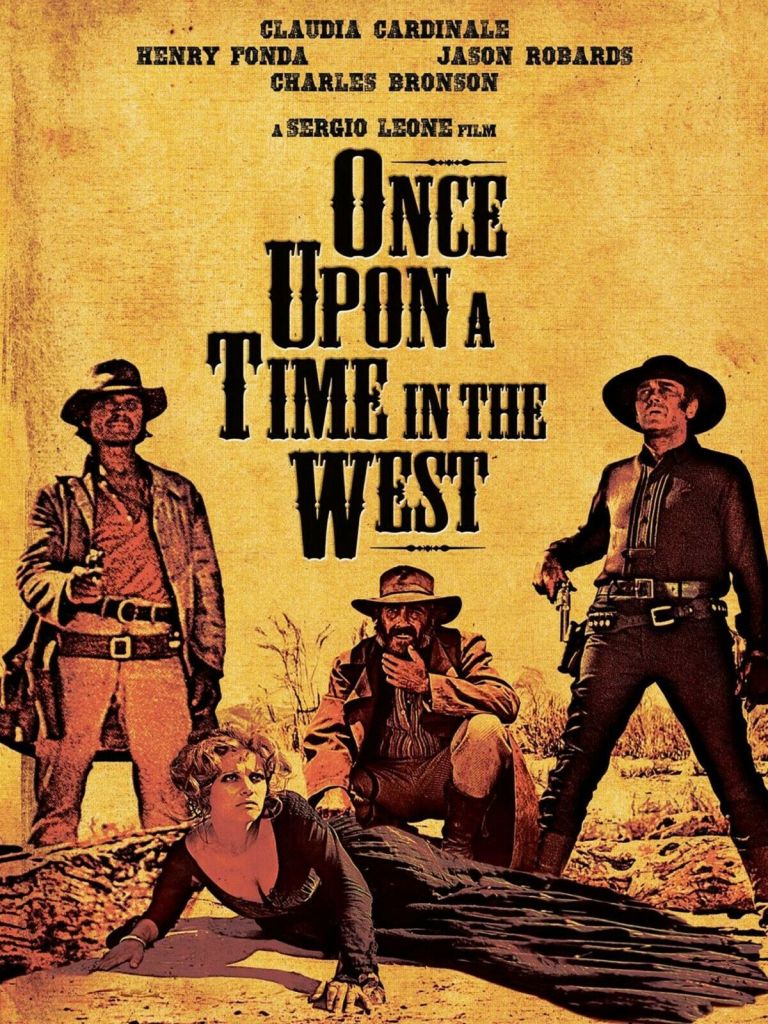
Morricone, always prolific, started working as an arranger of pop tunes for the RCA label in Italy and then for RAI, the Italian state television. But he was also an innovator and many of his songs began with a distinctive sound rather than the music being merely a backdrop to the song. He founded an experimental music group, making music out of anything but a musical instrument. You can see the benefits of that inquiring mind from the first 20 minutes of Once Upon a Time in the West (1968), for me his compositional masterpiece and my favorite western.

When he started working for Sergio Leone, he realized they had once been classmates. Leone came to him because Morricone had already written music for Italian westerns. Of course, the collaboration became legendary. As you will be aware, Leone liked the music recorded before filming began and played it during filming. While an interesting approach, I always thought it odd, until I witnessed, here, Robert De Niro making an entrance in one scene of Once Upon a Time in America (1984).

While his themes were often complex, he had a genius for catching the ear of the listener. Many scenes showed Morricone with voice and fingers tapping out a theme you will instantly recognize because all his best work was instantly recognizable. Although an extremely shy person, he was not above walking out – or threatening to do so – if a film was not going according to plan, if a director insisted on making a change or incorporating other material. Nor, for such a genius, was he full of self-confidence. Eventually, he relied on his wife as a listening board to decide if his work was any good. For what he called the “triumphant” scene from The Untouchables (1987), where cops brandishing shotguns prompted by Sean Connery burst in on bootleggers, he supplied nine ideas for director Brian De Palma, who proceeded to use the one Morricone considered the weakest. Other times, he was the one suddenly requiring an extra piece of work, calling upon Joan Baez to supply lyrics at the last minute to his theme for Sacco and Vanzetti (1971) that became the memorable “Here’s To You.”

One of the most enjoyable elements of the movie is seeing concert renditions of his themes, “Here’s To You” with a massive choral ensemble making the hairs on the back of your head stand on end. You could probably make a case for Morricone reinventing the chorus, paving the way for such practitioners as Hans Zimmer. Until then, there was many a heavenly chorus, but Morricone found better use for a chorus. And you could also argue that he influenced the likes of Ridley Scott (Gladiator, 1999) in using female opera singers to introduce a completely new sound to movies. 

One of Morricone’s stated aims was to use music to bring something else out of a scene, not to merely provide a relevant sound. So for the death of Sean Connery in The Untouchables or the baby carriage scene his music goes completely against what you are watching but nonetheless adds a deeper understanding. We also see how he folds different themes into the one piece of music.

There are a number of very moving sequences, when Morricone, for example recalls his father – he would not use a trumpet in his compositions until his father died – or when he explains his hurt at being made to feel an outcast by his classical peers, and there is one extraordinary moment when one of those who has disdained him writes a letter asking forgiveness for having so under-rated his work. And certainly there is clear petulance at being passed over for the Oscar for The Mission (1986), a piece of work that director Roland Joffe said made the movie a completely different experience. Morricone complained that half the music that won Herbie Hancock the Oscar for Round Midnight (1986) was actually old, rather than new, music.

My favorite anecdote is how Gillo Pontecorvo, hearing heard a piece of music Morricone had composed for The Year of the Cannibals (1970) promptly stole it for his own Queimade/Burn (1969) before settling, after an argumemt, for a similar piece. Actors, composers and directors in the anecdote queue include Quentin Tarantino (The Hateful Eight, 2015) , Clint Eastwood, Terence Malick (Days of Heaven, 1978), Dario Argento (Four Flies on Grey Velvet, 1971), John Williams, Hans Zimmer, Oliver Stone (U Turn, 1997) Marco Bellochio (Fists in the Pocket, 1965) and Bernardo Bertolucci (1900, 1976).

Morricone’s film music changed over the decades. Following the westerns were giallos, marked by dissonance rather than melody, then Hollywood came calling. I hadn’t quite realized what an audience Morricone commanded – over 70 million albums sold. He had hit singles In Italy –  A Fistful of Dollars ranked fourth in the charts, For a Few Dollars one place below, “Here’s To You” also fourth. In Britain, “Chi Mai” reached the second spot; in France “Man with Harmonica” from Once Upon a Time in the West went to number one, as did “Chi Mai” while “Here’s To You” was at number two. And, of course, his music has been adopted by a host of rock bands, most notably Bruce Springsteen and Metallica.

Director Giuseppe Tornatore, who has a special place in the Morricone catalog thanks to Cinema Paradiso (1988), has produced a magnificent tribute to the genius. In my half century of regular cinema going, there are four composers I rank above all the rest, John Barry, John Williams, Hans Zimmer and Ennio Morricone, but of them all, the latter is the number one for not just his enormous output – 500 scores including 29 in one year – and his wide range of melodies, but because they are so many memorable pieces. Once Upon a Time in the West is never off my CD player and especially gets worn out in the car. For sheer enjoyment this is an undeniable five-star treat. 

I am sure this will end being streamed somewhere but I urge you to try and catch it at the cinema, the effect will be lost on the small screen of the massed choruses or Morricone conducting in vast amphitheaters.

Discover WordPress

A daily selection of the best content published on WordPress, collected for you by humans who love to read.

The Atavist Magazine

by Brian Hannan

WordPress.com News

The latest news on WordPress.com and the WordPress community.