Roadshow, which was intended to alleviate the industry’s financial woes, caused chaos to the standard release pattern. The original system had been straightforward – new film is shown first in the biggest cinemas in the biggest cities, gets a repeat showing at a second-run house (and depending on the size of the city might move over to a third theater) and then spreads out into neighborhood venues and from there to the smaller towns. Depending on the size of the country and how long it lasts in first run it could easily take a year to complete its release.
Roadshow changed all that. Since first run, given the size of the cinemas and the elevated admission prices, accounted for as much as 60-70 per cent of a movie’s revenues, it made sense to find a way of keeping pictures in the most expensive cinemas. So roadshows did just that. Movies that opened in roadshow were not permitted to go out on general release until their roadshow potential had been exhausted. And precisely because roadshow movies sought out the biggest houses in a city they took up much of the space available for any kind of release.
That created backlog of two kinds: first, movies unable to enter the release system until played out at roadshow; and second, ordinary movies delayed – or denied – first run exposure because there were too few cinemas left. Which went part of the way to explain why your local cinema was apt to be running exploitation vehicles of various kinds.
In April 1970, for example, London’s West End – Britain’s prime premiere locale – was chock-a-block with long-running movies. In the previous decades, movies that ran for more than a week would be termed “holdovers” in America and “retained by public demand” in Britain. Now, they were retained for at least a “season” (twelve weeks).
The capital’s biggest house the Odeon Leicester Square (1994 seats) was in the eighth week of showing Richard Burton historical drama Anne of the Thousand Days. World War Two epic Battle of Britain had completed its 31st week at the Dominion (1654 seats). Oscar-winning musical Oliver! had already played over a year at the Leicester Square Theatre (1407 seats) and was now into its 66th week. The Odeon March Arch (1360 seats) was in the 17th week of Hello, Dolly! It was also 17 weeks and counting for reissue Ben-Hur at the Casino-Cinerama (1127 seats) and Paint Your Wagon was in its 14th stanza at the Astoria (1121 seats). Making its debut – a 70mm print and in roadshow – was The Adventurers at the 820-seat Plaza (and in continuous performance at the 972-seat Paramount). Rounding out the roadshow contingent were Women in Love, 23rd week at the 631-seat Prince Charles, and The Lion in Winter, 68th week at the 600-seat Odeon Haymarket.
So, nine major cinemas tied up for roadshow. Outside of those, few cinemas that could match them in size and prestige, were left for non-roadshow items. Antonioni’s Zabriskie Point was in the sixth week at the 1366-seat Empire and the equally offbeat Entertaining Mr Sloane at the 1159-seat Carlton. The 1004-seat Pavilion presented the second week of the double bill Chicago, Chicago and Popi. The 760-seat Columbia was in the sixth week of Walter Matthau comedy Cactus Flower and the Odeon St Martins Lane (735-seats) offered The Last Grenade starring Stanley Baker in its fifth and final week.
The 570-seat Rialto hosted week two of the offbeat Mumsy, Nanny, Sonny and Girly while The Ritz was in the 10th (and final) week of reissue double bill Point Blank/The CincinnatiKid. Arthouse the Curzon (546-seats) had been co-opted to help out, in its 6th week of Bob and Carol and Ted and Alice. And some holdovers had found unusual homes – Midnight Cowboy in its 12th week at the 154-seat Cinecenta 4 and Alice’s Restaurant in week ten at the 318-seat Windmill. And you might count the Classic Piccadilly in among the quasi-roadshows since Easy Rider had now clocked up 33 weeks and no end in sight.
Had it not been for the financial tsunami that engulfed Hollywood at the cusp of the 1960s/1970s the roadshow might well have continued eating up screens and causing further release chaos. Studios and those exhibitors who owned roadshow screens were delighted by roadshow, the rest of the industry not so much, except when a movie like Butch Cassidy and the Sundance Kid came out of nowhere and cleaned up.
SOURCE: Bill Altria, “Box Office Business,” Kinematograph Weekly, April 25, 1970, p10.
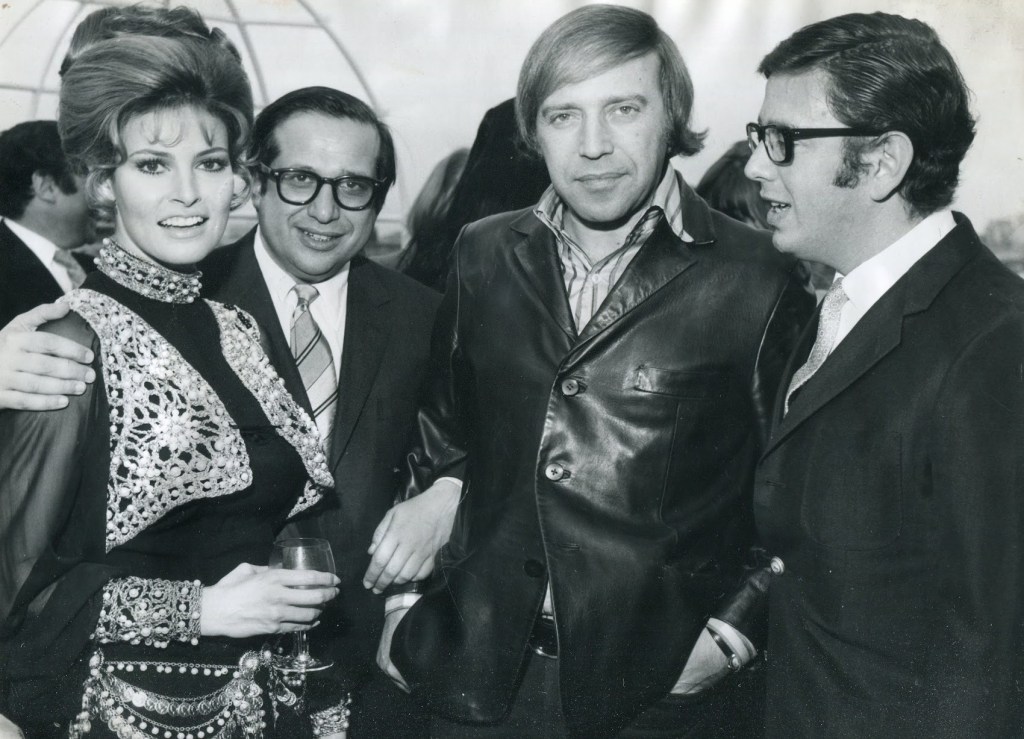
Only in Hollywood could you come off three straight flops and be offered for your next picture your biggest-ever salary. But producer Elliott Kastner in his attempt to break into the big time was following the game plan of United Artists when they had set out the previous decade to woo the biggest stars with big deals – and the same format that Cannon followed two decades later to sign up the likes of Sylvester Stallone.
Paul Newman received $750,000 – matching the fees of John Wayne – plus 10% of the profits for his role in Archer. The original title was the surname of the private eye in Ross MacDonald’s The Moving Target. The novel’s title was in play for some time before being superseded by Harper (though it remained The Moving Target in the UK) on the basis that characters whose name began with “H” – namely Hud (1963)and The Hustler (1961) – had done well for the actor in the past.
Harper was the first project in a five-picture deal between Elliott Kastner (along with producing partner Jerry Gershwin) and Warner Brothers. This was to be followed by heist thriller Kaleidoscope (1966) starring Warren Beatty, Peter Sellers comedy The Bobo (1966), drama Sweet November (1969) and Harper sequel The Chill, reprising Newman.
The actor had thrown away the box office cachet he had achieved earlier in the decade with such pictures as Exodus (1960), The Hustler (1961) and Hud (1963) on a trio of losers – What a Way to Go (1964), western The Outrage (1965) and Lady L (1965). But that didn’t deter former talent agent Kastner.
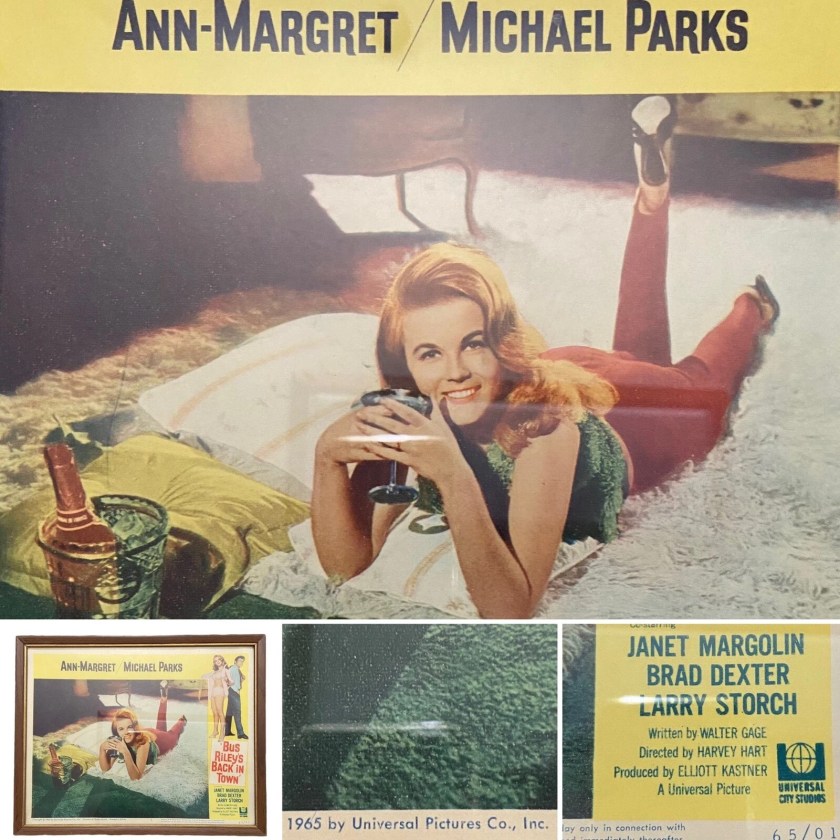
Although Kastner only had one picture to his name, Bus Riley’s Back in Town (1965), top-billing Ann-Margret, it wasn’t for lack of trying. He had first made a splash in 1962 when he and screenwriter Abby Mann bought William Faulkner’s Light in August for $150,000. But that failed to get past the starting gate, as did The Crows of Edwina Hill based on the novel by Allan Bosworth, The Children of Sanchez to be directed by Vittorio De Sica, Honeybear, I Love You to star Warren Beatty – an original screenplay by Charles Eastman (Little Fauss and Big Halsy, 1970) – and an adaptation of William Goldman’s bestseller Boys and Girls Together.
When Kastner set up in business with Jerry Gershwin in 1965, he had ten projects on the go, having spent $538,000 buying the rights to three plays and five novels plus commissioning two original screenplays.
It was amazing that the movie was made at Warner Brothers because several years earlier studio and star had a major falling-out, the actor suing to be released from his long-term contract, eventually buying his way out for a considerable sum.
As Kastner couldn’t afford the rights to any of the books published by his idols Raymond Chandler or Dashiel Hammett he plumped for the “lesser known” Ross MacDonald “who had the same rhythm.” Since MacDonald’s agent Harold Swanson didn’t want to sell the rights to the character, Kastner agreed to switch the name from Archer to Harper. And as Kastner “couldn’t afford a real screenwriter,” he hired William Goldman, who had authored three books the producer admired. He paid Goldman $80,000 to write “a movie with balls” based on the first novel in the Lew Archer series, requiring some updating since it was published in 1949.
Private eyes were now the preserve of television, which was rife with them, so it was going against the grain to try to reinvent the genre. Frank Sinatra, coming off the hit Von Ryan’s Express (1965), expressed interest in the project.
“I always knew that if you wanted to get money for a big studio picture you needed Gregory Peck, Burt Lancaster or Paul Newman,” Kastner wrote in his memoirs. He decided Newman was the best choice and travelled to Scarborough, a holiday resort on the north east coast of England, where Newman was shooting Lady L with Sophia Loren. “With no proper sleep or proper food,” Kastner found out the movie’s location and “wasted no time going up to Newman’s trailer and knocking on the door.” He had never met Newman, so was “a bit scared.” For a moment it looked like he was going to get the brush-off, but when he mentioned the actor playing a private eye that caught Newman’s attention. He read the script in a day and agreed to do it.
Newman’s agents Freddie Fields, David Begelman and John Foreman (who, all, coincidentally, later became producers) were unhappy that Kastner had, to all intents and purposes, gone behind their back. However, Newman had confirmed he wanted to make the picture so all that was left for his agents was to negotiate the fee and points. Being agents, and wanting a share of anything else that was going, they recommended another client, Elliott Silverstein, hot after Cat Ballou (1965) as director. Silverstein apparently loved the script although Kastner discovered that Newman had once turned Silverstein down for a job.
Over dinner with Newman and the director in London, Kastner found out Silverstein actually hated the script. He badmouthed the screenplay. “All he wanted to do was spit in Paul Newman’s face.” Next day, Kastner had to pick Newman up from the proverbial floor and regain his trust. The actor was partly mollified by the fact that Kastner had signed up a stronger-than-usual supporting cast in the likes of Julie Harris and Lauren Bacall. “To his everlasting credit, he agreed.”
Now Kastner had to find a studio to back the project. Which he reckoned would not be hard. “If you had Gregory Peck or Paul Newman all you needed was the Burbank telephone directory to make the deal. Despite the “disastrous” end of Newman’s relationship with Warner Brothers, Kastner found no opposition from studio chief Jack Warner, whom he knew from his agent days. “He kinda liked me, so I went to see him first.” Prior to the meeting, he had sent screenplay, book, budget, cross plot and schedule. Ben Kamelson took the meeting with Jack Warner and Elliott Kastner. “He (Jack) was overly friendly and warm and kept on telling Kamelson that I was his boy and that he was so happy to have Paul Newman back on the lot.”
His attitude changed at the mention of Kastner’s fee – $500,000 and half share of the profits. “He went apoplectic. The going rate for producers at WB was $35,000, even a top producer like Sam Spiegel would not, in Jack’s eyes, merit more than $125,000.”
It was a deal buster. But just as Warner was about to kick him out of the office, Kastner rallied. He told the head honcho, “I paid for the acquisition of the book. I paid the writer for the screenplay. I paid for all the expenses back and forth to Europe, twice with a director as well. You say you are happy with the screenplay – it reminds you of The Maltese Falcon. You are sanguine about the overall budget, so why do you begrudge what you are paying to me since I never asked for a dime in the high risk area of development and not only that I capture a genuine movie star. Now listen to me I am gonna go across the hill to Fox and you know what Zanuck’s gonna do? He is gonna lock the door and not let me out until I sign the agreement. I came to you first because I like you so much.”
Warner quickly reconsidered and greenlit the picture.
For director, Kastner went for Jack Smight, “a knowledgeable mechanic and a skilful director” who liked the script. The star asked for changes to the script, including swapping the character’s original beat-up Ford for a snazzy Porsche. Newman “simply shouldered the script and rammed it home” assisted by the fact that he “didn’t have to do a lot of work” since in real-life he resembled the character. Despite her proven acting qualities, there was no doubt that the name of Lauren Bacall in the cast, who had made her name on The Big Sleep (1946) opposite Humphrey Bogart whom she later married, helped generate awareness.
The movie was budgeted at $3 million including Newman’s fee and $500,000 for the producer.
It wasn’t all plain sailing. WB Head of Production Walter Macqueit objected to using Conrad Hall as director of photography on the grounds of his inexperience with color. Kastner held his ground. The bulk of the rest of the crew came from the Warner lot. Kastner worked with Smight on the “meticulous casting.”
The movie was filmed entirely in Los Angeles with exteriors in Burbank and interiors at the WB studio. During production, Kastner was also planning his next move, which was to quit Hollywood and set up a production shingle in London with Jerry Gershwin.
The only niggle at the end of a very successful project was that after Kastner introduced William Goldman to Paul Newman when the writer came up with a spec script for Butch Cassidy and the Sundance Kid (1969) he didn’t pass it on to the producer who had given him his big break.
Paul Newman quickly dropped out of the sequel and the project shifted from Warner Brothers to the newly-formed Commonwealth United with Sam Peckinpah set to direct. But The Chill, a more recent book in the series, published in 1964, never came together though later Newman signed up for The Drowning Pool, the second in the Archer series
SOURCES: Elliott Kastner’s Unpublished Memoirs, courtesy of Dillon Kastner; Daniel O’Brien, Paul Newman, (Faber and Faber, 2004), p115-118; “Kastner-Mann Shoot Faulkner’s August,” Variety, May 2, 1962, p5; “Elliott Kastner on Honeybear,” Variety, January 23, 1963, p4; “Elliott Kastner Will Helm Crows,” Variety, May 1, 1963, p21; “WB Partner and Star of Goldman Tale, Variety, March 31, 1965, p7; “Radical Kastner-Gershwin Policy,” Variety, May 19, 1965, p19; “Gershwin-Kastner,” Variety, November 30, 1966, p11; Gershwin-Kastner Set Chill of CU,” Variety, October 15, 1969, p7.
This proved the impossible sell. And Judy Garland was no help. The star was well past her best and if she wasn’t singing it was difficult to attract audience interest. So beyond her name above the title, United Artists did very ittle to use her presence as a distinct marketing tool.
Just like I Thank a Fool the previous year, the subject matter of A Child is Waiting did not lend itself to cross promotion. That did not prevent marketeers doing their level best. However, it was a rather bold suggestion to assume banks would be a natural port of call even under the guise that every child was waiting for their parents to start a savings account to see them through college.
The title seemed to incite temporary madness in the marketing department. How about this for a tie-in approach to a toy department? “A child is waiting for the most exciting game ever devised – Monopoly.”
Groups most likely to respond were identified as psychiatrists, teachers and PTA members but cinemas were warned to avoid giving the “impression that the film is a clinical or documentary one.”
By far the easiest avenue for promotion was a book tie-in. Popular Library had issued a paperback novelization by Abby Mann of his original screenplay with stars Burt Lancaster and Judy Garland on the cover and at the very least that would receive window displays in bookstores and on the carousels of drugstores.
Also limited were the number of taglines on a poster. In those days a movie could be advertised with as many as a dozen different taglines appealing to different market sectors. United Artists stuck to three main taglines with two subsidiary ones. Sometimes both subsidiaries were on the same poster, other times only one.
“Burt Lancaster and Judy Garland ignite a motion picture that gives so much…goes so far…looks so deep into the feelings of man and woman.” This alternated with “Burt Lancaster and Judy Garland take an untouched theme – and make it touching and unforgettable” and “Only Burt Lancaster and Judy Garland could take this untold story…and make your heart tell it over and over again.”
The subsidiary taglines ran to: “If this were flesh of your flesh – would you hold it close…Protect it…Love it…Or would you turn your back and run” and “A child can be so many things, warmth…love…laughter…and sometimes a child can be heartbreak!”
Mainly what marketeers were asking of Lancaster and Garland was a miracle, as if their names alone could drag audiences into theaters.
Even though the Pressbook was relatively small – eight pages A3 – two-thirds of the space was allocated to repeating the adverts, just in different sizes.
The section normally aimed at getting editors to carry snippets of news about the movie provided scant material. There was little to catch the journalistic eye, nothing new about either of the stars, just a rehash of careers. Usually, cinema managers would scour this section looking for a titbit to offer to a reporter, an unusual hobby, something odd that occurred during filming, details about the location or an element that went wrong during shooting.
If you were relying on this Pressbook to fuel demand from exhibitors, you would be sorely disappointed.
Only a candidate for the position of Emeritus Professor of Senta Berger Studies would spend time chasing up information about the star. So when I came across this interview by Italian film historian and academic Giannalberto Bendazzi (more famous later for his history of cinema animation) I couldn’t wait to share it with you. It was written while she was filming Lonely Heart / Cuoro Solitari (1970) in Italy directed by Franco Giraldi and co-starring Ugo Toganazzi. The interview took place in the foyer of the Manzoni Theatre in Milan after the film’s premiere.
The interview is repeated verbatim.
Bendazzi: I praised her performance and on consideration of her beauty and acting ability questioned her involvement with anything as bad as the last Matt Helm (The Ambushers, 1967).
Senta Berger: It was practically blackmail. I was under contract to an American company and although I had the right to refuse any script I didn’t like, they threatened that if I didn’t make the film I wouldn’t be offered any others. It’s a common enough practice.
I asked her how her career had began.
Senta Berger: I was born in Vienna and as a child had always wanted to either be an actress or a ballet dancer, so I took ballet lessons then went to the Staatsoper school of dancing and acting and on to the Max Reindhardt Academy. I appeared in a lot of theatre until one day an impresario from Berlin suggested I try the cinema.
So you went to Germany.
Senta Berger: Exactly. I made a number of films in a short time. Naturally they weren’t very good but at least I had made a start at being recognized as an actress. From there I went to London to make a film with Richard Widmark (The Secret Ways, 1961) and also that great epic The Victors (1963) which was my first big Anglo-Saxon success and earnt me the Hollywood contract. But I didn’t like California and in 1968 I came back to Europe and decided to stay.
What did you do in Europe?
Senta Berger: I made some films in Italy, Operation San Gennaro and the Casanova film with the long title, Vocation and First Experiences of Casanova in Venice. Then I did a lot of television in Germany when I had my own program, The Senta Berger Show.
Are you pleased with tonight’s film, Lonely Heart?
Senta Berger: I consider it one of my best, second only to The Quiller Memorandum (1966). It’s a film with a twist, beginning as a comedy but leaving its audience examining their conscience. It gives them something to think about. I must say that the rest of the cast made a very pleasant and affable troupe. I had no idea how nice it could be working among friends without all the usual professional difficulties.
How about your co-star Tognazzi?
Senta Berger: He’s marvelous. One of Italy’s greatest actors. So intelligent – so expressive. His every thought can be read in the expression on his face.
What do you think of sexy films?
Senta Berger: There are two kinds of sexy films. Those in which sex is used for expressive reasons, thereby making it sacrosanct. And those which use sex purely to draw an audience. In either case, it’s very simple, if you want to see it you buy a ticket, if not you stay home. The problem isn’t really of sex or morality, but of money. You see, in Germany for example, television is so good that the cinemas are empty, so film producers are forced to offer what television can’t show. The forbidden fruit.
I still wanted to know what the real Setna Berger was like.
Senta Berger: I’m really quite normal. I don’t own a big house with two thousand rooms and I’m not as rich as people think. I would have been rich had I made all the films producers suggested to me but I’ve always preferred to choose for myself. Of course I like money. It gives me the freedom to do what I want – make the films I want to make. My husband and I have already produced a film and we intend to do another.
Your husband is a director?
Senta Berger: Writer and director. He’s Michael Verhoeven, the son of Paul Verhoeven who was a director in the twenties. At one time I could think of nothing more than Michael, all I ever wanted to do was rush home and be by his side. Now, although he is still the most important thing in my life we find we have established a more mature friendship.
Have you made any more films with your husband?
Senta Berger: Up till now I haven’t had the courage, but his next film looks like being a good story, so we’ll see.
(Senta Berger produced but did not star in Verhoeven’s first picture Paarungen, 1967. She was credited as producer on another film and television productions including her husband’s pictures The White Rose, 1982, and the Oscar-nominated The Nasty Girl, 1990).
Do you feel more an actress of the cinema or the theater?
Senta Berger: The cinema, certainly. Even though I am one of the few people who find it harder to act in front of the movie camera than on the stage. But I think the most important medium of the future will be television.
Television?
Senta Berger: Yes, I know that up till now programs haven’t been that good but it’s a lot harder to present art on television than it is for the cinema. Only ten years ago programs were infinitely more rudimental than now so given another ten years or so, you’ll see.
(Senta Berger’s last film, in which she was top-billed, was Weist du Noch in 2023. She’s still alive at the time of writing).
As if John Wayne hadn’t endured enough directing The Alamo (1960), he took on an even weightier task with this Vietnam War picture which, from the start, was likely to receive a critical roasting given the actor’s well-known stance on the conflict and his anti-Communist views that dated back to the McCarthy Era of the 1950s. Wayne had enjoyed a charmed life at the box office with three successive hit westerns, Henry Hathaway’s The Sons of Katie Elder (1965) with Dean Martin, Burt Kennedy’s The War Wagon (1967) co-starring Kirk Douglas, and best of all from a critical and commercial standpoint Howard Hawks El Dorado (1967) pairing Robert Mitchum. Outside of box office grosses, Wayne’s movies tended to be more profitable than his box office rivals because they were generally more inexpensive to make.
Columbia had been the first to recognize the potential of the book by Robin Moore and purchased the rights pre-publication in 1965 long before antipathy to the war reached its peak. A screenplay was commissioned from George Goodman who had served in the Special Forces the previous decade and was to to return to Vietnam on a research mission. But the studio couldn’t turn out a script that met the approval of the U.S. Army. Independent producer David Wolper (The Devil’s Brigade, 1968) was next to throw the dice but he couldn’t find the financing.
In 1966 Wayne took a trip to Vietnam and was impressed by what he saw. He bought the rights to the non-fiction book by Robin Moore (who also wrote The French Connection) for $35,000 plus a five per cent profit share. While the movie veered away in many places from the book, the honey trap and kidnapping of the general came from that source, although, ironically, that episode was entirely fictitious, originating in the mind of Robin Moore.
Universal originally agreed to back The Green Berets with filming scheduled for early 1967 but when it pulled out the project shifted to Warner Bros. And as if the director hadn’t learned his lesson from The Alamo, it was originally greenlit for a budget of $5.1 million, an amount that would prove signally inappropriate as the final count was $7 million. Wayne turned down the leading role in The Dirty Dozen (1967) to concentrate on this project. Wayne’s character was based on real-life Finnish Larry Thorne who had joined the Special Forces in Vietnam in 1963 and was reported missing in action in 1965 (his body was recovered four decades later).
As well as John Wayne, the movie was a platform for rising stars like Jim Hutton (Walk, Don’t Run, 1966), David Janssen (Warning Shot, 1967) and Luke Askew (Easy Rider, 1969) who replaced Bruce Dern. Howard Keel, who had appeared in The War Wagon, turned down a role.
Wayne holstered his normal $750,000 fee for acting plus $120,000 for directing. But it turned out The Alamo had taught him one important lesson – not to shoulder too much of the responsibility – and Ray Kellogg for the modest sum of $40,000 was brought in as co-director. It was produced by Wayne’s production company, Batjac, now run by his son Michael. But neither Wayne nor Kellogg proved up to the task and concerned the movie was falling behind schedule and over budget the studio drafted in veteran director Mervyn Leroy – current remuneration $200,000 plus a percentage – whose over 40 years in the business ranged from gangster machine-gun fest Little Caesar (1931) to his most recent offering the Hitchcock-lite Moment to Moment (1966).
But exactly what LeRoy contributed over the next six months was open to question. Some reports had him directing all the scenes involving the star; others took the view that primarily he played the role of consultant, on set to offer advice. Even with his presence, the movie came in 18 days over schedule – 25 per cent longer than planned. Unlike the later Apocalypse Now (1979), it didn’t go anywhere near South-East Asia so the location didn’t add any of Coppola’s lush atmosphere, though the almost constant rain in Georgia, while a bugbear for the actors, helped authenticity.
It was filmed instead on five acres of Government land around Fort Benning, Georgia, hence pine forests rather than tropical trees. President Lyndon B. Johnson and the Department of Defense offered full cooperation. But that was only after the producers complied with Army stipulations regarding the screenplay. James Lee Barratt’s script was altered to show the Vietnamese involved in defending the camp and the kidnapped was switched from being over the border. Also axed, though this time by the studio, was Wayne’s wish for a romantic element – the studio preferred more action. Sheree North (Madigan, 1968) was offered the role of Wayne’s wife but she also turned it down on political grounds. Vera Miles (The Hellfighters, 1968) was cast but she was edited out prior to release.
The Army provided UH-1 Huey helicopters, the Air Force chipped in with C-130 Hercules transports, A-1 Skyraiders and the AC-47 Puff the Magic Dragon gunship and also the airplane that utilized the skyhook system. Actors and extras were kitted out in the correct jungle fatigues and uniforms. Making a cameo appearance was Col Welch, commander of the Army Airborne School at Ft Benning. The sequence of soldiers doing drill was actually airborne recruits.
The attack on the camp is based on the Battle of Nam Dong in 1964 when the defenders saw off a much bigger enemy unit.
This set was built on a hill inside Fort Benning. The authentic detail included barbed wire trenches and punji sticks plus the use of mortar fire. While the camp was destroyed during filming the other villages were later used for training exercises. .
The pressure told on the Duke physically – he lost 15lb. But the oppressive heat and weather of that location – it was mostly shot in summer 1967 – was nothing compared to the reviews. It was slated by the critics with Wayne’s age for an active commander called into question, never mind the parachuting, the gung-ho heroics and the dalliance in an upmarket nightclub.
“In terms of Wayne’s directorial career,” wrote his biographer Scott Eyman, “The Alamo has many defenders, The Green Berets has none.” That assessment, of course, would be to ignore the moviegoers around the world who bought tickets and put the picture into reasonable profit.
Wayne was clear in his own mind about the kind of movie – “about good against bad” – he was making and accommodated neither gray areas nor took note of current attitudes to the war as exemplified by nationwide demonstrations. Co-stars David Janssen, Jim Hutton and George Takei were opposed to the war. Takei, a regular on the Star Trek series, missed a third of the episodes on the second season; his lines were written to suit the character of Chekov, who went on to have a bigger role in the television series. Composer Elmer Bernstein turned down the gig as it went against his political beliefs. “The Ballad of the Green Berets,” heard over the opening credits was not composed for the film, having been released two years earlier.
Most critics hated it – “Truly monstrous ineptitude” (New York Times); “cliché-ridden throwback” (Hollywood Reporter); “immoral” (Glamour). Even those reviews that were mixed still came down hard: “rip-roaring Vietnam battle story…but certainly not an intellectual piece” (Motion Picture Exhibitor). Not that Wayne was too concerned. At the more vital place of judgement – the box office – it took in $9.5 million in rentals (what’s returned to the studios once cinemas have taken their cut) – $8.7 million on original release and a bit more in reissue – in the U.S. alone plus a good chunk overseas.
It was virtually impossible to examine a movie like this without taking a political stance. Other movies covering the same topic were allowed greater latitude regarding authenticity, audiences and critics like appearing to accept that creating watchable drama often took precedence over the facts. Both The Deer Hunter (1978) and Apocalypse Now, considered the best of this sub-genre, clearly ventured away from strict reality. With over half a century distancing the contemporary viewer from those inflammatory times, it’s worth noting that it still divides critics. Or, rather, critics and the general public take opposing views.
Although Rotten Tomatoes deems it “an exciting war film”, the critics voting on that platform gave it a lowly 23 per cent favourable report compared to a generally positive 61 per cent from the ordinary viewer. That contrasts, for example, with a more even split for the likes of Exodus (1960) – 63 per cent from critics and 69 per cent from audiences. However, The Green Berets attracts twice as much interest, collaring 9,000 votes compared to just 4,300 for Exodus.
After this, Wayne’s fee went up to a flat million bucks a picture. “He wasn’t a guarantee of success,” explained his son Michael, “he was a guarantee against failure.” At this point in his career, he was gold-plated. Where other stars in his commercial league suffered the occasional box office lapse – Paul Newman’s career in the 1960s, for example, was riddled with flops like The Secret War of Harry Frigg (1968) – he did not. Especially with a global following, his pictures never lost money.
SOURCES: Michael Munn, John Wayne, The Man Behind the Myth, Robson, 2004; Scott Eyman, John Wayne, The Life and Legend, Simon and Schuster, 2014; Brian Hannan, The Magnificent 60s, The 100 Top Films at the Box Office, McFarland, 2023; Robin Moore, Introduction, The Green Berets, 1999 edition, Skyhorse Publishing; Laurence H. Suid, Guts and Glory, University of Lexington Press, 2002; The Making of The Green Berets, 2020; Review, Hollywood Reporter, June 17, 1968; Review, Motion Picture Exhibitor, June 19, 1968; Renata Adler, “The Absolute End of the ‘Romance of War’”, New York Times, June 30, 1968; Glamour, October 1968; “Big Rental Pictures of 1968,” Variety, January 8, 1969.
Box office hits like Never on Sunday (1960), La Dolce Vita (1960), Zorba the Greek (1964), A Man and a Woman (1966) and Z (1969) gave Hollywood the wrong idea. Studios believed they could take advantage of the cheaper costs of shooting in Europe, set up alliances with critically acclaimed French, Italian, Greek, German and Swedish directors as well as several top overseas marquee names, and create a pipeline of product to fill out release schedules with pictures that were as acceptable to neighborhood cinemas as to arthouses.
The reliance of United Artists on this source was as much to blame for the box office crisis it endured as the other films covered in the first two articles in this series. In many cases, the studio gave directors their head, not reining them in on budgets, allowing several final cut, and assuming that critics and awards at festivals like Cannes, Berlin and Venice would do the job of selling the product to the domestic market.
On the basis of Polish director Jerzy Skolimowski winning the Golden Bear at Berlin for Le Depart / The Departure (1967) starring Jean-Luc Godard protege Jean-Pierre Leaud – and its subsequent arthouse success – UA bequeathed him big-budget The Adventures of Gerard (1970), set during the Napoleonic War, based on a book by Sherlock Holmes creator Arthur Conan Doyle, and headlined by rising British star Peter McEnery (Negatives, 1968) and established Italian import Claudia Cardinale (The Professionals, 1966) and a supporting cast including Jack Hawkins and Eli Wallach.
“The picture turned out to be one of the worst disasters in the history of the company,” the company directors told the shareholders. “It was the result of reliance on one of the new fashionable foreign film directors. The picture was beset by problems due to the unprofessional excesses…indulged in by the director.” The outcome was a movie that could not be reshaped into a “more acceptable form” and that ending up occupying “a limbo area between adventure and farce.” Prospects were so poor, the studio doubted if it would even recoup marketing and advertising costs never mind any of the production costs.
Theoretically, Burn! / Quiemada (1969) should have fared better. At least it had a proper star in Marlon Brando, even though his marquee value was being questioned. This had been placed in the hands of Italian director Gillo Pontecorvo whose The Battle of Algiers (1966) had been nominated for the Best Foreign Language Film Oscar. The studio had hoped to “combine interesting message with entertainment values.” However, personality conflict between director and star saw the picture to go “way over budget.” Prospects remained dim because “despite all efforts to persuade the director to reduce it to realistic length,” it was deemed overlong and “badly cut.” It fell between the stools of the arthouse audience who would have appreciated the message and the action audience who would have welcomed the more commercial elements. It was marked down for “a substantial loss.”
On the strength of a nomination for the Palme D’Or at Cannes for The Shop on Main Street (1965), the studio backed a project by its Hungarian director Jan Kadar. The Angel Levine (1970) attracted investment because the director had achieved “a certain cult,” the recording career of star Harry Belafonte had reached new heights, and the story was supposed to have a special appeal to ethnic groups. “Everything went wrong. The direction and performance came out slow and leaden. The story…didn’t work.” The picture was over budget and overlong. “The director could not be persuaded to make the necessary cuts” resulting in expectation of another “substantial loss.”
Italian director Elio Petri had enjoyed cult success with the offbeat sci fi The 10th Victim (1965) starring Marcello Mastroianni and Ursula Andress. For A Quiet Place in the Country (1968) he had lined up top British Oscar-nominated actress Vanessa Redgrave and rising Italian star Franco Nero who had played lovers in Camelot (1967). It was greenlit at a time when the studio believed there was a wider market among discriminating audiences for foreign films previously restricted to arthouses. But it had become clear that films in this category faced “inevitable loss.”
You probably haven’t heard of That Splendid November (1969), greenlit to “fulfill a pay-or-play commitment to Italian star Gina Lollobrigida” (Strange Bedfellows, 1965). While targeting the European market, it was hoped it would do additional business in America. It didn’t. Once again, the director (Mauro Bolognini) was allowed too much leeway. He had not been “persuaded to make the changes that would improve its chances” while the studio discovered that La Lollo had lost her marquee luster.
However, United Artists had also committed to potential “breakout” pictures, foreign movies aimed at American arthouses. The bulk of the overseas pictures that had thrived in the U.S. had done so via the arthouse circuit after being favorably reviewed by critics. These were considered relatively low-cost and low-risk investments. But, as events proved, these were as big a gamble as more high-budget projects.
Red, White and Zero / The White Bus (1967) proved “an utter failure” despite the presence of three top British directors, Lindsay Anderson (This Sporting Life, 1963), Oscar-winner Tony Richardson (Tom Jones, 1963) and Peter Brook. Although made for the arthouse market, these proved fewer in number than anticipated when the film was greenlit.
A French heist film entitled Score “would not be made today,” admitted the UA executives. Hoping to capitalize on the caper genre, the studio discovered no one was interested. Three French pictures, Philippe de Broca’s Give Her the Moon (1970) starring Philippe Noiret, The American and Lent in the Month of March (1968), were written off due to the softening of the arthouse market, as was Yugoslavian number It Rains in My village (1968) starring Annie Girardot. French/Brazilian Pour Un Amour Lointain (1968), “one of the poorer foreign pictures,” had such dismal prospects it was denied U.S. distribution. German picture Gentlemen in White Vests (1970) lacked appeal even its home market.
SOURCE: “Comments supplementing notes to Balance Sheet and Statement of Operations of United Artists Corporation for 1970,” United Artists Archive, Box 1 Folder 12 (Wisconsin Center for Theater and Film Research).
The United Artists strategy was to forge alliances with directors. The studio tended not to finance one-off projects, instead focusing on building long-term relationships. In part, this was a safeguard. Cross-collateralizing eliminated some of the risk between balancing out profit and loss. So a director could not waltz off with profits from a hit leaving the studio to pick up the losses from a flop. Ongoing agreements with major movie makers included Oscar-winners Billy Wilder, Tony Richardson and John Schlesinger plus Woody Allen, John Boorman and Robert Downey. In making such deals, the studio ceded substantial profit percentages and, as importantly for the directors, final cut.
Its relationship with Billy Wilder, for example, went back over a decade. The mishits of One, Two, Three (1961) and Kiss Me, Stupid (1964) were more than offset by the income from Some Like it Hot (1959), The Apartment (1960), Irma La Douce (1963) and to a lesser extent The Fortune Cookie/Meet Whiplash Willie (1966). Wilder’s cherished Sherlock Holmes project had been on the UA schedule for years. The Private Life of Sherlock Holmes (1970) starring Robert Stephens, hardly a marquee name, stretched the relationship to the limit. “In order to recreate the Sherlock Holmes era,” the UA board explained to shareholders, “the picture cost far in excess of its worth. Since Billy Wilder has absolute control of what he makes, we were unable to make the desired cuts in the film in order to improve it. We have a film that is roughly three times more expensive than it is worth. Substantial loss is…inevitable.”
The studio had reached a new commercial high in the market for adult-oriented critically acclaimed pictures with Midnight Cowboy (1969), which won Oscars for Best Picture and for director John Schlesinger. Following the company’s normal arrangement, it put up the money for his follow-up Sunday, Bloody, Sunday (1971) starring Oscar-winner Glenda Jackson. But that proved a misstep. The film went $600,000 over budget and UA attributed its poor performance to a “very slow-paced film” coupled with “an extremely low-key” narrative plus “Schlinger’s reluctance to cut the film adequately.”
Directorial final cut also proved an obstacle to Ned Kelly (1970). Backing Tony Richardson’s Tom Jones (1963) had proved a masterstroke, opening up a financial goldmine and showering the picture with critical acclaim and four Oscars including Best Film and Best Director. The fact that Richardson’s The Charge of the Light Brigade (1968) had flopped did little to discourage the studio’s faith in him. In addition, the casting of Mick Jagger (“A big personality for the younger audience”) prove misplaced. Again, the director clashed with the studio. Again, the “very slow pace” was an issue. As was directorial control. UA conceded: “We have not been able to persuade him to make the cuts to improve the film.”
Part of the reason for Ned Kelly’s failure was that, with Mick Jagger in the title role, the target audience was the young. But the stream of youth oriented movies, triggered by the success of Easy Rider (1969) was a bubble that burst too soon. UA had invested in two pictures about “the contemporary drug scene.” I’m not sure The Heir was ever released. It had been subject to production delays and “because we don’t have the right to final cut, we can’t get the director to pick up the pace of the storyline.” As a result of the studio’s experience on that picture, approval of a second film on a drugs theme, Born to Win (1971), was held up until the budget was whittled down to $850,000 – and that was a picture that had the advantage of proven star in George Segal (The Owl and the Pussycat, 1970), a completion guarantee and cross-collateralization with another movie.
British director John Boorman was also riding high after Point Blank (1967) and although a reunion with star Lee Marvin for Hell in the Pacific (1968) didn’t come close to matching the thriller’s success, he was “the type of director picture companies were gravitating to in 1969” especially as he had “ a very special reputation with campus film groups and youth oriented film makers.” UA considered him a great catch. “He was considered one of the voices of a new wave of picture making – daring, innovative, imaginative.” However, the project he sold to the studio, Leo the Last (1970), in retrospect, “could justify a cost of only a few hundred thousand dollars” rather than the extra hundreds of thousands the director spent “trying to achieve his own ideas of perfection.” Once again, attempted intervention was foiled – “by contract he could not be overruled.”
The verdict passed on Woody Allen after the studio had greenlit Bananas (1971) was: “Today we would veto any Woody Allen film at this cost.” Here was another example of the studio backing a nascent talent. This had been given the go-ahead before results were in on the first picture Allen had made (Take the Money and Run, 1969) for another company.
And in retrospect the studio could find no justification for some of the moves it greenlit. The verdict on Norman Lear’s Cold Turkey (1971), which ran $1 million over budget, was brutal: “An overpriced film with a has-been personality (Dick Van Dyke)…a minor American comedy with no overseas value.”
Equally has-been was Rosalind Russell, star of Mrs Pollifax-Spy (1971), “a victim of the reduced potential for old-time star films.” UA had anticipated a “zany, tongue-in-cheek adventure comedy.” What it got was “a run-of-the-mill old-fashioned piece of work…totally unacceptable to younger audiences and too dull for the older audiences.”
Timing was the problem with Hal Ashby’s The Landlord (1970). “What was expected to be provocative material for the new modern film audience of 1968-1969…emerged as a film…of limited interest to the audience of 1970.” While the studio admitted “it was the type of film we intend to continue to make”, that came with the proviso that it could only be realized “at a quarter of the cost.”
Another piece of provocative material that failed to find an audience was Robert Downey’s Pound (1970), described as “a roll of the dice.” Downey had broken out of the indie mold with the satirical Putney Swope (1969). “When this film was programmed, we had every reason to believe that even with a less successful result, this director could reach a personal following type of audience large enough to justify this cost. However, by the time the picture came out, avant garde audiences of this nature had become more selective and increasingly fewer in number.” Again, the verdict pulled no punches: “The picture has little value – domestic or foreign.”
“A daring film on a provocative theme” appeared the main attraction of Pieces of Dreams (1970). It was certainly daring – a disillusioned priest has sex with a social worker. Rising stars Robert Forster (The Stalking Moon, 1968) and model Lauren Hutton (Little Fauss and Big Halsy, 1970) lacked the marquee appeal to save it. “By the time it came out it was no longer considered daring. “Thought-provoking” but not “dramatic or sensational” enough was the consensus.
The Way We Live Now (1970) is best remembered, if at all, for the debut of Linda Blair (The Exorcist, 1973). It proved “another fatality of the unhappy rush in 1969 to make a so-called “now” picture…At its modest cost it seemed a valid investment at the time. Today it would not be made at any cost.”
SOURCE: “Comments supplementing notes to Balance Sheet and Statement of Operations of United Artists Corporation for 1970,” United Artists Archive, Box 1 Folder 12 (Wisconsin Center for Theater and Film Research).
Marlon Brando’s box office cachet had crashed. He hadn’t made a picture in two years following the flop of Queimada/Burn (1969) which had followed his debilitating box office trend of most of the decade. While his stock remained high enough to headline such big budget numbers as The Chase (1966) and Reflections in a Golden Eye (1967), thereafter confidence in his marquee value tumbled. Apart from Queimada, he had only been signed up for Night of the Following Day (1968), another loser.
But that last picture had brought him into the orbit of independent producer Elliott Kastner (Where Eagles Dare, 1968) who had been a friend of director Hubert Cornfield (Pressure Point, 1962) when they had both worked as agents at MCA. “Although he was crazy,” recalled Kastner, “I loved his writing and his drive.” Kastner was a fan of Cornfield’s earlier movies especially as they had been delivered on short time schedules. “I wanted to do something with Marlon Brando and he wrote Night of the Following Day.”
Brando still had clout in Hollywood. His three-picture deal with Universal obliged the studio to pony up for any (financially viable) projects he put to them. Kastner was delighted to hop over from his base in London to the French location and although the movie continued the actor’s poor reception at the box office, the producer enjoyed the experience.
Brando wasn’t averse to the “resting” that most actors endure, stints of unemployment between gigs. So when the actor approached Kastner to work with him again, it took the producer by surprise. “Marlon wanted to do a film,” said Kastner, “which was unusual for Marlon because he hides from work. He wanted to do a film in Europe and he loved staying at my house in the country. I talked to (Brando’s agent) Jay Kanter (who later became Kastner’s business partner) about it and we gave him a screenplay called The Nightcomers…that Michael Winner wanted to direct.”
Kastner had liked Winner’s output and was equally attracted to the fact that he also worked fast. Winner was contemptuous of directors who shot too much footage, especially “coverage”, filming a scene from too many different angles. But he was also a very fast editor. He took an editing caravan with him on location, and after the day’s filming ended at 6pm he spent the next two hours watching rushes and another two hours after that editing. His editor Freddie Wilson said,” His speed of decision in the cutting room saves a great deal of time and money.”
Winner had been sitting on the screenplay by Michael Hastings for some time. “No one was rushing to finance it,” remembered Winner, until Brando showed an interest. Winner arranged to meet the actor at his “modest Japanese-style house” in Los Angeles. However, insurance proved a sticking point following payouts for Quiemada.
“On a personal level,” recollected Kastner, “I thought he (Winner) was a bully with waiters. He was really nasty to people beneath him. I didn’t have much (personal) respect for him but he was very amusing.”
Due to scheduling conflict Vanessa Redgrave (Blow-Up, 1966) turned down the role of Miss Jessel. Winner also offered the part to Britt Ekland (The Double Man, 1967) provided she could bring some financing to the project. In the end, remembered Kastner, “Michael wanted to cast this girl with this big bust who was a halfway decent actor.” Neither Redgrave nor Ekland could compare in the bust measurement department to Stephanie Beacham, so clearly chest size was not a priority.
Kastner reckoned Brando “would bring plenty of poetry” to the project. It was remarkably cheap even for a star of Brando’s fading attraction. The budget was $686,000, of which Kastner received $50,000 as a producer’s fee plus 30% of the profits. Winner deferred his fee, only paid if the movie made money. At that point, Kastner was leading the way in finding funding outside the studio system. Funding for When Eight Bells Toll (1970), for example, was entirely sourced from an American businessman. For The Nightcomers, Kastner located investment of $100,000 from a company called Film & General Investments. Universal was involved through its contract with Brando – paying him his $300,000 salary for this picture to count as the final one on his contract, but declined to distribute the picture. For another producer, this might have been enough to kill off the project, but not for Kastner, who, following his current practice, intending to sell the completed film to a distributor.
As far as Kastner was concerned the movie went into immediate profit. Joe Levine of mini major Avco Embassy, still riding high after the success of The Graduate (1967) and The Lion in Winter (1968), ponied up $1 million for the worldwide rights plus a share of the profits. But Avco also limited its exposure, selling a 40% share to businessman Sigmond Summer for $1 million. (Judging from later legal documents, Universal retained some financial interest in the picture).
Brando had decided Quint was Irish. To learn the dialect, Brando and Winner got together with a group of Irishmen in the back room of a pub, one whom became the actor’s dialog coach on location.
The six-week shoot, on locations in Cambridgeshire, Britain, with Sawston Hall doubling as the mansion, began in January 1971. There was another reason for the speed of the shoot. Winner had contracted with United Artists to make Chato’s Land (1972) and there was no time to spare between the movies. Over 100 actresses auditioned for the role of the female orphan. Winner, seeking “someone over 18 who looked 11,” selected Verna Harvey (she also won a role in Chato’s Land).
Although Winner had gone to some expense to set up a private dining room for the star at Sawston Hall, Brando preferred to eat with the crew. According to Winner, despite Brando’s fearsome reputation, he knew all his lines, immensely patient with his young inexperienced co-stars, concerned about the crew, and, as importantly, arrived on time and even watched rushes, a rarity among the profession. Brando used earplugs to prevent distraction from extraneous noise. During the shoot Francis Ford Coppola flew over to spend time discussing the script of The Godfather with Brando.
Brando initially refused to have stills taken of him during the sex scene and only gave in after considerable persuasion, though he kept his wellington boots on. He wanted to leave the drunk soliloquy to the end of shooting. Though he was actually drunk after consuming a lot of Scotch, “he remembered his lines immaculately…(and) also matched his hand movements and body movements, which is very important in movies,” explained Winner, “because if you have to cut different bits of film together if the body or hands or arms are in a different position you’re in trouble.”
Jerry Fielding didn’t record his score until July during a three-day session with an orchestra of 80 at Cine Tele Sounds Studio. Despite his editing prowess, Winner realized his final version didn’t work. “The first cut was too fast. For a moody period film I’d just messed up. I put back seven minutes (of footage) and spent another three weeks getting it right.”
Thanks to its world premiere at the Venice Film Festival alongside the likes of Sunday, Bloody, Sunday (1971), it was touted, perhaps unwisely, as an arthouse picture, rather than majoring on the sex and violence. While Variety tabbed it a “grippingly atmospheric thriller,” only two out of the five most influential New York critics gave it the thumbs-up.
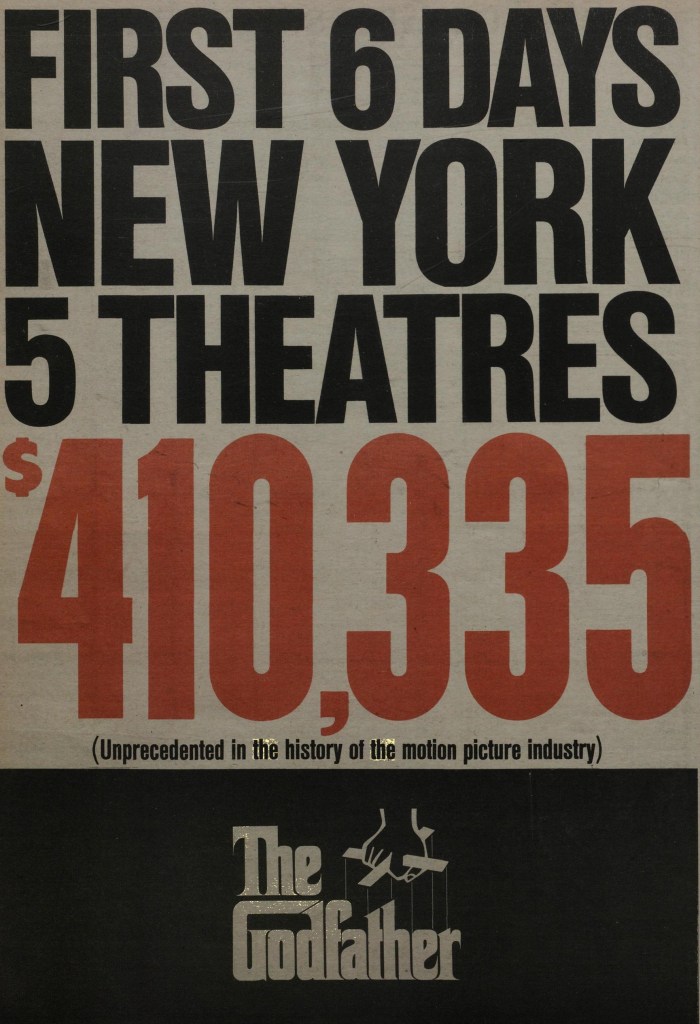
A distribution deal was not struck till the end of 1971. Rather than potentially riding along in the slipstream of The Godfather (1972), which was already attracting huge hype, Avco decided that it was better to come out before the Mafia picture than risk being swamped in its wake. But there was confidence in the project. “Joe Levine thought the film was so brilliant we didn’t have to wait for The Godfather,” related Winner.
It launched first in America, opening in February 1972 – beating The Godfather to the punch by a month – at the 430-seat Baronet arthouse in New York. The opening week of $20,700 was rated “nice” and held well for the second week before plummeting to $11,000 in the third week. It was yanked after six weeks.
By the time it spread out into the rest of the country, The Godfather rollercoaster was well into it stride, but the early release had not particularly gathered any pace and in the aftermath of the Coppola movie it was certainly buried. It opened to $6,500 in Boston compared to The Godfather’s second week of $140,000. There was a “scant” $39,000 from 13 houses in Los Angeles, a “modest” $4,000 in Louisville though $5,000 in San Francisco was rated “brisk” and the same amount in Washington “snappy.
Initially, at least, Britain appeared more propitious. It opened in key West End venue the 1,400-seat Leicester Square Theatre to a “loud” $24,700 and though it dropped $10,100 in the second week, the third and fourth weeks improved on the second. Eight weeks into its West End run, when it was still pulling down $13,300, The Godfather put it to the sword with a record-breaking $191,000 from five West End houses. After that pummelling, The Nightcomers managed only three further weeks.
In fact, the movie did surprisingly well, especially overseas. Total rentals came to $1.69 million, a clear million-dollar profit on the negative cost. While less than half a million came from the U.S., and only $160,000 from Britain, the overseas market kicked in the bulk of revenue – $986,000 – possibly because it was released after The Godfather (1972) rather than, as in the UK and the US, before. In the run-up to and in the wake of The Missouri Breaks (1976), it was included in Brando perspectives at the Museum of Fine Arts, where it was presented as a “novel film…lost in the shadow of The Godfather,” and Carnegie Hall. But an attempt at commercial reissue proved disastrous – a “weak” $1200 in Pittsburgh.
Except from a financial perspective, Kastner wasn’t especially impressed, calling it “grim, boring, contemptuous of story, oblique.” Viewers, including me, beg to disagree.
SOURCES: Elliott Kastner’s Unpublished Memoirs, courtesy of Dillon Kastner; Elliott Kastner Archive, courtesy of Dillon Kastner; Michael Winner, Winner Takes All, (Robson Books, 2004); “Production Review,” Kine Weekly, January 23, 1971, p10; “Not So Young,” Kine Weekly, May 22, 1971, p16;“Jerry Fielding,” Kine Weekly, July 17, 1971, p10; “Michael Winner,” Kine Weekly, August 13, 1971, p10; “Nightcomers to Avemb,” Variety, January, 19,1972, p5; “New York Critics,” Variety, February 23, 1972, p35; “Picture Grosses”, Variety, 1972: February 23-April 26, June 7-14; July 19- Sep 27; “Broadway,” Box Office, February 9, 1976, pE2; “Museum of Fine Arts,” Box Office, October 18.
Pressbooks/Marketing Manuals were intended as guides for the better promotion of a picture. At best, they were viewed as suggestive, devised in the spirit of cooperation. Paramount took a different perspective for One-Eyed Jacks. It laid down the law. This was “do as you’re told” under a new guise.
In the first place, it was an uncommonly sumptuous Pressbook, the distinctive cover printed on thick paper. It was larger, too, than the standard A2.
But at the heart of the marketing was almost a command for cinemas to follow a stringent campaign of advertisements running for seven days prior to showing the picture. This was contained in an immeasurably large section, a double fold-out running to 46 inches wide by 19 inches high. In other words so huge it could not help but catch the eye.
Unusually, the campaign was a before-and-after promotion. Of the seven days delineated, five were in advance of opening, the final two post-opening. Cinemas could choose between four sizes of campaign. Size was measured in “lines” – the unit of measurement rather than inches employed by newspapers. The more lines, the bigger the advert. Thus, Campaign AA was intended to run for 2,700-2,800 lines with the biggest advert reserved for opening day. Campaign 1 was set for 1,900-2,100 lines; Campaign 2 for 800-900 lines; and Campaign 3 for 550-650 lines. The last two campaigns were limited to three days.
The tagline for the opening Advert ran: “The motion picture that starts its own tradition of greatness” with the subsidiary “Marlon Brando’s most brilliant performance as Johnny Rio, the wildest one-eyed jack ever flung into the game of life. Here is love and courage, sin and violence – in one of the most explosively dramatic excitement in screen history!” In the AA campaign this was twice as wide (14 inches) as it was high.
The Second Day’s advert was much smaller – 9.5 inches wide and 4.5 inches high – and while keeping the main tagline dispensed entirely with the subsidiary.
Day Three was the opposite – the biggest advert yet – at 36 inches wide by 9 inches high. There was a new tagline: “A new experience in excitement…A new height in greatness!” and the subsidiary was just the first sentence of the original.
Day Four was bigger again – 40 inches wide by 8 inches high. The same tagline and subsidiary as Day Three with the addition of: “In vengeance he taught the enemy’s daughter the ways of love. Now the dawn would come up like gunfire.”
Opening Day (Day Five) was the biggest of them all – 57 inches wide by 9.5 inches high. Same tagline and subsidiary as Day Four but with a different addition: “His enemy’s daughter clinging to him in the night…this was just the beginning of his vengeance.”
Day Six (First Day After Opening) was remarkably small – 4 inches by 2 inches – literally just a reminder and carrying only the main tagline. The Final Day was 11 inches by 5.5 inches and with the same tagline.
Anticipating success, the marketeers had supplied adverts that announced “Held over for a 2nd big week.”
Whether cinemas signed up for such a promotional exercise they could be in no doubt about the studio’s commitment. Claiming it was the most publicized picture in recent history, Paramount pointed to articles in Life, Look, Coronet, Argosy, McCalls, Newsweek, Pageant, Glamour, Seventeen, Mademoiselle, American Weekly, Parade, Woman’s Day, This Week and the New York Times Magazine.
Music was a better cross-promotion prospect than anything else with both a soundtrack album and a single on the market. In addition, piano duo Ferrante and Teicher had recorded an instrumental. Two songs from the film were published in sheet music format.
Unusually, presumably assuming the movie had received all the editorial coverage it required – some or all of the articles run in the magazines mentioned would have been syndicated to local and national newspapers – the Pressbook was devoid of the usual run of star biography or journalistic snippets.
A three-hour western epic directed by Stanley Kubrick (2001: A Space Odyssey, 1968), written by Sam Peckinpah (The Wild Bunch, 1969) and The Twilight Zone’s Rod Serling and starring Spencer Tracy (Judgement at Nuremberg, 1961) and Marlon Brando. What’s not to like? That all of these major players, with the exception of Brando, had nothing to do with the final product was par for the course for a movie that didn’t reach cinema screens until two years after shooting was completed.
Marlon Brando was riding high when the project was first mooted in 1956. The box office and critical sensation of the 1950s, four Oscar nominations in successive years, winner for On the Waterfront (1954), his price was rising by the minute. And he had ambitions to take control of his career, set up his own production shingle, a trend that was beginning to gather pace.
He established Pennebaker (named after his mother) Productions in 1957 with ex-marketeer Walter Seltzer, producer of 711 Ocean Drive (1950), and George Glass, a former partner in Stanley Kramer’s independent production company. Paramount agreed to back the company. A western, A Burst of Vermilion, was intended as the company’s first offering. Soon there were five movies on the schedule including The Authentic Death of Hendry Jones by Charles Neider.
Brando had paid $150,000 for the rights to the book and a script by Sam Peckinpah. The original title was changed to Guns Up. It was going to mark the debut of the new Pennebaker outfit ahead of other projected movies like Shake Hands with the Devil to star James Cagney and Anthony Perkins (he didn’t make it to the final cast), The Raging Man and Ride, Comancheros (no relation to The Comancheros, 1961) and C’Est La Vie to be filmed in Paris.
Paramount paid through the nose, committing to an unprecedented deal. The studio would fund the entire cost of Guns Up and as well as $150,000 upfront Brando would receive 100 per cent of the profits, Paramount relying on its 27% of the gross as a distribution fee to turn a profit. Stanley Kubrick, riding high after Paths of Glory (1957), was hired to direct. While the studio preferred Spencer Tracy as co-star, Brando wanted old buddy Karl Malden who had co-starred with Brando in A Streetcar Named Desire (1951) and On the Waterfront, winning an Oscar for the former and a nomination for the latter.
And in part to reflect the Asian community in Monterey, location of the main section of the film, he also wanted current squeeze France Nuyen (A Girl Named Tamiko, 1962) to play his lover in the film, but Kubrick was aghast and instead cast Mexican debutante Pina Pellicer (Rogelia, 1962). There were roles for Katy Jurado (Barabbas, 1962) and recognizable western types like Ben Johnson (The Undefeated, 1969), Slim Pickens (Firecreek, 1968) and Elisha Cook Jr (The Great Bank Robbery, 1969).
Shooting was set for June 1958, then it shifted to September and then November. To Brando’s shock, Kubrick pulled out two weeks before production was due to begin, citing pre-production on Lolita (which, ironically, didn’t go ahead for a couple of years). To salvage the situation, Brando decided to direct. He wasn’t the first actor to go down this route, especially if you count Charlie Chaplin, Buster Keaton and Orson Welles as actors first and foremost. Laurence Olivier helmed Henry V (1944) and three others, Jose Ferrer The Cockleshell Heroes (1955), hoofer Gene Kelly Singin’ in the Rain (1951) and Charles Laughton Night of the Hunter, 1955. So he was in good company.
Cameras turned on December 2, 1958. It was an auspicious era for westerns, a total of 41 had appeared that year. Although budgeted for three months, it took six months to shoot in locations like Sonora in Mexico and Monterey in California (where the film was set) as well as Pfeiffer Beach on the Big Sur and the Warner Ranch.
Although prior to shooting commencing the title had changed to One-Eyed Jacks, scoring and editing were well in hand and Paramount announced it as one of its 17 pictures set for 1959 release. In the end Shake Hands with the Devil beat it to the punch as Pennebaker’s initial release, in 1959. But it didn’t favor so well, skipping the more lucrative but riskier Broadway first run in favour of hitting the circuits.
Meanwhile, Brando was angling for a three-hour running time. The budget kept increasing. The original $2m budget had doubled. Eventually, Paramount acknowledged it had cost $5 million though other estimates put it closer to $6 million.
Part of the problem in readying it for release was Brando’s other commitments. He was still a working actor and could hardly resist the offer of a record-setting one million bucks to star in The Fugitive Kind (1960). Even so, the bigger problem was not time, but experience and a first-time director being unable to make up his mind, having shot a colossal amount of footage and having tremendous difficulty trimming it down to workable length. Paramount still had it on the release agenda in 1960. It was going to be a “special release,” which most people took, especially given the running time, to be roadshow.
But by December 1960, the studio had waited long enough and just before Xmas the studio took over the editing and after editing out around 40 minutes from Brando’s three hour cut, Paramount scheduled it for a world premiere in New York in March 20, 1961, in a kind of semi-roadshow – moviegoers could buy in advance but the tickets did not come with reserved seats, which was the whole point of roadshow. Nor were prices hiked, which was gave roadshow its prestige.
Already deemed “Brando’s Folly” and coming in the wake of The Alamo (1960), the John Wayne-directed epic which had flopped in roadshow, commercial hopes were not high. In part, because production had been so long ago it had skipped under the journalistic radar which was concentrating on skewering The Alamo and the equally troubled The Misfits (1961). So it didn’t come trailing disaster. Still, it seemed more likely, audiences would not take to the odd tale which didn’t fit so easily into the western genre. Plus Brando’s previous effort The Fugitive Kind had been his first outright flop.
Turned out, though, Brando still was a major attraction. It snaffled a “huge” $81,000 in its opener at the 4,820-seat Capitol in New York. There was a “smasheroo” $21,000 in Detroit, a “big” $14,000 in Buffalo, a “hotsy” $15,000 in Cincinnati. “Giant” was the preferred adjective, covering $60,000 in Chicago, $32,000 in Philadelphia and $15,000 in Boston.
Rentals (what studios make after cinemas have taken their share of the gross) amounted to a very decent $4.3 million, enough to rank seventeenth for the year. And whereas those figures were considered decent enough, it did “substantially better abroad.”
So, more than likely, against all the self-destructive odds, it earned a profit.
SOURCES: Stefan Kanfer, Somebody, The Reckless Life and Remarkable Career of MarlonBrando (Faber & Faber, 2008); “Glass, Seltzer in Brando Co Berths,” Variety, April 17, 1957, p22; “Chatter, Hollywood,” Variety, May 22, 1957, p62; “Marlon Brando Guns Up for Paramount,” Variety, April 30, 1958, p22; “Chatter, Paris,” Variety, July 30, 1958, p126; “Brando Gets 100% of Film Profit!”, Variety, August 6, 1958, p1; “Briefs from Lots,” Variety, September 24, 1958, p15; “Marlon Brando’s Own,” Variety, November 26, 1958, p5; “Shake Hands First with Circuits,” Variety, May 6, 1959, p4; “Brando’s Ugly American,” Variety, July 1, 1959, p3; “Par 17 Pix Set for Release,” Variety, July 15, 1959, p5; “Par Division Eyes Upcoming Product,” Variety, November 25, 1959, p22; “Doubt or Delay re Brando’s Jacks,” Variety, August 10, 1960, p3; “Brando Jacks Editing,” Variety, December 21, 1960, p7; Advert, Variety, January 6, 1960, p32; Box Office Figures, Variety, April 5-Jul 24, 1961; “Hoss Operas in O’Seas Gallop,” Variety, August 23, 1961, p16; “1961 Rentals and Potential,” Variety, January 10, 1962, p13.