Director Lewis Gilbert’s career was at an impasse. He had made his name primarily in a string of typically British stiff upper lip World War Two pictures including Reach for the Sky (1956) and Sink the Bismarck! (1960). It will come as a surprise to many British people to learn that virtually no British movie, not even the WW2 films that were big hits domestically, made any impact at the U.S. box office, Sink the Bismarck! a rare exception.
Ferry to Hong Kong (1959) starring Orson Welles had flopped and WW2 comedy Skywatch/ Light Up the Sky (1960) had died the death.
British director Victor Saville, who had made a name for himself in Hollywood with Greer Garson sequel The Miniver Story (1950) and Kim (1950) starring Errol Flynn, had turned producer, purchasing the rights to the bestseller by Rumer Godden (Black Narcissus, 1947).
Saville had entered into a partnership with veteran independent producer Edward Small (Solomon and Sheba, 1959) who had a deal with United Artists. The duo had three films on their slate, the others being movie version of The Mousetrap (delayed due to the length of a stage run that still prevents it being turned into a movie) and Legacy of a Spy (never made). Cary Grant was initially touted as the lead for Loss of Innocence.
When that deal foundered, it shifted from UA to Columbia after the intervention of British producer John Woolf (The African Queen, 1951), a relation of Saville, who had an ongoing relationship with Columbia. The script found its way to Kenneth More (Sink the Bismarck!) still a highly-rated draw at the British box office. He had to lose weight for the role. Later, Gilbert intimated he was not right for the part and would have preferred Dirk Bogarde.
More’s wife Mabel was friends with Gilbert’s wife Hylda and it was at the former’s suggestion that Lewis was roped in. Gilbert was initially wary of working with Saville who, although highly respected as a director, had a reputation of being difficult to work with. A director turned producer was all too likely to have ideas about the direction rather than sticking to the production side. As it turned out, Savile “didn’t interfere at all.”
Hayley Mills (The Family Way, 1966) was first choice for the female lead. Her Disney contract was not exclusive and at 15 she might have been ideal casting. But such a role would almost certainly impact on her future with Disney.
Mrs Gilbert was instrumental in the casting of Susannah York (aged 21) having called her husband down the stairs to see the young actress in a television production of Arthur Miller’s The Crucible. As it happened, Saville was on the same page, also having witnessed that performance, calling the director the following day to suggest York. Coincidentally, the Gilberts had been invited to dinner with Sylvia Syms, female lead in Ferry to Hong Kong, only to find York was a guest. Auditioned for the role of Jos, the oldest of the four sisters stranded at a chateau in France after their mother is taken ill, York won the part.
“The hard part to cast,” according to Gilbert, was Hester, Jos’s younger sister, wise beyond her 14 years “who can see trouble where Jos couldn’t.” Contrary to received wisdom, the bulk of children who attended stage schools were working class. “Their parents needed the income. Middle-class parents, preferring their children to be properly educated, discouraged them from going to stage schools.”
In consequence, the bulk of the girls turning up for auditions spoke Cockney whereas the part called for a “nicely-spoken girl.” Just as Gilbert was about to give up on the process, he received a phone call from an agent, promising a new discovery. “Her name was Jane Asher…a pretty 14-year-old with long red hair.”
Other casting gambles didn’t work out so well. Seeking a young man to play a French gardener, Gilbert hit on the notion of hiring a real Frenchman, having found a young lad with curly hair who appeared just right for the part. The only problem was – he couldn’t speak English. But it didn’t seem so insurmountable since he was cast three months before shooting began. But when the cameras rolled “he was unintelligible.”
Gilbert surmised that “someone so chaotic as that curly-haired Frenchman would never amount to anything.” He was wrong. The man was Claude Berri, later the highly successful screenwriter and producer of Jean de Florette (1986).
The movie’s original title – The Greengage Summer – caused a massive problem. Naturally, it was expected that greengages (plums) would feature prominently in the background. But there were no greengages thanks to a blight that had ruined the harvest all across France. As a consequence, British greengages were used, removed from their sacks by the thousands and sewn onto trees by the art department.
Susannah York created another problem when, in her naivety, she decided that the most authentic way to play drunk was to be drunk. Gilbert tried to dissuade her, explaining that the scene would go on all day not just last five minutes and in order to play a drunk you needed your wits about you. York ignored the advice and a day’s filming was ruined. Filming, split between England and France, began in August 1960.
Although it received “extraordinarily good notices” in both Britain and America it failed to light a spark with audiences in either country. Gilbert’s retrospective assessment, citing previous movies like Billy Wilder’s Love in the Afternoon (1957) with Gary Cooper and Audrey Hepburn and Sabrina (1954) with Bogart and Hepburn, was that “very few films where you get a young girl in love with an older man have ever been successful.”
SOURCES: Lewis Gilbert, All My Flashbacks (Reynolds and Hearn, 2010) p207-210; Kenneth More, More or Less, (Hodder and Stoughton, 1978); Roy Fowler, “Interview with Lewis Gilbert,” British Entertainment History Project; Philip K. Scheuer, “Saville to Resume Producing Career; Godden Novel First of Three,” Los Angeles Times, November 3, 1958, pC13; Richard Nason, “Small and Saville Planning Dear Spy,” New York Times, October 7, 1957, p47; Stephen Vagg, “Movie Star Cold Streaks, Hayley Mills”, Filmink, March 19, 2022.
Just like the All-Time Top 40, this is based on views on the Blog. I realized I didn’t do a catch-up last year and haven’t done one in two years so it kind of feels redundant to do a previous-year’s-position in brackets number.
All of these movies incurred problems – budget, changes of director or star, censorship issues, studio indifference – and for some it’s a surprise they ever made it onto the big screen.
Waterloo (1970). Sergei Bondarchuk’s roadshow epic with Rod Steiger and Christopher Plummer.
The Satan Bug (1965). John Sturges adaptation of Alistair MacLean pandemic thriller, striking a stronger note now than when originally release.
The Girl on a Motorcycle / Naked Under Leather (1968). Marianne Faithful in leathers, what more can you say, except the U.S. censors took umbrage and cut out most of what Europe went crazy for.
Ice Station Zebra (1968). John Sturges again. Alistair MacLean again. Big budget roadshow set mostly under the polar ice cap.
The Guns of Navarone (1961). All-star cast for J. Lee Thompson WW2 epic.
Cast a Giant Shadow (1966). Comedy director Melville Shavelson goes straight with Israeli action picture starring Kirk Douglas, Frank Sinatra, John Wayne and Senta Berger.
In Harm’s Way (1965). John Wayne and Kirk Douglas (again) in Otto Preminger’s examination of Army politics pre- and post-Pearl Harbor.
Spartacus (1961). Battle between the Kirk Douglas vehicle and a rival production from Yul Brynner.
Battle of the Bulge (1965). Cinerama to the fore in the battle of the tanks in WW2.
The Cincinnati Kid (1965). Sam Peckinpah fired, Norman Jewison takes over, Steve McQueen perfects his iconic loner in poker drama.
Secret Ceremony (1969). Elizabeth Taylor, Mia Farrow and a creepy Robert Mitchum in odd Joseph Losey drama.
The Ipcress File (1965). The spy picture that attempted to upend the Bond applecart. Michael Caine’s most iconic role.
Genghis Khan (1965). Though way down the credits, Omar Sharif in the title role.
Sink the Bismarck! (1962). British war film starring Kenneth More that does what it says on the tin.
They Shoot Horses, Don’t They (1969). Decades in the making, finally surfacing with a dream cast of Jane Fonda, Michael Sarrazin and Susannah York.
Doctor Zhivago (1965). Selling the David Lean epic.
The Shoes of the Fisherman (1968). Whoever imagined this would work as a roadshow? Anthony Quinn headlines.
The Biggest Bundle of Them All (1968). Raquel Welch effortlessly steals the show in Italian caper.
Night of the Living Dead (1968). Horror was never the same after George A. Romero went to work on zombies.
The Way West (1967). Underrated Andrew V. McLaglen western with top-notch cast in Kirk Douglas, Robert Mitchum and Richard Widmark.
Valley of the Dolls (1967). Would have been Judy Garland’s last hurrah except she was fired.
When Alistair MacLean Quit: Part Two. Not content with serving up concepts that were turned into some of the best films of the decade, the bestselling author had his own demons to battle.
The Wicker Man (1973). The trap is sprung on naïve Scottish cop in movie that was flop on release but is now considered one of the best horror films ever made.
The Secret Ways (1961). Richard Widmark hunted in Hungary in adaptation of Alistair MacLean thriller. The star finished off the picture when Phil Karlson quit/was fired.
Humphrey Bogart: 1960s Revival Champ. The reason Bogart became so iconic for a new generation: his reissued movies proved box office dynamite.
Once Upon a Time in the West (1969). The inside story of the Sergio Leone classic.
100 Rifles (1969). Raquel Welch, need I say more…well, yes, because Jim Brown brings a helluva lot to the action.
The Bridge at Remagen (1969). Producer David Wolper didn’t count on Russia invading Czechoslovakia when he scheduled his shoot.
The Man in the Middle / The Winston Affair (1964). Robert Mitchum defends an apparently guilty man.
When Box Office Went Worldwide. In the 1960s nobody reported foreign box office so you had to dig deep like I did to find the information all hidden away. Fascinating reading especially as it shows what films touted as successes were actually flops.
The property had been bouncing around Hollywood for over decade. It had its origins in the true-life tale of the five Marlow brothers involving murder, revenge, and jailbreak, the story making national headlines when the case was heard at the U.S. Supreme Court in 1892. Based on the book The Fighting Marlows by Glenn Shirley,William H. Wright (Assignment in Brittany, 1943) shopped around a screenplay, jointly written with Talbot Jennings (Northwest Passage, 1940), that was purchased by Paramount in 1955.
Alan Ladd (Shane, 1953), who owed the studio a movie, was cast in the lead and the script went through rewrites by Frank Burt (The Man from Laramie, 1955) and Noel Langley (Knights of the Round Table, 1953) with shooting scheduled for 1956. John Sturges (The Magnificent Seven, 1960) was set to direct until Ladd quit, having bought his way out of his contract. Burt Lancaster (The Train, 1966) was brought in as his replacement.
When Lancaster dropped out, producer Hal Wallis took over the movie in 1959 and considered replacing him with James Stewart (Shenandoah, 1965) or Charlton Heston (The Hawaiians, 1970) with Dean Martin (Rio Bravo, 1959) as the second lead. But still the movie stalled for another five years before Wallis settled on John Wayne who signed on for $600,000 plus a one-third share of the profits and one-third ownership of the negative (a bounty that would continue to pay off through reissues and leasing to television). Henry Hathaway was paid a flat $200,000.
Wayne and Hathaway had history dating back to The Shepherd of the Hills (1941) based on the million-copy bestseller by Harold Bell Wright, and groundbreaking in its use of Technicolor, then in its infancy. They didn’t work again until desert treasure hunt Legend of the Lost (1957) which teamed Wayne with Sophia Loren. A few years later came North to Alaska (1960) followed by Circus World / The Magnificent Showman (1964).
Despite this long-term relationship, the most the director could offer about his star was that “Wayne is more particular about the pants he wears than anything in the world…unless he gets the thinnest kind of material it drives him crazy.”
When the script was finally knocked into shape, the Marlow siblings had been trimmed from five to four, and that family had been replaced by the Elders, a nod to western aficionados who would recognize the name Katie Elder (“Big Nose Kate”), occasional companion of Doc Holliday whose story Wallis had previously filmed as Gunfight at the O.K. Corral (1957). Even though Elder wasn’t dead enough – she lived till 1940 – to conform to this picture, it seemed an odd decision to choose that name unless resonance was expected.
But it was still far from a done deal because Wayne’s cancer threatened to scupper the picture. Start of shooting scheduled for October 20, 1964, was shuttered when the disease was diagnosed on September 13 following the completion of Otto Preminger WW2 epic In Harm’s Way (1965). Aware surgery might jeopardize the picture, Wayne suggested Wallis replace him with Kirk Douglas (Cast a Giant Shadow, 1966).
Hathaway rejected the notion, but while neither star nor producer had any idea whether the operation would be successful, and whether Wayne would be even fit enough to work, or – God forbid, that the actor might already have made his last picture – Wallis took an optimistic approach and announced the picture would be delayed for a month and “even a little later.” Hathaway’s optimism was based on the fact that he had survived colon cancer a decade before.
At least the surgeon moved fast, operating four days after diagnosis, and again five days later. As well as fighting the damage surgery and pain had done to his body, Wayne found himself slipping into depression, convinced the operation would render him unemployable. “I’ll never work again if they find out how sick I am. If they think an actor is sick, they won’t hire him,” he said, a legitimate observation given the cost of shutting down a picture should the actor be unable to play his role.
Wallis’s business partner Joseph Hazen shared Wayne’s pessimism and urged the producer to recast with either William Holder (The 7th Dawn, 1964) or Robert Mitchum (The Way West, 1967). Paramount, too, fretted about insurance, the studio couldn’t risk hiring an uninsurable actor. Wallis refused to abandon Wayne and the studio finally agreed to tough conditions from the insurance company. So, on January 6, 1965, the principals gathered in Durango to commence the 46-day shoot on a production budgeted at $3.19 million.
The high elevations – 8,500 ft in places – were not conducive to someone recovering from a lung cancer operation and Wayne found it difficult to breathe. It didn’t help that on the fourth day of shooting Wayne was expected to jump into icy water for the sequence where the brothers were ambushed by the villains. It didn’t help, either, that Wayne was too big to wear a rubber suit to stave off the cold like his fellow actors.
Wayne never complained that Hathaway “worked me like a damn dog.” He realized that it “was the best thing ever happened to me. It meant I got no chance to walk around looking for sympathy.” The star put on a brave front, publicly acknowledging his battle with cancer as a way of giving hope to others while privately terrified not so much of dying but of being helpless. “I just couldn’t see myself lying in bed…no damn good to anybody.”
“He had to be the macho man,” commented Earl Holliman (The Power, 1968), a late substitute for original star Tommy Kirk (Swiss Family Robinson, 1960) who was sacked after being caught smoking marijuana, “he had to have more drinks than the next guy.” And despite the severity of his condition, and although publicly pretending he had given up tobacco, he continued smoking cigars.
Recalled Dean Martin (Rough Night in Jericho, 1967), “He’s two loud-speaking guys in one.” George Kennedy (Cool Hand Luke, 1967) asserted, “If you put him in a group with other movie stars, the eye went to him and that is the ultimate marker of respect. He was John Wayne. He was very real. It didn’t matter if he wasn’t Olivier; Olivier wasn’t John Wayne.”
But there were outward signs of the effect the illness had upon him. He was less sure of himself on a horse, riding with a shorter rein out of fear a horse would get away from under him, trying to minimize the chances of falling or being bucked from the animal. And as the film wore on, an oxygen inhaler was set up beside him on set.
Dennis Hopper (Easy Rider, 1969) was wary of working again with Hathaway after a difficult experience with him on From Hell to Texas (1958) starring Don Murray and Diane Varsi where the actor suffered the indignity of endless takes. Hopper quit three times and for good measure the director put the word around and virtually grounded the actor’s career. Hopper only made one movie in six years. In the interim he had married Brooke Hayward, daughter of actress Margaret Sullavan whom Hathaway respected, and peace was brokered.
Although on his best behavior on the shoot, Hopper was no less impressed. “He was a primitive director, he rarely moved his camera, the movement came from the actors.”
“Westerns are art,” declared Wayne. “They’ve got simplicity and simplicity is art…There’s simplicity of conflict you can’t beat…Westerns are our folklore and folklore is international…In Europe they understand that better than we do over here. “
Whether it was public sympathy for an ailing star and his resolve to fight cancer, or audience delight that he was back in a western after a gap of a few years, The Sons of Katie Elder was a huge hit with $5 million in initial rentals (what studios were left with after cinemas had taken their share). It earned more later in reissues but that initial sum was enough for thirteenth spot in the annual box office rankings though beaten by both Shenandoah and Cat Ballou. Its foreign earning would probably match domestic, to make it one of Wayne’s biggest earners for the decade.
SOURCES: Scott Eyman, John Wayne: His Life and Legend (Simon and Schuster Paperbacks, 2014) p111, p387-396 ; Ronald L. Davis, Duke: The Life and Image of John Wayne (University of Oklahoma Press, 1998) p266; Hal Wallis Collection, Margaret Herrick Library; Hedda Hopper, “Ladd To Star in Film of Pioneers’ Reunion,” Chicago Daily Tribune, November 9, 1955, p16; Thomas M. Pryor, “Hecht-Lancaster Obtains 2 Novels,” New York Times, January 12, 1956, p22; Oscar Godbout, “TV Movies Extras Get Salary Rises,” New York Times, July 3, 1956, p17; John Wayne, “Me? I Feel Fine,” Los Angeles Times, January 18, 1965; James Bacon, “Wayne’s Biggest Bout vs. Killer Cancer,” Los Angeles Herald Examiner, March 14, 1965; Roderick Mann, “John Wayne – A Natural as The Shootist, Los Angeles Times, March 7, 1976.
Otto Preminger was beaten to the punch on this one, the scandalous Henry Morton Robinson bestseller snapped up in 1955 by producer Louis de Rochemont (The Roman Spring of Mrs Stone, 1961) who had a tie-up with Columbia. Due to interference from the Catholic Church, de Rochemont dropped his option which Preminger picked up in 1961 while working on Advise and Consent (1962).
The last section of the novel, set in Austria during the Anschluss, reverberated with the director who was born in what was then the Austro-Hungarian Empire and although a Jew was well acquainted with Catholic society. One of his most significant changes to the book was introducing the Austrian cardinal who endorsed Hitler.
The first two screenwriters James Lee (Banning, 1967) and Daniel Taradash (Castle Keep, 1969) failed to whittle down the complex novel to cinematic proportions. So Preminger brought in Robert Dozier (The Big Bounce, 1969) and began working with him in summer 1962 making other alterations to heighten the drama. The incident involving the unborn child of the sister of Fr Fermoyle (Tom Tryon) acquires greater emotional power in the film, touching on the ambiguities inherent in any institution and provoking the priest’s guilt.
Gore Vidal (The Best Man, 1964) also worked on the script, swapping the novel’s Italian countess for the Viennese Annemarie (Romy Scheider) who, abandoned by the priest had married and was reunited with him prior to the Anschluss, and is sympathetic to Hitler until her husband’s faith endangers them both. Ring Lardner, who had satirized the Catholic church in a recent novel, was the final screenwriter added, his main task to rewrite scenes “to achieve what he (Preminger) wanted,” and, more importantly, to introduce the flashback structure. Ironically, both Vidal and Lardner were atheists.
Tom Tryon and Romy Scheider meet again in Vienna.
The director considered five actors for the leading role – Hugh O’Brian (Africa – Texas Style, 1967), Stuart Whitman (The Commancheros, 1961), Cliff Robertson (The Devil’s Brigade, 1968), Bradford Dillman (Circle of Deception, 1960) and Tom Tryon (In Harm’s Way, 1965), the latter three advancing to the screen-testing stage. The 34-year-old Tryon won the role and a five-picture contract he would later regret. Carol Lynley (Bunny Lake Is Missing, 1965) who plays the priest’s sister also pacted for five movies.
Romy Scheider’s (Triple Cross, 1966) part was enhanced by the work of cinematographer Leon Shamroy who “fell madly in love with her,” resulting in the actress virtually shimmering on screen, never before “looking as beautiful.” Held in warm regard by the director, she was exempt from his tirades.
It took considerable persuasion on the part of Preminger for John Huston to participate. Curd Jurgens, initially cast as the Austrian cardinal, pulled out and was replaced by character actor Josef Meinrad whose lack of English meant he had to learn his lines phonetically.
Tom Tryon described Preminger as “tyrant who ruled by terror.” He was fired on the first day and probably wished the director had not rescinded the decision, for thereafter the actor was tabbed “lazy…a fool…stupid and unprofessional.” Commented Tryon, “I was so frightened he was going to scream that…I (just) wanted the experience to end.”
One scene with John Huston took 78 takes because Tryon could not deliver what the director wanted. And at one point first assistant director Gerry O’Hara (later director of The Bitch, 1979) found the star in tears and refusing to return unless the director agreed not to shout at him. Eventually, during the Italian section of the shoot, Tryon collapsed from nervous exhaustion, and was prescribed two days rest, and after this incident Preminger let up on his demands of the actor.
Explained Preminger, “I probably chose him without deliberation because he is weak.” He felt than an ordinary person would not side with the Church against a family member in a predicament, and that only a person “with weakness in his character” would be believable in the role. The character “fails because when you become a priest you substitute your own judgement and your own feelings for the law of the Church…The big decisions are made for him.” (Quite why he never chose an actor who could portray such weakness is not known.)
Tryon admitted that he owed a brief let-up in the bullying to “Schneider’s benign presence.” He commented, “The only fun I ever had on The Cardinal was a (ballroom) scene I did with Romy.” Prior to turning the cameras, Prior called both over, appeared ready to issue instructions, but instead waved them away “you know what to do.”
Added Schneider, “Preminger taught me an important thing: work fast. It’s true that it greatly helps our acting. Each of his directions, whether of gesture or of intonation, is precise and correct. Even better, it’s the only one possible…Each phrase, each world, each syllable are minutely weighed.” That dexterity applied to his positioning of the camera. He made decisions immediately, never hesitating “over the placement of the camera and each time…it was the simplest, the most natural and, dramatically, the best.”
Ossie Davis (The Scalphunters, 1968), who professed to have enjoyed a marvellous relationship with the director, observed: “I met actors whom Otto liked, I met actors that had no relationship or feelings one way or the other and I met actors who were almost absolutely destroyed, almost literally in panic because of Otto Preminger (who) was always looking for a spark…whether you had the spark or not, he was going to find it and even put it in you.”
But Patrick O’Neal stood his ground. “I woiuld not take it from him.” And they became friends.
The unit shot for five weeks in New England before heading to Vienna, Preminger choosing to stay in the same suite in the Hotel Imperial as appropriated by Hitler when visiting the city. Permission to shoot in the National Library, “one of the most beautiful monuments in the city” was attacked by the current minister of education who wanted the Hitler era erased from memory. And he was barred from using other government buildings for spurious reasons.
After four and a half months in Austria, the unit shifted to Rome, locations including St Peter’s Square and inside St Peter’s Cathedral and the Santa Maria sopra Minerva church, with priests and monks hired as extras for the various ceremonies. The Georgia scenes were shot in Hollywood on the Universal back lot.
Although generally dismissed by the critics and given a hard time as you might expect from the Catholic Church, The Cardinal hit a chord with audiences, who turned it into Premigner’s second-biggest hit of the decade.
A juggernaut of problems was coming down the track – director sacked, over a year in production, script changing by the minute, way over budget, star Burt Lancaster, his public halo slipping after being caught escorting women who weren’t his wife, earning only 20 per cent of his normal $750,000 fee in order to pay off his massive debt to United Artists. And yet it set the template for “hi-tech shoot-em-ups” such as First Blood (1982) and Die Hard (1988), action pictures where a lone hero saved the day against overwhelming odds.
Lancaster’s hot critical run, Oscar winner for Elmer Gantry (1960), nominated for The Birdman of Alcatraz (1962), had turned sour with Luchino Visconti’s The Leopard (1963). Financially his career had hit an iceberg.
As part of the producing triumvirate of Hecht, Hill and Lancaster, responsible for pictures like Marty (1955), Trapeze (1956) and The Sweet Smell of Success (1957), he found himself in a financial hole, only bailed out when United Artists picked up the tab for the company’s accumulated debt, the actor paying it back with a four-movie deal for which he was remunerated to the measly tune of $150,000 each, a contract he described as “slavery.”
The Train was third on that agenda. It was a risk for United Artists, its first venture into the complex world of the European co-production, this time teaming with French outfit Les Films Ariane. At that point, Lancaster was still considered a creative powerhouse, if not the actual producer, then carrying out a great deal of that function.
Walter Bernstein (Fail Safe, 1964), who had worked with Lancaster on Kiss The Blood off My Hands (1948) and described the actor as “the gorilla on the bus,” was the only one of the original trio of screenwriters – the others being Franklin Coen and Frank Davis – not to receive a screen credit. It was based on a true story, a book Le front de l’art (1961) by Rose Valland. According to that narrative, Germans did try to transport by train a haul of Impressionist paintings. But it was bureaucracy and not the lone hero which prevented it reaching Germany.
But initially, the script had little traction, shelved by the studio until Arthur Penn (Mickey One, 1965) happened upon it. The director’s curiosity was piqued by what he perceived as the peculiar French trait of being willing to risk their lives for art. Penn targeted Lancaster as capable of generating “a certain kind of French sensitivity to the idea of art needing to be protected.” When Lancaster signed on, it was with the proviso Penn direct.
The movie went into production in August 1963, a 15-week schedule, and cooperation from the Louvre, French National Railways, French Army and with a contingent of 40 rail cars. Shots of Nazis in Paris were shot very early in the morning so as not to upset Parisians. The production was based in a small village close to Paris.
Turned out Lancaster and Penn were at odds from day one. Pestered to show “vulnerability” Lancaster decided to show the director “the grin.” Penn only lasted a day, technically two if you include that the following day was a holiday. By 11pm that night Penn was gone. John Frankenheimer who had directed Lancaster in three previous movies, The Young Savages (1961), The Birdman of Alcatraz and Seven Days in May (1964), was his replacement.
Bernstein quit. Lancaster told the writer, “Frankenheimer is a bit of a whore, but he’ll do what I want.”
Why Lancaster didn’t want to make Penn’s version – a quieter film about art (the train didn’t leave the station till about 90 minutes in) – was down to the commercial and critical failure of The Leopard. He needed a hit. And having gone down the arthouse Visconti route, the actor wanted to return to his action roots.
Lancaster showed where the power truly lay. As part of Frankenheimer’s deal, he received a Ferrari; Lancaster told him to keep UA at bay by complaining about the color. Frankenheimer did better than that. He negotiated a credit that read “John Frankenheimer’s The Train.” He evaded French laws that demanded a co-director on set and he received final cut, not to mention a bigger budget.
Production shut down while Lancaster and Frankenheimer hammered out a new script, one that called for, among other things, a 70-ton locomotive, a complete station, more boxcars, signal tower and switch tower as well as a ton of TNT and 2,000 gallons of gas to create the 140 separate explosions for a one-minute sequence that took four months to plan. One of the most striking shots, where the locomotive smashes free and provides a terrific close-up of the upended train wheels spinning, was achieved by accident. Once all the plans were agreed, production was delayed again because winter conditions meant the ground was too hard to safely detonate explosives. The budget doubled to $6.7 million.
Some goodwill was involved. The French welcomed the idea of UA destroying a marshalling yard because it saved them the cost of doing it.
Shooting restarted in Spring 1964. But the schedule was cut to seven weeks, though that include the strafing sequence. You may remember Lancaster had to lug around a wounded leg. That was a clever accommodation. The actor had incurred a knee injury so wouldn’t it be a good idea to find a reason for him to limp such as being wounded. Circumstances – other movies taking precedence after the long lay-off – resulted in the death of Michel Simon’s character.
Injury didn’t tend to hamper Lancaster’s physicality. He runs, jumps, climbs, falls downhill. Said Frankenheimer, “Burt Lancaster (aged 50 mind you) was the strongest man physically I’ve ever seen. He was one of the best stuntmen who ever lived.”
The ending was conceived late in the day. Originally, it was going to be a proper shoot-out. But the idea of Paul Schofield with a gun going up against Lancaster was deemed “ridiculous” so, in effect, the snob German “talked himself to death.”
Reviews were mixed and many found the film too long, one critic complaining, the train “pretends it’s going somewhere and…isn’t.” But somewhere along the way, Lancaster invented the modern action hero.
It didn’t do him much good. The film failed at the U.S. box office but (as Roy Stafford has reminded me) it was in Top 13 in the UK and top 5 in France so there’s a fair chance it at least broke even and may well have gone into profit. Lancaster, forced by UA into making The Hallelujah Trail (1965), another box office calamity, lost out on The Spy Who Came In from the Cold (1965) and Khartoum (1967)
SOURCES: Kate Buford, Burt Lancaster, An American Life, (Aurum paperback, 2008) p230, 234-240; John Frankenheimer, A Conversation with Charles Champlin (Riverwood Press, 1995); Charlton Heston, In the Arena (Simon and Schuster, 1995), p315; Tino Balio, United Artists, The Company That Changed the Film Industry, (University of Wisconsin Press, 1979) p279; Arthur Penn Interviews (University Press of Mississippi, 2008) p15, p45; Matt Zoller Seitz, “Those Hi-Tech Shoot-‘Em-Ups Got the Template from The Train,” New York Times, Apr 30, 1995; Lancaster interview, New York Post, Mar 22, 1965; Jean-Pierre Lenoir, “Stalling a Great Train Robbery,” New York Times, November 3, 1963.
In the Alistair MacLean book there’s no speedboat chase through the canals of Amsterdam. There’s not one female assistant but two, Maggie (Barbara Parkins in the film) joined by a Parisian, Belinda, (played by Suzanna Leigh, except her part was cut) on her debut assignment. The espionage newcomer’s role in the book is to question the actions of boss Paul Sherman (the film’s Sven Bertil-Taube), provide more of an outsider’s perspective on his character, since, as his lover, Maggie is much more accepting of his behavior. I can see why Belinda never made it into the film, the movie’s emotional heart, little as it is, coming from Sherman’s relationship with Maggie.
Needless to say, Paul Sherman is British in the book, not American, as is Maggie. Amsterdam cop Inspector Van Gelder (Patrick Allen) doesn’t have a niece, Trudi (Penny Casdagli), addicted to heroin but an adopted daughter. In the book, he is far closer to her than in the film, to the extent of conducting an illicit affair.
It’s always fascinating to see what changes from book to film especially since, as in this case, author Alistair MacLean has a screenplay credit, and that, from Where Eagles Dare (1968) onwards, he tended to write his books with movies in mind.
Like many Alistair MacLean characters, Sherman has a physical disability, the two sides of his face not matching following plastic surgery after a plane crash. So that’s the first element from the narrative of the novel (it appears on the opening two pages) excised from the novel. Nor does the book begin with an anonymous assassin gunning down three addicts. Instead, it starts at the airport where Sherman witnesses a colleague murdered.
Maggie doesn’t meet him in Amsterdam (as in the film) but is his companion on the plane along with Belinda. The novel sees Sherman attempting to prevent the shooting of his colleague Duclos rather than being a mere observer to the airport slaying. And again, rather than keeping out of the way to safeguard his anonymity, he pursues the killer and in so doing knocks over Astrid Lemay (Ania Marson).
On leaving his hotel (via the roof as in the movie) Sherman dodges his follower by nipping into a restaurant not (as in the film) the room of a sex worker. His pursuer is old not young. Sherman follows him on the subway not by foot. But when the tables are turned and Sherman is the pursuer, the man does enter the Morgenstern premises (trimmed from the book’s more unwieldy Morgenstern & Mugganthaler and with only one owner rather than two partners). The man he finds in his room is not the assassin but the hotel floor-waiter, an addict. After a fight, Sherman dangles him over the balustrade before killing him.
The paperback movie tie-in – see below – was virtually identical to the original cover of the first edition of the hardback.
Sherman’s first meeting with Colonel de Graf (Alexander Knox) is in the latter’s office not the more scenic canal boat as in the film. Understandably, the movie attempts to cash in on Amsterdam’s tourist and more sordid elements. The movie makes much more of the canals and not just the aforementioned prostitute-in-the-window (the only capital in the world where sex workers are a tourist attraction). The nightclub is tamer in the book, little more than an old-fashioned bait-and-switch type of strip club, and certainly lacking the panache of the more modern variety with topless waitresses and cool sexy dance routines worthy of a Bob Fosse or at least Pan’s People. But Morgenstern isn’t one of the club’s customers in the book and neither does Astrid reject his advances. In fact, one of the sub-plots of the book is that Astrid makes herself scarce, flying out of Amsterdam.
Obviously, a book can invest more in characters. Trudi is introduced as having “the nicest voice for speaking bad English I’d come across in a long time” but rather than, as with the film, just speaking of her addiction, Sherman simply leans over and rolls up her sleeves.
With two female assistants rather than one, the job of tailing various characters can be split. So it’s Belinda who follows Astrid from the church. Although the notion of the puppet dangling on a chain is a major theme, it’s not the way Maggie dies as in the film. Instead she is pitchforked to death by a bunch of women in what appears, in true Hitchcock fashion, initially to be little more than a harmless pagan rite. And the impotent Sherman gets to watch rather than just discovering the corpse as in the movie.
That’s about the most horrific scene in the book but it’s closely matched by Sherman sticking two recalcitrant villains, the nightclub owner and a slimy associate, in a safe until they decide to spill the beans. These two guys are part of a sub-plot the movie just doesn’t have time to fit in.
The purpose of having a pair of girls in the book is to heighten the tension when Maggie dies, leaving Belinda, betrayed and captured, ready to endure hanging by hook.
Alistair MacLean is clearly a student of heinous ways to die, topping hanging and murder by pitchfork with torture by the high-pitched amplified sound of chiming clocks. Quite why a villain sophisticated enough to dream up such means of death would tie a captive up with electrical wire is anybody’s guess. You couldn’t expect a criminal to imagine that his opponent would have the brainpower to consider sticking the exposed wires in a plug, thus shorting the power supply and ending the torture. But film follows book in anointing this unlikely escape. Once free, there’s no thought in Sherman’s head, as in the film, of making use of a speedboat and pursuing the villain through the canals. He merely takes the more normal route back to the puppet premises.
As I mentioned, the film makes greater use of the canals. When Sherman is trying to find the boat, Marianne, in the film he takes to the water, in the book he remains on shore and locates it via binoculars. The scenes of Sherman getting aboard the barge and the clandestine collection of contraband from the sea are largely lifted entirely from the book, although there’s no helicopter involved as in the film.
The climax of the film, as in the book, involves Trudi revealed as not an addict and Van Gelder trapped on the hauling chain. Shame they left out the wonderful MacLean line, “Her mental age is not eight, it’s older than sin itself.”
There was always money involved. For an author whose string of bestsellers made him a fortune, Alistair MacLean found it particularly hard, in part due to poor investment and advice, to hold on to his millions. Victimhood was his default position for he tended to view himself as underpaid, not to mention ripped-off, by filmmakers, especially when the likes of The Guns of Navarone (1961) and Where Eagles Dare (1968) scored so highly at the box office.
That Puppet on a Chain arrived in cinemas the way it did was the result of the financial complications inherent in the novelist’s life. He had been too busy to write a screenplay for When Eight Bells Toll (1971) mostly because he was consumed with unravelling his finances and setting up a more lucrative template for his movie ventures.
He planned to form a partnership whose sole aim was the production and exploitation of his books as vehicles for films. To this end, MacLean alighted on budding director Geoffrey Reeve, then merely a highly sought-after helmer of commercials and promotional films for industry.
You might accuse Reeve of a bit of double-dealing himself since at the time he met MacLean he was working for the author’s nemesis Carl Foreman, producer of The Guns of Navarone. Foreman had adapted that book for the screen, considerably altering the source material in the process. Excluding MacLean from the party, Foreman had his eyes set on a sequel with the dull and very un-MacLean title of After Navarone.
But the instigator of the Reeve-MacLean partnership came from an unusual source, London wine merchant Lewis Jenkins, who in alliance with the other two formed the equally un-MacLean-named Trio Productions.
Jenkins was more than a wine seller. He was a high-flier who moved with a grace the grumpy Scotsman envied in the kind of classy circles that were, despite his fame, closed off to a mere novelist. He had come across details in a trade paper of MacLean’s deal for Ice Station Zebra (1968) and felt the author was being underpaid and, in a letter, he said so.
You couldn’t get MacLean’s attention more easily than plugging into his sense of victimhood. But it wasn’t movie talk that first made Jenkins indispensable. Horrified at the state of the author’s financial affairs, Jenkins put MacLean in touch with international tax lawyer Dr John Heyting who in turn handed him over to David Bishop, one of whose first tasks was to upbraid Foreman about his temerity on jumping the gun on Navarone and excluding the author.
While the triumvirate’s first notion was of approaching Columbia to fund a sequel, soon they were dealing with a much bigger fish. As unlikely as it sounds, David Lean (Doctor Zhivago, 1965) had expressed considerable interest in turning the threesome into a foursome. But the tantalizing possibility of a Lean-MacLean movie fell at the first hurdle as the director was tied up in developing Ryan’s Daughter (1970)..
It cost MacLean £100,000 to extricate himself from a financial muddle in which his advisers raked in more money than the man they supposedly represented. But it wasn’t just money that was wreaking havoc with his life. Though married, MacLean had a complicated love life and was a very heavy drinker, so it was testament to his discipline that he got any writing done at all.
The idea for Puppet on a Chain originated from a trip to Amsterdam with Reeve, who had mooted the notion of a thriller with a drugs background, during which by chance MacLean alighted on the image that sparked the title. What the author saw was harmless enough, a puppet dangling like a toy from a warehouse in the docks, its purpose probably nothing more than advertising the goods inside. It took an imagination like MacLean’s to turn it into something more sinister.
Once MacLean had written Puppet on a Chain, published in 1969 to commercial and critical acclaim, he handed the rights over to Reeve to negotiate a deal with a major studio. And it says something for the solidity of their partnership that it hit the screens one year later, quicker than When Eight Bells Toll, published in 1966, which took five years to be turned into a film.
Although critics tended to argue that little altered from one book to another, most failed to comprehend that Puppet on a Chain represented a subtle evolution. “It was a change of style from the earlier books. If I went on writing the same stuff, I’d be guying myself,” he said.
But the New York Times noticed and in a lengthy review elevated him to stand comparison with Graham Greene and Eric Ambler, the doyens of the literary thriller. “It’s a top-drawer effort,” commented critic Thomas Lask “If you have any red corpuscles in your blood, you will find your heart pumping triple time…The writing is as crisp as a sunny winter morning and MacLean has provided a travelog for a part of Amsterdam the ordinary tourist is not likely to go.”
But to his intense disappointment, the author discovered that his name alone, while it opened doors, did not unlock sources of funding. One of the two top British studios, ABC, its film arm trading as the Associated British Picture Corporation, which also owned the country’s largest cinema circuit (a state of affairs outlawed in the U.S, since 1948), was interested. ABPC wasn’t entirely avowed of MacLean’s potential, having purchased his debut novel H.M.S. Ulysses but left the project on the shelf.
MacLean was so keen to get the green light he sold the project, including the screenplay and Reeve’s fee, for $60,000, a substantial drop from the $100,000 (plus significant profit share) he received for screenplay alone for Where Eagles Dare. There was a caveat. If the rushes didn’t appeal, ABPC could replace Reeve.
Since advertising scarcely qualified as filmmaking at all, the number of directors who made the jump from making commercials (itself in its infancy) to making movies was virtually nil. This was long before the Scott Brothers, Ridley (Blade Runner, 1982) and Tony (Top Gun, 1986), and Adrian Lyne (Fatal Attraction, 1987) established commercials as a feeder route for Hollywood,
Having purchased the script for a bargain basement price, ABPC’s Robert Clark sought to offset the costs by involving an American partner. After softening up MGM’s Maurice Silverstein over lunch about the prospects of a joint production, Clark sent him a rough script of Puppet on a Chain. Silverstein was not impressed. The plot was too familiar. “Thanks ever so much for letting us have a look at the script,” wrote Silverstein. But that was as far as he went. No enthusiasm, no money.
But the MacLean name was sufficient to interest independents. Israeli Kurt Unger, former United Artists European production chief, whose father had been a distinguished producer, was in the market for a prestigious production, having cut his teeth on Judith (1966) starring Sophia Loren and Jack Hawkins. His sophomore effort was less successful, The Best House in London (1969) starring David Hemmings, a feminist comedy set in a brothel.
But he set up the picture, albeit with a good bit less funding than had been available for Where Eagles Dare and unlikely to even approach the $1.85 million it cost to make When Eight Bells Toll.
Lack of finance limited the talent available. There was no question of approaching a Richard Burton, much less a Clint Eastwood. And it’s more likely that Swede Sven Bertil-Taube was approved as a name with European appeal and following The Buttercup Chain (1970) could easily be sold as the next big thing in America, bearing in mind that espionage had paved the way in the previous decade for stars like Sean Connery and James Coburn.
Barbara Parkins (Valley of the Dolls, 1967) would also help guarantee media attention in the U.S. You might be surprised to learn rising British star Suzanna Leigh (The Lost Continent, 1968) was also on board. Her part was cut from the final film. Supposedly, she played a villain, but it’s more likely she was hired for the role of Belinda, one of the hero’s sidekicks in the book.
While hardly a big name, Brit Patrick Allen (The Devil Rides Out, 1968) brought dependable support and was well-known enough in the home market. Pole Vladek Sheybal (Women in Love, 1969) was always good copy, having twice escaped concentration camps in World War Two. Another Pole, Ania Larson, was making her movie debut and is still working – you might have caught her in The Witcher (2021) mini-series. A maiden movie outing for Greek actress Penny Casdagli was also her last.
One of the names in the aforementioned David Bishop’s contact book was Piet Cleverings, Amsterdam’s police chief, so permission for use of locales and, more importantly, the city’s extensive canals, was readily granted. Unusually, and presumably due to his backing of the partnership, MacLean intended to spend time in Amsterdam observing the filming. He brought over quite a party including his brother and wife and publisher Ian Chapman and wife plus Bishop.
But any sense of triumph at his role in putting the picture together was dashed by the news that his protégé Reeve had been replaced. “It was Geoff Reeve’s first film on this scale,” reported Unger, “and there some things not right. We brought in Don Sharp as a second unit director responsible for such scenes as the motor-boat chases.”
Unger had already taken steps to re-shape the script, calling on television writer Paul Wheeler and Sharp to add an extra dimension. In the producer’s view, MacLean “was a good writer but he was not a screenwriter. And what he wrote as a screenplay for Puppet on a Chain, I’m afraid, had to be rewritten.”
Understandably, MacLean was incandescent with rage at this “rubbishy travesty of what I wrote.” You could almost feel his spleen dripping onto the page as he wrote to Unger, complaining about Wheeler’s involvement. “If he can improve on practically everything I write and is clearly of the opinion that he is so much the better writer, why is it I’ve never heard of him?”
He went on: “I feel like a doctor who has been called in after a group of myopic first-year medical students with hacksaws have completely misdiagnosed and performed major surgery on a previously healthy patient.”
It was a poor introduction to the role of co-producer, although clearly MacLean didn’t think he had to protect his screenplay in the way that someone like Foreman would. If surrendering the rights for a low price furnished him with any power, he didn’t know how to use it.
Sharp was an unusual addition. Rather than being a go-to second unit director he was an experienced director in his own right, a favorite of Hammer and independent producer Harry Alan Towers, for whom he had helmed such films as, respectively, The Devil-Ship Pirates (1964) and Our Man in Marrakesh / Bang! Bang! You’re Dead (1966).
Unfortunately, his movie career had turned turtle, film work drying up after The Violent Enemy (1967) – television (episodes of The Avengers and Champion in 1968) paid the bills – and again after the lackluster Taste of Excitement (1969). In fact, aside from Puppet on a Chain, he remained in movie limbo for another four years.
Sharp argued that the script for the boat chase was “not good enough,” especially if it was to be the highlight of the film. “I chose the location,” recalled Sharp, “I talked to the police, got the boats and worked with a wonderful bloke there called Wim Wagenaar, who ran a restaurant.” As well as driving one of the boats, Wagenaar orchestrated jumping the boats in the canal.
“We sketched out a whole sequence, and some of the things, other boatmen said you can’t do this. I wanted his boat to run up on to the back of another boat and push it along. They said it won’t… I said, all right, let’s try it. And it did work. And we ran into bridges and came spinning round the corner.
“One time we had to wait for a little while because I had broken, I think it was, four boat hulls and smashed about eight Mercury engines. And they couldn’t get another one, they had to fly them in from Canada. It got a bit expensive.”
Part of what made the chase so thrilling was the unusual manner in which it was shot. Rather than shooting it in small sections and then editing it all together, Sharp took the advice of his camera operator Skeets Kelly. “(He) said to me, don’t cut it into pieces if you can do it all in one. . . . I had considered doing it in a couple of cuts, and Skeets talked me out of it. He said no, there’s so much more impact if you don’t because the audiences are very intelligent these days, so au fait with cinema, that they will know . . . But to go and do it in the one [shot], it’s absolutely for real.
Four weeks had been allocated for the boat chase and once it was complete Sharp received another call from Unger who was dissatisfied with the Reeve version. Sharp met with Unger and Lenny Lane, who had provided American funding. His opinion was: “bit of a mess.” Unger was a bit more forthright. “We’ve either got to spend more money and fix it or we’ve got to cut our losses and not release it.”
Sharp’s response was: “It’s a great shame because the boat chase is good and there are some good things in it. So I said, first of all, give me a couple of days in the cutting room with it, to look at it and make some notes, then I’ll tell you whether I think you can save it.”
After spending time in the cutting room, Sharp drew up a list of amendments. Unger talked to the financiers, sorted out the extra cash and commissioned Sharp to reshoot certain sequences, alter the plot and change the ending. Working with a Moviola of the original footage, Sharp could ensure new footage matched whatever was in the can.
He noted that Reeve “didn’t have a story sense then, as a director…and each set-up…looked like part of a television commercial and wasn’t there for the drama of it or just to let the audience know what was going on.”
For example, Sharp had to re-edit and re-film parts of the nightclub sequence. “Seventy-five per cent of it was fine…I did have to go and reshoot it because to shoot a couple of really good, important, dialog lines to do with the plot (were shown) in a shot between the legs of a dancer… done for a visual effect” rather than to tell a story.
MacLean went off in the huff to the extent that he failed to show up for a press conference in Amsterdam only to be later found to be so inebriated that addressing the world’s media would have proved an embarrassment.
MacLean, however, had the last laugh. The movie was a huge hit in Britain on initial release, “making a mint of money,” an automatic candidate in 1973 for a reissue double bill with When Eight Bells Toll.
You couldn’t get higher praise that a James Bond producer finding inspiration in your picture. Added Sharp, “The funny thing was that, when it came out, Harry Saltzman and Cubby Broccoli, who knew Kurt Unger, said, how did you do that boat chase? Because they’d never thought of one, and from that they did Live and Let Die. And they spent on the boat chase in Live and Let Die more than we spent on the whole film, both units and the reshoot, on Puppet. They did it marvellously, there’s no doubt about it, but cut, cut, cut . . .”
SOURCES: Jack Webster, Alistair MacLean, A Life (Chapmans Publishers, paperback, 1992) p142-145, 152-157; Dean Brierley, “The Espionage Films of Alistair MacLean Part 2,” Cinema Retro, Issue 14, p36-38; Thomas Lask, “End Papers,” New York Times, November 4, 1969, p43; Barry Norman, “Alistair MacLean, Occupation: Storyteller,” Daily Mail, April 27, 1970; Eddy Darvas and Eddie Lawson, Don Sharp, The London History Project, November 1993; John Exshaw, “Don Sharp, Director, An Appreciation,” Cinema Retro, Issue 20.
United Artists didn’t know it yet but James Bond had already peaked – with Thunderball (1965). For the first time since 1962 – when admittedly the spy series had been less important financially – it was facing a year without what had become its key earner. Gone, also, was its other gem The Pink Panther, temporarily wound up after two outings.
So, the studio bet heavily on roadshows, over $21 million committed to historical epics Hawaii and Khartoum, and another $5.5 million on potential roadshow Cast a Giant Shadow. Remove these three from the budget equation and the average cost of the year’s other 21 pictures was a shade over $2 million.
Actually, a double bill of some proportions, the main feature as big a suprise hit as, in its own way, the support.
More went on comedy than any other genre, a surprise choice since the rest of the world rarely shared the American sense of humor. The Pink Panther had a lot to answer for. Its success prompted the studio to splash out a colossal $6.8 million on Blake Edwards’ World War Two comedy What Did You Do in the War, Daddy? and another $4.3 million on Peter Sellers vehicle After the Fox.
Billy Wilder (The Apartment, 1960) number The Fortune Cookie, costing $3.7 million, and reuniting the director with Jack Lemmon, seemed a safer bet. Even safer was the mere $1.4 million allocated to Bob Hope comedy, Boy, Did I Get a Wrong Number. A bigger gamble was the more satirical $3.9 million for The Russians Are Coming, The Russians Are Coming directed by Norman Jewison (The Cincinatti Kid, 1965).
The studio seemed easily seduced by male director-female star partnerships, forking out a total of $3.4 million for what to the outside eye appeared little more than arthouse fare – Jules Dassin helming wife Melina Mercouri in Mademoiselle and Tony Richardson directing lover Jeanne Moreau in 10.30pm Summer.
Maybe Bob Hope wasn’t the big attraction after all; maybe it was Elke Sommer.
Outside of the arthouse, Brigitte Bardot hadn’t enjoyed a hit in the U.S. during the decade so throwing $2.2 million at Viva Maria! seemed as risky as ponying up $1.2 million for Jean-Paul Belmondo, hardly a box office quantity in America, in Up To His Ears.
The studio went back to the well for Return of the Seven and although still starring Yul Brynner the budget was leaner than the original. James Garner and Sidney Poitier appeared a better prospect in the western stakes in Duel at Diablo.
George Roy Hill’s Hawaii, headlined by Julie Andrews, Richard Harris and Max von Sydow, saved the studio’s blushes by taking home the rentals crown, despite a disastrous foreign outing, with $18 million – the domestic market accounting for $16 million of that figure.
But it wasn’t the year’s most profitable picture. That accolade went to The Russians Are Coming, The Russians Are Coming, with a fraction of the roadshow’s star wattage, just Alan Arkin and Eva Marie Saint, which marched to $11.85 million in rentals and a profit of just under $8 million. But, as feared, it didn’t tickle foreign fancies, only $2.1 million from foreign.
Hawaii, by comparison, brought in profits of $7.94 million. But questions would surely be asked as to why, with box office darling Julie Andrews attached, it failed to reach expected potential. The source book by James Michener had sold as well abroad as in the home territory. As proven by its overall annual take, UA. especially as roadshows were often more popular globally, counted on foreign producing at least 40% of the domestic tally.
Third and fourth pictures in the profits chart went to unlikely candidates. Bob Hope, with the assistance of Elke Sommer, romped home with $3.65 million in profits but, following the disturbing trend, earned only $750,000 abroad. Return of the Seven posted a $3.62 million profit, reversing the experience of the top three movies by making nearly three times as much abroad than at home, and encouraging the studio to keep going with the series. Plus, especially by the Bond criteria, it had a pitiful budget for a sequel, at $1.74 million a good notch below the year’s average.
No surprises for guessing The Fortune Cookie would fly high, fifth place, with $3.09 million in profit, but, again, proof that American humor just did not travel, foreign rentals at just 37% of domestic. It was the opposite for Louis Malle’s Brigitte Bardot-Jeanne Moreau starrer Viva Maria! – ranked sixth – an almighty flop in the United States but hot stuff elsewhere, with $2.7 million in profits.
A somewhat surprising figure, long discounted at the box office, where his returns were considered only average, took seventh spot. Frankie and Johnny, made on an even smaller budget than Return of the Seven, starring Elvis Presley notched up a glorious $2.4 million profit. And that was followed by another surprise. The teaming of Jean-Paul Belmondo and Ursula Andress in comedy adventure Up To His Ears, directed by Philippe de Broca, worked a treat in foreign markets and not at all in the U.S., but still was significantly in the black on $2.2 million.
Domestic returns were so strong for Oscar-nominated arthouse breakout A Thousand Clowns starring Jason Robards that, despite sinking like a stone elsewhere, it took ninth with $1.375 million just ahead of the far more expensive A Funny Thing Happened on the Way to the Forum, an adaptation of a Stephen Sondheim’s hit Broadway musical with Zero Mostel reprising the part he played on stage, on $1.34 million.
Missing out on the Top Ten were Melville Shavelson’s Cast a Giant Shadow, budgeted at $5.5 million, but even with an all-star cast including Frank Sinatra, Kirk Douglas and John Wayne, barely scraping into the black with $900,000 profit and Khartoum, with Charlton Heston facing off to Laurence Olivier and costing $7.4 million, that made a loss of $245,000, the former’s appeal relatively even across U.S. and foreign, the latter requiring a big take abroad.
In the cost-to-profit ratio, the unheralded Ambush Bay, a World War Two actioner with Hugh O’Brian and Mickey Rooney, delivered amazing results, especially considering it was made on a minuscule $640,000. But with a stronger response outside the U.S. it knocked up $1 million profit, better than Ralph Nelson’s higher-budgeted Duel at Diablo which managed only $873,000 and Sidney Lumet’s The Group – only $609,000.
At the other end of the scale, the out-and-out loser, despite James Coburn on the marquee, was What Did You Do in the War, Daddy? which trekked home trailing a loss of $2.75 million. 10.30pm Summer and Mademoiselle both struck out, the former $1 million in the red, the latter $983,000, both substantially reliant on foreign box office. Mademoiselle returned the third-lowest rental figure in the U.S. – just $100,000.
Peter Sellers’ box office pedigree took a hammering when Vittorio De Sica’s After the Fox co-starring Britt Ekland knocked up a loss of $432,000, again foreign audiences less taken with the humor. While satire worked for The Russians Are Coming, it crippled George Axelrod’s Lord Love A Duck starring Roddy McDowell and Tuesday Weld, ending up on a $371,000 loss.
It’s always salutary to put yourself in the position of the studio executives and try to guess ahead of release what the year’s film’s will achieve at the box office. Sometimes, the studio will breathe a sigh of relief when the pictures it bet the house on just manage to eke out a profit. And excepting foreign indifference to Hawaii, investment was pretty much borne out.
But since, as Hollywood screenwriter William Goldman so succinctly pointed out, “nobody knows anything,” I guess the head honchos would not be surprised that the little movies often did better than the big ones and possibly frankly couldn’t care less as long as overall the studio made more than it lost, which in this case translated to an overall $30 million profit.
SOURCE: “United Artists Corporation and Subsidiaries, Motion Picture Negative Costs for Pictures Released in the Year to January 3, 1967,” University of Wisconsin.
As you may be aware, this blog is quite unusual, you might say unique (although to prove it I’d have to check a gazillion sites) in paying attention to the way films are made rather than just the movie itself. Casting issues, directorial squabbles, source material, the myriad on-set dramas are all covered here.
Waterloo (1970). The making of the film was more fascinating than the film itself.
Ice Station Zebra (1968). Alistair Maclean’s Arctic thriller went though a ton of casting changes and embraced new techniques to get to the screen.
In Harm’s Way (1965). No Otto Preminger picture is without incident but with one of his most top-notch casts including John Wayne and Kirk Douglas it was always going to be an incendiary set.
The Satan Bug (1965). Director John Sturges got into all sorts of tangles trying to film Alistair MacLean plague thriller.
Cast A Giant Shadow (1966). Melville Shavelson, better known for comedies, risked his reputation on this Israeli biopic, re-teaming John Wayne and Kirk Douglas with Angie Dickinson and Senta Berger as the love interests.
Spartacus (1961). Not the version you know so well but the one Yul Brynner attempted to make at the same time.
Naked Under Leather / The Girl on a Motorcycle (1968). The erotic, the psychedelic and controversial clashed in Jack Cardiff drama starring Marianne Faithfull and Alain Delon.
Battle of the Bulge (1965). The epic Cinerama production had to see off a rival production before encountering horrendous weather in Spain.
The Guns of Navarone (1961). After first choice stars dropped out, the production was nearly cancelled when it was scheduled to film in a war zone. David Niven nearly died, the biggest set was destroyed, the budget muschroomed and producer Carl Foreman battled Columbia in an attempt to win a prestigious roadshow release.
100 Rifles (1969). Never mind the miscegenation, the violence caused an uproar as Raquel Welch and Jim Brown teamed up in more ways than one to topple a ruthless Mexican regime. Also starring Burt Reynolds. Hot sex and an even hotter shower scene.
When Global Box Office Didn’t Exist. In the 1960s movies lived or died by the U.S. box office figures. In an exclusive report, I reveal how movies actually fared when you took overseas box office into account.
Sink the Bismarck (1962). British World War Two drama overcomes endless obstacles.
The Deadly Companions (1961). The producers were so dismissive of Sam Peckinpah’s maiden effort that the only way they could think of selling it was on the back of a nude dip in a pool by star Maureen O’Hara.
The Cincinnati Kid (1965). Another Peckinpah disaster. He was fired for filming an unscripted nude scene. Steve McQueen was sent to Las Vegas to gamble with the studio’s money while they found a replacement.
Night of the Living Dead (1968). Poster boy for the low-budget shocker. Astonishing that it ever saw the light of day.
The Shoes of the Fisherman (1968). MGM roadshow that tried to fuse the Vatican and the Communists.
Top of the Box Office Flops – box office figures were much harder to come by in the 1960s. Here, I exclusively reveal the extent of the films made by United Artists between 1965 and 1969 that bit the dust.
They Shoot Horses, Don’t They (1969). Originally mooted in the 1930s, various previous developments were halted in their tracks for financial or artistic reasons.
The Bridge at Remagen (1969). The location of the actual bridge for the famed World War Two battle was long gone, but when the production opted to film in Yugoslavia it hadn’t counted on being caught up in an uprising.
The Borgia Stick / F.B.I. vs Gangsters (1967). How one of the earliest movies specifically made for American television won a cinema release overseas. Rather than investing in occasional one-offs, Universal wanted to create a brand, the “World Premiere” series, but it had to rely on up-and-comers like Inger Stevens and fading stars like Don Murray.
Richard Burton was first choice. Sean Connery second. Jack Lemmon a distinct possibility. A suave Frenchman such as Jean-Paul Belmondo (Breathless, 1960) was briefly entertained. Brigitte Bardot a certainty for the female lead. Thoughts of entertaining Steve McQueen for the male lead were so far beyond left field as to have entered the outer limits. He played down’n’dirty working characters clad in nothing more sophisticated than denim. Faye Dunaway’s screen persona – violent slutty bitch – was the opposite of the character depicted.
Producer Walter Mirisch was well versed than most about McQueen, having hired him for The Magnificent Seven (1960) and The Great Escape (1963). But when Burton rejected the part, “we determined to try to interest Sean Connery in the role.” The Scottish actor was receptive to any movies that would instantly take him away from the typecasting of the James Bond series. Lunch at the Regency Hotel was followed by further conversation “for most of a Saturday afternoon.”
But to no avail. “We were crestfallen when we failed to convince Sean Connery,” who was, after all, the biggest star in the world, and looked immaculate in a suit.
Even Steve McQueen acknowledged he was an odd choice. He told a film school class in January 1967 that he was a “limited actor, I mean my range isn’t very great.” But after the possibility of crowning his acting career with Oscar glory for The Sand Pebbles (1966) had faded and with motor racing epic Day of the Champion in cold storage but with a six-picture with Warner brothers promising a hefty $700,000 per, he had the pick of projects.
Maybe too many came his way, over 100 in a few months. He took a meeting with Twentieth Century Fox over a proposal to star with Audrey Hepburn in Two for the Road (1967). He was mooted, along with Paul Newman, for In Cold Blood (1967) and was wooed by John Huston for The Kremlin Letter (not made till 1970).
Eventually, director Norman Jewison, who had worked with McQueen on The Cincinnati Kid (1965), another change to the actor’s screen persona, after much badgering, agreed to let him see the script. “Norman and I both felt that Steve was completely wrong to play Thomas Crown,” commented Mirisch, especially over the demand that “he should to wear a necktie on the screen.”
Although Jewison and McQueen shared the same agency, William Morris, the notion of the actor being tapped up for the role didn’t come from there. McQueen heard about it from a friend Steve Ferry who had seen the screenplay. Jewison came straight to the point when he took a telephone call from McQueen: “If it’s Thomas Crown, forget it. You’re not right. I love you and respect you as an actor. But I’ll never tell you lies. You can’t have the part.”
Jewison went further, listing the actor’s shortcomings, explaining McQueen was prone to “looking down at the ground or squinting up into the sun…What’s going to happen when you have to look people in the eye?” Only after three hours on the director’s back lawn did Jewison’s obstinacy relent. “The more he talked, the more I saw him as Thomas Crown. Now we had the problem of turning him physically into Thomas Crown.”
“He’s a rebel like me,” surmised McQueen, “Sure, a high society rebel, but my kinda cat.” Jewison kept telling him he “wasn’t right for it.” It was “unlike anything Steve had ever done” and casting him still seemed a risk. McQueen was aware of the damage miscasting could do to this career. “I don’t have any illusions on that score…If people laugh at me, my ass is gone.”
McQueen explained his enthusiasm for the role. “I had thought of changing my screen image for more than a year. I felt it was time to get past those tough upright types. When Norman showed me the Crown part I grabbed it.”
It was an odd movie from the beginning, not churned out by a seasoned professional. An experienced Hollywood type would never have considered writing a heist picture where the mastermind was a slick millionaire with a string of successful businesses behind him, who, rather than being a professional criminal, was drawn to crime from sheer boredom.
Alan R. Trustman was a legal eagle, partner at the law firm of Nutter, McClennen and Fish. “I had never written a line, except for law briefs. One Sunday afternoon I got bored watching TV and suddenly, for no apparent reason, I thought it would be fun to write a screen story…in two months The Crown Caper was done.” But it was nothing like the polished movie that ended up on screen. “It had a lot of dialogue, a lot of description and a lot of prose,” recalled Mirisch, and at thirty pages long was more of a treatment than a script. “But it had a great germ of an idea.”
Mirisch was an early advocate of Faye Dunaway, having seen her on stage in a play, Hogan’s Goat (1965), recognized her potential and “always had in mind that, one day, a role would come along.”
Mirisch had McQueen on some sort of a financial string. Their multiple-picture deal with him dated back to The Magnificent Seven (1960), at a time when he was a rising rather than established star. In the way of such pacts, initial remuneration was pretty low, rising with each successive picture, and relying on the actor having become, somehow, a success.
“His agent and manager made a big fuss about the nominal salary provided for in our second option. To settle the argument,” stated Mirisch, “I agreed to pay him the salary called for in the third option as well as to cancel that last option. I recognized that we really should be paying him more than the price stipulated in the option. Also I felt that trying to enforce the third option would be difficult if not impossible.”
If Walter Mirisch thought he was getting a bargain, it wasn’t much of one. McQueen still pulled in $650,000 plus $1,000 a week living expenses and a ton of perks – including it later transpired the dune buggy (worth about $50,000 at today’s prices), all the tailor-made suits, and the shoes and a swag-bag of props. The actor called on his Beverley Hills tailor Ron Postal to deck him out in $400 suits (over $3,500 now), had his hair transformed by celebrity stylist Jay Sebring (later murdered along with his girlfriend Sharon Tate by the Manson gang) and learned to play polo “until his hands literally bled.”
Dunaway, by contrast, with Bonnie and Clyde (1967) in the bank and wanted by every studio in town, was paid a larger salary (though McQueen made up for it by his profit share). Out of the $4.3 million budget around a third was spent on the salaries of the two principals.
Dunaway proved terrific casting for another reason. She was as tough, single-minded and independent as the character she played. She had an inner strength McQueen’s previous leading ladies and contemporary amours lacked. In person “she threw him off-balance” and she “did the same thing on camera” which provided the anchor of their relationship. She was far from the typical Hollywood “love interest.”
Mirisch’s pact with Jewison had proved wildly successful, among the best financial deals the company had ever achieved, the hot box office of The Russians Are Coming, The Russians Are Coming (1966) exceeded by In the Heat of the Night (1967). Jewison rehired many of the crew from his previous picture, including two budding directors, cinematographer Haskell Wexler (Medium Cool, 1969) and editor Hal Ashby (Shampoo, 1975).
Aside from the sensational screen charisma of the leading actors, the screenplay’s originality was enhanced by a huge step forward in the use of technology, the innovative split-screen process, executed by visual designer Pablo Ferro, who had devised the credit sequence for The Russians Are Coming, The Russians Are Coming.
Multiple image was used in three principal area – to introduce six characters and establish their relationship during the initial robbery, for the polo game, and in the final caper. The polo game employed “not only out-of-focus and soft effect panels but also at some point involved over fifty separate panels on the screen simultaneously,” said Jewison. For the second robbery “the amount of film used in relationship to the amount of screen time was probably in the ratio of four-to-one.”
In other words, not only was it incredibly stylish, but it vastly compressed screen time, reducing the running length by fifteen or twenty minutes, ensuring that the audiences concentrated on the evolving relationship between McQueen and Dunaway.
McQueen could ride, of course, what Hollywood star, with westerns in high demand, could not. “But he hated horses and he hated polo, but he wasn’t about to give up.” Thanks to his dedication, he proved a worthy competitor. Jewison only believed in McQueen once he witnessed him in action playing polo. “That’s when I realized how much he was giving for the film. Polo was symbolic of all the reasons why he wanted to play Thomas Crown.” The snobs at the club might sneer but they could not ignore “his sensational back hand.”
McQueen had never used the English saddle, a prerequisite for polo. He trained at the Myopia hunt club from morning till night until he mastered the art of riding using his knees not his arms (essential to be kept as free as possible to swing the mallet) as well as becoming such a “proficient player” he received a standing ovation from the members.
The F.B.I. refused to cooperate. Rejecting a request to film in its Boston office, the crime buster operation complained about what it perceived as “an outrageous portrayal of the Bureau” especially as the film ended with Thomas Crown outwitting the organization.
McQueen turned up for shooting as if he had swallowed the Method. “Call me Tommy,” he told the crew. But there was limited time to knock the character into shape, the actor having only signed up for a week of pre-production.
The twelve-week shoot was marred for McQueen by “some letters of a threatening nature that he had received.” That meant posting a security guard on his rented house to ensure the safety of his children. “It preyed on his mind a great deal during the shooting,” said Mirisch.
According to Jewison, McQueen’s security concerns evolved into paranoia, itself driven by his drug-taking. As well as a 24-hour security detail and surveillance on the front of his house, he demanded the same facility for the back of his house which between him and the Atlantic Ocean consisted only of a private beach. “Who the hell did he think was going to get in from there?” mused the director. Off-screen McQueen never exhibited his on-screen confidence. Jewison observed, “He was tortured.”
Filming was, as Jewison put it, best described as “bittersweet.” Producer Robert Relyea recalled “refereeing” a few incidents between actor and director. McQueen’s unease or the eternal power battle between director and actor resulted in one opportunity missed. For the dune buggy scene, said Jewison, “we had everything lined up for a scene on the beach at Magic Hour just as the sun was going down. Beautiful… conditions were perfect, everyone was ready except Thomas Crown Esq who was out in the surf in his dune buggy not answering his radio.”
Oddly enough, McQueen objected to the director speaking to him snippily when the actor returned and after that their relationship wasn’t the same, McQueen nibbling away at the director’s confidence, objecting to scenes or lines, until Jewison at one point ended up in tears. McQueen became a consummate actor, expressing emotion with the slightest lift of an eyebrow, or tightening a facial muscle, because “he couldn’t get his tongue around a lot of words.”
The producer was delighted to return to Boston, the movie’s main location, because he had attended college there a quarter of a century previously. Locations used included Old Copp’s Hill Cemetery, the Boston commons, the Little Italy outdoor markets, Anthony’s Pier 4 restaurant, and the sand dunes near Crane’s Beach and Provincetown. The St James Ballroom of the Jordan Marsh mansion provided the setting for the ballroom while the chess game was shot at the Goldwyn Studio. The initial bank robbery was filmed using hidden cameras at the National Shawmut Bank.
For the chess game “ we were hoping to get inspired moments that could give us more than dialog could.” Inspiration didn’t stop there, the fashionable outfits adorning Dunaway helped enormously and, of course, the movie hit pay dirt with the Oscar-winning theme song, “The Windmills of Your Mind” composed by Michel Legrand with lyrics by Marilyn and Alan Bergman, a huge success in the global singles charts.
The original title of The Crown Caper was changed for a time to Thomas Crown and Company before setting finally on The Thomas Crown Affair.
Although initially criticized as being primary style over substance, and now recognized as a work of inspired genius, one of the few times when everything falls into place on a movie, according to Mirisch, it was more “an exhibition of style…we hoped to dazzle the audience with the multiple panels and the chess game, the photography and the music.”
It proved a smash at the box office, rentals of $6.25 million in the U.S, nearly matched by $5 million abroad.
SOURCES: Walter Mirisch, I Thought We Were Making Movies, Not History (The University of Wisconsin Press, 2008) p265-270; Penina Spiegel, Steve McQueen, The Untold Story of the Bad Boy of Hollywood (Collins, 1968) p201-209; Christopher Sandford, McQueen, The Biography (HarperCollins Entertainment, 2002) p196-198, 202-206.


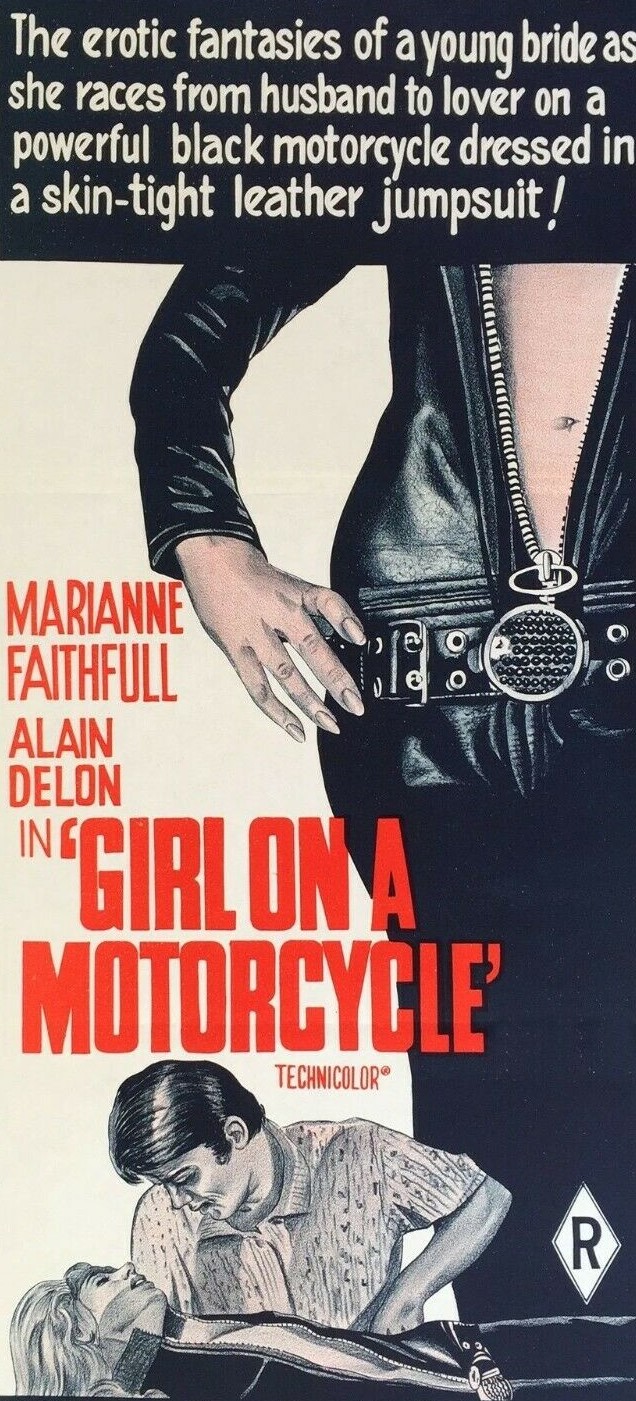


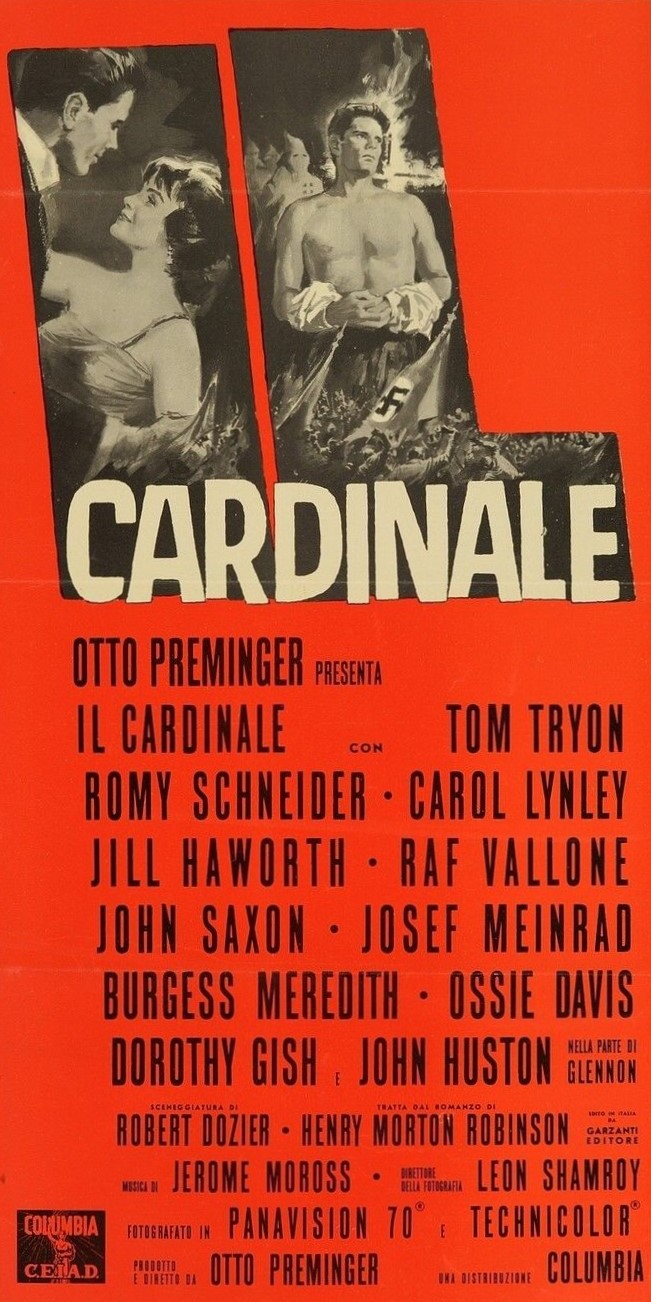
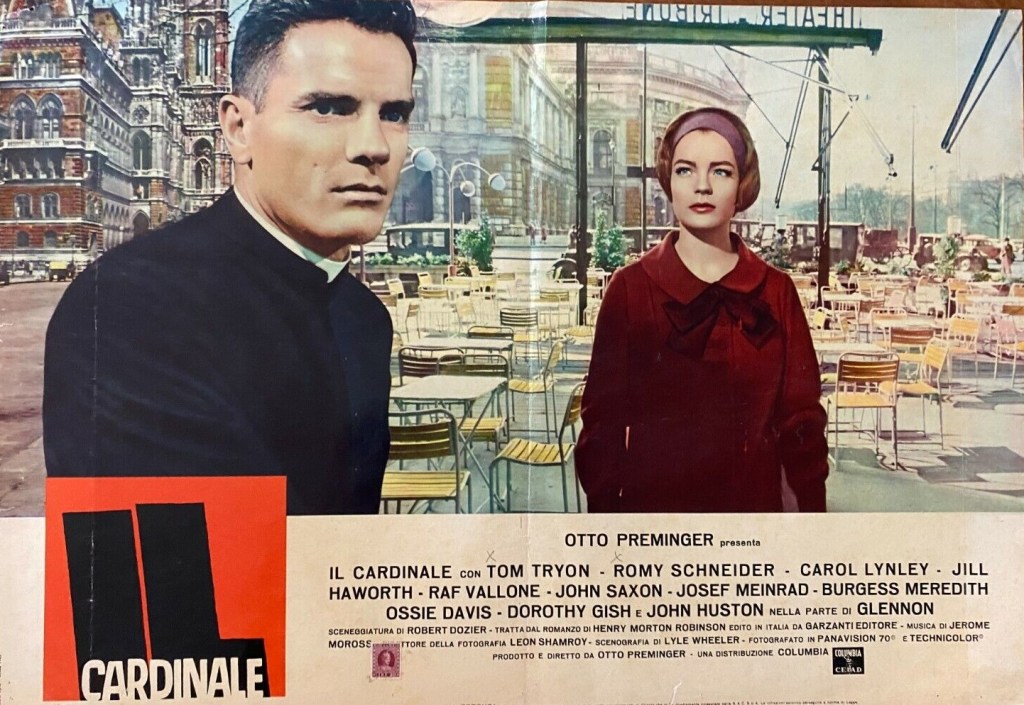


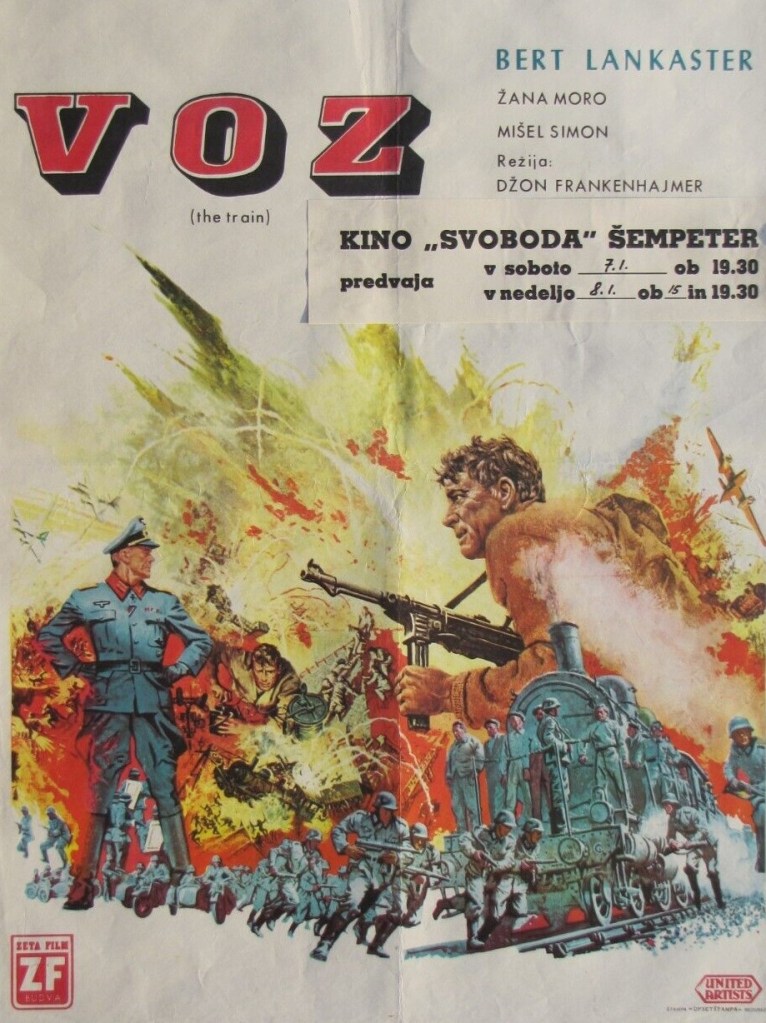


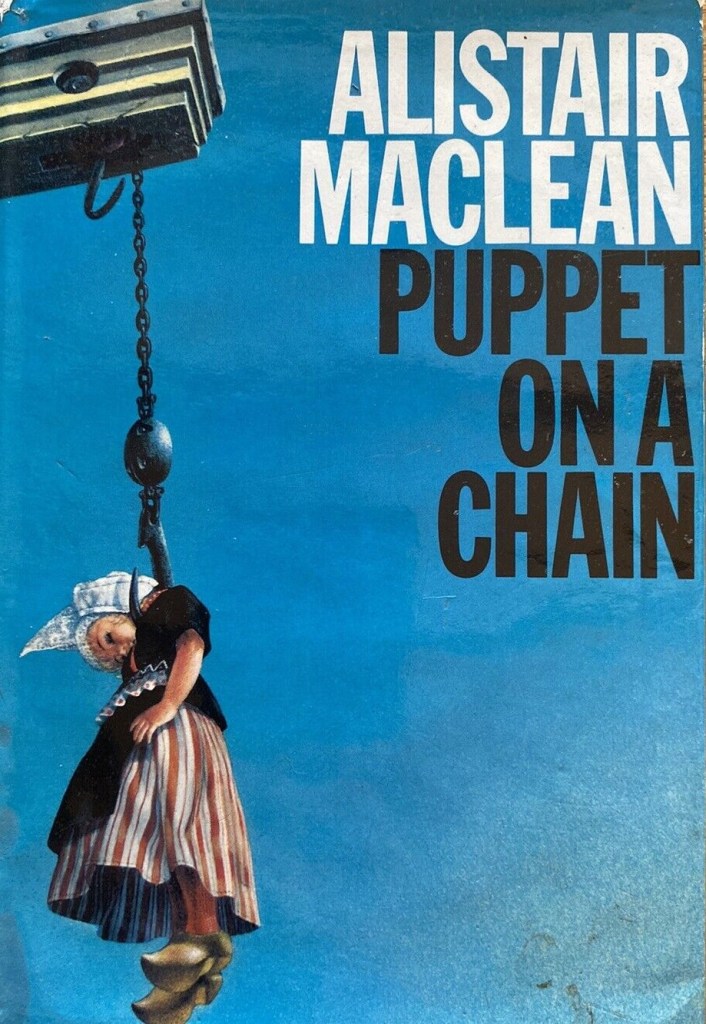
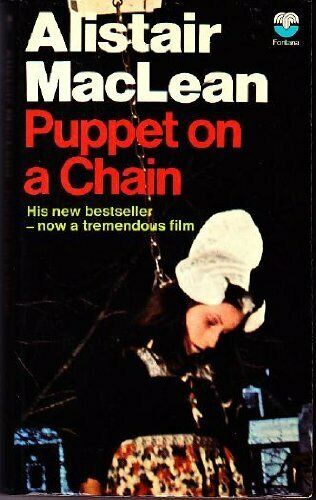
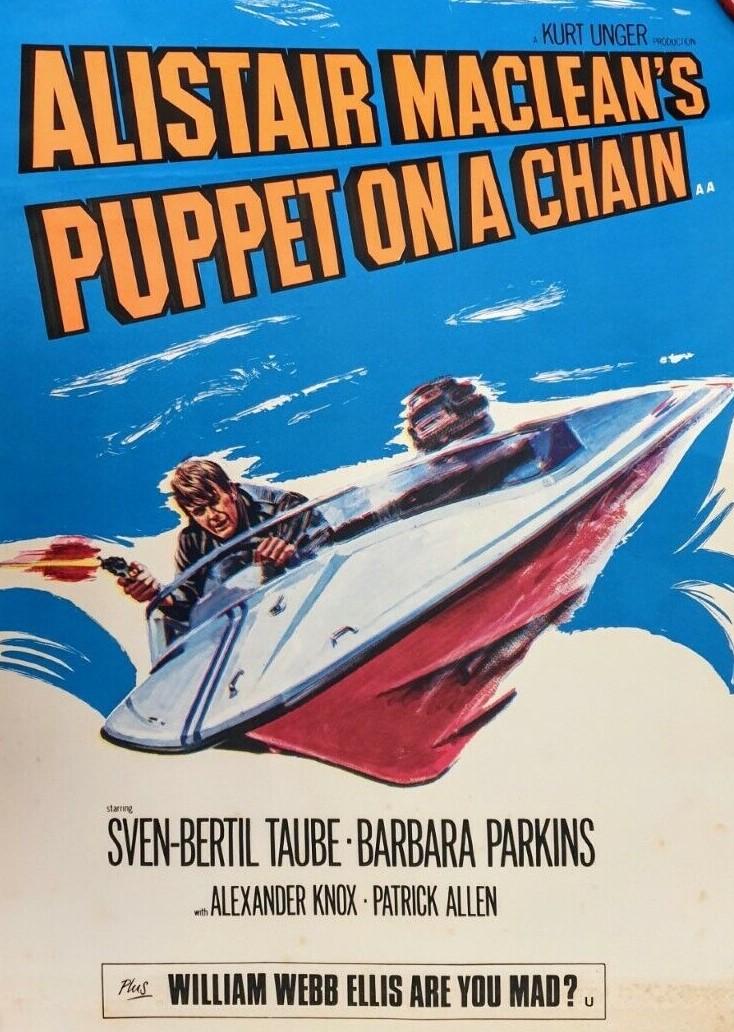
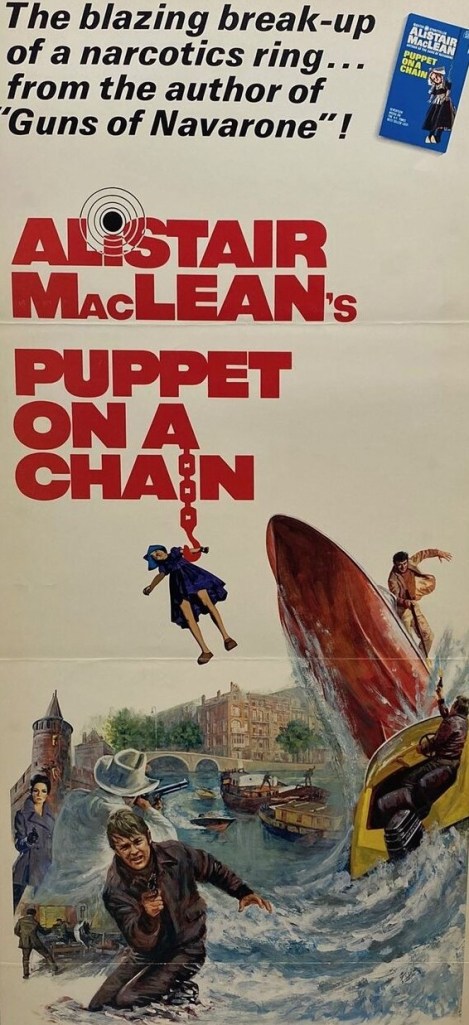
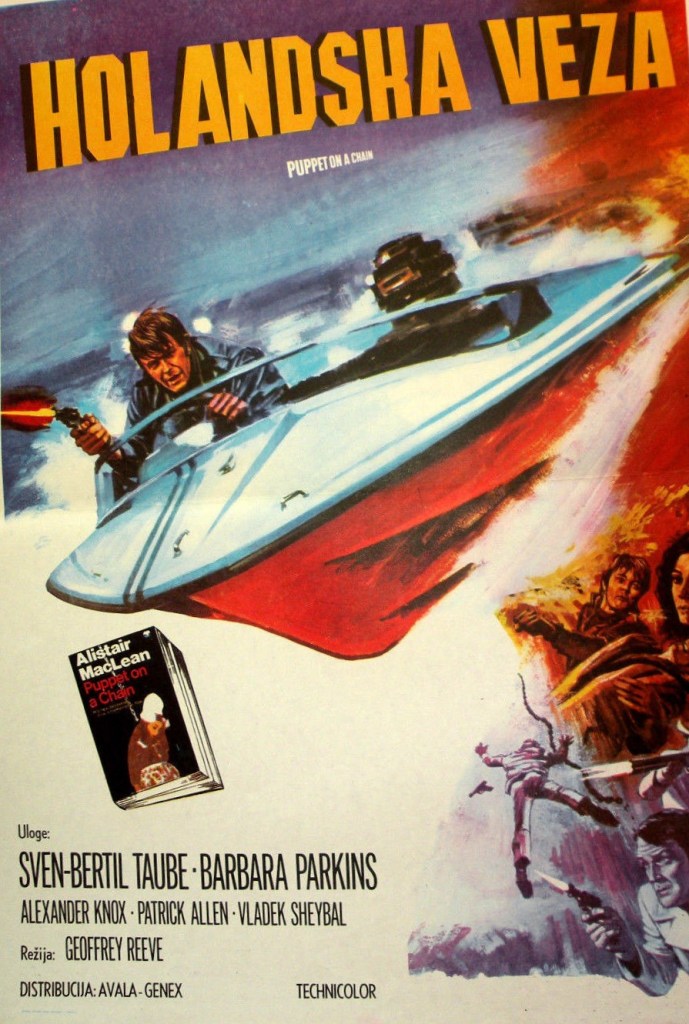
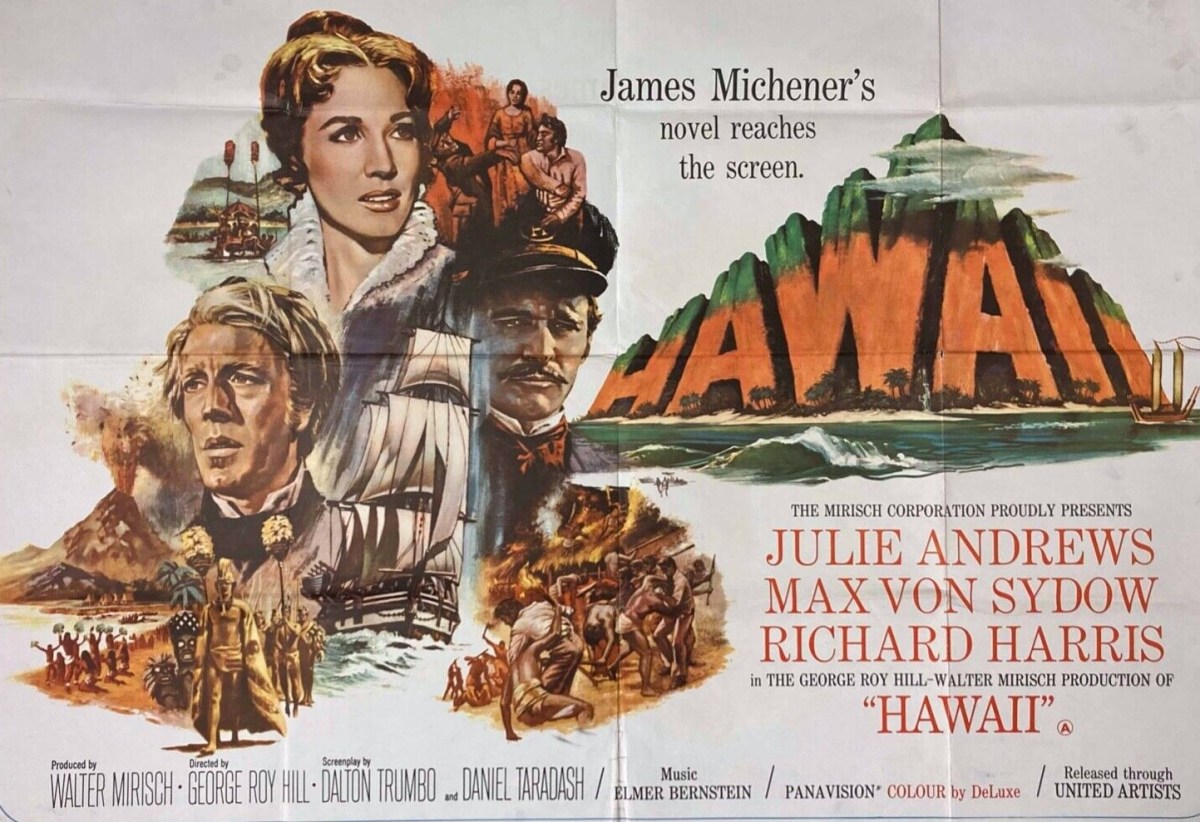
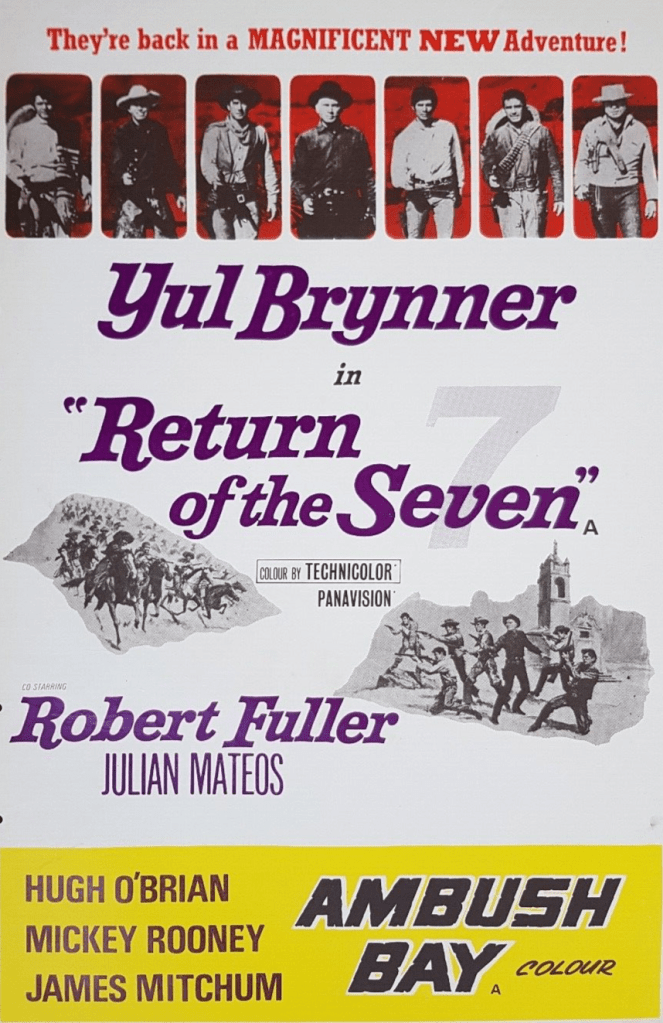
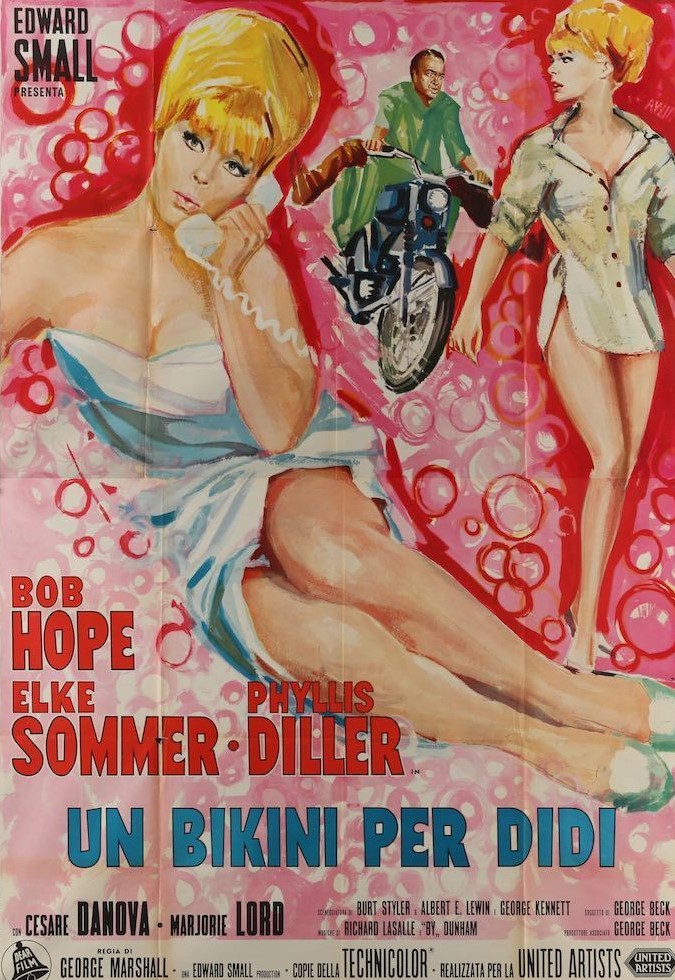
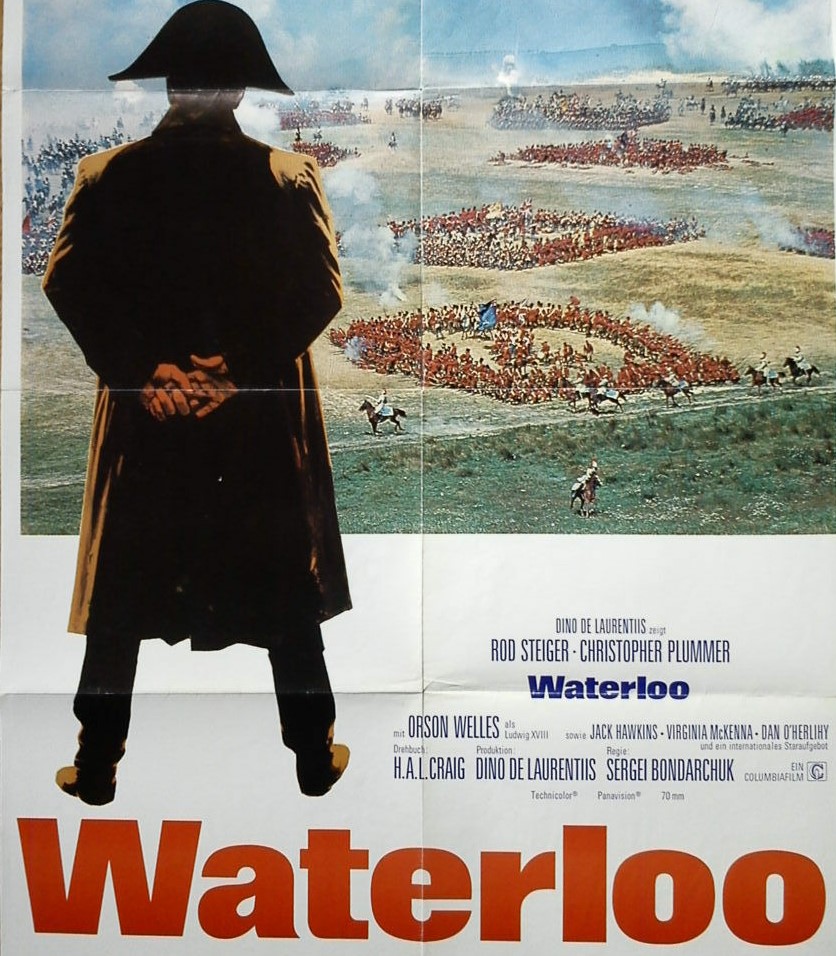


 The Magnificent 60s