I am a published author of books about film - over a dozen to my name, the latest being "When Women Ruled Hollywood." As the title of the blog suggests, this is a site devoted to movies of the 1960s but since I go to the movies twice a week - an old-fashioned double-bill of my own choosing - I might occasionally slip in a review of a contemporary picture.
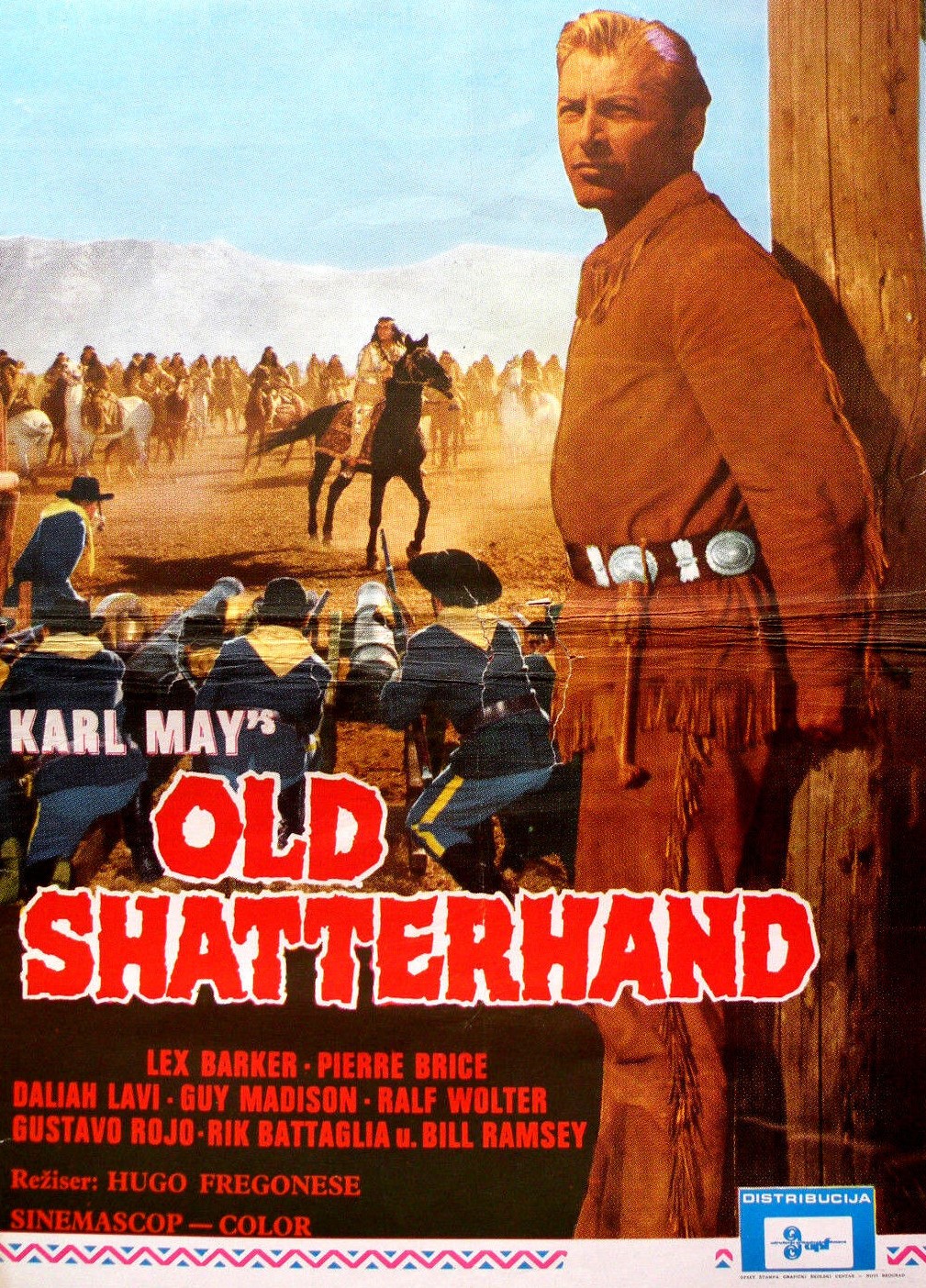
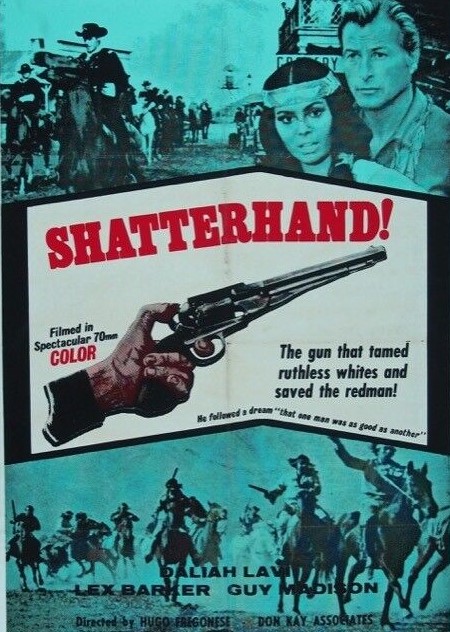
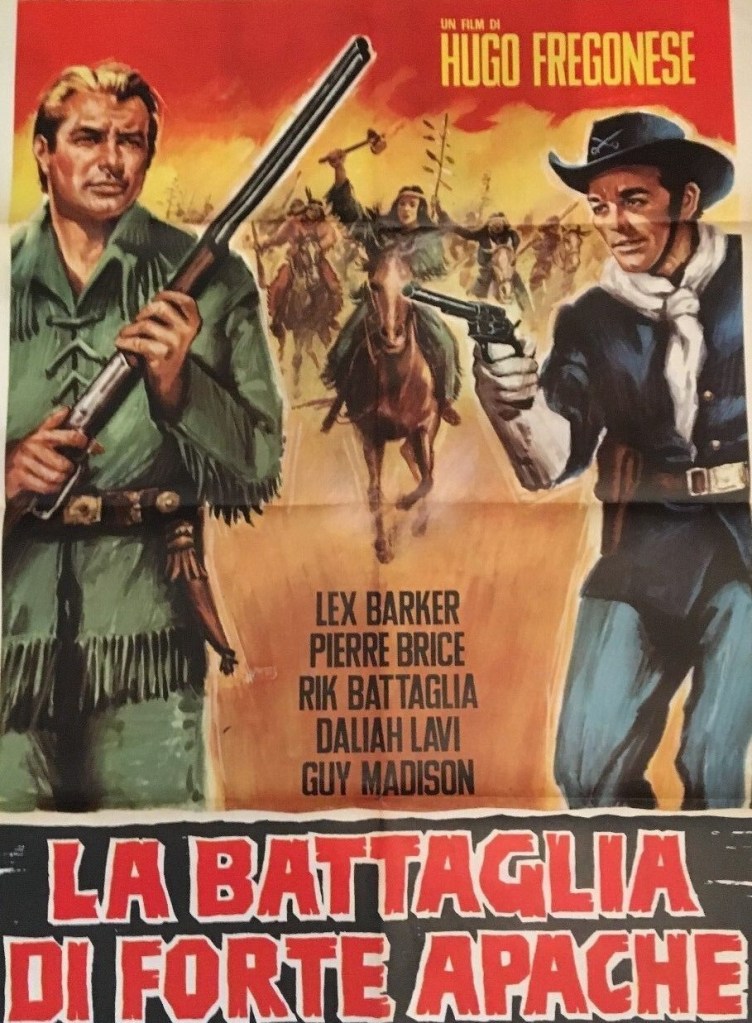
Blame Lex Barker (Pirates of the Coast, 1963) and Daliah Lavi (The Demon, 1963) for my interest in this German-made western. In the aftermath of the spaghetti western and the messianic writings of Christopher Frayling I’d been aware of the Karl May western boom in the early 1960s and a series revolving around cowboy Old Shatterhand and his buddy Apache chief Winnetou, based on the novels of May who died in 1912. Quite why it took the 50th anniversary of his death to make the Germans wake up to his potential is anybody’s guess.
Theoretically, he was the German equivalent of Zane Grey, but unlike the American author whose novels were filmed over 100 times before the 1960s, only six movies were made from May westerns up to that point compared to over 20 and umpteen small-screen features and series since. Treasure of the Silver Lake (1962), the number one film at the German box office that year, was credited with starting the boom.
Story here is quite simple but the cinematography, filmed in 70mm, is breath-taking, even if it’s primarily of Yugoslavia. And there’s an iconic score. Hugo Fregonese (Marco Polo, 1962) isn’t in the Sergio Leone league – he doesn’t come close – but the picture is held together by Lex Barker (Pirates of the Coast, 1963) as Shatterhand and Frenchman Pierre Brice (Samson and the Slave Queen, 1963) as Winnetou with Daliah Lavi popping up as half-breed Paloma, not, interestingly enough, romancing either of the principals, and actually exploring her maternal instinct, looking after the orphaned Tom (Leonardo Putzgruber), more central to the narrative.
Guy Madison (Tobruk, 1967) used his matinee idol looks in kind of a role reversal, the idea of a handsome villain being anathema to audiences of the period, more accustomed to bad guys in the Jack Palance-Lee Marvin vein.
U.S. Cavalry Capt. Bradley (Guy Madison) teams up with the Commanche to frame Winnetou for the murder of settlers in order to disrupt peace negotiations between the Native Americans and the Government. Tom, the only survivor of a massacre, is later brutally murdered by the soldiers. Not quite lingering on the baby blues of ruthless killer Henry Fonda in Once Upon a Time in the West (1969) but still breaking a big taboo.
As you might expect there’s an attempted lynching but you’d be surprised to see this amount of nudity for the time, though, of course, a nice peaceful river always proves too much of a temptation for skinny dipping. There’s some pretty decent action, and the Native Americans get to show off their marksmanship with a bow-and-arrow, and there’s an axe duel instead of the usual fisticuffs. Shatterhand doesn’t always come to the rescue, for the finale he’s tied up. But there’s some interesting authentic detail, a male saloon keeper, for example, hanging out towels to dry, and when Native Americans ambush a wagon train with boulders it is logically achieved – and the boulders look dangerous enough. There’s a pretty big reversal when you’re cheering on a Native American attack on a fort.
Although the American western was about to enter a revisionist period, there was no equivalent to the ongoing friendship between Shatterhand and Winnetou or the idea that the Native American was a regular guy.
There’s not enough story to support a two-hour movie but the scenery is stunning and you can see why Lex Barker was invited back to the well several times. Daliah Lavi’s talent was often overlooked in favor of her beauty but here, at least, she has a part with some meat.
As you know I’m a sucker for a swashbuckler. And as often I’m suckered. But this is an unexpected delight, as much double-dealing as derring-do, an intelligent plot, huge slices of cunning on every side, and some decent action.
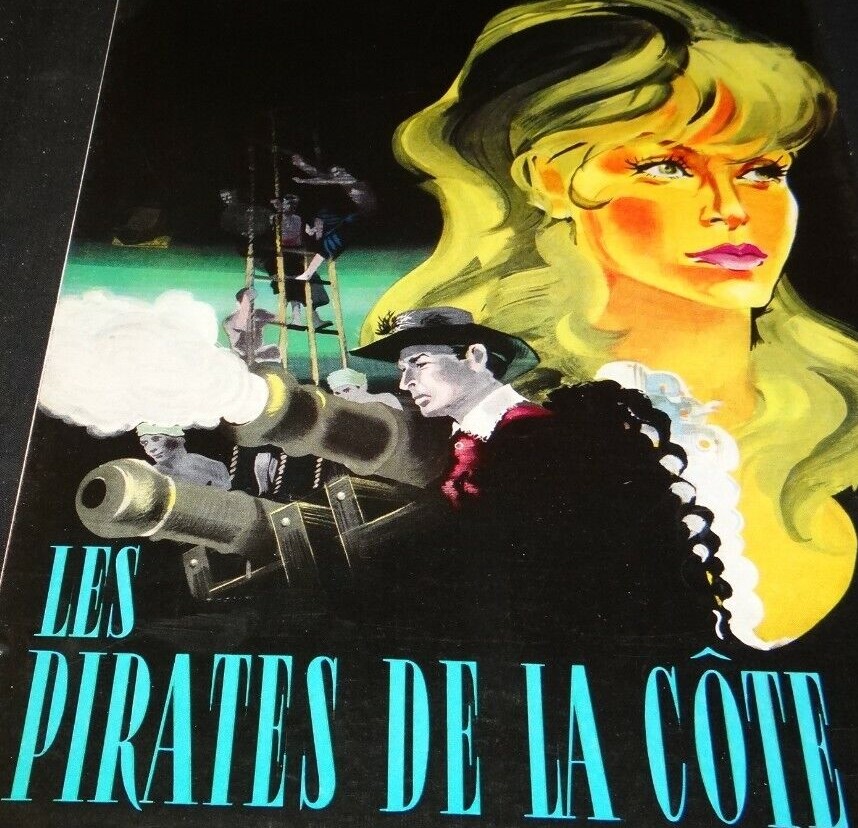
While esteemed for his nautical skills Capt Luis Monterey (Lex Barker) is less lucky on the romantic side, rejected by wealthy Isabela (Estella Blain), niece to the powerful Governor Don Fernando (Loris Gizzi) who plans to marry her off to the Governor of Santa Cruz. But Hispaniola is riddled with pirates, just how cunning Monterey discovers when, transporting a shipment of silver, he stops to pick up a raft of shipwrecked womenfolk only to find they have sabotaged his vessel, allowing it to become easy pickings for dread pirate (as William Goldman would say) Olonese (Livio Lorenzon).
Blame for the disaster falls on Monterey and accused of treason is condemned to life in prison, but while being shipped back to to Spain manages to escape, hijack the ship, turn pirate himself, make for Tortuga and team up with Olonese. Monterey gets away (courtesy of the disguise of an eyepatch) with posing as Capt Nobody (the moniker Capt Nemo already being taken, presumably) since Olonese has a terrible memory and can’t place him as the commander of the ship bearing the silver. To prove his worth, Monterey must take part in an attack on Santa Cruz. But while the original pirates raid the town, plunder the gold and make off with Isabela (sent there to romance the Governor), Monterey’s vessel is out-gunned by the island’s fortress and left to founder.
Monterey returns in time to save Isabela from the clutches of Olonese but meanwhile we learn that Olonese and Fernando are in infernal league, plotting to monetize impending war between the English and the Spanish, with Isabela now tossed in as a makeweight for the deal. So of course Monterey has to put the world to rights.
So plenty of twists and turns, the romantic elements complicated by Olonsey’s moll Ana (Liana Orfei) taking a shine to Monterey and, discovering she also has principles, shocked at the pirate chief’s betrayal. Ana is an ideal criminal confederate, as head of the supposed shipwrecked women, leading on Monterey’s crew, getting them drunk on rum, and flooding the hold containing the ship’s supply of gunpowder, making opposition to the raiding pirates hopeless. And there’s time enough for Isabela to rue the error of her ways, not just being stuck with her uncle’s initial choice of consort but being traded off to the pirate.
The costumes are wonderful and the ships look quite splendid and there’s plenty action, including a duel between Monterey and Olonese. It’s helped along by Monterey not being as astute as your normal swashbuckler, dupe in a clever scheme hatched by Fernando, and patsy once again to Olonese. The fact that he’s an unrequited lover means he doesn’t fit into the all-conquering-stud of the Errol Flynn persuasion. So, a more complicated character than normally permitted in the swashbuckler.
Lex Barker had made a steady progression from donning the loincloth (Tarzan’s Magic Fountain, 1949) to muscular heroic figure of B-westerns and adventures before stepping into swashbuckler territory with the likes of The Pirate and the Slave Girl (1959) and he’d make another screen transformation into Old Shatterhand with Winnetou (1963) as well as crime efforts like 24 Hours to Kill (1965). While not an A-list star, he was dependable and given the right material, such as here, cuts quite a dash.
French star Estella Blain (Angelique and the King, 1966), was also a singer, though she commited suicide in 1982, but she has the straight romantic role here, not much to do except appear distant at first then see the error of her ways. Former trapeze artist Liana Orfei (Hercules, Samson and Ulysses, 1963) has the better role as the spitfire who switches sides.
Ode to the male gaze. Once a cult vehicle, this will struggle to find favor these days what with its backward attitudes. Virtually impossible to excuse the rampant self-undulgence. The sexually exploited naïve Ewa Aulin in the title role didn’t even have the benefit of being turned into a star. The satire is executed with all the finesse of a blunderbuss. And while, theoretically, picking off a wild range of targets, if this movie has anything to say it’s to point out how easy it is for men to deify themselves at the slightest opportunity.
Not much of a narrative more a series of sketches slung together with the slightest connecting thread. Most its appeal lies in watching huge marquee names make fools of themselves. Or, if you’re that way inclined, seeing how much nudity will be imposed on the star, intimacy rarely consensual, clothes usually whipped off her.
Teenager Candy (Ewa Aulin) has father issues, daddy (Jack Austin) being a dumb angst-ridden teacher. Randy poet McPhisto (Richard Burton) drives a class of schoolgirls into a frenzy with his lusty reading, inveigles Candy into his chauffeur-driven car, ends up in her basement drunkenly humping a mannequin while Mexican gardener (Ringo Starr) with an accent as coruscating as that of Manuel from Fawlty Towers assaults her on pool table. Scandalized father packs her off to his twin brother in New York, that notoriously safe haven for nymphettes, while on the way to the airport they are almost driven off the road by the gardener’s vengeful biker sisters (Florinda Balkan et al).
For no apparent reason she is hitching a lift on a military plane commanded by randy Brigadier Smight (Walter Matthau) who, on the grounds that he hasn’t had sex for six years, commands her to remove her clothes for the good of the nation. In the Big Apple, rock star surgeon Dr Krankheir (James Coburn), entering the operating theater to the same kind of waves of acclaim as McPhisto, finds an excuse to have her undress and submit to him, this just after she’s managed to avoid the attentions of her randy uncle. It should come as no surprise that Krankheit treats women as his personal property to the extent of branding them like cattle.
In due course, she encounters a gang of mobsters, an underground movie director and a hunchback (Charles Aznavour) who, in return for her showing pity for his condition, proceeds to rape her. She is arrested. Guess who wants to frisk her. Naturally, when she escapes she runs into a bunch of drag queens.
Then she finds sanctuary in a semi-trailer truck, home to guru Grindl (Marlon Brando). He’d be convincing enough as a mystic except he, too, finds an excuse to rip her clothes off. There are more cops to contend with and another guru, facial features obscured by white clay. If they’re going to have sex then naturally it must be in a Hindu temple. Turns out the latest person to take advantage of her is her father but he’s been handed a get-out-of-jail-free card because by now he’s brain damaged.
This might all be a dream/nightmare. Candy might even be an alien. It’s dressed up in enough psychedelia to sink a battleship and its highly likely that any lass as gullible as Candy will find herself at the mercy of any man, so in that context it carries a powerful message. I’m sure many beautiful young girls will attest to the truth that men feel they have the right to paw anyone who comes their way without asking permission. And the other message is just as powerful – how many young actresses have been seduced by thoughts of fame to disport themselves in this fashion only to find that all the industry wants is their nudity not their acting talent.
You might say that the target is so obvious it hardly needs pointing out but the MeToo campaign will beg to differ and you would hope that Hollywood has wised up. It’s just a shame that the satire is so heavy-handed. The military and the medical profession are sorely in need to answering tough questions. Unfortunately, this picture doesn’t ask any. It’s like an endless casting couch.
Directed by Christian Marquand (Of Flesh and Blood, 1963) in, thankfully, his final picture, from a screenplay by Buck Henry (The Graduate, 1967) and Terry Southern (Dr Strangelove, 1962) based on the novel by Southern and Mason Hoffenberg. Nobody comes out of this well and it’s rammed full of cameos from the likes of Elsa Martinelli (The Belle Starr Story, 1968), John Huston (Myra Breckenridge, 1970), Anita Pallenberg (Performance, 1970), Marilu Tolo (Bluebeard, 1972) and boxer Sugar Ray Robinson.
Ewa Aulin (Start the Revolution Without Me, 1971) isn’t given much of chance, her character whimsical, pallid and submissive and she didn’t become a major marquee name.
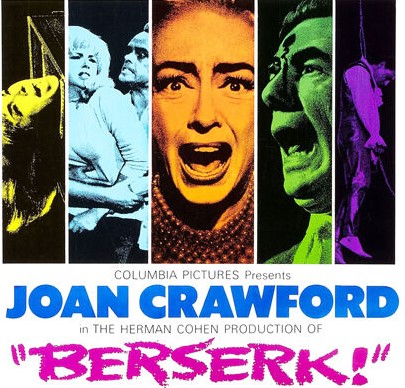
“Murder is good for business,” declares magnificently callous circus boss Monica (Joan Crawford). And so is nostalgia. Interrupting the action every ten minutes or so with the kind of circus act – courtesy of legendary British ringmaster Billy Smart – that you couldn’t see these days is probably going to win more viewers than seeing Joan Crawford in late vintage nastiness. Roll up, roll up for the elephants ridden by glamorous lasses, death-defying (or not so much) high-wire acts, prancing horses, knife-throwing, cutting a woman (and who better than a sequined Diana Dors) in half, and “intelligent” poodles (is there any other kind?).
Step aside John Wayne (Circus World, 1964), whose magnificent showmanship has nothing on circus master Monica, calling the shots and not just in the ring. She rides roughshod over business partner Albert (Michael Gough), pushes back into his box newcomer Frank (Ty Hardin), and packs daughter Angela (Judy Geeson) off to boarding school to shut the book on maternal instinct in case it gets in the way of running the show.
Throw in a good few hapless coppers, including a toff – Monica being such a big noise it requires the involvement of a Commissioner (Geoffrey Keen) and a Superintendent (Robert Hardy) – who pop up sporadically and show surprisingly little skill for detection beyond standing over a corpse or murder implement and making a pronouncement. Naturally, such an atmosphere is riven with jealousy and it doesn’t take much to start a cat fight, no surprise to see Matilda (Diana Dors) in the thick of it.
When her star act dies (murdered) on the high wire and Monica looks around for a replacement, she happens upon pushy Frank (Ty Hardin) who not only walks across the tightrope blindfold, but operates without a safety net and should he fall will land on a series of nasty spikes. He wants to share her bed and her business, but has some dodgy backstory, hints of some incident in Canada seven years ago.
So just as Monica reckons the thrill of possibly seeing death occur in front of their eyes will pull in the punters, that could be (though I doubt it) an ironic nod at the cinema audience since, as in all serial killer pictures, viewers are calculating who will be killed next, and not so much who the murderer is, but who will survive at the end. Luckily, this is British and made in times when the censor exerted a tighter rein, so you can be sure nobody’s going to meet a sticky end just because they’ve had illicit sex.
As if her employees were scary beasts, Monica beats them into submission, though, in fact, outside of Frank, nobody’s got the guts to challenge her. And it being the 1960s and forensics not much in evidence and, frankly, the producers not much interested in rounding up any suspects, you just sit back and wait to see who will be next. Will someone scare the prize elephant into misplacing a foot and crushing to death the beauties lying on the ground so that it can daintily step over them? Will the knife-thrower miss his marks or the spinning wheel containing his human target be rigged to go awry?
My money was on the poodles attacking their mistress for making them jump over a skipping rope. I hadn’t quite seen coming Albert being foolish enough to lean against a post with his head positioned exactly beside a hole so that from behind someone could hammer a spike into it. That should have made Monica a suspect because he wanted out of the business, except she has stolen and burned their contract and not a single soul in the entire circus appears to know that he even was her business partner.
Angela, when she turns up accompanied by a headmistress, appears to be a chip off the old block, turfed out of yet another school for “causing trouble.” Monica looks as if she was born to be trouble, and you can imagine the machinations that led her to owning a circus. There’s a surprisingly tender mother-daughter reunion and the daughter is soon enrolled in an act.
The ending seems straight out an Agatha Christie novel, take the least likely contender and make them the villain, with psychobabble as justification.
I have to say that I enjoyed this, as much for the circus acts as for seeing noir queen Joan Crawford (Mildred Pierce, 1945) returning to the tough-as-they-come persona of Johnny Guitar (1954) rather than the theatrics of Whatever Happened to Baby Jane (1962). A pre-lugubrious Michael Gough (Batman, 1989) and a non-blousy Diana Dors (Hammerhead, 1968) add to the treats. Maybe Sidney Sweeney (Immaculate, 2024) consulted the Judy Geeson (Prudence and the Pill, 1968) playbook in assessing the career value of appearing in a horror movie. Ty Hardin (Custer of the West, 1967) is miscast, especially in his high-wire wobbles, though anyone thinking they can act Ms Crawford off the screen should be taken away and locked up.
Jim O’Connolly (Vendetta for the Saint, 1969) directed from a script by the team of Aben Kandel and producer Herman Cohen (Black Zoo, 1963).
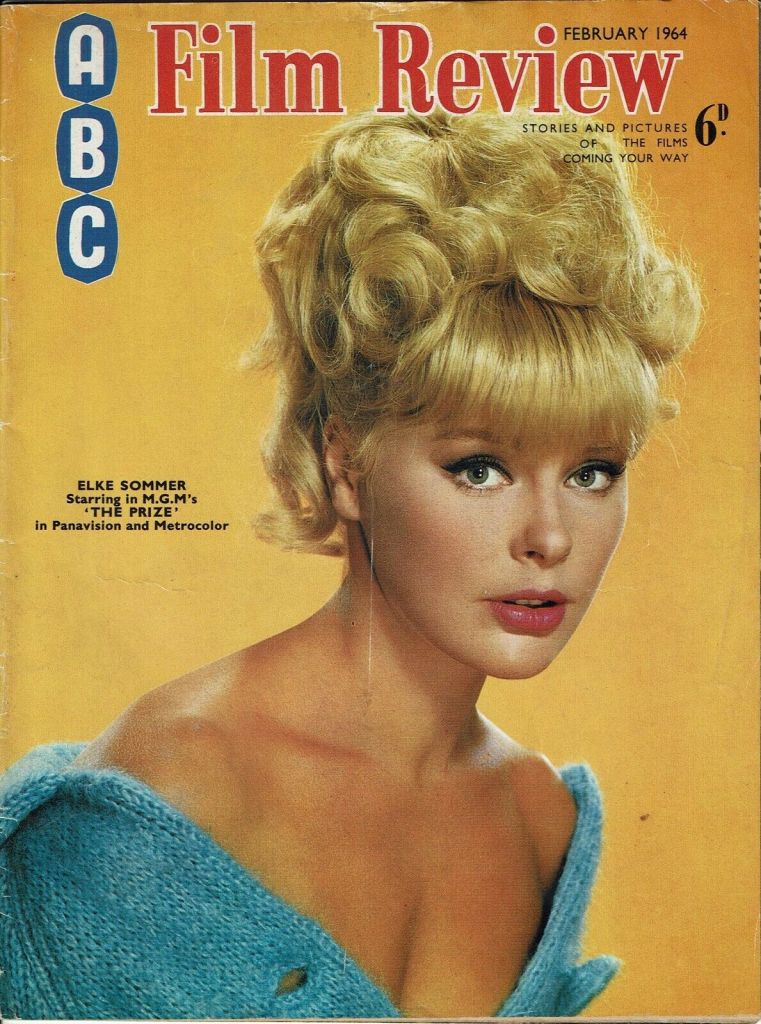
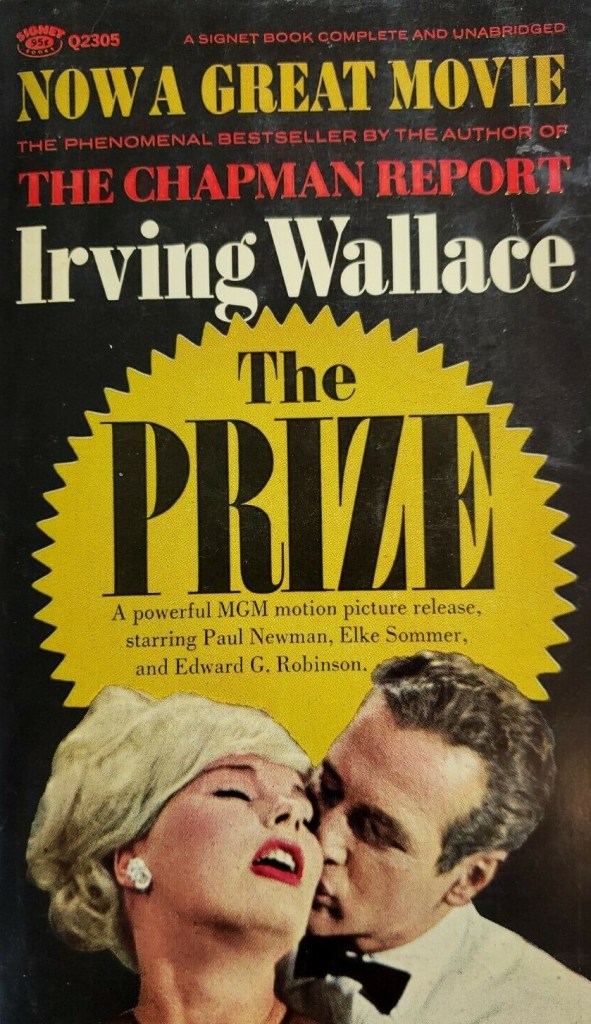
Thoroughly involving potboiler with alcoholic novelist Andrew Craig (Paul Newman) turning unlikely detective to uncover murky double-dealings at the annual Nobel Prize ceremony. Based on the Irving Wallace bestseller set in Stockholm, director Mark Robson (Von Ryan’s Express,1965) strings together a number of different stories that coalesce in a gripping climax. Screenwriter Ernest Lehman (North by Northwest,1959) brings alive what could have been a very soggy adaptation of a beefy bestseller with witty and literate dialog and a plot that hovers just the right side of hokum.
Inger (Elke Sommer), delegated to look after the author, starts out as a stuffed shirt not a sexpot, allowing Newman’s attention to drift towards Emily Stratman (Diane Baker) – daughter of another winner Dr. Max Stratman (Edward G. Robinson) – while he is dragged into romantic entanglement with neglected wife Dr Denise Marceau (Micheline Presle). Mostly, Newman just wants his next drink, and his almost continual inebriation sparks some good comedy and he is gifted good lines to extricate himself from embarrassment. Simmering in the background are warring winners – the Marceau husband-and-wife team and Dr John Garrett (Kevin McCarthy) convinced that Dr Carlo Farelli (Gerard Oury), with whom he is sharing a prize, has stolen his research.
There are sufficient character clashes and plots to be getting along with if you were just intent on taking a Valley of the Dolls approach to the material, that is, cutting between various dramatic story arcs, but, without invalidating the other subsidiary tales, the movie takes quite a different turn, providing the potboiler with considerable edge.
Turns out that Andrew is so impoverished that he has been writing detective novels under a pseudonym and suspecting that Dr Stratman is an imposter he starts investigating. So in some respects it’s a private eye procedural played out against the glamorous backdrop of the awards. But the clues are inventive enough and there is a femme fatale and once Inger comes along for the ride and with Andrew a target the picture picks up an invigorating pace. Echoing the humorous auction scene in North by Northwest is a sequence set in a nudist colony where Andrew seeks refuge to avoid villains while another terrific scene plays out in the docks.
Paul Newman looks as if he is having a ball. In most of his pictures he was saddled with seriousness as if every part was chosen with an eye on the Oscars. Here, he lets rip with a lighter persona, and even if he mugs to the camera once too often, the result is a screen departure that lifts the picture. Inebriation has clearly never been so enjoyable. Sommer is a delight, showing great dramatic promise. Edward G. Robinson (Seven Thieves,1960), more renowned for his gangster roles, convinces as a scientist. Diane Baker (The 300 Spartans, 1962), Kevin McCarthy (Invasion of the Body Snatchers,1956) and Leo G. Carroll (North by Northwest) provide sterling support.
Robson directs with dexterity, mostly with an eye on pace, but it is Lehman’s script with occasional nods to Hitchcock that steals the show.
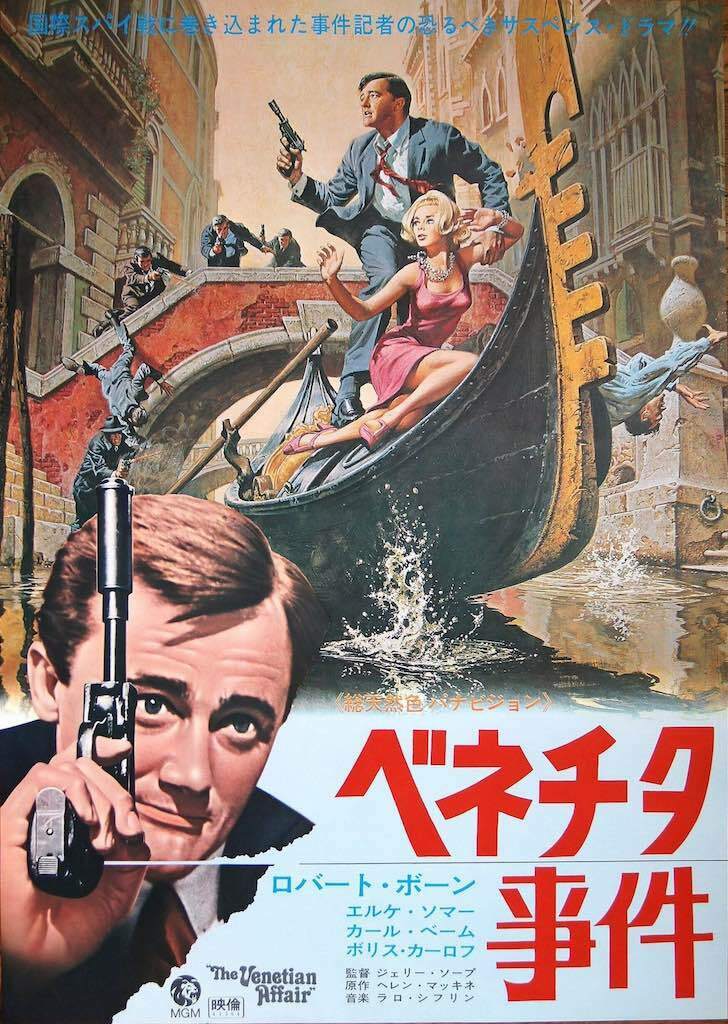
Robert Vaughn gives a terrific performance as a numbed alcoholic ex-C.I.A. journalist Bill Fenner drafted into Venice to investigate a plot involving ex-wife and Communist defector Sandra Fane (Elke Sommer). He’s the spy who lost it rather than a flashy contemporary of James Bond. This occasionally very stylish number kicks off with a terrific credit sequence that concludes with a suicide bomber blowing up a nuclear disarmament conference. Unshaven and with a Columbo cast-off overcoat, Fenner discovers Fane was key to the bombing, the bomber an otherwise distinguished diplomat with no known proclivities in the area of mass murder.
Although sold as an action picture, nobody is ripping through the canals as in a Bond film, and it is altogether a more somber, reflective, intelligent movie. Fenner’s feelings for his ex-wife are palpable when, in her apartment, he tenderly touches her clothes and smells her perfume. Far from being party to the plot, it appears Sandra has had a change of heart and wants to defect back, leaving Fenner in a perilous dilemma. Does he believe her or is she just using him? It is beginning to sound like a modern-day film noir, except he is already being used by the C.I.A., his presence in Venice a device to draw Sandra out, C.I.A chief Rosenfeld (Edward Asner) every bit as ruthless as the villains.
His investigations lead him to Dr Pierre Vaugiraud (Boris Karloff) and power broker Robert Wahl (Karl Boehm) who has a mind-altering drug that can make a man terrified of a mouse, send him into a trance and on his way to deliver savage retribution. There is death aplenty, fisticuffs and chases and Sandra, in hiding disguised as a nun, is worth waiting for.
Based on the bestseller by Scottish novelist Helen MacInnes, who challenged Alistair MacLean in her day, the project was at one point to be directed by Guy Hamilton. Coincidentally, David McCallum, Vaughn’s co-star in The Man from U.N.C.L.E. television series, was in Venice at the same time shooting Three Bites of the Apple.
Television stalwart Jerry Thorpe making his debut contributes some interesting moments. Interpreters listening in to the conference hear the magnified ticking of the bomb moments before explosion. The sequence on a train is well done and the activity surrounding the mouse is first class. Vaughn is superb in a downbeat role – shaking off his Napoleon Solo television persona- never sure if he is being duped, on the rack from falling back in love, and emerging from an alcoholic haze with a few decent ruses up his sleeve.
There’s a solid cast, Asner menacing even as a good guy, Karl Boehm a charismatic villain, Karloff memorable in his last performance in a non-horror picture, and interesting appearances by Felicia Farr as a C.I.A agent masquerading as the murderous diplomat’s unsuspecting mistress and Luciana Paluzzi as the girlfriend of an agent. Lalo Schifrin produces an outstanding score.
It was a flop first time round because audiences, partly duped by the title (all Uncle episodes incorporated the word “Affair” although the book, in fairness, was written long before the television series was envisioned) expected to pay to see Napoleon Solo, or something quite like him, on the big screen, with all the pizzazz and gimmickry of the small-screen show. Unfairly under-rated, this is a really satisfying thriller set against a murky Cold War background with Vaughn, trapped between love and redemption, the only character with a streak of morality.
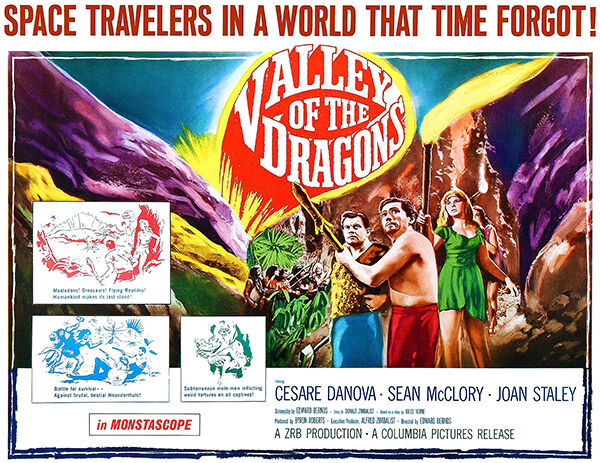
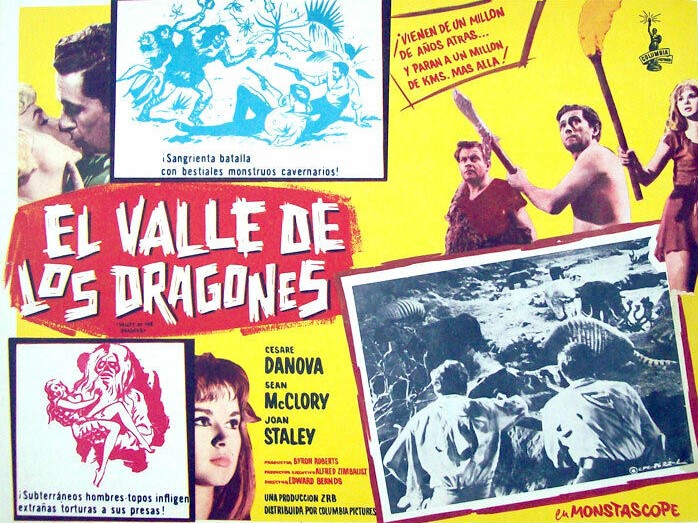
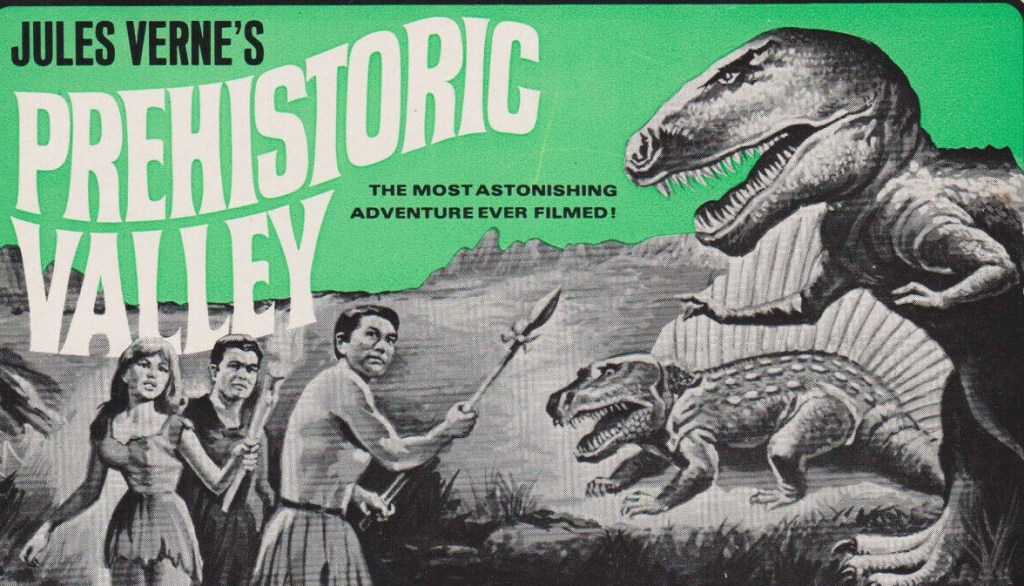
“Producers must become real businessmen,” said Al Zimbalist, “and settle down to cutting corners.” [1] And he set about giving an object lesson in the art of cutting corners in producing Valley of the Dragons.[2] First of all the source novel by Jules Verne, Hector Servadac or The Career of a Comet, was out of copyright, in the public domain, so nothing was spent on that. Secondly, it just so happened that Columbia had a “magnificent” jungle set standing by, built at the cost of half a million bucks for The Devil at 4 O’Clock (1961), but now, that Spencer Tracy-Frank Sinatra effort complete, standing empty and to a producer with a persuasive tongue available at no cost.[3]
Thirdly, such a persuasive producer could convince Columbia to put a ceiling on the overhead they attached to any picture to cover their general office costs. Fourthly, he had acquired the rights to One Million B.C. (1940) and could plunder that picture for stock shots of prehistoric monsters. And fifthly, with budget limited in any case to $125,000,[4] he couldn’t afford to pay anybody much anyway and so was inclined to offer no more than $6,000 for the script.
Director Bernds was under the misapprehension (see below) that the source book hadn’t been published in the U.S. Well, here’s proof that it was, and pretty much as soon as it appeared in 1877.
As it happened, Zimbalist could possibly afford to spend more given he was sitting on a $3 million worldwide haul from Baby Face Nelson (1957).[5] With partner Byron Roberts, he had just inked a multi-picture deal with Columbia, Valley of the Dragons the first product. Also on his slate: The Well of Loneliness based on the controversial novel by Radclyffe Hall, The Willie Sutton Story to star Tony Randall, a biopic of Bugsy Siegel and four television projects.[6] Zimbalist didn’t hang about. Valley of the Dragons went in front of the cameras on January 30, 1961, and was scheduled to hit U.S. cinemas in May[7] though ultimately it was delayed till the fall. Unfortunately, there was a surfeit of “dragon” pictures on the market what with Goliath and the Dragon and The Sword and the Dragon.
Zimbalist specialized in B-movies like Cat-Women of the Moon (1953), King Dinosaur (1955) and Tarzan the Ape Man (1959) in which Cesare Danova was second-billed. Baby Face Nelson, helmed by Don Siegel, was his best-made and most successful picture. Director Edward Bernds was cut from the same B-picture cloth with titles like Space Master X-7 (1958), Queen of Outer Space (1958) with Zsa Zsa Gabor and Return of the Fly (1959).
“Science takes a beating,” commented the director of the movie’s premise, explaining that it was not only unscientific but “utterly ridiculous.” The book, he claimed, had never been published in the U.S. because it was “viciously anti-Semitic” and it was brought to the producer’s attention by his son Donald, on vacation in London, who happened upon a second-hand copy in a bookstall. Although given a story credit – and thus some residuals – that was the only part Donald played in the making of the movie. The basic story was “shaped” by the stock footage. Bernds knocked out a 10-page treatment that Zimbalist shopped to Columbia. Although the budget was tiny, the producers would be due to pay for any overages.[8]
“The Jules Verne name meant box office at the time,” recalled Bernds.[9] Added Zimbalist, “Jules Verne was as big a name as Marlon Brando” with the advantage that “Verne never had a flop…with Verne you don’t need Marilyn Monroe.”[10] To help promote the movie, Zimbalist sent out on tour 50ft replica monsters and advertised it as being made in “Living Monstascope.”[11]
The special effects didn’t always go according to plan. While the giant spider’s jaws were spring-loaded and snapped shut thanks to magnets, the legs, operated by motors, did not always work and it was largely down to the actors to give the impression of an intense fight.[12] The rest of the special effects were simpler to achieve. An alligator given an extra dimension did duty as the dimetrodon, the T Rex was a giant blue iguana, a white nosed coati was passed off as the megistotherium, an Asian elephant covered in wool for the mastodon, while the pterodactyl came from the stock footage. “The cast was good, we had a reasonably fast cameraman…we didn’t have to spend a single day on location…and we did the impossible – brought the picture in on budget,” said Bernds.[13]
While the picture proved to be first run material, it didn’t top the bill, except in cinemas that gobbled up product, so initially it went out as support in 1961 to William Castle’s Mr Sardonicus (1961) but also played second fiddle to Mysterious Island, Weekend with Lulu and The Mask. [14] Results were mixed: a “fair “ $11,000 in Boston, “bright” $20,000 from five houses in Kansas City, “sluggish” $5,000 in Portland and “good” $13,000 in San Francisco.[15] It must have done well enough for it was revived the following year and topping a bill in Chicago that included Eegah (1962)[16] while an exhibitor in Texas deemed it a “nice surprise…will do good business for a Saturday playdate.[17]
Zimbalist didn’t realize his ambitions with Columbia. None of those projected movies materialized, nor did an anthology television series based around the works of Jules Verne.[18] He was quick off the mark to register the title Lucky Luciano after the gangster’s death in 1962,[19] but that didn’t translate into a movie. In 1964 he lined up a $2 million slate with Allied Artists including King Solomon’s Mines, Planet of the Damned, Jules Verne’s Sea Creature and Young Belle Starr.[20] But none of that quartet reached the screen either and his final pictures were Drums of Africa (1963) with MGM and the indie Young Dillinger (1965) which prompted an outcry over the violence.
Byron Roberts enjoyed a longer career, with credits for The Hard Ride (1971), Soul Hustler (1973) and The Gong Show Movie (1980). For good or bad, Bernds was rewarded for his efforts on Valley of the Dragons by becoming the go-to director for The Three Stooges, helming The Three Stooges Meet Hercules (1962) and TheThree Stooges in Orbit (1962) before sidling off for the animated version of their antics.
[1] “Varied Guesses on IA’S New Wages & Small Pix,” Variety, February 8, 1961, p3.
[2] “Another Jules Verne Yarn To Be Made Into Pic,” Box Office, May 1, 1961, pW!.
[3] Tom Weaver, Interviews with B Science Fiction and Horror Movie Makers (McFarland), p62-64.
[14] “Back St Holds Pace in 2nd Detroit Week,” Box Office, November 20, 1961, pME4; “Hawaii and Commancheros Neck-and-Neck in Seattle,” Box Office, December 4, 1961, pW3; “Hawaii Is Hartford Favorite a 2nd Timer,” Box Office, December 11, 1961, pNE1; “Mysterious Island Tops,” Box Office, January 8, 1962, pSE8.
[15] “Picture Grosses,” Variety: November 1, 1961, p8; November 8, 1961, p10; November 29, 1961, p15; December 6, 1961, p9.
[16] “Picture Grosses,” Variety, June 6, 1962, p9.
[17] “The Exhibitor Has His Say,” Box Office, July 2, 1962, pB6. This was at the Galena Theater.
[18] “Zimbalist-Roberts 3 Vidfilm Skeins,” Variety, April 5, 1961, p30.
[19] “Dead, Lucky Luciano Looks Sure for Filming,” Variety, January 31, 1962, p1.
[20] “Zimbalist Finances, 12 Go Allied Artists,” Variety, June 10, 1964, p4.
Jules Verne was the marquee attraction here after the box office success of 20,000 Leagues under the Sea (1954), the Oscar-winning Around the World in 80 Days (1956) and Journey to the Center of the Earth (1959), and to a lesser extent Master of the World (1961) and Mysterious Island (1961) with just around the corner another megahit In Search of the Castaways (1962) and minor hit Five Weeks in Balloon (1962). His works, I don’t need to tell you, are still being plundered.
Let’s get the hokey science out of the way first. In 1881 a passing comet scoops a wee bit of Earth including, crucially, some atmosphere, and two dudes Hector (Cesare Danova) and Michael (Sean McClory) who are just about to fire their weapons in a duel. Sensibly, “in the circumstances,” they decide to put their argument on hold, and later, like the true gentlemen they are, give up on the idea after they have saved each others’ lives.
I should point out, for the easily duped, that there ain’t no dragons, certainly nothing of the Games of Thrones variety, though there are prehistoric creatures, including neanderthals, aplenty. And Verne probably set the tone for modern cod sci-fi exposition with this cracker, explaining the existence of these monsters as because said comet had done a previous turn around the Earth a million years ago and snipped off a piece of the world containing such beasties.
Anyway, as you might expect, they are mostly on the run for their lives, until, separated, they end up with two separate tribes, the shell tribe and another with no distinctive fashion accessories, and, as luck would have it, each with a lady. Blonde Deena (Joan Staley) proves particularly feisty, and possessive, beating back other women who take a notion to her prize. On the other hand Michael has to thump the boyfriend of Nateeta (Danielle de Metz) until he gets the message.
As you might expect there’s a dalliance in the river – though nobody thought then to play up the fur bikini element that brought Raquel Welch instant fame in One Million Years BC (1966) – and an erupting volcano and when not battling each other the beasties, including a giant spider, are terrorizing the populace. The tribes, naturally at war, are brought together by the former rivals.
Oddly enough, given later reiterations on this theme, our heroes are scarcely muscle men and Hector, in particular, has a knack for repartee. Observing his own cooking, he remarks, “Even the chefs at Fontainebleu could not have burn it with such finesse.”
Given that these films are generally judged on the quality of the special effects, this isn’t bad, the spider is certainly duff, but the rest, woolly mammoths and (consults his beloved tattered childhood dinosaur encyclopaedia) T Rex and a goodly number of prehistoric monsters, sometimes just lizards or elephants with bits attached, sometimes just lizards in a close-up fight to the death. Lizards are used to clever effect by dropping them into the cracks in the ground that constitute the earthquake.
Director Edward Bernds (Return of the Fly, 1959) knows what to judiciously use and doesn’t waste any time getting on with the tale written by himself and Donald Zimbalist (Young Dillinger, 1965) from the Verne book Career of a Comet. One of the downsides of appearing in such B-movie pictures is the stars tend to get stuck in that level of picture. But some of these escaped such a fate. Sean McClory turned up in The King’s Pirate (1967) and Bandolero! (1968) and Cesare Danova had parts in Viva Las Vegas! (1964) and Mean Streets (1973). The female stars were less fortunate, Joan Staley’s biggest picture being Roustabout (1964) in a small role though Danielle de Metz appeared in Jessica (1962) and The Magic Sword (1962).
Minus the gazillions spent on the latest Godzilla/Kong monsterfest, you have to cut this kind of picture a bit of slack.
King Arthur (plus Excalibur) meets Robin Hood (minus Merrie Men). I wouldn’t have been surprised to see Billy the Kid put in an appearance in this kind of history-defying picture. In case you were unaware, or less of a pedant than myself, there were at least two centuries (possibly eight, depending on your sources) between monarch and outlaw. There’s a princess, but going by the more prosaic name of Katherine, rather than the legendary Guinevere, and for that matter Lancelot and Galahad are excused duty, though the wizard Merlin pops up.
I hate to break it to you, but there is no siege. But there is, as if this more than makes up for that omission, marauding Vikings. Or at least marauders pretending to be Vikings, or that might just be my fault, assuming that those helmets with the rounded pointy bits were the preserve of the Norsemen.
And, presumably, for legal reasons (“passing off” in the jargon and there being a British television series and Hammer film to contend with) Robin Hood isn’t called Robin Hood even though he’s an outlaw in a forest who robs the rich to give to the poor. His moniker is Robert Marshall. You’d need to be well up on your history to work out why the Saxons would be considered bad guys when England was populated by Anglo-Saxons.
But when I explain this is made by the same duo that plundered a stock footage hypermarket for East of Sudan (1964) you’ll probably agree that accuracy was not their strong suit. Which is a shame, because it’s a half-decent tale of treachery and revenge and gives the underrated Janette Scott (Paranoiac, 1963) a strong role.
They couldn’t be bothered with all that Saxon confusion in France and just hyped it as a King Arthur gig, even though far from having an adventure he dies.
Anyways, Edmund (Ronald Howard), dastardly lover of Katherine (Janette Scott), daughter of an infirm King Arthur (Mark Dignam), sets up Robert (Ronald Lewis) to take the fall for his murder of the sovereign via his anonymous henchman known as The Limping Man (Jerome Willis). Katherine is reluctant, naturally, to head off into the unknown with the outlaw, especially when he insists on disguising her (none too cleverly it has to be said) as a boy while they seek out Merlin (John Laurie) in the hope that his wizardry can muck things up for the imposter.
It’s a wasted journey, not because he’s not filled with the requisite wisdom, but if they’d just left things to Excalibur in the first place all would be sorted. You see, the villain hasn’t worked out there was a good reason that Arthur managed to yank said sword out of the stone in the first place. Edmund can pull at the sword until he’s blue in the face but it’s not going to shift out of its scabbard, because, well, he ain’t Arthur. Just as well Edmund deprived Arthur of the bedside dying scene beside the lake where the king could chuck it in to ensure nobody of the dastardly persuasion could take advantage of its magical powers.
But, aha, genetics enter the equation. You could have made an entire new film out of chasing down the King Arthur Code, but luckily we are too many decades away from that kind of malarkey. So – feminist alert – it’s Katherine who’s inherited the genes. And – woke alert – who should ascend to the throne alongside her but the outlaw.
So it’s fairly straightforward stuff, swordfights, chases, a battle or two, bad guys and good guys and resolutely old-fashioned except for the feminist climax. Just a shame that nobody can match Janette Scott’s screen charisma, so though Ronald Lewis (Nurse on Wheels, 1963) can deliver a one-liner with aplomb and cut a swathe through bad guys, he’s not in her league. This is B-picture stuff without the redemptive features of noir or general nastiness or maybe a future star director making an impact.
Nathan Juran (First Men in the Moon, 1964) directed from a script by Jud Kinberg (East of Sudan) and John Kohn (The Collector, 1965) loosely based on the work of Thomas Malory who dreamed up the Camelot repertoire.
I can tell you right away why this hasn’t proved the box office breakout predicted. Way too slow, way too many ideas, way too much repetition, the obvious flaws of a debut director who nobody had the sense to rein in. Dev Patel (The Green Knight, 2021) is writer-producer-director and clearly took control of the editing suite because this should have seriously been pruned of about 20 minutes.
It’s a revenge thriller and supposedly the protagonist is better motivated because somebody didn’t kill his dog (John Wick, 2014) or his bees (The Beekeeper, 2023) but his mom. But this revenge is insanely slow-burn. It’s taken him the best part of two decades to take any action. And in the meantime, he’s had plenty of time to dwell on an idyllic childhood, and the bad guy who murdered his mom, because every two minutes whatever action there is stops dead so we can have another interminable flashback.
If you want a crash course on Indian mysticism and gods and religion, this one’s for you, but my guess if that wouldn’t be a priority for anyone turning up expecting the next John Wick or Beekeeper. And it that’s not enough side issue, there’s some malarkey involving a corrupt politician, corrupt cop and corrupt guru and a land-grab to boot plus the need to set free a whole bunch of sex workers. So, sub-plot mania.
I’m not sure I’m convinced either by the bongo-drum keep-fit technique that turns a loser in the ring into a top combatant, especially after, having spent an age demonstrating how much our hero has improved his pugilistic skills he fells his first opponent with a kick. Cage fighting without the cage, I guess.
But there are pluses, once the director sees fit to get to the action and not ramble on about philosophical mumbo-jumbo and there are a couple of fascinating characters, venomous brothel-owner Queenie (Ashwini Kalsekar) who has the best lines, and the low-life Alphonso (Pitobash) with a souped-up tuk-tuk. But mostly, we’re stuck with Kid aka Monkey Man (Dev Patel) as he takes an age to work out how he’s going to get his revenge and makes the audience labor over working out what happened to his mom and why he got his hands so badly burned. Put those two ideas together and the audience has worked it out in a trice, but the director didn’t think so, so fed it in very slowly bit by bit.
Anyway, Kid is the kind of boxer who makes a poor living being fed to the kings of the ring, he gets paid more if he bleeds. And he’s not doing this for just the money, but, purportedly, to punish himself for his mother’s death and relieve the pain inside, some kind of insane self-harming, that only stops when a guru (the good one not the bad one) tells him he has to direct his inner violence to good purpose.
There’s some nifty stuff about how he manages to get a job in the club/ restaurant (it’s never clear) owned by Queenie whose only connection to the tale is that his mother’s killer, police chief Rana (Sikander Kher), is that he was carrying a box of matches with her logo. I’m sure he could have just gunned the police chief down in the street since this is the kind of guy who swaggers around as if he owns the street, but the narrative dictates he needs to gain access to the club/brothel’s inner sanctum and that’s where Alphonso comes in.
Once it gets going it’s satisfying stuff and with some excellent occasionally innovative fight scenes. Not so sure about the soundtrack, “The Rivers of Babylon” as a throat is cut, “Roxanne” when we reach the brothel. But there’s too much sub-plot to wade through before the action gets core.
When Netflix, hardly an arbiter of taste, rejects your movie, you should take note of their objections which I guess would be the same as mine rather than trying to foist those flaws on the public via cinema release, no matter if Jordan Peele is your staunchest supporter. It’s no surprise to me this hasn’t won a release in India either – blamed on its political stance, apparently – because the same problems would apply.
So that’s a shame. A director with too much to say and decides he might only get the one chance to say it so dumps it all into his debut picture. Let’s hope he gets a second chance and is mature enough to listen to an editor.











 The Magnificent 60s