I am a published author of books about film - over a dozen to my name, the latest being "When Women Ruled Hollywood." As the title of the blog suggests, this is a site devoted to movies of the 1960s but since I go to the movies twice a week - an old-fashioned double-bill of my own choosing - I might occasionally slip in a review of a contemporary picture.
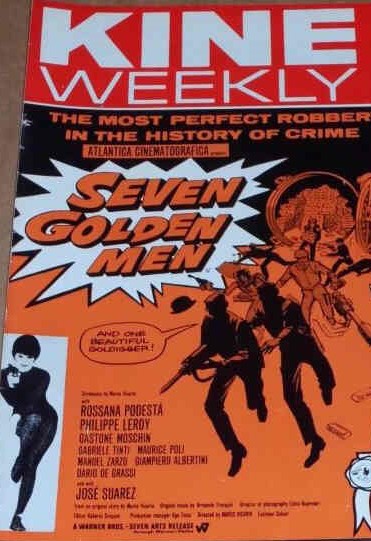
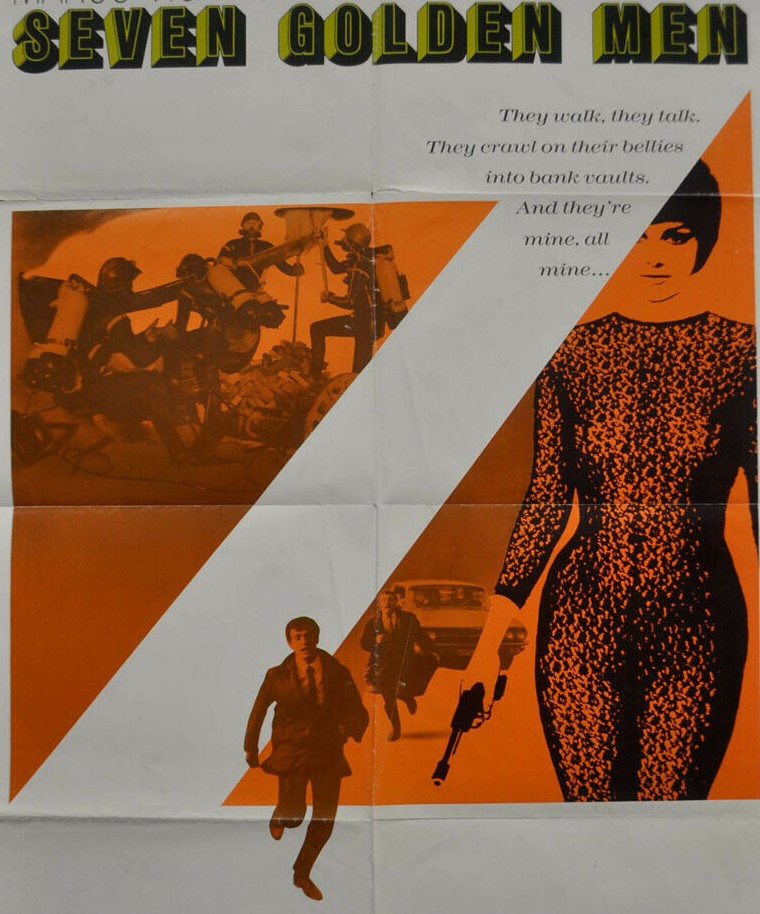
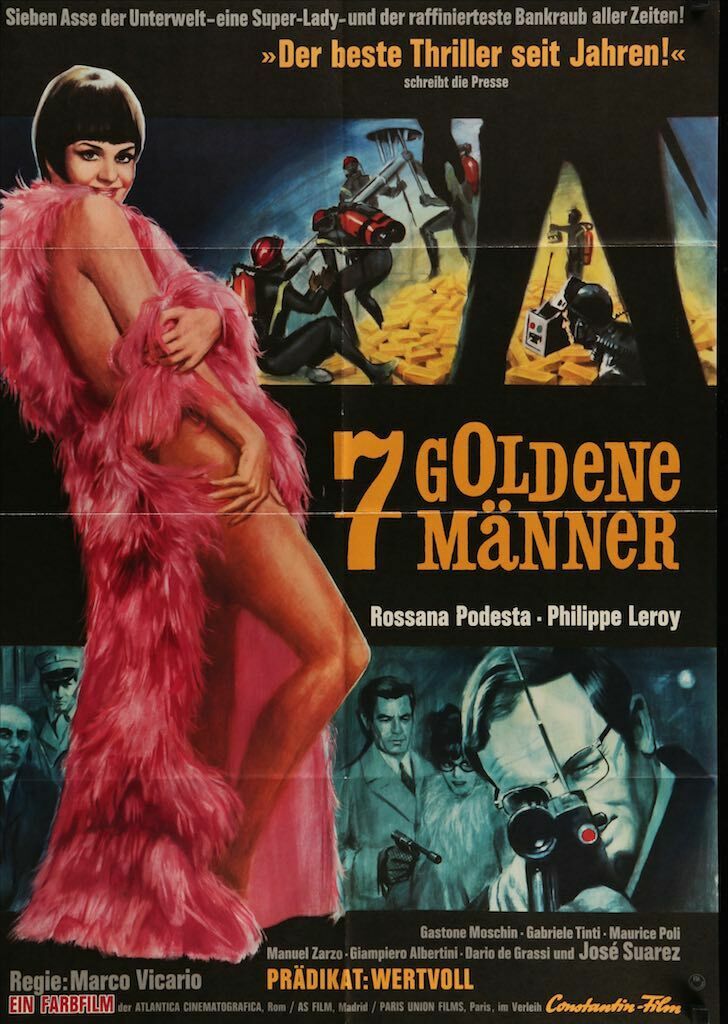
Very stylish caper picture that dispenses with the recruitment section, the ingenious hi-tech robbery accounting for the first half, escape and double-cross the second, a slinky Rosanna Podesta an added attraction/distraction. The Professor (Phillippe Leroy), in bowler hat and umbrella, orchestrates the gold bullion theft from an uber-secure bank using hidden microphones and cameras and a host of electronic equipment, the inch-perfect heist organized to mathematical perfection and timed to the second.
His team, disguised as manual workers, dig under the road, don scuba gear to negotiate a sewer, drill up into the gigantic vault and then suck out the gold bars using travelators and hoists. Giorgia (Podesta), sometimes wearing cat-shaped spectacles, a body stocking and other times not very much, causes the necessary diversions and plants a homing device in a safety deposit box adjacent to the vault. Occasionally her attractiveness causes problems, priests in the neighboring block complaining she is putting too much on show.
It’s not all plain sailing. A cop complains about the workmen working during the sacrosanct siesta, a bureaucrat insists on paperwork, a radio ham picks up communication suggesting a robbery in progress, the police appear on the point of sabotaging the plan.
But the whole thing is brilliantly done, the calm professor congratulating himself on his brilliance, Giorgia seduction on legs. The getaway is superbly handled, the loot smuggled out in exemplary fashion, its destination designed to confuse. Then it is double-cross, triple-cross and whatever-cross comes after that, with every reversal no idea what is going to happen next. It is twist after twist after twist. Some of the criminals are slick and some are dumb. As well as the high drama there are moments of exquisite comedy.
Italian writer-director Mario Vicario (The Naked Hours, 1964) handles this European co-production with considerable verve and although, minus the normal recruitment section, we don’t get to know the team very well except for the professor and Giorgia, each is still given some little identity marker and in any case by the time they come to split the proceeds we are already hooked.
Frenchman Phillippe Leroy (Castle of the Living Dead, 1964) is the standout as a mastermind in the British mold, stickler for accuracy, calm under pressure, working with military precision. Podesta (also The Naked Hours) has no problem catching the camera’s attention or playing with the emotions of the gang to fulfill her own agenda. The gang is multi-national – German, French, Italian, Spanish Portuguese, Irish – with only Gabriel Tinti likely to be recognized by modern audiences.
And there is a terrific score by Armando Trovajoli (Marriage Italian Style, 1964) that changes mood instantly scene by scene. One minute it is hip and cool jazz, the next jaunty, and then tense.
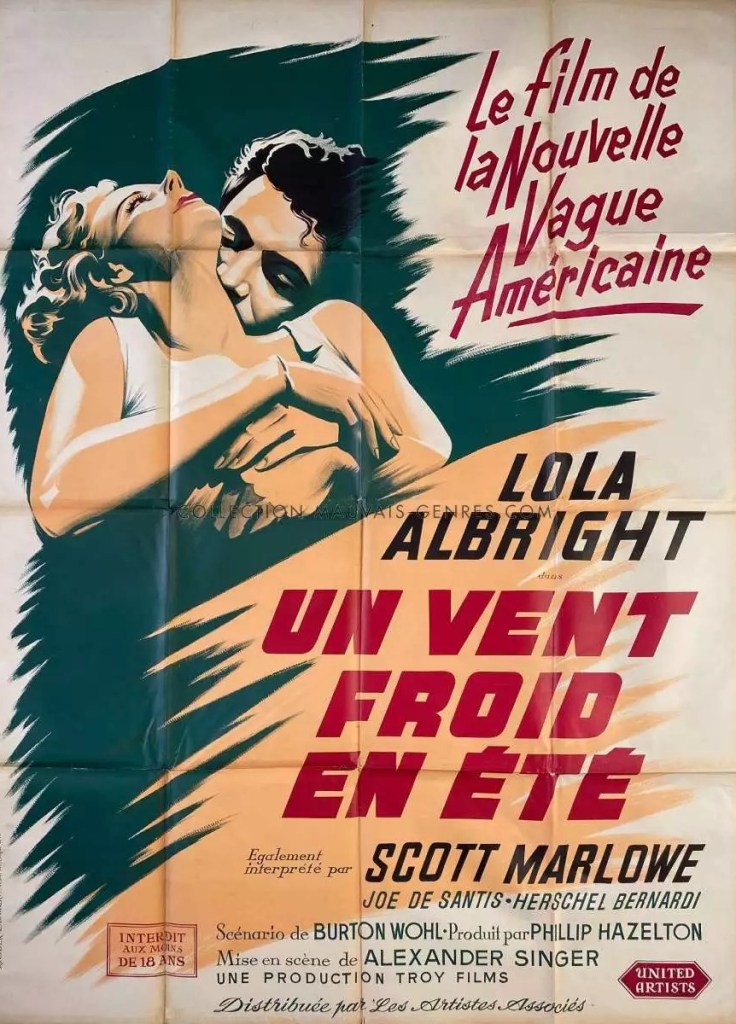
Touching low-budget B-movie shot in black-and-white of a young man receiving his sexual education from an older woman. Motherless Vito (Scott Maxwell), the son of an apartment block super, is seduced by the older Iris (Lola Albright), three-time divorcee, looking for a son to mother.
This is not the transactional sex of The Graduate, and seduction is too strong a description for the yearning Iris whose advances are sensual and romantic, stroking Vito’s head, trapping his hand with her foot, and there is nothing clandestine about their affair either, no false names on a hotel register. They dally in the park, eat hotdogs, and he buys her flowers.
But as he experiences love for the first time, he also experiences more difficult emotions like jealousy and finds it difficult not just to cope with what seems like another man in her life, the wholesaler Juley (Herschel Bernardi), but the fact that she treats him with such contempt. Spoiler alert – well, not really, because you know from the off this is not going to turn out well – the affair ends when he discovers she is a stripper. And while she is left bereft, he now appears more attractive to girls his own age.
In contrast to the powerful emotions stoked up when the pair are together, director Alexander Singer (Psyche ‘59) fills us in on the rest of Vito’s humdrum life, working for his father during the school holidays, goofing off with his pals, and generally failing to make headway with girls his own age. But Iris’s life is not humdrum. Although she has a rule not to work in her own area, she breaks that to accommodate her estranged husband, whom she seems to tolerate, while at the same time drinking herself into oblivion to avoid any moves from Juley. Nor is she ashamed of her profession. It is an act, a job like any other, and provides her with a nice apartment.
Small wonder she treats men with contempt. Perhaps what she falls in love with is untainted innocence. In some senses she is adrift, at other times in full command. And her love for Vito is convincing.
It is full of incidentals. He gulps down ice-cream, she teaches him to drink one sip at a time, without being patronizing the father (Joe De Santis) tries to educate him to honor his inner feelings.
Lola Albright (Peter Gunn television series) carries off a difficult role very well indeed. Without laughs to help him out as it did Dustin Hoffman in The Graduate, Scott Maxwell is believable both as the youth growing into adulthood and the youth wanting to remain a youth with no adult responsibilities. The low-key performance of Joe De Santis is worth a mention.
While the picture no doubt attracted attention for the risqué material, which would have certainly given the Production Code pause for thoughts, it provided a more rounded picture than was normal at the time of a woman working in the sex industry, even if only in the stripping department. Iris did not fall into any of the cliches. She is presented as a woman first and foremost rather than a stripper.
Alexander Singer sticks to the knitting and doesn’t come unstuck. John Hayes (Shell Shock, 1964) wrote the screenplay based on the Burton Wohl bestseller.
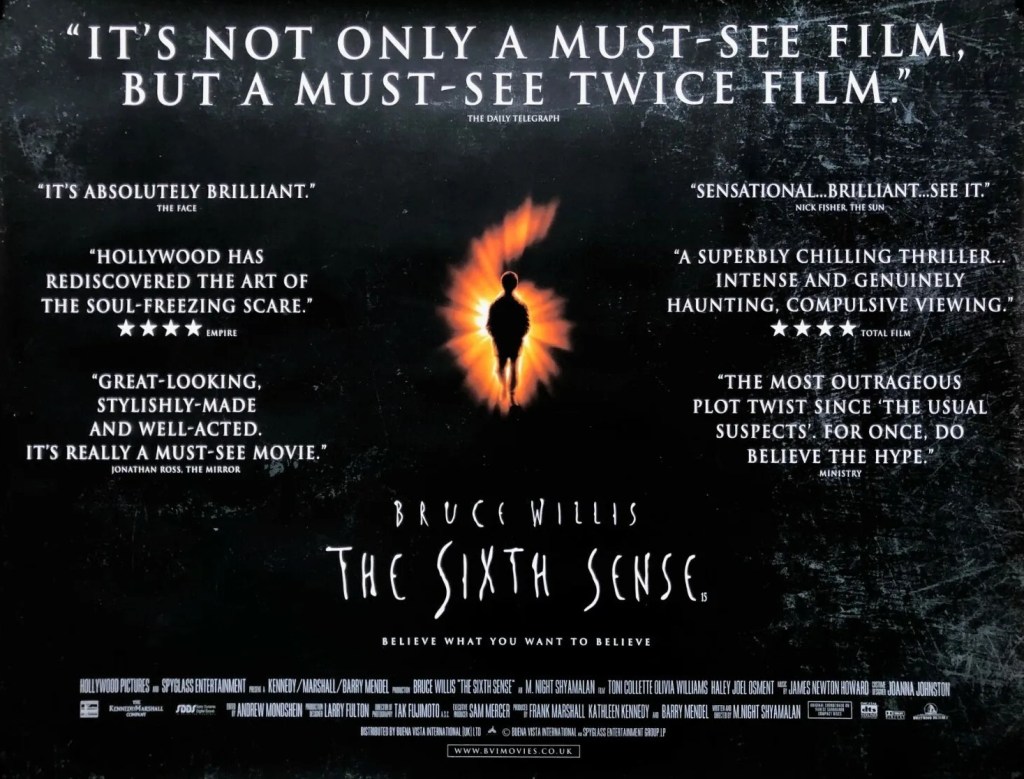
If “I see dead people” isn’t one of the greatest lines ever written, I don’t know what is. Apart from anything else it highlights the screenwriting element of director M. Night Shyamalan’s talent. Had the little boy, in whatever haunted manner, simply said, “I see ghosts,” it wouldn’t at all have had the same impact. And reinventing this genre took a lot more than knitting together a few scary moments.
The horror genre had morphed into scaring the pants off women, their screams the soundtrack of the decade, and, of course, it was often the last sound they made as slicing-and-dicing became the norm and body counts multiplied. Nobody dies here. And the dead aren’t zombies either. Little Cole (Haley Joel Osment) almost acts as a psychiatrist, putting ghosts back together, listening to their woes, letting them come to terms with death. I won’t spoil the ending for you in case you haven’t seen it because when it first came out every audience member was urged not to reveal the ending.
What Shyamalan has done is give the ghost story narrative purpose, two characters who need each other, guilt-ridden psychiatrist Malcolm (Bruce Willis), marriage in trouble, suspecting wife Anna (Olivia Williams) of having an affair, finds himself getting unspoken guidance from the kid he is meant to be giving advice to. Cole is bullied at school, treated as a freak, having to conceal his own torment from everyone, and teachers who should recognize signs of disturbance instead resort to punishment. Kids lock him in a cupboard and single mother Lynn (Toni Collette) is at her wit’s end.
The great screenwriters invent scenes nobody’s ever thought about before. Trying to elicit information from Cole, Malcolms plays a game. If he is correct in an assumption, the child takes one step forward. A few correct answers and he’ll be plonked down in a chair opposite the psychiatrist. But if the answers are wrong, Cole takes a step backward. It’s an incredibly clever conceit, exposition disguised as a game. By the end of it, Cole is back where he started, and the boy’s ostensible savior is revealed as a failure.
These are two tormented souls coming together and for the most part it plays almost with an arthouse sensibility to a kid growing up, making his way in the adult world, except as much as Cole is developing, so is Malcolm, his life foundering, walking around in permanent lament for a world that’s gone wrong, somehow slipped away from his grasp from a time he was physically adored and professionally acclaimed.
It’s the psychiatrist’s burden to occasionally fail. Sometimes the consequences are unendurable even if the client was beyond repair and Malcolm puts his current depression, forgetting his anniversary, for example, down to one terrible failure. Cole isn’t entirely defenceless. He can spot adult weakness, and feeling threatened, humiliates his teacher with with vicious aggression that exposes a childhood disability that appears on the face of it successfully overcome but, in reality, still lurking.
Gradually, Cole grows in confidence, matures, is given the leading part in the school play, accepted, and Malcolm can take pride in his accomplishment. Shyamalan is too clever a screenwriter to have the child identify point blank the adult’s problems. The revelation is a moment of stunning self-clarity.
But I promised not to say any more.
Instead, I’ll talk about Shyamalan’s directorial skill, in particular his use of the fade, a little-used technical device from back in the day. Most directors simply employ the cut. Everything is connected, let’s move on, keep this narrative going. The fade is like the end of a chapter, time to turn a page, a sigh, every section allowed time to breathe, before we move on.
We might also credit Shyamalan with bringing out two superb performances from the leads. He wipes that trademark smirk off Bruce Willis’s face, finds ways of making the screen’s biggest tough guy come off as weak. Haley Joel Osment was a tad older than the character he plays, but still no more than ten, I guess, at the time of filming. To carry off such long speeches with such authenticity would be beyond most child actors, who usually come to the fore in some inconsequential froth, rather than a serious drama, was jaw-dropping. Amazing he didn’t win the Oscar or be given a special one. Because it’s a very special performance and without such singular acting the movie wouldn’t have worked at all.
Shyamalan’s been around longer than Christopher Nolan but with none of the comparable accolade. Apart from an occasional foray into sci-fi, he’s stuck, like Hitchcock, to the thriller genre. He followed The Sixth Sense with, in my opinion, his masterpiece, Unbreakable (2000) and had another big hit with Signs (2002) but thereafter his box office wavered and though consistently churning out a movie every two years ended up at the lower-budget end of Hollywood. His new one Trap, due out later this month, is distributed by a major studio, Warner Bros, so if it succeeds, and it’s getting great buzz, he might be welcomed back into the fold.
I was able to see The Sixth Sense on the big screen again not because someone was attributing retrospective glory to Shyamalan but because a marketing whiz has come up with the great publicity wheeze of tying up a package of pictures from the same year by different studios and chucking them out under the anniversary aegis (25th in case you can’t do the maths) so tapping into nostalgia. As with the current reissue formula, these pictures are restricted to one showing on one day and to my surprise when I saw this, I would reckon the theater was three-quarters full and as much with youngsters as older people.
So while you’ve already missed it on the big screen, I’m sure it’s available on DVD or streaming.
Count me in. The buddy movie reinvented, the MCU legend trashed, all set in the ideal MCU location, The Void (worthy of two capital letters, I guess), the place where long-forgetten Marvel characters from the pre-Disney multiverse hang out, and it’s a fun ride. Whether of course this proves the death knell for the MCU after so much fan backlash and poor reviews remains to be seen. Next weekend’s box office will decide its fate one way or another.
But who the hell cares? If this is the extinction of the MCU, as some predict, then it is going out with a bang, a crazy superhero mash-up where you need to keep an MCU dictionary to hand so you can work who’s going to turn up next. Wesley Snipes, not seen in that Blade badass rig since 2004, and it’s not Capt America but Chris Evans’ earlier incarnation of Johnny Storm not seen since 2007, and there’s Channing Tatum as a character Gambit whose stand-alone picture never materialized, despite scoring highly in animated form.
Well hello again.
Anything that MCU got wrong or was criticized for – the multiverse and the varying timelines – turn up here as plot. The “sacred time lime” is almost a character in itself and if you ever wanted to invent the most ideal/ironic MCU character, who else would that be but Mr Paradox (Matthew Macfadyen)?
The entire storyline is so off-the-wall that you’d think it’s never going to work but then when Deadpool’s around walls are toys, especially the fourth wall, that magical trick of speaking direct to the camera. And it’s Deadpool and his continual wisecrack commentary on proceedings that turns what could be a s**tshow into a hoot.
But some of the twists transform what could be another deathly routine of superheroes saving the universe (yawn, what again?) into something more human. Deadpool (Ryan Reynolds) only wants to save his own tiny universe of half a dozen people, everyone who matters to him, and not a gazillion others. Somehow he teams up with the previously deceased Logan a.k.a. (in case you don’t have your MCU Dictionary handy) Wolverine to revive the moribund buddy movie, the best kickass bickering pair since Mel Gibson and Danny Glover in Lethal Weapon.
Or whatever. Anyway, they find themselves in The Void doing battle with that sweet Charles Xavier guy’s nasty twin sister Cassandra Nova (Emma Corrin). And, yes, there’s still so much jiggering about with time that you’d think the Time Bandits or Doctor Who would be claiming copyright infringement. And sometimes you can almost hear the clack of the typewriter as the screenwriter tries to fix that last loose end.
But, as I said, whenever the going gets tough – especially when the going gets tough – you can depend on Deadpool’s motormouth to see the narrative through. Deadpool and Wolverine do make a great screen team, ideal opposites, growl vs grit, class vs. sass, and really you could just junk the narrative – or come up with an entirely different one – and still this picture would work because the two principles set the screen alight.
This is akin to when Guardians of the Galaxy ripped up the MCU playbook a decade ago and influenced every movie thereafter. The guess now is whether Deadpool and Wolverine will take MCU down a new stylistic avenue or whether this is a deliberate cul de sac. I’d guess not, since it’s going to be such a money-spinner, and I could see this pair worming their way into the new Avengers team to brighten up whatever doom-laden occasion is heading our way.
Maybe the MCU is giving the finger to the fanboys, hoping to attract a wider audience rather than pandering to an audience that seemed to have made up its mind about everything way in advance and wasn’t inclined to go along with any MCU experiment, feint or development. The audience I saw it with were clearly of mixed opinion, some feeling betrayed or at the very least insulted.
But I have a good bit less invested in the MCU. It takes me all my time to keep up with who’s who in this expanding universe. So treating this picture on its own merits, I thought it generated more than its fair share of laughs, and not always rude ones, although anyone with a woke inclination would be advised to steer clear.
Commonwealth United, the makers of A Black Veil for Lisa (1968) reviewed yesterday, was one of a flood of new entrants to the movie business in the middle to late 1960s. Variety, which always liked to put an easy label on things, tabbed them “mini-majors,” “near majors” or “instant majors” in the belief that any outfit that could string together a substantial annual output was worthy of being considered a contender to become a major player in the great movie game.
A caste system had operated in Hollywood since the 1930s. The “Little Three” of United Artists, Universal and Columbia were considered inferior to the likes of the “Big Five” of MGM, Paramount, Twentieth Century Fox, RKO and Warner Bros. By the 1960s the smaller units had been promoted and Disney had taken the place of RKO. But with product at an all-time low, the U.S. Government was inclined to rethink its stance on monopoly and permit cinema chains to enter the business – the Paramount Decree of 1948 having expressly forbidden the opposite, of studios owning cinema circuits.
National General was the first to challenge the government dictat. The Government in the 1940s had prevented Hollywood studios from becoming involved in television but now did something of a U-turn in permitting television giants ABC and CBS to invest in movies made under the aegis of ABC-Cinerama and Cinema Center, respectively. More legitimate operations, by original Government standards, were the likes of Commonwealth United, American International (AIP), Embassy Pictures, and smaller units like Sigma 3 (in which producer Marty Ransohoff had a stake), Independent-International, Continental (backed by the Walter Reade arthouse chain) and Cinema 5.
The mini-majors could make movies much faster than the established studios which had millions of bucks tied up in projects, books and plays, paid for and never made, deals with talent that didn’t work out, as well as bigger overheads and interest on loans running at $2 million a year per studio. For a short period the newcomers did well in the box office sweepstakes, in 1970, for example, Cinema Center beat Warner Bros in market share. And with the product well running dry and big studios being more selective about release dates, that still left considerable “playing time unused by big companies” that could be filled by “low-voltage commercial product.”
I’ve covered the National General tale before so suffice to say it did most of the heavy lifting in challenging the Paramount Decree and made such pictures as The Stalking Moon (1968) with Gregory Peck and Eva Marie Saint, Elvis in Charro! (1969), El Condor (1970), and James Stewart and Henry Fonda in The Cheyenne Social Club (1970) and was influential in the distribution of films made by other mini-majors.
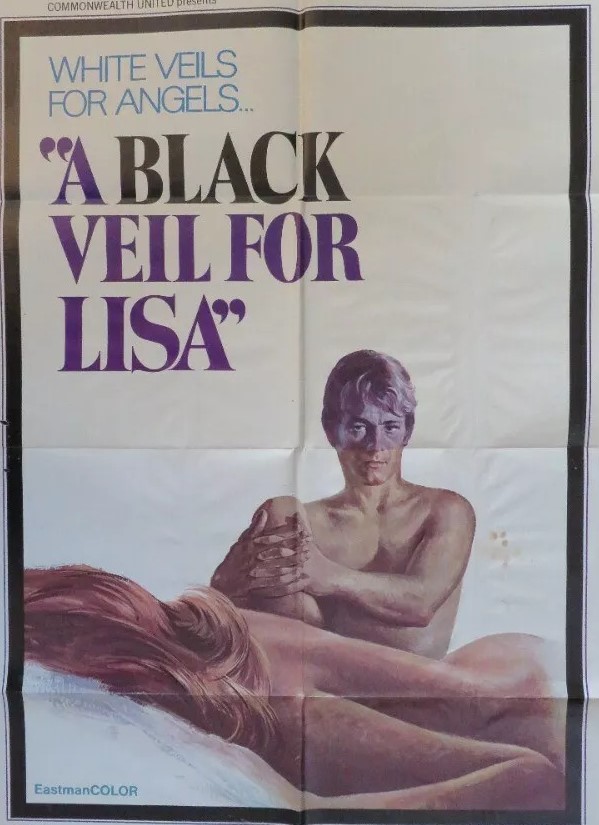
Commonwealth United began as a real estate company formed in 1961 that took over the Landau-Unger movie production company in 1967 and began the serious business of creating a large enough movie roster that would make it welcome to the distributor. In these product-famine times, anybody who could produce a movie could get a distributor, but the terms of the deal, if you were a one-off, favored the distributor. To achieve any kind of box office parity, you needed to show substantial intended output. Its initial entry into the business was as a distributor, in 1968 handling the U.S. release of spy thriller Subterfuge (1968) with Gene Barry, jungle picture Eve (1968), The Angry Breed (1968) mixing bikers and the movies, and heist picture Dayton’s Devils (1968), before biting the bullet with Italian-made A Black Veil for Lisa with British star John Mills top-billed.
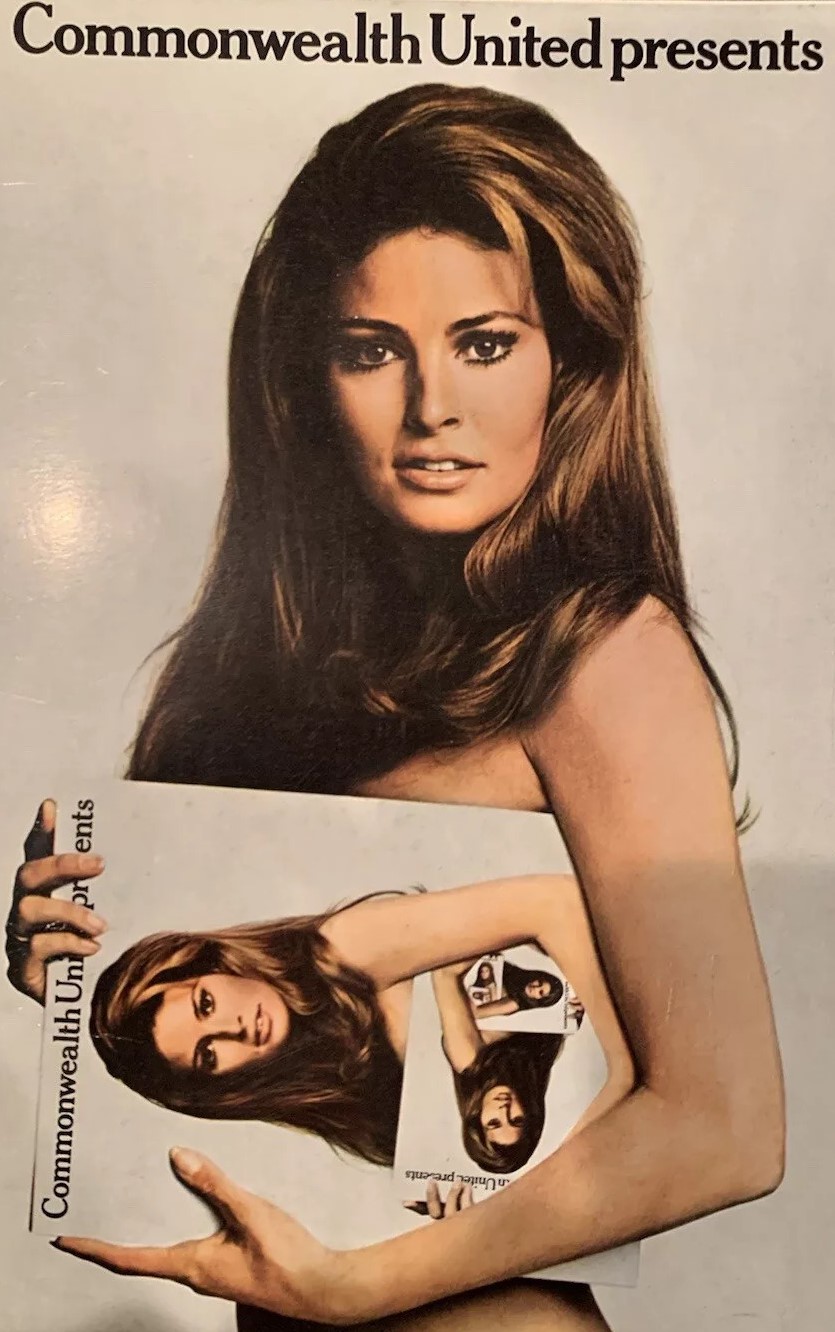
Commonwealth United couldn’t quite make up its mind whether to go down the A-movie or B-movie route. Its follow-ups to A Black Veil for Lisa were women-in-prison epic 99 Women (1969) and erotic thriller Venus in Furs (1969). But when it headed into the mainstream, it hit a box office barrier. Yugoslavian epic The Battle of Neretva (1969) with Yul Brynner flopped. Peter Sellers and Raquel Welch – snookered into fronting its lavish brochure, see photo above – couldn’t save The Magic Christian (1969). Robert Altman’s That Cold Day in the Park (1969) with Sandy Dennis, Julius Caesar (1970) starring Charlton Heston and The Ballad of Tam Lin (1970) with Ava Gardener all went down the tubes. The company closed down in 1971.
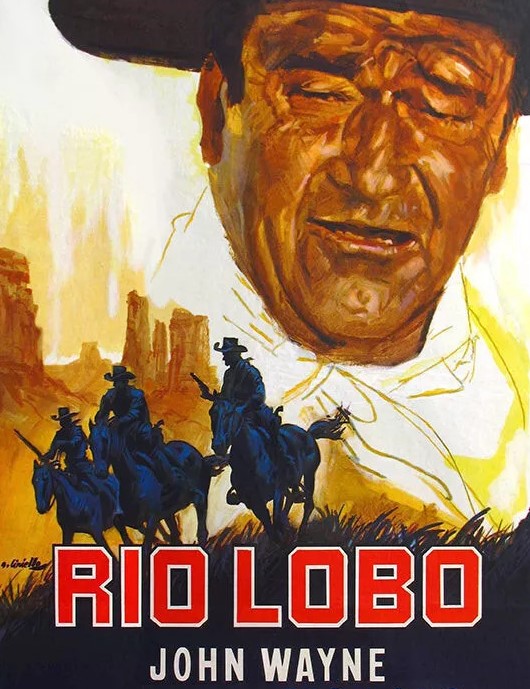
The bigger hitters, at least initially, promised more. Cinema Center, set up in 1967 using National General for distribution, and headed up by ex-Fox chief Gordon T. Stulberg, snagged deals with the likes of Doris Day, Jack Lemmon and Steve McQueen. Launch item With Six You Get Eggroll (1968) starring Day and Brian Keith was followed by some potential box office bonanzas – The Reivers (1969) and Le Mans (1971) with McQueen, John Wayne in Rio Lobo (1970) directed by Howard Hawks and Big Jake (1971), Richard Harris as A Man Called Horse (1970), Arthur Penn’s Little Big Man (1970) with Dustin Hoffman and Faye Dunaway, William Holden in The Revengers (1971) and Lee Marvin and Gene Hackman in Prime Cut (1971).
But there was a high end price to pay. As with United Artists in the 1950s, Carolco in the 1980s and streamers today, big stars and directors took advantage of ambitious smaller companies. The price of even playing the game was high. Sure, there was reward. Little Big Man took in $15 million in rentals, The Reivers $8 million, Big Jake $7.5 million, A Man Called Horse $6 million. But that couldn’t stop the flow of red ink on calamities like early Michael Douglas vehicle Hail Hero (1969), Rod Taylor as a private eye in Darker than Amber (1970), Who Is Harry Kellerman (1971), Joseph Losey’s existential thriller Figures in a Landscape (1971) and a over a dozen more. Twenty out of 27 movies made a loss, the cumulative total running at £30 million. By 1972 CBS had had enough and closed shop.
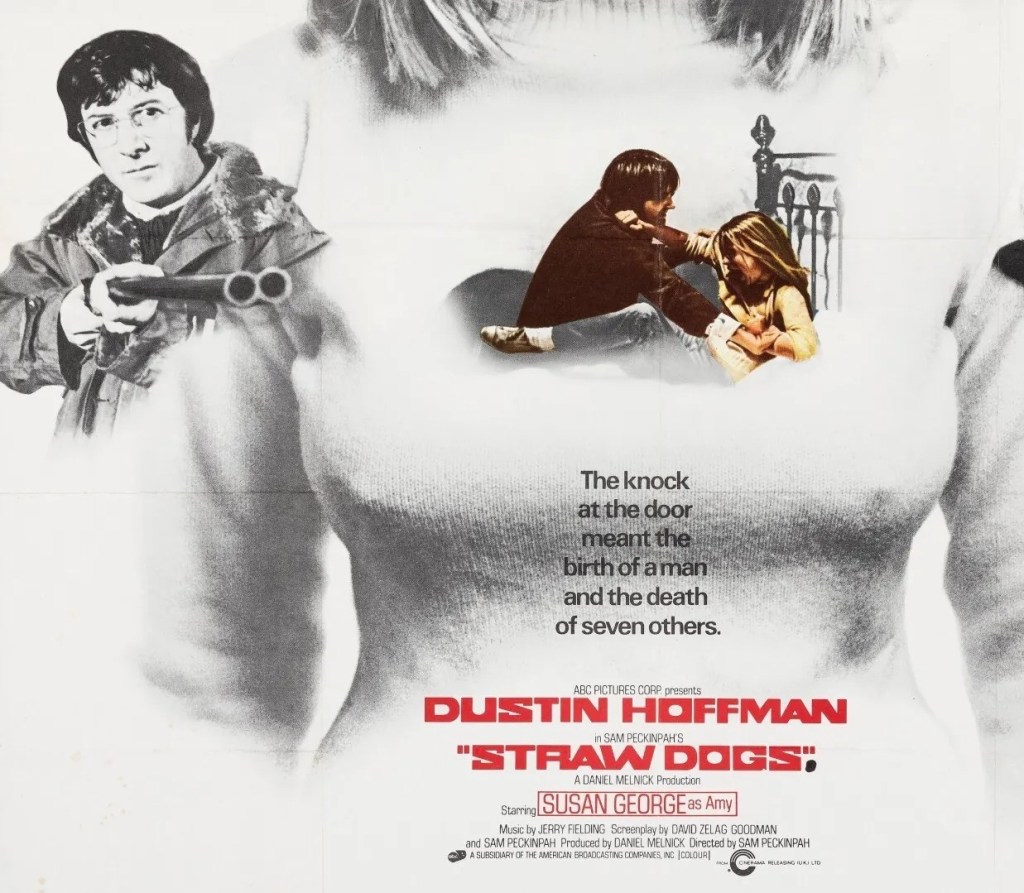
ABC released its pictures through an offshoot of Cinerama called Cinerama Releasing Corporation. It, too, struck occasional gold. Charly (1968) won an unexpected Oscar for Cliff Robertson. They Shoot Horses, Don’t They (1969) did the same for Gig Young and helped Jane Fonda be recognized as a serious actress. And big names signed on: Ingmar Bergman for The Touch (1971), Sam Peckinpah and Dustin Hoffman for Straw Dogs (1971). Robert Aldrich made three – The Killing of Sister George (1969), Too Late the Hero (1970) and The Grissom Gang (1971). With its biggest hit They Shoot Horses only picking up $5.5 million in U.S. rentals and For Love of Ivy (1968) with Sidney Poitier $5 million and the bulk of the others striking out, ABC pulled out of the movie business in 1971.
Cinema owner-turned-distributor Joe Levine had been a thorn in the side of Hollywood for many years especially after his imported Hercules (1958) showed you could sell anything to the American public if you put enough advertising dough behind it – a notion he signally undercut when all the money in the world couldn’t turn Jack the Ripper (1959) into a hit. He turned more legit, in Hollywood eyes at least, by teaming up with Paramount for The Carpetbaggers (1964) and Nevada Smith (1966) and funded Zulu (1964) – a hit most places except the U.S. After the critical and financial success of The Graduate (1968) and The Lion in Winter (1968) he sold Embassy to one of those conglomerates that had started sniffing around the business, Textron, and the company was renamed Avco Embassy. Kept on as president, he quit in 1974 and Avco Embassy pulled out of movies a year later only to re-enter the fold in 1977 and under Robert Rehme shift into lower-budgeted numbers like The Fog (1980) and Time Bandits (1981). He increased turnover fourfold. In later years, the company changed owners and names several times.
Some of the less well-publicized orgaizations lasted longer. Independent-International, set up by Sam Sherman, Dan Kennis and Al Adamson in 1968, kept budgets down to an average $200,000 a picture and reckoned that even with limited opportunity could pull in rentals of $300,000. After the success of biker picture Satan’s Sadists (1968), the company put 13 movies in circulation without troubling the New York first runs. Typically, a movie would garner 4,000-6,000 playdates. That company is still in existence.
Going back to where we started with Commonwealth United, you’re probably very familiar with American International for its Edgar Allan Poe, beach party and biker pictures. But in 1969 after co-founder James Nicholson quit and the company went public with the aim of entering the Hollywood mainstream, it relied on Commonwealth for distribution, releasing 31 pictures in this fashion. Beginning with adaptations of classics like Wuthering Heights (1971) and Kidnapped (1971) and moving onto big-budgeters like Force 10 from Navarone (1978) and still dipping into horror and exploitation AIP coninued in one guise or another until 1980.
SOURCES: “Nat Gen Readying 7th Film,” Variety, November 16, 1966, p4; “Instant Majors: A Short Cut,” Variety, October 25, 1967, p5; “Same Upper Uppers,” Variety, October 30, 1968, p12; “Commonwealth: Near Major,” Variety, February 19, 1969, p5; “Commonwealth Full Sell,” Variety, May 7, 1969, p7; “Nat Gen Rolling Six,” Variety, October 8, 1969, p6; “Topheavy Film Studios Fade,” Variety, October 29, 1969, p1; “Nat Gen Denies Phase-Out,” Variety, August 12, 1970, p5; “1970 Domestic Theaters Sweepstakes,” Variety, January 13, 1971, p38; “Today’s Majors As Instant,” Variety, July 21, 1971, p7; “American Int Expected Inheritor of Cinerama Releasing,” Variety, July 31, 1974, p3.
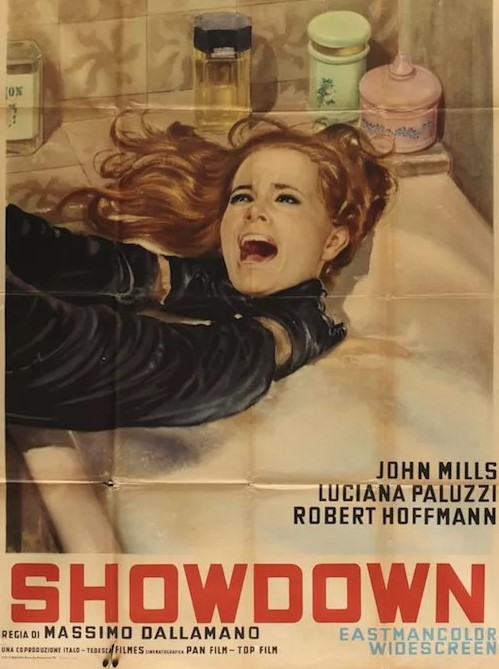
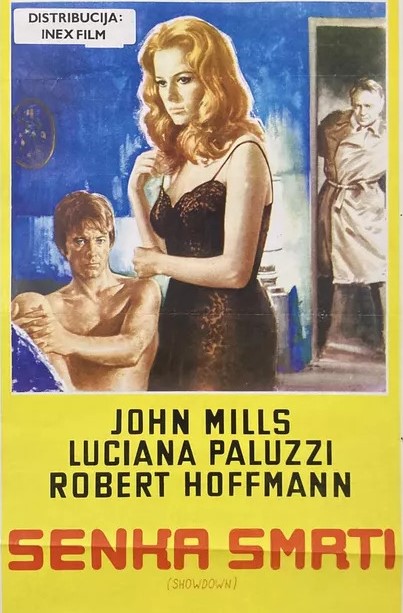
John Mills ventures back into Tunes of Glory (1960) territory as a top official coming apart at the seams. This time it’s not the British Army but the Italian Police where, as Franz Buloff, he heads up the narcotics squad. And this time he’s not the complacent victim but decides to take action against his tormentor.
Closing in on drugs kingpin Scheurermann, he finds that one witness after another is being silenced by an assassin with a deadly knife. He suspects a leak in his department, unaware the traitor is much closer to home. And despite the usual dissatisfied boss Ostermeyer (Tillio Altamura) breathing down his neck, he would be making more headway if it wasn’t for the fact that his head is constantly filled with images of his wife Lisa making love to another man.
For her part, Lisa seems determined to unhinge her husband, eliciting jealousy at every turn, by never answering the phone at night and always an excuse, when he tracks her down, for not being where was supposed to be. Rather than calming him down, her occasional seduction of her husband only serves to ramp up his fury.
In any case, it’s an odd set-up, he’s much older and the security he offers is not just financial. She was once a suspect herself and being married to a top cop has put a force field between her and suspicion. There’s clearly an unspoken assertion that somehow she has duped the cop, making him fall in love with an apparently innocent woman. They couldn’t be more opposite. “I like danger,” is her mantra.
He breaks open the case after following up a clue dropped at the scene of the crime. After arresting Max (Robert Hoffman), he strikes a deal with the killer. In return for his freedom, the murderer has to take out Lisa. But, of course, it’s not as simple as that. When Buloff realizes the deep water he is treading, he calls off the assassination. But then when he discovers that Max has helped himself to a bonus – beginning an affair with Lisa – he recants and puts the man back on the spot.
So, now, it’s Max who faces the quandary of having to kill his lover. And that puts up square in cat-and-mouse territory.
This isn’t quite giallo, the genre was still in the process of being born, in part because there’s no mystery about the killer, in part because the murders aren’t bloody enough, and in part because the dead aren’t sexy young women. So it’s more a series of character studies, each driven to an edge by an action that otherwise would be out of character.
A top cop like Buloff should have been a better judge of character than to fall for Lisa’s wiles in the first place. Lisa, too, should have recognized her penchant for the seedier side of life rather than being as she puts it “too young to be buried alive” in a stifling marriage to a jealous husband. But, she, too, is a poor judge of character, expecting to win back the favor of the drug overlord after she had so openly crossed the tracks to the other side of the law.
And Max, one of the first of a series of killers in movies who wanted out (see The Brotherhood, 1968, and Stiletto, 1969), is trapped into more killing because nowhere is safe. Getting rid of Buloff was never in his plans, as that would draw even more unwelcome attention. But then neither was falling in love with the cop’s wife. There’s still a few twists to go not least when Lisa discovers that the husband she felt she had under control had broken free and was intending to have her killed.
John Mills, a surprising addition to the Brits heading for Italy, is excellent especially as the big flaw in Tunes of Glory was his inability to find the cunning to strike back at his chief tormentor. Here, he might have second thoughts about dispatching his wife, but revenge is always the best weapon.
Luciana Paluzzi (Chuka, 1967, which, incidentally, also featured Mills) gets her teeth into a decent role rather than been saddled in lightweight fare since swanning around in swimwear in Thunderball (1965). Austrian Robert Hoffman (Assignment K, 1968) is given a surprising range of emotions to deal with.
Massimo Dallamano (Venus in Furs, 1969) handles the material well and gets the best out of his cast without taking the bloodier route of the later giallo. He was one of four writers contributing to the screenplay. This was one of the feature films made by new American mini-major Commonwealth United, one of the stack of “instant majors” popping up around this time.
John Mills is always watchable and the twists make this one play.
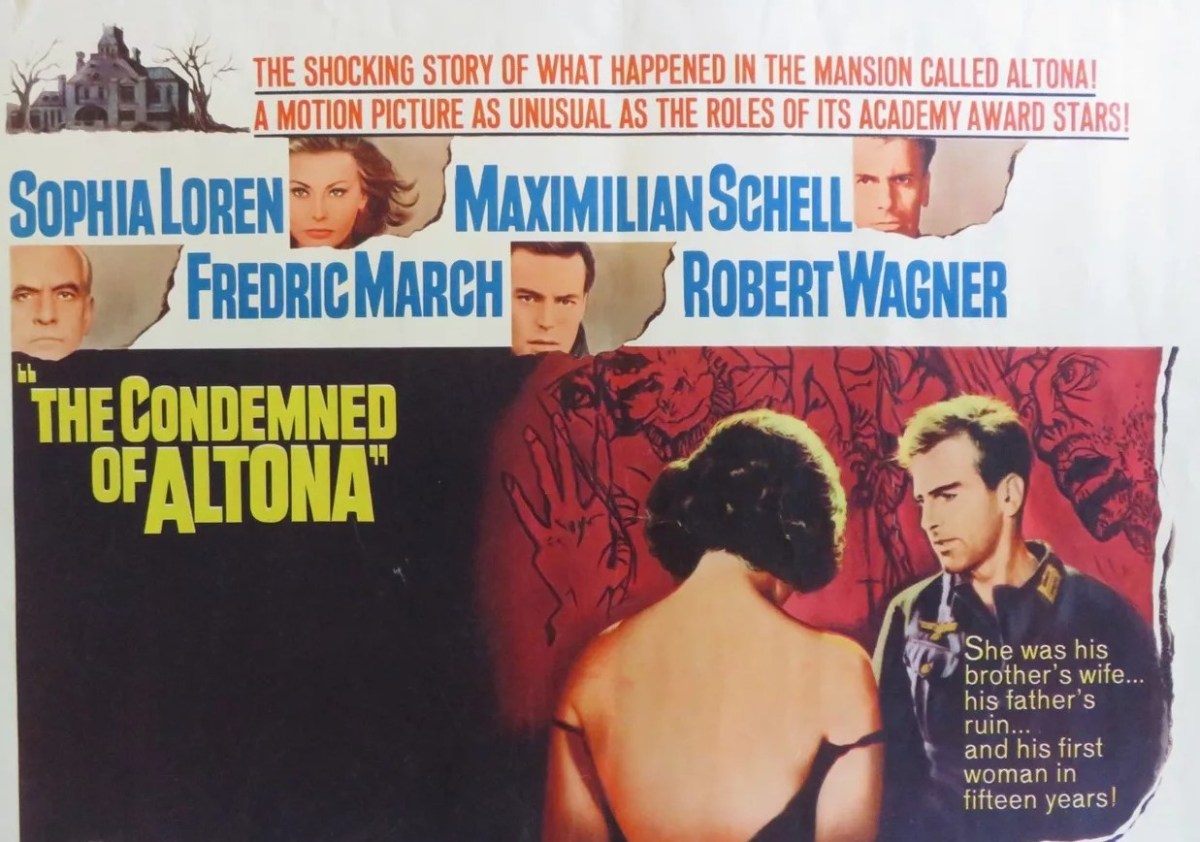
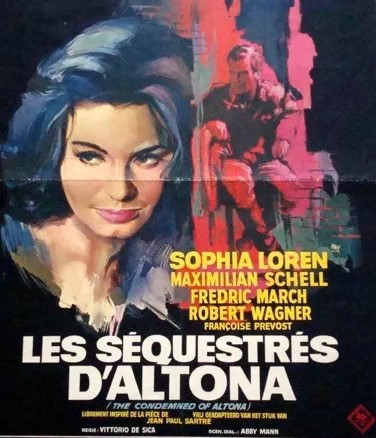
Shades of last year’s Oscar-winning Zone of Interest but with more guilt, some characters dodging it, others driven mad by remembrance of what they did or didn’t do during the Holocaust of World War Two. But mostly, an object lesson in how to expland a play (written by French philosopher Jean-Paul Sartre). Despite top class performances from Sophia Loren (Arabesque, 1966), Maximilian Schell (Counterpoint, 1967), Fredric March (Seven Days in May, 1964) and even, astonishingly, from Robert Wagner (Banning, 1967) it’s director Vitttorio De Sica (A Place for Lovers, 1968), with stunning images and clever camerawork, who steals the show.
You won’t forget in a hurry the outstretched hand of a prisoner in a blizzard condemned to die, nor the skeletal jaw seen through an x-ray machine. The backward crab crawl will remind you of a later movie. De Sica moves the camera every whichway. Aerial and overhead shots are mixed in with the camera swivelling from character to character or suddenly pulling back from a scene and then suddenly he stops you his restraint. But that doesn’t prevent him getting to the heart of the narrative matter and adding in some frisson of accuser attracted to accused.
Set at the end of the 1950s, we begin on a Succession note, but without the contemporary angst and back-stapping. German shipping entrepreneur Albrecht (Fredrich March), a war profiteer turned post-war profiteer having taken advantage of demand in the Germany industrial boom, and now with only months to live, wants to pass on his business to son Werner (Robert Wagner). But Werner shies away, disgusted by his father’s unspoken collaboration with the Nazis during the war, ignoring the argument that the businessman was simply dealing with whatever party was in power. And this would be the narrative, father explaining actions, hoping for expiation, planning for the business to pass down the family line rather than be sold off.
Except that Werner’s left-winger actress wife Johanna (Sophia Loren) discovers there is another contender, the supposedly dead older son Franz (Maximilian Schell) who, instead of being sentenced to death for war crimes and fleeing to Argentina, where he purportedly died, as was the story given out, is actually hiding in the family mansion. He’s pretty much been driven mad, the walls of his substantial hidey-hole daubed with disconcerting images. Windows blocked-up and no knowledge of the outside, wearing his Nazi uniform he envisages a Germany languishing in decay, poverty and hunger. He lives on champagne, oysters and chocolate (so not quite the tough prison regime), and, as discreetly portrayed as was possible at the time, has an incestuous relationship with doting sister Leni (Francoise Prevost), the only human being with whom he is in contact. The inmate, knocking back handfuls of Benzedrine, occupies his time by recording messages to be delivered, he hopes, to Germans many centuries ahead.
Johanna wonders how this mentally-ill man came to be obsessed with guilt and we discover that when he was growing up his father rented out spare land around the mansion to the Nazis for a concentration camp where 30,000 people died. But Franz hid a Jew in the house, was reported to the S.S. by his father, and witnessed the man’s execution, then was punished by being forced to join the Army where he was known as a torturer. Finally, he emerges from isolation and sees a different Germany and confronts his father in a shock ending.
Both Loren and Schell had just won Oscars, for Two Women (1960) – incidentally directed by De Sica – and Judgement at Nuremberg (1961), respectively, so their confrontation, where his initial male dominance (the poster image reflects this scene) settles into a more equal power dynamic. Frederic March is good as the father convinced he has done no wrong and I had to check that this was the same Robert Wagner who had often been indifferent in pictures. De Sica draws great performances from all and layers the whole movie in a doom-laden atmosphere. Written by Abby Mann (Judgement at Nuremberg) and Cesare Zavattini (Woman Times Seven, 1967)
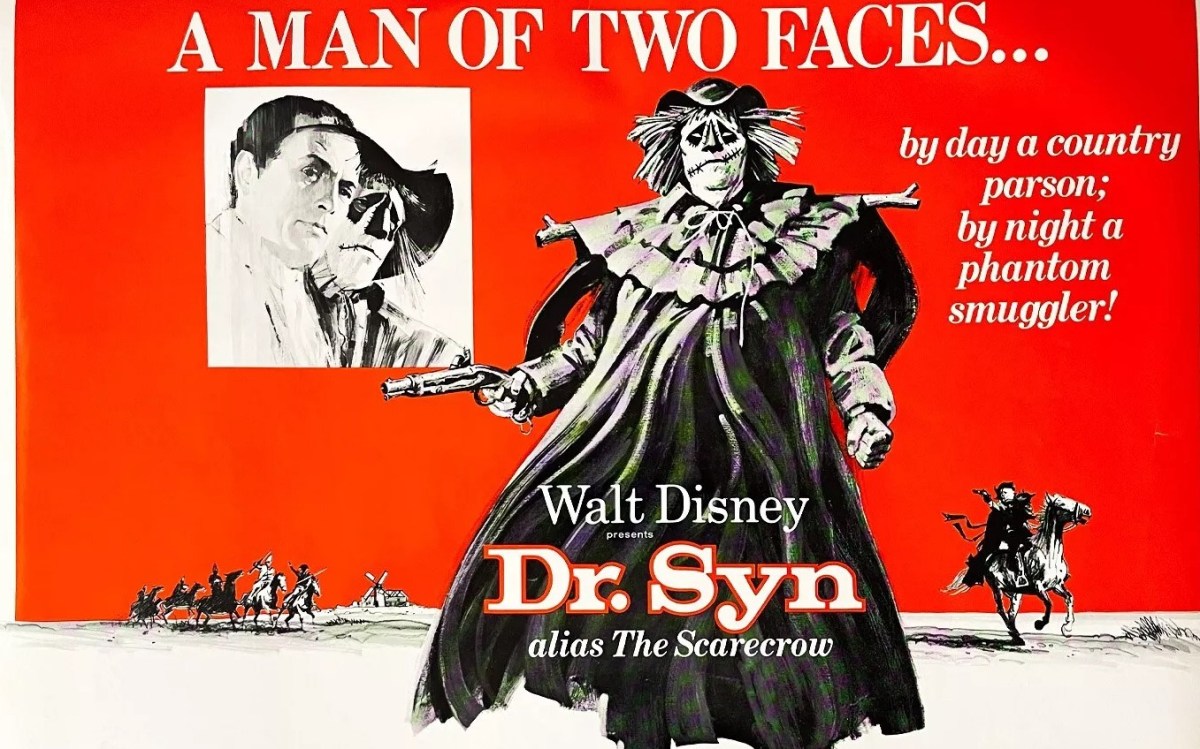
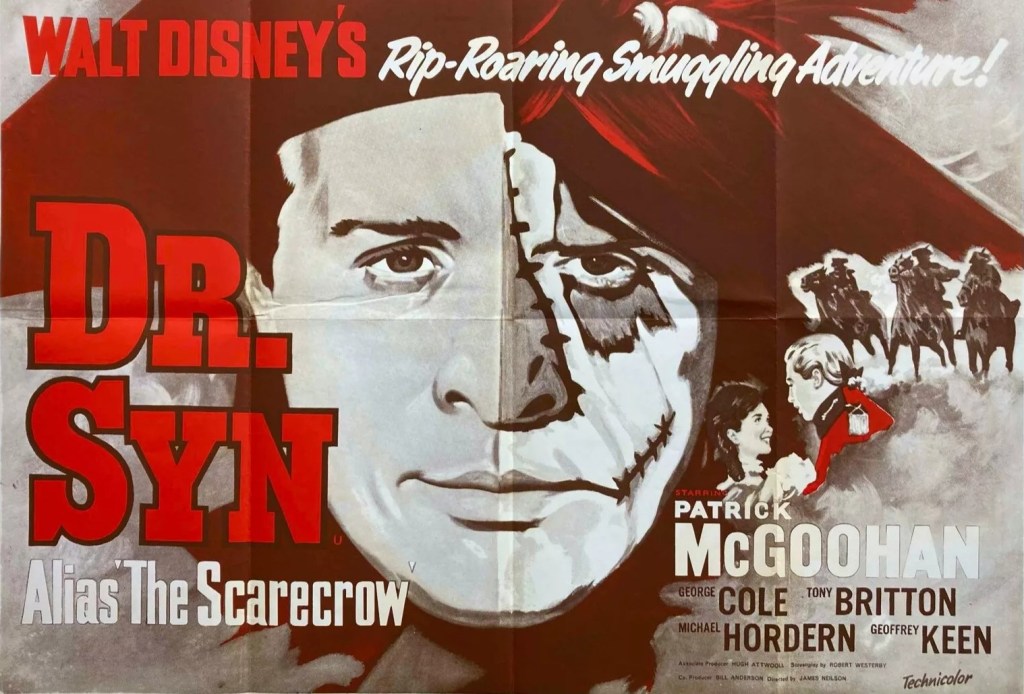
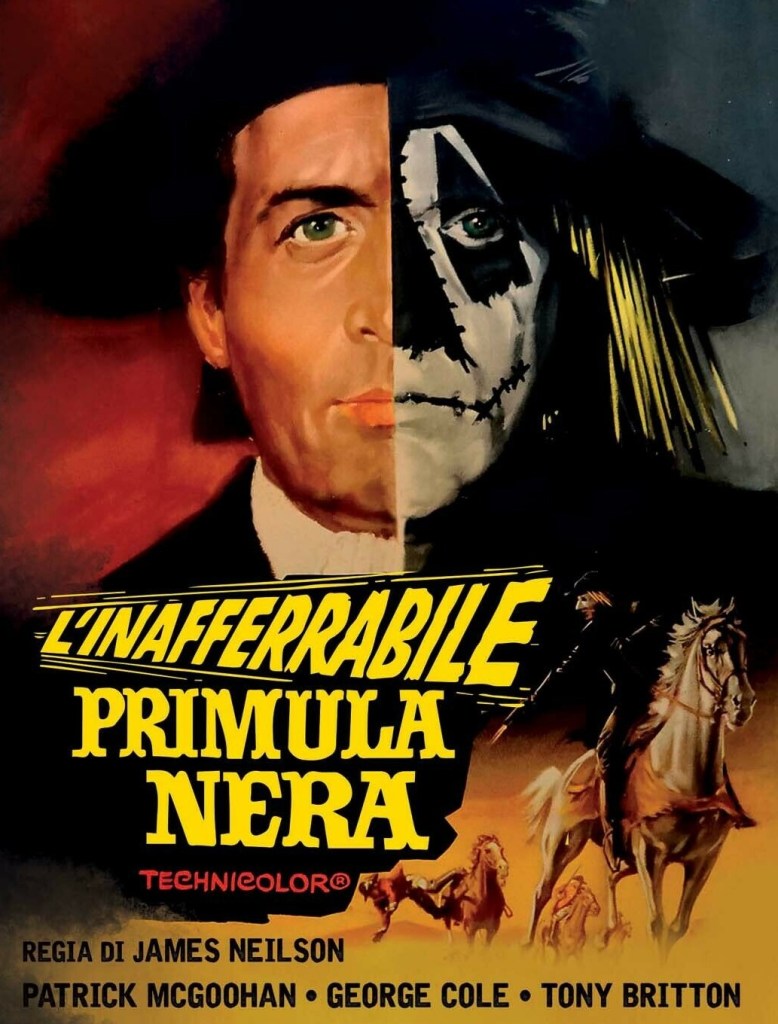
The mysterious masked Scarecrow was creepiest character ever put on celluloid by Disney. A lot of the action takes place at dusk so it is soaked in crepuscular atmosphere. Filmed against the sky, every horse seems to thunder past. Gallows swing ominously. Coupled with a strong storyline and clever ruses by alter ago the mild-mannered clergyman Dr Syn (Patrick McGoohan), this is one for the Under-Rated Hall of Fame.
While the character has antecedents in folk-hero Robin Hood, the Scarecrow is more rooted in the brutal reality of Britain in the mid-1700s when, to fund a host of foreign wars, King George taxes already-impoverished peasants to the hilt, making smuggling essential to survival. The Scarecrow is not just the underworld kingpin but has operational skills a spy would be proud of, coded messages, secret rendezvous et al.
Ruthless General Pugh (Geoffrey Keen), sent to rid the countryside of this menace, makes no bones about putting the squeeze on the wives of villagers to force them into providing the information he requires. Outwitted from the off by Dr Syn, the infuriated general begins torching houses. Helped unwittingly by local squire and judge Thomas Banks (Michael Hordern), the general acquires an informer Joseph Ransley (Patrick Wymark).
This is not the bucolic England of Robin Hood or other historical yarns of Hollywood invention featuring glorious scenery and ample female cleavage. Here, a barmaid is likely to use a meat cleaver to defend herself. This was also the era of press gangs (see Billy Budd), where government-appointed hoodlums would raid a village and carry off young men as unwilling recruits for the Royal Navy. It was a time of imminent insurrection, the King’s subjects in the North American colonies on the point of sedition. And when money – or its lack – infected every area of society.
Although like any super-hero the Scarecrow occasionally comes to the rescue, the movie is distinguished by the fact that is more often Dr Syn who subverts the general through cunning subterfuge. Victory through force of arms is impossible since violence visited on the king’s troops would result in a multiplication of their numbers. So it is more a battle of wits. In addition, the Scarecrow faces a dilemma – how to punish a traitor with such severity his authority is never questioned while at the same time upholding the principles of Dr Syn? Just how these issues and others are resolved make for a very involving picture.
Minor subplots – a romance between the squire’s daughter and an officer, a deserter from the Navy and the presence of an American (Tony Britton) – serve the main story. So the narrative remains taut. And, interestingly, that hangs upon what characters have to lose rather than gain. It is not about greed but survival.
For a Disney picture there is considerable directorial vigor, not just the depiction of the smuggling and pounding hooves accompanying peril or escape, but two terrific trial scenes, a masterly escape conducted in the complete absence of on-screen music and, of course, the terrifying vision of the Scarecrow himself.
The acting has a sterling quality. While Michael Hordern was a stage star, the film primarily called upon actors who later achieved fame on British television programs. Patrick McGoohan headlined The Prisoner (1967-1968), George Cole was in Minder (1979-1994), Patrick Wymark and Alan Dobie in The Plane Makers (1963-1965) Geoffrey Keen in Mogul (1965-1972), and Tony Britton in Robin’s Nest (1977-1981). McGoohan had a previous television incarnation as Danger Man (1960-1961) and Cole had been a con man in the St Trinian’s films. You can also spot in small roles Kay Walsh, a former British leading lady, and a young Richard O’Sullivan, later star of Man About the House (1973-1976).
Director James Neilson was a Disney favorite, having helmed Moon Pilot (1962), Bon Voyage! (1962) and Summer Magic (1963). But these were all lightweight features and it is to his credit he met the challenge of turning Dr Syn, Alias the Scarecrow into a dramatic actioner. British writer Robert Westerby (The Square Ring, 1953), who also created the source material for Kali-Yug, Goddess of Vengeance (1963), fashioned the screenplay from the books of William Buchanan and Russell Thorndike
Although Disney had cannibalized the Davy Crockett television series in the 1950s, stitching together episodes for feature films, this was something of a reversal. As part of its The Magical Wonderful World of Disney television program the studio had shown The Scarecrow of Romney Marsh as a three-part mini-series while Dr Syn, Alias the Scarecrow was released as a movie in Britain, rare copies of the former changing hands for large sums.
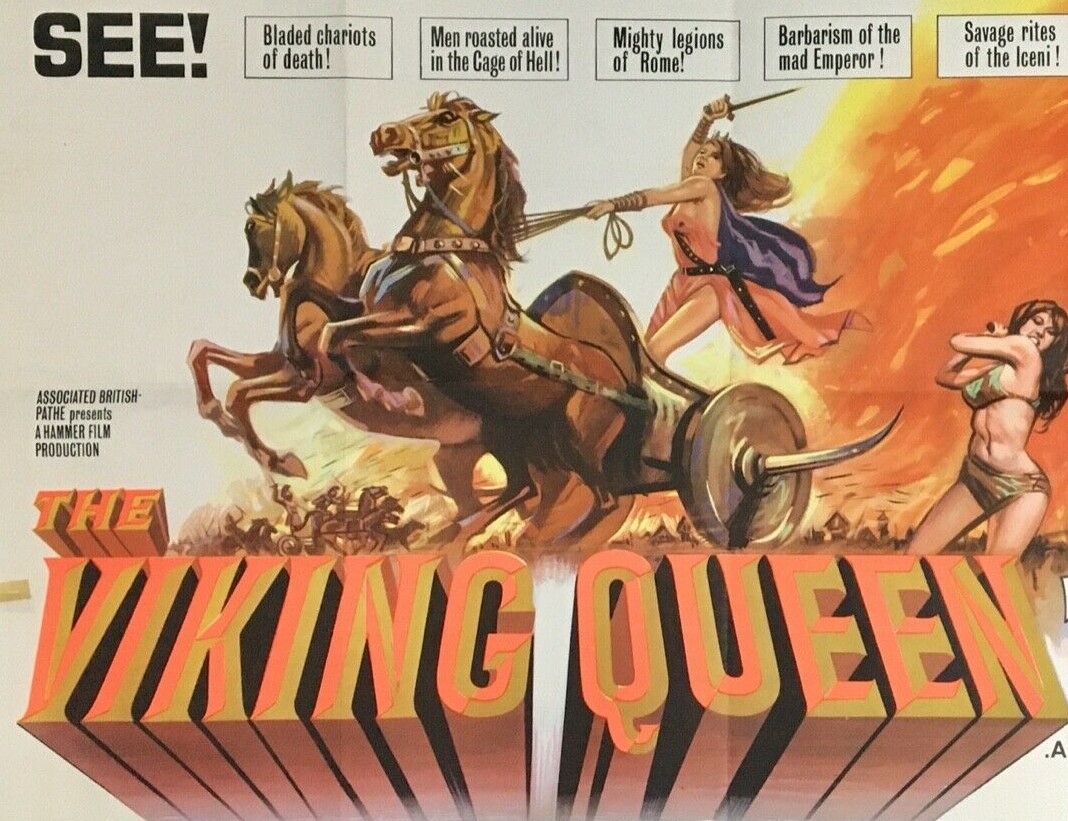
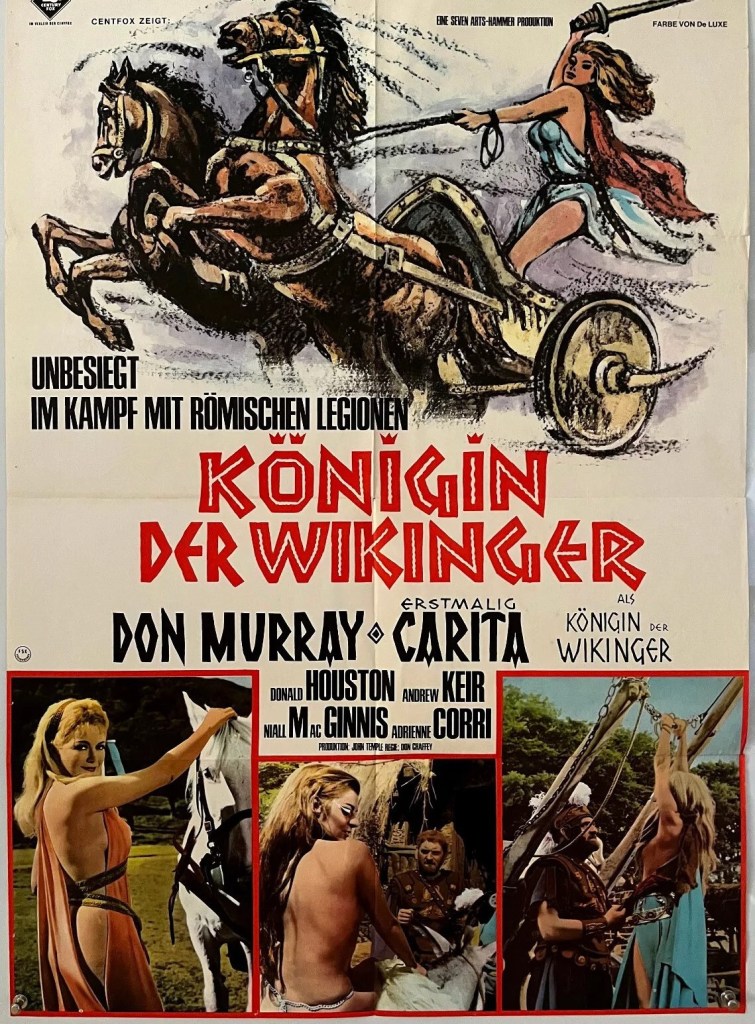
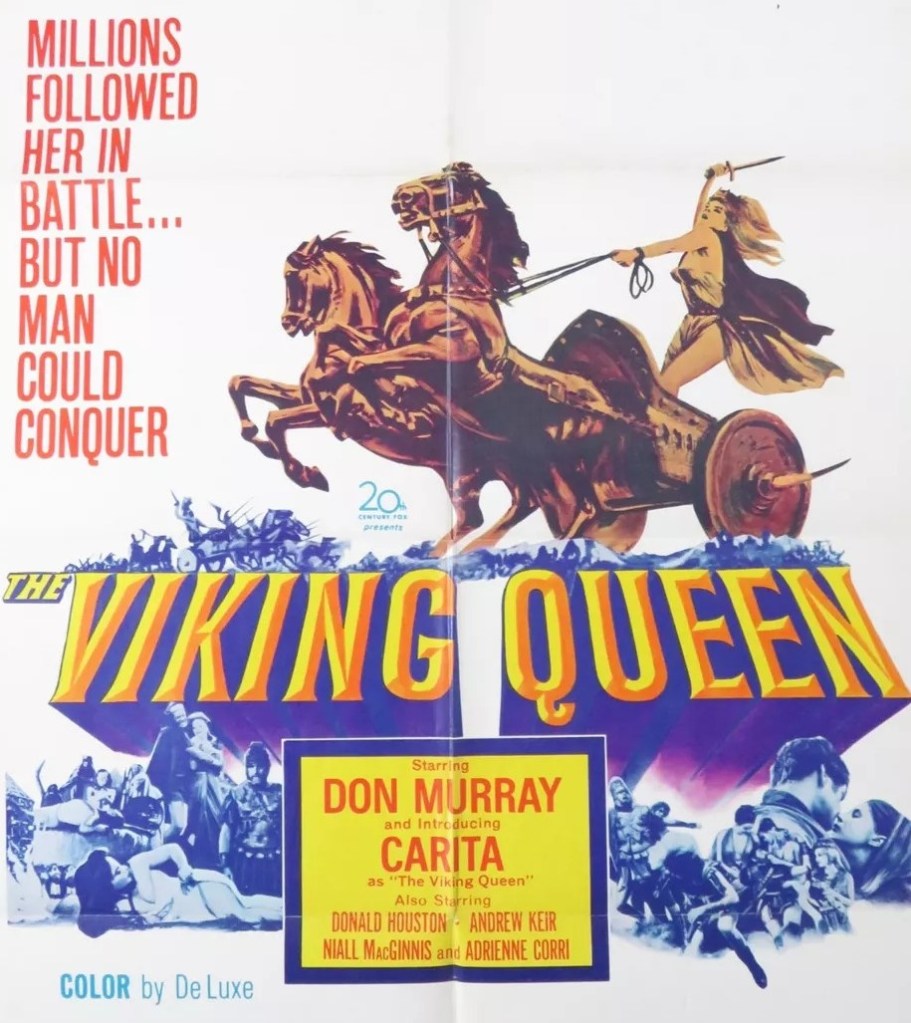
Politics, conspiracy, thwarted romance and historical inaccuracy take center stage in this Hammer romp that attempted to create another sex symbol to follow in the footsteps of Ursula Andress (She, 1965) and Raquel Welch (One Million Years B.C., 1966) in the shape of Finnish model Carita. Let’s put the dodgy historical elements to one side given Hollywood trampled over history all the time, but the title is a misnomer, the story owing more to folk heroine Boadicea than anyone who came from longship land.
On his deathbed British tribal king (Wilfred Lawson), against the wishes of powerful Druid chieftain Maelgan (Donald Houston), signs a peace treaty with Roman governor general Justinius (Donald Murray) against the wishes of his lieutenant Octavian (Andrew Keir). In different ways, the Druid and Octavian conspire to end the peace. Had new queen Salina (Carita), after falling in love with Justinius, been permitted to marry him that would have created a peaceful bond, but that is also prevented.
There’s a lot more sex and violence than you would have expected for the period, plenty scantily-clad slaves administering to the rich and the Romans, an extended brutal flogging sequence involving Salina, an offscreen rape, a cageful of Roman prisoners dropped into a burning pit, and when the British strap scythes onto the wheels of their chariots it’s a bloodbath. (Quite why the Romans never thought of importing their own chariots, given their popularity in the Colosseum, is never explained.) The chariots, whether in a race or battle, are the best thing about the picture, adding tremendous energy.
It takes quite a while for Salina to take up arms but when she does the film catches fire. She leads from the front, tearing through the Roman legions, and handy too with a sword. Ambushes appear the order of the day so any marching column or peaceful village soon ends up in a spot of bother.
There’s some of “what did the Romans ever do for us” with a snatch of Robin Hood thrown in – Justinius takes from the rich to give to the poor – plus religious fanaticism to stir the pot into a heady brew. But mostly it’s hokum, if rather plot-heavy. Quite how the Oscar-nominated Don Murray (Advise and Consent, 1962) was talked into this is anybody’s guess. Carita, of course, would have believed she was on a surefire route to stardom but in fact this was her last picture. The two stars don’t really have that much to do and do it well enough. In supporting roles you will spot Patrick Troughton (a BBC Dr Who), Nicola Pagett making her movie debut and Adrienne Corri (Africa – Texas Style, 1967). Director Don Caffey (One Million Years B.C., 1966) is better at action than drama.
Directed by Don Chaffey (Jason and the Argonauts, 1963) from a screenplay by Clarke Reynolds (Genghis Khan, 1965) and the movie’s producer John Temple-Smith.
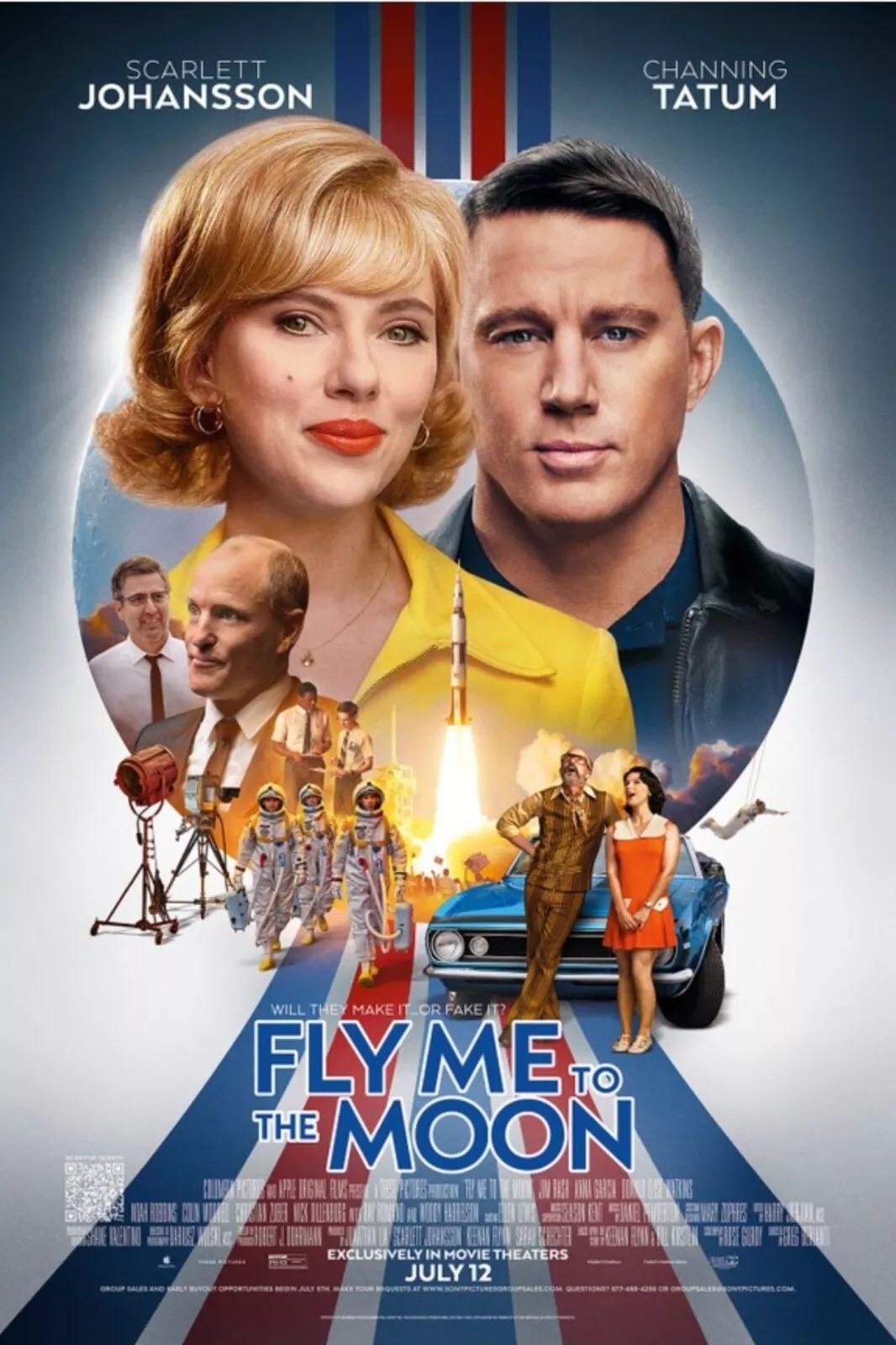
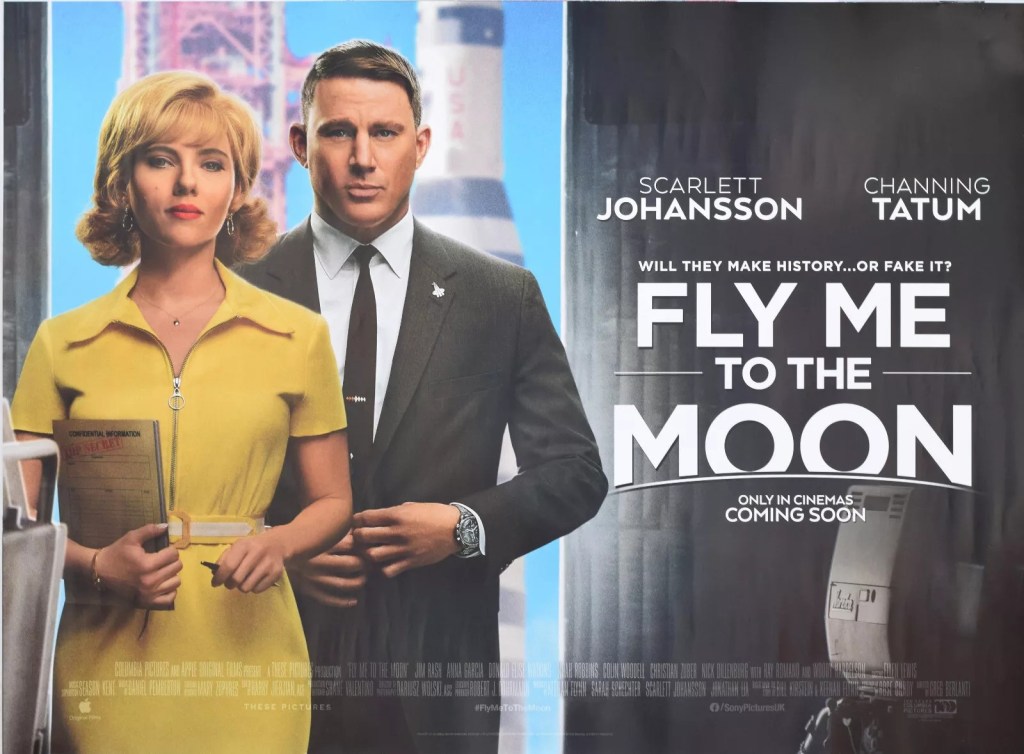
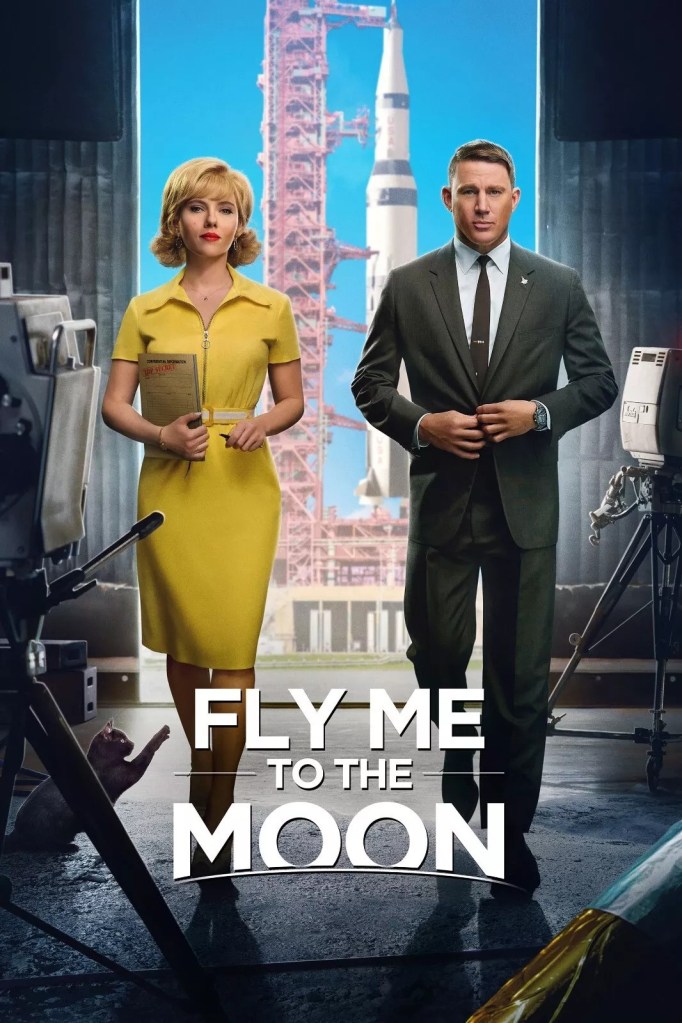
Reversal of roles from Twisters, which I saw on the same day. Here it’s the gal who’s loud, locked and loaded and the fella who’s the introvert laden down with guilt. But here it’s also the female who’s top-billed. The good news is that with some reservations the pairing of Scarlett Johansson (Asteroid City, 2023) and Channing Tatum (Dog, 2022) works quite well. But any screen chemistry is killed off by the dumbest story you’ve ever heard.
I’m assuming that the only reason they’ve taken this tack, of ramming a top female star into a tale of the lunar landing lunacy, is that, consistent with gender issues of the period, no woman would be high up enough in the space industry job rankings to become a foil for the launch director. What’s really quite bizarre is that the crux of the story – faking the moon landing – has been done before in Capricorn One (1977) and that Apollo 11 must have encountered a bucket of vital issues requiring to be solved rather than one that necessitated the stealing of a television from a store on launch day.
It’s true the same guy was in charge of Apollo 1 – where the crew perished – as on Apollo 11 but it seems an awful stretch to fictionalize this character, though maybe because Gene Kranz is still alive that was essential. I doubt if he’d have lent his name to this half-assed storyline that sees ad exec Kelly (Scarlet Johansson) detailed by shady black hat Moe (Woody Harrelson) to pep up NASA PR to stop Government finance draining away and to turn the astronauts into heroes before they’ve undertaken anything heroic. Launch director Cole (Channing Tatum) gets in her way at every turn so in some senses it’s typical rom-com, irritating individual coming to be loved by the irritated one.
So, excepting that Kelly is decked out in skin-tight 1950s/early 1960s Mad Men outfits and channels her inner Marilyn Monroe – all the men here excluding Moe and Cole fall like ninepins for her obvious charms – this should have been at least an interesting duel in the way of most rom-coms. She is certainly sassy, bright, cute, clever and manipulative and in any other orbit her tangle with Channing Tatum would probably have worked, especially given he’s got form in this genre – though admittedly The Lost City (2022) was a bit of genre mash-up.
I’m no screenwriter but even I could see it would make more sense if she continually tried to spike Moe’s fake landing notion rather than be blackmailed into it because (shock horror) she was once an unconvicted grifter. It wouldn’t have taken much either to come up with a better meet-cute than this lame effort. If the best stab a screenwriter can take is to label advertising a “legal scam” then you’re in serious trouble.
Theoretically, this had a ton more star power going for it than Twisters, which just goes to show how little marquee value has to do with box office success. So, mostly, I was watching this lamenting what could have been. Two very talented actors with plenty hits in their slipstream and dovetailing well together lost in an absolute farrago of nonsense. Occasionally, given the leaden premise, the director Greg Berlanti (Love, Simon, 2018) showed touches of finesse, the way, for example, Kelly’s assistant was set up with a weedy engineer.
From today’s perspective when everything is marketable, it might have seemed logical that the Government would have sought marketing tie-ins with major corporations – except that didn’t happen. A black cat running across the set of the fake landing ruined the fake landing gig, and this tower of babel collapsed with much less.
This has done worse than summer’s other $100 million turkey, Horizon. Probably not the death knell for rom-coms after unexpected hit Anyone but You (2023) relit that moribund genre and probably won’t stop Apple flashing the cash for other ill-considered vanity projects, but this was out of most cinemas after a week and will most likely make a quicker dash to streaming than originally intended.
It’s all very well for streamers to wise up to the fact that a cinema release is a clever marketing ploy, creating more public awareness through a gazillion reviews, and to take advantage of the product shortage, but it’s self-defeating in the end as anyone tempted to switch on to the streamer version will already have read the gazillion reviews.
Really, this plot is so stupid that it deserves no more than two stars and I’m only giving it three because I thought the pairing of Johansson and Tatum did work.
On a brighter note, I saw a trailer for Megalopolis which has finally won a cinema release, and in Imax too, despite poor critical reception and I have to say the visuals looked great. Though, as we’ve seen here, visuals and stars won’t make up for a terrible story.





 The Magnificent 60s